EP2198799A1 - Instrument d'ablation électrochirurgical comprenant une électrode chanfreinée - Google Patents
Instrument d'ablation électrochirurgical comprenant une électrode chanfreinée Download PDFInfo
- Publication number
- EP2198799A1 EP2198799A1 EP09179196A EP09179196A EP2198799A1 EP 2198799 A1 EP2198799 A1 EP 2198799A1 EP 09179196 A EP09179196 A EP 09179196A EP 09179196 A EP09179196 A EP 09179196A EP 2198799 A1 EP2198799 A1 EP 2198799A1
- Authority
- EP
- European Patent Office
- Prior art keywords
- electrode
- scalloped
- base
- ring
- grooves
- Prior art date
- Legal status (The legal status is an assumption and is not a legal conclusion. Google has not performed a legal analysis and makes no representation as to the accuracy of the status listed.)
- Granted
Links
Images










Classifications
-
- A—HUMAN NECESSITIES
- A61—MEDICAL OR VETERINARY SCIENCE; HYGIENE
- A61B—DIAGNOSIS; SURGERY; IDENTIFICATION
- A61B18/00—Surgical instruments, devices or methods for transferring non-mechanical forms of energy to or from the body
- A61B18/04—Surgical instruments, devices or methods for transferring non-mechanical forms of energy to or from the body by heating
- A61B18/12—Surgical instruments, devices or methods for transferring non-mechanical forms of energy to or from the body by heating by passing a current through the tissue to be heated, e.g. high-frequency current
- A61B18/14—Probes or electrodes therefor
- A61B18/148—Probes or electrodes therefor having a short, rigid shaft for accessing the inner body transcutaneously, e.g. for neurosurgery or arthroscopy
-
- A—HUMAN NECESSITIES
- A61—MEDICAL OR VETERINARY SCIENCE; HYGIENE
- A61B—DIAGNOSIS; SURGERY; IDENTIFICATION
- A61B18/00—Surgical instruments, devices or methods for transferring non-mechanical forms of energy to or from the body
- A61B2018/00053—Mechanical features of the instrument of device
- A61B2018/00059—Material properties
- A61B2018/00071—Electrical conductivity
- A61B2018/00083—Electrical conductivity low, i.e. electrically insulating
-
- A—HUMAN NECESSITIES
- A61—MEDICAL OR VETERINARY SCIENCE; HYGIENE
- A61B—DIAGNOSIS; SURGERY; IDENTIFICATION
- A61B18/00—Surgical instruments, devices or methods for transferring non-mechanical forms of energy to or from the body
- A61B18/04—Surgical instruments, devices or methods for transferring non-mechanical forms of energy to or from the body by heating
- A61B18/12—Surgical instruments, devices or methods for transferring non-mechanical forms of energy to or from the body by heating by passing a current through the tissue to be heated, e.g. high-frequency current
- A61B18/14—Probes or electrodes therefor
- A61B2018/1472—Probes or electrodes therefor for use with liquid electrolyte, e.g. virtual electrodes
Definitions
- the present application relates to the field of electrosurgery and, in particular, to electrosurgical devices and methods which employ high frequency voltage to cut, ablate or coagulate tissue in a fluid environment.
- Radiofrequency (RF) probes employed in electrosurgical procedures are generally divided into two categories: monopolar devices and bipolar devices.
- monopolar electrosurgical devices the RF current generally flows from an exposed active electrode through the patient's body, to a passive or return current electrode that is externally attached to a suitable location on the patient's skin.
- bipolar electrosurgical device both the active and the return current electrodes are exposed and are typically in close proximity. The RF current flows from the active electrode to the return electrode through the tissue.
- the return current path for a bipolar device does not pass through the patient's body except for close proximity to the tip of the electrode.
- Electrosurgery is the intentional passage of high frequency current through tissue to achieve a controlled surgical effect. This can be accomplished in an oxygen rich, an inert gas, or a conductive fluid media environment. Arthroscopic tissue ablation is performed in a conductive fluid environment, such as inside of a joint or body cavity filled with, for instance, normalized saline solution, and differs from that described previously in that current is conducted from the active electrode through the fluid to the return electrode. In the case of a monopolar device, the current flows through the patient to the return electrode in the manner previously described. In the case of bipolar devices operating in a conductive fluid environment, the return electrode is not in contact with tissue, but rather is submerged in the conductive fluid in the proximity of the active electrode.
- Ablators differ from the conventional arthroscopic electrosurgical probes in that they are designed for the bulk removal of tissue by vaporization, rather than by cutting the tissue or coagulating the bleeding vessels. This way, during ablation, volumes of tissue are vaporized rather then discretely cut out and removed from the surgical site. Aspiration ports in the ablator are often provided to remove ablated tissue and debris.
- the power requirements of ablators are generally higher than those of other arthroscopic probes.
- the efficiency of the probe design and the characteristics of the radio frequency (RF) power supplied to the probe also affect the amount of power required for ablation. For example, probes with inefficient designs and/or powered by RF energy with poorly suited characteristics will require higher powers levels than those with efficient designs and appropriate generators.
- Probes used in electrosurgery have relatively large area of metallic electrode, which is the active area of the probe. Large electrode area decreases the probe impedance and, therefore, increases the RF power required for proper operation.
- the shape of the dielectric insulator and of the probe tip can significantly affect ablation. By properly shaping the insulator and the electrode tip, the threshold power can be substantially decreased.
- a recent improvement to ablation electrodes is the addition of aspiration to remove bubbles and debris from the surgical site.
- tissue is vaporized, thereby producing steam bubbles which may obscure the view of the surgeon or displace saline from the area of the intra-articular space which the surgeon wishes to affect.
- the number and volume of bubbles produced is even greater than when using other electrodes since fluid is continually boiling at the active electrode during use.
- flow through the joint carries these bubbles away; however, in certain procedures this flow is frequently insufficient to remove all of the bubbles.
- Aspiration removes some bubbles as they are formed by the ablation process, and others after they have collected in pockets within the joint.
- the aspiration portal is connected to an external vacuum source which provides suction for bubble evacuation.
- Aspirating ablators are divided into two categories according to their level of flow.
- High-flow ablators have an aspiration tube, the axis of which is coaxial with the axis of the ablator rod or tube, which draws in bubbles and fluid through its distal opening and/or openings cut into the tube wall near its distal tip.
- High-flow ablators may decrease the average joint fluid temperature by removing heated saline (waste heat since it is an undesirable biproduct of the process) from the general area in which ablation is occurring.
- the effectiveness of the aspiration both for removal of bubbles and for removal of waste heat, will be affected by the distance between the opening through which aspiration is accomplished and the active electrode.
- the distal tip of the aspiration tube is generally several millimeters distant proximally from the active electrode so as to not to obstruct the surgeon's view of the electrode during use. Decreasing this distance is desirable since doing so will increase the effectiveness of the aspiration. However, this must be accomplished without limiting the surgeon's view or decreasing the ablator's ability to access certain structures during use.
- Low-flow ablators are those which aspirate bubbles and fluid through gaps in the ablating surfaces of the active electrode and convey them from the surgical site via means in the elongated distal portion of the device.
- Current low-flow ablators require increased power to operate as effectively as a nonaspirating or high-flow aspirating ablators because the low-flow aspiration draws hot saline from the active site of a thermal process.
- the heat removed is necessary process heat rather than the waste heat removed by high-flow ablators. Because of this, aspirating ablators of the low-flow type generally require higher power levels to operate than other ablators thereby generating more waste heat and increasing undesirable heating of the fluid within the joint.
- an electrosurgical probe of high efficiency and high impedance with an improved design of the aspiration port, and which is capable of conferring high ablation rates at low RF power levels.
- An electrosurgical ablation electrode with an advanced electrode and tube design is also desirable.
- the present invention provides a surgical ablating instrument having an advanced electrode and tube design, with a swaged and bent one-piece metal tube that fits in small cannulas (as small as a 5.5mm cannula).
- the electrode has a scalloped configuration that provides decreased surface area with more edges.
- the handle is provided with an ergonomic design that utilizes a bend with a cut at the end of the tube (for example, a 30 degree bend with a 15 degree cut).
- the surgical instrument may be provided with a novel insulative design.
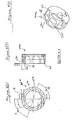
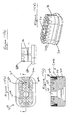
- Figure 1(a) illustrates a perspective view of a scalloped electrode (with a 7-face scallop electrode base and a 10-face scallop electrode ring) according to an embodiment of the present invention.
- Figure 1(b) illustrates a perspective view of an scalloped electrode (with a 7-face scallop electrode base and a 20-face scallop electrode ring) according to an embodiment of the present invention.
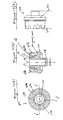
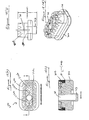
- Figures 2(a)-(d) illustrate a top view, perspective view, side view and cross-sectional view, respectively, of a 7-face electrode base (special machined configuration, and also illustrated in Figures 1(a) and 1(b) ) of a scalloped electrode according to another embodiment of the present invention.
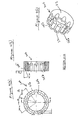
- Figures 3(a)-(c) illustrate a top view, cross-sectional view and perspective view, respectively, of a 10-face scallop electrode ring (special machined configuration, and also illustrated in Figure 1(a) ) of a scalloped electrode according to another embodiment of the present invention.
- Figures 4(a)-(c) illustrate a top view, cross-sectional view and perspective view, respectively, of a 20-face scallop electrode ring (special machined configuration, and also illustrated in Figure 1(a) ) of a scalloped electrode according to another embodiment of the present invention.
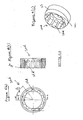
- Figures 5(a)-(c) illustrate a top view, cross-sectional view and perspective view, respectively, of a 5-face scallop electrode ring (special machined configuration) of a scalloped electrode according to another embodiment of the present invention.
- Figure 6(a)-(c) illustrate a top view, cross-sectional view and perspective view, respectively, of a 10-face scallop electrode ring (special machined configuration) of a scalloped electrode according to another embodiment of the present invention.
- Figures 7(a)-(c) illustrate a top view, side view and cross-sectional view, respectively, of a scalloped electrode (with a 7-face scallop electrode base and 20-face scallop electrode ring (metal assembly)) according to another embodiment of the present invention.
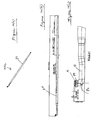
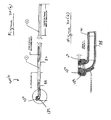
- Figure 8(a) illustrates a perspective view of an electrode assembly of the present invention, with a 30 degree swaged tube and with the scalloped electrode of Figures 1-7 .
- Figure 8(b) illustrates an enlarged view of the distal end of the electrode assembly of Figure 8(a) .
- Figure 8(c) illustrates a side view of the electrode assembly of Figure 8(a) .
- Figure 8(d) illustrates an enlarged view of the distal end of the electrode assembly of Figure 8(b) .
- Figure 8(e) illustrates a view of the swaged area of the distal end of the electrode assembly of Figure 8(d) , taken along line A of Figure 8(d) .
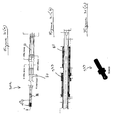
- Figure 9(a) illustrates a perspective view of another electrode assembly of the present invention, with a compound 45 degree assembly (with a 30 degree swaged tube and with an insulated probe assembly (with a scalloped electrode)).
- Figure 9(b) illustrates a side view of the electrode assembly of Figure 9(a) .
- Figure 9(c) illustrates an enlarged view of the distal end of the electrode assembly of Figure 9(b) .
- Figure 10(a) illustrates a perspective view of another electrode assembly of the present invention, with a compound 90 degree assembly (with a 30 degree swaged tube and with an insulated probe assembly (with a scalloped electrode)).
- Figure 10(b) illustrates a side view of the electrode assembly of Figure 10(a) .
- Figure 10(c) illustrates an enlarged view of the distal end of the electrode assembly of Figure 10(b) .
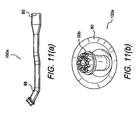
- Figure 11(a) illustrates a side view of a distal end of a scalloped electrode assembly with a 45 degree swaged tube version, with a 30 degree bent and a 15 degree cut at the end of the tube, according to another embodiment of the present invention.
- Figure 11(b) illustrates a top view of a distal end of the scalloped electrode assembly of Figure 11(a) .
- Figure 12(a) illustrates a perspective view of a 7-face electrode plugged base (non-aspirating base) of a scalloped electrode according to another embodiment of the present invention.
- Figure 12(b) illustrates another perspective view of the 7-face electrode plugged base of Figure 12(a) .
- Figures 12(c)-(e) illustrate a top view, a side view, and a cross-sectional view, respectively, of the 7-face electrode plugged base of Figure 12(a) .
- Figures 13(a)-(c) illustrate a top view, a cross-sectional view, and a side view, respectively, of a scalloped electrode (with a 7-face scallop electrode plugged base and with a 20-face scallop electrode ring (metal assembly)) according to another embodiment of the present invention.
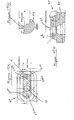
- Figures 14(a)-(c) illustrate a top view, a cross-sectional view, and a detailed view, respectively, of an exemplary electrode plugged base (special machined configuration, with a novel scallop and slot design, and a substantially rectangular configuration) of a scalloped electrode according to another embodiment of the present invention.
- Figures 15(a)-(c) illustrate a top view, a cross-sectional view, and a detailed view, respectively, of an exemplary electrode aspirating base (special machined configuration, with a novel scallop and slot design, and a substantially rectangular configuration) of a scalloped electrode according to another embodiment of the present invention.
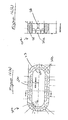
- Figures 16(a) and (b) illustrate a top view and a cross-sectional view, respectively, of an exemplary 32-face scallop electrode ring (special machined configuration, and with a substantially rectangular configuration) of a scalloped electrode according to another embodiment of the present invention.
- Figures 17(a)-(d) illustrate a top view, side view, cross-sectional view, and perspective view, respectively, of an aspirating scalloped electrode (with the exemplary electrode aspirating base of Figures 15(a)-(c) and the exemplary 32-face scallop electrode ring of Figures 16(a) and (b) ) according to another embodiment of the present invention.
- Figures 18(a)-(d) illustrate a top view, side view, cross-sectional view, and perspective view, respectively, of a non-aspirating scalloped electrode (with the exemplary electrode plugged base of Figures 14(a)-(c) and the exemplary 32-face scallop electrode ring of Figures 16(a) and (b) ) according to another embodiment of the present invention.
- Figure 19(a) illustrates a side view of another electrode assembly of the present invention, with a compound 90 degree assembly (with a 30 degree swaged tube and with the scalloped electrode of Figures 17(a)-(d) ).
- Figure 19(b) illustrates an enlarged view of the distal end of the electrode assembly of Figure 19(a) .
- Figure 20(a) illustrates a side view of another electrode assembly of the present invention, with a compound 90 degree assembly (with a 30 degree swaged tube and with an insulated probe assembly (with the scalloped electrode of Figures 17(a)-(d) ).
- Figure 20(b) illustrates an enlarged view of the distal end of the electrode assembly of Figure 20(a) .
- Figures 20(c)-(e) illustrate a top view, lateral view, and side view, respectively, of the assembly of Figure 20(b) .
- Figure 21(a) illustrates a top view of another electrode assembly of the present invention, with a 30 degree swaged tube, a scalloped electrode, and a first insulative overmold.
- Figure 21(b) illustrates a cross-sectional view of the assembly of Figure 21(a) .
- Figure 21(c) illustrates a perspective view of the first insulative overmold of the assembly of Figure 21(a) .
- Figure 22(a) illustrates a top view of the electrode assembly of Figure 21(a) (having a 30 degree swaged tube, a scalloped electrode, and a first insulative overmold) and with an additional second insulative overmold.
- Figure 22(b) illustrates a cross-sectional view of the assembly of Figure 22(a) .
- Figure 22(c) illustrates a perspective view of the second insulative overmold of the assembly of Figure 22(a) .
- Figures 23(a)-(e) illustrate a perspective view, top view, side view, and two end views, respectively, of an ablating device with a scalloped electrode assembly of the present invention.
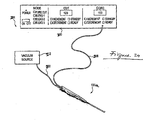
- Figure 24 is a schematic representation of an electrosurgical system according to the principles of the present invention.
- the present invention provides a surgical ablating instrument having an advanced electrode design, with a swaged one-piece metal tube that fits in a small cannula (as small as a 5.5mm cannula, for example).
- the electrode has a scalloped configuration that provides decreased surface area with more edges (facets).
- the electrode may have an aspirating (i.e., suction through the electrode face) or a non-aspirating (or plugged or obstructed base) profile.
- the instrument may be provided with an advanced insulative overmold design.
- Figures 1-7 illustrate scalloped electrodes (with a scalloped base and a scalloped ring) according to embodiments of the present invention.
- the electrodes of Figures 1-7 are exemplary aspirating electrodes (i.e., aspiration and suction is conducted through the electrode).
- Figure 8-11 illustrate various embodiments of swaged tubes that are employed with the electrodes of Figures 1-7 .
- the probe assemblies of Figures 8-11 are exemplary 45 or 90 degree compound assemblies (with a 30 degree bend and a 15 degree cut at the end of the tube) that may be insulated or non-insulated.
- Figure 12 illustrates views of a scalloped electrode base that has a non-aspirating or plugged design (i.e., aspiration and suction is not permitted through the electrode face).
- Figure 13 illustrates an exemplary scalloped electrode (with the scalloped plugged base of Figure 12 and a scalloped ring).
- Figures 14-20 illustrates views of a scalloped electrodes and probe assemblies (with aspirating or non-aspirating designs) provided with electrode bases and rings having a combined scallop and slot design, and with a substantially rectangular cross-sectional views.
- These exemplary probe assemblies may be 45 or 90 degree compound assemblies (with a 30 degree bend and a 15 degree cut at the end of the tube) that may be insulated or non-insulated.
- Figures 21 and 22 illustrate details of a novel insulative design assembly of the present invention (with first and second overmolds).
- the scalloped electrodes include different numbers of edges or facets (grooves) machined within the electrode base and/or the electrode ring. These scalloped grooves may have a regular or irregular configuration, depending on the specific application.
- the scalloped grooves may be provided on either the inner surface or the outer surface, or both the inner and outer surfaces, of the electrode base or the electrode ring (or both the electrode base and the electrode ring).
- the electrode base may not be provided with a scalloped pattern, but only the ring electrode (with scalloped grooves provided on either the inner surface or the outer surface, or both the inner and outer surfaces, of the electrode ring).
- the electrode ring may not be provided with a scalloped pattern, but only the base electrode (with scalloped grooves provided on either the inner surface or the outer surface, or both the inner and outer surfaces, of the electrode base).
- the scalloped grooves are provided on both the base electrode and the ring electrode (with scalloped grooves provided on either the inner surface or the outer surface, or both the inner and outer surfaces, of each of the electrode base and electrode ring).
- the scalloped grooves may have a semi-circular or semi-elliptical shape and may be evenly spaced around an inner and/or outer surface of the base electrode or the ring electrode.
- the radii of the scalloped grooves may be similar or different.
- the radii of the scalloped grooves of the electrode base may be similar to or different from the radii of the scalloped grooves of the electrode ring.
- Figure 1(a) illustrates a perspective view of an exemplary embodiment of a scalloped electrode 50a of the present invention, with a 7-face scallop electrode base and a 10-face scallop electrode ring 20a.
- Figure 1(b) illustrates a perspective view of another scalloped electrode 50b, with a 7-face scallop electrode base 10 and a 20-face scallop electrode ring 20b.
- Electrode base 10 of the scalloped electrodes of the present invention is illustrated in more detail in Figures 2(a)-(d) .
- Grooves 15 are provided on the outer surface 13 of the tubular element 14 of the base 10, as shown in Figures 2(b) and 2(d) , for example.
- a central lumen 11 of the base 10 is defined by the inner surface of the tubular member 14 (i.e., the surface opposite the outer surface 13 defining the grooves). Central lumen 11 provides direct aspiration flow and suction.
- a top view of the electrode base i.e., when viewed from a direction about perpendicular to a most distal surface of the tubular member 14, most distal surface 18 has a scallop or scalloped configuration.
- grooves 15 are machined within the electrode base.
- Grooves 15 may have a semi-circular or semi-elliptical shape (or a combination of these shapes) and may be evenly spaced around the outer surface 13 of the base electrode.
- the radii of the scalloped grooves 15 may be similar or different.
- the radii of the scalloped grooves 15 of the electrode base 10 may be similar to or different from the radii of the scalloped grooves of the electrode ring (detailed below).
- Scalloped grooves 15 may be provided in any number on surface 13 of the electrode base 10 (although the exemplary embodiment in the drawings shows seven machined grooves that are equally spaced apart around the circumference of the base, the invention is not limited to this specific embodiment, and contemplates any number of scalloped grooves on the inner and/or outer surfaces of the electrode base).
- the electrode base 10 (with machined scalloped grooves 15) is preferably formed of electrically conductive materials such as metals and metal alloys, for example, stainless steel and stainless steel alloys, platinum and platinum alloys, gold and gold alloys, nickel and nickel alloys, titanium and titanium alloys, and molybdenum and molybdenum alloys, or combinations of such metals and metal alloys, among others.
- electrically conductive materials such as metals and metal alloys, for example, stainless steel and stainless steel alloys, platinum and platinum alloys, gold and gold alloys, nickel and nickel alloys, titanium and titanium alloys, and molybdenum and molybdenum alloys, or combinations of such metals and metal alloys, among others.
- Figures 3-6 illustrate various views and structural configurations of electrode rings 20a, 20b, 20c, 20d according to exemplary embodiments of the present invention.
- Grooves 25a, 25b, 25c, 25d are machined within the outer or the inner surface of the ring 20a, 20b, 20c, 20d, or both on the inner and outer surfaces.
- Figures 3(a)-(c) illustrate a 10-face scallop electrode ring 20a (special machined configuration, and also shown in Figure 1(a) ) with grooves 25a provided on both inner surface 22 and outer surface 23 of the ring electrode 20a.
- grooves 25a are machined within inner surface 22 ( Figure 3(c) ) of ring 20a, and five grooves 25a are machined within outer surface 23 ( Figure 3(c) ) of ring 20a.
- Grooves 25a may have a semi-circular or semi-elliptical shape (or other configurations) and are evenly spaced around inner surface 22 and outer surface 23 of the ring electrode.
- most distal surface 28 When viewed from a top view of the electrode ring, i.e., when viewed from a direction about perpendicular to a most distal surface of the ring 20a, most distal surface 28 has a scallop or scalloped configuration.
- the radii of the scalloped grooves 25a may be similar or different.
- the radii of the scalloped grooves 25a of the inner surface 22 may be similar to or different from the radii of the scalloped grooves 25a on the outer surface 23.
- Grooves 25b are evenly spaced around inner surface 22 and outer surface 23 of the ring electrode 20b.
- the radii of the scalloped grooves 25b may be similar or different.
- the radii of the scalloped grooves 25b of the inner surface 22 may be similar to or different from the radii of the scalloped grooves 25b on the outer surface 23.
- Figures 5(a)-(c) illustrate a 5-face scallop electrode ring 20c (special machined configuration) according to another embodiment of the present invention.
- Grooves 25c are provided only on inner surface 22 of the ring electrode 20c. These grooves are also semi-circular or semi-elliptical structures, and are evenly spaced around inner surface 22 of the ring electrode 20c. The radii of the scalloped grooves 25c may be similar or different.
- Figure 6(a)-(c) illustrate a scallop electrode ring 20d which is similar to that of Figures 5(a)-(c) but differs in that electrode ring 20d is provided with 10 grooves, i.e., it is a 10-face scallop electrode ring 20d (special machined configuration).
- Grooves 25d are provided only on the inner surface 22 of the ring electrode 20d. Grooves 25d are also semi-circular or semi-elliptical structures, and are evenly spaced around inner surface 22 of the ring electrode 20d. The radii of the scalloped grooves 25d may be similar or different.
- Ring 20a, 20b, 20c, 20d may be formed of a material similar to or different from that of the electrode base 10 (with machined grooves 15).
- ring 20a, 20b, 20c, 20d may be also formed of electrically conductive materials such as metals and metal alloys, for example, stainless steel and stainless steel alloys, platinum and platinum alloys, gold and gold alloys, nickel and nickel alloys, titanium and titanium alloys, and molybdenum and molybdenum alloys, or combinations of such metals and metal alloys, among others.
- FIGs 7(a)-(c) illustrate details of exemplary electrode 50b of the present invention (also shown in Figure 1(b) ), which is formed by assembling electrode base 10 of Figures 2(a)-(d) with the exemplary electrode ring 20b of Figures 4(a)-(c) (i.e., the 20-face scallop electrode ring 20b).
- Ring 20b is securely attached to base 10 by welding, for example, or by other known methods in the art.
- tubular element 14 is concentric with the ring electrode 20b, and the most distal surface 18 of the tubular element 14 of the base 10 is about coplanar (coincides) with the most distal surface 28 of electrode ring 20b (as shown in Figure 7(c) , for example).
- Grooves 25b of the electrode ring 20b and grooves 15 of the base 10 form an alternating symmetrical pattern, as shown in Figure 7(a) .
- the grooves are evenly spaced relative to each of the tubular element 14 and the ring electrode 20b, and are also symmetrically located relative to a longitudinal axis 19 ( Figures 7(a) and (b) ) of the base 10 and ring 20b.
- the electrodes of Figures 1-7 detailed above employ an electrode base 10 which has an aspirating profile (i.e., aspiration and suction is conducted through the central lumen 11 of the tubular member 14 of the base 10).
- Figure 8-11 illustrate various embodiments of swaged tubes that are employed with the electrodes of Figures 1-7 .
- the probe assemblies of Figures 8-11 are exemplary 45 or 90 degree compound assemblies (with a 30 degree bend and a 15 degree cut at the end of the tube) that may be insulated or non-insulated.
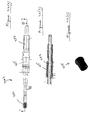
- Figure 8(a) illustrates a perspective view of an electrode assembly 100a of the present invention, with a one-piece 30 degree swaged and bent tube 80 and with a scalloped electrode (such as the exemplary scalloped electrode 50b of Figure 1(b) or Figures 7(a)-(c) ).
- distal tube portion 88 of the tube 80 is swaged in that it forms an angle ⁇ of about 30 degrees with the tube 80 (i.e., longitudinal axis 81 of the tube 80 forms angle ⁇ with longitudinal axis 83 of the swaged portion 88).
- Longitudinal axis 19 of the electrode 50b forms an angle ⁇ ( Figure 8(d) ) of about 45 degrees with the longitudinal axis 81 of the tube 80.
- FIGS 9(a)-(c) illustrate another electrode assembly 100b of the present invention, which is similar to the probe assembly 100a (in that probe assembly 100b is also a compound 45 degree assembly (with a 30 degree swaged tube)) but differs in that it is insulated. Insulator 89 is provided around the outer surface of the electrode face 23 of the electrode ring 20b, to surround the non-grooved area of the outer surface 23 of the electrode ring and to abut the machined grooves 25b.
- Insulator 89 may comprise an insulating or dielectric material such as epoxy, plastic, silicon-based material, ceramic, glass or compositions of these mentioned materials, among many others.
- the dielectric material surrounds and insulates the metallic tip of the ablator electrode.
- Figures 10(a)-(c) illustrates another electrode assembly 100c of the present invention, which is similar to the probe assembly 100b (in that probe assembly 100c has a 30 degree swaged tube and is insulated), but differs in that is a compound 90 degree assembly (and not a 45 degree assembly as in probe 100b).
- Longitudinal axis 19 of the electrode 50b forms an angle ⁇ 1 ( Figure 10(c) ) of about 90 degrees with the longitudinal axis 81 of the tube 80.
- Figures 11(a) and 11(b) illustrate additional views of the scalloped electrode assembly 100a of Figures 8(a)-(e) with a 45 degree swaged tube version, with a 30 degree bent and a 15 degree cut at the end of the tube.
- FIGS 12(a)-(e) illustrate a scalloped electrode base 110 that has a non-aspirating or plugged design (i.e., aspiration and suction is not permitted through the electrode face), while Figures 13(a)-(c) illustrate an exemplary scalloped electrode (with the scalloped plugged base of Figure 12(a) and a scalloped ring).
- Scalloped electrode base 110 is similar to the base 10 of Figures 2(a)-(d) , in that grooves 15 are also provided on the outer surface 13 of tubular element 114 of the base 110 (in a manner and configuration similar to that of the grooves 15 of the base 10). However, lumen 111 of the base 110 (defined by the inner surface of the tubular member 114) is plugged by portion 113 so that no direct aspiration flow and suction is provided.
- FIGs 13(a)-(c) illustrate exemplary electrode 150 of the present invention, which is formed by assembling electrode non-aspirating base 110 of Figures 12(a)-(e) with the exemplary electrode ring 20b of Figures 4(a)-(c) (i.e., the exemplary 20-face scallop electrode ring 20b).
- Ring 20b is securely attached to base 110 by welding, for example, or by other known methods in the art.
- tubular element 114 is concentric with the ring electrode 20b, and the most distal surface 118 of the tubular element 114 of the base 110 is about coplanar (coincides) with the most distal surface 28 of electrode ring 20b (as shown in Figure 13(b) , for example).
- Grooves 25b of the electrode ring 20b and grooves 15 of the base 110 form an alternating symmetrical pattern, as shown in Figure 13(a) .
- the grooves are evenly spaced relative to each of the tubular element 114 and the ring electrode 20b, and are also symmetrically located relative to a longitudinal axis 19 ( Figures 13(a) and (b) ) of the base 110 and ring 20b.
- FIGS 14(a)-(c) illustrate another exemplary embodiment of a scalloped electrode base 210 which is similar to the scalloped electrode base 110 of Figures 12(a)-(e) in that it has a non-aspirating or plugged design (i.e., aspiration and suction is not permitted through the electrode face), but differs from base 110 in that its cross-sectional view is a substantially rectangular view (and not circular, as for base 110), i.e., most distal surface 218 of non-aspirating base 210 has a scalloped rectangular configuration.
- the size of the scalloped electrode base 210 is also substantially bigger than that of electrode base 110 of Figures 12(a)-(e) .
- the length L ( Figure 14(b) ) of the electrode base 210 is about 0.15 to about 0.2 inches, more preferably of about 0.172 inches, and the width W ( Figure 14(a) ) of the electrode base 210 is about 0.1 to about 0.12 inches, more preferably of about 0.109 inches. Because of its increased size, the design of electrode base 210 also incorporates a plurality of slots or channels around the circumference of the base and also extending on the most distal surface 218 of the base.
- Figure 14(a) illustrates a wide slot 222 disposed all around the circumference of the electrode base, as well as slots 222a and 222b disposed in the exemplary-only pattern shown in Figure 14(a) (i.e., with slots 222a forming a series of X patterns, and with slot 222b extending transversely between the two long edges or sides of the rectangular distal surface 218).
- Scalloped grooves 15 are also provided on the outer surface 213 of element 214 of the base 210 (in a manner and configuration similar to that of the grooves 15 of the base 110).
- Lumen 211 of the base 210 (defined by the inner surface of the tubular member 214) is plugged by portion 213 so that no direct aspiration flow and suction is provided.
- Figures 15(a)-(c) illustrate another scalloped electrode base 310 which is similar to the base 210 of Figures 14(a)-(c) in that scalloped grooves 15 are provided adjacent slots 322a and 322b forming a series of X patterns, and extending transversely between the two long edges or sides of the rectangular distal surface 318, but differs from the base 210 in that base 310 has an aspirating or non-plugged design (i.e., aspiration and suction is permitted through the electrode face and lumen 311).
- Figures 16(a) and (b ) illustrate an exemplary scallop electrode ring 20e having a substantially rectangular configuration (special machined configuration) that may be employed with the electrode bases 210, 310 described above (i.e., the inner width and inner length of the electrode ring 20e are about similar to the width and length of the electrode bases 210, 310).
- the exemplary electrode ring 20e of Figures 16(a) and (b is a scalloped 32-face electrode ring with grooves 25e are provided on both inner surface 22 and outer surface 23 of the ring (with 16 grooves provided on each of the inner and outer surfaces).
- Electrode ring 20e is also provided with an additional transversal slot or channel 26 (as shown in Figure 16(b) ).
- FIGs 17(a)-(d) illustrate exemplary electrode 350 of the present invention, which is formed by assembling electrode aspirating base 310 of Figures 15(a)-(c) with the exemplary electrode ring 20e of Figures 16(a) and (b) (i.e., the exemplary 32-face scallop electrode ring 20e with a substantially rectangular configuration).
- Ring 20e is securely attached to base 310 by welding, for example, or by other known methods in the art.
- the most distal surface 318 of the tubular element 314 of the base 310 is about coplanar (coincides) with the most distal surface 28 of electrode ring 20e (as shown in Figure 17(c) , for example).
- Grooves 25e of the electrode ring 20e, grooves 15 and slots 322, 322a, 322b of the base 310 form an alternating asymmetrical pattern, as shown in Figure 17(a) .
- Figures 18(a)-(d) illustrate another exemplary electrode 250 of the present invention, which is similar to the electrode 350 detailed above in that it includes exemplary electrode ring 20e of Figures 16(a) and (b) , but differs in that it includes the non-aspirating or plugged base 210 of Figures 45(a)-(c).
- Figures 19(a) and (b) illustrate an exemplary probe assembly 200a with one of the electrodes 250, 350 detailed above and with swaged tubes according to the present invention.
- the probe assembly of Figures 19(a) and (b) is an exemplary 90 degree compound assembly (with a 30 degree bend and a 15 degree cut at the end of the tube) that may be insulated or non-insulated.
- Electrode assembly 200a of the present invention is provided with a one-piece 30 degree swaged and bent tube 80 and with a scalloped electrode (such as the exemplary scalloped electrode 350).
- distal tube portion 88 of the tube 80 is swaged in that it forms an angle ⁇ of about 30 degrees with the tube 80 (i.e., longitudinal axis 81 of the tube 80 forms angle ⁇ with longitudinal axis 83 of the swaged portion 88).
- Longitudinal axis 19 of the electrode 250 forms an angle ⁇ 1 ( Figure 19(b) ) of about 90 degrees with the longitudinal axis 81 of the tube 80.
- FIGS 20(a)-(e) illustrate another electrode assembly 200b of the present invention, which is similar to the probe assembly 200a (in that probe assembly 200b is also a compound 90 degree assembly (with a 30 degree swaged tube) with a scalloped rectangular electrode) but differs in that it is insulated.
- Insulator 189 is in the form of a distal hood and is provided around the outer surface of the electrode face 23 of the electrode ring 20e, to surround the non-grooved area of the outer surface 23 of the electrode ring and to abut the machined grooves 25e.
- Insulator 189 may comprise an insulating or dielectric material such as epoxy, plastic, silicon-based material, ceramic, glass or compositions of these mentioned materials, among many others.
- the dielectric material surrounds and insulates the metallic tip of the ablator electrode.
- Insulator 189 is provided as an overmold and surrounds at least part of PTFE Heat Shrink tube 88. Due to the contour of the electrode head, normal Heat Shrink does not provide an intimate insulative seal about the electrode body and, thus, the overmold configuration is necessary.
- the overmold configuration will be injection molded directly to the electrode and acts as a bridge to the Heat Shrink running proximally back into the handle.
- Figures 21 and 22 illustrate details of a novel insulative design assembly of the present invention.
- Figures 21(a)-(c) illustrate electrode assembly 300a of the present invention, with a 30 degree swaged tube, a scalloped electrode (such as scalloped electrode 350 with or without an insulating hood 189 around it) and with a first insulative overmold 333.
- the first insulative overmold 333 is provided surrounding at least a portion of tube 80 and allows for proper nesting into the handle during production. Overmold 333 ensures precise orientation of the distal tip relative to the buttons on the upper case portion of the handle. This aspect provides repeatability in insulated probe placement from device to device.
- Overmold 333 is also a structural member providing resistance to both tensile and torsional loading by the user during clinical use.
- Figures 22(a)-(c) illustrate another electrode assembly 300b of the present invention, with a 30 degree swaged tube, a scalloped electrode (such as scalloped electrode 350 with or without an insulating hood 189 around it), with the insulative overmold 333 of Figures 21(a)-(c) , and also with a second insulative overmold 355.
- the second insulative overmold 355 is provided surrounding at least a portion of the first overmold 333 and of the tube 80.
- the second overmold 355 acts as a fluid seal, inhibiting fluid from entering the primary contact area where the metal contact from the integral PCB in the upper case of the handle makes intimate contact with the exposed proximal end of the probe assembly.
- a plurality of ribs are provided in both the upper case and lower case portions of the handle to compress portions of the second overmold 355 and create a torturous path for any distal handle fluid ingress.
- the ultrasonic welding operation which compresses and seals the perimeter of the case halves, provides the preload of the ribs against the second overmold 355.
- Figures 23(a)-(e) illustrate various views of an ablating device with a scalloped electrode and an improved handle design (a "knuckle” electrode) of the present invention.
- FIG. 24 schematically illustrates an electrosurgery system 201 employing an electrosurgical scalloped probe (ablator) 100a, 100b, 100c, 200a, 200b, 300a, 300b of the present invention.
- Probe 100a, 100b, 100c, 200a, 200b, 300a, 300b is connected by electrical cable 208 to electrosurgical generator 210, and by tube 220 to an external vacuum source 212.
- a return electrode (not shown) is connected to the electrosurgical generator to provide a return path for the RF energy.
- the return electrode may be a dispersive pad attached to the patient at a site remote from the surgical site, or may be in proximity to the active electrode in contact with tissue or the conductive liquid.
- the scalloped ablator 100a, 100b, 100c, 200a, 200b, 300a, 300b of the present invention may be used in a conventional open surgery environment or in other, less invasive, techniques that use cannulas or various port access devices if conductive fluid is present.
- the present invention has also applications in surgical procedures where the target tissue is flooded with, or submerged in, an electrically conductive fluid such as in many arthroscopic procedures for ablation, coagulation, shaping and cutting of various body parts such as the knee, shoulder, hip, ankle, elbow, hand or foot.
- Surgical procedures using the scalloped ablator 100a, 100b, 100c, 200a, 200b, 300a, 300b of the invention include introducing the probe assembly in close proximity to the surgical site through an artificial conduit or a cannula, or through a natural conduit which may be in an anatomical body cavity or space or one created surgically.
- the terms "close proximity” and “proximity” are defined as "in contact with” or "at a distance of about 0.1 to about 20 millimeters.”
- the cavity or space may be distended during the procedure using a fluid or may be naturally held open by anatomical structures.
- the surgical site may be bathed in a continuous flow of conductive fluid, such as saline solution, to fill and distend the cavity.
- the procedures may include simultaneous viewing of the site via an endoscope or using an indirect visualization means.
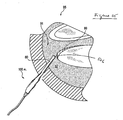
- Figure 25 illustrates a schematic cross-sectional view of a knee joint region 95.
- the knee joint region 95 of Figure 16 may undergo an arthroscopic procedure, for example, with electrosurgical ablator 100a, 100b, 100c, 200a, 200b, 300a, 300b fabricated according to the present invention.
- an endoscope (not shown) may be provided at one end with the distal tube 80 having the swaged design and the scalloped electrode 50b (for example), and then introduced into knee cavity 92 containing electrically conductive fluid 91 ( Figure 25 ) and in close proximity to target tissue 99 ( Figure 25 ).
- target tissue 99 of the knee joint region 95 is a damaged meniscus, for example, then target tissue 99 may undergo a partial or complete electrosurgical meniscectomy using active scalloped electrode of the present invention.
- the endoscope may be introduced separately from the electrosurgical electrode, via separate access means in a surgical technique commonly known as triangulation.
- knee cavity 92 may be distended during the arthroscopic procedure using electrically conductive fluid 91, so that target tissue 99 may be bathed in a continuous flow of conductive fluid 91, which may be preferably a saline solution.
- the electrosurgical probe is energized by the electrosurgery power supply.
- the power supply delivers radio frequency energy, typically in the range of 100 kHz to 3 MHz, through a cable system to the electrosurgical electrode 100a and further to the distal active electrode 50b.
Landscapes
- Health & Medical Sciences (AREA)
- Surgery (AREA)
- Engineering & Computer Science (AREA)
- Life Sciences & Earth Sciences (AREA)
- Heart & Thoracic Surgery (AREA)
- Biomedical Technology (AREA)
- Nuclear Medicine, Radiotherapy & Molecular Imaging (AREA)
- Otolaryngology (AREA)
- Neurology (AREA)
- Neurosurgery (AREA)
- Physics & Mathematics (AREA)
- Plasma & Fusion (AREA)
- Medical Informatics (AREA)
- Molecular Biology (AREA)
- Animal Behavior & Ethology (AREA)
- General Health & Medical Sciences (AREA)
- Public Health (AREA)
- Veterinary Medicine (AREA)
- Surgical Instruments (AREA)
Applications Claiming Priority (1)
| Application Number | Priority Date | Filing Date | Title |
|---|---|---|---|
| US13803908P | 2008-12-16 | 2008-12-16 |
Publications (2)
| Publication Number | Publication Date |
|---|---|
| EP2198799A1 true EP2198799A1 (fr) | 2010-06-23 |
| EP2198799B1 EP2198799B1 (fr) | 2012-04-18 |
Family
ID=42012351
Family Applications (1)
| Application Number | Title | Priority Date | Filing Date |
|---|---|---|---|
| EP09179196A Active EP2198799B1 (fr) | 2008-12-16 | 2009-12-15 | Instrument d'ablation électrochirurgical comprenant une électrode tubulaire avec des dentures arquées |
Country Status (3)
| Country | Link |
|---|---|
| US (1) | US8986299B2 (fr) |
| EP (1) | EP2198799B1 (fr) |
| AT (1) | ATE553714T1 (fr) |
Cited By (4)
| Publication number | Priority date | Publication date | Assignee | Title |
|---|---|---|---|---|
| GB2488039A (en) * | 2011-02-09 | 2012-08-15 | Arthocare Corp | Fine dissection electrosurgical device |
| GB2520112A (en) * | 2013-09-13 | 2015-05-13 | Gyrus Medical Ltd | Electrode assembly |
| US9649144B2 (en) | 2013-01-17 | 2017-05-16 | Arthrocare Corporation | Systems and methods for turbinate reduction |
| US9788882B2 (en) | 2011-09-08 | 2017-10-17 | Arthrocare Corporation | Plasma bipolar forceps |
Families Citing this family (7)
| Publication number | Priority date | Publication date | Assignee | Title |
|---|---|---|---|---|
| US8747401B2 (en) | 2011-01-20 | 2014-06-10 | Arthrocare Corporation | Systems and methods for turbinate reduction |
| US9271784B2 (en) | 2011-02-09 | 2016-03-01 | Arthrocare Corporation | Fine dissection electrosurgical device |
| US9011428B2 (en) | 2011-03-02 | 2015-04-21 | Arthrocare Corporation | Electrosurgical device with internal digestor electrode |
| US9579150B2 (en) * | 2011-04-08 | 2017-02-28 | Covidien Lp | Microwave ablation instrument with interchangeable antenna probe |
| CN103142305A (zh) * | 2012-10-31 | 2013-06-12 | 中美联合技术(北京)有限公司 | 一种片状触头的医用双极手术电极 |
| WO2015148949A1 (fr) * | 2014-03-27 | 2015-10-01 | Endomedical Concepts, Inc. | Électrodes de vaporisation et dispositifs électrochirurgicaux en étant dotés |
| US9856753B2 (en) * | 2015-06-10 | 2018-01-02 | United Technologies Corporation | Inner diameter scallop case flange for a case of a gas turbine engine |
Citations (5)
| Publication number | Priority date | Publication date | Assignee | Title |
|---|---|---|---|---|
| US6142996A (en) * | 1996-11-07 | 2000-11-07 | Optex Ophthalmologics, Inc. | Methods useable for forming small openings in the lens capsules of mammalian eyes |
| WO2003068095A1 (fr) * | 2002-02-12 | 2003-08-21 | Oratec Interventions, Inc. | Dispositif d'ablation arthroscopique a radiofrequences |
| US20040116793A1 (en) * | 2002-12-12 | 2004-06-17 | Scimed Life Systems, Inc. | La placian electrode |
| WO2005112814A2 (fr) * | 2004-05-17 | 2005-12-01 | C.R. Bard, Inc. | Catheter irrigue |
| EP1797839A1 (fr) * | 2005-12-13 | 2007-06-20 | Arthrex, Inc. | Sonde électrochirurgicale aspirante avec aspiration sur la surface de l'électrode |
Family Cites Families (5)
| Publication number | Priority date | Publication date | Assignee | Title |
|---|---|---|---|---|
| US7276063B2 (en) * | 1998-08-11 | 2007-10-02 | Arthrocare Corporation | Instrument for electrosurgical tissue treatment |
| US6379350B1 (en) * | 1999-10-05 | 2002-04-30 | Oratec Interventions, Inc. | Surgical instrument for ablation and aspiration |
| US20040030330A1 (en) * | 2002-04-18 | 2004-02-12 | Brassell James L. | Electrosurgery systems |
| US7150746B2 (en) * | 2004-06-10 | 2006-12-19 | Linvatec Corporation | Electrosurgical ablator with integrated aspirator lumen and method of making same |
| US7837683B2 (en) * | 2005-05-13 | 2010-11-23 | Electrosurgery Associates, Llc | Electrosurgical ablation electrode with aspiration and method for using same |
-
2009
- 2009-12-15 AT AT09179196T patent/ATE553714T1/de active
- 2009-12-15 EP EP09179196A patent/EP2198799B1/fr active Active
- 2009-12-16 US US12/639,644 patent/US8986299B2/en active Active
Patent Citations (5)
| Publication number | Priority date | Publication date | Assignee | Title |
|---|---|---|---|---|
| US6142996A (en) * | 1996-11-07 | 2000-11-07 | Optex Ophthalmologics, Inc. | Methods useable for forming small openings in the lens capsules of mammalian eyes |
| WO2003068095A1 (fr) * | 2002-02-12 | 2003-08-21 | Oratec Interventions, Inc. | Dispositif d'ablation arthroscopique a radiofrequences |
| US20040116793A1 (en) * | 2002-12-12 | 2004-06-17 | Scimed Life Systems, Inc. | La placian electrode |
| WO2005112814A2 (fr) * | 2004-05-17 | 2005-12-01 | C.R. Bard, Inc. | Catheter irrigue |
| EP1797839A1 (fr) * | 2005-12-13 | 2007-06-20 | Arthrex, Inc. | Sonde électrochirurgicale aspirante avec aspiration sur la surface de l'électrode |
Cited By (10)
| Publication number | Priority date | Publication date | Assignee | Title |
|---|---|---|---|---|
| GB2488039A (en) * | 2011-02-09 | 2012-08-15 | Arthocare Corp | Fine dissection electrosurgical device |
| GB2488039B (en) * | 2011-02-09 | 2015-12-16 | Arthocare Corp | Fine dissection electrosurgical device |
| US9788882B2 (en) | 2011-09-08 | 2017-10-17 | Arthrocare Corporation | Plasma bipolar forceps |
| US9649144B2 (en) | 2013-01-17 | 2017-05-16 | Arthrocare Corporation | Systems and methods for turbinate reduction |
| GB2520112A (en) * | 2013-09-13 | 2015-05-13 | Gyrus Medical Ltd | Electrode assembly |
| GB2520112B (en) * | 2013-09-13 | 2016-04-13 | Gyrus Medical Ltd | Electrode assembly |
| GB2532324A (en) * | 2013-09-13 | 2016-05-18 | Gyrus Medical Ltd | Electrode assembly |
| GB2532324B (en) * | 2013-09-13 | 2017-05-10 | Gyrus Medical Ltd | Electrode assembly |
| US10179025B2 (en) | 2013-09-13 | 2019-01-15 | Gyrus Medical Limited | Electrode assembly |
| AU2014218431B2 (en) * | 2013-09-13 | 2019-05-30 | Gyrus Medical Limited | Electrode assembly |
Also Published As
| Publication number | Publication date |
|---|---|
| US8986299B2 (en) | 2015-03-24 |
| EP2198799B1 (fr) | 2012-04-18 |
| US20100152729A1 (en) | 2010-06-17 |
| ATE553714T1 (de) | 2012-05-15 |
Similar Documents
| Publication | Publication Date | Title |
|---|---|---|
| EP2198799B1 (fr) | Instrument d'ablation électrochirurgical comprenant une électrode tubulaire avec des dentures arquées | |
| US8425506B2 (en) | Aspirating electrosurgical probe with aspiration through electrode face | |
| US7566333B2 (en) | Electrosurgical device with floating-potential electrode and methods of using the same | |
| US7837683B2 (en) | Electrosurgical ablation electrode with aspiration and method for using same | |
| US7611509B2 (en) | Electrosurgical device | |
| US8348944B2 (en) | Electrosurgical device having floating-potential electrode and bubble trap | |
| US8801705B2 (en) | Electrosurgical method and apparatus for removing tissue within a bone body | |
| US5697536A (en) | System and method for electrosurgical cutting and ablation | |
| EP2767250B1 (fr) | Électrodes électrochirurgicales | |
| US20060036237A1 (en) | Devices and methods for selective orientation of electrosurgical devices | |
| US20100204690A1 (en) | Single aperture electrode assembly | |
| US9888954B2 (en) | Plasma resection electrode | |
| US8992521B2 (en) | Flexible electrosurgical ablation and aspiration electrode with beveled active surface | |
| WO2011133767A1 (fr) | Electrode électrochirurgicale souple pour ablation et aspiration pourvue d'une surface active biseautée | |
| US9643255B2 (en) | Flexible electrosurgical ablation and aspiration electrode with beveled active surface | |
| US20240415570A1 (en) | Devices, systems, and methods for preventing arcing between electrodes for medical procedures |
Legal Events
| Date | Code | Title | Description |
|---|---|---|---|
| PUAI | Public reference made under article 153(3) epc to a published international application that has entered the european phase |
Free format text: ORIGINAL CODE: 0009012 |
|
| AK | Designated contracting states |
Kind code of ref document: A1 Designated state(s): AT BE BG CH CY CZ DE DK EE ES FI FR GB GR HR HU IE IS IT LI LT LU LV MC MK MT NL NO PL PT RO SE SI SK SM TR |
|
| AX | Request for extension of the european patent |
Extension state: AL BA RS |
|
| RIN1 | Information on inventor provided before grant (corrected) |
Inventor name: BICKENBACH, CHRISTINE Inventor name: HACKER, RANDALL L. Inventor name: GALLO, JR. DAVID P. Inventor name: MCLAUGHLIN, TERRANCE J. |
|
| 17P | Request for examination filed |
Effective date: 20101018 |
|
| 17Q | First examination report despatched |
Effective date: 20101108 |
|
| RTI1 | Title (correction) |
Free format text: ELECTROSURGICAL ABLATOR WITH A TUBULAR ELECTRODE WITH SCALLOPED GROOVES |
|
| GRAC | Information related to communication of intention to grant a patent modified |
Free format text: ORIGINAL CODE: EPIDOSCIGR1 |
|
| GRAP | Despatch of communication of intention to grant a patent |
Free format text: ORIGINAL CODE: EPIDOSNIGR1 |
|
| GRAS | Grant fee paid |
Free format text: ORIGINAL CODE: EPIDOSNIGR3 |
|
| GRAA | (expected) grant |
Free format text: ORIGINAL CODE: 0009210 |
|
| AK | Designated contracting states |
Kind code of ref document: B1 Designated state(s): AT BE BG CH CY CZ DE DK EE ES FI FR GB GR HR HU IE IS IT LI LT LU LV MC MK MT NL NO PL PT RO SE SI SK SM TR |
|
| REG | Reference to a national code |
Ref country code: GB Ref legal event code: FG4D |
|
| REG | Reference to a national code |
Ref country code: CH Ref legal event code: EP |
|
| REG | Reference to a national code |
Ref country code: IE Ref legal event code: FG4D |
|
| REG | Reference to a national code |
Ref country code: AT Ref legal event code: REF Ref document number: 553714 Country of ref document: AT Kind code of ref document: T Effective date: 20120515 |
|
| REG | Reference to a national code |
Ref country code: DE Ref legal event code: R096 Ref document number: 602009006412 Country of ref document: DE Effective date: 20120614 |
|
| REG | Reference to a national code |
Ref country code: NL Ref legal event code: VDEP Effective date: 20120418 |
|
| LTIE | Lt: invalidation of european patent or patent extension |
Effective date: 20120418 |
|
| PG25 | Lapsed in a contracting state [announced via postgrant information from national office to epo] |
Ref country code: LT Free format text: LAPSE BECAUSE OF FAILURE TO SUBMIT A TRANSLATION OF THE DESCRIPTION OR TO PAY THE FEE WITHIN THE PRESCRIBED TIME-LIMIT Effective date: 20120418 Ref country code: NO Free format text: LAPSE BECAUSE OF FAILURE TO SUBMIT A TRANSLATION OF THE DESCRIPTION OR TO PAY THE FEE WITHIN THE PRESCRIBED TIME-LIMIT Effective date: 20120718 Ref country code: PL Free format text: LAPSE BECAUSE OF FAILURE TO SUBMIT A TRANSLATION OF THE DESCRIPTION OR TO PAY THE FEE WITHIN THE PRESCRIBED TIME-LIMIT Effective date: 20120418 Ref country code: SE Free format text: LAPSE BECAUSE OF FAILURE TO SUBMIT A TRANSLATION OF THE DESCRIPTION OR TO PAY THE FEE WITHIN THE PRESCRIBED TIME-LIMIT Effective date: 20120418 Ref country code: IS Free format text: LAPSE BECAUSE OF FAILURE TO SUBMIT A TRANSLATION OF THE DESCRIPTION OR TO PAY THE FEE WITHIN THE PRESCRIBED TIME-LIMIT Effective date: 20120818 Ref country code: CY Free format text: LAPSE BECAUSE OF FAILURE TO SUBMIT A TRANSLATION OF THE DESCRIPTION OR TO PAY THE FEE WITHIN THE PRESCRIBED TIME-LIMIT Effective date: 20120418 Ref country code: FI Free format text: LAPSE BECAUSE OF FAILURE TO SUBMIT A TRANSLATION OF THE DESCRIPTION OR TO PAY THE FEE WITHIN THE PRESCRIBED TIME-LIMIT Effective date: 20120418 |
|
| PG25 | Lapsed in a contracting state [announced via postgrant information from national office to epo] |
Ref country code: LV Free format text: LAPSE BECAUSE OF FAILURE TO SUBMIT A TRANSLATION OF THE DESCRIPTION OR TO PAY THE FEE WITHIN THE PRESCRIBED TIME-LIMIT Effective date: 20120418 Ref country code: GR Free format text: LAPSE BECAUSE OF FAILURE TO SUBMIT A TRANSLATION OF THE DESCRIPTION OR TO PAY THE FEE WITHIN THE PRESCRIBED TIME-LIMIT Effective date: 20120719 Ref country code: SI Free format text: LAPSE BECAUSE OF FAILURE TO SUBMIT A TRANSLATION OF THE DESCRIPTION OR TO PAY THE FEE WITHIN THE PRESCRIBED TIME-LIMIT Effective date: 20120418 Ref country code: HR Free format text: LAPSE BECAUSE OF FAILURE TO SUBMIT A TRANSLATION OF THE DESCRIPTION OR TO PAY THE FEE WITHIN THE PRESCRIBED TIME-LIMIT Effective date: 20120418 Ref country code: PT Free format text: LAPSE BECAUSE OF FAILURE TO SUBMIT A TRANSLATION OF THE DESCRIPTION OR TO PAY THE FEE WITHIN THE PRESCRIBED TIME-LIMIT Effective date: 20120820 |
|
| PG25 | Lapsed in a contracting state [announced via postgrant information from national office to epo] |
Ref country code: RO Free format text: LAPSE BECAUSE OF FAILURE TO SUBMIT A TRANSLATION OF THE DESCRIPTION OR TO PAY THE FEE WITHIN THE PRESCRIBED TIME-LIMIT Effective date: 20120418 Ref country code: EE Free format text: LAPSE BECAUSE OF FAILURE TO SUBMIT A TRANSLATION OF THE DESCRIPTION OR TO PAY THE FEE WITHIN THE PRESCRIBED TIME-LIMIT Effective date: 20120418 Ref country code: CZ Free format text: LAPSE BECAUSE OF FAILURE TO SUBMIT A TRANSLATION OF THE DESCRIPTION OR TO PAY THE FEE WITHIN THE PRESCRIBED TIME-LIMIT Effective date: 20120418 Ref country code: NL Free format text: LAPSE BECAUSE OF FAILURE TO SUBMIT A TRANSLATION OF THE DESCRIPTION OR TO PAY THE FEE WITHIN THE PRESCRIBED TIME-LIMIT Effective date: 20120418 Ref country code: DK Free format text: LAPSE BECAUSE OF FAILURE TO SUBMIT A TRANSLATION OF THE DESCRIPTION OR TO PAY THE FEE WITHIN THE PRESCRIBED TIME-LIMIT Effective date: 20120418 Ref country code: SK Free format text: LAPSE BECAUSE OF FAILURE TO SUBMIT A TRANSLATION OF THE DESCRIPTION OR TO PAY THE FEE WITHIN THE PRESCRIBED TIME-LIMIT Effective date: 20120418 |
|
| PLBE | No opposition filed within time limit |
Free format text: ORIGINAL CODE: 0009261 |
|
| STAA | Information on the status of an ep patent application or granted ep patent |
Free format text: STATUS: NO OPPOSITION FILED WITHIN TIME LIMIT |
|
| 26N | No opposition filed |
Effective date: 20130121 |
|
| PG25 | Lapsed in a contracting state [announced via postgrant information from national office to epo] |
Ref country code: ES Free format text: LAPSE BECAUSE OF FAILURE TO SUBMIT A TRANSLATION OF THE DESCRIPTION OR TO PAY THE FEE WITHIN THE PRESCRIBED TIME-LIMIT Effective date: 20120729 |
|
| REG | Reference to a national code |
Ref country code: DE Ref legal event code: R097 Ref document number: 602009006412 Country of ref document: DE Effective date: 20130121 |
|
| PG25 | Lapsed in a contracting state [announced via postgrant information from national office to epo] |
Ref country code: MC Free format text: LAPSE BECAUSE OF NON-PAYMENT OF DUE FEES Effective date: 20121231 Ref country code: BG Free format text: LAPSE BECAUSE OF FAILURE TO SUBMIT A TRANSLATION OF THE DESCRIPTION OR TO PAY THE FEE WITHIN THE PRESCRIBED TIME-LIMIT Effective date: 20120718 |
|
| REG | Reference to a national code |
Ref country code: IE Ref legal event code: MM4A |
|
| PG25 | Lapsed in a contracting state [announced via postgrant information from national office to epo] |
Ref country code: IE Free format text: LAPSE BECAUSE OF NON-PAYMENT OF DUE FEES Effective date: 20121215 |
|
| PG25 | Lapsed in a contracting state [announced via postgrant information from national office to epo] |
Ref country code: MT Free format text: LAPSE BECAUSE OF FAILURE TO SUBMIT A TRANSLATION OF THE DESCRIPTION OR TO PAY THE FEE WITHIN THE PRESCRIBED TIME-LIMIT Effective date: 20120418 |
|
| PG25 | Lapsed in a contracting state [announced via postgrant information from national office to epo] |
Ref country code: TR Free format text: LAPSE BECAUSE OF FAILURE TO SUBMIT A TRANSLATION OF THE DESCRIPTION OR TO PAY THE FEE WITHIN THE PRESCRIBED TIME-LIMIT Effective date: 20120418 |
|
| PG25 | Lapsed in a contracting state [announced via postgrant information from national office to epo] |
Ref country code: LU Free format text: LAPSE BECAUSE OF NON-PAYMENT OF DUE FEES Effective date: 20121215 Ref country code: SM Free format text: LAPSE BECAUSE OF FAILURE TO SUBMIT A TRANSLATION OF THE DESCRIPTION OR TO PAY THE FEE WITHIN THE PRESCRIBED TIME-LIMIT Effective date: 20120418 |
|
| PG25 | Lapsed in a contracting state [announced via postgrant information from national office to epo] |
Ref country code: HU Free format text: LAPSE BECAUSE OF FAILURE TO SUBMIT A TRANSLATION OF THE DESCRIPTION OR TO PAY THE FEE WITHIN THE PRESCRIBED TIME-LIMIT Effective date: 20091215 |
|
| REG | Reference to a national code |
Ref country code: CH Ref legal event code: PL |
|
| PG25 | Lapsed in a contracting state [announced via postgrant information from national office to epo] |
Ref country code: CH Free format text: LAPSE BECAUSE OF NON-PAYMENT OF DUE FEES Effective date: 20131231 Ref country code: LI Free format text: LAPSE BECAUSE OF NON-PAYMENT OF DUE FEES Effective date: 20131231 |
|
| PG25 | Lapsed in a contracting state [announced via postgrant information from national office to epo] |
Ref country code: MK Free format text: LAPSE BECAUSE OF FAILURE TO SUBMIT A TRANSLATION OF THE DESCRIPTION OR TO PAY THE FEE WITHIN THE PRESCRIBED TIME-LIMIT Effective date: 20120418 |
|
| REG | Reference to a national code |
Ref country code: FR Ref legal event code: PLFP Year of fee payment: 7 |
|
| REG | Reference to a national code |
Ref country code: FR Ref legal event code: PLFP Year of fee payment: 8 |
|
| REG | Reference to a national code |
Ref country code: FR Ref legal event code: PLFP Year of fee payment: 9 |
|
| PGFP | Annual fee paid to national office [announced via postgrant information from national office to epo] |
Ref country code: DE Payment date: 20250930 Year of fee payment: 17 |
|
| PGFP | Annual fee paid to national office [announced via postgrant information from national office to epo] |
Ref country code: GB Payment date: 20251001 Year of fee payment: 17 |
|
| PGFP | Annual fee paid to national office [announced via postgrant information from national office to epo] |
Ref country code: AT Payment date: 20251126 Year of fee payment: 17 |
|
| PGFP | Annual fee paid to national office [announced via postgrant information from national office to epo] |
Ref country code: IT Payment date: 20251121 Year of fee payment: 17 |
|
| PGFP | Annual fee paid to national office [announced via postgrant information from national office to epo] |
Ref country code: FR Payment date: 20251008 Year of fee payment: 17 |
|
| PGFP | Annual fee paid to national office [announced via postgrant information from national office to epo] |
Ref country code: BE Payment date: 20251003 Year of fee payment: 17 |