EP2198885A1 - Nanoparticule de phosphate de calcium en tant que véhiculeur de colorant pour la thérapie photodynamique - Google Patents
Nanoparticule de phosphate de calcium en tant que véhiculeur de colorant pour la thérapie photodynamique Download PDFInfo
- Publication number
- EP2198885A1 EP2198885A1 EP08022155A EP08022155A EP2198885A1 EP 2198885 A1 EP2198885 A1 EP 2198885A1 EP 08022155 A EP08022155 A EP 08022155A EP 08022155 A EP08022155 A EP 08022155A EP 2198885 A1 EP2198885 A1 EP 2198885A1
- Authority
- EP
- European Patent Office
- Prior art keywords
- photosensitizer
- calcium phosphate
- pharmaceutical formulation
- nanoparticles
- formulation according
- Prior art date
- Legal status (The legal status is an assumption and is not a legal conclusion. Google has not performed a legal analysis and makes no representation as to the accuracy of the status listed.)
- Granted
Links
Images





Classifications
-
- A—HUMAN NECESSITIES
- A61—MEDICAL OR VETERINARY SCIENCE; HYGIENE
- A61K—PREPARATIONS FOR MEDICAL, DENTAL OR TOILETRY PURPOSES
- A61K9/00—Medicinal preparations characterised by special physical form
- A61K9/48—Preparations in capsules, e.g. of gelatin, of chocolate
- A61K9/50—Microcapsules having a gas, liquid or semi-solid filling; Solid microparticles or pellets surrounded by a distinct coating layer, e.g. coated microspheres, coated drug crystals
- A61K9/51—Nanocapsules; Nanoparticles
- A61K9/5107—Excipients; Inactive ingredients
- A61K9/5115—Inorganic compounds
-
- A—HUMAN NECESSITIES
- A61—MEDICAL OR VETERINARY SCIENCE; HYGIENE
- A61K—PREPARATIONS FOR MEDICAL, DENTAL OR TOILETRY PURPOSES
- A61K41/00—Medicinal preparations obtained by treating materials with wave energy or particle radiation ; Therapies using these preparations
- A61K41/0057—Photodynamic therapy with a photosensitizer, i.e. agent able to produce reactive oxygen species upon exposure to light or radiation, e.g. UV or visible light; photocleavage of nucleic acids with an agent
-
- A—HUMAN NECESSITIES
- A61—MEDICAL OR VETERINARY SCIENCE; HYGIENE
- A61K—PREPARATIONS FOR MEDICAL, DENTAL OR TOILETRY PURPOSES
- A61K41/00—Medicinal preparations obtained by treating materials with wave energy or particle radiation ; Therapies using these preparations
- A61K41/0057—Photodynamic therapy with a photosensitizer, i.e. agent able to produce reactive oxygen species upon exposure to light or radiation, e.g. UV or visible light; photocleavage of nucleic acids with an agent
- A61K41/0071—PDT with porphyrins having exactly 20 ring atoms, i.e. based on the non-expanded tetrapyrrolic ring system, e.g. bacteriochlorin, chlorin-e6, or phthalocyanines
-
- A—HUMAN NECESSITIES
- A61—MEDICAL OR VETERINARY SCIENCE; HYGIENE
- A61K—PREPARATIONS FOR MEDICAL, DENTAL OR TOILETRY PURPOSES
- A61K49/00—Preparations for testing in vivo
- A61K49/001—Preparation for luminescence or biological staining
- A61K49/0063—Preparation for luminescence or biological staining characterised by a special physical or galenical form, e.g. emulsions, microspheres
- A61K49/0069—Preparation for luminescence or biological staining characterised by a special physical or galenical form, e.g. emulsions, microspheres the agent being in a particular physical galenical form
- A61K49/0089—Particulate, powder, adsorbate, bead, sphere
- A61K49/0091—Microparticle, microcapsule, microbubble, microsphere, microbead, i.e. having a size or diameter higher or equal to 1 micrometer
- A61K49/0093—Nanoparticle, nanocapsule, nanobubble, nanosphere, nanobead, i.e. having a size or diameter smaller than 1 micrometer, e.g. polymeric nanoparticle
-
- A—HUMAN NECESSITIES
- A61—MEDICAL OR VETERINARY SCIENCE; HYGIENE
- A61P—SPECIFIC THERAPEUTIC ACTIVITY OF CHEMICAL COMPOUNDS OR MEDICINAL PREPARATIONS
- A61P31/00—Antiinfectives, i.e. antibiotics, antiseptics, chemotherapeutics
- A61P31/04—Antibacterial agents
-
- A—HUMAN NECESSITIES
- A61—MEDICAL OR VETERINARY SCIENCE; HYGIENE
- A61P—SPECIFIC THERAPEUTIC ACTIVITY OF CHEMICAL COMPOUNDS OR MEDICINAL PREPARATIONS
- A61P35/00—Antineoplastic agents
-
- Y—GENERAL TAGGING OF NEW TECHNOLOGICAL DEVELOPMENTS; GENERAL TAGGING OF CROSS-SECTIONAL TECHNOLOGIES SPANNING OVER SEVERAL SECTIONS OF THE IPC; TECHNICAL SUBJECTS COVERED BY FORMER USPC CROSS-REFERENCE ART COLLECTIONS [XRACs] AND DIGESTS
- Y10—TECHNICAL SUBJECTS COVERED BY FORMER USPC
- Y10S—TECHNICAL SUBJECTS COVERED BY FORMER USPC CROSS-REFERENCE ART COLLECTIONS [XRACs] AND DIGESTS
- Y10S977/00—Nanotechnology
- Y10S977/70—Nanostructure
- Y10S977/773—Nanoparticle, i.e. structure having three dimensions of 100 nm or less
Definitions
- the present invention concerns the preparation of nanoparticle formulations containing hydrophobic or hydrophilic photosensitizers and their use in photodynamic therapy, particularly for tumor and antibacterial therapy, using intravenous or topical administration.
- Calcium phosphate nanoparticles have gained increasing interest in recent years due to their high biocompatibility which is due to the fact that calcium phosphate constitutes the inorganic mineral of mammalian bone and teeth ( S.V. Dorozhkin, M. Epple, Angew. Chem., Int. Ed., 2002,41, 3130-3146 ; M. Vallet-Regi, Dalton Trans., 2006, 5211-5220 ; C. Rey, C. Combes, C. Drouet, H. Sfihi, A. Barroug, Mater. Sci. Eng., C, 2007, 27, 198-5220 ). Calcium phosphate nanoparticles can also act as drug carriers, e.g. for nucleic acids ( V.
- the anticancer drugs adsorbed onto calcium phospate nanoparticles arc either chemotherapeutic or releasing hormone agonists which may have numerous serious side effects, because they interfere with normal cell growth as well as cancer cell growth.
- Inorganic nanoparticles exhibit various advantages towards organic nanoparticles: They are not attacked by microbial strains, they arc frequently non-toxic, the preparation is easy and the storage stability is commonly good. ( V. Sokolova, M. Epple, Angew. Chem., Int. Ed., 2008, 47, 1382-1395 ). Especially calcium phosphate nanoparticles fulfill all these advantages, because they are both biodegradable and biocompatible ( D. Tadic, F. Beckmann, K. Schwarz, M. Epple, Biomaterials 2004, 47, 3335-3340 ; C. Schiller, M. Epple, Biomaterials 2003, 24, 2037-2043 ; D. Tadic, F. Peters, M.
- Photodynamic therapy is a promising technique being explored for use in a variety of medical applications and is known as a well-recognized treatment for the destruction of tumors ( T.D. Mody, J. Porphyrins Phthalocyanines, 2000, 4, 362-367 ).
- Photodynamic therapy uses light and a photosensitizer (a dye) to achieve its desired medical effect.
- a large number of naturally occurring and synthetic dyes have been evaluated as potential photosensitizers for photodynamic therapy.
- Perhaps the most widely studied class of photosensitizers are the tetrapyrrolic macrocyclic compounds. Among them, especially porphyrins and chlorins have been tested for their PDT efficacy.
- photosensitizer formulations do not have chemical, pharmacological and/or photo-physical properties to improve the bioavailability and hence the effectiveness of the photosensitizer to achieve an effective PDT treatment.
- Patent N° US 2004/0047913 A1 by Allemann et al. discloses nanoparticle photosensitizers comprising green porphyrins and nanoparticles selected from polyester polymers such as poly(D,L-lactide-co-glycolide) and poly(D,L-lactide). Nevertheless, as previously mentioned organic nanoparticles have shown to exhibit various disadvantages compared to inorganic nanoparticles. Moreover, biodegradable polymer-based drug delivery carriers can often form polymer acidic byproducts or degrade into fragments that may modify the environment where the active agent is being release and may adversely affect the drug and/or the tissue they interact with.
- PDT Another possible application of PDT is the treatment of infectious diseases caused by pathogenic microorganisms ( M. Wainwright, Photodiagn. Photodyn. Ther., 2005, 2, 263-272 ).
- a constant problem in the treatment of infectious diseases is the lack of specificity of the agents used for the treatment of these diseases.
- microorganisms can adapt and thus negate the effect of most chemically designed antimicrobials creating resistant strains, which require ever more active ingredients to stop their activity.
- PDT has been identified as a promising alternative as due to its different mode of action.
- the present invention provides pharmaceutical photosensitizer-loaded nanoparticle formulations and their methods of preparation for photodynamic therapy, comprising a hydrophobic or hydrophilic photosensitizer, nanoparticulate calcium phosphate and in certain cases auxiliary reagents such as stabilizers.
- the calcium phosphate-based nanoparticle formulations of the present invention provide excellent storage stability and therapeutically effective amounts of photosensitizer for intravenous or topical adminstration.
- tetrapyrrole derivatives such as porphyrins, chlorins and bacteriochlorins, are the preferred hydrophobic photosensitizers to be formulated in calcium phosphate nanoparticle formulations for photodynamic tumor therapy.
- pTPPP is a preferred hydrophilic photosensitizer for photodynamic tumor therapy.
- hydrophilic cationic and anionic photosensitizers especially those of the phenazinium, phenothiazinium and xanthenes series have been found to inactivate pathogenic bacteria and are the preferred photosensitizers to be formulated in calcium phosphate nanoparticle formulations for antibacterial photodynamic therapy.
- photosensitizing nanoparticle formulations are useful to locate cells, tissues or bacteria by using fluorescence imaging methods.
- Photodynamic therapy has shown to be effective over prior art techniques in many applications such as tumor treatments and antibacterial therapies. Nevertheless, PDT efficacy depends on both the light and the photosensitizer used.
- Prior art photosensitizer formulations present many disadvantages such as inappropriate solubility in physiological solutions, inappropriate stability storage, long-term tissue retention, extended skin photo-toxicity and ineffectiveness in targeting unhealthy areas. Thus, there is a bigger demand for new photosensitizer formulations with better technical and physicochemical properties than prior art compounds.
- Present invention fulfills the needs of prior art formulations by providing a stable, easy to manufacture and handle photosensitizer formulation.
- the present invention provides photosensitizer formulations with improved solubility in physiological solutions and efficient for treating hyperplasia and related diseases as well as bacterial infections. Additionally, offers novel alternatives for delivering both hydrophobic and hydrophilic photosensitizers in form of stabilized inorganic nanoparticles.
- pharmaceutical photosensitizer-loaded nanoparticle formulations for PDT applications based on calcium phosphate comprise a hydrophobic or hydrophilic photosensitizer, calcium phosphate and a stabilizing agent.
- hydrophilic photosensitizer is preferably but not limited to p TPPP, whereas hydrophobic photosensitizers are preferably but not limited to tetrapyrrole-based photosensitizers, selected from porphyrins, chlorins or bacteriochlorins that have light absorption maxima in the range of 640 - 780 nm.
- the photosensitizer is preferably selected from phenazinium, phenothiazinium or xanthene dyes (namely, toluidine blue, methylene blue and their derivatives, safranin and its derivatives, erythrosine and its derivatives).
- Preferred stabilizers are the anionic polyelectrolytes sodium polystyrene sulfonate (PSS) and carboxymethyl cellulose (CMC), and the cationic polyelectrolytes poly(allylamine) hydrochloride (PAH) and polyethylene imine (PEI). It was shown that calcium phosphate nanoparticles can be stabilized by these polyelectrolytes ( H. Urch, C. Geismann, M. Ulbricht, M. Epple, Materialwiss. und Werkstofftech., 2006, 37, 422-425 ). Furthermore, it is possible to add up to three polymer layers of alternating charge on the calcium phosphate nanoparticles using by the well-known layer-by-layer technique ( G.
- a method of preparation of calcium phosphate-based nanoparticle photosensitizer formulations includes the steps of:
- the photosensitizer is added to the dispersion short after precipitation.
- the photosensitizer is added to the phosphate component before the precipitation.
- the PSS-stabilized and with photosensitizer-loaded calcium phosphate particles can be further functionalized by PAH using the layer-by-layer method.
- the CMC-functionalized and with photosensitizer-loaded particles can be further functionalized by PEI.
- a method of preparation of calcium phosphate-based nanoparticle photosensitizer formulations with no need of adding a stabilizing agent includes the steps of:
- the photosensitizer is directly added to the calcium phosphate dispersion.
- the photosensitizer can be formulated with the calcium phosphate without using an additional stabilizing agent (Example 3).
- the methods described in the present invention allow the formulation of highly hydrophilic photosensitizers such as p TPPP. In general, such highly hydrophilic photosensitizers are unsuitable for photodynamic tumor therapy because of their poor water solubility.
- a highly hydrophilic photosensitizer such as p TPPP when formulated in calcium phosphate nanoparticles as described in the present invention becomes PDT-active against HT29 tumor cells (Example 6, showing the different activity of pure p TPPP and p TPPP in a calcium phosphate nanoparticle formulation).
- Photosensitizing nanoparticle formulations are useful to target the photosensitizer molecule to the unwanted cells or tissues or bacterial cells or other undesirable objects and, after irradiation with an appropriated light source, to damage the target. Additionally, in another embodiment the photosensitizing formulations are also useful to locate unwanted cells or tissues or bacterial cells or other undesirable objects by using fluorescence imaging methods with generally ultraviolet absorbed wavelengths to generate visible fluorescence (compare Example 3). The imaging can be done without or in conjunction with photochemical activation of the photosensitizer, by irradiations generally of visible or near-infrared wavelengths.
- Calcium phosphate constitutes the inorganic mineral of mammalian bone and teeth and therefore the calcium phosphate nanoparticles are well tolerated by the body. Thus, they function as very efficient transporters for drug substances with a high biocompatibility and biodegradability.
- water insoluble photosensitizers can dispersed in water. Thereby, the application of alcoholic solutions can be avoided.
- EXAMPLE 1a Description of the preparation of a formulation comprising PSS-stabilized calcium phosphate nanoparticles and a hydrophobic photosensitizer, 5,10,15,20-tetrakis(3-hydroxyphenyl)-porphyrin ( m THPP)
- the PSS-coated nanoparticles were prepared at room temperature by rapidly pumping aqueous solutions of calcium lactate (18 mM), (NH 4 ) 2 HPO 4 (10.8 mM), and PSS (2 g 1 -1 ) in a volume ratio of 1 : 1 : 2 into a stirred vessel containing 4 volume parts of water.
- the PSS functionalized and stabilized the emerging calcium phosphate nanoparticles ( H. Urch, C. Geismann, M. Ulbricht, M. Epple, Materialwiss. und Werkstofftech., 2006, 37, 422-425 .).
- the pH of the calcium and phosphate solutions was previously adjusted to 10 with ammonia solution.
- m THPP (1.5 mM in 2-propanol) was added in a volume ratio of 1 : 5 up to 1 : 1 with respect to the volume of the phosphate solution.
- the final pH of the colloidal dispersion was 9.3 to 9.5.
- the particles were separated from the counter ions (lactate, NH 4 + , Na + ), an excess of PSS (dissolved) and non-adsorbed m THPP by ultracentrifugation at 66,000 g for 30 minutes. The centrifuged nanoparticles were redispersed in water, centrifuged and redispersed again. Ultrapure water (Purelab ultra instrument from ELGA) was used for all preparations.
- Thermogravimetric analysis was carried out with a Netzsch STA 409 PC instrument (dynamic oxygen atmosphere 50 ml min -1 ; heating rate 1 K min -1 ; open alumina crucible).
- XRD X-ray powder diffraction
- SEM-EDX scanning electron microscopy coupled with energy-dispersive X-ray spectroscopy
- SEM-EDX ESEM Quanta 400 FEG, FEI; gold-palladium [80 : 20]-sputtered samples; EDX detector: S-UTW-Si(Li)).
- Emission and excitation spectra were measured at room temperature using a J&M spectrofluorometer (Analytician Mess- und Regeltechnik FL3095-500) equipped with a diode array polychromator and a 75 W xenon lamp. The emission spectra were corrected for the detector sensitivity and the excitation spectra for the intensity of the exciting light.
- UV-visible absorption spectra were recorded with a Varian Cary WinUV spectrophotometer in 1 cm quartz cuvettes.
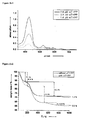
- FIG. 1a-1 shows the typical absorption spectrum of the m THPP-loaded calcium phosphate colloid. This absorption spectrum is similar to the absorption spectrum of dissolved m THPP.
- FIG. 1a-2 shows the thermogravimetrie analysis of the PSS-functionalized calcium phosphate nanoparticles with and without adsorbed m THPP.
- the first weight loss corresponds to the water loss of the compounds which is very similar for both sample types.
- the second weight loss shows the combustion of the polymeric part; in this case the amount of polymer differs by about 3.5 %.
- the m THPP inhibits the PSS-adsorption to some extent.
- the third weight loss of 2.9 % of the m THPP-loaded calcium phosphate nanoparticles corresponds to the combustion of m THPP which is missing for the non-loaded particles. This amount of m THPP is in agreement with the results from quantitative UV spectroscopy.
- the last weight loss shows the loss of carbon dioxide due to the carbonate content of the mineral phase.
- FIG. 1a-3 shows the X-ray powder diffractograms of PSS-stabilized calcium phosphate nanoparticles with and without adsorbed m THPP.
- the particles consist of nanocrystalline hydroxyapatite, Ca 5 (PO 4 ) 3 (OH), as indicated by the broad diffraction peaks.
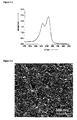
- FIG. 1a-4 shows a SEM-image of PSS-functionalized and m THPP-loaded calcium phosphate nanoparticles.
- the particles are approximately 80-100 nm in diameter with a rather monodisperse size distribution.
- the zeta potential of the particles is approximately -20 mV. Despite the comparatively low zeta potential the particles are stable in dispersion for several weeks.
- the particles were separated from the excess of PAH by ultracentrifugation at 66,000 g for 30 minutes.
- the centrifuged nanoparticles were redispersed in ultrapure water.
- the UV-spectra were similar to the ones without a second polymeric layer. Fluorescence measurements show a decrease in fluorescence intensity with the deposition of the PAII-layer ( FIG. 1a-5 ).
- Dynamic light scattering measurements showed a slight increase of particle diameter. This was confirmed by SEM ( FIG. 1a-6 ). The diameter of the particles is 100 -120 nm. The zeta potential is approximately +50 mV which confirms the adsorption of the cationic polyelectrolyte PAH.
- EXAMPLE 1b Description of the preparation of a formulation comprising CMC-stabilized calcium phosphate nanoparticles and a hydrophobic photosensitizer, 5,10,15,20-tetrakis(3-hydroxyphenyl)-porphyrin ( m THPP)
- the CMC-coated calcium phosphate nanoparticles were prepared at room temperature by rapidly pumping aqueous solutions of calcium lactate (18 mM), (NH 4 ) 2 HPO 4 (10.8 mM), and CMC (2 g 1 -1 ) in a volume ratio of 1 : 1 : 1 into a stirred vessel containing 4 volume parts of water. Before the precipitation the photosensitizer m THPP (1.5 mM in 2-propanol) was mixed to the phosphate component in a volume ratio of 20 : 1 up to 5 : 1 with respect to the volume of phosphate solution. The CMC functionalized and stabilized the emerging calcium phosphate nanoparticles. The pH of the calcium and phosphate solutions was previously adjusted to 10 with ammonia solution.
- the final pH of the colloidal dispersion was 9.2 to 9.5.
- the particles were separated from the counter ions (lactate, NH 4 + , Na + ), excess of dissolved CMC and non-adsorbed m THPP by ultracentrifugation at 66,000 g for 30 minutes.
- the centrifuged nanoparticles were redispersed in water, centrifuged and redispersed again.
- Ultrapure water (Purelab ultra instrument from ELGA) was used for all preparations. To accomplish the stability of this colloidal system, the dispersion had to be diluted in the volume ratio 1 : 5 with water.
- Thermogravimetric analysis was carried out with a Netzsch STA 409 PC instrument (dynamic oxygen atmosphere 50 ml min -1 ; heating rate 1 K min -1 ; open alumina crucible).
- XRD X-ray powder diffraction
- SEM-EDX scanning electron microscopy coupled with energy-dispersive X-ray spectroscopy
- SEM-EDX ESEM Quanta 400 FEG, FEI; gold-palladium [80 : 20]-sputtered samples; EDX detector: S-UTW-Si(Li)).
- Emission and excitation spectra were measured at room temperature using a J&M spectrofluorometer (Analytician Mess- und Regeltechnik FU3095-500) equipped with a diode array polychromator and a 75 W xenon lamp. The emission spectra were corrected for the detector sensitivity and the excitation spectra for the intensity of the exciting light.
- UV-visible absorption spectra were recorded with a Varian Cary WinUV spectrophotometer in 1 cm quartz cuvettes.
- FIG. 1b-1 shows the typical absorption of the m THPP-loaded calcium phosphate colloid. Excerpt for broader peaks, the absorption spectrum is close to the absorption spectrum of free m THPP.
- FIG. 1b-2 shows the results of the thermogravimetric analysis of the CMC-functionalized calcium phosphate nanoparticles with and without adsorbed m THPP.
- the first weight loss corresponds to the water loss of the compounds. This is 4.5% higher for the m THPP-loaded particles than for the unloaded particles.
- the second weight loss is due to the combustion of the polymer; in this case the amounts differ by 3.3%.
- the m THPP promotes the CMC-adsorption to some extent.
- the third weight loss of 2.6% of the m THPP-loaded calcium phosphate nanoparticles is due to the combustion of m THPP.
- the last weight loss shows the loss of carbon dioxide due to the carbonate content of the mineral phase.
- FIG. 1b-3 shows the X-ray powder diffractograms of CMC-stabilized calcium phosphate nanoparticles with and without adsorbed m THPP.
- the particles are X-ray amorphous, i.e. no defined peaks arc recognizable.
- the vertical lines show the calculated peak positions for hydroxyapatite, Ca 5 (PO 4 ) 3 (OH).
- FIG. 1b-4 shows an SEM image of CMC-functionalized and m THPP-loaded calcium phosphate nanoparticles.
- the particles arc approximately 80 - 100 nm in diameter with a rather monodisperse size distribution.
- the zeta potential of the particles is approximately -20 mV. Despite the low zeta potential the particles are stable in dispersion for several weeks.
- the particles were separated from the excess of PEI by ultracentrifugation at 66,000 g for 30 minutes.
- the centrifuged nanoparticles were redispersed in ultrapure water.
- the size of the particles increased to about 40 nm and the zeta potential was +30 mV which confirms the adsorption of the positive polyelectrolyte PEI.
- the particles are stable in dispersion for a few weeks.
- EXAMPLE 2 Description of the preparation of a formulation comprising calcium phosphate nanoparticles and the hydrophilic photosensitizer methylene blue (MB)
- the PSS-coated nanoparticles were prepared at room temperature by rapidly pumping aqueous solutions of calcium lactate (18 mM), (NH 4 ) 2 HPO 4 (10.8 mM), and PSS (2 g l -1 ) in a volume ratio of 1 : 1 : 2 into a stirred vessel containing 4 volume parts of water.
- the PSS functionalized and stabilized the forming calcium phosphate nanoparticles.
- the pH of the calcium and phosphate solutions was previously adjusted to 10 with potassium hydroxide solution. After one minute MB (0.003 M) was added in a volume ratio of 1 : 1 with respect to the phosphate solution.
- the particles were separated from the counter ions (lactate, NH 4 + , K + , Na + , Cl - ), excess of dissolved PSS and non-adsorbed MB by ultracentrifugation at 150,000 g for 30 minutes.
- the centrifuged nanoparticles were redispersed in water, centrifuged and redispersed again. Ultrapure water (Purelab ultra instrument from ELGA) was used for all preparations.
- Thermogravimetric analysis was carried out with a Netzsch STA 409 PC instrument (dynamic oxygen atmosphere 50 ml min -1 ; heating rate 1 K min -1 ; open alumina crucible).
- XRD X-ray powder diffraction
- SEM-EDX scanning electron microscopy coupled with energy-dispersive X-ray spectroscopy
- SEM-EDX ESEM Quanta 400 FEG, FEI; gold-palladium [80 : 20]-sputtered samples; EDX detector: S-UTW-Si(Li)).
- Emission and excitation spectra were measured at room temperature using a J&M spectrofluorometer (Analytician Mess- und Regeltechnik FL3095-500) equipped with a diode array polychromator and a 75 W xenon lamp. The emission spectra were corrected for the detector sensitivity and the excitation spectra for the intensity of the exciting light.
- UV-visible absorption spectra were recorded with a Varian Cary WinUV spectrophotometer in 1 cm quartz cuvettes.
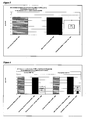
- FIG. 2-1 shows the typical absorption of the MB loaded calcium phosphate colloid. This absorption pattern is similar to the absorption pattern of the free MB.
- FIG. 2-2 shows a SEM image of PSS-funetionalizcd and MB-loaded calcium phosphate nanoparticles.
- the particles are approximately 50 - 80 nm in diameter with a rather monodisperse size distribution.
- the zeta potential of these particles is approximately -20 mV. Despite the comparatively low zeta potential the particles are stable in dispersion for several weeks.
- EXAMPLE 3 Description of the preparation of a formulation comprising calcium phosphate nanoparticles and a hydrophilic phosphate-functionalized photosensitizer ( p TPPP)
- Calcium phosphate nanoparticles were prepared by pumping aqueous solutions of Ca(NO 3 ) 2 .4H 2 O (3 mM) and (NH 4 ) 2 HPO 4 (1.8 mM) into a stirred vessel ( T. Welzel, I. Radtke, W. Meyer-Zaika, R. Heumann and M. Epple, J. Mater. Chem., 2004,14,2213-2217 ).
- the pH of the calcium and phosphate solutions was previously adjusted to 9 with 0.1 N aqueous NaOH. A few seconds after mixing, the nanoparticle dispersion was taken with a syringe.
- the colloids were prepared by rapidly mixing an aqueous solution of the sodium salt of p TPPP (30 ⁇ M) with the dispersed calcium phosphate nanoparticles in a 5 ml : 10 ml ratio. The final pH of the colloidal dispersion was between 7.5 and 8.5. The colloids were stored at 4 to 8°C under light exclusion. The particles were separated from the counter ions (NO 3 - , NH 4 + , Na + ) and non-adsorbed p TPPP by ultracentrifugation at 371,000 g. The centrifuged nanoparticles were washed with 100 ml of absolute ethanol and either redispersed in water or dried in air. Ultrapure water (Purelab ultra instrument from ELGA) was used for all preparations.
- the amount of dissolved p TPPP in the supernatant after ultracentrifugation was about 30% as determined by UV spectroscopy, i.e. about 70% of the total amount of the added p TPPP was adsorbed on the calcium phosphate surface.
- Emission and excitation spectra were measured at room temperature using a J&M spectrofluorometer (Analytician Mess- und Regeltechnik FL3095-500) equipped with a diode array polychromator and a 75 W xenon lamp. The emission spectra were corrected for the detector sensitivity and the excitation spectra for the intensity of the exciting light.
- UV-visible absorption spectra were recorded with a Varian Cary WinUV spectrophotometer in 1 cm quartz cuvettes.
- the emission spectrum of the dispersed colloid consists of a strong band at 653 nm with a shoulder at 705 nm ( FIG. 3-2 ).
- the partially protonated form of p TPPP shows two strong bands at 650 nm and 712 nm in the emission spectrum. This spectrum was compared with the emission spectrum of the dispersed nanoparticles. In the case of the dispersed nanoparticles, a broad shoulder was observed at 705 nm instead of a strong peak at 712 nm. The observed spectral changes in the absorption and emission spectra of the dispersed nanoparticles are probably caused by the electrostatic interaction of p TPPP with the calcium phosphate surface.
- the emission spectrum of the centrifuged (solvent-free, i.e. solid) p TPPP-functionalized calcium phosphate nanoparticles was also measured.
- the particles were excited in the near UV region at 306 nm ( FIG. 3-3 ).
- the emission spectrum showed two strong peaks at 472 nm and 597 nm, in good agreement with the solid porphyrin.
- the p TPPP-loaded nanoparticles show a fluorescence signal which can be used for their detection in vivo.
- EXAMPLE 4 Cell-test of the formulation from example 1 (with the photosensitizer m THPP) on a HT29 tumor cell line.
- the cell test was conducted according to the following procedure:
- the photosensitzing activity was determined in the human colon adenocarcinoma cell line HT29.
- the HT29 cell lines were grown in DMEM (cc-pro GmbH) supplemented with 10% heat-inactivated fetal calf serum (FCS, cc-pro GmbH), 1% penicillin (10000 IU) and streptomycin (10,000 ⁇ g ml -1 , cc-pro GmbH). Cells were kept as a monolayer culture in a humidified incubator (5% CO 2 in air at 37°C).
- a stock solution of the nanoparticle formulation was kept in the dark at 4°C. Further dilution was performed in RPM1 1640 medium without phenol red supplemented with 10% FCS to reach a final photosensitizer concentration of 2 or 10 ⁇ M, respectively.
- the cell viability was assessed by the XTT assay.
- 500 mg XTT sodium 3'-[phenylaminocarbonyl)-3,4-tetrazolium]-bis(4-methoxy-6-nitro)benzene sulfonic acid, Applichem GmbH
- 500 ml PBS-Buffer without Ca 2+ and Mg 2
- PMS N-methyl dibenzopyrazine methyl sulfate, Applichem GmbH
- PMS activation solution
- the solution should be stored frozen and should not be exposed to light.
- the XTT reagent solution was thawed in a 37°C water bath and the activation solution (PMS) was added immediately prior to use.
- PMS activation solution
- the medium in the micro plate was exchanged with fresh RPMI without phenol red and 10% FCS (100 ⁇ l) prior adding 50 ⁇ l XTT reaction solution per well.
- the micro plate was incubated for 2 - 3 hours at 37°C and 5% CO 2 until an orange dye is to be formed.
- the micro plate was gently shaken to evenly distribute the dye in the wells.
- the absorbance of the samples was measured with a spectrophotometer (Tecan Infinite 200, Tecan Group Ltd.) at a wavelength of 490 nm. In order to measure reference absorbance (to measure non-specific readings) a wavelength of 630 - 690 nm was used.
- EXAMPLE 5 Cell-test of the formulation from example 2 (with the photosensitizer MB) on a bacterial cell culture
- the bacterial strains used in our studies was the Gram-positive bacterium Staphylococcus aureus DSM1104 (ATCC 25923) and Pseudomonas aeruginosa DSM1117 (ATCC 27853).
- the cells of this strain were grown aerobically overnight at 37°C in Tryptic Soy Broth (Merck KGaA Darmstadt, Germany). Cells were harvested by centrifugation and resuspended in sterile phosphate-buffered saline (PBS).
- the fluence rate for these Settings was about 1 W cm -2 (measured with Optometer P-9710, Gigahertz-Optik GmbH, Puchheim, Germany). With this irradiation time, the resulting energy fluence was about 100 J cm -2 .
- a control well contained 10 ⁇ l of PBS instead of methylene blue formulation and was not exposed to laser light.
- the control sample for dark toxicity contained the methylene blue formulation but was not exposed to laser light.
- After illumination the samples were removed from the wells of the plate, diluted with Tryptic Soy Broth and plated by using spiral plater Eddy Jet (iul Instruments, Barcelona, Spain) on Tryptic Soy agar plates. The numbers of colony-forming units (CFU ml -1 ) were enumerated after adequate incubation by using colony Counter Countermat Flash (iul Instruments, Barcelona, Spain).
- EXAMPLE 6 Cell test of the formulation from example 1b (with the photosensitizer m THPP) on a bacterial cell culture
- the test was conducted according to the procedure given in EXAMPLE 5 except that the incubation time was 30 min and 90 min, respectively.
- EXAMPLE 7 Cell-test of the formulation from example 3 (with the photosensitizer p TPPP) and of the pure photosensitizer p TPPP on a HT29 tumor cell line
- the test was conducted according to procedure given in EXAMPLE 4.
- the concentration of the pure photosensitizer solution was adjusted as to equal the amount contained in the nanoparticles.
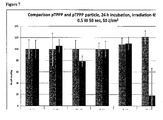
- the photosensitizer p TPPP exhibits no photodynamic activity if it is applied to the HT29 cell culture in water solution. If on the other hand the photosensitizer is applied in a calcium phosphate nanoparticle formulation, it exhibits a very strong phototoxicity at a concentration of 10 ⁇ M.
Landscapes
- Health & Medical Sciences (AREA)
- Chemical & Material Sciences (AREA)
- Life Sciences & Earth Sciences (AREA)
- Animal Behavior & Ethology (AREA)
- Veterinary Medicine (AREA)
- Public Health (AREA)
- General Health & Medical Sciences (AREA)
- Engineering & Computer Science (AREA)
- Epidemiology (AREA)
- Pharmacology & Pharmacy (AREA)
- Medicinal Chemistry (AREA)
- Biomedical Technology (AREA)
- Molecular Biology (AREA)
- Nanotechnology (AREA)
- Biochemistry (AREA)
- Bioinformatics & Cheminformatics (AREA)
- Optics & Photonics (AREA)
- Physics & Mathematics (AREA)
- Inorganic Chemistry (AREA)
- Chemical Kinetics & Catalysis (AREA)
- General Chemical & Material Sciences (AREA)
- Nuclear Medicine, Radiotherapy & Molecular Imaging (AREA)
- Organic Chemistry (AREA)
- Communicable Diseases (AREA)
- Oncology (AREA)
- Pharmaceuticals Containing Other Organic And Inorganic Compounds (AREA)
- Medicines That Contain Protein Lipid Enzymes And Other Medicines (AREA)
- Medicinal Preparation (AREA)
Priority Applications (7)
| Application Number | Priority Date | Filing Date | Title |
|---|---|---|---|
| AT08022155T ATE544472T1 (de) | 2008-12-19 | 2008-12-19 | Kalziumphosphat-nanopartikel als farbstoffträger für die photodynamische therapie |
| EP08022155A EP2198885B1 (fr) | 2008-12-19 | 2008-12-19 | Nanoparticule de phosphate de calcium en tant que véhiculeur de colorant pour la thérapie photodynamique |
| ES08022155T ES2381022T3 (es) | 2008-12-19 | 2008-12-19 | Nanopartículas de fosfato de calcio como vehículo de colorantes para la terapia fotodinámica |
| CN200980151463.5A CN102256622B (zh) | 2008-12-19 | 2009-12-18 | 作为光动力学疗法用载体-系统的基于磷酸钙的纳米粒子 |
| JP2011541225A JP5138818B2 (ja) | 2008-12-19 | 2009-12-18 | 光線力学療法の担体システムとして用いられるリン酸カルシウム系ナノ粒子 |
| US13/140,855 US8956648B2 (en) | 2008-12-19 | 2009-12-18 | Calciumphosphate-based nanoparticles as carrier-systems for photodynamic therapy |
| PCT/EP2009/009142 WO2010078941A1 (fr) | 2008-12-19 | 2009-12-18 | Nanoparticules à base de phosphate de calcium en tant que systèmes supports pour thérapie photodynamique |
Applications Claiming Priority (1)
| Application Number | Priority Date | Filing Date | Title |
|---|---|---|---|
| EP08022155A EP2198885B1 (fr) | 2008-12-19 | 2008-12-19 | Nanoparticule de phosphate de calcium en tant que véhiculeur de colorant pour la thérapie photodynamique |
Publications (2)
| Publication Number | Publication Date |
|---|---|
| EP2198885A1 true EP2198885A1 (fr) | 2010-06-23 |
| EP2198885B1 EP2198885B1 (fr) | 2012-02-08 |
Family
ID=40677783
Family Applications (1)
| Application Number | Title | Priority Date | Filing Date |
|---|---|---|---|
| EP08022155A Not-in-force EP2198885B1 (fr) | 2008-12-19 | 2008-12-19 | Nanoparticule de phosphate de calcium en tant que véhiculeur de colorant pour la thérapie photodynamique |
Country Status (7)
| Country | Link |
|---|---|
| US (1) | US8956648B2 (fr) |
| EP (1) | EP2198885B1 (fr) |
| JP (1) | JP5138818B2 (fr) |
| CN (1) | CN102256622B (fr) |
| AT (1) | ATE544472T1 (fr) |
| ES (1) | ES2381022T3 (fr) |
| WO (1) | WO2010078941A1 (fr) |
Cited By (4)
| Publication number | Priority date | Publication date | Assignee | Title |
|---|---|---|---|---|
| WO2012000610A1 (fr) * | 2010-06-29 | 2012-01-05 | Universität des Saarlandes | Complexes contenant du sulfonate de polystyrène |
| EP2953646A4 (fr) * | 2013-02-05 | 2017-02-15 | 1Globe Health Institute LLC | Nanoparticules biodégradables et cliniquement compatibles en tant que véhicules d'administration de médicament |
| EP3551034A1 (fr) * | 2016-12-07 | 2019-10-16 | Progenity, Inc. | Méthodes, dispositifs et systèmes de détection pour le tractus gastro-intestinal |
| EP3789760A1 (fr) * | 2019-09-05 | 2021-03-10 | PreSens Precision Sensing GmbH | Capteur de gaz de dioxyde de carbone |
Families Citing this family (15)
| Publication number | Priority date | Publication date | Assignee | Title |
|---|---|---|---|---|
| WO2012145801A1 (fr) * | 2011-04-29 | 2012-11-01 | Jagat Rakesh Kanwar | Nanoparticule |
| WO2013009701A2 (fr) | 2011-07-08 | 2013-01-17 | The University Of North Carolina At Chapel Hill | Nanoparticules de métal-bisphosphonate pour thérapie anticancéreuse et imagerie, ainsi que pour traiter des troubles des os |
| CN103202316A (zh) * | 2013-03-06 | 2013-07-17 | 安徽大学 | 一种具有抑菌功能的吩噻嗪衍生物/银纳米复合材料及其制备方法 |
| US20160235708A1 (en) * | 2013-10-04 | 2016-08-18 | Sanjay Banerji | Topical pigmentory composition |
| KR101567717B1 (ko) | 2014-07-24 | 2015-11-10 | 가톨릭대학교 산학협력단 | 칼슘 이온 및 친수성 음이온성 광민감제를 이용한 나노복합체의 제조방법 및 상기 나노복합체를 이용한 약물전달체 |
| KR101622031B1 (ko) * | 2014-07-25 | 2016-05-19 | 경희대학교 산학협력단 | 광감작제 담지 탄산칼슘 복합 나노입자, 이의 제조방법 및 이를 포함하는 초음파 조영 및 광역학 치료용 조성물 |
| JP2017537981A (ja) * | 2014-12-09 | 2017-12-21 | ベルモント ユニバーシティ | リン酸カルシウムナノ粒子封入医薬用半固体ゲル |
| AU2016365412B2 (en) | 2015-12-03 | 2022-05-19 | Amrita Vishwa Vidyapeetham | Radio-wave responsive doped nanoparticles for image-guided therapeutics |
| CN105954268B (zh) * | 2016-04-22 | 2019-01-11 | 华南师范大学 | 一种基于四氧化三铁纳米簇催化信号放大的可视化检测传感器及其构建与应用 |
| US20200181026A1 (en) * | 2016-06-30 | 2020-06-11 | Sofsera Corporation | Calcium phosphate sintered body particles and method for producing same |
| WO2019028250A1 (fr) * | 2017-08-02 | 2019-02-07 | The University Of Chicago | Couches organométalliques nanométriques et nanoplaques organométalliques pour thérapie photodynamique induite par rayons x, radiothérapie, thérapie rodiodynamique, chimiothérapie, immunothérapie, et toute combinaison de celles-ci |
| CA3143430A1 (fr) * | 2019-06-14 | 2020-12-17 | Universidade De Coimbra | Petits derives cationiques d'ortho-5,15-di-heteroaryl-porphyrines et leurs applications dans la photoinactivation de micro-organismes |
| KR102236212B1 (ko) | 2019-11-13 | 2021-04-05 | 주식회사 메가젠임플란트 | 골조직 광열치료용 이중층 구조의 복합 멤브레인 및 그 제조방법 |
| CN111973573B (zh) * | 2020-08-04 | 2022-10-18 | 中山大学附属第七医院(深圳) | 一种磷酸钙纳米颗粒及其制备方法和应用 |
| CN115073520B (zh) * | 2022-06-15 | 2026-02-24 | 上海科技大学 | 荧光分子、其磷酸钙纳米粒以及它们的制备方法和用途 |
Citations (4)
| Publication number | Priority date | Publication date | Assignee | Title |
|---|---|---|---|---|
| US20040047913A1 (en) | 2002-05-16 | 2004-03-11 | Eric Allemann | Compositions and methods for delivery of photosensitive drugs |
| DE102005016873A1 (de) * | 2005-04-12 | 2006-10-19 | Magforce Nanotechnologies Ag | Nanopartikel-Wirstoff-Konjugate |
| US20070218049A1 (en) | 2006-02-02 | 2007-09-20 | Wei Chen | Nanoparticle based photodynamic therapy and methods of making and using same |
| US20080241256A1 (en) | 2007-03-30 | 2008-10-02 | Liisa Kuhn | Targeted active agent delivery system based on calcium phosphate nanoparticles |
Family Cites Families (3)
| Publication number | Priority date | Publication date | Assignee | Title |
|---|---|---|---|---|
| JP2008524203A (ja) * | 2004-12-17 | 2008-07-10 | コーニンクレッカ フィリップス エレクトロニクス エヌ ヴィ | 分子イメージングのためのターゲティング剤 |
| US8207211B2 (en) * | 2005-02-28 | 2012-06-26 | The General Hospital Corporation | Photosensitizers for targeted photodynamic therapy |
| US20100323022A1 (en) * | 2008-02-07 | 2010-12-23 | Kuraray Medical Inc. | Calcium phosphate composition and process for production thereof |
-
2008
- 2008-12-19 AT AT08022155T patent/ATE544472T1/de active
- 2008-12-19 EP EP08022155A patent/EP2198885B1/fr not_active Not-in-force
- 2008-12-19 ES ES08022155T patent/ES2381022T3/es active Active
-
2009
- 2009-12-18 CN CN200980151463.5A patent/CN102256622B/zh not_active Expired - Fee Related
- 2009-12-18 JP JP2011541225A patent/JP5138818B2/ja not_active Expired - Fee Related
- 2009-12-18 WO PCT/EP2009/009142 patent/WO2010078941A1/fr not_active Ceased
- 2009-12-18 US US13/140,855 patent/US8956648B2/en active Active
Patent Citations (4)
| Publication number | Priority date | Publication date | Assignee | Title |
|---|---|---|---|---|
| US20040047913A1 (en) | 2002-05-16 | 2004-03-11 | Eric Allemann | Compositions and methods for delivery of photosensitive drugs |
| DE102005016873A1 (de) * | 2005-04-12 | 2006-10-19 | Magforce Nanotechnologies Ag | Nanopartikel-Wirstoff-Konjugate |
| US20070218049A1 (en) | 2006-02-02 | 2007-09-20 | Wei Chen | Nanoparticle based photodynamic therapy and methods of making and using same |
| US20080241256A1 (en) | 2007-03-30 | 2008-10-02 | Liisa Kuhn | Targeted active agent delivery system based on calcium phosphate nanoparticles |
Non-Patent Citations (32)
| Title |
|---|
| A. DOAT ET AL., BIOMATCRIALS, vol. 24, 2003, pages 3365 - 3371 |
| A. DOAT ET AL., J. SOLID STATE CHEM., vol. 177, 2004, pages 1179 - 1187 |
| A. LEBUGLE ET AL., CHEM. COMMUN., 2006, pages 606 - 608 |
| A. MAITRA, EXP. REV. MOL. DIAGN., vol. 5, 2005, pages 893 - 905 |
| B. PALAZZO ET AL., ADV. FUNCT. MATER., vol. 17, 2007, pages 2180 - 2188 |
| C. REY ET AL., MATER. SCI. ENG., C, vol. 27, 2007, pages 198 - 5220 |
| C. SCHILLER; M. EPPLE, BIOMATERIALS, vol. 24, 2003, pages 2037 - 2043 |
| D. OLTON ET AL., BIOMATERIALS, vol. 28, 2007, pages 1267 - 1279 |
| D. TADIC ET AL., BIOMATERIALS, vol. 47, 2004, pages 3335 - 3340 |
| D. TADIC; F. PETERS; M. EPPLE, BIOMATERIALS, vol. 23, 2002, pages 2553 - 2559 |
| E. BOANINI ET AL., ADV. MATER., vol. 19, 2007, pages 2499 - 2502 |
| G. DCCHCR, SCIENCE, vol. 277, 1997, pages 1232 - 1237 |
| G. DECHER, SCIENCE, vol. 277, 1997, pages 1232 - 1237 |
| H. URCH ET AL., MATERIALWISS. UND WERKSTOFFTECH., vol. 37, 2006, pages 422 - 425 |
| J. SCHWICRTZ ET AL., J. MATER. CHEM., vol. 18, 2008, pages 3831 - 3834 |
| J. SCHWIERTZ ET AL., J. MATER. CHEM., vol. 18, 2008, pages 3831 - 3834 |
| M. VALLET-REGI, DALTON TRANS., 2006, pages 5211 - 5220 |
| M. WAINWRIGHT, PHOTODIAGN. PHOTODYN. THER., vol. 2, 2005, pages 263 - 272 |
| S. PADILLA MONDEJAR; A. KOVTUN; M. EPPLE, J. MATER. CHEM., vol. 17, 2007, pages 4153 - 4159 |
| S. WEINER; H.D. WAGNER, ANNU. REV. MATER. SCI., vol. 28, 1998, pages 271 - 298 |
| S.V. DOROZHKIN; M. EPPLE, ANGEW. CHEM., INT. ED., vol. 41, 2002, pages 3130 - 3146 |
| S.V. DOROZHKIN; M. EPPLE, ANGEW. CHEM., vol. 41, 2002, pages 3130 - 3146 |
| T. WELZEL ET AL., J. MATER. CHEM., vol. 14, 2004, pages 2213 - 2217 |
| T.D. MODY, J. PORPHYRINS PHTHALOCYANINES, vol. 4, 2000, pages 362 - 367 |
| V. SOKOLOVA ET AL., J. BIOL. LNORG. CHEM., vol. 12, 2007, pages 174 - 179 |
| V. SOKOLOVA ET AL., J. MATER. CHEM., vol. 17, 2007, pages 721 - 727 |
| V. SOKOLOVA; M. EPPLC, ANGEW. CHCM. INT. ED., vol. 47, 2008, pages 1382 - 1395 |
| V. SOKOLOVA; M. EPPLE, ANGEW. CHEM., INT. ED., vol. 47, 2008, pages 1382 - 1395 |
| V.V. SOKOLOVA ET AL., BIOMATERIALS, vol. 27, 2006, pages 3147 - 3153 |
| X. CHENG; L. KUHN, INT. J. NANOMED., vol. 2, 2007, pages 667 - 674 |
| Y. KAKIZAWA ET AL., J. CONTROLLED RELEASE, vol. 111, 2006, pages 368 - 370 |
| Z. DAI ET AL., ADV. MATER., vol. 13, 2001, pages 1339 - 1342 |
Cited By (7)
| Publication number | Priority date | Publication date | Assignee | Title |
|---|---|---|---|---|
| WO2012000610A1 (fr) * | 2010-06-29 | 2012-01-05 | Universität des Saarlandes | Complexes contenant du sulfonate de polystyrène |
| EP2953646A4 (fr) * | 2013-02-05 | 2017-02-15 | 1Globe Health Institute LLC | Nanoparticules biodégradables et cliniquement compatibles en tant que véhicules d'administration de médicament |
| US11001840B2 (en) | 2013-02-05 | 2021-05-11 | 1Globe Health Institute Llc | Biodegradable and clinically-compatible nanoparticles as drug delivery carriers |
| EP3551034A1 (fr) * | 2016-12-07 | 2019-10-16 | Progenity, Inc. | Méthodes, dispositifs et systèmes de détection pour le tractus gastro-intestinal |
| US11547301B2 (en) | 2016-12-07 | 2023-01-10 | Biora Therapeutics, Inc. | Methods for collecting and testing bacteria containing samples from within the gastrointestinal tract |
| US12089916B2 (en) | 2016-12-07 | 2024-09-17 | Biora Therapeutics, Inc. | Gastrointestinal tract detection methods, devices and systems |
| EP3789760A1 (fr) * | 2019-09-05 | 2021-03-10 | PreSens Precision Sensing GmbH | Capteur de gaz de dioxyde de carbone |
Also Published As
| Publication number | Publication date |
|---|---|
| US8956648B2 (en) | 2015-02-17 |
| EP2198885B1 (fr) | 2012-02-08 |
| WO2010078941A1 (fr) | 2010-07-15 |
| CN102256622A (zh) | 2011-11-23 |
| ATE544472T1 (de) | 2012-02-15 |
| US20110257586A1 (en) | 2011-10-20 |
| JP2012512817A (ja) | 2012-06-07 |
| JP5138818B2 (ja) | 2013-02-06 |
| CN102256622B (zh) | 2014-10-29 |
| ES2381022T3 (es) | 2012-05-22 |
Similar Documents
| Publication | Publication Date | Title |
|---|---|---|
| EP2198885B1 (fr) | Nanoparticule de phosphate de calcium en tant que véhiculeur de colorant pour la thérapie photodynamique | |
| Schwiertz et al. | Calcium phosphate nanoparticles as efficient carriers for photodynamic therapy against cells and bacteria | |
| Wang et al. | Carbon dots as drug delivery vehicles for antimicrobial applications: a minireview | |
| Sun et al. | Carbon dots as a novel photosensitizer for photodynamic therapy of cancer and bacterial infectious diseases: recent advances | |
| US20220296714A1 (en) | Targeted nano-photomedicines for photodynamic therapy of cancer | |
| Zhao et al. | Near-infrared carbon nanodots for effective identification and inactivation of Gram-positive bacteria | |
| Mondal et al. | Porphyrins and phthalocyanines: promising molecules for light-triggered antibacterial nanoparticles | |
| US20070218049A1 (en) | Nanoparticle based photodynamic therapy and methods of making and using same | |
| Flak et al. | Hybrid ZnPc@ TiO2 nanostructures for targeted photodynamic therapy, bioimaging and doxorubicin delivery | |
| CN104888217B (zh) | 用于癌症光动力学治疗的靶向纳米光药物 | |
| Vivero-Escoto et al. | Stimuli-responsive protoporphyrin IX silica-based nanoparticles for photodynamic therapy in vitro | |
| Buchner et al. | Photosensitiser functionalised luminescent upconverting nanoparticles for efficient photodynamic therapy of breast cancer cells | |
| Bœuf-Muraille et al. | Evaluation of mTHPC-loaded PLGA nanoparticles for in vitro photodynamic therapy on C6 glioma cell line | |
| Klesing et al. | Positively charged calcium phosphate/polymer nanoparticles for photodynamic therapy | |
| Kostiv et al. | Phthalocyanine‐Conjugated Upconversion NaYF4: Yb3+/Er3+@ SiO2 Nanospheres for NIR‐Triggered Photodynamic Therapy in a Tumor Mouse Model | |
| Simioni et al. | Layer-by-layer hollow photosensitizer microcapsule design via a manganese carbonate hard template for photodynamic therapy in cells | |
| Toledo et al. | Methylene blue-covered superparamagnetic iron oxide nanoparticles combined with red light as a novel platform to fight non-local bacterial infections: a proof of concept study against Escherichia coli | |
| Zagami et al. | Supramolecular assemblies based on polymeric cyclodextrin nanosponges and a cationic porphyrin with antimicrobial photodynamic therapy action | |
| Vasylyshyn et al. | Surface-engineered core–shell upconversion nanoparticles for effective hypericin delivery and multimodal imaging | |
| Policei Marques et al. | Size‐Dependent Blue Emission from Europium‐Doped Strontium Fluoride Nanoscintillators for X‐Ray‐Activated Photodynamic Therapy | |
| Wang et al. | Upconverting crystal/dextran-g-DOPE with high fluorescence stability for simultaneous photodynamic therapy and cell imaging | |
| Zamani-Roudbaraki et al. | Breast Cancer Therapy: Harnessing Biocompatible Zinc-manganese Nano-platform for Dual-targeted Photodynamic Therapy | |
| Silva et al. | Porphyrin-coated gold nanoparticles associated with X-rays and proton therapy in the treatment of triple-negative breast cancer | |
| Zhang et al. | Hyaluronidase-activated nanoplatform with dual photosensitizers for targeted and synergistic photodynamic/photothermal antibacterial therapy | |
| Chudosai et al. | Selective immobilization of fluorescent dye and photosensitizers on dumbbell like magnetite-gold nanoparticles for improved tumor theranostics |
Legal Events
| Date | Code | Title | Description |
|---|---|---|---|
| PUAI | Public reference made under article 153(3) epc to a published international application that has entered the european phase |
Free format text: ORIGINAL CODE: 0009012 |
|
| AK | Designated contracting states |
Kind code of ref document: A1 Designated state(s): AT BE BG CH CY CZ DE DK EE ES FI FR GB GR HR HU IE IS IT LI LT LU LV MC MT NL NO PL PT RO SE SI SK TR |
|
| AX | Request for extension of the european patent |
Extension state: AL BA MK RS |
|
| 17P | Request for examination filed |
Effective date: 20101223 |
|
| 17Q | First examination report despatched |
Effective date: 20110124 |
|
| AKX | Designation fees paid |
Designated state(s): AT BE BG CH CY CZ DE DK EE ES FI FR GB GR HR HU IE IS IT LI LT LU LV MC MT NL NO PL PT RO SE SI SK TR |
|
| GRAP | Despatch of communication of intention to grant a patent |
Free format text: ORIGINAL CODE: EPIDOSNIGR1 |
|
| GRAS | Grant fee paid |
Free format text: ORIGINAL CODE: EPIDOSNIGR3 |
|
| GRAA | (expected) grant |
Free format text: ORIGINAL CODE: 0009210 |
|
| AK | Designated contracting states |
Kind code of ref document: B1 Designated state(s): AT BE BG CH CY CZ DE DK EE ES FI FR GB GR HR HU IE IS IT LI LT LU LV MC MT NL NO PL PT RO SE SI SK TR |
|
| REG | Reference to a national code |
Ref country code: GB Ref legal event code: FG4D |
|
| REG | Reference to a national code |
Ref country code: AT Ref legal event code: REF Ref document number: 544472 Country of ref document: AT Kind code of ref document: T Effective date: 20120215 Ref country code: CH Ref legal event code: EP |
|
| REG | Reference to a national code |
Ref country code: DE Ref legal event code: R096 Ref document number: 602008013197 Country of ref document: DE Effective date: 20120405 |
|
| REG | Reference to a national code |
Ref country code: ES Ref legal event code: FG2A Ref document number: 2381022 Country of ref document: ES Kind code of ref document: T3 Effective date: 20120522 |
|
| REG | Reference to a national code |
Ref country code: NL Ref legal event code: VDEP Effective date: 20120208 |
|
| LTIE | Lt: invalidation of european patent or patent extension |
Effective date: 20120208 |
|
| PG25 | Lapsed in a contracting state [announced via postgrant information from national office to epo] |
Ref country code: NL Free format text: LAPSE BECAUSE OF FAILURE TO SUBMIT A TRANSLATION OF THE DESCRIPTION OR TO PAY THE FEE WITHIN THE PRESCRIBED TIME-LIMIT Effective date: 20120208 Ref country code: IS Free format text: LAPSE BECAUSE OF FAILURE TO SUBMIT A TRANSLATION OF THE DESCRIPTION OR TO PAY THE FEE WITHIN THE PRESCRIBED TIME-LIMIT Effective date: 20120608 Ref country code: LT Free format text: LAPSE BECAUSE OF FAILURE TO SUBMIT A TRANSLATION OF THE DESCRIPTION OR TO PAY THE FEE WITHIN THE PRESCRIBED TIME-LIMIT Effective date: 20120208 Ref country code: HR Free format text: LAPSE BECAUSE OF FAILURE TO SUBMIT A TRANSLATION OF THE DESCRIPTION OR TO PAY THE FEE WITHIN THE PRESCRIBED TIME-LIMIT Effective date: 20120208 Ref country code: NO Free format text: LAPSE BECAUSE OF FAILURE TO SUBMIT A TRANSLATION OF THE DESCRIPTION OR TO PAY THE FEE WITHIN THE PRESCRIBED TIME-LIMIT Effective date: 20120508 |
|
| PG25 | Lapsed in a contracting state [announced via postgrant information from national office to epo] |
Ref country code: BE Free format text: LAPSE BECAUSE OF FAILURE TO SUBMIT A TRANSLATION OF THE DESCRIPTION OR TO PAY THE FEE WITHIN THE PRESCRIBED TIME-LIMIT Effective date: 20120208 Ref country code: FI Free format text: LAPSE BECAUSE OF FAILURE TO SUBMIT A TRANSLATION OF THE DESCRIPTION OR TO PAY THE FEE WITHIN THE PRESCRIBED TIME-LIMIT Effective date: 20120208 Ref country code: PT Free format text: LAPSE BECAUSE OF FAILURE TO SUBMIT A TRANSLATION OF THE DESCRIPTION OR TO PAY THE FEE WITHIN THE PRESCRIBED TIME-LIMIT Effective date: 20120608 Ref country code: LV Free format text: LAPSE BECAUSE OF FAILURE TO SUBMIT A TRANSLATION OF THE DESCRIPTION OR TO PAY THE FEE WITHIN THE PRESCRIBED TIME-LIMIT Effective date: 20120208 Ref country code: GR Free format text: LAPSE BECAUSE OF FAILURE TO SUBMIT A TRANSLATION OF THE DESCRIPTION OR TO PAY THE FEE WITHIN THE PRESCRIBED TIME-LIMIT Effective date: 20120509 Ref country code: PL Free format text: LAPSE BECAUSE OF FAILURE TO SUBMIT A TRANSLATION OF THE DESCRIPTION OR TO PAY THE FEE WITHIN THE PRESCRIBED TIME-LIMIT Effective date: 20120208 |
|
| REG | Reference to a national code |
Ref country code: AT Ref legal event code: MK05 Ref document number: 544472 Country of ref document: AT Kind code of ref document: T Effective date: 20120208 |
|
| PG25 | Lapsed in a contracting state [announced via postgrant information from national office to epo] |
Ref country code: CY Free format text: LAPSE BECAUSE OF FAILURE TO SUBMIT A TRANSLATION OF THE DESCRIPTION OR TO PAY THE FEE WITHIN THE PRESCRIBED TIME-LIMIT Effective date: 20120208 |
|
| PG25 | Lapsed in a contracting state [announced via postgrant information from national office to epo] |
Ref country code: CZ Free format text: LAPSE BECAUSE OF FAILURE TO SUBMIT A TRANSLATION OF THE DESCRIPTION OR TO PAY THE FEE WITHIN THE PRESCRIBED TIME-LIMIT Effective date: 20120208 Ref country code: SI Free format text: LAPSE BECAUSE OF FAILURE TO SUBMIT A TRANSLATION OF THE DESCRIPTION OR TO PAY THE FEE WITHIN THE PRESCRIBED TIME-LIMIT Effective date: 20120208 Ref country code: EE Free format text: LAPSE BECAUSE OF FAILURE TO SUBMIT A TRANSLATION OF THE DESCRIPTION OR TO PAY THE FEE WITHIN THE PRESCRIBED TIME-LIMIT Effective date: 20120208 Ref country code: DK Free format text: LAPSE BECAUSE OF FAILURE TO SUBMIT A TRANSLATION OF THE DESCRIPTION OR TO PAY THE FEE WITHIN THE PRESCRIBED TIME-LIMIT Effective date: 20120208 Ref country code: SE Free format text: LAPSE BECAUSE OF FAILURE TO SUBMIT A TRANSLATION OF THE DESCRIPTION OR TO PAY THE FEE WITHIN THE PRESCRIBED TIME-LIMIT Effective date: 20120208 Ref country code: RO Free format text: LAPSE BECAUSE OF FAILURE TO SUBMIT A TRANSLATION OF THE DESCRIPTION OR TO PAY THE FEE WITHIN THE PRESCRIBED TIME-LIMIT Effective date: 20120208 |
|
| PG25 | Lapsed in a contracting state [announced via postgrant information from national office to epo] |
Ref country code: SK Free format text: LAPSE BECAUSE OF FAILURE TO SUBMIT A TRANSLATION OF THE DESCRIPTION OR TO PAY THE FEE WITHIN THE PRESCRIBED TIME-LIMIT Effective date: 20120208 |
|
| PLBE | No opposition filed within time limit |
Free format text: ORIGINAL CODE: 0009261 |
|
| STAA | Information on the status of an ep patent application or granted ep patent |
Free format text: STATUS: NO OPPOSITION FILED WITHIN TIME LIMIT |
|
| 26N | No opposition filed |
Effective date: 20121109 |
|
| PG25 | Lapsed in a contracting state [announced via postgrant information from national office to epo] |
Ref country code: AT Free format text: LAPSE BECAUSE OF FAILURE TO SUBMIT A TRANSLATION OF THE DESCRIPTION OR TO PAY THE FEE WITHIN THE PRESCRIBED TIME-LIMIT Effective date: 20120208 |
|
| REG | Reference to a national code |
Ref country code: DE Ref legal event code: R097 Ref document number: 602008013197 Country of ref document: DE Effective date: 20121109 |
|
| PG25 | Lapsed in a contracting state [announced via postgrant information from national office to epo] |
Ref country code: BG Free format text: LAPSE BECAUSE OF FAILURE TO SUBMIT A TRANSLATION OF THE DESCRIPTION OR TO PAY THE FEE WITHIN THE PRESCRIBED TIME-LIMIT Effective date: 20120508 Ref country code: MC Free format text: LAPSE BECAUSE OF NON-PAYMENT OF DUE FEES Effective date: 20121231 |
|
| REG | Reference to a national code |
Ref country code: CH Ref legal event code: PL |
|
| REG | Reference to a national code |
Ref country code: IE Ref legal event code: MM4A |
|
| PG25 | Lapsed in a contracting state [announced via postgrant information from national office to epo] |
Ref country code: CH Free format text: LAPSE BECAUSE OF NON-PAYMENT OF DUE FEES Effective date: 20121231 Ref country code: IE Free format text: LAPSE BECAUSE OF NON-PAYMENT OF DUE FEES Effective date: 20121219 Ref country code: LI Free format text: LAPSE BECAUSE OF NON-PAYMENT OF DUE FEES Effective date: 20121231 |
|
| PG25 | Lapsed in a contracting state [announced via postgrant information from national office to epo] |
Ref country code: MT Free format text: LAPSE BECAUSE OF FAILURE TO SUBMIT A TRANSLATION OF THE DESCRIPTION OR TO PAY THE FEE WITHIN THE PRESCRIBED TIME-LIMIT Effective date: 20120208 |
|
| PG25 | Lapsed in a contracting state [announced via postgrant information from national office to epo] |
Ref country code: TR Free format text: LAPSE BECAUSE OF FAILURE TO SUBMIT A TRANSLATION OF THE DESCRIPTION OR TO PAY THE FEE WITHIN THE PRESCRIBED TIME-LIMIT Effective date: 20120208 |
|
| PG25 | Lapsed in a contracting state [announced via postgrant information from national office to epo] |
Ref country code: LU Free format text: LAPSE BECAUSE OF NON-PAYMENT OF DUE FEES Effective date: 20121219 |
|
| PG25 | Lapsed in a contracting state [announced via postgrant information from national office to epo] |
Ref country code: HU Free format text: LAPSE BECAUSE OF FAILURE TO SUBMIT A TRANSLATION OF THE DESCRIPTION OR TO PAY THE FEE WITHIN THE PRESCRIBED TIME-LIMIT Effective date: 20081219 |
|
| REG | Reference to a national code |
Ref country code: FR Ref legal event code: PLFP Year of fee payment: 8 |
|
| PGFP | Annual fee paid to national office [announced via postgrant information from national office to epo] |
Ref country code: ES Payment date: 20151218 Year of fee payment: 8 Ref country code: FR Payment date: 20151218 Year of fee payment: 8 |
|
| REG | Reference to a national code |
Ref country code: FR Ref legal event code: ST Effective date: 20170831 |
|
| PG25 | Lapsed in a contracting state [announced via postgrant information from national office to epo] |
Ref country code: FR Free format text: LAPSE BECAUSE OF NON-PAYMENT OF DUE FEES Effective date: 20170102 |
|
| PG25 | Lapsed in a contracting state [announced via postgrant information from national office to epo] |
Ref country code: ES Free format text: LAPSE BECAUSE OF NON-PAYMENT OF DUE FEES Effective date: 20161220 |
|
| REG | Reference to a national code |
Ref country code: ES Ref legal event code: FD2A Effective date: 20181116 |
|
| PGFP | Annual fee paid to national office [announced via postgrant information from national office to epo] |
Ref country code: GB Payment date: 20231220 Year of fee payment: 16 |
|
| PGFP | Annual fee paid to national office [announced via postgrant information from national office to epo] |
Ref country code: DE Payment date: 20231214 Year of fee payment: 16 |
|
| PGFP | Annual fee paid to national office [announced via postgrant information from national office to epo] |
Ref country code: IT Payment date: 20231229 Year of fee payment: 16 |
|
| REG | Reference to a national code |
Ref country code: DE Ref legal event code: R119 Ref document number: 602008013197 Country of ref document: DE |
|
| GBPC | Gb: european patent ceased through non-payment of renewal fee |
Effective date: 20241219 |
|
| PG25 | Lapsed in a contracting state [announced via postgrant information from national office to epo] |
Ref country code: DE Free format text: LAPSE BECAUSE OF NON-PAYMENT OF DUE FEES Effective date: 20250701 |
|
| PG25 | Lapsed in a contracting state [announced via postgrant information from national office to epo] |
Ref country code: IT Free format text: LAPSE BECAUSE OF NON-PAYMENT OF DUE FEES Effective date: 20241219 |
|
| PG25 | Lapsed in a contracting state [announced via postgrant information from national office to epo] |
Ref country code: GB Free format text: LAPSE BECAUSE OF NON-PAYMENT OF DUE FEES Effective date: 20241219 |