EP2200341A1 - Procédé de fonctionnement d'un appareil d'aide auditive et appareil d'aide auditive doté d'un dispositif de séparation de sources - Google Patents
Procédé de fonctionnement d'un appareil d'aide auditive et appareil d'aide auditive doté d'un dispositif de séparation de sources Download PDFInfo
- Publication number
- EP2200341A1 EP2200341A1 EP09175951A EP09175951A EP2200341A1 EP 2200341 A1 EP2200341 A1 EP 2200341A1 EP 09175951 A EP09175951 A EP 09175951A EP 09175951 A EP09175951 A EP 09175951A EP 2200341 A1 EP2200341 A1 EP 2200341A1
- Authority
- EP
- European Patent Office
- Prior art keywords
- signals
- hearing aid
- source
- signal
- mixed
- Prior art date
- Legal status (The legal status is an assumption and is not a legal conclusion. Google has not performed a legal analysis and makes no representation as to the accuracy of the status listed.)
- Granted
Links
Images

Classifications
-
- H—ELECTRICITY
- H04—ELECTRIC COMMUNICATION TECHNIQUE
- H04R—LOUDSPEAKERS, MICROPHONES, GRAMOPHONE PICK-UPS OR LIKE ACOUSTIC ELECTROMECHANICAL TRANSDUCERS; ELECTRIC HEARING AIDS; PUBLIC ADDRESS SYSTEMS
- H04R25/00—Electric hearing aids
- H04R25/40—Arrangements for obtaining a desired directivity characteristic
- H04R25/407—Circuits for combining signals of a plurality of transducers
-
- H—ELECTRICITY
- H04—ELECTRIC COMMUNICATION TECHNIQUE
- H04R—LOUDSPEAKERS, MICROPHONES, GRAMOPHONE PICK-UPS OR LIKE ACOUSTIC ELECTROMECHANICAL TRANSDUCERS; ELECTRIC HEARING AIDS; PUBLIC ADDRESS SYSTEMS
- H04R2225/00—Details of deaf aids covered by H04R25/00, not provided for in any of its subgroups
- H04R2225/41—Detection or adaptation of hearing aid parameters or programs to listening situation, e.g. pub, forest
-
- H—ELECTRICITY
- H04—ELECTRIC COMMUNICATION TECHNIQUE
- H04R—LOUDSPEAKERS, MICROPHONES, GRAMOPHONE PICK-UPS OR LIKE ACOUSTIC ELECTROMECHANICAL TRANSDUCERS; ELECTRIC HEARING AIDS; PUBLIC ADDRESS SYSTEMS
- H04R2225/00—Details of deaf aids covered by H04R25/00, not provided for in any of its subgroups
- H04R2225/43—Signal processing in hearing aids to enhance the speech intelligibility
Definitions
- the present invention relates to a method for operating a hearing aid and a hearing aid.
- Hearing aids detect ambient sound and provide it compressed and amplified to a user.
- the useful signal is the sound that the user wants to perceive.
- Interference signals are all other sound impressions, regardless of whether they are generated by the hearing aid itself (microphone noise, feedback whistles, acoustic artifacts) or if they are part of the environmental situation (traffic, machine noises, conversations of speakers in which the user does not want to listen ).
- the user Since the user essentially wants to perceive only the useful signals, but not the interference signals, the problem arises of distinguishing the useful signals from the interference signals, so that the useful signals can be emphasized by a corresponding signal processing with respect to the interference signals.
- notch filters For example, to suppress the feedback whistle algorithms for feedback compensation, notch filters, etc. can be used.
- noise suppression algorithms based on the Wiener filter are used.
- the difficulty with these traditional methods is that they do not allow unambiguous identification of the interference signal and thus always reduce not only the interference signal but also an often not inconsiderable part of the useful signal.
- the publication DE 101 140 15 A1 describes a method in which the hearing aid wearer can mark a specific sound signal from his listening environment actively (eg by pressing a button) as an interference or useful signal.
- the disadvantage here is that the excluded from the microphone sound signal is an acoustic composite signal containing signal components of all active sound sources in the environment of the user.
- no clear identification as interference or useful signal is possible with simultaneously occurring interference and useful signals.
- the identification of such a mixed signal as interference signal in addition to a reduction of the interference signal contained therein would inevitably lead to an undesirable reduction of the useful signal.
- a hearing aid with a directional microphone system is known, which is suitable for determining the directions of incidence emanating from different sound sources acoustic signals. This makes it possible to emphasize or suppress certain sound sources from others.
- a hearing aid with a source separation device for generating source-specific received signals known.
- the separation of the acoustic signals emanating from different signal sources takes place for example by algorithms for so-called "blind source separation" (BSS).
- BSS blind source separation
- the acoustic signals received by the different signal sources can then be subdivided into interfering or useful signals, possibly taking into account manual user inputs. Only the signals identified as useful signals are then further processed and amplified.
- a disadvantage of the known hearing aid devices with a source separation device is the high computing power required to separate the signal sources. This has, for example, a negative effect on the running time of a hearing aid operated with a small battery.
- Object of the present invention is to provide a hearing aid device system and a method for operating a hearing aid device system in which a different signal processing of interfering and useful signals with relatively little computational effort is possible.
- each of the microphones In a hearing aid device having a plurality of microphones, each of the microphones generally receives another mixed acoustic signal, which results in each case as a superimposition of the acoustic signals generated by different sound sources at the location of the respective microphone.
- Each of the microphones converts the mixed acoustic signal entering the respective microphone into an electrical mixed signal, which is then further processed and amplified to compensate for a user's individual hearing loss. This results in an electrical output signal that converts an output transducer of the hearing aid, usually a listener, into an output signal that is perceived by the user as an acoustic signal.
- the signal processing within a hearing aid can be adjusted by a variety of adjustable parameter settings to the individual user or the listening situation in which the user is currently located.
- suitable parameter settings critical to the user's success in using the hearing aid to improve their hearing.
- Decisive for this success is how the hearing aid in question suppressed interference signals and payloads - especially against the interference signals - highlights.
- the corresponding parameter settings for this determine, for example, the transfer functions of certain filters or they determine whether certain algorithms, for example for noise suppression or speech signal increase, are active or not.
- the basic idea of the invention consists in not directly processing or suppressing the source-specific received signals, as is currently the case, but the source-specific received signals are now used to generate parameters which cause an emphasis or a suppression of the respective source-specific received signal, even then even if the source-specific reception signals do not enter directly into the output signal of the hearing aid in question.
- the invention offers the advantage that the generation of the source-specific reception signals can now take place in a structure which is ancillary to the signal path of a hearing aid device, starting from the microphones via the signal processing unit to the listener.
- time delays in the sibling structure only play a minor role, since in the invention the acoustic output signal does not emerge directly from one or more source-specific received signals during the normal operation of the relevant hearing aid , The computing power required for generating the source-specific received signals can thus be reduced.
- the computation-intensive generation of the source-specific received signals takes place only in sections and not during the entire operation a relevant hearing aid.
- the separation of the different sound sources ultimately serves in particular to extract certain characteristics of the interfering as well as the useful signals, on the basis of which the interference signals can be suppressed or the useful signals can be emphasized. If such characteristics have been established, the generation of the source-specific received signals can be dispensed with, at least for a limited period of time, for which the detected interfering or useful signals are at least largely stationary.
- the required for the operation of a hearing aid computing power can be significantly reduced.
- the hearing aid device system additionally comprises, in addition to at least one hearing aid device, an external processor unit.
- an external processor unit This preferably also serves for the remote control of a relevant hearing aid device of the hearing aid system.
- the external processor unit is equipped for this purpose with at least two microphones for generating electrical mixed signals.
- the analysis of the source-specific received signals and the determination of parameter settings for the hearing aid in the external processor unit are also advantageously carried out. The parameter settings determined in this case can then be transmitted wirelessly from the external processor unit to the relevant hearing aid device.
- the size of the device and its power consumption play a minor role in the external processor unit.
- the external processor unit can be equipped, for example, with a display and a keyboard, with the help of which, for example, the spatial distribution of several signal sources in space graphically displayed and the distinction between noise and useful sound sources can also be done taking into account user input.
- FIG. 1 has only a single hearing aid on.
- this includes the microphones M1, M2, ..., Mn.
- two signal sources S1 and S2 are also present in the environment of the hearing aid. This generates a first mixed acoustic signal at the input of the microphone M1, a second mixed acoustic signal at the input of the microphone M2, etc.
- the microphone M1 converts the first mixed acoustic signal into a first mixed electric signal E1
- the microphone M2 converts the second mixed acoustic signal into a second mixed electric signal E2, etc.
- the electrical mixed signals E1, E2, ..., En are further processed and amplified in a signal processing unit 1, so that an electrical output signal results, which is converted by a receiver 2 into an acoustic output signal and the hearing of a user.
- the signal processing in the signal processing unit 1 can be adapted to the individual hearing loss of the user and the current listening environment in which the hearing aid is currently located by a multiplicity of parameter settings.
- the hearing aid according to the invention comprises in one to the signal path between the microphones M1 to Mn and the handset. 2 sibling signal path, a source separation device, in particular a BSS unit 3, for generating a plurality of source-specific received signals.
- a source separation device in particular a BSS unit 3, for generating a plurality of source-specific received signals.
- the BSS unit 3 generates a first source-specific received signal Q1, which essentially results from the acoustic signal emitted by the signal source S1, and a second source-specific received signal Q2, which essentially consists of that from the signal source S2 emitted acoustic signal results.
- the source-specific received signals Q1, Q2,..., Qn are fed to a marking device 6, by means of which a classification of the source-specific received signals Q1 to Qn into interfering or useful signals takes place.
- the marking device 6 is connected to a control element 7, by which the source-specific received signals Q1 to Qn can be presented to the user in succession. It then takes place for each individual source-specific received signal an identification as interference or useful signal by manual operation of the control element 7 by the user.
- the source-specific received signals classified as interference or useful signal are then fed to an analysis device 4, in which they are automatically analyzed with regard to specific characteristics.
- the signal analysis in the signal analysis device 4 can determine, for example, a spectral analysis, an estimate of parameters of a statistical model, the probability densities of the spectral components (eg real part, imaginary part and magnitude of the Fourier coefficients) at different frequencies or the direction of incidence of acoustic signals in the microphone system.
- the automatic determination of suitable parameters for the operation of the signal processing unit 1 for suppressing the source-specific received signals marked as interference signals or for highlighting the source-specific received signals designated as useful signals takes place in a parameter determination device 5.
- the parameters thus defined can be applied in a variety of ways to the processing of electrical Mixed signals E1 to En by the signal processing unit 1 impact.
- the microphones M1 to Mm in the signal processing unit 1 can be electronically connected to directional microphones, the directivity being then influenced by the parameters determined in the parameter determination device 5.
- the parameters can be used, for example, to switch on or off noise-elimination algorithms or to change their mode of operation. Furthermore, it can be used to set certain filter parameters that highlight or suppress certain frequency bands, for example.
- parameters based on the analysis of the spurious or useful signals may affect the operation of an MMSE (Minimum Mean Square Error) algorithm or Ephraim-Malah non-Gaussian algorithm.
- parameters determined in the parameter determination device 5 control an algorithm for restoring a speech signal in which a certain frequency range is missing or disturbed and in which this frequency range is synthesized from undisturbed frequency ranges.
- the determined parameter settings have a direct influence on the signal processing in the signal path between the microphones M1, M2,..., Mn and the handset 2, such that at least one interference signal is suppressed or at least one useful signal is emphasized. As a rule, however, they have no direct influence on the source-specific received signals Q1, Q2,..., Qm.
- the parameter settings determined in this way influence the signal processing until a recalculation takes place. This can for example be triggered manually by the user.
- the generation of source-specific received signals Q1, Q2, ..., Qm by the hearing aid is not necessary for the period of time after a parameter determination until the time at which a recalculation of the parameter settings is triggered.
- the computation-intensive generation of the source-specific received signals Q1, Q2,..., Qm is omitted for this period during normal operation of the hearing aid.
- these are only required for the classification into interference and useful signals and for the determination of the parameters for their suppression or emphasis, but not for the normal operation of the hearing aid device in which these parameter settings are then effective.
- the invention has the advantage that the computation-intensive determination of the source-specific received signals, the analysis of the same and the determination of parameters based thereon need only be performed on a periodic basis. As long as the external situation remains substantially stationary (for example, the frequency of an input signal classified as a noise signal does not change) it is not necessary to adapt once determined parameter settings.
- the operation of the source separation device 3, the analysis device 4 and the parameter determination device 5 can accordingly be omitted in sections during the operation of the hearing aid device.
- the recalculation of corresponding parameters then takes place, for example, after the hearing aid is switched on, after a program changeover, after an automatically determined change in the listening environment or as requested by a corresponding manual user input.
- a further advantage of the invention results from the fact that the source-specific received signals also do not have to be generated in real time. This would only be the case if the acoustic output signal of the relevant hearing aid device emerged directly from one or more source-specific received signals. However, the latter in the invention is not the case, plays a time delay in generating the source-specific received signals only a minor role.
- the source-specific received signals Q1, Q2,..., Qm can also be advantageously determined in chronological succession and subsequently presented to the user.
- only one source-specific received signal must be determined at any time. This also contributes to the reduction of the required computing power compared to a conventional hearing aid device with a source separation device.
- an alternative embodiment provides for the arrangement of the analysis device 4 FIG. 1 in immediate connection to the source separation device 3. Unlike the embodiment shown in FIG. 1 thus, an automatic classification of the source-specific received signals Q1 to Qn in interference or useful signals on the basis of carried out in the analysis device 4 signal analysis done. Manual user inputs to distinguish between interfering or useful signals are no longer required.
- the illustrated hearing aid device system comprises not only a hearing aid device 10 but also an external processor unit 20.
- the basic mode of operation of the hearing aid device 10 is similar to that of the hearing aid device in the exemplary embodiment according to FIG FIG. 1 ,
- the hearing aid device 10 in the exemplary embodiment comprises the two microphones M1 'and M2', in which received by the signal sources S1 'and S2' generated acoustic signals in the form of mixed acoustic signals.
- the microphones M1 'and M2' generate the mixed electrical signals E1 'and E2' from the mixed acoustic signals.
- the latter are processed in the signal processing unit 11 to compensate for the individual hearing loss of a user and strengthened.
- the resulting electrical output signal is converted by a receiver 12 into an acoustic signal and fed to the user's ear.
- the signal processing within the signal processing unit 11 can be adapted to the individual hearing loss of the user or the instantaneous hearing situation in which the hearing aid device 10 is currently located.
- the hearing aid device system in the embodiment according to FIG. 2 also the external processor unit 20, which is designed in particular as a remote control for operating the hearing aid device 10.
- the remote control 20 also includes the microphones M3 ', M4', ..., Mn '. These also receive mixed acoustic signals resulting from the acoustic signals emanating from the signal sources S1 'and S2'. The acoustic mixed signals are converted by the microphones M3 ', M4', ... Mn 'into the electrical mixed signals E3', E4 ', ..., En' and fed to a source separation device 13, in particular a BSS unit.
- the latter generates from the electrical mixed signals E3 ', E4', ..., En the source-specific received signals Q1 ', Q2', ..., Qn '.
- the source-specific received signals Q1 'and Q2' In the exemplary embodiment with two signal sources S1 'and S2', therefore, the source-specific received signals Q1 'and Q2'.
- the external processor unit 20 provides the marking device 16, through which, in conjunction with the operating element 17, manual user inputs for the classification of the source-specific received signals into interfering or useful signals possible are.
- further units (not shown) of the external processor unit 20 can be present for this purpose, which facilitate the division into interference or useful signals.
- the external processor unit can determine the spatial distribution of the sound sources in the room and display them graphically on a display.
- the external processor unit 20 may also include a speaker, so that the user can listen to the individual sound sources individually and separately from each other. As a result, the classification into interference or useful signals for the user is much easier.
- the source-specific received signals are analyzed for the presence of certain characteristics. These include in particular the direction of incidence of the acoustic signals generated by the respective sound sources in the external processor unit 20, the frequency spectrum of the signals, possibly present therein modulation frequencies, etc. Based on the thus determined characteristic properties of the source-specific received signals then takes place in the parameter determination device 15, the determination suitable parameters for the operation of the signal processing unit 11 of the hearing aid 10. These parameter settings relate in particular to the mode of action (directivity) of the microphone system of the hearing aid 10 or the operation of certain filters and algorithms. For the determined parameter settings to be effective, they must be transferred from the external processor unit 20 to the hearing aid device 10. For this purpose, both the hearing aid device 10 and the external processor unit 20 each comprise a transmitting and receiving unit 18 and 19, respectively. Furthermore, the external processor unit 20 comprises a controller 21 which controls or monitors sequences and states within the external processor unit 20.
- the operation of the hearing aid system differs as well according to FIG. 2 from a conventional hearing aid device with a BSS unit, in particular in that the generated source-specific received signals are used predominantly for determining parameter settings.
- conventional hearing aid devices with a BSS unit directly at least one of the generated source-specific received signals used to directly generate the electrical or acoustic output signal.
- the latter has the disadvantage that thus the BSS unit must be permanently in operation, whereas in the invention a time-wise operation of the BSS unit is sufficient.
- the operation of a hearing aid according to the invention with the determined parameter settings can be carried out without the source-specific reception signals must be continuously generated for this purpose.
- a considerable amount of computing power can be saved compared to a conventional system with a BSS unit.
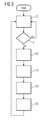
- the essential method steps in a method according to the invention for operating a hearing aid system in conjunction with FIG. 3 shown again.
- the operation is initially in the state Z1, in which the signal processing in the hearing aid works with certain, predetermined parameter settings. It then checks if recalculation of parameter settings is required. In the flowchart according to FIG. 3 this is illustrated by the symbol E.
- Trigger for a recalculation of Paramter settings are, for example, a program switching in the hearing aid concerned or a detected by the hearing aid change from a first listening situation to a second auditory situation.
- the hearing aid device changes to the state Z2, in which the generation of source-specific received signals takes place.
- the state Z2 takes place in the state Z3 a division of the individual source-specific received signals in interference or useful signals. This classification can be done in particular taking into account manual user input.
- an analysis of the source-specific received signals marked as interference signal or useful signal takes place. In each case certain characteristic properties of the signals in question are determined.
Landscapes
- Health & Medical Sciences (AREA)
- General Health & Medical Sciences (AREA)
- Neurosurgery (AREA)
- Otolaryngology (AREA)
- Physics & Mathematics (AREA)
- Engineering & Computer Science (AREA)
- Acoustics & Sound (AREA)
- Signal Processing (AREA)
- Circuit For Audible Band Transducer (AREA)
- Soundproofing, Sound Blocking, And Sound Damping (AREA)
Applications Claiming Priority (1)
| Application Number | Priority Date | Filing Date | Title |
|---|---|---|---|
| DE102008062587 | 2008-12-16 |
Publications (2)
| Publication Number | Publication Date |
|---|---|
| EP2200341A1 true EP2200341A1 (fr) | 2010-06-23 |
| EP2200341B1 EP2200341B1 (fr) | 2015-02-25 |
Family
ID=42025776
Family Applications (1)
| Application Number | Title | Priority Date | Filing Date |
|---|---|---|---|
| EP09175951.4A Active EP2200341B1 (fr) | 2008-12-16 | 2009-11-13 | Procédé de fonctionnement d'un appareil d'aide auditive et appareil d'aide auditive doté d'un dispositif de séparation de sources |
Country Status (3)
| Country | Link |
|---|---|
| US (1) | US20100158289A1 (fr) |
| EP (1) | EP2200341B1 (fr) |
| DK (1) | DK2200341T3 (fr) |
Cited By (1)
| Publication number | Priority date | Publication date | Assignee | Title |
|---|---|---|---|---|
| EP2405673A1 (fr) * | 2010-07-07 | 2012-01-11 | Siemens Medical Instruments Pte. Ltd. | Procédé de localisation d'un source audio et d'un système auditif à plusieurs canaux |
Families Citing this family (5)
| Publication number | Priority date | Publication date | Assignee | Title |
|---|---|---|---|---|
| DE102012214081A1 (de) | 2012-06-06 | 2013-12-12 | Siemens Medical Instruments Pte. Ltd. | Verfahren zum Fokussieren eines Hörinstruments-Beamformers |
| US9414170B2 (en) * | 2012-12-28 | 2016-08-09 | Gn Resound A/S | Hearing aid having an adaptive antenna matching mechanism and a method for adaptively matching a hearing aid antenna |
| WO2016067754A1 (fr) * | 2014-10-30 | 2016-05-06 | ソニー株式会社 | Dispositif de sortie acoustique |
| DE102016225205A1 (de) * | 2016-12-15 | 2018-06-21 | Sivantos Pte. Ltd. | Verfahren zum Bestimmen einer Richtung einer Nutzsignalquelle |
| WO2019084214A1 (fr) | 2017-10-24 | 2019-05-02 | Whisper.Ai, Inc. | Séparation et recombinaison audio pour l'intelligibilité et le confort |
Citations (7)
| Publication number | Priority date | Publication date | Assignee | Title |
|---|---|---|---|---|
| DE10114015A1 (de) | 2001-03-22 | 2002-10-24 | Siemens Audiologische Technik | Verfahren zum Betrieb eines Hörhilfe- und/oder Gehörschutzgerätes sowie Hörhilfe- und/oder Gehörschutzgerät |
| EP1509065A1 (fr) * | 2003-08-21 | 2005-02-23 | Bernafon Ag | Procédé de traitement de signaux audio |
| DE10313331B4 (de) | 2003-03-25 | 2005-06-16 | Siemens Audiologische Technik Gmbh | Verfahren zur Bestimmung einer Einfallsrichtung eines Signals einer akustischen Signalquelle und Vorrichtung zur Durchführung des Verfahrens |
| EP1848245A2 (fr) | 2006-04-21 | 2007-10-24 | Siemens Audiologische Technik GmbH | Appareil auditif à séparation de source en aveugle et procédé correspondant |
| DE102006020832A1 (de) | 2006-05-04 | 2007-11-15 | Siemens Audiologische Technik Gmbh | Verfahren zum Unterdrücken von Rückkopplungen und zur Spektralerweiterung bei Hörvorrichtungen |
| EP1912473A1 (fr) * | 2006-10-10 | 2008-04-16 | Siemens Audiologische Technik GmbH | Traitement du signal d'entrée dans un appareil auditif |
| WO2008043758A1 (fr) * | 2006-10-10 | 2008-04-17 | Siemens Audiologische Technik Gmbh | Procédé d'utilisation d'une aide auditive et aide auditive |
Family Cites Families (3)
| Publication number | Priority date | Publication date | Assignee | Title |
|---|---|---|---|---|
| DE10356093B3 (de) * | 2003-12-01 | 2005-06-02 | Siemens Audiologische Technik Gmbh | Hörervorrichtung mit richtungsabhängiger Signalverarbeitung und entsprechendes Verfahren |
| US7464029B2 (en) * | 2005-07-22 | 2008-12-09 | Qualcomm Incorporated | Robust separation of speech signals in a noisy environment |
| EP1912472A1 (fr) * | 2006-10-10 | 2008-04-16 | Siemens Audiologische Technik GmbH | Procédé pour le fonctionnement d'une prothèse auditive and prothèse auditive |
-
2009
- 2009-11-13 EP EP09175951.4A patent/EP2200341B1/fr active Active
- 2009-11-13 DK DK09175951.4T patent/DK2200341T3/en active
- 2009-12-16 US US12/639,352 patent/US20100158289A1/en not_active Abandoned
Patent Citations (7)
| Publication number | Priority date | Publication date | Assignee | Title |
|---|---|---|---|---|
| DE10114015A1 (de) | 2001-03-22 | 2002-10-24 | Siemens Audiologische Technik | Verfahren zum Betrieb eines Hörhilfe- und/oder Gehörschutzgerätes sowie Hörhilfe- und/oder Gehörschutzgerät |
| DE10313331B4 (de) | 2003-03-25 | 2005-06-16 | Siemens Audiologische Technik Gmbh | Verfahren zur Bestimmung einer Einfallsrichtung eines Signals einer akustischen Signalquelle und Vorrichtung zur Durchführung des Verfahrens |
| EP1509065A1 (fr) * | 2003-08-21 | 2005-02-23 | Bernafon Ag | Procédé de traitement de signaux audio |
| EP1848245A2 (fr) | 2006-04-21 | 2007-10-24 | Siemens Audiologische Technik GmbH | Appareil auditif à séparation de source en aveugle et procédé correspondant |
| DE102006020832A1 (de) | 2006-05-04 | 2007-11-15 | Siemens Audiologische Technik Gmbh | Verfahren zum Unterdrücken von Rückkopplungen und zur Spektralerweiterung bei Hörvorrichtungen |
| EP1912473A1 (fr) * | 2006-10-10 | 2008-04-16 | Siemens Audiologische Technik GmbH | Traitement du signal d'entrée dans un appareil auditif |
| WO2008043758A1 (fr) * | 2006-10-10 | 2008-04-17 | Siemens Audiologische Technik Gmbh | Procédé d'utilisation d'une aide auditive et aide auditive |
Cited By (1)
| Publication number | Priority date | Publication date | Assignee | Title |
|---|---|---|---|---|
| EP2405673A1 (fr) * | 2010-07-07 | 2012-01-11 | Siemens Medical Instruments Pte. Ltd. | Procédé de localisation d'un source audio et d'un système auditif à plusieurs canaux |
Also Published As
| Publication number | Publication date |
|---|---|
| EP2200341B1 (fr) | 2015-02-25 |
| US20100158289A1 (en) | 2010-06-24 |
| DK2200341T3 (en) | 2015-06-01 |
Similar Documents
| Publication | Publication Date | Title |
|---|---|---|
| EP1379102B1 (fr) | Localisation du son avec des prothèses auditives binauriculaires | |
| EP1360870B1 (fr) | Procede d'utilisation d'un systeme d'un appareil de correction auditive | |
| EP1307072B1 (fr) | Procédé pour actionner une prothèse auditive et prothèse auditive | |
| WO2001020965A2 (fr) | Procede de determination d'une situation d'environnement acoustique momentanee, utilisation de ce procede, et prothese auditive | |
| DE102011087984A1 (de) | Hörvorrichtung mit Sprecheraktivitätserkennung und Verfahren zum Betreiben einer Hörvorrichtung | |
| EP2200341B1 (fr) | Procédé de fonctionnement d'un appareil d'aide auditive et appareil d'aide auditive doté d'un dispositif de séparation de sources | |
| DE102009012166B4 (de) | Hörvorrichtung und Verfahren zum Reduzieren eines Störgeräuschs für eine Hörvorrichtung | |
| EP2437394A1 (fr) | Procédé de traitement de signal dans un appareil auditif et appareil auditif | |
| WO2001022790A2 (fr) | Procede d'utilisation d'une prothese auditive et prothese auditive | |
| DE102008046040A1 (de) | Verfahren zum Betrieb einer Hörvorrichtung mit Richtwirkung und zugehörige Hörvorrichtung | |
| WO2001047335A2 (fr) | Procede pour eliminer des composantes de signaux parasites dans un signal d'entree d'un systeme auditif, mise en oeuvre dudit procede et appareil auditif | |
| DE10114101A1 (de) | Verfahren zum Verarbeiten eines Eingangssignals in einer Signalverarbeitungseinheit eines Hörgerätes sowie Schaltung zur Durchführung des Verfahrens | |
| EP1503612A2 (fr) | Prothèse auditive et méthode à l'opération d'une prothèse auditive avec un système de microphone dans lequel de différentes caractéristiques directionnelles sont sélectionnables | |
| EP1432282A2 (fr) | Procédé d'adaptation d'une prothèse auditive à une situation environnante momentanée et système de prothèse auditive | |
| EP2584795B1 (fr) | Procédé de détermination d'une ligne caractéristique de compression | |
| EP2080410A1 (fr) | Procédé d'utilisation d'une aide auditive et aide auditive | |
| DE102006047983A1 (de) | Verarbeitung eines Eingangssignals in einem Hörgerät | |
| DE102009004185B3 (de) | Verfahren zur Signalverarbeitung einer Hörvorrichtung und entsprechende Hörvorrichtung | |
| EP2658289B1 (fr) | Procédé de commande d'une caractéristique de guidage et système auditif | |
| DE102018207346B4 (de) | Verfahren zum Betrieb eines Hörgeräts sowie Hörgerät | |
| DE10114015C2 (de) | Verfahren zum Betrieb eines Hörhilfe- und/oder Gehörschutzgerätes sowie Hörhilfe- und/oder Gehörschutzgerät | |
| DE102019201879B3 (de) | Verfahren zum Betrieb eines Hörsystems und Hörsystem | |
| DE102006029268B4 (de) | Hörvorrichtung mit Körperschalldetektionseinrichtung und entsprechendes Verfahren | |
| EP1359437A1 (fr) | Procédé pour déterminer la position d'un utilisateur de terminal de communication | |
| EP1909535A2 (fr) | Appareil auditif avec canaux d'entrée controlés et procédé correspondant |
Legal Events
| Date | Code | Title | Description |
|---|---|---|---|
| PUAI | Public reference made under article 153(3) epc to a published international application that has entered the european phase |
Free format text: ORIGINAL CODE: 0009012 |
|
| AK | Designated contracting states |
Kind code of ref document: A1 Designated state(s): AT BE BG CH CY CZ DE DK EE ES FI FR GB GR HR HU IE IS IT LI LT LU LV MC MK MT NL NO PL PT RO SE SI SK SM TR |
|
| AX | Request for extension of the european patent |
Extension state: AL BA RS |
|
| 17P | Request for examination filed |
Effective date: 20101223 |
|
| 17Q | First examination report despatched |
Effective date: 20110120 |
|
| GRAP | Despatch of communication of intention to grant a patent |
Free format text: ORIGINAL CODE: EPIDOSNIGR1 |
|
| RIC1 | Information provided on ipc code assigned before grant |
Ipc: H04R 25/00 20060101AFI20140826BHEP |
|
| INTG | Intention to grant announced |
Effective date: 20140918 |
|
| GRAS | Grant fee paid |
Free format text: ORIGINAL CODE: EPIDOSNIGR3 |
|
| GRAA | (expected) grant |
Free format text: ORIGINAL CODE: 0009210 |
|
| AK | Designated contracting states |
Kind code of ref document: B1 Designated state(s): AT BE BG CH CY CZ DE DK EE ES FI FR GB GR HR HU IE IS IT LI LT LU LV MC MK MT NL NO PL PT RO SE SI SK SM TR |
|
| REG | Reference to a national code |
Ref country code: GB Ref legal event code: FG4D Free format text: NOT ENGLISH |
|
| REG | Reference to a national code |
Ref country code: CH Ref legal event code: NV Representative=s name: SIEMENS SCHWEIZ AG, CH Ref country code: CH Ref legal event code: EP |
|
| REG | Reference to a national code |
Ref country code: IE Ref legal event code: FG4D Free format text: LANGUAGE OF EP DOCUMENT: GERMAN |
|
| REG | Reference to a national code |
Ref country code: DE Ref legal event code: R096 Ref document number: 502009010651 Country of ref document: DE Effective date: 20150409 |
|
| REG | Reference to a national code |
Ref country code: DE Ref legal event code: R082 Ref document number: 502009010651 Country of ref document: DE Representative=s name: FDST PATENTANWAELTE FREIER DOERR STAMMLER TSCH, DE |
|
| REG | Reference to a national code |
Ref country code: AT Ref legal event code: REF Ref document number: 712874 Country of ref document: AT Kind code of ref document: T Effective date: 20150415 |
|
| REG | Reference to a national code |
Ref country code: DK Ref legal event code: T3 Effective date: 20150527 |
|
| REG | Reference to a national code |
Ref country code: NL Ref legal event code: VDEP Effective date: 20150225 |
|
| REG | Reference to a national code |
Ref country code: LT Ref legal event code: MG4D |
|
| PG25 | Lapsed in a contracting state [announced via postgrant information from national office to epo] |
Ref country code: LT Free format text: LAPSE BECAUSE OF FAILURE TO SUBMIT A TRANSLATION OF THE DESCRIPTION OR TO PAY THE FEE WITHIN THE PRESCRIBED TIME-LIMIT Effective date: 20150225 Ref country code: HR Free format text: LAPSE BECAUSE OF FAILURE TO SUBMIT A TRANSLATION OF THE DESCRIPTION OR TO PAY THE FEE WITHIN THE PRESCRIBED TIME-LIMIT Effective date: 20150225 Ref country code: FI Free format text: LAPSE BECAUSE OF FAILURE TO SUBMIT A TRANSLATION OF THE DESCRIPTION OR TO PAY THE FEE WITHIN THE PRESCRIBED TIME-LIMIT Effective date: 20150225 Ref country code: NO Free format text: LAPSE BECAUSE OF FAILURE TO SUBMIT A TRANSLATION OF THE DESCRIPTION OR TO PAY THE FEE WITHIN THE PRESCRIBED TIME-LIMIT Effective date: 20150525 Ref country code: ES Free format text: LAPSE BECAUSE OF FAILURE TO SUBMIT A TRANSLATION OF THE DESCRIPTION OR TO PAY THE FEE WITHIN THE PRESCRIBED TIME-LIMIT Effective date: 20150225 Ref country code: SE Free format text: LAPSE BECAUSE OF FAILURE TO SUBMIT A TRANSLATION OF THE DESCRIPTION OR TO PAY THE FEE WITHIN THE PRESCRIBED TIME-LIMIT Effective date: 20150225 |
|
| PG25 | Lapsed in a contracting state [announced via postgrant information from national office to epo] |
Ref country code: IS Free format text: LAPSE BECAUSE OF FAILURE TO SUBMIT A TRANSLATION OF THE DESCRIPTION OR TO PAY THE FEE WITHIN THE PRESCRIBED TIME-LIMIT Effective date: 20150625 Ref country code: GR Free format text: LAPSE BECAUSE OF FAILURE TO SUBMIT A TRANSLATION OF THE DESCRIPTION OR TO PAY THE FEE WITHIN THE PRESCRIBED TIME-LIMIT Effective date: 20150526 Ref country code: LV Free format text: LAPSE BECAUSE OF FAILURE TO SUBMIT A TRANSLATION OF THE DESCRIPTION OR TO PAY THE FEE WITHIN THE PRESCRIBED TIME-LIMIT Effective date: 20150225 |
|
| PG25 | Lapsed in a contracting state [announced via postgrant information from national office to epo] |
Ref country code: NL Free format text: LAPSE BECAUSE OF FAILURE TO SUBMIT A TRANSLATION OF THE DESCRIPTION OR TO PAY THE FEE WITHIN THE PRESCRIBED TIME-LIMIT Effective date: 20150225 |
|
| REG | Reference to a national code |
Ref country code: DE Ref legal event code: R082 Ref document number: 502009010651 Country of ref document: DE Representative=s name: FDST PATENTANWAELTE FREIER DOERR STAMMLER TSCH, DE Ref country code: DE Ref legal event code: R081 Ref document number: 502009010651 Country of ref document: DE Owner name: SIVANTOS GMBH, DE Free format text: FORMER OWNER: SIEMENS AUDIOLOGISCHE TECHNIK GMBH, 91058 ERLANGEN, DE |
|
| PG25 | Lapsed in a contracting state [announced via postgrant information from national office to epo] |
Ref country code: RO Free format text: LAPSE BECAUSE OF FAILURE TO SUBMIT A TRANSLATION OF THE DESCRIPTION OR TO PAY THE FEE WITHIN THE PRESCRIBED TIME-LIMIT Effective date: 20150225 Ref country code: SK Free format text: LAPSE BECAUSE OF FAILURE TO SUBMIT A TRANSLATION OF THE DESCRIPTION OR TO PAY THE FEE WITHIN THE PRESCRIBED TIME-LIMIT Effective date: 20150225 Ref country code: CZ Free format text: LAPSE BECAUSE OF FAILURE TO SUBMIT A TRANSLATION OF THE DESCRIPTION OR TO PAY THE FEE WITHIN THE PRESCRIBED TIME-LIMIT Effective date: 20150225 Ref country code: EE Free format text: LAPSE BECAUSE OF FAILURE TO SUBMIT A TRANSLATION OF THE DESCRIPTION OR TO PAY THE FEE WITHIN THE PRESCRIBED TIME-LIMIT Effective date: 20150225 |
|
| RAP2 | Party data changed (patent owner data changed or rights of a patent transferred) |
Owner name: SIVANTOS GMBH |
|
| REG | Reference to a national code |
Ref country code: FR Ref legal event code: PLFP Year of fee payment: 7 |
|
| REG | Reference to a national code |
Ref country code: DE Ref legal event code: R097 Ref document number: 502009010651 Country of ref document: DE |
|
| PG25 | Lapsed in a contracting state [announced via postgrant information from national office to epo] |
Ref country code: PL Free format text: LAPSE BECAUSE OF FAILURE TO SUBMIT A TRANSLATION OF THE DESCRIPTION OR TO PAY THE FEE WITHIN THE PRESCRIBED TIME-LIMIT Effective date: 20150225 |
|
| PG25 | Lapsed in a contracting state [announced via postgrant information from national office to epo] |
Ref country code: IT Free format text: LAPSE BECAUSE OF FAILURE TO SUBMIT A TRANSLATION OF THE DESCRIPTION OR TO PAY THE FEE WITHIN THE PRESCRIBED TIME-LIMIT Effective date: 20150225 |
|
| PLBE | No opposition filed within time limit |
Free format text: ORIGINAL CODE: 0009261 |
|
| STAA | Information on the status of an ep patent application or granted ep patent |
Free format text: STATUS: NO OPPOSITION FILED WITHIN TIME LIMIT |
|
| 26N | No opposition filed |
Effective date: 20151126 |
|
| PG25 | Lapsed in a contracting state [announced via postgrant information from national office to epo] |
Ref country code: SI Free format text: LAPSE BECAUSE OF FAILURE TO SUBMIT A TRANSLATION OF THE DESCRIPTION OR TO PAY THE FEE WITHIN THE PRESCRIBED TIME-LIMIT Effective date: 20150225 |
|
| PG25 | Lapsed in a contracting state [announced via postgrant information from national office to epo] |
Ref country code: LU Free format text: LAPSE BECAUSE OF FAILURE TO SUBMIT A TRANSLATION OF THE DESCRIPTION OR TO PAY THE FEE WITHIN THE PRESCRIBED TIME-LIMIT Effective date: 20151113 Ref country code: MC Free format text: LAPSE BECAUSE OF FAILURE TO SUBMIT A TRANSLATION OF THE DESCRIPTION OR TO PAY THE FEE WITHIN THE PRESCRIBED TIME-LIMIT Effective date: 20150225 |
|
| REG | Reference to a national code |
Ref country code: IE Ref legal event code: MM4A |
|
| PG25 | Lapsed in a contracting state [announced via postgrant information from national office to epo] |
Ref country code: IE Free format text: LAPSE BECAUSE OF NON-PAYMENT OF DUE FEES Effective date: 20151113 |
|
| REG | Reference to a national code |
Ref country code: FR Ref legal event code: PLFP Year of fee payment: 8 |
|
| REG | Reference to a national code |
Ref country code: AT Ref legal event code: MM01 Ref document number: 712874 Country of ref document: AT Kind code of ref document: T Effective date: 20151113 |
|
| PG25 | Lapsed in a contracting state [announced via postgrant information from national office to epo] |
Ref country code: AT Free format text: LAPSE BECAUSE OF NON-PAYMENT OF DUE FEES Effective date: 20151113 |
|
| PG25 | Lapsed in a contracting state [announced via postgrant information from national office to epo] |
Ref country code: HU Free format text: LAPSE BECAUSE OF FAILURE TO SUBMIT A TRANSLATION OF THE DESCRIPTION OR TO PAY THE FEE WITHIN THE PRESCRIBED TIME-LIMIT; INVALID AB INITIO Effective date: 20091113 Ref country code: BG Free format text: LAPSE BECAUSE OF FAILURE TO SUBMIT A TRANSLATION OF THE DESCRIPTION OR TO PAY THE FEE WITHIN THE PRESCRIBED TIME-LIMIT Effective date: 20150225 Ref country code: SM Free format text: LAPSE BECAUSE OF FAILURE TO SUBMIT A TRANSLATION OF THE DESCRIPTION OR TO PAY THE FEE WITHIN THE PRESCRIBED TIME-LIMIT Effective date: 20150225 |
|
| PG25 | Lapsed in a contracting state [announced via postgrant information from national office to epo] |
Ref country code: CY Free format text: LAPSE BECAUSE OF FAILURE TO SUBMIT A TRANSLATION OF THE DESCRIPTION OR TO PAY THE FEE WITHIN THE PRESCRIBED TIME-LIMIT Effective date: 20150225 |
|
| PG25 | Lapsed in a contracting state [announced via postgrant information from national office to epo] |
Ref country code: BE Free format text: LAPSE BECAUSE OF NON-PAYMENT OF DUE FEES Effective date: 20151130 |
|
| PG25 | Lapsed in a contracting state [announced via postgrant information from national office to epo] |
Ref country code: TR Free format text: LAPSE BECAUSE OF FAILURE TO SUBMIT A TRANSLATION OF THE DESCRIPTION OR TO PAY THE FEE WITHIN THE PRESCRIBED TIME-LIMIT Effective date: 20150225 Ref country code: MT Free format text: LAPSE BECAUSE OF FAILURE TO SUBMIT A TRANSLATION OF THE DESCRIPTION OR TO PAY THE FEE WITHIN THE PRESCRIBED TIME-LIMIT Effective date: 20150225 |
|
| REG | Reference to a national code |
Ref country code: FR Ref legal event code: PLFP Year of fee payment: 9 |
|
| PG25 | Lapsed in a contracting state [announced via postgrant information from national office to epo] |
Ref country code: PT Free format text: LAPSE BECAUSE OF FAILURE TO SUBMIT A TRANSLATION OF THE DESCRIPTION OR TO PAY THE FEE WITHIN THE PRESCRIBED TIME-LIMIT Effective date: 20150225 Ref country code: MK Free format text: LAPSE BECAUSE OF FAILURE TO SUBMIT A TRANSLATION OF THE DESCRIPTION OR TO PAY THE FEE WITHIN THE PRESCRIBED TIME-LIMIT Effective date: 20150225 |
|
| PGFP | Annual fee paid to national office [announced via postgrant information from national office to epo] |
Ref country code: DE Payment date: 20241022 Year of fee payment: 16 |
|
| PGFP | Annual fee paid to national office [announced via postgrant information from national office to epo] |
Ref country code: DK Payment date: 20241022 Year of fee payment: 16 |
|
| PGFP | Annual fee paid to national office [announced via postgrant information from national office to epo] |
Ref country code: GB Payment date: 20241023 Year of fee payment: 16 |
|
| PGFP | Annual fee paid to national office [announced via postgrant information from national office to epo] |
Ref country code: FR Payment date: 20241022 Year of fee payment: 16 |
|
| PGFP | Annual fee paid to national office [announced via postgrant information from national office to epo] |
Ref country code: CH Payment date: 20241201 Year of fee payment: 16 |