EP2201144B1 - Zuckerextraktionsverfahren - Google Patents
Zuckerextraktionsverfahren Download PDFInfo
- Publication number
- EP2201144B1 EP2201144B1 EP08779319A EP08779319A EP2201144B1 EP 2201144 B1 EP2201144 B1 EP 2201144B1 EP 08779319 A EP08779319 A EP 08779319A EP 08779319 A EP08779319 A EP 08779319A EP 2201144 B1 EP2201144 B1 EP 2201144B1
- Authority
- EP
- European Patent Office
- Prior art keywords
- sugar
- sugar containing
- extraction device
- containing biomass
- hot water
- Prior art date
- Legal status (The legal status is an assumption and is not a legal conclusion. Google has not performed a legal analysis and makes no representation as to the accuracy of the status listed.)
- Not-in-force
Links
- 235000000346 sugar Nutrition 0.000 title claims description 171
- 238000000605 extraction Methods 0.000 title claims description 104
- 239000002028 Biomass Substances 0.000 claims description 68
- XLYOFNOQVPJJNP-UHFFFAOYSA-N water Substances O XLYOFNOQVPJJNP-UHFFFAOYSA-N 0.000 claims description 57
- 230000006835 compression Effects 0.000 claims description 50
- 238000007906 compression Methods 0.000 claims description 50
- 238000000034 method Methods 0.000 claims description 40
- 241000219310 Beta vulgaris subsp. vulgaris Species 0.000 claims description 25
- 235000021536 Sugar beet Nutrition 0.000 claims description 25
- 239000006227 byproduct Substances 0.000 claims description 7
- 238000007789 sealing Methods 0.000 claims description 7
- 239000007788 liquid Substances 0.000 claims description 6
- 241000335053 Beta vulgaris Species 0.000 claims description 5
- 235000016068 Berberis vulgaris Nutrition 0.000 claims description 4
- 229930006000 Sucrose Natural products 0.000 claims description 4
- 239000000203 mixture Substances 0.000 claims description 4
- 235000013379 molasses Nutrition 0.000 claims description 4
- 240000000111 Saccharum officinarum Species 0.000 claims description 3
- 235000007201 Saccharum officinarum Nutrition 0.000 claims description 3
- CZMRCDWAGMRECN-UGDNZRGBSA-N Sucrose Chemical compound O[C@H]1[C@H](O)[C@@H](CO)O[C@@]1(CO)O[C@@H]1[C@H](O)[C@@H](O)[C@H](O)[C@@H](CO)O1 CZMRCDWAGMRECN-UGDNZRGBSA-N 0.000 claims description 3
- 239000005720 sucrose Substances 0.000 claims description 3
- 244000099147 Ananas comosus Species 0.000 claims description 2
- 235000007119 Ananas comosus Nutrition 0.000 claims description 2
- 235000021537 Beetroot Nutrition 0.000 claims description 2
- 229930091371 Fructose Natural products 0.000 claims description 2
- 239000005715 Fructose Substances 0.000 claims description 2
- RFSUNEUAIZKAJO-ARQDHWQXSA-N Fructose Chemical compound OC[C@H]1O[C@](O)(CO)[C@@H](O)[C@@H]1O RFSUNEUAIZKAJO-ARQDHWQXSA-N 0.000 claims description 2
- WQZGKKKJIJFFOK-GASJEMHNSA-N Glucose Natural products OC[C@H]1OC(O)[C@H](O)[C@@H](O)[C@@H]1O WQZGKKKJIJFFOK-GASJEMHNSA-N 0.000 claims description 2
- 240000008790 Musa x paradisiaca Species 0.000 claims description 2
- 235000021015 bananas Nutrition 0.000 claims description 2
- WQZGKKKJIJFFOK-VFUOTHLCSA-N beta-D-glucose Chemical compound OC[C@H]1O[C@@H](O)[C@H](O)[C@@H](O)[C@@H]1O WQZGKKKJIJFFOK-VFUOTHLCSA-N 0.000 claims description 2
- 239000008103 glucose Substances 0.000 claims description 2
- 239000007921 spray Substances 0.000 claims 1
- 125000000185 sucrose group Chemical group 0.000 claims 1
- 230000008569 process Effects 0.000 description 14
- 239000002994 raw material Substances 0.000 description 13
- 238000009835 boiling Methods 0.000 description 11
- 235000011389 fruit/vegetable juice Nutrition 0.000 description 6
- 238000004519 manufacturing process Methods 0.000 description 5
- 239000000047 product Substances 0.000 description 5
- 239000000654 additive Substances 0.000 description 4
- 230000008901 benefit Effects 0.000 description 4
- 210000002421 cell wall Anatomy 0.000 description 4
- 238000005119 centrifugation Methods 0.000 description 4
- LFQSCWFLJHTTHZ-UHFFFAOYSA-N Ethanol Chemical compound CCO LFQSCWFLJHTTHZ-UHFFFAOYSA-N 0.000 description 3
- 238000010420 art technique Methods 0.000 description 3
- 238000007796 conventional method Methods 0.000 description 3
- 238000005265 energy consumption Methods 0.000 description 3
- 238000002474 experimental method Methods 0.000 description 3
- 230000001105 regulatory effect Effects 0.000 description 3
- 238000005406 washing Methods 0.000 description 3
- 241000894006 Bacteria Species 0.000 description 2
- 150000001720 carbohydrates Chemical class 0.000 description 2
- 235000014633 carbohydrates Nutrition 0.000 description 2
- 210000004027 cell Anatomy 0.000 description 2
- 238000002425 crystallisation Methods 0.000 description 2
- 230000008025 crystallization Effects 0.000 description 2
- 238000004090 dissolution Methods 0.000 description 2
- 235000013305 food Nutrition 0.000 description 2
- 235000012020 french fries Nutrition 0.000 description 2
- 235000021552 granulated sugar Nutrition 0.000 description 2
- 238000010438 heat treatment Methods 0.000 description 2
- 238000000265 homogenisation Methods 0.000 description 2
- 239000000463 material Substances 0.000 description 2
- 238000000926 separation method Methods 0.000 description 2
- 239000002689 soil Substances 0.000 description 2
- 229960004793 sucrose Drugs 0.000 description 2
- 235000021533 Beta vulgaris Nutrition 0.000 description 1
- 235000008733 Citrus aurantifolia Nutrition 0.000 description 1
- 244000007645 Citrus mitis Species 0.000 description 1
- 241000196324 Embryophyta Species 0.000 description 1
- 241001465754 Metazoa Species 0.000 description 1
- 235000011941 Tilia x europaea Nutrition 0.000 description 1
- 230000000996 additive effect Effects 0.000 description 1
- 230000002411 adverse Effects 0.000 description 1
- 239000012141 concentrate Substances 0.000 description 1
- 238000011109 contamination Methods 0.000 description 1
- 238000005520 cutting process Methods 0.000 description 1
- 235000013399 edible fruits Nutrition 0.000 description 1
- 230000008030 elimination Effects 0.000 description 1
- 238000003379 elimination reaction Methods 0.000 description 1
- 230000002708 enhancing effect Effects 0.000 description 1
- 238000001704 evaporation Methods 0.000 description 1
- 230000008020 evaporation Effects 0.000 description 1
- 239000000284 extract Substances 0.000 description 1
- 238000001914 filtration Methods 0.000 description 1
- -1 glucose Chemical class 0.000 description 1
- 235000021384 green leafy vegetables Nutrition 0.000 description 1
- 230000001939 inductive effect Effects 0.000 description 1
- 239000004615 ingredient Substances 0.000 description 1
- 238000002386 leaching Methods 0.000 description 1
- 239000004571 lime Substances 0.000 description 1
- 229930014626 natural product Natural products 0.000 description 1
- 239000002245 particle Substances 0.000 description 1
- 230000035515 penetration Effects 0.000 description 1
- 238000001556 precipitation Methods 0.000 description 1
- 238000003825 pressing Methods 0.000 description 1
- 102000004169 proteins and genes Human genes 0.000 description 1
- 108090000623 proteins and genes Proteins 0.000 description 1
- 238000000746 purification Methods 0.000 description 1
- 230000009467 reduction Effects 0.000 description 1
- 230000002000 scavenging effect Effects 0.000 description 1
- 238000005507 spraying Methods 0.000 description 1
- 238000003892 spreading Methods 0.000 description 1
- 230000007480 spreading Effects 0.000 description 1
- 229910001220 stainless steel Inorganic materials 0.000 description 1
- 239000010935 stainless steel Substances 0.000 description 1
- 238000003860 storage Methods 0.000 description 1
- 239000000758 substrate Substances 0.000 description 1
- 235000013311 vegetables Nutrition 0.000 description 1
- 239000002699 waste material Substances 0.000 description 1
Images
Classifications
-
- C—CHEMISTRY; METALLURGY
- C13—SUGAR INDUSTRY
- C13B—PRODUCTION OF SUCROSE; APPARATUS SPECIALLY ADAPTED THEREFOR
- C13B10/00—Production of sugar juices
- C13B10/08—Extraction of sugar from sugar beet with water
- C13B10/10—Continuous processes
-
- C—CHEMISTRY; METALLURGY
- C13—SUGAR INDUSTRY
- C13B—PRODUCTION OF SUCROSE; APPARATUS SPECIALLY ADAPTED THEREFOR
- C13B10/00—Production of sugar juices
- C13B10/08—Extraction of sugar from sugar beet with water
-
- C—CHEMISTRY; METALLURGY
- C13—SUGAR INDUSTRY
- C13B—PRODUCTION OF SUCROSE; APPARATUS SPECIALLY ADAPTED THEREFOR
- C13B10/00—Production of sugar juices
- C13B10/08—Extraction of sugar from sugar beet with water
- C13B10/12—Details of extraction apparatus, e.g. arrangements of pipes or valves
Definitions
- the present invention relates to a method for extraction of sugar from a sugar containing biomass.
- the raw material is first pre-treated by washing and elimination of stones, gravel, tops and other undesirable material and by cutting of said raw material into chips or cossettes, i.e. pieces having a shape and size similar to French fries. This is followed by boiling of the chips in large amounts of water with a view to releasing the sugar in the sugar-beets, and by compression with a view to extracting or leaching out as much sugar as possible from the sugar containing raw material.
- the sugar-beets are initially pre-treated as described above.
- the sugar-beet chips are then fed to an extraction tower to which hot water is added, whereby sugar is extracted from the sugar-beet chips and is separated in a sugar containing solution.
- the sugar-beet pulp from which sugar has been extracted is then compressed with a view to reducing the water content thereof.
- This compressed sugar-beet pulp may then be marketed as a dry fodder or may be dried together with molasses to a product called "betfor" (a Swedish term for dried beet with molasses), a more high-grade fodder product.
- the sugar containing solution i.e. the raw juice, extracted from the sugar-beet chips is purified by treatment with lime and CO 2 .
- the precipitation obtained is then separated by filtration and may be used as a soil enhancing product.
- the purified raw juice i.e. the "thin juice”
- the sugar concentrate is added in the first boiling step to an intermediate container (maisch), in which further crystallization takes place, followed by a centrifugation step.
- the separated sugar is fed to a sugar dryer for production of granulated sugar.
- sugar is extracted in two further boiling steps, each involving crystallization and centrifugation.
- the extracted sugar obtained in the second and the third boiling step is then again added to the first boiling step for further purification.
- the rest product from the third boiling step i.e. molasses, may be marketed as a fodder or is refined to "betfor".
- sugar-beets which normally have a sugar content of 15-20% by weight.
- the methods for extraction of sugar from other sugar containing raw material than sugar-beets follow the same principles as stated above.
- one common characteristic is that all such sugar extraction methods hitherto known are operated at underpressure during the boiling steps.
- conventional methods for sugar extraction e.g. for production of granulated sugar, are rather energy consuming, require addition of several additives, require a lot of process equipment and involve a risk of contamination with microbes or bacteria in the process system, thus jeopardizing the quality of the fodder by-products obtained.
- Patent SU1696476 A1 discloses an extraction of juice from sugar beetroot waste and involves its separation from extraneous matter, washing, chopping, scalding with live steam, pressing and repeated extraction of pulp.
- the object of the present invention is to reduce or eliminate the above-mentioned problems experienced in connection with known techniques for extraction of sugar from a sugar containing biomass or raw material.
- This object has been achieved with a method for extraction of sugar from a sugar containing biomass, wherein the sugar containing biomass
- the steam treated sugar containing biomass fed to the central part (7) of the extraction device (1) is subjected to
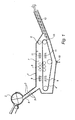
- Figure 1 shows an extraction device according to one embodiment of the present invention.
- the sugar containing biomass or raw material is introduced in an extraction device 1 in which the extraction of the sugar is to take place.
- sugar containing biomass and “sugar containing raw material” used throughout the present application are intended to mean any form, e.g. cut or decomposed to chips, cossettes, slices or other forms, of a natural product or crop from which sugar can be extracted and is of interest to extract, e.g. root vegetables, fruits, pot-herbs, or other sugar containing crops of any origin in the world.
- sugar containing raw materials are sugar-beets (Beta vulgaris), sugar canes, beetroots, fodder beets, bananas, and pineapples.
- the sugar containing biomass may also be a mixture of two or more of these sugar containing crops prepared in any form, and may also be included in a medium containing other ingredients, e.g. additives for dissolution or homogenisation of the original crop.
- sucrose used throughout the present application is intended to mean essentially the carbohydrate sucrose, which is useful as additive in e.g. food, but also includes other carbohydrates, such as glucose, and fructose, as well as mixtures thereof, useful for different applications.
- cane sugar is also intended to fall within the definition of the word "sugar”.
- the sugar containing biomass introduced in the extraction device 1 may first be pre-treated in a conventional way, as initially described.
- sugar-beets they are initially evaluated and tested as to quality, added to open containers filled with water ("svämmor") in order to dissolve soil, tops are eliminated, and washing steps are normally performed, optionally also homogenisation and dissolution steps.
- the sugar-beets are normally cut into pieces, preferably chips or cossettes, having a size and a shape similar to that of food chips or French fries.
- the sugar containing biomass such as sugar-beets
- the sugar containing biomass is added to the extraction device 1 in a conventional way.
- chips of sugar-beets are fed to an inlet of the extraction device 1, e.g. on a conventional conveyor belt.
- the inlet of the extraction device 1 is provided with an inlet sluice valve device 2, which allows the feeding of the sugar containing biomass into the extraction device 1 while maintaining the overpressure in the extraction device 1.
- the inlet sluice valve device 2 may be any conventional sluice valve device having the above-mentioned feeding and sealing function.
- the inlet sluice valve device 2 comprises a cylindrical drum acting according to a principle similar to rotating entrances to e.g. stores and hotels.
- Said drum contains four centrally and symmetrically arranged wings rotating counter-clockwise and defining four equally sized compartments, each feeding said chips in such a way that there is never any air contact between the interior of the extraction device 1 and the outside atmosphere.
- the drum is sealed with a sealing shoe in the end of each wing in the clearance space between each wing end and the surface of the inner wall of the drum, as shown in Figure 1 .
- the inlet sluice valve device 2 allows continuous feeding of the sugar containing biomass to the extraction device 1 while still maintaining the overpressure in the extraction device 1.
- said drum may be provided with more than four compartments, alternatively with three compartments, as long as the sealing function is provided.
- the sugar containing biomass When the sugar containing biomass has been introduced in the extraction device 1 through the inlet sluice valve device 2, it is subjected to treatment with steam having a temperature of 103-124°C, preferably 109-120°C, wherein the cell walls of the sugar containing biomass collapses due to this chock heating. Due to the cell wall collapse, the sugar molecules within the cells become available.
- the chips of the sugar containing biomass normally contain in the case of sugar-beets 75-78% by weight of water, 17-18% by weight of sugar, and about 5% by weight of fibres, proteins, etc.
- the water steam is introduced into the extraction device 1 through one or more steam nozzles 3. Said chips may be treated with the steam when they are fed on a web 8 collecting the chips introduced into the extraction device 1.
- Said web 8 may be arranged in connection with the inlet part of the extraction device 1 in such a way that the chips are falling or sliding down onto the start end of said web 8.
- the web 8 extends in a channel in which the steam treatment is performed and which leads to a central part 7 of the extraction device 1.
- the web 8 and the channel surrounding the web are inclined downwardly from the inlet sluice valve device 2 to the central part of the extraction device 1, and the chips are transported downwardly on the web 8 during the steam treatment towards the central part 7 of the extraction device 1.
- Said channel is connected to the inlet sluice valve device 2 of the extraction device 1 in a sealing fashion and thus constitutes a part of the extraction device 1.
- the web 8 may be any kind of substrate on which said chips may be fed or slide, e.g. a conveyor belt or a slide surface.
- the web 8 is a slide surface made of stainless steel. If the web 8 is a conveyor belt, it can be horizontally arranged or with a slight inclination. In case the web 8 is a slide surface, the inclination of the web 8 may not be so high that the chips are falling down on the subsequent transport device 4, and not so low that the process time becomes too long and energy consuming.
- the chips are sliding or fed on the web 8 in the form of a bed of chips of the sugar containing biomass. With a view to maintaining a satisfactory heat penetration through the bed of chips, the thickness of said bed should not exceed 100 mm.
- the steam nozzles 3 may be conventional steam nozzles in any suitable arrangement close to the web 8 and may have different sizes, forms, and steam spreading angles depending on the positions thereof and the spraying pressure desired.
- the steam nozzles 3 may e.g. be mounted on transversely arranged ramps in the channel surrounding the web, more precisely inside the channel above the web 8 with the bed of chips, as well as within and/or under the web 8 supporting the bed of chips, wherein said web 8 being liquid permeable.
- the steam nozzles 3 may be arranged in openings in the slide surface in such a way that the bed of chips is sprayed with steam on its under side. The steam treatment is thereby optimized, as both the top and bottom surface of said bed may be sprayed.
- a sugar containing solution is extracted to a small extent from the bed of sugar containing biomass and is flowing downwardly along the web 8 towards the bottom of the central part 7 of the extraction device 1 for removal out therefrom.
- the overpressure in the extraction device 1 is obtained due to the steam introduced through the steam nozzles 3, optionally supported with compressed air through nozzles therefor, if needed.
- the overpressure in the extraction device 1 is 0.2-1.5 bar, preferably 0.4-1.2 bar, compared to the surrounding atmospheric pressure, i.e. an absolute pressure of 1.2-2.5 bar, preferably 1.4-2.2 bar. These overpressure ranges correspond to the steam temperature ranges of 103-124°C, and 109-120°C, respectively.
- the number of steam nozzles 3, the positioning thereof in relation to the web 8 i.e.
- the overpressure in the extraction device may be monitored by one or more sensors during the sugar extraction method, and if the overpressure would reach a maximum of 1.5 bar during a normal operation according to the invention, the sensor/sensors instruct/s one or more pressure regulation valves to regulate the pressure.
- Any conventional pressure sensoring and regulating equipment may be used and may be located anywhere in the sugar extraction device.
- a simple mechanical pressure regulating valve may be used, as well as a valve device having both the pressure sensoring and regulating functions.
- the chips of sugar containing biomass which has been subjected to steam treatment thereby inducing cell collapse, are then subjected to a first hot water treatment step.
- the chips of steam treated sugar containing biomass in the embodiment shown in Figure 1 slide down to a transport device 4 in the form of an endless conveyor belt, which is liquid permeable.
- the hot water is added to the bed of steam treated sugar containing biomass through hot water nozzles 9 arranged close to the conveyor belt 4, in this embodiment under and over the liquid permeable conveyor belt 4.
- the temperature of the hot water is 65-85°C, preferably 82-85°C. The higher the feed rate of the conveyor belt 4, the higher the hot water temperature may be.
- the added hot water releases sugar and water molecules from the steam treated sugar containing biomass with collapsed cell walls.
- the sugar containing solution extracted from the sugar containing biomass due to the hot water treatment and flowing downwardly in the extraction device 1 may be collected inside or outside the extraction device 1 and in such a way that the overpressure in the extraction device 1 still is maintained, e.g. via a sealing outlet valve port 10 located in the bottom of the extraction device 1.
- the outlet valve port 10 may be any conventional device for the purpose stated above.
- the amount of water sprayed on the bed of chips of the sugar containing biomass is not critical, but must be enough to release sugar from the steam treated sugar containing biomass.
- the bed of sugar containing biomass which has been subjected to treatment with hot water, may be further fed on the conveyor belt 4 to an intermediate compression device 5, e.g. a belt press or a roller press each containing one or more rolls, whereby the bed of steam and hot water treated sugar containing biomass is slightly compressed with a view to extracting more sugar.
- the intermediate compression should not be so high that the structure of the sugar containing biomass is destroyed, which otherwise would reduce the quality of the pulp by-product obtained in the end of the method and intended for use as a fodder product.
- the intermediate compression device 5 contains at least two rolls arranged above the bed of sugar containing biomass on the transport device 4 and at least two rolls under the transport device 4.
- the compressed bed of sugar containing biomass is subjected to a further treatment with hot water with hot water nozzles 11 in a second hot water treatment step, e.g. under the same conditions as in the above-mentioned first hot water treatment step.
- the nozzles 9 and 11 used in the two hot water treatment steps may be any conventional nozzles of the same or different types.
- the number of nozzles, the positioning thereof (i.e. the arrangement close to the transport device 4) and the amount of hot water added, are not critical as long as satisfactory extraction of sugar during the hot water treatment steps is obtained.
- three nozzles 9 and 11 are arranged over, and three nozzles 9 and 11 under the conveyor belt 4 during the two hot water treatment steps.
- the bed of sugar containing biomass which has been subjected to a first and a second hot water treatment step and an intermediate compression step, is subjected to a hard compression step by the use of a compression device 6, e.g. a roller press or a belt press containing one or more rolls with a view to extracting further sugar from the bed of sugar containing biomass.
- the compression force in the hard compression step is higher compared to the compression force in the intermediate compression step.
- the sugar containing solution obtained from this hard compression step which is flowing downwardly from the compression device 6 towards the bottom of the extraction device 1, is also collected from the extraction device 1, e.g. in the same way as for the sugar containing solution from the first and the second hot water treatment step and the intermediate compression step, respectively.
- the compression device 6 is located in the end of the conveyor belt 4.
- the roller pressure should be high enough to extract as much sugar as possible, however, not so high that the overall structure of the chips is destroyed, which otherwise would adversely influence the subsequent fodder production based on the pulp by- product.
- the sugar containing biomass from which sugar has been extracted in the preceding steps, is subjected to a final compression step by the use of a final compression device 12, such as a continuous screw press, e.g. a so-called hydropress.
- a final compression device 12 such as a continuous screw press, e.g. a so-called hydropress.
- This step is conventional and extracts the final part of sugar from the sugar containing biomass.
- the final compression device 12 also acts as a pressure guard in the outlet end of the extraction device 1, thereby maintaining the overpressure therein.
- the sugar containing solution extracted from the screw press 12, as appears from the embodiment shown in Figure 1 , and flowing downwardly from the screw press 12 towards the bottom of the extraction device 1, is collected from the extraction device 1, e.g.
- the sugar containing solutions from the two different hot water treatment steps and the three different compression steps disclosed above, as well as the small amount of sugar containing solution extracted in the initial steam treatment step are collected in the bottom of the extraction device 1, and is then pumped out from the outlet valve port 10 of the sugar extraction device 1 to an exterior storage tank for further treatment.
- the sugar containing solutions collected in the bottom of the central part 7 of the extraction device 1 may be removed from the extraction device 1 in a controlled way, e.g. by the use of a liquid level regulator sensoring the volume collected.
- sugar containing solution is removed from the extraction device 1 through the outlet valve port 10.
- the final compression step performed with the screw press 12 should be performed cautiously compared to the preceding hard compression step with a view to not destroying the overall structure of the chips, which otherwise would reduce the quality of the fodder by-product discussed above.
- the sugar containing solution collected from the extraction device 1 during the sugar extraction process may be used for e.g. ethanol production.
- the remaining sugar containing pulp by-product from the final compression step which has been released from as much sugar as possible, is fed out from the outlet end of the screw press 12 in the extraction device 1 and may be used as animal fodder.
- a filter device 13 e.g. a strainer plate, may be located between the screw press 12 and the bottom of the extraction device 1 with a view to eliminating and scavenging any particles or other undesirable material from the sugar containing solution from the final compression step, optionally also from the hard compression step, when it flows downwardly towards the bottom of the extraction device 1.
- the dimensions of the extraction device 1 and the devices belonging thereto and included therein are not critical and may be adapted in accordance with the process conditions desired.
- the hot water treatment steps and the intermediate and hard compression steps, respectively are performed in the central part 7 of the extraction device 1, while the steam treatment step is performed in the inlet part of the extraction device 1, and the final compression step is performed in the outlet part of the extraction device 1.
- the steam nozzles 3 and the hot water nozzles 3, 9 and 11, respectively, the compression devices 5, 6, and 12, the transport device 4, the outlet valve port 10, the web 8 and the filter device 13 may be any conventionally used devices, but are herein arranged in a specific mode for carrying out the method according to the present invention.
- the second hot water treatment step may be followed by one or more further hot water treatment steps, optionally also by one or more further compression steps in addition to those disclosed above
- the concentration of sugar in the sugar containing solution obtained from the method depends on the original sugar content of the original sugar containing raw material or biomass and may vary in view of the type of sugar containing raw material or biomass and also from year to year.
- a sugar containing solution having a sugar content of 14-15 % may be obtained, e.g. 14.5%.
- the total process feed rate from the input to the inlet sluice valve device 2 to the outlet of the final compression device 12 in the extraction device 1, is 20-60 tons of sugar containing biomass per hour, preferably 35-40 tons per hour.
- the total process time for the inventive method is normally 1-10 min, preferably 3-6 min.
- the speed of the transport device 4 is not critical and depends on the type of biomass to feed and the feed rate used.
- the advantage of the present invention compared to prior art is that the same amount of sugar may be extracted from the sugar containing biomass, but at a reduced energy consumption (up to 70% reduction). Another advantage is that the process may be performed completely continuously at overpressure due to the inlet sluice valve device 2. Further, equipment such as specific boiling tanks and subsequent separation devices, as well as certain additives, e.g. lime, are not required in the process according to the present invention.
- the conveyor belt used as a transport device 4 also acts a process surface making the sugar containing biomass more available for treatment compared to known techniques.
- Another advantage of the inventive process is that the total process time is reduced, as the release of sugar from the sugar containing total biomass is much quicker than in prior art techniques.
- the heat treatment at overpressure also kills any contaminating microbes or sporulating bacteria in the process system, thereby increasing the hygienic safety for the beet pulp by-product intended for use as a fodder.
- the amount of water added to the sugar extraction process may be largely reduced with more than 50% compared to prior art, as the present inventor has taken advantage of the high water content in the sugar containing raw material as such.
- Sugar containing solutions obtained during the different steps performed above are collected and removed from the extraction device.
- the sugar content of the sugar containing solution pooled and removed from the extraction device is 1-1.5% lower than the original sugar content of the sugar-beet fed into the extraction device. This is in line with the sugar content obtainable in conventional sugar extraction.
- the process time was more than 50% shorter than the process time in the prior art technique for the same feed rate of sugar-beet chips.
- the energy consumption during the extraction process according to the present invention was about 70% lower than the energy consumption in the prior art technique.
Landscapes
- Chemical & Material Sciences (AREA)
- Life Sciences & Earth Sciences (AREA)
- Biochemistry (AREA)
- Organic Chemistry (AREA)
- Extraction Or Liquid Replacement (AREA)
- Fodder In General (AREA)
Claims (15)
- Verfahren zur Extraktion von Zucker aus einer Zucker enthaltenden Biomasse, wobei die Zucker enthaltende Biomassea) in eine Extraktionsvorrichtung (1) eingeführt wird,b) mit Dampf behandelt wird, der eine Temperatur zwischen 103 und 124 °C aufweist,c) in einem oder mehreren Schritten mit heißem Wasser behandelt wird, das eine Temperatur von 65 bis 85 °C aufweist, undd) einem oder mehreren Verdichtungsschritten unterzogen wird,wobei eine Zucker enthaltende Lösung aus der Zucker enthaltenden Biomasse in jedem der Schritte c) und d) in der Extraktionsvorrichtung (1) extrahiert wird und aus der Extraktionsvorrichtung (1) entfernt wird, wobei das Verfahren kontinuierlich bei einem Überdruck von 0,2 bis 1,5 bar in der Extraktionsvorrichtung (1) durchgeführt wird.
- Verfahren nach Anspruch 1, wobei der Überdruck 0,4 bis 1,2 bar beträgt.
- Verfahren nach Anspruch 1, wobei der Dampf eine Temperatur zwischen 109 und 120 °C aufweist.
- Verfahren nach Anspruch 1, wobei die Zucker enthaltende Biomasse in die Extraktionsvorrichtung (1) über eine Einlassschleusenventilvorrichtung (2), bevorzugt eine Trommel eingeführt wird, die Flügel aufweist, die vier Kompartimente definiert, und eine abdichtende Wirkung zwischen dem Inneren der Extraktionsvorrichtung (1) und der äußeren Atmosphäre aufweist.
- Verfahren nach einem der vorhergehenden Ansprüche, wobei die Zucker enthaltende Biomasse während der Dampfbehandlung auf einem Gewebe (8) zugeführt wird, das von der Einlassschleusenventilvorrichtung (2) nach unten zu einem zentralen Teil (7) der Extraktionsvorrichtung (1) geneigt ist, wobei das Gewebe (8) bevorzugt eine Gleitfläche oder ein Förderband ist.
- Verfahren nach Anspruch 5, wobei die Zucker enthaltende Biomasse mit Dampf behandelt wird, der in die Extraktionsvorrichtung (1) durch eine oder mehrere Dampfdüsen (3) eingeführt wird, die in der Nähe des Gewebes (8) angeordnet sind.
- Verfahren nach Anspruch 6, wobei die Dampfdüsen (3) über und unter dem Gewebe (8) angeordnet sind und den Dampf auf die Zucker enthaltende Biomasse sprühen, die auf dem Gewebe (8) zugeführt wird, und wobei das Gewebe (8) flüssigkeitsdurchlässig ist.
- Verfahren nach einem der vorhergehenden Ansprüche, wobei die mit Dampf behandelte, Zucker enthaltende Biomasse, die dem zentralen Teil (7) der Extraktionsvorrichtung (1) zugeführt wird, Folgendem unterzogen wird:i) einem ersten Heißwasserbehandlungsschritt, wobei heißes Wasser durch eine oder mehrere Heißwasserdüsen (9) auf die Zucker enthaltende Biomasse gesprüht wird,ii) einem dazwischen liegenden Verdichtungsschritt, wobei bewirkt wird, dass die Zucker enthaltende Biomasse, eine dazwischen liegende Verdichtungsvorrichtung (5), bevorzugt eine Bandpresse oder eine Walzenpresse, die eine oder mehrere Walzen enthält, durchläuft,iii) einem zweiten Heißwasserbehandlungsschritt, wobei heißes Wasser durch eine oder mehrere Heißwasserdüsen (11) auf die Zucker enthaltende Biomasse gesprüht wird, undiv) einem Hochverdichtungsschritt, wobei bewirkt wird, dass die Zucker enthaltende Biomasse eine Hochverdichtungsvorrichtung (6), bevorzugt eine Walzenpresse oder eine Bandpresse, die eine oder mehrere Walzen enthält, durchläuft,wobei die Zucker enthaltende Biomasse in den Schritten i)-iv) oben auf einer Transportvorrichtung (4), bevorzugt einem Endlosförderband, zugeführt wird und wobei in jedem der Schritte i)-iv) eine Zucker enthaltende Lösung aus der Zucker enthaltenden Biomasse extrahiert wird.
- Verfahren nach Anspruch 8, wobei jede Zucker enthaltende Lösung auf dem Boden des zentralen Teils (7) der Extraktionsvorrichtung (1) gesammelt wird und aus der Extraktionsvorrichtung (1) über eine Auslassventilöffnung (10) entfernt wird.
- Verfahren nach Anspruch 8, wobei die eine oder die mehreren Heißwasserdüsen (9) bzw. (11) über und unter der Transportvorrichtung (4) angeordnet sind, die die Zucker enthaltende Biomasse zuführt, und wobei die Transportvorrichtung (7) flüssigkeitsdurchlässig ist.
- Verfahren nach einem der vorhergehenden Ansprüche, wobei die Zucker enthaltende Biomasse einem Endverdichtungsschritt unterzogen wird, wobei bewirkt wird, dass die Zucker enthaltende Biomasse eine Endverdichtungsvorrichtung (12), bevorzugt eine kontinuierliche Schneckenpresse, durchläuft, die im Auslassende der Extraktionsvorrichtung (1) auch als Auslassabdichtungsvorrichtung wirkt,
wobei in dem Endverdichtungsschritt eine Zucker enthaltende Lösung aus der Zucker enthaltenden Biomasse extrahiert und auf dem Boden des zentralen Teils (7) der Extraktionsvorrichtung (1) gesammelt wird,
und wobei der Zucker enthaltende Brei mit einem reduzierten Zuckergehalt, bevorzugt Melassen, als Nebenprodukt erhalten wird und durch das Auslassende der Endverdichtungsvorrichtung (12) in der Extraktionsvorrichtung (1) entfernt wird. - Verfahren nach Anspruch 11, wobei bewirkt wird, dass die Zucker enthaltende Lösung, die aus dem Endverdichtungsschritt extrahiert wird, eine Filtervorrichtung (13), bevorzugt eine Siebplatte, durchläuft, bevor sie auf dem Boden des zentralen Teils (7) gesammelt wird.
- Verfahren nach einem der vorhergehenden Ansprüche, wobei die Zucker enthaltende Biomasse aus Zuckerrüben, Zuckerrohr, Rote Beete, Futterrüben, Bananen oder Ananas oder ein Gemisch aus zwei oder mehr davon, bevorzugt Zuckerrüben, besteht.
- Verfahren nach einem der vorhergehenden Ansprüche, wobei der Zucker in der Zucker enthaltenden Lösung, die aus der Zucker enthaltenden Biomasse extrahiert und aus der Extraktionsvorrichtung entfernt wird, Saccharose, Glucose oder Fructose oder ein Gemisch aus zwei oder mehr davon, bevorzugt Saccharose, ist.
- Verfahren nach einem der vorhergehenden Ansprüche, wobei die Zucker enthaltende Biomasse in die Extraktionsvorrichtung 1 in Form von Chips, Schnitzeln oder Scheiben zugeführt wird.
Applications Claiming Priority (2)
| Application Number | Priority Date | Filing Date | Title |
|---|---|---|---|
| SE0701375A SE531683C2 (sv) | 2007-06-01 | 2007-06-01 | Förfarande för extraktion av socker |
| PCT/SE2008/050636 WO2008147328A1 (en) | 2007-06-01 | 2008-05-30 | Method for extraction of sugar |
Publications (3)
| Publication Number | Publication Date |
|---|---|
| EP2201144A1 EP2201144A1 (de) | 2010-06-30 |
| EP2201144A4 EP2201144A4 (de) | 2011-06-08 |
| EP2201144B1 true EP2201144B1 (de) | 2013-01-02 |
Family
ID=40075382
Family Applications (1)
| Application Number | Title | Priority Date | Filing Date |
|---|---|---|---|
| EP08779319A Not-in-force EP2201144B1 (de) | 2007-06-01 | 2008-05-30 | Zuckerextraktionsverfahren |
Country Status (4)
| Country | Link |
|---|---|
| US (1) | US8440022B2 (de) |
| EP (1) | EP2201144B1 (de) |
| SE (1) | SE531683C2 (de) |
| WO (1) | WO2008147328A1 (de) |
Families Citing this family (1)
| Publication number | Priority date | Publication date | Assignee | Title |
|---|---|---|---|---|
| CN117205607B (zh) * | 2023-11-07 | 2024-01-05 | 山东省农业科学院 | 一种蒸山楂提取设备及提取方法 |
Family Cites Families (6)
| Publication number | Priority date | Publication date | Assignee | Title |
|---|---|---|---|---|
| SE31716C1 (de) * | 1911-10-21 | |||
| FR96384E (fr) * | 1968-01-02 | 1972-06-16 | Braunschweigische Maschb Ansta | Appareillage et procédé d'extraction en continu du sucre de bagasse. |
| US4328043A (en) * | 1980-04-22 | 1982-05-04 | Great Western Sugar Company | Method of increasing sugar extraction efficiency from sugar-containing plant tissue with use of carbon dioxide |
| SU1696476A1 (ru) * | 1989-06-09 | 1991-12-07 | Киевский Технологический Институт Пищевой Промышленности | Способ получени сока из сахаросодержащих отходов сахарной свеклы |
| EP1002879A1 (de) * | 1998-11-14 | 2000-05-24 | Braunschweigische Maschinenbauanstalt AG | Verfahren und Vorrichtung zum Extrahieren von Zucker aus gehäckseltem Zuckerrohr |
| RU2186113C1 (ru) * | 2000-12-06 | 2002-07-27 | Курский государственный технический университет | Способ получения сока из сахарной свеклы |
-
2007
- 2007-06-01 SE SE0701375A patent/SE531683C2/sv not_active IP Right Cessation
-
2008
- 2008-05-30 US US12/602,483 patent/US8440022B2/en not_active Expired - Fee Related
- 2008-05-30 EP EP08779319A patent/EP2201144B1/de not_active Not-in-force
- 2008-05-30 WO PCT/SE2008/050636 patent/WO2008147328A1/en not_active Ceased
Also Published As
| Publication number | Publication date |
|---|---|
| WO2008147328A1 (en) | 2008-12-04 |
| US20110041838A1 (en) | 2011-02-24 |
| SE0701375L (sv) | 2008-12-02 |
| SE531683C2 (sv) | 2009-07-07 |
| US8440022B2 (en) | 2013-05-14 |
| EP2201144A1 (de) | 2010-06-30 |
| EP2201144A4 (de) | 2011-06-08 |
Similar Documents
| Publication | Publication Date | Title |
|---|---|---|
| Loginova et al. | Pilot study of countercurrent cold and mild heat extraction of sugar from sugar beets, assisted by pulsed electric fields | |
| EP0713367B1 (de) | Verfahren zur unterteilte feststoffextraktion | |
| US11060154B2 (en) | Industrialised production process of total nutrient pure powdered sugar and liquid syrup and equipment | |
| EP3076787B1 (de) | Verfahren zur mikrobenbekämpfung bei der verarbeitung von zuckerrüben und anderen zuckerhaltigen pflanzenmaterialien | |
| US20230151278A1 (en) | Feedstock processing method and system | |
| US5958500A (en) | Sugar product derived from dates | |
| US5700464A (en) | Process for extracting with liquids soluble substances from subdivided solids | |
| US5891433A (en) | Extracting soluble substances from subdivided solids with a water-base liquid extraction medium | |
| EP2201144B1 (de) | Zuckerextraktionsverfahren | |
| KR20070039497A (ko) | 사탕무 칩으로부터 구성성분의 추출 | |
| Iovlev et al. | Modernization of operating chicory factories using continuous pulsating extractors | |
| US3203833A (en) | Continuous diffusion process | |
| AU679255B2 (en) | New cane juice displacement process | |
| EP0899344B1 (de) | Verfahren und Anlage zur Gewinnung von Saft aus Zuckerrüben | |
| US287544A (en) | Manufacture of sugar from sugar-cane | |
| EA047284B1 (ru) | Способ и система обработки исходного сырья | |
| CN116745022A (zh) | 原料加工方法及系统 | |
| US299900A (en) | Leon baebiee | |
| Claassen | Beet-sugar manufacture | |
| OA21446A (en) | Feedstock Processing Method and System | |
| KARIMULLAEVA | Natural Sugar-containing Concentrate From Melon Fruit | |
| MX2009008643A (es) | Extraccion de polifructanos de plantas de agave sp por metodos mecanicos, a temperatura ambiente. |
Legal Events
| Date | Code | Title | Description |
|---|---|---|---|
| PUAI | Public reference made under article 153(3) epc to a published international application that has entered the european phase |
Free format text: ORIGINAL CODE: 0009012 |
|
| 17P | Request for examination filed |
Effective date: 20100416 |
|
| AK | Designated contracting states |
Kind code of ref document: A1 Designated state(s): AT BE BG CH CY CZ DE DK EE ES FI FR GB GR HR HU IE IS IT LI LT LU LV MC MT NL NO PL PT RO SE SI SK TR |
|
| AX | Request for extension of the european patent |
Extension state: AL BA MK RS |
|
| RIN1 | Information on inventor provided before grant (corrected) |
Inventor name: WALLIN, LARS GOERAN Inventor name: WALLIN, JONAS |
|
| DAX | Request for extension of the european patent (deleted) | ||
| A4 | Supplementary search report drawn up and despatched |
Effective date: 20110506 |
|
| GRAP | Despatch of communication of intention to grant a patent |
Free format text: ORIGINAL CODE: EPIDOSNIGR1 |
|
| REG | Reference to a national code |
Ref country code: DE Ref legal event code: R079 Ref document number: 602008021400 Country of ref document: DE Free format text: PREVIOUS MAIN CLASS: C13D0001100000 Ipc: C13B0010080000 |
|
| RIC1 | Information provided on ipc code assigned before grant |
Ipc: C13B 10/12 20110101ALI20120308BHEP Ipc: C13B 10/10 20110101ALI20120308BHEP Ipc: C13B 10/08 20110101AFI20120308BHEP |
|
| RIN1 | Information on inventor provided before grant (corrected) |
Inventor name: WALLIN, JONAS Inventor name: WALLIN, LARS GOERAN |
|
| GRAS | Grant fee paid |
Free format text: ORIGINAL CODE: EPIDOSNIGR3 |
|
| GRAA | (expected) grant |
Free format text: ORIGINAL CODE: 0009210 |
|
| AK | Designated contracting states |
Kind code of ref document: B1 Designated state(s): AT BE BG CH CY CZ DE DK EE ES FI FR GB GR HR HU IE IS IT LI LT LU LV MC MT NL NO PL PT RO SE SI SK TR |
|
| REG | Reference to a national code |
Ref country code: GB Ref legal event code: FG4D |
|
| REG | Reference to a national code |
Ref country code: AT Ref legal event code: REF Ref document number: 591679 Country of ref document: AT Kind code of ref document: T Effective date: 20130115 Ref country code: CH Ref legal event code: EP |
|
| REG | Reference to a national code |
Ref country code: IE Ref legal event code: FG4D |
|
| REG | Reference to a national code |
Ref country code: DE Ref legal event code: R096 Ref document number: 602008021400 Country of ref document: DE Effective date: 20130228 |
|
| REG | Reference to a national code |
Ref country code: AT Ref legal event code: MK05 Ref document number: 591679 Country of ref document: AT Kind code of ref document: T Effective date: 20130102 |
|
| REG | Reference to a national code |
Ref country code: NL Ref legal event code: VDEP Effective date: 20130102 |
|
| PG25 | Lapsed in a contracting state [announced via postgrant information from national office to epo] |
Ref country code: SI Free format text: LAPSE BECAUSE OF FAILURE TO SUBMIT A TRANSLATION OF THE DESCRIPTION OR TO PAY THE FEE WITHIN THE PRESCRIBED TIME-LIMIT Effective date: 20130102 |
|
| REG | Reference to a national code |
Ref country code: LT Ref legal event code: MG4D |
|
| PG25 | Lapsed in a contracting state [announced via postgrant information from national office to epo] |
Ref country code: LT Free format text: LAPSE BECAUSE OF FAILURE TO SUBMIT A TRANSLATION OF THE DESCRIPTION OR TO PAY THE FEE WITHIN THE PRESCRIBED TIME-LIMIT Effective date: 20130102 Ref country code: BE Free format text: LAPSE BECAUSE OF FAILURE TO SUBMIT A TRANSLATION OF THE DESCRIPTION OR TO PAY THE FEE WITHIN THE PRESCRIBED TIME-LIMIT Effective date: 20130102 Ref country code: IS Free format text: LAPSE BECAUSE OF FAILURE TO SUBMIT A TRANSLATION OF THE DESCRIPTION OR TO PAY THE FEE WITHIN THE PRESCRIBED TIME-LIMIT Effective date: 20130502 Ref country code: AT Free format text: LAPSE BECAUSE OF FAILURE TO SUBMIT A TRANSLATION OF THE DESCRIPTION OR TO PAY THE FEE WITHIN THE PRESCRIBED TIME-LIMIT Effective date: 20130102 Ref country code: NO Free format text: LAPSE BECAUSE OF FAILURE TO SUBMIT A TRANSLATION OF THE DESCRIPTION OR TO PAY THE FEE WITHIN THE PRESCRIBED TIME-LIMIT Effective date: 20130402 Ref country code: CZ Free format text: LAPSE BECAUSE OF FAILURE TO SUBMIT A TRANSLATION OF THE DESCRIPTION OR TO PAY THE FEE WITHIN THE PRESCRIBED TIME-LIMIT Effective date: 20130102 Ref country code: ES Free format text: LAPSE BECAUSE OF FAILURE TO SUBMIT A TRANSLATION OF THE DESCRIPTION OR TO PAY THE FEE WITHIN THE PRESCRIBED TIME-LIMIT Effective date: 20130413 Ref country code: BG Free format text: LAPSE BECAUSE OF FAILURE TO SUBMIT A TRANSLATION OF THE DESCRIPTION OR TO PAY THE FEE WITHIN THE PRESCRIBED TIME-LIMIT Effective date: 20130402 Ref country code: SE Free format text: LAPSE BECAUSE OF FAILURE TO SUBMIT A TRANSLATION OF THE DESCRIPTION OR TO PAY THE FEE WITHIN THE PRESCRIBED TIME-LIMIT Effective date: 20130102 |
|
| PG25 | Lapsed in a contracting state [announced via postgrant information from national office to epo] |
Ref country code: FI Free format text: LAPSE BECAUSE OF FAILURE TO SUBMIT A TRANSLATION OF THE DESCRIPTION OR TO PAY THE FEE WITHIN THE PRESCRIBED TIME-LIMIT Effective date: 20130102 Ref country code: PT Free format text: LAPSE BECAUSE OF FAILURE TO SUBMIT A TRANSLATION OF THE DESCRIPTION OR TO PAY THE FEE WITHIN THE PRESCRIBED TIME-LIMIT Effective date: 20130502 Ref country code: NL Free format text: LAPSE BECAUSE OF FAILURE TO SUBMIT A TRANSLATION OF THE DESCRIPTION OR TO PAY THE FEE WITHIN THE PRESCRIBED TIME-LIMIT Effective date: 20130102 Ref country code: GR Free format text: LAPSE BECAUSE OF FAILURE TO SUBMIT A TRANSLATION OF THE DESCRIPTION OR TO PAY THE FEE WITHIN THE PRESCRIBED TIME-LIMIT Effective date: 20130403 Ref country code: LV Free format text: LAPSE BECAUSE OF FAILURE TO SUBMIT A TRANSLATION OF THE DESCRIPTION OR TO PAY THE FEE WITHIN THE PRESCRIBED TIME-LIMIT Effective date: 20130102 Ref country code: PL Free format text: LAPSE BECAUSE OF FAILURE TO SUBMIT A TRANSLATION OF THE DESCRIPTION OR TO PAY THE FEE WITHIN THE PRESCRIBED TIME-LIMIT Effective date: 20130102 |
|
| PG25 | Lapsed in a contracting state [announced via postgrant information from national office to epo] |
Ref country code: HR Free format text: LAPSE BECAUSE OF FAILURE TO SUBMIT A TRANSLATION OF THE DESCRIPTION OR TO PAY THE FEE WITHIN THE PRESCRIBED TIME-LIMIT Effective date: 20130102 |
|
| PG25 | Lapsed in a contracting state [announced via postgrant information from national office to epo] |
Ref country code: SK Free format text: LAPSE BECAUSE OF FAILURE TO SUBMIT A TRANSLATION OF THE DESCRIPTION OR TO PAY THE FEE WITHIN THE PRESCRIBED TIME-LIMIT Effective date: 20130102 Ref country code: EE Free format text: LAPSE BECAUSE OF FAILURE TO SUBMIT A TRANSLATION OF THE DESCRIPTION OR TO PAY THE FEE WITHIN THE PRESCRIBED TIME-LIMIT Effective date: 20130102 Ref country code: DK Free format text: LAPSE BECAUSE OF FAILURE TO SUBMIT A TRANSLATION OF THE DESCRIPTION OR TO PAY THE FEE WITHIN THE PRESCRIBED TIME-LIMIT Effective date: 20130102 Ref country code: RO Free format text: LAPSE BECAUSE OF FAILURE TO SUBMIT A TRANSLATION OF THE DESCRIPTION OR TO PAY THE FEE WITHIN THE PRESCRIBED TIME-LIMIT Effective date: 20130102 |
|
| PLBE | No opposition filed within time limit |
Free format text: ORIGINAL CODE: 0009261 |
|
| STAA | Information on the status of an ep patent application or granted ep patent |
Free format text: STATUS: NO OPPOSITION FILED WITHIN TIME LIMIT |
|
| PG25 | Lapsed in a contracting state [announced via postgrant information from national office to epo] |
Ref country code: CY Free format text: LAPSE BECAUSE OF FAILURE TO SUBMIT A TRANSLATION OF THE DESCRIPTION OR TO PAY THE FEE WITHIN THE PRESCRIBED TIME-LIMIT Effective date: 20130102 |
|
| REG | Reference to a national code |
Ref country code: DE Ref legal event code: R119 Ref document number: 602008021400 Country of ref document: DE |
|
| 26N | No opposition filed |
Effective date: 20131003 |
|
| PG25 | Lapsed in a contracting state [announced via postgrant information from national office to epo] |
Ref country code: IT Free format text: LAPSE BECAUSE OF FAILURE TO SUBMIT A TRANSLATION OF THE DESCRIPTION OR TO PAY THE FEE WITHIN THE PRESCRIBED TIME-LIMIT Effective date: 20130102 Ref country code: MC Free format text: LAPSE BECAUSE OF FAILURE TO SUBMIT A TRANSLATION OF THE DESCRIPTION OR TO PAY THE FEE WITHIN THE PRESCRIBED TIME-LIMIT Effective date: 20130102 |
|
| REG | Reference to a national code |
Ref country code: CH Ref legal event code: PL |
|
| REG | Reference to a national code |
Ref country code: DE Ref legal event code: R097 Ref document number: 602008021400 Country of ref document: DE Effective date: 20131003 |
|
| GBPC | Gb: european patent ceased through non-payment of renewal fee |
Effective date: 20130530 |
|
| PG25 | Lapsed in a contracting state [announced via postgrant information from national office to epo] |
Ref country code: DE Free format text: LAPSE BECAUSE OF NON-PAYMENT OF DUE FEES Effective date: 20131203 Ref country code: LI Free format text: LAPSE BECAUSE OF NON-PAYMENT OF DUE FEES Effective date: 20130531 Ref country code: CH Free format text: LAPSE BECAUSE OF NON-PAYMENT OF DUE FEES Effective date: 20130531 |
|
| REG | Reference to a national code |
Ref country code: IE Ref legal event code: MM4A |
|
| REG | Reference to a national code |
Ref country code: DE Ref legal event code: R119 Ref document number: 602008021400 Country of ref document: DE Effective date: 20131203 |
|
| REG | Reference to a national code |
Ref country code: FR Ref legal event code: ST Effective date: 20140131 |
|
| PG25 | Lapsed in a contracting state [announced via postgrant information from national office to epo] |
Ref country code: GB Free format text: LAPSE BECAUSE OF NON-PAYMENT OF DUE FEES Effective date: 20130530 Ref country code: IE Free format text: LAPSE BECAUSE OF NON-PAYMENT OF DUE FEES Effective date: 20130530 |
|
| PG25 | Lapsed in a contracting state [announced via postgrant information from national office to epo] |
Ref country code: FR Free format text: LAPSE BECAUSE OF NON-PAYMENT OF DUE FEES Effective date: 20130531 |
|
| PG25 | Lapsed in a contracting state [announced via postgrant information from national office to epo] |
Ref country code: MT Free format text: LAPSE BECAUSE OF FAILURE TO SUBMIT A TRANSLATION OF THE DESCRIPTION OR TO PAY THE FEE WITHIN THE PRESCRIBED TIME-LIMIT Effective date: 20130102 |
|
| PG25 | Lapsed in a contracting state [announced via postgrant information from national office to epo] |
Ref country code: TR Free format text: LAPSE BECAUSE OF FAILURE TO SUBMIT A TRANSLATION OF THE DESCRIPTION OR TO PAY THE FEE WITHIN THE PRESCRIBED TIME-LIMIT Effective date: 20130102 |
|
| PG25 | Lapsed in a contracting state [announced via postgrant information from national office to epo] |
Ref country code: HU Free format text: LAPSE BECAUSE OF FAILURE TO SUBMIT A TRANSLATION OF THE DESCRIPTION OR TO PAY THE FEE WITHIN THE PRESCRIBED TIME-LIMIT; INVALID AB INITIO Effective date: 20080530 Ref country code: LU Free format text: LAPSE BECAUSE OF NON-PAYMENT OF DUE FEES Effective date: 20130530 |