EP2202006A2 - Appareil de séparation - Google Patents
Appareil de séparation Download PDFInfo
- Publication number
- EP2202006A2 EP2202006A2 EP09180694A EP09180694A EP2202006A2 EP 2202006 A2 EP2202006 A2 EP 2202006A2 EP 09180694 A EP09180694 A EP 09180694A EP 09180694 A EP09180694 A EP 09180694A EP 2202006 A2 EP2202006 A2 EP 2202006A2
- Authority
- EP
- European Patent Office
- Prior art keywords
- inlet
- conveyor
- sidewall
- air
- slit
- Prior art date
- Legal status (The legal status is an assumption and is not a legal conclusion. Google has not performed a legal analysis and makes no representation as to the accuracy of the status listed.)
- Granted
Links
Images



Classifications
-
- B—PERFORMING OPERATIONS; TRANSPORTING
- B07—SEPARATING SOLIDS FROM SOLIDS; SORTING
- B07B—SEPARATING SOLIDS FROM SOLIDS BY SIEVING, SCREENING, SIFTING OR BY USING GAS CURRENTS; SEPARATING BY OTHER DRY METHODS APPLICABLE TO BULK MATERIAL, e.g. LOOSE ARTICLES FIT TO BE HANDLED LIKE BULK MATERIAL
- B07B13/00—Grading or sorting solid materials by dry methods, not otherwise provided for; Sorting articles otherwise than by indirectly controlled devices
- B07B13/08—Grading or sorting solid materials by dry methods, not otherwise provided for; Sorting articles otherwise than by indirectly controlled devices according to weight
-
- B—PERFORMING OPERATIONS; TRANSPORTING
- B07—SEPARATING SOLIDS FROM SOLIDS; SORTING
- B07B—SEPARATING SOLIDS FROM SOLIDS BY SIEVING, SCREENING, SIFTING OR BY USING GAS CURRENTS; SEPARATING BY OTHER DRY METHODS APPLICABLE TO BULK MATERIAL, e.g. LOOSE ARTICLES FIT TO BE HANDLED LIKE BULK MATERIAL
- B07B4/00—Separating solids from solids by subjecting their mixture to gas currents
- B07B4/08—Separating solids from solids by subjecting their mixture to gas currents while the mixtures are supported by sieves, screens, or like mechanical elements
Definitions
- the present invention relates to separation apparatus and to methods for separating materials.
- Separation apparatus are used in the recycling industry to separate mixtures of materials for separate processing.
- mixtures include: a mixture of glass fragments mixed together with particles of shredded paper; shredded or news paper mixed together with heavy plastics such as food containers and bottles; and metal cans mixed together with plastics and other materials.
- Known separation apparatus use an air moving device such as a fan or blower to separate the mixture of materials into like fragments.
- materials displaced can come into contact and become tangled in a rotating element of the fan or blower thereby rendering the separation apparatus inoperable.
- the separation apparatus may comprise a material separator positioned above a conveyor.
- the conveyor may be arranged to convey a mixture of materials to the material separator for separation.
- the material separator may comprise a suction duct comprising a sidewall.
- the sidewall may define a passageway linking an inlet positioned adjacent the conveyor to an outlet positioned away from the conveyor.
- the material separator may comprise an airflow generator arranged to blow air through a slit in the sidewall into the passageway at a position between the inlet and the outlet. In use, the airflow generator may blow air through the slit in a direction which is towards the outlet.
- Blowing air towards the outlet may create a pressure difference between the inlet and the outlet to generate an airflow caused by air being sucked into the inlet.
- the sucking of air into the inlet may cause the relatively low density materials to be lifted from the conveyor and sucked into the passageway from the mixture of materials leaving relatively high density materials on the conveyor.
- a material separator for use in a separation apparatus, such as the separation apparatus of the first aspect.
- the material separator may comprise a suction duct comprising a sidewall which defines a passageway linking an inlet positioned to an outlet.
- the material separator may also have an airflow generator arranged to blow air through a slit in the sidewall into the passageway at a position between the inlet and the outlet.
- the airflow generator may blow air through the slit in a direction which is towards the outlet for creating a pressure difference between the inlet and the outlet to generate an airflow from the inlet to the outlet which creates a suction effect at the inlet.
- the pressure difference may create an even airflow between the inlet and the outlet.
- the suction effect caused by the airflow may be at its strongest along the sidewall.
- the ability to create a suction effect by air through the sidewall into the passageway at a positioned spaced apart from the inlet may minimise the amount of displaced material that may come into contact with a blower or fan of the airflow generator.
- the airflow generator is arranged to blow air in a direction which is perpendicular to the conveyor for generating an airflow that is perpendicular to the conveyor.
- the airflow generator comprises a supply fan for blowing air through the slit.
- the airflow generator comprises an air collection chamber in fluid communication with the supply fan and the slit.
- the supply fan blows air into the air collection chamber where it is collected before being pushed through the slit.
- the air is pushed through the slit at high pressure.
- an air entry point of the supply fan into the air collection chamber is spaced apart from the slit.
- the air entry point is on a wall of the air collection chamber opposed to the wall on which the slit is located.
- a wall of the air collection chamber is the sidewall of the suction duct.
- the sidewall is shaped to define a funnel shaped passageway; wherein the inlet is defined by the relatively narrow part of the funnel and the outlet is defined by the relatively wide part of the funnel.
- the funnel shaped passageway may create an aerofoil effect which cause the airflow to be even or laminar.
- the slit runs circumferentially around the sidewall.
- the slit runs around the sidewall in a direction which is parallel to the conveyor.
- the slit is positioned at a point between a first section of the sidewall and a second section of the sidewall.
- the sidewall is dimensioned to define a passageway comprising a smaller width than the second section.
- the width of the sidewall is varied to define a passageway that expands from the gap (slit) to the outlet.
- a top edge of the first section is positioned adjacent a bottom edge of the second section in a direction that is parallel to the conveyor.
- the top edge and bottom edge define the slit.
- the airflow from the first section into the second section is such that an air barrier may be defined over the slit to minimise the likelihood of the low density material entering into the slit and becoming entangled or contacting the means for blowing air of the airflow generator.
- the sidewall defines a passageway which is circular in cross-section.
- the sidewall defines a passageway which is polygonal in cross-section.
- the sidewall defines a passageway in the first section which is circular in cross-section.
- the sidewall defines a passageway in the first section which is polygonal in cross-section.
- the sidewall defines a passageway in the second section which is circular in cross-section.
- the sidewall defines a passageway in the second section which is polygonal in cross-section.
- the conveyor is a vibratory conveyor comprises a first level.
- the first level comprises a first conveying member which is arranged along a bottom surface extending from a bottom edge of the sidewall.
- the first conveying member comprises an operative end in which an edge is shaped and dimensioned to correspond to the shape of the inlet.
- the first conveying member is positioned such that the generated air flow causes the low density material to be sucked from the operative end into the inlet leaving the high density material to fall from the operative end.
- the operative end is positioned beneath the inlet so that the edge of the operative end is aligned with an edge of the inlet.
- the first conveying member is annular in shape.
- the edge of the operative end may be an aperture shaped and dimensioned to correspond to the inlet.
- the first conveying member is rectangular in shape.
- An edge of the operative end may comprise a first region which is shaped and dimensioned to correspond to the inlet and second regions either side of the first region, which are shaped to be angled away from the inlet.
- the first conveying member when the first conveying member is annular in shape, the first conveying member may comprise a wall and a floor.
- the wall may stand up from the floor on an edge opposed to the operative end.
- the first level may comprise a plurality of first conveying members.
- the first conveying member comprises a wall and a floor.
- the wall stands up from the floor around the edges of the first conveyor leaving a gap in the first region through which the high density material falls from the first level, in use.
- the wall may define a chute-like conveyor arranged to channel the mixture of material to the operative end.
- the vibratory conveyor comprises a second level beneath the first level relative to the inlet.
- the second level comprises a second conveying member that comprises an operative end that extends beyond the edge of the first conveying member towards the centre of the inlet.
- an edge of the operative end is arced or straight.
- a gap between the bottom surface of the suction duct and the first level and a gap between the first level and the second level define a first and second air channel through which air is drawn into the inlet.
- the air channels may create an even air flow that lifts the low density material from the high density material as the air is sucked towards and into the inlet.
- a first and second sidewall is arranged to connect the first level to the second level to form a walled air channel through which air is blown, in use, to aid the separation of low density material from high density material.
- the conveyor is an endless conveyor.
- the conveyor revolves at a predetermined speed.
- the predetermined speed is selected to allow the airflow to act on the mixture of materials for a predetermined time to lift and separate the low density material from the high density material.
- the conveyor is a predetermined height from the inlet.
- the predetermined height may be selected to ensure that the strength of the airflow acting upon the mixture of materials is such that the low density materials are separated from the high density materials.
- a discharge duct is connected to the outlet to channel the low density material away from the material separator to a first collection point, whilst the high density materials are conveyed to a second collection point.
- a method of separating low density materials from high density material contained in a mixture of materials may comprise the steps of: conveying a mixture of materials to an operative point; and generating at the operative point an airflow by blowing air through a slit in a sidewall of a duct into a passageway linking an inlet to an outlet.
- the air that is blown through the slit in a direction which is towards the outlet may create a pressure difference between the inlet and the outlet that may in turn generate an airflow at the operative point which may cause the relatively low density materials to be lifted and sucked into the inlet and out through the outlet whilst the relatively high density materials are conveyed away from the operative point.
- the method may further comprise channelling the low density materials away from the suction duct into a first collection point and routing the high density materials to a second collection point.
- FIGS 1 - 10 show exemplary embodiments of a separation apparatus 1,2,3 of the present invention.
- the separation apparatus 1,2,3 comprises an air moving part 10 to which a mixture of waste materials to be separated is conveyed.
- the air moving part 10 is a material separator and features an airflow generator 11 and a suction duct 12.
- the airflow generator 11 creates an airflow in the suction duct 12 of sufficient velocity to lift and suck low density materials from the mixture of waste materials into the duct 12, whilst the high density materials are conveyed away from the suction duct 12.
- Figure 1 shows the airflow generator 11 that comprises a supply fan 13 and an air collection chamber 14.
- the supply fan 13 is in fluid communication with the air collection chamber 14 and supplies air into the air collection chamber for subsequent distribution to the suction duct 12.
- the supply fan uses a 15kw blower to supply pressurised air to the air collection chamber 14.
- the air collection chamber 14 is an annular chamber which surrounds the suction duct 12. That is, the walls of the air collection chamber are arranged to surround the suction duct 12 and share a sidewall 15 with the suction duct. Pressurised air is supplied from the air collection chamber to the suction duct 12 through a slit 16 in the sidewall 15.
- the slit 16 runs circumferentially around the sidewall 15 in a direction which is parallel to a bottom surface 12a of the suction duct 12.
- the slit 16 is located in a position between the inlet 17 and the outlet 18.
- the slit is located equidistant between the inlet and the outlet.
- the slit can be arranged in any position between the inlet and outlet.
- the slit 16 is defined by a gap in the sidewall 15 between a first section and a second section of a passageway 19 defined by the sidewall 15.
- the sidewall 15 defines a funnel-shaped passageway 19.
- the first section runs from the inlet 17 to the slit 16 and the second section runs from the slit 16 to the outlet 18.
- the first section is cylindrical in shape and has the same width or diameter along its length.
- the second section is conical in shape and has a varying width from the slit 16 to the outlet 18.
- the cone shaped second section can be arranged to expand at any angle relative to the sidewall of the first section. For example, the cone shape expands at an angle of 15° relative to the sidewall of the first section.
- the side wall of the example embodiment shown in Figure 1 defines a passageway 19 with a circular cross-section when viewed in plan.
- the sidewall can be configured to define a passageway of any shape or combination of shapes, for example, elliptical, or polygonal such as a quadrilateral, pentagonal, hexagonal, heptagonal and octagonal.
- the sidewall is dimensioned such that the passageway 19 in the first section is in the region of 0.70m - 1.5m.
- the width or diameter of the sidewall is 1.12m.
- the sidewall is dimensioned such that the passageway 19 in the second section expands from 0.75m at the slit 16 to 1.12m at the inlet 18.
- the sidewall 15 is dimensioned to expand to define a passageway 19 with a width of 1.12m at the outlet 18.
- Figure 2 shows that a top edge 19 of the first section, i.e. the edge opposed to the inlet 17, is located in a region in which a bottom edge 20 of the second section, i.e. the edge opposed to the outlet 18, is also located.
- the top edge 19 and the bottom edge 20 are displaced in a direction parallel to the bottom surface 12a by a predetermined distance to define the slit 16.
- the size of the slit 16 in the sidewall 15 is predetermined to create the desired pressure difference between an inlet 17 and an outlet 18 of the suction duct 12.
- the slit 16 could be in the range of 14 - 24 mm in width.
- the slit 16 could be 19mm in width.
- the speed of the pressurised air flowing from the air collection chamber 14 through the slit 16 is in the region of 75 - 95 metres per second.
- Figure 1 shows that due to the shape and angle of the cone shaped second section, the pressurised air follows the profile of the cone like an aerofoil. This even or laminar airflow shown by the arrows A creates a pressure difference between the sidewall of the second section and a central region of the second section. That is, an area of low pressure is generated in the central region. This area of low pressure creates a vacuum-like effect, which sucks air in from a relatively high pressure area surrounding the inlet 17 and through the passageway 19 as shown by the arrows B. This sucked in air being discharged through the outlet 18.
- the airflow along the sidewall 15 also creates an air boundary that covers the slot.
- the airflow boundary acts to minimise the amount of light density material that is able to inadvertently pass through the slit into the air collection chamber 14.
- FIG 3 shows a first embodiment of a separation apparatus 1 in which the material separator 10 described above is used to suck low density material in through the inlet 17.
- a mixture of materials is conveyed to the inlet 17 with a vibratory conveyor 21, which is annular in shape.
- the vibratory conveyor 21 has a first end 23 which is fed the mixture of materials by a feed conveyor 24, and an opposed operative end 25 at which the low density materials are separated from the high density materials in the mixture.
- Standing up from the first end 23 is a wall that, in use, reduces the amount of material that may otherwise inadvertently fall from the first end 23.
- the mixture of materials can be of any type of materials.
- One such type is a by-product of common recycling facilities in which less dense particles are mixed up with more dense particles.
- the mixture of materials can be of broken glass and paper, such as shredded or news paper; heavy plastics such as food containers and bottles, and lighter plastics or paper; Metal cans or plastics and other light fractions.
- the vibratory conveyor 21 is positioned beneath the inlet 17 to run parallel to the bottom surface 12a.
- the vibratory conveyor 21 has two levels. Each level has a conveying member 26, 27. A first conveying member 26 of the first level is spaced apart from the bottom surface 12a. A second conveying member 27 of the second level is spaced apart from the first conveying member 26.
- the size of gap between the bottom surface 12a and a floor 28 of the first conveying is predetermined according to the type of materials to be separated.
- the size of the gap is in the range of 50mm to 150mm.
- the gap is 100mm when the air flow speed from the inlet 17 to the outlet 18 is, for example, 85 metres per second.
- the size of the gap between the floor 28 of the first conveying member 26 and the floor 29 of the second conveying member is between 100mm to 200mm, for example 150mm.
- the conveying members 26, 27 each have an operative end, which define an aperture through the conveying members 26, 27.
- the first conveying member 26 has an operative end 25a shaped and dimensioned to define an aperture that corresponds to the inlet 17.
- the second conveying member has an operative end 25b which is shaped to correspond to the inlet, but is dimensioned so that, when viewed in plan, the second conveying member extends beyond the operative end 25a of the first conveying member. That is, the aperture defined in the first conveying member 26 has a larger diameter than the aperture defined in the second conveying member 27.
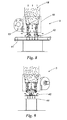
- FIG. 4 shows the vibratory conveyor 21 of the first embodiment in operation.
- an edge of the operative end 25b of the first conveying member 26 is arranged to be level with an edge of the inlet 17.
- air is drawn in through the gap between the bottom surface 12a and the first conveying member 26. This air disturbs the mixture of materials, which are fed onto the vibratory conveyor 21 from a feed conveyor 24.
- the low density material is sucked into the suction duct 11.
- the high density material falls due to gravity from the conveyor onto the second conveying member 27.
- the low density material is then channelled through the suction duct 12 into a discharge duct.
- the discharge duct channels the low density material to a first collection point. Meanwhile, the high density material falls due to gravity through the aperture in the second conveyor into a second collection point.
- air is also drawn in through the gap between the first conveying member 26 and the second conveying member 27, and through the aperture defined in the second conveying member.
- a plurality of air channels feed air into the inlet, creating an even or laminar airflow at the operative end 25a which separates the low density material from the high density materials.
- first conveying member 26 is not connected to the second conveying member 27, and the members 26, 27 vibrate independently.
- the conveying members 26, 27 can also be connected to vibrate in unison.
- Figure 5 and 6 show a second embodiment of a separation apparatus 2 in which the material separator 10 described above is used to suck low density material in through the inlet 17.
- the conveyor is vibratory conveyor 31.
- the conveyor 31 is quadrilateral in shape, for example rectangular. The operation and features of the conveyor 31 are substantially the same as those described for the first embodiment. The differences between the conveyor 21 and the conveyor 31 will now be described.
- the vibratory conveyor comprises a plurality of separate vibratory conveyors.
- Each one of the plurality of separate vibratory conveyors 31 has a first conveying member 32 arranged above a second conveying member 33.
- Both of the first and second conveying members have an operative end 34, which is arranged adjacent the inlet 17, in use.
- the operative end 34a of the first conveying member 32 has an edge 37 which has a first region 38 either side of which are second regions 35.
- the first region 38 is arced and defines a semi-circular edge which corresponds in shape and dimension to the edge of the inlet 17. In the second region 35, the edge is angled away from edge of the first region 38.
- a wall stands up from the floor 36 around its edge. No wall is provided in the first region 38. In use, the walls in the second region 35 act like a chute to channel the mixture of materials to the operative end.
- the low density material is sucked from the operative end 34a at or in the vicinity of the first region 38.
- the high density material falls due to gravity onto the second conveying member 33.
- the second conveying member 33 also has a first region and a second region in which an edge 34b is a straight edge in the first region in a line from the end of one second region to the other. As with the first conveyor, the edge of the second region is angled away from the edge of the first region.
- a wall can optionally be provided.
- the first and second embodiments described above feature an arrangement in which air flow is induced between the first and second conveying members 26 & 27 and 32 & 33 by the suction effect created by the air moving part 10. This air flow aids the separation effect of the separation apparatus.
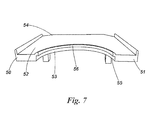
- a vibratory conveyor as shown in Figure 7 is used.
- the vibratory conveyor is substantially the same as those described for the separation apparatus of the first and second embodiments.
- those vibratory conveyors are supplemented by providing a first and second sidewall 50, 51 to connect a first conveying member 52 to a second conveying member 53.
- the sidewalls 50, 51 are provided to define a walled channel having a first end and a second end 54, 55.
- a fan blower is arranged to blow air into the first end.
- the fan blower forces air to move through the channel from the first end 54 to the second end 55.
- the air exits from the second end 55 through a slit 56.
- the second end is arranged in the vicinity of the inlet 17.
- the forced air acts upon the low density and high density material in the vicinity of the inlet 17 to supplement the separating effect of the air moving apparatus 10. That is, the air leaving the slit 56 imparts an upward vertical component of force to the low density material to aid the separation effect.
- Figures 8-10 show a third embodiment of a separation apparatus 3 in which the material separator 10 described above is used to suck low density material in through the inlet 17.
- the conveyor is an endless conveyor 41.
- the operation of the separation apparatus is the same as described for the first embodiment, except the second and third air channels of the first embodiment are not present due to the vibratory conveyor consisting of one level.
- the endless conveyor is supplied with a mixture of materials, which are transported at a predetermined speed to the material separator 10. As the mixture of materials nears the inlet 17 the materials are disturbed. When the materials are at, or are in close vicinity to, the inlet 17, the low density materials are lifted from the conveyor and sucked into the suction duct 12 leaving the high density materials on the conveyor. Subsequently, the low density materials are channelled to a first collection point and the high density materials are channelled to a second collection point.
- the endless conveyor processes discrete containers 42, which contain the mixture of materials.
- the endless conveyor can have sidewalls and process a continuous stream containing a mixture of materials.
- the conveyor has a continuous a web of material which allows air to be drawn through the conveyor 41 to create a second air channel to increase the evenness or laminar nature of the air flowing into the inlet 17.
- the endless conveyor can comprise a solid belt.
- the endless conveyor may also be a vibratory conveyor in addition.
Landscapes
- Engineering & Computer Science (AREA)
- Mechanical Engineering (AREA)
- Combined Means For Separation Of Solids (AREA)
Applications Claiming Priority (1)
| Application Number | Priority Date | Filing Date | Title |
|---|---|---|---|
| GBGB0823495.7A GB0823495D0 (en) | 2008-12-24 | 2008-12-24 | Separation apparatus |
Publications (3)
| Publication Number | Publication Date |
|---|---|
| EP2202006A2 true EP2202006A2 (fr) | 2010-06-30 |
| EP2202006A3 EP2202006A3 (fr) | 2012-10-03 |
| EP2202006B1 EP2202006B1 (fr) | 2015-01-28 |
Family
ID=40344158
Family Applications (1)
| Application Number | Title | Priority Date | Filing Date |
|---|---|---|---|
| EP09180694.3A Not-in-force EP2202006B1 (fr) | 2008-12-24 | 2009-12-23 | Appareil de séparation |
Country Status (5)
| Country | Link |
|---|---|
| US (1) | US8172087B2 (fr) |
| EP (1) | EP2202006B1 (fr) |
| AU (1) | AU2009251203B2 (fr) |
| CA (1) | CA2689041A1 (fr) |
| GB (1) | GB0823495D0 (fr) |
Families Citing this family (6)
| Publication number | Priority date | Publication date | Assignee | Title |
|---|---|---|---|---|
| JP4972577B2 (ja) * | 2008-02-15 | 2012-07-11 | 株式会社リコー | 気流式分級装置 |
| GB0823495D0 (en) * | 2008-12-24 | 2009-01-28 | Tek Dry Systems Ltd | Separation apparatus |
| DE102010054849A1 (de) * | 2010-12-17 | 2012-06-21 | Zeppelin Systems Gmbh | Verfahren und Vorrichtung zur Abscheidung von feinen Partikeln aus granulatförmigen Schüttgütern in einer Rohrleitung |
| US9764359B2 (en) * | 2015-06-22 | 2017-09-19 | Ecostar S.R.L. | Screen for separating solid materials |
| CN110125000B (zh) * | 2019-05-16 | 2020-10-23 | 徐州市金彭面粉加工有限公司 | 谷类五谷杂粮吹筛装置 |
| CN114808150B (zh) * | 2022-03-15 | 2023-08-15 | 安徽芙芮雅羽绒有限公司 | 一种羽绒加工用优质羽绒提纯装置 |
Family Cites Families (15)
| Publication number | Priority date | Publication date | Assignee | Title |
|---|---|---|---|---|
| US3164548A (en) * | 1961-06-15 | 1965-01-05 | Imp Tobacco Co Ltd | Tower type pneumatic separator |
| GB1077410A (en) * | 1964-12-24 | 1967-07-26 | Kurt Koerber | Apparatus for stripping and separating tobacco or other foliate materials |
| US3522012A (en) * | 1967-03-17 | 1970-07-28 | Allis Chalmers Mfg Co | Apparatus for mineral beneficiation |
| US3836085A (en) * | 1971-03-18 | 1974-09-17 | V Brown | Tower extractor for municipal wastes |
| US3918586A (en) * | 1973-12-27 | 1975-11-11 | Durand Machine Company Limited | Separating apparatus for flat pieces of different dimensions |
| US4132634A (en) * | 1974-09-17 | 1979-01-02 | Hans Rumpf | Method of an apparatus for sifting particulate material in a cross-current |
| GB8409766D0 (en) * | 1984-04-14 | 1984-05-23 | Hambro Machinery Ltd | Flutriator |
| US5099863A (en) * | 1987-08-24 | 1992-03-31 | Universal Leaf Tobacco Co., Inc. | Apparatus for separating threshed leaf tobacco |
| US4853112A (en) * | 1988-07-25 | 1989-08-01 | Victor Brown | Low velocity air classifier |
| US5344025A (en) * | 1991-04-24 | 1994-09-06 | Griffin & Company | Commingled waste separation apparatus and methods |
| DE19915122A1 (de) * | 1999-04-01 | 2000-10-05 | Glatt Ingtech Gmbh | Steigrohrsichter für die Wirbelschichtgranulation |
| US7243801B2 (en) * | 2004-11-18 | 2007-07-17 | Hawker Corporation | System for removing plastic from recycled material |
| GB0613351D0 (en) * | 2006-07-05 | 2006-08-16 | Fryars Thomas | Apparatus for separating waste |
| GB0823495D0 (en) * | 2008-12-24 | 2009-01-28 | Tek Dry Systems Ltd | Separation apparatus |
| US8517177B2 (en) * | 2009-08-05 | 2013-08-27 | Barry D. Graham | Systems and methods for recovering materials from soil |
-
2008
- 2008-12-24 GB GBGB0823495.7A patent/GB0823495D0/en active Pending
-
2009
- 2009-12-23 CA CA2689041A patent/CA2689041A1/fr not_active Abandoned
- 2009-12-23 US US12/646,760 patent/US8172087B2/en not_active Expired - Fee Related
- 2009-12-23 EP EP09180694.3A patent/EP2202006B1/fr not_active Not-in-force
- 2009-12-24 AU AU2009251203A patent/AU2009251203B2/en not_active Expired - Fee Related
Non-Patent Citations (1)
| Title |
|---|
| None |
Also Published As
| Publication number | Publication date |
|---|---|
| US8172087B2 (en) | 2012-05-08 |
| US20100163464A1 (en) | 2010-07-01 |
| EP2202006B1 (fr) | 2015-01-28 |
| CA2689041A1 (fr) | 2010-06-24 |
| AU2009251203A1 (en) | 2010-07-08 |
| EP2202006A3 (fr) | 2012-10-03 |
| GB0823495D0 (en) | 2009-01-28 |
| AU2009251203B2 (en) | 2016-01-07 |
Similar Documents
| Publication | Publication Date | Title |
|---|---|---|
| US8172087B2 (en) | Separation apparatus | |
| US8813966B2 (en) | Pneumatic vacuum separation plant for bulk materials | |
| AU2014224493B2 (en) | Method and apparatus in pneumatic materials handling and a waste container/separating device | |
| US10131507B1 (en) | Ejector hood | |
| EP3634654B1 (fr) | Flux d'air unique pour séparer un flux de déchets mélangés en trois fractions | |
| US6446813B1 (en) | Sorting waste materials | |
| JP2015131264A (ja) | 微粉除去装置 | |
| WO2019069742A1 (fr) | Machine de tri de couleurs | |
| JP2010279921A (ja) | プラスチック選別装置 | |
| KR20020048412A (ko) | 상이한 크기의 조각을 위한 분류장치 | |
| EP0456913A1 (fr) | Séparateur à aspiration | |
| KR20130060790A (ko) | 벨트 컨베이어 미세 분진 흡입 장치 | |
| US8016115B2 (en) | Waste separation apparatus | |
| CA2704880A1 (fr) | Separateur balistique | |
| JP2007167824A (ja) | 分別装置 | |
| EP0745335A1 (fr) | Méthode et unité pour l'alimentation d'une machine de fabrication de cigarettes | |
| CN107032090A (zh) | 块状物分离和输送装置 | |
| JP4692907B2 (ja) | 風力選別装置 | |
| KR100801533B1 (ko) | 선별기로 분류된 토사 내 이물질 제거장치와 그 제거방법 | |
| JP2000218235A (ja) | 廃棄物選別装置 | |
| US866415A (en) | Pneumatic separator. | |
| JP6371999B1 (ja) | 混合収集廃棄物の選別処理システム | |
| NL1042754B1 (nl) | Sorteerinrichting voor het sorteren van materiaal in een zware en een lichte fractie | |
| KR20260044660A (ko) | 폐기물로부터 각각 성질이 다른 제품을 분리하는 방법 | |
| JP2005125129A (ja) | 風力選別装置 |
Legal Events
| Date | Code | Title | Description |
|---|---|---|---|
| PUAI | Public reference made under article 153(3) epc to a published international application that has entered the european phase |
Free format text: ORIGINAL CODE: 0009012 |
|
| AK | Designated contracting states |
Kind code of ref document: A2 Designated state(s): AT BE BG CH CY CZ DE DK EE ES FI FR GB GR HR HU IE IS IT LI LT LU LV MC MK MT NL NO PL PT RO SE SI SK SM TR |
|
| AX | Request for extension of the european patent |
Extension state: AL BA RS |
|
| PUAL | Search report despatched |
Free format text: ORIGINAL CODE: 0009013 |
|
| AK | Designated contracting states |
Kind code of ref document: A3 Designated state(s): AT BE BG CH CY CZ DE DK EE ES FI FR GB GR HR HU IE IS IT LI LT LU LV MC MK MT NL NO PL PT RO SE SI SK SM TR |
|
| AX | Request for extension of the european patent |
Extension state: AL BA RS |
|
| RIC1 | Information provided on ipc code assigned before grant |
Ipc: B07B 4/08 20060101ALI20120827BHEP Ipc: B07B 13/08 20060101AFI20120827BHEP |
|
| 17P | Request for examination filed |
Effective date: 20130402 |
|
| 17Q | First examination report despatched |
Effective date: 20131008 |
|
| GRAP | Despatch of communication of intention to grant a patent |
Free format text: ORIGINAL CODE: EPIDOSNIGR1 |
|
| INTG | Intention to grant announced |
Effective date: 20140717 |
|
| GRAS | Grant fee paid |
Free format text: ORIGINAL CODE: EPIDOSNIGR3 |
|
| GRAA | (expected) grant |
Free format text: ORIGINAL CODE: 0009210 |
|
| AK | Designated contracting states |
Kind code of ref document: B1 Designated state(s): AT BE BG CH CY CZ DE DK EE ES FI FR GB GR HR HU IE IS IT LI LT LU LV MC MK MT NL NO PL PT RO SE SI SK SM TR |
|
| REG | Reference to a national code |
Ref country code: GB Ref legal event code: FG4D |
|
| REG | Reference to a national code |
Ref country code: CH Ref legal event code: EP |
|
| REG | Reference to a national code |
Ref country code: IE Ref legal event code: FG4D |
|
| REG | Reference to a national code |
Ref country code: DE Ref legal event code: R096 Ref document number: 602009029209 Country of ref document: DE Effective date: 20150312 |
|
| REG | Reference to a national code |
Ref country code: AT Ref legal event code: REF Ref document number: 708005 Country of ref document: AT Kind code of ref document: T Effective date: 20150315 |
|
| REG | Reference to a national code |
Ref country code: AT Ref legal event code: MK05 Ref document number: 708005 Country of ref document: AT Kind code of ref document: T Effective date: 20150128 |
|
| REG | Reference to a national code |
Ref country code: LT Ref legal event code: MG4D |
|
| PG25 | Lapsed in a contracting state [announced via postgrant information from national office to epo] |
Ref country code: BG Free format text: LAPSE BECAUSE OF FAILURE TO SUBMIT A TRANSLATION OF THE DESCRIPTION OR TO PAY THE FEE WITHIN THE PRESCRIBED TIME-LIMIT Effective date: 20150428 Ref country code: ES Free format text: LAPSE BECAUSE OF FAILURE TO SUBMIT A TRANSLATION OF THE DESCRIPTION OR TO PAY THE FEE WITHIN THE PRESCRIBED TIME-LIMIT Effective date: 20150128 Ref country code: LT Free format text: LAPSE BECAUSE OF FAILURE TO SUBMIT A TRANSLATION OF THE DESCRIPTION OR TO PAY THE FEE WITHIN THE PRESCRIBED TIME-LIMIT Effective date: 20150128 Ref country code: HR Free format text: LAPSE BECAUSE OF FAILURE TO SUBMIT A TRANSLATION OF THE DESCRIPTION OR TO PAY THE FEE WITHIN THE PRESCRIBED TIME-LIMIT Effective date: 20150128 Ref country code: FI Free format text: LAPSE BECAUSE OF FAILURE TO SUBMIT A TRANSLATION OF THE DESCRIPTION OR TO PAY THE FEE WITHIN THE PRESCRIBED TIME-LIMIT Effective date: 20150128 Ref country code: NO Free format text: LAPSE BECAUSE OF FAILURE TO SUBMIT A TRANSLATION OF THE DESCRIPTION OR TO PAY THE FEE WITHIN THE PRESCRIBED TIME-LIMIT Effective date: 20150428 Ref country code: SE Free format text: LAPSE BECAUSE OF FAILURE TO SUBMIT A TRANSLATION OF THE DESCRIPTION OR TO PAY THE FEE WITHIN THE PRESCRIBED TIME-LIMIT Effective date: 20150128 |
|
| PG25 | Lapsed in a contracting state [announced via postgrant information from national office to epo] |
Ref country code: AT Free format text: LAPSE BECAUSE OF FAILURE TO SUBMIT A TRANSLATION OF THE DESCRIPTION OR TO PAY THE FEE WITHIN THE PRESCRIBED TIME-LIMIT Effective date: 20150128 Ref country code: GR Free format text: LAPSE BECAUSE OF FAILURE TO SUBMIT A TRANSLATION OF THE DESCRIPTION OR TO PAY THE FEE WITHIN THE PRESCRIBED TIME-LIMIT Effective date: 20150429 Ref country code: IS Free format text: LAPSE BECAUSE OF FAILURE TO SUBMIT A TRANSLATION OF THE DESCRIPTION OR TO PAY THE FEE WITHIN THE PRESCRIBED TIME-LIMIT Effective date: 20150528 Ref country code: PL Free format text: LAPSE BECAUSE OF FAILURE TO SUBMIT A TRANSLATION OF THE DESCRIPTION OR TO PAY THE FEE WITHIN THE PRESCRIBED TIME-LIMIT Effective date: 20150128 Ref country code: LV Free format text: LAPSE BECAUSE OF FAILURE TO SUBMIT A TRANSLATION OF THE DESCRIPTION OR TO PAY THE FEE WITHIN THE PRESCRIBED TIME-LIMIT Effective date: 20150128 |
|
| REG | Reference to a national code |
Ref country code: DE Ref legal event code: R097 Ref document number: 602009029209 Country of ref document: DE |
|
| PG25 | Lapsed in a contracting state [announced via postgrant information from national office to epo] |
Ref country code: EE Free format text: LAPSE BECAUSE OF FAILURE TO SUBMIT A TRANSLATION OF THE DESCRIPTION OR TO PAY THE FEE WITHIN THE PRESCRIBED TIME-LIMIT Effective date: 20150128 Ref country code: SK Free format text: LAPSE BECAUSE OF FAILURE TO SUBMIT A TRANSLATION OF THE DESCRIPTION OR TO PAY THE FEE WITHIN THE PRESCRIBED TIME-LIMIT Effective date: 20150128 Ref country code: DK Free format text: LAPSE BECAUSE OF FAILURE TO SUBMIT A TRANSLATION OF THE DESCRIPTION OR TO PAY THE FEE WITHIN THE PRESCRIBED TIME-LIMIT Effective date: 20150128 Ref country code: RO Free format text: LAPSE BECAUSE OF FAILURE TO SUBMIT A TRANSLATION OF THE DESCRIPTION OR TO PAY THE FEE WITHIN THE PRESCRIBED TIME-LIMIT Effective date: 20150128 Ref country code: CZ Free format text: LAPSE BECAUSE OF FAILURE TO SUBMIT A TRANSLATION OF THE DESCRIPTION OR TO PAY THE FEE WITHIN THE PRESCRIBED TIME-LIMIT Effective date: 20150128 |
|
| PLBE | No opposition filed within time limit |
Free format text: ORIGINAL CODE: 0009261 |
|
| STAA | Information on the status of an ep patent application or granted ep patent |
Free format text: STATUS: NO OPPOSITION FILED WITHIN TIME LIMIT |
|
| PG25 | Lapsed in a contracting state [announced via postgrant information from national office to epo] |
Ref country code: IT Free format text: LAPSE BECAUSE OF FAILURE TO SUBMIT A TRANSLATION OF THE DESCRIPTION OR TO PAY THE FEE WITHIN THE PRESCRIBED TIME-LIMIT Effective date: 20150128 |
|
| 26N | No opposition filed |
Effective date: 20151029 |
|
| PG25 | Lapsed in a contracting state [announced via postgrant information from national office to epo] |
Ref country code: SI Free format text: LAPSE BECAUSE OF FAILURE TO SUBMIT A TRANSLATION OF THE DESCRIPTION OR TO PAY THE FEE WITHIN THE PRESCRIBED TIME-LIMIT Effective date: 20150128 |
|
| PG25 | Lapsed in a contracting state [announced via postgrant information from national office to epo] |
Ref country code: BE Free format text: LAPSE BECAUSE OF FAILURE TO SUBMIT A TRANSLATION OF THE DESCRIPTION OR TO PAY THE FEE WITHIN THE PRESCRIBED TIME-LIMIT Effective date: 20150128 |
|
| REG | Reference to a national code |
Ref country code: DE Ref legal event code: R119 Ref document number: 602009029209 Country of ref document: DE |
|
| PG25 | Lapsed in a contracting state [announced via postgrant information from national office to epo] |
Ref country code: LU Free format text: LAPSE BECAUSE OF FAILURE TO SUBMIT A TRANSLATION OF THE DESCRIPTION OR TO PAY THE FEE WITHIN THE PRESCRIBED TIME-LIMIT Effective date: 20151223 Ref country code: MC Free format text: LAPSE BECAUSE OF FAILURE TO SUBMIT A TRANSLATION OF THE DESCRIPTION OR TO PAY THE FEE WITHIN THE PRESCRIBED TIME-LIMIT Effective date: 20150128 |
|
| REG | Reference to a national code |
Ref country code: CH Ref legal event code: PL |
|
| REG | Reference to a national code |
Ref country code: NL Ref legal event code: MM Effective date: 20160101 |
|
| REG | Reference to a national code |
Ref country code: IE Ref legal event code: MM4A |
|
| REG | Reference to a national code |
Ref country code: FR Ref legal event code: ST Effective date: 20160831 |
|
| PG25 | Lapsed in a contracting state [announced via postgrant information from national office to epo] |
Ref country code: DE Free format text: LAPSE BECAUSE OF NON-PAYMENT OF DUE FEES Effective date: 20160701 Ref country code: NL Free format text: LAPSE BECAUSE OF NON-PAYMENT OF DUE FEES Effective date: 20160101 Ref country code: LI Free format text: LAPSE BECAUSE OF NON-PAYMENT OF DUE FEES Effective date: 20151231 Ref country code: CH Free format text: LAPSE BECAUSE OF NON-PAYMENT OF DUE FEES Effective date: 20151231 Ref country code: IE Free format text: LAPSE BECAUSE OF NON-PAYMENT OF DUE FEES Effective date: 20151223 |
|
| PG25 | Lapsed in a contracting state [announced via postgrant information from national office to epo] |
Ref country code: FR Free format text: LAPSE BECAUSE OF NON-PAYMENT OF DUE FEES Effective date: 20151231 |
|
| PG25 | Lapsed in a contracting state [announced via postgrant information from national office to epo] |
Ref country code: HU Free format text: LAPSE BECAUSE OF FAILURE TO SUBMIT A TRANSLATION OF THE DESCRIPTION OR TO PAY THE FEE WITHIN THE PRESCRIBED TIME-LIMIT; INVALID AB INITIO Effective date: 20091223 Ref country code: SM Free format text: LAPSE BECAUSE OF FAILURE TO SUBMIT A TRANSLATION OF THE DESCRIPTION OR TO PAY THE FEE WITHIN THE PRESCRIBED TIME-LIMIT Effective date: 20150128 |
|
| PG25 | Lapsed in a contracting state [announced via postgrant information from national office to epo] |
Ref country code: CY Free format text: LAPSE BECAUSE OF FAILURE TO SUBMIT A TRANSLATION OF THE DESCRIPTION OR TO PAY THE FEE WITHIN THE PRESCRIBED TIME-LIMIT Effective date: 20150128 |
|
| PG25 | Lapsed in a contracting state [announced via postgrant information from national office to epo] |
Ref country code: TR Free format text: LAPSE BECAUSE OF FAILURE TO SUBMIT A TRANSLATION OF THE DESCRIPTION OR TO PAY THE FEE WITHIN THE PRESCRIBED TIME-LIMIT Effective date: 20150128 Ref country code: MT Free format text: LAPSE BECAUSE OF FAILURE TO SUBMIT A TRANSLATION OF THE DESCRIPTION OR TO PAY THE FEE WITHIN THE PRESCRIBED TIME-LIMIT Effective date: 20150128 |
|
| PGFP | Annual fee paid to national office [announced via postgrant information from national office to epo] |
Ref country code: GB Payment date: 20171218 Year of fee payment: 9 |
|
| PG25 | Lapsed in a contracting state [announced via postgrant information from national office to epo] |
Ref country code: PT Free format text: LAPSE BECAUSE OF FAILURE TO SUBMIT A TRANSLATION OF THE DESCRIPTION OR TO PAY THE FEE WITHIN THE PRESCRIBED TIME-LIMIT Effective date: 20150128 Ref country code: MK Free format text: LAPSE BECAUSE OF FAILURE TO SUBMIT A TRANSLATION OF THE DESCRIPTION OR TO PAY THE FEE WITHIN THE PRESCRIBED TIME-LIMIT Effective date: 20150128 |
|
| GBPC | Gb: european patent ceased through non-payment of renewal fee |
Effective date: 20181223 |
|
| PG25 | Lapsed in a contracting state [announced via postgrant information from national office to epo] |
Ref country code: GB Free format text: LAPSE BECAUSE OF NON-PAYMENT OF DUE FEES Effective date: 20181223 |