EP2202938A1 - Schutz gegen Überflutungsangriffe in einem Netzwerk - Google Patents
Schutz gegen Überflutungsangriffe in einem Netzwerk Download PDFInfo
- Publication number
- EP2202938A1 EP2202938A1 EP08306019A EP08306019A EP2202938A1 EP 2202938 A1 EP2202938 A1 EP 2202938A1 EP 08306019 A EP08306019 A EP 08306019A EP 08306019 A EP08306019 A EP 08306019A EP 2202938 A1 EP2202938 A1 EP 2202938A1
- Authority
- EP
- European Patent Office
- Prior art keywords
- terminal
- message
- secret parameter
- register
- sip
- Prior art date
- Legal status (The legal status is an assumption and is not a legal conclusion. Google has not performed a legal analysis and makes no representation as to the accuracy of the status listed.)
- Withdrawn
Links
Images

Classifications
-
- H—ELECTRICITY
- H04—ELECTRIC COMMUNICATION TECHNIQUE
- H04L—TRANSMISSION OF DIGITAL INFORMATION, e.g. TELEGRAPHIC COMMUNICATION
- H04L63/00—Network architectures or network communication protocols for network security
- H04L63/14—Network architectures or network communication protocols for network security for detecting or protecting against malicious traffic
- H04L63/1441—Countermeasures against malicious traffic
- H04L63/1458—Denial of Service
-
- H—ELECTRICITY
- H04—ELECTRIC COMMUNICATION TECHNIQUE
- H04L—TRANSMISSION OF DIGITAL INFORMATION, e.g. TELEGRAPHIC COMMUNICATION
- H04L65/00—Network arrangements, protocols or services for supporting real-time applications in data packet communication
- H04L65/1066—Session management
- H04L65/1076—Screening of IP real time communications, e.g. spam over Internet telephony [SPIT]
-
- H—ELECTRICITY
- H04—ELECTRIC COMMUNICATION TECHNIQUE
- H04L—TRANSMISSION OF DIGITAL INFORMATION, e.g. TELEGRAPHIC COMMUNICATION
- H04L65/00—Network arrangements, protocols or services for supporting real-time applications in data packet communication
- H04L65/10—Architectures or entities
- H04L65/1045—Proxies, e.g. for session initiation protocol [SIP]
-
- H—ELECTRICITY
- H04—ELECTRIC COMMUNICATION TECHNIQUE
- H04L—TRANSMISSION OF DIGITAL INFORMATION, e.g. TELEGRAPHIC COMMUNICATION
- H04L65/00—Network arrangements, protocols or services for supporting real-time applications in data packet communication
- H04L65/1066—Session management
- H04L65/1073—Registration or de-registration
-
- H—ELECTRICITY
- H04—ELECTRIC COMMUNICATION TECHNIQUE
- H04L—TRANSMISSION OF DIGITAL INFORMATION, e.g. TELEGRAPHIC COMMUNICATION
- H04L65/00—Network arrangements, protocols or services for supporting real-time applications in data packet communication
- H04L65/1066—Session management
- H04L65/1101—Session protocols
- H04L65/1104—Session initiation protocol [SIP]
Definitions
- the present invention relates generally to communication networks, and more particularly to limit some attacks which can be done in these types of networks.
- Some communication networks allow setting up and tearing down multimedia communication sessions, such as voice and video calls over Internet. These types of communication are generally based on the Session Initiation Protocol (SIP) protocol.
- SIP Session Initiation Protocol
- Any terminal which is in a communication over the Internet network can be a target of different types of attack.
- a first terminal of this communication network can be attacked by a second one which sends toward this first terminal a lot of messages to trigger an overflow of messages.
- a network device between the first and second terminals, in order to filter the messages coming from the second terminal.
- Such a filter is based on the analysis of an identifier of the second terminal, which can be very complex and expensive to perform on SIP messages.
- the complete SIP message must be parsed to obtain the identifier of the second terminal, meaning the calling party. Consequently, the network device must have a sufficient capacity of computation to carry out such a parsing of all SIP messages.
- SIP is a text-based protocol, such as Hyper-Text Transfer Protocol (HTPP). The parsing of such a protocol requires an important amount of resources.
- HTTP Hyper-Text Transfer Protocol
- a SIP terminal and more particularly an embedded SIP User Agent, is very vulnerable to SIP flooding attacks and denial of services attacks.
- a basic attack against a SIP User Agent consists in flooding the target with SIP request messages. As the parsing is really resources consuming, this simple attack can be really efficient and may lead to a denial of service.
- On an embedded SIP User Agent as a SIP phone or a Home Gateway, this denial of service will affected the voice service, but also the other services like http, email ...
- the invention proposes a method of managing a communication service offered to at least one terminal in a network comprising a network function for said service, said method comprising the following steps at the terminal level:
- the network function and a terminal, which is registered to this network function share a same secret parameter which is associated to the terminal.
- the terminal will be able to determine easily if a received message comes from the network function, which knows the same secret parameter. Indeed, when a message, which is destined to the terminal, is received by the network function, this network function can introduce the secret parameter into the message before transmitting it to the terminal. Thus, the terminal can deduce that the received message comes from the network function when the received message indicates the shared secret parameter.
- the registration step is a relevant way for sharing this secret parameter between the terminal and the network function because it corresponds to the first contact of the terminal with the network.
- a network architecture comprising a network function; all messages which go through the network function are controlled before being transmitted to a terminal.
- a network function allows securing messages destined to a terminal.
- the terminal can be trusting in messages coming from the network function, and the shared secret parameter allows determining easily when a received message comes from the network function.
- the terminal does not have to consume a lot of resources to parse all received messages, especially for SIP messages. Indeed, even if no parsing is performed for messages received from the network function, the terminal is protected against some attacks.
- the network function can comprise one register function which is more particularly in charge of handling a registration step of a terminal to the communication service and one proxy function, which is in charge of handling messages destined to a registered terminal.
- the register function can be co-located on a same network device with the proxy function or not. No limit is associated to the physical implementation of network register and proxy functions.
- the present invention can be applied advantageously to a network wherein at least a type of messages destined to the terminal goes through the network function.
- this type of message can correspond to SIP request message.
- the method can further comprise the following steps at the terminal level:
- the terminal when the terminal receives a message of the determined type directly without going through the network function, it corresponds to an abnormal situation.
- the features stated above allow determining easily if the situation is abnormal or not.
- a secret parameter is shared between the registered terminal and the network function. Consequently, the network function can introduce the secret parameter in each message destined to the terminal.
- the terminal receives a message which is expected to go through the network function, it can control if this message comprises the secret parameter. If a message is expected to come from the network function and it does not include the secret parameter, the situation is abnormal and then the terminal can advantageously discard such a message.
- the terminal can deduce, firstly, that the received message went through the network function like expected, and secondly, that the received message has been already controlled by the network function.
- the determined type of messages which are expected to go through the network function can correspond to signalling messages and more particularly to SIP request messages when the SIP protocol is used.
- the SIP register request message is generally the first message sent by a SIP terminal when it is switched on.
- an identifier of the terminal as a SIP URI ('Uniform resource Identifier'), or address of registration, which is classically used in the contact header of the register request message, is bound to a physical address of the terminal.
- the URI or address of registration can correspond classically to a public parameter, like a user name or a phone number.
- the mechanism proposed here can consist in using any secret parameter during the registration step instead of using the public parameter, like user name or phone number which is classically used.
- the secret parameter can be generated randomly.
- This secret parameter can be considered as a random address of registration (AOR).
- This random AOR can comprise a random part as only a part of the AOR, or the random part can represent the complete the AOR.
- 'terminal means any device which is able to terminate the communication protocol used in the network.
- a terminal can correspond to a 'User Agent' as referred in the RFC3261.
- Such a terminal can be, for instance, a telephone, a computer, a gateway, or a PABX (for 'Private Automatic Branch Exchange').
- a terminal can determine easily if a received message comes from a proxy function or not, and can estimate the risk to handle this received message. Sometimes, it can decide to discard a received message, notably when the received message is expected to come from the network function although it is not the case. Thus, a flooding attack can be avoided.
- all signalling messages are expected to come from the network function, and particularly the SIP request messages, all signalling messages which do not comprise the secret parameter can be advantageously and easily discarded at the terminal level. In these conditions, the terminal can easily be protected against a flooding attack based on sending SIP request messages.
- the terminal can decide to discard it without parsing the whole SIP message.
- the resources used at the terminal level are not blocked by parsing operations.
- the effects of the denial of services by resources exhaustion are reduced and terminal's services should not be affected.
- the service is offered in the network based on a Session Initiation Protocol, and, the secret parameter is expected to be included in a SIP contact field of request messages.
- the terminal is able to detect easily if a received request message comes from the network function or not.
- the type of messages, destined to the terminal and going through the network function, can be a SIP request message type, and the terminal performs step /2/ only if the first 4 bytes are uppercase letters.
- the terminal pre parses the received message before determining if this message is coming from the network function. Indeed, as the terminal knows that all request messages come from the network function, firstly it tries to determine if the received message is a request message. For this purpose, it determines if the first four bytes of the SIP received message are uppercase letters. If it is the case, the received message is probably a request message.
- the method of managing a service further comprises the following steps at the terminal level:
- the terminal upon detection of a flooding attack, the terminal manages a de registration step with the network function.
- a flooding attack means that the secret parameter is known by a malicious device.
- the association between the terminal and the secret parameter is erased.
- the terminal can carried out a de-registration step of its current secret parameter, in order to allow no SIP services available.
- a de-register request message can indicate information relative to an originator of the flooding attack and/or relative to a cause of flooding attack.
- the network function is informed about a suspect.
- Such information can be
- a flooding attack can be detected based on reception of a given number of malicious messages.
- said method can further comprise the following steps at the terminal level:
- the invention proposes a method of managing a service offered a communication service offered to at least one terminal in a network comprising a network function for said service, said method comprising the following steps at the network function level:
- the network function is in charge to manage the registration to the communication service and to store the secret parameter in order to share this secret with the registered terminal.
- the method of managing a communication service can comprise the following steps at the network function level:
- a third aspect of the invention relates to a terminal comprising means for carrying out the method according to the first aspect.
- a fourth aspect of the invention relates to a network device comprising means for carrying out the method according to the second aspect.
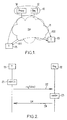
- Figure 1 illustrates a communication network according to one embodiment of the present invention.
- This communication network comprises a network function 10 and a plurality of terminals 13 able to communicate over an IP network 11.
- the network function 10 comprises a register function 12 and a proxy function 14, which can be co-located in a same network device, or can be located on different network devices which are able to communicate together.
- the network architecture There is no limitation relative to the network architecture. The following sections make reference to the register and proxy functions globally, only for illustration purpose.
- the communication over the IP network is based on the SIP protocol as defined in RFC3261.
- the network register function 12 is adapted to handle a registration step of a terminal 13 which wants to communicate through the network 11 using SIP protocol.
- the proxy function 14 is adapted to receive at least a type of signalling messages from a terminal and to transmit it via the network 11 to a terminal which is registered according to one embodiment of the present invention.
- some messages destined to a terminal are expected to go through the network via the way 102.
- the present invention allows detecting a flooding attack based on messages which are expected to go through the network function and which go through the way 101, meaning directly between two terminals 13.
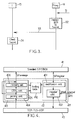
- Figure 2 illustrates a registration step of a terminal according to one embodiment of the present invention.
- a terminal 13 knows a random parameter which is kept as a secret. It is possible to plan that the terminal 13 generates this random parameter at step 21. But, this random parameter can be generated by any other way.
- the terminal sends a register request message 22 which indicates this random parameter to the register function 12.
- This register function 12 stores this random parameter in association with this terminal in memory and responds by sending back a SIP message 200 OK in order to confirm the registration step.
- the random parameter can be combined with a public parameter of the terminal, like user name or phone number for instance.
- the message 22 can be as follows:
- the secret parameter is sent to the register function 12 in the 'contact' field of a SIP register request message.
- the secret parameter corresponds to a combination of a random parameter and a physical address. This field indicates here, for instance:
- the terminal 13 and the network register function 12 share the same secret parameter. This shared information allows them to guarantee protection against some attacks, like SIP flooding attack.
- the proxy function 14 which is classically linked to the register function 12, can introduce the shared secret parameter into all request messages destined to the terminal 13 and going through the proxy function.
- the information filled in the contact field is a random AOR, which will be included, for instance, in 'contact' field in all messages which are destined to the terminal 13 and which are going through the proxy function 14.
- Figure 3 illustrates the use of the secret parameter according to one embodiment of the present invention, after the registration step.
- the network register function 12 and the network proxy function 14 are associated together. Consequently, the proxy function can access to the information stored by the register function, and notably to the secret parameter, meaning here in this exemplary embodiment the random address of registration AOR, which is stored in association to the registered terminal.
- the proxy function 14 receives a message 31 destined to the terminal 13, it finds the address of registration AOR stored when this terminal registered itself, and it replaces the corresponding information received in the message 31 by this address of registration AOR, at step 32.
- the proxy function 14 sends to the terminal a message 33 indicating the secret parameter, meaning for instance the address of registration used for the registration step, as illustrated on figure 2 . Consequently, when the terminal 13 receives this message 33, it is able to determine if this message comes from the proxy function 14 or not. For that purpose, at step 34, the terminal controls if the secret parameter is comprised in the message 33 or not.
- This controlling step carried out at the terminal level is easy and makes the terminal 13 sure that the received message 33 transited through the proxy function 14.
- the level of controlling applied by a proxy function can depend on the capacity of the device where this function 14 is implemented. But, a proxy function carries out a controlling step on each received message. Consequently, it is very secure to know that the received message comes from the proxy function.
- the proxy function 14 applies a high level of controlling on received messages, and in these conditions, the terminal can handle the received message 33 in a complete trusting conditions.
- the terminal can handle it in a trusting manner.
- the address of registration (secret parameter) used according to one embodiment of the present invention is filled at the beginning of SIP messages, by the proxy function 14.
- the proxy function 14 it is very easy to control if the received message begins with the address of registration provided during the registration step, for instance.
- FIG. 4 illustrates a SIP stack for a terminal, according to one embodiment of the present invention.
- a SIP stack comprises a TCP-TLS UDP layer 43, a protection layer 42 and a standard SIP stack 41.
- a new layer destined to increase the protection of a terminal according to one embodiment of the present invention, is introduced between a classical TCP layer 43 and a classical SIP stack 41.
- the protocol stack comprises the protection layer 42 between a lower layer 43 and an upper layer 41; a binding table 412 being adapted to store an association of a secret parameter and a public parameter for the considered terminal.
- the protection layer receives a request register message including a public parameter classically used in this type of message. Then, the protection layer replaces this public parameter by a secret parameter and transmits this message to the lower layer.
- the binding table stores an association of the public parameter and the secret parameter.
- the protection layer 42 comprises:
- the register block 411 is in charge of handling messages corresponding to the registration step as described above.
- This register block 411 includes a modification unit 401 and a register unit 402.
- the processing block 413 is in charge of handling reception of SIP messages.
- This block 413 can comprise a parsing unit 404, a controlling unit 405 and a recovery unit 406.
- the parsing unit 404 can be an optional unit to allow increasing performances.
- the binding table 412 is used by both blocks 411 and 413. When the public and secret parameters correspond to an AOR, the binding table 412 binds both parameters.
- This binding table 412 is feed by the register unit 402 of the register block 411, during the registration step, and can be interrogated by the controlling unit 405 and the recovery unit 406 of the processing block 413, when SIP messages are received after the registration step.
- This binding table is useful, notably when the terminal 13 handles a plurality of registration steps with respective different secret parameters. Indeed, no limitation is attached to the number of registration steps with different secret parameters that can be performed by one terminal according to one embodiment of the present invention.
- a register request message 22, sent from the terminal 13 to the network register function 12 in the network, can be handled at the terminal 13 as described below.
- the SIP register request message is received from the SIP stack 41 by the modification unit 401.
- the modification unit 401 fills in the contact 'field' of the register request message received from the SIP stack 41, with the secret parameter which corresponds to a random AOR.
- the secret parameter can be a random parameter either partially or completely.
- the secret parameter can be a combination of a random parameter and a user name or a phone number, for instance.
- the information initially filled in the 'contact' field of the register request message received from the SIP stack is replaced by the random AOR, and an association between this initial information and the random AOR is stored in the binding table 412.
- the register request message 22 indicating the secret parameter is then transmitted from the modification unit 401 to the register unit 402, which is in charge of handling an interface with the network register function 12.
- the register unit 402 sends this message 22 to the network register function 12.
- the register unit 402 can also manage an 'Expire' header of the register request message, when this field provided by the SIP stack 41 is considered as too long. In this case, the register unit 402 can manage the re-registration, eventually with a new secret parameter, meaning with a new random AOR in one embodiment.
- the register unit 402 is also able to receive events 420 from other elements. These events can inform it that an attack has been detected. In this case, the register unit 402 can decide to de-register the SIP User Agent and re-registers the SIP User Agent with a new random AOR.
- the terminal 13 receives a SIP OK 200 message 24. This message 24 is received by the register block 411 before being transmitted to the standard SIP stack 41.
- the parsing unit 404 an optional unit of the processing block, is in charge of analyzing the beginning of all new incoming SIP messages in order to be able to transmit to the controlling unit 405 the type of messages which are expected to come from the proxy function 14 and to transmit directly to the SIP stack 41 the other messages.
- the parsing unit is adapted to determine if the SIP message is a request message. In this case, the SIP message is transmitted to the controlling unit 405.
- This controlling unit 405 interrogates the binding table 403 to control, at first, if the random AOR received in the SIP message corresponds to one AOR stored in the binding table. If not, the SIP message is discarded.
- the SIP message is transmitted to the recovery unit 405.
- This unit is in charge of replacing the random AOR with the associated information stored in the binding table. In this embodiment, this information corresponds to the initial AOR of the terminal. Then, the SIP message is transmitted to the upper layer 41, standard SIP stack.
- a SIP User Agent can reject malicious SIP messages as soon as possible, without parsing the entire SIP message.
- the proposed mechanism consists in pre-parsing only the beginning of all messages received in a SIP socket of the terminal, and checking the type of SIP messages.
- the parsing unit can transmit it to the high level SIP stack 41. If the message is a SIP request, the parsing unit controls if the request AOR is equal to an authorized Address Of Registration. An authorized AOR corresponds to an AOR which is stored in the binding table 412.
- the message is early discarded; else it is transmitted to the high level SIP stack.
- the parsing and filtering process can be applied as follows.
- the first 4 bytes of a message received on the SIP socket are parsed.
- the message should be a SIP response. Consequently, it is transmitted to the high level SIP stack.
- the message should be a SIP request. In this case, a parsing method is applied.
- the received message is discarded.
- the AOR of this message is parsed byte per byte in order to determine if the AOR is equal to an active Address Of Registration. If it is the case, the message is transmitted to the recovery unit 406, else it is discarded.
- the SIP User Agent of the terminal 13 is registered with the AOR "sip:11ff04d59d394bd5@ 192.0.2.4:5060" according to one embodiment.
- the table below shows the first line of SIP messages received in the left column, the corresponding result of the block 413 in the central column and the reason of the result in the right column.
- a SIP denial of service attacks can affect others services embedded, such as HTPP services.
- the proposed mechanism consists in de-registering the SIP User Agent when a SIP attack is detected. This protection is based on a de-registration of a SIP user agent when an attack is detected. This protection can be performed advantageously even if the registration step of the corresponding terminal is a classical registration which is not like stated above, meaning without using any secret parameter.
- the terminal 13 according to one embodiment is adapted to receive events regarding detected attacks.
- the User Agent can detect several kinds of attacks with some simple verifications: TCP contexts opened, SIP dialog established, SIP request per seconds, CPU usage, memory usage, malformed SIP messages received, missing headers ... If these checks identify a threat, the User Agent can advantageously cancel its registration, meaning handle a de-registration, in order to protect non SIP services.
- the terminal can detect a flooding attack on messages expected to go through the network function, like request message type. For instance, when a given number of received messages are discarded because they are expected to comprise the secret parameter but they do not comprise it, the terminal can decide that it is a victim of a flooding attack.
- the User Agent can de-register its current random AOR, and re-registers itself with a new random AOR. It is possible to make the User Agent waiting for a time period between de-registration and re-registration.
- SIP headers can be set in the de-register request message using a "Security-Alert" header and a "Security-Black-List" header.
- the "Security-Alert" header can provide the reason of the User Agent's de-registration. This header allows informing the network function about the cause of the flooding attack. This header can be like below:
- the value of the "cause” field can be as below:
- Such values make the network function able to know that the flooding attack is based on INVITE messages, or ACK messages, or BYE messages, or CANCEL messages, or Register request messages.
- the "Security-Black-List" header can provide identification information about the originator of the attack. This information is sent to the network proxy/register function and allows informing the network function about the originator of the flooding attack.
- the originator of the attack can be identified by its physical address (IP address) or from its SIP URI, for instance.
- this header can indicate the following information:
- Figure 5 illustrates a de-registration process according to one embodiment of the present invention. No limitation is attached to the way to trigger such a de-registration process. It can be either triggered upon reception of events by the terminal, or triggered upon reception of a given number of messages to be discarded according to one embodiment.
- the terminal 13 When the terminal 13 detects an attack, it can decide to de-register itself to protect non SIP services for instance. When it decides to de-register itself, it sends a de-register request message 51.
- This message 51 indicates a star in the contact field, and it contains a 'Security-Alert' header and a 'Security-Black-List' header as described above. Actually, this message informs the network function 10 about the reason of de-registration and the probable malicious address.
- the network registration function 12 sends an 'unauthorized' message 52 to the terminal.
- This message acknowledges the reception of the message 51.
- the terminal 13 can re-registers itself as it is described above according to one embodiment of the present invention.
- Figure 6 illustrates a terminal 13, a register unit 61 and a proxy device according to one embodiment of the present invention.
- the register device and the proxy device can be located.
- the terminal 13 is adapted to use a communication service offered in the network 11.
- This terminal comprises:
- the interface unit (131) can be adapted to receive a message of said type 33; and to discard said message, if it does not comprise the secret parameter.
- a register device 61 is adapted to register a terminal 13 for a communication service offered in a network 11.
- This register device 61 comprises:
- Figure 6 illustrates a proxy device according to one embodiment of the present invention.
- This proxy device 62 cooperates with the register device and comprises:
Landscapes
- Engineering & Computer Science (AREA)
- Computer Security & Cryptography (AREA)
- Computer Networks & Wireless Communication (AREA)
- Signal Processing (AREA)
- Computer Hardware Design (AREA)
- Computing Systems (AREA)
- General Engineering & Computer Science (AREA)
- Business, Economics & Management (AREA)
- General Business, Economics & Management (AREA)
- Multimedia (AREA)
- Data Exchanges In Wide-Area Networks (AREA)
- Telephonic Communication Services (AREA)
Priority Applications (2)
| Application Number | Priority Date | Filing Date | Title |
|---|---|---|---|
| EP08306019A EP2202938A1 (de) | 2008-12-24 | 2008-12-24 | Schutz gegen Überflutungsangriffe in einem Netzwerk |
| JP2009292864A JP5574698B2 (ja) | 2008-12-24 | 2009-12-24 | 通信サービスを管理する方法、通信サービスを使用するように構成されている端末、端末を登録するように構成されている登録デバイス、プロキシデバイス、及びプロトコルスタック製品 |
Applications Claiming Priority (1)
| Application Number | Priority Date | Filing Date | Title |
|---|---|---|---|
| EP08306019A EP2202938A1 (de) | 2008-12-24 | 2008-12-24 | Schutz gegen Überflutungsangriffe in einem Netzwerk |
Publications (1)
| Publication Number | Publication Date |
|---|---|
| EP2202938A1 true EP2202938A1 (de) | 2010-06-30 |
Family
ID=40790413
Family Applications (1)
| Application Number | Title | Priority Date | Filing Date |
|---|---|---|---|
| EP08306019A Withdrawn EP2202938A1 (de) | 2008-12-24 | 2008-12-24 | Schutz gegen Überflutungsangriffe in einem Netzwerk |
Country Status (2)
| Country | Link |
|---|---|
| EP (1) | EP2202938A1 (de) |
| JP (1) | JP5574698B2 (de) |
Cited By (3)
| Publication number | Priority date | Publication date | Assignee | Title |
|---|---|---|---|---|
| CN102546524A (zh) * | 2010-12-09 | 2012-07-04 | 中国科学院沈阳计算技术研究所有限公司 | 一种针对sip单源洪泛攻击的检测方法和sip入侵检测系统 |
| US9800589B1 (en) * | 2013-08-22 | 2017-10-24 | Sonus Networks, Inc. | Methods and apparatus for detecting malicious attacks |
| CN108390868A (zh) * | 2018-02-08 | 2018-08-10 | 中国人民解放军国防科技大学 | 一种基于http缓存记录的隐蔽通信方法 |
Citations (3)
| Publication number | Priority date | Publication date | Assignee | Title |
|---|---|---|---|---|
| US20040205192A1 (en) | 2003-03-12 | 2004-10-14 | Microsoft Corporation | End-point identifiers in SIP |
| EP1478157A1 (de) * | 2003-05-16 | 2004-11-17 | Nortel Networks Limited | Verfahren und Vorrichtung zur Sitzungssteuerung |
| US6865681B2 (en) * | 2000-12-29 | 2005-03-08 | Nokia Mobile Phones Ltd. | VoIP terminal security module, SIP stack with security manager, system and security methods |
Family Cites Families (3)
| Publication number | Priority date | Publication date | Assignee | Title |
|---|---|---|---|---|
| JP4778282B2 (ja) * | 2005-09-16 | 2011-09-21 | 日本電気株式会社 | 通信接続方法及びシステム並びにプログラム |
| JP4587229B2 (ja) * | 2007-04-12 | 2010-11-24 | Necアクセステクニカ株式会社 | ファクシミリデータ送受信システム、ファクシミリ装置及びファクシミリデータ送受信方法 |
| JP4883807B2 (ja) * | 2008-01-08 | 2012-02-22 | Kddi株式会社 | 識別子に基づいてデータパケットを中継する中継方法、中継装置及びプログラム |
-
2008
- 2008-12-24 EP EP08306019A patent/EP2202938A1/de not_active Withdrawn
-
2009
- 2009-12-24 JP JP2009292864A patent/JP5574698B2/ja not_active Expired - Fee Related
Patent Citations (3)
| Publication number | Priority date | Publication date | Assignee | Title |
|---|---|---|---|---|
| US6865681B2 (en) * | 2000-12-29 | 2005-03-08 | Nokia Mobile Phones Ltd. | VoIP terminal security module, SIP stack with security manager, system and security methods |
| US20040205192A1 (en) | 2003-03-12 | 2004-10-14 | Microsoft Corporation | End-point identifiers in SIP |
| EP1478157A1 (de) * | 2003-05-16 | 2004-11-17 | Nortel Networks Limited | Verfahren und Vorrichtung zur Sitzungssteuerung |
Non-Patent Citations (1)
| Title |
|---|
| 3GPP2-DRAFTS, 2500 WILSON BOULEVARD, SUITE 300, ARLINGTON, VIRGINIA 22201 USA, 5 December 2005 (2005-12-05), XP040361825 * |
Cited By (5)
| Publication number | Priority date | Publication date | Assignee | Title |
|---|---|---|---|---|
| CN102546524A (zh) * | 2010-12-09 | 2012-07-04 | 中国科学院沈阳计算技术研究所有限公司 | 一种针对sip单源洪泛攻击的检测方法和sip入侵检测系统 |
| CN102546524B (zh) * | 2010-12-09 | 2014-09-03 | 中国科学院沈阳计算技术研究所有限公司 | 一种针对sip单源洪泛攻击的检测方法和sip入侵检测系统 |
| US9800589B1 (en) * | 2013-08-22 | 2017-10-24 | Sonus Networks, Inc. | Methods and apparatus for detecting malicious attacks |
| CN108390868A (zh) * | 2018-02-08 | 2018-08-10 | 中国人民解放军国防科技大学 | 一种基于http缓存记录的隐蔽通信方法 |
| CN108390868B (zh) * | 2018-02-08 | 2020-11-13 | 中国人民解放军国防科技大学 | 一种基于http缓存记录的隐蔽通信方法 |
Also Published As
| Publication number | Publication date |
|---|---|
| JP2010161769A (ja) | 2010-07-22 |
| JP5574698B2 (ja) | 2014-08-20 |
Similar Documents
| Publication | Publication Date | Title |
|---|---|---|
| EP3086532B1 (de) | System und verfahren zur vertrauensbestimmung für sip-nachrichten | |
| US7434258B2 (en) | Method and communication system for controlling security association lifetime | |
| US9641561B2 (en) | Method and system for managing a SIP server | |
| Jennings et al. | Managing Client-Initiated Connections in the Session Initiation Protocol (SIP) | |
| US8929360B2 (en) | Systems, methods, media, and means for hiding network topology | |
| US7568224B1 (en) | Authentication of SIP and RTP traffic | |
| US20090265456A1 (en) | Method and system to manage multimedia sessions, allowing control over the set-up of communication channels | |
| US7653938B1 (en) | Efficient cookie generator | |
| Rosenberg | Obtaining and using globally routable user agent uris (gruus) in the session initiation protocol (sip) | |
| WO2011098972A1 (en) | Devices and methods for implementing call pickup using gruu in an ims newtork | |
| US20090138954A1 (en) | SECURITY SYSTEM AND SECURING METHOD OF CALL SIGNALING MESSAGES FOR SESSION INITIATION PROTOCOL BASED VoIP SERVICE | |
| EP2202938A1 (de) | Schutz gegen Überflutungsangriffe in einem Netzwerk | |
| CN101465865B (zh) | 防御网络攻击和建立网络连接的方法及设备 | |
| Qiu | Study of digest authentication for Session Initiation protocol (SIP) | |
| US20080005785A1 (en) | Usage of nonce-based authentication scheme in a session-based authentication application | |
| JP4541333B2 (ja) | 端末装置、システム、方法、及びプログラム | |
| EP2478683B1 (de) | Verfahren und knoten in einem telekommunikationsnetzwerk | |
| JP2005215935A (ja) | ファイアウォール | |
| JP5225914B2 (ja) | ネットワーク中継装置およびネットワーク中継方法 | |
| Cha et al. | Detection of SIP De-Registration and Call-Disruption Attacks Using a Retransmission Mechanism and a Countermeasure Scheme | |
| CN118921354A (zh) | 一种呼叫方法及相关装置 | |
| Rosenberg | RFC 5627: Obtaining and Using Globally Routable User Agent URIs (GRUUs) in the Session Initiation Protocol (SIP) | |
| HK1224847B (en) | System and method for determining trust for sip messages |
Legal Events
| Date | Code | Title | Description |
|---|---|---|---|
| PUAI | Public reference made under article 153(3) epc to a published international application that has entered the european phase |
Free format text: ORIGINAL CODE: 0009012 |
|
| AK | Designated contracting states |
Kind code of ref document: A1 Designated state(s): AT BE BG CH CY CZ DE DK EE ES FI FR GB GR HR HU IE IS IT LI LT LU LV MC MT NL NO PL PT RO SE SI SK TR |
|
| AX | Request for extension of the european patent |
Extension state: AL BA MK RS |
|
| 17P | Request for examination filed |
Effective date: 20101230 |
|
| AKX | Designation fees paid |
Designated state(s): AT BE BG CH CY CZ DE DK EE ES FI FR GB GR HR HU IE IS IT LI LT LU LV MC MT NL NO PL PT RO SE SI SK TR |
|
| 17Q | First examination report despatched |
Effective date: 20110407 |
|
| STAA | Information on the status of an ep patent application or granted ep patent |
Free format text: STATUS: EXAMINATION IS IN PROGRESS |
|
| STAA | Information on the status of an ep patent application or granted ep patent |
Free format text: STATUS: THE APPLICATION IS DEEMED TO BE WITHDRAWN |
|
| 18D | Application deemed to be withdrawn |
Effective date: 20170701 |