EP2203443B1 - Promédicaments pour analogues de l'hormone thyroïdienne - Google Patents
Promédicaments pour analogues de l'hormone thyroïdienne Download PDFInfo
- Publication number
- EP2203443B1 EP2203443B1 EP08803984.7A EP08803984A EP2203443B1 EP 2203443 B1 EP2203443 B1 EP 2203443B1 EP 08803984 A EP08803984 A EP 08803984A EP 2203443 B1 EP2203443 B1 EP 2203443B1
- Authority
- EP
- European Patent Office
- Prior art keywords
- dihydro
- pyridazin
- dioxo
- isopropyl
- oxo
- Prior art date
- Legal status (The legal status is an assumption and is not a legal conclusion. Google has not performed a legal analysis and makes no representation as to the accuracy of the status listed.)
- Active
Links
- 0 CC(C)C1=CC(Oc(c(Cl)c2)c(C3CCC3)cc2N(C(NC2=O)=O)N=C2C#N)=NN(C*)C1=O Chemical compound CC(C)C1=CC(Oc(c(Cl)c2)c(C3CCC3)cc2N(C(NC2=O)=O)N=C2C#N)=NN(C*)C1=O 0.000 description 2
Classifications
-
- C—CHEMISTRY; METALLURGY
- C07—ORGANIC CHEMISTRY
- C07D—HETEROCYCLIC COMPOUNDS
- C07D403/00—Heterocyclic compounds containing two or more hetero rings, having nitrogen atoms as the only ring hetero atoms, not provided for by group C07D401/00
- C07D403/02—Heterocyclic compounds containing two or more hetero rings, having nitrogen atoms as the only ring hetero atoms, not provided for by group C07D401/00 containing two hetero rings
- C07D403/12—Heterocyclic compounds containing two or more hetero rings, having nitrogen atoms as the only ring hetero atoms, not provided for by group C07D401/00 containing two hetero rings linked by a chain containing hetero atoms as chain links
-
- A—HUMAN NECESSITIES
- A61—MEDICAL OR VETERINARY SCIENCE; HYGIENE
- A61P—SPECIFIC THERAPEUTIC ACTIVITY OF CHEMICAL COMPOUNDS OR MEDICINAL PREPARATIONS
- A61P1/00—Drugs for disorders of the alimentary tract or the digestive system
- A61P1/16—Drugs for disorders of the alimentary tract or the digestive system for liver or gallbladder disorders, e.g. hepatoprotective agents, cholagogues, litholytics
-
- A—HUMAN NECESSITIES
- A61—MEDICAL OR VETERINARY SCIENCE; HYGIENE
- A61P—SPECIFIC THERAPEUTIC ACTIVITY OF CHEMICAL COMPOUNDS OR MEDICINAL PREPARATIONS
- A61P3/00—Drugs for disorders of the metabolism
- A61P3/04—Anorexiants; Antiobesity agents
-
- A—HUMAN NECESSITIES
- A61—MEDICAL OR VETERINARY SCIENCE; HYGIENE
- A61P—SPECIFIC THERAPEUTIC ACTIVITY OF CHEMICAL COMPOUNDS OR MEDICINAL PREPARATIONS
- A61P3/00—Drugs for disorders of the metabolism
- A61P3/06—Antihyperlipidemics
-
- A—HUMAN NECESSITIES
- A61—MEDICAL OR VETERINARY SCIENCE; HYGIENE
- A61P—SPECIFIC THERAPEUTIC ACTIVITY OF CHEMICAL COMPOUNDS OR MEDICINAL PREPARATIONS
- A61P3/00—Drugs for disorders of the metabolism
- A61P3/08—Drugs for disorders of the metabolism for glucose homeostasis
- A61P3/10—Drugs for disorders of the metabolism for glucose homeostasis for hyperglycaemia, e.g. antidiabetics
-
- A—HUMAN NECESSITIES
- A61—MEDICAL OR VETERINARY SCIENCE; HYGIENE
- A61P—SPECIFIC THERAPEUTIC ACTIVITY OF CHEMICAL COMPOUNDS OR MEDICINAL PREPARATIONS
- A61P35/00—Antineoplastic agents
-
- A—HUMAN NECESSITIES
- A61—MEDICAL OR VETERINARY SCIENCE; HYGIENE
- A61P—SPECIFIC THERAPEUTIC ACTIVITY OF CHEMICAL COMPOUNDS OR MEDICINAL PREPARATIONS
- A61P43/00—Drugs for specific purposes, not provided for in groups A61P1/00-A61P41/00
-
- A—HUMAN NECESSITIES
- A61—MEDICAL OR VETERINARY SCIENCE; HYGIENE
- A61P—SPECIFIC THERAPEUTIC ACTIVITY OF CHEMICAL COMPOUNDS OR MEDICINAL PREPARATIONS
- A61P5/00—Drugs for disorders of the endocrine system
- A61P5/14—Drugs for disorders of the endocrine system of the thyroid hormones, e.g. T3, T4
- A61P5/16—Drugs for disorders of the endocrine system of the thyroid hormones, e.g. T3, T4 for decreasing, blocking or antagonising the activity of the thyroid hormones
-
- A—HUMAN NECESSITIES
- A61—MEDICAL OR VETERINARY SCIENCE; HYGIENE
- A61P—SPECIFIC THERAPEUTIC ACTIVITY OF CHEMICAL COMPOUNDS OR MEDICINAL PREPARATIONS
- A61P9/00—Drugs for disorders of the cardiovascular system
- A61P9/10—Drugs for disorders of the cardiovascular system for treating ischaemic or atherosclerotic diseases, e.g. antianginal drugs, coronary vasodilators, drugs for myocardial infarction, retinopathy, cerebrovascula insufficiency, renal arteriosclerosis
Definitions
- the present invention relates to thyroid hormone receptor agonists useful in the treatment of obesity, hyperlipidemia, hypercholesterolemia, diabetes, nonalcoholic steatohepatitis (NASH), liver steatosis, atherosclerosis, cardiovascular diseases, hypothyroidism, thyroid cancer and related disorders and diseases, and particularly to compounds of formula (I) wherein:
- the compounds of formula (I) are prodrugs of novel thyroid hormone receptor agonists, particularly to pyridazinone analogs.
- the invention is also directed to pharmaceutical compositions having these prodrugs and methods of their use for the treatment of metabolic diseases such as obesity, hyperlipidemia, hypercholesterolemia and diabetes.
- metabolic diseases such as obesity, hyperlipidemia, hypercholesterolemia and diabetes.
- Such compounds may also be useful for the treatment of nonalcoholic steatohepatitis (NASH); liver steatosis, atherosclerosis, cardiovascular diseases, hypothyroidism, thyroid cancer and related disorders and diseases.
- NASH nonalcoholic steatohepatitis
- liver steatosis atherosclerosis
- cardiovascular diseases hypothyroidism
- thyroid cancer and related disorders and diseases.
- Thyroid hormones are critical for normal growth and development and for maintaining metabolic homeostasis ( Paul M. Yen Physiological Review, Vol. 81 (3): pp. 1097-1126 (2001 )). Circulating levels of thyroid hormones are tightly regulated by feedback mechanisms in the hypothalamus/pituitary/thyroid (HPT) axis. Thyroid dysfunction leading to hypothyroidism or hyperthyroidism clearly demonstrates that thyroid hormones exert profound effects on cardiac function, body weight, metabolism, metabolic rate, body temperature, cholesterol, bone, muscle and behavior.
- HPT hypothalamus/pituitary/thyroid
- Thyroid hormone is produced by the thyroid gland and secreted into circulation as two distinct forms, 3,5,3',5'-tetra-iodo-L-thyronine (T4) and 3,5,3'-tri-iodo-L-thyronine (T3). While T4 is the predominant form secreted by the thyroid gland, T3 is the more biologically active form. T4 is converted to T3 by tissue specific deiodinases in all tissues but predominantly in the liver and kidney. The biological activity of thyroid hormones is mediated by thyroid hormone receptors (TRs) ( M.A. Lazar Endocrine Reviews, Vol. 14: pp. 348-399 (1993 )). TRs belong to the superfamily known as nuclear receptors.
- TRs thyroid hormone receptors
- TRs form heterodimers with the retinoid receptor that act as ligand-inducible transcription factors.
- TRs have a ligand binding domain, a DNA binding domain, and an amino terminal domain, and regulate gene expression through interactions with DNA response elements and with various nuclear co-activators and co-repressors.
- the thyroid hormone receptors are derived from two separate genes, ⁇ and ß. These distinct gene products produce multiple forms of their respective receptors through differential RNA processing.
- the major thyroid receptor isoforms are ⁇ 1, ⁇ 2, ß1 and ß2.
- Thyroid hormone receptors ⁇ 1, ß1 and ß2 bind thyroid hormone. It has been shown that the thyroid hormone receptor subtypes can differ in their contribution to particular biological responses.
- TRß1 plays an important role in regulating TRH (thyrotropin releasing hormone) and on regulating thyroid hormone actions in the liver.
- TRß2 plays an important role in the regulation of TSH (thyroid stimulating hormone) ( Abel et. al. J. Clin. Invest., Vol 104: pp. 291-300 (1999 )).
- TRß1 plays an important role in regulating heart rate ( B. Gloss et. al. Endocrinology, Vol. 142: pp. 544-550 (2001 ); C. Johansson et. al. Am. J. Physiol., Vol. 275: pp. R640-R646 (1998 )).
- thyroid hormones may be therapeutically beneficial if adverse effects can be minimized or eliminated ( Paul M. Yen Physiological Reviews, Vol. 81(3): pp. 1097-1126 (2001 ); Paul Webb Expert Opin. Investig. Drugs, Vol. 13(5): pp. 489-500 (2004 )).
- thyroid hormones increase metabolic rate, oxygen consumption and heat production and thereby reduce body weight. Reducing body weight will have a beneficial effect in obese patients by ameliorating the co-morbidities associated with obesity, and may also have a beneficial effect on glycemic control in obese patients with Type 2 diabetes.
- LDL serum low density lipoprotein
- hypothyroidism is associated with low total serum cholesterol, which is attributed to thyroid hormone increasing hepatic LDL receptor expression and stimulating the metabolism of cholesterol to bile acids ( J.J. Abrams et. al. J. Lipid Res., Vol. 22: pp. 323-38 (1981 )).
- Hypothyroidism in turn, has been associated with hypercholesterolemia and thyroid hormone replacement therapy is known to lower total cholesterol ( M. Aviram et. al. Clin. Biochem., Vol.
- Thyroid hormone has been shown in animal models to have the beneficial effect of increasing HDL cholesterol and improving the ratio LDL to HDL by increasing the expression of apo A-1, one of the major apolipoproteins of HDL ( Gene C. Ness et. al. Biochemical Pharmacology, Vol. 56: pp. 121-129 (1998 ); G.J. Grover et. al. Endocrinology, Vol. 145: pp. 1656-1661 (2004 ); G.J. Grover et. al. Proc. Natl. Acad.
- thyroid hormone mimetics may yield desirable reductions in body weight, lipids, cholesterol, and lipoproteins, with reduced impact on cardiovascular function or normal function of the hypothalamus/pituitary/thyroid axis ( A.H. Underwood et al. Nature, Vol. 324: pp. 425-429 (1986 ), G. J. Grover et. al. PNAS, Vol. 100: pp. 10067-10072 (2003 ); G.J. Grover Endocrinology, Vol. 145: pp. 1656-1661(2004 ); Yi-lin Li et. al. PCT Int. Appl.
- thyroid hormone analogs which avoid the undesirable effects of hyperthyroidism and hypothyroidism while maintaining the beneficial effects of thyroid hormones would open new avenues of treatment for patients with metabolic diseases such as obesity, hyperlipidemia, hypercholesterolemia, diabetes and other disorders and diseases such as liver steatosis and NASH, atherosclerosis, cardiovascular diseases, hypothyroidism, thyroid cancer, thyroid diseases, and related disorders and diseases.
- novel thyroid hormone prodrugs such as, for example, novel pyridazinone prodrugs, that have the beneficial effects of thyroid hormone while avoiding the undesirable effects.
- a pharmaceutical composition comprising a therapeutically effective amount of a compound according to formula (I), or a pharmaceutically acceptable salt thereof, and a pharmaceutically acceptable carrier.
- the invention provides compounds of formula (I), in particular compounds which are prodrugs of the compound of formula (Ia):
- prodrug refers to compounds, which undergo transformation prior to exhibiting their pharmacological effects.
- drug latentiation is the chemical modification of a biologically active compound to form a new compound, which upon in vivo enzymatic attack will liberate the parent compound.
- the chemical alterations of the parent compound are such that the change in physicochemical properties will affect the absorption, distribution and/or enzymatic metabolism.
- the definition of drug latentiation has also been extended to include nonenzymatic regeneration of the parent compound. Regeneration takes place as a consequence of hydrolytic, dissociative, and other reactions not necessarily enzyme mediated.
- prodrugs latentiated drugs, and bio-reversible derivatives are used interchangeably.
- latentiation implies a time lag element or time component involved in regenerating the bioactive parent molecule in vivo.
- prodrug is general in that it includes latentiated drug derivatives as well as those substances, which are converted after administration to the actual substance, which combines with receptors.
- prodrug is a generic term for agents, which undergo biotransformation prior to exhibiting their pharmacological actions.
- a useful reference is Prodrugs; Challenges and Rewards, Volumes 1 and 2, V. Stella, R. T. Borchardt, M. J. Hageman, R. Oziyai, H. Maag, and J. W. Tilley, editors, Springer, 2007 .
- O-linked amino acid means any amino acid, naturally occurring or synthetic, linked to a molecule via an oxygen of a carboxyl group of said amino acid, preferably via the carboxyl group of the carboxy terminus of said amino acid.
- amino acids are (S)-2-amino-3-methyl-butyric acid, (2S, 3S)-2-amino-3-methyl-pentanoic acid and (S)-2-amino-propionic acid.
- “Pharmaceutically acceptable salt” refers to conventional acid-addition salts or base-addition salts that retain the biological effectiveness and properties of the compounds of formula I and are formed from suitable organic or inorganic acids or organic or inorganic bases.
- Sample acid-addition salts include those derived from inorganic acids such as hydrochloric acid, hydrobromic acid, hydroiodic acid, sulfuric acid, sulfamic acid, phosphoric acid and nitric acid, and those derived from organic acids such as p-toluenesulfonic acid, salicylic acid, methanesulfonic acid, oxalic acid, succinic acid, citric acid, malic acid, lactic acid, fumaric acid, and the like.
- Sample base-addition salts include those derived from ammonium, potassium, sodium and, quaternary ammonium hydroxides, such as for example, tetramethylammonium hydroxide.
- the chemical modification of a pharmaceutical compound (i.e. drug) into a salt is a well known technique which is used in attempting to improve properties involving physical or chemical stability, e.g., hygroscopicity, flowability or solubility of compounds. See, e.g., H. Ansel et. al., Pharmaceutical Dosage Forms and Drug Delivery Systems (6th Ed. 1995) at pp. 196 and 1456-1457 .
- an effective amount of any one of the compounds of this invention or a combination of any of the compounds of this invention or a pharmaceutically acceptable salt or ester thereof is administered via any of the usual and acceptable methods known in the art, either singly or in combination.
- the compounds or compositions can thus be administered orally (e.g., buccal cavity), sublingually, parenterally (e.g., intramuscularly, intravenously, or subcutaneously), rectally (e.g., by suppositories or washings), transdermally (e.g., skin electroporation) or by inhalation (e.g., by aerosol), and in the form or solid, liquid or gaseous dosages, including tablets and suspensions.
- buccal cavity e.g., buccal cavity
- parenterally e.g., intramuscularly, intravenously, or subcutaneously
- rectally e.g., by suppositories or washings
- transdermally e.g., skin electroporation
- the administration can be conducted in a single unit dosage form with continuous therapy or in a single dose therapy ad libitum.
- the therapeutic composition can also be in the form of an oil emulsion or dispersion in conjunction with a lipophilic salt such as pamoic acid, or in the form of a biodegradable sustained-release composition for subcutaneous or intramuscular administration.
- Useful pharmaceutical carriers for the preparation of the compositions hereof can be solids, liquids or gases; thus, the compositions can take the form of tablets, pills, capsules, suppositories, powders, enterically coated or other protected formulations (e.g. binding on ion-exchange resins or packaging in lipid-protein vesicles), sustained release formulations, solutions, suspensions, elixirs, aerosols, and the like.
- the carrier can be selected from the various oils including those of petroleum, animal, vegetable or synthetic origin, e.g., peanut oil, soybean oil, mineral oil, sesame oil, and the like.
- formulations for intravenous administration comprise sterile aqueous solutions of the active ingredient(s) which are prepared by dissolving solid active ingredient(s) in water to produce an aqueous solution, and rendering the solution sterile.
- suitable pharmaceutical excipients include starch, cellulose, glucose, lactose, talc, gelatin, malt, rice, flour, chalk, silica, magnesium stearate, sodium stearate, glycerol monostearate, sodium chloride, dried skim milk, glycerol, propylene glycol, water, ethanol, and the like.
- compositions may be subjected to conventional pharmaceutical additives such as preservatives, stabilizing agents, wetting or emulsifying agents, salts for adjusting osmotic pressure, buffers and the like.
- suitable pharmaceutical carriers and their formulation are described in Remington's Pharmaceutical Sciences by E. W. Martin. Such compositions will, in any event, contain an effective amount of the active compound together with a suitable carrier so as to prepare the proper dosage form for proper administration to the recipient.
- the pharmaceutical preparations can also contain preserving agents, solubilizing agents, stabilizing agents, wetting agents, emulsifying agents, sweetening agents, coloring agents, flavoring agents, salts for varying the osmotic pressure, buffers, coating agents or antioxidants. They can also contain other therapeutically valuable substances, including additional active ingredients other than those of formula I.
- the "therapeutically effective amount” or “dosage” of a compound according to this invention can vary within wide limits and may be determined in a manner known in the art. Such dosage will be adjusted to the individual requirements in each particular case including the specific compound(s) being administered, the route of administration, the condition being treated, as well as the patient being treated. In general, in the case of oral or parenteral administration to adult humans weighing approximately 70 kg, a daily dosage of from about 0.01 mg/kg to about 50 mg/kg should be appropriate, although the upper limit may be exceeded when indicated. The dosage is preferably from about 0.3 mg/kg to about 10 mg/kg per day. A preferred dosage may be from about 0.70 mg/kg to about 3.5 mg/kg per day. The daily dosage can be administered as a single dose or in divided doses, or for parenteral administration it may be given as continuous infusion.
- R 2 is methyl, ethyl, tert -butyl, propyl, isopropyl, methoxy, morpholinyl, phenyl, pyrazinyl, pyrimidinyl, methyl-piperazinyl, -CH 2 -morpholinyl, carboxyethyl, pyridinyl-methyl, pyridinyl, cyclopentanyl, amino-ethyl, amino-methyl-propyl or amino-methyl-butyl.
- R 2 is morpholinyl, -CH 2 -morpholinyl or -CH 2 -N-methylpiperazinyl;
- the compounds of formula (I) are selected from:
- the invention also relates to pharmaceutical compositions comprising a compound of formula (I) and a pharmaceutically acceptable carrier and/or adjuvant.
- the invention relates to compounds of formula (I) for use as therapeutic active substances.
- the invention also relates to compounds formula (I) for use as therapeutic active substances for the therapeutic and/or prophylactic treatment of obesity, hyperlipidemia, hypercholesterolemia, diabetes, nonalcoholic steatohepatitis (NASH), liver steatosis, atherosclerosis, cardiovascular diseases, hypothyroidism or thyroid cancer.
- NASH nonalcoholic steatohepatitis
- liver steatosis atherosclerosis
- cardiovascular diseases hypothyroidism or thyroid cancer.
- the invention relates also to the use of a compound of formula (I) for the preparation of medicaments for the therapeutic and/or prophylactic treatment of diseases which are modulated by thyroid hormone receptor agonists.
- the invention relates to the use of a compound of formula (I) for the preparation of medicaments for the therapeutic and/or prophylactic treatment of obesity, hyperlipidemia, hypercholesterolemia, diabetes, nonalcoholic steatohepatitis (NASH), liver steatosis, atherosclerosis, cardiovascular diseases, hypothyroidism or thyroid cancer.
- a compound of formula (I) for the preparation of medicaments for the therapeutic and/or prophylactic treatment of obesity, hyperlipidemia, hypercholesterolemia, diabetes, nonalcoholic steatohepatitis (NASH), liver steatosis, atherosclerosis, cardiovascular diseases, hypothyroidism or thyroid cancer.
- the invention also relates to a process for the preparation of a compound of formula (I) comprising one of the following steps:
- N-protected O-linked amino acid refers to an O-linked amino acid as defined above whose alpha amino group is be protected by a suitable protecting group selected from aromatic urethane-type protecting groups, such as allyloxycarbony, benzyloxycarbonyl (Z) and substituted benzyloxycarbonyl, such as p-chlorobenzyloxycarbonyl, p-nitrobenzyloxycarbonyl, p-bromobenzyloxycarbonyl, p-biphenyl-isopropyloxycarbonyl, 9-fluorenylmethyloxycarbonyl (Fmoc) and p-methoxybenzyloxycarbonyl (Moz); aliphatic urethane-type protecting groups, such as t-butyloxycarbonyl (Boc), diisopropylmethyloxycarbonyl, isopropyloxycarbonyl, and allyloxycarbonyl.
- aromatic urethane-type protecting groups such as
- R 4 is tert -butyl
- the compounds of formula (I) are thyroid hormone prodrugs.
- the TR/RXR/GRIP Assay was used to test a compound of formula (I), as shown in the Examples below.
- the tested prodrug compound was not a thyroid hormone receptor agonist, having an EC50 of>50 ⁇ M.
- compounds of formula (I) upon conversion either in vitro or in vivo to the compound of formula (Ia), were shown to exhibit similar, and in some cases improved, in vivo properties.
- reaction mixture was warmed to 25°C over 3.5h.
- the reaction mixture was then warmed to 40°C and stirred overnight.
- the reaction mixture was cooled to 25°C and then partitioned between methylene chloride (100 mL) and water (100 mL).
- the organics were then washed with a 1N aqueous hydrochloric acid solution (3 x 100 mL), water (1 x 100 mL) and a saturated aqueous sodium chloride solution (1 x 100 mL).
- the organics were dried over magnesium sulfate, filtered, rinsed and concentrated in vacuo.
- butyric acid 3-[2,6-dichloro-4-(6-cyano-3,5-dioxo-4,5-dihydro-3H-[1,2,4]triazin-2-yl)-phenoxy]-5-isopropyl-6-oxo-6H-pyridazin-1-ylmethyl ester was obtained as a yellow solid (55 mg, 24%); ES + -HRMS m/e calcd for C 22 H 20 N 6 O 6 Cl 2 (M+H + ) 535.0894, found 535.0891.
- Morpholine-4-carboxylic acid 3-[2,6-dichloro-4-(6-cyano-3,5-dioxo-4,5-dihydro-3H-[1,2,4]triazin-2-yl)-phenoxy]-5-isopropyl-6-oxo-6H-pyridazin-1-ylmethyl ester
- Morpholin-4-yl-acetic acid 3-[2,6-dichloro-4-(6-cyano-3,5-dioxo-4,5-dihydro-3H-[1,2,4]triazin-2-yl)-phenoxy]-5-isopropyl-6-oxo-6H-pyridazin-1-ylmethyl ester
- reaction was stirred at allowed to gradually warm to 25°C and was stirred at 25°C for 48h. At this time, the reaction mixture was diluted with methylene chloride (100 mL) and was washed with water (3 x 100 mL). The combined organics were washed with a saturated aqueous sodium chloride solution (1 x 100 mL), dried over magnesium sulfate, filtered, rinsed and concentrated in vacuo.
- a TR/RXR/GRIP assay was used to test representative compounds of formula (I) .
- the ligand binding domain (amino acids 148-410) of thyroid hormone receptor ⁇ (H6-TR ⁇ ) and the ligand binding domain (amino acids 202-461) of thyroid hormone receptor ⁇ (H6-TR ⁇ ) were cloned into an E. coli expression vector pET28a (Novagen, Milwaukee, WI) which contained a N-terminal hexaHis sequence.
- the resulting recombinant hexaHis tagged proteins were produced in E. coli BL21(DE3) cells.
- Lysozyme 1.0 mg/ml, Sigma
- Complete Protease Inhibitor Cocktail Roche Diagnostics Gmbh
- the suspension was centrifuged in a Ti45 Beckmann rotor for two hours at 127,300 RCF and the supernatant was loaded onto NiNTA Agarose (Qiagen 30210) column. After washing with Buffer A, H6-TR ⁇ or H6-TR ⁇ was eluted with Buffer A containing 0.25M imidazole.
- the ligand binding domain of human retinoid X receptor (amino acids 225-462) (RxR ⁇ ) was engineered with N-terminal His6 and EE (EFMPME) tags, a thrombin cleavage site between the His6 and EE sequences, and cloned into pACYC vector.
- the resulting His6-EE-tagged protein was produced in E. coli cells. Cells were grown using shake flasks with an 18 hour induction in 0.1mM IPTG at 18° C, harvested and suspended with five volumes of Buffer B (0.025M Tris, 0.3M NaCl, 0.02 M imidazole, 0.01M ⁇ -mercaptoethanol, pH 8.0).
- Lysozyme 0.2 mg/ml, Sigma
- Complete Protease Inhibitor Cocktail Roche Diagnostics Gmbh
- the suspension was sonicated for 30 seconds, five times, at 4° C.
- the suspension was centrifuged for 20 min. at 12,000 RCF.
- the supernatant was filtered by 0.45 ⁇ m pore size membrane and 0.5% NP-40 was added.
- the His6-tagged protein was bound to and eluted from NiNTA metal-affinity resin (Qiagen, Valencia, CA). The protein was concentrated and dialyzed.
- the His6 tag was removed from EE-RxR ⁇ by thrombin digestion, using 10 units thrombin (Pharmacia, Piscataway, NJ) per mg protein and incubating for 2 hours at 25°C. Removal of thrombin was done batch-wise using Benzamidine-Sepharose 6B (Pharmacia, Piscataway, NJ). The protein was concentrated and dialyzed. This protein was used in the coactivator peptide recruitment assay.
- Europium-conjugated anti-hexa His antibody and APC-conjugated streptavidin were purchased from PerkinElmer Life and Analytical Sciences.
- H6-TR ⁇ (50 nM) in 50 mM Hepes, pH 7.0, 1mM DTT, 0.05% NP40 and 0.2 mg/ml BSA (Binding Buffer) were mixed with an equal volume of EE-RxR ⁇ (50 nM) in Binding Buffer.
- Six microliters of T3 (0-14.8 uM) or test compound (0-1.2 mM) in DMSO was then added and the solution incubated at 37°C for 30 min.
- the assay protocol is essentially the same as that of TR ⁇ /RXR/GRIP coactivator peptide recruitment assay as described above except that 125 nM of H6-TR ⁇ , 125 nM of EE-RxRa and 250 nM of biotin-GRIP were used.
- the tested compounds are thyroid hormone receptor agonists, with EC 50 values from the THR-beta/RXR/GRIP recruitment assay: Table 1 Compound THR-beta/RXR/GRIP Recruitment assay EC 50 ( ⁇ M) Systematic Name Ia 0.1918 2-[3,5-Dichloro-4-(5-isopropyl-6-oxo-1,6-dihydro-pyridazin-3-yloxy)-phenyl]-3,5-dioxo-2,3,4,5-tetrahydro-[1,2,4]triazine-6-carbonitrile
- Caco-2 cells were grown in Minimum Essential Medium (MEM), containing 10% fetal bovine serum, 1% non-essential amino acids, 100 units/ml penicillin and 100 ⁇ g/ml streptomycin. They were incubated at 37°C in a humidified atmosphere of 5% CO 2 . Culture medium was changed every other day. Caco-2 cells were passed once per week by trypsinization.
- MEM Minimum Essential Medium
- Caco-2 cells were seeded at a density of 4.55 ⁇ 10 5 cells/cm 2 . Caco-2 cells were incubated for 7 days at 37°C. Medium was changed every two or three days for Caco-2 cells. Prior to the experiment, cells were equilibrated with transport medium [HBSS (pH 7.4) containing 10 mM HEPES] at 37°C for 30 min. The transepithelial electrical resistance (TEER) of cell monolayers was measured using "chopstick" electrodes (World Precision Instruments, Sarasota, FL). Caco-2 cell monolayers with TEER values > 500 were used for the assays.
- transport medium HBSS (pH 7.4) containing 10 mM HEPES
- Samples were prepared in transport medium containing 1% DMSO. Test compounds were applied to the donor chamber at 10 ⁇ M. Plates were incubated at 37°C while shaking at 90 rpm. Samples were taken at 60 and 120 min from the receiver chamber. TEER values were measured at 5 minutes before the final sampling time point. Samples were mixed with 2 volumes of acetonitrile and centrifuged at 3,500 rpm at 4°C for 10 min. The supernatant was diluted with 1 volume of water containing 1% acetic acid. Samples were analyzed by LC/MS. Standard serial dilutions were prepared manually at 10, 50, 250, 1,250 and 2,500 nM.
- a single dose (10 mg/kg) PO (intubation) PK in rats (3 animals) was performed with the compound of Example 5 using a 2% Klucel, 0.1% Tween 80 in water formulation.
- prodrug of compound Ia was dosed orally to rats at 10 mg/kg. Both the prodrug and parent, compound Ia, were monitored. However, only the parent was detected. The bioavailability of the parent after dosing with the prodrug was almost 2 fold higher than that obtained after dosing with parent. Absorption of the prodrug was faster than the parent. Variability in exposure of the parent after dosing with the prodrug was improved over that obtained after dosing with parent.
- a single dose (10 mg/kg) PO (intubation) PK in dogs (3 animals) was performed with the compound of Example 5 using a 2%Klucel, 0.1% Tween 80 in water formulation.
- the compound of Example 5 was dosed orally to dogs at 10 mg/kg. Both the prodrug and parent, compound Ia, were monitored. However, only the parent was detected. The bioavailability of parent in dog after dosing with the compound of Example 5 was comparable to that obtained when dosed with parent. However, the variability in the oral exposure was reduced when dosed with the compound of Example 5 as compared when dosed with parent.
Landscapes
- Health & Medical Sciences (AREA)
- Chemical & Material Sciences (AREA)
- Organic Chemistry (AREA)
- Life Sciences & Earth Sciences (AREA)
- General Health & Medical Sciences (AREA)
- Veterinary Medicine (AREA)
- Public Health (AREA)
- Bioinformatics & Cheminformatics (AREA)
- Chemical Kinetics & Catalysis (AREA)
- General Chemical & Material Sciences (AREA)
- Medicinal Chemistry (AREA)
- Nuclear Medicine, Radiotherapy & Molecular Imaging (AREA)
- Engineering & Computer Science (AREA)
- Pharmacology & Pharmacy (AREA)
- Animal Behavior & Ethology (AREA)
- Diabetes (AREA)
- Obesity (AREA)
- Hematology (AREA)
- Endocrinology (AREA)
- Cardiology (AREA)
- Vascular Medicine (AREA)
- Child & Adolescent Psychology (AREA)
- Heart & Thoracic Surgery (AREA)
- Urology & Nephrology (AREA)
- Emergency Medicine (AREA)
- Gastroenterology & Hepatology (AREA)
- Pharmaceuticals Containing Other Organic And Inorganic Compounds (AREA)
- Plural Heterocyclic Compounds (AREA)
- Acyclic And Carbocyclic Compounds In Medicinal Compositions (AREA)
- Organic Low-Molecular-Weight Compounds And Preparation Thereof (AREA)
Claims (17)
- Composés de formule (I) :
 R1 représente un aminoacide lié par O ou un groupe -OC(O)R2 ;R2 représente un groupe éthyle, propyle, tertiobutyle, alkoxy, -(CH2)2COOH, cycloalkyle, phényle, morpholinyle, -CH2-morpholinyle, -CH2-N-méthylpipérazinyle, pyrazinyle, pyrimidinyle ou pyridinyle ;ou leurs sels pharmaceutiquement acceptables.
 - Composés suivant la revendication 1, dans lesquels R1 représente un groupe -OC(O)-R2 et dans lesquels R2 est tel que défini dans la revendication 1.
- Composés suivant la revendication 1 ou 2, dans lesquels R1 représente un groupe -OC(O)CH[CH(CH3)2]NH2, -OC(O)CH[CH(CH3)(CH2CH3)]NH2 ou -OC(O)CH(CH3)NH2.
- Composés suivant la revendication 1 ou 2, dans lesquels R2 représente un groupe éthyle, propyle ou tertiobutyle.
- Composés suivant l'une quelconque des revendications 1 et 2, dans lesquels R2 représente un groupe cyclopentanyle.
- Composés suivant l'une quelconque des revendications 1 et 2, dans lesquels R2 représente un groupe morpholinyle, -CH2-morpholinyle ou -CH2-N-méthylpipérazinyle.
- Composés suivant l'une quelconque des revendications 1 et 2, dans lesquels R2 représente un groupe phényle.
- Composés suivant l'une quelconque des revendications 1 et 2, dans lesquels R2 représente un groupe pyrazinyle, pyrimidinyle ou pyridinyle.
- Composés suivant l'une quelconque des revendications 1 à 8, choisis entre
l'ester 3-[2,6-dichloro-4-(6-cyano-3,5-dioxo-4,5-dihydro-3H-[1,2,4]triazine-2-yl)-phénoxy]-5-isopropyl-6-oxo-6H-pyridazine-1-ylméthylique d'acide 2,2-diméthylpropionique ;
l'ester 3-[2,6-dichloro-4-(6-cyano-3,5-dioxo-4,5-dihydro-3H-[1,2,4]triazine-2-yl)-phénoxy]-5-isopropyl-6-oxo-6H-pyridazine-1-ylméthylique d'acide butyrique ;
l'ester 3-[2,6-dichloro-4-(6-cyano-3,5-dioxo-4,5-dihydro-3H-[1,2,4]triazine-2-yl)-phénoxy]-5-isopropyl-6-oxo-6H-pyridazine-1-ylméthylique d'acide isobutyrique,
l'ester 3-[2,6-dichloro-4-(6-cyano-3,5-dioxo-4,5-dihydro-3H-[1,2,4]triazine-2-yl)-phénoxy]-5-isopropyl-6-oxo-6H-pyridazine-1-ylméthylique d'acide morpholine-4-carboxylique ;
l'ester 3-[2,6-dichloro-4-(6-cyano-3,5-dioxo-4,5-dihydro-3H-[1,2,4]triazine-2-yl)-phénoxy]-5-isopropyl-6-oxo-6H-pyridazine-1-ylméthylique d'acide benzoïque ;
l'ester 3-[2,6-dichloro-4-(6-cyano-3,5-dioxo-4,5-dihydro-3H-[1,2,4]triazine-2-yl)-phénoxy]-5-isopropyl-6-oxo-6H-pyridazine-1-ylméthylique d'acide pyrazine-2-carboxylique ;
l'ester 3-[2,6-dichloro-4-(6-cyano-3,5-dioxo-4,5-dihydro-3H-[1,2,4]triazine-2-yl)-phénoxy]-5-isopropyl-6-oxo-6H-pyridazine-1-ylméthylique d'acide pyrimidine-5-carboxylique ;
l'ester 3-[2,6-dichloro-4-(6-cyano-3,5-dioxo-4,5-dihydro-3H-[1,2,4]triazine-2-yl)-phénoxy]-5-isopropyl-6-oxo-6H-pyridazine-1-ylméthylique d'acide propionique ;
l'ester 3-[2,6-dichloro-4-(6-cyano-3,5-dioxo-4,5-dihydro-3H-[1,2,4]triazine-2-yl)-phénoxy]-5-isopropyl-6-oxo-6H-pyridazine-1-ylméthylique d'acide (4-méthylpipérazine-1-yl)-acétique ;
l'ester 3-[2,6-dichloro-4-(6-cyano-3,5-dioxo-4,5-dihydro-3H-[1,2,4]triazine-2-yl)-phénoxy]-5-isopropyl-6-oxo-6H-pyridazine-1-ylméthylique d'acide morpholine-4-ylacétique ;
l'ester mono-{3-[2,6-dichloro-4-(6-cyano-3,5-dioxo-4,5-dihydro-3H-[1,2,4]triazine-2-yl)-phénoxy]-5-isopropyl-6-oxo-6H-pyridazine-1-ylméthylique} d'acide succinique ;
l'ester 3-[2,6-dichloro-4-(6-cyano-3,5-dioxo-4,5-dihydro-3H-[1,2,4]triazine-2-yl)-phénoxy]-5-isopropyl-6-oxo-6H-pyridazine-1-ylméthylique d'acide pyridine-3-ylacétique ;
l'ester 3-[2,6-dichloro-4-(6-cyano-3,5-dioxo-4,5-dihydro-3H-[1,2,4]triazine-2-yl)-phénoxy]-5-isopropyl-6-oxo-6H-pyridazine-1-ylméthylique d'acide isonicotinique ;
l'ester 3-[2,6-dichloro-4-(6-cyano-3,5-dioxo-4,5-dihydro-3H-[1,2,4]triazine-2-yl)-phénoxy]-5-isopropyl-6-oxo-6H-pyridazine-1-ylméthylique d'acide (S)-2-amino-3-méthylbutyrique ;
l'ester 3-[2,6-dichloro-4-(6-cyano-3,5-dioxo-4,5-dihydro-3H-[1,2,4]triazine-2-yl)-phénoxy]-5-isopropyl-6-oxo-6H-pyridazine-1-ylméthylique d'acide (2S,3S)-2-amino-3-méthyl-pentanoïque ;
l'ester 3-[2,6-dichloro-4-(6-cyano-3,5-dioxo-4,5-dihydro-3H-[1,2,4]triazine-2-yl)-phénoxy]-5-isopropyl-6-oxo-6H-pyridazine-1-ylméthylique d'acide cyclopentanecarboxylique ;
l'ester 3-[2,6-dichloro-4-(6-cyano-3,5-dioxo-4,5-dihydro-3H-[1,2,4]triazine-2-yl)-phénoxy]-5-isopropyl-6-oxo-6H-pyridazine-1-ylméthylique d'acide (S)-2-aminopropionique;
l'ester 3-[2,6-dichloro-4-(6-cyano-3,5-dioxo-4,5-dihydro-3H-[1,2,4]triazine-2-yl)-phénoxy]-5-isopropyl-6-oxo-6H-pyridazine-1-ylméthylique d'acide carbonique. - Composés suivant l'une quelconque des revendications 1 à 9, choisis entre
l'ester 3-[2,6-dichloro-4-(6-cyano-3,5-dioxo-4,5-dihydro-3H-[1,2,4]triazine-2-yl)-phénoxy]-5-isopropyl-6-oxo-6H-pyridazine-1-ylméthylique d'acide isobutyrique,
l'ester 3-[2,6-dichloro-4-(6-cyano-3,5-dioxo-4,5-dihydro-3H-[1,2,4]triazine-2-yl)-phénoxy]-5-isopropyl-6-oxo-6H-pyridazine-1-ylméthylique d'acide morpholine-4-carboxylique ;
l'ester 3-[2,6-dichloro-4-(6-cyano-3,5-dioxo-4,5-dihydro-3H-[1,2,4]triazine-2-yl)-phénoxy]-5-isopropyl-6-oxo-6H-pyridazine-1-ylméthylique d'acide pyrazine-2-carboxylique ;
l'ester 3-[2,6-dichloro-4-(6-cyano-3,5-dioxo-4,5-dihydro-3H-[1,2,4]triazine-2-yl)-phénoxy]-5-isopropyl-6-oxo-6H-pyridazine-1-ylméthylique d'acide morpholine-4-ylacétique ; et
l'ester mono-{3-[2,6-dichloro-4-(6-cyano-3,5-dioxo-4,5-dihydro-3H-[1,2,4]triazine-2-yl)-phénoxy]-5-isopropyl-6-oxo-6H-pyridazine-1-ylméthylique} d'acide succinique. - Procédé pour la préparation d'un composé de formule (I) suivant l'une quelconque des revendications 1 à 10, comprenant une des étapes suivantes :a) la réaction d'un composé de formule (III)

pour donner un composé de formule (I) R1 représente un groupe -OC(O)R2 ;R2 représente un groupe éthyle, propyle, tertiobutyle, alkoxy, -(CH2)2COOH, cycloalkyle, phényle, morpholinyle, -CH2-morpholinyle, -CH2-N-méthylpipérazinyle, pyrazinyle, pyrimidinyle ou pyridinyle ;et oùR3 représente un groupe halogéno ou hydroxyle ;b) la réaction d'un composé de formule (V)
formule (I)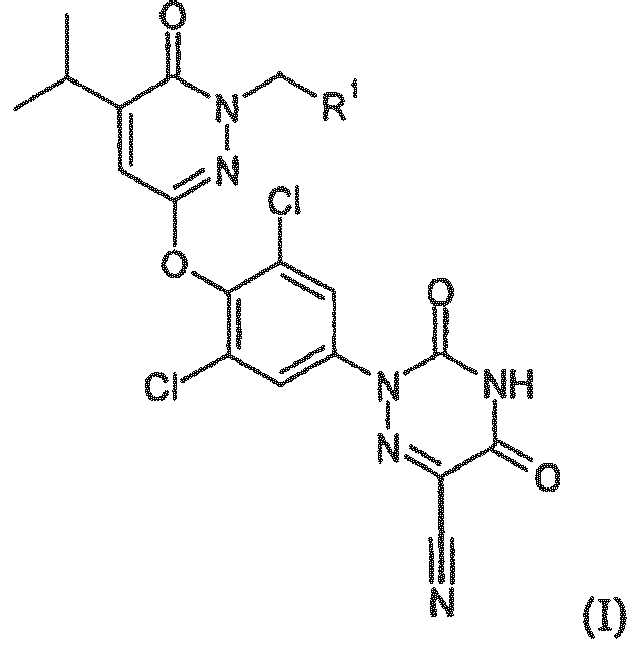
- Compositions pharmaceutiques comprenant un composé suivant l'une quelconque des revendications 1 à 10 et un support et/ou un adjuvant pharmaceutiquement acceptable.
- Composés suivant l'une quelconque des revendications 1 à 10, pour une utilisation comme substances thérapeutiques actives.
- Composés suivant l'une quelconque des revendications 1 à 10, pour une utilisation comme substances thérapeutiques actives pour le traitement et/ou la prophylaxie de maladies qui sont modulées par des agonistes des récepteurs d'hormones thyroïdiennes.
- Composés suivant l'une quelconque des revendications 1 à 10, pour une utilisation comme substances thérapeutiques actives pour le traitement thérapeutique et/ou prophylactique de l'obésité, de l'hyperlipidémie, de l'hypercholestérolémie, du diabète, de la stéatohépatite non alcoolique (NASH), de la stéatose hépatique, de l'athérosclérose, de maladies cardiovasculaires, de l'hypothyroïdie ou du cancer de la thyroïde.
- Utilisation d'un composé suivant l'une quelconque des revendications 1 à 10 pour la préparation de médicaments pour le traitement thérapeutique et/ou prophylactique de maladies qui sont modulées par des agonistes des récepteurs d'hormones thyroïdiennes.
- Utilisation d'un composé suivant l'une quelconque des revendications 1 à 10 pour la préparation de médicaments pour le traitement thérapeutique et/ou prophylactique de l'obésité, de l'hyperlipidémie, de l'hypercholestérolémie, du diabète, de la stéatohépatite non alcoolique (NASH), de la stéatose hépatique, de l'athérosclérose, de maladies cardiovasculaires, de l'hypothyroïdie ou du cancer de la thyroïde.
Applications Claiming Priority (2)
| Application Number | Priority Date | Filing Date | Title |
|---|---|---|---|
| US97384607P | 2007-09-20 | 2007-09-20 | |
| PCT/EP2008/062017 WO2009037172A1 (fr) | 2007-09-20 | 2008-09-11 | Promédicaments pour analogues de l'hormone thyroïdienne |
Publications (2)
| Publication Number | Publication Date |
|---|---|
| EP2203443A1 EP2203443A1 (fr) | 2010-07-07 |
| EP2203443B1 true EP2203443B1 (fr) | 2014-03-05 |
Family
ID=39930638
Family Applications (1)
| Application Number | Title | Priority Date | Filing Date |
|---|---|---|---|
| EP08803984.7A Active EP2203443B1 (fr) | 2007-09-20 | 2008-09-11 | Promédicaments pour analogues de l'hormone thyroïdienne |
Country Status (12)
| Country | Link |
|---|---|
| US (1) | US8076334B2 (fr) |
| EP (1) | EP2203443B1 (fr) |
| JP (1) | JP5456676B2 (fr) |
| KR (1) | KR101189040B1 (fr) |
| CN (1) | CN101801960B (fr) |
| AU (1) | AU2008300649B2 (fr) |
| BR (1) | BRPI0817060B1 (fr) |
| CA (1) | CA2699338C (fr) |
| ES (1) | ES2461341T3 (fr) |
| IL (1) | IL204231A (fr) |
| MX (1) | MX2010002675A (fr) |
| WO (1) | WO2009037172A1 (fr) |
Families Citing this family (35)
| Publication number | Priority date | Publication date | Assignee | Title |
|---|---|---|---|---|
| ES3031438T3 (en) | 2009-06-25 | 2025-07-08 | Alkermes Pharma Ireland Ltd | Heterocyclic compounds for the treatment of neurological and psychological disorders |
| CA2937222C (fr) * | 2009-06-25 | 2019-06-04 | Alkermes Pharma Ireland Limited | Promedicaments de composes nh acides |
| WO2013088255A1 (fr) | 2011-12-15 | 2013-06-20 | Alkermes Pharma Ireland Limited | Promédicaments de composés amine secondaires |
| CA2884481C (fr) | 2012-09-17 | 2021-04-27 | Madrigal Pharmaceuticals, Inc. | Procede de synthese d'analogues de l'hormone thyroidienne et de ses polymorphes |
| EP3142228A1 (fr) | 2015-09-10 | 2017-03-15 | Siemens Aktiengesellschaft | Stator de machine electrique et machine electrique et procede de fabrication |
| CN110167557A (zh) * | 2016-10-18 | 2019-08-23 | 马德里加尔制药公司 | 用thr-beta兴奋剂治疗肝脏疾病或脂质疾病的方法 |
| JP7156722B2 (ja) * | 2018-01-23 | 2022-10-19 | 深▲チェン▼市塔吉瑞生物医薬有限公司 | 置換ピリダジノン化合物 |
| CN108383798B (zh) * | 2018-01-29 | 2020-09-01 | 上海博邦医药科技有限公司 | 酞嗪酮衍生物前药或其药学上可接受的盐及其药物组合物和应用 |
| CA3092335A1 (fr) | 2018-03-05 | 2019-09-12 | Alkermes Pharma Ireland Limited | Strategie de dosage d'aripiprazole |
| PT3807267T (pt) | 2018-06-12 | 2025-05-22 | Xizang Haisco Pharmaceutical Co Ltd | Agonistas do recetor da hormona da tiroide e usos dos mesmos |
| CN119552152A (zh) | 2018-10-12 | 2025-03-04 | 益方生物科技(上海)股份有限公司 | 甲状腺激素受体激动剂 |
| CN111320609A (zh) | 2018-12-13 | 2020-06-23 | 拓臻股份有限公司 | 一种THRβ受体激动剂化合物及其制备方法和用途 |
| EP3927693B1 (fr) * | 2019-02-21 | 2026-05-06 | Nanjing Ruijie Pharma Co., Ltd. | Dérivés de 2-phényl-3,5-dioxo-2,3,4,5-tetrahydro-1,2,4-triazine-6-carbonitrile et composés similaires en tant qu'agonistes du récepteur de l'hormone thyroïdienne pour le traitement de par. ex. obésité |
| MX2021013472A (es) * | 2019-05-08 | 2022-01-06 | Aligos Therapeutics Inc | Moduladores de thr-? y metodos de uso de estos. |
| WO2020228577A1 (fr) * | 2019-05-10 | 2020-11-19 | 深圳微芯生物科技股份有限公司 | Dérivé de pyridazinone et son utilisation |
| WO2020239076A1 (fr) * | 2019-05-29 | 2020-12-03 | 南京明德新药研发有限公司 | DÉRIVÉS DE PYRIDAZINONE CONSTITUANT DES AGONISTES DU RÉCEPTEUR DE LA THYROXINE DE TYPE β ET LEUR UTILISATION |
| CN112300133B (zh) * | 2019-07-31 | 2024-07-30 | 深圳微芯生物科技股份有限公司 | 一种杂环化合物及其应用 |
| AU2020336272A1 (en) | 2019-08-23 | 2022-04-14 | Terns Pharmaceuticals, Inc. | Thyroid hormone receptor beta agonist compounds |
| WO2021043185A1 (fr) * | 2019-09-04 | 2021-03-11 | Sunshine Lake Pharma Co., Ltd. | Composé utilisé comme agoniste du récepteur bêta des hormones thyroïdiennes et son utilisation |
| EP4028008A4 (fr) | 2019-09-12 | 2023-09-13 | Terns Pharmaceuticals, Inc. | Composés agonistes du récepteur bêta de l'hormone thyroïdienne |
| JP7634526B2 (ja) * | 2019-09-24 | 2025-02-21 | ▲広▼▲東▼▲東▼▲陽▼光▲薬▼▲業▼有限公司 | 甲状腺ホルモンベータ受容体アゴニストとしての化合物及びその使用 |
| CN112707892A (zh) * | 2019-10-24 | 2021-04-27 | 苏州泽璟生物制药股份有限公司 | 哒嗪酮或哒嗪类化合物及其衍生物和药物组合物 |
| CN113454069B (zh) * | 2019-11-26 | 2025-03-14 | 昆药集团股份有限公司 | 1,2,4-三嗪-3,5-二酮类化合物及其制备方法和应用 |
| WO2021143706A1 (fr) | 2020-01-13 | 2021-07-22 | Eccogene (Shanghai) Co., Ltd. | Triazinones substituées en tant qu'agonistes du récepteur de l'hormone thyroïdienne |
| CN113278013B (zh) * | 2020-02-20 | 2022-09-23 | 昆药集团股份有限公司 | 2,6-二取代的1,2,4-三嗪-3,5-二酮化合物及其制备方法和应用 |
| CN113698388B (zh) * | 2020-05-20 | 2022-11-22 | 江苏恒瑞医药股份有限公司 | 6-氧代-1,6-二氢吡啶类衍生物、其制备方法及其在医药上的应用 |
| CN114075173A (zh) | 2020-08-19 | 2022-02-22 | 成都凡诺西生物医药科技有限公司 | 腈代三嗪类衍生物及其制备方法和应用 |
| US20230339911A1 (en) * | 2020-08-27 | 2023-10-26 | InventisBio Co., Ltd. | Pyridazinone compounds |
| CN112645936B (zh) | 2020-12-17 | 2022-03-01 | 山东第一医科大学(山东省医学科学院) | 取代的哒嗪酮类化合物及其用途 |
| CN114685450A (zh) * | 2020-12-30 | 2022-07-01 | 昆药集团股份有限公司 | 2-吡啶酮类衍生物及其制备方法和在医药上的应用 |
| CN116354934A (zh) * | 2021-12-28 | 2023-06-30 | 中国科学院上海药物研究所 | 一类喹啉类化合物及其制备方法、药物组合物和用途 |
| WO2024141076A1 (fr) * | 2022-12-29 | 2024-07-04 | Gannex Pharma Co., Ltd. | Promédicaments pour analogues d'hormones thyroïdiennes et leur procédé de fabrication et d'utilisation |
| WO2024211898A1 (fr) | 2023-04-07 | 2024-10-10 | Terns Pharmaceuticals, Inc. | Association comprenant un agoniste thrbeta anda glp-1r destiné à être utilisé dans le traitement d'un trouble du foie ou d'une maladie cardiométabolique |
| US12377104B1 (en) | 2024-02-06 | 2025-08-05 | Madrigal Pharmaceuticals, Inc. | Methods for treating a fatty liver disease |
| WO2026092583A1 (fr) | 2024-10-30 | 2026-05-07 | Ascletis Pharma (China) Co., Limited | Modulateurs du thr-bêta, seuls ou en combinaison avec des modulateurs de glp-1r\gipr\gcgr, pour le traitement de maladies métaboliques et de maladies liées à l'alopécie en aires |
Family Cites Families (9)
| Publication number | Priority date | Publication date | Assignee | Title |
|---|---|---|---|---|
| FR2388799A1 (fr) | 1977-04-28 | 1978-11-24 | Rolland Sa A | Derives de pyridazinone, leur procede de preparation et leur application comme medicaments |
| GB8501372D0 (en) | 1985-01-18 | 1985-02-20 | Smith Kline French Lab | Chemical compounds |
| US5284971A (en) | 1992-07-16 | 1994-02-08 | Syntex (U.S.A.) Inc. | 4-(3-cyclohexyl-4-hydroxy or-methoxy phenylsulfonyl) 3,5 dibromo phenyl acetic thyromimetic cholesterol-lowering agents |
| AU4440596A (en) | 1995-02-10 | 1996-08-22 | Smithkline Beecham Corporation | Use of hcp SH2 specific compounds to enhance erythropoiesis |
| WO1997002023A1 (fr) | 1995-06-30 | 1997-01-23 | Smithkline Beecham Corporation | UTILISATION DE COMPOSES SPECIFIQUES DU DOMAINE Stat 6 SH2 POUR LE TRAITEMENT DES REACTIONS ALLERGIQUES |
| US5883294A (en) | 1997-06-18 | 1999-03-16 | The Regeants Of The University Of California | Selective thyroid hormone analogs |
| GB9713739D0 (en) | 1997-06-27 | 1997-09-03 | Karobio Ab | Thyroid receptor ligands |
| EP1689383B1 (fr) | 2003-11-19 | 2012-10-31 | Metabasis Therapeutics, Inc. | Nouvelles substances thyromimetiques contenant du phosphore |
| HRP20100633T1 (hr) | 2005-07-21 | 2011-01-31 | F. Hoffmann - La Roche Ag | Derivati piridazinona kao agonisti receptora tiroidnih hormona |
-
2008
- 2008-09-02 US US12/202,552 patent/US8076334B2/en active Active
- 2008-09-11 EP EP08803984.7A patent/EP2203443B1/fr active Active
- 2008-09-11 ES ES08803984.7T patent/ES2461341T3/es active Active
- 2008-09-11 WO PCT/EP2008/062017 patent/WO2009037172A1/fr not_active Ceased
- 2008-09-11 JP JP2010525305A patent/JP5456676B2/ja active Active
- 2008-09-11 AU AU2008300649A patent/AU2008300649B2/en active Active
- 2008-09-11 CN CN200880107432.5A patent/CN101801960B/zh active Active
- 2008-09-11 KR KR1020107005937A patent/KR101189040B1/ko active Active
- 2008-09-11 BR BRPI0817060-6A patent/BRPI0817060B1/pt active IP Right Grant
- 2008-09-11 CA CA2699338A patent/CA2699338C/fr active Active
- 2008-09-11 MX MX2010002675A patent/MX2010002675A/es active IP Right Grant
-
2010
- 2010-03-01 IL IL204231A patent/IL204231A/en active IP Right Grant
Also Published As
| Publication number | Publication date |
|---|---|
| CN101801960B (zh) | 2014-04-16 |
| JP2010539209A (ja) | 2010-12-16 |
| EP2203443A1 (fr) | 2010-07-07 |
| WO2009037172A1 (fr) | 2009-03-26 |
| CN101801960A (zh) | 2010-08-11 |
| KR20100043285A (ko) | 2010-04-28 |
| BRPI0817060A2 (pt) | 2019-02-26 |
| CA2699338C (fr) | 2017-02-07 |
| MX2010002675A (es) | 2010-03-26 |
| KR101189040B1 (ko) | 2012-10-08 |
| ES2461341T3 (es) | 2014-05-19 |
| US20090082310A1 (en) | 2009-03-26 |
| BRPI0817060B1 (pt) | 2021-07-20 |
| AU2008300649B2 (en) | 2013-05-02 |
| JP5456676B2 (ja) | 2014-04-02 |
| US8076334B2 (en) | 2011-12-13 |
| AU2008300649A1 (en) | 2009-03-26 |
| CA2699338A1 (fr) | 2009-03-26 |
| IL204231A (en) | 2014-04-30 |
Similar Documents
| Publication | Publication Date | Title |
|---|---|---|
| CN101801960B (zh) | 甲状腺激素类似物的前药 | |
| EP1919878B1 (fr) | Derives de pyridazinone utilises comme agonistes du recepteur de l'hormone thyroidienne | |
| JP6035259B2 (ja) | Cftr修飾因子としてのへテロアリール誘導体 | |
| KR101482159B1 (ko) | 아자비시클로 옥탄 유도체, 이의 제조 방법 및 디펩티딜 펩티다아제 ⅳ의 저해제로서의 이의 용도 | |
| US8173643B2 (en) | N-substituted thiomorpholine derivatives as the inhibitors of dipeptidyl peptidase IV and the pharmaceutical uses thereof | |
| HU229551B1 (hu) | Mikroszóma triglicerid transzfer protein (MTP) és/vagy apolipoprotein B(APO B) kiválasztás inhibitorokként alkalmazható triamiddal helyettesített indol-, benzofurán- és benzotiofén-származékok | |
| JP2002531547A (ja) | N置換されている2−シアノピロリジン | |
| HUT66960A (en) | Process for producing amidine derivatives containing substituted sulfamoyl-group and pharmaceutical compositions containing them as active component | |
| RS53868B1 (sr) | Modulatori atp-vezujućih kasetnih transportera | |
| KR20120046162A (ko) | 2,3-디히드로-1h-인덴 화합물 및 이의 암치료 용도 | |
| WO2000001388A1 (fr) | Medicaments antidiabetiques | |
| JP2004244412A (ja) | 4位に置換基を有する2−シアノピロリジン誘導体及びその製造方法並びにそれを含有する薬剤 | |
| US7534805B2 (en) | Imidazole derivatives, their preparation and their use as medicaments | |
| WO2005042536A1 (fr) | Nouveau compose polycyclique condense comprenant un heterocycle et ses applications medicinales | |
| US20060258637A1 (en) | Fused polycyclic compounds | |
| TW483893B (en) | S-(+)-3-{1(1,3-benzodioxol-5-yl)-2-[(2-methoxy-4-methylphenyl)sulfonylamino]-2-oxoethyl}-1-methyl-1H-indole-6-carboxylic acid, a process for preparing the same, and a pharmaceutical composition containing thereof | |
| CA2700936A1 (fr) | Procede de production d'un derive de pyrazol-3-yl-benzamide | |
| CN115448978B (zh) | Tgr5-dpp4双重活性化合物及其制备方法、药物组合物和用途 |
Legal Events
| Date | Code | Title | Description |
|---|---|---|---|
| PUAI | Public reference made under article 153(3) epc to a published international application that has entered the european phase |
Free format text: ORIGINAL CODE: 0009012 |
|
| 17P | Request for examination filed |
Effective date: 20100420 |
|
| AK | Designated contracting states |
Kind code of ref document: A1 Designated state(s): AT BE BG CH CY CZ DE DK EE ES FI FR GB GR HR HU IE IS IT LI LT LU LV MC MT NL NO PL PT RO SE SI SK TR |
|
| AX | Request for extension of the european patent |
Extension state: AL BA MK RS |
|
| DAX | Request for extension of the european patent (deleted) | ||
| 17Q | First examination report despatched |
Effective date: 20111216 |
|
| GRAP | Despatch of communication of intention to grant a patent |
Free format text: ORIGINAL CODE: EPIDOSNIGR1 |
|
| INTG | Intention to grant announced |
Effective date: 20131008 |
|
| GRAS | Grant fee paid |
Free format text: ORIGINAL CODE: EPIDOSNIGR3 |
|
| GRAA | (expected) grant |
Free format text: ORIGINAL CODE: 0009210 |
|
| AK | Designated contracting states |
Kind code of ref document: B1 Designated state(s): AT BE BG CH CY CZ DE DK EE ES FI FR GB GR HR HU IE IS IT LI LT LU LV MC MT NL NO PL PT RO SE SI SK TR |
|
| REG | Reference to a national code |
Ref country code: GB Ref legal event code: FG4D |
|
| REG | Reference to a national code |
Ref country code: CH Ref legal event code: EP |
|
| REG | Reference to a national code |
Ref country code: AT Ref legal event code: REF Ref document number: 654799 Country of ref document: AT Kind code of ref document: T Effective date: 20140315 |
|
| REG | Reference to a national code |
Ref country code: IE Ref legal event code: FG4D |
|
| REG | Reference to a national code |
Ref country code: DE Ref legal event code: R096 Ref document number: 602008030646 Country of ref document: DE Effective date: 20140417 |
|
| REG | Reference to a national code |
Ref country code: ES Ref legal event code: FG2A Ref document number: 2461341 Country of ref document: ES Kind code of ref document: T3 Effective date: 20140519 |
|
| REG | Reference to a national code |
Ref country code: AT Ref legal event code: MK05 Ref document number: 654799 Country of ref document: AT Kind code of ref document: T Effective date: 20140305 |
|
| REG | Reference to a national code |
Ref country code: NL Ref legal event code: VDEP Effective date: 20140305 |
|
| PG25 | Lapsed in a contracting state [announced via postgrant information from national office to epo] |
Ref country code: NO Free format text: LAPSE BECAUSE OF FAILURE TO SUBMIT A TRANSLATION OF THE DESCRIPTION OR TO PAY THE FEE WITHIN THE PRESCRIBED TIME-LIMIT Effective date: 20140605 Ref country code: LT Free format text: LAPSE BECAUSE OF FAILURE TO SUBMIT A TRANSLATION OF THE DESCRIPTION OR TO PAY THE FEE WITHIN THE PRESCRIBED TIME-LIMIT Effective date: 20140305 |
|
| REG | Reference to a national code |
Ref country code: LT Ref legal event code: MG4D |
|
| PG25 | Lapsed in a contracting state [announced via postgrant information from national office to epo] |
Ref country code: FI Free format text: LAPSE BECAUSE OF FAILURE TO SUBMIT A TRANSLATION OF THE DESCRIPTION OR TO PAY THE FEE WITHIN THE PRESCRIBED TIME-LIMIT Effective date: 20140305 Ref country code: SE Free format text: LAPSE BECAUSE OF FAILURE TO SUBMIT A TRANSLATION OF THE DESCRIPTION OR TO PAY THE FEE WITHIN THE PRESCRIBED TIME-LIMIT Effective date: 20140305 Ref country code: AT Free format text: LAPSE BECAUSE OF FAILURE TO SUBMIT A TRANSLATION OF THE DESCRIPTION OR TO PAY THE FEE WITHIN THE PRESCRIBED TIME-LIMIT Effective date: 20140305 Ref country code: CY Free format text: LAPSE BECAUSE OF FAILURE TO SUBMIT A TRANSLATION OF THE DESCRIPTION OR TO PAY THE FEE WITHIN THE PRESCRIBED TIME-LIMIT Effective date: 20140305 |
|
| PG25 | Lapsed in a contracting state [announced via postgrant information from national office to epo] |
Ref country code: LV Free format text: LAPSE BECAUSE OF FAILURE TO SUBMIT A TRANSLATION OF THE DESCRIPTION OR TO PAY THE FEE WITHIN THE PRESCRIBED TIME-LIMIT Effective date: 20140305 Ref country code: HR Free format text: LAPSE BECAUSE OF FAILURE TO SUBMIT A TRANSLATION OF THE DESCRIPTION OR TO PAY THE FEE WITHIN THE PRESCRIBED TIME-LIMIT Effective date: 20140305 |
|
| PG25 | Lapsed in a contracting state [announced via postgrant information from national office to epo] |
Ref country code: BG Free format text: LAPSE BECAUSE OF FAILURE TO SUBMIT A TRANSLATION OF THE DESCRIPTION OR TO PAY THE FEE WITHIN THE PRESCRIBED TIME-LIMIT Effective date: 20140605 Ref country code: IS Free format text: LAPSE BECAUSE OF FAILURE TO SUBMIT A TRANSLATION OF THE DESCRIPTION OR TO PAY THE FEE WITHIN THE PRESCRIBED TIME-LIMIT Effective date: 20140705 Ref country code: NL Free format text: LAPSE BECAUSE OF FAILURE TO SUBMIT A TRANSLATION OF THE DESCRIPTION OR TO PAY THE FEE WITHIN THE PRESCRIBED TIME-LIMIT Effective date: 20140305 Ref country code: RO Free format text: LAPSE BECAUSE OF FAILURE TO SUBMIT A TRANSLATION OF THE DESCRIPTION OR TO PAY THE FEE WITHIN THE PRESCRIBED TIME-LIMIT Effective date: 20140305 Ref country code: BE Free format text: LAPSE BECAUSE OF FAILURE TO SUBMIT A TRANSLATION OF THE DESCRIPTION OR TO PAY THE FEE WITHIN THE PRESCRIBED TIME-LIMIT Effective date: 20140305 Ref country code: CZ Free format text: LAPSE BECAUSE OF FAILURE TO SUBMIT A TRANSLATION OF THE DESCRIPTION OR TO PAY THE FEE WITHIN THE PRESCRIBED TIME-LIMIT Effective date: 20140305 Ref country code: EE Free format text: LAPSE BECAUSE OF FAILURE TO SUBMIT A TRANSLATION OF THE DESCRIPTION OR TO PAY THE FEE WITHIN THE PRESCRIBED TIME-LIMIT Effective date: 20140305 |
|
| PG25 | Lapsed in a contracting state [announced via postgrant information from national office to epo] |
Ref country code: SK Free format text: LAPSE BECAUSE OF FAILURE TO SUBMIT A TRANSLATION OF THE DESCRIPTION OR TO PAY THE FEE WITHIN THE PRESCRIBED TIME-LIMIT Effective date: 20140305 Ref country code: PL Free format text: LAPSE BECAUSE OF FAILURE TO SUBMIT A TRANSLATION OF THE DESCRIPTION OR TO PAY THE FEE WITHIN THE PRESCRIBED TIME-LIMIT Effective date: 20140305 |
|
| REG | Reference to a national code |
Ref country code: DE Ref legal event code: R097 Ref document number: 602008030646 Country of ref document: DE |
|
| PG25 | Lapsed in a contracting state [announced via postgrant information from national office to epo] |
Ref country code: PT Free format text: LAPSE BECAUSE OF FAILURE TO SUBMIT A TRANSLATION OF THE DESCRIPTION OR TO PAY THE FEE WITHIN THE PRESCRIBED TIME-LIMIT Effective date: 20140707 |
|
| PLBE | No opposition filed within time limit |
Free format text: ORIGINAL CODE: 0009261 |
|
| STAA | Information on the status of an ep patent application or granted ep patent |
Free format text: STATUS: NO OPPOSITION FILED WITHIN TIME LIMIT |
|
| PG25 | Lapsed in a contracting state [announced via postgrant information from national office to epo] |
Ref country code: DK Free format text: LAPSE BECAUSE OF FAILURE TO SUBMIT A TRANSLATION OF THE DESCRIPTION OR TO PAY THE FEE WITHIN THE PRESCRIBED TIME-LIMIT Effective date: 20140305 |
|
| 26N | No opposition filed |
Effective date: 20141208 |
|
| REG | Reference to a national code |
Ref country code: DE Ref legal event code: R097 Ref document number: 602008030646 Country of ref document: DE Effective date: 20141208 |
|
| PG25 | Lapsed in a contracting state [announced via postgrant information from national office to epo] |
Ref country code: LU Free format text: LAPSE BECAUSE OF FAILURE TO SUBMIT A TRANSLATION OF THE DESCRIPTION OR TO PAY THE FEE WITHIN THE PRESCRIBED TIME-LIMIT Effective date: 20140911 Ref country code: MC Free format text: LAPSE BECAUSE OF FAILURE TO SUBMIT A TRANSLATION OF THE DESCRIPTION OR TO PAY THE FEE WITHIN THE PRESCRIBED TIME-LIMIT Effective date: 20140305 |
|
| PG25 | Lapsed in a contracting state [announced via postgrant information from national office to epo] |
Ref country code: SI Free format text: LAPSE BECAUSE OF FAILURE TO SUBMIT A TRANSLATION OF THE DESCRIPTION OR TO PAY THE FEE WITHIN THE PRESCRIBED TIME-LIMIT Effective date: 20140305 |
|
| REG | Reference to a national code |
Ref country code: IE Ref legal event code: MM4A |
|
| PG25 | Lapsed in a contracting state [announced via postgrant information from national office to epo] |
Ref country code: IE Free format text: LAPSE BECAUSE OF NON-PAYMENT OF DUE FEES Effective date: 20140911 |
|
| PG25 | Lapsed in a contracting state [announced via postgrant information from national office to epo] |
Ref country code: GR Free format text: LAPSE BECAUSE OF FAILURE TO SUBMIT A TRANSLATION OF THE DESCRIPTION OR TO PAY THE FEE WITHIN THE PRESCRIBED TIME-LIMIT Effective date: 20140606 Ref country code: MT Free format text: LAPSE BECAUSE OF FAILURE TO SUBMIT A TRANSLATION OF THE DESCRIPTION OR TO PAY THE FEE WITHIN THE PRESCRIBED TIME-LIMIT Effective date: 20140305 |
|
| PG25 | Lapsed in a contracting state [announced via postgrant information from national office to epo] |
Ref country code: HU Free format text: LAPSE BECAUSE OF FAILURE TO SUBMIT A TRANSLATION OF THE DESCRIPTION OR TO PAY THE FEE WITHIN THE PRESCRIBED TIME-LIMIT; INVALID AB INITIO Effective date: 20080911 |
|
| REG | Reference to a national code |
Ref country code: FR Ref legal event code: PLFP Year of fee payment: 9 |
|
| REG | Reference to a national code |
Ref country code: FR Ref legal event code: PLFP Year of fee payment: 10 |
|
| REG | Reference to a national code |
Ref country code: FR Ref legal event code: PLFP Year of fee payment: 11 |
|
| REG | Reference to a national code |
Ref country code: CH Ref legal event code: U11 Free format text: ST27 STATUS EVENT CODE: U-0-0-U10-U11 (AS PROVIDED BY THE NATIONAL OFFICE) Effective date: 20251001 |
|
| PGFP | Annual fee paid to national office [announced via postgrant information from national office to epo] |
Ref country code: DE Payment date: 20250820 Year of fee payment: 18 |
|
| PGFP | Annual fee paid to national office [announced via postgrant information from national office to epo] |
Ref country code: TR Payment date: 20250825 Year of fee payment: 18 Ref country code: IT Payment date: 20250820 Year of fee payment: 18 |
|
| PGFP | Annual fee paid to national office [announced via postgrant information from national office to epo] |
Ref country code: GB Payment date: 20250822 Year of fee payment: 18 |
|
| PGFP | Annual fee paid to national office [announced via postgrant information from national office to epo] |
Ref country code: FR Payment date: 20250821 Year of fee payment: 18 |
|
| PGFP | Annual fee paid to national office [announced via postgrant information from national office to epo] |
Ref country code: CH Payment date: 20251001 Year of fee payment: 18 |
|
| PGFP | Annual fee paid to national office [announced via postgrant information from national office to epo] |
Ref country code: ES Payment date: 20251001 Year of fee payment: 18 |