EP2204067B1 - Lastausgleich in einem kernnetzwerk, das einen pool von kernnetzwerkelementen umfasst - Google Patents
Lastausgleich in einem kernnetzwerk, das einen pool von kernnetzwerkelementen umfasst Download PDFInfo
- Publication number
- EP2204067B1 EP2204067B1 EP07847081.2A EP07847081A EP2204067B1 EP 2204067 B1 EP2204067 B1 EP 2204067B1 EP 07847081 A EP07847081 A EP 07847081A EP 2204067 B1 EP2204067 B1 EP 2204067B1
- Authority
- EP
- European Patent Office
- Prior art keywords
- limit
- network
- network element
- pool
- counter
- Prior art date
- Legal status (The legal status is an assumption and is not a legal conclusion. Google has not performed a legal analysis and makes no representation as to the accuracy of the status listed.)
- Active
Links
Images




Classifications
-
- H—ELECTRICITY
- H04—ELECTRIC COMMUNICATION TECHNIQUE
- H04W—WIRELESS COMMUNICATION NETWORKS
- H04W28/00—Network traffic management; Network resource management
- H04W28/02—Traffic management, e.g. flow control or congestion control
- H04W28/08—Load balancing or load distribution
- H04W28/088—Load balancing or load distribution among core entities
-
- H—ELECTRICITY
- H04—ELECTRIC COMMUNICATION TECHNIQUE
- H04W—WIRELESS COMMUNICATION NETWORKS
- H04W88/00—Devices specially adapted for wireless communication networks, e.g. terminals, base stations or access point devices
- H04W88/12—Access point controller devices
-
- H—ELECTRICITY
- H04—ELECTRIC COMMUNICATION TECHNIQUE
- H04W—WIRELESS COMMUNICATION NETWORKS
- H04W88/00—Devices specially adapted for wireless communication networks, e.g. terminals, base stations or access point devices
- H04W88/14—Backbone network devices
-
- H—ELECTRICITY
- H04—ELECTRIC COMMUNICATION TECHNIQUE
- H04W—WIRELESS COMMUNICATION NETWORKS
- H04W88/00—Devices specially adapted for wireless communication networks, e.g. terminals, base stations or access point devices
- H04W88/16—Gateway arrangements
Definitions
- the present invention relates to a core network controlling a radio telecommunications network, in general, and in particular to a network element, network management system and a method of balancing load of network elements operating in a pool.
- MSC Mobile Switching Centre
- MSC Mobile Switching Centre
- RAN node Radio Access Network node
- RNC Radio Network Controller
- BSC Base Stations Controller
- Fig. 1 illustrates a telecommunications network 100, in which MSCs are organized in pools.
- Pool 1 consists of MSC 1, MSC 2 and MSC 3. It controls all the RAN nodes (these may be BSCs or RNCs) in pool area 1 - RAN node 1, node 2, node 5 and node 6.
- Pool 2 consists of MSC 4, MSC 5 and MSC 6 and it controls all the RAN nodes in pool area 2, i.e. is RAN node 3 and node 7.
- MSC 7 is not in any pool and it is the only MSC controlling RAN node 4 and node 8.
- the RAN node decides which MSC to send the registration request to.
- MSC 1 and MSC 3 will continue to control all the RAN nodes in pool areal thus avoiding loss of service to the mobile subscribers server by the RAN nodes in pool area 1.
- 3GPP does not specify a particular method for load balancing. However a typical situation is that a relative weighting is assigned to each MSC in the pool.
- Non Access Stratum (NAS) Node Selection Function in a RAN Node will allocate subscribers to an MSC in the pool on the basis of this weighting.
- NAS Access Stratum
- Overload may occur due to geographical factors such as presence of major roads and commuter patterns, MSCs managing RAN Nodes which are outside of the pool area as well as due to the number of RAN nodes in the pool area and processing capacity of the MSC.
- the example given above is applicable not only to Mobile Switching Centres operating in a pool, but also to Serving GPRS Support Nodes operating in a pool.
- the invention seeks to preferably mitigate, alleviate or eliminate one or more of the disadvantages mentioned above singly or in any combination.
- a method of balancing load of an individual network element operating in a pool in a core network comprises at least one pool of at least two network elements and a plurality of Radio Access Network nodes controlled by said network elements.
- User equipment is assigned to a network element from said pool of network elements based on relative weighting values associated with said network elements.
- the method comprises: periodically determining load of said network element; reducing the relative weighting value if said network element is overloaded for a number of periods exceeding a limit of allowed consecutive overloads.
- a network element operating in a pool of at least two network elements in a core network.
- Said network element is adapted to control a plurality of Radio Access Network nodes and has associated a relative weighting value.
- the network element comprises means for periodic determining its traffic load, a memory unit and also comprises a control unit for comparing the traffic load with an upper limit stored in said memory and a first counter for recording number of consecutive occasions of exceeding the upper limit.
- Said control unit is adapted to reduce the relative weighting value if said network element is overloaded for a number of periods exceeding a limit of allowed overloads.
- a core network controlling a radio telecommunications network comprising at least one pool of at least two network elements and a plurality of Radio Access Network nodes controlled by said network elements. Balancing of traffic load of an individual network element operating in the pool is carried out in accordance with the method of the first aspect of the present invention.
- a network management system for control of a core network.
- Said core network comprising a plurality of network elements operating in a pool of at least two network elements, wherein an individual network element is adapted to control a plurality of Radio Access Network nodes.
- Said individual network element has associated a relative weighting value stored in said network management system.
- the network management system comprises means for periodic determining traffic load of individual network elements, a memory unit, and a control unit for comparing the traffic load of said individual network element with an upper limit stored in said memory.
- the network management system further comprises a first counter for recording a number of consecutive occasions of exceeding the upper limit.
- Said control unit is adapted to reduce the relative weighting value if said network element is overloaded for a number of periods exceeding a limit of allowed consecutive overloads.
- the present invention provides the benefit of dynamic control of balancing the traffic load, which results in more even distribution of the load and prevents increasing traffic load of some network elements close to or above certain limits if at the same time other network elements in its pool are underloaded. It helps preventing overload situations and dropped calls.
- MSCs Mobile Switching Centres
- SGSNs Serving GPRS Support Nodes
- the relative weighting indicates capacity of an MSC relative to the other MSCs in a pool. This value is configured on the RAN node for each MSC in the pool which controls the RAN node.
- Adaptive control of MSC relative weighting for MSCs in a Pool provides a form of traffic management for a pool of MSCs.
- the traffic load on each MSC in the pool is measured at regular intervals on an ongoing basis.
- An upper limit parameter is specified to identify what constitutes an excessive traffic load for an MSC and how often should an excessive traffic load be allowed to occur before controls are activated and by how much the relative weighting of an MSC should be reduced when the adaptive controls are activated.
- a lower limit is also specified such that when an overload situation occurs in one or more of the MSCs in a pool, if another MSC in the pool has traffic load below this limit it is considered to be underloaded.
- a further parameter specifies by how much the relative weighting for the underloaded MSC shall be increased.
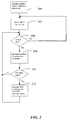
- an individual MSC in the pool periodically determines its load, 204, 206. If said MSC is overloaded for a predefined number of periods, 210, the relative weighting value assigned to this MSC is reduced 212. Following the equation given above, reduction of relative weighting of a particular MSC causes reduction of probability of assigning a user equipment to this MSC.
- the method of load balancing deals only with situation of overload of network element in a pool. In a preferred embodiment, as illustrated in FIG. 3 the method also deals with situation of underload by checking if the network element is underloaded.
- the traffic load of an individual MSC is compared, 204 with an upper limit and if the upper limit is exceeded a first counter is incremented 208. Otherwise said first counter is erased 202.
- These operations allow keeping track of the number of consecutive overloads.
- the first counter is compared, 210, with a limit of allowed consecutive overloads and if said limit of allowed consecutive overloads is exceeded the relative weighting value assigned to this MSC is reduced 212.
- the limit of allowed consecutive overloads is set to 1, but in alternative embodiments higher values of this limit can be used.
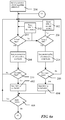
- the traffic load assigned to this MSC is compared, 306, with the lower limit. If it is found that the traffic load is below the lower limit a second counter is incremented, 314, and if it is found that the traffic load is above the lower limit (which means that the traffic load is between the lower and upper limits) said second counter is erased 302. If the second counter was increased 314, in the following step the second counter is compared, 316, with a limit of allowed consecutive underloads. If said limit of allowed consecutive underloads is exceeded the relative weighting value is increased 318. In one embodiment the limit of allowed consecutive underloads is set to 1, but in alternative embodiments higher values of this limit can be used.
- each MSC operating in a pool runs an algorithm that implements the method according to embodiments of the present invention.
- the user To initialize the algorithm the user must specify the following parameters:
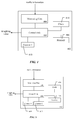
- Fig. 4 illustrates one embodiment of a MSC, 402.
- remaining elements of the MSC not essential for the invention are omitted in the drawing.
- the Mobile Switching Centre 402 comprises traffic load monitor 406 that periodically determines traffic load processed by the MSC 402. It further comprises a memory unit 408, a control unit 404 for comparing the traffic load with an upper limit stored in said memory 408.
- a first counter 410 receiving trigger signals from the control unit 404 records the number of consecutive occasions of exceeding the upper limit. Said control unit, 404, reduces a relative weighting value assigned to the MSC, 402, if said MSC, 402, is overloaded for a predefined number of periods (i.e. for a number of periods that exceeds the limit of allowed consecutive overloads).
- the MSC, 502 further comprises a second counter, 412, and said memory 408 stores a value of lower limit of traffic load, wherein the control unit, 404, compares the traffic load with said lower limit.
- the second counter, 412 records number of consecutive occasions of the traffic load being below the lower limit and said control unit, 404, increases the relative weighting value if said MSC, 402, is underloaded for a predefined number of periods.
- the MSC, 402, 502 also comprises a clock, 414, which provides timing signals to the control unit 404 to trigger determination of traffic load of the MSC, 402, 502.
- the timing signals are received from an external source (e.g. network).
- network elements for which the number of consecutive overloads exceeded a limit of allowed consecutive overloads are marked 602 as overloaded network elements and network elements for which the number of consecutive underloads exceeded a limit of allowed consecutive underloads are marked 604 as underloaded network elements.
- the number of overloaded and underloaded network elements in the pool is counted, 608.
- a network element 702 determines its load said network element transmits the load figure to other network elements in its pool. This is performed by all network elements in the pool and as a result each individual network element has information about load of all other network elements in its pool.
- two predefined values are maintained in the memory 408 of each network element in the pool: a third limit and a fourth limit, wherein the relative weighting of an overloaded network element is decreased 614 if the number of overloaded network elements is below the third limit 610. In this way it is checked if there is not too many other overloaded network elements in the pool.
- the relative weighting of every, 616, overloaded network element in the pool is reduced 612, 614.
- the relative weighting of every, 624, underloaded network element in the pool, 620 is increased, 622, if the number of underloaded network elements is below the fourth limit 618.
- control parameters are provided to specify the maximum allowed percentage of MSCs in a pool which may be overloaded or underloaded before adjustment of the relative weighting.
- each MSC operating in a pool runs an algorithm that implements the method according to embodiments of the present invention.
- the user To initialize the algorithm the user must specify the following parameters:
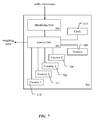
- FIG. 7 a further preferred embodiment of a MSC, 702 in accordance with the present invention is presented. For the sake of clarity, remaining elements of the MSC not essential for the invention are omitted in the drawing.
- the MSC, 702 in this embodiment comprises a third counter 704 and a fourth counter 706.
- the third counter 704 is for recording number of overloaded network elements in the pool and the fourth counter 706 is for recording number of underloaded network elements in the pool. These data are used to determine whether to change the relative weighting value of an individual network element in the pool 708, 710, 718.
- FIG. 8 illustrates one embodiment of a network management system 900, which controls a core network 800.
- Said core network 800 comprises a plurality of network elements, 402, 502, 702, operating in a pool 802.
- One pool 802 comprises three MSCs 402, 502 and 702.
- Another pool comprises three SGSNs, 804, 806, 808. Different numbers of network elements in a pool are of course also possible.
- An individual network element 402, 502, 702 from the pool 802 controls a plurality of Radio Access Network nodes 810, 812, 814 and has associated a relative weighting value stored in said network management system.
- the network management system 900 comprises monitoring unit 906 which periodically determines traffic load of individual network elements, a memory unit 908 and a control unit 904 for comparing the traffic load of said individual network element with an upper limit stored in said memory 908.
- a first counter 910 records number of consecutive occasions of exceeding the upper limit and said control unit 904 reduces the relative weighting value of said individual network element if said network element is overloaded for a number of periods exceeding the limit of allowed consecutive overloads.
- the network management system comprises more counters in order to more effectively distribute the load.
- a second counter is for controlling underload of network elements.
- a third and a fourth counters are also comprised in said network management system and they allow for determining if changing the relative weighting value of a network element will provide expected benefit to the pool.
- the method in various embodiments of the present invention can be implemented equally in network elements of a pool as well as in a network management system.
Landscapes
- Engineering & Computer Science (AREA)
- Computer Networks & Wireless Communication (AREA)
- Signal Processing (AREA)
- Mobile Radio Communication Systems (AREA)
Claims (15)
- Verfahren zum Ausgleichen von Belastung eines einzelnen Netzelements, das in einem Pool in einem Kernnetz funktioniert, das mindestens einen Pool von mindestens zwei Netzelementen und eine Mehrzahl von Funkzugangsnetzknoten umfasst, die von den Netzelementen gesteuert werden, wobei eine Benutzereinrichtung einem Netzelement aus dem Pool von Netzelementen basierend auf relativen Gewichtungswerten, die mit den Netzelementen assoziiert sind, zugeordnet wird, und das Verfahren umfasst: periodisches Bestimmen der Belastung des Netzelements (204, 306); Herabsetzen des relativen Gewichtungswerts (212), wenn das Netzelement für eine Anzahl von Perioden überbelastet ist, die eine Grenze von zulässigen aufeinanderfolgenden Überbelastungen (210) überschreitet.
- Verfahren nach Anspruch 1, ferner umfassend ein Erhöhen des relativen Gewichtungswerts (318), wenn das Netzelement für eine Anzahl von Perioden unterbelastet ist, die eine Grenze von zulässigen aufeinanderfolgenden Unterbelastungen (316) überschreitet.
- Verfahren nach Anspruch 1 oder 2, umfassend die folgenden Schritte:- Vergleichen (204) der Belastung mit einer Obergrenze;- Inkrementieren (208) eines ersten Zählers, wenn die Obergrenze überschritten wird, und andernfalls Löschen (202) des ersten Zählers;- Vergleichen (210) des ersten Zählers mit der Grenze von zulässigen aufeinanderfolgenden Überbelastungen; und- Herabsetzen (212) des relativen Gewichtungswerts, wenn die Grenze von zulässigen aufeinanderfolgenden Überbelastungen überschritten wird.
- Verfahren nach Anspruch 2 oder 3, umfassend die folgenden Schritte:- Vergleichen (306) der Verkehrsbelastung mit einer Untergrenze;- Inkrementieren (314) eines zweiten Zählers, wenn die Verkehrsbelastung unter der Untergrenze ist, und andernfalls Löschen des zweiten Zählers (302);- Vergleichen (316) des zweiten Zählers mit der Grenze von zulässigen aufeinanderfolgenden Unterbelastungen; und- Erhöhen (318) des relativen Gewichtungswerts, wenn die Grenze von zulässigen aufeinanderfolgenden Unterbelastungen überschritten wird.
- Verfahren nach Anspruch 2, wobei der relative Gewichtungswert des Netzelements, das für eine Anzahl von Perioden überbelastet ist, welche die Grenze von zulässigen aufeinanderfolgenden Überbelastungen überschreitet, herabgesetzt wird, wenn es mindestens ein Netzelement im Pool gibt, das Belastung vom Netzelement (610) aufnehmen kann, und der relative Gewichtungswert des Netzelements, das für eine Anzahl von Perioden unterbelastet ist, welche die Grenze von zulässigen aufeinanderfolgenden Unterbelastungen überschreitet, erhöht wird, wenn es mindestens ein Netzelement im Pool gibt, das nicht unterbelastet ist (618).
- Verfahren nach Anspruch 2 oder 5, ferner umfassend ein Kennzeichnen von Netzelementen, für welche die Anzahl von aufeinanderfolgenden Überbelastungen die Grenze von zulässigen aufeinanderfolgenden Überbelastungen überschritten hat, als überbelastete Netzelemente (602) und Kennzeichnen von Netzelementen, für welche die Anzahl von aufeinanderfolgenden Unterbelastungen die Grenze von zulässigen aufeinanderfolgenden Unterbelastungen überschritten hat, als unterbelastete Netzelemente (604), wobei die relative Gewichtung eines überbelasteten Netzelements herabgesetzt wird (614), wenn die Anzahl von als überbelastet gekennzeichneten Netzelementen im Pool unter einer dritten Grenze (610) ist, und die relative Gewichtung eines unterbelasteten Netzelements erhöht wird (622), wenn die Anzahl von als unterbelastet gekennzeichneten Netzelementen im Pool unter eine vierten Grenze (618) ist.
- Verfahren nach Anspruch 6, umfassend die folgenden Schritte:- Vergleichen (204) der Belastung mit einer Obergrenze;- Inkrementieren (208) eines ersten Zählers, wenn die Obergrenze überschritten wird, und andernfalls Löschen des ersten Zählers;- Vergleichen (210) des ersten Zählers mit der Grenze von zulässigen aufeinanderfolgenden Überbelastungen; und- Kennzeichnen (602) des Netzelements als überbelastet, wenn die Grenze von zulässigen aufeinanderfolgenden Überbelastungen überschritten wird.
- Verfahren nach Anspruch 6 oder 7, umfassend die folgenden Schritte:- Vergleichen (206) der Verkehrsbelastung mit einer Untergrenze;- Inkrementieren (214) eines zweiten Zählers, wenn die Verkehrsbelastung unter der Untergrenze ist, und andernfalls Löschen des zweiten Zählers;- Vergleichen (216) des zweiten Zählers mit der Grenze von zulässigen aufeinanderfolgenden Unterbelastungen; und- Kennzeichnen (604) des Netzelements als unterbelastet, wenn die Grenze von zulässigen aufeinanderfolgenden Unterbelastungen überschritten wird.
- Netzelement (402), das in einem Pool von mindestens zwei Netzelementen in einem Kernnetz funktioniert, wobei das Netzelement (402) so ausgelegt ist, dass es eine Mehrzahl von Funkzugangsnetzknoten steuert und einen relativen Gewichtungswert zugeordnet aufweist; das Netzelement Mittel zum periodischen Bestimmen seiner Verkehrsbelastung (406), eine Speichereinheit (408), eine Steuereinheit (404) zum Vergleichen der Verkehrsbelastung mit einer Obergrenze, die im Speicher (408) gespeichert ist, einen ersten Zähler (410) zum Erfassen der Anzahl von aufeinanderfolgenden Gelegenheiten des Überschreitens der Obergrenze umfasst, wobei die Steuereinheit (404) so ausgelegt ist, dass sie den relativen Gewichtungswert herabsetzt, wenn das Netzelement (402) für eine Anzahl von Perioden überbelastet ist, die eine Grenze von zulässigen aufeinanderfolgenden Überbelastungen überschreitet.
- Netzelement (502) nach Anspruch 9, ferner umfassend einen zweiten Zähler (412), und wobei der Speicher (408) so ausgelegt ist, dass er eine Untergrenze speichert, wobei die Steuereinheit (404) so ausgelegt ist, dass sie die Verkehrsbelastung mit der im Speicher (408) gespeicherten Untergrenze vergleicht, und der zweite Zähler (412) so ausgelegt ist, dass er die Anzahl von aufeinanderfolgenden Gelegenheiten erfasst, bei welchen die Verkehrsbelastung unter der Untergrenze ist, wobei die Steuereinheit (404) so ausgelegt ist, dass sie den relativen Gewichtungswert erhöht, wenn das Netzelement (402) für eine Anzahl von Perioden unterbelastet ist, die eine Grenze von zulässigen aufeinanderfolgenden Unterbelastungen überschreitet.
- Netzelement (502) nach Anspruch 9 oder 10, das so ausgelegt ist, dass es seine Belastungszahl an andere Netzelemente in seinem Pool sendet und Belastungszahlen von anderen Netzelementen in seinem Pool empfängt.
- Netzelement (702) nach einem der Ansprüche 9 bis 11, ferner umfassend einen dritten Zähler (704) zum Erfassen der Anzahl von Netzelementen im Pool, die für eine Anzahl von Perioden überbelastet sind, welche die Grenze von zulässigen aufeinanderfolgenden Überbelastungen überschreitet, und einen vierten Zähler (706) zum Erfassen der Anzahl von Netzelementen im Pool, die für eine Anzahl von Perioden unterbelastet sind, welche die Grenze von zulässigen aufeinanderfolgenden Unterbelastungen überschreitet.
- Kernnetz (800), das ein Funk-Telekommunikationsnetz steuert und mindestens einen Pool (802) von mindestens zwei Netzelementen (402, 502, 702, 804 - 808) umfasst, wobei ein Netzelement (402), das im Pool funktioniert, so ausgelegt ist, dass es eine Mehrzahl von Funkzugangsnetzknoten (810 - 814) steuert und einen relativen Gewichtungswert zugeordnet aufweist; das Netzelement Mittel zum periodischen Bestimmen seiner Verkehrsbelastung (406), eine Speichereinheit (408), eine Steuereinheit (404) zum Vergleichen der Verkehrsbelastung mit einer Obergrenze, die im Speicher (408) gespeichert ist, einen ersten Zähler (410) zum Erfassen der Anzahl von aufeinanderfolgenden Gelegenheiten des Überschreitens der Obergrenze umfasst, wobei die Steuereinheit (404) so ausgelegt ist, dass sie den relativen Gewichtungswert herabsetzt, wenn das Netzelement (402) für eine Anzahl von Perioden überbelastet ist, die eine Grenze von zulässigen aufeinanderfolgenden Überbelastungen überschreitet.
- Netzverwaltungssystem (900), das ein Kernnetz steuert, wobei das Kernnetz eine Mehrzahl von Netzelementen umfasst, die in einem Pool von mindestens zwei Netzelementen funktionieren, wobei ein einzelnes Netzelement (402, 502, 702)) so ausgelegt ist, dass es eine Mehrzahl von Funkzugangsnetzknoten steuert und einen relativen Gewichtungswert zugeordnet aufweist, der im Netzverwaltungssystem gespeichert ist; das Netzverwaltungssystem Mittel zum periodischen Bestimmen der Verkehrsbelastung (906) von einzelnen Netzelementen, eine Speichereinheit (908), eine Steuereinheit (904) zum Vergleichen der Verkehrsbelastung des einzelnen Netzelements mit einer Obergrenze, die im Speicher (908) gespeichert ist, einen ersten Zähler (910) zum Erfassen der Anzahl von aufeinanderfolgenden Gelegenheiten des Überschreitens der Obergrenze umfasst, wobei die Steuereinheit (904) so ausgelegt ist, dass sie den relativen Gewichtungswert herabsetzt, wenn das Netzelement (402, 502, 702, 804 - 808) für eine Anzahl von Perioden überbelastet ist, die eine Grenze von zulässigen aufeinanderfolgenden Überbelastungen überschreitet.
- Netzverwaltungssystem nach Anspruch 14, ferner umfassend einen zweiten Zähler, und wobei der Speicher so ausgelegt ist, dass er eine Untergrenze speichert, wobei die Steuereinheit so ausgelegt ist, dass sie die Verkehrsbelastung mit der im Speicher gespeicherten Untergrenze vergleicht, und der zweite Zähler so ausgelegt ist, dass er die Anzahl von aufeinanderfolgenden Gelegenheiten erfasst, bei welchen die Verkehrsbelastung unter der Untergrenze ist, wobei die Steuereinheit so ausgelegt ist, dass sie den relativen Gewichtungswert erhöht, wenn das Netzelement für eine Anzahl von Perioden unterbelastet ist, die eine Grenze von zulässigen aufeinanderfolgenden Unterbelastungen überschreitet.
Applications Claiming Priority (1)
| Application Number | Priority Date | Filing Date | Title |
|---|---|---|---|
| PCT/EP2007/061605 WO2009056164A1 (en) | 2007-10-29 | 2007-10-29 | Load balancing in core network comprising a pool of core network elements |
Publications (2)
| Publication Number | Publication Date |
|---|---|
| EP2204067A1 EP2204067A1 (de) | 2010-07-07 |
| EP2204067B1 true EP2204067B1 (de) | 2016-02-24 |
Family
ID=39684010
Family Applications (1)
| Application Number | Title | Priority Date | Filing Date |
|---|---|---|---|
| EP07847081.2A Active EP2204067B1 (de) | 2007-10-29 | 2007-10-29 | Lastausgleich in einem kernnetzwerk, das einen pool von kernnetzwerkelementen umfasst |
Country Status (3)
| Country | Link |
|---|---|
| US (1) | US8457133B2 (de) |
| EP (1) | EP2204067B1 (de) |
| WO (1) | WO2009056164A1 (de) |
Families Citing this family (5)
| Publication number | Priority date | Publication date | Assignee | Title |
|---|---|---|---|---|
| US8223732B2 (en) | 2008-06-18 | 2012-07-17 | Symbol Technologies, Inc. | Method and apparatus for balancing load across access devices in a wireless network |
| US8451735B2 (en) | 2009-09-28 | 2013-05-28 | Symbol Technologies, Inc. | Systems and methods for dynamic load balancing in a wireless network |
| US8331224B2 (en) * | 2009-11-23 | 2012-12-11 | Telefonaktiebolaget L M Ericsson (Publ) | Self-management of mobility management entity (MME) pools |
| WO2012119635A1 (en) * | 2011-03-04 | 2012-09-13 | Telefonaktiebolaget L M Ericsson (Publ) | Resource managing method, resource management device and apparatus for supporting operation of a radio communication network |
| CN115834405B (zh) * | 2022-11-11 | 2025-07-04 | 郑州轻工业大学 | 一种面向产品供应链网络的欠载失效传播模型构建方法 |
Family Cites Families (6)
| Publication number | Priority date | Publication date | Assignee | Title |
|---|---|---|---|---|
| US6129604A (en) * | 1998-02-26 | 2000-10-10 | Nortel Networks Limited | Dynamic load distribution in a wireless communication system to equalize loading on mobile switching centers |
| US6567415B1 (en) * | 1999-03-20 | 2003-05-20 | Lucent Technologies Inc. | Packet scheduling in a communication network with statistical multiplexing of service classes |
| US20030028644A1 (en) | 2001-08-02 | 2003-02-06 | Patrick Maguire | System and method for load sharing within a core network |
| WO2006031157A1 (en) * | 2004-09-16 | 2006-03-23 | Telefonaktiebolaget Lm Ericsson (Publ) | Routing based on transmission utilization |
| CN100459795C (zh) | 2005-06-15 | 2009-02-04 | 华为技术有限公司 | 一种根据负载状况选择服务节点的方法 |
| JP2007135030A (ja) * | 2005-11-11 | 2007-05-31 | Fujitsu Ltd | 無線ネットワーク制御方法及び装置並びに移動通信システム |
-
2007
- 2007-10-29 EP EP07847081.2A patent/EP2204067B1/de active Active
- 2007-10-29 US US12/739,617 patent/US8457133B2/en active Active
- 2007-10-29 WO PCT/EP2007/061605 patent/WO2009056164A1/en not_active Ceased
Also Published As
| Publication number | Publication date |
|---|---|
| WO2009056164A1 (en) | 2009-05-07 |
| EP2204067A1 (de) | 2010-07-07 |
| US20110032820A1 (en) | 2011-02-10 |
| US8457133B2 (en) | 2013-06-04 |
Similar Documents
| Publication | Publication Date | Title |
|---|---|---|
| USRE49060E1 (en) | System and method for channel transport format allocation in a wireless communication system | |
| US8792340B2 (en) | Admission control for shared LTE network | |
| EP2454858B1 (de) | Überlastungsregelung in einem Telekommunikationsnetzwerk | |
| EP1129590A1 (de) | Bestimmung des teilnehmerbedarfs in einem kommunikationssystem | |
| CN110651494B (zh) | 广泛分布的无线网络中自适应跟踪和分配容量的系统和方法 | |
| EP1433339B1 (de) | Kanalzuweisungen an eine Basisstation abhängig von der Dienstqualität | |
| US8457133B2 (en) | Load balancing in core network comprising a pool of core network elements | |
| EP2283620A1 (de) | Partitionierungsentität und verfahren zur kapazitätspartitionierung | |
| WO2004064441A1 (en) | Resource allocation management | |
| US7376437B2 (en) | Radio resource management | |
| US20120231824A1 (en) | Load balancing in a cellular telecommunication network | |
| CN108667634B (zh) | 通信方法、装置及存储介质 | |
| BR112013014237B1 (pt) | Método e aparelho de transformação de um modo de funcionamento em um sistema de rádio cognitivo | |
| EP1774804B1 (de) | Verfahren zur steuerung der kommunikation zwischen zwei knoten eines kommunikationssystems | |
| WO2003045103A1 (en) | Method and arrangement for congestion control in distributed communication networks | |
| WO2013059979A1 (en) | Method and network entity for managing communications according to a first radio access technology and according to a second radio access technology | |
| EP3580950A1 (de) | Ressourcensteuerung in einem gemeinsam genutzten funkzugangsnetzwerk (ran) | |
| US10812389B2 (en) | Optimizing network channel loading | |
| US7149528B2 (en) | Method for controlling overload in digital mobile communication system | |
| EP1878176A2 (de) | In einem kommunikationsnetzsystem zu übertragendes signal, für das produzieren eines solchen signals ausgelegtes benutzergerät, kommunikationsnetzsystem mit einem solchen benutztergerät und verfahren zum verarbeiten eines solchen signals | |
| JP2007019724A (ja) | 無線基地局及びベースバンド信号処理割り当て方法 | |
| KR100651444B1 (ko) | 이동통신시스템에서 이동 적응 임계값을 이용한 채널전송량 설정 방법 및 장치 | |
| Mullner et al. | Quality of service in GPRS/EDGE mobile radio networks | |
| JP2007251494A (ja) | トラヒック伝達用仮想パスの動的アサイン方法とシステムと装置並びにプログラム | |
| KR20130001623A (ko) | 무선 중계 장치의 혼잡도 산출 시스템 및 방법 |
Legal Events
| Date | Code | Title | Description |
|---|---|---|---|
| PUAI | Public reference made under article 153(3) epc to a published international application that has entered the european phase |
Free format text: ORIGINAL CODE: 0009012 |
|
| 17P | Request for examination filed |
Effective date: 20100415 |
|
| AK | Designated contracting states |
Kind code of ref document: A1 Designated state(s): AT BE BG CH CY CZ DE DK EE ES FI FR GB GR HU IE IS IT LI LT LU LV MC MT NL PL PT RO SE SI SK TR |
|
| AX | Request for extension of the european patent |
Extension state: AL BA HR MK RS |
|
| DAX | Request for extension of the european patent (deleted) | ||
| 17Q | First examination report despatched |
Effective date: 20140303 |
|
| REG | Reference to a national code |
Ref country code: DE Ref legal event code: R079 Ref document number: 602007045001 Country of ref document: DE Free format text: PREVIOUS MAIN CLASS: H04W0084000000 Ipc: H04W0028080000 |
|
| RIC1 | Information provided on ipc code assigned before grant |
Ipc: H04W 88/16 20090101ALN20150806BHEP Ipc: H04W 88/12 20090101ALN20150806BHEP Ipc: H04W 88/14 20090101ALN20150806BHEP Ipc: H04W 28/08 20090101AFI20150806BHEP |
|
| GRAP | Despatch of communication of intention to grant a patent |
Free format text: ORIGINAL CODE: EPIDOSNIGR1 |
|
| INTG | Intention to grant announced |
Effective date: 20150915 |
|
| GRAS | Grant fee paid |
Free format text: ORIGINAL CODE: EPIDOSNIGR3 |
|
| GRAA | (expected) grant |
Free format text: ORIGINAL CODE: 0009210 |
|
| AK | Designated contracting states |
Kind code of ref document: B1 Designated state(s): AT BE BG CH CY CZ DE DK EE ES FI FR GB GR HU IE IS IT LI LT LU LV MC MT NL PL PT RO SE SI SK TR |
|
| REG | Reference to a national code |
Ref country code: GB Ref legal event code: FG4D |
|
| REG | Reference to a national code |
Ref country code: CH Ref legal event code: EP |
|
| REG | Reference to a national code |
Ref country code: AT Ref legal event code: REF Ref document number: 777284 Country of ref document: AT Kind code of ref document: T Effective date: 20160315 |
|
| REG | Reference to a national code |
Ref country code: IE Ref legal event code: FG4D |
|
| REG | Reference to a national code |
Ref country code: DE Ref legal event code: R096 Ref document number: 602007045001 Country of ref document: DE |
|
| REG | Reference to a national code |
Ref country code: NL Ref legal event code: FP |
|
| REG | Reference to a national code |
Ref country code: LT Ref legal event code: MG4D |
|
| REG | Reference to a national code |
Ref country code: AT Ref legal event code: MK05 Ref document number: 777284 Country of ref document: AT Kind code of ref document: T Effective date: 20160224 |
|
| PG25 | Lapsed in a contracting state [announced via postgrant information from national office to epo] |
Ref country code: ES Free format text: LAPSE BECAUSE OF FAILURE TO SUBMIT A TRANSLATION OF THE DESCRIPTION OR TO PAY THE FEE WITHIN THE PRESCRIBED TIME-LIMIT Effective date: 20160224 Ref country code: FI Free format text: LAPSE BECAUSE OF FAILURE TO SUBMIT A TRANSLATION OF THE DESCRIPTION OR TO PAY THE FEE WITHIN THE PRESCRIBED TIME-LIMIT Effective date: 20160224 Ref country code: IT Free format text: LAPSE BECAUSE OF FAILURE TO SUBMIT A TRANSLATION OF THE DESCRIPTION OR TO PAY THE FEE WITHIN THE PRESCRIBED TIME-LIMIT Effective date: 20160224 Ref country code: GR Free format text: LAPSE BECAUSE OF FAILURE TO SUBMIT A TRANSLATION OF THE DESCRIPTION OR TO PAY THE FEE WITHIN THE PRESCRIBED TIME-LIMIT Effective date: 20160525 |
|
| PG25 | Lapsed in a contracting state [announced via postgrant information from national office to epo] |
Ref country code: LT Free format text: LAPSE BECAUSE OF FAILURE TO SUBMIT A TRANSLATION OF THE DESCRIPTION OR TO PAY THE FEE WITHIN THE PRESCRIBED TIME-LIMIT Effective date: 20160224 Ref country code: SE Free format text: LAPSE BECAUSE OF FAILURE TO SUBMIT A TRANSLATION OF THE DESCRIPTION OR TO PAY THE FEE WITHIN THE PRESCRIBED TIME-LIMIT Effective date: 20160224 Ref country code: LV Free format text: LAPSE BECAUSE OF FAILURE TO SUBMIT A TRANSLATION OF THE DESCRIPTION OR TO PAY THE FEE WITHIN THE PRESCRIBED TIME-LIMIT Effective date: 20160224 Ref country code: PL Free format text: LAPSE BECAUSE OF FAILURE TO SUBMIT A TRANSLATION OF THE DESCRIPTION OR TO PAY THE FEE WITHIN THE PRESCRIBED TIME-LIMIT Effective date: 20160224 Ref country code: AT Free format text: LAPSE BECAUSE OF FAILURE TO SUBMIT A TRANSLATION OF THE DESCRIPTION OR TO PAY THE FEE WITHIN THE PRESCRIBED TIME-LIMIT Effective date: 20160224 Ref country code: PT Free format text: LAPSE BECAUSE OF FAILURE TO SUBMIT A TRANSLATION OF THE DESCRIPTION OR TO PAY THE FEE WITHIN THE PRESCRIBED TIME-LIMIT Effective date: 20160624 |
|
| PG25 | Lapsed in a contracting state [announced via postgrant information from national office to epo] |
Ref country code: DK Free format text: LAPSE BECAUSE OF FAILURE TO SUBMIT A TRANSLATION OF THE DESCRIPTION OR TO PAY THE FEE WITHIN THE PRESCRIBED TIME-LIMIT Effective date: 20160224 Ref country code: EE Free format text: LAPSE BECAUSE OF FAILURE TO SUBMIT A TRANSLATION OF THE DESCRIPTION OR TO PAY THE FEE WITHIN THE PRESCRIBED TIME-LIMIT Effective date: 20160224 |
|
| REG | Reference to a national code |
Ref country code: DE Ref legal event code: R097 Ref document number: 602007045001 Country of ref document: DE |
|
| PG25 | Lapsed in a contracting state [announced via postgrant information from national office to epo] |
Ref country code: CZ Free format text: LAPSE BECAUSE OF FAILURE TO SUBMIT A TRANSLATION OF THE DESCRIPTION OR TO PAY THE FEE WITHIN THE PRESCRIBED TIME-LIMIT Effective date: 20160224 Ref country code: SK Free format text: LAPSE BECAUSE OF FAILURE TO SUBMIT A TRANSLATION OF THE DESCRIPTION OR TO PAY THE FEE WITHIN THE PRESCRIBED TIME-LIMIT Effective date: 20160224 Ref country code: RO Free format text: LAPSE BECAUSE OF FAILURE TO SUBMIT A TRANSLATION OF THE DESCRIPTION OR TO PAY THE FEE WITHIN THE PRESCRIBED TIME-LIMIT Effective date: 20160224 |
|
| PG25 | Lapsed in a contracting state [announced via postgrant information from national office to epo] |
Ref country code: BE Free format text: LAPSE BECAUSE OF FAILURE TO SUBMIT A TRANSLATION OF THE DESCRIPTION OR TO PAY THE FEE WITHIN THE PRESCRIBED TIME-LIMIT Effective date: 20160224 |
|
| PLBE | No opposition filed within time limit |
Free format text: ORIGINAL CODE: 0009261 |
|
| STAA | Information on the status of an ep patent application or granted ep patent |
Free format text: STATUS: NO OPPOSITION FILED WITHIN TIME LIMIT |
|
| 26N | No opposition filed |
Effective date: 20161125 |
|
| PG25 | Lapsed in a contracting state [announced via postgrant information from national office to epo] |
Ref country code: SI Free format text: LAPSE BECAUSE OF FAILURE TO SUBMIT A TRANSLATION OF THE DESCRIPTION OR TO PAY THE FEE WITHIN THE PRESCRIBED TIME-LIMIT Effective date: 20160224 Ref country code: BG Free format text: LAPSE BECAUSE OF FAILURE TO SUBMIT A TRANSLATION OF THE DESCRIPTION OR TO PAY THE FEE WITHIN THE PRESCRIBED TIME-LIMIT Effective date: 20160524 |
|
| REG | Reference to a national code |
Ref country code: CH Ref legal event code: PL |
|
| REG | Reference to a national code |
Ref country code: IE Ref legal event code: MM4A |
|
| REG | Reference to a national code |
Ref country code: FR Ref legal event code: ST Effective date: 20170630 |
|
| PG25 | Lapsed in a contracting state [announced via postgrant information from national office to epo] |
Ref country code: LI Free format text: LAPSE BECAUSE OF NON-PAYMENT OF DUE FEES Effective date: 20161031 Ref country code: CH Free format text: LAPSE BECAUSE OF NON-PAYMENT OF DUE FEES Effective date: 20161031 Ref country code: FR Free format text: LAPSE BECAUSE OF NON-PAYMENT OF DUE FEES Effective date: 20161102 |
|
| PG25 | Lapsed in a contracting state [announced via postgrant information from national office to epo] |
Ref country code: LU Free format text: LAPSE BECAUSE OF NON-PAYMENT OF DUE FEES Effective date: 20161029 |
|
| PG25 | Lapsed in a contracting state [announced via postgrant information from national office to epo] |
Ref country code: IE Free format text: LAPSE BECAUSE OF NON-PAYMENT OF DUE FEES Effective date: 20161029 |
|
| PG25 | Lapsed in a contracting state [announced via postgrant information from national office to epo] |
Ref country code: HU Free format text: LAPSE BECAUSE OF FAILURE TO SUBMIT A TRANSLATION OF THE DESCRIPTION OR TO PAY THE FEE WITHIN THE PRESCRIBED TIME-LIMIT; INVALID AB INITIO Effective date: 20071029 Ref country code: CY Free format text: LAPSE BECAUSE OF FAILURE TO SUBMIT A TRANSLATION OF THE DESCRIPTION OR TO PAY THE FEE WITHIN THE PRESCRIBED TIME-LIMIT Effective date: 20160224 |
|
| PG25 | Lapsed in a contracting state [announced via postgrant information from national office to epo] |
Ref country code: IS Free format text: LAPSE BECAUSE OF FAILURE TO SUBMIT A TRANSLATION OF THE DESCRIPTION OR TO PAY THE FEE WITHIN THE PRESCRIBED TIME-LIMIT Effective date: 20160224 Ref country code: MT Free format text: LAPSE BECAUSE OF NON-PAYMENT OF DUE FEES Effective date: 20161031 Ref country code: TR Free format text: LAPSE BECAUSE OF FAILURE TO SUBMIT A TRANSLATION OF THE DESCRIPTION OR TO PAY THE FEE WITHIN THE PRESCRIBED TIME-LIMIT Effective date: 20160224 Ref country code: MC Free format text: LAPSE BECAUSE OF FAILURE TO SUBMIT A TRANSLATION OF THE DESCRIPTION OR TO PAY THE FEE WITHIN THE PRESCRIBED TIME-LIMIT Effective date: 20160224 |
|
| PGFP | Annual fee paid to national office [announced via postgrant information from national office to epo] |
Ref country code: NL Payment date: 20251026 Year of fee payment: 19 |
|
| PGFP | Annual fee paid to national office [announced via postgrant information from national office to epo] |
Ref country code: DE Payment date: 20251029 Year of fee payment: 19 |
|
| PGFP | Annual fee paid to national office [announced via postgrant information from national office to epo] |
Ref country code: GB Payment date: 20251027 Year of fee payment: 19 |