EP2204200A1 - Verfahren zur Herstellung bioabsorbierbarer, poröser und verstärkter Gewebeimplantate und dadurch hergestellte Implantate - Google Patents
Verfahren zur Herstellung bioabsorbierbarer, poröser und verstärkter Gewebeimplantate und dadurch hergestellte Implantate Download PDFInfo
- Publication number
- EP2204200A1 EP2204200A1 EP10075024A EP10075024A EP2204200A1 EP 2204200 A1 EP2204200 A1 EP 2204200A1 EP 10075024 A EP10075024 A EP 10075024A EP 10075024 A EP10075024 A EP 10075024A EP 2204200 A1 EP2204200 A1 EP 2204200A1
- Authority
- EP
- European Patent Office
- Prior art keywords
- implant
- tissue
- mold
- reinforcement member
- mesh
- Prior art date
- Legal status (The legal status is an assumption and is not a legal conclusion. Google has not performed a legal analysis and makes no representation as to the accuracy of the status listed.)
- Granted
Links
Images

Classifications
-
- A—HUMAN NECESSITIES
- A61—MEDICAL OR VETERINARY SCIENCE; HYGIENE
- A61F—FILTERS IMPLANTABLE INTO BLOOD VESSELS; PROSTHESES; DEVICES PROVIDING PATENCY TO, OR PREVENTING COLLAPSING OF, TUBULAR STRUCTURES OF THE BODY, e.g. STENTS; ORTHOPAEDIC, NURSING OR CONTRACEPTIVE DEVICES; FOMENTATION; TREATMENT OR PROTECTION OF EYES OR EARS; BANDAGES, DRESSINGS OR ABSORBENT PADS; FIRST-AID KITS
- A61F2/00—Filters implantable into blood vessels; Prostheses, i.e. artificial substitutes or replacements for parts of the body; Appliances for connecting them with the body; Devices providing patency to, or preventing collapsing of, tubular structures of the body, e.g. stents
- A61F2/02—Prostheses implantable into the body
- A61F2/08—Muscles; Tendons; Ligaments
-
- A—HUMAN NECESSITIES
- A61—MEDICAL OR VETERINARY SCIENCE; HYGIENE
- A61L—METHODS OR APPARATUS FOR STERILISING MATERIALS OR OBJECTS IN GENERAL; DISINFECTION, STERILISATION OR DEODORISATION OF AIR; CHEMICAL ASPECTS OF BANDAGES, DRESSINGS, ABSORBENT PADS OR SURGICAL ARTICLES; MATERIALS FOR BANDAGES, DRESSINGS, ABSORBENT PADS OR SURGICAL ARTICLES
- A61L27/00—Materials for grafts or prostheses or for coating grafts or prostheses
- A61L27/40—Composite materials, i.e. containing one material dispersed in a matrix of the same or different material
- A61L27/44—Composite materials, i.e. containing one material dispersed in a matrix of the same or different material having a macromolecular matrix
- A61L27/446—Composite materials, i.e. containing one material dispersed in a matrix of the same or different material having a macromolecular matrix with other specific inorganic fillers other than those covered by A61L27/443 or A61L27/46
-
- A—HUMAN NECESSITIES
- A61—MEDICAL OR VETERINARY SCIENCE; HYGIENE
- A61L—METHODS OR APPARATUS FOR STERILISING MATERIALS OR OBJECTS IN GENERAL; DISINFECTION, STERILISATION OR DEODORISATION OF AIR; CHEMICAL ASPECTS OF BANDAGES, DRESSINGS, ABSORBENT PADS OR SURGICAL ARTICLES; MATERIALS FOR BANDAGES, DRESSINGS, ABSORBENT PADS OR SURGICAL ARTICLES
- A61L27/00—Materials for grafts or prostheses or for coating grafts or prostheses
- A61L27/40—Composite materials, i.e. containing one material dispersed in a matrix of the same or different material
- A61L27/44—Composite materials, i.e. containing one material dispersed in a matrix of the same or different material having a macromolecular matrix
- A61L27/46—Composite materials, i.e. containing one material dispersed in a matrix of the same or different material having a macromolecular matrix with phosphorus-containing inorganic fillers
-
- A—HUMAN NECESSITIES
- A61—MEDICAL OR VETERINARY SCIENCE; HYGIENE
- A61L—METHODS OR APPARATUS FOR STERILISING MATERIALS OR OBJECTS IN GENERAL; DISINFECTION, STERILISATION OR DEODORISATION OF AIR; CHEMICAL ASPECTS OF BANDAGES, DRESSINGS, ABSORBENT PADS OR SURGICAL ARTICLES; MATERIALS FOR BANDAGES, DRESSINGS, ABSORBENT PADS OR SURGICAL ARTICLES
- A61L27/00—Materials for grafts or prostheses or for coating grafts or prostheses
- A61L27/40—Composite materials, i.e. containing one material dispersed in a matrix of the same or different material
- A61L27/44—Composite materials, i.e. containing one material dispersed in a matrix of the same or different material having a macromolecular matrix
- A61L27/48—Composite materials, i.e. containing one material dispersed in a matrix of the same or different material having a macromolecular matrix with macromolecular fillers
-
- A—HUMAN NECESSITIES
- A61—MEDICAL OR VETERINARY SCIENCE; HYGIENE
- A61L—METHODS OR APPARATUS FOR STERILISING MATERIALS OR OBJECTS IN GENERAL; DISINFECTION, STERILISATION OR DEODORISATION OF AIR; CHEMICAL ASPECTS OF BANDAGES, DRESSINGS, ABSORBENT PADS OR SURGICAL ARTICLES; MATERIALS FOR BANDAGES, DRESSINGS, ABSORBENT PADS OR SURGICAL ARTICLES
- A61L27/00—Materials for grafts or prostheses or for coating grafts or prostheses
- A61L27/50—Materials characterised by their function or physical properties, e.g. injectable or lubricating compositions, shape-memory materials, surface modified materials
- A61L27/56—Porous materials, e.g. foams or sponges
-
- A—HUMAN NECESSITIES
- A61—MEDICAL OR VETERINARY SCIENCE; HYGIENE
- A61F—FILTERS IMPLANTABLE INTO BLOOD VESSELS; PROSTHESES; DEVICES PROVIDING PATENCY TO, OR PREVENTING COLLAPSING OF, TUBULAR STRUCTURES OF THE BODY, e.g. STENTS; ORTHOPAEDIC, NURSING OR CONTRACEPTIVE DEVICES; FOMENTATION; TREATMENT OR PROTECTION OF EYES OR EARS; BANDAGES, DRESSINGS OR ABSORBENT PADS; FIRST-AID KITS
- A61F2210/00—Particular material properties of prostheses classified in groups A61F2/00 - A61F2/26 or A61F2/82 or A61F9/00 or A61F11/00 or subgroups thereof
- A61F2210/0004—Particular material properties of prostheses classified in groups A61F2/00 - A61F2/26 or A61F2/82 or A61F9/00 or A61F11/00 or subgroups thereof bioabsorbable
-
- A—HUMAN NECESSITIES
- A61—MEDICAL OR VETERINARY SCIENCE; HYGIENE
- A61L—METHODS OR APPARATUS FOR STERILISING MATERIALS OR OBJECTS IN GENERAL; DISINFECTION, STERILISATION OR DEODORISATION OF AIR; CHEMICAL ASPECTS OF BANDAGES, DRESSINGS, ABSORBENT PADS OR SURGICAL ARTICLES; MATERIALS FOR BANDAGES, DRESSINGS, ABSORBENT PADS OR SURGICAL ARTICLES
- A61L2430/00—Materials or treatment for tissue regeneration
- A61L2430/34—Materials or treatment for tissue regeneration for soft tissue reconstruction
Definitions
- the present invention relates to bioabsorbable, porous, reinforced implantable devices for use in the repair of soft tissue injuries, and methods of using and manufacturing such devices.
- Injuries to soft tissue may require repair by surgical intervention, depending upon factors such as the severity and type of injury.
- Such surgical repairs can be effected by using a number of conventional surgical procedures, for example, by suturing the damaged tissue, and/or by mounting an implant to the damaged tissue.
- an implant may provide structural support to the damaged tissue, and it may also serve as a substrate upon which cells can grow, thus facilitating more rapid healing.
- a fairly common tissue injury is damage to or prolapse of the pelvic floor. This is a potentially serious medical condition that may occur during childbirth or from subsequent complications, which can lead to an injury of the vesicovaginal fascia. This type of injury may result in a cystocele, which is a herniation of the bladder. Similar medical conditions include rectoceles (a herniation of the rectum), enteroceles (a protrusion of the intestine through the rectovaginal or vesicovaginal pouch), and enterocystoceles (a double hernia in which both the bladder and intestine protrude).
- the rotator cuff facilitates circular motion of the humerus relative to the scapula. Damage to the rotator cuff is a potentially serious medical condition that may occur during hyperextension, from an acute traumatic tear or from overuse of the joint.
- the most common injury associated with the rotator cuff region is a strain or tear involving the supraspinatus tendon. A tear at the insertion site of the tendon with the humerus, may result in the detachment of the tendon from the bone. This detachment may be partial or full, depending upon the severity of the injury. Additionally, the strain or tear can occur within the tendon itself.
- Treatment for a strained tendon usually involves physical cessation from use of the tendon, i.e., rest.
- a tom tendon might require surgical intervention as in the case of a full tear or detachment of the supraspinatus tendon from the humerus.
- Damage to the rotator cuff may also include degeneration. This is a common situation that arises in elderly patients. In degenerative cases there is loss of the superior portion of the rotator cuff with complete loss of the supraspinatus tendon.
- Similar soft tissue pathologies include tears in the Achilles' tendon, the anterior cruciate ligament and other tendons or ligaments of the knee, wrist, hand, and hip, spine, etc.
- ACL anterior cruciate ligament
- the primary function of the ACL is to constrain anterior translation, rotary laxity and hyperextension.
- the lack of an ACL causes instability of the knee joint and leads to degenerative changes in the knee such as osteoarthritis.
- the most common repair technique is to remove and discard the ruptured ACL and reconstruct a new ACL using autologous bone-patellar, tendon-bone or hamstring tendons. Although this technique has shown long-term clinical efficacy, there is morbidity associated with the harvest site of the tissue graft. Synthetic prosthetic devices are known and have been clinically evaluated in the past with little long-term success.
- a synthetic implant The advantages of a synthetic implant are that the patient does not suffer from the donor site morbidity that is associated with autograft procedures, and that patients having a synthetic implant are able to undergo faster rehabilitation of the knee.
- These synthetic prosthetic devices were composed of non-resorbable materials and were designed to be permanent prosthetic implants.
- a number of disadvantages may be associated with synthetic prosthetic implants, such as for example, synovitis, bone tunnel enlargement, wear debris, and elongation and rupture of the devices. Overall, autograft reconstruction is still the widely accepted solution for repairing a ruptured ACL.
- Herniation and tears of soft tissue are typically treated by conventional surgical procedures in which the protruding organs or tissue tears are repositioned or reconsolidated.
- the prevailing standard of care for some procedures is to use a conventional mesh-like patch to repair the damaged site.
- implants, in addition to meshes have been developed and used in surgical procedures to help achieve these benefits.
- One type of conventional implant is made from biologically derived tissue (e.g. allografts and autografts).
- Biologically derived materials although generally safe and effective, may have several disadvantages associated with their use. For example. if not property aseptically processed in accordance with prevailing and accepted standards and regulations, they may contribute to disease transmission. In addition, biologically derived products may be somewhat difficult to harvest and acquire. and, may be burdensome to process such that their properties are within required specifications and standards.
- cartilage is a non-vascular, resilient, flexible connective tissue.
- Cartilage typically acts as a shock-absorber and/or sliding contact surface at articulating joints, but some types of cartilage provide support to tubular structures, such as for example, the larynx, air passages, and the ears.
- cartilage tissue is comprised of cartilage cells, known as chondrocytes, located in an extracellular matrix composed of collagen, a structural scaffold, and aggrecan, a space-filling proteoglycan.
- chondrocytes located in an extracellular matrix composed of collagen, a structural scaffold, and aggrecan, a space-filling proteoglycan.
- chondrocytes located in an extracellular matrix composed of collagen, a structural scaffold, and aggrecan, a space-filling proteoglycan.
- chondrocytes located in an extracellular matrix composed of collagen, a structural scaffold, and aggrecan, a space-filling proteoglycan.
- Hyaline cartilage is generally found in the body as articular cartilage, costal cartilage, and temporary cartilage (i.e., cartilage that is ultimately converted to bone through the process of ossification).
- Fibrocartilage is a transitional tissue that is typically located between tendon and bone, bone and bone, and hyaline cartilage and hyaline cartilage.
- Elastic cartilage which contains elastic fibers distributed throughout the extracellular matrix, is typically found in the epliglottis, the ears and the nose.
- hyaline cartilage injury is a traumatic focal articular cartilage defect to the knee.
- a strong impact to the joint can result in the complete or partial removal of a cartilage fragment of various size and shape. Damaged articular cartilage can severely restrict joint function, cause debilitating pain and may result in long term chronic diseases such as osteoarthritis, which gradually destroys the cartilage and underlying bone of the joint. Injuries to the articular cartilage tissue will typically not heal spontaneously and require surgical intervention if symptomatic.
- the current modality of treatment consists of lavage, removal of partially or completely unattached tissue fragments.
- fibrocartilage tissue does not have the same mechanical properties as hyaline cartilage and degrades faster over time as a consequence of wear. Patients typically have to undergo repeated surgical procedures which can lead to the complete deterioration of the cartilage surface. More recently, experimental approaches involving the implantation of autologous chondrocytes have been used with increasing frequency.
- the process involves the harvest of a small biopsy of articular cartilage in a first surgical procedure, which is then transported to a laboratory specialized in cell culture for amplification.
- the tissue biopsy is treated with enzymes that will release the chondrocyte cells from the matrix, and the isolated cells will be grown for a period of 3 to 4 weeks using standard tissue culture techniques.
- Once the cell population has reached a target number, the cells are sent back to the surgeon for implantation during a second surgical procedure.
- This manual labor-intense process is extremely costly and time consuming.
- the meniscus is a C-shaped concave fibrocartilage tissue that is found between two bone ends of the leg, the femur and tibia. There are two menisci of the knee joint, a medial and a lateral meniscus.
- fibrocartilage tissue can also be found in the acromioclavicular joint, i.e., the joint between the clavicle and the acromion of the scapula, in the stemoclavicular joint, i.e., the joint between the clavicle and the sternum, in the temporomandibular joint, i.e., the joint of the lower jaw, and in the intervertebral discs which lie between the vertebral bodies in the spine.
- the primary functions of meniscal cartilage are to bear loads, to absorb shock and to stabilize a joint.
- Meniscus tears of the knee often result from sudden traumatic injury, especially in association with ligament injuries, or due to the degeneration of the tissue. Meniscus tears often cause joint pain and catching or locking of the joint. If not treated property, an injury to the meniscus, such as a "bucket-handle tear" in the knee joint, may lead to the development of osteoarthritis.
- Current conventional treatments for damaged meniscal cartilage include the removal and/or surgical repair of the damaged cartilage. Other less established or unproven techniques include allografts and collagen-based implants.
- Synthetically based, non-absorbable materials have been developed as an alternative to biologically derived products. Although patches or implants made from such synthetically based non-absorbable materials are useful to repair some herniations, they are found to be inadequate in repairs made in regions such as the pelvic floor due to the fact that the patches or implants are made from non-bioabsorbable materials and may lead to undesirable tissue erosion and abrasion. Tissue erosion and abrasion may be counteracted by the use of patches, substrates, and implants manufactured from bioaborbable materials.
- bioabsorbable tissue repair implant devices having sufficient structural integrity and sufficiently long residence time to effectively withstand the stresses associated with implantation into an affected area.
- bioabsorbable tissue repair implant devices that minimize or eliminate long-term erosion and abrasion (or other pathology) to the tissues in the surrounding area.
- Bioabsorbable, porous foams may be used as implants to facilitate tissue growth.
- Bioabsorbable, foamed tissue engineered implant devices that have been reinforced to increase mechanical properties are disclosed in U.S. Patent Application Serial No. 09/747489 entitled “Reinforced Tissue Implants and Methods of Manufacture and Use” filed December 21, 2000, and also disclosed in U.S. Patent Application No. 09/747488 entitled “Reinforced Foam Implants with Enhanced Integrity for Soft Tissue Repair and Regeneration” filed December 21, 2000, the disclosures of both of which are incorporated by reference.
- Methods for manufacturing the foam component of the tissue implant include a variety of methods known and used in this art. For example, they include lyophilization, supercritical solvent foaming, extrusion or mold foaming (e.g. external gas injection or in situ gas generation), casting with an extractable material (e.g., salts, sugar or similar suitable materials) and the like.
- Non-aqueous lyophilization also eliminates the need for exposure of the processed material to water as is required in salt leaching processes that may cause premature hydrolysis. Lyophylization is a cost effective, simple, one-step process that facilitates manufacturing, and is widely known and used in the food and pharmaceutical industries.
- Lyophilization is a process for removing a (frozen or crystallized) solvent, frequently water, from various materials. Lyophilization of enzymes, antibodies, and sensitive biological materials is quite often the method of choice for extending the shelf life of these products and preserving their biological activity.
- the lyophilization process usually requires that a polymeric material be rendered soluble in a crystallizable solvent capable of being sublimed, usually at reduced pressure.
- the solvent may be water, 1,4-dioxane is commonly used. This solvent has found great utility in foam formation because many medically important polymers are soluble in it. It is crystallizable (melting point approximately 12°C), and it can generate a significant vapor pressure at temperatures in which it is still a solid, i.e. it can be sublimed at reduced pressure.
- reinforcing elements must have limited solubility in the solvent employed. The integrity of reinforcing elements must withstand exposure to a solvent for the duration of the lyophilization process, otherwise the reinforcing elements (e.g., fibers, mesh, etc.) quickly lose their strength, and thus the advantages that the reinforcement is meant to provide. Selection of appropriate reinforcing materials may overcome at least one aspect of this problem.
- absorbable polyglycolide also known as polyglycolic acid
- fibers do not readily dissolve in many solvents and, in particular, do not dissolve in 1,4-dioxane.
- polyglycolide fiber allows it to function as a suitable reinforcing element in many applications.
- the fibers will be used in conjunction with a matrix polymer that is necessarily soluble in the same lyophilization solvent in which the fibers are not soluble.
- the matrix polymer for example polylactide, is then capable of being foamed about these non-dissolving fibers during a lyophilization process.
- bioabsorbable polyglycolide reinforcing elements are not acceptable for all surgical repairs. In some surgical applications, for example, they lose their mechanical strength too quickly after implantation. There is a need for bioabsorbable surgical devices in the form of a mechanically reinforced foam that retain their mechanical strength for extended periods of time after implantation to facilitate slow-to-heal tissue repairs.
- Surgical procedures requiring extended healing time include various soft tissue injury repairs, for example, damage to the pelvic floor, ligament or tendon tears, cartilage tears, and rotator cuff tears.
- Polylactide or certain lactide-rich lactide/glycolide copolymers such as 95/5 poly(lactide-co-glycolide), can be made into reinforcing elements that retain their strength for prolonged time periods. These polymers, however, readily dissolve in the commonly-used lyophilization solvent, 1,4-dioxane. Methods for making such mechanically reinforced foamed devices have not been discovered.
- bioabsorbable foam tissue repair implants having sufficient structural integrity that is sufficient to effectively withstand the stresses associated with implantation into an affected body area, and that can retain their mechanical strength for a sufficient time for use in slow-to-heal tissue repairs, and that can be made, at least in part, by lyophilization.
- a bioabsorbable, reinforced tissue implant is disclosed.
- the tissue implant has a biocompatible polymeric foam and a biocompatible polymeric reinforcement member.
- the foam and the reinforcement member are soluble in a common solvent.
- Yet another aspect of the present invention is a method for manufacturing a bioabsorbable, reinforced tissue implant.
- a solution of a foam-forming, biocompatible polymer in a solvent is provided.
- the solvent has a freezing point.
- a biocompatible polymeric reinforcement member is additionally provided.
- the polymeric reinforcement member is placed in a cavity of a suitable mold.
- the solution is added to the cavity of the mold such that at least a part of the cavity is filled with the solution and at least part of the reinforcing member is in contact with the solution.
- the reinforcement member and solution are quenched to below the freezing point of the solvent, and then are lyophilized.
- Still yet another aspect of the present invention is a method of repairing damaged tissue, particularly damaged soft tissue.
- a biocompatible tissue implant is provided.
- the implant has a biocompatible polymeric foam component and a biocompatible reinforcement member.
- the polymeric foam and the reinforcement member are soluble in the same solvent.
- the implant is then placed in a desired position at a site relative to a tissue injury.
- the present invention relates to a biocompatible tissue implant or "scaffold" device which, preferably, is bioabsorbable, and to methods for making and using such a device.
- the implant includes one or more layers of a bioabsorbable polymeric foam having pores with an open or closed cell pore structure.
- a reinforcement component or components are also present within the implant to contribute enhanced mechanical and handling properties.
- the reinforcement component is preferably in the form of a mesh fabric that is biocompatible.
- the reinforcement component is preferably bioabsorbable as well.
- the tissue implants of the invention should have sufficient mechanical integrity to be handled in the operating room, and they must be able to be sutured without tearing. Additionally, the implants should have sufficient burst strength to effectively reinforce the tissue, and the structure of the implant must be suitable to encourage tissue ingrowth.
- a preferred tissue ingrowth-promoting structure is one where the cells of the foam component are open and sufficiently sized to permit cell ingrowth.
- a suitable pore size is one that is sufficiently effective and in which the pores have an average diameter in the range of typically about 10 to 1000 microns and, more preferably, about 50 to 500 microns.
- the shape and size of the scaffold will preferably closely mimic the size and shape of the defect it is trying to repair.
- a sheet configuration such as a rectangular patch, or a circular patch that can be cut to size.
- the strength of the reinforcement should be highest and stiffest in the direction parallel to the collagen fiber direction of the tendon.
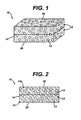
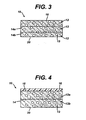
- the implant 10 includes a polymeric foam component 12 and a reinforcement member 14.
- the foam component preferably has pores 13 with an open cell pore structure.
- the reinforcement material can be disposed at any location within the implant.
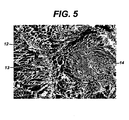
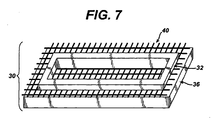
- more than one layer of each of the foam component 12a, 12b and reinforcement component 14a, 14b may be present in the implant. It is understood that various layers of the foam component and/or the reinforcement material may be made from different materials.
- FIG.4 illustrates an embodiment in which a barrier layer 16 is present in the implant. Although illustrated as being only on one surface of the implant 10, the barrier layer 16 may be present on either or both of the top and bottom surfaces 18, 20 of the implant.
- the implant 10 must have sufficient structural integrity and physical properties to facilitate ease of handling in an operating room environment, and to permit it to accept and retain sutures without tearing. Adequate strength and physical properties are developed in the implant through the selection of materials used to form the foam and reinforcement components, and the manufacturing process. As shown in FIG. 5 , the foam component 12 is integrated with the reinforcement component 14 such that the pores 13 of the foam component penetrate the mesh of the reinforcement component 14 and interlock with the reinforcement component. The walls in adjacent layers of the foam component also interlock with one another, regardless of whether the foam layers are separated by a layer or reinforcement material or whether they are made from the same or different materials.
- bioabsorbable polymers including polymers selected from the group consisting of aliphatic polyesters, poly(amino acids), copoly(ether-esters),
- polyglycolide is understood to include polyglycolic acid.
- polylactide is understood to include polymers of L-lactide, D-lactide, meso-lactide, blends thereof, and lactic acid polymers and copolymers in which other moieties are present in amounts less than 50 mole percent.
- aliphatic polyesters are among the preferred absorbable polymers for use in making the foam portion of the foam implants according to the present invention.
- Aliphatic polyesters can be homopolymers, copolymers (random, block, segmented, tapered blocks, graft, triblock, etc.) having a linear, branched or star structure.
- Suitable monomers for making aliphatic homopolymers and copolymers may be selected from the group consisting of, but are not limited, to lactic acid (both L- and D- isomers), lactide (including L-, D-, and meso-lactide), glycolic acid, glycolide, ⁇ -caprolactone, p-dioxanone (1,4-dioxan-2-one), trimethylene carbonate (1,3-dioxan-2-one), and combinations thereof.
- Elastomeric copolymers are also particularly useful in the present invention.
- Suitable elastomeric polymers include those with an inherent viscosity of 1.2 dUg or greater, more preferably about 1.2 dUg to 4 dUg and most preferably about 1.4 dUg to 2 dL/g, as determined at 25°C in a 0.1 gram per deciliter (g/dL) solution of polymer in hexafluoroisopropanol (HFIP).
- suitable elastomers exhibit a high percent elongation and a low modulus, while possessing good tensile strength and good recovery characteristics.
- the elastomer from which the foam component is formed exhibits a percent elongation (e.g., greater than about 200 percent and preferably greater than about 500 percent).
- suitable elastomers should also have a tensile strength greater than about 500 psi, preferably greater than about 1,000 psi, and a tear strength of greater than about 50 lbs/inch, preferably greater than about 80 lbs/inch.
- Exemplary bioabsorbable, biocompatible elastomers include but are not limited to elastomeric copolymers of ⁇ -caprolactone and glycolide (including polyglycolic acid) with a mole ratio of ⁇ -caprolactone to glycolide of from about 35/65 to about 65/35, more preferably from 45/55 to 35/65: elastomeric copolymers of ⁇ -caprolactone and lactide (including L-lactide, D-lactide, blends thereof, and lactic acid polymers and copolymers) where the mole ratio of ⁇ -caprolactone to lactide is from about 30/70 to about 95/5 and more preferably from 30/70 to 45/55 or from about 85/15 to about 95/5; elastomeric copolymers of p-dioxanone (1,4-dioxan-2-one) and lactide (including L-lactide, D-lactide, blends thereof, and lactic acid polymers and
- the exemplary bioabsorbable, biocompatible elastomers may be generally synthesized by a ring-opening polymerization of the corresponding lactone monomers or by polycondensation of the corresponding hydroxy-acids, or by combinations of these two polymerization methodologies.
- a suitable polymer or copolymer for forming the foam depends on several factors.
- the more relevant factors in the selection of the appropriate polymer(s) that is used to form the foam component include bioabsorption (or bio-degradation) kinetics; in-vivo mechanical performance; cell response to the material in terms of cell attachment, proliferation, migration and differentiation; and biocompatibility.
- Other relevant factors, which to some extent dictate the in-vitro and in-vivo behavior of the polymer include the chemical composition, spatial distribution of the constituents, the molecular weight of the polymer, and the degree of crystallinity.
- the ability of the material substrate to resorb in a timely fashion in the body environment is critical. But the differences in the absorption time under in-vivo conditions can also be the basis for combining two different copolymers.
- a copolymer of 35/65 ⁇ -caprolactone and glycolide (a relatively fast absorbing polymer) is blended with 40/60 ⁇ -caprolactone and L-lactide copolymer (a relatively slow absorbing polymer) to form a foam component
- the two constituents can be either randomly interconnected bicontinuous phases, or the constituents could have a gradient-like architecture in the form of a laminate type composite with a well integrated interface between the two constituent layers.
- the microstructure of these foams can be optimized to regenerate or repair the desired anatomical features of the tissue that is being engineered.
- polymer blends to form structures which transition from one composition to another composition in a gradient-like architecture.
- Foams having this gradient-like architecture are particularly advantageous in tissue engineering applications to repair or regenerate the structure of naturally occurring tissue such as cartilage (articular, meniscal, septal, tracheal, etc.), esophagus, skin, bone, and vascular tissue.
- a foam may be formed that transitions from a softer spongy material to a stiffer more rigid material in a manner similar to the transition from cartilage to bone.
- a foam constructs can be used for similar gradient effects, or to provide different gradients (e.g., different absorption profiles, stress response profiles, or different degrees of elasticity).
- these foam constructs can be used for organ repair replacement or regeneration strategies that may benefit from these unique tissue implants.
- these implants can be used for spinal disc, cranial tissue, dura, nerve tissue, liver, pancreas, kidney, bladder, spleen, cardiac muscle, skeletal muscle, tendons, ligaments and breast tissues.
- the reinforcing component of the tissue implant of the present invention is comprised of any absorbable polymer that is normally soluble in the lyophilizing solvent.
- This reinforcing component can be in any form including particles, fibers, sheets, nonwovens, and textiles with woven, knitted, warped knitted (i.e., lace-like), nonwoven, and braided structures.
- the reinforcing component has a mesh-like structure.
- mechanical properties of the material can be altered by changing the density or texture of the material, or by embedding particles in the material.
- the fibers used to make the reinforcing component can be monofilaments, multifilament yarns, threads, surgical sutures, braids, or bundles of fibers. These fibers can be made of any biocompatible materials such as polyiactide (or polylactic acid), polycaprolactone, copolymers or blends thereof. In one embodiment, the fibers are formed from a lactide, glycolide copolymer at a 95/5 mole ratio (95/5 poly(lactide-co-glycolide)).
- the reinforcing material may also be formed from a thin, perforation-containing elastomeric sheet with perforations to allow tissue ingrowth.
- a thin, perforation-containing elastomeric sheet with perforations to allow tissue ingrowth.
- Such a sheet could be made of blends or copolymers of polylactic acid, and polycaprolactone.
- filaments that form the reinforcing material may be coextruded to produce a filament with a sheath/core construction.
- Such filaments are comprised of a sheath of biodegradable polymer that surrounds one or more cores comprised of another biodegradable polymer. This may be desirable in instances where extended support is necessary for tissue ingrowth
- one or more layers of the reinforcing material may be used to reinforce the tissue implant of the invention.
- biodegradable reinforcing layers e.g., meshes
- biodegradable reinforcing layers e.g., meshes
- the same structure and chemistry or different structures and chemistries can be overlaid on top of one another to fabricate reinforced tissue implants with superior mechanical strength.
- the steps involved in the preparation of these foams include choosing the right solvents for the polymers to be lyophilized and preparing a homogeneous solution.
- the polymer solution is subjected to a freezing and vacuum drying cycle.
- the freezing step phase separates the polymer solution and vacuum drying step removes the solvent by sublimation and/or drying, leaving a porous polymer structure or an interconnected open cell porous foam.
- Suitable solvents that may be used ideally will have high vapor pressure at temperatures below the freezing point of the solvent and a freezing point reasonably obtainable by commercially available equipment.
- the applicable polymer concentration or amount of solvent that may be utilized will vary with each system. Generally, the amount of polymer in the solution can vary from about 0.5% to about 90% and, preferably, will vary from about 0.5% to about 30% by weight, depending on factors such as the solubility of the polymer in a given solvent and the final properties desired in the foam.
- solids may be added to the polymer-solvent system to modify the composition of the resulting foam surfaces. As the added particles settle out of solution to the bottom surface, regions will be created that will have the composition of the added solids, not the foamed polymeric material. Alternatively, the added solids may be more concentrated in desired regions (i.e., near the top, sides, or bottom) of the resulting tissue implant, thus causing compositional changes in all such regions. For example, concentration of solids in selected locations can be accomplished by adding metallic solids to a solution placed in a mold made of a magnetic material (or vice versa).
- the solids are of a type that will not react with the polymer or the solvent.
- the added solids have an average diameter of less than about 1.0 mm and preferably will have an average diameter of about 50 to about 500 microns.
- the solids are present in an amount such that they will constitute from about 1 to about 50 volume percent of the total volume of the particle and polymer-solvent mixture (wherein the total volume percent equals 100 volume percent).
- Exemplary solids include, but are not limited to, particles of demineralized bone, calcium phosphate particles, calcium sulfate particles, Bioglass particles or calcium carbonate particles for bone repair, leachable solids for additional pore creation and particles of bioabsorbable polymers not soluble in the solvent system that are effective as reinforcing materials or to create pores as they are absorbed and non-bioabsorbable materials.
- Suitable leachable solids include nontoxic leachable materials such as salts (e.g., sodium chloride, potassium chloride, calcium chloride, sodium tartrate, sodium citrate, and the like), biocompatible mono and disaccharides (e.g., glucose, fructose, dextrose, maltose, lactose and sucrose), polysaccharides (e.g., starch, alginate, chitosan), water soluble proteins (e.g., gelatin and agarose).
- the leachable materials can be removed by immersing the foam with the leachable material in a solvent in which the particle is soluble for a sufficient amount of time to allow leaching of substantially all of the particles, but which does not dissolve or detrimentally alter the foam.
- the preferred extraction solvent is water, most preferably distilled-deionized water.
- the foam will be dried after the leaching process is complete at low temperature and/or vacuum to minimize hydrolysis of the foam unless accelerated absorption of the foam is desired.
- calcium chloride is a well-known factor to active platelets. A scaffold containing calcium chloride may be able to cause platelet aggregation, which will cause release of growth factors, without the addition of thrombin.
- Suitable non-bioabsorbable materials include biocompatible metals such as stainless steel, cobalt chrome, titanium and titanium alloys, and bioinert ceramic particles (e.g., alumina, and zirconia). Further, the non-bioabsorbable materials may include particles made from polymers such as polyethylene, polyvinylacetate, polyethylene oxide, polymethylmethacrylate, silicone, polyethylene glycol, polyurethanes, polypropylene, and natural biopolymers (e.g., cellulose particles, chitin, and keratin), and fluorinated polymers and copolymers (e.g., polyvinylidene fluoride).
- biocompatible metals such as stainless steel, cobalt chrome, titanium and titanium alloys, and bioinert ceramic particles (e.g., alumina, and zirconia).
- the non-bioabsorbable materials may include particles made from polymers such as polyethylene, polyvinylacetate, polyethylene oxide, polymethylmethacrylate, silicone, polyethylene
- solids e.g., barium sulfate
- the solids that may be added also include those that will promote tissue regeneration or regrowth, as well as those that act as buffers, reinforcing materials or porosity modifiers.
- porous, reinforced tissue implant devices of the present invention are made by injecting, pouring, or otherwise placing, the appropriate polymer solution into a mold set-up comprised of a mold and the reinforcing elements of the present invention.
- the mold set-up is cooled in an appropriate bath or on a refrigerated shelf and then lyophilized, thereby providing a reinforced tissue engineered scaffold.
- the type of pore morphology that is developed during the freezing step is a function of factors such as the solution thermodynamics, freezing rate, temperature to which it is cooled, concentration of the solution, and whether homogeneous or heterogenous nucleation occurs.
- One of ordinary skill in the art can readily optimize the parameters without undue experimentation.
- the required general processing steps include the selection of the appropriate materials from which the polymeric foam and the reinforcing components are made. If a mesh reinforcing material is used, the proper mesh density must be selected. Further, the reinforcing material must be properly aligned in the mold, the polymer solution must be added at an appropriate rate and, preferably, into a mold that is tilted at an appropriate angle to minimize the formation of air bubbles, and the polymer solution must be lyophilized.
- the reinforcing mesh advantageously has a certain density range. That is, the openings in the mesh material must be sufficiently dense to render the construct suturable, but not so dense as to impede proper penetration of the foam material and cells through the reinforcing mesh openings. Without proper bonding across the reinforcing element, the integrity of the layered structure is compromised leaving the construct fragile and difficult to handle.
- This disclosure specifically relates to a method of preparing such biocompatible, bioabsorbable tissue implants using reinforcing elements that are soluble in the lyophilizing solvent.
- the implants are made by placing a reinforcement material within a stretcher and clamp apparatus in a desired position and orientation and if need be, under tension during processing.
- the stretcher and clamp apparatus is then placed in a mold to create a mold assembly.
- a solution of a desired polymeric material in a suitable solvent is prechilled prior to its addition to the mold assembly, which may also be prechilled, and the mold assembly is immediately quenched below the melting point of the solvent.
- the solution in the mold assembly is lyophilized to obtain the implant in which a reinforcement material is embedded in a polymeric foam.
- the diameter of the reinforcing element will have a large impact on the amount of surface area of reinforcing material that is directly exposed to the solvent. A larger diameter reduces the surface area that will be exposed to the solvent. For this reason, monofilament reinforcing elements may be preferred over yarns.
- the fiber will have a diameter in the range of 50 micron to 2 mm.
- Annealing the reinforcing elements prior to lyophilization will further increase the resistance of the reinforcing material to dissolution.
- Annealing schemes that enhance the crystallinity level of the reinforcing fibers are of particular utility.
- an annealing cyle containing a step that holds the reinforcing materials at 120° C under a nitrogen atmosphere for 3 hours is a preferred way to process these constructs.
- Constraining the soluble reinforcing elements during the lyophilization of the reinforced foam is another way to produce implants with the desired integrity and mechanical properties.
- the reinforcement material is substantially flat when placed in the mold.
- One method, known in the art, to ensure the proper degree of flatness involves pressing flat the reinforcement material (e.g., mesh) using a heated press prior to its placement within the mold.
- This inventive method involves the use of a stretcher and clamp apparatus that constrains the reinforcement element flat.
- Such a stretcher and clamp apparatus 30 is depicted in FIG. 6 .
- Stretcher and clamp apparatus 30 is comprised of inner and outer frames 32,36.
- Inner frame 32 has outside surface 34, while outer frame 34 has inner surface 38.
- Mesh 40 is placed between frames 32,36 such that, as shown in Figure 7 , mesh 40 is engaged between inner surface 38 of outer frame 34 and outside surface 34 of inner frame 32.
- Stretcher and clamp apparatus 30 keeps the reinforcement material flat, level, and constrained, with the ability to add tension, during processing. In addition, stretcher and clamp apparatus 30 make it possible to use a wider range of reinforcing materials, including those that have curled edges due to residual stresses in their structure. Another advantage that apparatus 30 provides is that mesh 40 placement within the foam can be precisely controlled, and easily changed, by using stretchers of different heights or by using a shim system.
- a certain level of tension imparted on the mesh may play a role in strength retention of the reinforcement. This strength retention arises from the residual stresses imparted to the mesh during loading.
- Quenching the reinforcing element/solution system is a critical step to control the kinetics of the reinforcing element dissolution. This dissolution is dependent upon both exposure time and exposure temperature. To minimize these factors, the stretcher and clamp apparatus, containing the optimized reinforcing element, is quenched immediately after being placed in the pre-chilled solvent in the pre-chilled mold. By adding the quenching step, the initial exposure of the reinforcing fibers to the solvent can be limited.
- the manner in which the polymer solution is added to the mold prior to lyophilization also contributes to the creation of a tissue implant with adequate mechanical integrity.
- the polymer solution is then poured in a way that allows air bubbles to escape from between the layers of the foam component.
- the mold is tilted at a desired angle and pouring is affected at a controlled rate to best prevent bubble formation.
- the tilt angle and pour rate Generally, the mold should be tilted at an angle of greater than about 1 degree to avoid bubble formation. In addition, the rate of pouring should be slow enough to enable any air bubbles to escape from the mold, rather than to be trapped in the mold.
- a preferred composition for the reinforcing element is 95/5 poly(lactide-co-glycolide).
- Two fiber forms of this co-polymer were used in the examples below: a yam with filaments with diameters on the order of 10 to 15 microns, and a monofilament with a diameter of 125 urn.
- the density of the mesh openings is an important factor in the formation of a resulting tissue implant with the desired mechanical properties.
- a low density, or open knitted mesh material is preferred.
- the density or "openness" of a mesh material can be evaluated using a digital photocamera interfaced with a computer. In one evaluation, the density of the mesh was determined using a Nikon SMZ-U Zoom with a Sony digital photocamera DKC-5000 interfaced with an IBM 300PL computer. Digital images of sections of each mesh magnified to 20x were manipulated using Image-Pro Plus 4.0 software in order to determine the mesh density.
- the image was thresholded such that the area accounting for the empty spaces in the mesh could be subtracted from the total area of the image.
- the mesh density was taken to be the percentage of the remaining digital image. Implants with the most desirable mechanical properties were found to be those with a mesh density in the range of about 20% to 88% and more preferably about 20% to 55%. In this work, meshes were knitted from these fibers with a density of 45%.
- Another aspect of the present invention is providing a biocompatible tissue implant in a method of repairing damaged tissue, particularly damaged soft tissue.
- the implant has a biocompatible polymeric foam component and a biocompatible reinforcement member.
- the polymeric foam and the reinforcement member are soluble in the same solvent.
- the implant is then placed in a desired position at a site relative to a tissue injury.
- the implant may be placed within a lesion that constitutes the tissue injury, or over the lesion, and may be of a size and shape such that it matches a geometry and dimension of the lesion.
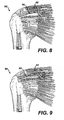
- FIG. 8 shows a patient's shoulder 50, with lesion 54 in rotator cuff tendon 52.
- implant 60 is placed over lesion 54, and affixed in place.
- the implant may also be placed within lesion 54 in an interference fit, or adjacent to lesion 54 that constitutes a tear such that the implant reinforces the tissue.
- implant 60 may be wrapped around the tissue having lesion 54.
- Affixing the implant to the damaged site may be accomplished by a number of methods including, but not limited to, suturing, stapling, or using a glue or a device selected from the group consisting of suture anchors, tissue tacks, darts, screws, arrows, and combinations thereof.
- the glue may be selected from fibrin glues, fibrin clots, platelet rich plasma, platelet poor plasma, blood clots, biologically compatible adhesives, and combinations thereof.
- This example describes the preparation of a three-dimensional elastomeric tissue implant with a 95/5 poly(lactide-co-glycolide) mesh reinforcement produced according to the methods described in the existing art and in the manner as described in this work, namely quenching the mold assembly after adding the polymer solution.
- a solution of the polymer to be lyophilized to form the foam component of both constructs was prepared.
- a 5% solution (by weight) of 60/40 poly(lactide-co-caprolactone) in 1,4-dioxane was made in a flask placed in a water bath stirring at 60°C for 5 hours.
- the solution was filtered using an extraction thimble and stored in a flask.
- the mesh used as the reinforcement in the constructs of this example was made from 95/5 poly (lactide-co-glycotide) yam. Pieces of the mesh, cut to dimensions slightly larger than the stretcher and clamp apparatus (5-cm by 14-cm), were solvent-scoured to remove lubricant finishes and foreign materials that accumulated during manufacturing using an agitated batch washing process in a Bransonic Ultrasonic Cleaner (Branson Ultrasonics Corp., Danbury, CT). For scouring, the mesh was placed in a plastic tray filled with isopropyl alcohol which was put into the ultrasonic cleaner. The temperature of the cleaner was held at 30°C.
- the mesh was then agitated in the ultrasonic cleaner for 30 minutes, rinsed with de-ionized water 3 times, and then re-agitated in a plastic tray filled with deionized water for 30 minutes.
- the mesh was then removed from the plastic tray and placed under vacuum overnight.
- Mesh was then placed in a stretcher and clamp apparatus used to keep the mesh taut and flat. The mesh in the stretcher and clamp apparatus were then set aside in a cool, dry environment.
- the mold assembly was then transferred to a Virtis, Freeze Mobile G freezedryer (Virtis Inc., Gardiner, NY) and the assembly was lyophilized according to the following cycle: 1) -17°C for 15 minutes; 2) -15°C for 60 minutes; 3) -5°C for 60 minutes under vacuum 150 milliTorr; 4) 5°C for 60 minutes under vacuum 150 milliTorr; 5) 20°C for 60 minutes under vacuum 150 milliTorr.
- the mold assemblies were then removed from the freezer and placed in a nitrogen box overnight. Following the completion of this process the resulting constructs were carefully peeled out of the mold in the form of a foam/mesh sheet.
- Example 2 This example is identical to Example 1 with the exception that in this example, the 95/5 poly(lactide-co-glycolide) yam mesh was annealed prior to processing.
- the meshes were scoured according to the procedure delineated in Example 1.
- the scoured meshes were placed in stretcher and clamp devices used to hold the meshes flat and taut.
- the mesh/device assemblies were then placed in an inert gas annealing oven and annealed at 120° C for 3 hours. The remainder of the experiment was conducted in the same manner as Example 1 with one annealed mesh being left unquenched and the other mesh being quenched.
- the lyophilization cycle was also the same.
- Example 2 The same procedure as described in Example 1 was used in this example with the exception that 95/5 poly(lactide-co-glycolide) monofilament was used to make the mesh instead of multifilament yam. The only other difference was the size of the mold used. In this example, the same 5% (by weight) 60/40 poly(lactide-co-caprolactone) solution in 1,-4-dioxane was poured into smaller aluminum molds (15.3 X 7 cm 2 ). Therefore, 40 g of polymer solution was sufficient to fully cover the bottom of the mold.
- Example 2 the meshes were scoured according to the procedure delineated in Example 1, and the scoured monofilament meshes constrained by the stretcher and clamp device were placed into the polymer-containing molds.
- One mold was placed directly on the shelf of the lyophilizer after placement of the mesh and lyophilized according to the cycle delineated in Example 1.
- the other mesh was first quenched by placing the mold in a stainless steel tray of liquid nitrogen before the mold was put on the shelf of the lyophilizer.
- the frozen assembly was then lyophilized according to the same cycle as described in Example 1.
- Example 3 This example was almost identical to Example 3 with the exception that in this example, the 95/5 poly(lactide-co-glycolide) monofilament mesh was annealed prior to processing.
- the meshes were scoured according to the procedure delineated in Example 1.
- the scoured meshes were placed in stretcher and clamp devices used to hold the meshes flat and taut.
- the mesh/device assemblies were then placed in an inert gas annealing oven and annealed at 120° C for 3 hours.
- One annealed monofilament mesh was placed in a large aluminum mold containing 100 g of the 5% (by weight) 60/40 poly(lactide-co-caprolactone) solution in 1,-4-dioxane used in all of the examples, and this mold was placed on the shelf of the lyophilizer and lyophilized according to the cycle delineated in Example 1.
- the other monofilament mesh was placed in a small aluminum mold containing 40 g of the 5% (by weight) 60/40 poly(lactide-co-caprolactone) solution in 1,-4-dioxane and was immediately quenched after submersion in the polymer solution. This frozen mold was then placed on the shelf of the lyophilizer and lyophilized according to the cycle delineated in Example 1.
- Peak loads of constructs described in Examples 1 and 2 were measured using an Instron machine (Model 4501, Instron, Inc., Canton, MA), outfitted with a 20 Ib. load cell.
- the specimens were cut (40 mm X 9.9 mm) using a die cutter (with the exception of the mesh controls that were cut with scissors), the thickness of each specimen was measured prior to testing. Seven specimens of each control and construct type were measured. Pneumatic grips with rubber coated faces were used grip the samples such that a 20 mm gauge length, the length of the construct in between the grips, was present at the start of the experiment.
- the grip pressure was set at 50 psi.
- the cross-head speed was one inch per minute.
- Table 2 shows the peak loads for the controls and constructs formed with yam meshes.
- the table shows that the peak load of a construct formed without the annealing and quenching steps is equivalent to that of a non-reinforced foam (0.9 Ib).
- a quenching step is added, the properties of a yam reinforced construct increase 44% (from 0.9 Ib to 1.3 Ib).
- the mechanical properties are further improved when the reinforcing yam mesh is pre-annealed (7.0 Ib).
- the addition of the annealing step without the quenching step also results in improved properties (2.8 Ib), although the improvement is not as great.
- a patient is prepared for surgery in a conventional manner using conventional surgical preparatory procedures.
- the patient has a soft tissue injury involving a tear in the supraspinatus tendon of the rotator cuff.
- the tendon is thin and degenerate and therefore the traditional methods for reapproximation of the tendon edge to the insertion site on the humerus cannot be performed. Since the tendon is degenerate, the strength of the fixation will not allow for proper rehabilitation.
- the patient is anesthetized in a conventional manner and the operation is performed arthroscopically.
- the implant of the present invention is used to augment or reinforce the fixation.
- the bioabsorbable implant is cut to size such that the width of the implant is the same or slightly smaller than the width of the native supraspinatus tendon.
- the length of the implant is cut such that it spans the degenerate portion of the tendon as well as some of the healthy portion of the tendon.
- the implant is then sutured on top of the degenerate and healthy portion of the tendon.
- the medial wall of the greater tuberosity is then prepared with 3-5 drill holes.
- Suture anchors such as BioKnotless brand suture anchors (Mitek, Norwood, Massachusetts) threaded with No. 1 Ethibond are inserted into the holes. The sutures on the anchors pass through both the tendon and the implant to reattach the implant-reinforced supraspinatus tendon construct to the original insertion site of the tendon.
- an implant of the present invention is used as an extender to the tendon. This is necessary when there is too much degeneration in the tendon or if there is retraction in the tendon.
- One end of the implant is sutured to the healthy portion of the supraspinatus tendon with nonresorbable Ethibond brand sutures (Ethicon, Somerville, New Jersey). The other end is attached to the medial wall of the greater tuberosity using suture anchors.
- the implant is cut to match the width of the tendon and to property fill the gap between the tendon and its insertion site. In this case, the implant will serve as a bridge between the tendon and the attachment site.
- the surgical site is dosed using conventional surgical techniques and the patient is removed from anesthesia and sent to a recovery room.
- the reinforced implants of the present invention have numerous advantages. In the past, traditional repair techniques have had failures due to inadequate fixation of the tendon to bone or lack of tendon-to-bone healing. A slow-resorbing implant that has good mechanical strength will bear load at initial time points and allow for good fixation strength at the tendon-bone interface.
- the use of the bioabsorbable implants of the present invention that support cell migration and growth will allow for the cells from neighboring tissue to migrate into the implant site and produce matrix that is similar to that of native tissue. When the implants of the present invention are used to augment the fixation, greater area of contact exists between the tendon-implant and bone and therefore may enhance the healing response at the interface. When an implant of the present invention is used as an extender, the implant will support the migration of cells from the native tendon and bone and allow for biological healing of the tendon-tendon and tendon-bone interfaces.
Landscapes
- Health & Medical Sciences (AREA)
- Chemical & Material Sciences (AREA)
- Animal Behavior & Ethology (AREA)
- Public Health (AREA)
- Veterinary Medicine (AREA)
- Oral & Maxillofacial Surgery (AREA)
- Transplantation (AREA)
- Life Sciences & Earth Sciences (AREA)
- General Health & Medical Sciences (AREA)
- Engineering & Computer Science (AREA)
- Epidemiology (AREA)
- Medicinal Chemistry (AREA)
- Dermatology (AREA)
- Composite Materials (AREA)
- Materials Engineering (AREA)
- Inorganic Chemistry (AREA)
- Biomedical Technology (AREA)
- Rehabilitation Therapy (AREA)
- Heart & Thoracic Surgery (AREA)
- Cardiology (AREA)
- Orthopedic Medicine & Surgery (AREA)
- Rheumatology (AREA)
- Vascular Medicine (AREA)
- Dispersion Chemistry (AREA)
- Materials For Medical Uses (AREA)
- Prostheses (AREA)
Applications Claiming Priority (2)
| Application Number | Priority Date | Filing Date | Title |
|---|---|---|---|
| US10/383,369 US7368124B2 (en) | 2003-03-07 | 2003-03-07 | Method of preparation of bioabsorbable porous reinforced tissue implants and implants thereof |
| EP04251265A EP1464346B1 (de) | 2003-03-07 | 2004-03-04 | Verfahren zur Herstellung bioabsorbierbarer, poröser und verstärkter Gewebeimplantate und dadurch hergestellte Implantate |
Related Parent Applications (2)
| Application Number | Title | Priority Date | Filing Date |
|---|---|---|---|
| EP04251265.7 Division | 2004-03-04 | ||
| EP04251265A Division EP1464346B1 (de) | 2003-03-07 | 2004-03-04 | Verfahren zur Herstellung bioabsorbierbarer, poröser und verstärkter Gewebeimplantate und dadurch hergestellte Implantate |
Publications (2)
| Publication Number | Publication Date |
|---|---|
| EP2204200A1 true EP2204200A1 (de) | 2010-07-07 |
| EP2204200B1 EP2204200B1 (de) | 2018-11-14 |
Family
ID=32850498
Family Applications (2)
| Application Number | Title | Priority Date | Filing Date |
|---|---|---|---|
| EP10075024.9A Expired - Lifetime EP2204200B1 (de) | 2003-03-07 | 2004-03-04 | Verfahren zur herstellung bioabsorbierbarer, poröser und verstärkter gewebeimplantate und dadurch hergestellte implantate |
| EP04251265A Expired - Lifetime EP1464346B1 (de) | 2003-03-07 | 2004-03-04 | Verfahren zur Herstellung bioabsorbierbarer, poröser und verstärkter Gewebeimplantate und dadurch hergestellte Implantate |
Family Applications After (1)
| Application Number | Title | Priority Date | Filing Date |
|---|---|---|---|
| EP04251265A Expired - Lifetime EP1464346B1 (de) | 2003-03-07 | 2004-03-04 | Verfahren zur Herstellung bioabsorbierbarer, poröser und verstärkter Gewebeimplantate und dadurch hergestellte Implantate |
Country Status (5)
| Country | Link |
|---|---|
| US (2) | US7368124B2 (de) |
| EP (2) | EP2204200B1 (de) |
| JP (1) | JP4937496B2 (de) |
| AU (1) | AU2004200966B9 (de) |
| DE (1) | DE602004027188D1 (de) |
Families Citing this family (526)
| Publication number | Priority date | Publication date | Assignee | Title |
|---|---|---|---|---|
| US20020095157A1 (en) | 1999-07-23 | 2002-07-18 | Bowman Steven M. | Graft fixation device combination |
| CA2365376C (en) | 2000-12-21 | 2006-03-28 | Ethicon, Inc. | Use of reinforced foam implants with enhanced integrity for soft tissue repair and regeneration |
| WO2003088844A1 (en) * | 2002-04-15 | 2003-10-30 | Cook Biotech Incorporated | Apparatus and method for producing a reinforced surgical staple line |
| US20040078090A1 (en) | 2002-10-18 | 2004-04-22 | Francois Binette | Biocompatible scaffolds with tissue fragments |
| US7824701B2 (en) | 2002-10-18 | 2010-11-02 | Ethicon, Inc. | Biocompatible scaffold for ligament or tendon repair |
| US7368124B2 (en) * | 2003-03-07 | 2008-05-06 | Depuy Mitek, Inc. | Method of preparation of bioabsorbable porous reinforced tissue implants and implants thereof |
| US8197837B2 (en) * | 2003-03-07 | 2012-06-12 | Depuy Mitek, Inc. | Method of preparation of bioabsorbable porous reinforced tissue implants and implants thereof |
| US7794408B2 (en) | 2003-03-28 | 2010-09-14 | Ethicon, Inc. | Tissue collection device and methods |
| US8298292B2 (en) * | 2003-04-16 | 2012-10-30 | Howmedica Osteonics Corp. | Craniofacial implant |
| DE10318801A1 (de) * | 2003-04-17 | 2004-11-04 | Aesculap Ag & Co. Kg | Flächiges Implantat und seine Verwendung in der Chirurgie |
| JP2007521843A (ja) | 2003-05-15 | 2007-08-09 | バイオメリクス コーポレーション | 網状化エラストマー系マトリックス、その製造、及び移植可能な装置における使用 |
| US20070084897A1 (en) | 2003-05-20 | 2007-04-19 | Shelton Frederick E Iv | Articulating surgical stapling instrument incorporating a two-piece e-beam firing mechanism |
| US9060770B2 (en) | 2003-05-20 | 2015-06-23 | Ethicon Endo-Surgery, Inc. | Robotically-driven surgical instrument with E-beam driver |
| US8226715B2 (en) | 2003-06-30 | 2012-07-24 | Depuy Mitek, Inc. | Scaffold for connective tissue repair |
| US10583220B2 (en) | 2003-08-11 | 2020-03-10 | DePuy Synthes Products, Inc. | Method and apparatus for resurfacing an articular surface |
| US7611473B2 (en) | 2003-09-11 | 2009-11-03 | Ethicon, Inc. | Tissue extraction and maceration device |
| US8034003B2 (en) | 2003-09-11 | 2011-10-11 | Depuy Mitek, Inc. | Tissue extraction and collection device |
| US7316822B2 (en) | 2003-11-26 | 2008-01-08 | Ethicon, Inc. | Conformable tissue repair implant capable of injection delivery |
| US7901461B2 (en) | 2003-12-05 | 2011-03-08 | Ethicon, Inc. | Viable tissue repair implants and methods of use |
| US7763077B2 (en) | 2003-12-24 | 2010-07-27 | Biomerix Corporation | Repair of spinal annular defects and annulo-nucleoplasty regeneration |
| US11395865B2 (en) | 2004-02-09 | 2022-07-26 | DePuy Synthes Products, Inc. | Scaffolds with viable tissue |
| US8215531B2 (en) | 2004-07-28 | 2012-07-10 | Ethicon Endo-Surgery, Inc. | Surgical stapling instrument having a medical substance dispenser |
| US9072535B2 (en) | 2011-05-27 | 2015-07-07 | Ethicon Endo-Surgery, Inc. | Surgical stapling instruments with rotatable staple deployment arrangements |
| US11998198B2 (en) | 2004-07-28 | 2024-06-04 | Cilag Gmbh International | Surgical stapling instrument incorporating a two-piece E-beam firing mechanism |
| US11896225B2 (en) | 2004-07-28 | 2024-02-13 | Cilag Gmbh International | Staple cartridge comprising a pan |
| US8771294B2 (en) | 2004-11-26 | 2014-07-08 | Biomerix Corporation | Aneurysm treatment devices and methods |
| US20060171930A1 (en) * | 2004-12-21 | 2006-08-03 | Agnieszka Seyda | Postpartum cells derived from umbilical cord tissue, and methods of making, culturing, and using the same |
| WO2006089267A2 (en) * | 2005-02-18 | 2006-08-24 | Synthasome Inc. | Synthetic structure for soft tissue repair |
| GB0517499D0 (en) * | 2005-08-26 | 2005-10-05 | West Hertfordshire Hospitals N | Surgical scaffold |
| US9237891B2 (en) | 2005-08-31 | 2016-01-19 | Ethicon Endo-Surgery, Inc. | Robotically-controlled surgical stapling devices that produce formed staples having different lengths |
| US7669746B2 (en) | 2005-08-31 | 2010-03-02 | Ethicon Endo-Surgery, Inc. | Staple cartridges for forming staples having differing formed staple heights |
| US10159482B2 (en) | 2005-08-31 | 2018-12-25 | Ethicon Llc | Fastener cartridge assembly comprising a fixed anvil and different staple heights |
| US11246590B2 (en) | 2005-08-31 | 2022-02-15 | Cilag Gmbh International | Staple cartridge including staple drivers having different unfired heights |
| US11484312B2 (en) | 2005-08-31 | 2022-11-01 | Cilag Gmbh International | Staple cartridge comprising a staple driver arrangement |
| US7934630B2 (en) | 2005-08-31 | 2011-05-03 | Ethicon Endo-Surgery, Inc. | Staple cartridges for forming staples having differing formed staple heights |
| WO2007038625A2 (en) | 2005-09-28 | 2007-04-05 | Northwestern University | Biodegradable nanocomposites with enhanced mechanical properties for soft tissue engineering. |
| US20070106317A1 (en) | 2005-11-09 | 2007-05-10 | Shelton Frederick E Iv | Hydraulically and electrically actuated articulation joints for surgical instruments |
| CA2637606C (en) * | 2006-01-19 | 2013-03-19 | Osteotech, Inc. | Porous osteoimplant |
| US8708213B2 (en) | 2006-01-31 | 2014-04-29 | Ethicon Endo-Surgery, Inc. | Surgical instrument having a feedback system |
| US20110024477A1 (en) | 2009-02-06 | 2011-02-03 | Hall Steven G | Driven Surgical Stapler Improvements |
| US8820603B2 (en) | 2006-01-31 | 2014-09-02 | Ethicon Endo-Surgery, Inc. | Accessing data stored in a memory of a surgical instrument |
| US7753904B2 (en) | 2006-01-31 | 2010-07-13 | Ethicon Endo-Surgery, Inc. | Endoscopic surgical instrument with a handle that can articulate with respect to the shaft |
| US20120292367A1 (en) | 2006-01-31 | 2012-11-22 | Ethicon Endo-Surgery, Inc. | Robotically-controlled end effector |
| US7845537B2 (en) | 2006-01-31 | 2010-12-07 | Ethicon Endo-Surgery, Inc. | Surgical instrument having recording capabilities |
| US11224427B2 (en) | 2006-01-31 | 2022-01-18 | Cilag Gmbh International | Surgical stapling system including a console and retraction assembly |
| US11278279B2 (en) | 2006-01-31 | 2022-03-22 | Cilag Gmbh International | Surgical instrument assembly |
| US8186555B2 (en) | 2006-01-31 | 2012-05-29 | Ethicon Endo-Surgery, Inc. | Motor-driven surgical cutting and fastening instrument with mechanical closure system |
| US20110290856A1 (en) | 2006-01-31 | 2011-12-01 | Ethicon Endo-Surgery, Inc. | Robotically-controlled surgical instrument with force-feedback capabilities |
| US11793518B2 (en) | 2006-01-31 | 2023-10-24 | Cilag Gmbh International | Powered surgical instruments with firing system lockout arrangements |
| US20070184087A1 (en) * | 2006-02-06 | 2007-08-09 | Bioform Medical, Inc. | Polysaccharide compositions for use in tissue augmentation |
| US8992422B2 (en) | 2006-03-23 | 2015-03-31 | Ethicon Endo-Surgery, Inc. | Robotically-controlled endoscopic accessory channel |
| US8322455B2 (en) | 2006-06-27 | 2012-12-04 | Ethicon Endo-Surgery, Inc. | Manually driven surgical cutting and fastening instrument |
| US10568652B2 (en) | 2006-09-29 | 2020-02-25 | Ethicon Llc | Surgical staples having attached drivers of different heights and stapling instruments for deploying the same |
| US7794475B2 (en) | 2006-09-29 | 2010-09-14 | Ethicon Endo-Surgery, Inc. | Surgical staples having compressible or crushable members for securing tissue therein and stapling instruments for deploying the same |
| US11980366B2 (en) | 2006-10-03 | 2024-05-14 | Cilag Gmbh International | Surgical instrument |
| US8192491B2 (en) | 2006-10-09 | 2012-06-05 | Active Implants Corporation | Meniscus prosthetic device |
| EP2076218B1 (de) | 2006-10-09 | 2016-03-09 | Active Implants Corporation | Meniskusprothesenvorrichtung |
| US8652120B2 (en) | 2007-01-10 | 2014-02-18 | Ethicon Endo-Surgery, Inc. | Surgical instrument with wireless communication between control unit and sensor transponders |
| US8684253B2 (en) | 2007-01-10 | 2014-04-01 | Ethicon Endo-Surgery, Inc. | Surgical instrument with wireless communication between a control unit of a robotic system and remote sensor |
| US8840603B2 (en) | 2007-01-10 | 2014-09-23 | Ethicon Endo-Surgery, Inc. | Surgical instrument with wireless communication between control unit and sensor transponders |
| US11291441B2 (en) | 2007-01-10 | 2022-04-05 | Cilag Gmbh International | Surgical instrument with wireless communication between control unit and remote sensor |
| US20080169333A1 (en) | 2007-01-11 | 2008-07-17 | Shelton Frederick E | Surgical stapler end effector with tapered distal end |
| US11039836B2 (en) | 2007-01-11 | 2021-06-22 | Cilag Gmbh International | Staple cartridge for use with a surgical stapling instrument |
| US20080188936A1 (en) * | 2007-02-02 | 2008-08-07 | Tornier, Inc. | System and method for repairing tendons and ligaments |
| CN101854886B (zh) | 2007-03-15 | 2014-12-24 | 矫正-空位有限公司 | 假体装置及其使用方法 |
| US7438209B1 (en) | 2007-03-15 | 2008-10-21 | Ethicon Endo-Surgery, Inc. | Surgical stapling instruments having a releasable staple-forming pocket |
| EP2136857A2 (de) * | 2007-03-23 | 2009-12-30 | Smith & Nephew, Inc. | Fixiervorrichtungen und reparaturverfahren |
| US8893946B2 (en) | 2007-03-28 | 2014-11-25 | Ethicon Endo-Surgery, Inc. | Laparoscopic tissue thickness and clamp load measuring devices |
| US8931682B2 (en) | 2007-06-04 | 2015-01-13 | Ethicon Endo-Surgery, Inc. | Robotically-controlled shaft based rotary drive systems for surgical instruments |
| US11857181B2 (en) | 2007-06-04 | 2024-01-02 | Cilag Gmbh International | Robotically-controlled shaft based rotary drive systems for surgical instruments |
| US7753245B2 (en) | 2007-06-22 | 2010-07-13 | Ethicon Endo-Surgery, Inc. | Surgical stapling instruments |
| US8062330B2 (en) * | 2007-06-27 | 2011-11-22 | Tyco Healthcare Group Lp | Buttress and surgical stapling apparatus |
| US11849941B2 (en) | 2007-06-29 | 2023-12-26 | Cilag Gmbh International | Staple cartridge having staple cavities extending at a transverse angle relative to a longitudinal cartridge axis |
| US7819298B2 (en) | 2008-02-14 | 2010-10-26 | Ethicon Endo-Surgery, Inc. | Surgical stapling apparatus with control features operable with one hand |
| US8758391B2 (en) | 2008-02-14 | 2014-06-24 | Ethicon Endo-Surgery, Inc. | Interchangeable tools for surgical instruments |
| US9179912B2 (en) | 2008-02-14 | 2015-11-10 | Ethicon Endo-Surgery, Inc. | Robotically-controlled motorized surgical cutting and fastening instrument |
| JP5410110B2 (ja) | 2008-02-14 | 2014-02-05 | エシコン・エンド−サージェリィ・インコーポレイテッド | Rf電極を有する外科用切断・固定器具 |
| US8636736B2 (en) | 2008-02-14 | 2014-01-28 | Ethicon Endo-Surgery, Inc. | Motorized surgical cutting and fastening instrument |
| US11986183B2 (en) | 2008-02-14 | 2024-05-21 | Cilag Gmbh International | Surgical cutting and fastening instrument comprising a plurality of sensors to measure an electrical parameter |
| US8573465B2 (en) | 2008-02-14 | 2013-11-05 | Ethicon Endo-Surgery, Inc. | Robotically-controlled surgical end effector system with rotary actuated closure systems |
| US7866527B2 (en) | 2008-02-14 | 2011-01-11 | Ethicon Endo-Surgery, Inc. | Surgical stapling apparatus with interlockable firing system |
| US11272927B2 (en) | 2008-02-15 | 2022-03-15 | Cilag Gmbh International | Layer arrangements for surgical staple cartridges |
| US10390823B2 (en) | 2008-02-15 | 2019-08-27 | Ethicon Llc | End effector comprising an adjunct |
| US7611653B1 (en) * | 2008-04-09 | 2009-11-03 | Active Implants Corporation | Manufacturing and material processing for prosthetic devices |
| US7991599B2 (en) | 2008-04-09 | 2011-08-02 | Active Implants Corporation | Meniscus prosthetic device selection and implantation methods |
| US8016884B2 (en) | 2008-04-09 | 2011-09-13 | Active Implants Corporation | Tensioned meniscus prosthetic devices and associated methods |
| US8361147B2 (en) * | 2008-04-09 | 2013-01-29 | Active Implants Corporation | Meniscus prosthetic devices with anti-migration features |
| US11648005B2 (en) | 2008-09-23 | 2023-05-16 | Cilag Gmbh International | Robotically-controlled motorized surgical instrument with an end effector |
| US9005230B2 (en) | 2008-09-23 | 2015-04-14 | Ethicon Endo-Surgery, Inc. | Motorized surgical instrument |
| US8210411B2 (en) | 2008-09-23 | 2012-07-03 | Ethicon Endo-Surgery, Inc. | Motor-driven surgical cutting instrument |
| US9386983B2 (en) | 2008-09-23 | 2016-07-12 | Ethicon Endo-Surgery, Llc | Robotically-controlled motorized surgical instrument |
| KR101070341B1 (ko) * | 2008-10-08 | 2011-10-06 | 서울대학교산학협력단 | 생체용 다공성 티타늄 골지지체와 그 제조방법 |
| US8608045B2 (en) | 2008-10-10 | 2013-12-17 | Ethicon Endo-Sugery, Inc. | Powered surgical cutting and stapling apparatus with manually retractable firing system |
| WO2010081029A1 (en) | 2009-01-08 | 2010-07-15 | Rotation Medical, Inc. | Implantable tendon protection systems and related kits and methods |
| WO2010088699A2 (en) * | 2009-02-02 | 2010-08-05 | Biomerix Corporation | Composite mesh devices and methods for soft tissue repair |
| US8517239B2 (en) | 2009-02-05 | 2013-08-27 | Ethicon Endo-Surgery, Inc. | Surgical stapling instrument comprising a magnetic element driver |
| JP2012517287A (ja) | 2009-02-06 | 2012-08-02 | エシコン・エンド−サージェリィ・インコーポレイテッド | 被駆動式手術用ステープラの改良 |
| US8444036B2 (en) | 2009-02-06 | 2013-05-21 | Ethicon Endo-Surgery, Inc. | Motor driven surgical fastener device with mechanisms for adjusting a tissue gap within the end effector |
| US9179910B2 (en) | 2009-03-20 | 2015-11-10 | Rotation Medical, Inc. | Medical device delivery system and method |
| US8308814B2 (en) | 2009-03-27 | 2012-11-13 | Depuy Mitek, Inc. | Methods and devices for preparing and implanting tissue scaffolds |
| US8241298B2 (en) | 2009-03-27 | 2012-08-14 | Depuy Mitek, Inc. | Methods and devices for delivering and affixing tissue scaffolds |
| US8556972B2 (en) * | 2009-04-02 | 2013-10-15 | Sevika Holding AG | Monolithic orthopedic implant with an articular finished surface |
| US20100256758A1 (en) * | 2009-04-02 | 2010-10-07 | Synvasive Technology, Inc. | Monolithic orthopedic implant with an articular finished surface |
| US9050176B2 (en) | 2009-04-03 | 2015-06-09 | Biomerix Corporation | At least partially resorbable reticulated elastomeric matrix elements and methods of making same |
| EP2413838A4 (de) * | 2009-04-03 | 2012-09-19 | Biomerix Corp | Zumindest teilweise resorbierbare retikulierte elastomermatrixpartikel und herstellungsverfahren |
| US12471975B2 (en) | 2009-06-04 | 2025-11-18 | Rotation Medical, Inc. | Methods and apparatus for deploying sheet-like materials |
| US9179961B2 (en) | 2009-06-04 | 2015-11-10 | Rotation Medical, Inc. | Methods and apparatus for deploying sheet-like materials |
| CA2763932C (en) | 2009-06-04 | 2017-08-01 | Rotation Medical, Inc. | Methods and apparatus for delivering staples to a target tissue |
| US20120165957A1 (en) | 2009-07-06 | 2012-06-28 | Hanne Everland | Biodegradable scaffold for soft tissue regeneration and use thereof |
| US9597430B2 (en) * | 2009-07-31 | 2017-03-21 | Synthasome, Inc. | Synthetic structure for soft tissue repair |
| US9440005B2 (en) | 2009-08-21 | 2016-09-13 | National Institute Of Agrobiological Sciences | Substrate for feeding cells and/or tissues, cell/tissue-feeder and method for the production of the same, method for the regeneration of tissues, and method for the production of porous bodies |
| US8690960B2 (en) | 2009-11-24 | 2014-04-08 | Covidien Lp | Reinforced tissue patch |
| US9398943B2 (en) * | 2009-11-30 | 2016-07-26 | Covidien Lp | Ventral hernia repair with barbed suture |
| US8851354B2 (en) | 2009-12-24 | 2014-10-07 | Ethicon Endo-Surgery, Inc. | Surgical cutting instrument that analyzes tissue thickness |
| US8220688B2 (en) | 2009-12-24 | 2012-07-17 | Ethicon Endo-Surgery, Inc. | Motor-driven surgical cutting instrument with electric actuator directional control assembly |
| US9198750B2 (en) | 2010-03-11 | 2015-12-01 | Rotation Medical, Inc. | Tendon repair implant and method of arthroscopic implantation |
| DE102010048710B4 (de) * | 2010-03-30 | 2013-05-23 | 3T Textiltechnologietransfer Gmbh | Implantat mit einer Sandwich-Struktur |
| US8783543B2 (en) | 2010-07-30 | 2014-07-22 | Ethicon Endo-Surgery, Inc. | Tissue acquisition arrangements and methods for surgical stapling devices |
| US11812965B2 (en) | 2010-09-30 | 2023-11-14 | Cilag Gmbh International | Layer of material for a surgical end effector |
| US11298125B2 (en) | 2010-09-30 | 2022-04-12 | Cilag Gmbh International | Tissue stapler having a thickness compensator |
| US9241714B2 (en) | 2011-04-29 | 2016-01-26 | Ethicon Endo-Surgery, Inc. | Tissue thickness compensator and method for making the same |
| US9272406B2 (en) | 2010-09-30 | 2016-03-01 | Ethicon Endo-Surgery, Llc | Fastener cartridge comprising a cutting member for releasing a tissue thickness compensator |
| US9232941B2 (en) | 2010-09-30 | 2016-01-12 | Ethicon Endo-Surgery, Inc. | Tissue thickness compensator comprising a reservoir |
| US9629814B2 (en) | 2010-09-30 | 2017-04-25 | Ethicon Endo-Surgery, Llc | Tissue thickness compensator configured to redistribute compressive forces |
| US12213666B2 (en) | 2010-09-30 | 2025-02-04 | Cilag Gmbh International | Tissue thickness compensator comprising layers |
| US9364233B2 (en) | 2010-09-30 | 2016-06-14 | Ethicon Endo-Surgery, Llc | Tissue thickness compensators for circular surgical staplers |
| US20120080336A1 (en) | 2010-09-30 | 2012-04-05 | Ethicon Endo-Surgery, Inc. | Staple cartridge comprising staples positioned within a compressible portion thereof |
| US11925354B2 (en) | 2010-09-30 | 2024-03-12 | Cilag Gmbh International | Staple cartridge comprising staples positioned within a compressible portion thereof |
| US9386988B2 (en) | 2010-09-30 | 2016-07-12 | Ethicon End-Surgery, LLC | Retainer assembly including a tissue thickness compensator |
| US10945731B2 (en) | 2010-09-30 | 2021-03-16 | Ethicon Llc | Tissue thickness compensator comprising controlled release and expansion |
| US8695866B2 (en) | 2010-10-01 | 2014-04-15 | Ethicon Endo-Surgery, Inc. | Surgical instrument having a power control circuit |
| US8551525B2 (en) | 2010-12-23 | 2013-10-08 | Biostructures, Llc | Bone graft materials and methods |
| EP2675391B1 (de) | 2011-02-15 | 2017-09-27 | Rotation Medical, Inc. | Vorrichtung zum freisetzen und positionieren von bahnenmaterialien |
| WO2012145059A1 (en) | 2011-02-15 | 2012-10-26 | Rotation Medical, Inc. | Methods and apparatus for fixing sheet-like materials to a target tissue |
| CA2827956C (en) | 2011-02-23 | 2019-05-07 | Ams Research Corporation | Drug releasing pelvic treatment system and method |
| CN104053407B (zh) | 2011-04-29 | 2016-10-26 | 伊西康内外科公司 | 包括定位在其可压缩部分内的钉的钉仓 |
| US11207064B2 (en) | 2011-05-27 | 2021-12-28 | Cilag Gmbh International | Automated end effector component reloading system for use with a robotic system |
| US8487017B2 (en) | 2011-06-27 | 2013-07-16 | Covidien Lp | Biodegradable materials for orthopedic devices based on polymer stereocomplexes |
| GB201113303D0 (en) | 2011-08-02 | 2011-09-14 | Xiros Ltd | Connective tissue repair pad |
| WO2013057566A2 (en) | 2011-10-18 | 2013-04-25 | Ortho-Space Ltd. | Prosthetic devices and methods for using same |
| US9271726B2 (en) | 2011-12-19 | 2016-03-01 | Rotation Medical, Inc. | Fasteners and fastener delivery devices for affixing sheet-like materials to bone or tissue |
| CA2859548A1 (en) | 2011-12-19 | 2013-08-15 | Rotation Medical, Inc. | Fasteners for affixing sheet-like materials to bone or tissue |
| US9107661B2 (en) | 2011-12-19 | 2015-08-18 | Rotation Medical, Inc. | Fasteners and fastener delivery devices for affixing sheet-like materials to bone or tissue |
| US9247978B2 (en) | 2011-12-19 | 2016-02-02 | Rotation Medical, Inc. | Apparatus and method for forming pilot holes in bone and delivering fasteners therein for retaining an implant |
| WO2013101641A2 (en) | 2011-12-29 | 2013-07-04 | Rotation Medical, Inc. | Anatomical location markers and methods of use in positioning sheet-like materials during surgery |
| WO2013101640A1 (en) | 2011-12-29 | 2013-07-04 | Rotation Medical, Inc. | Guidewire having a distal fixation member for delivering and positioning sheet-like materials in surgery |
| CA2859649A1 (en) | 2011-12-29 | 2013-07-04 | Rotation Medical, Inc. | Methods and apparatus for delivering and positioning sheet -like materials in surgery |
| US9211274B2 (en) * | 2012-02-01 | 2015-12-15 | Warsaw Orthopedic, Inc. | TRPV1 compounds in a biodegradable polymer carrier |
| US9044230B2 (en) | 2012-02-13 | 2015-06-02 | Ethicon Endo-Surgery, Inc. | Surgical cutting and fastening instrument with apparatus for determining cartridge and firing motion status |
| ITMI20120381A1 (it) * | 2012-03-12 | 2013-09-13 | Antonio Sambusseti | Patch riassorbibile in pga rinforzato per la sostituzione di una porzione di parete vescicale a seguito di vescitectomia parziale |
| US9061125B2 (en) | 2012-03-21 | 2015-06-23 | Ams Research Corporation | Bladder drug eluting device |
| BR112014024098B1 (pt) | 2012-03-28 | 2021-05-25 | Ethicon Endo-Surgery, Inc. | cartucho de grampos |
| MX358135B (es) | 2012-03-28 | 2018-08-06 | Ethicon Endo Surgery Inc | Compensador de grosor de tejido que comprende una pluralidad de capas. |
| MX353040B (es) | 2012-03-28 | 2017-12-18 | Ethicon Endo Surgery Inc | Unidad retenedora que incluye un compensador de grosor de tejido. |
| US9101358B2 (en) | 2012-06-15 | 2015-08-11 | Ethicon Endo-Surgery, Inc. | Articulatable surgical instrument comprising a firing drive |
| US9289256B2 (en) | 2012-06-28 | 2016-03-22 | Ethicon Endo-Surgery, Llc | Surgical end effectors having angled tissue-contacting surfaces |
| US12383267B2 (en) | 2012-06-28 | 2025-08-12 | Cilag Gmbh International | Robotically powered surgical device with manually-actuatable reversing system |
| US20140001231A1 (en) | 2012-06-28 | 2014-01-02 | Ethicon Endo-Surgery, Inc. | Firing system lockout arrangements for surgical instruments |
| BR112014032776B1 (pt) | 2012-06-28 | 2021-09-08 | Ethicon Endo-Surgery, Inc | Sistema de instrumento cirúrgico e kit cirúrgico para uso com um sistema de instrumento cirúrgico |
| US9364230B2 (en) | 2012-06-28 | 2016-06-14 | Ethicon Endo-Surgery, Llc | Surgical stapling instruments with rotary joint assemblies |
| US20140005718A1 (en) | 2012-06-28 | 2014-01-02 | Ethicon Endo-Surgery, Inc. | Multi-functional powered surgical device with external dissection features |
| US11197671B2 (en) | 2012-06-28 | 2021-12-14 | Cilag Gmbh International | Stapling assembly comprising a lockout |
| US9282974B2 (en) | 2012-06-28 | 2016-03-15 | Ethicon Endo-Surgery, Llc | Empty clip cartridge lockout |
| RU2636861C2 (ru) | 2012-06-28 | 2017-11-28 | Этикон Эндо-Серджери, Инк. | Блокировка пустой кассеты с клипсами |
| GB201301784D0 (en) * | 2013-02-01 | 2013-03-20 | Xiros Ltd | Connective tissue repair technology |
| BR112015021082B1 (pt) | 2013-03-01 | 2022-05-10 | Ethicon Endo-Surgery, Inc | Instrumento cirúrgico |
| MX368026B (es) | 2013-03-01 | 2019-09-12 | Ethicon Endo Surgery Inc | Instrumento quirúrgico articulable con vías conductoras para la comunicación de la señal. |
| US9364199B2 (en) | 2013-03-14 | 2016-06-14 | Covidien Lp | Medical devices |
| US20140263541A1 (en) | 2013-03-14 | 2014-09-18 | Ethicon Endo-Surgery, Inc. | Articulatable surgical instrument comprising an articulation lock |
| US9629629B2 (en) | 2013-03-14 | 2017-04-25 | Ethicon Endo-Surgey, LLC | Control systems for surgical instruments |
| BR112015026109B1 (pt) | 2013-04-16 | 2022-02-22 | Ethicon Endo-Surgery, Inc | Instrumento cirúrgico |
| US9844368B2 (en) | 2013-04-16 | 2017-12-19 | Ethicon Llc | Surgical system comprising first and second drive systems |
| CN103394121B (zh) * | 2013-07-31 | 2015-01-28 | 苏州市相城区明达复合材料厂 | 一种多孔复合支架材料的制备方法 |
| US9775609B2 (en) | 2013-08-23 | 2017-10-03 | Ethicon Llc | Tamper proof circuit for surgical instrument battery pack |
| BR112016003329B1 (pt) | 2013-08-23 | 2021-12-21 | Ethicon Endo-Surgery, Llc | Instrumento cirúrgico |
| US9700311B2 (en) * | 2013-11-08 | 2017-07-11 | Ethicon Llc | Tissue ingrowth materials and method of using the same |
| US9962161B2 (en) | 2014-02-12 | 2018-05-08 | Ethicon Llc | Deliverable surgical instrument |
| CN106232029B (zh) | 2014-02-24 | 2019-04-12 | 伊西康内外科有限责任公司 | 包括击发构件锁定件的紧固系统 |
| US9750499B2 (en) | 2014-03-26 | 2017-09-05 | Ethicon Llc | Surgical stapling instrument system |
| BR112016021943B1 (pt) | 2014-03-26 | 2022-06-14 | Ethicon Endo-Surgery, Llc | Instrumento cirúrgico para uso por um operador em um procedimento cirúrgico |
| US9804618B2 (en) | 2014-03-26 | 2017-10-31 | Ethicon Llc | Systems and methods for controlling a segmented circuit |
| US12232723B2 (en) | 2014-03-26 | 2025-02-25 | Cilag Gmbh International | Systems and methods for controlling a segmented circuit |
| US20150272557A1 (en) | 2014-03-26 | 2015-10-01 | Ethicon Endo-Surgery, Inc. | Modular surgical instrument system |
| US11517315B2 (en) | 2014-04-16 | 2022-12-06 | Cilag Gmbh International | Fastener cartridges including extensions having different configurations |
| CN106456176B (zh) | 2014-04-16 | 2019-06-28 | 伊西康内外科有限责任公司 | 包括具有不同构型的延伸部的紧固件仓 |
| US10426476B2 (en) | 2014-09-26 | 2019-10-01 | Ethicon Llc | Circular fastener cartridges for applying radially expandable fastener lines |
| BR112016023825B1 (pt) | 2014-04-16 | 2022-08-02 | Ethicon Endo-Surgery, Llc | Cartucho de grampos para uso com um grampeador cirúrgico e cartucho de grampos para uso com um instrumento cirúrgico |
| US20150297223A1 (en) | 2014-04-16 | 2015-10-22 | Ethicon Endo-Surgery, Inc. | Fastener cartridges including extensions having different configurations |
| CN106456159B (zh) | 2014-04-16 | 2019-03-08 | 伊西康内外科有限责任公司 | 紧固件仓组件和钉保持器盖布置结构 |
| CA2945821C (en) | 2014-05-09 | 2018-09-04 | Rotation Medical, Inc. | Medical implant delivery system for sheet-like implant |
| BR112017004361B1 (pt) | 2014-09-05 | 2023-04-11 | Ethicon Llc | Sistema eletrônico para um instrumento cirúrgico |
| US20160066913A1 (en) | 2014-09-05 | 2016-03-10 | Ethicon Endo-Surgery, Inc. | Local display of tissue parameter stabilization |
| US11311294B2 (en) | 2014-09-05 | 2022-04-26 | Cilag Gmbh International | Powered medical device including measurement of closure state of jaws |
| US10105142B2 (en) | 2014-09-18 | 2018-10-23 | Ethicon Llc | Surgical stapler with plurality of cutting elements |
| US11523821B2 (en) | 2014-09-26 | 2022-12-13 | Cilag Gmbh International | Method for creating a flexible staple line |
| CN107427300B (zh) | 2014-09-26 | 2020-12-04 | 伊西康有限责任公司 | 外科缝合支撑物和辅助材料 |
| US10076325B2 (en) | 2014-10-13 | 2018-09-18 | Ethicon Llc | Surgical stapling apparatus comprising a tissue stop |
| US9924944B2 (en) | 2014-10-16 | 2018-03-27 | Ethicon Llc | Staple cartridge comprising an adjunct material |
| US11141153B2 (en) | 2014-10-29 | 2021-10-12 | Cilag Gmbh International | Staple cartridges comprising driver arrangements |
| US10517594B2 (en) | 2014-10-29 | 2019-12-31 | Ethicon Llc | Cartridge assemblies for surgical staplers |
| EP4275620A3 (de) | 2014-11-04 | 2024-01-17 | Rotation Medical, Inc. | System zur einführung eines medizinischen implantats |
| US10675019B2 (en) | 2014-11-04 | 2020-06-09 | Rotation Medical, Inc. | Medical implant delivery system and related methods |
| WO2016073502A1 (en) | 2014-11-04 | 2016-05-12 | Rotation Medical, Inc. | Medical implant delivery system and related methods |
| US9844376B2 (en) | 2014-11-06 | 2017-12-19 | Ethicon Llc | Staple cartridge comprising a releasable adjunct material |
| US10736636B2 (en) | 2014-12-10 | 2020-08-11 | Ethicon Llc | Articulatable surgical instrument system |
| US10245027B2 (en) | 2014-12-18 | 2019-04-02 | Ethicon Llc | Surgical instrument with an anvil that is selectively movable about a discrete non-movable axis relative to a staple cartridge |
| US9987000B2 (en) | 2014-12-18 | 2018-06-05 | Ethicon Llc | Surgical instrument assembly comprising a flexible articulation system |
| US9844375B2 (en) | 2014-12-18 | 2017-12-19 | Ethicon Llc | Drive arrangements for articulatable surgical instruments |
| US9844374B2 (en) | 2014-12-18 | 2017-12-19 | Ethicon Llc | Surgical instrument systems comprising an articulatable end effector and means for adjusting the firing stroke of a firing member |
| US10085748B2 (en) | 2014-12-18 | 2018-10-02 | Ethicon Llc | Locking arrangements for detachable shaft assemblies with articulatable surgical end effectors |
| US10188385B2 (en) | 2014-12-18 | 2019-01-29 | Ethicon Llc | Surgical instrument system comprising lockable systems |
| MX389118B (es) | 2014-12-18 | 2025-03-20 | Ethicon Llc | Instrumento quirurgico con un yunque que puede moverse de manera selectiva sobre un eje discreto no movil con relacion a un cartucho de grapas. |
| US10182816B2 (en) | 2015-02-27 | 2019-01-22 | Ethicon Llc | Charging system that enables emergency resolutions for charging a battery |
| US11154301B2 (en) | 2015-02-27 | 2021-10-26 | Cilag Gmbh International | Modular stapling assembly |
| US10180463B2 (en) | 2015-02-27 | 2019-01-15 | Ethicon Llc | Surgical apparatus configured to assess whether a performance parameter of the surgical apparatus is within an acceptable performance band |
| US10441279B2 (en) | 2015-03-06 | 2019-10-15 | Ethicon Llc | Multiple level thresholds to modify operation of powered surgical instruments |
| US10617412B2 (en) | 2015-03-06 | 2020-04-14 | Ethicon Llc | System for detecting the mis-insertion of a staple cartridge into a surgical stapler |
| US9808246B2 (en) | 2015-03-06 | 2017-11-07 | Ethicon Endo-Surgery, Llc | Method of operating a powered surgical instrument |
| JP2020121162A (ja) | 2015-03-06 | 2020-08-13 | エシコン エルエルシーEthicon LLC | 測定の安定性要素、クリープ要素、及び粘弾性要素を決定するためのセンサデータの時間依存性評価 |
| US10687806B2 (en) | 2015-03-06 | 2020-06-23 | Ethicon Llc | Adaptive tissue compression techniques to adjust closure rates for multiple tissue types |
| US9924961B2 (en) | 2015-03-06 | 2018-03-27 | Ethicon Endo-Surgery, Llc | Interactive feedback system for powered surgical instruments |
| US10245033B2 (en) | 2015-03-06 | 2019-04-02 | Ethicon Llc | Surgical instrument comprising a lockable battery housing |
| US9993248B2 (en) | 2015-03-06 | 2018-06-12 | Ethicon Endo-Surgery, Llc | Smart sensors with local signal processing |
| US9901342B2 (en) | 2015-03-06 | 2018-02-27 | Ethicon Endo-Surgery, Llc | Signal and power communication system positioned on a rotatable shaft |
| US10052044B2 (en) | 2015-03-06 | 2018-08-21 | Ethicon Llc | Time dependent evaluation of sensor data to determine stability, creep, and viscoelastic elements of measures |
| US10390825B2 (en) | 2015-03-31 | 2019-08-27 | Ethicon Llc | Surgical instrument with progressive rotary drive systems |
| US10898228B2 (en) | 2015-05-06 | 2021-01-26 | Rotation Medical, Inc. | Medical implant delivery system and related methods |
| US10265156B2 (en) | 2015-06-15 | 2019-04-23 | Rotation Medical, Inc | Tendon repair implant and method of implantation |
| US11331191B2 (en) | 2015-08-12 | 2022-05-17 | Howmedica Osteonics Corp. | Bioactive soft tissue implant and methods of manufacture and use thereof |
| CA2938576A1 (en) | 2015-08-12 | 2017-02-12 | Howmedica Osteonics Corp. | Methods for forming scaffolds |
| US11058425B2 (en) * | 2015-08-17 | 2021-07-13 | Ethicon Llc | Implantable layers for a surgical instrument |
| US10959761B2 (en) | 2015-09-18 | 2021-03-30 | Ortho-Space Ltd. | Intramedullary fixated subacromial spacers |
| US10363036B2 (en) | 2015-09-23 | 2019-07-30 | Ethicon Llc | Surgical stapler having force-based motor control |
| US10238386B2 (en) | 2015-09-23 | 2019-03-26 | Ethicon Llc | Surgical stapler having motor control based on an electrical parameter related to a motor current |
| US10105139B2 (en) | 2015-09-23 | 2018-10-23 | Ethicon Llc | Surgical stapler having downstream current-based motor control |
| US10327769B2 (en) | 2015-09-23 | 2019-06-25 | Ethicon Llc | Surgical stapler having motor control based on a drive system component |
| US10299878B2 (en) | 2015-09-25 | 2019-05-28 | Ethicon Llc | Implantable adjunct systems for determining adjunct skew |
| US20170086829A1 (en) | 2015-09-30 | 2017-03-30 | Ethicon Endo-Surgery, Llc | Compressible adjunct with intermediate supporting structures |
| US11690623B2 (en) | 2015-09-30 | 2023-07-04 | Cilag Gmbh International | Method for applying an implantable layer to a fastener cartridge |
| US11890015B2 (en) | 2015-09-30 | 2024-02-06 | Cilag Gmbh International | Compressible adjunct with crossing spacer fibers |
| US10980539B2 (en) | 2015-09-30 | 2021-04-20 | Ethicon Llc | Implantable adjunct comprising bonded layers |
| US10368865B2 (en) | 2015-12-30 | 2019-08-06 | Ethicon Llc | Mechanisms for compensating for drivetrain failure in powered surgical instruments |
| US10265068B2 (en) | 2015-12-30 | 2019-04-23 | Ethicon Llc | Surgical instruments with separable motors and motor control circuits |
| US10292704B2 (en) | 2015-12-30 | 2019-05-21 | Ethicon Llc | Mechanisms for compensating for battery pack failure in powered surgical instruments |
| WO2017117415A1 (en) | 2015-12-31 | 2017-07-06 | Rotation Medical, Inc. | Medical implant delivery system and related methods |
| CA3008670A1 (en) | 2015-12-31 | 2017-07-06 | Rotation Medical, Inc. | Fastener delivery system and related methods |
| US20170273680A1 (en) | 2016-02-01 | 2017-09-28 | DePuy Synthes Products, Inc. | Tissue augmentation tacks for use with soft tissue fixation repair systems and methods |
| US11484401B2 (en) | 2016-02-01 | 2022-11-01 | Medos International Sarl | Tissue augmentation scaffolds for use in soft tissue fixation repair |
| US20170215864A1 (en) | 2016-02-01 | 2017-08-03 | DePuy Synthes Products, Inc. | Tissue augmentation constructs for use with soft tissue fixation repair systems and methods |
| US11213293B2 (en) | 2016-02-09 | 2022-01-04 | Cilag Gmbh International | Articulatable surgical instruments with single articulation link arrangements |
| US10413291B2 (en) | 2016-02-09 | 2019-09-17 | Ethicon Llc | Surgical instrument articulation mechanism with slotted secondary constraint |
| BR112018016098B1 (pt) | 2016-02-09 | 2023-02-23 | Ethicon Llc | Instrumento cirúrgico |
| US10258331B2 (en) | 2016-02-12 | 2019-04-16 | Ethicon Llc | Mechanisms for compensating for drivetrain failure in powered surgical instruments |
| US11224426B2 (en) | 2016-02-12 | 2022-01-18 | Cilag Gmbh International | Mechanisms for compensating for drivetrain failure in powered surgical instruments |
| US10448948B2 (en) | 2016-02-12 | 2019-10-22 | Ethicon Llc | Mechanisms for compensating for drivetrain failure in powered surgical instruments |
| US10485542B2 (en) | 2016-04-01 | 2019-11-26 | Ethicon Llc | Surgical stapling instrument comprising multiple lockouts |
| US10617413B2 (en) | 2016-04-01 | 2020-04-14 | Ethicon Llc | Closure system arrangements for surgical cutting and stapling devices with separate and distinct firing shafts |
| US11607239B2 (en) | 2016-04-15 | 2023-03-21 | Cilag Gmbh International | Systems and methods for controlling a surgical stapling and cutting instrument |
| US10357247B2 (en) | 2016-04-15 | 2019-07-23 | Ethicon Llc | Surgical instrument with multiple program responses during a firing motion |
| US10405859B2 (en) | 2016-04-15 | 2019-09-10 | Ethicon Llc | Surgical instrument with adjustable stop/start control during a firing motion |
| US10456137B2 (en) | 2016-04-15 | 2019-10-29 | Ethicon Llc | Staple formation detection mechanisms |
| US10426467B2 (en) | 2016-04-15 | 2019-10-01 | Ethicon Llc | Surgical instrument with detection sensors |
| US10828028B2 (en) | 2016-04-15 | 2020-11-10 | Ethicon Llc | Surgical instrument with multiple program responses during a firing motion |
| US11179150B2 (en) | 2016-04-15 | 2021-11-23 | Cilag Gmbh International | Systems and methods for controlling a surgical stapling and cutting instrument |
| US10335145B2 (en) | 2016-04-15 | 2019-07-02 | Ethicon Llc | Modular surgical instrument with configurable operating mode |
| US10492783B2 (en) | 2016-04-15 | 2019-12-03 | Ethicon, Llc | Surgical instrument with improved stop/start control during a firing motion |
| US10426469B2 (en) | 2016-04-18 | 2019-10-01 | Ethicon Llc | Surgical instrument comprising a primary firing lockout and a secondary firing lockout |
| US20170296173A1 (en) | 2016-04-18 | 2017-10-19 | Ethicon Endo-Surgery, Llc | Method for operating a surgical instrument |
| US11317917B2 (en) | 2016-04-18 | 2022-05-03 | Cilag Gmbh International | Surgical stapling system comprising a lockable firing assembly |
| EP3241571B1 (de) | 2016-05-02 | 2020-07-22 | Howmedica Osteonics Corporation | Bioaktives weichgewebeimplantat und verfahren zur herstellung und verwendung |
| US10500000B2 (en) | 2016-08-16 | 2019-12-10 | Ethicon Llc | Surgical tool with manual control of end effector jaws |
| US20180168625A1 (en) | 2016-12-21 | 2018-06-21 | Ethicon Endo-Surgery, Llc | Surgical stapling instruments with smart staple cartridges |
| US11419606B2 (en) | 2016-12-21 | 2022-08-23 | Cilag Gmbh International | Shaft assembly comprising a clutch configured to adapt the output of a rotary firing member to two different systems |
| US11134942B2 (en) | 2016-12-21 | 2021-10-05 | Cilag Gmbh International | Surgical stapling instruments and staple-forming anvils |
| US10898186B2 (en) | 2016-12-21 | 2021-01-26 | Ethicon Llc | Staple forming pocket arrangements comprising primary sidewalls and pocket sidewalls |
| CN110099619B (zh) | 2016-12-21 | 2022-07-15 | 爱惜康有限责任公司 | 用于外科端部执行器和可替换工具组件的闭锁装置 |
| US10610224B2 (en) | 2016-12-21 | 2020-04-07 | Ethicon Llc | Lockout arrangements for surgical end effectors and replaceable tool assemblies |
| US20180168619A1 (en) | 2016-12-21 | 2018-06-21 | Ethicon Endo-Surgery, Llc | Surgical stapling systems |
| US10426471B2 (en) | 2016-12-21 | 2019-10-01 | Ethicon Llc | Surgical instrument with multiple failure response modes |
| MX2019007311A (es) | 2016-12-21 | 2019-11-18 | Ethicon Llc | Sistemas de engrapado quirurgico. |
| JP2020501815A (ja) | 2016-12-21 | 2020-01-23 | エシコン エルエルシーEthicon LLC | 外科用ステープル留めシステム |
| JP7010957B2 (ja) | 2016-12-21 | 2022-01-26 | エシコン エルエルシー | ロックアウトを備えるシャフトアセンブリ |
| US10568624B2 (en) | 2016-12-21 | 2020-02-25 | Ethicon Llc | Surgical instruments with jaws that are pivotable about a fixed axis and include separate and distinct closure and firing systems |
| US10667809B2 (en) | 2016-12-21 | 2020-06-02 | Ethicon Llc | Staple cartridge and staple cartridge channel comprising windows defined therein |
| US10779823B2 (en) | 2016-12-21 | 2020-09-22 | Ethicon Llc | Firing member pin angle |
| US10888322B2 (en) | 2016-12-21 | 2021-01-12 | Ethicon Llc | Surgical instrument comprising a cutting member |
| US10835246B2 (en) | 2016-12-21 | 2020-11-17 | Ethicon Llc | Staple cartridges and arrangements of staples and staple cavities therein |
| US11191539B2 (en) | 2016-12-21 | 2021-12-07 | Cilag Gmbh International | Shaft assembly comprising a manually-operable retraction system for use with a motorized surgical instrument system |
| US11090048B2 (en) | 2016-12-21 | 2021-08-17 | Cilag Gmbh International | Method for resetting a fuse of a surgical instrument shaft |
| JP7010956B2 (ja) | 2016-12-21 | 2022-01-26 | エシコン エルエルシー | 組織をステープル留めする方法 |
| US20180168615A1 (en) | 2016-12-21 | 2018-06-21 | Ethicon Endo-Surgery, Llc | Method of deforming staples from two different types of staple cartridges with the same surgical stapling instrument |
| CN110114014B (zh) | 2016-12-21 | 2022-08-09 | 爱惜康有限责任公司 | 包括端部执行器闭锁件和击发组件闭锁件的外科器械系统 |
| US10639034B2 (en) | 2016-12-21 | 2020-05-05 | Ethicon Llc | Surgical instruments with lockout arrangements for preventing firing system actuation unless an unspent staple cartridge is present |
| CN111803710B (zh) * | 2016-12-28 | 2022-04-19 | 广州迈普再生医学科技股份有限公司 | 流延工艺制备的复合组织修复补片及其制备方法 |
| US11045981B2 (en) | 2017-01-30 | 2021-06-29 | Ortho-Space Ltd. | Processing machine and methods for processing dip-molded articles |
| US10881399B2 (en) | 2017-06-20 | 2021-01-05 | Ethicon Llc | Techniques for adaptive control of motor velocity of a surgical stapling and cutting instrument |
| US11517325B2 (en) | 2017-06-20 | 2022-12-06 | Cilag Gmbh International | Closed loop feedback control of motor velocity of a surgical stapling and cutting instrument based on measured displacement distance traveled over a specified time interval |
| USD879808S1 (en) | 2017-06-20 | 2020-03-31 | Ethicon Llc | Display panel with graphical user interface |
| US10881396B2 (en) | 2017-06-20 | 2021-01-05 | Ethicon Llc | Surgical instrument with variable duration trigger arrangement |
| US10390841B2 (en) | 2017-06-20 | 2019-08-27 | Ethicon Llc | Control of motor velocity of a surgical stapling and cutting instrument based on angle of articulation |
| US10646220B2 (en) | 2017-06-20 | 2020-05-12 | Ethicon Llc | Systems and methods for controlling displacement member velocity for a surgical instrument |
| US11090046B2 (en) | 2017-06-20 | 2021-08-17 | Cilag Gmbh International | Systems and methods for controlling displacement member motion of a surgical stapling and cutting instrument |
| US10813639B2 (en) | 2017-06-20 | 2020-10-27 | Ethicon Llc | Closed loop feedback control of motor velocity of a surgical stapling and cutting instrument based on system conditions |
| US11382638B2 (en) | 2017-06-20 | 2022-07-12 | Cilag Gmbh International | Closed loop feedback control of motor velocity of a surgical stapling and cutting instrument based on measured time over a specified displacement distance |
| US10980537B2 (en) | 2017-06-20 | 2021-04-20 | Ethicon Llc | Closed loop feedback control of motor velocity of a surgical stapling and cutting instrument based on measured time over a specified number of shaft rotations |
| US11653914B2 (en) | 2017-06-20 | 2023-05-23 | Cilag Gmbh International | Systems and methods for controlling motor velocity of a surgical stapling and cutting instrument according to articulation angle of end effector |
| US10327767B2 (en) | 2017-06-20 | 2019-06-25 | Ethicon Llc | Control of motor velocity of a surgical stapling and cutting instrument based on angle of articulation |
| US11071554B2 (en) | 2017-06-20 | 2021-07-27 | Cilag Gmbh International | Closed loop feedback control of motor velocity of a surgical stapling and cutting instrument based on magnitude of velocity error measurements |
| US10307170B2 (en) | 2017-06-20 | 2019-06-04 | Ethicon Llc | Method for closed loop control of motor velocity of a surgical stapling and cutting instrument |
| USD879809S1 (en) | 2017-06-20 | 2020-03-31 | Ethicon Llc | Display panel with changeable graphical user interface |
| US12490980B2 (en) | 2017-06-20 | 2025-12-09 | Cilag Gmbh International | Surgical instrument having controllable articulation velocity |
| US10888321B2 (en) | 2017-06-20 | 2021-01-12 | Ethicon Llc | Systems and methods for controlling velocity of a displacement member of a surgical stapling and cutting instrument |
| USD890784S1 (en) | 2017-06-20 | 2020-07-21 | Ethicon Llc | Display panel with changeable graphical user interface |
| US10368864B2 (en) | 2017-06-20 | 2019-08-06 | Ethicon Llc | Systems and methods for controlling displaying motor velocity for a surgical instrument |
| US10624633B2 (en) | 2017-06-20 | 2020-04-21 | Ethicon Llc | Systems and methods for controlling motor velocity of a surgical stapling and cutting instrument |
| US10779820B2 (en) | 2017-06-20 | 2020-09-22 | Ethicon Llc | Systems and methods for controlling motor speed according to user input for a surgical instrument |
| US11324503B2 (en) | 2017-06-27 | 2022-05-10 | Cilag Gmbh International | Surgical firing member arrangements |
| US11266405B2 (en) | 2017-06-27 | 2022-03-08 | Cilag Gmbh International | Surgical anvil manufacturing methods |
| US10631859B2 (en) | 2017-06-27 | 2020-04-28 | Ethicon Llc | Articulation systems for surgical instruments |
| US10993716B2 (en) | 2017-06-27 | 2021-05-04 | Ethicon Llc | Surgical anvil arrangements |
| US10856869B2 (en) | 2017-06-27 | 2020-12-08 | Ethicon Llc | Surgical anvil arrangements |
| US10772629B2 (en) | 2017-06-27 | 2020-09-15 | Ethicon Llc | Surgical anvil arrangements |
| US10765427B2 (en) | 2017-06-28 | 2020-09-08 | Ethicon Llc | Method for articulating a surgical instrument |
| EP3420947B1 (de) | 2017-06-28 | 2022-05-25 | Cilag GmbH International | Chirurgisches instrument mit selektiv betätigbaren drehbaren kupplern |
| US10786253B2 (en) | 2017-06-28 | 2020-09-29 | Ethicon Llc | Surgical end effectors with improved jaw aperture arrangements |
| US11696759B2 (en) | 2017-06-28 | 2023-07-11 | Cilag Gmbh International | Surgical stapling instruments comprising shortened staple cartridge noses |
| US11246592B2 (en) | 2017-06-28 | 2022-02-15 | Cilag Gmbh International | Surgical instrument comprising an articulation system lockable to a frame |
| US11259805B2 (en) | 2017-06-28 | 2022-03-01 | Cilag Gmbh International | Surgical instrument comprising firing member supports |
| USD869655S1 (en) | 2017-06-28 | 2019-12-10 | Ethicon Llc | Surgical fastener cartridge |
| US11564686B2 (en) | 2017-06-28 | 2023-01-31 | Cilag Gmbh International | Surgical shaft assemblies with flexible interfaces |
| USD854151S1 (en) | 2017-06-28 | 2019-07-16 | Ethicon Llc | Surgical instrument shaft |
| US10903685B2 (en) | 2017-06-28 | 2021-01-26 | Ethicon Llc | Surgical shaft assemblies with slip ring assemblies forming capacitive channels |
| US10716614B2 (en) | 2017-06-28 | 2020-07-21 | Ethicon Llc | Surgical shaft assemblies with slip ring assemblies with increased contact pressure |
| USD906355S1 (en) | 2017-06-28 | 2020-12-29 | Ethicon Llc | Display screen or portion thereof with a graphical user interface for a surgical instrument |
| BR112019027065B1 (pt) | 2017-06-28 | 2023-12-26 | Ethicon Llc | Instrumento cirúrgico e sistema cirúrgico |
| USD851762S1 (en) | 2017-06-28 | 2019-06-18 | Ethicon Llc | Anvil |
| US10211586B2 (en) | 2017-06-28 | 2019-02-19 | Ethicon Llc | Surgical shaft assemblies with watertight housings |
| US10898183B2 (en) | 2017-06-29 | 2021-01-26 | Ethicon Llc | Robotic surgical instrument with closed loop feedback techniques for advancement of closure member during firing |
| US10258418B2 (en) | 2017-06-29 | 2019-04-16 | Ethicon Llc | System for controlling articulation forces |
| US11007022B2 (en) | 2017-06-29 | 2021-05-18 | Ethicon Llc | Closed loop velocity control techniques based on sensed tissue parameters for robotic surgical instrument |
| US10932772B2 (en) | 2017-06-29 | 2021-03-02 | Ethicon Llc | Methods for closed loop velocity control for robotic surgical instrument |
| US10398434B2 (en) | 2017-06-29 | 2019-09-03 | Ethicon Llc | Closed loop velocity control of closure member for robotic surgical instrument |
| US11944300B2 (en) | 2017-08-03 | 2024-04-02 | Cilag Gmbh International | Method for operating a surgical system bailout |
| US11974742B2 (en) | 2017-08-03 | 2024-05-07 | Cilag Gmbh International | Surgical system comprising an articulation bailout |
| US11304695B2 (en) | 2017-08-03 | 2022-04-19 | Cilag Gmbh International | Surgical system shaft interconnection |
| US11471155B2 (en) | 2017-08-03 | 2022-10-18 | Cilag Gmbh International | Surgical system bailout |
| USD907647S1 (en) | 2017-09-29 | 2021-01-12 | Ethicon Llc | Display screen or portion thereof with animated graphical user interface |
| US11399829B2 (en) | 2017-09-29 | 2022-08-02 | Cilag Gmbh International | Systems and methods of initiating a power shutdown mode for a surgical instrument |
| US10729501B2 (en) | 2017-09-29 | 2020-08-04 | Ethicon Llc | Systems and methods for language selection of a surgical instrument |
| USD907648S1 (en) | 2017-09-29 | 2021-01-12 | Ethicon Llc | Display screen or portion thereof with animated graphical user interface |
| US10796471B2 (en) | 2017-09-29 | 2020-10-06 | Ethicon Llc | Systems and methods of displaying a knife position for a surgical instrument |
| US10765429B2 (en) | 2017-09-29 | 2020-09-08 | Ethicon Llc | Systems and methods for providing alerts according to the operational state of a surgical instrument |
| US10743872B2 (en) | 2017-09-29 | 2020-08-18 | Ethicon Llc | System and methods for controlling a display of a surgical instrument |
| USD917500S1 (en) | 2017-09-29 | 2021-04-27 | Ethicon Llc | Display screen or portion thereof with graphical user interface |
| US11134944B2 (en) | 2017-10-30 | 2021-10-05 | Cilag Gmbh International | Surgical stapler knife motion controls |
| US11090075B2 (en) | 2017-10-30 | 2021-08-17 | Cilag Gmbh International | Articulation features for surgical end effector |
| US10842490B2 (en) | 2017-10-31 | 2020-11-24 | Ethicon Llc | Cartridge body design with force reduction based on firing completion |
| US10779903B2 (en) | 2017-10-31 | 2020-09-22 | Ethicon Llc | Positive shaft rotation lock activated by jaw closure |
| US10987210B2 (en) | 2017-12-07 | 2021-04-27 | Rotation Medical, Inc. | Medical implant delivery system and related methods |
| US10687813B2 (en) | 2017-12-15 | 2020-06-23 | Ethicon Llc | Adapters with firing stroke sensing arrangements for use in connection with electromechanical surgical instruments |
| US10779825B2 (en) | 2017-12-15 | 2020-09-22 | Ethicon Llc | Adapters with end effector position sensing and control arrangements for use in connection with electromechanical surgical instruments |
| US11033267B2 (en) | 2017-12-15 | 2021-06-15 | Ethicon Llc | Systems and methods of controlling a clamping member firing rate of a surgical instrument |
| US10743874B2 (en) | 2017-12-15 | 2020-08-18 | Ethicon Llc | Sealed adapters for use with electromechanical surgical instruments |
| US11006955B2 (en) | 2017-12-15 | 2021-05-18 | Ethicon Llc | End effectors with positive jaw opening features for use with adapters for electromechanical surgical instruments |
| US11071543B2 (en) | 2017-12-15 | 2021-07-27 | Cilag Gmbh International | Surgical end effectors with clamping assemblies configured to increase jaw aperture ranges |
| US10966718B2 (en) | 2017-12-15 | 2021-04-06 | Ethicon Llc | Dynamic clamping assemblies with improved wear characteristics for use in connection with electromechanical surgical instruments |
| US10743875B2 (en) | 2017-12-15 | 2020-08-18 | Ethicon Llc | Surgical end effectors with jaw stiffener arrangements configured to permit monitoring of firing member |
| US10779826B2 (en) | 2017-12-15 | 2020-09-22 | Ethicon Llc | Methods of operating surgical end effectors |
| US10869666B2 (en) | 2017-12-15 | 2020-12-22 | Ethicon Llc | Adapters with control systems for controlling multiple motors of an electromechanical surgical instrument |
| US10828033B2 (en) | 2017-12-15 | 2020-11-10 | Ethicon Llc | Handheld electromechanical surgical instruments with improved motor control arrangements for positioning components of an adapter coupled thereto |
| US11197670B2 (en) | 2017-12-15 | 2021-12-14 | Cilag Gmbh International | Surgical end effectors with pivotal jaws configured to touch at their respective distal ends when fully closed |
| US10835330B2 (en) | 2017-12-19 | 2020-11-17 | Ethicon Llc | Method for determining the position of a rotatable jaw of a surgical instrument attachment assembly |
| US11020112B2 (en) | 2017-12-19 | 2021-06-01 | Ethicon Llc | Surgical tools configured for interchangeable use with different controller interfaces |
| US11045270B2 (en) | 2017-12-19 | 2021-06-29 | Cilag Gmbh International | Robotic attachment comprising exterior drive actuator |
| USD910847S1 (en) | 2017-12-19 | 2021-02-16 | Ethicon Llc | Surgical instrument assembly |
| US10716565B2 (en) | 2017-12-19 | 2020-07-21 | Ethicon Llc | Surgical instruments with dual articulation drivers |
| US10729509B2 (en) | 2017-12-19 | 2020-08-04 | Ethicon Llc | Surgical instrument comprising closure and firing locking mechanism |
| US20190192151A1 (en) | 2017-12-21 | 2019-06-27 | Ethicon Llc | Surgical instrument having a display comprising image layers |
| US12336705B2 (en) | 2017-12-21 | 2025-06-24 | Cilag Gmbh International | Continuous use self-propelled stapling instrument |
| US11311290B2 (en) | 2017-12-21 | 2022-04-26 | Cilag Gmbh International | Surgical instrument comprising an end effector dampener |
| US11076853B2 (en) | 2017-12-21 | 2021-08-03 | Cilag Gmbh International | Systems and methods of displaying a knife position during transection for a surgical instrument |
| US11129680B2 (en) | 2017-12-21 | 2021-09-28 | Cilag Gmbh International | Surgical instrument comprising a projector |
| US10786370B2 (en) * | 2017-12-28 | 2020-09-29 | Industrial Technology Research Institute | Cartilage repair implant, auxiliary surgical tool kit and cartilage repair system |
| CN108403258B (zh) * | 2018-06-05 | 2023-09-05 | 上海市第六人民医院 | 一种止点重建型人工肩袖补片及其制造方法 |
| US10856870B2 (en) | 2018-08-20 | 2020-12-08 | Ethicon Llc | Switching arrangements for motor powered articulatable surgical instruments |
| US10912559B2 (en) | 2018-08-20 | 2021-02-09 | Ethicon Llc | Reinforced deformable anvil tip for surgical stapler anvil |
| US11253256B2 (en) | 2018-08-20 | 2022-02-22 | Cilag Gmbh International | Articulatable motor powered surgical instruments with dedicated articulation motor arrangements |
| US11039834B2 (en) | 2018-08-20 | 2021-06-22 | Cilag Gmbh International | Surgical stapler anvils with staple directing protrusions and tissue stability features |
| US10842492B2 (en) | 2018-08-20 | 2020-11-24 | Ethicon Llc | Powered articulatable surgical instruments with clutching and locking arrangements for linking an articulation drive system to a firing drive system |
| US11083458B2 (en) | 2018-08-20 | 2021-08-10 | Cilag Gmbh International | Powered surgical instruments with clutching arrangements to convert linear drive motions to rotary drive motions |
| US20200054321A1 (en) | 2018-08-20 | 2020-02-20 | Ethicon Llc | Surgical instruments with progressive jaw closure arrangements |
| US11207065B2 (en) | 2018-08-20 | 2021-12-28 | Cilag Gmbh International | Method for fabricating surgical stapler anvils |
| USD914878S1 (en) | 2018-08-20 | 2021-03-30 | Ethicon Llc | Surgical instrument anvil |
| US11291440B2 (en) | 2018-08-20 | 2022-04-05 | Cilag Gmbh International | Method for operating a powered articulatable surgical instrument |
| US11324501B2 (en) | 2018-08-20 | 2022-05-10 | Cilag Gmbh International | Surgical stapling devices with improved closure members |
| US10779821B2 (en) | 2018-08-20 | 2020-09-22 | Ethicon Llc | Surgical stapler anvils with tissue stop features configured to avoid tissue pinch |
| US11045192B2 (en) | 2018-08-20 | 2021-06-29 | Cilag Gmbh International | Fabricating techniques for surgical stapler anvils |
| CN109316268A (zh) * | 2018-11-02 | 2019-02-12 | 李国剑 | 一种滑扣生物可吸收支架及制备方法 |
| US11172929B2 (en) | 2019-03-25 | 2021-11-16 | Cilag Gmbh International | Articulation drive arrangements for surgical systems |
| US11696761B2 (en) | 2019-03-25 | 2023-07-11 | Cilag Gmbh International | Firing drive arrangements for surgical systems |
| US11147553B2 (en) | 2019-03-25 | 2021-10-19 | Cilag Gmbh International | Firing drive arrangements for surgical systems |
| US11147551B2 (en) | 2019-03-25 | 2021-10-19 | Cilag Gmbh International | Firing drive arrangements for surgical systems |
| US11426251B2 (en) | 2019-04-30 | 2022-08-30 | Cilag Gmbh International | Articulation directional lights on a surgical instrument |
| US11903581B2 (en) | 2019-04-30 | 2024-02-20 | Cilag Gmbh International | Methods for stapling tissue using a surgical instrument |
| US11452528B2 (en) | 2019-04-30 | 2022-09-27 | Cilag Gmbh International | Articulation actuators for a surgical instrument |
| US11432816B2 (en) | 2019-04-30 | 2022-09-06 | Cilag Gmbh International | Articulation pin for a surgical instrument |
| US11253254B2 (en) | 2019-04-30 | 2022-02-22 | Cilag Gmbh International | Shaft rotation actuator on a surgical instrument |
| US11648009B2 (en) | 2019-04-30 | 2023-05-16 | Cilag Gmbh International | Rotatable jaw tip for a surgical instrument |
| US11471157B2 (en) | 2019-04-30 | 2022-10-18 | Cilag Gmbh International | Articulation control mapping for a surgical instrument |
| US11497492B2 (en) | 2019-06-28 | 2022-11-15 | Cilag Gmbh International | Surgical instrument including an articulation lock |
| US11627959B2 (en) | 2019-06-28 | 2023-04-18 | Cilag Gmbh International | Surgical instruments including manual and powered system lockouts |
| US11350938B2 (en) | 2019-06-28 | 2022-06-07 | Cilag Gmbh International | Surgical instrument comprising an aligned rfid sensor |
| US11298127B2 (en) | 2019-06-28 | 2022-04-12 | Cilag GmbH Interational | Surgical stapling system having a lockout mechanism for an incompatible cartridge |
| US11426167B2 (en) | 2019-06-28 | 2022-08-30 | Cilag Gmbh International | Mechanisms for proper anvil attachment surgical stapling head assembly |
| US11298132B2 (en) | 2019-06-28 | 2022-04-12 | Cilag GmbH Inlernational | Staple cartridge including a honeycomb extension |
| US11246678B2 (en) | 2019-06-28 | 2022-02-15 | Cilag Gmbh International | Surgical stapling system having a frangible RFID tag |
| US11399837B2 (en) | 2019-06-28 | 2022-08-02 | Cilag Gmbh International | Mechanisms for motor control adjustments of a motorized surgical instrument |
| US11464601B2 (en) | 2019-06-28 | 2022-10-11 | Cilag Gmbh International | Surgical instrument comprising an RFID system for tracking a movable component |
| US11291451B2 (en) | 2019-06-28 | 2022-04-05 | Cilag Gmbh International | Surgical instrument with battery compatibility verification functionality |
| US12004740B2 (en) | 2019-06-28 | 2024-06-11 | Cilag Gmbh International | Surgical stapling system having an information decryption protocol |
| US11553971B2 (en) | 2019-06-28 | 2023-01-17 | Cilag Gmbh International | Surgical RFID assemblies for display and communication |
| US11259803B2 (en) | 2019-06-28 | 2022-03-01 | Cilag Gmbh International | Surgical stapling system having an information encryption protocol |
| US11771419B2 (en) | 2019-06-28 | 2023-10-03 | Cilag Gmbh International | Packaging for a replaceable component of a surgical stapling system |
| US11224497B2 (en) | 2019-06-28 | 2022-01-18 | Cilag Gmbh International | Surgical systems with multiple RFID tags |
| US11660163B2 (en) | 2019-06-28 | 2023-05-30 | Cilag Gmbh International | Surgical system with RFID tags for updating motor assembly parameters |
| US11638587B2 (en) | 2019-06-28 | 2023-05-02 | Cilag Gmbh International | RFID identification systems for surgical instruments |
| US11051807B2 (en) | 2019-06-28 | 2021-07-06 | Cilag Gmbh International | Packaging assembly including a particulate trap |
| US11376098B2 (en) | 2019-06-28 | 2022-07-05 | Cilag Gmbh International | Surgical instrument system comprising an RFID system |
| US11523822B2 (en) | 2019-06-28 | 2022-12-13 | Cilag Gmbh International | Battery pack including a circuit interrupter |
| US11684434B2 (en) | 2019-06-28 | 2023-06-27 | Cilag Gmbh International | Surgical RFID assemblies for instrument operational setting control |
| US11478241B2 (en) | 2019-06-28 | 2022-10-25 | Cilag Gmbh International | Staple cartridge including projections |
| US11219455B2 (en) | 2019-06-28 | 2022-01-11 | Cilag Gmbh International | Surgical instrument including a lockout key |
| CN110251726A (zh) * | 2019-08-02 | 2019-09-20 | 科先医疗科技(苏州)有限公司 | 一种复合人工骨材料及其制备方法 |
| US11701111B2 (en) | 2019-12-19 | 2023-07-18 | Cilag Gmbh International | Method for operating a surgical stapling instrument |
| US11529139B2 (en) | 2019-12-19 | 2022-12-20 | Cilag Gmbh International | Motor driven surgical instrument |
| US11576672B2 (en) | 2019-12-19 | 2023-02-14 | Cilag Gmbh International | Surgical instrument comprising a closure system including a closure member and an opening member driven by a drive screw |
| US12035913B2 (en) | 2019-12-19 | 2024-07-16 | Cilag Gmbh International | Staple cartridge comprising a deployable knife |
| US11446029B2 (en) | 2019-12-19 | 2022-09-20 | Cilag Gmbh International | Staple cartridge comprising projections extending from a curved deck surface |
| US11304696B2 (en) | 2019-12-19 | 2022-04-19 | Cilag Gmbh International | Surgical instrument comprising a powered articulation system |
| US11464512B2 (en) | 2019-12-19 | 2022-10-11 | Cilag Gmbh International | Staple cartridge comprising a curved deck surface |
| US11931033B2 (en) | 2019-12-19 | 2024-03-19 | Cilag Gmbh International | Staple cartridge comprising a latch lockout |
| US11504122B2 (en) | 2019-12-19 | 2022-11-22 | Cilag Gmbh International | Surgical instrument comprising a nested firing member |
| US11607219B2 (en) | 2019-12-19 | 2023-03-21 | Cilag Gmbh International | Staple cartridge comprising a detachable tissue cutting knife |
| US11559304B2 (en) | 2019-12-19 | 2023-01-24 | Cilag Gmbh International | Surgical instrument comprising a rapid closure mechanism |
| US11529137B2 (en) | 2019-12-19 | 2022-12-20 | Cilag Gmbh International | Staple cartridge comprising driver retention members |
| US11844520B2 (en) | 2019-12-19 | 2023-12-19 | Cilag Gmbh International | Staple cartridge comprising driver retention members |
| US11911032B2 (en) | 2019-12-19 | 2024-02-27 | Cilag Gmbh International | Staple cartridge comprising a seating cam |
| US11234698B2 (en) | 2019-12-19 | 2022-02-01 | Cilag Gmbh International | Stapling system comprising a clamp lockout and a firing lockout |
| US11291447B2 (en) | 2019-12-19 | 2022-04-05 | Cilag Gmbh International | Stapling instrument comprising independent jaw closing and staple firing systems |
| USD966512S1 (en) | 2020-06-02 | 2022-10-11 | Cilag Gmbh International | Staple cartridge |
| USD975278S1 (en) | 2020-06-02 | 2023-01-10 | Cilag Gmbh International | Staple cartridge |
| USD974560S1 (en) | 2020-06-02 | 2023-01-03 | Cilag Gmbh International | Staple cartridge |
| USD976401S1 (en) | 2020-06-02 | 2023-01-24 | Cilag Gmbh International | Staple cartridge |
| USD967421S1 (en) | 2020-06-02 | 2022-10-18 | Cilag Gmbh International | Staple cartridge |
| USD975851S1 (en) | 2020-06-02 | 2023-01-17 | Cilag Gmbh International | Staple cartridge |
| USD975850S1 (en) | 2020-06-02 | 2023-01-17 | Cilag Gmbh International | Staple cartridge |
| US11974741B2 (en) | 2020-07-28 | 2024-05-07 | Cilag Gmbh International | Surgical instruments with differential articulation joint arrangements for accommodating flexible actuators |
| CN112521734B (zh) * | 2020-10-14 | 2023-03-31 | 浙江中在医疗科技有限公司 | 一种可降解医用弹性体材料及其用途 |
| US11717289B2 (en) | 2020-10-29 | 2023-08-08 | Cilag Gmbh International | Surgical instrument comprising an indicator which indicates that an articulation drive is actuatable |
| US11896217B2 (en) | 2020-10-29 | 2024-02-13 | Cilag Gmbh International | Surgical instrument comprising an articulation lock |
| US12053175B2 (en) | 2020-10-29 | 2024-08-06 | Cilag Gmbh International | Surgical instrument comprising a stowed closure actuator stop |
| USD1013170S1 (en) | 2020-10-29 | 2024-01-30 | Cilag Gmbh International | Surgical instrument assembly |
| US11617577B2 (en) | 2020-10-29 | 2023-04-04 | Cilag Gmbh International | Surgical instrument comprising a sensor configured to sense whether an articulation drive of the surgical instrument is actuatable |
| USD980425S1 (en) | 2020-10-29 | 2023-03-07 | Cilag Gmbh International | Surgical instrument assembly |
| US11931025B2 (en) | 2020-10-29 | 2024-03-19 | Cilag Gmbh International | Surgical instrument comprising a releasable closure drive lock |
| US11534259B2 (en) | 2020-10-29 | 2022-12-27 | Cilag Gmbh International | Surgical instrument comprising an articulation indicator |
| US11844518B2 (en) | 2020-10-29 | 2023-12-19 | Cilag Gmbh International | Method for operating a surgical instrument |
| US11452526B2 (en) | 2020-10-29 | 2022-09-27 | Cilag Gmbh International | Surgical instrument comprising a staged voltage regulation start-up system |
| US11779330B2 (en) | 2020-10-29 | 2023-10-10 | Cilag Gmbh International | Surgical instrument comprising a jaw alignment system |
| US11517390B2 (en) | 2020-10-29 | 2022-12-06 | Cilag Gmbh International | Surgical instrument comprising a limited travel switch |
| US11627960B2 (en) | 2020-12-02 | 2023-04-18 | Cilag Gmbh International | Powered surgical instruments with smart reload with separately attachable exteriorly mounted wiring connections |
| US12471982B2 (en) | 2020-12-02 | 2025-11-18 | Cilag Gmbh International | Method for tissue treatment by surgical instrument |
| US11737751B2 (en) | 2020-12-02 | 2023-08-29 | Cilag Gmbh International | Devices and methods of managing energy dissipated within sterile barriers of surgical instrument housings |
| US11744581B2 (en) | 2020-12-02 | 2023-09-05 | Cilag Gmbh International | Powered surgical instruments with multi-phase tissue treatment |
| US11849943B2 (en) | 2020-12-02 | 2023-12-26 | Cilag Gmbh International | Surgical instrument with cartridge release mechanisms |
| US11653920B2 (en) | 2020-12-02 | 2023-05-23 | Cilag Gmbh International | Powered surgical instruments with communication interfaces through sterile barrier |
| US11944296B2 (en) | 2020-12-02 | 2024-04-02 | Cilag Gmbh International | Powered surgical instruments with external connectors |
| US11678882B2 (en) | 2020-12-02 | 2023-06-20 | Cilag Gmbh International | Surgical instruments with interactive features to remedy incidental sled movements |
| US11890010B2 (en) | 2020-12-02 | 2024-02-06 | Cllag GmbH International | Dual-sided reinforced reload for surgical instruments |
| US11653915B2 (en) | 2020-12-02 | 2023-05-23 | Cilag Gmbh International | Surgical instruments with sled location detection and adjustment features |
| US11950779B2 (en) | 2021-02-26 | 2024-04-09 | Cilag Gmbh International | Method of powering and communicating with a staple cartridge |
| US11701113B2 (en) | 2021-02-26 | 2023-07-18 | Cilag Gmbh International | Stapling instrument comprising a separate power antenna and a data transfer antenna |
| US11744583B2 (en) | 2021-02-26 | 2023-09-05 | Cilag Gmbh International | Distal communication array to tune frequency of RF systems |
| US11751869B2 (en) | 2021-02-26 | 2023-09-12 | Cilag Gmbh International | Monitoring of multiple sensors over time to detect moving characteristics of tissue |
| US12324580B2 (en) | 2021-02-26 | 2025-06-10 | Cilag Gmbh International | Method of powering and communicating with a staple cartridge |
| US11723657B2 (en) | 2021-02-26 | 2023-08-15 | Cilag Gmbh International | Adjustable communication based on available bandwidth and power capacity |
| US11696757B2 (en) | 2021-02-26 | 2023-07-11 | Cilag Gmbh International | Monitoring of internal systems to detect and track cartridge motion status |
| US12108951B2 (en) | 2021-02-26 | 2024-10-08 | Cilag Gmbh International | Staple cartridge comprising a sensing array and a temperature control system |
| US11812964B2 (en) | 2021-02-26 | 2023-11-14 | Cilag Gmbh International | Staple cartridge comprising a power management circuit |
| US11749877B2 (en) | 2021-02-26 | 2023-09-05 | Cilag Gmbh International | Stapling instrument comprising a signal antenna |
| US11950777B2 (en) | 2021-02-26 | 2024-04-09 | Cilag Gmbh International | Staple cartridge comprising an information access control system |
| US11980362B2 (en) | 2021-02-26 | 2024-05-14 | Cilag Gmbh International | Surgical instrument system comprising a power transfer coil |
| US11793514B2 (en) | 2021-02-26 | 2023-10-24 | Cilag Gmbh International | Staple cartridge comprising sensor array which may be embedded in cartridge body |
| US11730473B2 (en) | 2021-02-26 | 2023-08-22 | Cilag Gmbh International | Monitoring of manufacturing life-cycle |
| US11925349B2 (en) | 2021-02-26 | 2024-03-12 | Cilag Gmbh International | Adjustment to transfer parameters to improve available power |
| US11759202B2 (en) | 2021-03-22 | 2023-09-19 | Cilag Gmbh International | Staple cartridge comprising an implantable layer |
| US11806011B2 (en) | 2021-03-22 | 2023-11-07 | Cilag Gmbh International | Stapling instrument comprising tissue compression systems |
| US11737749B2 (en) | 2021-03-22 | 2023-08-29 | Cilag Gmbh International | Surgical stapling instrument comprising a retraction system |
| US11723658B2 (en) | 2021-03-22 | 2023-08-15 | Cilag Gmbh International | Staple cartridge comprising a firing lockout |
| US11826042B2 (en) | 2021-03-22 | 2023-11-28 | Cilag Gmbh International | Surgical instrument comprising a firing drive including a selectable leverage mechanism |
| US11826012B2 (en) | 2021-03-22 | 2023-11-28 | Cilag Gmbh International | Stapling instrument comprising a pulsed motor-driven firing rack |
| US11717291B2 (en) | 2021-03-22 | 2023-08-08 | Cilag Gmbh International | Staple cartridge comprising staples configured to apply different tissue compression |
| US11896218B2 (en) | 2021-03-24 | 2024-02-13 | Cilag Gmbh International | Method of using a powered stapling device |
| US11849944B2 (en) | 2021-03-24 | 2023-12-26 | Cilag Gmbh International | Drivers for fastener cartridge assemblies having rotary drive screws |
| US11786239B2 (en) | 2021-03-24 | 2023-10-17 | Cilag Gmbh International | Surgical instrument articulation joint arrangements comprising multiple moving linkage features |
| US11896219B2 (en) | 2021-03-24 | 2024-02-13 | Cilag Gmbh International | Mating features between drivers and underside of a cartridge deck |
| US11832816B2 (en) | 2021-03-24 | 2023-12-05 | Cilag Gmbh International | Surgical stapling assembly comprising nonplanar staples and planar staples |
| US11786243B2 (en) | 2021-03-24 | 2023-10-17 | Cilag Gmbh International | Firing members having flexible portions for adapting to a load during a surgical firing stroke |
| US11903582B2 (en) | 2021-03-24 | 2024-02-20 | Cilag Gmbh International | Leveraging surfaces for cartridge installation |
| US11793516B2 (en) | 2021-03-24 | 2023-10-24 | Cilag Gmbh International | Surgical staple cartridge comprising longitudinal support beam |
| US11849945B2 (en) | 2021-03-24 | 2023-12-26 | Cilag Gmbh International | Rotary-driven surgical stapling assembly comprising eccentrically driven firing member |
| US12102323B2 (en) | 2021-03-24 | 2024-10-01 | Cilag Gmbh International | Rotary-driven surgical stapling assembly comprising a floatable component |
| US11744603B2 (en) | 2021-03-24 | 2023-09-05 | Cilag Gmbh International | Multi-axis pivot joints for surgical instruments and methods for manufacturing same |
| US11944336B2 (en) | 2021-03-24 | 2024-04-02 | Cilag Gmbh International | Joint arrangements for multi-planar alignment and support of operational drive shafts in articulatable surgical instruments |
| US11857183B2 (en) | 2021-03-24 | 2024-01-02 | Cilag Gmbh International | Stapling assembly components having metal substrates and plastic bodies |
| US12232943B2 (en) | 2021-04-28 | 2025-02-25 | Medos International Sàrl | Systems and methods for using structured tissue augmentation constructs in soft tissue fixation repair |
| US20220378425A1 (en) | 2021-05-28 | 2022-12-01 | Cilag Gmbh International | Stapling instrument comprising a control system that controls a firing stroke length |
| CN115770125A (zh) * | 2021-09-08 | 2023-03-10 | 苏州诺普再生医学有限公司 | 一种3d打印多孔鼻部整形假体 |
| US12239317B2 (en) | 2021-10-18 | 2025-03-04 | Cilag Gmbh International | Anvil comprising an arrangement of forming pockets proximal to tissue stop |
| US11877745B2 (en) | 2021-10-18 | 2024-01-23 | Cilag Gmbh International | Surgical stapling assembly having longitudinally-repeating staple leg clusters |
| US11957337B2 (en) | 2021-10-18 | 2024-04-16 | Cilag Gmbh International | Surgical stapling assembly with offset ramped drive surfaces |
| US11980363B2 (en) | 2021-10-18 | 2024-05-14 | Cilag Gmbh International | Row-to-row staple array variations |
| US12432790B2 (en) | 2021-10-28 | 2025-09-30 | Cilag Gmbh International | Method and device for transmitting UART communications over a security short range wireless communication |
| US12089841B2 (en) | 2021-10-28 | 2024-09-17 | Cilag CmbH International | Staple cartridge identification systems |
| US11937816B2 (en) | 2021-10-28 | 2024-03-26 | Cilag Gmbh International | Electrical lead arrangements for surgical instruments |
| CN115089759A (zh) * | 2022-07-28 | 2022-09-23 | 陈凌卉 | 一种聚乳酸基聚酯止血海绵及其制备方法和应用 |
Citations (6)
| Publication number | Priority date | Publication date | Assignee | Title |
|---|---|---|---|---|
| US211977A (en) | 1879-02-04 | Improvement in processes of treating bran | ||
| EP0274898A2 (de) * | 1986-12-27 | 1988-07-20 | Ethicon, Inc. | Implantat |
| US20020011177A1 (en) | 2000-03-28 | 2002-01-31 | Nippon Paint Co., Ltd. | Antifouling coating |
| EP1216717A1 (de) * | 2000-12-21 | 2002-06-26 | Ethicon, Inc. | Verstärkte Gewebeimplantate, Herstellungsmethode und Nutzung dieser Implantate |
| US6511511B1 (en) * | 1997-05-30 | 2003-01-28 | Osteobiologics, Inc. | Fiber-reinforced, porous, biodegradable implant device |
| US12034800B2 (en) | 2021-02-24 | 2024-07-09 | Ip Technology Labs, Llc | Systems and methods for automated, controllerless and stateless network connection selection based on distributed server information |
Family Cites Families (11)
| Publication number | Priority date | Publication date | Assignee | Title |
|---|---|---|---|---|
| US5290494A (en) * | 1990-03-05 | 1994-03-01 | Board Of Regents, The University Of Texas System | Process of making a resorbable implantation device |
| US5320624A (en) * | 1991-02-12 | 1994-06-14 | United States Surgical Corporation | Blends of glycolide and/or lactide polymers and caprolactone and/or trimethylene carbonate polymers and absorbable surgical devices made therefrom |
| GB9400163D0 (en) * | 1994-01-06 | 1994-03-02 | Geistlich Soehne Ag | Membrane |
| US5626611A (en) * | 1994-02-10 | 1997-05-06 | United States Surgical Corporation | Composite bioabsorbable materials and surgical articles made therefrom |
| US5782914A (en) * | 1996-11-29 | 1998-07-21 | Bio-Vascular, Inc. | Method for preparing heterogeneous tissue grafts |
| US6147135A (en) * | 1998-12-31 | 2000-11-14 | Ethicon, Inc. | Fabrication of biocompatible polymeric composites |
| US6287316B1 (en) * | 1999-03-26 | 2001-09-11 | Ethicon, Inc. | Knitted surgical mesh |
| US6333029B1 (en) * | 1999-06-30 | 2001-12-25 | Ethicon, Inc. | Porous tissue scaffoldings for the repair of regeneration of tissue |
| US6852330B2 (en) * | 2000-12-21 | 2005-02-08 | Depuy Mitek, Inc. | Reinforced foam implants with enhanced integrity for soft tissue repair and regeneration |
| US7368124B2 (en) * | 2003-03-07 | 2008-05-06 | Depuy Mitek, Inc. | Method of preparation of bioabsorbable porous reinforced tissue implants and implants thereof |
| US8197837B2 (en) * | 2003-03-07 | 2012-06-12 | Depuy Mitek, Inc. | Method of preparation of bioabsorbable porous reinforced tissue implants and implants thereof |
-
2003
- 2003-03-07 US US10/383,369 patent/US7368124B2/en not_active Expired - Lifetime
-
2004
- 2004-03-04 AU AU2004200966A patent/AU2004200966B9/en not_active Ceased
- 2004-03-04 EP EP10075024.9A patent/EP2204200B1/de not_active Expired - Lifetime
- 2004-03-04 EP EP04251265A patent/EP1464346B1/de not_active Expired - Lifetime
- 2004-03-04 DE DE602004027188T patent/DE602004027188D1/de not_active Expired - Lifetime
- 2004-03-05 JP JP2004062646A patent/JP4937496B2/ja not_active Expired - Fee Related
-
2008
- 2008-03-31 US US12/059,042 patent/US20080241213A1/en not_active Abandoned
Patent Citations (7)
| Publication number | Priority date | Publication date | Assignee | Title |
|---|---|---|---|---|
| US211977A (en) | 1879-02-04 | Improvement in processes of treating bran | ||
| EP0274898A2 (de) * | 1986-12-27 | 1988-07-20 | Ethicon, Inc. | Implantat |
| US6511511B1 (en) * | 1997-05-30 | 2003-01-28 | Osteobiologics, Inc. | Fiber-reinforced, porous, biodegradable implant device |
| US20020011177A1 (en) | 2000-03-28 | 2002-01-31 | Nippon Paint Co., Ltd. | Antifouling coating |
| EP1216717A1 (de) * | 2000-12-21 | 2002-06-26 | Ethicon, Inc. | Verstärkte Gewebeimplantate, Herstellungsmethode und Nutzung dieser Implantate |
| US20020120348A1 (en) | 2000-12-21 | 2002-08-29 | Melican Mora Carolynne | Reinforced tissue implants and methods of manufacture and use |
| US12034800B2 (en) | 2021-02-24 | 2024-07-09 | Ip Technology Labs, Llc | Systems and methods for automated, controllerless and stateless network connection selection based on distributed server information |
Also Published As
| Publication number | Publication date |
|---|---|
| EP1464346B1 (de) | 2010-05-19 |
| JP2004267777A (ja) | 2004-09-30 |
| US20040175408A1 (en) | 2004-09-09 |
| EP1464346A1 (de) | 2004-10-06 |
| US20080241213A1 (en) | 2008-10-02 |
| US7368124B2 (en) | 2008-05-06 |
| JP4937496B2 (ja) | 2012-05-23 |
| AU2004200966A1 (en) | 2004-09-23 |
| EP2204200B1 (de) | 2018-11-14 |
| AU2004200966B9 (en) | 2009-06-18 |
| AU2004200966B2 (en) | 2009-06-11 |
| DE602004027188D1 (de) | 2010-07-01 |
Similar Documents
| Publication | Publication Date | Title |
|---|---|---|
| EP1464346B1 (de) | Verfahren zur Herstellung bioabsorbierbarer, poröser und verstärkter Gewebeimplantate und dadurch hergestellte Implantate | |
| CA2521355C (en) | Method of preparation of bioabsorbable porous reinforced tissue implants and implants thereof | |
| JP4480928B2 (ja) | 強化した組織移植片およびその製造および使用の方法 | |
| EP1958651B1 (de) | Variable Gewebereparaturimplantat | |
| CA2365376C (en) | Use of reinforced foam implants with enhanced integrity for soft tissue repair and regeneration | |
| CA2461258C (en) | Method of preparation of bioabsorbable porous reinforced tissue implants and implants thereof |
Legal Events
| Date | Code | Title | Description |
|---|---|---|---|
| PUAI | Public reference made under article 153(3) epc to a published international application that has entered the european phase |
Free format text: ORIGINAL CODE: 0009012 |
|
| AC | Divisional application: reference to earlier application |
Ref document number: 1464346 Country of ref document: EP Kind code of ref document: P |
|
| AK | Designated contracting states |
Kind code of ref document: A1 Designated state(s): DE FR GB IT |
|
| AX | Request for extension of the european patent |
Extension state: AL LT LV MK |
|
| 17P | Request for examination filed |
Effective date: 20110104 |
|
| 17Q | First examination report despatched |
Effective date: 20110706 |
|
| REG | Reference to a national code |
Ref country code: DE Ref legal event code: R079 Ref document number: 602004053437 Country of ref document: DE Free format text: PREVIOUS MAIN CLASS: A61L0027480000 Ipc: A61L0027440000 |
|
| RIC1 | Information provided on ipc code assigned before grant |
Ipc: A61L 27/56 20060101ALI20180413BHEP Ipc: A61L 27/44 20060101AFI20180413BHEP Ipc: A61L 27/48 20060101ALI20180413BHEP Ipc: A61L 27/46 20060101ALI20180413BHEP |
|
| GRAP | Despatch of communication of intention to grant a patent |
Free format text: ORIGINAL CODE: EPIDOSNIGR1 |
|
| INTG | Intention to grant announced |
Effective date: 20180528 |
|
| RIN1 | Information on inventor provided before grant (corrected) |
Inventor name: MELICAN, MORA CAROLYNNE Inventor name: BINETTE, FRANCOIS Inventor name: HWANG, JULIA Inventor name: CHUN, IKSOO Inventor name: BROWN, KELLY R. Inventor name: JAMIOLKOWSKI, DENNIS D. |
|
| GRAS | Grant fee paid |
Free format text: ORIGINAL CODE: EPIDOSNIGR3 |
|
| GRAA | (expected) grant |
Free format text: ORIGINAL CODE: 0009210 |
|
| RAP1 | Party data changed (applicant data changed or rights of an application transferred) |
Owner name: DEPUY MITEK, LLC |
|
| AC | Divisional application: reference to earlier application |
Ref document number: 1464346 Country of ref document: EP Kind code of ref document: P |
|
| AK | Designated contracting states |
Kind code of ref document: B1 Designated state(s): DE FR GB IT |
|
| REG | Reference to a national code |
Ref country code: GB Ref legal event code: FG4D |
|
| REG | Reference to a national code |
Ref country code: DE Ref legal event code: R096 Ref document number: 602004053437 Country of ref document: DE |
|
| PGFP | Annual fee paid to national office [announced via postgrant information from national office to epo] |
Ref country code: DE Payment date: 20190219 Year of fee payment: 16 Ref country code: IT Payment date: 20190326 Year of fee payment: 16 Ref country code: GB Payment date: 20190227 Year of fee payment: 16 |
|
| PGFP | Annual fee paid to national office [announced via postgrant information from national office to epo] |
Ref country code: FR Payment date: 20190213 Year of fee payment: 16 |
|
| REG | Reference to a national code |
Ref country code: DE Ref legal event code: R097 Ref document number: 602004053437 Country of ref document: DE |
|
| PLBE | No opposition filed within time limit |
Free format text: ORIGINAL CODE: 0009261 |
|
| STAA | Information on the status of an ep patent application or granted ep patent |
Free format text: STATUS: NO OPPOSITION FILED WITHIN TIME LIMIT |
|
| 26N | No opposition filed |
Effective date: 20190815 |
|
| REG | Reference to a national code |
Ref country code: DE Ref legal event code: R119 Ref document number: 602004053437 Country of ref document: DE |
|
| PG25 | Lapsed in a contracting state [announced via postgrant information from national office to epo] |
Ref country code: FR Free format text: LAPSE BECAUSE OF NON-PAYMENT OF DUE FEES Effective date: 20200331 Ref country code: DE Free format text: LAPSE BECAUSE OF NON-PAYMENT OF DUE FEES Effective date: 20201001 |
|
| GBPC | Gb: european patent ceased through non-payment of renewal fee |
Effective date: 20200304 |
|
| PG25 | Lapsed in a contracting state [announced via postgrant information from national office to epo] |
Ref country code: GB Free format text: LAPSE BECAUSE OF NON-PAYMENT OF DUE FEES Effective date: 20200304 |
|
| PG25 | Lapsed in a contracting state [announced via postgrant information from national office to epo] |
Ref country code: IT Free format text: LAPSE BECAUSE OF NON-PAYMENT OF DUE FEES Effective date: 20200304 |