EP2205724B1 - Verfahren zur isolierung und kultivierung von aus menschlichem amnionepithel gewonnenen adulten stammzellen - Google Patents
Verfahren zur isolierung und kultivierung von aus menschlichem amnionepithel gewonnenen adulten stammzellen Download PDFInfo
- Publication number
- EP2205724B1 EP2205724B1 EP08704712.2A EP08704712A EP2205724B1 EP 2205724 B1 EP2205724 B1 EP 2205724B1 EP 08704712 A EP08704712 A EP 08704712A EP 2205724 B1 EP2205724 B1 EP 2205724B1
- Authority
- EP
- European Patent Office
- Prior art keywords
- cells
- stem cells
- adult stem
- amniotic epithelial
- medium
- Prior art date
- Legal status (The legal status is an assumption and is not a legal conclusion. Google has not performed a legal analysis and makes no representation as to the accuracy of the status listed.)
- Not-in-force
Links
- 210000004504 adult stem cell Anatomy 0.000 title claims description 121
- 238000000034 method Methods 0.000 title claims description 59
- 238000012258 culturing Methods 0.000 title claims description 13
- 210000000981 epithelium Anatomy 0.000 title description 3
- 210000003425 amniotic epithelial cell Anatomy 0.000 claims description 125
- 210000004027 cell Anatomy 0.000 claims description 106
- 102000000568 rho-Associated Kinases Human genes 0.000 claims description 72
- 108010041788 rho-Associated Kinases Proteins 0.000 claims description 72
- 239000002609 medium Substances 0.000 claims description 66
- 239000003112 inhibitor Substances 0.000 claims description 64
- 210000001519 tissue Anatomy 0.000 claims description 49
- VHJLVAABSRFDPM-QWWZWVQMSA-N dithiothreitol Chemical compound SC[C@@H](O)[C@H](O)CS VHJLVAABSRFDPM-QWWZWVQMSA-N 0.000 claims description 38
- 102000004142 Trypsin Human genes 0.000 claims description 37
- 108090000631 Trypsin Proteins 0.000 claims description 37
- 239000012588 trypsin Substances 0.000 claims description 37
- 239000006144 Dulbecco’s modified Eagle's medium Substances 0.000 claims description 31
- CIWBSHSKHKDKBQ-JLAZNSOCSA-N Ascorbic acid Chemical compound OC[C@H](O)[C@H]1OC(=O)C(O)=C1O CIWBSHSKHKDKBQ-JLAZNSOCSA-N 0.000 claims description 24
- NOESYZHRGYRDHS-UHFFFAOYSA-N insulin Chemical compound N1C(=O)C(NC(=O)C(CCC(N)=O)NC(=O)C(CCC(O)=O)NC(=O)C(C(C)C)NC(=O)C(NC(=O)CN)C(C)CC)CSSCC(C(NC(CO)C(=O)NC(CC(C)C)C(=O)NC(CC=2C=CC(O)=CC=2)C(=O)NC(CCC(N)=O)C(=O)NC(CC(C)C)C(=O)NC(CCC(O)=O)C(=O)NC(CC(N)=O)C(=O)NC(CC=2C=CC(O)=CC=2)C(=O)NC(CSSCC(NC(=O)C(C(C)C)NC(=O)C(CC(C)C)NC(=O)C(CC=2C=CC(O)=CC=2)NC(=O)C(CC(C)C)NC(=O)C(C)NC(=O)C(CCC(O)=O)NC(=O)C(C(C)C)NC(=O)C(CC(C)C)NC(=O)C(CC=2NC=NC=2)NC(=O)C(CO)NC(=O)CNC2=O)C(=O)NCC(=O)NC(CCC(O)=O)C(=O)NC(CCCNC(N)=N)C(=O)NCC(=O)NC(CC=3C=CC=CC=3)C(=O)NC(CC=3C=CC=CC=3)C(=O)NC(CC=3C=CC(O)=CC=3)C(=O)NC(C(C)O)C(=O)N3C(CCC3)C(=O)NC(CCCCN)C(=O)NC(C)C(O)=O)C(=O)NC(CC(N)=O)C(O)=O)=O)NC(=O)C(C(C)CC)NC(=O)C(CO)NC(=O)C(C(C)O)NC(=O)C1CSSCC2NC(=O)C(CC(C)C)NC(=O)C(NC(=O)C(CCC(N)=O)NC(=O)C(CC(N)=O)NC(=O)C(NC(=O)C(N)CC=1C=CC=CC=1)C(C)C)CC1=CN=CN1 NOESYZHRGYRDHS-UHFFFAOYSA-N 0.000 claims description 22
- 210000002826 placenta Anatomy 0.000 claims description 20
- 108091003079 Bovine Serum Albumin Proteins 0.000 claims description 17
- 239000012091 fetal bovine serum Substances 0.000 claims description 17
- 239000003242 anti bacterial agent Substances 0.000 claims description 16
- 229960005070 ascorbic acid Drugs 0.000 claims description 12
- 235000010323 ascorbic acid Nutrition 0.000 claims description 12
- 239000011668 ascorbic acid Substances 0.000 claims description 12
- 102000004877 Insulin Human genes 0.000 claims description 11
- 108090001061 Insulin Proteins 0.000 claims description 11
- 229940125396 insulin Drugs 0.000 claims description 11
- VBEQCZHXXJYVRD-GACYYNSASA-N uroanthelone Chemical compound C([C@@H](C(=O)N[C@H](C(=O)N[C@@H](CS)C(=O)N[C@@H](CC(N)=O)C(=O)N[C@@H](CS)C(=O)N[C@H](C(=O)N[C@@H]([C@@H](C)CC)C(=O)NCC(=O)N[C@@H](CC=1C=CC(O)=CC=1)C(=O)N[C@@H](CO)C(=O)NCC(=O)N[C@@H](CC(O)=O)C(=O)N[C@@H](CCCNC(N)=N)C(=O)N[C@@H](CS)C(=O)N[C@@H](CCC(N)=O)C(=O)N[C@@H]([C@@H](C)O)C(=O)N[C@@H](CCCNC(N)=N)C(=O)N[C@@H](CC(O)=O)C(=O)N[C@@H](CC(C)C)C(=O)N[C@@H](CCCNC(N)=N)C(=O)N[C@@H](CC=1C2=CC=CC=C2NC=1)C(=O)N[C@@H](CC=1C2=CC=CC=C2NC=1)C(=O)N[C@@H](CCC(O)=O)C(=O)N[C@@H](CC(C)C)C(=O)N[C@@H](CCCNC(N)=N)C(O)=O)C(C)C)[C@@H](C)O)NC(=O)[C@H](CO)NC(=O)[C@H](CC(O)=O)NC(=O)[C@H](CC(C)C)NC(=O)[C@H](CO)NC(=O)[C@H](CCC(O)=O)NC(=O)[C@@H](NC(=O)[C@H](CC=1NC=NC=1)NC(=O)[C@H](CCSC)NC(=O)[C@H](CS)NC(=O)[C@@H](NC(=O)CNC(=O)CNC(=O)[C@H](CC(N)=O)NC(=O)[C@H](CC(C)C)NC(=O)[C@H](CS)NC(=O)[C@H](CC=1C=CC(O)=CC=1)NC(=O)CNC(=O)[C@H](CC(O)=O)NC(=O)[C@H](CC=1C=CC(O)=CC=1)NC(=O)[C@H](CO)NC(=O)[C@H](CO)NC(=O)[C@H]1N(CCC1)C(=O)[C@H](CS)NC(=O)CNC(=O)[C@H]1N(CCC1)C(=O)[C@H](CC=1C=CC(O)=CC=1)NC(=O)[C@H](CO)NC(=O)[C@@H](N)CC(N)=O)C(C)C)[C@@H](C)CC)C1=CC=C(O)C=C1 VBEQCZHXXJYVRD-GACYYNSASA-N 0.000 claims description 11
- 239000000203 mixture Substances 0.000 claims description 10
- 229940088710 antibiotic agent Drugs 0.000 claims description 9
- 230000002062 proliferating effect Effects 0.000 claims description 4
- 210000002510 keratinocyte Anatomy 0.000 claims description 3
- 235000015097 nutrients Nutrition 0.000 claims description 3
- 239000012679 serum free medium Substances 0.000 claims description 3
- 238000003260 vortexing Methods 0.000 claims description 3
- 150000001875 compounds Chemical class 0.000 claims description 2
- 210000000130 stem cell Anatomy 0.000 description 41
- 230000035755 proliferation Effects 0.000 description 22
- 208000027418 Wounds and injury Diseases 0.000 description 21
- 230000001965 increasing effect Effects 0.000 description 21
- 206010052428 Wound Diseases 0.000 description 19
- 230000004069 differentiation Effects 0.000 description 15
- 210000001671 embryonic stem cell Anatomy 0.000 description 12
- 238000002955 isolation Methods 0.000 description 12
- 210000005059 placental tissue Anatomy 0.000 description 12
- 241001465754 Metazoa Species 0.000 description 11
- 230000006907 apoptotic process Effects 0.000 description 10
- 210000002901 mesenchymal stem cell Anatomy 0.000 description 10
- 201000010099 disease Diseases 0.000 description 9
- 208000037265 diseases, disorders, signs and symptoms Diseases 0.000 description 9
- 239000003814 drug Substances 0.000 description 9
- 238000012360 testing method Methods 0.000 description 9
- 229940124597 therapeutic agent Drugs 0.000 description 9
- 102000009024 Epidermal Growth Factor Human genes 0.000 description 8
- 101800003838 Epidermal growth factor Proteins 0.000 description 8
- 229940116977 epidermal growth factor Drugs 0.000 description 8
- 210000003097 mucus Anatomy 0.000 description 8
- 210000000056 organ Anatomy 0.000 description 8
- 210000003491 skin Anatomy 0.000 description 8
- 230000003115 biocidal effect Effects 0.000 description 7
- 230000000694 effects Effects 0.000 description 7
- 210000002919 epithelial cell Anatomy 0.000 description 7
- 210000004700 fetal blood Anatomy 0.000 description 7
- 239000004480 active ingredient Substances 0.000 description 6
- 239000006228 supernatant Substances 0.000 description 6
- 230000029663 wound healing Effects 0.000 description 6
- IDDDVXIUIXWAGJ-DDSAHXNVSA-N 4-[(1r)-1-aminoethyl]-n-pyridin-4-ylcyclohexane-1-carboxamide;dihydrochloride Chemical compound Cl.Cl.C1CC([C@H](N)C)CCC1C(=O)NC1=CC=NC=C1 IDDDVXIUIXWAGJ-DDSAHXNVSA-N 0.000 description 5
- FAPWRFPIFSIZLT-UHFFFAOYSA-M Sodium chloride Chemical compound [Na+].[Cl-] FAPWRFPIFSIZLT-UHFFFAOYSA-M 0.000 description 5
- 210000001691 amnion Anatomy 0.000 description 5
- 239000000427 antigen Substances 0.000 description 5
- 102000036639 antigens Human genes 0.000 description 5
- 108091007433 antigens Proteins 0.000 description 5
- 239000012737 fresh medium Substances 0.000 description 5
- 230000001900 immune effect Effects 0.000 description 5
- 230000006698 induction Effects 0.000 description 5
- 239000003550 marker Substances 0.000 description 5
- 239000000463 material Substances 0.000 description 5
- 210000002894 multi-fate stem cell Anatomy 0.000 description 5
- 210000004991 placental stem cell Anatomy 0.000 description 5
- 238000011069 regeneration method Methods 0.000 description 5
- 239000011780 sodium chloride Substances 0.000 description 5
- 102100022464 5'-nucleotidase Human genes 0.000 description 4
- 102100037241 Endoglin Human genes 0.000 description 4
- 239000012981 Hank's balanced salt solution Substances 0.000 description 4
- 102100031573 Hematopoietic progenitor cell antigen CD34 Human genes 0.000 description 4
- 101000678236 Homo sapiens 5'-nucleotidase Proteins 0.000 description 4
- 101000881679 Homo sapiens Endoglin Proteins 0.000 description 4
- 101000777663 Homo sapiens Hematopoietic progenitor cell antigen CD34 Proteins 0.000 description 4
- 101000994365 Homo sapiens Integrin alpha-6 Proteins 0.000 description 4
- 101000935043 Homo sapiens Integrin beta-1 Proteins 0.000 description 4
- 101000738771 Homo sapiens Receptor-type tyrosine-protein phosphatase C Proteins 0.000 description 4
- 101000800116 Homo sapiens Thy-1 membrane glycoprotein Proteins 0.000 description 4
- 102100032816 Integrin alpha-6 Human genes 0.000 description 4
- 102100025304 Integrin beta-1 Human genes 0.000 description 4
- 102000011782 Keratins Human genes 0.000 description 4
- 108010076876 Keratins Proteins 0.000 description 4
- 102100024616 Platelet endothelial cell adhesion molecule Human genes 0.000 description 4
- 102100037422 Receptor-type tyrosine-protein phosphatase C Human genes 0.000 description 4
- 102100033523 Thy-1 membrane glycoprotein Human genes 0.000 description 4
- 210000001789 adipocyte Anatomy 0.000 description 4
- 210000000817 amniotic epithelial stem cell Anatomy 0.000 description 4
- 210000001185 bone marrow Anatomy 0.000 description 4
- 239000002771 cell marker Substances 0.000 description 4
- 230000006378 damage Effects 0.000 description 4
- 238000002474 experimental method Methods 0.000 description 4
- MHMNJMPURVTYEJ-UHFFFAOYSA-N fluorescein-5-isothiocyanate Chemical compound O1C(=O)C2=CC(N=C=S)=CC=C2C21C1=CC=C(O)C=C1OC1=CC(O)=CC=C21 MHMNJMPURVTYEJ-UHFFFAOYSA-N 0.000 description 4
- 230000006870 function Effects 0.000 description 4
- JYGXADMDTFJGBT-VWUMJDOOSA-N hydrocortisone Chemical compound O=C1CC[C@]2(C)[C@H]3[C@@H](O)C[C@](C)([C@@](CC4)(O)C(=O)CO)[C@@H]4[C@@H]3CCC2=C1 JYGXADMDTFJGBT-VWUMJDOOSA-N 0.000 description 4
- 230000000877 morphologic effect Effects 0.000 description 4
- 210000001778 pluripotent stem cell Anatomy 0.000 description 4
- 230000008929 regeneration Effects 0.000 description 4
- 210000002966 serum Anatomy 0.000 description 4
- 210000003014 totipotent stem cell Anatomy 0.000 description 4
- 102000000905 Cadherin Human genes 0.000 description 3
- 108050007957 Cadherin Proteins 0.000 description 3
- 102000029816 Collagenase Human genes 0.000 description 3
- 108060005980 Collagenase Proteins 0.000 description 3
- 101000610551 Homo sapiens Prominin-1 Proteins 0.000 description 3
- PWKSKIMOESPYIA-BYPYZUCNSA-N L-N-acetyl-Cysteine Chemical compound CC(=O)N[C@@H](CS)C(O)=O PWKSKIMOESPYIA-BYPYZUCNSA-N 0.000 description 3
- 102100040120 Prominin-1 Human genes 0.000 description 3
- DNIAPMSPPWPWGF-UHFFFAOYSA-N Propylene glycol Chemical compound CC(O)CO DNIAPMSPPWPWGF-UHFFFAOYSA-N 0.000 description 3
- 239000002543 antimycotic Substances 0.000 description 3
- 239000000872 buffer Substances 0.000 description 3
- 230000008859 change Effects 0.000 description 3
- 229960002424 collagenase Drugs 0.000 description 3
- 210000003981 ectoderm Anatomy 0.000 description 3
- 230000004720 fertilization Effects 0.000 description 3
- 210000003754 fetus Anatomy 0.000 description 3
- 239000001963 growth medium Substances 0.000 description 3
- 230000002401 inhibitory effect Effects 0.000 description 3
- 210000000107 myocyte Anatomy 0.000 description 3
- 210000005009 osteogenic cell Anatomy 0.000 description 3
- 230000008569 process Effects 0.000 description 3
- 239000000243 solution Substances 0.000 description 3
- 238000001356 surgical procedure Methods 0.000 description 3
- 230000017423 tissue regeneration Effects 0.000 description 3
- 102100037904 CD9 antigen Human genes 0.000 description 2
- 102000053171 Glial Fibrillary Acidic Human genes 0.000 description 2
- 101710193519 Glial fibrillary acidic protein Proteins 0.000 description 2
- 101000738354 Homo sapiens CD9 antigen Proteins 0.000 description 2
- 102000009664 Microtubule-Associated Proteins Human genes 0.000 description 2
- 108010020004 Microtubule-Associated Proteins Proteins 0.000 description 2
- 241001529936 Murinae Species 0.000 description 2
- 102000003505 Myosin Human genes 0.000 description 2
- 108060008487 Myosin Proteins 0.000 description 2
- 206010028980 Neoplasm Diseases 0.000 description 2
- 230000011759 adipose tissue development Effects 0.000 description 2
- 150000001413 amino acids Chemical class 0.000 description 2
- 239000007864 aqueous solution Substances 0.000 description 2
- 238000011717 athymic nude mouse Methods 0.000 description 2
- 238000001574 biopsy Methods 0.000 description 2
- 230000000903 blocking effect Effects 0.000 description 2
- 210000000988 bone and bone Anatomy 0.000 description 2
- 238000009395 breeding Methods 0.000 description 2
- 230000001488 breeding effect Effects 0.000 description 2
- 239000007853 buffer solution Substances 0.000 description 2
- 230000005779 cell damage Effects 0.000 description 2
- 230000024245 cell differentiation Effects 0.000 description 2
- 239000003153 chemical reaction reagent Substances 0.000 description 2
- 238000012136 culture method Methods 0.000 description 2
- 210000004207 dermis Anatomy 0.000 description 2
- 238000011161 development Methods 0.000 description 2
- 230000018109 developmental process Effects 0.000 description 2
- 206010012601 diabetes mellitus Diseases 0.000 description 2
- 238000005516 engineering process Methods 0.000 description 2
- 230000001605 fetal effect Effects 0.000 description 2
- 238000000684 flow cytometry Methods 0.000 description 2
- 210000005046 glial fibrillary acidic protein Anatomy 0.000 description 2
- 210000003958 hematopoietic stem cell Anatomy 0.000 description 2
- 229960000890 hydrocortisone Drugs 0.000 description 2
- 230000028993 immune response Effects 0.000 description 2
- 239000012535 impurity Substances 0.000 description 2
- 238000000338 in vitro Methods 0.000 description 2
- 238000001727 in vivo Methods 0.000 description 2
- 238000011534 incubation Methods 0.000 description 2
- 230000001939 inductive effect Effects 0.000 description 2
- 238000002347 injection Methods 0.000 description 2
- 239000007924 injection Substances 0.000 description 2
- 208000014674 injury Diseases 0.000 description 2
- 210000000936 intestine Anatomy 0.000 description 2
- 210000004698 lymphocyte Anatomy 0.000 description 2
- 238000004519 manufacturing process Methods 0.000 description 2
- 210000003716 mesoderm Anatomy 0.000 description 2
- 210000003205 muscle Anatomy 0.000 description 2
- 230000011164 ossification Effects 0.000 description 2
- 238000007911 parenteral administration Methods 0.000 description 2
- 108090000623 proteins and genes Proteins 0.000 description 2
- 230000002829 reductive effect Effects 0.000 description 2
- 210000002363 skeletal muscle cell Anatomy 0.000 description 2
- 238000010186 staining Methods 0.000 description 2
- 238000007447 staining method Methods 0.000 description 2
- 238000002054 transplantation Methods 0.000 description 2
- 230000035899 viability Effects 0.000 description 2
- IDDDVXIUIXWAGJ-UHFFFAOYSA-N 4-(1-aminoethyl)-n-pyridin-4-ylcyclohexane-1-carboxamide;hydron;dichloride Chemical compound Cl.Cl.C1CC(C(N)C)CCC1C(=O)NC1=CC=NC=C1 IDDDVXIUIXWAGJ-UHFFFAOYSA-N 0.000 description 1
- 241000283707 Capra Species 0.000 description 1
- 229920000742 Cotton Polymers 0.000 description 1
- 208000034423 Delivery Diseases 0.000 description 1
- KCXVZYZYPLLWCC-UHFFFAOYSA-N EDTA Chemical compound OC(=O)CN(CC(O)=O)CCN(CC(O)=O)CC(O)=O KCXVZYZYPLLWCC-UHFFFAOYSA-N 0.000 description 1
- LVGKNOAMLMIIKO-UHFFFAOYSA-N Elaidinsaeure-aethylester Natural products CCCCCCCCC=CCCCCCCCC(=O)OCC LVGKNOAMLMIIKO-UHFFFAOYSA-N 0.000 description 1
- LFQSCWFLJHTTHZ-UHFFFAOYSA-N Ethanol Chemical compound CCO LFQSCWFLJHTTHZ-UHFFFAOYSA-N 0.000 description 1
- 102100024785 Fibroblast growth factor 2 Human genes 0.000 description 1
- 108090000379 Fibroblast growth factor 2 Proteins 0.000 description 1
- 238000012413 Fluorescence activated cell sorting analysis Methods 0.000 description 1
- 206010019280 Heart failures Diseases 0.000 description 1
- 241000282412 Homo Species 0.000 description 1
- 206010020772 Hypertension Diseases 0.000 description 1
- 108010041100 Integrin alpha6 Proteins 0.000 description 1
- 102000000426 Integrin alpha6 Human genes 0.000 description 1
- 241000699666 Mus <mouse, genus> Species 0.000 description 1
- NPGIHFRTRXVWOY-UHFFFAOYSA-N Oil red O Chemical compound Cc1ccc(C)c(c1)N=Nc1cc(C)c(cc1C)N=Nc1c(O)ccc2ccccc12 NPGIHFRTRXVWOY-UHFFFAOYSA-N 0.000 description 1
- 208000001132 Osteoporosis Diseases 0.000 description 1
- 102100035423 POU domain, class 5, transcription factor 1 Human genes 0.000 description 1
- 101710126211 POU domain, class 5, transcription factor 1 Proteins 0.000 description 1
- 229930040373 Paraformaldehyde Natural products 0.000 description 1
- 208000018737 Parkinson disease Diseases 0.000 description 1
- 108091000080 Phosphotransferase Proteins 0.000 description 1
- 108010004729 Phycoerythrin Proteins 0.000 description 1
- 239000002202 Polyethylene glycol Substances 0.000 description 1
- 208000005107 Premature Birth Diseases 0.000 description 1
- 229940122975 Rho-associated kinase inhibitor Drugs 0.000 description 1
- 206010070834 Sensitisation Diseases 0.000 description 1
- 208000006011 Stroke Diseases 0.000 description 1
- 230000006052 T cell proliferation Effects 0.000 description 1
- 102000046299 Transforming Growth Factor beta1 Human genes 0.000 description 1
- 101800002279 Transforming growth factor beta-1 Proteins 0.000 description 1
- 229920004890 Triton X-100 Polymers 0.000 description 1
- GLNADSQYFUSGOU-GPTZEZBUSA-J Trypan blue Chemical compound [Na+].[Na+].[Na+].[Na+].C1=C(S([O-])(=O)=O)C=C2C=C(S([O-])(=O)=O)C(/N=N/C3=CC=C(C=C3C)C=3C=C(C(=CC=3)\N=N\C=3C(=CC4=CC(=CC(N)=C4C=3O)S([O-])(=O)=O)S([O-])(=O)=O)C)=C(O)C2=C1N GLNADSQYFUSGOU-GPTZEZBUSA-J 0.000 description 1
- 230000002159 abnormal effect Effects 0.000 description 1
- 239000000556 agonist Substances 0.000 description 1
- 238000004458 analytical method Methods 0.000 description 1
- 238000010171 animal model Methods 0.000 description 1
- 239000007900 aqueous suspension Substances 0.000 description 1
- 208000006673 asthma Diseases 0.000 description 1
- 210000001130 astrocyte Anatomy 0.000 description 1
- 210000002469 basement membrane Anatomy 0.000 description 1
- 230000008901 benefit Effects 0.000 description 1
- 230000004071 biological effect Effects 0.000 description 1
- 230000015572 biosynthetic process Effects 0.000 description 1
- 210000002459 blastocyst Anatomy 0.000 description 1
- 210000004369 blood Anatomy 0.000 description 1
- 239000008280 blood Substances 0.000 description 1
- 230000017531 blood circulation Effects 0.000 description 1
- 210000004204 blood vessel Anatomy 0.000 description 1
- 239000001045 blue dye Substances 0.000 description 1
- 210000004556 brain Anatomy 0.000 description 1
- 201000011510 cancer Diseases 0.000 description 1
- 210000000845 cartilage Anatomy 0.000 description 1
- 238000004113 cell culture Methods 0.000 description 1
- 208000037887 cell injury Diseases 0.000 description 1
- 230000004663 cell proliferation Effects 0.000 description 1
- 238000005119 centrifugation Methods 0.000 description 1
- 210000001136 chorion Anatomy 0.000 description 1
- 230000000052 comparative effect Effects 0.000 description 1
- 210000002808 connective tissue Anatomy 0.000 description 1
- 239000000470 constituent Substances 0.000 description 1
- 239000002537 cosmetic Substances 0.000 description 1
- 210000004748 cultured cell Anatomy 0.000 description 1
- 238000005520 cutting process Methods 0.000 description 1
- 210000000805 cytoplasm Anatomy 0.000 description 1
- 210000000172 cytosol Anatomy 0.000 description 1
- 210000003785 decidua Anatomy 0.000 description 1
- 230000003247 decreasing effect Effects 0.000 description 1
- 230000000593 degrading effect Effects 0.000 description 1
- 238000010586 diagram Methods 0.000 description 1
- 230000029087 digestion Effects 0.000 description 1
- 239000000839 emulsion Substances 0.000 description 1
- 210000001900 endoderm Anatomy 0.000 description 1
- 210000002889 endothelial cell Anatomy 0.000 description 1
- 230000007613 environmental effect Effects 0.000 description 1
- 210000001339 epidermal cell Anatomy 0.000 description 1
- 150000002148 esters Chemical class 0.000 description 1
- LVGKNOAMLMIIKO-QXMHVHEDSA-N ethyl oleate Chemical compound CCCCCCCC\C=C/CCCCCCCC(=O)OCC LVGKNOAMLMIIKO-QXMHVHEDSA-N 0.000 description 1
- 229940093471 ethyl oleate Drugs 0.000 description 1
- 238000011156 evaluation Methods 0.000 description 1
- 230000003203 everyday effect Effects 0.000 description 1
- 235000013305 food Nutrition 0.000 description 1
- 238000009472 formulation Methods 0.000 description 1
- 230000007045 gastrulation Effects 0.000 description 1
- 238000001415 gene therapy Methods 0.000 description 1
- 238000012252 genetic analysis Methods 0.000 description 1
- 210000001654 germ layer Anatomy 0.000 description 1
- 230000012010 growth Effects 0.000 description 1
- 230000003394 haemopoietic effect Effects 0.000 description 1
- 210000003780 hair follicle Anatomy 0.000 description 1
- 230000035876 healing Effects 0.000 description 1
- 230000005802 health problem Effects 0.000 description 1
- 208000014951 hematologic disease Diseases 0.000 description 1
- 238000007490 hematoxylin and eosin (H&E) staining Methods 0.000 description 1
- 230000013632 homeostatic process Effects 0.000 description 1
- 210000005260 human cell Anatomy 0.000 description 1
- 210000002865 immune cell Anatomy 0.000 description 1
- 238000002991 immunohistochemical analysis Methods 0.000 description 1
- 230000002055 immunohistochemical effect Effects 0.000 description 1
- 230000005764 inhibitory process Effects 0.000 description 1
- 230000002452 interceptive effect Effects 0.000 description 1
- 230000000968 intestinal effect Effects 0.000 description 1
- 238000007918 intramuscular administration Methods 0.000 description 1
- 239000007927 intramuscular injection Substances 0.000 description 1
- 238000010255 intramuscular injection Methods 0.000 description 1
- 230000004410 intraocular pressure Effects 0.000 description 1
- 238000001990 intravenous administration Methods 0.000 description 1
- 238000010253 intravenous injection Methods 0.000 description 1
- 210000000265 leukocyte Anatomy 0.000 description 1
- 210000003041 ligament Anatomy 0.000 description 1
- 210000005229 liver cell Anatomy 0.000 description 1
- 238000012423 maintenance Methods 0.000 description 1
- 210000001161 mammalian embryo Anatomy 0.000 description 1
- 238000007799 mixed lymphocyte reaction assay Methods 0.000 description 1
- 210000005087 mononuclear cell Anatomy 0.000 description 1
- 210000004877 mucosa Anatomy 0.000 description 1
- 210000004400 mucous membrane Anatomy 0.000 description 1
- 210000000663 muscle cell Anatomy 0.000 description 1
- 230000001114 myogenic effect Effects 0.000 description 1
- 239000013642 negative control Substances 0.000 description 1
- 210000000944 nerve tissue Anatomy 0.000 description 1
- 210000000653 nervous system Anatomy 0.000 description 1
- 230000001537 neural effect Effects 0.000 description 1
- 210000002241 neurite Anatomy 0.000 description 1
- 230000004766 neurogenesis Effects 0.000 description 1
- 230000001272 neurogenic effect Effects 0.000 description 1
- 239000012457 nonaqueous media Substances 0.000 description 1
- 238000010899 nucleation Methods 0.000 description 1
- 210000004248 oligodendroglia Anatomy 0.000 description 1
- 235000008390 olive oil Nutrition 0.000 description 1
- 239000004006 olive oil Substances 0.000 description 1
- 210000000287 oocyte Anatomy 0.000 description 1
- 230000003287 optical effect Effects 0.000 description 1
- 201000008482 osteoarthritis Diseases 0.000 description 1
- 210000000963 osteoblast Anatomy 0.000 description 1
- 208000014488 papillary tumor of the pineal region Diseases 0.000 description 1
- 229920002866 paraformaldehyde Polymers 0.000 description 1
- 239000008188 pellet Substances 0.000 description 1
- 230000008823 permeabilization Effects 0.000 description 1
- 230000026731 phosphorylation Effects 0.000 description 1
- 238000006366 phosphorylation reaction Methods 0.000 description 1
- 102000020233 phosphotransferase Human genes 0.000 description 1
- 239000002504 physiological saline solution Substances 0.000 description 1
- 229920001223 polyethylene glycol Polymers 0.000 description 1
- 239000000047 product Substances 0.000 description 1
- 230000001737 promoting effect Effects 0.000 description 1
- 102000004169 proteins and genes Human genes 0.000 description 1
- 230000017854 proteolysis Effects 0.000 description 1
- 230000009467 reduction Effects 0.000 description 1
- 230000037309 reepithelialization Effects 0.000 description 1
- 238000011160 research Methods 0.000 description 1
- 230000004044 response Effects 0.000 description 1
- 238000012552 review Methods 0.000 description 1
- 230000008313 sensitization Effects 0.000 description 1
- 230000022379 skeletal muscle tissue development Effects 0.000 description 1
- 238000007390 skin biopsy Methods 0.000 description 1
- 230000016160 smooth muscle contraction Effects 0.000 description 1
- 238000003756 stirring Methods 0.000 description 1
- 238000007920 subcutaneous administration Methods 0.000 description 1
- 239000000126 substance Substances 0.000 description 1
- 239000000725 suspension Substances 0.000 description 1
- 210000000106 sweat gland Anatomy 0.000 description 1
- 230000001225 therapeutic effect Effects 0.000 description 1
- 230000000451 tissue damage Effects 0.000 description 1
- 231100000827 tissue damage Toxicity 0.000 description 1
- 230000001988 toxicity Effects 0.000 description 1
- 231100000419 toxicity Toxicity 0.000 description 1
- 230000007704 transition Effects 0.000 description 1
- 230000001573 trophoblastic effect Effects 0.000 description 1
- 230000005740 tumor formation Effects 0.000 description 1
- 210000004291 uterus Anatomy 0.000 description 1
- 239000013598 vector Substances 0.000 description 1
- 235000015112 vegetable and seed oil Nutrition 0.000 description 1
- 239000008158 vegetable oil Substances 0.000 description 1
- 238000005406 washing Methods 0.000 description 1
Images






Classifications
-
- C—CHEMISTRY; METALLURGY
- C12—BIOCHEMISTRY; BEER; SPIRITS; WINE; VINEGAR; MICROBIOLOGY; ENZYMOLOGY; MUTATION OR GENETIC ENGINEERING
- C12N—MICROORGANISMS OR ENZYMES; COMPOSITIONS THEREOF; PROPAGATING, PRESERVING, OR MAINTAINING MICROORGANISMS; MUTATION OR GENETIC ENGINEERING; CULTURE MEDIA
- C12N5/00—Undifferentiated human, animal or plant cells, e.g. cell lines; Tissues; Cultivation or maintenance thereof; Culture media therefor
- C12N5/06—Animal cells or tissues; Human cells or tissues
- C12N5/0602—Vertebrate cells
- C12N5/0603—Embryonic cells ; Embryoid bodies
- C12N5/0605—Cells from extra-embryonic tissues, e.g. placenta, amnion, yolk sac, Wharton's jelly
-
- A—HUMAN NECESSITIES
- A61—MEDICAL OR VETERINARY SCIENCE; HYGIENE
- A61P—SPECIFIC THERAPEUTIC ACTIVITY OF CHEMICAL COMPOUNDS OR MEDICINAL PREPARATIONS
- A61P17/00—Drugs for dermatological disorders
- A61P17/02—Drugs for dermatological disorders for treating wounds, ulcers, burns, scars, keloids, or the like
-
- A—HUMAN NECESSITIES
- A61—MEDICAL OR VETERINARY SCIENCE; HYGIENE
- A61P—SPECIFIC THERAPEUTIC ACTIVITY OF CHEMICAL COMPOUNDS OR MEDICINAL PREPARATIONS
- A61P29/00—Non-central analgesic, antipyretic or antiinflammatory agents, e.g. antirheumatic agents; Non-steroidal antiinflammatory drugs [NSAID]
-
- C—CHEMISTRY; METALLURGY
- C12—BIOCHEMISTRY; BEER; SPIRITS; WINE; VINEGAR; MICROBIOLOGY; ENZYMOLOGY; MUTATION OR GENETIC ENGINEERING
- C12N—MICROORGANISMS OR ENZYMES; COMPOSITIONS THEREOF; PROPAGATING, PRESERVING, OR MAINTAINING MICROORGANISMS; MUTATION OR GENETIC ENGINEERING; CULTURE MEDIA
- C12N2501/00—Active agents used in cell culture processes, e.g. differentation
- C12N2501/10—Growth factors
- C12N2501/11—Epidermal growth factor [EGF]
-
- C—CHEMISTRY; METALLURGY
- C12—BIOCHEMISTRY; BEER; SPIRITS; WINE; VINEGAR; MICROBIOLOGY; ENZYMOLOGY; MUTATION OR GENETIC ENGINEERING
- C12N—MICROORGANISMS OR ENZYMES; COMPOSITIONS THEREOF; PROPAGATING, PRESERVING, OR MAINTAINING MICROORGANISMS; MUTATION OR GENETIC ENGINEERING; CULTURE MEDIA
- C12N2501/00—Active agents used in cell culture processes, e.g. differentation
- C12N2501/70—Enzymes
Definitions
- the present invention relates to a method for isolating and culturing adult stem cells derived from human amniotic membrane in high yield, and more particularly to a method for obtaining a large amount of adult stem cells, the method comprising obtaining amniotic epithelial cells from human amniotic tissue in high yield by treatment with dithiothreitol (DTT) and a low concentration of trypsin and culturing the amniotic epithelial cells in a medium containing a Rho-associated kinase inhibitor.
- DTT dithiothreitol
- Stem cells refers to cells having not only self-replicating ability but also the ability to differentiate into at least two cells, and can be divided into totipotent stem cells, pluripotent stem cells, and multipotent stem cells.
- Totipotent stem cells are cells having totipotent properties capable of developing into one perfect individual, and these properties are possessed by cells up to the 8-cell stage after the fertilization of an oocyte and a sperm. When these cells are isolated and transplanted into the uterus, they can develop into one perfect individual.
- Pluripotent stem cells which are cells capable of developing into various cells and tissues derived from the ectodermal, mesodermal and endodermal layers, are derived from an inner cell mass located inside of blastocysts generated 4-5 days after fertilization. These cells are called “embryonic stem cells” and can differentiate into various other tissue cells but not form new living organisms.
- Multipotent stem cells which are stem cells capable of differentiating into only cells specific to tissues and organs containing these cells, are involved not only in the growth and development of various tissues and organs in the fetal, neonatal and adult periods but also in the maintenance of homeostasis of adult tissue and the function of inducing regeneration upon tissue damage. Tissue-specific multipotent cells are collectively called "adult stem cells”.
- the multipotent stem cells were first isolated from adult bone marrow ( Jiang et al., Nature, 418:41, 2002 ), and then also found in other various adult tissues ( Verfaillie, Trends Cell Biol., 12:502, 2002 ).
- bone marrow is the most widely known source of stem cells
- the multipotent stem cells were also found in the skin, blood vessels, muscles and brains ( Tomas et al., Nat. Cell Biol., 3:778, 2001 ; Sampaolesi et al., Science, 301:487, 2003 ; Jiang et al., Exp. Hematol., 30:896, 2002 ).
- stem cells are very rarely present in adult tissues, such as bone marrow, and such cells are difficult to culture without inducing differentiation, and thus difficult to culture in the absence of specifically screened media. Namely, it is very difficult to maintain the isolated stem cells in vitro.
- mesenchymal stem cells were also isolated from umbilical cord blood (UCB) as the source of fetal mesenchymal stem cells (MSCs), but their numbers were very small, and they show poor proliferation.
- UB umbilical cord blood
- MSCs fetal mesenchymal stem cells
- mesenchymal stem cells can be extracted in an amount 100 times larger than that of those from umbilical cord blood.
- umbilical cord blood can be used only once, and donor umbilical cord blood is additionally needed after the age of 15 years, whereas placenta stem cells can be used several times, and thus can also be used in adults.
- placenta stem cells can be used for a wider range of diseases.
- Hematopoietic stem cells of umbilical cord blood are mainly used for blood diseases, whereas placenta stem cells can be advantageously used for treating cellular injury and can be used in the future for treating many diseases, including heart failure, stroke, diabetes, osteoporosis, degenerative arthritis and the like.
- placenta tissue collected immediately after delivery is difficult to use placenta tissue collected immediately after delivery, whenever needed, and in fact, for the industrial application (placenta injection, placenta cosmetic products, etc.) of placenta tissue
- placenta tissue collected after delivery is cold stored for use.
- Placenta-derived stem cells present in an undifferentiated state can be obtained in a large amount only from the placenta collected immediately after delivery, and it is very difficult to obtain a large amount of adult stem cells from placenta tissue several hours after delivery or particularly from placenta tissue that has been cold-stored for a long period of time.
- adult stem cells derived from amniotic epithelial cells possess properties most similar to the properties of embryonic stem cells, and thus have the capability to differentiate into various cells, while they are clinically safe, because they do not cause cancer upon in vivo transplantation, unlike embryonic stem cells ( Miki et al., Stem Cell, 23:1549, 2005 ).
- the adult stem cells derived from amniotic epithelial cells are more likely to proceed to apoptosis during the culture and subculture of single cells, unlike adult stem cells derived from other placenta tissues. For this reason, it is difficult to induce proliferation of undifferentiated adult stem cells derived from amniotic epithelial cells in large numbers using conventional culture methods ( http: // www.cellapplications.com / HumanCells / HPlEpC.htm ).
- WO 2007/079183 discloses placenta stem cells and placental stem cell populations and methods of obtaining said stem cells.
- WO 2007/047468 discloses a method of suppressing an immune response comprising contacting a plurality of immune cells with a plurality of placental stem cells for a time sufficient for said placental stem cell to detectibly suppress an immune response, wherein said placental stem cells detectibly suppress T-cell proliferation in a mixed lymphocyte reaction assay.
- US 2007/0243172 discloses a method for producing placental stem cells comprising culturing finely cut amnion, chorion, decidua or placenta tissue in a medium containing collagenase and bFGF and collecting the cultured cells.
- VAN DER HEIJDEN P J ET AL "Improved procedure for the isolation of functionally active lymphoid cells from the murine intestine", JOURNAL OF IMMUNOLOGICAL METHODS, ELSEVIER SCIENCE PUBLISHERS B.V., AMSTERDAM, NL LNKD- DOI:10.1016/0022-1759(87) 90285-7, vol. 103, no. 2, 5 November 1987 (1987-11-05), pages 161-167 , XP023992484 discloses an isolation procedure for functionally active lamina limba lymphoid cells from the murine intestine. The procedure involves EDTA dithiothreitol incubation of intestinal tissue to remove epithelial and intraepithelial cells followed by collagenase digestion of the basement membrane to liberate part of the LPL.
- the present inventors have made many efforts to prepare a large amount of undifferentiated adult stem cells derived from amniotic epithelial cells for practical applications thereof and, as a result, have found that a large amount of stem cells derived from amniotic epithelial cells can be obtained from cold-stored placenta tissue by using DTT and a ROCK inhibitor to isolate and culture amniotic epithelial cells and changing the composition of culture medium, thereby completing the present invention.
- Another object of the present invention is to provide adult stem cells derived from human amniotic epithelial cells and a cell therapeutic agent for wound healing, which contains the adult stem cells as an active ingredient.
- the present invention provides a method for isolating amniotic epithelial cells, comprising the steps of: treating human amniotic tissue from the placenta harvested immediately after delivery with 5-50 mM dithiothreitol (DTT); treating the DTT-treated human amniotic tissue with 0.025-0.125% trypsin, and isolating the amniotic epithelial cells from amniotic tissue.
- DTT dithiothreitol
- the present invention also provides a method for preparing adult stem cells derived from human amniotic epithelial cells, the method comprising the steps of: culturing human amniotic epithelial cells isolated according to said method in a medium containing a Rho-associated kinase (ROCK) inhibitor; and collecting stem cells from the culture broth.
- a Rho-associated kinase (ROCK) inhibitor a Rho-associated kinase
- the present invention also provides a method for proliferating and maintaining adult stem cells derived from human amniotic epithelial cells, the method comprising subculturing human amniotic epithelial cell-derived adult stem cells prepared according to said method in a medium containing a Rho-associated kinase (ROCK) inhibitor.
- a Rho-associated kinase (ROCK) inhibitor a Rho-associated kinase
- human amniotic epithelial tissue-derived adult stem cells prepared by said method and a cell therapeutic agent for wound healing, which contains the adult stem cells as an active ingredient.
- the present invention relates to a method for isolating and preparing amniotic epithelial cells with high yield, the method comprising the steps of: treating human amniotic tissue from the placenta harvested immediately after delivery with 5-50 mM dithiothreitol (DTT); treating the DTT-treated human amniotic tissue with 0.025-0.125% trypsin, and isolating the amniotic epithelial cells from amniotic tissue.
- DTT dithiothreitol
- the present invention is characterized in that, rather than extracting various kinds of cells from amniotic tissue isolated from the placenta, only amniotic epithelial cells are extracted and isolated from the amniotic tissue.
- Amniotic epithelial cells develop from the epiblast by 8 days after fertilization and before gastrulation, and they maintain the plasticity of pregastrulation embryo cells.
- amniotic epithelial cells express the same surface markers as those on embryonic stem cells.
- the results of immunohistochemical and genetic analysis revealed that adult stem cells derived from amniotic epithelial cells have the ability to differentiate into endoderm-derived, mesoderm-derived and ectoderm-derived cells and do not cause tumor formation in vivo ( Miki et al., Stem Cell, 23:1549, 2005 ).
- amniotic epithelial cell-derived stem cells present in an undifferentiated state can be obtained in a large amount only from the placenta collected immediately after delivery, and it is very difficult to obtain a large amount of adult stem cells from placenta tissue several hours after delivery or particularly from placenta tissue that has been cold-stored for a long period of time. Due to such a problem, it is necessary to obtain a large amount of amniotic epithelial cells from the placenta harvested immediately after delivery or inhibit apoptosis of adult stem cells during cell culture.
- amniotic membrane isolated from the placenta is usually covered with blood and mucus.
- mucus and the like interfere isolation of single cells from amniotic membrane and function to reduce the effect of trypsin treatment in the prior art.
- it is required to remove impurities such as mucus before trypsin treatment, and thus create an environment in which the effect of trypsin used for the isolation of single cells can be maximized.
- the present invention relates to a method for obtaining a large amount of amniotic epithelial cells from the placenta harvested immediately after delivery by treating with dithiothreitol (DTT) before trypsin treatment and culturing the isolated cells in a large amount by inhibiting apoptosis of the isolated cells, and thus solves the above-described problem.
- DTT dithiothreitol
- DTT is a compound represented by the following structural formula 1, which is generally used for the removal of disulfide bonds from proteins, inhibition of dimmer formation in DNA, the removal of mucus, the removal of debris or connective tissue, and the like, and it is a reagent added to many biological test compositions, but has not been used in a process of extracting stem cells.
- the concentration of DTT used for the treatment is 5-50 mM, and preferably 8-15 mM. In one embodiment of the present invention, 10 mM of DTT was used. If DTT is used at a concentration of less than 5 mM, it is difficult to obtain single cells with high yield, and if DTT is used at a concentration of more than 50 mM, apoptosis may occur due to excessive protein degradation.
- human amniotic tissue is treated with DTT, it is treated with a low concentration of trypsin in order to isolate amniotic epithelial cells.
- concentration of trypsin is 0.025-0.125%, and preferably 0.05-0.10%.
- amniotic epithelial cells are obtained by treatment with a low concentration of trypsin.
- epithelial cells could not be effectively isolated with a low concentration of trypsin due to the interference caused by impurities such as mucus covering amniotic tissue, and for this reason, mesenchymal stem cells (MSCs) that can be isolated with a high concentration of trypsin or collagenase have been used generally.
- MSCs mesenchymal stem cells
- the present invention enables amniotic epithelial cells to be effectively isolated even with a low concentration of trypsin by removing mucus and the like though treatment of human amniotic tissue with DTT.
- the present invention provides a method of isolating amniotic epithelial cells in high yield by treatment with a low concentration (0.025-0.125%) of trypsin, not treatment with a high concentration (0.25-0.5%) of trypsin.
- the yield of cells can be increased by applying a physical shear stress though an additional step of vortexing at 2500-3000 rpm for 30-60 seconds immediately after trypsin treatment.
- This additional process has an advantage in that it relatively shortens the trypsin treatment time and thus reduces cell damage caused by trypsin.
- the resulting material is filtered, thus obtaining desired amniotic epithelial cells.
- the resulting material is primarily filtered through a 1-2 mm mesh, and as a result, the in vitro exposure time of cells can be reduced compared to the case in which a 100- ⁇ m strainer is used from the beginning, thus increasing the viability of cells, reducing the time taken for cell isolation, and reducing the use of the 100- ⁇ m cell strainer, which leads to cost reduction.
- a large amount of adult stem cells can be obtained.
- ROCK Rho-associated kinase
- the present invention in another aspect, relates to a method for preparing adult stem cells derived from human amniotic epithelial cells, the method comprising the steps of: culturing human amniotic epithelial cells isolated according to said method in a medium containing a Rho-associated kinase (ROCK) inhibitor; and collecting adult stem cells from the culture broth. Furthermore, the present invention relates to a method for proliferating and maintaining adult stem cells derived from human amniotic epithelial cells, the method comprising subculturing human amniotic epithelial cell-derived adult stem cells prepared according to said method in a medium containing a Rho-associated kinase (ROCK) inhibitor.
- ROCK Rho-associated kinase
- a medium which is used in the culture of amniotic epithelial cell-derived adult stem cells in the present invention may be a conventional medium such as DMEM (dulbecco modified eagle medium) or K-SFM (keratinocyte serum free medium).
- the medium may contain ascorbic acid, epidermal growth factor (EGF), insulin, antibiotics, FBS (fetal bovine serum), etc.
- the antibiotics may be conventional antibiotics known in the art, and an example thereof may be antibiotic-antimycotic (Gibco).
- a DMEM dibecco modified eagle medium
- FBS fetal bovine serum
- ascorbic acid epidermal growth factor
- nonessential amino acids and antibiotics or a K-SFM (keratinocyte serum free medium) containing FBS, ascorbic acid, hydrocortisone, NAC (N-acetyl-L-cysteine), insulin and antibiotics
- K-SFM keratinocyte serum free medium
- the proliferation of adult stem cells was shown to be somewhat higher when cultured in the DMEM medium than that when cultured in the K-SFM medium ( FIG. 7 ).
- the present inventors examined the ability of cells to proliferate through the experiment performed by replacement of the DMEM and K-SFM media and, as a result, found that, when the DMEM medium was replaced with the K-SFM, the ability of adult stem cells to proliferate was further increased compared to when only the DMEM or K-SFM medium was continuously used (not replaced) ( FIG. 8 ).
- the replacement of the DMEM medium with the K-SFM medium is preferably performed in the primary subculture of adult stem cells.
- the culture medium for amniotic epithelial cell-derived adult stem cells is most preferably a mixed medium (Gibco) consisting of a 1:1 mixture of DMEM and F-12 (nutrient mixture).
- the mixed medium may also contain ascorbic acid, epidermal growth factor (EGF), insulin, antibiotics and FBS (fetal bovine serum).
- antimycotic-antibiotics were used as antibiotics.
- isolated single amniotic epithelial cells were primarily cultured in a medium containing a ROCK (Rho-associasted kinase) inhibitor to obtain adult stem cells, and then subcultured in the presence of the ROCK inhibitor, such that the adult stem cells are maintained in an undifferentiated state.
- ROCK Ra-associasted kinase
- the ROCK (Rho-associated kinase) inhibitor which is a substance functioning to inhibit apoptosis, is known to inhibit agonist-induced Ca 2+ sensitization of neurite regeneration, myosin phosphorylation and smooth muscle contraction. More specifically, the ROCK inhibitor is known to normalize the abnormal structure of muscle cells that causes hypertension and asthma and to have the function of increasing blood flow to the optic disc and continuously reducing intraocular pressure. With respect to biological properties, the ROCK inhibitor is known to have the function of inhibiting apoptosis and maintaining cells in an undifferentiated state. Recently, studies on the use of the ROCK inhibitor to increase the viability of isolated human embryonic stem cells were conducted ( Watanabe et al., Nature Biotechnology, 25:681, 2007 ).
- a ROCK inhibitor was treated to the cells as reseeding on a fresh medium for subculture, thus establishing an environment in which the ROCK inhibitor was continuously present during the subculture of human amniotic epithelial cell-derived stem cells.
- Typical ROCK inhibitors that can be used in the present invention include Y-27632, HA-1077, Y-39983, Wf-536, etc., and among them, Y-27632 (Calbiochem or Sigma) was used in exemplary embodiments of the present invention.
- Y-27632 has the following structural formula 2:
- the concentration of the ROCK inhibitor which is used in treatment according to the present invention is preferably in the range from 10 nM to 100 ⁇ M. If the ROCK inhibitor is used at a concentration of less than 10 nM, it will be difficult to maintain an undifferentiated state adult stem cells for a long period of time, and if the ROCK inhibitor is used at a concentration of more than 100 ⁇ M, a cell morphology change may occur, and cells may enter into the differentiation process.
- amniotic epithelial cell-derived adult stem cells obtained by the method as described above.
- the morphological and immunological characteristics of amniotic epithelial cell-derived adult stem cells, obtained by the method as described above will now be described as follows.
- Single amniotic epithelial cells isolated from amniotic tissue have the typical morphology of rectangular parallelepiped- or dice-shaped, slightly rounded epithelial cells, and the size of the cells during the culture is about 5-10 ⁇ m.
- amniotic epithelial cells increase in size depending on culture conditions, while the cytosol is increased, which causes trophoblastic change, or they are likely to undergo deformations associated with epithelio-mesenchymal transition by which epithelial cells undergo dramatic morphology changes into mesenchymal stem cell (MSC) type ( FIG. 12 ).
- MSC mesenchymal stem cell
- amniotic epithelial cell-derived adult stem cells treated with DTT and cultured in a ROCK inhibitor-containing medium continuously maintain a simple cuboidal shape (the bottommost photograph of FIG. 12 ).
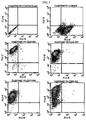
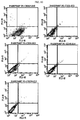
- Immunological characteristics of amniotic epithelial cell-derived adult stem cells according to the present invention were analyzed using a flow cytometer and, as a result, cells were positive for CD9, CD29, CD49f, CD73, CD90 and CD105, and negative for CD31, CD34, CD45 and CD133 ( FIGS. 9 and 10 ).
- amniotic epithelial cells have characteristics most similar to those of embryonic stem cells as already known in the art, and thus the inventive adult stem cells derived from the amniotic epithelial cells also have differentiation ability similar to that of embryonic stem cells, that is, the ability to differentiate into endoderm-, mesoderm- and ectoderm-derived cells.
- the inventive adult stem cells to differentiate into mesoderm-derived adipocytes, osteoblasts and myocytes and ectoderm-derived neurocytes, was confirmed.
- a cell therapeutic agent for treating wounds in the body and on the surface of the body, which contains adult stem cells as an active ingredient.
- wound means a bodily injury cauded by physical means which resulted in disruption of the continuity of structures and is meant to include destruction, cutting or rupture, etc. of the skin, mucosa or bone tissue.
- the cell therapeutic agent for treating wounds which contains adult stem cells as an active ingredient, can be administered directly to the diseased site in addition to parenteral administration in the form of intravenous or intramuscular injections.
- the cell therapeutic agent may be administered by various routes, including transdermal, subcutaneous, intravenous and intramuscular routes.
- Formulations for parenteral administration include sterile aqueous or non-aqueous solutions, suspensions, emulsions, etc.
- non-aqueous solution and suspension propylene glycol, polyethylene glycol, vegetable oil such as olive oil, injectable esters such as ethyloleate or the like may be used.
- the cell therapeutic agent may be administered, generally at a dose of 10 4 -10 10 cells/body, and preferably 10 6 -10 8 cells/body, once or several times a day.
- the actual dose of the active ingredients should be determined by various related factors such as administration route disease to be treated, patient's age, sex and weight, and the severity of disease.
- the above-mentioned dose ranges of the active ingredients do not limit the scope of the present invention in any way.
- the adult stem cells can be advantageously used for tissue repair and wound healing.
- the amniotic epithelial cell-derived adult stem cells possessing characteristics similar to those of embryonic stem cells have the ability to differentiate into endodermal, mesodermal and ectodermal cells, and thus can be used for wound healing and tissue repair and regeneration.
- the adult stem cells can differentiate, and proliferate and regenerate into bone, cartilage, muscle, ligament and/or nerve tissues, and thus are useful as a cell therapeutic agent.
- Example 1 Isolation of amniotic epithelial cells from amniotic tissue by treatment with DTT (dithiothreitol) and trypsin
- Amniotic membranes were collected at normal births and premature births in Korea University Guro Hospital according to the Institutional Review Board Guidelines of Korea University and used for research purposes. Amniotic tissue required in experiments was isolated from the placenta, and the isolated tissue was stored in an antibiotic-containing physiological saline or DMEM medium.
- the chemically degraded tissue was vortexed for 1 minute, and then it was primarily filtered through a 1-mm mesh and secondarily filtered through a 100- ⁇ m mesh, thus removing non-degraded tissue.
- the filtered tissue was centrifuged at 1800 rpm for 10 minutes. The single cell pellets at the bottom were well suspended, thus obtaining amniotic epithelial cells.
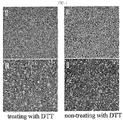
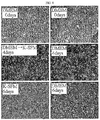
- the number of amniotic epithelial cells isolated by treatment with DTT (A) and trypsin and the number of cells after the culture of the amniotic epithelial cells (C) were significantly larger than the number of amniotic epithelial cells isolated by treatment with trypsin alone without DTT treatment (B) and the number of cells after the culture thereof (D). From this, it was found that, when amniotic tissue was treated with DTT, excessive cell disruption could be inhibited and, in addition, mucus interfering with the effect of trypsin treatment to be treated thereafter could be removed, thus further increasing the yield of amniotic epithelial cells. Furthermore, it was confirmed that, as the initial yield of amniotic epithelial cells was increased, the amount of adult stem cells which could be obtained by culturing the amniotic epithelial cells was also significantly increased.
- amniotic epithelial cells were cultured in a medium (Gibco) consisting of a 1:1 mixture of DMEM (Dulbecco modified Eagle medium) and F-12 (nutrient mixture) to which FBS, ascorbic acid, epidermal growth factor, insulin, an antibiotic and 10 ⁇ M of ROCK inhibitor Y-27632 have been added at the concentrations shown in Table 2 below.
- a medium Gibco
- DMEM Dulbecco modified Eagle medium
- F-12 nutrient mixture
- Table 2 Component Concentration Component Concentration Basal Media DMEM/F-12 1:1 mixture Insulin 5ug/ml FBS 10%(v/v) Ascorbic acid 0.2mM EGF 20ng/ml Antibiotic-antimycotic 1X
- the adult stem cells derived from the cultured amniotic epithelial cells were washed with HBSS buffer, and then incubated with Tryple-express (Gibco) or 0.25% trypsin-EDTA at 37 °C for 10 minutes. An FBS-containing medium was added thereto to inactivate trypsin, and then 5 x 10 6 stem cells derived from the amniotic epithelial cells were obtained and seeded into a fresh medium and subcultured. For each reseeding for subcultures, 10 ⁇ M of ROCK inhibitor was added to each fresh medium.
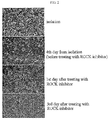
- FIG. 2 The results of the culture of the amniotic epithelial stem cell-derived adult stem cells carried out according to the above procedure are shown in FIG. 2 .
- the number of the adult stem cells was decreased, but when the ROCK inhibitor was added 4 days after the isolation of the amniotic epithelial cells, and then cultured, the number of the adult stem cells was rapidly increased.
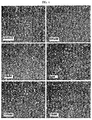
- amniotic epithelial cell-derived adult stem cells In order to examine the proliferation potential of amniotic epithelial cell-derived adult stem cells at various concentrations of ROCK inhibitor, the amniotic epithelial cells obtained in Example 1 were subcultured in DMEM/F-12 media containing FBS, ascorbic acid, epidermal growth factor, insulin and an antibiotic, to which ROCK inhibitor Y-27632 has been added at various concentrations of 100 ⁇ M, 10 ⁇ M, 1 ⁇ M, 100 nM and 10 nM. After 1 day and 4 days of the subculture, the optimum ROCK inhibitor Y-27632 concentration for the culture of the adult stem cells was examined.
- the degree of proliferation did not greatly differ from that in the control not treated with the ROCK inhibitor, and in the group treated with 100 ⁇ M of the ROCK inhibitor, the proliferation of the cells was significantly increased, but a cell morphology change or cell differentiation appeared.
- the preferred concentration of the ROCK inhibitor was in the range from 10 nM to 100 ⁇ M, and the most preferred concentration was about 10 ⁇ M.
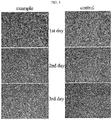
- Example 1 In order to examine the effect of ROCK inhibitor, 4x10 6 amniotic epithelial cells obtained in Example 1 were subcultured in a DMEM/F-12 medium containing FBS, ascorbic acid, epidermal growth factor, insulin and an antibiotic for 4 days. Then, the cells were seeded into each of a medium containing 10 ⁇ M of the ROCK inhibitor Y-27632 and a medium containing no ROCK inhibitor and were observed 1 day, 2 days and 3 days after seeding.
- Trypsin treatment which has been conventionally used in subculture has a problem in that the efficiency of culture is reduced due to the toxicity of trypsin, but it could be seen that the addition of the ROCK inhibitor activated the proliferation of adult stem cells by preventing apoptosis caused by trypsin treatment and inhibiting cell differentiation, while it assisted in the stable proliferation of undifferentiated adult stem cells.
- Example 3 Comparison of the abilities of stem cells to proliferate according to ROCK inhibitor treatment period
- Example 4 Increase in stem cell proliferation ability according to replacement of medium during culture of amniotic epithelial cells
- the amniotic epithelial cells obtained in Example 1 were cultured in each of DMEM medium and K-SFM medium for 3 days, 6 days and 8 days, respectively.
- the DMEM medium was supplemented with FBS, epidermal growth factor, ascorbic acid, nonessential amino acids and an antibiotic
- the K-SFM medium was supplemented with FBS, epidermal growth factor, ascorbic acid, hydrocortisone, NAC, insulin and an antibiotic.
- FIG. 7 it was observed that the proliferation ability of the amniotic epidermal cell-derived adult stem cells was higher in the DMEM medium than in the K-SFM medium.
- the adult stem cells cultured in the replaced K-SFM medium showed higher proliferation ability compared to the adult stem cells cultured in the DMEM medium alone without replacement of the medium.
- the amniotic epithelial cell-derived adult stem cells cultured in Example 2 were characterized by surface CD series antigen markers.
- CD9 epithelial cell, adhesion
- CD29 monoonuclear cell marker
- CD31 endothelial cell and stem cell marker
- CD34 hematopoietic stem cell marker
- CD45 PTPR, ASV, Leukocyte marker
- CD49f integratedin alpha 6 marker
- CD73 CD90
- CD105 TGF beta 1 marker
- CD 133 hematopoietic stem marker
- the amniotic epithelial cell-derived adult stem cells obtained in Example 2 were washed with PBS and treated with trypsin. Then, the cells were collected and centrifuged at 1500 rpm for 5 minutes. After the supernatant was discarded, the cells were added to a blocking buffer solution (5% serum (normal goat serum + normal horse serum) and incubated at 4 °C for 60 minutes, followed by centrifugation at 1500 rpm for 5 minutes. After the supernatant was discarded, the cells were suspended in PBS and dispensed into each well at a cell density of 1 x 10 5 cells which is the same number of a negative control and CD antigen markers.
- a blocking buffer solution 5% serum (normal goat serum + normal horse serum)
- the cells were stained with FITC (fluorescein isothiocyanate)-conjugated anti-human CD9 (Becton-Dickinson), CD34 (Becton-Dickinson), CD45 (Becton-Dickinson), CD105 (Becton-Dickinson) and PE (phycoerythrin)-conjugated anti-human CD29 (Becton-Dickinson), CD31 (Becton-Dickinson), CD49f (Becton-Dickinson), CD73 (Becton-Dickinson), CD90 (Becton-Dickinson) and CD133 (Miltenyi biotec). A replicate sample was used as an unstained control to ensure specificity.
- FITC fluorescein isothiocyanate
- amniotic epithelial cell-derived adult stem cells were positive for CD9, CD29, CD49f, CD73, CD90 and CD105, and were negative for CD31, CD34, CD45 and CD133.
- the amniotic epithelial cell-derived adult stem cells obtained in Example 2 were washed three times with PBS and fixed with 4% paraformaldehyde-containing PBS at room temperature for 30 minutes. After the cells were washed three times with PBS for 3 minutes each time, the cells were subjected to permeabilization with 0.1% Triton-X100-containing PBS at room temperature for 10 minutes. After the cells were washed three times with PBS for 3 minutes each time, the cells were incubated with blocking buffer (2.5% serum solution, NSG+NHS) at room temperature for 30 minutes and incubated with primary antibody-containing PBS at room temperature for 1 hour.
- blocking buffer (2.5% serum solution, NSG+NHS
- the cells were washed three times with PBS for 5 minutes each time and incubated with a secondary antibody at room temperature for 30 minutes in dark conditions. The cells were washed three times with PBS, and then mounted. The cells thus obtained were examined for specificity of SSEA 4, Oct-4, Tra-1-60, Tra-1-81, Cytokeratin and E-cadherin.
- the adult stem cells according to the present invention were positive for SSEA 4, Oct-4, Tra-1-60 and Tra-1-81, which can be considered to be undifferentiated cell markers, that is, stem cell markers. Also, the adult stem cells were positive for Cytokeratin and E-cadherin, which can be considered to be epithelial cell markers.
- the amniotic epithelial cell-derived adult stem cells obtained in Example 2 were taken out of the incubator and observed under a Zeiss Axiovert 200 fluorescence microscope at 100x magnification. Also, the cells were photographed with an AxioCam MRm CCD mounted on the microscope. The diameter of the cells was measured using provided AxioVision ver. 4.5 program, and the size and nucleus of the cells and the size of the cytoplasm were examined from the photograph, thus determining the morphology of the amniotic epithelial cell-derived stem cells.
- the adult stem cells according to the present invention maintained the typical morphology of rectangular parallelepiped- or dice-shaped, slightly rounded epithelial cells, and the size (diameter) of the cells during the culture was about 5-10 ⁇ m.
- Example 6 Differentiation of adult stem cells derived from amniotic epithelial cells
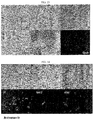
- amniotic epithelial cell-derived adult stem cells obtained in Example 2 were cultured in adipogenesis induction medium (Nonhematopoietic AdipoDiff Medium; Miltenyi Biotec) for 3 weeks (37 °C; 5% CO 2 ; medium replacement cycle: 3-4 days) to induce the differentiation of pluripotent stem cells into adipocytes. 21 days (3 weeks) after the start of the culture, the cells were analyzed using the Oil red O staining method. As a result, it could be observed that the amniotic epithelial cell-derived adult stem cells according to the present invention differentiated into adipocytes ( FIG. 13 ).
- adipogenesis induction medium Nonhematopoietic AdipoDiff Medium; Miltenyi Biotec
- the amniotic epithelial cell-derived adult stem cells obtained in Example 2 were cultured in osteogenesis induction medium (nonhematopoietic osteoDiff medium, Miltenyi Biotec) for 2 weeks (37°C; 5% CO 2 ; medium replacement cycle: 3-4 days) to induce the differentiation of pluripotent stem cells into osteogenic cells. 14 days (2 weeks) after the start of the culture, the cells were analyzed using the Alizalin red S staining method. As a result, it was observed that the amniotic epithelial cell-derived adult stem cells differentiated into osteogenic cells ( FIG. 13 ).
- osteogenesis induction medium nonhematopoietic osteoDiff medium, Miltenyi Biotec
- amniotic epithelial cell-derived adult stem cells obtained in Example 2 were cultured in myogenic induction medium (Skeletal Muscle Cell Medium, LONZA) for 3 weeks (37 °C ; 5% CO 2 ; medium replacement cycle: 3-4 days). 21 days (3 weeks) after the start of the culture, the cells were immunostained.
- amniotic epithelial cell-derived adult stem cells according to the present invention showed positive staining for myosin that is a skeletal muscle cell-specific antigen. This suggests that the amniotic epithelial cell-derived adult stem cells according to the present invention differentiated into myocytes ( FIG. 13 ).
- amniotic epithelial cell-derived adult stem cells obtained in Example 2 were cultured in neurogenic induction medium (Neural Progenitor Media Systems, LONZA) for 2 weeks (37 °C ; 5% CO 2 ; medium replacement cycle: 3-4 days) to induce differentiation into neurocytes. 14 days (2 weeks) after the start of the culture, the cells were immunostained.
- neurogenic induction medium Neurogenic induction medium (Neural Progenitor Media Systems, LONZA) for 2 weeks (37 °C ; 5% CO 2 ; medium replacement cycle: 3-4 days) to induce differentiation into neurocytes. 14 days (2 weeks) after the start of the culture, the cells were immunostained.
- amniotic epithelial cell-derived adult stem cells according to the present invention showed positive staining for GFAP (glial fibrillary acidic protein), O1 (oligodendrocyte marker) and MAP2 (microtubule associated protein) which are antigens specific for astrocytes in the nervous system. This suggests that the amniotic epithelial cell-derived adult stem cells according to the present invention differentiated into neurocytes.
- GFAP glial fibrillary acidic protein
- O1 oligodendrocyte marker
- MAP2 microtubule associated protein
- amniotic epithelial cell-derived adult stem cells were administered to an athymic nude mouse wound model by the intradermal route, and then the wound healing ability thereof was compared with a saline control group.
- mice 4-5-week-old Bald/c-nu Slc athymic nude mice (Central Laboratory Animals Inc., Korea) were used and allocated to 2 groups as shown in Table 3 below.
- Table 3 Group Dosage Volume ( ⁇ l) No. of animals Route of administration Control 0 50 (saline) 6 intra dermis AEpSC 2 ⁇ 10 5 cells 50 (saline) 3 intra dermis
- each of 50 ⁇ l of saline and 50 ⁇ l of 2 ⁇ 10 5 cells AEpSC was prepared in a 29G insulin syringe in a clean bench 30 minutes before the start of the test.
- FIG. 15 was obtained by placing circular filter paper of the same size as that of the wound on the wound, photographing the wound together with the circular filter paper as the reference pixel area.
- FIG. 16 The results of tissue biopsy in each group after the induced wound was recovered, are shown in FIG. 16 .
- FIG. 16 in the skin of the control, there was only fibrous tissue mass, whereas, in the group administered with the amniotic epithelial stem cells, a large amount of skin appendages such as hair follicles and sweat glands were observed in the recovered skin tissue.
- amniotic epithelial stem cells according to the present invention functioned to promote the reepithelialization of skin tissue and facilitate the regeneration of skin appendages.
- the human amniotic epithelial cell-derived stem cells according to the present invention are easily extracted compared to existing therapeutic stem cells such as umbilical cord blood stem cells and bone marrow stem cells, the initial yield thereof is increased through DTT treatment, and the proliferation rate thereof is significantly increased by culturing them in a ROCK inhibitor-containing medium.
- the method of the present invention can be used to efficiently prepare adult stem cells useful as cell therapeutic agents.
Landscapes
- Health & Medical Sciences (AREA)
- Life Sciences & Earth Sciences (AREA)
- Engineering & Computer Science (AREA)
- Organic Chemistry (AREA)
- Biomedical Technology (AREA)
- Chemical & Material Sciences (AREA)
- Bioinformatics & Cheminformatics (AREA)
- Genetics & Genomics (AREA)
- Developmental Biology & Embryology (AREA)
- Zoology (AREA)
- Wood Science & Technology (AREA)
- Reproductive Health (AREA)
- General Health & Medical Sciences (AREA)
- Biotechnology (AREA)
- Gynecology & Obstetrics (AREA)
- Biochemistry (AREA)
- Cell Biology (AREA)
- General Engineering & Computer Science (AREA)
- Chemical Kinetics & Catalysis (AREA)
- Medicinal Chemistry (AREA)
- Veterinary Medicine (AREA)
- Nuclear Medicine, Radiotherapy & Molecular Imaging (AREA)
- Pregnancy & Childbirth (AREA)
- Public Health (AREA)
- Pharmacology & Pharmacy (AREA)
- Animal Behavior & Ethology (AREA)
- Microbiology (AREA)
- General Chemical & Material Sciences (AREA)
- Rheumatology (AREA)
- Pain & Pain Management (AREA)
- Dermatology (AREA)
- Medicines Containing Material From Animals Or Micro-Organisms (AREA)
- Micro-Organisms Or Cultivation Processes Thereof (AREA)
Claims (11)
- Verfahren zur Isolierung von amniotischen Epithelzellen, welches folgende Schritte umfasst: Behandlung von menschlichem amniotischem Gewebe der Plazenta, welches sofort nach der Abgabe mit 5-50 mM Dithiothreitol (DTT) geerntet wurde; Behandlung des DTT-behandelten menschlichen amniotischen Gewebes mit 0,025-0,125%igem Trypsin und Isolierung der amniotischen Epithelzellen vom amniotischen Gewebe.
- Verfahren zur Isolierung von amniotischen Epithelzellen nach Anspruch 1, welches ferner den Schritt des kräftigen Mischens des Trypsin-behandelten, menschlichen amniotischen Gewebes umfasst.
- Verfahren zur Präparation adulter Stammzellen, welche von menschlichen amniotischen Epithelzellen stammen, wobei das Verfahren folgende Schritte umfasst: Kultivieren menschlicher amniotischer Epithelzellen, welche durch das Verfahren nach Anspruch 1 isoliert wurden, in einem Medium, das einen Rhoassoziierten-Kinase(ROCK)-Inhibitor enthält und Sammeln der Stammzellen aus der Nährlösung.
- Verfahren zur Proliferation und Erhaltung der adulten Stammzellen, welche von menschlichen amniotischen Epithelzellen abstammen, wobei das Verfahren die Subkultivierung der von menschlichen amniotischen Epithelzellen abstammenden adulten Stammzellen, die durch das Verfahren nach Anspruch 4 präpariert wurden, in einem Medium, das den Rho-assoziierten-Kinase(ROCK)-Inhibitor enthält, umfasst.
- Verfahren nach Anspruch 3 oder 4, wobei die Konzentration des ROCK-Inhibitors 10 nM oder 100 µM ist.
- Verfahren nach Anspruch 3 oder 4, wobei der ROCK-Inhibitor eine Verbindung ist, die durch die folgende Strukturformel dargestellt wird:

- Verfahren nach Anspruch 3 oder 4, wobei das Medium DMEM (Dulbecco Modified Eagle Medium) oder K-SFM (Keratinocyte Serum free Medium) ist.
- Verfahren nach Anspruch 7, wobei das Medium in der primären Subkultur der adulten Stammzellen DMEM durch K-SFM ersetzt wurde.
- Verfahren nach Anspruch 3 oder 4, wobei das Medium ein gemischtes Medium (Gibco) ist, welches aus einer 1:1 Mischung von DMEM und F-12 (Nährstoffmischung) besteht.
- Verfahren nach Anspruch 9, wobei das Medium zusätzlich Ascorbinsäure, epidermalen Wachstumsfaktor (EGF), Insulin, Antibiotika und FBS (fötales Kälberserum) enthält.
- Verfahren nach Anspruch 4, wobei der ROCK-Inhibitor bei der erneuten Aussaat der von menschlichen amniotischen Epithelzellen abstammenden adulten Stammzellen dem Medium während der Subkultur zugefügt wurde.
Applications Claiming Priority (2)
| Application Number | Priority Date | Filing Date | Title |
|---|---|---|---|
| KR1020070114451A KR100795708B1 (ko) | 2006-12-26 | 2007-11-09 | 인간 양막 상피세포 유래 성체 줄기세포의 분리 및 배양방법 |
| PCT/KR2008/000172 WO2009061024A1 (en) | 2007-11-09 | 2008-01-10 | Method for isolating and culturing adult stem cells derived from human amniotic epithelium |
Publications (3)
| Publication Number | Publication Date |
|---|---|
| EP2205724A1 EP2205724A1 (de) | 2010-07-14 |
| EP2205724A4 EP2205724A4 (de) | 2011-01-05 |
| EP2205724B1 true EP2205724B1 (de) | 2016-04-27 |
Family
ID=40626115
Family Applications (1)
| Application Number | Title | Priority Date | Filing Date |
|---|---|---|---|
| EP08704712.2A Not-in-force EP2205724B1 (de) | 2007-11-09 | 2008-01-10 | Verfahren zur isolierung und kultivierung von aus menschlichem amnionepithel gewonnenen adulten stammzellen |
Country Status (8)
| Country | Link |
|---|---|
| US (1) | US8455251B2 (de) |
| EP (1) | EP2205724B1 (de) |
| JP (1) | JP5319682B2 (de) |
| CN (1) | CN101765657A (de) |
| CA (1) | CA2692634C (de) |
| ES (1) | ES2581990T3 (de) |
| MX (1) | MX2010000393A (de) |
| WO (1) | WO2009061024A1 (de) |
Families Citing this family (33)
| Publication number | Priority date | Publication date | Assignee | Title |
|---|---|---|---|---|
| US8372437B2 (en) | 2006-08-17 | 2013-02-12 | Mimedx Group, Inc. | Placental tissue grafts |
| KR101046188B1 (ko) * | 2007-11-30 | 2011-07-04 | 주식회사 알앤엘바이오 | 탈락막 또는 지방 유래 줄기세포를 함유하는 요실금의 세포치료제 |
| US8563307B2 (en) | 2009-02-24 | 2013-10-22 | James Wang | Treatment of immunosuppression-related disorders |
| US8883210B1 (en) | 2010-05-14 | 2014-11-11 | Musculoskeletal Transplant Foundation | Tissue-derived tissuegenic implants, and methods of fabricating and using same |
| US10130736B1 (en) | 2010-05-14 | 2018-11-20 | Musculoskeletal Transplant Foundation | Tissue-derived tissuegenic implants, and methods of fabricating and using same |
| US9352003B1 (en) | 2010-05-14 | 2016-05-31 | Musculoskeletal Transplant Foundation | Tissue-derived tissuegenic implants, and methods of fabricating and using same |
| KR101211913B1 (ko) * | 2010-07-16 | 2012-12-13 | 주식회사 알앤엘바이오 | 양막유래 중간엽 줄기세포 배양을 위한 배지조성물 및 이를 이용한 양막유래 중간엽 줄기세포의 배양방법 |
| TWI465569B (zh) * | 2010-08-04 | 2014-12-21 | Stembios Technologies Inc | 體幹細胞 |
| US8679474B2 (en) | 2010-08-04 | 2014-03-25 | StemBios Technologies, Inc. | Somatic stem cells |
| CN102787093B (zh) * | 2011-05-17 | 2017-11-07 | 李晖 | 培养基、细胞培养用试剂盒及细胞培养方法 |
| CN102787092B (zh) * | 2011-05-17 | 2018-01-09 | 李晖 | 培养基、细胞培养用试剂盒及细胞培养方法 |
| CN104508124B (zh) | 2011-07-06 | 2017-11-17 | 细胞治疗有限公司 | 中胚层谱系祖细胞 |
| TWI614340B (zh) | 2011-09-28 | 2018-02-11 | 幹細胞生物科技股份有限公司 | 體幹細胞及其製備方法 |
| US8940294B2 (en) | 2012-03-02 | 2015-01-27 | Tissuetech, Inc. | Methods of isolating and culturing stem cells |
| BR112014025931A2 (pt) | 2012-04-18 | 2017-07-11 | Chan Ra Jeong | método para fabricar células-tronco tendo tamanho apropriado para administração intravascular |
| SG11201408717XA (en) * | 2012-06-26 | 2015-02-27 | Seraxis Inc | Stem cells and pancreatic cells useful for the treatment of insulin-dependent diabetes mellitus |
| TWI687519B (zh) | 2012-12-06 | 2020-03-11 | 美商幹細胞生物科技股份有限公司 | Lgr5+體幹細胞 |
| EP2746769A1 (de) | 2012-12-21 | 2014-06-25 | Stembios Technologies, Inc. | Verfahren zur Beurteilung der Wirkung einer Aktion basierend auf Stammzelldynamik auf eine Person |
| CN103114072B (zh) * | 2013-01-16 | 2014-04-02 | 北京博士园毛发研究中心 | 一种大量提取活性上皮细胞的方法 |
| GB201303101D0 (en) * | 2013-02-21 | 2013-04-10 | Univ Sheffield | Media for stem cells |
| US20140272969A1 (en) * | 2013-03-14 | 2014-09-18 | Abbott Molecular Inc. | Cell preparations and cell supports and their use in theranosis |
| JP6422221B2 (ja) * | 2014-03-04 | 2018-11-14 | 旭化成株式会社 | 多能性幹細胞からなる細胞塊製造方法 |
| WO2016006788A1 (ko) * | 2014-07-07 | 2016-01-14 | 메디포스트(주) | 작은 크기 줄기세포의 발모 촉진능 및 이의 용도 |
| CN104195108B (zh) * | 2014-07-29 | 2018-02-06 | 深圳市三启生物技术有限公司 | 蛋白激酶抑制剂在从非神经细胞制备神经细胞中的用途 |
| US10287551B2 (en) * | 2014-10-29 | 2019-05-14 | R Bio Co., Ltd. | Medium composition for culturing stem cells |
| JP2018501189A (ja) * | 2014-11-19 | 2018-01-18 | ステムバイオス テクノロジーズ,インコーポレイテッド | 骨欠損を治療するための体性幹細胞 |
| CA2986702C (en) | 2015-05-21 | 2023-04-04 | David Wang | Modified demineralized cortical bone fibers |
| CN105734011B (zh) * | 2016-03-09 | 2019-05-14 | 成都康景生物科技有限公司 | 一种维持人羊膜上皮干细胞多能性的培养液 |
| CN108570415A (zh) * | 2017-03-10 | 2018-09-25 | 上海睿泰生物科技股份有限公司 | 一种用于制备上皮细胞片的培养装置及其应用 |
| CN110463688B (zh) * | 2019-07-10 | 2021-07-27 | 安徽农业大学 | 一种羊精液的稀释液以及保存方法 |
| CN118541472A (zh) | 2021-11-12 | 2024-08-23 | Ism有限公司 | 大肠上皮细胞的长期培养 |
| CN115463260A (zh) * | 2022-10-26 | 2022-12-13 | 上海君益禾生物医学科技有限公司 | 一种羊膜上皮细胞胶原海绵复合体的制备方法及应用 |
| WO2025197994A1 (ja) * | 2024-03-19 | 2025-09-25 | 国立大学法人神戸大学 | 超早産児の臍帯由来多能性幹細胞 |
Family Cites Families (10)
| Publication number | Priority date | Publication date | Assignee | Title |
|---|---|---|---|---|
| GB710095A (en) | 1950-03-20 | 1954-06-09 | Garrett Corp | Improvements in mechanism for controlling the speed of a fluid-actuated prime mover, e.g. an air-driven turbine |
| US20030044977A1 (en) * | 2001-08-10 | 2003-03-06 | Norio Sakuragawa | Human stem cells originated from human amniotic mesenchymal cell layer |
| US7557129B2 (en) * | 2003-02-28 | 2009-07-07 | Bayer Healthcare Llc | Cyanopyridine derivatives useful in the treatment of cancer and other disorders |
| JP2006006249A (ja) * | 2004-06-28 | 2006-01-12 | Hiroshima Univ | 羊膜由来細胞の培養方法及びその利用 |
| WO2006077899A1 (ja) * | 2005-01-13 | 2006-07-27 | Shigeru Yasumoto | Oct4を発現する細胞を含む細胞群、その取得方法及びその培養方法 |
| US20060234911A1 (en) * | 2005-03-24 | 2006-10-19 | Hoffmann F M | Method of reversing epithelial mesenchymal transition |
| DK1957633T3 (en) * | 2005-10-13 | 2014-03-17 | Anthrogenesis Corp | Immunomodulation USING PLACE SPEECH STEM CELLS |
| PT2471904T (pt) * | 2005-12-29 | 2019-02-25 | Celularity Inc | População de células estaminais placentárias |
| CA2633980A1 (en) * | 2005-12-29 | 2007-07-12 | Anthrogenesis Corporation | Improved composition for collecting and preserving placental stem cells and methods of using the composition |
| EP1845154A1 (de) | 2006-04-12 | 2007-10-17 | RNL Bio Co., Ltd. | Multipotente Stammzellen aus Plazentagewebe und diese enthaltende zelluläre therapeutische Wirkstoffe |
-
2008
- 2008-01-10 EP EP08704712.2A patent/EP2205724B1/de not_active Not-in-force
- 2008-01-10 JP JP2010523925A patent/JP5319682B2/ja active Active
- 2008-01-10 WO PCT/KR2008/000172 patent/WO2009061024A1/en not_active Ceased
- 2008-01-10 CA CA2692634A patent/CA2692634C/en active Active
- 2008-01-10 MX MX2010000393A patent/MX2010000393A/es active IP Right Grant
- 2008-01-10 CN CN200880024259A patent/CN101765657A/zh active Pending
- 2008-01-10 ES ES08704712.2T patent/ES2581990T3/es active Active
- 2008-01-10 US US12/668,602 patent/US8455251B2/en active Active
Also Published As
| Publication number | Publication date |
|---|---|
| JP2010537663A (ja) | 2010-12-09 |
| CA2692634C (en) | 2014-05-27 |
| EP2205724A4 (de) | 2011-01-05 |
| MX2010000393A (es) | 2010-05-19 |
| EP2205724A1 (de) | 2010-07-14 |
| US8455251B2 (en) | 2013-06-04 |
| CN101765657A (zh) | 2010-06-30 |
| CA2692634A1 (en) | 2009-05-14 |
| JP5319682B2 (ja) | 2013-10-16 |
| ES2581990T3 (es) | 2016-09-08 |
| WO2009061024A1 (en) | 2009-05-14 |
| US20100266553A1 (en) | 2010-10-21 |
Similar Documents
| Publication | Publication Date | Title |
|---|---|---|
| EP2205724B1 (de) | Verfahren zur isolierung und kultivierung von aus menschlichem amnionepithel gewonnenen adulten stammzellen | |
| EP1948786B1 (de) | Aus menschlichem fettgewebe gewonnene multipotente stammzellen und diese enthaltende zelluläre therapeutika | |
| KR100795708B1 (ko) | 인간 양막 상피세포 유래 성체 줄기세포의 분리 및 배양방법 | |
| CN101748096B (zh) | 亚全能干细胞、其制备方法及其用途 | |
| US20070243172A1 (en) | Multipotent stem cells derived from placenta tissue and cellular therapeutic agents comprising the same | |
| KR100871984B1 (ko) | 태반 조직 유래 다능성 줄기세포 및 이를 함유하는세포치료제 | |
| KR101669009B1 (ko) | 순수 영양막층으로부터 유래된 줄기세포 및 이를 포함하는 세포치료제 | |
| US20050176139A1 (en) | Placental stem cell and methods thereof | |
| JP6545690B2 (ja) | 栄養膜基底層から由来した幹細胞及びそれを含む細胞治療剤 | |
| US9211306B2 (en) | Cellular therapeutic agent for incontinence or urine comprising stem cells originated from decidua or adipose | |
| KR20130063483A (ko) | 개과동물 양막-유래 다분화능 줄기세포 | |
| EP2615166B1 (de) | Aus pferdefruchtwasser stammende multipotente stammzellen und herstellungsverfahren dafür | |
| JPWO2008150001A1 (ja) | adipocluster | |
| KR20120140197A (ko) | 정소의 체세포-유래의 다능성 줄기세포, 이의 제조방법 및 이를 포함하는 발기부전 치료용 약학 조성물 | |
| US9650604B2 (en) | Equine amniotic membrane-derived mesenchymal stem cells | |
| KR20120006386A (ko) | 1기 태반조직 유래 줄기세포 및 이를 함유하는 세포치료제 | |
| JP6410343B2 (ja) | 脂肪組織由来幹細胞から表皮角化細胞への誘導 | |
| EP4245846A1 (de) | Frühe mesenchymale stammzellen mit reduzierter alterung und konservierter stammzellenfähigkeit und kultivierungsverfahren dafür | |
| KR20140016841A (ko) | 태아연골조직유래 줄기세포원 및 이를 포함하는 세포치료제 | |
| Lange-Consiglio et al. | In vitro studies of horse umbilical cord matrix-derived cells: from characterization to labeling for magnetic resonance imaging | |
| KR100818216B1 (ko) | Cripto-1 및 Oct4를 동시 발현하는 인간 지방조직 유래 다분화능 줄기세포 또는 종양 줄기세포 및 그 확인방법 | |
| KR20210046196A (ko) | 말과동물 양막-유래 중간엽 줄기세포 및 이의 용도 |
Legal Events
| Date | Code | Title | Description |
|---|---|---|---|
| PUAI | Public reference made under article 153(3) epc to a published international application that has entered the european phase |
Free format text: ORIGINAL CODE: 0009012 |
|
| 17P | Request for examination filed |
Effective date: 20100111 |
|
| AK | Designated contracting states |
Kind code of ref document: A1 Designated state(s): AT BE BG CH CY CZ DE DK EE ES FI FR GB GR HR HU IE IS IT LI LT LU LV MC MT NL NO PL PT RO SE SI SK TR |
|
| AX | Request for extension of the european patent |
Extension state: AL BA MK RS |
|
| RAP1 | Party data changed (applicant data changed or rights of an application transferred) |
Owner name: RNL BIO CO., LTD. |
|
| A4 | Supplementary search report drawn up and despatched |
Effective date: 20101203 |
|
| RIC1 | Information provided on ipc code assigned before grant |
Ipc: C12N 5/073 20100101AFI20101129BHEP |
|
| DAX | Request for extension of the european patent (deleted) | ||
| 17Q | First examination report despatched |
Effective date: 20140328 |
|
| GRAP | Despatch of communication of intention to grant a patent |
Free format text: ORIGINAL CODE: EPIDOSNIGR1 |
|
| INTG | Intention to grant announced |
Effective date: 20151211 |
|
| GRAS | Grant fee paid |
Free format text: ORIGINAL CODE: EPIDOSNIGR3 |
|
| GRAA | (expected) grant |
Free format text: ORIGINAL CODE: 0009210 |
|
| AK | Designated contracting states |
Kind code of ref document: B1 Designated state(s): AT BE BG CH CY CZ DE DK EE ES FI FR GB GR HR HU IE IS IT LI LT LU LV MC MT NL NO PL PT RO SE SI SK TR |
|
| REG | Reference to a national code |
Ref country code: GB Ref legal event code: FG4D |
|
| REG | Reference to a national code |
Ref country code: CH Ref legal event code: EP |
|
| REG | Reference to a national code |
Ref country code: AT Ref legal event code: REF Ref document number: 794849 Country of ref document: AT Kind code of ref document: T Effective date: 20160515 |
|
| REG | Reference to a national code |
Ref country code: IE Ref legal event code: FG4D |
|
| REG | Reference to a national code |
Ref country code: DE Ref legal event code: R096 Ref document number: 602008043846 Country of ref document: DE |
|
| REG | Reference to a national code |
Ref country code: SE Ref legal event code: TRGR |
|
| REG | Reference to a national code |
Ref country code: LT Ref legal event code: MG4D |
|
| REG | Reference to a national code |
Ref country code: NL Ref legal event code: MP Effective date: 20160427 |
|
| REG | Reference to a national code |
Ref country code: ES Ref legal event code: FG2A Ref document number: 2581990 Country of ref document: ES Kind code of ref document: T3 Effective date: 20160908 |
|
| REG | Reference to a national code |
Ref country code: AT Ref legal event code: MK05 Ref document number: 794849 Country of ref document: AT Kind code of ref document: T Effective date: 20160427 |
|
| PG25 | Lapsed in a contracting state [announced via postgrant information from national office to epo] |
Ref country code: NL Free format text: LAPSE BECAUSE OF FAILURE TO SUBMIT A TRANSLATION OF THE DESCRIPTION OR TO PAY THE FEE WITHIN THE PRESCRIBED TIME-LIMIT Effective date: 20160427 |
|
| PG25 | Lapsed in a contracting state [announced via postgrant information from national office to epo] |
Ref country code: NO Free format text: LAPSE BECAUSE OF FAILURE TO SUBMIT A TRANSLATION OF THE DESCRIPTION OR TO PAY THE FEE WITHIN THE PRESCRIBED TIME-LIMIT Effective date: 20160727 Ref country code: FI Free format text: LAPSE BECAUSE OF FAILURE TO SUBMIT A TRANSLATION OF THE DESCRIPTION OR TO PAY THE FEE WITHIN THE PRESCRIBED TIME-LIMIT Effective date: 20160427 Ref country code: PL Free format text: LAPSE BECAUSE OF FAILURE TO SUBMIT A TRANSLATION OF THE DESCRIPTION OR TO PAY THE FEE WITHIN THE PRESCRIBED TIME-LIMIT Effective date: 20160427 Ref country code: LT Free format text: LAPSE BECAUSE OF FAILURE TO SUBMIT A TRANSLATION OF THE DESCRIPTION OR TO PAY THE FEE WITHIN THE PRESCRIBED TIME-LIMIT Effective date: 20160427 |
|
| PG25 | Lapsed in a contracting state [announced via postgrant information from national office to epo] |
Ref country code: AT Free format text: LAPSE BECAUSE OF FAILURE TO SUBMIT A TRANSLATION OF THE DESCRIPTION OR TO PAY THE FEE WITHIN THE PRESCRIBED TIME-LIMIT Effective date: 20160427 Ref country code: LV Free format text: LAPSE BECAUSE OF FAILURE TO SUBMIT A TRANSLATION OF THE DESCRIPTION OR TO PAY THE FEE WITHIN THE PRESCRIBED TIME-LIMIT Effective date: 20160427 Ref country code: GR Free format text: LAPSE BECAUSE OF FAILURE TO SUBMIT A TRANSLATION OF THE DESCRIPTION OR TO PAY THE FEE WITHIN THE PRESCRIBED TIME-LIMIT Effective date: 20160728 Ref country code: HR Free format text: LAPSE BECAUSE OF FAILURE TO SUBMIT A TRANSLATION OF THE DESCRIPTION OR TO PAY THE FEE WITHIN THE PRESCRIBED TIME-LIMIT Effective date: 20160427 Ref country code: PT Free format text: LAPSE BECAUSE OF FAILURE TO SUBMIT A TRANSLATION OF THE DESCRIPTION OR TO PAY THE FEE WITHIN THE PRESCRIBED TIME-LIMIT Effective date: 20160829 |
|
| PG25 | Lapsed in a contracting state [announced via postgrant information from national office to epo] |
Ref country code: BE Free format text: LAPSE BECAUSE OF FAILURE TO SUBMIT A TRANSLATION OF THE DESCRIPTION OR TO PAY THE FEE WITHIN THE PRESCRIBED TIME-LIMIT Effective date: 20160427 Ref country code: IT Free format text: LAPSE BECAUSE OF FAILURE TO SUBMIT A TRANSLATION OF THE DESCRIPTION OR TO PAY THE FEE WITHIN THE PRESCRIBED TIME-LIMIT Effective date: 20160427 |
|
| REG | Reference to a national code |
Ref country code: DE Ref legal event code: R097 Ref document number: 602008043846 Country of ref document: DE |
|
| PG25 | Lapsed in a contracting state [announced via postgrant information from national office to epo] |
Ref country code: EE Free format text: LAPSE BECAUSE OF FAILURE TO SUBMIT A TRANSLATION OF THE DESCRIPTION OR TO PAY THE FEE WITHIN THE PRESCRIBED TIME-LIMIT Effective date: 20160427 Ref country code: SK Free format text: LAPSE BECAUSE OF FAILURE TO SUBMIT A TRANSLATION OF THE DESCRIPTION OR TO PAY THE FEE WITHIN THE PRESCRIBED TIME-LIMIT Effective date: 20160427 Ref country code: DK Free format text: LAPSE BECAUSE OF FAILURE TO SUBMIT A TRANSLATION OF THE DESCRIPTION OR TO PAY THE FEE WITHIN THE PRESCRIBED TIME-LIMIT Effective date: 20160427 Ref country code: RO Free format text: LAPSE BECAUSE OF FAILURE TO SUBMIT A TRANSLATION OF THE DESCRIPTION OR TO PAY THE FEE WITHIN THE PRESCRIBED TIME-LIMIT Effective date: 20160427 Ref country code: CZ Free format text: LAPSE BECAUSE OF FAILURE TO SUBMIT A TRANSLATION OF THE DESCRIPTION OR TO PAY THE FEE WITHIN THE PRESCRIBED TIME-LIMIT Effective date: 20160427 |
|
| PLBE | No opposition filed within time limit |
Free format text: ORIGINAL CODE: 0009261 |
|
| STAA | Information on the status of an ep patent application or granted ep patent |
Free format text: STATUS: NO OPPOSITION FILED WITHIN TIME LIMIT |
|
| 26N | No opposition filed |
Effective date: 20170130 |
|
| PG25 | Lapsed in a contracting state [announced via postgrant information from national office to epo] |
Ref country code: SI Free format text: LAPSE BECAUSE OF FAILURE TO SUBMIT A TRANSLATION OF THE DESCRIPTION OR TO PAY THE FEE WITHIN THE PRESCRIBED TIME-LIMIT Effective date: 20160427 |
|
| REG | Reference to a national code |
Ref country code: CH Ref legal event code: PL |
|
| GBPC | Gb: european patent ceased through non-payment of renewal fee |
Effective date: 20170110 |
|
| PG25 | Lapsed in a contracting state [announced via postgrant information from national office to epo] |
Ref country code: MC Free format text: LAPSE BECAUSE OF FAILURE TO SUBMIT A TRANSLATION OF THE DESCRIPTION OR TO PAY THE FEE WITHIN THE PRESCRIBED TIME-LIMIT Effective date: 20160427 |
|
| REG | Reference to a national code |
Ref country code: FR Ref legal event code: ST Effective date: 20170929 |
|
| PG25 | Lapsed in a contracting state [announced via postgrant information from national office to epo] |
Ref country code: FR Free format text: LAPSE BECAUSE OF NON-PAYMENT OF DUE FEES Effective date: 20170131 Ref country code: LI Free format text: LAPSE BECAUSE OF NON-PAYMENT OF DUE FEES Effective date: 20170131 Ref country code: CH Free format text: LAPSE BECAUSE OF NON-PAYMENT OF DUE FEES Effective date: 20170131 |
|
| REG | Reference to a national code |
Ref country code: IE Ref legal event code: MM4A |
|
| PG25 | Lapsed in a contracting state [announced via postgrant information from national office to epo] |
Ref country code: GB Free format text: LAPSE BECAUSE OF NON-PAYMENT OF DUE FEES Effective date: 20170110 Ref country code: LU Free format text: LAPSE BECAUSE OF NON-PAYMENT OF DUE FEES Effective date: 20170110 |
|
| PG25 | Lapsed in a contracting state [announced via postgrant information from national office to epo] |
Ref country code: IE Free format text: LAPSE BECAUSE OF NON-PAYMENT OF DUE FEES Effective date: 20170110 |
|
| PG25 | Lapsed in a contracting state [announced via postgrant information from national office to epo] |
Ref country code: ES Free format text: LAPSE BECAUSE OF NON-PAYMENT OF DUE FEES Effective date: 20170111 |
|
| PG25 | Lapsed in a contracting state [announced via postgrant information from national office to epo] |
Ref country code: MT Free format text: LAPSE BECAUSE OF NON-PAYMENT OF DUE FEES Effective date: 20170110 |
|
| REG | Reference to a national code |
Ref country code: ES Ref legal event code: FD2A Effective date: 20181116 |
|
| PGFP | Annual fee paid to national office [announced via postgrant information from national office to epo] |
Ref country code: DE Payment date: 20190131 Year of fee payment: 12 |
|
| PGFP | Annual fee paid to national office [announced via postgrant information from national office to epo] |
Ref country code: SE Payment date: 20190128 Year of fee payment: 12 |
|
| PG25 | Lapsed in a contracting state [announced via postgrant information from national office to epo] |
Ref country code: HU Free format text: LAPSE BECAUSE OF FAILURE TO SUBMIT A TRANSLATION OF THE DESCRIPTION OR TO PAY THE FEE WITHIN THE PRESCRIBED TIME-LIMIT; INVALID AB INITIO Effective date: 20080110 |
|
| PG25 | Lapsed in a contracting state [announced via postgrant information from national office to epo] |
Ref country code: BG Free format text: LAPSE BECAUSE OF FAILURE TO SUBMIT A TRANSLATION OF THE DESCRIPTION OR TO PAY THE FEE WITHIN THE PRESCRIBED TIME-LIMIT Effective date: 20160427 |
|
| PG25 | Lapsed in a contracting state [announced via postgrant information from national office to epo] |
Ref country code: CY Free format text: LAPSE BECAUSE OF NON-PAYMENT OF DUE FEES Effective date: 20160427 |
|
| PG25 | Lapsed in a contracting state [announced via postgrant information from national office to epo] |
Ref country code: TR Free format text: LAPSE BECAUSE OF FAILURE TO SUBMIT A TRANSLATION OF THE DESCRIPTION OR TO PAY THE FEE WITHIN THE PRESCRIBED TIME-LIMIT Effective date: 20160427 |
|
| PG25 | Lapsed in a contracting state [announced via postgrant information from national office to epo] |
Ref country code: IS Free format text: LAPSE BECAUSE OF FAILURE TO SUBMIT A TRANSLATION OF THE DESCRIPTION OR TO PAY THE FEE WITHIN THE PRESCRIBED TIME-LIMIT Effective date: 20160827 |
|
| REG | Reference to a national code |
Ref country code: DE Ref legal event code: R119 Ref document number: 602008043846 Country of ref document: DE |
|
| REG | Reference to a national code |
Ref country code: SE Ref legal event code: EUG |
|
| REG | Reference to a national code |
Ref country code: SE Ref legal event code: EUG |
|
| PG25 | Lapsed in a contracting state [announced via postgrant information from national office to epo] |
Ref country code: DE Free format text: LAPSE BECAUSE OF NON-PAYMENT OF DUE FEES Effective date: 20200801 Ref country code: SE Free format text: LAPSE BECAUSE OF NON-PAYMENT OF DUE FEES Effective date: 20200111 |