EP2205733B1 - Verfahren zur herstellung eines nichtmenschlichen tiermodells für aortenaneurysmen - Google Patents
Verfahren zur herstellung eines nichtmenschlichen tiermodells für aortenaneurysmen Download PDFInfo
- Publication number
- EP2205733B1 EP2205733B1 EP08804927.5A EP08804927A EP2205733B1 EP 2205733 B1 EP2205733 B1 EP 2205733B1 EP 08804927 A EP08804927 A EP 08804927A EP 2205733 B1 EP2205733 B1 EP 2205733B1
- Authority
- EP
- European Patent Office
- Prior art keywords
- tgf
- beta
- animal
- cells
- mouse
- Prior art date
- Legal status (The legal status is an assumption and is not a legal conclusion. Google has not performed a legal analysis and makes no representation as to the accuracy of the status listed.)
- Not-in-force
Links
Images





Classifications
-
- A—HUMAN NECESSITIES
- A61—MEDICAL OR VETERINARY SCIENCE; HYGIENE
- A61K—PREPARATIONS FOR MEDICAL, DENTAL OR TOILETRY PURPOSES
- A61K38/00—Medicinal preparations containing peptides
- A61K38/16—Peptides having more than 20 amino acids; Gastrins; Somatostatins; Melanotropins; Derivatives thereof
- A61K38/17—Peptides having more than 20 amino acids; Gastrins; Somatostatins; Melanotropins; Derivatives thereof from animals; from humans
- A61K38/18—Growth factors; Growth regulators
- A61K38/1841—Transforming growth factor [TGF]
-
- A—HUMAN NECESSITIES
- A61—MEDICAL OR VETERINARY SCIENCE; HYGIENE
- A61P—SPECIFIC THERAPEUTIC ACTIVITY OF CHEMICAL COMPOUNDS OR MEDICINAL PREPARATIONS
- A61P9/00—Drugs for disorders of the cardiovascular system
-
- A—HUMAN NECESSITIES
- A61—MEDICAL OR VETERINARY SCIENCE; HYGIENE
- A61P—SPECIFIC THERAPEUTIC ACTIVITY OF CHEMICAL COMPOUNDS OR MEDICINAL PREPARATIONS
- A61P9/00—Drugs for disorders of the cardiovascular system
- A61P9/14—Vasoprotectives; Antihaemorrhoidals; Drugs for varicose therapy; Capillary stabilisers
-
- A—HUMAN NECESSITIES
- A01—AGRICULTURE; FORESTRY; ANIMAL HUSBANDRY; HUNTING; TRAPPING; FISHING
- A01K—ANIMAL HUSBANDRY; AVICULTURE; APICULTURE; PISCICULTURE; FISHING; REARING OR BREEDING ANIMALS, NOT OTHERWISE PROVIDED FOR; NEW BREEDS OF ANIMALS
- A01K2207/00—Modified animals
- A01K2207/10—Animals modified by protein administration, for non-therapeutic purpose
-
- A—HUMAN NECESSITIES
- A01—AGRICULTURE; FORESTRY; ANIMAL HUSBANDRY; HUNTING; TRAPPING; FISHING
- A01K—ANIMAL HUSBANDRY; AVICULTURE; APICULTURE; PISCICULTURE; FISHING; REARING OR BREEDING ANIMALS, NOT OTHERWISE PROVIDED FOR; NEW BREEDS OF ANIMALS
- A01K2227/00—Animals characterised by species
- A01K2227/10—Mammal
- A01K2227/105—Murine
-
- A—HUMAN NECESSITIES
- A01—AGRICULTURE; FORESTRY; ANIMAL HUSBANDRY; HUNTING; TRAPPING; FISHING
- A01K—ANIMAL HUSBANDRY; AVICULTURE; APICULTURE; PISCICULTURE; FISHING; REARING OR BREEDING ANIMALS, NOT OTHERWISE PROVIDED FOR; NEW BREEDS OF ANIMALS
- A01K2267/00—Animals characterised by purpose
- A01K2267/03—Animal model, e.g. for test or diseases
- A01K2267/035—Animal model for multifactorial diseases
- A01K2267/0375—Animal model for cardiovascular diseases
Definitions
- the present invention relates to methods for producing a non human animal model for aortic aneurysm which could provide insight into the diagnosis and treatment of said disease.
- Aortic aneurysm is a chronic degenerative disease characterized by segmental weakening and dilatation of the vascular wall.
- Aortic aneurysms are commonly classified according to their anatomical location.
- Thoracic aortic aneurysms involve the ascending aorta, arch or descending aorta;
- Aneurysms of the ascending thoracic aorta most often result from cystic medial degeneration, which appears histologically as smooth muscle cell dropout and elastic fiber degeneration.
- Medial degeneration leads to weakening of the aortic wall, which in turn results in aortic dilatation and aneurysm formation.
- Cystic medial degeneration occurs normally to some extent with aging, but the process is accelerated by hypertension (reviewed in Isselbacher EM, Circulation.
- AAA Abdominal aortic aneurysms
- AAA Age is an important risk factor, and the incidence of abdominal aortic aneurysm rises rapidly after the age of 55 years in men and 70 in women. Recent estimates indicate that the prevalence of AAA is 4% to 9% in adults older than 65 years old. AAA is strongly associated with local aortic wall and systemic atherosclerosis, but a clear causal relationship is not established (reviewed in Isselbacher Circulation 2005 and Faxon DP, Circulation. 2004 Jun 1;109(21):2617-25 ). Etiologic factors include genetic susceptibility; 15% to 20% of patients have a family history. AAA is much more common (2 to 5 times) in men than in women and more common in white than black populations. Cigarette smoking is a major risk factor for AAA.
- the natural history is a gradual enlargement of the aneurysm until it exceeds 5.5 cm, when risk of rupture rises exponentially ( Thompson RW, Geraghty PJ, Lee JK. Abdominal aortic aneurysms: basic mechanisms and clinical implications. Curr Probl Surg. 2002; 39: 110-230 ).
- the primary pathophysiological process is chronic transmural inflammation with destruction of the media, including loss of elastic fibers and SMCs. Elevation of inflammatory markers such as interleukin-6 and elevation of proteinases such as MMP9 and elastin are correlated with AAA and the expansion rate. Doxycycline inhibits MMP activity and can reduce AAA in experimental animals. Clinical trials have shown a reduction in MMP9 levels with doxycycline but not a reduction in expansion rate in preliminary studies. Other agents such as roxithromycin have shown modest effects as well.
- a major problem in the management of aortic aneurysms is that the symptoms of an aortic aneurysm often do not surface until the aneurysm is quite large. Therefore, a timely diagnosis may be suitable to envisage an early intervention and dramatic improvement in the chances for survival.
- mice have been developed that use a diverse array of methods for producing the disease, including genetic manipulation and chemical induction ( Daugherty et al. Arterioscler. Thromb Vase Biol. 2004 Mar;24(3):429-34 ).
- the models recapitulate some facets of the human disease including medial degeneration, inflammation, thrombus formation, and rupture.
- Genetic models include defects in extracellular matrix maturation, increased degradation of elastin and collagen, aberrant cholesterol homeostasis, and enhanced production of angiotensin peptides.
- the chemical approaches include the intraluminal infusion of elastase, periaortic incubations of calcium chloride, and subcutaneous infusion of Angll.
- Daugherty A. et al. (2000) developed a mouse model wherein angiotensin II is continuously infused into mature apoE deficient mice.
- the present invention relates to a method for producing an animal model for aortic aneurysm comprising the steps consisting of:
- a gene product can be the direct transcriptional product of a gene (e.g., mRNA, tRNA, rRNA, antisense RNA, ribozyme, structural RNA or any other type of RNA) or a protein produced by translation of a mRNA.
- Gene products also include messenger RNAs which are modified, by processes such as capping, polyadenylation, methylation, and editing, and proteins (e.g., TGF-beta) modified by, for example, methylation, acetylation, phosphorylation, ubiquitination, SUMOylation, ADP-ribosylation, myristilation, and glycosylation.
- proteins e.g., TGF-beta
- an “inhibitor of expression” refers to a natural or synthetic compound that has a biological effect to inhibit or significantly reduce the expression of a gene.
- TGF-beta refers to any one or more isoforms of TGF-beta.
- TGF-beta receptor refers to any receptor that binds to or transduces signal in response to at least one TGF-beta isoform.
- TGF-beta there are 5 known isoforms of TGF-beta (1, 2, 3, 4 and 5), all of which are homologous among each other (60-80% identity), form homodimers of about 25 kDa, and act upon common TGF-beta receptors (T[beta]R-I, T[beta]R-II, T[beta]R-IIB, and T[beta]R-III).
- TGF-beta1, TGF-beta2, and TGF-beta3 are found in mammals.
- the structural and functional aspects of TGF-beta as well as TGF-beta receptors are well known in the art (see, for example, Cytokine Reference, eds. Oppenheim et al., Academic Press, San Diego, Calif., 2001 ). TGF-beta is remarkably conserved among species.
- Variant refers to polypeptide of in which a given amino acid residue has been changed without altering the overall conformation and function of the polypeptide, including, but not limited to, replacement of an amino acid with one having similar properties (such as, for example, polarity, hydrogen bonding potential, acidic, basic, hydrophobic, aromatic, and the like). Amino acids other than those indicated as conserved may differ in a protein so that the percent protein or amino acid sequence similarity between any two proteins of similar function may vary and may be, for example, from 70 % to 99 % as determined according to an alignment scheme such as by the Cluster Method, wherein similarity is based on the MEGALIGN algorithm.
- a “function-conservative variant” also includes a polypeptide which has at least 60 % amino acid identity as determined by BLAST or FASTA algorithms, preferably at least 75 %, more preferably at least 85%, still preferably at least 90 %, and even more preferably at least 95%, and which has the same or substantially similar properties or functions as the native or parent protein to which it is compared.
- Two amino acid sequences are "substantially homologous" or “substantially similar” when greater than 80 %, preferably greater than 85 %, preferably greater than 90 % of the amino acids are identical, or greater than about 90 %, preferably greater than 95 %, are similar (functionally identical).
- the similar or homologous sequences are identified by alignment using, for example, the GCG (Genetics Computer Group, Program Manual for the GCG Package, Version 7, Madison, Wisconsin) pileup program, or any of sequence comparison algorithms such as BLAST, FASTA, etc.
- GCG Genetics Computer Group, Program Manual for the GCG Package, Version 7, Madison, Wisconsin
- sequence comparison algorithms such as BLAST, FASTA, etc.
- TGF-beta activity encompasses all the biological effects of TGF-beta, including the activation of SMAD2/SMAD3 and SMAD4 or other SMAD-independent effects (such as MAPK activation).
- inhibitor refers to the ability of a compound to act as an antagonist of a certain reaction or biological activity.
- the decrease in the amount or the biological activity is preferably at least about 10%, 20%, 30%, 40%, 50%, 60%, 70%, 80%, 90%, or more.
- the terms may also refer to a decrease in the relative amount of at least one protein that is responsible for the biological activity of interest (e.g., TGF-beta, TGF-beta receptor).
- TGF-beta antagonist generally refers to any compound that directly downregulates the biological activity of TGF-beta.
- a molecule "directly downregulates" the biological activity of TGF-beta if it downregulates the activity by interacting with a TGF-beta gene, a TGF-beta transcript, a TGF-beta ligand, or a TGF-beta receptor.
- a TGF-beta antagonist may, for example, bind to-and neutralize the activity of TGF-beta; affect stability or conversion of the precursor molecule to the active, mature form; interfere with the binding of TGF-beta to one or more receptors; or it may interfere with intracellular signaling of a TGF-beta receptor.
- Methods for assessing neutralizing biological activity of TGF-beta antagonists are known in the art.
- anti-TGF-beta antibody refers to an antibody or a fragment thereof which recognizes TGF-beta.
- T cells includes lymphocytes which express phenotypic markers and rearrangements of the TCRbeta locus with or without rearrangements of the TCRalpha.
- Phenotypic markers include expression of CD4 and/or CD8.
- regulatory T cells refers to naturally occurring T cells which express the cell surface markers CD4+ and CD25+, which express FoxP3 protein as measured by a Western blot and/or FoxP3 mRNA transcript and to T cells of the Tr1 or TH3-like phenotype whose regulatory function depend on IL-10 and/or TGF-beta and may or may not express foxp3.
- Treg cell depleting agent refers to any agent that reduces Treg cell circulating levels in an organism or that reduces or interferes with the activity of Treg cells in an organism.
- An object of the invention relates to a method for producing an animal model for aortic aneurysm comprising the steps consisting of:
- inhibition of TGF-beta is performed with a TGF-beta antagonist.
- the TGF-beta antagonist may be a low molecular weight inhibitor, e. g. a small organic molecule.
- the TGF-beta antagonist may be an anti-TGF-beta antibody or anti-TGF-beta-receptor antibody.
- the TGF-beta antagonist is an antibody that blocks TGF-beta binding to its receptor.
- the antibody is such that it specifically binds to at least one isoform of TGF-beta or to the extracellular domain of at least one TGF-beta receptor.
- Antibodies directed against the TGF-beta or TGF-beta receptor can be raised according to known methods by administering the appropriate antigen or epitope to a host animal selected, e.g., from pigs, cows, horses, rabbits, goats, sheep, and mice, among others.
- a host animal selected, e.g., from pigs, cows, horses, rabbits, goats, sheep, and mice, among others.
- Various adjuvants known in the art can be used to enhance antibody production.
- antibodies useful in practicing the invention can be polyclonal, monoclonal antibodies are preferred.
- Monoclonal antibodies against TGF-beta or TGF-beta receptor can be prepared and isolated using any technique that provides for the production of antibody molecules by continuous cell lines in culture. Techniques for production and isolation include but are not limited to the hybridoma technique originally described by Kohler and Milstein (1975); the human Treg cell-cell hybridoma technique (Cote et al., 1983); and the EBV-hybridoma technique (Cole et al. 1985). Alternatively, techniques described for the production of single chain antibodies (see, e.g., U.S. Pat. No. 4,946,778 ) can be adapted to produce anti-TGF-beta or TGF-beta receptor, single chain antibodies.
- TGF-beta or TGF-beta receptor antibodies useful in practicing the present invention also include anti-TGF-beta or TGF-beta receptor fragments including but not limited to F(ab')2 fragments, which can be generated by pepsin digestion of an intact antibody molecule, and Fab fragments, which can be generated by reducing the disulfide bridges of the F(ab')2 fragments.
- F(ab')2 fragments which can be generated by pepsin digestion of an intact antibody molecule
- Fab fragments which can be generated by reducing the disulfide bridges of the F(ab')2 fragments.
- Fab and/or scFv expression libraries can be constructed to allow rapid identification of fragments having the desired specificity to TGF-beta or TGF-beta receptor.
- Examples of monoclonal or polyclonal antibodies directed against one or more isoforms of TGF-beta include those described in U.S. Pat. No. 5,571,714 ; or in International patent application WO 97/13844 , or WO 00/66631 .
- the anti-TGF-beta antibody may the a murine monoclonal antibody 1D11 produced by the hybridoma 1D11.16 (ATCC Deposit Designation No. 9849, also described in U.S. Pat. Nos. 5,571,714 ; 5,772,998 ; and 5,783,185 ).
- the sequence of the 1D11 heavy chain variable region is available under accession No. AAB46787.
- anti-TGF-beta antibody may be the murine monoclonal antibody 2G7 as described by Lucas C. et al. (1990).
- Example of monoclonal or polyclonal antibodies directed against one or more isoforms of TGF-beta receptor include those described in Gorelik L et al. (2002) Nat. Rev. Immunol., 2(1):46-53 ; U.S. Pat. No. 5,693,607 ; U.S. Pat. No.6,001,969 ; U.S. Pat. No. 6,008,011 ; U.S. Pat. No. 6,010,872 ; WO 92/00330 ; WO 93/09228 ; WO 95/10610 ; and WO 98/48024 .
- the TGF-beta antagonist may be an aptamer having affinity with TGF-beta or TGF-beta receptor.
- Aptamers are a class of molecule that represents an alternative to antibodies in term of molecular recognition.
- Aptamers are oligonucleotide or oligopeptide sequences with the capacity to recognize virtually any class of target molecules with high affinity and specificity.
- Such ligands may be isolated through Systematic Evolution of Ligands by Exponential enrichment (SELEX) of a random sequence library, as described in Tuerk C. and Gold L., 1990.
- the random sequence library is obtainable by combinatorial chemical synthesis of DNA. In this library, each member is a linear oligomer, eventually chemically modified, of a unique sequence. Possible modifications, uses and advantages of this class of molecules have been reviewed in Jayasena S.D., 1999.
- Peptide aptamers consists of a conformationally constrained antibody variable region displayed by a platform protein, such as E. coli Thioredoxin A that are selected from combinatorial libraries by two hybrid methods (Colas et al., 1996).
- TGF-beta antagonists include but are not limited to: dominant negative and soluble TGF-beta receptors, LAP ( WO 91/08291 ), LAP-associated TGF-beta ( WO 94/09812 ); TGF-beta-binding glycoproteins/proteoglycans such as fetuin ( U.S. Pat. No. 5,821,227 ); decorin, biglycan, fibromodulin, lumican, and endoglin ( U.S. Pat. No. 5,583,103 ,; U.S. Pat. No. 5,654,270 ; U.S. Pat. No. 5,705,609 ; U.S. Pat. No.
- proteins involved in TGF-beta signaling including SMADs and MADs ( EP 874046 ; WO 97/31020 ; WO 97/38729 ; WO 98/03663 , WO 98/07735 ; WO 98/07849 ; WO 98/45467 ; WO 98/53068 ; WO 98/55512 ; WO 98/56913 ; WO 98/53830 ; WO 99/50296 ; WO 99/01765 ; U.S. Pat. No. 5,834,248 ; U.S. Pat. No. 5,807,708 ; and U.S. Pat. No.
- inhibition of TGF-beta may be performed with an inhibitor of TGF-beta gene expression or an inhibitor of TGF-beta-receptor gene expression.
- Inhibitors of TGF-beta or TGF-beta receptor gene expression for use in the present invention may be also based on anti-sense oligonucleotide constructs.
- Anti-sense oligonucleotides including anti-sense RNA molecules and anti-sense DNA molecules, would act to directly block the translation of TGF-beta or TGF-beta receptor mRNA by binding thereto and thus preventing protein translation or increasing mRNA degradation, thus decreasing the level of TGF beta or TGF-beta-receptors, and thus activity, in a cell.
- antisense oligonucleotides of at least about 15 bases and complementary to unique regions of the mRNA transcript sequence encoding TGF-beta or TGF-beta receptor can be synthesized, e.g., by conventional phosphodiester techniques and administered by e.g., intravenous injection or infusion.
- Methods for using antisense techniques for specifically inhibiting gene expression of genes whose sequence is known are well known in the art (e.g. see U.S. Pat. Nos. 6,566,135 ; 6,566,131 ; 6,365,354 ; 6,410,323 ; 6,107,091 ; 6,046,321 ; and 5,981,732 ).
- Small inhibitory RNAs can also function as inhibitors of TGF-beta or TGF-beta receptor expression for use in the present invention.
- TGF-beta or TGF-beta receptor expression can be reduced by contacting a subject or cell with a small double stranded RNA (dsRNA), or a vector or construct causing the production of a small double stranded RNA, such that TGF-beta or TGF-beta receptor expression is specifically inhibited (i.e. RNA interference or RNAi).
- dsRNA small double stranded RNA
- Methods for selecting an appropriate dsRNA or dsRNA-encoding vector are well known in the art for genes whose sequence is known (e.g. see Tuschl, T. et al.
- shRNAs short hairpin RNA
- shRNAs can also function as inhibitors of TGF-beta or TGF-beta receptor expression for use in the present invention
- Ribozymes can also function as inhibitors of TGF-beta or TGF-beta receptor gene expression for use in the present invention.
- Ribozymes are enzymatic RNA molecules capable of catalyzing the specific cleavage of RNA.
- the mechanism of ribozyme action involves sequence specific hybridization of the ribozyme molecule to complementary target RNA, followed by endonucleolytic cleavage.
- Engineered hairpin or hammerhead motif ribozyme molecules that specifically and efficiently catalyze endonucleolytic cleavage of TGF-beta or TGF-beta receptor mRNA sequences are thereby useful within the scope of the present invention.
- ribozyme cleavage sites within any potential RNA target are initially identified by scanning the target molecule for ribozyme cleavage sites, which typically include the following sequences, GUA, GUU, and GUC. Once identified, short RNA sequences of between about 15 and 20 ribonucleotides corresponding to the region of the target gene containing the cleavage site can be evaluated for predicted structural features, such as secondary structure, that can render the oligonucleotide sequence unsuitable.
- antisense oligonucleotides and ribozymes useful as inhibitors of TGF-beta or TGF-beta receptor gene expression can be prepared by known methods. These include techniques for chemical synthesis such as, e.g., by solid phase phosphoramadite chemical synthesis. Alternatively, anti-sense RNA molecules can be generated by in vitro or in vivo transcription of DNA sequences encoding the RNA molecule. Such DNA sequences can be incorporated into a wide variety of vectors that incorporate suitable RNA polymerase promoters such as the T7 or SP6 polymerase promoters. Various modifications to the oligonucleotides of the invention can be introduced as a means of increasing intracellular stability and half-life.
- Possible modifications include but are not limited to the addition of flanking sequences of ribonucleotides or deoxyribonucleotides to the 5' and/or 3' ends of the molecule, or the use of phosphorothioate or 2'-O-methyl rather than phosphodiesterase linkages within the oligonucleotide backbone.
- Antisense oligonucleotides, siRNAs, shRNAs and ribozymes of the invention may be delivered in vivo alone or in association with a vector.
- a "vector" is any vehicle capable of facilitating the transfer of the antisense oligonucleotide, siRNA, shRNA or ribozyme nucleic acid to the cells and preferably cells expressing TGF-beta or TGF-beta receptor.
- the vector transports the nucleic acid to cells with reduced degradation relative to the extent of degradation that would result in the absence of the vector.
- the vectors useful in the invention include, but are not limited to, plasmids, phagemids, viruses, other vehicles derived from viral or bacterial sources that have been manipulated by the insertion or incorporation of the antisense oligonucleotide, siRNA, shRNA or ribozyme nucleic acid sequences.
- Viral vectors are a preferred type of vector and include, but are not limited to nucleic acid sequences from the following viruses: retrovirus, such as moloney murine leukemia virus, harvey murine sarcoma virus, murine mammary tumor virus, and rous sarcoma virus; adenovirus, adeno-associated virus; SV40-type viruses; polyoma viruses; Epstein-Barr viruses; papilloma viruses; herpes virus; vaccinia virus; polio virus; and RNA virus such as a retrovirus.
- retrovirus such as moloney murine leukemia virus, harvey murine sarcoma virus, murine mammary tumor virus, and rous sarcoma virus
- adenovirus adeno-associated virus
- SV40-type viruses polyoma viruses
- Epstein-Barr viruses Epstein-Barr viruses
- papilloma viruses herpes virus
- vaccinia virus
- Non-cytopathic viruses include retroviruses (e.g., lentivirus), the life cycle of which involves reverse transcription of genomic viral RNA into DNA with subsequent proviral integration into host cellular DNA. Retroviruses have been approved for human gene therapy trials. Most useful are those retroviruses that are replication-deficient (i.e., capable of directing synthesis of the desired proteins, but incapable of manufacturing an infectious particle). Such genetically altered retroviral expression vectors have general utility for the high-efficiency transduction of genes in vivo.
- viruses for certain applications are the adenoviruses and adeno-associated (AAV) viruses, which are double-stranded DNA viruses that have already been approved for use in gene therapy.
- AAV adeno-associated virus
- 12 different AAV serotypes AAV1 to 12
- Recombinant AAV are derived from the dependent parvovirus AAV2 ( Choi, VW J Virol 2005; 79:6801-07 ).
- the adeno-associated virus type 1 to 12 can be engineered to be replication deficient and is capable of infecting a wide range of cell types and species ( Wu, Z Mol Ther 2006; 14:316-27 ).
- the adeno-associated virus can integrate into cellular DNA in a site-specific manner, thereby minimizing the possibility of insertional mutagenesis and variability of inserted gene expression characteristic of retroviral infection.
- wild-type adeno-associated virus infections have been followed in tissue culture for greater than 100 passages in the absence of selective pressure, implying that the adeno-associated virus genomic integration is a relatively stable event.
- the adeno-associated virus can also function in an extrachromosomal fashion.
- Plasmid vectors have been extensively described in the art and are well known to those of skill in the art. See e.g. Sambrook et al., 1989. In the last few years, plasmid vectors have been used as DNA vaccines for delivering antigen-encoding genes to cells in vivo. They are particularly advantageous for this because they do not have the same safety concerns as with many of the viral vectors. These plasmids, however, having a promoter compatible with the host cell, can express a peptide from a gene operatively encoded within the plasmid.
- Plasmids may be delivered by a variety of parenteral, mucosal and topical routes.
- the DNA plasmid can be injected by intramuscular, intradermal, subcutaneous, or other routes. It may also be administered by intranasal sprays or drops, rectal suppository and orally.
- the plasmids may be given in an aqueous solution, dried onto gold particles or in association with another DNA delivery system including but not limited to liposomes, dendrimers, cochleate and microencapsulation.
- the antisense oligonucleotide, siRNA, shRNA or ribozyme nucleic acid sequence is under the control of a heterologous regulatory region, e.g., a heterologous promoter.
- the animal may be deficient for a gene or a plurality of genes so that said animal cannot produce or activate TGF-beta.
- said animal may be deficient in a gene selected from the group consisting of TGF-beta itself, TGF-beta receptors, TGF-beta signalling molecules (SMADS) or genes known to be involved in the modulation of TGF-beta activity, such as integrins alpha(v)-beta6 or alpha(v)-beta8 or BMP-7
- Deficient animals especially deficient mice are generally commercially available.
- methods for producing deficient animal or knock-out animal are well known in the art.
- Knock-out animals comprising targeted mutations are achieved routinely in the art as provided for example by the method by Joyner, A. L. (Gene Targeting. 1999, Second Edition, The Practical Approach Series, Oxford University Press, New York ) and Hogan, B., et al. (Manipulating the mouse embryo. 1994, Second Edition, Cold Spring Harbor Press, Cold Spring Harb or.).
- the heterozygous and/or homozygous knock-out animal of the above-described methods may be generated by selecting embryonic stem (ES) cell clones carrying a mutated allele for the gene of interest, verifying the targeted mutation in the recombinant embryonic stem cell clones, injecting the verified recombinant embryonic stem cells into blastocysts of wild type animals, transferring these injected blastocysts into pseudo-pregnant foster mothers, breeding chimeras resulting from the blastocysts to wild type animals, testing the offspring resulting from these breedings for the presence of the targeted mutation, breeding heterozygous animals, optionally to generate homozygous knock-out animals.
- ES embryonic stem
- Embryonic stem cells used in the art which may also be used in the methods of this invention comprise for example embryonic stem cells derived from mouse strains such as C57BL/6, BALB/c, DBA/2, CBA/ and SV129.
- embryonic stem cells derived from C57BL/6 mice are used ( Seong, E et al (2004) Trends Genet. 20, 59-62 ; Wolfer, D. P. et al., Trends Neurosci. 25 (2002): 336-340 ). Methods for producing deficient animals are also described in WO03037074 and US2007056052 .
- the knock out of the targeted gene may be performed in conditional manner as described in WO2006048466 or WO2006048465 , so that the disruption of expression may be performed at a willing time and/or in a specific tissue or cells.
- the animal of step a) selected from the group consisting of rat, mouse, cow, pig, horse, chicken, cat, and dog. More preferably, the animal is a mouse. Said mouse may be selected from the groups consisting of C57BL/6, BALB/c, DBA/2, CBA/ and SV129 strains.
- the arterial blood pressure of the animal may be increased by administering continuously said animal with a compound that may increase the blood volume, arterial resistance (e.g. vasoconstrictors), heart frequency, or blood viscocity.
- a compound that may increase the blood volume, arterial resistance (e.g. vasoconstrictors), heart frequency, or blood viscocity.
- examples of such compound include but are not limited to angiotensin II, catecholamins (adrenalin or noradrenalin), endothelin 1, aldosterone, and desoxycorticosterone acetate.
- the blood pressure of the animal may be superior to 110 mmHg, preferably, superior to 115 mmHg, most preferably superior to 120 mmHg, but may reach values superior to 180 mmHg.
- Continuous administering may be performed by any well known method of the art, such as pumps with needle.
- mini-osmotic pumps AZET1002, DURECT CORPORATION
- mice may be used in mice.
- Such animal model may be useful for screening drugs for treating aneurysm, studying the physiopathology of aneurysm, for testing surgical methods for treating aneurysm, for endeavouring diagnostic or prognostic markers of aneurysm.
- FIGURES are a diagrammatic representation of FIGURES.
- mouse models for aortic aneurysm according to the invention obtained either by increasing the arterial blood pressure with angiotensin II and inhibiting the activity of TGFbeta with anti-TGFbeta antibodies; or by increasing the arterial blood pressure with angiotensin II and reducing the number or the activity of Treg cells by knocking-out the CD28 or B7genes) were tested.
- Animal model Baseline blood pressure measurements were determined on 5 consecutive days. After these baseline recordings, an osmotic minipump (Alzet Model 2004; DURECT) infusing Angiotensin II (Ang II) (Sigma, St. Louis, MO) at a rate of 1,000 ng/kg/min was implanted s.c. and blood pressure measurements continued for 28 days to verify continuous hypertension. The animals ingested either a normal diet containing 0.4% sodium chloride or a high salt diet with 5% sodium chloride (SDS) to accentuate hypertension and kidney injury. All animals studied were between 8 and 14 wk old. The protocol followed the French Department of Agriculture and the National Institute of Health guidelines for animal care and protection.
- C57BI6/J mice were treated with a lower dose of anti-TGFBeta Ab (150 ⁇ g/mouse three times a week for four weeks).
- a lower dose of anti-TGFBeta Ab 150 ⁇ g/mouse three times a week for four weeks.
- surgical dissection of the thoraco-abdominal aorta was performed on day 28 or earlier in deceased mice or in mice diagnosed with a complicated AAA by ultrasound examination on day 14 (thrombosis, rupture with parietal hemorrhage and/or dissection).
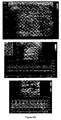
- Diagnosis of AAA was performed in vivo on the basis of increased diastolic external diameter of the abdominal aorta assed by ultrasound and color Doppler imaging (see example figure 5 ).
- AAA was confirmed by macroscopic segmental weakening and dilatation of the vascular wall. In several instances, retroperitoneal hemorrage was observed in deceased animals.
- Final confirmation of AAA was obtained from histopathological evidence of elastin fragmentation, disappearance of vascular smooth muscle cells. Occasionally; luminal or mural thrombus were observed.
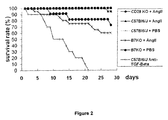
- hypertensive animals either with impaired TGF-beta activity (C57BI6/J treated with 2G7 Ab) or with a lack of CD28 or B7 co-stimulatory molecules, exhibited significant higher mortality within 28 days (P ⁇ 0.01 for each comparison versus C57BI6/J with Angll alone)( Figure 2 ).
Landscapes
- Health & Medical Sciences (AREA)
- Life Sciences & Earth Sciences (AREA)
- Engineering & Computer Science (AREA)
- Bioinformatics & Cheminformatics (AREA)
- Pharmacology & Pharmacy (AREA)
- Veterinary Medicine (AREA)
- Public Health (AREA)
- Chemical & Material Sciences (AREA)
- General Health & Medical Sciences (AREA)
- Medicinal Chemistry (AREA)
- Animal Behavior & Ethology (AREA)
- General Chemical & Material Sciences (AREA)
- Proteomics, Peptides & Aminoacids (AREA)
- Nuclear Medicine, Radiotherapy & Molecular Imaging (AREA)
- Chemical Kinetics & Catalysis (AREA)
- Heart & Thoracic Surgery (AREA)
- Cardiology (AREA)
- Zoology (AREA)
- Gastroenterology & Hepatology (AREA)
- Immunology (AREA)
- Organic Chemistry (AREA)
- Epidemiology (AREA)
- Vascular Medicine (AREA)
- Medicines That Contain Protein Lipid Enzymes And Other Medicines (AREA)
- Pharmaceuticals Containing Other Organic And Inorganic Compounds (AREA)
- Micro-Organisms Or Cultivation Processes Thereof (AREA)
- Medicines Containing Material From Animals Or Micro-Organisms (AREA)
- Peptides Or Proteins (AREA)
Claims (4)
- Verfahren zur Herstellung eines Tiermodells für Aorten-Aneurysma, umfassend die Schritte bestehend aus:a) Bereitstellen eines Tiers ausgewählt aus der Gruppe bestehend aus Ratte, Maus, Kuh, Schwein, Pferd, Huhn, Katze und Hund,b) Erhöhen des arteriellen Blutdrucks des Tieres,c) Inhibieren der Aktivität von transformierendem Wachstumsfaktor Beta (TGF-beta) in dem Tier mit einem Antagonisten von TGF-beta oder mit einem Inhibitor der TGF-beta-Genexpression.
- Verfahren nach Anspruch 1, wobei der Antagonist ein neutralisierender anti-TGF-beta-Antikörper ist.
- Verfahren nach einem der Ansprüche 1 bis 2, wobei das Tier eine Maus ist.
- Verfahren nach einem der Ansprüche 1 bis 3, wobei dem Tier eine kontinuierliche Menge einer Verbindung ausgewählt aus der Gruppe bestehend aus Angiotensin II, Katecholaminen, Endothelin 1, Aldosteron und Desoxycorticosteronacetat verabreicht wird.
Priority Applications (1)
| Application Number | Priority Date | Filing Date | Title |
|---|---|---|---|
| EP08804927.5A EP2205733B1 (de) | 2007-11-02 | 2008-09-30 | Verfahren zur herstellung eines nichtmenschlichen tiermodells für aortenaneurysmen |
Applications Claiming Priority (3)
| Application Number | Priority Date | Filing Date | Title |
|---|---|---|---|
| EP07301521 | 2007-11-02 | ||
| EP08804927.5A EP2205733B1 (de) | 2007-11-02 | 2008-09-30 | Verfahren zur herstellung eines nichtmenschlichen tiermodells für aortenaneurysmen |
| PCT/EP2008/063100 WO2009056419A1 (en) | 2007-11-02 | 2008-09-30 | Methods for producing a non human animal model for aortic aneurysm |
Publications (2)
| Publication Number | Publication Date |
|---|---|
| EP2205733A1 EP2205733A1 (de) | 2010-07-14 |
| EP2205733B1 true EP2205733B1 (de) | 2016-06-29 |
Family
ID=38982563
Family Applications (1)
| Application Number | Title | Priority Date | Filing Date |
|---|---|---|---|
| EP08804927.5A Not-in-force EP2205733B1 (de) | 2007-11-02 | 2008-09-30 | Verfahren zur herstellung eines nichtmenschlichen tiermodells für aortenaneurysmen |
Country Status (4)
| Country | Link |
|---|---|
| US (1) | US8586822B2 (de) |
| EP (1) | EP2205733B1 (de) |
| JP (1) | JP5470261B2 (de) |
| WO (1) | WO2009056419A1 (de) |
Families Citing this family (4)
| Publication number | Priority date | Publication date | Assignee | Title |
|---|---|---|---|---|
| BRPI1007222A2 (pt) | 2009-01-06 | 2016-02-23 | Inserm Inst Nat De La Santé Et De La Rech Médicale | agente de depleção de células b para tratamento de aterosclerose |
| US20150133381A1 (en) * | 2012-05-16 | 2015-05-14 | Inserm (Institut National De La Sante Et De La Recherche Medicale) | Methods for the diagnosis and the treatment of familial thoracic aortic aneurysms caused by tgfb2 loss of function mutations |
| CN114304053A (zh) * | 2021-12-10 | 2022-04-12 | 广东金石医疗科技服务有限公司 | 一种兔动脉瘤模型的构建方法 |
| CN114796445B (zh) * | 2022-05-30 | 2025-03-21 | 上海交通大学医学院附属第九人民医院 | 试剂在制备小鼠主动脉夹层动脉瘤诱导剂中的应用 |
Family Cites Families (3)
| Publication number | Priority date | Publication date | Assignee | Title |
|---|---|---|---|---|
| US6773704B1 (en) * | 1999-10-28 | 2004-08-10 | The Brigham And Women's Hospital, Inc. | Methods of treating vascular disease associated with cystatin C deficiency |
| US20030078190A1 (en) | 2001-05-25 | 2003-04-24 | Weinberg Marc S. | Methods for tissue protection using highly effective inhibition of the renin-angiotensin system |
| EP2862867A3 (de) * | 2005-10-25 | 2015-08-05 | The Johns Hopkins University | Verfahren und Zusammensetzungen zur Behandlung des Marfan-Syndroms und assoziierter Erkrankungen |
-
2008
- 2008-09-30 EP EP08804927.5A patent/EP2205733B1/de not_active Not-in-force
- 2008-09-30 US US12/740,405 patent/US8586822B2/en not_active Expired - Fee Related
- 2008-09-30 JP JP2010531484A patent/JP5470261B2/ja not_active Expired - Fee Related
- 2008-09-30 WO PCT/EP2008/063100 patent/WO2009056419A1/en not_active Ceased
Non-Patent Citations (6)
| Title |
|---|
| ARBUSTINI ELOISA ET AL: "Aneurysm syndromes and TGF-beta receptor mutations.", THE NEW ENGLAND JOURNAL OF MEDICINE 16 NOV 2006 LNKD- PUBMED:17108349, vol. 355, no. 20, 16 November 2006 (2006-11-16), pages 2155; author reply 2156, ISSN: 1533-4406 * |
| DATABASE BIOSIS [online] BIOSCIENCES INFORMATION SERVICE, PHILADELPHIA, PA, US; August 2006 (2006-08-01), LOEYS BART L ET AL: "Aneurysm syndromes caused by mutations in the TGF-beta receptor", Database accession no. PREV200600617484 * |
| DATABASE MEDLINE [online] US NATIONAL LIBRARY OF MEDICINE (NLM), BETHESDA, MD, US; 16 November 2006 (2006-11-16), ARBUSTINI ELOISA ET AL: "Aneurysm syndromes and TGF-beta receptor mutations.", Database accession no. NLM17108349 * |
| DOMINIQUE BONAFOUX ET AL: "Strategies for TGF-[beta] modulation: a review of recent patents", EXPERT OPINION ON THERAPEUTIC PATENTS., vol. 19, no. 12, 1 December 2009 (2009-12-01), GB, pages 1759 - 1769, XP055236496, ISSN: 1354-3776, DOI: 10.1517/13543770903397400 * |
| HABASHI JENNIFER P ET AL: "Losartan, an AT1 antagonist, prevents aortic aneurysm in a mouse model of Marfan syndrome", SCIENCE, AMERICAN ASSOCIATION FOR THE ADVANCEMENT OF SCIENCE, US, vol. 312, no. 5770, 7 April 2006 (2006-04-07), pages 117 - 121, XP002540762, ISSN: 0036-8075, DOI: 10.1126/SCIENCE.1124287 * |
| LOEYS BART L ET AL: "Aneurysm syndromes caused by mutations in the TGF-beta receptor", NEW ENGLAND JOURNAL OF MEDICINE, vol. 355, no. 8, August 2006 (2006-08-01), pages 788 - 798, XP055076334, ISSN: 0028-4793, DOI: doi:10.1056/NEJMoa055695 * |
Also Published As
| Publication number | Publication date |
|---|---|
| EP2205733A1 (de) | 2010-07-14 |
| WO2009056419A1 (en) | 2009-05-07 |
| JP2011502475A (ja) | 2011-01-27 |
| JP5470261B2 (ja) | 2014-04-16 |
| US8586822B2 (en) | 2013-11-19 |
| US20100260726A1 (en) | 2010-10-14 |
Similar Documents
| Publication | Publication Date | Title |
|---|---|---|
| JP7536049B2 (ja) | 血管新生障害の処置 | |
| JP2013509874A (ja) | 新脈管形成を調節する為の新規化合物及びこれらの化合物を使用する処置方法 | |
| Luo et al. | Tsp-1+ microglia attenuate retinal neovascularization by maintaining the expression of Smad3 in endothelial cells through exosomes with decreased miR-27a-5p | |
| US9901079B2 (en) | Inhibition of oncogenic kras-induced GM-CSF production and function | |
| EP2205733B1 (de) | Verfahren zur herstellung eines nichtmenschlichen tiermodells für aortenaneurysmen | |
| US10059946B2 (en) | Method for treatment of heart failure | |
| US12286629B2 (en) | Compositions and methods for treating endometriosis | |
| WO2013156867A2 (en) | Methods and pharmaceutical compositions for the treatment of hypertension | |
| JP2019510009A (ja) | Smoc2を標的化する線維症のための治療方法 | |
| US20160304881A1 (en) | Ddr1 antagonist or an inhibitor of ddr1 gene expression for use in the prevention or treatment of crescentic glomerulonephritis | |
| EP2838542A2 (de) | Verfahren und pharmazeutische zusammensetzungen zur behandlung von bluthochdruck | |
| US11066671B2 (en) | Use of therapeutic agents | |
| US20110070240A1 (en) | Methods of treating b-cell cancers | |
| US20220259596A1 (en) | Inhibitors of microRNA 451a for Treatment of Endometriosis | |
| Di et al. | Effective suppression of fibronectin synthesis by retrovirus delivered shRNA in rat cardiac fibroblasts | |
| US20150050265A1 (en) | Anti-mcpip therapies for ocular neovascularization | |
| Ambati et al. | Modulation of Angiogenesis | |
| Yang | Characterizing the dual roles of versican in angiogenesis and wound repair |
Legal Events
| Date | Code | Title | Description |
|---|---|---|---|
| PUAI | Public reference made under article 153(3) epc to a published international application that has entered the european phase |
Free format text: ORIGINAL CODE: 0009012 |
|
| 17P | Request for examination filed |
Effective date: 20100427 |
|
| AK | Designated contracting states |
Kind code of ref document: A1 Designated state(s): AT BE BG CH CY CZ DE DK EE ES FI FR GB GR HR HU IE IS IT LI LT LU LV MC MT NL NO PL PT RO SE SI SK TR |
|
| AX | Request for extension of the european patent |
Extension state: AL BA MK RS |
|
| 17Q | First examination report despatched |
Effective date: 20100927 |
|
| DAX | Request for extension of the european patent (deleted) | ||
| GRAP | Despatch of communication of intention to grant a patent |
Free format text: ORIGINAL CODE: EPIDOSNIGR1 |
|
| INTG | Intention to grant announced |
Effective date: 20160118 |
|
| GRAS | Grant fee paid |
Free format text: ORIGINAL CODE: EPIDOSNIGR3 |
|
| GRAA | (expected) grant |
Free format text: ORIGINAL CODE: 0009210 |
|
| AK | Designated contracting states |
Kind code of ref document: B1 Designated state(s): AT BE BG CH CY CZ DE DK EE ES FI FR GB GR HR HU IE IS IT LI LT LU LV MC MT NL NO PL PT RO SE SI SK TR |
|
| REG | Reference to a national code |
Ref country code: GB Ref legal event code: FG4D |
|
| REG | Reference to a national code |
Ref country code: CH Ref legal event code: EP |
|
| REG | Reference to a national code |
Ref country code: AT Ref legal event code: REF Ref document number: 809147 Country of ref document: AT Kind code of ref document: T Effective date: 20160715 |
|
| REG | Reference to a national code |
Ref country code: IE Ref legal event code: FG4D |
|
| REG | Reference to a national code |
Ref country code: DE Ref legal event code: R096 Ref document number: 602008044920 Country of ref document: DE |
|
| REG | Reference to a national code |
Ref country code: LT Ref legal event code: MG4D |
|
| PG25 | Lapsed in a contracting state [announced via postgrant information from national office to epo] |
Ref country code: FI Free format text: LAPSE BECAUSE OF FAILURE TO SUBMIT A TRANSLATION OF THE DESCRIPTION OR TO PAY THE FEE WITHIN THE PRESCRIBED TIME-LIMIT Effective date: 20160629 Ref country code: NO Free format text: LAPSE BECAUSE OF FAILURE TO SUBMIT A TRANSLATION OF THE DESCRIPTION OR TO PAY THE FEE WITHIN THE PRESCRIBED TIME-LIMIT Effective date: 20160929 Ref country code: LT Free format text: LAPSE BECAUSE OF FAILURE TO SUBMIT A TRANSLATION OF THE DESCRIPTION OR TO PAY THE FEE WITHIN THE PRESCRIBED TIME-LIMIT Effective date: 20160629 |
|
| REG | Reference to a national code |
Ref country code: NL Ref legal event code: MP Effective date: 20160629 |
|
| PG25 | Lapsed in a contracting state [announced via postgrant information from national office to epo] |
Ref country code: HR Free format text: LAPSE BECAUSE OF FAILURE TO SUBMIT A TRANSLATION OF THE DESCRIPTION OR TO PAY THE FEE WITHIN THE PRESCRIBED TIME-LIMIT Effective date: 20160629 Ref country code: LV Free format text: LAPSE BECAUSE OF FAILURE TO SUBMIT A TRANSLATION OF THE DESCRIPTION OR TO PAY THE FEE WITHIN THE PRESCRIBED TIME-LIMIT Effective date: 20160629 Ref country code: GR Free format text: LAPSE BECAUSE OF FAILURE TO SUBMIT A TRANSLATION OF THE DESCRIPTION OR TO PAY THE FEE WITHIN THE PRESCRIBED TIME-LIMIT Effective date: 20160930 Ref country code: NL Free format text: LAPSE BECAUSE OF FAILURE TO SUBMIT A TRANSLATION OF THE DESCRIPTION OR TO PAY THE FEE WITHIN THE PRESCRIBED TIME-LIMIT Effective date: 20160629 Ref country code: SE Free format text: LAPSE BECAUSE OF FAILURE TO SUBMIT A TRANSLATION OF THE DESCRIPTION OR TO PAY THE FEE WITHIN THE PRESCRIBED TIME-LIMIT Effective date: 20160629 |
|
| REG | Reference to a national code |
Ref country code: AT Ref legal event code: MK05 Ref document number: 809147 Country of ref document: AT Kind code of ref document: T Effective date: 20160629 |
|
| PG25 | Lapsed in a contracting state [announced via postgrant information from national office to epo] |
Ref country code: IS Free format text: LAPSE BECAUSE OF FAILURE TO SUBMIT A TRANSLATION OF THE DESCRIPTION OR TO PAY THE FEE WITHIN THE PRESCRIBED TIME-LIMIT Effective date: 20161029 Ref country code: IT Free format text: LAPSE BECAUSE OF FAILURE TO SUBMIT A TRANSLATION OF THE DESCRIPTION OR TO PAY THE FEE WITHIN THE PRESCRIBED TIME-LIMIT Effective date: 20160629 Ref country code: EE Free format text: LAPSE BECAUSE OF FAILURE TO SUBMIT A TRANSLATION OF THE DESCRIPTION OR TO PAY THE FEE WITHIN THE PRESCRIBED TIME-LIMIT Effective date: 20160629 Ref country code: SK Free format text: LAPSE BECAUSE OF FAILURE TO SUBMIT A TRANSLATION OF THE DESCRIPTION OR TO PAY THE FEE WITHIN THE PRESCRIBED TIME-LIMIT Effective date: 20160629 Ref country code: RO Free format text: LAPSE BECAUSE OF FAILURE TO SUBMIT A TRANSLATION OF THE DESCRIPTION OR TO PAY THE FEE WITHIN THE PRESCRIBED TIME-LIMIT Effective date: 20160629 Ref country code: CZ Free format text: LAPSE BECAUSE OF FAILURE TO SUBMIT A TRANSLATION OF THE DESCRIPTION OR TO PAY THE FEE WITHIN THE PRESCRIBED TIME-LIMIT Effective date: 20160629 |
|
| PG25 | Lapsed in a contracting state [announced via postgrant information from national office to epo] |
Ref country code: AT Free format text: LAPSE BECAUSE OF FAILURE TO SUBMIT A TRANSLATION OF THE DESCRIPTION OR TO PAY THE FEE WITHIN THE PRESCRIBED TIME-LIMIT Effective date: 20160629 Ref country code: PL Free format text: LAPSE BECAUSE OF FAILURE TO SUBMIT A TRANSLATION OF THE DESCRIPTION OR TO PAY THE FEE WITHIN THE PRESCRIBED TIME-LIMIT Effective date: 20160629 Ref country code: ES Free format text: LAPSE BECAUSE OF FAILURE TO SUBMIT A TRANSLATION OF THE DESCRIPTION OR TO PAY THE FEE WITHIN THE PRESCRIBED TIME-LIMIT Effective date: 20160629 Ref country code: PT Free format text: LAPSE BECAUSE OF FAILURE TO SUBMIT A TRANSLATION OF THE DESCRIPTION OR TO PAY THE FEE WITHIN THE PRESCRIBED TIME-LIMIT Effective date: 20161031 Ref country code: BE Free format text: LAPSE BECAUSE OF NON-PAYMENT OF DUE FEES Effective date: 20160629 |
|
| REG | Reference to a national code |
Ref country code: DE Ref legal event code: R097 Ref document number: 602008044920 Country of ref document: DE |
|
| REG | Reference to a national code |
Ref country code: DE Ref legal event code: R119 Ref document number: 602008044920 Country of ref document: DE |
|
| PG25 | Lapsed in a contracting state [announced via postgrant information from national office to epo] |
Ref country code: MC Free format text: LAPSE BECAUSE OF FAILURE TO SUBMIT A TRANSLATION OF THE DESCRIPTION OR TO PAY THE FEE WITHIN THE PRESCRIBED TIME-LIMIT Effective date: 20160629 |
|
| REG | Reference to a national code |
Ref country code: CH Ref legal event code: PL |
|
| PLBE | No opposition filed within time limit |
Free format text: ORIGINAL CODE: 0009261 |
|
| STAA | Information on the status of an ep patent application or granted ep patent |
Free format text: STATUS: NO OPPOSITION FILED WITHIN TIME LIMIT |
|
| GBPC | Gb: european patent ceased through non-payment of renewal fee |
Effective date: 20160930 |
|
| PG25 | Lapsed in a contracting state [announced via postgrant information from national office to epo] |
Ref country code: DK Free format text: LAPSE BECAUSE OF FAILURE TO SUBMIT A TRANSLATION OF THE DESCRIPTION OR TO PAY THE FEE WITHIN THE PRESCRIBED TIME-LIMIT Effective date: 20160629 |
|
| 26N | No opposition filed |
Effective date: 20170330 |
|
| REG | Reference to a national code |
Ref country code: IE Ref legal event code: MM4A |
|
| REG | Reference to a national code |
Ref country code: FR Ref legal event code: ST Effective date: 20170531 |
|
| PG25 | Lapsed in a contracting state [announced via postgrant information from national office to epo] |
Ref country code: LI Free format text: LAPSE BECAUSE OF NON-PAYMENT OF DUE FEES Effective date: 20160930 Ref country code: CH Free format text: LAPSE BECAUSE OF NON-PAYMENT OF DUE FEES Effective date: 20160930 Ref country code: DE Free format text: LAPSE BECAUSE OF NON-PAYMENT OF DUE FEES Effective date: 20170401 Ref country code: IE Free format text: LAPSE BECAUSE OF NON-PAYMENT OF DUE FEES Effective date: 20160930 Ref country code: FR Free format text: LAPSE BECAUSE OF NON-PAYMENT OF DUE FEES Effective date: 20160930 Ref country code: GB Free format text: LAPSE BECAUSE OF NON-PAYMENT OF DUE FEES Effective date: 20160930 |
|
| PG25 | Lapsed in a contracting state [announced via postgrant information from national office to epo] |
Ref country code: BG Free format text: LAPSE BECAUSE OF FAILURE TO SUBMIT A TRANSLATION OF THE DESCRIPTION OR TO PAY THE FEE WITHIN THE PRESCRIBED TIME-LIMIT Effective date: 20160929 Ref country code: SI Free format text: LAPSE BECAUSE OF FAILURE TO SUBMIT A TRANSLATION OF THE DESCRIPTION OR TO PAY THE FEE WITHIN THE PRESCRIBED TIME-LIMIT Effective date: 20160629 Ref country code: LU Free format text: LAPSE BECAUSE OF NON-PAYMENT OF DUE FEES Effective date: 20160930 |
|
| PG25 | Lapsed in a contracting state [announced via postgrant information from national office to epo] |
Ref country code: HU Free format text: LAPSE BECAUSE OF FAILURE TO SUBMIT A TRANSLATION OF THE DESCRIPTION OR TO PAY THE FEE WITHIN THE PRESCRIBED TIME-LIMIT; INVALID AB INITIO Effective date: 20080930 Ref country code: CY Free format text: LAPSE BECAUSE OF FAILURE TO SUBMIT A TRANSLATION OF THE DESCRIPTION OR TO PAY THE FEE WITHIN THE PRESCRIBED TIME-LIMIT Effective date: 20160629 |
|
| PG25 | Lapsed in a contracting state [announced via postgrant information from national office to epo] |
Ref country code: MT Free format text: LAPSE BECAUSE OF NON-PAYMENT OF DUE FEES Effective date: 20160930 Ref country code: TR Free format text: LAPSE BECAUSE OF FAILURE TO SUBMIT A TRANSLATION OF THE DESCRIPTION OR TO PAY THE FEE WITHIN THE PRESCRIBED TIME-LIMIT Effective date: 20160629 |