EP2206044B1 - Elektronische point-of-sales-verkaufssteuervorrichtung - Google Patents
Elektronische point-of-sales-verkaufssteuervorrichtung Download PDFInfo
- Publication number
- EP2206044B1 EP2206044B1 EP07802961.8A EP07802961A EP2206044B1 EP 2206044 B1 EP2206044 B1 EP 2206044B1 EP 07802961 A EP07802961 A EP 07802961A EP 2206044 B1 EP2206044 B1 EP 2206044B1
- Authority
- EP
- European Patent Office
- Prior art keywords
- epos
- vending machine
- vending
- control
- characteristic
- Prior art date
- Legal status (The legal status is an assumption and is not a legal conclusion. Google has not performed a legal analysis and makes no representation as to the accuracy of the status listed.)
- Not-in-force
Links
Images






Classifications
-
- G—PHYSICS
- G06—COMPUTING OR CALCULATING; COUNTING
- G06Q—INFORMATION AND COMMUNICATION TECHNOLOGY [ICT] SPECIALLY ADAPTED FOR ADMINISTRATIVE, COMMERCIAL, FINANCIAL, MANAGERIAL OR SUPERVISORY PURPOSES; SYSTEMS OR METHODS SPECIALLY ADAPTED FOR ADMINISTRATIVE, COMMERCIAL, FINANCIAL, MANAGERIAL OR SUPERVISORY PURPOSES, NOT OTHERWISE PROVIDED FOR
- G06Q20/00—Payment architectures, schemes or protocols
- G06Q20/08—Payment architectures
- G06Q20/18—Payment architectures involving self-service terminals [SST], vending machines, kiosks or multimedia terminals
-
- G—PHYSICS
- G06—COMPUTING OR CALCULATING; COUNTING
- G06Q—INFORMATION AND COMMUNICATION TECHNOLOGY [ICT] SPECIALLY ADAPTED FOR ADMINISTRATIVE, COMMERCIAL, FINANCIAL, MANAGERIAL OR SUPERVISORY PURPOSES; SYSTEMS OR METHODS SPECIALLY ADAPTED FOR ADMINISTRATIVE, COMMERCIAL, FINANCIAL, MANAGERIAL OR SUPERVISORY PURPOSES, NOT OTHERWISE PROVIDED FOR
- G06Q20/00—Payment architectures, schemes or protocols
- G06Q20/08—Payment architectures
- G06Q20/20—Point-of-sale [POS] network systems
-
- G—PHYSICS
- G07—CHECKING-DEVICES
- G07F—COIN-FREED OR LIKE APPARATUS
- G07F5/00—Coin-actuated mechanisms; Interlocks
- G07F5/18—Coin-actuated mechanisms; Interlocks specially adapted for controlling several coin-freed apparatus from one place
-
- G—PHYSICS
- G07—CHECKING-DEVICES
- G07F—COIN-FREED OR LIKE APPARATUS
- G07F9/00—Details other than those peculiar to special kinds or types of apparatus
- G07F9/001—Interfacing with vending machines using mobile or wearable devices
-
- G—PHYSICS
- G07—CHECKING-DEVICES
- G07F—COIN-FREED OR LIKE APPARATUS
- G07F9/00—Details other than those peculiar to special kinds or types of apparatus
- G07F9/002—Vending machines being part of a centrally controlled network of vending machines
-
- G—PHYSICS
- G07—CHECKING-DEVICES
- G07F—COIN-FREED OR LIKE APPARATUS
- G07F9/00—Details other than those peculiar to special kinds or types of apparatus
- G07F9/02—Devices for alarm or indication, e.g. when empty; Advertising arrangements in coin-freed apparatus
- G07F9/026—Devices for alarm or indication, e.g. when empty; Advertising arrangements in coin-freed apparatus for alarm, monitoring and auditing in vending machines or means for indication, e.g. when empty
Definitions
- the present invention relates to an electronic point of sales (EPOS) vending control apparatus for connecting different types of EPOS systems with different types of vending machines, each type of EPOS system and vending machine having characteristic control inputs.
- EPOS electronic point of sales
- EPOS systems Electronic point of sales (EPOS) systems are terminals used in place of conventional cash registers to facilitate both cash and card transactions, as well as to fulfil stock control and ordering requirements for retail outlets.
- the ability for EPOS systems to be networked to a centralised computer system also means that sales information for products and services sold by an outlet can be processed almost immediately.
- Irish Patent Publication No. IE20050029 discloses that the functionality of EPOS systems has also been extended to the control of vending machines. In this way products, such as cigarettes, stored in a vending machine coupled with the EPOS system can be dispensed by appropriate interaction of human operators with input means associated with the EPOS system during a transaction. Whereas previously, operators needed to interact with multiple devices to complete a transaction involving both vended products and other products, such functionality enables a transaction to be completed using a single EPOS system.
- EPOS systems and vending machines each process quite different inputs and as a result the protocols and communication systems normally associated with them are very different.
- EPOS systems will effectively control a vending machine through signals transmitted via its associated communications ports (such as RS232 or LAN).
- communications ports such as RS232 or LAN
- internal control systems for vending machines use EPROM and firmware.
- EPOS systems there are numerous brands, makes and models of EPOS systems available on the market, each having their own respective processing systems and each requiring specific control inputs.
- different types of EPOS systems will also generate different output signal which are characteristic of the system type.
- EP 1152363 A2 discloses an interface to allow communication between financial transaction systems and financial administration systems, retailer administration systems or the like.
- the interface allows legacy hardware to communicate in realtime to financial and/or retail administration networks in situations where otherwise incompatible date formats or an inability to communicate with networks and such systems would be the case.
- vending initially involved the use stand alone un-manned machines selling small packed products such as confectionary, tobacco products and razor blades. In use, a customer would insert the indicated payment and select the desired product.
- this method of selling provided a relatively secure and safe method for vending, as the vending machine is typically robust and the payment is received before the product was vended, there were no controls on who may obtain products from the vended machine. Accordingly, these systems were accessible by underage persons who are not legally entitled to purchase certain products, notably, tobacco products. These machines also fail to provide full accountability for dispensed products.
- vending machines In other vending machines, the product is vended before payment is made. In such machines there is significant scope for fraud by customers and by operators. Compounding the problem is the fact that numerous people can be involved in a single transaction and this makes it more difficult for offending persons to be detected. Moreover, such systems do not in any way contribute to preventing the fraud from occurring in the first place.
- keyboards Associated with other forms of vending machines are secondary keyboards. These allow the operator to perform the required actions to vend the desired product.
- the keyboard is connected to an EPOS system.
- EPOS system may be deactivated by operators and this will result in the transaction not being recorded.
- the term 'comprise' may, under varying jurisdictions be provided with either an exclusive or inclusive meaning.
- the term comprise shall have an inclusive meaning - i.e. that it may be taken to mean an inclusion of not only the listed components it directly references, but also other non-specified components. Accordingly, the term 'comprise' is to be attributed with as broader interpretation as possible within any given jurisdiction and this rationale should also be used when the terms 'comprised' and 'comprising' are used.
- the invention provides an electronic point of sales (EPOS) vending control apparatus for connecting different types of electronic point of sales (EPOS) systems with different types of vending machines, in accordance with the appended claims.
- EPOS electronic point of sales
- the present invention provides an arrangement in which standardised control input signals transmitted from the main vending control unit are able to be translated into characteristic signals suitable for supply as control inputs to each type of EPOS system and vending machine connected to the control apparatus. This will enable different types of EPOS system's and vending machines to be integrated for use together.
- the EPOS vending control apparatus may be configured as a computing server which is locatable either locally within an outlet or remotely, for example at a head office location.
- an adaptive EPOS communications interface which translates standardised EPOS control input signals transmitted from the main vending control unit into characteristic EPOS control input signals for transmission to the EPOS system will ensure that the signals carrying control instructions for an EPOS system are in the correct format suited to the particular EPOS system concerned. This will enable the retrofitting of new types of EPOS systems into a retail outlet without having to remove older version EPOS systems.
- the adaptive vending machine communications interface will facilitate dispensing of products from a particular vending machine coupled to the EPOS system via the control apparatus.
- the adaptive vending machine communications interface will thus facilitate the ability for vending machines of different types to be controlled by an EPOS system coupled to the control apparatus.
- a vended product can be, and quite often is, part of a basket of various non-vended products in one sale. A vend can thus be made at any stage of the overall transaction.
- the adaptive EPOS communications interface is further configured to translate characteristic EPOS control output signals transmitted from the EPOS system into standardised EPOS control output signals for processing by the main vending control unit.
- Such a provision will enable control output signals received from the EPOS system to be processed by the main vending control unit.
- instructions to vend a product from a specific vending machine can be encoded by vending software applications executing on the EPOS system into a characteristic EPOS control output signals for transmission initially to the adaptive EPOS communications interface.
- these characteristic EPOS output signals can be translated into standardised EPOS control output signals for processing by the main vending control unit.
- the adaptive vending machine communications interface is further configured to translate characteristic vending machine control output signals transmitted from the vending machine into standardised vending machine control output signals for processing by the main vending control unit.
- Such a provision will enable control output signals received from the vending machine to also be processed by the main vending control unit.
- the main vending control unit is connected to a database of interface control programs.
- an interface control program when executed on the EPOS communications interface, provides functionality required to generate characteristic EPOS control input signals and to process characteristic EPOS control output signals for an EPOS system.
- another of said interface control programs when executed on the vending machine communications interface, provides functionality required to generate characteristic vending machine control input signals and to process characteristic vending machine control output signals for a vending machine.
- EPOS configuration file associated with the database of interface control programs.
- the interface control programs are arranged in the database in a dynamic linked library structure.
- the EPOS vending control apparatus further comprises means for sampling characteristic EPOS control output signals for an EPOS system on connection to the EPOS vending control apparatus, and means for extracting EPOS system identification parameters from the sampled EPOS signals.
- the EPOS vending control apparatus uses the EPOS system identification parameters to select and write an interface control program to the adaptive EPOS communications interface to facilitate processing of characteristic EPOS control output signals received from the EPOS system and generating characteristic EPOS control input signals for the EPOS system.
- the EPOS vending control apparatus further comprises means for sampling characteristic vending machine control output signals for a vending machine on connection to the EPOS vending control apparatus, and means for extracting vending machine identification parameters from the sampled vending machine signals.
- the EPOS vending control apparatus uses the vending machine identification parameters to select and write an interface control program to the adaptive vending machine communications interface to facilitate processing of characteristic vending machine control output signals received from the vending machine and generating characteristic vending machine control input signals for processing by the vending machine.
- the adaptive EPOS communications interface and the adaptive vending machine communications interface are stored on the control apparatus.
- the adaptive communications interfaces each comprise means for extracting point of sales terminal data and/or vending machine data from the characteristic EPOS control output signals received from the EPOS systems and/or the characteristic vending machine control output signals received from vending machines coupled to the control apparatus.
- the extracted point of sales device data and/or vending machine data is transmitted to the main vending control unit.
- the main vending control unit is connected to at least one hub computer via a further communications link for the transmission of the point of sales data and vending machine data.
- the point of sales data and vending machine data includes data relating to transactions including both products vended from a vending machine and other non-vended products in a transaction.
- the point of sales data and vending machine data transmitted from the main vending control unit is time and/or date stamped according to the time and date of the transaction.
- the hub computer is able to process the point of sales data and vending machine data into reports detailing sales activity and/or the dispensing activity of one or more vending machines.
- Such reports may be related to failed vend requests and will enable operators as well as head office personnel to react quickly to hardware problems with vending machines.
- the reports will highlight problems with vending machines where particular columns or slots give vend failures and they will also highlight problems with vending machines that fail to vend any product.
- an operator must input authentication information to an EPOS system in order to operate and gain access to the functionality of the EPOS system.
- the apparatus By requiring an operator to input authentication information the apparatus ensures that one person is fully accountable for all vends originating from a particular EPOS system. Such a provision ensures that there is one point of access and includes a verifiable audit trail.
- authentication of an operator involves the operator inputting a password into a login or verification routine running on an EPOS system.
- authentication of an operator involves the operator passing a swipe card through a reader associated with the EPOS system, whereby the required verification information is obtainable from the swipe card by the reader and then transmitted to the EPOS system.
- Authentication may also include biometric methods, such as finger print readers or iris scanning technologies.
- instructions for the vending machine to dispense a product for a transaction are initially encoded in a characteristic EPOS control output signal transmitted from an EPOS system connected to the control apparatus.
- each EPOS system operates a vending machine control application which provides an interactive interface on the EPOS system from which operators can select a product to be dispensed from a vending machine.
- the EPOS system comprises a touch screen and the interactive interface is icon based, each product able to be dispensed from the vending machine being represented as an icon on the touch screen.
- touch screen will also enable management to configure the touch panels on the EPOS system with all information corresponding to the layout of the columns and/or slots in a vending machine.
- an EPOS system comprises a keyboard and each product is able to be dispensed from the vending machine by pressing a predefined key on the keyboard.
- the vend request is directed to an alternative vending machine to dispense the requested product.
- the initial vend request can be directed to another vending machine connected to the EPOS vending control apparatus which is capable of fulfilling the vend request.
- the EPOS system must receive a characteristic EPOS control input signal encoding a confirmation that the vending machine has dispensed the product.
- the EPOS system thus not only issues signals to the vending machine to vend a particular product when instructed to do so by the operator, but also waits for confirmation of a successful vend before it adds the cost of the product to the customers transaction invoice. Each vend operation is therefore recorded, but more significantly is recorded against a single authenticated operator.
- each vend from a vending machine is recorded against the operator issuing the vend instruction from the EPOS system.
- the EPOS system comprises customer age verification functionality.
- the provision of age verification functionality on the EPOS system will prompt the operator to get the customer to verify their age before allowing a transaction to proceed.
- the EPOS system will prompt the operator to confirm and then record the confirmation that the customer is old enough to purchase the desired goods.
- the customer age verification functionality involves each EPOS system issuing a visual prompt on the display means instructing the operator to request a customer to produce age verification.
- age verification may be provided as an identity card.
- the customer age verification functionality involves scanning a card encoding the age of the customer.
- the EPOS system is adapted to store details relating to age verification of a customer.
- the EPOS system maintains a personal details database comprising personal details of each operator.
- a personal details database comprising personal details of each operator.
- access to functionality on each EPOS system needed to vend specific products from a vending machine is controllable according to personal details of the operator in the database.
- the main control unit receives data relating to all vended products once they have been dispensed from the vending machine.
- the main vending control unit comprises means to monitor the quantity of each product in a vending machine.
- the main vending control unit comprises means to transmit alerts in response to signals received from the vending machine indicating that levels of product remaining in the vending machine are below a minimum specified level.
- alerts are in the form of a prompt on an EPOS system, a simple messaging service (SMS) text message and/or an e-mail message.
- SMS simple messaging service
- the main vending control unit is adapted to transmit status information to a web-server to facilitate online remote monitoring of vending machines in a single or multiple locations.
- touch panels associated with an EPOS system are configurable to present a graphical representations corresponding to the physical layout of products in the vending machine.
- an EPOS operator will be able to select a product to be vended by touching a graphical representation on the touch screen corresponding to the product.
- the term "operator” should be understood to mean a person in an outlet who interacts with an EPOS system in order to initiate vends from vending machines, total the amount due for the purchase of products and/or services from the outlet, charges the customer for the amount and processes a card or cash transaction by way of payment for the purchase.
- characteristic vending machine control input signal will be understood as being an input signal which is able to be supplied as input to a specific vending machine in the EPOS network so as to direct and control specific functionality at that vending machine.
- a characteristic vending machine control input signal capable of being supplied as input to one type of vending machine will not be suitable for supply as input to another type of vending machine.
- a characteristic EPOS control output signal will be understood as being an output signal transmitted from a specific EPOS system. Different EPOS system will thus produce different characteristic EPOS control output signals
- standardised in the context of input and output signals should be understood to mean generic signals which are in a format capable of being processed or generated by the main vending control unit of the present invention. Specifically, the characteristic signals output by the various types of EPOS systems and vending machines connected to the control apparatus must first be translated into a standardised format able to be interpreted by the control apparatus
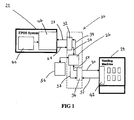
- an EPOS vending control apparatus for connecting different types of electronic point of sales (EPOS) systems 22 with different types of vending machines 24.
- the control apparatus 20 comprises a main vending control unit 26 which is connected to at least one vending machine 24, and at least one EPOS system 22, by a communications link 28 for the transmission of characteristic EPOS control input signals for controlling the EPOS system 22 and a communications link 30 for transmitting characteristic vending machine control input signals for controlling the vending machine 24 from the EPOS system 22.
- Fig. 1 shows a single EPOS system 22 being connected via the main vending control unit 26 to the vending machine 24, it will be appreciated that the present invention is configurable to integrate the functionality of any number of EPOS systems 22 with any number of vending machines 24.
- FIG. 2 shown is an arrangement in which multiple EPOS systems 22 are connected to a single vending machine 24 via the control apparatus 20.
- Fig. 3 shows the configuration of Fig. 2 in which multiple vending machines 24 are coupled to the control apparatus 20.
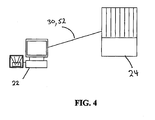
- Fig. 4 shows another possible arrangement in which the control apparatus 20 is integrated with an EPOS system 22 into a single machine and connected to a vending machine 24.
- FIG. 1 further configurations may include a single main vending control unit integrated onto a single EPOS system and being interfaced to multiple vending machines. Another configuration may also include multiple vending control units for redundancy. It will therefore be understood that numerous configurations for EPOS systems and vending machines are contemplated by the present invention and are not limited to that shown in Fig. 1 .
- the control apparatus 20 operates an adaptive EPOS communications interface 32 for translating standardised EPOS control input signals transmitted from the main vending control unit 26 via communication link 34 into characteristic EPOS control input signals for transmission to the EPOS system 22 via communications link 28. Also shown is an adaptive vending machine communications interface 36 for converting standardised vending machine control input signals transmitted from the main vending control unit 26 via communications link 38 into characteristic vending machine control input signals for transmission to the vending machine 24 via communications link 30.
- the EPOS system 22 comprises processing means 40 and the vending machine 24 comprises processing means 42.
- Executing on the main vending control unit 26 is vending control server software which can be deployed with connectivity to both the EPOS system 22 and the vending machine 24 via the communications interfaces 32, 36.
- Various software based library modules are able to be deployed at the main vending control unit 26.
- the vending control server software may be deployed on a LAN or via a TCP/IP connection or directly on the main vending control unit 26.
- an application programming interface 46 which not only facilitates communications between the EPOS vending control apparatus 20 and the EPOS system 22, but also enables a developer to add vending processing functionality to the EPOS system 22.
- This functionality is aided by number of software modules associated with the application programming interface 46 which are organised in a dynamic linked library structure.
- a dynamic linked library encapsulates the signal construction and deconstruction processes at the EPOS system 22, and also a configuration file which holds such details as the modes of communication available to the EPOS system 22, such as whether the communication should be file based (FTP), TCP/IP or by wireless communications.
- the adaptive EPOS communications interface 32 is further configured to translate characteristic EPOS control output signals transmitted from the EPOS device via communications link 48 into standardised EPOS control output signals which are transmitted via communications link 50 for processing by the main vending control unit 26.
- the adaptive vending machine communications interface 36 is further configured to translate characteristic vending machine control output signals transmitted from the vending machine via communications link 52 into standardised vending machine control output signals, which are transmittable via communications link 54 for processing by the main vending control unit 26.
- the adaptive EPOS communications interface 28 and the adaptive vending machine communications interface 36 are stored on the control apparatus 20, although it will be appreciated that other configurations are also possible.
- An operator must initially input authentication information to an EPOS system 22 in order to operate and gain access to its functionality.
- authentication may involve the operator inputting a password into a login or verification routine running on EPOS system 22.
- authentication of an operator may involve the operator passing a swipe card through a reader associated with the EPOS system 22, whereby the required verification information is obtainable from the swipe card and then transmitted to the EPOS system 22. It will be understood that each vend from a vending machine 24 is recorded against the operator issuing a vend instruction from a specific EPOS system 22.
- Each EPOS system 22 comprises customer age verification functionality and such functionality may involve each EPOS system 22 generating a visual prompt on the display means instructing the operator to request a customer to produce age verification.
- age verification may be an identity card.
- the customer age verification functionality may also involve scanning a card associated with the customer encoding the age of the customer.
- the EPOS system 22 may also be adapted to store details relating to age verification of a customer, and may also maintain a personal details database comprising personal details of each operator. Additionally, access to functionality on each EPOS system 22 needed to vend specific products from a vending machine 24 is controllable according to personal details of the operator in the database.
- a vending machine control application operating on each EPOS system 22 is configured to generate an interactive interface on the EPOS system 22 from which operators can select a product to be dispensed from a vending machine 24.
- Each EPOS system 22 may also comprise a touch screen and the interactive interface is icon based so that each product able to be dispensed from the vending machine 24 is represented as an icon on the touch screen.
- the touch panels associated with an EPOS system 22 are configurable to present graphical representations corresponding to the physical layout of products in the vending machine 24 so that an operator will be able to select a product to be vended by touching a graphical representation on the touch screen corresponding to the product.
- icons representing each individual vending machine 24 which is able to receive a vending instruction from an EPOS system 22 connected to the main vending control unit control apparatus 20 may be displayed on display means associated with the EPOS system 22. In this way an operator is able to quickly identify a product to be vended by initially selecting the required vending machine 24 which is adapted to dispense the required product.
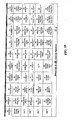
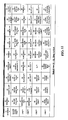
- Figs. 10 and 11 show representations of drop down menus which may also be provided on display means associated with each EPOS system 22 according to the invention. Such drop down menus will enable an operator to avoid having to scroll through lists of vendible products on the display means or touch screen.
- the operator presses the required button on the keyboard, or an icon on a touch screen, corresponding to a category of products, such as cigarettes.
- the screen shown in Fig. 10 is displayed.
- the operator may select the relevant row by pressing the number corresponding to that row.
- This then activates the screen shown in Fig. 11 .
- the operator selects the relevant column by pressing the number corresponding to that column.
- the process to then dispense that selected product from the vending machine is then activated.
- the EPOS system 22 comprises a keyboard and each product is able to be dispensed from the vending machine 24 by pressing a predefined key on the keyboard.
- the EPOS system 22 must receive a characteristic EPOS control input signal encoding a confirmation that the vending machine has dispensed the product.
- a confirmation is displayed on display means associated with the EPOS system 22.
- the adaptive EPOS communications interface 32 and the adaptive vending machine communications interface 36 are coupled, via the main vending control unit 26, to a database 56 of interface control programs.
- Such interface control programs when executed on the EPOS communications interface, may provide functionality required to generate characteristic EPOS control input signals and to process characteristic EPOS control output signals for an EPOS system.
- Other of said interface control programs when executed on the vending machine communications interface, may provide the functionality required to generate characteristic vending machine control input signals, and to process characteristic vending machine control output signals for a vending machine.
- interface control programs Associated with the database 56 of interface control programs is an EPOS configuration file which stores configuration parameters which are provided as input to the interface control programs.
- the interface control programs are arranged in the database 56 in a dynamic linked library structure.
- the EPOS vending control apparatus 20 further comprises means for sampling characteristic EPOS control output signals for an EPOS system 22 on connection to the EPOS vending control apparatus 20. Also provided is means for extracting EPOS system identification parameters from the sampled EPOS signals. In this way the EPOS vending control apparatus 20 uses the extracted EPOS system identification parameters to select and write an interface control program to the adaptive EPOS communications interface 32 to facilitate processing of characteristic EPOS control output signals received from the EPOS system 22 and generating of characteristic EPOS control input signals for processing by the EPOS system 22.
- the EPOS vending control apparatus 20 further comprises means for sampling characteristic vending machine control output signals for each vending machine connected to the EPOS vending control apparatus 20. Means are also provided for extracting vending machine identification parameters from the sampled vending machine signals. The EPOS vending control apparatus 20 can then use the vending machine identification parameters to select and write an interface control program to the adaptive vending machine communications interface 36 to facilitate processing of characteristic vending machine control output signals received from the vending machine 24 and generating characteristic vending machine control input signals for processing by the vending machine 24.
- the adaptive communications interfaces 32, 36 each comprise means for extracting point of sales data and vending machine data from the characteristic output signals received from the EPOS systems 22 and/or the vending machines 24. Once extracted the point of sales device data and vending machine data is transmitted to the main vending control unit 26.
- the control apparatus 20 is connected to at least one hub computer 58 via a further communications link 60 for the transmission of the point of sales data and vending machine data extracted from the characteristic output signals.
- the point of sales data and vending machine data includes data relating to transactions including both products vended from a vending machine 24 and other non-vended products in a transaction.
- the main control unit 26 thus receives data relating to all vended products once they have been dispensed from the vending machine 24.
- the point of sales data and vending machine data transmitted from the main vending control unit 26 is time and/or date stamped according to the time and date of the transaction.
- the main vending control unit 26 further comprises means to monitor the quantity of each product in a vending machine 24, as well as means to transmit alerts in response to signals received from a vending machine 24 indicating that levels of a product are below a minimum specified level.
- alerts may be in the form of a prompt on an EPOS system 22, a Simple Message Service (SMS) text message and/or an e-mail message.
- SMS Simple Message Service
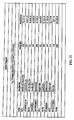
- the hub computer 58 is also able to process the point of sales data and vending machine data into reports detailing the dispensing activity of individual vending machines 24, as well as a collective group of vending machines 24 located at the same location or at multiple remote locations.
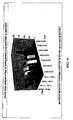
- Figs. 12 to 15 show examples of reports which are able to be generated at the hub computer 58.
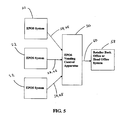
- Fig. 6 shows a configuration in which outlets 68 are able to connect to the hub computer 58 via a network such as the Internet 62 to facilitate online remote monitoring of vending machines in a single or multiple locations.
- the vending machines 24 will also have the ability to send a "Current Status Update" to a designated web server which will enable the constant online remote monitoring of all vending machines in various locations throughout a specified territory or country.
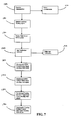
- Fig. 7 is the first part of a flow diagram showing a process for vending a product from a vending machine.
- the EPOS operator authenticates him or herself to the EPOS system. A failed authentication attempt by the EPOS operator will, at step 110, result in the operator being blocked from having access to functionality of the EPOS system.
- an EPOS operator in response to a request received from a customer wanting to purchase a product in a vending machine, activates a vending option on the EPOS system. Such a vending option will enable the operator to identify the product to be vended on display means associated with the EPOS system.
- the operator selects the product to be vended by appropriate interaction with input means associated with the EPOS system.
- Such input means may be a touch screen displaying images of icons representing various products able to be dispensed by the vending machines which are connected to the EPOS system.
- input means may be provided by a keyboard, whereby an operator is able to use the keyboard to perform the required selection.
- age verification functionality on the EPOS system is activated. This verifies that the operator is the required age to vend the particular product and also, on confirmation that the operator is permitted to sell the product, prompts the operator to request that the customer verify their age before allowing the vend to proceed. The EPOS system will thus prompt the operator to verify their age and input a confirmation that the customer is old enough to purchase the desired goods.
- the customer is not the required minimum age, or if an operator has failed to produce the required age verification input for the customer, the vend will not proceed.
- the EPOS system encodes the selection by the operator into a vend request and transmits the vend request as a characteristic EPOS control output signal to the adaptive EPOS communications interface at the control apparatus.
- the adaptive EPOS communications interface converts the characteristic EPOS control output signal into a standardised EPOS control output signal which is able to be processed by the main vending control unit.
- the standardised EPOS control output signal generated at step 170 is converted into a standardised vending machine control input signal.
- the vending machine control input signal is transmitted to the adaptive vending machine communications interface where it is converted into a characteristic vending machine control input signal which is suitable for processing by the vending machine and encodes the original vend instruction issued by the operator at the EPOS system to dispense the desired product.
- Fig. 8 shows the subsequent steps in the vending process of Fig. 7 .
- the characteristic vending machine control input signal is sent to the specific vending machine needed to vend the requested product.
- the product is either successfully vended at step 210, or possibly due to an error at the vending machine, or if the vending machine is out of stock, it is not vended at step 220.
- a characteristic vending machine control output signal encoding an indication that the product has been successfully dispensed is sent from the vending machine to the adaptive vending machine communications interface.
- a characteristic vending machine control output signal encoding a confirmation indicating the product has not been successfully dispensed is sent from the vending machine to the adaptive vending machine communications interface at 240.
- the characteristic vending machine control output signal is converted to a standardised vending machine control output signal by the adaptive vending machine communications interface and sent onto the main vending control unit for processing.
- the main vending control unit generates a standardised EPOS control input signal in response to the characteristic vending machine control output signal received.
- This standardised EPOS control input signal is sent from the main control unit to the adaptive EPOS communications interface, and at step 270, it is converted into a characteristic EPOS input signal which can be processed by the EPOS system that originally issued the vend request at step 130.
- Information received at the main vending control unit, including information relating to both successful and not successful vends is also transmitted for reporting purposes to a central hub computer at step 280.
- the signal at step 230 has encoded a confirmation that the vending machine has dispensed the product
- the costs for the dispensed product are added to a customer invoice at step 290 by the EPOS system.
- the confirmation is also displayed on display means associated with the EPOS system.
- the signal at step 230 encodes a failed vend confirmation
- the costs for the dispensed product are not added to a customer invoice and the operator is alerted to the fact the product was not dispensed by the vending machine.
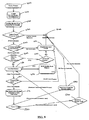
- Fig. 9 is a further flow diagram showing the higher level steps in a process for vending a product according to the invention.
- the customer requests a product which is available from a vending machine in an outlet.
- the operator/cashier touches or presses a vend button or icon representing that product on the EPOS system.
- a product selection panel is rendered on the vending machine from which an operator, at step 430, selects a product to vend. If the operator does not wish to proceed with the product vend then a cancellation may be made and the product vend process ends at step 700.
- the characteristic EPOS control output signal encoding a vend request instruction is transmitted at step 480 and the product is vended.
- the EPOS vending control apparatus handles the vend request at step 490.
- step 520 if one or more products failed to vend, then a vend error prompt is displayed.
- a re-route option is provided at step 530 which provides that if a specific vending machine is unable to vend a requested product then a vend request for the requested product is directed to an alternative vending machine. Such a re-route option returns the process to step 480. If no re-route option is provided, as at step 540, then the vend process ends at step 700.
Landscapes
- Business, Economics & Management (AREA)
- Physics & Mathematics (AREA)
- General Physics & Mathematics (AREA)
- Accounting & Taxation (AREA)
- Finance (AREA)
- Strategic Management (AREA)
- General Business, Economics & Management (AREA)
- Engineering & Computer Science (AREA)
- Theoretical Computer Science (AREA)
- Control Of Vending Devices And Auxiliary Devices For Vending Devices (AREA)
- Management, Administration, Business Operations System, And Electronic Commerce (AREA)
Claims (15)
- Verkaufssteuergerät (20) eines elektronischen Verkaufspunkts (EPOS) um verschiedene Arten von elektronischen Verkaufspunkt-Systemen (22) mit verschiedenen Arten von Verkaufsmaschinen (24) zu verbinden und zu ermöglichen, dass die oder jede Verkaufsmaschine (24) von jedem EPOS-System (22) gesteuert wird, wobei jede Art von EPOS-System (22) und Verkaufsmaschine (24) charakteristischen Steuereingaben aufweist,
wobei das Steuergerät (20) eine Haupt-Verkaufskontrolleinheit (26) umfasst, die mit mindestens einer Verkaufsmaschine (24) und mindestens einem EPOS-System (22) durch eine Kommunikationsverknüpfung verbunden ist für die Übertragung von charakteristischen EPOS-Steuereingabesignalen für die Steuerung des EPOS-Systems (22) und charakteristischen Verkaufsmaschinen-Steuereingabesignalen für die Steuerung der Verkaufsmaschine (24) vom EPOS-System (22),
wobei das Steuergerät (20) eine adaptive EPOS-Kommunikationsschnittstelle (32) betätigt, um standardisierte EPOS-Steuereingabesignale, die von der Haupt-Verkaufssteuereinheit (26) übertragen werden, in charakteristische EPOS-Steuereingabesignale für die Übertragung an das EPOS-System (22) zu übersetzen, und eine adaptive Verkaufsmaschinen-Kommunikationsschnittstelle (36), um die standardisierten Verkaufsmaschinen-Steuereingangssignale, die von der Haupt-Verkaufssteuereinheit (26) übertragen werden, in charakteristische Verkaufsmaschinen-Steuereingabesignale für die Übertragung an die Verkaufsmaschine (24) umzuwandeln,
Anweisungen für eine Verkaufsmaschine, um ein Produkt für eine Transaktion abzugeben, werden von einem Bediener in das EPOS-System (22) eingegeben, und in eine Verkaufsanfrage codiert, die als ein charakteristisches EPOS-Steuerausgabesignal vom EPOS-System (22) übertragen wird, das mit dem Steuergerät (20) verbunden ist, und die adaptive EPOS-Kommunikationsschnittstelle (32) ist konfiguriert, um die charakteristischen EPOS-Steuerausgabesignale, die vom EPOS-System (22) übertragen werden, in standardisierte EPOS-Steuerausgabesignale zur Verarbeitung durch die Haupt-Verkaufssteuereinheit (26) zu übersetzen; und
die adaptive Verkaufsmaschinen-Kommunikationsschnittstelle (36) ist konfiguriert, um charakteristische Verkaufsmaschinen-Steuerausgabesignale, die von der Verkaufsmaschine (24) übertragen werden, in standardisierte Verkaufsmaschinen-Steuerausgabesignale zur Verarbeitung durch die Haupt-Verkaufssteuereinheit (26) zu übersetzen,
die adaptiven Kommunikationsschnittstellen (32, 36) umfassen jeweils Mittel, um Verkaufspunktendgerät-Daten und/oder Verkaufsmaschinen-Daten von den charakteristischen EPOS-Steuerausgabesignalen, die von den EPOS-Systemen (22) erhalten werden, und/oder die charakteristischen Verkaufsmaschinen-Steuerausgabesignale, die von den Verkaufsmaschinen (24) erhalten werden, gekoppelt mit dem Steuergerät (20), zu extrahieren, wobei die Verkaufspunktdaten und die Verkaufsmaschinendaten Daten umfassen, die sich auf Transaktionen beziehen, die sowohl Produkte, die von einer Verkaufsmaschine (24) verkauft werden, als auch andere nicht verkaufte Produkte in einer Transaktion umfassen,
die extrahierten Daten der Verkaufspunktvorrichtung und/oder Daten der Verkaufsmaschine werden an die Haupt-Verkaufssteuereinheit (26), die mit mindestens einem Netzwerk-Computer (58) verbunden ist, über eine weitere Kommunikations-Verknüpfung für die Übertragung der Verkaufspunkt-Daten und Verkaufsmaschinen-Daten übertragen,
jedes EPOS-System (22) betätigt eine Verkaufsmaschinen-Steueranwendung, die eine interaktive Schnittstelle auf dem EPOS-System (22) bereitstellt, von der ein Bediener ein Produkt auswählt, um von eine Verkaufsmaschine (24) abgegeben zu werden, und ein Symbol, das die oder jede Verkaufsmaschine (24) darstellt, das dazu in der Lage ist, eine Verkaufsanweisung von einem EPOS-System (22) zu empfangen, wird auf einem Anzeigemittel des EPOS-Systems (22) angezeigt,
wodurch die charakteristischen Steuereingabesignale der Verkaufsmaschine, die an die Verkaufsmaschine (24) übertragen werden, eine Anweisung an die Verkaufsmaschine (24) codieren, um das Produkt in der Verkaufsanfrage, die vom Bediener in das EPOS-System (22) eingegeben wurde, abzugeben, wobei die Verkaufsmaschine (24) die charakteristischen Steuereingabesignale der Verkaufsmaschine verarbeitet und das Produkt abgibt, und
bevor Kosten für das Produkt, das von der Verkaufsmaschine (24) verkauft wurde, der Kundenrechnung hinzugefügt werden, muss das EPOS-System (22) ein charakteristisches EPOS-Steuereingabesignal von einer adaptiven EPOS-Kommunikationsschnittstelle (32) vom Steuergerät erhalten, das eine Bestätigung codiert, dass die Verkaufsmaschine (24) das Produkt abgegeben hat, und in der, wenn die Bestätigung erhalten wird, sie auf Anzeigemitteln wiedergegeben wird, die mit dem EPOS-System (22) assoziiert sind, und wenn die Verkaufsmaschine das Produkt nicht abgegeben hat, werden die Kosten für das Produkt der Kundenrechnung nicht hinzugefügt, und der Bediener wird darauf aufmerksam gemacht, dass das Produkt nicht abgegeben wurde. - Verkaufssteuergerät (20) eines elektronischen Verkaufspunkts (EPOS) nach Anspruch 1, wobei die Haupt-Verkaufssteuereinheit (26) mit einer Datenbank von Schnittstellen-Steuerprogrammen (56) verbunden ist,
wobei einige der Schnittstellen-Steuerprogramme (56), wenn sie auf der adaptiven EPOS-Kommunikationsschnittstelle (32) durchgeführt werden, eine Funktion bereitstellen, die erforderlich ist, um charakteristische EPOS-Steuereingabesignale zu erzeugen um charakteristische EPOS-Steuerausgabesignale für ein EPOS-System (22) zu verarbeiten, und
andere der Schnittstellen-Steuerprogramme (56), wenn sie auf der Kommunikationsschnittstelle (36) der Verkaufsmaschine durchgeführt werden, eine Funktion bereitstellen, die erforderlich ist, um charakteristische Verkaufsmaschinen-Steuereingabesignale zu erzeugen und charakteristische Verkaufsmaschinen-Steuerausgabesignale für eine Verkaufsmaschine (24) zu verarbeiten. - Verkaufssteuergerät (20) eines elektronischen Verkaufspunkts (EPOS) nach Anspruch 2 wobei mit der Datenbank von Schnittstellensteuerprogrammen (56) eine EPOS-Konfigurationsdatei assoziiert ist, die Konfigurationsparameter speichert, die als Eingabe den Schnittstellensteuerprogrammen (56) bereitgestellt werden, und
die Schnittstellen-Steuerprogramme (56) in der Datenbank in einer dynamischen verknüpften Bibliotheksstruktur angeordnet sind. - Verkaufssteuergerät (2) eines elektronischen Verkaufspunkts (EPOS) nach Anspruch 2 oder Anspruch 3, wobei das EPOS-Verkaufssteuergerät (20) weiter Mittel umfasst, um charakteristische EPOS-Steuerausgabesignale für ein EPOS-System (22) in Verbindung mit dem EPOS-Verkaufssteuergerät (20) probezuentnehmen, und Mittel, um EPOS-System (22)-Identifikationsparameter von den probeentnommenen EPOS-Signalen zu extrahieren, und
wobei das EPOS-Verkaufssteuergerät (20) die EPOS-System (22)-Identifikationsparamerter verwendet, um ein Schnittstellensteuerprogramm für die adaptive EPOS-Kommunikationsschnittstelle (32) auszuwählen und zu schreiben, um die Verarbeitung von charakteristischen EPOS-Steuerausgabesignalen zu erleichtern, die vom EPOS-System (22) erhalten werden, und charakteristische EPOS-Steuereingabesignale für das EPOS-System (22) zu erzeugen. - Verkaufssteuergerät (2) eines elektronischen Verkaufspunkts (EPOS) nach Anspruch 2 bis 4, wobei das EPOS-Verkaufssteuergerät (20) weiter Mittel umfasst, um charakteristische Verkaufsmaschinen-Steuerausgabesignale für eine Verkaufsmaschine (24) in Verbindung mit dem EPOS-Verkaufssteuergerät (20) probezuentnehmen, und Mittel, um Verkaufsmaschinen-Identifikationsparameter von den probeentnommenen Verkaufmaschinensignalen zu extrahieren, und
wobei das EPOS-Verkaufssteuergerät (20) die Verkaufsmaschinen-Identifikationsparameter verwendet, um ein Schnittstellensteuerprogramm für die adaptive Verkaufsmaschinen-Kommunikationsschnittstelle (36) auszuwählen und zu schreiben, um die Verarbeitung von charakteristischen Verkaufsmaschinen-Steuerausgabesignalen zu erleichtern, die von der Verkaufsmaschine (24) erhalten werden, und charakteristische Verkaufsmaschinen-Steuereingabesignale zur Verarbeitung durch die Verkaufsmaschine (24) zu erzeugen. - Verkaufssteuergerät (20) eines elektronischen Verkaufspunkts (EPOS) nach einem der vorhergehenden Ansprüche, wobei die adaptive EPOS-Kommunikationsschnittstelle (32) und die adaptive Verkaufsmaschinen-Kommunikationsschnittstelle (36) im Steuergerät (20) gespeichert werden, bei den Verkaufspunktdaten und den Verkaufsmaschinendaten Daten, die von der Haupt-Verkaufssteuereinheit (26) übertragen werden, handelt es sich um die Zeit und/oder das Datum, das gemäß der Zeit und dem Datum der Transaktion gestempelt ist, und
wobei der Netzwerk-Computer (58) dazu in der Lage ist, die Verkaufspunktdaten und die Verkaufsmaschinendaten in Berichte zu verarbeiten, die die Verkaufsaktivität und/oder die Abgabeaktivität von einer oder von mehreren Verkaufsmaschinen (24) detailliert. - Verkaufssteuergerät (20) eines elektronischen Verkaufspunkts (EPOS) nach einem der vorhergehenden Ansprüche, wobei ein Bediener Authentifizierungsinformation in ein EPOS-System (22) eingeben muss, um die Funktion des EPOS-Systems (22) zu betreiben und Zugang darauf zu erhalten,
wobei die Authentifizierung eines Bedieners umfasst, dass der Bediener ein Passwort in eine Anmelde- oder Überprüfungs-Routine eingibt, die auf einem EPOS-System (22) läuft,
Einführung einer Lesekarte in ein Lesegerät, das mit dem EPOS-System (22) assoziiert ist, wobei die erforderliche Überprüfungsinformation von der Lesekarte durch ein Lesegerät erhalten werden kann und dann an das EPOS-System (22) übertragen wird, oder
die Verwendung von biometrischen Verfahren umfasst, darin eingeschlossen Fingerabdruck-Leser oder Iris-Scan-Technologien. - Verkaufssteuergerät (20) eines elektronischen Verkaufspunkts (EPOS) nach einem der vorhergehenden Ansprüche, wobei eine Verkaufsanfrage für ein angefragtes Produkt an eine alternative Verkaufmaschine (24) gerichtet wird, um das angefragte Produkt abzugeben, wenn eine spezifische Verkaufsmaschine (24) nicht dazu in der Lage ist, das angefragte Produkt zu verkaufen.
- Verkaufssteuergerät (20) eines elektronischen Verkaufspunkts (EPOS) nach einem der vorhergehenden Ansprüche, wobei das EPOS-System (22) einen Sensorbildschirm umfasst und die interaktive Schnittstelle Symbol-basiert ist, wobei jedes Produkt, das von der Verkaufsmaschine (24) abgegeben werden kann, als ein Symbol auf dem Sensorbildschirm dargestellt wird, und
wobei der Sensorbildschirm, der mit einem EPOS-System (22) assoziiert ist, mit der gesamten Information konfiguriert werden kann, die der Anordnung der Säulen und der Schlitze in einer Verkaufsmaschine (24) entspricht. - Verkaufssteuergerät (20) eines elektronischen Verkaufspunkts (EPOS) nach einem der vorhergehenden Ansprüche, wobei jedes EPOS-System (22) eine Tastatur umfasst, und jedes Produkt von der Verkaufsmaschine (24) abgegeben werden kann, indem eine Taste auf einer vordefinierten Tastatur gedrückt wird.
- Verkaufssteuergerät (20) eines elektronischen Verkaufspunkts (EPOS) nach einem der vorhergehenden Ansprüche, wobei ein Verkauf von einer Verkaufsmaschine (24) gegen einen Bediener aufgezeichnet wird, der für das EPOS-System (22) authentifiziert ist, und
wobei das EPOS-System (22) .eine Funktion zur Überprüfung des Alters des Kunden in Form einer visuellen Eingabeaufforderung umfasst, die mit dem EPOS-System (22) assoziiert ist, wobei die Eingabeaufforderung den Bediener anweist, einen Kunden aufzufordern, eine Altersverifikation vorzuweisen. - Verkaufssteuergerät (20) eines elektronischen Verkaufspunkts (EPOS) nach Anspruch 1 bis 10, wobei das EPOS-System (22) eine Funktion zur Überprüfung des Alters des Kunden umfasst, die das Scannen einer Karte umfasst, die das Alter des Kunden kodiert, und
das EPOS-System (22) ausgelegt ist, um Details zu speichern, die sich auf die Altersverifizierung eines Kunden beziehen. - Verkaufssteuergerät (20) eines elektronischen Verkaufspunkts (EPOS) nach einem der vorhergehenden Ansprüche, wobei jedes EPOS-System (22) eine Datenbank mit persönlichen Details pflegt, umfassend persönliche Details jedes Bedieners wobei der Zugang zur Funktion auf jedem EPOS-System (22) die erforderlich ist, um spezifische Produkte von einer Verkaufsmaschine (24) zu verkaufen, gemäß den persönlichen Details in der Datenbank gesteuert werden kann,
und wobei die Haupt-Steuereinheit (26) Daten empfängt, die sich auf alle verkauften Produkte beziehen, nachdem sie von einer Verkaufsmaschine (24) abgegeben wurden. - Verkaufssteuergerät (20) eines elektronischen Verkaufspunkts (EPOS) nach einem der vorhergehenden Ansprüche, wobei die Haupt-Verkaufssteuereinheit (26) Mittel umfasst, um Warnungen in Antwort auf Signale zu übertragen, die von einer Verkaufsmaschine (24) erhalten werden und angeben, dass die Mengen von Produkten, die in der Verkaufsmaschine (24) verbleiben, unter einer minimalen spezifizierten Menge liegen,
und die Warnungen liegen in der Form einer Eingabeaufforderung in EPOS-System (22), einer Kurznachrichtendienst (SMS)-Textmeldung, und/oder einer E-Mail-Meldung vor. - Verkaufssteuergerät (20) eines elektronischen Verkaufspunkts (EPOS) nach einem der vorhergehenden Ansprüche, wobei die Haupt-Verkaufssteuereinheit (26) ausgelegt ist, um Status-Informationen an einen Netz-Server zu übertragen, um die Online-Femüberwachung der Verkaufsmaschine (24) an einem einzigen oder an mehreren Standorten zu erleichtern, und
wobei die Sensorbildschirm-Paneele, die mit einem EPOS-System (22) assoziiert sind, konfiguriert werden können, um grafische Darstellungen aufzuweisen, die dem physischen Aussehen der Produkte in der Verkaufsmaschine (24) entsprechen.
Applications Claiming Priority (1)
| Application Number | Priority Date | Filing Date | Title |
|---|---|---|---|
| PCT/EP2007/058944 WO2009026957A1 (en) | 2007-08-28 | 2007-08-28 | An electronic point of sales vending control apparatus |
Publications (2)
| Publication Number | Publication Date |
|---|---|
| EP2206044A1 EP2206044A1 (de) | 2010-07-14 |
| EP2206044B1 true EP2206044B1 (de) | 2014-01-22 |
Family
ID=38698809
Family Applications (1)
| Application Number | Title | Priority Date | Filing Date |
|---|---|---|---|
| EP07802961.8A Not-in-force EP2206044B1 (de) | 2007-08-28 | 2007-08-28 | Elektronische point-of-sales-verkaufssteuervorrichtung |
Country Status (5)
| Country | Link |
|---|---|
| US (1) | US20110208349A1 (de) |
| EP (1) | EP2206044B1 (de) |
| AU (1) | AU2007358105B2 (de) |
| CA (1) | CA2697952A1 (de) |
| WO (1) | WO2009026957A1 (de) |
Families Citing this family (8)
| Publication number | Priority date | Publication date | Assignee | Title |
|---|---|---|---|---|
| US20090306818A1 (en) * | 2008-06-09 | 2009-12-10 | The Coca-Cola Company | Method for Retrofitting a Vending Machine |
| GB2513677B (en) * | 2013-10-17 | 2015-09-02 | Imagination Tech Ltd | Channel impulse response |
| CN103870991B (zh) | 2014-03-14 | 2018-01-12 | 广州广电运通金融电子股份有限公司 | 自助终端业务应急方法以及网点服务器 |
| EP2993538B1 (de) * | 2014-09-04 | 2017-11-15 | Dsc Nexus S.R.L. | Steuerungsvorrichtung und -system für vorrichtungen |
| CN106228684B (zh) * | 2015-07-21 | 2019-01-18 | 北京志方信城机电设备有限公司 | 一种自动售货机 |
| US10214411B2 (en) * | 2016-07-11 | 2019-02-26 | Wayne Fueling Systems Llc | Fuel dispenser communication |
| US20210012400A1 (en) * | 2019-07-14 | 2021-01-14 | Walmart Apollo, Llc | System for sale-restricted items management |
| US20240143816A1 (en) * | 2022-10-28 | 2024-05-02 | Chanalytics Io, Llc | Information Acquisition, Filtering and Analyzing System and Method |
Citations (2)
| Publication number | Priority date | Publication date | Assignee | Title |
|---|---|---|---|---|
| EP1152363A2 (de) * | 2000-05-04 | 2001-11-07 | InSitu Limited | Verfahren und Apparat zum Verbessern der Kommunikation zwischen Verkaufsstellen |
| IE20050029A1 (en) * | 2004-01-23 | 2005-09-07 | January Patents Ltd | Vending control apparatus |
Family Cites Families (26)
| Publication number | Priority date | Publication date | Assignee | Title |
|---|---|---|---|---|
| US4766548A (en) * | 1987-01-02 | 1988-08-23 | Pepsico Inc. | Telelink monitoring and reporting system |
| AU7562794A (en) * | 1993-08-18 | 1995-03-14 | Real Time Data | System for monitoring remote vending machines |
| US5442568A (en) * | 1994-11-15 | 1995-08-15 | Audit Systems Company | Vending machine audit monitoring system |
| AU1953297A (en) * | 1996-02-12 | 1997-08-28 | Commstar | Point of sale system for processing statistics and diagnostics and met hod of operating same |
| US5889676A (en) * | 1996-06-03 | 1999-03-30 | Matsushita Electric Industrial Co., Ltd. | Point of sales system |
| US6289320B1 (en) * | 1998-07-07 | 2001-09-11 | Diebold, Incorporated | Automated banking machine apparatus and system |
| US7606767B1 (en) * | 1996-11-27 | 2009-10-20 | Diebold, Incorporated | Cash dispensing automated banking machine system and communication method |
| US6038491A (en) * | 1997-11-26 | 2000-03-14 | Mars, Incorporated | Monitoring and reporting system using cellular carriers |
| US6351688B1 (en) * | 1998-03-13 | 2002-02-26 | Interlott Technologies, Inc. | Item dispensing system |
| US6116505A (en) * | 1998-07-21 | 2000-09-12 | Gilbarco Inc. | Fuel transaction system for enabling the purchase of fuel and non-fuel items on a single authorization |
| WO2001017298A1 (en) * | 1999-09-02 | 2001-03-08 | Automated Business Companies | Communication and proximity authorization systems |
| US6246325B1 (en) * | 1999-11-18 | 2001-06-12 | Agere Systems Guardian Corp. | Distributed communications system for reducing equipment down-time |
| US6801835B2 (en) * | 2000-02-28 | 2004-10-05 | Autogas Systems, Inc. | System and method for controlling an automated fueling station |
| US6360138B1 (en) * | 2000-04-06 | 2002-03-19 | Dresser, Inc. | Pump and customer access terminal interface computer converter to convert traditional pump and customer access terminal protocols to high speed ethernet protocols |
| US20030025600A1 (en) * | 2000-07-21 | 2003-02-06 | Dresser, Inc | Wireless communication in a retail refueling environment |
| US20030041330A1 (en) * | 2001-08-24 | 2003-02-27 | Tokheim Corporation | Security camera in dispenser |
| ES2219139A1 (es) * | 2002-01-10 | 2004-11-16 | Jofemar, S.A | Sistema de identificacion de usuario para maquinas automaticas. |
| US20040143368A1 (en) * | 2003-01-21 | 2004-07-22 | May Robert E. | Operating utility devices in a master-agent network environment |
| US7389919B2 (en) * | 2003-10-16 | 2008-06-24 | Walker Digital, Llc | Products and processes for promoting multiple transactions at a retail establishment |
| US20060004485A1 (en) * | 2004-07-01 | 2006-01-05 | Thomas Mark B | Fuel pump island vending |
| US7520430B1 (en) * | 2004-11-04 | 2009-04-21 | Acumera, Inc. | Multiservice merchant gateway |
| CA2505072A1 (en) * | 2005-04-22 | 2006-10-22 | Aramark Educational Services, Inc. | Point-of-sale and declining balance system, and method, having a relay server for facilitating communication between front-end devices and back-end account servers |
| WO2006130009A1 (en) * | 2005-05-02 | 2006-12-07 | Oppie Design As | System and use of a system; particularly a minibar, with centrally controlled product purchase |
| CA2565408C (en) * | 2005-10-25 | 2013-01-08 | Mckesson Automation Systems, Inc. | Adaptive interface for product dispensing systems |
| US8191779B2 (en) * | 2005-10-27 | 2012-06-05 | Avt, Inc. | Wireless management of remote vending machines |
| US7783379B2 (en) * | 2007-04-25 | 2010-08-24 | Asteres, Inc. | Automated vending of products containing controlled substances |
-
2007
- 2007-08-28 AU AU2007358105A patent/AU2007358105B2/en not_active Ceased
- 2007-08-28 WO PCT/EP2007/058944 patent/WO2009026957A1/en not_active Ceased
- 2007-08-28 US US12/673,535 patent/US20110208349A1/en not_active Abandoned
- 2007-08-28 CA CA2697952A patent/CA2697952A1/en not_active Abandoned
- 2007-08-28 EP EP07802961.8A patent/EP2206044B1/de not_active Not-in-force
Patent Citations (2)
| Publication number | Priority date | Publication date | Assignee | Title |
|---|---|---|---|---|
| EP1152363A2 (de) * | 2000-05-04 | 2001-11-07 | InSitu Limited | Verfahren und Apparat zum Verbessern der Kommunikation zwischen Verkaufsstellen |
| IE20050029A1 (en) * | 2004-01-23 | 2005-09-07 | January Patents Ltd | Vending control apparatus |
Also Published As
| Publication number | Publication date |
|---|---|
| CA2697952A1 (en) | 2009-03-05 |
| WO2009026957A1 (en) | 2009-03-05 |
| US20110208349A1 (en) | 2011-08-25 |
| EP2206044A1 (de) | 2010-07-14 |
| AU2007358105B2 (en) | 2013-05-16 |
| AU2007358105A1 (en) | 2009-03-05 |
Similar Documents
| Publication | Publication Date | Title |
|---|---|---|
| AU2007358105B2 (en) | An electronic point of sales vending control apparatus | |
| US10990942B2 (en) | Fuel dispenser commerce | |
| US20040143512A1 (en) | Method and system for placing an order | |
| US20240406059A1 (en) | System and method for monitoring hardware and services | |
| US8925808B2 (en) | Fuel dispenser commerce | |
| US8554688B2 (en) | Fuel dispenser management | |
| CN101989172B (zh) | 加密触敏显示器 | |
| US9177272B2 (en) | Method and system of obtaining diagnostic data from a device at a remote location | |
| US20050182681A1 (en) | Money dispensing system | |
| US20020138446A1 (en) | System and method for providing security for financial services terminals with a document driven interface | |
| US11197033B2 (en) | Fuel dispenser alternative content control based on monitored fueling transaction phase | |
| MXPA06013638A (es) | Sistema y metodo de diagnostico de maquina bancaria automatizada surtidora de dinero en efectivo. | |
| US20070119859A1 (en) | Fuel Dispenser Management | |
| EP2232452A2 (de) | Auftankeinrichtungskommunikation | |
| US20210365915A1 (en) | Self-serve product dispenser system with associated dynamically modifiable tiered menu | |
| US20160381234A1 (en) | Network system and control method of a network system | |
| CN104137159B (zh) | 用于控制基于机器的交易的计算机系统 | |
| WO2001006338A2 (en) | Automated banking machine system and development method | |
| KR20200024438A (ko) | 매장 무인 판매 시스템 | |
| NZ583498A (en) | An electronic point of sales vending control apparatus | |
| IE20080693A1 (en) | An electronic point of sales vending control apparatus | |
| WO2026080498A1 (en) | System and method for improved fuel dispenser audit compliance | |
| JP2024051338A (ja) | 貨幣処理システム及び貨幣処理方法 | |
| KR20250170930A (ko) | 태블릿 주문기의 원격 관리 시스템 및 그 방법 | |
| US6464137B1 (en) | Document dispensing system |
Legal Events
| Date | Code | Title | Description |
|---|---|---|---|
| PUAI | Public reference made under article 153(3) epc to a published international application that has entered the european phase |
Free format text: ORIGINAL CODE: 0009012 |
|
| 17P | Request for examination filed |
Effective date: 20100319 |
|
| AK | Designated contracting states |
Kind code of ref document: A1 Designated state(s): AT BE BG CH CY CZ DE DK EE ES FI FR GB GR HU IE IS IT LI LT LU LV MC MT NL PL PT RO SE SI SK TR |
|
| AX | Request for extension of the european patent |
Extension state: AL BA HR MK RS |
|
| 17Q | First examination report despatched |
Effective date: 20100929 |
|
| DAX | Request for extension of the european patent (deleted) | ||
| GRAP | Despatch of communication of intention to grant a patent |
Free format text: ORIGINAL CODE: EPIDOSNIGR1 |
|
| INTG | Intention to grant announced |
Effective date: 20130806 |
|
| GRAS | Grant fee paid |
Free format text: ORIGINAL CODE: EPIDOSNIGR3 |
|
| GRAA | (expected) grant |
Free format text: ORIGINAL CODE: 0009210 |
|
| AK | Designated contracting states |
Kind code of ref document: B1 Designated state(s): AT BE BG CH CY CZ DE DK EE ES FI FR GB GR HU IE IS IT LI LT LU LV MC MT NL PL PT RO SE SI SK TR |
|
| REG | Reference to a national code |
Ref country code: GB Ref legal event code: FG4D |
|
| REG | Reference to a national code |
Ref country code: CH Ref legal event code: EP |
|
| REG | Reference to a national code |
Ref country code: AT Ref legal event code: REF Ref document number: 651078 Country of ref document: AT Kind code of ref document: T Effective date: 20140215 |
|
| REG | Reference to a national code |
Ref country code: IE Ref legal event code: FG4D |
|
| REG | Reference to a national code |
Ref country code: DE Ref legal event code: R096 Ref document number: 602007034933 Country of ref document: DE Effective date: 20140306 |
|
| REG | Reference to a national code |
Ref country code: NL Ref legal event code: VDEP Effective date: 20140122 |
|
| REG | Reference to a national code |
Ref country code: AT Ref legal event code: MK05 Ref document number: 651078 Country of ref document: AT Kind code of ref document: T Effective date: 20140122 |
|
| REG | Reference to a national code |
Ref country code: LT Ref legal event code: MG4D |
|
| PG25 | Lapsed in a contracting state [announced via postgrant information from national office to epo] |
Ref country code: IS Free format text: LAPSE BECAUSE OF FAILURE TO SUBMIT A TRANSLATION OF THE DESCRIPTION OR TO PAY THE FEE WITHIN THE PRESCRIBED TIME-LIMIT Effective date: 20140522 Ref country code: LT Free format text: LAPSE BECAUSE OF FAILURE TO SUBMIT A TRANSLATION OF THE DESCRIPTION OR TO PAY THE FEE WITHIN THE PRESCRIBED TIME-LIMIT Effective date: 20140122 |
|
| PG25 | Lapsed in a contracting state [announced via postgrant information from national office to epo] |
Ref country code: AT Free format text: LAPSE BECAUSE OF FAILURE TO SUBMIT A TRANSLATION OF THE DESCRIPTION OR TO PAY THE FEE WITHIN THE PRESCRIBED TIME-LIMIT Effective date: 20140122 Ref country code: FI Free format text: LAPSE BECAUSE OF FAILURE TO SUBMIT A TRANSLATION OF THE DESCRIPTION OR TO PAY THE FEE WITHIN THE PRESCRIBED TIME-LIMIT Effective date: 20140122 Ref country code: ES Free format text: LAPSE BECAUSE OF FAILURE TO SUBMIT A TRANSLATION OF THE DESCRIPTION OR TO PAY THE FEE WITHIN THE PRESCRIBED TIME-LIMIT Effective date: 20140122 Ref country code: SE Free format text: LAPSE BECAUSE OF FAILURE TO SUBMIT A TRANSLATION OF THE DESCRIPTION OR TO PAY THE FEE WITHIN THE PRESCRIBED TIME-LIMIT Effective date: 20140122 Ref country code: NL Free format text: LAPSE BECAUSE OF FAILURE TO SUBMIT A TRANSLATION OF THE DESCRIPTION OR TO PAY THE FEE WITHIN THE PRESCRIBED TIME-LIMIT Effective date: 20140122 Ref country code: CY Free format text: LAPSE BECAUSE OF FAILURE TO SUBMIT A TRANSLATION OF THE DESCRIPTION OR TO PAY THE FEE WITHIN THE PRESCRIBED TIME-LIMIT Effective date: 20140122 Ref country code: PT Free format text: LAPSE BECAUSE OF FAILURE TO SUBMIT A TRANSLATION OF THE DESCRIPTION OR TO PAY THE FEE WITHIN THE PRESCRIBED TIME-LIMIT Effective date: 20140522 |
|
| PG25 | Lapsed in a contracting state [announced via postgrant information from national office to epo] |
Ref country code: LV Free format text: LAPSE BECAUSE OF FAILURE TO SUBMIT A TRANSLATION OF THE DESCRIPTION OR TO PAY THE FEE WITHIN THE PRESCRIBED TIME-LIMIT Effective date: 20140122 Ref country code: BE Free format text: LAPSE BECAUSE OF FAILURE TO SUBMIT A TRANSLATION OF THE DESCRIPTION OR TO PAY THE FEE WITHIN THE PRESCRIBED TIME-LIMIT Effective date: 20140122 |
|
| REG | Reference to a national code |
Ref country code: DE Ref legal event code: R097 Ref document number: 602007034933 Country of ref document: DE |
|
| PG25 | Lapsed in a contracting state [announced via postgrant information from national office to epo] |
Ref country code: RO Free format text: LAPSE BECAUSE OF FAILURE TO SUBMIT A TRANSLATION OF THE DESCRIPTION OR TO PAY THE FEE WITHIN THE PRESCRIBED TIME-LIMIT Effective date: 20140122 Ref country code: DK Free format text: LAPSE BECAUSE OF FAILURE TO SUBMIT A TRANSLATION OF THE DESCRIPTION OR TO PAY THE FEE WITHIN THE PRESCRIBED TIME-LIMIT Effective date: 20140122 Ref country code: EE Free format text: LAPSE BECAUSE OF FAILURE TO SUBMIT A TRANSLATION OF THE DESCRIPTION OR TO PAY THE FEE WITHIN THE PRESCRIBED TIME-LIMIT Effective date: 20140122 Ref country code: CZ Free format text: LAPSE BECAUSE OF FAILURE TO SUBMIT A TRANSLATION OF THE DESCRIPTION OR TO PAY THE FEE WITHIN THE PRESCRIBED TIME-LIMIT Effective date: 20140122 |
|
| PG25 | Lapsed in a contracting state [announced via postgrant information from national office to epo] |
Ref country code: SK Free format text: LAPSE BECAUSE OF FAILURE TO SUBMIT A TRANSLATION OF THE DESCRIPTION OR TO PAY THE FEE WITHIN THE PRESCRIBED TIME-LIMIT Effective date: 20140122 Ref country code: PL Free format text: LAPSE BECAUSE OF FAILURE TO SUBMIT A TRANSLATION OF THE DESCRIPTION OR TO PAY THE FEE WITHIN THE PRESCRIBED TIME-LIMIT Effective date: 20140122 |
|
| PLBE | No opposition filed within time limit |
Free format text: ORIGINAL CODE: 0009261 |
|
| STAA | Information on the status of an ep patent application or granted ep patent |
Free format text: STATUS: NO OPPOSITION FILED WITHIN TIME LIMIT |
|
| 26N | No opposition filed |
Effective date: 20141023 |
|
| REG | Reference to a national code |
Ref country code: DE Ref legal event code: R097 Ref document number: 602007034933 Country of ref document: DE Effective date: 20141023 |
|
| REG | Reference to a national code |
Ref country code: DE Ref legal event code: R119 Ref document number: 602007034933 Country of ref document: DE |
|
| PG25 | Lapsed in a contracting state [announced via postgrant information from national office to epo] |
Ref country code: LU Free format text: LAPSE BECAUSE OF FAILURE TO SUBMIT A TRANSLATION OF THE DESCRIPTION OR TO PAY THE FEE WITHIN THE PRESCRIBED TIME-LIMIT Effective date: 20140828 Ref country code: MC Free format text: LAPSE BECAUSE OF FAILURE TO SUBMIT A TRANSLATION OF THE DESCRIPTION OR TO PAY THE FEE WITHIN THE PRESCRIBED TIME-LIMIT Effective date: 20140122 |
|
| REG | Reference to a national code |
Ref country code: CH Ref legal event code: PL |
|
| GBPC | Gb: european patent ceased through non-payment of renewal fee |
Effective date: 20140828 |
|
| PG25 | Lapsed in a contracting state [announced via postgrant information from national office to epo] |
Ref country code: LI Free format text: LAPSE BECAUSE OF NON-PAYMENT OF DUE FEES Effective date: 20140831 Ref country code: CH Free format text: LAPSE BECAUSE OF NON-PAYMENT OF DUE FEES Effective date: 20140831 |
|
| PG25 | Lapsed in a contracting state [announced via postgrant information from national office to epo] |
Ref country code: SI Free format text: LAPSE BECAUSE OF FAILURE TO SUBMIT A TRANSLATION OF THE DESCRIPTION OR TO PAY THE FEE WITHIN THE PRESCRIBED TIME-LIMIT Effective date: 20140122 |
|
| REG | Reference to a national code |
Ref country code: FR Ref legal event code: ST Effective date: 20150430 |
|
| REG | Reference to a national code |
Ref country code: DE Ref legal event code: R119 Ref document number: 602007034933 Country of ref document: DE Effective date: 20150303 |
|
| PG25 | Lapsed in a contracting state [announced via postgrant information from national office to epo] |
Ref country code: DE Free format text: LAPSE BECAUSE OF NON-PAYMENT OF DUE FEES Effective date: 20150303 Ref country code: GB Free format text: LAPSE BECAUSE OF NON-PAYMENT OF DUE FEES Effective date: 20140828 |
|
| PG25 | Lapsed in a contracting state [announced via postgrant information from national office to epo] |
Ref country code: FR Free format text: LAPSE BECAUSE OF NON-PAYMENT OF DUE FEES Effective date: 20140901 |
|
| PG25 | Lapsed in a contracting state [announced via postgrant information from national office to epo] |
Ref country code: BG Free format text: LAPSE BECAUSE OF FAILURE TO SUBMIT A TRANSLATION OF THE DESCRIPTION OR TO PAY THE FEE WITHIN THE PRESCRIBED TIME-LIMIT Effective date: 20140122 |
|
| PG25 | Lapsed in a contracting state [announced via postgrant information from national office to epo] |
Ref country code: IT Free format text: LAPSE BECAUSE OF FAILURE TO SUBMIT A TRANSLATION OF THE DESCRIPTION OR TO PAY THE FEE WITHIN THE PRESCRIBED TIME-LIMIT Effective date: 20140122 Ref country code: GR Free format text: LAPSE BECAUSE OF FAILURE TO SUBMIT A TRANSLATION OF THE DESCRIPTION OR TO PAY THE FEE WITHIN THE PRESCRIBED TIME-LIMIT Effective date: 20140423 Ref country code: MT Free format text: LAPSE BECAUSE OF FAILURE TO SUBMIT A TRANSLATION OF THE DESCRIPTION OR TO PAY THE FEE WITHIN THE PRESCRIBED TIME-LIMIT Effective date: 20140122 |
|
| PG25 | Lapsed in a contracting state [announced via postgrant information from national office to epo] |
Ref country code: TR Free format text: LAPSE BECAUSE OF FAILURE TO SUBMIT A TRANSLATION OF THE DESCRIPTION OR TO PAY THE FEE WITHIN THE PRESCRIBED TIME-LIMIT Effective date: 20140122 Ref country code: HU Free format text: LAPSE BECAUSE OF FAILURE TO SUBMIT A TRANSLATION OF THE DESCRIPTION OR TO PAY THE FEE WITHIN THE PRESCRIBED TIME-LIMIT; INVALID AB INITIO Effective date: 20070828 |
|
| PGFP | Annual fee paid to national office [announced via postgrant information from national office to epo] |
Ref country code: IE Payment date: 20230727 Year of fee payment: 17 |
|
| PG25 | Lapsed in a contracting state [announced via postgrant information from national office to epo] |
Ref country code: IE Free format text: LAPSE BECAUSE OF NON-PAYMENT OF DUE FEES Effective date: 20240828 |