EP2206723A1 - Domaines modulaires de liaison à l'ADN - Google Patents
Domaines modulaires de liaison à l'ADN Download PDFInfo
- Publication number
- EP2206723A1 EP2206723A1 EP09165328A EP09165328A EP2206723A1 EP 2206723 A1 EP2206723 A1 EP 2206723A1 EP 09165328 A EP09165328 A EP 09165328A EP 09165328 A EP09165328 A EP 09165328A EP 2206723 A1 EP2206723 A1 EP 2206723A1
- Authority
- EP
- European Patent Office
- Prior art keywords
- recognition
- dna
- repeat
- polypeptide
- avrbs3
- Prior art date
- Legal status (The legal status is an assumption and is not a legal conclusion. Google has not performed a legal analysis and makes no representation as to the accuracy of the status listed.)
- Ceased
Links
Images







Classifications
-
- C—CHEMISTRY; METALLURGY
- C12—BIOCHEMISTRY; BEER; SPIRITS; WINE; VINEGAR; MICROBIOLOGY; ENZYMOLOGY; MUTATION OR GENETIC ENGINEERING
- C12N—MICROORGANISMS OR ENZYMES; COMPOSITIONS THEREOF; PROPAGATING, PRESERVING, OR MAINTAINING MICROORGANISMS; MUTATION OR GENETIC ENGINEERING; CULTURE MEDIA
- C12N15/00—Mutation or genetic engineering; DNA or RNA concerning genetic engineering, vectors, e.g. plasmids, or their isolation, preparation or purification; Use of hosts therefor
- C12N15/09—Recombinant DNA-technology
- C12N15/63—Introduction of foreign genetic material using vectors; Vectors; Use of hosts therefor; Regulation of expression
- C12N15/79—Vectors or expression systems specially adapted for eukaryotic hosts
- C12N15/82—Vectors or expression systems specially adapted for eukaryotic hosts for plant cells, e.g. plant artificial chromosomes (PACs)
- C12N15/8216—Methods for controlling, regulating or enhancing expression of transgenes in plant cells
- C12N15/8217—Gene switch
-
- C—CHEMISTRY; METALLURGY
- C07—ORGANIC CHEMISTRY
- C07K—PEPTIDES
- C07K14/00—Peptides having more than 20 amino acids; Gastrins; Somatostatins; Melanotropins; Derivatives thereof
-
- C—CHEMISTRY; METALLURGY
- C07—ORGANIC CHEMISTRY
- C07K—PEPTIDES
- C07K14/00—Peptides having more than 20 amino acids; Gastrins; Somatostatins; Melanotropins; Derivatives thereof
- C07K14/195—Peptides having more than 20 amino acids; Gastrins; Somatostatins; Melanotropins; Derivatives thereof from bacteria
-
- C—CHEMISTRY; METALLURGY
- C07—ORGANIC CHEMISTRY
- C07K—PEPTIDES
- C07K14/00—Peptides having more than 20 amino acids; Gastrins; Somatostatins; Melanotropins; Derivatives thereof
- C07K14/415—Peptides having more than 20 amino acids; Gastrins; Somatostatins; Melanotropins; Derivatives thereof from plants
-
- C—CHEMISTRY; METALLURGY
- C12—BIOCHEMISTRY; BEER; SPIRITS; WINE; VINEGAR; MICROBIOLOGY; ENZYMOLOGY; MUTATION OR GENETIC ENGINEERING
- C12N—MICROORGANISMS OR ENZYMES; COMPOSITIONS THEREOF; PROPAGATING, PRESERVING, OR MAINTAINING MICROORGANISMS; MUTATION OR GENETIC ENGINEERING; CULTURE MEDIA
- C12N15/00—Mutation or genetic engineering; DNA or RNA concerning genetic engineering, vectors, e.g. plasmids, or their isolation, preparation or purification; Use of hosts therefor
- C12N15/09—Recombinant DNA-technology
- C12N15/63—Introduction of foreign genetic material using vectors; Vectors; Use of hosts therefor; Regulation of expression
-
- C—CHEMISTRY; METALLURGY
- C12—BIOCHEMISTRY; BEER; SPIRITS; WINE; VINEGAR; MICROBIOLOGY; ENZYMOLOGY; MUTATION OR GENETIC ENGINEERING
- C12N—MICROORGANISMS OR ENZYMES; COMPOSITIONS THEREOF; PROPAGATING, PRESERVING, OR MAINTAINING MICROORGANISMS; MUTATION OR GENETIC ENGINEERING; CULTURE MEDIA
- C12N15/00—Mutation or genetic engineering; DNA or RNA concerning genetic engineering, vectors, e.g. plasmids, or their isolation, preparation or purification; Use of hosts therefor
- C12N15/09—Recombinant DNA-technology
- C12N15/63—Introduction of foreign genetic material using vectors; Vectors; Use of hosts therefor; Regulation of expression
- C12N15/79—Vectors or expression systems specially adapted for eukaryotic hosts
- C12N15/82—Vectors or expression systems specially adapted for eukaryotic hosts for plant cells, e.g. plant artificial chromosomes (PACs)
- C12N15/8216—Methods for controlling, regulating or enhancing expression of transgenes in plant cells
- C12N15/8237—Externally regulated expression systems
-
- C—CHEMISTRY; METALLURGY
- C12—BIOCHEMISTRY; BEER; SPIRITS; WINE; VINEGAR; MICROBIOLOGY; ENZYMOLOGY; MUTATION OR GENETIC ENGINEERING
- C12N—MICROORGANISMS OR ENZYMES; COMPOSITIONS THEREOF; PROPAGATING, PRESERVING, OR MAINTAINING MICROORGANISMS; MUTATION OR GENETIC ENGINEERING; CULTURE MEDIA
- C12N15/00—Mutation or genetic engineering; DNA or RNA concerning genetic engineering, vectors, e.g. plasmids, or their isolation, preparation or purification; Use of hosts therefor
- C12N15/09—Recombinant DNA-technology
- C12N15/63—Introduction of foreign genetic material using vectors; Vectors; Use of hosts therefor; Regulation of expression
- C12N15/79—Vectors or expression systems specially adapted for eukaryotic hosts
- C12N15/82—Vectors or expression systems specially adapted for eukaryotic hosts for plant cells, e.g. plant artificial chromosomes (PACs)
- C12N15/8216—Methods for controlling, regulating or enhancing expression of transgenes in plant cells
- C12N15/8237—Externally regulated expression systems
- C12N15/8238—Externally regulated expression systems chemically inducible, e.g. tetracycline
-
- C—CHEMISTRY; METALLURGY
- C12—BIOCHEMISTRY; BEER; SPIRITS; WINE; VINEGAR; MICROBIOLOGY; ENZYMOLOGY; MUTATION OR GENETIC ENGINEERING
- C12N—MICROORGANISMS OR ENZYMES; COMPOSITIONS THEREOF; PROPAGATING, PRESERVING, OR MAINTAINING MICROORGANISMS; MUTATION OR GENETIC ENGINEERING; CULTURE MEDIA
- C12N15/00—Mutation or genetic engineering; DNA or RNA concerning genetic engineering, vectors, e.g. plasmids, or their isolation, preparation or purification; Use of hosts therefor
- C12N15/09—Recombinant DNA-technology
- C12N15/63—Introduction of foreign genetic material using vectors; Vectors; Use of hosts therefor; Regulation of expression
- C12N15/79—Vectors or expression systems specially adapted for eukaryotic hosts
- C12N15/82—Vectors or expression systems specially adapted for eukaryotic hosts for plant cells, e.g. plant artificial chromosomes (PACs)
- C12N15/8216—Methods for controlling, regulating or enhancing expression of transgenes in plant cells
- C12N15/8237—Externally regulated expression systems
- C12N15/8239—Externally regulated expression systems pathogen inducible
-
- C—CHEMISTRY; METALLURGY
- C12—BIOCHEMISTRY; BEER; SPIRITS; WINE; VINEGAR; MICROBIOLOGY; ENZYMOLOGY; MUTATION OR GENETIC ENGINEERING
- C12N—MICROORGANISMS OR ENZYMES; COMPOSITIONS THEREOF; PROPAGATING, PRESERVING, OR MAINTAINING MICROORGANISMS; MUTATION OR GENETIC ENGINEERING; CULTURE MEDIA
- C12N15/00—Mutation or genetic engineering; DNA or RNA concerning genetic engineering, vectors, e.g. plasmids, or their isolation, preparation or purification; Use of hosts therefor
- C12N15/09—Recombinant DNA-technology
- C12N15/63—Introduction of foreign genetic material using vectors; Vectors; Use of hosts therefor; Regulation of expression
- C12N15/79—Vectors or expression systems specially adapted for eukaryotic hosts
- C12N15/82—Vectors or expression systems specially adapted for eukaryotic hosts for plant cells, e.g. plant artificial chromosomes (PACs)
- C12N15/8241—Phenotypically and genetically modified plants via recombinant DNA technology
- C12N15/8242—Phenotypically and genetically modified plants via recombinant DNA technology with non-agronomic quality (output) traits, e.g. for industrial processing; Value added, non-agronomic traits
- C12N15/8243—Phenotypically and genetically modified plants via recombinant DNA technology with non-agronomic quality (output) traits, e.g. for industrial processing; Value added, non-agronomic traits involving biosynthetic or metabolic pathways, i.e. metabolic engineering, e.g. nicotine, caffeine
- C12N15/825—Phenotypically and genetically modified plants via recombinant DNA technology with non-agronomic quality (output) traits, e.g. for industrial processing; Value added, non-agronomic traits involving biosynthetic or metabolic pathways, i.e. metabolic engineering, e.g. nicotine, caffeine involving pigment biosynthesis
-
- C—CHEMISTRY; METALLURGY
- C12—BIOCHEMISTRY; BEER; SPIRITS; WINE; VINEGAR; MICROBIOLOGY; ENZYMOLOGY; MUTATION OR GENETIC ENGINEERING
- C12N—MICROORGANISMS OR ENZYMES; COMPOSITIONS THEREOF; PROPAGATING, PRESERVING, OR MAINTAINING MICROORGANISMS; MUTATION OR GENETIC ENGINEERING; CULTURE MEDIA
- C12N15/00—Mutation or genetic engineering; DNA or RNA concerning genetic engineering, vectors, e.g. plasmids, or their isolation, preparation or purification; Use of hosts therefor
- C12N15/09—Recombinant DNA-technology
- C12N15/63—Introduction of foreign genetic material using vectors; Vectors; Use of hosts therefor; Regulation of expression
- C12N15/79—Vectors or expression systems specially adapted for eukaryotic hosts
- C12N15/82—Vectors or expression systems specially adapted for eukaryotic hosts for plant cells, e.g. plant artificial chromosomes (PACs)
- C12N15/8241—Phenotypically and genetically modified plants via recombinant DNA technology
- C12N15/8261—Phenotypically and genetically modified plants via recombinant DNA technology with agronomic (input) traits, e.g. crop yield
- C12N15/8271—Phenotypically and genetically modified plants via recombinant DNA technology with agronomic (input) traits, e.g. crop yield for stress resistance, e.g. heavy metal resistance
- C12N15/8279—Phenotypically and genetically modified plants via recombinant DNA technology with agronomic (input) traits, e.g. crop yield for stress resistance, e.g. heavy metal resistance for biotic stress resistance, pathogen resistance, disease resistance
-
- C—CHEMISTRY; METALLURGY
- C12—BIOCHEMISTRY; BEER; SPIRITS; WINE; VINEGAR; MICROBIOLOGY; ENZYMOLOGY; MUTATION OR GENETIC ENGINEERING
- C12N—MICROORGANISMS OR ENZYMES; COMPOSITIONS THEREOF; PROPAGATING, PRESERVING, OR MAINTAINING MICROORGANISMS; MUTATION OR GENETIC ENGINEERING; CULTURE MEDIA
- C12N15/00—Mutation or genetic engineering; DNA or RNA concerning genetic engineering, vectors, e.g. plasmids, or their isolation, preparation or purification; Use of hosts therefor
- C12N15/09—Recombinant DNA-technology
- C12N15/63—Introduction of foreign genetic material using vectors; Vectors; Use of hosts therefor; Regulation of expression
- C12N15/79—Vectors or expression systems specially adapted for eukaryotic hosts
- C12N15/82—Vectors or expression systems specially adapted for eukaryotic hosts for plant cells, e.g. plant artificial chromosomes (PACs)
- C12N15/8241—Phenotypically and genetically modified plants via recombinant DNA technology
- C12N15/8261—Phenotypically and genetically modified plants via recombinant DNA technology with agronomic (input) traits, e.g. crop yield
- C12N15/8271—Phenotypically and genetically modified plants via recombinant DNA technology with agronomic (input) traits, e.g. crop yield for stress resistance, e.g. heavy metal resistance
- C12N15/8279—Phenotypically and genetically modified plants via recombinant DNA technology with agronomic (input) traits, e.g. crop yield for stress resistance, e.g. heavy metal resistance for biotic stress resistance, pathogen resistance, disease resistance
- C12N15/8281—Phenotypically and genetically modified plants via recombinant DNA technology with agronomic (input) traits, e.g. crop yield for stress resistance, e.g. heavy metal resistance for biotic stress resistance, pathogen resistance, disease resistance for bacterial resistance
-
- C—CHEMISTRY; METALLURGY
- C12—BIOCHEMISTRY; BEER; SPIRITS; WINE; VINEGAR; MICROBIOLOGY; ENZYMOLOGY; MUTATION OR GENETIC ENGINEERING
- C12N—MICROORGANISMS OR ENZYMES; COMPOSITIONS THEREOF; PROPAGATING, PRESERVING, OR MAINTAINING MICROORGANISMS; MUTATION OR GENETIC ENGINEERING; CULTURE MEDIA
- C12N9/00—Enzymes; Proenzymes; Compositions thereof; Processes for preparing, activating, inhibiting, separating or purifying enzymes
- C12N9/14—Hydrolases (3)
- C12N9/16—Hydrolases (3) acting on ester bonds (3.1)
- C12N9/22—Ribonucleases [RNase]; Deoxyribonucleases [DNase]
-
- C—CHEMISTRY; METALLURGY
- C07—ORGANIC CHEMISTRY
- C07K—PEPTIDES
- C07K2319/00—Fusion polypeptide
- C07K2319/80—Fusion polypeptide containing a DNA binding domain, e.g. Lacl or Tet-repressor
Definitions
- the present invention refers to methods for selectively recognizing a base pair in a DNA sequence by a polypeptide, to modified polypeptides which specifically recognize one or more base pairs in a DNA sequence and, to DNA which is modified so that it can be specifically recognized by a polypeptide and to uses of said polypeptide and DNA in specific DNA targeting as well as to methods of modulating expression of target genes in a cell.
- TAL effectors members of the large transcription activator-like (TAL)/AvrBs3-like effector family via the type III secretion system into plant cells (1-4).
- TAL effectors key virulence factors of Xanthomonas, contain a central domain of tandem repeats, nuclear localization signals (NLSs), and an activation domain (AD) and act as transcription factors in plant cells (5, 6; Fig. 1a ).
- vesicatoria contains 17.5 repeats and induces expression of UPA (upregulated by AvrBs3) genes including the Bs3 resistance gene in pepper plants.
- UPA upregulated by AvrBs3
- the number and order of repeats in a TAL effector determine its specific activity.
- the repeats were shown to be essential for DNA-binding of AvrBs3 and constitute a novel DNA-binding domain. How this domain contacts DNA and what determines specificity remained enigmatic so far.
- the present invention provides a method for selectively recognizing a base pair in a DNA sequence by a polypeptide wherein said polypeptide comprises at least a repeat domain comprising repeat units wherein in said repeat units one amino acid or two adjacent amino acids are present which determine recognition of a base pair in said DNA sequence.
- the inventors have determined those amino acids in a DNA-binding polypeptide responsible for selective recognition of base pairs in a DNA sequence. After having uncovered the recognition code, a general principle for recognizing specific base pairs in a DNA sequence by selected amino acids in a polypeptide has been construed. The inventors have found that repeat units of repeat domains have the capacity to bind to one base pair in a DNA sequence. Within each repeat unit forming a repeat domain, one or two adjacent amino acids are responsible for the specific recognition of a base pair in a DNA sequence.
- the invention provides not only a method for selectively recognizing a base pair in a DNA sequence by a polypeptide comprising at least a repeat domain comprising repeat units but also methods wherein DNA sequences can be formed which are selectively recognized by repeat domains in a polypeptide.
- the invention also provides a method for a targeted modulation of gene expression by constructing modular DNA-binding domains, combining them with a DNA encoding for a polypeptide and introducing or expressing said polypeptide in a cell, binding the polypeptide with the modular binding domain to DNA and expression of said target gene in said cell.
- the invention further provides modified polypeptides including at least a repeat domain comprising repeat units wherein one amino acid or two adjacent amino acids in the repeat units are included which determine selective recognition of a base pair in a DNA sequence.
- DNA is provided which encodes for a polypeptide described above.
- DNA is provided which is modified to include a base pair located in a DNA sequence so that said base pair can be specifically recognized by a polypeptide including a repeat domain having one amino acid or two adjacent amino acids determining recognition of said base pair in said DNA.
- polypeptides and DNA are provided. Additionally provided are plants, plant parts, seeds, plant cells and other non-human host cells transformed with the isolated nucleic acid molecules of the present invention and the proteins or polypeptides encoded by the coding sequences of the present invention. Still further, the polypeptides and DNA described herein can be introduced into animal and human cells as well as cells of other organisms like fungi or plants.
- the invention focuses on a method for selectively recognizing base pairs in a DNA sequence by a polypeptide wherein said polypeptide comprises at least a repeat domain comprising repeat units wherein in said repeat units one amino acid or two adjacent amino acids per repeat unit are present which determine recognition of a base pair in said DNA sequence wherein consecutive repeat units correspond to consecutive base pairs in said DNA.
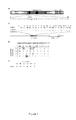
- AvrBs3 DNaseI footprint on the Bs3 promoter sequence (a, upper/sense DNA strand; b, lower/antisense DNA strand).
- AvrBs3 ⁇ rep16 DNaseI footprint on the Bs3-E promoter sequence (c, upper, sense DNA strand; d, lower antisense DNA strand).
- a representative DNaseI footprint experiment AvrBs3 and AvrBs3 ⁇ rep16 DNaseI footprint on the UPA20-ubm-r16 promoter sequence (a, upper, sense DNA strand; b, lower, antisense DNA strand).
- top Fluorescently labelled PCR product was incubated with a 5x molar excess of His6::AvrBs3, His6::AvrBs3 ⁇ rep16 and BSA (calculated for protein dimers), respectively, treated with DNaseI and analyzed on a capillary sequencer.
- the y axis of the electropherogram shows the relative fluorescence intensity corresponding to the 5'-6-FAM-labelled sense strand (a) or the 5'-HEX-labelled antisense strand (b) of the PCR product on an arbitrary scale.
- the traces for the reactions with His6::AvrBs3 (green), His6::AvrBs3 ⁇ rep16 (red) and the negative control BSA (black) were superimposed.
- a reduction of peak height in the presence of AvrBs3 and AvrBs3 ⁇ rep16 in comparison to the negative control corresponds to protection.
- the protected regions are indicated by green (AvrBs3) and red (AvrBs3 ⁇ rep16) vertical lines.
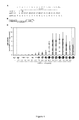
- Target DNA sequences (TAL effector-box) were inserted 5' of the minimal tomato Bs4 promoter (41) ( pBs4; -50 to +25) sequence and transferred by GATEWAY recombination into the A.
- tumefaciens T-DNA vector pGWB330 constructing a fusion to a promoterles uidA ( ⁇ -glucuronidase, GUS) gene. attB1, attB2; GATEWAY recombination sites.
- Hax4- and ArtX-box-derivatives were cloned in front of the minimal Bs4 promoter into a GUS reporter vector. Quantitative data to Fig. 3 .
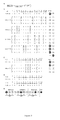
- the table shows repeat sequences of TAL effectors and the predicted DNA target sequences used from amino acids 12 and 13 of the repeats.
- nucleotide and amino acid sequences listed in the accompanying figures and the sequence listing are shown using standard letter abbreviations for nucleotide bases, and one-letter code for amino acids.
- the nucleotide sequences follow the standard convention of beginning at the 5' end of the sequence and proceeding forward (i.e., from left to right in each line) to the 3' end. Only one strand of each nucleic acid sequence is shown, but the complementary strand is understood to be included by any reference to the displayed strand.
- amino acid sequences follow the standard convention of beginning at the amino terminus of the sequence and proceeding forward (i.e., from left to right in each line) to the carboxy terminus.
- the invention is specifically described with respect to the transcription activator-like (TAL) effector family which are translocated via the type III secretion system into plant cells.
- the type member of this effector family is AvrBs3.
- the TAL effector family is also named AvrBs3-like family of proteins. Both expressions are used synonymously and can be interchanged. Examples of the AvrBs3 family are, AvrBs4 and the members of the Hax sub-family Hax2, Hax3, and Hax4 as well as Brg11.
- AvrBs3 and the other members of its family are characterized by their binding capability to specific DNA sequences in promoter regions of target genes and induction of expression of these genes.
- AvrBs3 and homologous effectors typically have in their C-terminal region nuclear localisation sequences (NLS) and a transcriptional activation domain (AD).
- the central region contains repeats of typically 34 or 35 amino acids. The repeats are nearly identical, but variable at certain positions and it has now been found how these positions determine the specificity of the proteins.
- AvrBs3 that the repeats are responsible for binding to DNA.
- This domain consists in AvrBs3 of 17.5 and in homologous proteins of 1.5 to 28.5 repeats of a sequence of typically 34 amino acids. Other lengths, e.g. 33, 35, 39 amino acids are also known.
- the single repeats are generally not identical. They vary at certain hypervariable amino acid positions, among these positions 12 and 13 are hypervariable while positions 4 and 24 vary with high frequency but at a lower frequency than 12 and 13.
- AvrBs3-like proteins from Xanthomonas revails 80 to 97 % overall sequence identity with most differences confined to the repeat domain.
- AvrBs3 and the AvrBs3-like AvrBs4 protein differ exclusively in their repeat regions, with the exception of four amino acid deletion in the C-terminus of AvrBs4 with respect to AvrBs3.
- the inventors have now found that one repeat unit in a repeat domain is responsible and has specificity for the binding of one specific DNA base pair in a DNA sequence. This finding is, however, only one element of the invention.
- the inventors additionally and surprisingly discovered that one or two amino acids located next to each other within a repeat unit of the repeat domain are responsible for recognition of one specific DNA base pair in a target sequence. Within the repeat region, the hypervariable and, to a lower extent, the variable amino acids are typically responsible for this recognition specificity. Hence each variation in these amino acids reflect a corresponding variation in DNA recognition and preferably also binding capacity.
- the linear array of repeats which recognizes a linear sequence of bases in the DNA is a novel, not yet known way as to how DNA can be accessed by a protein.
- the modular architecture of the repeat domain and the code presented by the inventors for targeting DNA with high specificity allows the design of specific DNA-binding domains for use in a vast field of technology.
- the repeat domains are included in a transcription factor, for instance in transcription factors active in plants, particularly preferred in type III effector proteins, e.g. in effectors of the AvrBs3 family.
- the modular architecture of the repeat domain can be used in any protein which shall be used for targeting, particularly, binding of specified DNA sequences.
- each repeat unit within a repeat domain has been found to be responsible for the specific recognition of one base pair in a DNA
- several repeat units can be combined with each other wherein each repeat unit includes one or two pre-determined amino acids responsible for the specific binding activity and capacity of each repeat unit to a particular base pair in a target DNA sequence.
- the following examples provide methods on how to construct new repeat units and on how to test the specific binding activities of artificially constructed repeat units specifically recognizing a sequence of base pairs in a DNA.
- the number of repeat units to be used in a repeat domain can be ascertained by a skilled artisan by routine experimentation. Generally, at least 1.5 repeat units are considered as a minimum. However, up to 50, specifically up to 40 repeat units can be used. As the repeat units do not have to be complete repeat units, also repeat units of half the size can be used. The number of repeat units can be, e.g. 1.5 to 40.5 repeat units per repeat domain.
- AvrBs3 contains 17.5 repeats and induces expression of UPA (up-regulated by AvrBs3) genes. The number and order of repeats will determine the corresponding activity.
- the AvrBs3 family members Hax2 includes 21.5 repeats, Hax3 11.5 repeats and Hax4 14.5 repeats. The most appropriate number of repeat units can be established by experiments which lie within the normal skill of the expert.
- the repeat units which can be used in one embodiment of the invention have an identity with the consensus sequences described above of at least 35%, 40%, 50%, 60%, 70%, 75%, 80%, 85%, 90% or 95%.
- the repeat sequences of AvrBs3, Hax2, Hax3 and Hax4 and further members of the AvrBs3-family are used.
- the repeat sequences of these members are indicated in Fig. 16 .
- These repeat sequences can be modified by exchanging one or more of the amino acids.
- the modified repeat sequences have an identity with the original repeat sequence of the original member of the AvrBs3-family sequence of at least 35%, 40%, 50%, 60%, 70%,75%, 80%, 85%, 90% or 95%.
- amino acids in positions 12 and 13 are altered.
- amino acids in positions 4 and 24 are altered.
- the number of amino acids per repeat are in a range between 20-45 amino acids, furthermore 32-40 amino acids, still further 32-39 amino acid, and further optionally 32, 34, 35 or 39 amino acids per repeat unit.
- one or two amino acids which are located next to each other in a repeat unit determine the specific recognition of one base pair in a DNA sequence. More specifically, the inventors have found the following correlation of recognition specificity between amino acids and base pairs in the DNA sequence:
- amino acids are represented in the single letter code.
- the nucleotides are given as base pairs, wherein the first base is located in the upper strand and the second base in the lower strand; for example C/G means that C is located in the upper strand, G in the lower strand.
- amino acid 13 of AvrBs3 is missing in the repeat of the consensus sequence as described above. Nevertheless, these single amino acids are feasible to recognize a particular base pair in the target DNA sequence.
- the N-terminal domain of AvrBs3-like proteins confers a recognition specificity for a T/A 5' of the recognition specificity of said repeat.
- the one amino acid or to adjacent amino acids located in a repeat unit determining recognition specificity to a base pair in a DNA strand are generally located in a hypervariable region of said repeat unit.
- repeat units of the protein family AvrBs3 are used. Examples for the members of this protein family have been specified above. Particularly, the members of the protein family have an amino acid homology of at least 95%, at least 90%, at least 80%, at least 85%, at least 70%, at least 75%, at least 60%, at least 50%, at least 40% or at least 35% to the amino acid sequence of AvrBs3, particularly to the amino acid sequence of the repeat unit of AvrBs3.
- the hypervariable region in a repeat unit can be deduced by an amino acid comparison between the members of the AvrBs3 family.
- the amino acids are in positions 12 and 13 of a repeat unit of AvrBs3.
- variable regions may also be located in different amino acid positions. Examples for variable positions are amino acids numbers 4 and 24.
- the amino acids responsible for the specific recognition of a base pair in a DNA sequence are located in positions which typically do not vary between the members of the AvrBs3 family or in positions which are variable but not hypervariable.
- repeat units determine the binding to one base pair on a DNA sequence and that one or two adjacent amino acids within a repeat unit determine the recognition specificity of the corresponding repeat.
- sequence of repeats correlates with a specific linear order of base pairs in a DNA sequence.
- the inventors have found this correlation with respect to AvrBs3 and verified it with respect to a representative number of members of the AvrBs3 protein family. With respect to AvrBs3 family members, amino acid residues in positions 12 and 13 in a repeat unit of 34 amino acids length correlate with defined binding specificities of AvrBs3-like proteins. Having uncovered this principle, various numbers of applications can be designed.
- polypeptides can be designed which comprise a repeat domain with repeat units wherein in the repeat units one amino acid or two adjacent amino acids are included which determine recognition of a base pair in a DNA sequence.
- each repeat unit includes one amino acid or two amino acids located next to each other which determine recognition of one base pair in a DNA sequence.
- 1 or 2 repeat units in a repeat domain are included which not specifically recognize a base pair in a DNA sequence.
- a modular arrangement of repeat units is feasible wherein each repeat unit is responsible for the specific recognition of one base pair in a DNA sequence. Consequently, a sequence of repeat units corresponds to a sequence of base pairs in a DNA sequence so that 1 repeat unit matches to one base pair.
- these modularly designed repeat units are combined with sequences responsible for the control of the expression of a gene, for instance of plant genes, animal genes, fungal genes, oomycete genes or human genes.
- the effectors of the AvrBs3 family are modified in order to target specific DNA sequences.
- That polypeptides might for instance be transcription activators or repressor proteins of transcription which are modified by the method of the present invention to specifically bind to genetic control regions in the DNA in order to activate or repress transcription of a gene.
- a polypeptide which can be modified by the modular DNA-binding domain of the present invention can be any polypeptide.
- polypeptides are transcription activator and repressor proteins, resistance-mediating proteins, nucleases, topoisomerases, ligases, recombinases, resolvases, methylases, acetylases, demethylases, deacetylases, and any other polypeptide capable of modifying DNA or proteins.
- the DNA-binding domain of the present invention can be combined with cell compartment localisation signals like nuclear localisation signals, to function at any other regulatory regions, for instance promoters, transcriptional regulatory regions and translational termination regions, etc.
- the DNA sequences are modified in order to be specifically recognized by a naturally occurring repeat domain or by a modified repeat domain.
- the binding sequences for members of the AvrBs3 family can be inserted into promoters to generate novel controllable promoters that can be induced by the corresponding AvrBs3 effector.
- Secondary inducible systems can be constructed using a trans-activator (e.g. a polypeptide wherein said polypeptide comprises at least a repeat domain comprising repeat units having one amino acid or two adjacent amino acids per repeat unit determining selective recognition of a base pair in a DNA sequence) and a target gene.
- trans-activator and the target gene can be introduced into one cell line but may also be present in different cell lines and later be introgressed.
- disease-resistant plants can be constructed by inserting the DNA-target sequence of a polypeptide wherein said polypeptide comprises at least a repeat domain comprising repeat units having one amino acid or two adjacent amino acids per repeat unit determining selective recognition of a base pair in a DNA sequence in front of a gene which after expression leads to a defence reaction of the plant by activating a resistance-mediating gene.
- any target DNA sequence can be modified by introducing base pairs into any DNA region or specific regions of a gene or a genetic control element to specifically target a polypeptide having a repeat domain comprised of repeat units to said modified DNA sequence in order to receive a specific recognition and binding to each other.
- binding motif is a repeat domain comprised of repeat units which are selected on the basis of their recognition capability of a combination of particular base pairs. Accordingly, it should be well within the capability of one of normal skill in the art to design a polypeptide capable of binding to any desired target DNA sequence simply by considering the sequence of base pairs present in the target DNA and combining in the appropriate order repeat units as binding motifs having the necessary binding characteristics to bind thereto. The greater the length of known sequence of the target DNA, the greater the number of modular binding motifs that can be included in the polypeptide.
- the known sequence is only 9 bases long then nine binding motifs consisting of repeat units as defined above can be included in the polypeptide. If the known sequence is 27 bases long then up to 27 binding motifs could be included in the polypeptide. The longer the target DNA sequence, the lower the probability of its occurrence in any other given portion of DNA.
- those repeat units selected for inclusion in the polypeptide could be artificially modified in order to modify their binding characteristics.
- the length and amino acid sequence of the repeat unit could be varied as long as its binding characteristic is not affected.
- a method of modulating expression of a target gene in a cell is provided.
- the cell maybe preferably a plant cell, a human cell, animal cell, fungal cell etc.
- the cells contain a polypeptide wherein said polypeptide comprises at least a repeat domain comprising repeat units, and these repeat units contain one amino acid or 2 adjacent amino acids per repeat unit each to determine recognition of 1 base pair in said DNA sequence, i.e. each repeat unit is responsible for the recognition of 1 base pair in said DNA.
- Said polypeptide is introduced either as DNA encoding for the polypeptide or the polypeptide is introduced per se into the cell by methods known in the art.
- That modified polypeptide including at least one repeat domain specifically recognizes and preferably binds to a target sequence of base pairs and modulates the expression of a target gene.
- all repeat units contain 1 or two amino acids which determine recognition of base pairs in a DNA sequence.
- the present invention is directed to a method to modulate the expression of a target gene in plant cells, which method comprises providing plant cells with a polypeptide modified according to the invention, said polypeptide being capable of specifically recognizing a target nucleotide sequence, or a complementary strand thereof, within a target gene, and allowing said polypeptide recognizing and particularly binding to said target nucleotide sequence, whereby the expression of said target gene in said plant cells is modulated.
- the polypeptide can be provided to the plant cells via any suitable methods known in the art.
- the protein can be exogenously added to the plant cells and the plant cells are maintained under conditions such that the polypeptide is introduced into the plant cell, binds to the target nucleotide sequence and regulates the expression of the target gene in the plant cells.
- a nucleotide sequence e.g., DNA or RNA
- encoding the polypeptide can be expressed in the plant cells and the plant cells are maintained under conditions such that the expressed polypeptide binds to the target nucleotide sequence and regulates the expression of the target gene in the plant cells.
- a preferred method to modulate the expression of a target gene in plant cells comprises the following steps: a) providing plant cells with an expression system for a polypeptide modified according to the invention, said polypeptide being capable of specifically recognizing, and preferably binding, to a target nucleotide sequence, or a complementary strand thereof, within an expression control element of a target gene, preferably a promoter; and b) culturing said plant cells under conditions wherein said polypeptide is produced and binds to said target nucleotide sequence, whereby expression of said target gene in said plant cells is modulated.
- any target nucleotide sequence can be modulated by the present method.
- the target nucleotide sequence can be endogenous or exogenous to the target gene.
- the target nucleotide sequence can be present in a living cell or present in vitro.
- the target nucleotide sequence is endogenous to the plant.
- the target nucleotide sequence can be located in any suitable place in relation to the target gene.
- the target nucleotide sequence can be upstream or downstream of the coding region of the target gene.
- the target nucleotide sequence is within the coding region of the target gene.
- the target nucleotide sequence is a promoter of a gene.
- any target gene can be modulated by the present method.
- the target gene can encode a product that affects biosynthesis, modification, cellular trafficking, metabolism and degradation of a peptide, a protein, an oligonucleotide, a nucleic acid, a vitamin, an oligosaccharide, a carbohydrate, a lipid, or a small molecule.
- the invention provides a method of altering the expression of a gene of interest in a target cell, comprising : determining (if necessary) at least part of the DNA sequence of the structural region and/or a regulatory region of the gene of interest; designing a polypeptide including the repeat domains modified in accordance with the invention to recognize specific base pairs on the DNA of known sequence, and causing said modified polypeptide to be present in the target cell, (preferably in the nucleus thereof). (It will be apparent that the DNA sequence need not be determined if it is already known.)
- the regulatory region could be quite remote from the structural region of the gene of interest (e.g. a distant enhancer sequence or similar).
- polypeptide may advantageously comprise functional domains from other proteins (e.g. catalytic domains from restriction enzymes, recombinases, replicases, integrases and the like) or even "synthetic" effector domains.
- the polypeptide may also comprise activation or processing signals, such as nuclear localisation signals. These are of particular usefulness in targeting the polypeptide to the nucleus of the cell in order to enhance the binding of the polypeptide to an intranuclear target (such as genomic DNA).
- the modified polypeptide may be synthesised in situ in the cell as a result of delivery to the cell of DNA directing expression of the polypeptide.
- Methods of facilitating delivery of DNA include, for example, recombinant viral vectors (e.g. retroviruses, adenoviruses), liposomes and the like.
- the modified polypeptide could be made outside the cell and then delivered thereto. Delivery could be facilitated by incorporating the polypeptide into liposomes etc.
- one significant advantage of the modified proteins of the invention in controlling gene expression would be the vector-free delivery of protein to target cells.
- polypeptides of the invention could be designed for therapeutic and/or prophylactic use in regulating the expression of disease-associated genes.
- said polypeptides could be used to inhibit the expression of foreign genes (e.g. the genes of bacterial or viral pathogens) in man or animals or plants, or to modify the expression of mutated host genes (such as oncogenes).
- the invention therefore also provides a polypeptide capable of inhibiting the expression of a disease-associated gene.
- the polypeptide will not be a naturally-occurring polypeptide but will be specifically designed to inhibit the expression of the disease-associated gene.
- the polypeptide will be designed by any the methods of the invention defined above.
- the invention also relates to the field of genome engineering.
- a polypeptide can be generated according to the invention to target a specific DNA sequence in a genome.
- Said polypeptide can be modified to contain an activity that directs modification of the DNA sequence (e.g. site specific recombination or integration of target sequences). This method enables targeted DNA modifications in complex genomes.
- a polypeptide is provided which is modified to include at least a repeat domain comprising repeat units, the repeat units having one amino acid or two adjacent amino acids determining selective recognition of a base pair in a DNA sequence.
- the polypeptide includes within said repeat unit one amino acid or two adjacent amino acids which are selected from the following group in order to determine recognition of one of the following base pairs:
- the invention also comprises DNA which encodes for any one of the polypeptides described before.
- DNA is provided which is modified to include a base pair located in a DNA sequence so that said base pair can be specifically recognized by a polypeptide which includes at least a repeat domain comprising repeat units, the repeat units having one amino acid or two amino acids located next to each other which determine recognition of said base pair in said DNA.
- said base pair is located in a gene expression control sequence. Due to the modular assembly of the repeat domain, a sequence of base pairs can be specifically targeted by said repeat domain.
- said DNA is modified by a base pair selected from the following group in order to receive a selective and determined recognition by one of the following one amino acid or two adjacent amino acids:
- the invention provides a method of modifying a nucleic acid sequence of interest present in a sample mixture by binding thereto a polypeptide according to the invention, comprising contacting the sample mixture with said polypeptide having affinity for at least a portion of the sequence of interest, so as to allow the polypeptide to recognize and preferably bind specifically to the sequence of interest.
- modifying as used herein is intended to mean that the sequence is considered modified simply by the binding of the polypeptide. It is not intended to suggest that the sequence of nucleotides is changed, although such changes (and others) could ensue following binding of the polypeptide to the nucleic acid of interest. Conveniently the nucleic acid sequence is DNA.
- Modification of the nucleic acid of interest could be detected in any of a number of methods (e.g. gel mobility shift assays, use of labelled polypeptides - labels could include radioactive, fluorescent, enzyme or biotin/streptavidin labels).
- Modification of the nucleic acid sequence of interest may be all that is required (e.g. in diagnosis of disease). Desirably however, further processing of the sample is performed. Conveniently the polypeptide (and nucleic acid sequences specifically bound thereto) is separated from the rest of the sample. Advantageously the modified polypeptide is bound to a solid phase support, to facilitate such separation.
- the polypeptide may be present in an acrylamide or agarose gel matrix or, more preferably, is immobilised on the surface of a membrane or in the wells of a microtitre plate.
- said repeat domain comprising repeat units is inserted in a bacterial, viral, fungal, oomycete, human, animal or plant polypeptide to achieve a targeted recognition and preferably binding of one or more specified base pairs in a DNA sequence, and optionally wherein said repeat units are taken from the repeat domains of AvrBs3 like proteins which are further optionally modified in order to obtain a pre-selected specific binding activity to one or more base pairs in a DNA sequence.
- the DNA and polypeptides provided herein can be introduced into a cell, for instance a plant cell, by any known methods. The methods are described herein particularly with respect to a plant. However, similar methods are known in order to introduce these polypeptides and this DNA into human or animal cells, fungal cells, oomycete cells etc.
- the methods of the invention involve introducing a polynucleotide construct into a plant, animal, human or fungal cell (or any other living cell).
- introducing is intended presenting to the plant the polynucleotide construct in such a manner that the construct gains access to the interior of a cell of the plant.
- the methods of the invention do not depend on a particular method for introducing a polynucleotide construct to a plant, only that the polynucleotide construct gains access to the interior of at least one cell of the plant.
- Methods for introducing polynucleotide constructs into plants are known in the art including, but not limited to, stable transformation methods, transient transformation methods, and virus-mediated methods.
- stable transformation is intended that the polynucleotide construct introduced into a plant integrates into the genome of the plant and is capable of being inherited by progeny thereof.
- transient transformation is intended that a polynucleotide construct introduced into a plant integrates into the genome of the plant, but is not inherited.
- nucleotide sequences of the invention encoding for a polypeptide modified by a modular composed binding domain are inserted using standard techniques into any vector known in the art that is suitable for expression of the nucleotide sequences in a plant or plant cell.
- the selection of the vector depends on the preferred transformation technique and the target plant species to be transformed.
- AvrBs3 directly binds the UPA -box, a promoter element in induced target genes (7,8), prompted us to investigate the basis for DNA-sequence specificity. Because the size of the UPA -box (18 (20)/19 (21) bp) roughly matches the number of repeats (17.5) in AvrBs3, we considered the possibility that one repeat unit of AvrBs3 contacts one specific DNA base pair.
- the repeat region consists of generally 34 amino acidrepeats units which are nearly identical, however, amino acids 12 and 13 are hypervariable (16; Fig. 1a ).
- the most C-terminal repeat of AvrBs3 shows sequence similarity to other repeats only in its first 20 amino acids and is therefore referred to as half repeat.
- the repeats can be classified into different repeat types based on their hypervariable 12th and 13th amino acids ( Fig. 1b ).
- Fig. 1b we designate only bases in the upper (sense) DNA strand as being recognized.
- Certain repeat types correspond to specific base pairs in the target DNA, e.g. HD- and NI-repeats have a strong preference for C and A, respectively ( Fig. 1b ).
- the target DNA box of AvrBs3 was extended by a T at its 5' end ( Fig. 1 ).
- secondary structure predictions of the protein region preceding the first repeat and the repeat region show similarities, despite lack of amino acid-sequence conservation. This suggests an additional repeat, termed repeat 0 ( Fig. 1b ).
- repeat 0 Fig. 1b
- Our model of recognition specificity is supported by the fact that the AvrBs3 repeat deletion derivative AvrBs3 ⁇ rep16 which lacks four repeats ( ⁇ 11-14; Fig. 5a, b ) recognizes a shorter and different target DNA sequence ( Figs. 5 to 8 ).
- Fig. 1b To further substantiate and extend our model ( FIG. 1b ), we predicted the yet unknown target DNA sequences of Xanthomonas TAL effectors based on the sequence of their repeats, and inspected the promoters of known TAL target genes and their alleles for the presence of putative binding sites. We identified sequences matching the predicted specificity in promoters of alleles that are induced in response to the corresponding TAL effector, but not in non-induced alleles ( Fig. 5c-f ). The presence of these boxes suggests that the induced genes are direct targets of the corresponding TAL effectors. Based on the DNA base frequency for different repeat types in the target DNA sequences using eight TAL effectors we deduced a code for the DNA target specificity of certain repeat types ( Fig. 1c , d; Fig. 5 ).
- the Hax3 and Hax4 target boxes were placed in front of the minimal (-55 to +25) tomato Bs4 promoter, which has very weak basal activity (23; Fig. 2b ; Fig. 9 ), driving a promoterless uidA ( ⁇ -glucuronidase, GUS) reporter gene.
- GUS promoterless uidA reporter gene
- Qualitative and quantitative GUS assays demonstrated that promoters containing the Hax3- or Hax4-box were strongly and specifically induced in the presence of the corresponding effector ( Fig. 2c ).
- Hax2 An exceptional TAL effector is Hax2 because it contains 35 amino acids per repeat instead of the typical 34 amino acid-repeats (22).
- Hax2 contains a rare amino acid combination in its second repeat (amino acids 12/13: IG; Fig. 2a ).
- IG amino acids 12/13
- Fig. 2a a rare amino acid combination in its second repeat
- the Hax2-box only leads to promoter activation by Hax2, but not by Hax3 or Hax4 ( Fig. 2c ). This demonstrates that 35 amino acid-repeats function like 34 amino acid-repeats.
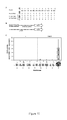
- hax2 in Arabidopsis thaliana leads to purple coloured leaves, indicating an accumulation of anthocyanin ( Fig. 14a, b ).
- pattern search Patmatch, TAIR; www.arabidopsis.org
- PAP1 MYB transcription factor
- Fig. 14c Semiquantitative analysis of the PAPI transcript level demonstrated that expression of PAP1 is strongly induced by Hax2
- TAL effectors have a linear DNA-binding specificity that can easily be rearranged. It has not escaped our notice that the postulated right-handed superhelical structure of the repeat regions in TAL effectors 16 immediately suggests a possible mechanism for interaction with the right-handed helix of the genetic material. It will be important to determine the structure of the novel DNA-binding domain of TAL effectors complexed with target DNA.
- the central repeats of naturally occuring effectors of the AvrBs3-family encode a corresponding DNA-binding specificity. These recognition sequences can be predicted with the decrypted code.
- the artificial insertion of the predicted recognition sequences in front of a gene in transgenic plants leads to expression of the gene if the corresponding AvrBs3-like effector is translocated into the plant cell (e.g. during a bacterial infection).
- the recognition sequence is inserted in front of a gene whose expression leads to a defence reaction (resistance-mediating gene) of the plant, such constructed transgenic plants are resistant against an infection of plant pathogenic bacteria which translocate the corresponding effector.
- the prediction of DNA target sequences of a corresponding effector of the AvrBs3-family in the promoter region of plant genes is an indication for the inducable expression of these genes by the effector.
- Using the method according to the invention it is possible to predict inducable plant genes. Predictions are especially relatively easy in sequenced genomes.
- the predicted DNA binding sequences of other members of the AvrBs3-family can be inserted into promoters to generate new controllable promoters which can be induced by the corresponding effector.
- hax3 gene whose expression is under control of an inducable promoter.
- target gene that contains the Hax3-box in the promoter. Induction of the expression of hax3 leads to production of the Hax3 protein that then induces the expression of the target gene.
- the described two-component construction leads to a twofold expression switch which allows a variable expression of the target gene.
- the trans-activator and the target gene can also be present first in different plant lines and can be introgressed at will. Analogous to this, Hax4 and the corresponding Hax4-box can be used. This system can also be used with other members of the AvrBs3-family or artificial derivatives and predicted DNA-target sequences.
- Transgenic Arabidopsis thaliana plants were constructed, which contain an inducable avrBs3 gene as well as a Bs3 gene under control of its native promoter, whose expression can be induced by AvrBs3.
- the induction of expression of avrBs3 leads to expression of Bs3 and therefore to cell death.
- the DNA target sequence of an AvrBs3-similar effector is inserted in front of a gene whose expression leads to a defence reaction (resistance-mediating gene) of the plant, correspondingly constructed transgenic plants will be resistant against infection of plant pathogenic organisms, which make this effector available.
- a resistance-mediating gene can for example lead to a local cell death which prevents spreading of the organisms/pathogens, or induce the basal or systemic resistance of the plant cell.
- the modular architecture of the central repeat domain enables the targeted construction of definite DNA binding specificities and with this the induction of transcription of selected plant genes.
- the DNA binding specificities can either be artificially inserted in front of target genes so that novel effector-DNA-box variants are generated for the inducable expression of target genes.
- artificial AvrBs3-derivatives can be constructed that recognize a naturally occuring DNA sequence in organisms. The advantage of this approach is that the expression of any gene in non-transgenic organisms can be induced if a corresponding artificial AvrBs3-similar effector is present in the cells of this organism. Introduction of the effector can be done in different ways:
- the central repeat domain of effectors of the AvrBs3-family is a new type of DNA binding domain (Kay et al., 2007).
- the decryption of the specificity of the single repeats now allows the targeted adaptation of the DNA-binding specificity of this region.
- the DNA binding region can translationally be fused to other functional domains to generate sequence-specific effects. Below, four examples of such protein fusions are given.
- the effectors of the AvrBs3 family induce the expression of genes in plant cells.
- the C-terminus of the protein is essentiall which contains a transcriptional activation domain and nuclear localization sequences that mediate the import of the protein into the plant nucleus.
- the C-terminus if the AvrBs3-homologous protein can be modified in such a way that it mediates the expression of genes in fungal, animal, or human systems.
- transcriptional activators can be constructed that are functional in these organisms.
- the method according to the invention can be applied not only to plants, but also to other living organisms.
- the DNA binding specificity of the repeat domain can be used together with other domains in protein fusions to construct specific repressors.
- These AvrBs3 derivatives exhibit a DNA binding specificity that has been generated in such a way that they bind to promoters of target genes. In contrast to the original effectors these AvrBs3-derivatives are constructed to block the expression of target genes. Like classical repressors they can cover promoter sequences by their binding and make them unaccessable for factors that otherwise control the expression of the target genes.
- the DNA-binding specificity of the repeat domain can be used together with other domains to label specific DNA sequences.
- C-terminally a GFP green-fluorescent-protein
- This fusion protein binds in vivo and in vitro to a corresponding DNA sequence.
- the position of this sequence on the chromosome can be localized using the fused GFP-protein.
- other protein domains that enable a cellular localization of the protein e.g. by FISH
- FISH FISH
- DNA binding specificity of AvrBs3-like derivatives can be used to isolate specific DNA sequences.
- the AvrBs3-like protein can be immobilized to a matrix and binds then corresponding DNA molecules that contain a matching sequence. Therefore, specific DNA sequences can be isolated from a mixture of DNA molecules.
- the DNA-binding specificity of the repeat domain can be fused to a suitable restriction endonuclease to specifically cleave DNA. Therefore, the sequence-specific binding of the repeat domain leads to localization of the fusion protein to few specific sequences, so that the endonuclease specifically cleaves the DNA there.
- unspecific nucleases can be changed into specific endonucleases. This method allows to introduce very specific cuts at only a few positions in complex DNA-molecules. This method can amongst other things be used to introduce double strand breaks in vivo and selectively incorporate donor DNA at these positions. The method can also be used to specifically insert transgenes.
- the present invention additionally covers isolated nucleic acid molecules to be used in any of the methods of the present invention, transformed plants comprising a heterologous polynucleotide stably incorporated in their genome and comprising the nucleotide molecule described above, preferably operably linked to a promoter element and/or operably linked to a gene of interest.
- the transformed plant is preferably a monocot or a dicot.
- the invention covers also seeds of the transformed plants.
- the invention covers human and non-human host cells transformed with any of the polynucleotides of the invention or the polypeptides of the invention.
- the promoters used in combination with any of the nucleotides and polypeptides of the invention are preferably tissue specific promoters, chemical-inducible promoters and promoters inducible by pathogens.
- plant includes plant cells, plant protoplasts, plant cell tissue cultures from which plants can be regenerated, plant calli, plant clumps and plant cells that are intact in plants or parts of plants such as embryos, pollen, ovules, seed, leaves, flowers, branches, fruits, roots, root tips, anthers and the like. Progeny, variants, and mutants of the regenerated plants are also included within the scope of the invention, provided that these parts comprise the introduced polynucleotides.
- Escherichia coli Bacterial strains and growth conditions. Escherichia coli were cultivated at 37°C in lysogeny broth (LB) and Agrobacterium tumefaciens GV3101 at 30°C in yeast extract broth (YEB) supplemented with appropriate antibiotics.
- LB lysogeny broth
- YEB yeast extract broth
- Nicotiana benthamiana plants were grown in the greenhouse (day and night temperatures of 23°C and 19°C, respectively) with 16 h light and 40 to 60% humidity. Mature leaves of five- to seven-week-old plants were inoculated with Agrobacterium using a needleless syringe as described previously ( S1 ). Inoculated plants were transferred to a Percival growth chamber (Percival Scientific) with 16 h light, 22°C and 18 °C night temperature.
- Percival Scientific Percival Scientific
- a 1 bp frame-shift preceding the start codon was inserted by site-directed mutagenesis to allow in frame N-terminal fusions using GATEWAY recombination (Invitrogen) resulting in pC3SEIF.
- Single repeats were amplified from TAL effectors using a forward primer binding to most repeats and repeat-specific reverse primers. Both primers included the naturally present Esp I sites. To avoid amplification of more than one repeat, template DNA was digested with Esp I prior to the PCR reaction.
- the ArtHD effector backbone construct consists of the N- and C-terminus of Hax3 with the last half repeat mutated into a HD-repeat. The resulting construct was restricted by Esp I and dephosphorylated.
- DNA fragments encoding repeats were excised with Esp I from pC3SE26-derivatives containing a single HD-repeat and purified via agarose gels. Ligation was performed using a molar excess of insert to vector to facilitate concatemer ligation and transformed into E. coli. The number of repeats was determined in recombinant plasmids using Stu I and Hinc II . ArtX1-3 effectors with a random combination of repeat types were generated by isolating DNA fragments encoding repeats as described above from cloned single NI-, HD-, NN-, and NG-repeats (specificities for A, C, G/A, and T, respectively).
- the fragments were added in equal molar amounts each to the concatemer ligation reaction with vector pC3SEIF. Plasmids containing artificial TAL effectors with 12.5 repeats were chosen for subsequent analysis. Effectors were cloned by GATEWAY-recombination (Invitrogen) into pGWB6 ( S2 ) for expression of N-terminal GFP-effector fusions. Oligonucleotide sequences are available upon request. All constructs were sequenced.
- GUS reporter constructs The minimal Bs4 promoter was amplified by PCR and inserted into pENTR/D-TOPO (Invitrogen) with target DNA boxes at the 5' end ( S3; Fig. S5). Promoter derivatives were cloned into pGWB3 ( S2 ) containing a promoterless uidA gene.
- hax2-transgenic A. thaliana hax2 was cloned under control of the inducible alcA promoter from Aspergillus nidulans into a GATEWAY-compatible derivative of the binary T-DNA vector binSRNACatN (Zeneca Agrochemicals) containing the 35S- driven alcR ethanol-dependent regulator gene and a nptII selection marker.
- AlcR drives ethanol-dependent induction of the alcA promoter (S4).
- T-DNA containing these genes was transformed into A. thaliana Col-0 via A. tumefaciens using floral dip inoculation ( S5 ). Transformants were selected as kanamycin-resistant plants on sterile medium.
- GUS ⁇ -Glucuronidase assays.
- Agrobacterium strains delivering TAL effector constructs and GUS reporter constructs were mixed 1:1, and inoculated into Nicotiana benthamiana leaves with an OD 600 of 0.8.
- Two leaf discs (0.9 cm diameter) were sampled two days post infiltration (dpi) and quantitative GUS activity was determined using 4-methyl-umbelliferyl- ⁇ -D-glucuronide (MUG), as described previously ( S1 ). Proteins were quantified using Bradford assays (BioRad). Data correspond to triplicate samples from different plants.
- leaf discs were sampled 2 dpi, incubated in X-Gluc (5-bromo-4-chloro-3-indolyl- ⁇ -D-glucuronide) staining solution (S3), destained in ethanol, and dried. Experiments were performed at least twice with similar results.
- X-Gluc 5-bromo-4-chloro-3-indolyl- ⁇ -D-glucuronide staining solution
- hax2, hax3, and hax4 were expressed with C-terminal FLAG-epitope under control of the constitutive cauliflower mosaic virus 35S promoter using pVSFH2, pVSFH3, and pVSFH4 ( S6 ).
- DNaseI footprinting was performed as described ( S7 ) with the following modifications: Fluorescently labeled PCR products of Bs3 and Bs3-E promoter DNA were generated using plasmids pCRBluntII-TOPO::FPBs3 (Bs3 promoter fragment from -211 to +108) and pCRBluntII-TOPO::FPBs3-E ( Bs3-E promoter fragment from -224 to +108), respectively, as template and Phusion DNA polymerase (Finnzymes).
- Fluorescently labeled PCR product of UPA20-ubm-r16 promoter DNA was generated using plasmid pCRBluntII-TOPO::FPU20-ubm-r16 ( UPA20 promoter fragment from -213 to +86 containing the ubm-r16 mutation ( S7 ) as template and Phusion DNA polymerase (Finnzymes).
- Plasmids pCRBluntII-TOPO::FPBs3, pCRBluntII-TOPO::FPBs3-E and pCRBluntII-TOPO::FPU20-ubm-r16 were sequenced, using the Thermo Sequenase Dye Primer Manual Cycle Sequencing Kit (USB) according to the manufacturer's instructions. An internal Gene Scan-500LIZ Size Standard (Applied Biosystems) was used to determine the DNA fragment size.
Landscapes
- Health & Medical Sciences (AREA)
- Genetics & Genomics (AREA)
- Life Sciences & Earth Sciences (AREA)
- Chemical & Material Sciences (AREA)
- Engineering & Computer Science (AREA)
- Organic Chemistry (AREA)
- Biotechnology (AREA)
- Wood Science & Technology (AREA)
- Bioinformatics & Cheminformatics (AREA)
- Zoology (AREA)
- Biomedical Technology (AREA)
- General Engineering & Computer Science (AREA)
- Molecular Biology (AREA)
- Biochemistry (AREA)
- General Health & Medical Sciences (AREA)
- Biophysics (AREA)
- Microbiology (AREA)
- Plant Pathology (AREA)
- Physics & Mathematics (AREA)
- Cell Biology (AREA)
- Medicinal Chemistry (AREA)
- Proteomics, Peptides & Aminoacids (AREA)
- Gastroenterology & Hepatology (AREA)
- Communicable Diseases (AREA)
- General Chemical & Material Sciences (AREA)
- Nutrition Science (AREA)
- Botany (AREA)
- Micro-Organisms Or Cultivation Processes Thereof (AREA)
- Preparation Of Compounds By Using Micro-Organisms (AREA)
- Peptides Or Proteins (AREA)
- Measuring Or Testing Involving Enzymes Or Micro-Organisms (AREA)
- Breeding Of Plants And Reproduction By Means Of Culturing (AREA)
Priority Applications (32)
| Application Number | Priority Date | Filing Date | Title |
|---|---|---|---|
| DK16197321.9T DK3187587T3 (da) | 2009-01-12 | 2010-01-12 | Modulære DNA-bindingsdomæner og fremgangsmåder til anvendelse |
| EP10706358.8A EP2379583B1 (fr) | 2009-01-12 | 2010-01-12 | Domaines modulaires de liaison à l'adn |
| PCT/IB2010/000154 WO2010079430A1 (fr) | 2009-01-12 | 2010-01-12 | Domaines modulaires de liaison à l'adn et procédés d'utilisation |
| JP2011544945A JP5753793B2 (ja) | 2009-01-12 | 2010-01-12 | モジュラーdna結合ドメインおよび使用方法 |
| EP21177164.7A EP3981881B1 (fr) | 2009-01-12 | 2010-01-12 | Domaines de liaison d'adn modulaire et procédés d'utilisation |
| CN201610232787.3A CN106008675B (zh) | 2009-01-12 | 2010-01-12 | 模块式dna结合结构域及使用方法 |
| CN201080008139.0A CN102325791B (zh) | 2009-01-12 | 2010-01-12 | 模块式dna结合结构域及使用方法 |
| SG2011050176A SG172928A1 (en) | 2009-01-12 | 2010-01-12 | Modular dna-binding domains and methods of use |
| EP13189680.5A EP2703492B1 (fr) | 2009-01-12 | 2010-01-12 | Domaines de liaison à l'ADN modulaire et procédés d'utilisation |
| BRPI1007269-1A BRPI1007269B1 (pt) | 2009-01-12 | 2010-01-12 | Método para produzir um polipeptídeo, e, método para reconhecer seletivamente uma sequência de dna alvo predeterminada |
| EP16197321.9A EP3187587B1 (fr) | 2009-01-12 | 2010-01-12 | Domaines de liaison d'adn modulaire et procédés d'utilisation |
| DK13189680.5T DK2703492T3 (en) | 2009-01-12 | 2010-01-12 | MODULAR DNA binding domains and methods of using |
| CA2749305A CA2749305C (fr) | 2009-01-12 | 2010-01-12 | Domaines modulaires de liaison a l'adn et procedes d'utilisation |
| MX2011007467A MX2011007467A (es) | 2009-01-12 | 2010-01-12 | Dominios modulares de union a dna y metodos de uso. |
| AU2010204105A AU2010204105A1 (en) | 2009-01-12 | 2010-01-12 | Modular DNA-binding domains and methods of use |
| CN201410199018.9A CN103992393B (zh) | 2009-01-12 | 2010-01-12 | 模块式dna结合结构域及使用方法 |
| US13/016,297 US9353378B2 (en) | 2009-01-12 | 2011-01-28 | Modular DNA-binding domains and methods of use |
| US13/019,526 US20110239315A1 (en) | 2009-01-12 | 2011-02-02 | Modular dna-binding domains and methods of use |
| IL213971A IL213971A (en) | 2009-01-12 | 2011-07-07 | Method for Preparing a Polypeptide That Selects DNA Sequence Target and Various Aspects Related to This Method |
| US13/218,050 US8470973B2 (en) | 2009-01-12 | 2011-08-25 | Modular DNA-binding domains and methods of use |
| US13/362,660 US8420782B2 (en) | 2009-01-12 | 2012-01-31 | Modular DNA-binding domains and methods of use |
| US13/755,826 US20130217119A1 (en) | 2009-01-12 | 2013-01-31 | Modular dna-binding domains and methods of use |
| US14/153,241 US9017967B2 (en) | 2009-01-12 | 2014-01-13 | Modular DNA-binding domains and methods of use |
| US14/625,698 US9453054B2 (en) | 2009-01-12 | 2015-02-19 | Modular DNA-binding domains and methods of use |
| JP2015104349A JP2015172063A (ja) | 2009-01-12 | 2015-05-22 | モジュラーdna結合ドメインおよび使用方法 |
| US15/222,498 US9809628B2 (en) | 2009-01-12 | 2016-07-28 | Modular DNA-binding domains and methods of use |
| US15/724,420 US10590175B2 (en) | 2009-01-12 | 2017-10-04 | Modular DNA-binding domains and methods of use |
| JP2017253389A JP6508605B2 (ja) | 2009-01-12 | 2017-12-28 | モジュラーdna結合ドメインおよび使用方法 |
| JP2019054102A JP6908651B2 (ja) | 2009-01-12 | 2019-03-22 | モジュラーdna結合ドメインおよび使用方法 |
| US16/781,646 US11827676B2 (en) | 2009-01-12 | 2020-02-04 | Modular DNA-binding domains and methods of use |
| JP2021109864A JP7303847B2 (ja) | 2009-01-12 | 2021-07-01 | モジュラーdna結合ドメインおよび使用方法 |
| US18/488,109 US12612435B2 (en) | 2009-01-12 | 2023-10-17 | Modular DNA-binding domains and methods of use |
Applications Claiming Priority (1)
| Application Number | Priority Date | Filing Date | Title |
|---|---|---|---|
| DE102009004659 | 2009-01-12 |
Publications (1)
| Publication Number | Publication Date |
|---|---|
| EP2206723A1 true EP2206723A1 (fr) | 2010-07-14 |
Family
ID=41264164
Family Applications (5)
| Application Number | Title | Priority Date | Filing Date |
|---|---|---|---|
| EP09165328A Ceased EP2206723A1 (fr) | 2009-01-12 | 2009-07-13 | Domaines modulaires de liaison à l'ADN |
| EP13189680.5A Active EP2703492B1 (fr) | 2009-01-12 | 2010-01-12 | Domaines de liaison à l'ADN modulaire et procédés d'utilisation |
| EP16197321.9A Active EP3187587B1 (fr) | 2009-01-12 | 2010-01-12 | Domaines de liaison d'adn modulaire et procédés d'utilisation |
| EP21177164.7A Active EP3981881B1 (fr) | 2009-01-12 | 2010-01-12 | Domaines de liaison d'adn modulaire et procédés d'utilisation |
| EP10706358.8A Active EP2379583B1 (fr) | 2009-01-12 | 2010-01-12 | Domaines modulaires de liaison à l'adn |
Family Applications After (4)
| Application Number | Title | Priority Date | Filing Date |
|---|---|---|---|
| EP13189680.5A Active EP2703492B1 (fr) | 2009-01-12 | 2010-01-12 | Domaines de liaison à l'ADN modulaire et procédés d'utilisation |
| EP16197321.9A Active EP3187587B1 (fr) | 2009-01-12 | 2010-01-12 | Domaines de liaison d'adn modulaire et procédés d'utilisation |
| EP21177164.7A Active EP3981881B1 (fr) | 2009-01-12 | 2010-01-12 | Domaines de liaison d'adn modulaire et procédés d'utilisation |
| EP10706358.8A Active EP2379583B1 (fr) | 2009-01-12 | 2010-01-12 | Domaines modulaires de liaison à l'adn |
Country Status (11)
| Country | Link |
|---|---|
| US (2) | US9353378B2 (fr) |
| EP (5) | EP2206723A1 (fr) |
| JP (3) | JP5753793B2 (fr) |
| CN (3) | CN103992393B (fr) |
| AU (1) | AU2010204105A1 (fr) |
| CA (1) | CA2749305C (fr) |
| DK (2) | DK3187587T3 (fr) |
| IL (1) | IL213971A (fr) |
| MX (1) | MX2011007467A (fr) |
| SG (1) | SG172928A1 (fr) |
| WO (1) | WO2010079430A1 (fr) |
Cited By (29)
| Publication number | Priority date | Publication date | Assignee | Title |
|---|---|---|---|---|
| WO2011072246A3 (fr) * | 2009-12-10 | 2012-02-02 | Regents Of The University Of Minnesota | Modification de l'adn induite par l'effecteur tal |
| WO2012136476A1 (fr) * | 2011-04-07 | 2012-10-11 | Ludwig-Maximilians-Universität München | Procédé d'activation d'un gène cible dans une cellule |
| DE112010004584T5 (de) | 2009-11-27 | 2012-11-29 | Basf Plant Science Company Gmbh | Chimäre Endonukleasen und Anwendungen davon |
| US8420782B2 (en) | 2009-01-12 | 2013-04-16 | Ulla Bonas | Modular DNA-binding domains and methods of use |
| US8470973B2 (en) | 2009-01-12 | 2013-06-25 | Ulla Bonas | Modular DNA-binding domains and methods of use |
| US20130196373A1 (en) * | 2011-11-16 | 2013-08-01 | Sangamo Biosciences, Inc. | Modified dna-binding proteins and uses thereof |
| WO2013140250A1 (fr) * | 2012-03-23 | 2013-09-26 | Cellectis | Procédé pour surmonter une sensibilité vis-à-vis de modifications chimiques de l'adn de domaines de liaison à l'adn tale synthétique |
| EP2580331A4 (fr) * | 2010-06-14 | 2013-11-27 | Univ Iowa State Res Found Inc | Activité nucléase d'un effecteur tal et d'une protéine de fusion foki |
| US8912138B2 (en) | 2010-05-17 | 2014-12-16 | Sangamo Biosciences, Inc. | DNA-binding proteins and uses thereof |
| WO2015052335A1 (fr) * | 2013-10-11 | 2015-04-16 | Cellectis | Procédés et kits de détection de séquences d'acide nucléique d'intérêt à l'aide d'un domaine protéique de liaison à l'adn |
| EP2780376A4 (fr) * | 2011-11-18 | 2015-04-22 | UNIVERSITé LAVAL | Procédés et produits pour augmenter les taux de frataxine et les utilisations de ceux-ci |
| EP2878667A1 (fr) * | 2013-11-29 | 2015-06-03 | Institut Pasteur | Moyens pour effecteur TAL utiles à la délition partielle ou complète de séquences répétitives d'ADN |
| US9476884B2 (en) | 2013-10-04 | 2016-10-25 | University Of Massachusetts | Hybridization- independent labeling of repetitive DNA sequence in human chromosomes |
| US9522936B2 (en) | 2014-04-24 | 2016-12-20 | Sangamo Biosciences, Inc. | Engineered transcription activator like effector (TALE) proteins |
| US9688997B2 (en) | 2011-12-29 | 2017-06-27 | Iowa State University Research Foundation, Inc. | Genetically modified plants with resistance to Xanthomonas and other bacterial plant pathogens |
| US9890364B2 (en) | 2012-05-29 | 2018-02-13 | The General Hospital Corporation | TAL-Tet1 fusion proteins and methods of use thereof |
| US10113162B2 (en) | 2013-03-15 | 2018-10-30 | Cellectis | Modifying soybean oil composition through targeted knockout of the FAD2-1A/1B genes |
| US10273271B2 (en) | 2011-07-15 | 2019-04-30 | The General Hospital Corporation | Methods of transcription activator like effector assembly |
| US10301637B2 (en) | 2014-06-20 | 2019-05-28 | Cellectis | Potatoes with reduced granule-bound starch synthase |
| US10513698B2 (en) | 2012-12-21 | 2019-12-24 | Cellectis | Potatoes with reduced cold-induced sweetening |
| US10550402B2 (en) | 2016-02-02 | 2020-02-04 | Cellectis | Modifying soybean oil composition through targeted knockout of the FAD3A/B/C genes |
| US10676749B2 (en) | 2013-02-07 | 2020-06-09 | The General Hospital Corporation | Tale transcriptional activators |
| US10837024B2 (en) | 2015-09-17 | 2020-11-17 | Cellectis | Modifying messenger RNA stability in plant transformations |
| US11312972B2 (en) | 2016-11-16 | 2022-04-26 | Cellectis | Methods for altering amino acid content in plants through frameshift mutations |
| US11384360B2 (en) | 2012-06-19 | 2022-07-12 | Regents Of The University Of Minnesota | Gene targeting in plants using DNA viruses |
| US11479782B2 (en) | 2017-04-25 | 2022-10-25 | Cellectis | Alfalfa with reduced lignin composition |
| US11555198B2 (en) | 2012-11-01 | 2023-01-17 | Cellectis Sa | Method for making nicotiana plants with mutations in XylT and FucT alleles using rare-cutting endonucleases |
| US11891631B2 (en) | 2012-10-12 | 2024-02-06 | The General Hospital Corporation | Transcription activator-like effector (tale) - lysine-specific demethylase 1 (LSD1) fusion proteins |
| US12612435B2 (en) | 2009-01-12 | 2026-04-28 | Ulla Bonas | Modular DNA-binding domains and methods of use |
Families Citing this family (434)
| Publication number | Priority date | Publication date | Assignee | Title |
|---|---|---|---|---|
| US20120196370A1 (en) | 2010-12-03 | 2012-08-02 | Fyodor Urnov | Methods and compositions for targeted genomic deletion |
| US8772008B2 (en) | 2009-05-18 | 2014-07-08 | Sangamo Biosciences, Inc. | Methods and compositions for increasing nuclease activity |
| WO2011002503A1 (fr) | 2009-06-30 | 2011-01-06 | Sangamo Biosciences, Inc. | Criblage rapide de nucléases biologiquement actives et isolement de cellules modifiées par nucléases |
| CA2769262C (fr) | 2009-07-28 | 2019-04-30 | Sangamo Biosciences, Inc. | Procedes et compositions de traitement de troubles de repetition tri-nucleotidique |
| EP3156504B1 (fr) | 2009-08-11 | 2018-10-31 | Sangamo Therapeutics, Inc. | Organismes homozygotes destinés à une modification ciblée |
| KR101813981B1 (ko) | 2009-10-22 | 2018-01-04 | 다우 아그로사이언시즈 엘엘씨 | 지방산 생합성에 포함된 식물 유전자를 표적하는 조작된 징크 핑거 단백질 |
| US8956828B2 (en) * | 2009-11-10 | 2015-02-17 | Sangamo Biosciences, Inc. | Targeted disruption of T cell receptor genes using engineered zinc finger protein nucleases |
| DE112010004582T5 (de) | 2009-11-27 | 2012-11-29 | Basf Plant Science Company Gmbh | Optimierte Endonukleasen und Anwendungen davon |
| JP2013518602A (ja) * | 2010-02-09 | 2013-05-23 | サンガモ バイオサイエンシーズ, インコーポレイテッド | 部分的に一本鎖のドナー分子による標的化ゲノム改変 |
| US9567573B2 (en) * | 2010-04-26 | 2017-02-14 | Sangamo Biosciences, Inc. | Genome editing of a Rosa locus using nucleases |
| EP2392208B1 (fr) | 2010-06-07 | 2016-05-04 | Helmholtz Zentrum München Deutsches Forschungszentrum für Gesundheit und Umwelt (GmbH) | Protéines de fusion comportant un domaine de liaison ADN d'une protéine TAL effectrice et domaine de clivage non spécifique d'une nucléase de restriction et leur utilisation |
| EP3511420B1 (fr) | 2010-09-27 | 2021-04-07 | Sangamo Therapeutics, Inc. | Compositions pour l'inhibition de l'entrée de virus dans des cellules |
| KR101930711B1 (ko) | 2010-10-12 | 2018-12-19 | 더 칠드런스 호스피탈 오브 필라델피아 | 혈우병 b의 치료를 위한 방법 및 조성물 |
| AR084844A1 (es) | 2011-01-14 | 2013-06-26 | Jones Jeffrey B | Arboles de citricos con resistencia a cancro de los citricos |
| US9499592B2 (en) * | 2011-01-26 | 2016-11-22 | President And Fellows Of Harvard College | Transcription activator-like effectors |
| US9528124B2 (en) | 2013-08-27 | 2016-12-27 | Recombinetics, Inc. | Efficient non-meiotic allele introgression |
| BR112013021785A8 (pt) * | 2011-02-25 | 2018-07-03 | Recombinetics Inc | animais geneticamente modificados e métodos para fazer os mesmos |
| US10920242B2 (en) | 2011-02-25 | 2021-02-16 | Recombinetics, Inc. | Non-meiotic allele introgression |
| EP2689019A2 (fr) | 2011-03-23 | 2014-01-29 | Pioneer Hi-Bred International Inc. | Procédés de production d'un locus complexe de caractéristique transgénique |
| JP5996630B2 (ja) * | 2011-04-05 | 2016-09-21 | セレクティスCellectis | コンパクトtale−ヌクレアーゼを作製する方法及びその使用 |
| WO2012149470A1 (fr) | 2011-04-27 | 2012-11-01 | Amyris, Inc. | Procédés de modification génomique |
| EP2535416A1 (fr) | 2011-05-24 | 2012-12-19 | BASF Plant Science Company GmbH | Développement d'une pomme de terre résistante au phytophthora avec rendement amélioré |
| ES2657825T3 (es) | 2011-06-06 | 2018-03-07 | Bayer Cropscience Nv | Métodos y medios para modificar el genoma de una planta en un sitio preseleccionado |
| AR086995A1 (es) | 2011-06-21 | 2014-02-05 | Pioneer Hi Bred Int | Metodos y composiciones para producir plantas con esterilidad masculina |
| US20130097734A1 (en) | 2011-07-12 | 2013-04-18 | Two Blades Foundation | Late blight resistance genes |
| US9161995B2 (en) | 2011-07-25 | 2015-10-20 | Sangamo Biosciences, Inc. | Methods and compositions for alteration of a cystic fibrosis transmembrane conductance regulator (CFTR) gene |
| US9951346B2 (en) | 2011-08-03 | 2018-04-24 | Pioneer Hi-Bred International, Inc. | Methods and compositions for targeted integration in a plant |
| CN102787125B (zh) * | 2011-08-05 | 2013-12-04 | 北京大学 | 一种构建tale重复序列的方法 |
| AU2012299691B2 (en) | 2011-08-22 | 2015-01-29 | BASF Agricultural Solutions Seed US LLC | Methods and means to modify a plant genome |
| US9150847B2 (en) | 2011-09-21 | 2015-10-06 | Sangamo Biosciences, Inc. | Methods and compositions for regulation of transgene expression |
| US20140251317A1 (en) | 2011-10-12 | 2014-09-11 | Bayer Cropscience Ag | Plants with decreased activity of a starch dephosphorylating enzyme |
| AU2013201323A1 (en) | 2011-10-12 | 2013-05-02 | Bayer Cropscience Ag | Plants with decreased activity of a starch dephosphorylating enzyme |
| US8895264B2 (en) | 2011-10-27 | 2014-11-25 | Sangamo Biosciences, Inc. | Methods and compositions for modification of the HPRT locus |
| US8450107B1 (en) | 2011-11-30 | 2013-05-28 | The Broad Institute Inc. | Nucleotide-specific recognition sequences for designer TAL effectors |
| US10801017B2 (en) * | 2011-11-30 | 2020-10-13 | The Broad Institute, Inc. | Nucleotide-specific recognition sequences for designer TAL effectors |
| US8497124B2 (en) | 2011-12-05 | 2013-07-30 | Factor Bioscience Inc. | Methods and products for reprogramming cells to a less differentiated state |
| RU2691027C2 (ru) | 2011-12-05 | 2019-06-07 | Фэктор Байосайенс Инк. | Способы и препараты для трансфекции клеток |
| DE102011122267A1 (de) | 2011-12-23 | 2013-06-27 | Kws Saat Ag | Neue aus Pflanzen stammende cis-regulatorische Elemente für die Entwicklung Pathogen-responsiver chimärer Promotoren |
| EP2612918A1 (fr) | 2012-01-06 | 2013-07-10 | BASF Plant Science Company GmbH | Recombinaison in planta |
| BR112014018294B1 (pt) | 2012-01-26 | 2022-01-11 | Norfolk Plant Sciences, Ltd | Método para produzir uma planta, cassete de expressão, e, célula bacteriana |
| WO2013113911A2 (fr) * | 2012-02-02 | 2013-08-08 | Ludwig-Maximilians-Universität München | Séquences nucléotidiques impliquées dans la résistance aux phytoravageurs |
| NZ629427A (en) | 2012-02-29 | 2016-04-29 | Sangamo Biosciences Inc | Methods and compositions for treating huntington’s disease |
| WO2013136274A1 (fr) | 2012-03-13 | 2013-09-19 | University Of Guelph | Promoteur myb55 et son utilisation |
| WO2013136273A2 (fr) | 2012-03-13 | 2013-09-19 | University Of Guelph | Procédés permettant d'améliorer la tolérance au stress thermique et la teneur en acides aminés chez les plantes |
| CN102627690B (zh) * | 2012-04-05 | 2014-12-17 | 浙江大学 | 一对转录激活子样效应因子核酸酶及其编码基因与应用 |
| CA2871008C (fr) | 2012-04-23 | 2022-11-22 | Bayer Cropscience Nv | Ingenierie genomique ciblee dans des plantes |
| WO2013163628A2 (fr) | 2012-04-27 | 2013-10-31 | Duke University | Correction génétique de gènes ayant subi une mutation |
| US9738879B2 (en) | 2012-04-27 | 2017-08-22 | Duke University | Genetic correction of mutated genes |
| BR112014027468A2 (pt) | 2012-05-04 | 2017-06-27 | Du Pont | polinucleotídeo isolado ou recombinante, construção de dna recombinante, célula, planta, explante vegetal, semente transgênica, polipeptídeo isolado, composição, métodos de produção de meganuclease, de introdução de rompimento e de integração de um polinucleotídeo. |
| JP6559063B2 (ja) | 2012-05-07 | 2019-08-14 | サンガモ セラピューティクス, インコーポレイテッド | 導入遺伝子のヌクレアーゼ媒介標的化組み込みのための方法および組成物 |
| CN102702331B (zh) * | 2012-05-23 | 2014-08-06 | 上海斯丹赛生物技术有限公司 | 一对转录激活子样效应因子核酸酶及其编码基因与应用 |
| LT3401400T (lt) | 2012-05-25 | 2019-06-10 | The Regents Of The University Of California | Būdai ir kompozicijos, skirtos rnr molekulės nukreipiamai tikslinės dnr modifikacijai ir rnr molekulės nukreipiamam transkripcijos moduliavimui |
| CA2875945A1 (fr) | 2012-06-07 | 2013-12-12 | The Children's Hospital Of Philadelphia | Procedes d'expression controlee de genes |
| US10648001B2 (en) | 2012-07-11 | 2020-05-12 | Sangamo Therapeutics, Inc. | Method of treating mucopolysaccharidosis type I or II |
| CA2875618C (fr) | 2012-07-11 | 2021-04-27 | Sangamo Biosciences, Inc. | Methodes et compositions pour le traitement de maladies lysosomales |
| EP2872154B1 (fr) | 2012-07-11 | 2017-05-31 | Sangamo BioSciences, Inc. | Procédés et compositions pour la délivrance d'agents biologiques |
| US10058078B2 (en) | 2012-07-31 | 2018-08-28 | Recombinetics, Inc. | Production of FMDV-resistant livestock by allele substitution |
| DK2890780T3 (da) | 2012-08-29 | 2020-09-21 | Sangamo Therapeutics Inc | Fremgangsmåder og sammensætninger til behandling af en genetisk tilstand |
| UA119135C2 (uk) | 2012-09-07 | 2019-05-10 | ДАУ АГРОСАЙЄНСІЗ ЕлЕлСі | Спосіб отримання трансгенної рослини |
| UA118090C2 (uk) | 2012-09-07 | 2018-11-26 | ДАУ АГРОСАЙЄНСІЗ ЕлЕлСі | Спосіб інтегрування послідовності нуклеїнової кислоти, що представляє інтерес, у ген fad2 у клітині сої та специфічний для локусу fad2 білок, що зв'язується, здатний індукувати спрямований розрив |
| HK1217732A1 (zh) | 2012-09-07 | 2017-01-20 | 美国陶氏益农公司 | Fad3性能基因座及相應的能夠誘導靶向斷裂的靶位點特異性結合蛋白 |
| EP3763810A3 (fr) | 2012-10-10 | 2021-07-14 | Sangamo Therapeutics, Inc. | Composés de modification de cellules t et leurs utilisations |
| EP2914728B1 (fr) | 2012-11-01 | 2020-07-08 | Factor Bioscience Inc. | Procédés et produits pour l'expression de protéines dans des cellules |
| US9255250B2 (en) | 2012-12-05 | 2016-02-09 | Sangamo Bioscience, Inc. | Isolated mouse or human cell having an exogenous transgene in an endogenous albumin gene |
| IL239317B (en) | 2012-12-12 | 2022-07-01 | Broad Inst Inc | Providing, engineering and optimizing systems, methods and compositions for sequence manipulation and therapeutic applications |
| WO2014093701A1 (fr) | 2012-12-12 | 2014-06-19 | The Broad Institute, Inc. | Génomique fonctionnelle employant des systèmes crispr-cas, des compositions, des procédés, des banques d'inactivation et leurs applications |
| EP3434776A1 (fr) | 2012-12-12 | 2019-01-30 | The Broad Institute, Inc. | Procédés, modèles, systèmes et appareil pour identifier des séquences cibles pour les enzymes cas ou des systèmes crispr-cas pour des séquences cibles et transmettre les résultats associés |
| AU2013361220A1 (en) | 2012-12-21 | 2015-04-02 | Pioneer Hi-Bred International, Inc. | Compositions and methods for auxin-analog conjugation |
| WO2014125668A1 (fr) * | 2013-02-14 | 2014-08-21 | 国立大学法人大阪大学 | Procédé d'isolement d'une région génomique spécifique à l'aide d'une molécule se liant spécifiquement à une séquence d'adn endogène |
| CN103319574A (zh) * | 2013-02-16 | 2013-09-25 | 清华大学 | 分离的多肽及其应用 |
| US20140235933A1 (en) | 2013-02-20 | 2014-08-21 | Regeneron Pharmaceuticals, Inc. | Genetic modification of rats |
| CN105229144A (zh) | 2013-02-22 | 2016-01-06 | 细胞动力学国际有限公司 | 通过组合的遗传工程和化学工程经由正向编程产生肝细胞 |
| EP2958996B1 (fr) | 2013-02-25 | 2019-10-16 | Sangamo Therapeutics, Inc. | Méthodes et compositions pour améliorer une disruption génique à médiation nucléase |
| US20160326540A1 (en) | 2013-03-11 | 2016-11-10 | Pioneer Hi-Bred International, Inc. | Methods and Compositions Employing a Sulfonylurea-Dependent Stabilization Domain |
| UA123532C2 (uk) | 2013-03-12 | 2021-04-21 | Е. І. Дю Пон Де Немур Енд Компані | Спосіб ідентифікації варіантного сайта розпізнавання для сконструйованого засобу, що рідко розщеплює, для індукції двониткового розриву |
| BR112015023272A2 (pt) | 2013-03-14 | 2017-07-18 | Pioneer Hi Bred Int | célula vegetal, planta, explante vegetal, semente transgênica, método para produzir uma célula vegetal tendo um polinucleotídeo heterólogo que codifica um polipeptídeo tendo atividade de dicamba descarboxilase, método para controlar plantas daninhas em um campo contendo uma cultura e método para controlar plantas daninhas em um campo contendo uma cultura |
| EP2970935A1 (fr) | 2013-03-14 | 2016-01-20 | Pioneer Hi-Bred International, Inc. | Compositions ayant une activité de décarboxylase de dicamba et leurs procédés d'utilisation |
| US9828582B2 (en) | 2013-03-19 | 2017-11-28 | Duke University | Compositions and methods for the induction and tuning of gene expression |
| EP2975942B1 (fr) | 2013-03-21 | 2018-08-08 | Sangamo Therapeutics, Inc. | Interruption ciblée de gènes de récepteur des lymphocytes t à l'aide de nucléases protéiques à doigt de zinc génétiquement modifiées |
| AU2014247151A1 (en) | 2013-04-02 | 2015-10-08 | Bayer Cropscience Nv | Targeted genome engineering in eukaryotes |
| RU2723130C2 (ru) | 2013-04-05 | 2020-06-08 | ДАУ АГРОСАЙЕНСИЗ ЭлЭлСи | Способы и композиции для встраивания экзогенной последовательности в геном растений |
| DK2986729T3 (en) | 2013-04-16 | 2018-10-29 | Regeneron Pharma | TARGETED MODIFICATION OF ROOT THROUGH |
| EP2796558A1 (fr) | 2013-04-23 | 2014-10-29 | Rheinische Friedrich-Wilhelms-Universität Bonn | Ciblage génique amélioré et molécule porteuse d'acide nucléique, en particulier pour utilisation dans des plantes |
| CN103289974A (zh) * | 2013-04-28 | 2013-09-11 | 新疆农垦科学院 | 绵羊fgf5基因定点敲除系统及其应用 |
| CN103233004B (zh) * | 2013-04-28 | 2015-04-29 | 新疆农垦科学院 | 一种人工dna分子及检测目标基因表达的方法 |
| CA2910427C (fr) | 2013-05-10 | 2024-02-20 | Sangamo Biosciences, Inc. | Procedes et compositions d'apport pour genie genomique medie par nuclease |
| ES3029138T3 (en) | 2013-06-05 | 2025-06-23 | Univ Duke | Rna-guided gene editing and gene regulation |
| MX2015017312A (es) | 2013-06-17 | 2017-04-10 | Broad Inst Inc | Suministro y uso de composiciones, vectores y sistemas crispr-cas para la modificación dirigida y terapia hepáticas. |
| CN105793425B (zh) | 2013-06-17 | 2021-10-26 | 布罗德研究所有限公司 | 使用病毒组分靶向障碍和疾病的crispr-cas系统和组合物的递送、用途和治疗应用 |
| JP6665088B2 (ja) | 2013-06-17 | 2020-03-13 | ザ・ブロード・インスティテュート・インコーポレイテッド | 配列操作のための最適化されたCRISPR−Cas二重ニッカーゼ系、方法および組成物 |
| EP3725885A1 (fr) | 2013-06-17 | 2020-10-21 | The Broad Institute, Inc. | Génomique fonctionnelle utilisant des systèmes crispr-cas, compositions, procédés, cribles et applications de ces systèmes |
| WO2014204724A1 (fr) | 2013-06-17 | 2014-12-24 | The Broad Institute Inc. | Administration, modification et optimisation de systèmes guides tandems, méthodes et compositions pour la manipulation de séquence |
| EP2818867A1 (fr) | 2013-06-27 | 2014-12-31 | INSERM (Institut National de la Santé et de la Recherche Médicale) | Anticorps conjugués à au moins une molécule d'acide nucléique et leur utilisation dans des dosages d'immunodétection multiplexe |
| CA2920899C (fr) | 2013-08-28 | 2023-02-28 | Sangamo Biosciences, Inc. | Compositions de liaison de domaines de liaison a l'adn et de domaines de clivage |
| CA2923223C (fr) | 2013-09-04 | 2021-11-16 | Kws Saat Se | Vegetal resistant au helminthosporium turcicum |
| DE102013014637A1 (de) | 2013-09-04 | 2015-03-05 | Kws Saat Ag | HELMlNTHOSPORlUM TURClCUM-RESlSTENTE PFLANZE |
| CA2926078C (fr) | 2013-10-17 | 2021-11-16 | Sangamo Biosciences, Inc. | Procedes d'apport et compositions pour ingenierie genomique a mediation par des nucleases dans des cellules souches hematopoietiques |
| CN110713995B (zh) | 2013-10-17 | 2023-08-01 | 桑格摩生物科学股份有限公司 | 用于核酸酶介导的基因组工程改造的递送方法和组合物 |
| AU2014337790B2 (en) | 2013-10-25 | 2019-09-26 | Livestock Improvement Corporation Limited | Genetic markers and uses therefor |
| MX358066B (es) | 2013-11-04 | 2018-08-03 | Dow Agrosciences Llc | Óptimos loci de soya. |
| KR102269769B1 (ko) | 2013-11-04 | 2021-06-28 | 코르테바 애그리사이언스 엘엘씨 | 최적 메이즈 유전자좌 |
| UY35814A (es) | 2013-11-04 | 2015-05-29 | Dow Agrosciences Llc | ?lugares óptimos para la soja?. |
| BR102014027442B1 (pt) | 2013-11-04 | 2022-09-27 | Dow Agrosciences Llc | Molécula de ácido nucleico recombinante, uso de uma planta de milho, parte de planta de milho ou célula de planta de milho compreendendo a mesma e método para produzir uma célula vegetal transgênica compreendendo um dna de interesse |
| AU2014346424B2 (en) | 2013-11-11 | 2020-09-17 | Sangamo Therapeutics, Inc. | Methods and compositions for treating Huntington's Disease |
| HUE056436T2 (hu) | 2013-11-13 | 2022-02-28 | Childrens Medical Center | Nukleáz közvetítette génexpresszió-szabályozás |
| ES2813367T3 (es) | 2013-12-09 | 2021-03-23 | Sangamo Therapeutics Inc | Métodos y composiciones para ingeniería genómica |
| PT3080279T (pt) | 2013-12-11 | 2018-12-17 | Regeneron Pharma | Métodos e composições para a modificação direcionada de um genoma |
| WO2015088643A1 (fr) | 2013-12-11 | 2015-06-18 | Regeneron Pharmaceuticals, Inc. | Procédés et compositions pour la modification ciblée d'un génome |
| WO2015089364A1 (fr) | 2013-12-12 | 2015-06-18 | The Broad Institute Inc. | Structure cristalline d'un système crispr-cas, et ses utilisations |
| CN111206032B (zh) | 2013-12-12 | 2024-07-19 | 布罗德研究所有限公司 | 用于基因组编辑的crispr-cas系统和组合物的递送、用途和治疗应用 |
| WO2015089473A1 (fr) | 2013-12-12 | 2015-06-18 | The Broad Institute Inc. | Ingénierie de systèmes, procédés et compositions guides optimisées avec de nouvelles architectures pour la manipulation de séquences |
| WO2015089486A2 (fr) | 2013-12-12 | 2015-06-18 | The Broad Institute Inc. | Systèmes, procédés et compositions pour manipulation de séquences avec systèmes crispr-cas fonctionnels optimisés |
| RU2016128077A (ru) | 2013-12-12 | 2018-12-06 | Те Брод Инститьют Инк. | Доставка, применение и применения в терапии систем и композиций crispr-cas для лечения обусловленных hbv и вирусных заболеваний и нарушений |
| BR112016013547A2 (pt) | 2013-12-12 | 2017-10-03 | Broad Inst Inc | Composições e métodos de uso de sistemas crispr-cas em distúrbios de repetições de nucleotídeos |
| WO2015092460A1 (fr) | 2013-12-18 | 2015-06-25 | INSERM (Institut National de la Santé et de la Recherche Médicale) | Nouvelles mutations génétiques pour le diagnostic de l'arthrogrypose congénitale multiple et de neuropathies périphériques congénitales |
| AU2014368982B2 (en) | 2013-12-19 | 2021-03-25 | Amyris, Inc. | Methods for genomic integration |
| US10774338B2 (en) | 2014-01-16 | 2020-09-15 | The Regents Of The University Of California | Generation of heritable chimeric plant traits |
| US20170166920A1 (en) | 2014-01-30 | 2017-06-15 | Two Blades Foundation | Plants with enhanced resistance to phytophthora |
| CN105940110A (zh) | 2014-01-31 | 2016-09-14 | 菲克特生物科学股份有限公司 | 用于核酸产生和递送的方法和产品 |
| HUE051232T2 (hu) | 2014-02-03 | 2021-03-01 | Sangamo Therapeutics Inc | Béta-talasszémia kezelésére szolgáló eljárások és készítmények |
| AU2015218576B2 (en) | 2014-02-24 | 2020-02-27 | Sangamo Therapeutics, Inc. | Methods and compositions for nuclease-mediated targeted integration |
| TW201538518A (zh) | 2014-02-28 | 2015-10-16 | Dow Agrosciences Llc | 藉由嵌合基因調控元件所賦予之根部特異性表現 |
| JP6594891B2 (ja) | 2014-03-18 | 2019-10-23 | サンガモ セラピューティクス, インコーポレイテッド | ジンクフィンガータンパク質発現を調節するための方法および組成物 |
| GB201406970D0 (en) | 2014-04-17 | 2014-06-04 | Green Biologics Ltd | Targeted mutations |
| GB201406968D0 (en) | 2014-04-17 | 2014-06-04 | Green Biologics Ltd | Deletion mutants |
| WO2015164228A1 (fr) | 2014-04-21 | 2015-10-29 | Cellular Dynamics International, Inc. | Production d'hépatocytes par programmation progressive par génie génétique et chimique combinés |
| CN104178506B (zh) * | 2014-04-30 | 2017-03-01 | 清华大学 | Taler蛋白通过空间位阻发挥转录抑制作用及其应用 |
| WO2015171603A1 (fr) | 2014-05-06 | 2015-11-12 | Two Blades Foundation | Procédés de production de plantes présentant une résistance accrue aux oomycètes pathogènes |
| CN106413760B (zh) | 2014-05-08 | 2020-01-14 | 桑格摩生物科学股份有限公司 | 用于治疗亨廷顿病的方法和组合物 |
| WO2015175642A2 (fr) | 2014-05-13 | 2015-11-19 | Sangamo Biosciences, Inc. | Méthodes et compositions pharmaceutiques pour la prévention ou le traitement d'une maladie |
| RU2704283C9 (ru) | 2014-06-06 | 2020-02-07 | Регенерон Фармасьютикалз, Инк. | Способы и композиции для модификации целевого локуса |
| RS60366B1 (sr) | 2014-06-23 | 2020-07-31 | Regeneron Pharma | Sastavljanje dnk posredovano nukleazom |
| PT3161128T (pt) | 2014-06-26 | 2018-11-21 | Regeneron Pharma | Métodos e composições para modificações genéticas alvejadas e métodos de utilização |
| US9757420B2 (en) | 2014-07-25 | 2017-09-12 | Sangamo Therapeutics, Inc. | Gene editing for HIV gene therapy |
| US9816074B2 (en) | 2014-07-25 | 2017-11-14 | Sangamo Therapeutics, Inc. | Methods and compositions for modulating nuclease-mediated genome engineering in hematopoietic stem cells |
| US9616090B2 (en) | 2014-07-30 | 2017-04-11 | Sangamo Biosciences, Inc. | Gene correction of SCID-related genes in hematopoietic stem and progenitor cells |
| BR112017003757A2 (pt) | 2014-09-12 | 2017-12-26 | Du Pont | ?plantas de milho, partes de planta de milho ou sementes de milho? |
| HUE055583T2 (hu) | 2014-09-16 | 2021-12-28 | Sangamo Therapeutics Inc | Eljárások és készítmények nukleáz által közvetített genommódosításhoz és -javításhoz hematopoetikus õssejtekben |
| CN104267011A (zh) * | 2014-09-23 | 2015-01-07 | 中国科学院东北地理与农业生态研究所 | 一种转基因羊卵母细胞的筛选方法 |
| SG11201702309RA (en) | 2014-10-15 | 2017-04-27 | Regeneron Pharma | Methods and compositions for generating or maintaining pluripotent cells |
| WO2016066671A1 (fr) | 2014-10-29 | 2016-05-06 | INSERM (Institut National de la Santé et de la Recherche Médicale) | Procédé pour traiter des cancers résistants à l'aide d'inhibiteurs de la progastrine |
| DE102014016667B4 (de) | 2014-11-12 | 2024-03-07 | Kws Saat Se | Haploideninduktoren |
| US11319555B2 (en) | 2014-11-20 | 2022-05-03 | Duke University | Compositions, systems and methods for cell therapy |
| EP3230451B1 (fr) | 2014-12-12 | 2021-04-07 | The Broad Institute, Inc. | Arn guides protégés (pgrnas) |
| US20170327834A1 (en) | 2014-12-15 | 2017-11-16 | Syngenta Participations Ag | Pesticidal microrna carriers and use thereof |
| US10889834B2 (en) | 2014-12-15 | 2021-01-12 | Sangamo Therapeutics, Inc. | Methods and compositions for enhancing targeted transgene integration |
| BR112017013104A2 (en) | 2014-12-19 | 2018-05-15 | Regeneron Pharmaceuticals, Inc. | methods for modifying a target genomic locus in a cell, for enhancing homologous recombination at a target genomic locus in a cell, and for producing an f0 generation from a nonhuman animal. |
| CA2970370A1 (fr) | 2014-12-24 | 2016-06-30 | Massachusetts Institute Of Technology | Crispr presentant ou associe avec un domaine de destabilisation |
| JP6929791B2 (ja) | 2015-02-09 | 2021-09-01 | デューク ユニバーシティ | エピゲノム編集のための組成物および方法 |
| US20180031579A1 (en) | 2015-02-12 | 2018-02-01 | INSERM (Institut National de la Santé et de la Recherche Médicale) | Methods for predicting the responsiveness of a patient affected with malignant hematological disease to chemotherapy treatment and methods of treatment of such disease |
| WO2016131052A1 (fr) | 2015-02-13 | 2016-08-18 | Factor Bioscience Inc. | Produits d'acides nucléiques et leurs procédés d'administration |
| WO2016142427A1 (fr) | 2015-03-10 | 2016-09-15 | INSERM (Institut National de la Santé et de la Recherche Médicale) | Procédé et kit pour la reprogrammation de cellules somatiques |
| WO2016149352A1 (fr) | 2015-03-19 | 2016-09-22 | Pioneer Hi-Bred International Inc | Procédés et compositions permettant d'accélérer l'introgression de caractères |
| WO2016161446A1 (fr) | 2015-04-03 | 2016-10-06 | Dana-Farber Cancer Institute, Inc. | Composition et procédés de correction génomique de cellules b |
| BR112017021703B1 (pt) | 2015-04-15 | 2023-11-28 | Corteva Agriscience Llc | Promotor de planta para expressão de transgene |
| EP3283633A2 (fr) | 2015-04-15 | 2018-02-21 | Dow AgroSciences LLC | Promoteur végétal pour l'expression d'un transgène |
| JP6544565B2 (ja) * | 2015-04-28 | 2019-07-17 | 国立大学法人広島大学 | 哺乳動物細胞内で目的遺伝子の発現を高める方法およびキット、並びに、その利用 |
| US10179918B2 (en) | 2015-05-07 | 2019-01-15 | Sangamo Therapeutics, Inc. | Methods and compositions for increasing transgene activity |
| EP3294892B1 (fr) | 2015-05-09 | 2020-11-25 | Two Blades Foundation | Gène de résistance au mildiou de solanum americanum et procédés d'utilisation |
| IL293323B2 (en) | 2015-06-18 | 2024-01-01 | Massachusetts Inst Technology | Crispr enzyme mutations reducing off-target effects |
| WO2016205759A1 (fr) | 2015-06-18 | 2016-12-22 | The Broad Institute Inc. | Modification et optimisation de systèmes, de méthodes, d'enzymes et d'échafaudages guides d'orthologues de cas9 et variant pour la manipulation de séquences |
| CN108024544B (zh) | 2015-07-13 | 2022-04-29 | 桑格摩生物治疗股份有限公司 | 用于核酸酶介导的基因组工程化的递送方法及组合物 |
| WO2017035416A2 (fr) | 2015-08-25 | 2017-03-02 | Duke University | Compositions et procédés d'amélioration de la spécificité dans l'ingénierie génomique à l'aide d'endonucléases guidées par arn |
| TW201718862A (zh) | 2015-09-22 | 2017-06-01 | Dow Agrosciences Llc | 用於轉殖基因表現之植物啟動子及3’utr |
| TW201718861A (zh) | 2015-09-22 | 2017-06-01 | 道禮責任有限公司 | 用於轉殖基因表現之植物啟動子及3’utr |
| LT3352776T (lt) | 2015-09-23 | 2025-07-10 | Sangamo Therapeutics, Inc. | Htt represoriai ir jų panaudojimas |
| WO2017062790A1 (fr) | 2015-10-09 | 2017-04-13 | Two Blades Foundation | Récepteurs de protéine de choc froid et procédés d'utilisation |
| EP4089175A1 (fr) | 2015-10-13 | 2022-11-16 | Duke University | Ingénierie génomique avec systèmes crispr de type i dans des cellules eucaryotes |
| CN108473997B (zh) | 2015-10-22 | 2022-04-12 | 美国陶氏益农公司 | 用于转基因表达的植物启动子 |
| US20170121726A1 (en) | 2015-11-04 | 2017-05-04 | Dow Agrosciences Llc | Plant promoter for transgene expression |
| US20180258438A1 (en) | 2015-11-06 | 2018-09-13 | Pioneer Hi-Bred International, Inc. | Generation of complex trait loci in soybean and methods of use |
| US10639383B2 (en) | 2015-11-23 | 2020-05-05 | Sangamo Therapeutics, Inc. | Methods and compositions for engineering immunity |
| EP3173485B1 (fr) | 2015-11-27 | 2021-08-25 | KWS SAAT SE & Co. KGaA | Plante tolérante au froid |
| WO2017095967A2 (fr) | 2015-11-30 | 2017-06-08 | Duke University | Cibles thérapeutiques pour la correction du gène de la dystrophine humaine par l'édition de gènes et procédés d'utilisation |
| ES2983043T3 (es) | 2015-12-18 | 2024-10-21 | Sangamo Therapeutics Inc | Alteración dirigida del receptor de células T |
| AU2016374253B2 (en) | 2015-12-18 | 2021-10-21 | Sangamo Therapeutics, Inc. | Targeted disruption of the MHC cell receptor |
| DE102015016445A1 (de) | 2015-12-21 | 2017-06-22 | Kws Saat Se | Restorer-Pflanze |
| US11840693B2 (en) | 2015-12-21 | 2023-12-12 | KWS SAAT SE & Co. KGaA | Restorer plants |
| DE102015017161A1 (de) | 2015-12-21 | 2017-06-22 | Kws Saat Se | Restorer-Pflanze |
| BR112018013074A2 (en) | 2015-12-30 | 2018-12-11 | Novartis Ag | immune effector cell therapies with enhanced efficacy |
| CN109069568B (zh) | 2016-02-02 | 2023-07-07 | 桑格摩生物治疗股份有限公司 | 用于连接dna结合结构域和切割结构域的组合物 |
| EP3417061B1 (fr) | 2016-02-18 | 2022-10-26 | The Regents of the University of California | Méthodes et compositions pour l'édition de gènes dans des cellules souches |
| WO2017161043A1 (fr) | 2016-03-16 | 2017-09-21 | The J. David Gladstone Institutes | Procédés et compositions pour traiter l'obésité et/ou le diabète et pour identifier des agents de traitement candidats |
| EP3443081A4 (fr) | 2016-04-13 | 2019-10-30 | Duke University | Répresseurs à base de crispr/cas9 pour inactiver des cibles géniques in vivo et procédés d'utilisation |
| CN107344962B (zh) * | 2016-05-04 | 2021-03-02 | 中国科学院微生物研究所 | 阻遏蛋白、调控元件组和基因表达调控系统及其构建方法 |
| US11293033B2 (en) | 2016-05-18 | 2022-04-05 | Amyris, Inc. | Compositions and methods for genomic integration of nucleic acids into exogenous landing pads |
| US11021713B2 (en) | 2016-05-25 | 2021-06-01 | Cargill, Incorporated | Engineered nucleases to generate deletion mutants in plants |
| WO2017202715A1 (fr) | 2016-05-26 | 2017-11-30 | Nunhems B.V. | Plantes produisant des fruits sans graines |
| US11293021B1 (en) | 2016-06-23 | 2022-04-05 | Inscripta, Inc. | Automated cell processing methods, modules, instruments, and systems |
| EP4275747A3 (fr) | 2016-07-19 | 2024-01-24 | Duke University | Applications thérapeutiques de l'édition du génome fondée sur cpf1 |
| KR20190041476A (ko) | 2016-07-29 | 2019-04-22 | 리제너론 파마슈티칼스 인코포레이티드 | C-절단된 피브릴린-1의 발현을 유도하는 돌연변이를 포함하는 마우스 |
| JP7134944B2 (ja) | 2016-08-11 | 2022-09-12 | ザ ジャクソン ラボラトリー | 遺伝子改変免疫不全非ヒト動物における改良されたヒト赤血球生存に関連する方法および組成物 |
| IL308824A (en) | 2016-08-17 | 2024-01-01 | Factor Bioscience Inc | Nucleic acid products and methods of administration thereof |
| IL300783B2 (en) | 2016-08-24 | 2026-03-01 | Sangamo Therapeutics Inc | Engineered nucleases with target-specific zinc fingers |
| WO2018049009A2 (fr) | 2016-09-07 | 2018-03-15 | Sangamo Therapeutics, Inc. | Modulation des gènes du foie |
| US12188059B2 (en) | 2016-09-13 | 2025-01-07 | The Broad Institute, Inc. | Proximity-dependent biotinylation and uses thereof |
| US20190225974A1 (en) | 2016-09-23 | 2019-07-25 | BASF Agricultural Solutions Seed US LLC | Targeted genome optimization in plants |
| WO2018064387A1 (fr) | 2016-09-28 | 2018-04-05 | Novartis Ag | Système de distribution de macromolécules à base de membrane poreuse |
| US10400246B2 (en) | 2016-10-03 | 2019-09-03 | Dow Agrosciences Llc | Plant promoter for transgene expression |
| WO2018067265A1 (fr) | 2016-10-03 | 2018-04-12 | Dow Agrosciences Llc | Promoteur de plantes pour l'expression transgénique |
| AU2017338846B2 (en) | 2016-10-04 | 2020-09-24 | Precision Biosciences, Inc. | Co-stimulatory domains for use in genetically-modified cells |
| WO2018069232A1 (fr) | 2016-10-10 | 2018-04-19 | INSERM (Institut National de la Santé et de la Recherche Médicale) | Procédés de prédiction du risque de présenter une hypertrophie cardiaque |
| GB201617559D0 (en) | 2016-10-17 | 2016-11-30 | University Court Of The University Of Edinburgh The | Swine comprising modified cd163 and associated methods |
| CN110022904B (zh) | 2016-10-20 | 2024-04-19 | 桑格摩生物治疗股份有限公司 | 用于治疗法布里病的方法和组合物 |
| US11020492B2 (en) | 2016-10-31 | 2021-06-01 | Sangamo Therapeutics, Inc. | Gene correction of SCID-related genes in hematopoietic stem and progenitor cells |
| WO2018076335A1 (fr) | 2016-10-31 | 2018-05-03 | Institute Of Genetics And Developmental Biology, Chinese Academy Of Sciences | Compositions et procédés pour améliorer la tolérance au stress abiotique |
| US20180245065A1 (en) | 2016-11-01 | 2018-08-30 | Novartis Ag | Methods and compositions for enhancing gene editing |
| EP3548616A4 (fr) | 2016-12-01 | 2020-05-13 | Sangamo Therapeutics, Inc. | Modulateurs de tau et procédés et compositions pour leur administration |
| CA3046199A1 (fr) | 2016-12-08 | 2018-06-14 | Case Western Reserve University | Procedes et compositions pour ameliorer la production de myeline fonctionnelle |
| EP3555299A1 (fr) | 2016-12-16 | 2019-10-23 | Two Blades Foundation | Gènes de résistance au mildiou et leurs procédés d'utilisation |
| SG11201906735RA (en) | 2017-01-23 | 2019-08-27 | Regeneron Pharma | Hydroxysteroid 17-beta dehydrogenase 13 (hsd17b13) variants and uses thereof |
| US11730828B2 (en) | 2017-02-07 | 2023-08-22 | The Regents Of The University Of California | Gene therapy for haploinsufficiency |
| US20200048359A1 (en) | 2017-02-28 | 2020-02-13 | Novartis Ag | Shp inhibitor compositions and uses for chimeric antigen receptor therapy |
| EP3366778A1 (fr) | 2017-02-28 | 2018-08-29 | Kws Saat Se | Haploidisation dans le sorgho |
| WO2018175581A1 (fr) | 2017-03-21 | 2018-09-27 | The Jackson Laboratory | Souris génétiquement modifiée exprimant apoe4 humaine et trem.p.r47h et procédés d'utilisation associés |
| KR20190130608A (ko) | 2017-03-22 | 2019-11-22 | 노파르티스 아게 | 면역종양학을 위한 조성물 및 방법 |
| EP3600269A1 (fr) | 2017-03-24 | 2020-02-05 | INSERM - Institut National de la Santé et de la Recherche Médicale | Inhibiteurs de gfi1 pour le traitement de l'hyperglycémie |
| US20200055948A1 (en) | 2017-04-28 | 2020-02-20 | Novartis Ag | Cells expressing a bcma-targeting chimeric antigen receptor, and combination therapy with a gamma secretase inhibitor |
| US20200179511A1 (en) | 2017-04-28 | 2020-06-11 | Novartis Ag | Bcma-targeting agent, and combination therapy with a gamma secretase inhibitor |
| US11655275B2 (en) | 2017-05-03 | 2023-05-23 | Sangamo Therapeutics, Inc. | Methods and compositions for modification of a cystic fibrosis transmembrane conductance regulator (CFTR) gene |
| CA3062698A1 (fr) | 2017-05-08 | 2018-11-15 | Precision Biosciences, Inc. | Molecules d'acide nucleique codant pour un recepteur d'antigene modifie et molecule d'acide nucleique inhibitrice et leurs methodes d'utilisation |
| RU2019140867A (ru) | 2017-05-12 | 2021-06-15 | Зе Джексон Лаборатори | Nsg мыши, не имеющие mhc класса i и класса ii |
| WO2018209209A1 (fr) | 2017-05-12 | 2018-11-15 | Two Blades Foundation | Procédés de criblage de protéines pour identifier une fonction de récepteur de reconnaissance de motif dans des protoplastes végétaux |
| US11512287B2 (en) | 2017-06-16 | 2022-11-29 | Sangamo Therapeutics, Inc. | Targeted disruption of T cell and/or HLA receptors |
| US10011849B1 (en) | 2017-06-23 | 2018-07-03 | Inscripta, Inc. | Nucleic acid-guided nucleases |
| WO2018237107A1 (fr) | 2017-06-23 | 2018-12-27 | University Of Kentucky Research Foundation | Procédé |
| US9982279B1 (en) | 2017-06-23 | 2018-05-29 | Inscripta, Inc. | Nucleic acid-guided nucleases |
| CN111278276B (zh) | 2017-06-28 | 2023-05-26 | 美国陶氏益农公司 | 用于转基因表达的植物启动子 |
| EP3645721A1 (fr) | 2017-06-30 | 2020-05-06 | Novartis AG | Méthodes pour le traitement d'une maladie à l'aide de systèmes d'édition de gènes |
| JP2020529834A (ja) | 2017-06-30 | 2020-10-15 | プレシジョン バイオサイエンシズ,インク. | T細胞受容体アルファ遺伝子の改変されたイントロンを含む遺伝子改変t細胞 |
| HUE058668T2 (hu) | 2017-06-30 | 2022-09-28 | Inscripta Inc | Automatizált sejtkezelési eljárások, modulok, berendezések és rendszerek |
| US11261458B2 (en) | 2017-07-28 | 2022-03-01 | Two Blades Foundation | Potyvirus resistance genes and methods of use |
| EP3447134B1 (fr) | 2017-08-22 | 2023-10-11 | KWS SAAT SE & Co. KGaA | Une résistance fongique accrue dans des plantes cultivées |
| US10738327B2 (en) | 2017-08-28 | 2020-08-11 | Inscripta, Inc. | Electroporation cuvettes for automation |
| FI3675623T3 (fi) | 2017-08-29 | 2025-08-15 | Kws Saat Se & Co Kgaa | Parannettuja sinisiä aleuroni- ja muita segregaatiojärjestelmiä |
| WO2019190590A2 (fr) | 2017-09-18 | 2019-10-03 | Amyris, Inc. | Procédés d'intégration génomique pour des cellules hôtes de kluyveromyces |
| EP3684940A1 (fr) | 2017-09-18 | 2020-07-29 | Amyris, Inc. | Procédés de modification génétique de cellules hôtes kluyveromyces |
| CN107759673B (zh) * | 2017-09-27 | 2021-06-04 | 复旦大学 | 可对hbv的dna进行表观甲基化修饰的蛋白分子及其应用 |
| JP7139419B2 (ja) | 2017-09-29 | 2022-09-20 | リジェネロン・ファーマシューティカルズ・インコーポレイテッド | ヒト化ttr遺伝子座を含む非ヒト動物および使用方法 |
| WO2019068022A1 (fr) | 2017-09-30 | 2019-04-04 | Inscripta, Inc. | Instrumentation d'électroporation à flux continu |
| US20200239544A1 (en) | 2017-10-03 | 2020-07-30 | Precision Biosciences, Inc. | Modified epidermal growth factor receptor peptides for use in genetically-modified cells |
| US11225670B2 (en) | 2017-10-30 | 2022-01-18 | Corteva Agriscience Llc | Plant promoter for transgene expression |
| US20200299658A1 (en) | 2017-11-01 | 2020-09-24 | Precision Biosciences, Inc. | Engineered nucleases that target human and canine factor viii genes as a treatment for hemophilia a |
| BR112020008568A2 (pt) | 2017-11-09 | 2020-10-06 | Sangamo Therapeutics, Inc. | modificação genética de gene de proteína contendo sh2 indutível por citoquina (cish) |
| WO2019108619A1 (fr) | 2017-11-28 | 2019-06-06 | Two Blades Foundation | Procédés et compositions pour améliorer la résistance des plantes aux maladies |
| DK3501268T3 (da) | 2017-12-22 | 2021-11-08 | Kws Saat Se & Co Kgaa | Regenerering af planter i tilstedeværelse af histondeacetylase hæmmere |
| EP3508581A1 (fr) | 2018-01-03 | 2019-07-10 | Kws Saat Se | Régénération de plantes génétiquement modifiées |
| US12509492B2 (en) | 2018-01-19 | 2025-12-30 | Duke University | Genome engineering with CRISPR-Cas systems in eukaryotes |
| CN111954540A (zh) | 2018-02-08 | 2020-11-17 | 桑格摩生物治疗股份有限公司 | 工程化靶标特异性核酸酶 |
| ES3036459T3 (en) | 2018-03-12 | 2025-09-19 | Pioneer Hi Bred Int | Methods for plant transformation |
| WO2019179445A1 (fr) | 2018-03-20 | 2019-09-26 | Tsinghua University | Modèle animal de la maladie d'alzheimer et son utilisation |
| EP3545756A1 (fr) | 2018-03-28 | 2019-10-02 | KWS SAAT SE & Co. KGaA | Régénération de plantes en présence d'inhibiteurs d'histone méthyltransférase ezh2 |
| WO2019190874A1 (fr) | 2018-03-29 | 2019-10-03 | Inscripta, Inc. | Régulation automatisée des taux de croissance cellulaire pour l'induction et la transformation |
| WO2019186274A2 (fr) | 2018-03-30 | 2019-10-03 | University Of Geneva | Constructions d'expression de micro arn et leurs utilisations |
| WO2019200004A1 (fr) | 2018-04-13 | 2019-10-17 | Inscripta, Inc. | Instruments de traitement cellulaire automatisés comprenant des cartouches de réactif |
| US12312383B2 (en) | 2018-04-18 | 2025-05-27 | Altius Institute For Biomedical Sciences | Animal pathogen-derived polypeptides and uses thereof for genetic engineering |
| US10858761B2 (en) | 2018-04-24 | 2020-12-08 | Inscripta, Inc. | Nucleic acid-guided editing of exogenous polynucleotides in heterologous cells |
| US10508273B2 (en) | 2018-04-24 | 2019-12-17 | Inscripta, Inc. | Methods for identifying selective binding pairs |
| US10526598B2 (en) | 2018-04-24 | 2020-01-07 | Inscripta, Inc. | Methods for identifying T-cell receptor antigens |
| EP3784351A1 (fr) | 2018-04-27 | 2021-03-03 | Novartis AG | Thérapies reposant sur des cellules car-t présentant une efficacité améliorée |
| PT3567111T (pt) | 2018-05-09 | 2025-10-23 | Kws Saat Se & Co Kgaa | Gene para resistência a um patógeno do género heterodera |
| US11690921B2 (en) | 2018-05-18 | 2023-07-04 | Sangamo Therapeutics, Inc. | Delivery of target specific nucleases |
| KR20210018437A (ko) | 2018-06-07 | 2021-02-17 | 더 브리검 앤드 우먼즈 하스피털, 인크. | 조혈 줄기 세포를 생산하기 위한 방법 |
| US20210123075A1 (en) | 2018-06-08 | 2021-04-29 | Novartis Ag | Compositions and methods for immunooncology |
| US11291176B2 (en) | 2018-06-15 | 2022-04-05 | Nunhems B.V. | Seedless watermelon plants comprising modifications in an ABC transporter gene |
| CN112585269B (zh) | 2018-06-15 | 2025-01-07 | 科沃施种子欧洲股份两合公司 | 改善植物中基因组工程化和再生的方法ii |
| US20210254087A1 (en) | 2018-06-15 | 2021-08-19 | KWS SAAT SE & Co. KGaA | Methods for enhancing genome engineering efficiency |
| BR112020025349A2 (pt) | 2018-06-15 | 2021-03-09 | KWS SAAT SE & Co. KGaA | Métodos para melhorar a engenharia e regeneração do genoma em planta |
| WO2019246483A1 (fr) | 2018-06-21 | 2019-12-26 | The Jackson Laboratory | Modèles de souris génétiquement modifiée de la maladie d'alzheimer |
| WO2020006126A1 (fr) | 2018-06-27 | 2020-01-02 | Altius Institute For Biomedical Sciences | Domaines de liaison d'acide nucléique et leurs procédés d'utilisation |
| EP3814524A4 (fr) * | 2018-06-27 | 2022-04-27 | Altius Institute For Biomedical Sciences | Motifs de répétition ajustables et à brèche destinés à être utilisés dans des compositions d'édition de génome et de régulation de gènes |
| EP3814370A4 (fr) | 2018-06-27 | 2022-06-22 | Altius Institute For Biomedical Sciences | Nucléases pour édition génomique |
| AU2019292919A1 (en) | 2018-06-30 | 2021-03-11 | Inscripta, Inc. | Instruments, modules, and methods for improved detection of edited sequences in live cells |
| GB201812603D0 (en) | 2018-08-02 | 2018-09-19 | British American Tobacco Investments Ltd | Method |
| US11142740B2 (en) | 2018-08-14 | 2021-10-12 | Inscripta, Inc. | Detection of nuclease edited sequences in automated modules and instruments |
| US10532324B1 (en) | 2018-08-14 | 2020-01-14 | Inscripta, Inc. | Instruments, modules, and methods for improved detection of edited sequences in live cells |
| EP3841204A4 (fr) | 2018-08-23 | 2022-05-18 | Sangamo Therapeutics, Inc. | Éditeurs de bases spécifiques à la cible modifiés |
| WO2020047138A1 (fr) | 2018-08-29 | 2020-03-05 | Amyris, Inc. | Cellules et procédés de dosage basé sur une sélection |
| US11965154B2 (en) | 2018-08-30 | 2024-04-23 | Inscripta, Inc. | Detection of nuclease edited sequences in automated modules and instruments |
| US12041907B2 (en) | 2018-09-06 | 2024-07-23 | Yeda Research And Development Co. Ltd. | Cellulose-synthase-like enzymes and uses thereof |
| EP3623379A1 (fr) | 2018-09-11 | 2020-03-18 | KWS SAAT SE & Co. KGaA | Gène de modification de résistance au virus des nervures jaunes nécrotiques de la betterave (bnyvv) |
| AU2019344927A1 (en) | 2018-09-18 | 2021-04-01 | Sangamo Therapeutics, Inc. | Programmed cell death 1 (PD1) specific nucleases |
| IL281615B2 (en) | 2018-09-21 | 2026-01-01 | Acuitas Therapeutics Inc | Systems and methods for producing lipid nanoparticles and liposomes |
| CN113226333A (zh) | 2018-10-02 | 2021-08-06 | 桑格摩生物治疗股份有限公司 | 用于调控Tau蛋白的方法和组合物 |
| US12583816B2 (en) | 2018-10-18 | 2026-03-24 | Acuitas Therapeutics, Inc. | Lipids for lipid nanoparticle delivery of active agents |
| US11214781B2 (en) | 2018-10-22 | 2022-01-04 | Inscripta, Inc. | Engineered enzyme |
| EP3870697A4 (fr) | 2018-10-22 | 2022-11-09 | Inscripta, Inc. | Enzymes modifiées |
| GB201817971D0 (en) | 2018-11-02 | 2018-12-19 | British American Tobacco Investments Ltd | Method |
| GB201818715D0 (en) | 2018-11-16 | 2019-01-02 | British American Tobacco Investments Ltd | Method |
| KR20200071198A (ko) | 2018-12-10 | 2020-06-19 | 네오이뮨텍, 인코퍼레이티드 | Nrf2 발현 조절 기반 T 세포 항암면역치료법 |
| US11690362B2 (en) | 2018-12-20 | 2023-07-04 | Regeneran Pharmaceuticals, Inc. | Nuclease-mediated repeat expansion |
| US20220090047A1 (en) | 2018-12-21 | 2022-03-24 | Precision Biosciences, Inc. | Genetic modification of the hydroxyacid oxidase 1 gene for treatment of primary hyperoxaluria |
| CN113166776A (zh) | 2019-01-04 | 2021-07-23 | 嘉吉公司 | 用于在植物中产生突变的工程化核酸酶 |
| JP7523449B2 (ja) | 2019-01-11 | 2024-07-26 | アクイタス セラピューティクス インコーポレイテッド | 活性剤の脂質ナノ粒子送達のための脂質 |
| GB201900940D0 (en) | 2019-01-23 | 2019-03-13 | British American Tobacco Investments Ltd | Method |
| EP3918080A1 (fr) | 2019-01-29 | 2021-12-08 | The University Of Warwick | Procédés permettant d'améliorer l'efficacité de l'ingénierie génomique |
| US11857641B2 (en) | 2019-02-06 | 2024-01-02 | Sangamo Therapeutics, Inc. | Method for the treatment of mucopolysaccharidosis type I |
| WO2020178193A1 (fr) | 2019-03-01 | 2020-09-10 | INSERM (Institut National de la Santé et de la Recherche Médicale) | Méthode de traitement de la sarcoïdose |
| EP3708651A1 (fr) | 2019-03-12 | 2020-09-16 | KWS SAAT SE & Co. KGaA | Amélioration de la régénération de plantes |
| CN113631713A (zh) | 2019-03-25 | 2021-11-09 | 因思科瑞普特公司 | 酵母中的同时多重基因组编辑 |
| US11001831B2 (en) | 2019-03-25 | 2021-05-11 | Inscripta, Inc. | Simultaneous multiplex genome editing in yeast |
| US20200316116A1 (en) | 2019-04-02 | 2020-10-08 | Sangamo Therapeutics, Inc. | Method for the treatment of beta-thalassemia |
| WO2020206248A1 (fr) | 2019-04-03 | 2020-10-08 | Precision Biosciences, Inc. | Cellules immunitaires génétiquement modifiées comprenant un arnsh adapté au microarn (shrnamir) |
| JP7524214B2 (ja) | 2019-04-03 | 2024-07-29 | リジェネロン・ファーマシューティカルズ・インコーポレイテッド | 抗体コード配列をセーフハーバー遺伝子座に挿入するための方法および組成物 |
| AU2020253531C1 (en) | 2019-04-04 | 2022-06-16 | Regeneron Pharmaceuticals, Inc. | Methods for scarless introduction of targeted modifications into targeting vectors |
| ES2966625T3 (es) | 2019-04-04 | 2024-04-23 | Regeneron Pharma | Roedores que comprenden un locus del factor de coagulación 12 humanizado |
| US20220204994A1 (en) | 2019-04-05 | 2022-06-30 | Precision Biosciences, Inc. | Methods of preparing populations of genetically-modified immune cells |
| PH12021552554A1 (en) | 2019-04-23 | 2022-07-04 | Sangamo Therapeutics Inc | Modulators of chromosome 9 open reading frame 72 gene expression and uses thereof |
| GB201906768D0 (en) | 2019-05-14 | 2019-06-26 | British American Tobacco Investments Ltd | Method |
| US11891618B2 (en) | 2019-06-04 | 2024-02-06 | Regeneron Pharmaceuticals, Inc. | Mouse comprising a humanized TTR locus with a beta-slip mutation and methods of use |
| US10837021B1 (en) | 2019-06-06 | 2020-11-17 | Inscripta, Inc. | Curing for recursive nucleic acid-guided cell editing |
| CA3137764A1 (fr) | 2019-06-07 | 2020-12-10 | Regeneron Pharmaceuticals, Inc. | Animaux non humains comprenant un locus d'albumine humanise |
| KR20220024053A (ko) | 2019-06-14 | 2022-03-03 | 리제너론 파마슈티칼스 인코포레이티드 | 타우병증의 모델 |
| WO2020257395A1 (fr) | 2019-06-21 | 2020-12-24 | Inscripta, Inc. | Mutations de conception rationnelle à l'échelle du génome conduisant à une production améliorée de lysine dans e. coli |
| US10927385B2 (en) | 2019-06-25 | 2021-02-23 | Inscripta, Inc. | Increased nucleic-acid guided cell editing in yeast |
| BR112021026248A2 (pt) | 2019-06-27 | 2022-03-03 | Two Blades Found | Molécula de ácido nucleico isolada que codifica uma proteína atrlp23 engenheirada, proteína atrlp23 engenheirada, cassete de expressão, vetor, célula hospedeira, planta ou célula vegetal, métodos para fazer uma proteína atrlp23 engenheirada, para fazer uma molécula de ácido nucleico que codifica uma proteína atrlp23 engenheirada e para intensificar a resistência de uma planta |
| EP3757219A1 (fr) | 2019-06-28 | 2020-12-30 | KWS SAAT SE & Co. KGaA | Régénération et transformation de plantes améliorées à l'aide d'un gène stimulant grf1 |
| JP7699552B2 (ja) | 2019-07-03 | 2025-06-27 | ファクター バイオサイエンス インコーポレイテッド | カチオン性脂質及びその使用 |
| GB201909562D0 (en) | 2019-07-03 | 2019-08-14 | British American Tobacco Investments Ltd | Method |
| GB201909563D0 (en) | 2019-07-03 | 2019-08-14 | British American Tobacco Investments Ltd | Method |
| WO2021011348A1 (fr) | 2019-07-12 | 2021-01-21 | The Regents Of The University Of California | Plantes présentant une résistance améliorée à des agents pathogènes bactériens |
| WO2021009692A1 (fr) | 2019-07-15 | 2021-01-21 | Medimmune Limited | Systèmes tripartites pour la dimérisation de protéines et procédés d'utilisation |
| WO2021016608A1 (fr) | 2019-07-25 | 2021-01-28 | Precision Biosciences, Inc. | Compositions et procédés d'empilement séquentiel de séquences d'acides nucléiques dans un locus génomique |
| US10501404B1 (en) | 2019-07-30 | 2019-12-10 | Factor Bioscience Inc. | Cationic lipids and transfection methods |
| AU2020333851A1 (en) | 2019-08-20 | 2022-03-31 | Precision Biosciences, Inc. | Lymphodepletion dosing regimens for cellular immunotherapies |
| WO2021035170A1 (fr) | 2019-08-21 | 2021-02-25 | Precision Biosciences, Inc. | Compositions et procédés de reprogrammation tcr à l'aide de protéines de fusion |
| WO2021087305A1 (fr) | 2019-10-30 | 2021-05-06 | Precision Biosciences, Inc. | Récepteurs antigéniques chimériques cd20 et procédés d'utilisation en immunothérapie |
| JP7756639B2 (ja) | 2019-11-08 | 2025-10-20 | リジェネロン・ファーマシューティカルズ・インコーポレイテッド | X連鎖性若年網膜分離療法のためのcrisprおよびaav戦略 |
| JP7753203B2 (ja) | 2019-11-12 | 2025-10-14 | カー・ヴェー・エス ザート エス・エー ウント コー. カー・ゲー・アー・アー | ヘテロデラ属の病原体に対する耐性遺伝子 |
| WO2021102059A1 (fr) | 2019-11-19 | 2021-05-27 | Inscripta, Inc. | Procédés pour augmenter l'édition observée dans des bactéries |
| WO2021108363A1 (fr) | 2019-11-25 | 2021-06-03 | Regeneron Pharmaceuticals, Inc. | Régulation à la hausse médiée par crispr/cas d'un allèle ttr humanisé |
| EP4069285A1 (fr) | 2019-12-06 | 2022-10-12 | Precision BioSciences, Inc. | Méthodes d'immunothérapie anticancéreuse utilisant des régimes de lymphodéplétion et des lymphocytes car-t allogéniques cd19, cd20 ou bcma |
| KR20250033331A (ko) | 2019-12-10 | 2025-03-07 | 인스크립타 인코포레이티드 | 신규 mad 뉴클레아제 |
| US10704033B1 (en) | 2019-12-13 | 2020-07-07 | Inscripta, Inc. | Nucleic acid-guided nucleases |
| EP3835309A1 (fr) | 2019-12-13 | 2021-06-16 | KWS SAAT SE & Co. KGaA | Procédé d'augmentation de la tolérance au froid ou au gel dans un usine |
| EP4074821A4 (fr) | 2019-12-13 | 2024-01-17 | Chugai Seiyaku Kabushiki Kaisha | Système de détection de ligand de récepteur purinergique extracellulaire et animal non humain auquel ce dernier a été transféré |
| CA3157127A1 (fr) | 2019-12-18 | 2021-06-24 | Aamir MIR | Dosages de complementation en cascade/dcas3 pour la detection in vivo de cellules modifiees par une nuclease guidee par un acide nucleique |
| US10689669B1 (en) | 2020-01-11 | 2020-06-23 | Inscripta, Inc. | Automated multi-module cell processing methods, instruments, and systems |
| KR20220133257A (ko) | 2020-01-27 | 2022-10-04 | 인스크립타 인코포레이티드 | 전기천공 모듈 및 기구 |
| WO2021156329A1 (fr) | 2020-02-05 | 2021-08-12 | INSERM (Institut National de la Santé et de la Recherche Médicale) | Méthodes de traitement d'une maladie cancéreuse par ciblage d'un facteur épigénétique |
| WO2021158915A1 (fr) | 2020-02-06 | 2021-08-12 | Precision Biosciences, Inc. | Compositions de virus adéno-associé recombinant ainsi que leurs méthodes de production et d'utilisation |
| US12473563B2 (en) | 2020-02-28 | 2025-11-18 | KWS SAAT SE & Co. KGaA | Immature inflorescence meristem editing |
| CA3167369A1 (fr) | 2020-03-04 | 2021-09-10 | Tara YOUNG | Methodes et compositions pour la sensibilisation de cellules tumorales a une therapie immunitaire |
| CN115697044A (zh) | 2020-03-31 | 2023-02-03 | 艾洛生物系统有限公司 | 西瓜和其他葫芦科中内源罗汉果苷途径基因的调控 |
| BR112022020546A2 (pt) | 2020-04-09 | 2022-12-20 | Reynolds Tobacco Co R | Método |
| US20210332388A1 (en) | 2020-04-24 | 2021-10-28 | Inscripta, Inc. | Compositions, methods, modules and instruments for automated nucleic acid-guided nuclease editing in mammalian cells |
| CN115698268A (zh) | 2020-05-04 | 2023-02-03 | 萨利欧基因治疗公司 | 基于转座的疗法 |
| CN115803435A (zh) | 2020-05-06 | 2023-03-14 | 塞勒克提斯公司 | 用于在细胞基因组中靶向插入外源序列的方法 |
| US12534744B2 (en) | 2020-05-06 | 2026-01-27 | Cellectis S.A. | Methods to genetically modify cells for delivery of therapeutic proteins |
| WO2021231259A1 (fr) | 2020-05-11 | 2021-11-18 | Precision Biosciences, Inc. | Vecteurs viraux autolimités codant pour des nucléases |
| US11787841B2 (en) | 2020-05-19 | 2023-10-17 | Inscripta, Inc. | Rationally-designed mutations to the thrA gene for enhanced lysine production in E. coli |
| CN121884957A (zh) | 2020-05-22 | 2026-04-17 | 因斯特罗公司 | 使用机器学习模型预测疾病结果 |
| IL298558A (en) | 2020-05-27 | 2023-01-01 | Antion Biosciences Sa | Adapter molecules redirect CAR T cells to the antigen of interest |
| CN116096862A (zh) | 2020-06-11 | 2023-05-09 | 诺华股份有限公司 | Zbtb32抑制剂及其用途 |
| US20230305023A1 (en) | 2020-06-25 | 2023-09-28 | INSERM (Institut National de la Santé et de la Recherche Médicale) | Methods of treatment and diagnostic of pathological conditions associated with intense stress |
| CN116249445B (zh) | 2020-07-14 | 2025-03-14 | 科沃施种子欧洲股份两合公司 | 鉴定和选择抗玉米大斑病的玉米植物的方法 |
| JP7798855B2 (ja) | 2020-07-16 | 2026-01-14 | アクイタス セラピューティクス インコーポレイテッド | 脂質ナノ粒子に使用するためのカチオン性脂質 |
| US20260028412A1 (en) | 2020-08-10 | 2026-01-29 | Precision Biosciences, Inc. | Antibodies and fragments specific for b-cell maturation antigen and uses thereof |
| EP4501951A3 (fr) | 2020-08-25 | 2025-04-30 | Kite Pharma, Inc. | Lymphocytes t à fonctionnalité améliorée |
| US20230340149A1 (en) | 2020-09-07 | 2023-10-26 | INSERM (Institut National de la Santé et de la Recherche Médicale) | Methods of treatment of inflammatory bowel diseases |
| WO2022060749A1 (fr) | 2020-09-15 | 2022-03-24 | Inscripta, Inc. | Édition par crispr pour incorporer des plaques d'amarrage d'acide nucléique dans des génomes de cellules vivantes |
| WO2022076547A1 (fr) | 2020-10-07 | 2022-04-14 | Precision Biosciences, Inc. | Compositions de nanoparticules lipidiques |
| US20240060079A1 (en) | 2020-10-23 | 2024-02-22 | Elo Life Systems | Methods for producing vanilla plants with improved flavor and agronomic production |
| WO2022096633A1 (fr) | 2020-11-06 | 2022-05-12 | INSERM (Institut National de la Santé et de la Recherche Médicale) | Procédés de diagnostic et de traitement du syndrome des ovaires polykystiques (sopk) |
| US11512297B2 (en) | 2020-11-09 | 2022-11-29 | Inscripta, Inc. | Affinity tag for recombination protein recruitment |
| US20230407350A1 (en) | 2020-11-10 | 2023-12-21 | Industrial Microbes, Inc. | Microorganisms capable of producing poly(hiba) from feedstock |
| EP4251282A1 (fr) | 2020-11-27 | 2023-10-04 | Institut National de la Santé et de la Recherche Médicale (INSERM) | Procédés de diagnostic et de surveillance de la nécrolyse épidermique toxique |
| EP4019638A1 (fr) | 2020-12-22 | 2022-06-29 | KWS SAAT SE & Co. KGaA | Promotion de régénération et de transformation en beta vulgaris |
| EP4019639A1 (fr) | 2020-12-22 | 2022-06-29 | KWS SAAT SE & Co. KGaA | Promotion de régénération et de transformation en beta vulgaris |
| CA3204158A1 (fr) | 2021-01-04 | 2022-07-07 | Juhan Kim | Nucleases mad |
| US11332742B1 (en) | 2021-01-07 | 2022-05-17 | Inscripta, Inc. | Mad nucleases |
| EP4277989A2 (fr) | 2021-01-12 | 2023-11-22 | March Therapeutics, Inc. | Désaminases spécifiques de l'adn à double brin dépendant du contexte et leurs utilisations |
| EP4284823A1 (fr) | 2021-01-28 | 2023-12-06 | Precision BioSciences, Inc. | Modulation de la signalisation du tgf bêta dans des cellules eucaryotes génétiquement modifiées |
| US11884924B2 (en) | 2021-02-16 | 2024-01-30 | Inscripta, Inc. | Dual strand nucleic acid-guided nickase editing |
| WO2022218998A1 (fr) | 2021-04-13 | 2022-10-20 | INSERM (Institut National de la Santé et de la Recherche Médicale) | Méthodes de traitement d'une infection par le virus de l'hépatite b et d |
| WO2022226316A1 (fr) | 2021-04-22 | 2022-10-27 | Precision Biosciences, Inc. | Compositions et procédés pour générer des plantes mâles stériles |
| CN113201548A (zh) * | 2021-04-30 | 2021-08-03 | 上海交通大学 | 水稻OsTFIIAγ1基因启动子中的EBE位点及应用 |
| WO2022240846A1 (fr) | 2021-05-10 | 2022-11-17 | Sqz Biotechnologies Company | Méthodes pour administrer des molécules d'édition génomique au noyau ou au cytosol d'une cellule et leurs utilisations |
| EP4336997A1 (fr) | 2021-05-11 | 2024-03-20 | Two Blades Foundation | Procédés de préparation d'une banque de gènes de résistance aux maladies de plantes pour un test fonctionnel de résistance aux maladies |
| WO2022251644A1 (fr) | 2021-05-28 | 2022-12-01 | Lyell Immunopharma, Inc. | Cellules immunitaires déficientes en nr4a3 et leurs utilisations |
| JP2024520676A (ja) | 2021-06-02 | 2024-05-24 | ライエル・イミュノファーマ・インコーポレイテッド | Nr4a3欠損免疫細胞及びその使用 |
| US20240398985A1 (en) | 2021-09-16 | 2024-12-05 | Novartis Ag | Novel transcription factors |
| WO2023056269A1 (fr) | 2021-09-30 | 2023-04-06 | Two Blades Foundation | Gènes de résistance aux maladies des plantes dirigés contre la rouille noire et procédés d'utilisation |
| IL311962A (en) | 2021-10-14 | 2024-06-01 | Lonza Sales Ag | Modified producer cells for extracellular vesicle production |
| WO2023064872A1 (fr) | 2021-10-14 | 2023-04-20 | Precision Biosciences, Inc. | Associations de lymphocytes t car anti-bcma et d'inhibiteurs de gamma secrétase |
| US20240408235A1 (en) | 2021-10-19 | 2024-12-12 | Precision Biosciences, Inc. | Gene editing methods for treating alpha-1 antitrypsin (aat) deficiency |
| EP4430206A1 (fr) | 2021-11-10 | 2024-09-18 | Encodia, Inc. | Procédés de codage de macromolécules dans des cellules individuelles |
| US20250009800A1 (en) | 2021-11-16 | 2025-01-09 | Precision Biosciences, Inc. | Methods for cancer immunotherapy |
| WO2023095034A1 (fr) | 2021-11-24 | 2023-06-01 | Novartis Ag | Modulateurs de la transduction de virus adéno-associé et leurs utilisations |
| GB202117314D0 (en) | 2021-11-30 | 2022-01-12 | Clarke David John | Cyclic nucleic acid fragmentation |
| GB202118058D0 (en) | 2021-12-14 | 2022-01-26 | Univ Warwick | Methods to increase yields in crops |
| CA3242402A1 (fr) | 2021-12-16 | 2023-06-22 | Acuitas Therapeutics, Inc. | Lipides destines a etre utilises dans des formulations de nanoparticules lipidiques |
| EP4457342A1 (fr) | 2021-12-29 | 2024-11-06 | Bristol-Myers Squibb Company | Génération de lignées de cellules avec site d'intégration |
| US20250137006A1 (en) | 2022-02-03 | 2025-05-01 | Nicoventures Trading Limited | Method of modulating alkaloid content in tobacco plants |
| EP4472407A1 (fr) | 2022-02-03 | 2024-12-11 | Nicoventures Trading Limited | Procédé de modulation de la teneur en alcaloïdes dans des plantes de tabac |
| AU2023215671B2 (en) | 2022-02-04 | 2026-04-23 | Nicoventures Trading Limited | Method of modulating alkaloid content in tobacco plants |
| GB202205148D0 (en) | 2022-04-07 | 2022-05-25 | Nicoventures Trading Ltd | Method |
| GB202205149D0 (en) | 2022-04-07 | 2022-05-25 | Nicoventures Trading Ltd | Method |
| GB202205562D0 (en) | 2022-04-14 | 2022-06-01 | Nicoventures Trading Ltd | Method |
| GB202205561D0 (en) | 2022-04-14 | 2022-06-01 | Nicoventures Trading Ltd | Method |
| GB202206109D0 (en) | 2022-04-27 | 2022-06-08 | Nicoventures Trading Ltd | Method |
| GB202206107D0 (en) | 2022-04-27 | 2022-06-08 | Nicoventures Trading Ltd | Method |
| EP4522726A1 (fr) | 2022-05-09 | 2025-03-19 | Regeneron Pharmaceuticals, Inc. | Vecteurs et procédés de production d'anticorps in vivo |
| KR20250027283A (ko) | 2022-05-19 | 2025-02-25 | 라이엘 이뮤노파마, 인크. | nr4a3을 표적하는 폴리뉴클레오타이드 및 이의 용도 |
| CN115035947B (zh) * | 2022-06-10 | 2023-03-10 | 水木未来(北京)科技有限公司 | 蛋白质结构建模方法及装置、电子设备和存储介质 |
| GB2621813A (en) | 2022-06-30 | 2024-02-28 | Univ Newcastle | Preventing disease recurrence in Mitochondrial replacement therapy |
| KR20250054842A (ko) | 2022-07-29 | 2025-04-23 | 리제너론 파마슈티칼스 인코포레이티드 | 뇌 및 근육으로의 트랜스페린 수용체(tfr)-매개 전달을 위한 조성물 및 방법 |
| KR20250044256A (ko) | 2022-08-05 | 2025-03-31 | 리제너론 파마슈티칼스 인코포레이티드 | Tdp-43의 응집 저항성 변이체 |
| WO2024064952A1 (fr) | 2022-09-23 | 2024-03-28 | Lyell Immunopharma, Inc. | Procédés de culture de cellules déficientes en nr4a surexprimant c-jun |
| WO2024064958A1 (fr) | 2022-09-23 | 2024-03-28 | Lyell Immunopharma, Inc. | Procédés de culture de cellules déficientes en nr4a |
| WO2024077174A1 (fr) | 2022-10-05 | 2024-04-11 | Lyell Immunopharma, Inc. | Procédés de culture de cellules déficientes en nr4a |
| EP4605525A1 (fr) | 2022-10-21 | 2025-08-27 | Keygene N.V. | Transfection d'arn dans des cellules végétales avec arn modifié |
| WO2024107765A2 (fr) | 2022-11-14 | 2024-05-23 | Regeneron Pharmaceuticals, Inc. | Compositions et procédés d'administration médiée par le récepteur 3 du facteur de croissance des fibroblastes à des astrocytes |
| WO2024121354A1 (fr) | 2022-12-08 | 2024-06-13 | Keygene N.V. | Séquençage duplex avec extrémités d'adn fermées de manière covalente |
| CN116403634A (zh) * | 2023-01-19 | 2023-07-07 | 百图生科(北京)智能技术有限公司 | 一种基因调控关系模型生成方法及装置 |
| GB202300905D0 (en) | 2023-01-20 | 2023-03-08 | Nicoventures Trading Ltd | Method |
| WO2024163615A1 (fr) | 2023-02-02 | 2024-08-08 | University Of Florida Research Foundation, Incorporated | Rongeurs transgéniques à nanoluciférase du facteur neurotrophique dérivé du cerveau et procédés d'utilisation associés |
| EP4665354A1 (fr) | 2023-02-13 | 2025-12-24 | Institut National de la Santé et de la Recherche Médicale | Méthodes de traitement de maladies associées à une surcharge en fer |
| GB202303077D0 (en) | 2023-03-02 | 2023-04-19 | Univ Oslo | Brassica plants with improved seed retention |
| AU2024246543A1 (en) | 2023-03-31 | 2025-10-30 | Briacell Therapeutics Corp. | Methods for enhancing the immunogenicity of cellular vaccines |
| EP4689157A1 (fr) | 2023-04-04 | 2026-02-11 | Keygene N.V. | Lieurs pour séquençage duplex |
| WO2024216116A1 (fr) | 2023-04-14 | 2024-10-17 | Precision Biosciences, Inc. | Cassettes d'expression spécifiques des muscles |
| KR20260010765A (ko) | 2023-04-14 | 2026-01-21 | 프리시젼 바이오사이언시스 인코포레이티드 | 근육-특이적 발현 카세트 |
| WO2024223402A1 (fr) | 2023-04-24 | 2024-10-31 | Institut National de la Santé et de la Recherche Médicale | Mutations du gène biallélique pour le diagnostic de l'hypertension systémique néonatale |
| WO2024261323A1 (fr) | 2023-06-23 | 2024-12-26 | Astrazeneca Ab | Commutateurs moléculaires |
| WO2025003461A1 (fr) | 2023-06-30 | 2025-01-02 | Institut National de la Santé et de la Recherche Médicale | Méthodes de traitement de troubles métaboliques |
| EP4743480A1 (fr) | 2023-07-15 | 2026-05-20 | Two Blades Found | Gène résistant au polérovirus à large spectre |
| GB202314578D0 (en) | 2023-09-22 | 2023-11-08 | Univ Manchester | Methods of producing homoplasmic modified plants or parts thereof |
| WO2025217398A1 (fr) | 2024-04-10 | 2025-10-16 | Lyell Immunopharma, Inc. | Procédés de culture de cellules avec milieu de culture amélioré |
| US20250332260A1 (en) | 2024-04-10 | 2025-10-30 | Garuda Therapeutics, Inc. | Immune compatible cells for allogeneic cell therapies to cover global, ethnic, or disease-specific populations |
| WO2025235388A1 (fr) | 2024-05-06 | 2025-11-13 | Regeneron Pharmaceuticals, Inc. | Identification génomique des transgènes par séquençage à longue lecture à l'aide de nucleases |
| WO2026072529A1 (fr) | 2024-09-24 | 2026-04-02 | University Of Florida Research Foundation, Incorporated | Mettl7a pour une compétence embryonnaire améliorée |
| WO2026083329A1 (fr) | 2024-10-18 | 2026-04-23 | Precision Biosciences, Inc. | Procédés de réparation et de remplacement dirigés par homologie initiée par nucléase et compositions et utilisations associées |
| WO2026083328A1 (fr) | 2024-10-18 | 2026-04-23 | Precision Biosciences, Inc. | Édition de bases au niveau des séquences nucléotidiques par l'utilisation de la réparation guidée par homologie |
Family Cites Families (95)
| Publication number | Priority date | Publication date | Assignee | Title |
|---|---|---|---|---|
| US4179337A (en) | 1973-07-20 | 1979-12-18 | Davis Frank F | Non-immunogenic polypeptides |
| US4535060A (en) | 1983-01-05 | 1985-08-13 | Calgene, Inc. | Inhibition resistant 5-enolpyruvyl-3-phosphoshikimate synthetase, production and use |
| US5380831A (en) | 1986-04-04 | 1995-01-10 | Mycogen Plant Science, Inc. | Synthetic insecticidal crystal protein gene |
| US4761373A (en) | 1984-03-06 | 1988-08-02 | Molecular Genetics, Inc. | Herbicide resistance in plants |
| US4683195A (en) | 1986-01-30 | 1987-07-28 | Cetus Corporation | Process for amplifying, detecting, and/or-cloning nucleic acid sequences |
| US5569597A (en) | 1985-05-13 | 1996-10-29 | Ciba Geigy Corp. | Methods of inserting viral DNA into plant material |
| US4940835A (en) | 1985-10-29 | 1990-07-10 | Monsanto Company | Glyphosate-resistant plants |
| CA1293460C (fr) | 1985-10-07 | 1991-12-24 | Brian Lee Sauer | Recombinaison a des sites specifiques de l'adn dans les levures |
| US4810648A (en) | 1986-01-08 | 1989-03-07 | Rhone Poulenc Agrochimie | Haloarylnitrile degrading gene, its use, and cells containing the gene |
| DE3765449D1 (de) | 1986-03-11 | 1990-11-15 | Plant Genetic Systems Nv | Durch gentechnologie erhaltene und gegen glutaminsynthetase-inhibitoren resistente pflanzenzellen. |
| US4975374A (en) | 1986-03-18 | 1990-12-04 | The General Hospital Corporation | Expression of wild type and mutant glutamine synthetase in foreign hosts |
| US5273894A (en) | 1986-08-23 | 1993-12-28 | Hoechst Aktiengesellschaft | Phosphinothricin-resistance gene, and its use |
| US5276268A (en) | 1986-08-23 | 1994-01-04 | Hoechst Aktiengesellschaft | Phosphinothricin-resistance gene, and its use |
| US5013659A (en) | 1987-07-27 | 1991-05-07 | E. I. Du Pont De Nemours And Company | Nucleic acid fragment encoding herbicide resistant plant acetolactate synthase |
| US5268463A (en) | 1986-11-11 | 1993-12-07 | Jefferson Richard A | Plant promoter α-glucuronidase gene construct |
| US5608142A (en) | 1986-12-03 | 1997-03-04 | Agracetus, Inc. | Insecticidal cotton plants |
| US4873192A (en) | 1987-02-17 | 1989-10-10 | The United States Of America As Represented By The Department Of Health And Human Services | Process for site specific mutagenesis without phenotypic selection |
| US5006333A (en) | 1987-08-03 | 1991-04-09 | Ddi Pharmaceuticals, Inc. | Conjugates of superoxide dismutase coupled to high molecular weight polyalkylene glycols |
| US5316931A (en) | 1988-02-26 | 1994-05-31 | Biosource Genetics Corp. | Plant viral vectors having heterologous subgenomic promoters for systemic expression of foreign genes |
| US5162602A (en) | 1988-11-10 | 1992-11-10 | Regents Of The University Of Minnesota | Corn plants tolerant to sethoxydim and haloxyfop herbicides |
| US5501967A (en) | 1989-07-26 | 1996-03-26 | Mogen International, N.V./Rijksuniversiteit Te Leiden | Process for the site-directed integration of DNA into the genome of plants |
| US5484956A (en) | 1990-01-22 | 1996-01-16 | Dekalb Genetics Corporation | Fertile transgenic Zea mays plant comprising heterologous DNA encoding Bacillus thuringiensis endotoxin |
| ES2187497T3 (es) | 1990-04-12 | 2003-06-16 | Syngenta Participations Ag | Promotores preferentemente en tejidos. |
| US5204253A (en) | 1990-05-29 | 1993-04-20 | E. I. Du Pont De Nemours And Company | Method and apparatus for introducing biological substances into living cells |
| US5498830A (en) | 1990-06-18 | 1996-03-12 | Monsanto Company | Decreased oil content in plant seeds |
| US5767366A (en) | 1991-02-19 | 1998-06-16 | Louisiana State University Board Of Supervisors, A Governing Body Of Louisiana State University Agricultural And Mechanical College | Mutant acetolactate synthase gene from Ararbidopsis thaliana for conferring imidazolinone resistance to crop plants |
| US5399680A (en) | 1991-05-22 | 1995-03-21 | The Salk Institute For Biological Studies | Rice chitinase promoter |
| AU2515592A (en) | 1991-08-23 | 1993-03-16 | University Of Florida | A novel method for the production of transgenic plants |
| DE69230290T2 (de) | 1991-08-27 | 2000-07-20 | Novartis Ag, Basel | Proteine mit insektiziden eigenschaften gegen homopteran insekten und ihre verwendung im pflanzenschutz |
| CA2112999C (fr) | 1991-10-04 | 2007-04-24 | Mark A. Conkling | Plantes transgeniques resistantes aux pathogenes |
| TW261517B (fr) | 1991-11-29 | 1995-11-01 | Mitsubishi Shozi Kk | |
| US5792640A (en) | 1992-04-03 | 1998-08-11 | The Johns Hopkins University | General method to clone hybrid restriction endonucleases using lig gene |
| US5356802A (en) | 1992-04-03 | 1994-10-18 | The Johns Hopkins University | Functional domains in flavobacterium okeanokoites (FokI) restriction endonuclease |
| US5487994A (en) | 1992-04-03 | 1996-01-30 | The Johns Hopkins University | Insertion and deletion mutants of FokI restriction endonuclease |
| US5436150A (en) | 1992-04-03 | 1995-07-25 | The Johns Hopkins University | Functional domains in flavobacterium okeanokoities (foki) restriction endonuclease |
| DE69334225D1 (de) | 1992-07-07 | 2008-07-31 | Japan Tobacco Inc | Verfahren zur transformation einer monokotyledon pflanze |
| IL108241A (en) | 1992-12-30 | 2000-08-13 | Biosource Genetics Corp | Plant expression system comprising a defective tobamovirus replicon integrated into the plant chromosome and a helper virus |
| JPH08510375A (ja) | 1993-02-12 | 1996-11-05 | ザ・ジョンズ−ホプキンス・ユニバーシティー | フラボバクテリウム・オケアノコイテス(foki)制限エンドヌクレアーゼの機能ドメイン |
| US5814618A (en) | 1993-06-14 | 1998-09-29 | Basf Aktiengesellschaft | Methods for regulating gene expression |
| US5789156A (en) | 1993-06-14 | 1998-08-04 | Basf Ag | Tetracycline-regulated transcriptional inhibitors |
| US5837458A (en) | 1994-02-17 | 1998-11-17 | Maxygen, Inc. | Methods and compositions for cellular and metabolic engineering |
| US5605793A (en) | 1994-02-17 | 1997-02-25 | Affymax Technologies N.V. | Methods for in vitro recombination |
| US6808904B2 (en) | 1994-06-16 | 2004-10-26 | Syngenta Participations Ag | Herbicide-tolerant protox genes produced by DNA shuffling |
| US5608144A (en) | 1994-08-12 | 1997-03-04 | Dna Plant Technology Corp. | Plant group 2 promoters and uses thereof |
| US7285416B2 (en) | 2000-01-24 | 2007-10-23 | Gendaq Limited | Regulated gene expression in plants |
| US6326166B1 (en) | 1995-12-29 | 2001-12-04 | Massachusetts Institute Of Technology | Chimeric DNA-binding proteins |
| US5659026A (en) | 1995-03-24 | 1997-08-19 | Pioneer Hi-Bred International | ALS3 promoter |
| US5853973A (en) | 1995-04-20 | 1998-12-29 | American Cyanamid Company | Structure based designed herbicide resistant products |
| US6084155A (en) | 1995-06-06 | 2000-07-04 | Novartis Ag | Herbicide-tolerant protoporphyrinogen oxidase ("protox") genes |
| JPH10117776A (ja) | 1996-10-22 | 1998-05-12 | Japan Tobacco Inc | インディカイネの形質転換方法 |
| EP1056862A1 (fr) | 1998-02-26 | 2000-12-06 | Pioneer Hi-Bred International, Inc. | Famille de genes pr-1 et de promoteurs |
| ATE342985T1 (de) | 1998-02-26 | 2006-11-15 | Pioneer Hi Bred Int | Mais alpha-tubulin 3-18 promoter |
| EP1062356A2 (fr) * | 1998-04-01 | 2000-12-27 | Mogen International N.V. | Promoteur inductible par les pathogenes |
| AU6137499A (en) * | 1998-09-03 | 2000-03-27 | Yong Ping Duan | Methods for controlling viral diseases in plants |
| GB9819693D0 (en) | 1998-09-10 | 1998-11-04 | Zeneca Ltd | Glyphosate formulation |
| US7070934B2 (en) | 1999-01-12 | 2006-07-04 | Sangamo Biosciences, Inc. | Ligand-controlled regulation of endogenous gene expression |
| US7013219B2 (en) | 1999-01-12 | 2006-03-14 | Sangamo Biosciences, Inc. | Regulation of endogenous gene expression in cells using zinc finger proteins |
| US6534261B1 (en) | 1999-01-12 | 2003-03-18 | Sangamo Biosciences, Inc. | Regulation of endogenous gene expression in cells using zinc finger proteins |
| JP2002535995A (ja) | 1999-02-03 | 2002-10-29 | ザ チルドレンズ メディカル センター コーポレイション | 染色体標的部位での二本鎖dna切断の誘導を含む遺伝子修復 |
| US6451732B1 (en) | 1999-06-04 | 2002-09-17 | Syngenta, Limited | Herbicidal compositions of glyphosate trimesium |
| ATE353361T1 (de) | 2000-04-28 | 2007-02-15 | Sangamo Biosciences Inc | Gezielten modifikation der chromatinstruktur |
| US6368227B1 (en) | 2000-11-17 | 2002-04-09 | Steven Olson | Method of swinging on a swing |
| CA2435394C (fr) | 2001-01-22 | 2018-01-09 | Sangamo Biosciences, Inc. | Proteines de liaison en doigt de gant modifiees |
| US7262054B2 (en) | 2002-01-22 | 2007-08-28 | Sangamo Biosciences, Inc. | Zinc finger proteins for DNA binding and gene regulation in plants |
| WO2009095742A1 (fr) | 2008-01-31 | 2009-08-06 | Cellectis | Nouvelle méganucléase à chaîne unique dérivée de l'i-crei et ses utilisations |
| US20030232410A1 (en) | 2002-03-21 | 2003-12-18 | Monika Liljedahl | Methods and compositions for using zinc finger endonucleases to enhance homologous recombination |
| US7361635B2 (en) | 2002-08-29 | 2008-04-22 | Sangamo Biosciences, Inc. | Simultaneous modulation of multiple genes |
| AU2004208031B2 (en) | 2003-01-28 | 2009-10-08 | Cellectis | Use of meganucleases for inducing homologous recombination ex vivo and in toto in vertebrate somatic tissues and application thereof. |
| US7888121B2 (en) | 2003-08-08 | 2011-02-15 | Sangamo Biosciences, Inc. | Methods and compositions for targeted cleavage and recombination |
| US7189691B2 (en) | 2004-04-01 | 2007-03-13 | The Administrators Of The Tulane Educational Fund | Methods and compositions for treating leukemia |
| WO2007060495A1 (fr) | 2005-10-25 | 2007-05-31 | Cellectis | Variants de l'endonuclease homing i-crei a nouvelle specificite de clivage et leur utilisation |
| WO2008010009A1 (fr) | 2006-07-18 | 2008-01-24 | Cellectis | Variants de méganucléase clivant une séquence d'adn cible provenant d'un gène rag et leurs utilisations |
| US8563314B2 (en) | 2007-09-27 | 2013-10-22 | Sangamo Biosciences, Inc. | Methods and compositions for modulating PD1 |
| BRPI0817447A8 (pt) | 2007-09-28 | 2016-12-27 | Two Blades Found | Molécula isolada ou recombinante de ácido nuceico, cassete de expressão, vetor, planta transformada, célula hospedeira não-humana, métodos para aumentar a resistência de uma planta a pelo menos um patógeno de planta, para expressar um gene de interesse em uma planta ou célula de planta, para expressar genes em alto nível em uma planta ou célula de planta, e para causar morte celular em uma parte da planta de interesse, e, polipeptídeo isolado |
| AR075356A1 (es) | 2008-11-10 | 2011-03-30 | Two Blades Foundation | Promotores inducibles por patogenos y su uso en el mejoramiento de la resistencia a las enfermedades en plantas |
| AU2009322964B2 (en) | 2008-12-04 | 2014-10-09 | Sangamo Therapeutics, Inc. | Genome editing in rats using zinc-finger nucleases |
| EP2206723A1 (fr) | 2009-01-12 | 2010-07-14 | Bonas, Ulla | Domaines modulaires de liaison à l'ADN |
| US8772008B2 (en) | 2009-05-18 | 2014-07-08 | Sangamo Biosciences, Inc. | Methods and compositions for increasing nuclease activity |
| WO2011002503A1 (fr) * | 2009-06-30 | 2011-01-06 | Sangamo Biosciences, Inc. | Criblage rapide de nucléases biologiquement actives et isolement de cellules modifiées par nucléases |
| WO2011017293A2 (fr) | 2009-08-03 | 2011-02-10 | The General Hospital Corporation | Transformation de matrices à doigts de zinc par un assemblage dépendant du contexte |
| EP3156504B1 (fr) | 2009-08-11 | 2018-10-31 | Sangamo Therapeutics, Inc. | Organismes homozygotes destinés à une modification ciblée |
| KR101813981B1 (ko) | 2009-10-22 | 2018-01-04 | 다우 아그로사이언시즈 엘엘씨 | 지방산 생합성에 포함된 식물 유전자를 표적하는 조작된 징크 핑거 단백질 |
| US8956828B2 (en) | 2009-11-10 | 2015-02-17 | Sangamo Biosciences, Inc. | Targeted disruption of T cell receptor genes using engineered zinc finger protein nucleases |
| JP2013511979A (ja) | 2009-11-27 | 2013-04-11 | ビーエーエスエフ プラント サイエンス カンパニー ゲーエムベーハー | キメラエンドヌクレアーゼおよびその使用 |
| DE112010004582T5 (de) | 2009-11-27 | 2012-11-29 | Basf Plant Science Company Gmbh | Optimierte Endonukleasen und Anwendungen davon |
| EP2504429B1 (fr) | 2009-11-27 | 2016-04-20 | BASF Plant Science Company GmbH | Endonucléases chimériques et utilisations de celles-ci |
| NO2510096T3 (fr) | 2009-12-10 | 2015-03-21 | ||
| US20110203012A1 (en) | 2010-01-21 | 2011-08-18 | Dotson Stanton B | Methods and compositions for use of directed recombination in plant breeding |
| WO2011097036A1 (fr) | 2010-02-08 | 2011-08-11 | Sangamo Biosciences, Inc. | Demi-domaines de clivage techniques |
| JP2013518602A (ja) | 2010-02-09 | 2013-05-23 | サンガモ バイオサイエンシーズ, インコーポレイテッド | 部分的に一本鎖のドナー分子による標的化ゲノム改変 |
| US9567573B2 (en) | 2010-04-26 | 2017-02-14 | Sangamo Biosciences, Inc. | Genome editing of a Rosa locus using nucleases |
| EP3156062A1 (fr) | 2010-05-17 | 2017-04-19 | Sangamo BioSciences, Inc. | Nouvelles protéines à liaison adn et leurs utilisations |
| EP2392208B1 (fr) | 2010-06-07 | 2016-05-04 | Helmholtz Zentrum München Deutsches Forschungszentrum für Gesundheit und Umwelt (GmbH) | Protéines de fusion comportant un domaine de liaison ADN d'une protéine TAL effectrice et domaine de clivage non spécifique d'une nucléase de restriction et leur utilisation |
| US20110201118A1 (en) | 2010-06-14 | 2011-08-18 | Iowa State University Research Foundation, Inc. | Nuclease activity of tal effector and foki fusion protein |
| US9401201B1 (en) | 2015-05-22 | 2016-07-26 | Qualcomm Incorporated | Write driver for memory |
-
2009
- 2009-07-13 EP EP09165328A patent/EP2206723A1/fr not_active Ceased
-
2010
- 2010-01-12 SG SG2011050176A patent/SG172928A1/en unknown
- 2010-01-12 AU AU2010204105A patent/AU2010204105A1/en not_active Abandoned
- 2010-01-12 CN CN201410199018.9A patent/CN103992393B/zh active Active
- 2010-01-12 EP EP13189680.5A patent/EP2703492B1/fr active Active
- 2010-01-12 EP EP16197321.9A patent/EP3187587B1/fr active Active
- 2010-01-12 CN CN201610232787.3A patent/CN106008675B/zh active Active
- 2010-01-12 MX MX2011007467A patent/MX2011007467A/es active IP Right Grant
- 2010-01-12 EP EP21177164.7A patent/EP3981881B1/fr active Active
- 2010-01-12 DK DK16197321.9T patent/DK3187587T3/da active
- 2010-01-12 JP JP2011544945A patent/JP5753793B2/ja active Active
- 2010-01-12 WO PCT/IB2010/000154 patent/WO2010079430A1/fr not_active Ceased
- 2010-01-12 EP EP10706358.8A patent/EP2379583B1/fr active Active
- 2010-01-12 CN CN201080008139.0A patent/CN102325791B/zh active Active
- 2010-01-12 CA CA2749305A patent/CA2749305C/fr active Active
- 2010-01-12 DK DK13189680.5T patent/DK2703492T3/en active
-
2011
- 2011-01-28 US US13/016,297 patent/US9353378B2/en active Active
- 2011-07-07 IL IL213971A patent/IL213971A/en active IP Right Grant
-
2012
- 2012-01-31 US US13/362,660 patent/US8420782B2/en active Active
-
2015
- 2015-05-22 JP JP2015104349A patent/JP2015172063A/ja active Pending
-
2017
- 2017-12-28 JP JP2017253389A patent/JP6508605B2/ja active Active
Non-Patent Citations (6)
| Title |
|---|
| GURLEBECK D ET AL: "Type III effector proteins from the plant pathogen Xanthomonas and their role in the interaction with the host plant", JOURNAL OF PLANT PHYSIOLOGY, FISCHER, STUTTGART, DE, vol. 163, no. 3, 10 February 2006 (2006-02-10), pages 233 - 255, XP025161155, ISSN: 0176-1617, [retrieved on 20060210] * |
| GÜRLEBECK DOREEN ET AL: "Dimerization of the bacterial effector protein AvrBs3 in the plant cell cytoplasm prior to nuclear import.", THE PLANT JOURNAL : FOR CELL AND MOLECULAR BIOLOGY APR 2005, vol. 42, no. 2, April 2005 (2005-04-01), pages 175 - 187, XP002555457, ISSN: 0960-7412 * |
| KAY SABINE ET AL: "A bacterial effector acts as a plant transcription factor and induces a cell size regulator", SCIENCE, AMERICAN ASSOCIATION FOR THE ADVANCEMENT OF SCIENCE, US, WASHINGTON, DC, vol. 318, no. 5850, 1 October 2007 (2007-10-01), pages 648 - 651, XP009125817, ISSN: 0036-8075 * |
| KAY SABINE ET AL: "Detailed analysis of the DNA recognition motifs of the Xanthomonas type III effectors AvrBs3 and AvrBs3 Delta rep16", PLANT JOURNAL, vol. 59, no. 6, 22 June 2009 (2009-06-22), pages 859 - 871, XP002555456, ISSN: 0960-7412 * |
| ROEMER PATRICK ET AL: "Plant pathogen recognition mediated by promoter activation of the pepper Bs3 resistance gene", SCIENCE, AMERICAN ASSOCIATION FOR THE ADVANCEMENT OF SCIENCE, US, WASHINGTON, DC, vol. 318, no. 5850, 26 October 2007 (2007-10-26), pages 645 - 648, XP002505056, ISSN: 0036-8075 * |
| ROEMER PATRICK ET AL: "Recognition of AvrBs3-Like Proteins Is Mediated by Specific Binding to Promoters of Matching Pepper Bs3 Alleles", PLANT PHYSIOLOGY (ROCKVILLE), vol. 150, no. 4, 15 May 2009 (2009-05-15), pages 1697 - 1712, XP002555455, ISSN: 0032-0889 * |
Cited By (63)
| Publication number | Priority date | Publication date | Assignee | Title |
|---|---|---|---|---|
| US9353378B2 (en) | 2009-01-12 | 2016-05-31 | Ulla Bonas | Modular DNA-binding domains and methods of use |
| US12612435B2 (en) | 2009-01-12 | 2026-04-28 | Ulla Bonas | Modular DNA-binding domains and methods of use |
| US11827676B2 (en) | 2009-01-12 | 2023-11-28 | Ulla Bonas | Modular DNA-binding domains and methods of use |
| US8420782B2 (en) | 2009-01-12 | 2013-04-16 | Ulla Bonas | Modular DNA-binding domains and methods of use |
| US9453054B2 (en) | 2009-01-12 | 2016-09-27 | Ulla Bonas | Modular DNA-binding domains and methods of use |
| US9017967B2 (en) | 2009-01-12 | 2015-04-28 | Ulla Bonas | Modular DNA-binding domains and methods of use |
| US9809628B2 (en) | 2009-01-12 | 2017-11-07 | Ulla Bonas | Modular DNA-binding domains and methods of use |
| US8470973B2 (en) | 2009-01-12 | 2013-06-25 | Ulla Bonas | Modular DNA-binding domains and methods of use |
| US10590175B2 (en) | 2009-01-12 | 2020-03-17 | Ulla Bonas | Modular DNA-binding domains and methods of use |
| DE112010004584T5 (de) | 2009-11-27 | 2012-11-29 | Basf Plant Science Company Gmbh | Chimäre Endonukleasen und Anwendungen davon |
| US10619153B2 (en) | 2009-12-10 | 2020-04-14 | Regents Of The University Of Minnesota | TAL effector-mediated DNA modification |
| US8586363B2 (en) | 2009-12-10 | 2013-11-19 | Regents Of The University Of Minnesota | TAL effector-mediated DNA modification |
| US11274294B2 (en) | 2009-12-10 | 2022-03-15 | Regents Of The University Of Minnesota | TAL effector-mediated DNA modification |
| US8697853B2 (en) | 2009-12-10 | 2014-04-15 | Regents Of The University Of Minnesota | TAL effector-mediated DNA modification |
| US10400225B2 (en) | 2009-12-10 | 2019-09-03 | Regents Of The University Of Minnesota | TAL effector-mediated DNA modification |
| EP2816112A1 (fr) * | 2009-12-10 | 2014-12-24 | Regents Of The University Of Minnesota | Modification de l'ADN induite par l'effecteur TAL |
| EP3456826A1 (fr) * | 2009-12-10 | 2019-03-20 | Regents of the University of Minnesota | Modification de l'adn induite par l'effecteur tal |
| US8450471B2 (en) | 2009-12-10 | 2013-05-28 | Regents Of The University Of Minnesota | TAL effector-mediated DNA modification |
| US8440431B2 (en) | 2009-12-10 | 2013-05-14 | Regents Of The University Of Minnesota | TAL effector-mediated DNA modification |
| WO2011072246A3 (fr) * | 2009-12-10 | 2012-02-02 | Regents Of The University Of Minnesota | Modification de l'adn induite par l'effecteur tal |
| US9758775B2 (en) | 2009-12-10 | 2017-09-12 | Regents Of The University Of Minnesota | TAL effector-mediated DNA modification |
| US8440432B2 (en) | 2009-12-10 | 2013-05-14 | Regents Of The University Of Minnesota | Tal effector-mediated DNA modification |
| US9783827B2 (en) | 2010-05-17 | 2017-10-10 | Sangamo Therapeutics, Inc. | DNA-binding proteins and uses thereof |
| US8912138B2 (en) | 2010-05-17 | 2014-12-16 | Sangamo Biosciences, Inc. | DNA-binding proteins and uses thereof |
| US9493750B2 (en) | 2010-05-17 | 2016-11-15 | Sangamo Biosciences, Inc. | DNA-binding proteins and uses thereof |
| US10253333B2 (en) | 2010-05-17 | 2019-04-09 | Sangamo Therapeutics, Inc. | DNA-binding proteins and uses thereof |
| US9322005B2 (en) | 2010-05-17 | 2016-04-26 | Sangamo Biosciences, Inc. | DNA-binding proteins and uses thereof |
| US11661612B2 (en) | 2010-05-17 | 2023-05-30 | Sangamo Therapeutics, Inc. | DNA-binding proteins and uses thereof |
| EP2580331A4 (fr) * | 2010-06-14 | 2013-11-27 | Univ Iowa State Res Found Inc | Activité nucléase d'un effecteur tal et d'une protéine de fusion foki |
| WO2012136476A1 (fr) * | 2011-04-07 | 2012-10-11 | Ludwig-Maximilians-Universität München | Procédé d'activation d'un gène cible dans une cellule |
| EP2517731A1 (fr) * | 2011-04-07 | 2012-10-31 | Ludwig-Maximilians-Universität München | Procédé d'activation d'un gène cible dans une cellule |
| US11472849B2 (en) | 2011-07-15 | 2022-10-18 | The General Hospital Corporation | Methods of transcription activator like effector assembly |
| US10273271B2 (en) | 2011-07-15 | 2019-04-30 | The General Hospital Corporation | Methods of transcription activator like effector assembly |
| US20130196373A1 (en) * | 2011-11-16 | 2013-08-01 | Sangamo Biosciences, Inc. | Modified dna-binding proteins and uses thereof |
| US9458205B2 (en) * | 2011-11-16 | 2016-10-04 | Sangamo Biosciences, Inc. | Modified DNA-binding proteins and uses thereof |
| EP2780376A4 (fr) * | 2011-11-18 | 2015-04-22 | UNIVERSITé LAVAL | Procédés et produits pour augmenter les taux de frataxine et les utilisations de ceux-ci |
| US9708414B2 (en) | 2011-11-18 | 2017-07-18 | UNIVERSITé LAVAL | Methods and products for increasing frataxin levels and uses thereof |
| US9688997B2 (en) | 2011-12-29 | 2017-06-27 | Iowa State University Research Foundation, Inc. | Genetically modified plants with resistance to Xanthomonas and other bacterial plant pathogens |
| US11220683B2 (en) | 2012-03-23 | 2022-01-11 | Cellectis | Method to overcome DNA chemical modifications sensitivity of engineered TALE DNA binding domains |
| US10301614B2 (en) | 2012-03-23 | 2019-05-28 | Cellectis | Method to overcome DNA chemical modifications sensitivity of engineered tale DNA binding domains |
| WO2013140250A1 (fr) * | 2012-03-23 | 2013-09-26 | Cellectis | Procédé pour surmonter une sensibilité vis-à-vis de modifications chimiques de l'adn de domaines de liaison à l'adn tale synthétique |
| US9890364B2 (en) | 2012-05-29 | 2018-02-13 | The General Hospital Corporation | TAL-Tet1 fusion proteins and methods of use thereof |
| US12152254B2 (en) | 2012-05-29 | 2024-11-26 | The General Hospital Corporation | TAL-Tet1 fusion proteins and methods of use thereof |
| US10894950B2 (en) | 2012-05-29 | 2021-01-19 | The General Hospital Corporation | TAL-Tet1 fusion proteins and methods of use thereof |
| US11384360B2 (en) | 2012-06-19 | 2022-07-12 | Regents Of The University Of Minnesota | Gene targeting in plants using DNA viruses |
| US11891631B2 (en) | 2012-10-12 | 2024-02-06 | The General Hospital Corporation | Transcription activator-like effector (tale) - lysine-specific demethylase 1 (LSD1) fusion proteins |
| US11555198B2 (en) | 2012-11-01 | 2023-01-17 | Cellectis Sa | Method for making nicotiana plants with mutations in XylT and FucT alleles using rare-cutting endonucleases |
| US11576317B2 (en) | 2012-11-01 | 2023-02-14 | Cellectis Sa | Mutant Nicotiana benthamiana plant or cell with reduced XylT and FucT |
| US10513698B2 (en) | 2012-12-21 | 2019-12-24 | Cellectis | Potatoes with reduced cold-induced sweetening |
| US10676749B2 (en) | 2013-02-07 | 2020-06-09 | The General Hospital Corporation | Tale transcriptional activators |
| US10731167B2 (en) | 2013-02-07 | 2020-08-04 | The General Hospital Corporation | Tale transcriptional activators |
| US10113162B2 (en) | 2013-03-15 | 2018-10-30 | Cellectis | Modifying soybean oil composition through targeted knockout of the FAD2-1A/1B genes |
| US9476884B2 (en) | 2013-10-04 | 2016-10-25 | University Of Massachusetts | Hybridization- independent labeling of repetitive DNA sequence in human chromosomes |
| WO2015052335A1 (fr) * | 2013-10-11 | 2015-04-16 | Cellectis | Procédés et kits de détection de séquences d'acide nucléique d'intérêt à l'aide d'un domaine protéique de liaison à l'adn |
| US11384346B2 (en) | 2013-11-29 | 2022-07-12 | Institut Pasteur | TAL effector means useful for partial or full deletion of DNA tandem repeats |
| EP2878667A1 (fr) * | 2013-11-29 | 2015-06-03 | Institut Pasteur | Moyens pour effecteur TAL utiles à la délition partielle ou complète de séquences répétitives d'ADN |
| WO2015078935A1 (fr) * | 2013-11-29 | 2015-06-04 | Institut Pasteur | Moyens de type effecteurs tal pour la délétion partielle ou complète des répétitions adn en tandem |
| US9522936B2 (en) | 2014-04-24 | 2016-12-20 | Sangamo Biosciences, Inc. | Engineered transcription activator like effector (TALE) proteins |
| US10301637B2 (en) | 2014-06-20 | 2019-05-28 | Cellectis | Potatoes with reduced granule-bound starch synthase |
| US10837024B2 (en) | 2015-09-17 | 2020-11-17 | Cellectis | Modifying messenger RNA stability in plant transformations |
| US10550402B2 (en) | 2016-02-02 | 2020-02-04 | Cellectis | Modifying soybean oil composition through targeted knockout of the FAD3A/B/C genes |
| US11312972B2 (en) | 2016-11-16 | 2022-04-26 | Cellectis | Methods for altering amino acid content in plants through frameshift mutations |
| US11479782B2 (en) | 2017-04-25 | 2022-10-25 | Cellectis | Alfalfa with reduced lignin composition |
Also Published As
Similar Documents
| Publication | Publication Date | Title |
|---|---|---|
| US11827676B2 (en) | Modular DNA-binding domains and methods of use | |
| EP2379583B1 (fr) | Domaines modulaires de liaison à l'adn | |
| Yanagisawa et al. | Involvement of maize Dof zinc finger proteins in tissue-specific and light-regulated gene expression | |
| US5362864A (en) | Trans-activating factor-1 | |
| JP4631003B2 (ja) | タンパク質複合体検出方法、およびタンパク質複合体検出キット | |
| US12612435B2 (en) | Modular DNA-binding domains and methods of use | |
| JP6908651B2 (ja) | モジュラーdna結合ドメインおよび使用方法 | |
| Li | Development of a molecular reporter for cell-specific visualization of jasmonates | |
| AU2013204150A1 (en) | Modular DNA-binding domains and methods of use |
Legal Events
| Date | Code | Title | Description |
|---|---|---|---|
| PUAI | Public reference made under article 153(3) epc to a published international application that has entered the european phase |
Free format text: ORIGINAL CODE: 0009012 |
|
| AK | Designated contracting states |
Kind code of ref document: A1 Designated state(s): AT BE BG CH CY CZ DE DK EE ES FI FR GB GR HR HU IE IS IT LI LT LU LV MC MK MT NL NO PL PT RO SE SI SK SM TR |
|
| AX | Request for extension of the european patent |
Extension state: AL BA RS |
|
| STAA | Information on the status of an ep patent application or granted ep patent |
Free format text: STATUS: THE APPLICATION HAS BEEN REFUSED |
|
| 18R | Application refused |
Effective date: 20100802 |