EP2209227A1 - Verfahren zur realisierung von zeitschlitzpartitionierung und vergabeprozess einer optischen nutzinformationseinheit in einem optischen übertragungsnetzwerk - Google Patents
Verfahren zur realisierung von zeitschlitzpartitionierung und vergabeprozess einer optischen nutzinformationseinheit in einem optischen übertragungsnetzwerk Download PDFInfo
- Publication number
- EP2209227A1 EP2209227A1 EP07855912A EP07855912A EP2209227A1 EP 2209227 A1 EP2209227 A1 EP 2209227A1 EP 07855912 A EP07855912 A EP 07855912A EP 07855912 A EP07855912 A EP 07855912A EP 2209227 A1 EP2209227 A1 EP 2209227A1
- Authority
- EP
- European Patent Office
- Prior art keywords
- time slots
- overhead
- psi
- optical channel
- mapping
- Prior art date
- Legal status (The legal status is an assumption and is not a legal conclusion. Google has not performed a legal analysis and makes no representation as to the accuracy of the status listed.)
- Withdrawn
Links
Images

Classifications
-
- H—ELECTRICITY
- H04—ELECTRIC COMMUNICATION TECHNIQUE
- H04J—MULTIPLEX COMMUNICATION
- H04J3/00—Time-division multiplex systems
- H04J3/16—Time-division multiplex systems in which the time allocation to individual channels within a transmission cycle is variable, e.g. to accommodate varying complexity of signals, to vary number of channels transmitted
- H04J3/1605—Fixed allocated frame structures
- H04J3/1652—Optical Transport Network [OTN]
Definitions
- the present invention relates to optical transport network, and more particularly, to a method of time slot partitioning and overhead processing of an optical channel payload unit in an optical transport network.
- Optical transport hierarchy has many advantages, such as greater switch granularity, transparent transmission for services, higher packaging efficiency, etc., as compared to traditional synchronous transport hierarchy (SDH).
- SDH synchronous transport hierarchy
- the OTH replaces gradually the SDH in the fields of metro and backbone transport and becomes a new transport standard.
- An optical transport network (OTN) defined by the OTH adopts various packaging levels, such as an optical channel payload unit (OPU), an optical channel data unit (ODU) and an optical channel transport unit (OTU), to package constant bit rates (CBR) of 2.5G, 10G, 40Gbit/s into 3 different OTN line rates respectively for transparent transmission using the same frame structure so as to solve nontransparency in the SDH such that client services can be better maintained and managed in an environment where a number of operators coexist.
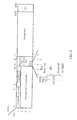
- the optical channel payload unit (OPU) includes an OPU overhead area and payload area, as shown in FIG. 2 .
- the definition of data packaging format primarily considers how to solve the transparent transmission of CBR services, such as the SDH. Therefore, although the OTN may have good adaptability to services, such as the SDH, it is short of consideration for today's more data services, resulting in a series of questions, such as lower packaging efficiency, fewer mapping modes, too simple overhead definition, etc.
- the G. 709 specification established by the ITU-T standards organization defines and standardizes characteristics of the OTN.
- FEC forward error correction
- the overhead area in the frame structure is further divided as follows: bytes 1 to 6 in row 1 form a frame indication area, byte 7 is a multiFrame alignment signal (MFAS), where 256 multiframes are allowed.
- MFAS multiFrame alignment signal
- Columns 8 to 14 in row 1 form an OTU overhead area
- columns 1 to 14 in rows 2 to 4 form an ODU overhead area
- columns 15 and 16 in rows 1 to 4 form an OPU overhead area.
- the G. 709 specification presently standardizes three different bit rate levels: OTU1, OTU2 and OTU3, as shown in Table 1.
- Table 1 three tubes of OTUs and their corresponding bit rates
- OTU OTU nominal bit rate OTU bit-rate tolerance OTU1 255/238 x 2 488 320 kbit/s ⁇ 20 ppm
- OTU3 255/236 x 39 813 120 kbit/s
- the OTUk nominal bit rates are approximately 2 666 057.143 kbit/s (OTU1), 10 709 225.316 kbit/s (OTU2) and 43 018 413.559 kbit/s (OTU3), respectively.
- the three OTU bit rates illustrated in Table 1 correspond to their respective ODU and OPU bit rates, reference to the ITU-T standard G.709 may be made with respect to their detailed characteristics.
- the same frame structure and different frame frequencies are used by the OTN system at different line rates.
- a technical problem to be solved by the present invention is to provide a method of time slot partitioning and overhead processing of an optical channel payload unit in an optical transport network in order to avoid disadvantages of complicated overhead definition, weak adaptive ability and insufficient extension ability in the existing partitioning scheme to adapt to various different client signals and improve effectiveness of transport layer bandwidth.
- the present invention provides a method of time slot partitioning and overhead processing of an optical channel payload unit in an optical transport network comprising the following steps:
- the method may have the following characteristics: when the time slots are partitioned in the step A, the payload area in an optical transport network frame is partitioned into n time slots based on the properties of the service signals, and remaining columns of remainders are filled fixedly if the total number of columns of the payload area is indivisible by the number n of the time slots.
- the method may have the following characteristics: the mapping modes, in which services are mapped to the partitioned time slots, in the step A comprises:
- the method may have the following characteristics: the step B further divides into the following steps: based on association between a multiframe alignment signal (MFAS) of optical channel transport unit overhead and a payload structure identification (PSI) of the optical channel payload unit overhead, redefining the PSI as follows:
- MFAS multiframe alignment signal
- PSI payload structure identification
- step C further divides into the following steps:
- step A further comprises:
- the method may have the following characteristics: when concatenated use for the defined time slots is implemented, implementing binding of the time slots by defining sequence numbers (SQ) in the overhead to support the concatenated use of the time slots.
- SQL sequence numbers
- the method may have following characteristics: the association between the multiframe alignment signal (MFAS) of the optical channel transport unit (OTU) overhead and the payload structure identification (PSI) of the optical channel payload unit overhead is as follows:
- MFAS multiframe alignment signal
- PSI payload structure identification
- the method may have the following characteristics: the number of the time slots is determined based on bandwidth of service signals and/or properties of transmission requirements.
- the present invention may partition the payload area of the OPU only by redefining overhead bytes in the original specification and increasing relevant portion of time slot partitioning in order to increase effectiveness of bandwidth at lower expense and flexibility of the mapping modes such that the existing network has good compatibility without being changed greatly.
- the present invention provides a method of time slot partitioning and overhead processing of an optical channel payload unit in an optical transport network comprising determining the number of time slots to be partitioned for the optical channel payload unit in a payload area based on properties of service signals (bandwidth of the service signals and/or properties of transmission requirements), partitioning the time slots in the payload area and determining mapping modes for services corresponding to each time slot; expending values of payload structure identification bytes in optical channel payload unit overhead based on the partitioning of the time slots, and storing a mapping structure, the number of the time slots, and branch port numbers and a mapping mode corresponding to each time slot in the payload structure identification bytes; and assigning values for undefined bits 1 to 6 of adjustment control bytes to represent a multiframe in the optical channel payload unit overhead, and allocating an overhead cycle of the optical channel payload unit overhead to each time slot.
- multiFrame alignment signal (MFAS) of an OTN frame structure are associated with PSI bytes of the OPU overhead such that the PSI bytes corresponding to different values of the MFAS have different definitions, where an existing PSI value is redefined, while a definition of the PSI value is extended so as to add a new PSI value to adapt to the time slot partitioning of the OPU in the payload area without affecting the original equipment functions.
- MFAS multiFrame alignment signal
- a definition of adjustment control (JC) bytes in row 1 and column 16 in an OPU overhead area is added, and values of 6 original reserved bits are defined as new multiframe values of the partitioned time slots such that the number of the partitioned time slots is not limited by the original multiframe alignment signal (MFAS). That is, the original multiframe value of the MFAS remains unchanged and the new multiframe values indicate the OPU overhead to be allocated to different time slots such that each time slot can use the OPU overhead cyclically.
- MFAS multiframe alignment signal
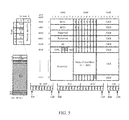
- overhead in rows 1, 2 and 3 and column 15 of an OTN frame may be used and reference to the definition of virtual concatenation specified in the G709 which is proposed by the ITU-T is made so as to use simply these overhead bytes and implement the concatenated use of the time slots, as shown in FIG. 4 .
- time slot partitioning is implemented flexibly for the OPU structure of the OTN frame, overhead resources are allocated reasonably, various mapping modes are adapted to, the effectiveness of bandwidth is improved, and the problems that the mapping modes are too simple and the number of the mapped branches are not the power of 2 for different service bit rates in future in the ITU-T standard specification G709 are well solved.
- the present invention's emphasis lies in adding and modifying contents of the OPU overhead bytes, and defining and managing time slot partitioning of the OPU in a device using some undefined overhead.
- flexible time slot partitioning may be implemented by definition of the overhead in a common OPU structure.
- n time slots which are transmitted in byte intercalating and multiplexing manner
- the column number of the payload area of 3808 is indivisible by n
- the remaining columns of remainders are filled fixedly.
- seven other overhead bytes are allocated cyclically to n time slots by taking n as a unit.
- the time slots corresponding to the overhead are defined by bits 1 to 6 of the overhead byte in row 1 and column 16, and pointer adjustment and indication are still performed for bits 7 and 8 according to specification requirements when asynchronous mapping of CBR signals is performed.
- the time slot partitioning function may support a variety of flexible mapping modes for client signals.
- the client signals may be mapped into the defined time slots using various mapping modes.
- the client signals are first packaged in a self-defined ODU format, and then the mapping of asynchronous signals is performed according to the mapping modes described in a standard, such as the standard G709, or constant bit rate (CBR) signals of the client are mapped directly and asynchronously into the defined time slots, or the client signals are packaged and mapped into the time slots using a generic framing procedure (GFP), or the client signals may be mapped into the defined time slots by the self-defined mapping modes.
- GFP generic framing procedure
- the present invention supports a variety of mapping modes for various client signals through the definition of the associated overhead bytes of the OPU and is not limited to the mapping modes specified in the standard.
- the time slot partitioning function may also support the concatenated use function of the time slots.
- a virtual concatenation method standardized by a standard such as the standard G709
- the concatenated use can be simplified. For example, when the defined time slots are transmitted via the same path, the effect of propagation delay may not be considered and the multiframe alignment signal of concatenation does not need to be defined.
- information such as link state, is not needed to be processed.
- the simplified use is that the binding of the time slots may be achieved only by defining the sequence number (SQ) in the overhead.
- the definition of the PSI bytes of the OPU overhead is associated with the multiframe alignment signal (MFAS) of the OTU overhead.
- MFAS multiframe alignment signal
- the corresponding PSI byte represents the payload type, as shown in Table 2.
- Table 2 values of the payload types defined in G709 MSB 1 2 3 4 LSB 5 6 7 8 Hex code (Note 1) Interpretation 0 0 0 0 0 0 0 1 01 Test mapping (Note 3) 0 0 0 0 0 0 1 0 02 Asynchronous CBR mapping 0 0 0 0 0 1 1 03 Bit synchronous CBR mapping 0 0 0 0 0 1 0 04 ATM mapping 0 0 0 0 0 1 0 1 05 GFP mapping 0 0 0 0 0 1 1 0 06 virtual concatenation signal (Note 5) 0 0 0 1 0 0 0 0 10 Bit stream mapping with byte timing 0 0 0 1 0 0 0 1 11 Bit stream mapping without byte timing 0 0 1 0 0 1 1 0 20 ODU multiplexing structure 0 1 0 1 0 1 0 1 0 1 55 Unavailable (Note 2) 0 1 1 0 0
- PSI[0] When the MFAS is another value, it is associated with a value corresponding to PSI[0].
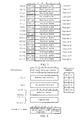
- PSI[0] is 0X20, it represents the ODU multiplexing structure, the value corresponding to PSI[1] is a reserved value, and PSI[2] ⁇ PSI[17] represent a port corresponding to each branch and the type of the ODU for the branch, as shown in FIG. 3 .
- the present invention uses an undefined value to define PSI[0] to represent a time slot partitioning mapping structure of the corresponding optical channel payload unit, and defines other PSI values as the number of the partitioned time slots, the port numbers corresponding to the time slots and the mapping modes used by the corresponding time slots.
- the time slot partitioning is also a multiplexing structure which is different from the multiplexing structure of the ODU.
- a new value such as 0X21, is needed to be defined in PSI[0].
- the originally preserved PSI[1] is assigned as the number of the partitioned time slots, as shown in FIG. 4 .
- PSI[2] ⁇ PSI[n+1] are defined as the branch port numbers and PSI[n+2] ⁇ PSI[2n+1] are defined as the used mapping modes.
- Bits 1 to 6 in the first overhead byte in column 16 are used to define the multiframe alignment signal.
- This multiframe is cycled from 0 to n -1 corresponding to 1 to n time slots, respectively, by the number of the time slots.
- the OPU overhead corresponding to the value of the multiframe is allocated to the corresponding time slot number, thus, every n frames in each time slot may be allocated to the corresponding OPU overhead.
- the number of the time slots and the concatenation method are configured flexibly based on bandwidth of the client signals and the mapping modes according to the technical scheme of time slot partitioning of the OPU in the payload area.
- the OPU1 area may be selected to be partitioned into 2 time slots with bytes intercalated so as to perform the mapping of 2-channel GE signals from GE to the time slots.
- Both information after 64/65B coding and media access control (MAC) signals before 8B/10B coding may be transmitted according to the GFP-T specification requirements.
- mapping directly and asynchronously signals at physical layer of the Ethernet may implement transmission of Ethernet clock, thereby achieving requirements of synchronous Ethernet specifications.
- FC client signals such as 2G, 4G and 8G
- time slot partitioning for 10G bandwidth may be implemented in term of the transmitted minimum granularity, 2G.
- several different FC signals described above may be transmitted mixedly to facilitate management and improve bandwidth utilization ratio.
- the method in accordance with the present invention has following characteristics:
- the present invention may partition the payload area of the OPU only by redefining overhead bytes in the original specification and increasing relevant portion of time slot partitioning in order to increase effectiveness of bandwidth at lower expense and flexibility of the mapping modes such that the existing network has good compatibility without being changed greatly.
Landscapes
- Engineering & Computer Science (AREA)
- Computer Networks & Wireless Communication (AREA)
- Signal Processing (AREA)
- Time-Division Multiplex Systems (AREA)
Applications Claiming Priority (2)
| Application Number | Priority Date | Filing Date | Title |
|---|---|---|---|
| CN200710163104A CN100589365C (zh) | 2007-09-14 | 2007-10-08 | 一种光传输网中光净荷单元的时隙划分与开销处理的方法 |
| PCT/CN2007/003912 WO2009046596A1 (fr) | 2007-10-08 | 2007-12-29 | Procédé pour réaliser une partition de tranche de temps et procédé de dépense d'une unité de charge utile optique dans un réseau de transmission optique |
Publications (2)
| Publication Number | Publication Date |
|---|---|
| EP2209227A1 true EP2209227A1 (de) | 2010-07-21 |
| EP2209227A4 EP2209227A4 (de) | 2016-05-04 |
Family
ID=40548938
Family Applications (1)
| Application Number | Title | Priority Date | Filing Date |
|---|---|---|---|
| EP07855912.7A Withdrawn EP2209227A4 (de) | 2007-10-08 | 2007-12-29 | Verfahren zur realisierung von zeitschlitzpartitionierung und vergabeprozess einer optischen nutzinformationseinheit in einem optischen übertragungsnetzwerk |
Country Status (5)
| Country | Link |
|---|---|
| US (1) | US20100221005A1 (de) |
| EP (1) | EP2209227A4 (de) |
| CN (1) | CN100589365C (de) |
| BR (1) | BRPI0722157A2 (de) |
| WO (1) | WO2009046596A1 (de) |
Cited By (1)
| Publication number | Priority date | Publication date | Assignee | Title |
|---|---|---|---|---|
| EP3316495A4 (de) * | 2015-07-23 | 2018-09-05 | Huawei Technologies Co., Ltd. | Verfahren und vorrichtung zur datenübertragung |
Families Citing this family (36)
| Publication number | Priority date | Publication date | Assignee | Title |
|---|---|---|---|---|
| CN101635867B (zh) * | 2008-07-21 | 2012-08-08 | 华为技术有限公司 | 光信号的复用映射和解复用映射方法、装置及系统 |
| CN101378399B (zh) * | 2008-09-28 | 2012-04-04 | 华为技术有限公司 | 业务数据映射和解映射方法及装置 |
| CN101729188B (zh) * | 2008-10-14 | 2016-10-05 | 华为技术有限公司 | 发送和接收映射开销的方法、装置 |
| KR101041569B1 (ko) * | 2008-11-13 | 2011-06-15 | 한국전자통신연구원 | 클라이언트 신호 전송장치, 클라이언트 신호 전송에서의 종속슬롯 매핑 및 디매핑 장치 및 그 방법 |
| CN101800614B (zh) * | 2009-02-05 | 2014-08-13 | 华为技术有限公司 | 光传送网中的通用映射、解映射方法及装置 |
| CN106130683B (zh) | 2009-02-10 | 2020-01-10 | 华为技术有限公司 | 客户信号映射和解映射的实现方法及装置 |
| CN101489157B (zh) | 2009-02-13 | 2011-06-08 | 华为技术有限公司 | 将业务复用映射到光通道传送单元的方法和装置 |
| EP2453597B1 (de) * | 2009-03-09 | 2017-12-27 | Alcatel Lucent | Verfahren zur Datenübertragung in einem optischen Transportnetzwerk |
| CN101834688B (zh) | 2009-03-09 | 2011-08-31 | 华为技术有限公司 | 光传送网中的映射、解映射方法及装置 |
| CN101841749B (zh) * | 2009-03-18 | 2013-10-02 | 华为技术有限公司 | 数据传输方法、通信装置及通信系统 |
| CN101547055B (zh) * | 2009-04-25 | 2012-09-05 | 华为技术有限公司 | 在光传送网中传输数据的方法和装置 |
| WO2011075901A1 (zh) | 2009-12-24 | 2011-06-30 | 华为技术有限公司 | 通用映射规程gmp映射方法、解映射方法及装置 |
| CN103825668B (zh) * | 2009-12-24 | 2017-06-16 | 华为技术有限公司 | 通用映射规程gmp映射方法、解映射方法及装置 |
| CN101951304B (zh) * | 2010-08-31 | 2012-04-18 | 华为技术有限公司 | 微波传输装置 |
| CN102257834B (zh) * | 2011-06-13 | 2014-07-09 | 华为技术有限公司 | 光传送网背板时分到空分位宽转换方法及背板 |
| CN102281477B (zh) * | 2011-08-18 | 2018-02-16 | 中兴通讯股份有限公司 | 一种实现otn业务映射及解映射的方法和装置 |
| CN106301661B (zh) | 2012-07-30 | 2018-10-19 | 华为技术有限公司 | 光传送网中传送、接收客户信号的方法和装置 |
| CN103533464B (zh) * | 2013-09-13 | 2016-11-23 | 华为技术有限公司 | 迁移数据的方法和通信节点 |
| CN106559141B (zh) * | 2015-09-25 | 2020-01-10 | 华为技术有限公司 | 一种信号发送、接收方法、装置及系统 |
| CN107566074B (zh) * | 2016-06-30 | 2019-06-11 | 华为技术有限公司 | 光传送网中传送客户信号的方法及传送设备 |
| CN108183764B (zh) * | 2016-12-08 | 2021-05-07 | 中兴通讯股份有限公司 | 复帧发送、接收方法、装置、通讯设备及通讯网络系统 |
| CN109861781B (zh) | 2017-11-30 | 2021-02-12 | 华为技术有限公司 | 接口传输方法、装置及设备 |
| CN110224946B (zh) | 2018-03-01 | 2022-05-27 | 中兴通讯股份有限公司 | 一种业务发送方法及装置、业务接收方法及装置 |
| CN110661745B (zh) * | 2018-06-28 | 2022-07-08 | 中兴通讯股份有限公司 | 一种开销传输方法、装置、设备及计算机可读存储介质 |
| CN111740801B (zh) * | 2019-03-25 | 2021-12-10 | 华为技术有限公司 | 一种业务数据的处理方法及装置 |
| CN111740782B (zh) * | 2019-03-25 | 2023-03-10 | 华为技术有限公司 | 一种业务数据的处理方法及装置 |
| CN115515033A (zh) * | 2019-09-30 | 2022-12-23 | 华为技术有限公司 | 一种光传送网中的业务处理的方法、装置和系统 |
| CN112511916A (zh) * | 2020-02-28 | 2021-03-16 | 中兴通讯股份有限公司 | 光传送网中业务处理方法、处理装置和电子设备 |
| CN111447690B (zh) * | 2020-03-25 | 2022-03-11 | 中国人民解放军第六九O五工厂 | 一种快速动态时隙申请方法及多信道电台 |
| CN112511920B (zh) * | 2020-03-27 | 2026-03-27 | 中兴通讯股份有限公司 | 光传送网中业务处理方法、处理装置和电子设备 |
| CN116192647A (zh) * | 2020-04-15 | 2023-05-30 | 华为技术有限公司 | 一种带宽调整的方法以及相关设备 |
| CN116418456B (zh) * | 2021-12-31 | 2025-11-18 | 中兴通讯股份有限公司 | 信号速率处理方法、装置及存储介质 |
| CN114710229B (zh) * | 2022-04-06 | 2025-10-21 | 湖南必然网络科技有限公司 | 一种127g-pm-qpsk信号分析算法 |
| CN120896665A (zh) * | 2022-11-22 | 2025-11-04 | 华为技术有限公司 | 数据传输的方法和装置 |
| CN116582412B (zh) * | 2023-07-06 | 2023-11-24 | 北京晟芯网络科技有限公司 | Otn跨芯片发送、接收开销及请求的方法、装置和介质 |
| CN118900288B (zh) * | 2024-09-30 | 2024-12-13 | 杭州芯旗电子技术有限公司 | 基于fpga的细颗粒灵活光数据单元信号生成装置及方法 |
Family Cites Families (12)
| Publication number | Priority date | Publication date | Assignee | Title |
|---|---|---|---|---|
| US20030048813A1 (en) * | 2001-09-05 | 2003-03-13 | Optix Networks Inc. | Method for mapping and multiplexing constant bit rate signals into an optical transport network frame |
| US7180914B2 (en) * | 2002-08-19 | 2007-02-20 | Applied Micro Circuits Corporation | Efficient asynchronous stuffing insertion and destuffing removal circuit |
| US7512150B2 (en) * | 2003-03-24 | 2009-03-31 | Applied Micro Circuits Corporation | 10 GbE LAN signal mapping to OTU2 signal |
| CN100349390C (zh) * | 2004-08-11 | 2007-11-14 | 华为技术有限公司 | 光传送网中传输低速率业务信号的方法及其装置 |
| CN100596043C (zh) * | 2004-08-26 | 2010-03-24 | 华为技术有限公司 | 实现低速信号在光传输网络中透明传送的方法和装置 |
| CN100590997C (zh) * | 2004-11-02 | 2010-02-17 | 华为技术有限公司 | 一种otn网络中业务复用的开销处理方法 |
| ES2340162T3 (es) * | 2004-11-12 | 2010-05-31 | Alcatel Lucent | Metodo y aparato para transportar una señal de capa de cliente sobre una red de transporte optico (otn). |
| CN1791057B (zh) * | 2004-12-15 | 2011-06-15 | 华为技术有限公司 | 在光传送网中传输数据业务的方法及其装置 |
| JP2007096822A (ja) * | 2005-09-29 | 2007-04-12 | Fujitsu Ltd | 信号多重化装置およびそのスタッフ制御方法 |
| DE102005047171B4 (de) * | 2005-09-30 | 2010-04-01 | Xignal Technologies Ag | Schaltungsanordnung mit einem rückgekoppelten Operationsverstärker |
| EP2071750A4 (de) * | 2007-02-16 | 2011-06-22 | Huawei Tech Co Ltd | Verfahren und system zum transport von ethernetdaten in einem optischen transport-netzwerk |
| US8121111B2 (en) * | 2007-03-29 | 2012-02-21 | Verizon Patent And Licensing Inc. | Method and system for measuring latency |
-
2007
- 2007-10-08 CN CN200710163104A patent/CN100589365C/zh not_active Expired - Fee Related
- 2007-12-29 EP EP07855912.7A patent/EP2209227A4/de not_active Withdrawn
- 2007-12-29 BR BRPI0722157-6A patent/BRPI0722157A2/pt active Search and Examination
- 2007-12-29 US US12/681,953 patent/US20100221005A1/en not_active Abandoned
- 2007-12-29 WO PCT/CN2007/003912 patent/WO2009046596A1/zh not_active Ceased
Non-Patent Citations (1)
| Title |
|---|
| See references of WO2009046596A1 * |
Cited By (2)
| Publication number | Priority date | Publication date | Assignee | Title |
|---|---|---|---|---|
| EP3316495A4 (de) * | 2015-07-23 | 2018-09-05 | Huawei Technologies Co., Ltd. | Verfahren und vorrichtung zur datenübertragung |
| US10567103B2 (en) | 2015-07-23 | 2020-02-18 | Huawei Technologies Co., Ltd. | Data transmission method and device |
Also Published As
| Publication number | Publication date |
|---|---|
| US20100221005A1 (en) | 2010-09-02 |
| BRPI0722157A2 (pt) | 2014-03-18 |
| CN101155016A (zh) | 2008-04-02 |
| EP2209227A4 (de) | 2016-05-04 |
| CN100589365C (zh) | 2010-02-10 |
| WO2009046596A1 (fr) | 2009-04-16 |
Similar Documents
| Publication | Publication Date | Title |
|---|---|---|
| EP2209227A1 (de) | Verfahren zur realisierung von zeitschlitzpartitionierung und vergabeprozess einer optischen nutzinformationseinheit in einem optischen übertragungsnetzwerk | |
| US12088408B2 (en) | Method and apparatus for transporting client signals in an optical transport network | |
| US11750313B2 (en) | Client signal transmission method, device and system and computer-readable storage medium | |
| EP2296297B1 (de) | Verfahren und vorrichtung zur abbildung eines client-signals | |
| KR102192294B1 (ko) | 광 전송 네트워크에서 클라이언트 신호를 송신하는 방법 및 광 전송 디바이스 | |
| EP1826926B1 (de) | Implementierungsverfahren für ein in einem optischen transportnetz gesendetes kurzratenverkehrssignal | |
| CN100590997C (zh) | 一种otn网络中业务复用的开销处理方法 | |
| RU2439708C2 (ru) | Способ и устройство для отображения и обратного отображения в оптической транспортной сети | |
| US8693480B2 (en) | Method, apparatus and system for transmitting and receiving client signals | |
| CN101051879B (zh) | 低速业务复用及解复用的方法和装置 | |
| JP4878629B2 (ja) | 多重伝送システムおよび多重伝送方法 | |
| WO2019213901A1 (zh) | 光传送网中低速业务数据的处理方法、装置和系统 | |
| US11894918B2 (en) | Method and apparatus for transmitting configuration information, storage medium, and system | |
| EP3843293B1 (de) | Signalsendevorrichtung und -system | |
| CN101742364A (zh) | 一种将光净荷单元时隙信号映射到信号帧的方法及系统 | |
| JP2007013390A (ja) | バーチャルコンカチネーション伝送システム、及びそれに用いる伝送装置とその伝送方法 |
Legal Events
| Date | Code | Title | Description |
|---|---|---|---|
| PUAI | Public reference made under article 153(3) epc to a published international application that has entered the european phase |
Free format text: ORIGINAL CODE: 0009012 |
|
| 17P | Request for examination filed |
Effective date: 20100429 |
|
| AK | Designated contracting states |
Kind code of ref document: A1 Designated state(s): AT BE BG CH CY CZ DE DK EE ES FI FR GB GR HU IE IS IT LI LT LU LV MC MT NL PL PT RO SE SI SK TR |
|
| AX | Request for extension of the european patent |
Extension state: AL BA HR MK RS |
|
| DAX | Request for extension of the european patent (deleted) | ||
| RA4 | Supplementary search report drawn up and despatched (corrected) |
Effective date: 20160406 |
|
| RIC1 | Information provided on ipc code assigned before grant |
Ipc: H04J 3/16 20060101AFI20160331BHEP |
|
| STAA | Information on the status of an ep patent application or granted ep patent |
Free format text: STATUS: THE APPLICATION IS DEEMED TO BE WITHDRAWN |
|
| 18D | Application deemed to be withdrawn |
Effective date: 20161103 |