EP2214366B1 - Diffusion de vidéo numérique, système de câbles et procédé pour le traitement d'une tonalité réservée - Google Patents
Diffusion de vidéo numérique, système de câbles et procédé pour le traitement d'une tonalité réservée Download PDFInfo
- Publication number
- EP2214366B1 EP2214366B1 EP20100152106 EP10152106A EP2214366B1 EP 2214366 B1 EP2214366 B1 EP 2214366B1 EP 20100152106 EP20100152106 EP 20100152106 EP 10152106 A EP10152106 A EP 10152106A EP 2214366 B1 EP2214366 B1 EP 2214366B1
- Authority
- EP
- European Patent Office
- Prior art keywords
- reserved tones
- frame
- channel
- bands
- reserved
- Prior art date
- Legal status (The legal status is an assumption and is not a legal conclusion. Google has not performed a legal analysis and makes no representation as to the accuracy of the status listed.)
- Active
Links
Images

Classifications
-
- H—ELECTRICITY
- H04—ELECTRIC COMMUNICATION TECHNIQUE
- H04L—TRANSMISSION OF DIGITAL INFORMATION, e.g. TELEGRAPHIC COMMUNICATION
- H04L27/00—Modulated-carrier systems
- H04L27/26—Systems using multi-frequency codes
- H04L27/2601—Multicarrier modulation systems
- H04L27/2614—Peak power aspects
- H04L27/2618—Reduction thereof using auxiliary subcarriers
-
- H—ELECTRICITY
- H04—ELECTRIC COMMUNICATION TECHNIQUE
- H04J—MULTIPLEX COMMUNICATION
- H04J11/00—Orthogonal multiplex systems, e.g. using WALSH codes
-
- H—ELECTRICITY
- H04—ELECTRIC COMMUNICATION TECHNIQUE
- H04L—TRANSMISSION OF DIGITAL INFORMATION, e.g. TELEGRAPHIC COMMUNICATION
- H04L5/00—Arrangements affording multiple use of the transmission path
- H04L5/003—Arrangements for allocating sub-channels of the transmission path
- H04L5/0044—Allocation of payload; Allocation of data channels, e.g. PDSCH or PUSCH
-
- H—ELECTRICITY
- H04—ELECTRIC COMMUNICATION TECHNIQUE
- H04N—PICTORIAL COMMUNICATION, e.g. TELEVISION
- H04N7/00—Television systems
- H04N7/015—High-definition television systems
-
- H—ELECTRICITY
- H04—ELECTRIC COMMUNICATION TECHNIQUE
- H04N—PICTORIAL COMMUNICATION, e.g. TELEVISION
- H04N7/00—Television systems
- H04N7/10—Adaptations for transmission by electrical cable
-
- H—ELECTRICITY
- H04—ELECTRIC COMMUNICATION TECHNIQUE
- H04H—BROADCAST COMMUNICATION
- H04H20/00—Arrangements for broadcast or for distribution combined with broadcast
- H04H20/65—Arrangements characterised by transmission systems for broadcast
- H04H20/76—Wired systems
- H04H20/77—Wired systems using carrier waves
- H04H20/78—CATV [Community Antenna Television] systems
Definitions
- the present invention generally relates to communications technology and, more particularly, to a Digital Video Broadcasting - Cable (DVB-C) system based on Orthogonal Frequency Division Multiplexing (OFDM) and a method for processing a reserved tone therein.
- DVD-C Digital Video Broadcasting - Cable
- OFDM Orthogonal Frequency Division Multiplexing
- OFDM is a multi-carrier technique that allows data transmission through a number of subcarriers disposed to maintain orthogonality amongst the subcarriers.
- OFDM typically has a higher efficiency of frequency use than various other multiplexing schemes and is tolerant of multi-path fading. Therefore, OFDM has been widely adopted in standards of mass communication systems such as the Digital Audio Broadcasting (DAB) system and the Digital Video Broadcasting - Terrestrial (DVB-T) system.
- DVB-T uses a single channel band to offer a broadcasting service.
- DVB-C Digital Video Broadcasting - Cable
- the DVB-C system uses a number of channel bands to offer a broadcasting service, and thus DVB-C has a higher efficiency of frequency use.
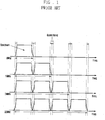
- channel bands are organized in a simple link structure as shown in FIG. 1 . Therefore, as the number of channel bands increases, guard bands located at both sides of each individual channel band also increase in number. For example, if four channel bands are employed in the DVB-C system, a bandwidth actually available for a broadcasting service is limited to the sum of four channel bands excluding the eight guard bands.
- a DVB-C second generation (DVB-C2) system not only employs at least one channel band to offer a broadcasting service, but also is based on OFDM.
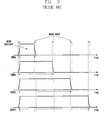
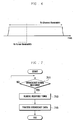
- channel bands combine into a multi-channel bundle as shown in FIG. 2 . Therefore, even when the number of channel bands increases, the number of guard bands does not change. For example, when four channel bands are used according to the DVB-C2 system illustration of FIG. 2 , a bandwidth actually available for a broadcasting service excludes only two guard bands. Therefore, the DVB-C2 system may have better frequency efficiency than the traditional DVB-C system or the DVB-T system.
- the DVB-C2 system may have shortcomings in that a Peak to Average Power Ratio (PAPR) is relatively higher than the other systems, due to the adoption of OFDM. Specifically, since the amplitude of a broadcast signal based on OFDM is equal to the sum of the amplitudes of subcarriers, such a broadcast signal may be inherently subjected to a significant fluctuation in amplitude. Additionally, this amplitude fluctuation may become significant when the phases of subcarriers coincide with each other. Therefore, the performance of the DVB-C2 system may be deteriorated by the amplitude fluctuations.
- PAPR Peak to Average Power Ratio
- US 2008/298490 A1 discloses a mobile communication system, for reducing a peak-to-average power ratio (PAPR) in an orthogonal frequency division multiplexing (OFDM) system.
- the application discloses a table with properties of 1 K, 2K, 4K, 8K, 16K, and 32K modes of DVB. That table lists a number of reserved tones for each mode. Another table discloses reserved tone positions.
- the cited application further discloses determining reserved tone positions using detected pilot positions, extracting and demodulating data signals transmitted in the positions except for the reserved tone positions, and repeating the processing process on the next OFDM symbol.
- the cited application further discloses a transmission apparatus that determines positions of data and reserved tones using detected pilot positions.
- the cited application further discloses a diagram of pilot tone, data tone, and reserved tone.
- D2 DVB ORGANIZATION " DVB_TM_C2_197_draft_en_302xxxv010101 rev3.2.doc", DVB, DIGITAL VIDEO BROADCASTING, dated 8 January 2009 , XP017830541, discloses a table listing indices of reserved carriers for the P2 symbol. The paper further discloses that in the data symbols, the set of carriers corresponding to the carrier indices defined in that shall be reserved. The paper further discloses an algorithm of PAPR reduction using reserved carriers.
- an object of the present invention is to address the above-mentioned problems and/or disadvantages and to provide at least the advantages described below.
- aspects of the present invention may allow inserting reserved tones into an entire multi-channel bundle composed of combined channel bands, thereby being able to compensate for peak power of broadcast data to be transmitted through the multi-channel bundle. This may allow a reduction in a PAPR of broadcast signals in the DVB-C system. Therefore, aspects of the present invention may improve the performance of the DVB-C system by reducing the PAPR of broadcast signals while still adopting OFDM.
- a Digital Video Broadcasting - Cable (DVB-C) system is configured to provide a broadcasting service.
- the DVB-C system is the DVB-C second generation (DVB-C2) system, which offers a broadcasting service through a multi-channel bundle composed of at least one channel band, normally composed of several channel bands, as shown in FIG. 2 .
- DVB-C2 DVB-C second generation
- Such a DVB-C system has a transmitter and a receiver.
- the transmitter is configured to create and transmit a broadcast signal having broadcast data.
- the receiver is configured to receive a broadcast signal and is further configured to process broadcast data in the received broadcast signal. In this manner, the DVB-C system allows users to access a broadcasting service.
- the DVB-C system offers a broadcasting service based on OFDM, while reducing PAPR through a Tone Reservation scheme.
- DVB-C systems and methods for processing a reserved tone in accordance with embodiments of this invention may allow insertion of reserved tones into the whole multi-channel bundle with channel bands combined, thereby enabling compensation for the peak power of broadcast data to be transmitted through a multi-channel bundle. This enablement may further allow a favorable reduction in the PAPR of a broadcast signal in the DVB-C system. Therefore, the present invention may improve the performance of the DVB-C system through a reduced PAPR while still adopting OFDM.
- the DVB-C system may use the same standard as the DVB-T system uses. For instance, with the DVB-T system, the DVB-C system may use a channel band of 8MHz and also use 4K Fast Fourier Transform (FFT) as units of modulation and demodulation in OFDM parameter. By combining N channel bands, the DVB-C system may use a multi-channel bundle that has a size of N times 8MHz and a modulation/demodulation unit of 2 N+1 K FFT. Here, the DVB-C system may combine up to thirty-two channel bands. Described hereinafter is a case where each channel band is formed of 3,408 subcarriers. However, it will be understood by those skilled in the art that the present invention is not limited to the following case example.
- FFT Fast Fourier Transform
- FIG. 3 is a block diagram illustrating a configuration of a transmitter in a DVB-C system in accordance with an embodiment of the present invention.
- a transmitter 300 includes a plurality of broadcast data generating units 310, a broadcast signal generating unit 330, and a frame organizing unit 350.
- the number of the broadcast data generating units 310 corresponds to that of channel bands in a symbol.
- Each of the broadcast data generating units 310 is configured to produce, using an input signal, broadcast data to be transmitted through each channel band.
- a base band (BB) scrambler 331 scrambles an input signal to a specific frequency band.
- BB base band
- BCH Hocquenghem
- LDPC Low Density Parity Check
- a bit interleaver 317 and a Quadrature Amplitude Modulation (QAM) encoder 319 also produce a constellation signal based on a complex number from an input signal. Then, a time interleaver 321 and a frequency interleaver 323 interleave an input signal into the time domain and the frequency domain.
- QAM Quadrature Amplitude Modulation
- the broadcast signal generating unit 330 is configured to produce a broadcast signal using broadcast data.
- the broadcast signal generating unit 330 creates a broadcast signal, depending on a multi-channel bundle with channel bands combined.
- an OFDM symbol builder 333 combines broadcast data in the respective channel bands and forms a symbol for each channel band.
- the OFDM symbol builder 333 determines the position of pilots, the position of broadcast data and the position of reserved tones, within each channel band. At this time, the OFDM symbol builder 333 uses an index of each subcarrier to determine the positions.
- the OFDM symbol builder 333 may also include a memory unit (not illustrated).
- the OFDM symbol builder 333 inserts pilots, produced in a pilot inserter 331, and inserts broadcast data, produced in the broadcast data generating units 310, into their determined positions, respectively, and performs an Inverse Fast Fourier Transform (IFFT). Additionally, a PAPR reducer 335 inserts reserved tones for reducing the PAPR of broadcast data into their determined positions. Then a guard interval inserter 337 inserts a guard band into both sides of a multi-channel bundle.
- IFFT Inverse Fast Fourier Transform
- the frame organizing unit 350 is configured to form a frame with a multi-channel bundle. Specifically, in the frame organizing unit 350, a notch inserter 351 inserts a notch into the frame. A training sequence generator 353 and an L1 signaling generator 355 add a training sequence and an L1 signal to the frame, respectively. After the training sequence and the L1 signal are added to the frame, a preamble inserter 357 inserts a preamble into the frame, and a frame builder 359 determines the frame with the preamble, the multi-channel bundle, etc.
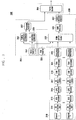
- FIG. 4 is a flow diagram illustrating a method for processing a reserved tone in a transmitter of a DVB-C system in accordance with an embodiment of the present invention. In this embodiment, such a method for processing a reserved tone in a transmitter is performed according to frames.
- the transmitter 300 determines whether a broadcasting service is to be offered, in step 411. If the broadcasting service will be offered, the transmitter 300 creates broadcast data, in step 413. Particularly, in step 413, the transmitter 300 produces broadcast data of a multi-channel bundle from input signals. More specifically, the transmitter 300 creates broadcast data by channel bands and then combines them.
- the transmitter 300 determines the position of broadcast data and the position of reserved tones.
- the positions are determined for each channel band.
- the transmitter 300 determines such positions so that any of pilots, broadcast data, and reserved tones will not conflict with each other in any of the subcarriers arranged in each channel band. More specifically, there may be more than one way of determining the position of reserved tones.
- the transmitter 300 may determine the position of broadcast data and the position of reserved tones in consideration of the number of subcarriers by sizes of a predefined initial channel band.
- One way of determining the position of reserved tones is to use a shift value between channel bands of a multi-channel bundle.
- the forefront channel band will be referred to as an initial channel band, and at least one channel band following the initial channel band will be referred to as a subsequent channel band.
- the transmitter 300 determines the position of broadcast data and the position of reserved tones in the initial channel band. Specifically, the transmitter 300 scatters pilots over the initial channel band and thereby determines their position. Then the transmitter 300 determines the position of reserved tones in consideration of a distance between pilots. The position of reserved tones should not coincide with the positions of pilots. The transmitter 300 also determines the position of broadcast data at positions other than the position of pilots and the position of reserved tones. In the initial channel band, the position of reserved tones may be determined through the following Equation (1). Alternatively, the position of reserved tones in the initial channel band may be predetermined and stored in a memory unit as shown in the following Table 1.
- 'S' represents a combination of the positions of reserved tones.
- An index of a symbol is denoted by '1'
- an index of a reserved tone is denoted by 'i'.
- D X represents a frequency gap between pilots
- D Y represents a symbol gap between pilots.
- N RT represents the number of reserved tones
- N P2 represents the number of P2 symbols in a frame
- L normal represents the number of all symbols excluding the P2 symbols.
- the transmitter 300 determines the position of broadcast data and the position of reserved tones in a subsequent channel band by calculating a shift value from the initial channel band to the subsequent channel band.
- a shift value may correspond to n-times the size of the initial channel band wherein 'n' is integer.
- the transmitter 300 shifts the position of each reserved tone in the initial channel band by a shift value and therefore determines the position in the subsequent channel band.
- the position of reserved tones in the subsequent channel band may be determined through the following Equation (2).
- N FFT represents the size of the initial channel band
- N ch represents the number of channel bands.
- a combination of the positions of reserved tones in a symbol may be determined as shown in the following Table 2.
- the transmitter 300 may determine the position of broadcast data and the position of reserved tones in a multi-channel bundle of a symbol with the initial channel band and subsequent channel band combined.
- the position of reserved tones in a multi-channel bundle may be determined through the following Equation (3).
- a second way of determining the position of reserved tones includes using the size of a multi-channel bundle.
- the foremost channel band will be referred to as an initial channel band, and at least one channel band following the initial channel band will be referred to as a subsequent channel band.
- the transmitter 300 determines the position of broadcast data and the position of reserved tones in the initial channel band. Specifically, the transmitter 300 scatters pilots over the initial channel band and thereby determines the positions of the pilots. Then the transmitter 300 determines the position of reserved tones in consideration of a distance between pilots. The position of reserved tones should not coincide with that of pilots. Also, the transmitter 300 determines the position of broadcast data at positions other than the position of pilots and the position of reserved tones.
- the transmitter 300 While maintaining the position of broadcast data and the position of reserved tones in the initial channel band, the transmitter 300 determines such positions in the subsequent channel band. Specifically, the transmitter 300 scatters pilots over the subsequent channel band and thereby determines the positions of the scattered pilots. Then the transmitter 300 determines the position of reserved tones in consideration of a distance between pilots. The position of reserved tones should not coincide with the position of the pilots. The transmitter 300 also determines the position of broadcast data at positions other than the position of pilots and the position of reserved tones. In the initial channel band, the position of reserved tones may be determined and stored in a memory unit as shown in the following Table 3.
- the position of reserved tones in each of the initial channel band and the subsequent channel band of a symbol may be determined through the following Equation (4).
- N ch represents the number of channel bands.
- the combination of positions of reserved tones in the initial channel band is denoted by S 1 and the size of the initial channel band is denoted by 4K
- the combination of positions of reserved tones in a symbol may be determined as shown in the following Table 4. According to the example of Table 4, a multi-channel bundle in a symbol is composed of the initial channel band and three subsequent channel bands.
- the transmitter 300 may determine the position of broadcast data and the position of reserved tones in a multi-channel bundle with the initial channel band and the subsequent channel band combined. More specifically, the transmitter 300 determines the position of reserved tones in a predefined manner. At this time, in step 415, the position of reserved tones in a multi-channel bundle may be determined through the following Equation (5).
- the transmitter 300 determines the position of broadcast data and the position of reserved tones in the initial channel band. Specifically, the transmitter 300 scatters pilots over the initial channel band and thereby determines the positions of the scatter pilots. Then the transmitter 300 determines the position of reserved tones in consideration of a distance between pilots. Here, the position of reserved tones should not coincide with that of pilots. The transmitter 300 also determines the position of broadcast data at positions other than the position of pilots and the position of reserved tones.
- the transmitter 300 determines such positions in the subsequent channel band. More specifically, the transmitter 300 scatters pilots over the subsequent channel band and thereby determines their position. Then the transmitter 300 determines the position of reserved tones in consideration of a distance between pilots. The position of reserved tones should not coincide with that of pilots. The transmitter 300 also determines the position of broadcast data at places other than the position of pilots and the position of reserved tones.
- a symbol is composed of several combined bands each of which has at least one channel band.
- a symbol may include four combined bands.
- the position of reserved tones in combined bands at the forefront portion of a symbol may be determined and stored in a memory unit as shown in the following Table 5.
- each combined band may be formed from eight channel bands.
- the position of reserved tones in combined bands at the forefront portion of a symbol may be determined and stored in a memory unit as shown in the following Table 6, but not limited thereto.
- the position of reserved tones in each of the initial channel band and the subsequent channel band of a symbol may be determined through the following Equation (6).
- c2_frame_length represents the number of all symbols in a frame of the DVB-C system.
- the transmitter 300 may determine the position of broadcast data and the position of reserved tones in a multi-channel bundle with the initial channel band and the subsequent channel band combined, thereby determining the position of reserved tones in a predefined manner.
- the position of reserved tones in a multi-channel bundle may be determined through the following Equation (7).
- NUM_BUNDLED_CH represents the number of channel bands in a multi-channel bundle.
- T ch represents a set, namely, the position combination of reserved tones by channel bands in a symbol
- U represents the union of sets by channel bands in a symbol.
- the total position combination of reserved tones in a multi-channel bundle may be formed of the combination of positions of reserved tones corresponding to sets of T 1 and T 2 .
- the total position combination of reserved tones in a multi-channel bundle may be formed according to the combination of positions of reserved tones corresponding to sets of T 1, T 2 , T 3 and T 4 .
- the position of reserved tones by channel bands in a symbol may be determined according to the following Equation (8).
- the position of reserved tones in a symbol may be determined by repetition of sets from T 1 to T 8 at intervals of 3408x8 subcarriers.
- T 8 ⁇ i - 1 + j t + 3408 ⁇ 8 ⁇ i - 1
- An index of a combined band formed of eight channel bands in a symbol is denoted by 'i', and an index of a channel band in each combined band is denoted by 'j'.
- the transmitter 300 may determine the position of reserved tones by repeating the reserved tones in every combined band, namely, at intervals of eight channel bands in a symbol.
- the position of reserved tones in each combined band may be determined according to Table 6.
- the position of reserved tones in each channel band in a frame may be determined.
- the position of reserved tones in each combined band may also be determined so that he position may comply with conditions determined through the following Equation (9).
- the transmitter 300 may determine the position of reserved tones so that each combined band may have an identical arrangement of reserved tones.
- L DATA represents the number of data symbols in a frame
- K L1 represents the number of subcarriers by channel bands
- S 0 represents the position combination of reserved tones determined as shown in the above Table 6.
- the DVB-C system may often allot a part of bands for other uses.
- this allocation of a part of bands refers to a notch.
- a subcarrier to which a notch is allotted should not send any signals including data, pilots, reserved tones, etc. Therefore, reserved tones located between subcarriers at the beginning and end of a notch are excluded from performing a reduction in PAPR.
- the classification of cells by channel bands is made on the assumption that channel bands in a symbol are divided by 4K FFT as units of modulation and demodulation, the present invention is not limited to this case.
- cells by channel bands may be classified into T 1 +T 2 , T 3 +T 4 , T 5 +T 6 , and T 7 +T 8 .
- the transmitter 300 After determining the position of broadcast data and the position of reserved tones as fully discussed hereinbefore, the transmitter 300 creates a broadcast signal corresponding to a multi-channel bundle, in step S417. In step 417, the transmitter 300 inserts broadcast data and reserved tones in each channel band. Therefore, the PAPR of broadcast data is reduced by reserved tones.
- the transmitter 300 sends a broadcast signal in step S419. Therefore, the transmitter 300 provides a broadcasting service.
- FIG. 5 is a block diagram illustrating a configuration of a receiver in a DVB-C system in accordance with an embodiment of the present invention. Also, FIG. 6 is illustrates an operation example of the receiver of FIG. 5 .
- the receiver 500 includes a broadcast signal processing unit 510 and a broadcast data processing unit 530.
- the broadcast signal processing unit 510 is configured to extract a broadcast signal from a multi-channel bundle by frames. Specifically, in the broadcast signal processing unit 510, a preamble remover 511 sets a sync of a frame. An L1 signaling detector 513 detects an L1 signal, and a tuner 515 receives a broadcast signal through a specific frequency bandwidth (Rx tuner bandwidth) allotted to the receiver 500 as shown in FIG. 6 . The broadcast signal processing unit 510 extracts a broadcast signal from a part of a multi-channel bundle (Tx channel bandwidth).
- a Fast Fourier Transform (FFT) performer 517 performs FFT
- a reserved tone remover 519 determines the position of reserved tones in a broadcast signal and removes reserved tones from the determined position.
- the reserved tone remover 519 may include a memory unit (not illustrated) and a position determining unit (not illustrated).
- the memory unit may store the position of reserved tones in combined bands at the forefront portion of a symbol according to the aforesaid Tables 5 and 6.
- the position determining unit may determine the position of reserved tones in a multi-channel bundle by using the stored position in the memory unit. Then, by removing reserved tones from a multi-channel bundle, the reserved tone remover 519 can extract broadcast data from a broadcast signal.
- the broadcast data processing unit 530 is configured to process broadcast data remaining after reserved tones are removed from a broadcast signal. Specifically, in the broadcast data processing unit 530, a frequency deinterleaver 531 and a time deinterleaver 533 perform deinterleaving of broadcast data in the time domain and the frequency domains, respectively. Then a QAM decoder 535 and a bit deinterleaver 537 produce an output signal from broadcast data. An LDPC decoder 539 decodes an LDPC code, and a BCH decoder 541 decodes a BCH code. Finally, a BaseBand (BB) unscrambler 543 regulates an output signal.
- BB BaseBand
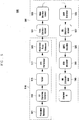
- FIG. 7 is a flow diagram that illustrates a method for processing a reserved tone in a receiver of a DVB-C system in accordance with an embodiment of the present invention. In the embodiment according to FIG. 7 , such a method for processing a reserved tone in a receiver is performed according to frames.
- the receiver 500 detects the reception of a broadcast signal in step 711. Then the receiver 500 removes reserved tones from a broadcast signal in step 713.
- the receiver 500 ascertains the position of broadcast data and the position of reserved tones in a broadcast signal in an allocated frequency band by using the position of pilots.
- the receiver 500 may determine the position of reserved tones in the same manner as the transmitter 300. Accordingly, a description of a determining the position of the reserved tones, by the receiver 500, is omitted herein.
- the receiver 500 determines the position of reserved tones in a predefined manner, and then removes reserved tones from a broadcast signal.
- the receiver 500 may determine the position of reserved tones in a frame by using the combination of positions of reserved tones stored in advance as shown in Tables 5 or 6.
- the receiver 500 may determine the position of channel bands corresponding to a multi-channel bundle allotted to the receiver 500 in combined bands. Then, the receiver 500 may determine the position of reserved tones in a multi-channel bundle by using the position of channel bands in a frame and the position of reserved tones stored as shown in the aforesaid Table 5.
- step 715 the receiver 500 performs processing of broadcast data.
- the receiver 500 processes broadcast data to produce an output signal, thereby enabling users to enjoy a broadcasting service.
- the transmitter and the receiver may store in advance the position of reserved tones, depending on the number of channel bands used to form a multi-channel bundle.
- the transmitter and the receiver may use the previously stored position of reserved tones.
- the DVB-C system and the processing method for reserved tones may compensate for the peak power of broadcast data to be transmitted through a multi-channel bundle, by inserting reserved tones into the whole multi-channel bundle composed of combined channel bands.
- This processing system and method may allow a reduction in the PAPR of broadcast signals in the DVB-C system. It is therefore possible not only to still adopt OFDM in the DVB-C system, but also to improve the performance of the DVB-C system by reducing the PAPR of broadcast signals.
Landscapes
- Engineering & Computer Science (AREA)
- Signal Processing (AREA)
- Computer Networks & Wireless Communication (AREA)
- Multimedia (AREA)
- Two-Way Televisions, Distribution Of Moving Picture Or The Like (AREA)
- Error Detection And Correction (AREA)
- Mobile Radio Communication Systems (AREA)
- Circuits Of Receivers In General (AREA)
- Television Systems (AREA)
Claims (16)
- Procédé de réception d'un signal de diffusion, le procédé comprenant :si le signal de diffusion est reçu dans une trame qui comprend une pluralité de bandes combinées, divisées dans un domaine de fréquence, la détermination d'une position de tonalités réservées, dans lequel des motifs de tonalités réservées sont répétés à chaque bande combinée ; etl'extraction de données de diffusion du signal de diffusion en tenant compte de la position déterminée des tonalités réservées.
- Procédé selon la revendication 1, dans lequel la détermination de la position des tonalités réservées dans la trame est effectuée en utilisant une combinaison d'indices de sous-porteuses selon un tableau :
combinaison de positions de tonalités réservées 161, 243, 296, 405, 493, 584, 697, 741, 821, 934, 1021, 1160, 1215, 1312, 1417, 1462, 1591, 1693, 1729, 1845, 1910, 1982, 2127, 2170, 2339, 2365, 2499, 2529, 2639, 2745, 2864, 2950, 2992, 3119, 3235, 3255, 3559, 3620, 3754, 3835, 3943, 3975, 4061, 4210, 4270, 4371, 4417, 4502, 4640, 4677, 4822, 4904, 5026, 5113, 5173, 5271, 5317, 5426, 5492, 5583, 5740, 5757, 5839, 5935, 6033, 6146, 6212, 6369, 6454, 6557, 6597, 6711, 6983, 7047, 7173, 7202, 7310, 7421, 7451, 7579, 7666, 7785, 7831, 7981, 8060, 8128, 8251, 8326, 8369, 8445, 8569, 8638, 8761, 8873, 8923, 9017, 9104, 9239, 9283, 9368, 9500, 9586, 9683, 9782, 9794, 9908, 9989, 10123, 10327, 10442, 10535, 10658, 10739, 10803, 10925, 11006, 11060, 11198, 11225, 11326, 11474, 11554, 11663, 11723, 11810, 11902, 11987, 12027, 12117, 12261, 12320, 12419, 12532, 12646, 12676, 12808, 12915, 12941, 13067, 13113, 13246, 13360, 13426, 13520, 13811, 13862, 13936, 14073, 14102, 14206, 14305, 14408, 14527, 14555, 14650, 14755, 14816, 14951, 15031, 15107, 15226, 15326, 15392, 15484, 15553, 15623, 15734, 15872, 15943, 16043, 16087, 16201, 16299, 16355, 16444, 16514, 16635, 16723, 16802, 16912, 17150, 17285, 17387, 17488, 17533, 17603, 17708, 17793, 17932, 18026, 18081, 18159, 18285, 18356, 18395, 18532, 18644, 18697, 18761, 18874, 18937, 19107, 19119, 19251, 19379, 19414, 19522, 19619, 19691, 19748, 19875, 19935, 20065, 20109, 20261, 20315, 20559, 20703, 20737, 20876, 20950, 21069, 21106, 21231, 21323, 21379, 21494, 21611, 21680, 21796, 21805, 21958, 22027, 22091, 22167, 22324, 22347, 22459, 22551, 22691, 22761, 22822, 22951, 22981, 23089, 23216, 23290, 23402, 23453, 23529, 23668, 23743, 24019, 24057, 24214, 24249, 24335, 24445, 24554, 24619, 24704, 24761, 24847, 24947, 25089, 25205, 25274, 25352, 25474, 25537, 25612, 25711, 25748, 25874, 25984, 26078, 26155, 26237, 26324, 26378, 26545, 26623, 26720, 26774, 26855, 26953, 27021, 27123 - Procédé selon la revendication 1 ou 2, dans lequel chacune des bandes combinées est divisée en huit bandes de canal dans le domaine de fréquence et chacune des bandes de canal est constituée de 3408 sous-porteuses.
- Procédé selon la revendication 1, dans lequel la position des tonalités réservées dans chacune des bandes combinées est déterminée de sorte que la position soit conforme à des conditions déterminées par l'intermédiaire d'une équation :

où k représente un indice d'une sous-porteuse, KL1 représente un nombre de sous-porteuses par bande de canal, Dx représente un espacement de fréquences entre des pilotes dans la trame, l représente un indice d'un symbole dans la trame, Dy représente un espacement de symboles entre les pilotes dans la trame, LDATA représente un nombre de symboles de données dans la trame, et S0 représente la position des tonalités réservées. - Procédé de transmission d'un signal de diffusion, le procédé comprenant :la détermination d'une position de tonalités réservées de sorte que des motifs de tonalités réservées soient répétés à chaque bande combinée d'une trame qui comprend une pluralité de bandes combinées divisées dans un domaine de fréquence ; etl'insertion des tonalités réservées et des données de diffusion dans le signal de diffusion en tenant compte de la position déterminée des tonalités réservées.
- Récepteur pour recevoir récepteur un signal de diffusion, le procédé comprenant :une unité de détermination de position configurée pour effectuer la détermination d'une position de tonalités réservées, dans lequel des motifs de tonalités réservées sont répétés à chaque bande combinée d'une trame si le signal de diffusion est reçu dans la trame qui comprend une pluralité de bandes combinées divisées dans un domaine de fréquence ; etune unité de traitement de données de diffusion configurée pour effectuer l'extraction de données de diffusion du signal de diffusion en tenant compte de la position déterminée des tonalités réservées.
- Récepteur selon la revendication 6, dans lequel l'unité de détermination de position est configurée pour effectuer la détermination de la position des tonalités réservées dans la trame en utilisant une combinaison d'indices de sous-porteuses selon un tableau :
combinaison de positions de tonalités réservées 161, 243, 296, 405, 493, 584, 697, 741, 821, 934, 1021, 1160, 1215, 1312, 1417, 1462, 1591, 1693, 1729, 1845, 1910, 1982, 2127, 2170, 2339, 2365, 2499, 2529, 2639, 2745, 2864, 2950, 2992, 3119, 3235, 3255, 3559, 3620, 3754, 3835, 3943, 3975, 4061, 4210, 4270, 4371, 4417, 4502, 4640, 4677, 4822, 4904, 5026, 5113, 5173, 5271, 5317, 5426, 5492, 5583, 5740, 5757, 5839, 5935, 6033, 6146, 6212, 6369, 6454, 6557, 6597, 6711, 6983, 7047, 7173, 7202, 7310, 7421, 7451, 7579, 7666, 7785, 7831, 7981, 8060, 8128, 8251, 8326, 8369, 8445, 8569, 8638, 8761, 8873, 8923, 9017, 9104, 9239, 9283, 9368, 9500, 9586, 9683, 9782, 9794, 9908, 9989, 10123, 10327, 10442, 10535, 10658, 10739, 10803, 10925, 11006, 11060, 11198, 11225, 11326, 11474, 11554, 11663, 11723, 11810, 11902, 11987, 12027, 12117, 12261, 12320, 12419, 12532, 12646, 12676, 12808, 12915, 12941, 13067, 13113, 13246, 13360, 13426, 13520, 13811, 13862, 13936, 14073, 14102, 14206, 14305, 14408, 14527, 14555, 14650, 14755, 14816, 14951, 15031, 15107, 15226, 15326, 15392, 15484, 15553, 15623, 15734, 15872, 15943, 16043, 16087, 16201, 16299, 16355, 16444, 16514, 16635, 16723, 16802, 16912, 17150, 17285, 17387, 17488, 17533, 17603, 17708, 17793, 17932, 18026, 18081, 18159, 18285, 18356, 18395, 18532, 18644, 18697, 18761, 18874, 18937, 19107, 19119, 19251, 19379, 19414, 19522, 19619, 19691, 19748, 19875, 19935, 20065, 20109, 20261, 20315, 20559, 20703, 20737, 20876, 20950, 21069, 21106, 21231, 21323, 21379, 21494, 21611, 21680, 21796, 21805, 21958, 22027, 22091, 22167, 22324, 22347, 22459, 22551, 22691, 22761, 22822, 22951, 22981, 23089, 23216, 23290, 23402, 23453, 23529, 23668, 23743, 24019, 24057, 24214, 24249, 24335, 24445, 24554, 24619, 24704, 24761, 24847, 24947, 25089, 25205, 25274, 25352, 25474, 25537, 25612, 25711, 25748, 25874, 25984, 26078, 26155, 26237, 26324, 26378, 26545, 26623, 26720, 26774, 26855, 26953, 27021, 27123 - Récepteur selon la revendication 6 ou 7, dans lequel chacune des bandes combinées est divisée en huit bandes de canal dans le domaine de fréquence et chacune des bandes de canal est constituée de 3408 sous-porteuses.
- Récepteur selon la revendication 6, dans lequel la position des tonalités réservées dans chacune des bandes combinées est déterminée de sorte que la position soit conforme à des conditions déterminées par l'intermédiaire d'une équation :

où k représente un indice d'une sous-porteuse, KL1 représente un nombre de sous-porteuses par bande de canal, Dx représente un espacement de fréquences entre des pilotes dans la trame, l représente un indice d'un symbole dans la trame, Dy représente un espacement de symboles entre les pilotes dans la trame, LDATA représente un nombre de symboles de données dans la trame, et S0 représente la position des tonalités réservées. - Emetteur pour transmettre un signal de diffusion, l'émetteur comprenant :un constructeur de symbole configuré pour effectuer la détermination d'une position de tonalités réservées de sorte que des motifs de tonalités réservées soient répétés à chaque bande combinée d'une trame qui comprend une pluralité de bandes combinées divisées dans un domaine de fréquence ; etune unité de génération de signal de diffusion configurée pour effectuer l'insertion des tonalités réservées et des données de diffusion dans le signal de diffusion en tenant compte de la position déterminée des tonalités réservées.
- Procédé selon la revendication 5, dans lequel la détermination de la position des tonalités réservées est effectuée en utilisant une combinaison d'indices de sous-porteuses selon un tableau :
combinaison de positions de tonalités réservées 161, 243, 296, 405, 493, 584, 697, 741, 821, 934, 1021, 1160, 1215, 1312, 1417, 1462, 1591, 1693, 1729, 1845, 1910, 1982, 2127, 2170, 2339, 2365, 2499, 2529, 2639, 2745, 2864, 2950, 2992, 3119, 3235, 3255, 3559, 3620, 3754, 3835, 3943, 3975, 4061, 4210, 4270, 4371, 4417, 4502, 4640, 4677, 4822, 4904, 5026, 5113, 5173, 5271, 5317, 5426, 5492, 5583, 5740, 5757, 5839, 5935, 6033, 6146, 6212, 6369, 6454, 6557, 6597, 6711, 6983, 7047, 7173, 7202, 7310, 7421, 7451, 7579, 7666, 7785, 7831, 7981, 8060, 8128, 8251, 8326, 8369, 8445, 8569, 8638, 8761, 8873, 8923, 9017, 9104, 9239, 9283, 9368, 9500, 9586, 9683, 9782, 9794, 9908, 9989, 10123, 10327, 10442, 10535, 10658, 10739, 10803, 10925, 11006, 11060, 11198, 11225, 11326, 11474, 11554, 11663, 11723, 11810, 11902, 11987, 12027, 12117, 12261, 12320, 12419, 12532, 12646, 12676, 12808, 12915, 12941, 13067, 13113, 13246, 13360, 13426, 13520, 13811, 13862, 13936, 14073, 14102, 14206, 14305, 14408, 14527, 14555, 14650, 14755, 14816, 14951, 15031, 15107, 15226, 15326, 15392, 15484, 15553, 15623, 15734, 15872, 15943, 16043, 16087, 16201, 16299, 16355, 16444, 16514, 16635, 16723, 16802, 16912, 17150, 17285, 17387, 17488, 17533, 17603, 17708, 17793, 17932, 18026, 18081, 18159, 18285, 18356, 18395, 18532, 18644, 18697, 18761, 18874, 18937, 19107, 19119, 19251, 19379, 19414, 19522, 19619, 19691, 19748, 19875, 19935, 20065, 20109, 20261, 20315, 20559, 20703, 20737, 20876, 20950, 21069, 21106, 21231, 21323, 21379, 21494, 21611, 21680, 21796, 21805, 21958, 22027, 22091, 22167, 22324, 22347, 22459, 22551, 22691, 22761, 22822, 22951, 22981, 23089, 23216, 23290, 23402, 23453, 23529, 23668, 23743, 24019, 24057, 24214, 24249, 24335, 24445, 24554, 24619, 24704, 24761, 24847, 24947, 25089, 25205, 25274, 25352, 25474, 25537, 25612, 25711, 25748, 25874, 25984, 26078, 26155, 26237, 26324, 26378, 26545, 26623, 26720, 26774, 26855, 26953, 27021, 27123 - Procédé selon la revendication 5 ou 11, dans lequel chacune des bandes combinées est divisée en huit bandes de canal dans le domaine de fréquence et chacune des bandes de canal est constituée de 3408 sous-porteuses.
- Procédé selon la revendication 5, dans lequel la position des tonalités réservées dans chacune des bandes combinées est déterminée de sorte que la position soit conforme à des conditions déterminées par l'intermédiaire d'une équation :

où k représente un indice d'une sous-porteuse, KL1 représente un nombre de sous-porteuses par bande de canal, Dx représente un espacement de fréquences entre des pilotes dans la trame, l représente un indice d'un symbole dans la trame, Dy représente un espacement de symboles entre les pilotes dans la trame, LDATA représente un nombre de symboles de données dans la trame, et S0 représente la position des tonalités réservées. - Emetteur selon la revendication 10, dans lequel le constructeur de symbole est configuré pour effectuer la détermination de la position des tonalités réservées dans la trame en utilisant une combinaison d'indices de sous-porteuses selon un tableau :
combinaison de positions de tonalités réservées 161, 243, 296, 405, 493, 584, 697, 741, 821, 934, 1021, 1160, 1215, 1312, 1417, 1462, 1591, 1693, 1729, 1845, 1910, 1982, 2127, 2170, 2339, 2365, 2499, 2529, 2639, 2745, 2864, 2950, 2992, 3119, 3235, 3255, 3559, 3620, 3754, 3835, 3943, 3975, 4061, 4210, 4270, 4371, 4417, 4502, 4640, 4677, 4822, 4904, 5026, 5113, 5173, 5271, 5317, 5426, 5492, 5583, 5740, 5757, 5839, 5935, 6033, 6146, 6212, 6369, 6454, 6557, 6597, 6711, 6983, 7047, 7173, 7202, 7310, 7421, 7451, 7579, 7666, 7785, 7831, 7981, 8060, 8128, 8251, 8326, 8369, 8445, 8569, 8638, 8761, 8873, 8923, 9017, 9104, 9239, 9283, 9368, 9500, 9586, 9683, 9782, 9794, 9908, 9989, 10123, 10327, 10442, 10535, 10658, 10739, 10803, 10925, 11006, 11060, 11198, 11225, 11326, 11474, 11554, 11663, 11723, 11810, 11902, 11987, 12027, 12117, 12261, 12320, 12419, 12532, 12646, 12676, 12808, 12915, 12941, 13067, 13113, 13246, 13360, 13426, 13520, 13811, 13862, 13936, 14073, 14102, 14206, 14305, 14408, 14527, 14555, 14650, 14755, 14816, 14951, 15031, 15107, 15226, 15326, 15392, 15484, 15553, 15623, 15734, 15872, 15943, 16043, 16087, 16201, 16299, 16355, 16444, 16514, 16635, 16723, 16802, 16912, 17150, 17285, 17387, 17488, 17533, 17603, 17708, 17793, 17932, 18026, 18081, 18159, 18285, 18356, 18395, 18532, 18644, 18697, 18761, 18874, 18937, 19107, 19119, 19251, 19379, 19414, 19522, 19619, 19691, 19748, 19875, 19935, 20065, 20109, 20261, 20315, 20559, 20703, 20737, 20876, 20950, 21069, 21106, 21231, 21323, 21379, 21494, 21611, 21680, 21796, 21805, 21958, 22027, 22091, 22167, 22324, 22347, 22459, 22551, 22691, 22761, 22822, 22951, 22981, 23089, 23216, 23290, 23402, 23453, 23529, 23668, 23743, 24019, 24057, 24214, 24249, 24335, 24445, 24554, 24619, 24704, 24761, 24847, 24947, 25089, 25205, 25274, 25352, 25474, 25537, 25612, 25711, 25748, 25874, 25984, 26078, 26155, 26237, 26324, 26378, 26545, 26623, 26720, 26774, 26855, 26953, 27021, 27123 - Emetteur selon la revendication 10 ou 14, dans lequel chacune des bandes combinées est divisée en huit bandes de canal dans le domaine de fréquence et chacune des bandes de canal est constituée de 3408 sous-porteuses.
- Emetteur selon la revendication 10, dans lequel la position des tonalités réservées dans chacune des bandes combinées est déterminée de sorte que la position soit conforme à des conditions déterminées par l'intermédiaire d'une équation :

où k représente un indice d'une sous-porteuse, KL1 représente un nombre de sous-porteuses par bande de canal, Dx représente un espacement de fréquences entre des pilotes dans la trame, l représente un indice d'un symbole dans la trame, Dy représente un espacement de symboles entre les pilotes dans la trame, LDATA représente un nombre de symboles de données dans la trame, et S0 représente la position des tonalités réservées.
Priority Applications (1)
| Application Number | Priority Date | Filing Date | Title |
|---|---|---|---|
| EP15157245.0A EP2905936B1 (fr) | 2009-01-30 | 2010-01-29 | Diffusion vidéo numérique - système de câbles et procédé permettant de traiter les fréquences réservées |
Applications Claiming Priority (2)
| Application Number | Priority Date | Filing Date | Title |
|---|---|---|---|
| KR20090007203 | 2009-01-30 | ||
| KR20090022376 | 2009-03-16 |
Related Child Applications (1)
| Application Number | Title | Priority Date | Filing Date |
|---|---|---|---|
| EP15157245.0A Division EP2905936B1 (fr) | 2009-01-30 | 2010-01-29 | Diffusion vidéo numérique - système de câbles et procédé permettant de traiter les fréquences réservées |
Publications (3)
| Publication Number | Publication Date |
|---|---|
| EP2214366A2 EP2214366A2 (fr) | 2010-08-04 |
| EP2214366A3 EP2214366A3 (fr) | 2012-10-17 |
| EP2214366B1 true EP2214366B1 (fr) | 2015-03-25 |
Family
ID=42135398
Family Applications (2)
| Application Number | Title | Priority Date | Filing Date |
|---|---|---|---|
| EP15157245.0A Active EP2905936B1 (fr) | 2009-01-30 | 2010-01-29 | Diffusion vidéo numérique - système de câbles et procédé permettant de traiter les fréquences réservées |
| EP20100152106 Active EP2214366B1 (fr) | 2009-01-30 | 2010-01-29 | Diffusion de vidéo numérique, système de câbles et procédé pour le traitement d'une tonalité réservée |
Family Applications Before (1)
| Application Number | Title | Priority Date | Filing Date |
|---|---|---|---|
| EP15157245.0A Active EP2905936B1 (fr) | 2009-01-30 | 2010-01-29 | Diffusion vidéo numérique - système de câbles et procédé permettant de traiter les fréquences réservées |
Country Status (12)
| Country | Link |
|---|---|
| US (1) | US9172572B2 (fr) |
| EP (2) | EP2905936B1 (fr) |
| JP (1) | JP5513525B2 (fr) |
| KR (1) | KR101640083B1 (fr) |
| CN (1) | CN102301706B (fr) |
| AU (1) | AU2010208802B2 (fr) |
| ES (2) | ES2535955T3 (fr) |
| MY (1) | MY163434A (fr) |
| RU (1) | RU2532247C2 (fr) |
| SG (2) | SG172411A1 (fr) |
| TW (1) | TWI487337B (fr) |
| WO (1) | WO2010087667A2 (fr) |
Families Citing this family (8)
| Publication number | Priority date | Publication date | Assignee | Title |
|---|---|---|---|---|
| KR20120099838A (ko) * | 2011-03-02 | 2012-09-12 | 삼성전자주식회사 | 방송통신시스템에서 피크 전력 대 평균 전력의 비를 감소시키기 위한 장치 및 방법 |
| US9559821B2 (en) * | 2013-08-05 | 2017-01-31 | Samsung Electronics Co., Ltd. | Transmitter, receiver and controlling method thereof |
| KR102136740B1 (ko) * | 2013-08-05 | 2020-07-22 | 삼성전자주식회사 | 송신 장치, 수신 장치 및 그 제어방법 |
| EP4597908A3 (fr) | 2015-01-26 | 2025-10-29 | Huawei Technologies Co., Ltd. | Appareil et procédé de communication d'un format de trame à multiplexage par répartition orthogonale de la fréquence (ofdm) |
| KR101833041B1 (ko) * | 2015-06-09 | 2018-02-27 | 삼성전자주식회사 | 예약 톤 설계 방법 및 톤 예약 방식을 이용하여 papr 저감을 수행하는 송신기 |
| WO2016200186A1 (fr) | 2015-06-09 | 2016-12-15 | Samsung Electronics Co., Ltd. | Procédé pour déterminer des tonalités réservées, et émetteur pour exécuter une réduction de papr au moyen d'une réservation de tonalité |
| WO2017010640A1 (fr) * | 2015-07-16 | 2017-01-19 | 엘지전자 주식회사 | Dispositif d'émission de signal de diffusion, dispositif de réception de signal de diffusion, procédé d'émission de signal de diffusion et procédé de réception de signal de diffusion |
| CN115695125A (zh) * | 2021-07-29 | 2023-02-03 | 华为技术有限公司 | 通信处理方法和通信处理装置 |
Family Cites Families (20)
| Publication number | Priority date | Publication date | Assignee | Title |
|---|---|---|---|---|
| TW276317B (fr) | 1993-12-17 | 1996-05-21 | Hitachi Seisakusyo Kk | |
| DE4413077C2 (de) | 1994-04-15 | 1997-02-06 | Steag Micro Tech Gmbh | Verfahren und Vorrichtung zur chemischen Behandlung von Substraten |
| TW283114B (fr) | 1994-09-16 | 1996-08-11 | Nissei Zyushi Kogyo Kk | |
| CN1980215A (zh) | 1997-07-01 | 2007-06-13 | 松下电器产业株式会社 | 发送方法、接收方法、发送装置、接收装置 |
| JP4852228B2 (ja) | 2001-09-26 | 2012-01-11 | インタラクト デヴァイシーズ インコーポレイテッド | メディア信号を通信するためのシステム及び方法 |
| JP3594585B2 (ja) | 2002-02-28 | 2004-12-02 | 三洋電機株式会社 | デジタル放送受信装置の同期復調回路 |
| JP4373757B2 (ja) | 2002-10-10 | 2009-11-25 | パナソニック株式会社 | 受信装置、受信方法、集積回路、及びプログラム |
| CN1165170C (zh) | 2002-10-24 | 2004-09-01 | 上海交通大学 | 正交频分复用系统的突发信号检测和自动增益控制方法 |
| US8320301B2 (en) | 2002-10-25 | 2012-11-27 | Qualcomm Incorporated | MIMO WLAN system |
| CN1736119B (zh) * | 2003-01-21 | 2013-04-03 | 诺基亚有限公司 | 提供数字宽带传输的方法、系统和网络 |
| KR100933115B1 (ko) | 2003-09-09 | 2009-12-21 | 삼성전자주식회사 | 직교 주파수 분할 다중 통신 시스템에서 피크 전력 대 평균 전력비의 감소를 위한 장치 및 방법 |
| US7440510B2 (en) * | 2003-09-15 | 2008-10-21 | Intel Corporation | Multicarrier transmitter, multicarrier receiver, and methods for communicating multiple spatial signal streams |
| SE0402652D0 (sv) | 2004-11-02 | 2004-11-02 | Coding Tech Ab | Methods for improved performance of prediction based multi- channel reconstruction |
| TWI283114B (en) * | 2005-09-05 | 2007-06-21 | Lite On Technology Corp | Digital broadcasting signal receiver with a plurality of receiving modules |
| TWI278601B (en) * | 2005-12-16 | 2007-04-11 | Compal Communications Inc | Data transmitting and receiving system and method of the same |
| WO2007091434A1 (fr) | 2006-02-06 | 2007-08-16 | Matsushita Electric Industrial Co., Ltd. | Émetteur ofdm et méthode de commande correspondante |
| US20070237068A1 (en) | 2006-04-06 | 2007-10-11 | Qi Bi | Method of providing pilot signals for uplink power control |
| KR20080106832A (ko) | 2007-06-04 | 2008-12-09 | 삼성전자주식회사 | 직교 주파수 분할 다중 시스템의 평균전력 대 최대전력비감소 장치 및 방법 |
| US20090185648A1 (en) * | 2008-01-22 | 2009-07-23 | Guo-Hau Gau | Methods and devices for processing signals transmitted via communication system |
| US8416675B2 (en) * | 2008-09-30 | 2013-04-09 | Intel Corporation | Tone reservation techniques for reducing peak-to-average power ratios |
-
2010
- 2010-01-27 US US12/694,801 patent/US9172572B2/en active Active
- 2010-01-29 ES ES10152106.0T patent/ES2535955T3/es active Active
- 2010-01-29 EP EP15157245.0A patent/EP2905936B1/fr active Active
- 2010-01-29 ES ES15157245.0T patent/ES2659291T3/es active Active
- 2010-01-29 TW TW099102669A patent/TWI487337B/zh active
- 2010-01-29 EP EP20100152106 patent/EP2214366B1/fr active Active
- 2010-02-01 RU RU2011132049/07A patent/RU2532247C2/ru active
- 2010-02-01 SG SG2011047255A patent/SG172411A1/en unknown
- 2010-02-01 WO PCT/KR2010/000600 patent/WO2010087667A2/fr not_active Ceased
- 2010-02-01 KR KR1020117020142A patent/KR101640083B1/ko not_active Expired - Fee Related
- 2010-02-01 MY MYPI2011003502A patent/MY163434A/en unknown
- 2010-02-01 CN CN201080005976.8A patent/CN102301706B/zh active Active
- 2010-02-01 AU AU2010208802A patent/AU2010208802B2/en not_active Ceased
- 2010-02-01 JP JP2011547807A patent/JP5513525B2/ja active Active
- 2010-02-01 SG SG2012056677A patent/SG183673A1/en unknown
Also Published As
| Publication number | Publication date |
|---|---|
| MY163434A (en) | 2017-09-15 |
| WO2010087667A3 (fr) | 2010-10-21 |
| SG172411A1 (en) | 2011-07-28 |
| JP5513525B2 (ja) | 2014-06-04 |
| CN102301706B (zh) | 2016-10-12 |
| SG183673A1 (en) | 2012-09-27 |
| ES2659291T3 (es) | 2018-03-14 |
| ES2535955T3 (es) | 2015-05-19 |
| EP2214366A2 (fr) | 2010-08-04 |
| US9172572B2 (en) | 2015-10-27 |
| TWI487337B (zh) | 2015-06-01 |
| EP2905936B1 (fr) | 2018-01-17 |
| KR20110115146A (ko) | 2011-10-20 |
| EP2905936A1 (fr) | 2015-08-12 |
| CN102301706A (zh) | 2011-12-28 |
| RU2532247C2 (ru) | 2014-11-10 |
| AU2010208802B2 (en) | 2015-05-28 |
| US20100195758A1 (en) | 2010-08-05 |
| TW201042962A (en) | 2010-12-01 |
| RU2011132049A (ru) | 2013-02-10 |
| WO2010087667A2 (fr) | 2010-08-05 |
| JP2012516615A (ja) | 2012-07-19 |
| AU2010208802A8 (en) | 2011-08-18 |
| EP2214366A3 (fr) | 2012-10-17 |
| KR101640083B1 (ko) | 2016-07-19 |
| AU2010208802A1 (en) | 2011-07-14 |
Similar Documents
| Publication | Publication Date | Title |
|---|---|---|
| EP2214366B1 (fr) | Diffusion de vidéo numérique, système de câbles et procédé pour le traitement d'une tonalité réservée | |
| US11569846B2 (en) | Apparatus for transmitting broadcast signals, apparatus for receiving broadcast signals, method for transmitting broadcast signals and method for receiving broadcast signals | |
| US10999112B2 (en) | Apparatus for transmitting broadcast signals, apparatus for receiving broadcast signals, method for transmitting broadcast signals and method for receiving broadcast signals | |
| US10491446B2 (en) | Apparatus for transmitting broadcast signals, apparatus for receiving broadcast signals, method for transmitting broadcast signals and method for receiving broadcast signals | |
| TWI455537B (zh) | 用於多載波系統的新訊框和發訊樣型結構 | |
| US10334295B2 (en) | Apparatus for transmitting broadcast signals, apparatus for receiving broadcast signals, method for transmitting broadcast signals and method for receiving broadcast signals | |
| US9985747B2 (en) | Apparatus and method for receiving broadcast signals | |
| EP2544421B1 (fr) | Nouveau cadre et structure de signalisation de formation pour systèmes à multiporteuses | |
| EP1662737B1 (fr) | Procédé et dispositif permettant de réduire le rapport entre la puissance de crête et la puissance moyenne dans un système de communication à porteuses multiples | |
| DK2557717T3 (en) | An apparatus for transmitting and receiving a signal and method of transmitting and receiving a signal | |
| AU2009314860B2 (en) | Apparatus for transmitting and receiving a signal and method of transmitting and receiving a signal | |
| US20160227274A1 (en) | Broadcast receiving device and method for operating the same | |
| US9883133B2 (en) | Broadcast receiving device and method for operating the same | |
| US8238507B2 (en) | Transmission architecture of transmitter | |
| ES2435942T3 (es) | Aparato para transmitir y recibir una señal y método de transmisión y recepción de una señal |
Legal Events
| Date | Code | Title | Description |
|---|---|---|---|
| PUAI | Public reference made under article 153(3) epc to a published international application that has entered the european phase |
Free format text: ORIGINAL CODE: 0009012 |
|
| AK | Designated contracting states |
Kind code of ref document: A2 Designated state(s): AT BE BG CH CY CZ DE DK EE ES FI FR GB GR HR HU IE IS IT LI LT LU LV MC MK MT NL NO PL PT RO SE SI SK SM TR |
|
| AX | Request for extension of the european patent |
Extension state: AL BA RS |
|
| PUAL | Search report despatched |
Free format text: ORIGINAL CODE: 0009013 |
|
| RAP1 | Party data changed (applicant data changed or rights of an application transferred) |
Owner name: SAMSUNG ELECTRONICS CO., LTD. |
|
| AK | Designated contracting states |
Kind code of ref document: A3 Designated state(s): AT BE BG CH CY CZ DE DK EE ES FI FR GB GR HR HU IE IS IT LI LT LU LV MC MK MT NL NO PL PT RO SE SI SK SM TR |
|
| AX | Request for extension of the european patent |
Extension state: AL BA RS |
|
| RIC1 | Information provided on ipc code assigned before grant |
Ipc: H04L 27/26 20060101AFI20120910BHEP Ipc: H04L 5/00 20060101ALI20120910BHEP Ipc: H04H 20/57 20080101ALN20120910BHEP |
|
| 17P | Request for examination filed |
Effective date: 20130417 |
|
| 17Q | First examination report despatched |
Effective date: 20130604 |
|
| GRAP | Despatch of communication of intention to grant a patent |
Free format text: ORIGINAL CODE: EPIDOSNIGR1 |
|
| INTG | Intention to grant announced |
Effective date: 20141014 |
|
| RIC1 | Information provided on ipc code assigned before grant |
Ipc: H04L 5/00 20060101ALI20141006BHEP Ipc: H04L 27/26 20060101AFI20141006BHEP Ipc: H04H 20/78 20080101ALN20141006BHEP |
|
| GRAS | Grant fee paid |
Free format text: ORIGINAL CODE: EPIDOSNIGR3 |
|
| GRAA | (expected) grant |
Free format text: ORIGINAL CODE: 0009210 |
|
| AK | Designated contracting states |
Kind code of ref document: B1 Designated state(s): AT BE BG CH CY CZ DE DK EE ES FI FR GB GR HR HU IE IS IT LI LT LU LV MC MK MT NL NO PL PT RO SE SI SK SM TR |
|
| REG | Reference to a national code |
Ref country code: GB Ref legal event code: FG4D |
|
| REG | Reference to a national code |
Ref country code: CH Ref legal event code: EP |
|
| REG | Reference to a national code |
Ref country code: IE Ref legal event code: FG4D |
|
| REG | Reference to a national code |
Ref country code: DE Ref legal event code: R096 Ref document number: 602010023322 Country of ref document: DE Effective date: 20150507 |
|
| REG | Reference to a national code |
Ref country code: AT Ref legal event code: REF Ref document number: 718436 Country of ref document: AT Kind code of ref document: T Effective date: 20150515 |
|
| REG | Reference to a national code |
Ref country code: ES Ref legal event code: FG2A Ref document number: 2535955 Country of ref document: ES Kind code of ref document: T3 Effective date: 20150519 |
|
| REG | Reference to a national code |
Ref country code: NL Ref legal event code: T3 |
|
| PG25 | Lapsed in a contracting state [announced via postgrant information from national office to epo] |
Ref country code: LT Free format text: LAPSE BECAUSE OF FAILURE TO SUBMIT A TRANSLATION OF THE DESCRIPTION OR TO PAY THE FEE WITHIN THE PRESCRIBED TIME-LIMIT Effective date: 20150325 Ref country code: NO Free format text: LAPSE BECAUSE OF FAILURE TO SUBMIT A TRANSLATION OF THE DESCRIPTION OR TO PAY THE FEE WITHIN THE PRESCRIBED TIME-LIMIT Effective date: 20150625 Ref country code: FI Free format text: LAPSE BECAUSE OF FAILURE TO SUBMIT A TRANSLATION OF THE DESCRIPTION OR TO PAY THE FEE WITHIN THE PRESCRIBED TIME-LIMIT Effective date: 20150325 Ref country code: HR Free format text: LAPSE BECAUSE OF FAILURE TO SUBMIT A TRANSLATION OF THE DESCRIPTION OR TO PAY THE FEE WITHIN THE PRESCRIBED TIME-LIMIT Effective date: 20150325 Ref country code: SE Free format text: LAPSE BECAUSE OF FAILURE TO SUBMIT A TRANSLATION OF THE DESCRIPTION OR TO PAY THE FEE WITHIN THE PRESCRIBED TIME-LIMIT Effective date: 20150325 |
|
| REG | Reference to a national code |
Ref country code: AT Ref legal event code: MK05 Ref document number: 718436 Country of ref document: AT Kind code of ref document: T Effective date: 20150325 |
|
| REG | Reference to a national code |
Ref country code: LT Ref legal event code: MG4D |
|
| PG25 | Lapsed in a contracting state [announced via postgrant information from national office to epo] |
Ref country code: LV Free format text: LAPSE BECAUSE OF FAILURE TO SUBMIT A TRANSLATION OF THE DESCRIPTION OR TO PAY THE FEE WITHIN THE PRESCRIBED TIME-LIMIT Effective date: 20150325 Ref country code: GR Free format text: LAPSE BECAUSE OF FAILURE TO SUBMIT A TRANSLATION OF THE DESCRIPTION OR TO PAY THE FEE WITHIN THE PRESCRIBED TIME-LIMIT Effective date: 20150626 |
|
| PG25 | Lapsed in a contracting state [announced via postgrant information from national office to epo] |
Ref country code: CZ Free format text: LAPSE BECAUSE OF FAILURE TO SUBMIT A TRANSLATION OF THE DESCRIPTION OR TO PAY THE FEE WITHIN THE PRESCRIBED TIME-LIMIT Effective date: 20150325 Ref country code: SK Free format text: LAPSE BECAUSE OF FAILURE TO SUBMIT A TRANSLATION OF THE DESCRIPTION OR TO PAY THE FEE WITHIN THE PRESCRIBED TIME-LIMIT Effective date: 20150325 Ref country code: PT Free format text: LAPSE BECAUSE OF FAILURE TO SUBMIT A TRANSLATION OF THE DESCRIPTION OR TO PAY THE FEE WITHIN THE PRESCRIBED TIME-LIMIT Effective date: 20150727 Ref country code: EE Free format text: LAPSE BECAUSE OF FAILURE TO SUBMIT A TRANSLATION OF THE DESCRIPTION OR TO PAY THE FEE WITHIN THE PRESCRIBED TIME-LIMIT Effective date: 20150325 Ref country code: RO Free format text: LAPSE BECAUSE OF FAILURE TO SUBMIT A TRANSLATION OF THE DESCRIPTION OR TO PAY THE FEE WITHIN THE PRESCRIBED TIME-LIMIT Effective date: 20150325 |
|
| PG25 | Lapsed in a contracting state [announced via postgrant information from national office to epo] |
Ref country code: IS Free format text: LAPSE BECAUSE OF FAILURE TO SUBMIT A TRANSLATION OF THE DESCRIPTION OR TO PAY THE FEE WITHIN THE PRESCRIBED TIME-LIMIT Effective date: 20150725 Ref country code: AT Free format text: LAPSE BECAUSE OF FAILURE TO SUBMIT A TRANSLATION OF THE DESCRIPTION OR TO PAY THE FEE WITHIN THE PRESCRIBED TIME-LIMIT Effective date: 20150325 Ref country code: PL Free format text: LAPSE BECAUSE OF FAILURE TO SUBMIT A TRANSLATION OF THE DESCRIPTION OR TO PAY THE FEE WITHIN THE PRESCRIBED TIME-LIMIT Effective date: 20150325 |
|
| REG | Reference to a national code |
Ref country code: FR Ref legal event code: PLFP Year of fee payment: 7 |
|
| REG | Reference to a national code |
Ref country code: DE Ref legal event code: R097 Ref document number: 602010023322 Country of ref document: DE |
|
| PG25 | Lapsed in a contracting state [announced via postgrant information from national office to epo] |
Ref country code: DK Free format text: LAPSE BECAUSE OF FAILURE TO SUBMIT A TRANSLATION OF THE DESCRIPTION OR TO PAY THE FEE WITHIN THE PRESCRIBED TIME-LIMIT Effective date: 20150325 |
|
| PLBE | No opposition filed within time limit |
Free format text: ORIGINAL CODE: 0009261 |
|
| STAA | Information on the status of an ep patent application or granted ep patent |
Free format text: STATUS: NO OPPOSITION FILED WITHIN TIME LIMIT |
|
| 26N | No opposition filed |
Effective date: 20160105 |
|
| PG25 | Lapsed in a contracting state [announced via postgrant information from national office to epo] |
Ref country code: BE Free format text: LAPSE BECAUSE OF NON-PAYMENT OF DUE FEES Effective date: 20160131 Ref country code: SI Free format text: LAPSE BECAUSE OF FAILURE TO SUBMIT A TRANSLATION OF THE DESCRIPTION OR TO PAY THE FEE WITHIN THE PRESCRIBED TIME-LIMIT Effective date: 20150325 |
|
| PG25 | Lapsed in a contracting state [announced via postgrant information from national office to epo] |
Ref country code: LU Free format text: LAPSE BECAUSE OF FAILURE TO SUBMIT A TRANSLATION OF THE DESCRIPTION OR TO PAY THE FEE WITHIN THE PRESCRIBED TIME-LIMIT Effective date: 20160129 Ref country code: BE Free format text: LAPSE BECAUSE OF FAILURE TO SUBMIT A TRANSLATION OF THE DESCRIPTION OR TO PAY THE FEE WITHIN THE PRESCRIBED TIME-LIMIT Effective date: 20150325 |
|
| REG | Reference to a national code |
Ref country code: CH Ref legal event code: PL |
|
| PG25 | Lapsed in a contracting state [announced via postgrant information from national office to epo] |
Ref country code: MC Free format text: LAPSE BECAUSE OF FAILURE TO SUBMIT A TRANSLATION OF THE DESCRIPTION OR TO PAY THE FEE WITHIN THE PRESCRIBED TIME-LIMIT Effective date: 20150325 |
|
| PG25 | Lapsed in a contracting state [announced via postgrant information from national office to epo] |
Ref country code: LI Free format text: LAPSE BECAUSE OF NON-PAYMENT OF DUE FEES Effective date: 20160131 Ref country code: CH Free format text: LAPSE BECAUSE OF NON-PAYMENT OF DUE FEES Effective date: 20160131 |
|
| REG | Reference to a national code |
Ref country code: IE Ref legal event code: MM4A |
|
| REG | Reference to a national code |
Ref country code: FR Ref legal event code: PLFP Year of fee payment: 8 |
|
| PG25 | Lapsed in a contracting state [announced via postgrant information from national office to epo] |
Ref country code: IE Free format text: LAPSE BECAUSE OF NON-PAYMENT OF DUE FEES Effective date: 20160129 |
|
| PG25 | Lapsed in a contracting state [announced via postgrant information from national office to epo] |
Ref country code: MT Free format text: LAPSE BECAUSE OF FAILURE TO SUBMIT A TRANSLATION OF THE DESCRIPTION OR TO PAY THE FEE WITHIN THE PRESCRIBED TIME-LIMIT Effective date: 20150325 |
|
| REG | Reference to a national code |
Ref country code: FR Ref legal event code: PLFP Year of fee payment: 9 |
|
| PG25 | Lapsed in a contracting state [announced via postgrant information from national office to epo] |
Ref country code: HU Free format text: LAPSE BECAUSE OF FAILURE TO SUBMIT A TRANSLATION OF THE DESCRIPTION OR TO PAY THE FEE WITHIN THE PRESCRIBED TIME-LIMIT; INVALID AB INITIO Effective date: 20100129 Ref country code: SM Free format text: LAPSE BECAUSE OF FAILURE TO SUBMIT A TRANSLATION OF THE DESCRIPTION OR TO PAY THE FEE WITHIN THE PRESCRIBED TIME-LIMIT Effective date: 20150325 Ref country code: CY Free format text: LAPSE BECAUSE OF FAILURE TO SUBMIT A TRANSLATION OF THE DESCRIPTION OR TO PAY THE FEE WITHIN THE PRESCRIBED TIME-LIMIT Effective date: 20150325 |
|
| PG25 | Lapsed in a contracting state [announced via postgrant information from national office to epo] |
Ref country code: MT Free format text: LAPSE BECAUSE OF FAILURE TO SUBMIT A TRANSLATION OF THE DESCRIPTION OR TO PAY THE FEE WITHIN THE PRESCRIBED TIME-LIMIT Effective date: 20160131 Ref country code: MK Free format text: LAPSE BECAUSE OF FAILURE TO SUBMIT A TRANSLATION OF THE DESCRIPTION OR TO PAY THE FEE WITHIN THE PRESCRIBED TIME-LIMIT Effective date: 20150325 Ref country code: TR Free format text: LAPSE BECAUSE OF FAILURE TO SUBMIT A TRANSLATION OF THE DESCRIPTION OR TO PAY THE FEE WITHIN THE PRESCRIBED TIME-LIMIT Effective date: 20150325 |
|
| PG25 | Lapsed in a contracting state [announced via postgrant information from national office to epo] |
Ref country code: BG Free format text: LAPSE BECAUSE OF FAILURE TO SUBMIT A TRANSLATION OF THE DESCRIPTION OR TO PAY THE FEE WITHIN THE PRESCRIBED TIME-LIMIT Effective date: 20150325 |
|
| PGFP | Annual fee paid to national office [announced via postgrant information from national office to epo] |
Ref country code: GB Payment date: 20251222 Year of fee payment: 17 |
|
| PGFP | Annual fee paid to national office [announced via postgrant information from national office to epo] |
Ref country code: NL Payment date: 20251223 Year of fee payment: 17 Ref country code: FR Payment date: 20251223 Year of fee payment: 17 |
|
| PGFP | Annual fee paid to national office [announced via postgrant information from national office to epo] |
Ref country code: ES Payment date: 20260212 Year of fee payment: 17 |
|
| PGFP | Annual fee paid to national office [announced via postgrant information from national office to epo] |
Ref country code: DE Payment date: 20251222 Year of fee payment: 17 |
|
| PGFP | Annual fee paid to national office [announced via postgrant information from national office to epo] |
Ref country code: IT Payment date: 20251223 Year of fee payment: 17 |