EP2215838B1 - Appareil et procédé de stockage de données vidéo - Google Patents
Appareil et procédé de stockage de données vidéo Download PDFInfo
- Publication number
- EP2215838B1 EP2215838B1 EP08845561.3A EP08845561A EP2215838B1 EP 2215838 B1 EP2215838 B1 EP 2215838B1 EP 08845561 A EP08845561 A EP 08845561A EP 2215838 B1 EP2215838 B1 EP 2215838B1
- Authority
- EP
- European Patent Office
- Prior art keywords
- frames
- series
- time
- storage
- period
- Prior art date
- Legal status (The legal status is an assumption and is not a legal conclusion. Google has not performed a legal analysis and makes no representation as to the accuracy of the status listed.)
- Active
Links
Images


Classifications
-
- H—ELECTRICITY
- H04—ELECTRIC COMMUNICATION TECHNIQUE
- H04N—PICTORIAL COMMUNICATION, e.g. TELEVISION
- H04N21/00—Selective content distribution, e.g. interactive television or video on demand [VOD]
- H04N21/40—Client devices specifically adapted for the reception of or interaction with content, e.g. set-top-box [STB]; Operations thereof
- H04N21/43—Processing of content or additional data, e.g. demultiplexing additional data from a digital video stream; Elementary client operations, e.g. monitoring of home network or synchronising decoder's clock; Client middleware
- H04N21/44—Processing of video elementary streams, e.g. splicing a video clip retrieved from local storage with an incoming video stream or rendering scenes according to encoded video stream scene graphs
- H04N21/4402—Processing of video elementary streams, e.g. splicing a video clip retrieved from local storage with an incoming video stream or rendering scenes according to encoded video stream scene graphs involving reformatting operations of video signals for household redistribution, storage or real-time display
- H04N21/440281—Processing of video elementary streams, e.g. splicing a video clip retrieved from local storage with an incoming video stream or rendering scenes according to encoded video stream scene graphs involving reformatting operations of video signals for household redistribution, storage or real-time display by altering the temporal resolution, e.g. by frame skipping
-
- H—ELECTRICITY
- H04—ELECTRIC COMMUNICATION TECHNIQUE
- H04N—PICTORIAL COMMUNICATION, e.g. TELEVISION
- H04N21/00—Selective content distribution, e.g. interactive television or video on demand [VOD]
- H04N21/40—Client devices specifically adapted for the reception of or interaction with content, e.g. set-top-box [STB]; Operations thereof
- H04N21/43—Processing of content or additional data, e.g. demultiplexing additional data from a digital video stream; Elementary client operations, e.g. monitoring of home network or synchronising decoder's clock; Client middleware
- H04N21/433—Content storage operation, e.g. storage operation in response to a pause request, caching operations
- H04N21/4334—Recording operations
-
- H—ELECTRICITY
- H04—ELECTRIC COMMUNICATION TECHNIQUE
- H04N—PICTORIAL COMMUNICATION, e.g. TELEVISION
- H04N21/00—Selective content distribution, e.g. interactive television or video on demand [VOD]
- H04N21/40—Client devices specifically adapted for the reception of or interaction with content, e.g. set-top-box [STB]; Operations thereof
- H04N21/43—Processing of content or additional data, e.g. demultiplexing additional data from a digital video stream; Elementary client operations, e.g. monitoring of home network or synchronising decoder's clock; Client middleware
- H04N21/433—Content storage operation, e.g. storage operation in response to a pause request, caching operations
- H04N21/4335—Housekeeping operations, e.g. prioritizing content for deletion because of storage space restrictions
-
- H—ELECTRICITY
- H04—ELECTRIC COMMUNICATION TECHNIQUE
- H04N—PICTORIAL COMMUNICATION, e.g. TELEVISION
- H04N21/00—Selective content distribution, e.g. interactive television or video on demand [VOD]
- H04N21/40—Client devices specifically adapted for the reception of or interaction with content, e.g. set-top-box [STB]; Operations thereof
- H04N21/43—Processing of content or additional data, e.g. demultiplexing additional data from a digital video stream; Elementary client operations, e.g. monitoring of home network or synchronising decoder's clock; Client middleware
- H04N21/44—Processing of video elementary streams, e.g. splicing a video clip retrieved from local storage with an incoming video stream or rendering scenes according to encoded video stream scene graphs
- H04N21/4402—Processing of video elementary streams, e.g. splicing a video clip retrieved from local storage with an incoming video stream or rendering scenes according to encoded video stream scene graphs involving reformatting operations of video signals for household redistribution, storage or real-time display
-
- H—ELECTRICITY
- H04—ELECTRIC COMMUNICATION TECHNIQUE
- H04N—PICTORIAL COMMUNICATION, e.g. TELEVISION
- H04N5/00—Details of television systems
- H04N5/76—Television signal recording
-
- H—ELECTRICITY
- H04—ELECTRIC COMMUNICATION TECHNIQUE
- H04N—PICTORIAL COMMUNICATION, e.g. TELEVISION
- H04N5/00—Details of television systems
- H04N5/76—Television signal recording
- H04N5/78—Television signal recording using magnetic recording
- H04N5/781—Television signal recording using magnetic recording on disks or drums
-
- H—ELECTRICITY
- H04—ELECTRIC COMMUNICATION TECHNIQUE
- H04N—PICTORIAL COMMUNICATION, e.g. TELEVISION
- H04N5/00—Details of television systems
- H04N5/76—Television signal recording
- H04N5/84—Television signal recording using optical recording
- H04N5/85—Television signal recording using optical recording on discs or drums
-
- H—ELECTRICITY
- H04—ELECTRIC COMMUNICATION TECHNIQUE
- H04N—PICTORIAL COMMUNICATION, e.g. TELEVISION
- H04N9/00—Details of colour television systems
- H04N9/79—Processing of colour television signals in connection with recording
- H04N9/80—Transformation of the television signal for recording, e.g. modulation, frequency changing; Inverse transformation for playback
- H04N9/804—Transformation of the television signal for recording, e.g. modulation, frequency changing; Inverse transformation for playback involving pulse code modulation of the colour picture signal components
- H04N9/8042—Transformation of the television signal for recording, e.g. modulation, frequency changing; Inverse transformation for playback involving pulse code modulation of the colour picture signal components involving data reduction
Definitions
- This invention relates to surveillance systems and, in particular, to an apparatus for and method of storing video data in a video surveillance system.
- US2006/104607 discloses a recorder storing I-frames in a long-term storage and the other frames in a short-term storage.
- the I-frames may be further decimated before archiving.
- Applicant's invention provides efficient preprocessing of the video data so that archiving of the video data is accomplished efficiently.
- Applicant's system provides full-motion video for the required time period and then allows easy archiving of the I-frame file by merely changing the file name, if desired, and placing it in archival storage. No reprocessing and interruption of the normal processing of the digital video recorder is required.
- the present invention eliminates up to eighty percent of the data to provide a significant savings advantage on long-term storage.
- Applicant's system utilizes two circular buffers having different periods of time before data is overwritten with new data, thereby providing the possibility of full-motion video during the shorter period of time that the P-frame data is held and providing for the longer term storage of the second circular buffer containing the I-frames.
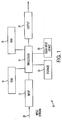
- a digital video recorder 10 receives an MPEG video stream 28 at input 12, which provides MPEG video stream 28 to processor 14.
- MPEG video stream 28 can be provided via a closed network, local area network or wide area network, such as the Internet.
- Processor 14 is connected to ROM 16, RAM 18, and storage 20, which can be, for example, a disk drive or optical drive.
- Processor 14 provides output signals to output 24 for display on a monitor (not shown).
- Processor 14 implements algorithms and programs that are stored in ROM 16 or storage 20.
- User input device 26 can be a controller, keyboard, or other suitable input device connected directly to digital video recorder 10, or user input device 26 can be connected via a network, which can be a closed network, local area network or wide area network, such as the Internet.
- User input device 26 provides user input to processor 14, such as instructions to begin or stop recording video data, play video data, search video data, playback video data in fast playback mode, and so forth.
- FIG. 2 illustrates an exemplary MPEG stream 28 that consists of a series of data frames encoding pictures.
- the three types of data frames are I-frames, P-frames, and B-frames.
- I-frames are encoded as a single image with no reference to any past or future frames.
- P-frames predictive
- P-frames predictive
- B-frames bidirectional predictive
- the past reference frame is the closest preceding reference frame.
- B-frames are encoded relative to the past reference frame, the future reference frame, or both frames.
- the future reference frame is the closest following reference frame, either I-frame or P-frame.
- the series of frames which is referred to in the art as a Group of Pictures (GOP)
- GOP Group of Pictures
- MPEG video stream 28 is merely exemplary.
- the ratio of I-frames, P-frames, and B-frames is determined by the nature of the video stream and the bandwidth constraints of the network and system.
- the time required for encoding the video stream may also affect the ratio.
- MPEG video stream 28 is shown as having B-frames, although an MPEG stream consisting of only I-frames and P-frames has been found to be satisfactory for video surveillance system purposes.
- MPEG stream 28 is separated by processor 14 into two separate files, file 30 and file 32.
- Processor 14 determines the frame type by examining the frame headers.
- File 30 contains only I-frames
- file 32 contains P-frames and B-frames.
- MPEG stream 28 may not contain B-frames, and thus file 32 would contain only P-frames.
- Files 30 and 32 each have a unique identifier, which can be in the header of the respective files and can be a unique time stamp provided by processor 14.
- Processor 14 also provides each frame with a sequential frame number, (indicated as 1 through 10 in FIG. 2 ) so that files 30 and 32 can be combined by processor 14 to provide full-motion video in response to a request from user input device 26.
- Files 30 and 32 can be stored in storage 20, which can be partitioned into short-term and long-term storage areas.
- the short-term and long-term storage areas can be circular buffers. The size of the two circular buffers depends on the amount of data to be stored and the length of time to keep the data before it is overwritten with new data.
- file 30 can be placed in long-term storage for archival purposes or held in an interim storage area prior to placing in long-term storage.
- File 32 is temporarily saved so that full-motion video can be provided by output 24 to a display for viewing for the required period of time to meet the purposes and policies of the surveillance system in which digital video recorder 10 is utilized.
- Processor 14 determines when the specified time has elapsed, whether it be hours, days, or longer, and then allows file 32 to be overwritten with new data. If file 32 is stored in a circular buffer, file 32 is stored there and then overwritten automatically without processor 14 monitoring the elapsed time. Similarly, file 30 can be placed in a circular and overwritten automatically. The time period between the storing of the data in the circular buffers until it is overwritten is greater for file 30 than it is for file 32. Short-term storage may be, for example, one to two weeks, and long-term storage may be, for example, six months. If desired, file 32 can be placed into long-term storage to provide full-motion video capability. File 32 can then be easily disposed of by overwriting it with other data or simply deleting if without affecting the I-frames which may be kept for archival purposes.
- Digital video recorder 10 provides a savings of up to eighty percent of the space required for archival storage by storing only file 30 with the I-frames. Nevertheless, digital video recorder 10 still provides full-motion video capability during the period of time that such video may be of interest to the user. In addition, digital video recorder 10 does not require processor 14 to reload and process MPEG stream 28 before the data is archived as is required by a system that stores MPEG stream 28 as it is received by input 12.
- file 30 can be processed by processor 14 so that only a portion of file 30 is placed into archival storage in storage 20. For example, a first I-frame may be stored, then one or more I-frames can be skipped and then the next I-frame is recorded. This process is repeated until all of file 30 has been processed. Processing file 30 to remove a portion of the I-frames is a relatively simple and efficient operation compared to reloading and reprocessing of the entire MPEG stream, thereby placing only a minimal demand on system resources.
- processor 14 If processor 14 receives a request to search the recorded video data, processor 14 executes the search using only file 30 to expedite the search and limit system resource requirements compared to a system that stores MPEG stream 28 as it is received by input 12. Similarly, if processor 14 receives a request to playback the recorded video data in fast playback mode, processor 14 provides the fast playback mode by playing only file 30. This provides a significant savings in the system resources required to display the recorded video data in fast playback mode compared to a system that stores MPEG stream 28 as it is received by input 12.
- MPEG stream 28 is separated by processor 14 into three separate files, file 40, file 42, and file 44.
- Processor 14 determines the frame type by examining the frame headers and splits the I-frames into two separate sets with one set stored in file 40 and the other set stored in file 42.
- alternate I-frames are stored in files 40 and 42 with I 1 , I 3 , and I 5 stored in file 40 and I 2 ,I 4 , and I 6 stored in file 42.
- File 44 contains P-frames and B-frames, which are illustrated as B n , and P m . As discussed above, MPEG stream 28 may not contain B-frames, and thus file 44 would contain only P-frames.
- Files 40, 42, and 44 each have a unique identifier, which can be in the header of the respective files and can be a unique time stamp provided by processor 14.
- Processor 14 also provides each frame with a sequential frame number (as discussed above and illustrated in FIG. 2 ) so that files 40, 42, and 44 can be combined by processor 14 to provide full-motion video in response to a request from user input device 26.
- Files 40, 42, and 44 can be stored in storage 20, which can be partitioned into storage areas having storage terms of differing lengths. For example, each of files 40, 42, and 44 can have different lengths of storage. File 40 could have the longest term of storage, file 42 could have a shorter term than file 40, and file 44 could have the shortest term of storage.
- the different term storage areas can be circular buffers. The size of the three circular buffers depends on the amount of data to be stored and the length of time to keep the data before it is overwritten with new data. Alternatively, file 40 can be placed in long-term storage for archival purposes or held in an interim storage area prior to placing in long-term storage.
- Having the two different sets of I-frames reduces the amount of long-term storage required without requiring any reprocessing of the file.
- having a storage term for file 42 that is longer than the term for file 44 allows a tiered data set for a user by providing full-motion video during the time that all three files are stored and a complete set of I-frames during the time that file 42 is stored after the retention storage time of file 44 has expired.
- Processor 14 determines when the specified time has elapsed for each of files 40, 42, and 44, whether it be hours, days, or longer, and then allows the appropriate file to be overwritten with new data. If files 40, 42, and 44 are stored in circular buffers, then they are overwritten automatically without processor 14 monitoring the elapsed times.
- MPEG stream 28 is separated by processor 14, as discussed above, into I-frames which are stored in file 50 and B-frames and P-frames that are stored in file 54.
- a subset of the I-frames stored in file 50 is also stored in file 52.
- a copy of every fifth I-frame is stored in file 52, which is illustrated by I 1 and I 6 .
- Other techniques could be used, for example, every second, third or fourth I-frame and so on could be stored in file 52.
- File 54 contains P-frames and B-frames, which are illustrated as B n , and P m .
- MPEG stream 28 may not contain B-frames, and thus file 54 would contain only P-frames.
- Files 50, 52, and 54 each have a unique identifier, which can be in the header of the respective files and can be a unique time stamp provided by processor 14.
- Processor 14 also provides each frame with a sequential frame number (as discussed above and illustrated in FIG. 2 ) so that files 50 and 54 can be combined by processor 14 to provide full-motion video in response to a request from user input device 26.
- Files 50, 52, and 54 can be stored in storage 20, which can be partitioned into storage areas having storage terms of differing lengths. For example, each of files 50, 52, and 54 can have different lengths of storage. File 52 could have the longest term of storage, file 50 could have a shorter term than file 52, and file 54 could have the shortest term of storage.
- the different term storage areas can be circular buffers. The size of the three circular buffers depends on the amount of data to be stored and the length of time to keep the data before it is overwritten with new data. Alternatively, file 52 can be placed in long-term storage for archival purposes or held in an interim storage area prior to placing in long-term storage.
- Having the complete set of I-frames in file 50 provides efficient combining of the I-frames with the B-frames and P-frames in file 54 to provide full-motion video during the time that files 50 and 54 are retained in storage.
- the subset of I-frames stored in file 52 reduces the amount of storage required for long-term storage without requiring any reprocessing of the file.
- Processor 14 determines when the specified time has elapsed for each of files 50, 52, and 54, whether it be hours, days, or longer, and then allows the appropriate file to be overwritten with new data. If files 50, 52, and 54 are stored in circular buffers, then they are overwritten automatically without processor 14 monitoring the elapsed times.
Landscapes
- Engineering & Computer Science (AREA)
- Multimedia (AREA)
- Signal Processing (AREA)
- Television Signal Processing For Recording (AREA)
- Compression Or Coding Systems Of Tv Signals (AREA)
Claims (10)
- Un procédé de conservation en mémoire de données vidéo comprenant :la réception d'un flux vidéo MPEG contenant une série de trames I et des trames P,la séparation de la série de trames I des trames P,la séparation de la série de trames I en un premier ensemble de trames I et un deuxième ensemble de trames I de sorte que le premier ensemble de trames I contienne des trames I qui ont été séparées de la série de trames I à une cadence périodique,la conservation en mémoire du premier ensemble de trames I, du deuxième ensemble de trames I et des trames P séparément, où le premier ensemble de trames I est conservé en mémoire dans un premier espace mémoire avec une première période temporelle avant que des informations conservées en mémoire dans le premier espace mémoire ne soient écrasées, et le deuxième ensemble de trames I est conservé en mémoire dans un deuxième espace mémoire avec une deuxième période temporelle avant que des informations conservées en mémoire dans le deuxième espace mémoire ne soient écrasées, la deuxième période temporelle étant plus courte que la première période temporelle, de sorte qu'un ensemble complet de trames I contenant la série de trames I du flux vidéo MPEG soit disponible au cours de la deuxième période temporelle, etla fourniture d'informations de sorte que le premier ensemble de trames I, le deuxième ensemble de trames I et les trames P puissent être combinés de façon à produire une vidéo intégrale.
- Un procédé selon la Revendication 1 où ladite conservation en mémoire comprend la conservation en mémoire du premier ensemble de trames I dans une première mémoire tampon circulaire avec la première période temporelle avant que des informations conservées en mémoire dans la première mémoire tampon circulaire ne soient écrasées, la conservation en mémoire du deuxième ensemble de trames I dans une deuxième mémoire tampon circulaire avec la deuxième période temporelle avant que des informations conservées en mémoire dans la deuxième mémoire tampon circulaire ne soient écrasées et la conservation en mémoire des trames P dans une troisième mémoire tampon circulaire avec une troisième période temporelle avant que des informations conservées en mémoire dans la troisième mémoire tampon circulaire ne soient écrasées, où la première période temporelle est plus longue que la deuxième période temporelle et est plus longue que la troisième période temporelle.
- Un procédé selon la Revendication 1, où ladite fourniture comprend la fourniture d'un indice destiné à corréler le premier ensemble de trames I, le deuxième ensemble de trames I et les trames P.
- Un procédé selon la Revendication 1, où ladite fourniture comprend l'attribution à chaque trame du flux vidéo MPEG reçu d'un identifiant unique.
- Un procédé selon la Revendication 1, où ladite fourniture comprend l'attribution à chaque trame I et à chaque trame P dans la série de trames I et dans les trames P d'un timbre à date unique et la numérotation des trames séquentiellement.
- Un procédé selon la Revendication 2, où la deuxième période temporelle est plus longue que la troisième période temporelle.
- Un appareil destiné à la conservation en mémoire de données vidéo comprenant :une entrée destinée à la réception d'un flux vidéo MPEG contenant une série de trames I et des trames P,un séparateur de flux vidéo destiné à la séparation de ladite série de trames I desdites trames P de façon à former un premier ensemble de trames I et un deuxième ensemble de trames I de sorte que le premier ensemble de trames I contienne des trames I qui ont été séparées de la série de trames I à une cadence périodique,une mémoire destinée à la conservation en mémoire dudit premier ensemble de trames I, dudit deuxième ensemble de trames I et desdites trames P séparément, où le premier ensemble de trames I est conservé en mémoire dans un premier espace mémoire dans la mémoire avec une première période temporelle avant que des informations conservées en mémoire dans le premier espace mémoire ne soient écrasées, et le deuxième ensemble de trames I est conservé en mémoire dans un deuxième espace mémoire dans la mémoire avec une deuxième période temporelle avant que des informations conservées en mémoire dans le deuxième espace mémoire ne soient écrasées, la deuxième période temporelle étant plus courte que la première période temporelle, de sorte qu'un ensemble complet de trames I contenant la série de trames I du flux vidéo MPEG soit disponible au cours de la deuxième période temporelle, etun identifiant de séquence destiné à la fourniture d'un identifiant unique audit premier ensemble de trames I, audit deuxième ensemble de trames I et auxdites trames P de sorte que ledit premier ensemble de trames I, ledit deuxième ensemble de trames I et lesdites trames P puissent être combinés de façon à produire une vidéo intégrale.
- Un procédé de conservation en mémoire de données vidéo contenant des trames I :la réception d'un flux vidéo MPEG contenant des trames P,la séparation des trames I des trames P de façon à former une série de trames I,la copie de trames I de la série de trames I à une cadence périodique de façon à former un sous-ensemble de trames I,la conservation en mémoire de la série de trames I, du sous-ensemble de trames I et des trames P séparément, où le sous-ensemble de trames I est conservé en mémoire dans un premier espace mémoire avec une première période temporelle avant que des informations conservées en mémoire dans le premier espace mémoire ne soient écrasées, et la série de trames I est conservée en mémoire dans un deuxième espace mémoire avec une deuxième période temporelle avant que des informations conservées en mémoire dans le deuxième espace mémoire ne soient écrasées, la deuxième période temporelle étant plus courte que la première période temporelle, de sorte qu'un ensemble complet de trames I contenant les trames I du flux vidéo MPEG soit disponible au cours de la deuxième période temporelle, etla fourniture d'informations de sorte que la série définie de trames I et les trames P puissent être combinées de façon à produire une vidéo intégrale.
- Un procédé selon la Revendication 8, où ladite conservation en mémoire comprend la conservation en mémoire du sous-ensemble de trames I dans une première mémoire tampon circulaire avec la première période temporelle avant que des informations conservées en mémoire dans la première mémoire tampon circulaire ne soient écrasées, la conservation en mémoire de la série de trames I dans une deuxième mémoire tampon circulaire avec la deuxième période temporelle avant que des informations conservées en mémoire dans la deuxième mémoire tampon circulaire ne soient écrasées et la conservation en mémoire des trames P dans une troisième mémoire tampon circulaire avec une troisième période temporelle avant que des informations conservées en mémoire dans la troisième mémoire tampon circulaire ne soient écrasées, où la première période temporelle est plus longue que la deuxième période temporelle et est plus longue que la troisième période temporelle.
- Un appareil destiné à la conservation en mémoire de données vidéo comprenant :une entrée destinée à la réception d'un flux vidéo MPEG contenant des trames I et des trames P,un séparateur de flux vidéo destiné à la séparation desdites trames I desdites trames P de façon à former une série de trames I,un processeur adapté de façon à copier des trames I de la série de trames I à une cadence périodique de façon à former un sous-ensemble de trames I,une mémoire destinée à la conservation en mémoire de ladite série de trames I, dudit sous-ensemble de trames I et desdites trames P séparément, où le sous-ensemble de trames I est conservé en mémoire dans un premier espace mémoire de la mémoire avec une première période temporelle avant que des informations conservées en mémoire dans le premier espace mémoire ne soient écrasées, et la série de trames I est conservée en mémoire dans un deuxième espace mémoire avec une deuxième période temporelle avant que des informations conservées en mémoire dans le deuxième espace mémoire de la mémoire ne soient écrasées, la deuxième période temporelle étant plus courte que la première période temporelle, de sorte qu'un ensemble complet de trames I contenant les trames I du flux vidéo MPEG soit disponible au cours de la deuxième période temporelle, etun identifiant de séquence destiné à la fourniture d'un identifiant unique à ladite série de trames I et auxdites trames P de sorte que ladite série de trames I et lesdites trames P puissent être combinées de façon à produire une image de vidéo intégrale.
Applications Claiming Priority (2)
| Application Number | Priority Date | Filing Date | Title |
|---|---|---|---|
| US11/982,066 US8195037B2 (en) | 2004-11-12 | 2007-10-31 | Apparatus and method of storing video data |
| PCT/US2008/012386 WO2009058372A1 (fr) | 2007-10-31 | 2008-10-30 | Appareil et procédé de stockage de données vidéo |
Publications (3)
| Publication Number | Publication Date |
|---|---|
| EP2215838A1 EP2215838A1 (fr) | 2010-08-11 |
| EP2215838A4 EP2215838A4 (fr) | 2010-10-27 |
| EP2215838B1 true EP2215838B1 (fr) | 2016-08-17 |
Family
ID=40591928
Family Applications (1)
| Application Number | Title | Priority Date | Filing Date |
|---|---|---|---|
| EP08845561.3A Active EP2215838B1 (fr) | 2007-10-31 | 2008-10-30 | Appareil et procédé de stockage de données vidéo |
Country Status (7)
| Country | Link |
|---|---|
| US (1) | US8195037B2 (fr) |
| EP (1) | EP2215838B1 (fr) |
| KR (1) | KR101192564B1 (fr) |
| CN (1) | CN101843099B (fr) |
| AU (1) | AU2008319291B2 (fr) |
| ES (1) | ES2593528T3 (fr) |
| WO (1) | WO2009058372A1 (fr) |
Families Citing this family (14)
| Publication number | Priority date | Publication date | Assignee | Title |
|---|---|---|---|---|
| US7978669B2 (en) * | 2007-05-09 | 2011-07-12 | Cisco Technology, Inc. | Methods and apparatus for efficient MPEG transmission over 802.11 |
| US8526779B2 (en) | 2008-11-07 | 2013-09-03 | Looxcie, Inc. | Creating and editing video recorded by a hands-free video recording device |
| US8593570B2 (en) | 2008-11-07 | 2013-11-26 | Looxcie, Inc. | Video recording camera headset |
| CN101794255B (zh) * | 2009-12-31 | 2012-06-27 | 浙江中控自动化仪表有限公司 | 无纸记录仪及无纸记录仪数据存储方法 |
| US20110210962A1 (en) * | 2010-03-01 | 2011-09-01 | Oracle International Corporation | Media recording within a virtual world |
| US8737803B2 (en) | 2011-05-27 | 2014-05-27 | Looxcie, Inc. | Method and apparatus for storing and streaming audiovisual content |
| KR101858695B1 (ko) * | 2012-04-09 | 2018-05-16 | 엘지전자 주식회사 | 데이터 관리 방법 |
| US9997201B2 (en) | 2014-06-20 | 2018-06-12 | Philo, Inc. | Method and apparatus for video compression of multiple instances using index frames |
| CN106713940B (zh) * | 2015-08-04 | 2019-12-20 | 杭州海康威视数字技术股份有限公司 | 视频流的存储方法、读取方法及装置 |
| CN105611307B (zh) * | 2015-12-17 | 2018-11-23 | 浪潮(北京)电子信息产业有限公司 | 一种基于无锁缓存队列的多路h264视频数据缓存方法及系统 |
| JP6238255B2 (ja) * | 2016-05-25 | 2017-11-29 | 株式会社Nexpoint | 監視カメラシステムによる監視方法及び動画分割装置 |
| WO2020087282A1 (fr) * | 2018-10-30 | 2020-05-07 | 深圳市大疆创新科技有限公司 | Dispositif et procédé de traitement de données, et verre de machine passant au travers |
| KR102090308B1 (ko) * | 2019-10-16 | 2020-03-17 | 주식회사 스마트시티코리아 | Gop 단위 기반의 영상 저장 시스템 및 방법 |
| WO2023084266A1 (fr) * | 2021-11-10 | 2023-05-19 | Intel Corporation | Codage vidéo à faible retard |
Family Cites Families (8)
| Publication number | Priority date | Publication date | Assignee | Title |
|---|---|---|---|---|
| JP3780623B2 (ja) * | 1997-05-16 | 2006-05-31 | 株式会社日立製作所 | 動画像の記述方法 |
| US6820144B2 (en) | 1999-04-06 | 2004-11-16 | Microsoft Corporation | Data format for a streaming information appliance |
| US7257832B2 (en) * | 2000-10-16 | 2007-08-14 | Heartlab, Inc. | Medical image capture system and method |
| JP4215197B2 (ja) * | 2002-04-12 | 2009-01-28 | パナソニック株式会社 | 画像符号化方法および画像復号化方法 |
| JP2006509393A (ja) * | 2002-12-05 | 2006-03-16 | コーニンクレッカ フィリップス エレクトロニクス エヌ ヴィ | トリックプレイ性能と時間的スケーラビリティを改善するアロケーションおよびスケジューリングストラテジー |
| US8934533B2 (en) * | 2004-11-12 | 2015-01-13 | Pelco, Inc. | Method and apparatus for controlling a video surveillance display |
| US7302159B2 (en) * | 2004-11-12 | 2007-11-27 | Pelco | Apparatus and method of storing video data |
| US7965771B2 (en) | 2006-02-27 | 2011-06-21 | Cisco Technology, Inc. | Method and apparatus for immediate display of multicast IPTV over a bandwidth constrained network |
-
2007
- 2007-10-31 US US11/982,066 patent/US8195037B2/en active Active
-
2008
- 2008-10-30 WO PCT/US2008/012386 patent/WO2009058372A1/fr not_active Ceased
- 2008-10-30 AU AU2008319291A patent/AU2008319291B2/en active Active
- 2008-10-30 KR KR1020107009575A patent/KR101192564B1/ko active Active
- 2008-10-30 CN CN2008801143823A patent/CN101843099B/zh active Active
- 2008-10-30 EP EP08845561.3A patent/EP2215838B1/fr active Active
- 2008-10-30 ES ES08845561.3T patent/ES2593528T3/es active Active
Also Published As
| Publication number | Publication date |
|---|---|
| KR20100082344A (ko) | 2010-07-16 |
| EP2215838A4 (fr) | 2010-10-27 |
| KR101192564B1 (ko) | 2012-10-17 |
| AU2008319291A1 (en) | 2009-05-07 |
| CN101843099B (zh) | 2013-01-02 |
| US8195037B2 (en) | 2012-06-05 |
| AU2008319291B2 (en) | 2013-01-10 |
| ES2593528T3 (es) | 2016-12-09 |
| US20080063362A1 (en) | 2008-03-13 |
| EP2215838A1 (fr) | 2010-08-11 |
| WO2009058372A1 (fr) | 2009-05-07 |
| CN101843099A (zh) | 2010-09-22 |
Similar Documents
| Publication | Publication Date | Title |
|---|---|---|
| EP2215838B1 (fr) | Appareil et procédé de stockage de données vidéo | |
| US8346065B2 (en) | Apparatus and method of storing video data | |
| EP1239674A2 (fr) | Procédé et appareil d'enregistrement de données radiodiffusées | |
| US20070201832A1 (en) | Recording apparatus, recording method, program for recording method, recording medium recording program for recording method, reproducing apparatus, reproduction method, program for reproduction method, and recording medium recording program for reproduction method | |
| US20080008455A1 (en) | Cpi data for steam buffer channels | |
| US20060171452A1 (en) | Method and apparatus for dual mode digital video recording | |
| US8218941B1 (en) | Method and system to transfer video from a video source to optical media | |
| US7006701B2 (en) | Sequential digital image compression | |
| EP3678368B1 (fr) | Création de lots pour streaming vidéo | |
| KR20230032202A (ko) | 이벤트 상황을 찾기 위한 효율적 영상 검색 방법 및 그 시스템 | |
| JP2003061022A (ja) | デジタル放送の放送番組記録装置 | |
| JP3816373B2 (ja) | 映像記録再生装置およびその方法 | |
| US8554051B2 (en) | Data stream storage system | |
| US20020021885A1 (en) | Method for controlling frames of moving picture and apparatus therefor | |
| EP1534005A2 (fr) | Procédé et appareil d'enregistrement de données radiodiffusées | |
| JP2001273714A (ja) | 記録装置及び方法 | |
| US20060101502A1 (en) | Method and device for processing digital data |
Legal Events
| Date | Code | Title | Description |
|---|---|---|---|
| PUAI | Public reference made under article 153(3) epc to a published international application that has entered the european phase |
Free format text: ORIGINAL CODE: 0009012 |
|
| 17P | Request for examination filed |
Effective date: 20100531 |
|
| AK | Designated contracting states |
Kind code of ref document: A1 Designated state(s): AT BE BG CH CY CZ DE DK EE ES FI FR GB GR HR HU IE IS IT LI LT LU LV MC MT NL NO PL PT RO SE SI SK TR |
|
| AX | Request for extension of the european patent |
Extension state: AL BA MK RS |
|
| A4 | Supplementary search report drawn up and despatched |
Effective date: 20100924 |
|
| DAX | Request for extension of the european patent (deleted) | ||
| 17Q | First examination report despatched |
Effective date: 20131029 |
|
| GRAP | Despatch of communication of intention to grant a patent |
Free format text: ORIGINAL CODE: EPIDOSNIGR1 |
|
| INTG | Intention to grant announced |
Effective date: 20160311 |
|
| GRAS | Grant fee paid |
Free format text: ORIGINAL CODE: EPIDOSNIGR3 |
|
| GRAA | (expected) grant |
Free format text: ORIGINAL CODE: 0009210 |
|
| AK | Designated contracting states |
Kind code of ref document: B1 Designated state(s): AT BE BG CH CY CZ DE DK EE ES FI FR GB GR HR HU IE IS IT LI LT LU LV MC MT NL NO PL PT RO SE SI SK TR |
|
| REG | Reference to a national code |
Ref country code: GB Ref legal event code: FG4D |
|
| REG | Reference to a national code |
Ref country code: CH Ref legal event code: EP |
|
| REG | Reference to a national code |
Ref country code: IE Ref legal event code: FG4D |
|
| REG | Reference to a national code |
Ref country code: AT Ref legal event code: REF Ref document number: 822051 Country of ref document: AT Kind code of ref document: T Effective date: 20160915 |
|
| REG | Reference to a national code |
Ref country code: DE Ref legal event code: R096 Ref document number: 602008045776 Country of ref document: DE |
|
| REG | Reference to a national code |
Ref country code: FR Ref legal event code: PLFP Year of fee payment: 9 |
|
| REG | Reference to a national code |
Ref country code: ES Ref legal event code: FG2A Ref document number: 2593528 Country of ref document: ES Kind code of ref document: T3 Effective date: 20161209 |
|
| REG | Reference to a national code |
Ref country code: NL Ref legal event code: MP Effective date: 20160817 |
|
| REG | Reference to a national code |
Ref country code: LT Ref legal event code: MG4D |
|
| REG | Reference to a national code |
Ref country code: AT Ref legal event code: MK05 Ref document number: 822051 Country of ref document: AT Kind code of ref document: T Effective date: 20160817 |
|
| PG25 | Lapsed in a contracting state [announced via postgrant information from national office to epo] |
Ref country code: HR Free format text: LAPSE BECAUSE OF FAILURE TO SUBMIT A TRANSLATION OF THE DESCRIPTION OR TO PAY THE FEE WITHIN THE PRESCRIBED TIME-LIMIT Effective date: 20160817 Ref country code: NO Free format text: LAPSE BECAUSE OF FAILURE TO SUBMIT A TRANSLATION OF THE DESCRIPTION OR TO PAY THE FEE WITHIN THE PRESCRIBED TIME-LIMIT Effective date: 20161117 Ref country code: FI Free format text: LAPSE BECAUSE OF FAILURE TO SUBMIT A TRANSLATION OF THE DESCRIPTION OR TO PAY THE FEE WITHIN THE PRESCRIBED TIME-LIMIT Effective date: 20160817 Ref country code: LT Free format text: LAPSE BECAUSE OF FAILURE TO SUBMIT A TRANSLATION OF THE DESCRIPTION OR TO PAY THE FEE WITHIN THE PRESCRIBED TIME-LIMIT Effective date: 20160817 Ref country code: NL Free format text: LAPSE BECAUSE OF FAILURE TO SUBMIT A TRANSLATION OF THE DESCRIPTION OR TO PAY THE FEE WITHIN THE PRESCRIBED TIME-LIMIT Effective date: 20160817 Ref country code: IT Free format text: LAPSE BECAUSE OF FAILURE TO SUBMIT A TRANSLATION OF THE DESCRIPTION OR TO PAY THE FEE WITHIN THE PRESCRIBED TIME-LIMIT Effective date: 20160817 |
|
| PG25 | Lapsed in a contracting state [announced via postgrant information from national office to epo] |
Ref country code: AT Free format text: LAPSE BECAUSE OF FAILURE TO SUBMIT A TRANSLATION OF THE DESCRIPTION OR TO PAY THE FEE WITHIN THE PRESCRIBED TIME-LIMIT Effective date: 20160817 Ref country code: SE Free format text: LAPSE BECAUSE OF FAILURE TO SUBMIT A TRANSLATION OF THE DESCRIPTION OR TO PAY THE FEE WITHIN THE PRESCRIBED TIME-LIMIT Effective date: 20160817 Ref country code: PL Free format text: LAPSE BECAUSE OF FAILURE TO SUBMIT A TRANSLATION OF THE DESCRIPTION OR TO PAY THE FEE WITHIN THE PRESCRIBED TIME-LIMIT Effective date: 20160817 Ref country code: PT Free format text: LAPSE BECAUSE OF FAILURE TO SUBMIT A TRANSLATION OF THE DESCRIPTION OR TO PAY THE FEE WITHIN THE PRESCRIBED TIME-LIMIT Effective date: 20161219 Ref country code: BE Free format text: LAPSE BECAUSE OF NON-PAYMENT OF DUE FEES Effective date: 20161031 Ref country code: GR Free format text: LAPSE BECAUSE OF FAILURE TO SUBMIT A TRANSLATION OF THE DESCRIPTION OR TO PAY THE FEE WITHIN THE PRESCRIBED TIME-LIMIT Effective date: 20161118 Ref country code: LV Free format text: LAPSE BECAUSE OF FAILURE TO SUBMIT A TRANSLATION OF THE DESCRIPTION OR TO PAY THE FEE WITHIN THE PRESCRIBED TIME-LIMIT Effective date: 20160817 |
|
| PG25 | Lapsed in a contracting state [announced via postgrant information from national office to epo] |
Ref country code: RO Free format text: LAPSE BECAUSE OF FAILURE TO SUBMIT A TRANSLATION OF THE DESCRIPTION OR TO PAY THE FEE WITHIN THE PRESCRIBED TIME-LIMIT Effective date: 20160817 Ref country code: EE Free format text: LAPSE BECAUSE OF FAILURE TO SUBMIT A TRANSLATION OF THE DESCRIPTION OR TO PAY THE FEE WITHIN THE PRESCRIBED TIME-LIMIT Effective date: 20160817 |
|
| REG | Reference to a national code |
Ref country code: DE Ref legal event code: R097 Ref document number: 602008045776 Country of ref document: DE |
|
| PG25 | Lapsed in a contracting state [announced via postgrant information from national office to epo] |
Ref country code: DK Free format text: LAPSE BECAUSE OF FAILURE TO SUBMIT A TRANSLATION OF THE DESCRIPTION OR TO PAY THE FEE WITHIN THE PRESCRIBED TIME-LIMIT Effective date: 20160817 Ref country code: CZ Free format text: LAPSE BECAUSE OF FAILURE TO SUBMIT A TRANSLATION OF THE DESCRIPTION OR TO PAY THE FEE WITHIN THE PRESCRIBED TIME-LIMIT Effective date: 20160817 Ref country code: SK Free format text: LAPSE BECAUSE OF FAILURE TO SUBMIT A TRANSLATION OF THE DESCRIPTION OR TO PAY THE FEE WITHIN THE PRESCRIBED TIME-LIMIT Effective date: 20160817 Ref country code: BE Free format text: LAPSE BECAUSE OF FAILURE TO SUBMIT A TRANSLATION OF THE DESCRIPTION OR TO PAY THE FEE WITHIN THE PRESCRIBED TIME-LIMIT Effective date: 20160817 Ref country code: BG Free format text: LAPSE BECAUSE OF FAILURE TO SUBMIT A TRANSLATION OF THE DESCRIPTION OR TO PAY THE FEE WITHIN THE PRESCRIBED TIME-LIMIT Effective date: 20161117 |
|
| REG | Reference to a national code |
Ref country code: CH Ref legal event code: PL |
|
| PLBE | No opposition filed within time limit |
Free format text: ORIGINAL CODE: 0009261 |
|
| STAA | Information on the status of an ep patent application or granted ep patent |
Free format text: STATUS: NO OPPOSITION FILED WITHIN TIME LIMIT |
|
| 26N | No opposition filed |
Effective date: 20170518 |
|
| REG | Reference to a national code |
Ref country code: IE Ref legal event code: MM4A |
|
| PG25 | Lapsed in a contracting state [announced via postgrant information from national office to epo] |
Ref country code: CH Free format text: LAPSE BECAUSE OF NON-PAYMENT OF DUE FEES Effective date: 20161031 Ref country code: LI Free format text: LAPSE BECAUSE OF NON-PAYMENT OF DUE FEES Effective date: 20161031 |
|
| PG25 | Lapsed in a contracting state [announced via postgrant information from national office to epo] |
Ref country code: SI Free format text: LAPSE BECAUSE OF FAILURE TO SUBMIT A TRANSLATION OF THE DESCRIPTION OR TO PAY THE FEE WITHIN THE PRESCRIBED TIME-LIMIT Effective date: 20160817 Ref country code: LU Free format text: LAPSE BECAUSE OF NON-PAYMENT OF DUE FEES Effective date: 20161030 |
|
| REG | Reference to a national code |
Ref country code: FR Ref legal event code: PLFP Year of fee payment: 10 |
|
| PG25 | Lapsed in a contracting state [announced via postgrant information from national office to epo] |
Ref country code: IE Free format text: LAPSE BECAUSE OF NON-PAYMENT OF DUE FEES Effective date: 20161030 |
|
| PG25 | Lapsed in a contracting state [announced via postgrant information from national office to epo] |
Ref country code: CY Free format text: LAPSE BECAUSE OF FAILURE TO SUBMIT A TRANSLATION OF THE DESCRIPTION OR TO PAY THE FEE WITHIN THE PRESCRIBED TIME-LIMIT Effective date: 20160817 Ref country code: HU Free format text: LAPSE BECAUSE OF FAILURE TO SUBMIT A TRANSLATION OF THE DESCRIPTION OR TO PAY THE FEE WITHIN THE PRESCRIBED TIME-LIMIT; INVALID AB INITIO Effective date: 20081030 |
|
| PG25 | Lapsed in a contracting state [announced via postgrant information from national office to epo] |
Ref country code: MT Free format text: LAPSE BECAUSE OF NON-PAYMENT OF DUE FEES Effective date: 20161031 Ref country code: MC Free format text: LAPSE BECAUSE OF FAILURE TO SUBMIT A TRANSLATION OF THE DESCRIPTION OR TO PAY THE FEE WITHIN THE PRESCRIBED TIME-LIMIT Effective date: 20160817 Ref country code: TR Free format text: LAPSE BECAUSE OF FAILURE TO SUBMIT A TRANSLATION OF THE DESCRIPTION OR TO PAY THE FEE WITHIN THE PRESCRIBED TIME-LIMIT Effective date: 20160817 Ref country code: IS Free format text: LAPSE BECAUSE OF FAILURE TO SUBMIT A TRANSLATION OF THE DESCRIPTION OR TO PAY THE FEE WITHIN THE PRESCRIBED TIME-LIMIT Effective date: 20160817 |
|
| REG | Reference to a national code |
Ref country code: FR Ref legal event code: PLFP Year of fee payment: 11 |
|
| REG | Reference to a national code |
Ref country code: DE Ref legal event code: R081 Ref document number: 602008045776 Country of ref document: DE Owner name: PELCO, INC., FRESNO, US Free format text: FORMER OWNER: PELCO. INC., CLOVIS, CALIF., US Ref country code: DE Ref legal event code: R082 Ref document number: 602008045776 Country of ref document: DE Representative=s name: SCHUMACHER & WILLSAU PATENTANWALTSGESELLSCHAFT, DE |
|
| P01 | Opt-out of the competence of the unified patent court (upc) registered |
Effective date: 20230529 |
|
| PGFP | Annual fee paid to national office [announced via postgrant information from national office to epo] |
Ref country code: GB Payment date: 20250923 Year of fee payment: 18 |
|
| PGFP | Annual fee paid to national office [announced via postgrant information from national office to epo] |
Ref country code: FR Payment date: 20250924 Year of fee payment: 18 |
|
| PGFP | Annual fee paid to national office [announced via postgrant information from national office to epo] |
Ref country code: DE Payment date: 20250923 Year of fee payment: 18 |
|
| REG | Reference to a national code |
Ref country code: DE Ref legal event code: R082 Ref document number: 602008045776 Country of ref document: DE Representative=s name: PUSCHMANN BORCHERT KAISER KLETTNER PATENTANWAE, DE Ref country code: DE Ref legal event code: R082 Ref document number: 602008045776 Country of ref document: DE Representative=s name: PATCARE PATENTANWAELTE PARTNERSCHAFT MBB, DE |
|
| PGFP | Annual fee paid to national office [announced via postgrant information from national office to epo] |
Ref country code: ES Payment date: 20251103 Year of fee payment: 18 |