EP2217262B1 - C-terminale ifapsoriasinfragmente als antimikrobielle peptide und deren verwendung in der behandlung von pseudomonas infektionen - Google Patents
C-terminale ifapsoriasinfragmente als antimikrobielle peptide und deren verwendung in der behandlung von pseudomonas infektionen Download PDFInfo
- Publication number
- EP2217262B1 EP2217262B1 EP08860644.7A EP08860644A EP2217262B1 EP 2217262 B1 EP2217262 B1 EP 2217262B1 EP 08860644 A EP08860644 A EP 08860644A EP 2217262 B1 EP2217262 B1 EP 2217262B1
- Authority
- EP
- European Patent Office
- Prior art keywords
- seq
- peptides
- treatment
- ifps
- peptide
- Prior art date
- Legal status (The legal status is an assumption and is not a legal conclusion. Google has not performed a legal analysis and makes no representation as to the accuracy of the status listed.)
- Not-in-force
Links
- 238000011282 treatment Methods 0.000 title claims description 14
- 101000878281 Homo sapiens Filaggrin-2 Proteins 0.000 title description 47
- 102100037009 Filaggrin-2 Human genes 0.000 title description 45
- 102000044503 Antimicrobial Peptides Human genes 0.000 title description 9
- 108700042778 Antimicrobial Peptides Proteins 0.000 title description 9
- 239000012634 fragment Substances 0.000 title description 9
- 210000004899 c-terminal region Anatomy 0.000 title description 5
- 208000032536 Pseudomonas Infections Diseases 0.000 title 1
- 108090000765 processed proteins & peptides Proteins 0.000 claims description 60
- 241000282414 Homo sapiens Species 0.000 claims description 16
- 230000000845 anti-microbial effect Effects 0.000 claims description 13
- 239000003814 drug Substances 0.000 claims description 12
- 229940079593 drug Drugs 0.000 claims description 9
- 241000589517 Pseudomonas aeruginosa Species 0.000 claims description 8
- 208000015181 infectious disease Diseases 0.000 claims description 8
- 239000000203 mixture Substances 0.000 claims description 8
- 238000002360 preparation method Methods 0.000 claims description 8
- 241000589516 Pseudomonas Species 0.000 claims description 6
- 241000894006 Bacteria Species 0.000 claims description 5
- 239000002537 cosmetic Substances 0.000 claims description 5
- 208000035473 Communicable disease Diseases 0.000 claims description 4
- 239000004599 antimicrobial Substances 0.000 claims description 4
- 241001465754 Metazoa Species 0.000 claims description 3
- 210000002345 respiratory system Anatomy 0.000 claims description 3
- 210000001035 gastrointestinal tract Anatomy 0.000 claims description 2
- 239000007943 implant Substances 0.000 claims description 2
- 208000037581 Persistent Infection Diseases 0.000 claims 1
- 239000011248 coating agent Substances 0.000 claims 1
- 238000000576 coating method Methods 0.000 claims 1
- 210000000981 epithelium Anatomy 0.000 claims 1
- 238000006467 substitution reaction Methods 0.000 claims 1
- 238000002560 therapeutic procedure Methods 0.000 claims 1
- 210000002229 urogenital system Anatomy 0.000 claims 1
- 102000004196 processed proteins & peptides Human genes 0.000 description 38
- 108090000623 proteins and genes Proteins 0.000 description 20
- 102000004169 proteins and genes Human genes 0.000 description 17
- 235000018102 proteins Nutrition 0.000 description 14
- 108020001507 fusion proteins Proteins 0.000 description 11
- 102000037865 fusion proteins Human genes 0.000 description 11
- 150000001413 amino acids Chemical group 0.000 description 10
- WEVYAHXRMPXWCK-UHFFFAOYSA-N Acetonitrile Chemical compound CC#N WEVYAHXRMPXWCK-UHFFFAOYSA-N 0.000 description 9
- 210000003491 skin Anatomy 0.000 description 9
- DTQVDTLACAAQTR-UHFFFAOYSA-N Trifluoroacetic acid Chemical compound OC(=O)C(F)(F)F DTQVDTLACAAQTR-UHFFFAOYSA-N 0.000 description 8
- 230000003115 biocidal effect Effects 0.000 description 8
- 210000004027 cell Anatomy 0.000 description 8
- 210000002510 keratinocyte Anatomy 0.000 description 8
- 238000000034 method Methods 0.000 description 7
- 244000005700 microbiome Species 0.000 description 7
- 239000000243 solution Substances 0.000 description 7
- QTBSBXVTEAMEQO-UHFFFAOYSA-N Acetic acid Chemical compound CC(O)=O QTBSBXVTEAMEQO-UHFFFAOYSA-N 0.000 description 6
- 229920000936 Agarose Polymers 0.000 description 6
- 235000001014 amino acid Nutrition 0.000 description 6
- 239000003242 anti bacterial agent Substances 0.000 description 6
- 230000005764 inhibitory process Effects 0.000 description 6
- 150000007523 nucleic acids Chemical group 0.000 description 6
- 238000012360 testing method Methods 0.000 description 6
- 210000001519 tissue Anatomy 0.000 description 6
- 238000001514 detection method Methods 0.000 description 5
- 208000037265 diseases, disorders, signs and symptoms Diseases 0.000 description 5
- 230000000694 effects Effects 0.000 description 5
- 239000002609 medium Substances 0.000 description 5
- 239000002773 nucleotide Substances 0.000 description 5
- 125000003729 nucleotide group Chemical group 0.000 description 5
- 102000030805 Dermcidin Human genes 0.000 description 4
- 108010034929 Dermcidin Proteins 0.000 description 4
- PXHVJJICTQNCMI-UHFFFAOYSA-N Nickel Chemical compound [Ni] PXHVJJICTQNCMI-UHFFFAOYSA-N 0.000 description 4
- 229940088710 antibiotic agent Drugs 0.000 description 4
- 230000004071 biological effect Effects 0.000 description 4
- 239000000872 buffer Substances 0.000 description 4
- 238000009792 diffusion process Methods 0.000 description 4
- 238000010790 dilution Methods 0.000 description 4
- 239000012895 dilution Substances 0.000 description 4
- 201000010099 disease Diseases 0.000 description 4
- 238000011534 incubation Methods 0.000 description 4
- 238000002955 isolation Methods 0.000 description 4
- 238000004519 manufacturing process Methods 0.000 description 4
- 244000000010 microbial pathogen Species 0.000 description 4
- 108020004707 nucleic acids Proteins 0.000 description 4
- 102000039446 nucleic acids Human genes 0.000 description 4
- 239000012064 sodium phosphate buffer Substances 0.000 description 4
- 102100032202 Cornulin Human genes 0.000 description 3
- 241000588724 Escherichia coli Species 0.000 description 3
- 108700024394 Exon Proteins 0.000 description 3
- 108700041153 Filaggrin Proteins Proteins 0.000 description 3
- 108010085025 Ribonuclease 7 Proteins 0.000 description 3
- 102100040312 Ribonuclease 7 Human genes 0.000 description 3
- 102000051619 SUMO-1 Human genes 0.000 description 3
- 244000052616 bacterial pathogen Species 0.000 description 3
- POIUWJQBRNEFGX-XAMSXPGMSA-N cathelicidin Chemical compound C([C@@H](C(=O)N[C@@H](CCCNC(N)=N)C(=O)N[C@@H](CCCCN)C(=O)N[C@@H](CO)C(=O)N[C@@H](CCCCN)C(=O)N[C@@H](CCC(O)=O)C(=O)N[C@@H](CCCCN)C(=O)N[C@@H]([C@@H](C)CC)C(=O)NCC(=O)N[C@@H](CCCCN)C(=O)N[C@@H](CCC(O)=O)C(=O)N[C@@H](CC=1C=CC=CC=1)C(=O)N[C@@H](CCCCN)C(=O)N[C@@H](CCCNC(N)=N)C(=O)N[C@@H]([C@@H](C)CC)C(=O)N[C@@H](C(C)C)C(=O)N[C@@H](CCC(N)=O)C(=O)N[C@@H](CCCNC(N)=N)C(=O)N[C@@H]([C@@H](C)CC)C(=O)N[C@@H](CCCCN)C(=O)N[C@@H](CC(O)=O)C(=O)N[C@@H](CC=1C=CC=CC=1)C(=O)N[C@@H](CC(C)C)C(=O)N[C@@H](CCCNC(N)=N)C(=O)N[C@@H](CC(N)=O)C(=O)N[C@@H](CC(C)C)C(=O)N[C@@H](C(C)C)C(=O)N1[C@@H](CCC1)C(=O)N[C@@H](CCCNC(N)=N)C(=O)N[C@@H]([C@@H](C)O)C(=O)N[C@@H](CCC(O)=O)C(=O)N[C@@H](CO)C(O)=O)NC(=O)[C@H](CC=1C=CC=CC=1)NC(=O)[C@H](CC(O)=O)NC(=O)CNC(=O)[C@H](CC(C)C)NC(=O)[C@@H](N)CC(C)C)C1=CC=CC=C1 POIUWJQBRNEFGX-XAMSXPGMSA-N 0.000 description 3
- 230000007123 defense Effects 0.000 description 3
- 230000029087 digestion Effects 0.000 description 3
- 210000002919 epithelial cell Anatomy 0.000 description 3
- 239000013604 expression vector Substances 0.000 description 3
- 238000004128 high performance liquid chromatography Methods 0.000 description 3
- 235000014304 histidine Nutrition 0.000 description 3
- 108020004999 messenger RNA Proteins 0.000 description 3
- 238000011321 prophylaxis Methods 0.000 description 3
- 238000000746 purification Methods 0.000 description 3
- 238000004007 reversed phase HPLC Methods 0.000 description 3
- 125000006850 spacer group Chemical group 0.000 description 3
- 239000000126 substance Substances 0.000 description 3
- 239000001974 tryptic soy broth Substances 0.000 description 3
- 108010050327 trypticase-soy broth Proteins 0.000 description 3
- 239000013598 vector Substances 0.000 description 3
- XLYOFNOQVPJJNP-UHFFFAOYSA-N water Chemical compound O XLYOFNOQVPJJNP-UHFFFAOYSA-N 0.000 description 3
- 108091032973 (ribonucleotides)n+m Proteins 0.000 description 2
- 101000879203 Caenorhabditis elegans Small ubiquitin-related modifier Proteins 0.000 description 2
- 108020004705 Codon Proteins 0.000 description 2
- WQZGKKKJIJFFOK-GASJEMHNSA-N Glucose Natural products OC[C@H]1OC(O)[C@H](O)[C@@H](O)[C@@H]1O WQZGKKKJIJFFOK-GASJEMHNSA-N 0.000 description 2
- 101000920981 Homo sapiens Cornulin Proteins 0.000 description 2
- 108091092195 Intron Proteins 0.000 description 2
- 108010014251 Muramidase Proteins 0.000 description 2
- 102000016943 Muramidase Human genes 0.000 description 2
- 108010062010 N-Acetylmuramoyl-L-alanine Amidase Proteins 0.000 description 2
- 108091028043 Nucleic acid sequence Proteins 0.000 description 2
- 108700026244 Open Reading Frames Proteins 0.000 description 2
- 102000005871 S100 Calcium Binding Protein A7 Human genes 0.000 description 2
- 108010005256 S100 Calcium Binding Protein A7 Proteins 0.000 description 2
- FAPWRFPIFSIZLT-UHFFFAOYSA-M Sodium chloride Chemical compound [Na+].[Cl-] FAPWRFPIFSIZLT-UHFFFAOYSA-M 0.000 description 2
- 238000010521 absorption reaction Methods 0.000 description 2
- OIRDTQYFTABQOQ-KQYNXXCUSA-N adenosine Chemical compound C1=NC=2C(N)=NC=NC=2N1[C@@H]1O[C@H](CO)[C@@H](O)[C@H]1O OIRDTQYFTABQOQ-KQYNXXCUSA-N 0.000 description 2
- 238000003556 assay Methods 0.000 description 2
- 102000012265 beta-defensin Human genes 0.000 description 2
- 108050002883 beta-defensin Proteins 0.000 description 2
- QKSKPIVNLNLAAV-UHFFFAOYSA-N bis(2-chloroethyl) sulfide Chemical compound ClCCSCCCl QKSKPIVNLNLAAV-UHFFFAOYSA-N 0.000 description 2
- 102000014509 cathelicidin Human genes 0.000 description 2
- 108060001132 cathelicidin Proteins 0.000 description 2
- 125000002091 cationic group Chemical group 0.000 description 2
- 239000013522 chelant Substances 0.000 description 2
- 238000010367 cloning Methods 0.000 description 2
- 230000001332 colony forming effect Effects 0.000 description 2
- 210000003953 foreskin Anatomy 0.000 description 2
- 239000008103 glucose Substances 0.000 description 2
- HNDVDQJCIGZPNO-UHFFFAOYSA-N histidine Natural products OC(=O)C(N)CC1=CN=CN1 HNDVDQJCIGZPNO-UHFFFAOYSA-N 0.000 description 2
- 230000000968 intestinal effect Effects 0.000 description 2
- 229930027917 kanamycin Natural products 0.000 description 2
- 229960000318 kanamycin Drugs 0.000 description 2
- SBUJHOSQTJFQJX-NOAMYHISSA-N kanamycin Chemical compound O[C@@H]1[C@@H](O)[C@H](O)[C@@H](CN)O[C@@H]1O[C@H]1[C@H](O)[C@@H](O[C@@H]2[C@@H]([C@@H](N)[C@H](O)[C@@H](CO)O2)O)[C@H](N)C[C@@H]1N SBUJHOSQTJFQJX-NOAMYHISSA-N 0.000 description 2
- 229930182823 kanamycin A Natural products 0.000 description 2
- 231100000636 lethal dose Toxicity 0.000 description 2
- 239000004325 lysozyme Substances 0.000 description 2
- 229960000274 lysozyme Drugs 0.000 description 2
- 235000010335 lysozyme Nutrition 0.000 description 2
- 230000014759 maintenance of location Effects 0.000 description 2
- 230000000813 microbial effect Effects 0.000 description 2
- 229910052759 nickel Inorganic materials 0.000 description 2
- 210000000056 organ Anatomy 0.000 description 2
- 230000001717 pathogenic effect Effects 0.000 description 2
- 230000008488 polyadenylation Effects 0.000 description 2
- 229940030793 psoriasin Drugs 0.000 description 2
- 210000002784 stomach Anatomy 0.000 description 2
- 230000001225 therapeutic effect Effects 0.000 description 2
- 238000009210 therapy by ultrasound Methods 0.000 description 2
- 208000030090 Acute Disease Diseases 0.000 description 1
- 229920001817 Agar Polymers 0.000 description 1
- 108010077805 Bacterial Proteins Proteins 0.000 description 1
- 102100026887 Beta-defensin 103 Human genes 0.000 description 1
- 102100038326 Beta-defensin 4A Human genes 0.000 description 1
- 101800001415 Bri23 peptide Proteins 0.000 description 1
- 101800000655 C-terminal peptide Proteins 0.000 description 1
- 102400000107 C-terminal peptide Human genes 0.000 description 1
- 101000708016 Caenorhabditis elegans Sentrin-specific protease Proteins 0.000 description 1
- 208000017667 Chronic Disease Diseases 0.000 description 1
- 108091026890 Coding region Proteins 0.000 description 1
- 101710148705 Cornulin Proteins 0.000 description 1
- 201000003883 Cystic fibrosis Diseases 0.000 description 1
- 102000000541 Defensins Human genes 0.000 description 1
- 108010002069 Defensins Proteins 0.000 description 1
- 102000016911 Deoxyribonucleases Human genes 0.000 description 1
- 108010053770 Deoxyribonucleases Proteins 0.000 description 1
- 102000016675 EF-hand domains Human genes 0.000 description 1
- 108050006297 EF-hand domains Proteins 0.000 description 1
- 241001198387 Escherichia coli BL21(DE3) Species 0.000 description 1
- 101000912247 Homo sapiens Beta-defensin 103 Proteins 0.000 description 1
- 101000884714 Homo sapiens Beta-defensin 4A Proteins 0.000 description 1
- 101001018100 Homo sapiens Lysozyme C Proteins 0.000 description 1
- 208000032376 Lung infection Diseases 0.000 description 1
- VEQPNABPJHWNSG-UHFFFAOYSA-N Nickel(2+) Chemical compound [Ni+2] VEQPNABPJHWNSG-UHFFFAOYSA-N 0.000 description 1
- 239000001888 Peptone Substances 0.000 description 1
- 108010080698 Peptones Proteins 0.000 description 1
- 108010002747 Pfu DNA polymerase Proteins 0.000 description 1
- 108010076039 Polyproteins Proteins 0.000 description 1
- 229920001213 Polysorbate 20 Polymers 0.000 description 1
- 108010076504 Protein Sorting Signals Proteins 0.000 description 1
- 241000589614 Pseudomonas stutzeri Species 0.000 description 1
- 241000589615 Pseudomonas syringae Species 0.000 description 1
- 108091034057 RNA (poly(A)) Proteins 0.000 description 1
- 108700038981 SUMO-1 Proteins 0.000 description 1
- 240000004808 Saccharomyces cerevisiae Species 0.000 description 1
- 241000295644 Staphylococcaceae Species 0.000 description 1
- 206010041925 Staphylococcal infections Diseases 0.000 description 1
- 108010006785 Taq Polymerase Proteins 0.000 description 1
- 208000027418 Wounds and injury Diseases 0.000 description 1
- 239000004480 active ingredient Substances 0.000 description 1
- 239000008272 agar Substances 0.000 description 1
- 102000018568 alpha-Defensin Human genes 0.000 description 1
- 108050007802 alpha-defensin Proteins 0.000 description 1
- 230000003321 amplification Effects 0.000 description 1
- 238000012197 amplification kit Methods 0.000 description 1
- 238000004458 analytical method Methods 0.000 description 1
- 230000000844 anti-bacterial effect Effects 0.000 description 1
- 230000000843 anti-fungal effect Effects 0.000 description 1
- 230000000890 antigenic effect Effects 0.000 description 1
- 238000002802 antimicrobial activity assay Methods 0.000 description 1
- 230000001580 bacterial effect Effects 0.000 description 1
- 210000001124 body fluid Anatomy 0.000 description 1
- 239000010839 body fluid Substances 0.000 description 1
- 210000001185 bone marrow Anatomy 0.000 description 1
- 210000004556 brain Anatomy 0.000 description 1
- 210000004900 c-terminal fragment Anatomy 0.000 description 1
- 239000003795 chemical substances by application Substances 0.000 description 1
- 229960005091 chloramphenicol Drugs 0.000 description 1
- WIIZWVCIJKGZOK-RKDXNWHRSA-N chloramphenicol Chemical compound ClC(Cl)C(=O)N[C@H](CO)[C@H](O)C1=CC=C([N+]([O-])=O)C=C1 WIIZWVCIJKGZOK-RKDXNWHRSA-N 0.000 description 1
- 210000000349 chromosome Anatomy 0.000 description 1
- 238000003776 cleavage reaction Methods 0.000 description 1
- 238000010276 construction Methods 0.000 description 1
- 238000011109 contamination Methods 0.000 description 1
- 238000001816 cooling Methods 0.000 description 1
- 239000006071 cream Substances 0.000 description 1
- 230000009089 cytolysis Effects 0.000 description 1
- 230000001086 cytosolic effect Effects 0.000 description 1
- 230000006378 damage Effects 0.000 description 1
- 230000007812 deficiency Effects 0.000 description 1
- 238000011161 development Methods 0.000 description 1
- 230000004069 differentiation Effects 0.000 description 1
- ZPWVASYFFYYZEW-UHFFFAOYSA-L dipotassium hydrogen phosphate Chemical compound [K+].[K+].OP([O-])([O-])=O ZPWVASYFFYYZEW-UHFFFAOYSA-L 0.000 description 1
- 229910000396 dipotassium phosphate Inorganic materials 0.000 description 1
- 235000019797 dipotassium phosphate Nutrition 0.000 description 1
- LOKCTEFSRHRXRJ-UHFFFAOYSA-I dipotassium trisodium dihydrogen phosphate hydrogen phosphate dichloride Chemical compound P(=O)(O)(O)[O-].[K+].P(=O)(O)([O-])[O-].[Na+].[Na+].[Cl-].[K+].[Cl-].[Na+] LOKCTEFSRHRXRJ-UHFFFAOYSA-I 0.000 description 1
- 208000035475 disorder Diseases 0.000 description 1
- 238000004090 dissolution Methods 0.000 description 1
- 231100000673 dose–response relationship Toxicity 0.000 description 1
- 210000002615 epidermis Anatomy 0.000 description 1
- 239000006167 equilibration buffer Substances 0.000 description 1
- 210000001508 eye Anatomy 0.000 description 1
- 238000009472 formulation Methods 0.000 description 1
- 238000007710 freezing Methods 0.000 description 1
- 230000008014 freezing Effects 0.000 description 1
- 230000004927 fusion Effects 0.000 description 1
- 230000002068 genetic effect Effects 0.000 description 1
- 210000003714 granulocyte Anatomy 0.000 description 1
- 230000036074 healthy skin Effects 0.000 description 1
- 150000002411 histidines Chemical class 0.000 description 1
- 230000001900 immune effect Effects 0.000 description 1
- 230000028993 immune response Effects 0.000 description 1
- 238000000126 in silico method Methods 0.000 description 1
- 230000036512 infertility Effects 0.000 description 1
- 230000002757 inflammatory effect Effects 0.000 description 1
- 238000001802 infusion Methods 0.000 description 1
- 230000002401 inhibitory effect Effects 0.000 description 1
- 238000002347 injection Methods 0.000 description 1
- 239000007924 injection Substances 0.000 description 1
- 208000014674 injury Diseases 0.000 description 1
- 230000003993 interaction Effects 0.000 description 1
- 102000007236 involucrin Human genes 0.000 description 1
- 108010033564 involucrin Proteins 0.000 description 1
- BPHPUYQFMNQIOC-NXRLNHOXSA-N isopropyl beta-D-thiogalactopyranoside Chemical compound CC(C)S[C@@H]1O[C@H](CO)[C@H](O)[C@H](O)[C@H]1O BPHPUYQFMNQIOC-NXRLNHOXSA-N 0.000 description 1
- 210000003734 kidney Anatomy 0.000 description 1
- 210000002429 large intestine Anatomy 0.000 description 1
- 210000000867 larynx Anatomy 0.000 description 1
- 239000007788 liquid Substances 0.000 description 1
- 238000009630 liquid culture Methods 0.000 description 1
- 210000004185 liver Anatomy 0.000 description 1
- 244000144972 livestock Species 0.000 description 1
- 238000012153 long-term therapy Methods 0.000 description 1
- 238000011866 long-term treatment Methods 0.000 description 1
- 210000004072 lung Anatomy 0.000 description 1
- 210000001165 lymph node Anatomy 0.000 description 1
- 210000004962 mammalian cell Anatomy 0.000 description 1
- 238000004949 mass spectrometry Methods 0.000 description 1
- 239000000463 material Substances 0.000 description 1
- 239000011159 matrix material Substances 0.000 description 1
- 238000005259 measurement Methods 0.000 description 1
- 210000004877 mucosa Anatomy 0.000 description 1
- 210000004400 mucous membrane Anatomy 0.000 description 1
- 230000035772 mutation Effects 0.000 description 1
- 210000001989 nasopharynx Anatomy 0.000 description 1
- 239000005445 natural material Substances 0.000 description 1
- 239000013642 negative control Substances 0.000 description 1
- 210000000440 neutrophil Anatomy 0.000 description 1
- 230000003448 neutrophilic effect Effects 0.000 description 1
- 229910001453 nickel ion Inorganic materials 0.000 description 1
- 238000003199 nucleic acid amplification method Methods 0.000 description 1
- 235000008935 nutritious Nutrition 0.000 description 1
- 239000002674 ointment Substances 0.000 description 1
- 230000003287 optical effect Effects 0.000 description 1
- 230000000399 orthopedic effect Effects 0.000 description 1
- 210000002741 palatine tonsil Anatomy 0.000 description 1
- 244000052769 pathogen Species 0.000 description 1
- 235000019319 peptone Nutrition 0.000 description 1
- 239000000546 pharmaceutical excipient Substances 0.000 description 1
- 239000000825 pharmaceutical preparation Substances 0.000 description 1
- 210000003800 pharynx Anatomy 0.000 description 1
- 239000002953 phosphate buffered saline Substances 0.000 description 1
- 239000000256 polyoxyethylene sorbitan monolaurate Substances 0.000 description 1
- 235000010486 polyoxyethylene sorbitan monolaurate Nutrition 0.000 description 1
- 239000013641 positive control Substances 0.000 description 1
- 230000008569 process Effects 0.000 description 1
- 239000000047 product Substances 0.000 description 1
- 230000001681 protective effect Effects 0.000 description 1
- 230000013777 protein digestion Effects 0.000 description 1
- 230000006337 proteolytic cleavage Effects 0.000 description 1
- 230000002829 reductive effect Effects 0.000 description 1
- 230000001105 regulatory effect Effects 0.000 description 1
- 230000010076 replication Effects 0.000 description 1
- 230000008458 response to injury Effects 0.000 description 1
- 238000003757 reverse transcription PCR Methods 0.000 description 1
- 210000003079 salivary gland Anatomy 0.000 description 1
- 150000003839 salts Chemical class 0.000 description 1
- 239000000523 sample Substances 0.000 description 1
- 230000007017 scission Effects 0.000 description 1
- 230000003248 secreting effect Effects 0.000 description 1
- 238000000926 separation method Methods 0.000 description 1
- 238000012163 sequencing technique Methods 0.000 description 1
- 208000017520 skin disease Diseases 0.000 description 1
- 206010040872 skin infection Diseases 0.000 description 1
- 210000000813 small intestine Anatomy 0.000 description 1
- 239000011780 sodium chloride Substances 0.000 description 1
- 239000002689 soil Substances 0.000 description 1
- 239000007787 solid Substances 0.000 description 1
- 239000002904 solvent Substances 0.000 description 1
- 238000001228 spectrum Methods 0.000 description 1
- 210000000952 spleen Anatomy 0.000 description 1
- 239000006228 supernatant Substances 0.000 description 1
- 210000004243 sweat Anatomy 0.000 description 1
- 210000000106 sweat gland Anatomy 0.000 description 1
- 230000009885 systemic effect Effects 0.000 description 1
- 238000010257 thawing Methods 0.000 description 1
- 210000001541 thymus gland Anatomy 0.000 description 1
- 230000000699 topical effect Effects 0.000 description 1
- 231100000331 toxic Toxicity 0.000 description 1
- 230000002588 toxic effect Effects 0.000 description 1
- 238000013518 transcription Methods 0.000 description 1
- 230000035897 transcription Effects 0.000 description 1
- 230000009261 transgenic effect Effects 0.000 description 1
- 238000013519 translation Methods 0.000 description 1
- 238000002604 ultrasonography Methods 0.000 description 1
- 210000004291 uterus Anatomy 0.000 description 1
- 230000029663 wound healing Effects 0.000 description 1
Images



Classifications
-
- C—CHEMISTRY; METALLURGY
- C07—ORGANIC CHEMISTRY
- C07K—PEPTIDES
- C07K14/00—Peptides having more than 20 amino acids; Gastrins; Somatostatins; Melanotropins; Derivatives thereof
- C07K14/435—Peptides having more than 20 amino acids; Gastrins; Somatostatins; Melanotropins; Derivatives thereof from animals; from humans
- C07K14/46—Peptides having more than 20 amino acids; Gastrins; Somatostatins; Melanotropins; Derivatives thereof from animals; from humans from vertebrates
- C07K14/47—Peptides having more than 20 amino acids; Gastrins; Somatostatins; Melanotropins; Derivatives thereof from animals; from humans from vertebrates from mammals
- C07K14/4701—Peptides having more than 20 amino acids; Gastrins; Somatostatins; Melanotropins; Derivatives thereof from animals; from humans from vertebrates from mammals not used
- C07K14/4723—Cationic antimicrobial peptides, e.g. defensins
-
- A—HUMAN NECESSITIES
- A61—MEDICAL OR VETERINARY SCIENCE; HYGIENE
- A61K—PREPARATIONS FOR MEDICAL, DENTAL OR TOILETRY PURPOSES
- A61K38/00—Medicinal preparations containing peptides
- A61K38/16—Peptides having more than 20 amino acids; Gastrins; Somatostatins; Melanotropins; Derivatives thereof
- A61K38/17—Peptides having more than 20 amino acids; Gastrins; Somatostatins; Melanotropins; Derivatives thereof from animals; from humans
- A61K38/1703—Peptides having more than 20 amino acids; Gastrins; Somatostatins; Melanotropins; Derivatives thereof from animals; from humans from vertebrates
- A61K38/1709—Peptides having more than 20 amino acids; Gastrins; Somatostatins; Melanotropins; Derivatives thereof from animals; from humans from vertebrates from mammals
- A61K38/1729—Cationic antimicrobial peptides, e.g. defensins
-
- A—HUMAN NECESSITIES
- A61—MEDICAL OR VETERINARY SCIENCE; HYGIENE
- A61P—SPECIFIC THERAPEUTIC ACTIVITY OF CHEMICAL COMPOUNDS OR MEDICINAL PREPARATIONS
- A61P1/00—Drugs for disorders of the alimentary tract or the digestive system
-
- A—HUMAN NECESSITIES
- A61—MEDICAL OR VETERINARY SCIENCE; HYGIENE
- A61P—SPECIFIC THERAPEUTIC ACTIVITY OF CHEMICAL COMPOUNDS OR MEDICINAL PREPARATIONS
- A61P11/00—Drugs for disorders of the respiratory system
-
- A—HUMAN NECESSITIES
- A61—MEDICAL OR VETERINARY SCIENCE; HYGIENE
- A61P—SPECIFIC THERAPEUTIC ACTIVITY OF CHEMICAL COMPOUNDS OR MEDICINAL PREPARATIONS
- A61P31/00—Antiinfectives, i.e. antibiotics, antiseptics, chemotherapeutics
- A61P31/02—Local antiseptics
-
- A—HUMAN NECESSITIES
- A61—MEDICAL OR VETERINARY SCIENCE; HYGIENE
- A61P—SPECIFIC THERAPEUTIC ACTIVITY OF CHEMICAL COMPOUNDS OR MEDICINAL PREPARATIONS
- A61P31/00—Antiinfectives, i.e. antibiotics, antiseptics, chemotherapeutics
- A61P31/04—Antibacterial agents
Definitions
- the invention relates to the use of a peptide having the sequence shown in SEQ ID: NO 1, SEQ ID: NO 2 or SEQ ID: NO 3 for the preparation of an antimicrobial drug for the treatment of infections by bacteria of the genus Pseudomonas .
- the body surfaces of multicellular organisms provide an important boundary layer to the environment and provide a first line of defense against invading microorganisms.
- antimicrobial peptides that are abundant in the epidermis and especially in the overlying horny layer participate in the defense system. They control microbial growth in the first hours after superficial injury and during wound healing. In particular, they are found in some skin diseases.
- ⁇ -defensins In human skin, six classes of antimicrobial peptides have been discovered to date, the ⁇ -defensins, RNase-7, psoriasin (S100-A7), cathelicidin hCAP18, dermcidin and lysozyme.
- RNase 7, lysozyme and dermcidin are constitutively formed in healthy skin, while the ⁇ -defensins and cathelicidin are only induced by inflammatory stimuli in human keratinocytes, acting primarily in response to injury.
- Defensins are small cationic and amphipatic peptides with a molecular weight of 3 to 5 kDa, they have an antibacterial and an antifungal effect.
- the ⁇ -defensins HNP 1-4 are formed in human neutrophilic granulocytes that accumulate in inflamed tissue
- the ⁇ -defensins hBD-2 and hBD-3 produced by epithelial cells are found in the inflamed skin and other inflamed body surfaces.
- RNase 7 is a small cationic protein that is constitutively produced and provided by epithelial cells, especially the skin. It shows a broad antimicrobial spectrum of activity with particularly high efficacy against Gram-positive intestinal bacteria such as enterococci.
- Psoriasin is also a small protein produced by skin keratinocytes. It is an antibiotic protein that is specifically effective against the intestinal bacterium Escherichia coli and that is detectable on the skin surface in concentrations that are effective at antibiotics.
- Dermcidin is another antibiotic peptide that is specifically produced by sweat gland cells and is effective against staphylococci and Escherichia coli . It is detectable in sweat and acts as a protective factor against staphylococcal infections.
- antimicrobial peptides are endogenous, gene-encoded peptides of particular importance for the early phase of defense against microbial pathogens, including infection prophylaxis. Some are permanently present as antimicrobially active peptides, others, such as the peptide LL-37, are formed only after cleavage of larger, per se antibiotic inactive proteins and yet others are locally re-synthesized. Therefore, depending on the type, they can be detected within minutes to hours after the first contact with the pathogen.
- Fig. 1 shown coding nucleic acid sequence (cDNA) found.
- the complete nucleotide sequence of the human ifapsoriasin cDNA (9117 bp) was confirmed by cloning and sequencing.
- the deduced amino acid sequence of the open reading frame was displayed directly under the coding bases.
- the underlined bolds indicate the canonical poly (A) signal sequence.
- the IFPS gene consists of three exons and two introns. The exon / intron boundaries were determined using the BLAST Search program.
- the cDNA sequence data are available under GenBank from the National Center for Biotechnology Information (NCBI) under accession number AY827490. Analysis of the coding nucleotide sequence localized the gene of the new protein IFPS on chromosome 1q21. IFPS has a very restrictive expression pattern because it is only produced in human skin and vaginal mucosa.
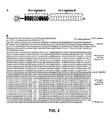
- the IFPS gene encodes a 2391 amino acid protein, which consists of a so-called S100 part, a so-called EF hand part, a spacer, 10 repeat domains A, 14 repeat domains B and a C-terminus ( Fig. 2 ).
- the 248 kDa IFPS polyprotein is proteolytically processed into various peptides in the skin.
- the inventors were able to show that C-terminal peptide fragments are dose-dependent and selectively toxic to wetlands, in particular Pseudomonas aeruginosa , Pseudomonas stutzeri and Pseudomonas syringae.
- the present invention further provides a method of producing the peptides and the use of the peptides as drugs for various therapeutic and diagnostic indications.
- These may be the peptides as high purity substances or - if sufficient for use - within a partially purified peptide mixture or as a mixture of several peptides or their gene probes are used.
- the invention further relates to nucleic acid molecules having a sequence coding for a peptide, an expression vector with such a nucleic acid molecule and optionally control sequences, in particular for replication, transcription and / or translation, and a host cell which is transfected or transformed with the expression vector.
- an expression vector with such a nucleic acid molecule and optionally control sequences, in particular for replication, transcription and / or translation, and a host cell which is transfected or transformed with the expression vector.
- various expression vectors are routinely available for secretory or direct cytoplasmic expression.
- a corresponding nucleic acid sequence can be deduced using the genetic code, whereby optimized codons can be used for different hosts (bacteria, yeast, mammalian cells, plants). However, it is preferable that Fig. 1 resulting codon selection.
- sequences coding for amino acid segments or domains of known proteins are thereby fused to nucleic acids coding for the peptide-de such that a continuous protein is produced during expression.
- fused amino acid segments are the histidine tags, which can be used to purify expressed fusion proteins via nickel chelate columns, or antigenic determinants that allow the peptides to be purified via appropriate antibody affinity columns.
- the peptide is joined to another peptide or protein to form a fusion protein, wherein a SUMO protein, a histidine tag, a proteolytic cleavage "tag" and the IFPS peptide, preferably in the specified order.
- the preparations Due to the biological activity and the natural occurrence of the IFPS peptides, the preparations have been shown to be useful as agents for the treatment of infectious diseases of many epithelial organs and for infection prophylaxis on interfaces, especially the skin, nasopharynx, eyes, respiratory tract, stomach Intestinal tract and urogenital tract are applicable.
- the peptides can also be used to treat systemic disorders in deficiency of these peptides for the treatment of diseases of the human organism, in particular with the involvement of the respiratory tract, the gastrointestinal tract and the genitourinary tract.
- the peptides can be used for the treatment of chronic diseases, partly associated with the diseases already mentioned, by using them in a suitable form for the treatment.
- the peptides can continue to be used for the treatment of acute diseases.
- the present specification further relates to a pharmaceutical or cosmetic composition containing as active ingredient a peptide in an antimicrobial effective amount, preferably in the range of 1-50 ⁇ g / ml.
- the peptides may be used to coat materials, preferably catheters, contact lenses or orthopedic implants.
- the peptides can also be employed for the protection of plants, preferably by producing transgenic plants by cloning the nucleic acids coding for the peptides.
- the peptides are also suitable for use in infection prophylaxis and the treatment of infections in animals, preferably livestock and domestic animals.
- the peptides can be used to diagnose the above-mentioned diseases by, for example, producing antibodies against one or more of the peptides or its derivatives or their fragments and measuring the concentration in body fluids or tissues of one or more peptides via immunological methods.
- the IFPS peptides can be formulated as pharmaceuticals. These contain one or more of the IFPS peptides or a physiologically acceptable salt of these peptides.
- the form and composition of the drugs containing one or more of the IFPS peptides will depend on the mode of administration.
- the medicaments containing one or more of the IFPS peptides may be administered topically, parenterally, intranasally, orally or by inhalation.
- These medicaments containing one or more of the IFPS peptides are preferably formulated in formulations suitable for topical use, preferably creams, ointments or solutions, or with an injection preparation, either as a solution or as a lyophilizate for dissolution immediately before use.
- the pharmaceutical preparations may also contain excipients which are bottling-related, contribute to the solubility, stability or sterility of the drug or increase the efficiency of uptake into the body.
- the determination of biological activity for the IFPS peptides is based on measurements against international reference preparations for antibiotic substances.
- the IFPS peptides are also particularly suitable for the long-term therapy in infectious diseases, as they have excellent biological activity and specificity to wet germs, in particular Pseudomonas aeruginosa , and on the other hand as the body's own peptides trigger no immune response even during long-term treatment.
- an 82 amino acid sequence consisting of the conserved "EF-hand" domains of the profilaggrin was used to search for putative members of the "S 100 Fused Type Protein” ( SFTP) family.
- SFTP S 100 Fused Type Protein
- the entire cDNA sequence was determined from keratinocyte cDNA.
- RNA was isolated from human foreskin keratinocytes with TRIzol ® according to protocol. After DNase digestion, 3 ⁇ g of total RNA was transcribed into cDNA using the SMART RACE cDNA Amplification Kit (Clontech, Heidelberg). By means of 5'- and 3'-RACE ("Rapid Amplification of cDNA Ends"), the terminal regions of the cDNA were determined; The almost 9 kb exon3 of the IFPS was amplified by the "short-range overlapping PCR” method and subsequently sequenced. The complete cDNA sequence is available under the GenBank accession number AY827490 from the National Center for Biotechnology Information (NCBI).
- the IFPS cDNA sequence is 9117 bp in total, has one open reading frame of 7176 bp and a polyadenylation signal (AATAAA) nine nucleotides 5 'before the beginning of polyadenylation. It is similar to the cDNA sequence of all previously known "SFTP" s structured with a total of two introns (1048 and 1089 bp) and three exons (52, 160 and 8907 bp), of which only the last two carry the protein coding sequence.
- AATAAA polyadenylation signal
- the deduced protein sequence consists of 2391 amino acids and has an N-terminal S100- and EF-hand domain, followed by a spacer region followed by two distinct multiple tandem repeat regions (10xA and 14xB), both 75-77 amino acids long , but differ in their sequence and are separated by a short spacer, and finally the C-terminus.
- the C-terminal fragment was amplified by PCR of keratinocyte cDNA with a Pfu polymerase.
- the amplified PCR fragment was then additionally with of a Taq polymerase to generate at the 3 'ends of the PCR product deoxyadenosine overhangs by which the fragment was ligated into the pET SUMO vector.
- the vector was transformed into chemocompetent E. coli TOP10 cells were transformed and positive clones were identified by antibiotic resistance (here kanamycin) and colony PCR. From overnight cultures in LB medium and appropriate antibiotic (50 ⁇ g / ml), the vector was isolated, sequenced and transformed at the correct nucleotide sequence into E. coli BL21 (DE3) pLysS cells capable of protein expression. Positive clones were identified as before.
- the expression of the fusion protein in BL21 (DE3) pLysS was carried out at 37 ° C. and 200 rpm in LB liquid medium containing 14 mM glucose with the addition of 34 ⁇ g / ml chloramphenicol and 50 ⁇ g / ml kanamycin.
- the culture was induced at an optical density (OD) at a wavelength of 600 nm of 0.4-0.6 with IPTG and incubated for an additional three hours.
- the cells were then pelleted, taken per 100 ml of culture in one milliliter of Lysis Equilibration Buffer (LEW) and stored at -80 ° C.
- Digestion of the cells was carried out by thawing and freezing at 30 ° C. and -80 ° C. ("freeze and thaw" method) and subsequent ultrasound treatment, the volume per volume being between 4 and 5 ml per 50 ml tube.
- the ultrasound treatment was performed on ice for 5 min each in cycles with 30 s ultrasound (60/40 interval) and 15 sec pause.
- the cell residues were centrifuged off at 4 ° C. and 12,000 ⁇ g for 45 min and the supernatant was sterile-filtered.
- the fusion protein was further purified by reversed phase (RP) HPLC with an RP8 column and precolumn (SP 250/10 and SP 50/10 NUCLEOSIL 300-7 C8, Macherey -Nail, Düring) over a linear gradient ( Fig. 3 ).
- Buffer A was water with 0.1% trifluoroacetic acid (TFA), buffer B acetonitrile with 0.1% TFA and the gradient as follows: 0-5 min 90% A / 10% B, linear to 40% A for 30 min / 60% B, linear in 5 minutes to 100% B; the flow rate was 3 ml / min and the detection was at 215 nm.
- the recovered fraction with a retention time of 26.34 min was collected and mass spectrometry analyzed in the ESI method to verify the size of the expressed protein.
- the protein of this fraction (IFPS 2244-2391 -SUMO fusion protein) had the correct size of 29141.3 Da; the concentration was determined photometrically by the absorption coefficient and the fraction was freeze-dried.
- fusion protein For digestion, 100 ⁇ g fusion protein each were taken up in 500 ⁇ l 1xPBS (Phosphate Buffered Saline) and incubated with 2.5 U SUMO Protease 1 (LifeSensors, Malvern) for at least 3 h at 30 ° C.
- the separation of the fusion tag and possibly undigested fusion protein was carried out by RP-HPLC with an RP4 column (Bakerbond C4 5u 300A, 250 x 4.60 mm micron, Phenomenex, Aillesburg) ( Fig. 4 ).
- Buffer A was water with 0.1% trifluoroacetic acid (TFA), buffer B acetonitrile with 0.1% TFA and the gradient was as follows: initial concentration 90% A / 10% B, linear to 60% A for 10 minutes A / 40% B, in 15 minutes linear to 30% A / 70% B, in another 10 minutes to 100% B; the flow rate was 0.5 ml / min and the detection was at 215 nm.
- TFA trifluoroacetic acid
- the recovered fraction with a retention time of 20.81 min (corresponding to 55% acetonitrile) was collected and analyzed mass-spectrometrically in the ESI method in order to check the size of the expressed protein (IFPS 2244-2391 ).
- the protein of this fraction had the correct size of 15,874.5 Da; the concentration was determined photometrically on the basis of the absorption coefficient and the fraction was freeze-dried for further use.
- peptides for example a C-terminal IFPS fragment
- agarose-suspended microorganisms here for example Pseudomonas aeruginosa
- proteins to be examined are purified as described in Example 3 and lyophilized and taken up in 0.01% acetic acid.
- the test for antimicrobial activity is as follows: From a logarithmically growing culture in TSB (Tryptic Soy Broth) medium (Sigma), 4 ⁇ 10 6 CFU (colony-forming units) are introduced into a 42 ° C. warm agarose solution ( 1% TSB, 10 mM sodium phosphate buffer pH 7.4, 1% agarose, 0.02% Tween 20). After cooling the agarose solution in petri dishes, cavities with a diameter of 3 mm are punched into the solid agarose under sterile conditions.
- a peptide solution to be tested 5 ⁇ l each of a peptide solution to be tested are added to the wells and incubated at 37 ° C. overnight.
- the solvent is 0.01% acetic acid, as a positive control human lysozyme (500 ng / ml, Sigma).
- the antimicrobial activity of the IFPS fragments is additionally determined in a liquid culture assay system.
- the various Pseudomonas aeruginosa strains are cultured in BHI (Brain Heart Infusion) medium, in 10 mM sodium phosphate buffer (pH 7.3). diluted with 1% TBS and of which 90 .mu.l with 10 .mu.l of the peptide solution (in different concentrations) for 2 h at 37 ° C incubated.
- the batches are diluted 1:10 and 1: 100 in 10 mM sodium phosphate buffer (pH 7.3) with 1% TBS. Of these dilutions, 100 ⁇ l each are plated in three parallel batches on BHI agar.
- CFU colony-forming units
- the antimicrobial activity of the IFPS peptide was examined using both the radial diffusion and the micro-dilution inhibition test against various microorganisms.
- Minimum inhibitory zone concentration refers to the minimum peptide concentration required to completely inhibit the growth of some Pseudomonas ssp after the incubation period (see Example 5).
- concentration refers to the volume filled in the cavity of 5 ul.
- the lethal dose at which 90% of the microorganisms are killed (LD 90 ) can be determined from the reduced growth of CFU in the micro-dilution inhibition test.
- the LD 90 for some Pseudomonas ssp are in Fig. 6 specified.
Landscapes
- Health & Medical Sciences (AREA)
- Life Sciences & Earth Sciences (AREA)
- Chemical & Material Sciences (AREA)
- General Health & Medical Sciences (AREA)
- Medicinal Chemistry (AREA)
- Organic Chemistry (AREA)
- Veterinary Medicine (AREA)
- Public Health (AREA)
- Animal Behavior & Ethology (AREA)
- Pharmacology & Pharmacy (AREA)
- Nuclear Medicine, Radiotherapy & Molecular Imaging (AREA)
- Proteomics, Peptides & Aminoacids (AREA)
- Chemical Kinetics & Catalysis (AREA)
- General Chemical & Material Sciences (AREA)
- Bioinformatics & Cheminformatics (AREA)
- Engineering & Computer Science (AREA)
- Zoology (AREA)
- Gastroenterology & Hepatology (AREA)
- Biochemistry (AREA)
- Communicable Diseases (AREA)
- Immunology (AREA)
- Oncology (AREA)
- Epidemiology (AREA)
- Toxicology (AREA)
- Marine Sciences & Fisheries (AREA)
- Biophysics (AREA)
- Genetics & Genomics (AREA)
- Molecular Biology (AREA)
- Pulmonology (AREA)
- Medicines That Contain Protein Lipid Enzymes And Other Medicines (AREA)
- Peptides Or Proteins (AREA)
Description
- Die Erfindung betrifft die Verwendung eines Peptids mit der in SEQ ID:NO 1, SEQ ID:NO 2 oder SEQ ID:NO 3 dargestellten Sequenz zur Herstellung eines antimikrobiell wirkenden Arzneimittels zur Behandlung von Infektionen durch Bakterien der Gattung Pseudomonas.
- Die Körperoberflächen mehrzelliger Lebewesen stellen eine wichtige Grenzschicht gegenüber der Umgebung dar und liefern eine erste Verteidigungslinie gegenüber eindringenden Mikroorganismen. Insbesondere antimikrobiell wirksame Peptide, die zahlreich in der Epidermis und vor allem in der darüber liegenden Hornschicht vorhanden sind, nehmen an dem Verteidigungssystem teil. Sie kontrollieren mikrobielles Wachstum in den ersten Stunden nach einer oberflächlichen Verletzung und während der Wundheilung. Insbesondere sind sie bei einigen Hauterkrankungen zu finden.
- In der Haut des Menschen sind bisher sechs Klassen antimikrobieller Peptide entdeckt worden, die ß-Defensine, RNase-7, Psoriasin (S100-A7), Cathelicidin hCAP18, Dermcidin und Lysozym. RNase 7, Lysozym und Dermcidin werden konstitutiv in gesunder Haut gebildet, während die ß-Defensine und das Cathelicidin nur durch entzündliche Stimuli in humanen Keratinozyten induziert werden und damit in erster Linie als Reaktion auf Verletzungen wirken.
- Defensine sind kleine kationische und amphipatische Peptide mit einem Molekulargewicht von 3 bis 5 kDa, sie haben eine antibakterielle und eine antimykotische Wirkung. Während die α-Defensine HNP 1-4 beispielsweise in humanen neutrophilen Granulozyten, die sich in entzündetem Gewebe anreichern, gebildet werden, findet man die ß-Defensine hBD-2 und hBD-3, die von Epithelzellen produziert werden, in der entzündeten Haut und anderen entzündeten Körperoberflächen.
- RNase 7 ist ein kleines kationisches Protein, das von Epithelzellen insbesondere der Haut konstitutiv produziert und bereitgestellt wird. Es zeigt ein breites antimikrobielles Wirkungsspektrum mit besonders hoher Wirksamkeit gegenüber Gram-positiven Darmbakterien wie beispielsweise Enterokokken.
- Psoriasin ist ebenfalls ein kleines Protein, das von Hautkeratinozyten produziert wird. Es ist ein gegen das Darmbakterium Escherichia coli spezifisch wirksames antibiotisches Protein, das auf der Hautoberfläche in antibiotisch wirksamen Konzentrationen nachweisbar ist.
- Dermcidin ist ein weiteres antibiotisches Peptid, das spezifisch von Zellen der Schweißdrüsen produziert wird und gegen Staphylokokken und Escherichia coli wirksam ist. Es ist im Schweiß nachweisbar und wirkt hier als Schutzfaktor vor Staphylokokken-Infektionen.
- Allgemein sind antimikrobielle Peptide endogene, Gen-kodierte Peptide mit besonderer Bedeutung für die frühe Phase der Abwehr gegen mikrobielle Erreger, inklusive Infektionsprophylaxe. Einige sind permanent als antimikrobiell aktive Peptide vorhanden, weitere, beispielsweise das Peptid LL-37, werden erst nach Abspaltung größerer, per se antibiotisch inaktiver Proteine gebildet und wiederum andere werden lokal neu synthetisiert. Sie können deshalb, je nach Typus, innerhalb von Minuten bis Stunden nach dem ersten Kontakt mit dem Pathogen nachgewiesen werden.
- Allerdings wirken die bekannten antimikrobiellen Peptide nicht gegen alle mikrobiellen Pathogene in gleicher Weise. Dermcidin wirkt beispielsweise nicht bei Infektionen mit Pseudomonas aeruginosa, einer wichtigen Ursache für Hautinfektionen insbesondere bei Brandverletzungen und für Lungeninfektionen, insbesondere bei der Mukoviszidose.
- Für die Bekämpfung pathogener Mikroorganismen werden präventiv oder kurativ auch Antibiotika eingesetzt, also Stoffe mikrobiellen Ursprungs, die andere Mikroorganismen an ihrem Wachstum hemmen oder sogar abtöten. Im Gegensatz zu den oben erwähnten antimikrobiellen Peptiden haben Antibiotika in der Regel eine selektive Wirkung. Viele Mikroorganismen besitzen eine natürliche Unempfindlichkeit gegenüber einem Antibiotikum, sie können diese sogenannte Antibiotika-Resistenz aber auch im Verlauf des Wachstums in Gegenwart von Antibiotika entwickeln.
- Durch Mutations- und Selektionsprozesse sowie durch die Ausbildung von Resistenzen ergeben sich nicht nur im Klinikalltag sondern auch bei der Arzneimittel- und Kosmetikalierstellung immer häufiger Probleme mit mikrobiellen Pathogenen, die nicht oder nicht effektiv bekämpft werden können.
- Vor diesem Hintergrund besteht ein ständiger Bedarf an neuen antimikrobiell wirkenden Agenzien, die präventiv oder kurativ eingesetzt werden können.
- Damit liegen der vorliegenden Offenbarung zugrunde, weitere antimikrobiell wirkende Peptide bereitzustellen, die als gut zugängliches Arzneimittel mit biologischer und therapeutischer Aktivität eines natürlichen Stoffes verwendet werden können sowie einen Weg zu ihrer Produktion aufzuzeigen.
- Erfindungsgemäß wird diese Aufgabe durch antimikrobiell wirkende Peptide mit den in Ansprüchen 1 bis 10 aufgeführten Merkmalen gelöst.
- Die Erfindung wird in den
Fig. 1 bis 5 näher veranschaulicht. Es zeigen: - Fig. 1
- Nucleotid- und Aminosäuresequenz der humanen Ifapsoriasin cDNA,
- Fig. 2
- eine schematische Strukturdarstellung des humanen Ifapsoriasin-Proteins,
- Fig. 3
- die Isolierung des IFPS2244-2391-SUMO-Fusionsproteins mittels Umkehrphasen-HPLC,
- Fig. 4
- Umkehrphasen-HPLC des IFPS2244-2391-SUMO-Fusionsprotein-Verdaus und Isolierung von IFPS2244-2391,
- Fig. 5
- MIC (minimale Hemmhofkonzentration) für das IFPS-Peptid 2 (SEQ ID:NO 2), und
- Fig. 6
- LD90 (Letale Dosis 90, Konzentration bei der 90% der Mikroorganismen abgetötet werden) für das IFPS-Peptid 2 (SEQ ID:NO 2).
- Für das oben beschriebene Ifapsoriasin (im Folgenden: IFPS) wurde die in
Fig. 1 dargestellte kodierende Nukleinsäuresequenz (cDNA) gefunden. Die komplette Nucleotidsequenz der humanen Ifapsoriasin-cDNA (9117 bp) wurde durch Klonierung und Sequenzierung bestätigt. Die abgeleitete Aminosäuresequenz des offenen Leserahmens wurde direkt unter den kodierenden Basen dargestellt. Die unterstrichen fett dargestellten Nucleotide geben die kanonische Poly(A)-Signalsequenz an. Das IFPS-Gen besteht aus drei Exons und zwei Introns. Die Exon/Intron-Grenzen wurden mithilfe des BLAST Search-Programms ermittelt. Die cDNA-Sequenzdaten sind unter der GenBank beim "National Center for Biotechnology Information" (NCBI) unter Zugangsnummer AY827490 verfügbar. Durch die Analyse der kodierenden Nucleotidsequenz wurde das Gen des neuen Proteins IFPS auf dem Chromosom 1q21 lokalisiert. IFPS besitzt ein sehr restriktives Expressionsmuster, da es nur in humaner Haut und Vaginalschleimhaut gebildet wird. - Das IFPS-Gen kodiert ein 2391 Aminosäuren umfassendes Protein, das aus einem sogenannten S100-Teil, einem sogenannten EF-Hand-Teil, einen Spacer, 10 Repeat-Domänen A, 14 Repeat-Domänen B und einem C-Terminus besteht (
Fig. 2 ). - Das 248 kDa IFPS Polyprotein wird in der Haut proteolytisch zu verschiedenen Peptiden prozessiert. Mit zwei unterschiedlichen antimikrobiellen Assays konnten die Erfinder zeigen, dass C-terminale Peptidfragmente dosisabhängig und in selektiver Weise toxisch sind für Feuchtkeime, insbesondere Pseudomonas aeruginosa, Pseudomonas stutzeri und Pseudomonas syringae.
- Die vorliegende Erfindung stellt des Weiteren ein Herstellungsverfahren für die Peptide sowie die Verwendung der Peptide als Arzneimittel für verschiedene therapeutische und diagnostische Indikationen bereit. Dazu können die Peptide als hochreine Stoffe oder - wenn für die Verwendung ausreichend - innerhalb eines teilweise aufgereinigten Peptidgemisches oder als Gemisch mehrerer Peptide oder auch ihre Gensonden verwandt werden.
- Vor diesem Hintergrund betrifft die Erfindung ferner Nukleinsäuremoleküle mit einem für ein Peptid kodierenden Sequenzabschnitt, einen Expressionsvektor mit einem derartigen Nukleinsäuremolekül sowie gegebenenfalls Kontrollsequenzen, insbesondere für Replikation, Transkription und/oder Translation, sowie eine Wirtszelle, die mit dem Expressionsvektor transfiziert oder transformiert ist. Hierfür stehen verschiedene Expressionsvektoren routinemäßig zur sekretorischen oder direkten cytoplasmatischen Expression zur Verfügung.
- Nachdem die Aminosäuresequenz der Peptide bekannt ist, kann mithilfe des genetischen Codes eine entsprechende Nukleinsäuresequenz abgeleitet werden, wobei optimierte Codons für unterschiedliche Wirte (Bakterien, Hefe, Säugerzellen, Pflanzen) verwendet werden können. Bevorzugt ist jedoch die sich aus
Fig. 1 ergebende Codonwahl. - Wenn Peptide als Fusionsproteine synthetisiert werden, kann die Herstellung und Reinigung der Peptide erleichtert werden. Für Aminosäureabschnitte oder Domänen bekannter Proteine kodierende Sequenzen werden dabei an für die Peptid-de kodierenden Nukleinsäuren anfusioniert, so dass bei der Expression ein durchgehendes Protein erzeugt wird. Beispiele für solche anfusionierten Aminosäureabschnitte sind die Histidin-"Tags", durch die exprimierte Fusionsproteine über Nickel-Chelat-Säulen gereinigt werden können, oder antigene Determinanten, die es erlauben, die Peptide über geeignete Antikörperaffinitätssäulen zu reinigen.
- In einem Ausführungsbeispiel ist es bevorzugt, wenn das Peptid mit einem weiteren Peptid oder Protein zu einem Fusionsprotein verbunden ist, wobei ein SUMO-Protein, ein Histidin-"Tag", ein proteolytischer Spalt-"Tag" und das IFPS-Peptid, vorzugsweise in der angegebenen Reihenfolge, verwendet wird.
- Da IFPS natürlicherweise vermehrt in feuchten Haut- und Schleimhautbereichen gefunden wird, eignen sich die Peptide besonders gut zur Behandlung von Erkrankungen, die bei Organbesiedlung durch Feuchtkeime, besonders durch Pseudomonas aeruginosa entstehen.
- Aufgrund der biologischen Wirkung und des natürlichen Vorkommens der IFPS-Peptide ist gezeigt, dass die Präparate als Mittel zur Therapie von infektiösen Erkrankungen vieler Epithelorgane und zur Infektionsprophylaxe auf Grenzflächen, insbesondere der Haut, des Nasen-Rachenraumes, der Augen, der Atemwege, des Magen-Darm-Traktes und des Urogenitaltraktes anwendbar sind.
- Die Peptide können auch eingesetzt werden zur Behandlung von Systemerkrankungen bei Mangel dieser Peptide zur Behandlung von Erkrankungen des menschlichen Organismus, insbesondere mit Beteiligung der Atemwege, des Magen-Darm-Traktes und des Urogenitaltraktes.
- In einer weiteren Ausführungsform können die Peptide zur Behandlung von chronischen Erkrankungen, teils vergesellschaftet mit den bereits erwähnten Erkrankungen eingesetzt werden, indem diese in geeigneter Form für die Behandlung benutzt werden.
- Die Peptide können weiterhin eingesetzt werden zur Behandlung von Erkrankungen im akuten Stadium.
- Vor diesem Hintergrund betrifft die vorliegende Beschreibung ferner eine pharmazeutische bzw. kosmetische Zusammensetzung, die als wirksamen Bestandteil ein Peptid in einer antimikrobiell wirksamen Menge, vorzugsweise im Bereich von 1- 50 µg/ml enthält.
- In einer weiteren Ausführungsform können die Peptide zur Beschichtung von Materialien, vorzugsweise Katheter, Kontaktlinsen oder orthopädischer Implantate verwendet werden.
- Durch die besonders hohe Wirksamkeit der Peptide gegenüber pathogenen Bodenkeimen sind die Peptide auch einsetzbar zum Schutz von Pflanzen, vorzugsweise durch Herstellung transgener Pflanzen durch Klonierung der für die Peptide kodierenden Nukleinsäuren.
- Auch für den Einsatz zur Infektionsprophylaxe und der Behandlung von Infektionen bei Tieren, vorzugsweise Nutztiere und Haustiere, sind die Peptide geeignet.
- Die Peptide können eingesetzt werden zur Diagnose oben bereits erwähnter Erkrankungen, indem beispielsweise Antikörper gegen eines oder mehrere der Peptide oder seiner Derivate oder ihrer Fragmente hergestellt werden und die Konzentration in Körperflüssigkeiten oder Geweben eines oder mehrerer Peptide über immunologische Verfahren gemessen wird.
- Die IFPS-Peptide können als Arzneimittel zubereitet werden. Diese enthalten eines oder mehrere der IFPS-Peptide oder ein physiologisch verträgliches Salz dieser Peptide. Die Form und Zusammensetzung der Arzneimittel, welche eines oder mehrere der IFPS-Peptide enthalten, richtet sich nach der Art der Verabreichung. Die Arzneimittel eines oder mehrere der IFPS-Peptide enthaltend können topisch, parenteral, intranasal, oral oder mittels Inhalation verabreicht werden. Vorzugsweise werden diese Arzneimittel enthaltend eines oder mehrere der IFPS-Peptide in für den topischen Einsatz geeigneten Formulierungen, vorzugsweise Cremes, Salben oder Lösungen, oder mit einem Injektionspräparat, entweder als Lösung oder als Lyophilisat zur Auflösung unmittelbar vor Gebrauch konfektioniert. Die Arzneimittelzubereitungen können außerdem Hilfsstoffe enthalten, die abfülltechnisch bedingt sind, einen Beitrag zur Löslichkeit, Stabilität oder Sterilität des Arzneimittels leisten oder den Wirkungsgrad der Aufnahme in den Körper erhöhen.
- Die Bestimmung der biologischen Aktivität für die IFPS-Peptide basiert auf Messungen gegen international gebräuchliche Referenzpräparationen für antibiotische Substanzen. Die IFPS-Peptide eignen sich besonders auch für die Langzeit-Therapie bei Infektionserkrankungen, da sie über eine ausgezeichnete biologische Wirksamkeit und Spezifität gegenüber Feuchtkeimen, insbesondere Pseudomonas aeruginosa, verfügen und andererseits als körpereigene Peptide auch bei Dauerbehandlung keine Immunreaktion auslösen.
- Zur Bestimmung der Aktivität wurden die IFPS-Peptide auf ihre antimikrobielle Wirkung hin getestet. Im Radial-Diffusions-Assay konnten die in
Fig. 5 angegebenen Aktivitäten gegen verschiedene Bakterienstämme gemessen werden. - Die Isolierung der IFPS cDNA, ihr Vorkommen in verschiedenen Geweben, die Herstellung eines rekombinanten IFPS-Peptids sowie der Nachweis dessen antimikrobiellen Aktivität werden in folgenden Beispielen beschrieben.
- Bei in silico-Analysen des humanen Genoms mithilfe des "Ensembl"-Servers wurde eine 82 Aminosäuren lange Sequenz bestehend aus den konservierten "EF-hand"-Domänen des Profilaggrins benutzt, um nach putativ neuen Mitgliedern der "S 100 Fused Type Protein" (SFTP)-Familie zu suchen. Unter anderem wurde eine Sequenz zwischen den bekannten Genen für Profilaggrin (FLG) und Cornulin (CRNN oder C1orf10) gefunden, worauf eine hypothetische cDNA-Sequenz durch Exon-Analysen der umgebenden genomischen Region mittels des "FuzzyFinder"-Programms erstellt wurde. Die untersuchte Region enthielt zwei putative Exons. Die gesamte cDNA-Sequenz wurde aus Keratinocyten-cDNA bestimmt. Hierzu wurde Gesamt-RNA aus humanen Vorhaut-Keratinocyten mit TRIzol® nach Protokoll isoliert. Nach DNase-Verdau wurden 3 µg der Gesamt-RNA unter Verwendung des SMART RACE cDNA Amplification Kits (Clontech, Heidelberg) in cDNA umgeschrieben. Mittels 5'- und 3'-RACE ("Rapid Amplification of cDNA Ends") wurden die terminalen Bereiche der cDNA bestimmt; das fast 9 kb große Exon3 des IFPS wurde über die "Short-Range Overlapping PCR"-Methode amplifiziert und anschließend sequenziert. Die komplette cDNA-Sequenz ist unter der GenBank Zugangsnummer AY827490 beim "National Center for Biotechnology Information" (NCBI) verfügbar. Die IFPS cDNA-Sequenz ist insgesamt 9117 bp lang, besitzt einen offenen Leserahmen von 7176 bp und ein Polyadenylierungssignal (AATAAA) neun Nucleotide 5' vor Beginn der Polyadenylierung. Sie ist ähnlich der cDNA-Sequenz aller bisher bekannter "SFTP"s strukturiert mit insgesamt zwei Introns (1048 und 1089 bp) und drei Exons (52, 160 und 8907 bp), von denen nur die letzten beiden die proteinkodierende Sequenz tragen. Die abgeleitete Proteinsequenz besteht aus 2391 Aminosäuren und besitzt N-terminal eine S100- und EF-hand-Domäne, anschließend eine Spacer-Region gefolgt von zwei verschiedenen Multiple Tandem Repeats-Regionen (10xA und 14xB), die beide 75-77 Aminosäuren lang sind, sich aber in ihrer Sequenz unterscheiden und durch einen kurzen Spacer getrennt sind, und abschließend den C-Terminus.
- Zur Bestimmung der IFPS-mRNA-Expression wurde mit cDNA-Proben verschiedener humaner Gewebe und Zellen eine RT-PCR mit Intron-überspannenden Primern durchgeführt. Die IFPS-mRNA konnte dabei lediglich in der Haut und in kultivierten Vorhaut-Keratinocyten nachgewiesen werden. In allen anderen untersuchten Geweben wie Milz, Thymus, Dünndarm, Knochenmark, Tonsillen, Magen, Leber, Larynx, Pharynx, Dickdarm, Polypen, Lunge, Speicheldrüse, Niere, Uterus, Lymphknoten, Neutrophilen, bronchialen und trachealen Epithelzellen konnte keine mRNA gefunden werden. In kultivierten Keratinozyten wird die IFPSmRNA durch Zugabe von Ca2+ zum Medium stark hochreguliert, wodurch angenommen werden kann, dass IFPS ähnlich wie auch Profilaggrin und Involucrin als Marker für Keratinozyten-Differenzierung dienen könnte.
- Ein Fragment des IFPS, das die letzte B-Repeat-Domäne und den kompletten C-Terminus einschließt (148 Aminosäuren), wurde rekombinant im SUMO-System (Invitrogen, Karlsruhe; LifeSensors, Malvern) hergestellt.
- Hierzu wurde das C-terminale Fragment mittels PCR von Keratinocyten-cDNA mit einer PfuPolymerase amplifiziert. Das amplifizierte PCR-Fragment wurde anschließend zusätzlich mit einer Taq-Polymerase inkubiert, um an den 3'-Enden des PCR-Produktes Desoxyadenosin-Überhänge zu generieren, mithilfe derer das Fragment in den pET SUMO-Vektor ligiert wurde. Der Vektor wurde in chemokompetente E. coli TOP10-Zellen transformiert und positive Klone wurden über Antibiotikaresistenz (hier Kanamycin) und Kolonie-PCR identifiziert. Aus Übernachtkulturen in LB-Medium und entsprechendem Antibiotikum (50 µg/ml) wurde der Vektor isoliert, sequenziert und bei korrekter Nucleotidsequenz in E. coli BL21(DE3)pLysS Zellen transformiert, welche zur Proteinexpression in der Lage sind. Positive Klone wurden wie zuvor identifiziert.
- Die Expression des Fusionsproteins in BL21(DE3)pLysS erfolgte bei 37 °C und 200 rpm in LB Flüssigmedium mit 14 mM Glucose unter Zugabe von 34 µg/ml Chloramphenicol und 50 µg/ml Kanamycin. Die Kultur wurde bei einer Optischen Dichte (OD) bei einer Wellenlänge von 600 nm von 0,4-0,6 mit IPTG induziert und weitere drei Stunden inkubiert. Die Zellen wurden anschließend pelletiert, pro 100 ml Kultur in einem Milliliter Lysis-Äquilibrierungspuffer (LEW) aufgenommen und bei -80°C gelagert.
- Der Aufschluss der Zellen erfolgte durch dreimaliges Auftauen und Einfrieren bei 30°C und - 80°C ("Freeze and Thaw"-Methode) und anschließende Ultraschall-Behandlung, wobei das Volumen pro 50 ml-Röhrchen zwischen 4 und 5 ml betrug. Die Ultraschall-Behandlung wurde auf Eis für 5 min durchgeführt jeweils in Zyklen mit 30 s Ultraschall (60/40-Intervall) und 15 sec Pause. Die Zellreste wurden bei 4 °C und 12000 x g für 45 min abzentrifugiert und der Überstand sterilfiltriert.
- Die weitere Aufreinigung erfolgte über eine Nickel-Chelat-Säule (Protino® Ni-IDA 1000 packed columns, Macherey-Nagel, Düring). Hierbei wurde das Fusionsprotein durch Wechselwirkungen zwischen den Histidinen des zusätzlich exprimierten Tags und den an die Säulenmatrix gebundene Nickelionen nach Protokoll aufgereinigt.
- Um Verunreinigungen durch bakterielle Proteine weitestgehend auszuschließen, wurde das Fusionsprotein weiter über eine Umkehrphasen- ("Reversed Phase", RP) HPLC mit einer RP8-Säule und Vorsäule (SP 250/10 bzw. SP 50/10 NUCLEOSIL 300-7 C8, Macherey-Nagel, Düring) über einen linearen Gradienten gereinigt (
Fig. 3 ). Puffer A war hierbei Wasser mit 0,1 % Trifluoressigsäure (TFA), Puffer B Acetonitril mit 0,1 % TFA und der Gradient wie folgt: 0-5 min 90 % A/ 10% B, bis 30 min linear auf 40 % A/ 60 % B, in 5 min linear auf 100 % B; die Flussgeschwindigkeit betrug 3 ml/min und die Detektion erfolgte bei 215 nm. - Die gewonnene Fraktion mit einer Retentionszeit von 26,34 min wurde aufgefangen und im ESI-Verfahren massenspektrometrisch analysiert, um die Größe des exprimierten Proteins zu überprüfen. Das Protein dieser Fraktion (IFPS2244-2391-SUMO-Fusionsprotein) besaß die korrekte Größe von 29141,3 Da; die Konzentration wurde anhand des Absorptionskoeffizienten photometrisch bestimmt und die Fraktion wurde gefriergetrocknet.
- Zum Verdau wurden je 100 µg Fusionsprotein in 500 µl 1xPBS (Phosphate Buffered Saline) aufgenommen und mit 2,5 U SUMO Protease1 (LifeSensors, Malvern) über mindestens 3 h bei 30°C inkubiert. Die Abtrennung des Fusiontags und eventuell unverdauten Fusionsproteins erfolgte über RP-HPLC mit einer RP4-Säule (Bakerbond C4 5u 300A, 250 x 4,60 mm micron, Phenomenex, Aschaffenburg) (
Fig. 4 ). Puffer A war hierbei Wasser mit 0,1 % Trifluoressigsäure (TFA), Puffer B Acetonitril mit 0,1 % TFA und der Gradient wie folgt: Anfangskonzentration 90 % A/ 10 % B, bis 10 min linear auf 60 % A/ 40 % B, in 15 min linear auf 30 % A/ 70 % B, in weiteren 10 min auf 100 % B; die Flussgeschwindigkeit betrug 0,5 ml/min und die Detektion erfolgte bei 215 nm. - Die gewonnene Fraktion mit einer Retentionszeit von 20,81 min (entspricht 55 % Acetonitril) wurde aufgefangen und im ESI-Verfahren massenspektrometrisch analysiert, um die Größe des exprimierten Proteins (IFPS2244-2391) zu überprüfen. Das Protein dieser Fraktion besaß die korrekte Größe von 15874,5 Da; die Konzentration wurde anhand des Absorptionskoeffizienten photometrisch bestimmt und die Fraktion wurde für die Weiterverwendung gefriergetrocknet.
- Im Radial-Diffusions-Hemmtest wird die antimikrobielle Aktivität von Peptiden, beispielsweise ein C-terminales IFPS-Fragment, gegen in Agarose suspendierte Mikroorganismen, hier beispielsweise Pseudomonas aeruginosa, untersucht. Dazu werden zu untersuchende Proteine wie in Beispiel 3 aufgeführt aufgereinigt und lyophilisiert und in 0,01% Essigsäure aufgenommen.
- Zum Test der antimikrobiellen Aktivität wird wie folgt verfahren: Aus einer logarithmisch wachsenden Kultur in TSB (Tryptic Soy Broth)-Medium (Sigma) werden 4 x 10⁶ KBE (Kolonie-bildende Einheiten) in eine 42 °C-warme Agarose-Lösung (1 % TSB, 10 mM Natriumphosphatpuffer pH 7,4, 1 % Agarose, 0,02 % Tween 20) gegeben. Nach Abkühlen der Agaroselösung in Petrischalen werden unter sterilen Bedingungen Kavitäten mit einem Durchmesser von 3 mm in die feste Agarose gestanzt.
- In die Kavitäten werden je 5 µl einer zu testenden Peptid-Lösung gegeben und bei 37 °C über Nacht inkubiert. Als Negativkontrolle dient das Lösemittel 0,01 % Essigsäure, als Positivkontrolle humanes Lysozym (500 ng/ml, Sigma).
- Am darauf folgenden Tag wird eine weitere 42°C warme nährstoffreiche Agaroselösung (1 % Agarose, 4 % Pepton, 0,5 % Glucose, 1 % Natriumchlorid, 0,5 % Kaliumhydrogenphosphat, pH 7,2) in die Petrischalen gegossen und weitere drei bis vier Stunden im Brutschrank inkubiert.
- Zur Auswertung der antimikrobiellen Aktivität der Proben werden entstandene Hemmhöfe vermessen.
- Die antimikrobielle Aktivität der IFPS-Fragmente wird zusätzlich in einem Flüssigkultur-Testsystem bestimmt. Dazu werden die verschiedenen Pseudomonas aeruginosa-Stämme in BHI (Brain Heart Infusion)-Medium kultiviert, in 10 mM Natriumphosphat-Puffer (pH 7,3) mit 1 % TBS verdünnt und davon 90 µl mit 10 µl der Peptid-Lösung (in unterschiedlichen Konzentrationen) für 2 h bei 37 °C inkubiert.
- Nach der Inkubationszeit werden die Ansätze 1:10 und 1:100 in 10 mM Natriumphosphat-Puffer (pH 7,3) mit 1 % TBS verdünnt. Von diesen Verdünnungen werden jeweils 100 µl in drei Parallelansätzen auf BHI-Agar ausplattiert.
- Nach Inkubation der Platten für 24 h bei 37 °C werden die kolonie-bildenden Einheiten (KBE) ausgezählt. Als Kontrolle wird je ein Ansatz nur mit 10 mM Natriumphosphat-Puffer direkt vor und nach der zweistündigen Inkubation ausplattiert. 6) Antimikrobielle Aktivität von C-terminalen IFPS-Peptiden gegen Pseudomonas ssp.
- Die antimikrobielle Aktivität des IFPS-Peptids wurde unter Anwendung sowohl des Radial-Diffusions- und des Mikro-Dilutions-Hemmtests gegen verschiedene Mikroorganismen untersucht.
- Die Minimale Hemmhofkonzentration (MIC) bezeichnet die Peptidkonzentration, die minimal erforderlich ist, um das Wachstum von einigen Pseudomonas ssp nach Inkubationszeit (s. Beispiel 5) vollständig zu hemmen. Für das C-terminale IFPS-Peptid 2 wurde beispielhaft die in
Fig. 5 angegebene minimale Hemmhofkonzentrationen gefunden, wobei die Konzentration sich auf das in die Kavität eingefüllte Volumen von 5 µl bezieht. - Die Letale Dosis, bei der 90 % der Mikroorganismen abgetötet werden (LD90) lässt sich aus dem reduzierten Auswachsen der KBE im Mikro-Dilutions-Hemmtest bestimmen. Die LD90 für einige Pseudomonas ssp sind in
Fig. 6 angegeben. -
- <110> Christian-Albrechts-Universität zu Kiel
- <120> C-terminale Ifapsoriasinfragmente als antimikrobielle Peptide, deren Herstellung und Verwendung
- <130> P 5681
- <160> 3
- <170> PatentIn version 3.3
- <210> 1
<211> 148
<212> PRT
<213> Homo sapiens - <400> 1

- <210> 2
<211> 70
<212> PRT
<213> Homo sapiens - <400> 2

- <210> 3
<211> 55
<212> PRT
<213> Homo sapiens - <400> 3

Claims (10)
- Verwendung eines Peptids mit der in SEQ ID:NO 1, SEQ ID:NO 2 oder SEQ ID:NO 3 dargestellten Sequenz zur Herstellung eines antimikrobiell wirkenden Arzneimittels zur Behandlung von Infektionen durch Bakterien der Gattung Pseudomonas.
- Verwendung nach Anspruch 1 zur Herstellung eines Arzneimittels zur Behandlung von infektiösen Erkrankungen des menschlichen oder tierischen Epithelgewebes.
- Verwendung nach einem der vorhergehenden Ansprüche zur Behandlung von infektiösen Erkrankungen des menschlichen Organismus mit Beteiligung der Haut, des Magen-Darm-Traktes, der Atemwege oder des Urogenitalapparates
- Verwendung nach einem der vorhergehenden Ansprüche zur Herstellung eines Arzneimittels für die Substitutionstherapie.
- Verwendung nach einem der vorhergehenden Ansprüche zur Behandlung von chronischen Infektionen durch Bakterien der Gattung Pseudomonas.
- Verwendung nach einem der vorhergehenden Ansprüche zur Behandlung von Infektionen mit Pseudomonas aeruginosa.
- Verwendung nach einem der vorhergehenden Ansprüche, dadurch gekennzeichnet, dass in SEQ ID:NO 1 Position 96 (G) gegen D und/oder in Position 98 (S) gegen D, G, N oder Q, in Position 100 (V) gegen G oder A, in Position 102 (K) gegen R oder T, in Position 108 (P) gegen S oder N oder R in Position 112 (D) gegen E oder N oder Y, in Position 115 (H) gegen Q oder E oder K, in Position 116 (T) gegen S, in Position 118 (Y) gegen F, in Position 123 (G) gegen R oder D oder A, in Position 124 (S) gegen R oder L und/oder in Position 125 (R) gegen Q oder R ausgetauscht ist.
- Medizinisches Instrument, Katheter, medizinisches Implantat oder Kontaktlinse gekennzeichnet durch eine ein Peptid mit der in SEQ ID:NO 1, SEQ ID:NO 2 oder SEQ ID:NO 3 dargestellten Sequenz aufweisenden Beschichtung.
- Kosmetische Zusammensetzung, gekennzeichnet durch ein Peptid mit der in SEQ ID:NO 1, SEQ ID:NO 2 oder SEQ ID:NO 3 dargestellten Sequenz.
- Verwendung nach einem der Ansprüche 1 bis 7 oder kosmetische Zusammensetzung nach Anspruch 9, dadurch gekennzeichnet, dass die Konzentration des Peptids im Arzneimittel bzw. in der kosmetischen Zusammensetzung 1 bis 50 µg / ml beträgt.
Applications Claiming Priority (2)
| Application Number | Priority Date | Filing Date | Title |
|---|---|---|---|
| DE102007059891A DE102007059891A1 (de) | 2007-12-12 | 2007-12-12 | C-terminale lfapsoriasinfragmente als antimikrobielle Peptide, deren Herstellung und Verwendung |
| PCT/DE2008/001984 WO2009074133A2 (de) | 2007-12-12 | 2008-11-28 | C-terminale ifapsoriasinfragmente als antimikrobielle peptide, deren herstellung und verwendung |
Publications (2)
| Publication Number | Publication Date |
|---|---|
| EP2217262A2 EP2217262A2 (de) | 2010-08-18 |
| EP2217262B1 true EP2217262B1 (de) | 2014-01-08 |
Family
ID=40679872
Family Applications (1)
| Application Number | Title | Priority Date | Filing Date |
|---|---|---|---|
| EP08860644.7A Not-in-force EP2217262B1 (de) | 2007-12-12 | 2008-11-28 | C-terminale ifapsoriasinfragmente als antimikrobielle peptide und deren verwendung in der behandlung von pseudomonas infektionen |
Country Status (4)
| Country | Link |
|---|---|
| US (1) | US20110015118A1 (de) |
| EP (1) | EP2217262B1 (de) |
| DE (1) | DE102007059891A1 (de) |
| WO (1) | WO2009074133A2 (de) |
Families Citing this family (2)
| Publication number | Priority date | Publication date | Assignee | Title |
|---|---|---|---|---|
| US10369772B2 (en) * | 2012-07-10 | 2019-08-06 | Textron Innovations Inc. | Method of making core-stiffened structure |
| EP3323827A1 (de) * | 2016-11-21 | 2018-05-23 | Christian-Albrechts-Universität zu Kiel | Kationische intrinsisch gestörte antimikrobielle peptide |
-
2007
- 2007-12-12 DE DE102007059891A patent/DE102007059891A1/de not_active Withdrawn
-
2008
- 2008-11-28 US US12/746,862 patent/US20110015118A1/en not_active Abandoned
- 2008-11-28 WO PCT/DE2008/001984 patent/WO2009074133A2/de not_active Ceased
- 2008-11-28 EP EP08860644.7A patent/EP2217262B1/de not_active Not-in-force
Also Published As
| Publication number | Publication date |
|---|---|
| EP2217262A2 (de) | 2010-08-18 |
| US20110015118A1 (en) | 2011-01-20 |
| DE102007059891A1 (de) | 2009-06-18 |
| WO2009074133A3 (de) | 2010-03-18 |
| WO2009074133A2 (de) | 2009-06-18 |
Similar Documents
| Publication | Publication Date | Title |
|---|---|---|
| DE3856588T2 (de) | Biologisch-aktive Bakterizide/permeabilitätserhöhende Proteinbruchstücke | |
| DE69431654T2 (de) | Antimikrobielles peptid aus rinderneutrophilen | |
| DE68916932T2 (de) | Antimikrobielle peptide, zusammensetzungen, die diese enthalten, und verwendungen daraus. | |
| DE3751741T2 (de) | Antimikrobielle Proteine, Zusammensetzungen, welche dieselben enthalten, und deren Anwendungen | |
| Fox et al. | Design and characterization of novel hybrid antimicrobial peptides based on cecropin A, LL-37 and magainin II | |
| US5849490A (en) | Inducible defensin peptide from mammalian epithelia | |
| DE69033200T2 (de) | Wundbehandlung mittels biologisch aktiver peptide | |
| Bruhn et al. | Antimicrobial peptides and proteins of the horse-insights into a well-armed organism | |
| KR20040002880A (ko) | 짧은 생물활성 펩티드 및 그것들의 사용 방법 | |
| EP2822958B1 (de) | Antimikrobielle peptide | |
| Ma et al. | Generation of truncated derivatives through in silico enzymatic digest of peptide GV30 target MRSA both in vitro and in vivo | |
| Kordaczuk et al. | Defence response of Galleria mellonella larvae to oral and intrahemocelic infection with Pseudomonas entomophila | |
| EP1397384B1 (de) | Antimikrobiell wirkendes peptid | |
| EP1068232B1 (de) | Humanes antibiotisches protein | |
| EP2905288B1 (de) | Synthetische artifizielle Peptide mit antimikrobieller Wirkung | |
| Conlon et al. | Peptide defenses of the Cascades frog Rana cascadae: implications for the evolutionary history of frogs of the Amerana species group | |
| EP2217262B1 (de) | C-terminale ifapsoriasinfragmente als antimikrobielle peptide und deren verwendung in der behandlung von pseudomonas infektionen | |
| EP1588172A2 (de) | Verfahren zur identifizierung bhs-spezifischer proteine und fragmente davon | |
| DE69836500T2 (de) | Antifungale und antibakterielle peptide | |
| WO2002040512A2 (de) | Humanes beta-defensin-3 | |
| DE60126602T2 (de) | Neue collectine | |
| CN113527461A (zh) | 一种马铁菊头蝠来源抗菌肽rf-cath1及其应用 | |
| JP4932731B2 (ja) | シグナルペプチド、核酸分子及び治療方法 | |
| Pellegrini et al. | Design of synthetic bactericidal peptides derived from the bactericidal domain P18–39 of aprotinin | |
| CN113801214A (zh) | 一种大蹄蝠来源抗菌肽ha-cath及其应用 |
Legal Events
| Date | Code | Title | Description |
|---|---|---|---|
| PUAI | Public reference made under article 153(3) epc to a published international application that has entered the european phase |
Free format text: ORIGINAL CODE: 0009012 |
|
| 17P | Request for examination filed |
Effective date: 20100422 |
|
| AK | Designated contracting states |
Kind code of ref document: A2 Designated state(s): AT BE BG CH CY CZ DE DK EE ES FI FR GB GR HR HU IE IS IT LI LT LU LV MC MT NL NO PL PT RO SE SI SK TR |
|
| AX | Request for extension of the european patent |
Extension state: AL BA MK RS |
|
| RIN1 | Information on inventor provided before grant (corrected) |
Inventor name: SCHROEDER, JENS-MICHAEL Inventor name: WU, ZIHONG Inventor name: HANSMANN, BRITTA |
|
| 17Q | First examination report despatched |
Effective date: 20110216 |
|
| DAX | Request for extension of the european patent (deleted) | ||
| GRAP | Despatch of communication of intention to grant a patent |
Free format text: ORIGINAL CODE: EPIDOSNIGR1 |
|
| INTG | Intention to grant announced |
Effective date: 20130708 |
|
| GRAS | Grant fee paid |
Free format text: ORIGINAL CODE: EPIDOSNIGR3 |
|
| GRAA | (expected) grant |
Free format text: ORIGINAL CODE: 0009210 |
|
| AK | Designated contracting states |
Kind code of ref document: B1 Designated state(s): AT BE BG CH CY CZ DE DK EE ES FI FR GB GR HR HU IE IS IT LI LT LU LV MC MT NL NO PL PT RO SE SI SK TR |
|
| REG | Reference to a national code |
Ref country code: GB Ref legal event code: FG4D Free format text: NOT ENGLISH |
|
| REG | Reference to a national code |
Ref country code: CH Ref legal event code: EP |
|
| REG | Reference to a national code |
Ref country code: IE Ref legal event code: FG4D Free format text: LANGUAGE OF EP DOCUMENT: GERMAN |
|
| REG | Reference to a national code |
Ref country code: AT Ref legal event code: REF Ref document number: 648222 Country of ref document: AT Kind code of ref document: T Effective date: 20140215 |
|
| REG | Reference to a national code |
Ref country code: DE Ref legal event code: R096 Ref document number: 502008011211 Country of ref document: DE Effective date: 20140220 |
|
| REG | Reference to a national code |
Ref country code: NL Ref legal event code: VDEP Effective date: 20140108 |
|
| REG | Reference to a national code |
Ref country code: LT Ref legal event code: MG4D |
|
| PG25 | Lapsed in a contracting state [announced via postgrant information from national office to epo] |
Ref country code: IS Free format text: LAPSE BECAUSE OF FAILURE TO SUBMIT A TRANSLATION OF THE DESCRIPTION OR TO PAY THE FEE WITHIN THE PRESCRIBED TIME-LIMIT Effective date: 20140508 Ref country code: NO Free format text: LAPSE BECAUSE OF FAILURE TO SUBMIT A TRANSLATION OF THE DESCRIPTION OR TO PAY THE FEE WITHIN THE PRESCRIBED TIME-LIMIT Effective date: 20140408 Ref country code: LT Free format text: LAPSE BECAUSE OF FAILURE TO SUBMIT A TRANSLATION OF THE DESCRIPTION OR TO PAY THE FEE WITHIN THE PRESCRIBED TIME-LIMIT Effective date: 20140108 |
|
| PG25 | Lapsed in a contracting state [announced via postgrant information from national office to epo] |
Ref country code: SE Free format text: LAPSE BECAUSE OF FAILURE TO SUBMIT A TRANSLATION OF THE DESCRIPTION OR TO PAY THE FEE WITHIN THE PRESCRIBED TIME-LIMIT Effective date: 20140108 Ref country code: FI Free format text: LAPSE BECAUSE OF FAILURE TO SUBMIT A TRANSLATION OF THE DESCRIPTION OR TO PAY THE FEE WITHIN THE PRESCRIBED TIME-LIMIT Effective date: 20140108 Ref country code: ES Free format text: LAPSE BECAUSE OF FAILURE TO SUBMIT A TRANSLATION OF THE DESCRIPTION OR TO PAY THE FEE WITHIN THE PRESCRIBED TIME-LIMIT Effective date: 20140108 Ref country code: CY Free format text: LAPSE BECAUSE OF FAILURE TO SUBMIT A TRANSLATION OF THE DESCRIPTION OR TO PAY THE FEE WITHIN THE PRESCRIBED TIME-LIMIT Effective date: 20140108 Ref country code: NL Free format text: LAPSE BECAUSE OF FAILURE TO SUBMIT A TRANSLATION OF THE DESCRIPTION OR TO PAY THE FEE WITHIN THE PRESCRIBED TIME-LIMIT Effective date: 20140108 Ref country code: PT Free format text: LAPSE BECAUSE OF FAILURE TO SUBMIT A TRANSLATION OF THE DESCRIPTION OR TO PAY THE FEE WITHIN THE PRESCRIBED TIME-LIMIT Effective date: 20140508 |
|
| PG25 | Lapsed in a contracting state [announced via postgrant information from national office to epo] |
Ref country code: LV Free format text: LAPSE BECAUSE OF FAILURE TO SUBMIT A TRANSLATION OF THE DESCRIPTION OR TO PAY THE FEE WITHIN THE PRESCRIBED TIME-LIMIT Effective date: 20140108 Ref country code: HR Free format text: LAPSE BECAUSE OF FAILURE TO SUBMIT A TRANSLATION OF THE DESCRIPTION OR TO PAY THE FEE WITHIN THE PRESCRIBED TIME-LIMIT Effective date: 20140108 |
|
| REG | Reference to a national code |
Ref country code: DE Ref legal event code: R097 Ref document number: 502008011211 Country of ref document: DE |
|
| PG25 | Lapsed in a contracting state [announced via postgrant information from national office to epo] |
Ref country code: EE Free format text: LAPSE BECAUSE OF FAILURE TO SUBMIT A TRANSLATION OF THE DESCRIPTION OR TO PAY THE FEE WITHIN THE PRESCRIBED TIME-LIMIT Effective date: 20140108 Ref country code: RO Free format text: LAPSE BECAUSE OF FAILURE TO SUBMIT A TRANSLATION OF THE DESCRIPTION OR TO PAY THE FEE WITHIN THE PRESCRIBED TIME-LIMIT Effective date: 20140108 Ref country code: DK Free format text: LAPSE BECAUSE OF FAILURE TO SUBMIT A TRANSLATION OF THE DESCRIPTION OR TO PAY THE FEE WITHIN THE PRESCRIBED TIME-LIMIT Effective date: 20140108 Ref country code: CZ Free format text: LAPSE BECAUSE OF FAILURE TO SUBMIT A TRANSLATION OF THE DESCRIPTION OR TO PAY THE FEE WITHIN THE PRESCRIBED TIME-LIMIT Effective date: 20140108 |
|
| PLBE | No opposition filed within time limit |
Free format text: ORIGINAL CODE: 0009261 |
|
| STAA | Information on the status of an ep patent application or granted ep patent |
Free format text: STATUS: NO OPPOSITION FILED WITHIN TIME LIMIT |
|
| PG25 | Lapsed in a contracting state [announced via postgrant information from national office to epo] |
Ref country code: SK Free format text: LAPSE BECAUSE OF FAILURE TO SUBMIT A TRANSLATION OF THE DESCRIPTION OR TO PAY THE FEE WITHIN THE PRESCRIBED TIME-LIMIT Effective date: 20140108 Ref country code: PL Free format text: LAPSE BECAUSE OF FAILURE TO SUBMIT A TRANSLATION OF THE DESCRIPTION OR TO PAY THE FEE WITHIN THE PRESCRIBED TIME-LIMIT Effective date: 20140108 |
|
| 26N | No opposition filed |
Effective date: 20141009 |
|
| REG | Reference to a national code |
Ref country code: DE Ref legal event code: R097 Ref document number: 502008011211 Country of ref document: DE Effective date: 20141009 |
|
| REG | Reference to a national code |
Ref country code: DE Ref legal event code: R082 Ref document number: 502008011211 Country of ref document: DE Representative=s name: MUELLER FOTTNER STEINECKE RECHTSANWALTS- UND P, DE |
|
| REG | Reference to a national code |
Ref country code: DE Ref legal event code: R082 Ref document number: 502008011211 Country of ref document: DE Representative=s name: MUELLER FOTTNER STEINECKE RECHTSANWALTS- UND P, DE Effective date: 20150327 Ref country code: DE Ref legal event code: R081 Ref document number: 502008011211 Country of ref document: DE Owner name: CHRISTIAN-ALBRECHTS-UNIVERSITAET ZU KIEL, DE Free format text: FORMER OWNER: UNIVERSITAETSKLINIKUM SCHLESWIG-HOLSTEIN, 24105 KIEL, DE Effective date: 20150327 |
|
| PG25 | Lapsed in a contracting state [announced via postgrant information from national office to epo] |
Ref country code: SI Free format text: LAPSE BECAUSE OF FAILURE TO SUBMIT A TRANSLATION OF THE DESCRIPTION OR TO PAY THE FEE WITHIN THE PRESCRIBED TIME-LIMIT Effective date: 20140108 |
|
| PG25 | Lapsed in a contracting state [announced via postgrant information from national office to epo] |
Ref country code: MC Free format text: LAPSE BECAUSE OF FAILURE TO SUBMIT A TRANSLATION OF THE DESCRIPTION OR TO PAY THE FEE WITHIN THE PRESCRIBED TIME-LIMIT Effective date: 20140108 Ref country code: LU Free format text: LAPSE BECAUSE OF FAILURE TO SUBMIT A TRANSLATION OF THE DESCRIPTION OR TO PAY THE FEE WITHIN THE PRESCRIBED TIME-LIMIT Effective date: 20141128 Ref country code: BE Free format text: LAPSE BECAUSE OF NON-PAYMENT OF DUE FEES Effective date: 20141130 |
|
| REG | Reference to a national code |
Ref country code: CH Ref legal event code: PL |
|
| PG25 | Lapsed in a contracting state [announced via postgrant information from national office to epo] |
Ref country code: LI Free format text: LAPSE BECAUSE OF NON-PAYMENT OF DUE FEES Effective date: 20141130 Ref country code: CH Free format text: LAPSE BECAUSE OF NON-PAYMENT OF DUE FEES Effective date: 20141130 |
|
| REG | Reference to a national code |
Ref country code: FR Ref legal event code: TP Owner name: CHRISTIAN-ALBRECHTS-UNIVERSITAT ZU KIEL, DE Effective date: 20150708 |
|
| REG | Reference to a national code |
Ref country code: IE Ref legal event code: MM4A |
|
| REG | Reference to a national code |
Ref country code: GB Ref legal event code: 732E Free format text: REGISTERED BETWEEN 20150903 AND 20150909 |
|
| PG25 | Lapsed in a contracting state [announced via postgrant information from national office to epo] |
Ref country code: IE Free format text: LAPSE BECAUSE OF NON-PAYMENT OF DUE FEES Effective date: 20141128 |
|
| REG | Reference to a national code |
Ref country code: FR Ref legal event code: PLFP Year of fee payment: 8 |
|
| REG | Reference to a national code |
Ref country code: AT Ref legal event code: MM01 Ref document number: 648222 Country of ref document: AT Kind code of ref document: T Effective date: 20141128 |
|
| PG25 | Lapsed in a contracting state [announced via postgrant information from national office to epo] |
Ref country code: AT Free format text: LAPSE BECAUSE OF NON-PAYMENT OF DUE FEES Effective date: 20141128 |
|
| PG25 | Lapsed in a contracting state [announced via postgrant information from national office to epo] |
Ref country code: BG Free format text: LAPSE BECAUSE OF FAILURE TO SUBMIT A TRANSLATION OF THE DESCRIPTION OR TO PAY THE FEE WITHIN THE PRESCRIBED TIME-LIMIT Effective date: 20140108 |
|
| PG25 | Lapsed in a contracting state [announced via postgrant information from national office to epo] |
Ref country code: GR Free format text: LAPSE BECAUSE OF FAILURE TO SUBMIT A TRANSLATION OF THE DESCRIPTION OR TO PAY THE FEE WITHIN THE PRESCRIBED TIME-LIMIT Effective date: 20140409 Ref country code: IT Free format text: LAPSE BECAUSE OF FAILURE TO SUBMIT A TRANSLATION OF THE DESCRIPTION OR TO PAY THE FEE WITHIN THE PRESCRIBED TIME-LIMIT Effective date: 20140108 |
|
| PG25 | Lapsed in a contracting state [announced via postgrant information from national office to epo] |
Ref country code: HU Free format text: LAPSE BECAUSE OF FAILURE TO SUBMIT A TRANSLATION OF THE DESCRIPTION OR TO PAY THE FEE WITHIN THE PRESCRIBED TIME-LIMIT; INVALID AB INITIO Effective date: 20081128 Ref country code: MT Free format text: LAPSE BECAUSE OF FAILURE TO SUBMIT A TRANSLATION OF THE DESCRIPTION OR TO PAY THE FEE WITHIN THE PRESCRIBED TIME-LIMIT Effective date: 20140108 Ref country code: TR Free format text: LAPSE BECAUSE OF FAILURE TO SUBMIT A TRANSLATION OF THE DESCRIPTION OR TO PAY THE FEE WITHIN THE PRESCRIBED TIME-LIMIT Effective date: 20140108 |
|
| REG | Reference to a national code |
Ref country code: FR Ref legal event code: PLFP Year of fee payment: 9 |
|
| REG | Reference to a national code |
Ref country code: FR Ref legal event code: PLFP Year of fee payment: 10 |
|
| PGFP | Annual fee paid to national office [announced via postgrant information from national office to epo] |
Ref country code: DE Payment date: 20181122 Year of fee payment: 11 |
|
| PGFP | Annual fee paid to national office [announced via postgrant information from national office to epo] |
Ref country code: GB Payment date: 20181126 Year of fee payment: 11 Ref country code: FR Payment date: 20181127 Year of fee payment: 11 |
|
| REG | Reference to a national code |
Ref country code: DE Ref legal event code: R082 Ref document number: 502008011211 Country of ref document: DE Representative=s name: WITTHOFF JAEKEL STEINECKE PATENTANWAELTE PARTG, DE |
|
| REG | Reference to a national code |
Ref country code: DE Ref legal event code: R119 Ref document number: 502008011211 Country of ref document: DE |
|
| GBPC | Gb: european patent ceased through non-payment of renewal fee |
Effective date: 20191128 |
|
| PG25 | Lapsed in a contracting state [announced via postgrant information from national office to epo] |
Ref country code: DE Free format text: LAPSE BECAUSE OF NON-PAYMENT OF DUE FEES Effective date: 20200603 Ref country code: GB Free format text: LAPSE BECAUSE OF NON-PAYMENT OF DUE FEES Effective date: 20191128 Ref country code: FR Free format text: LAPSE BECAUSE OF NON-PAYMENT OF DUE FEES Effective date: 20191130 |