EP2219155A2 - Appareil, procédé et programme d'ordinateur pour segmentation d'un objet dans une image, et système de vidéosurveillance - Google Patents
Appareil, procédé et programme d'ordinateur pour segmentation d'un objet dans une image, et système de vidéosurveillance Download PDFInfo
- Publication number
- EP2219155A2 EP2219155A2 EP09179171A EP09179171A EP2219155A2 EP 2219155 A2 EP2219155 A2 EP 2219155A2 EP 09179171 A EP09179171 A EP 09179171A EP 09179171 A EP09179171 A EP 09179171A EP 2219155 A2 EP2219155 A2 EP 2219155A2
- Authority
- EP
- European Patent Office
- Prior art keywords
- segmentation
- image
- strategy
- objects
- module
- Prior art date
- Legal status (The legal status is an assumption and is not a legal conclusion. Google has not performed a legal analysis and makes no representation as to the accuracy of the status listed.)
- Granted
Links
Images
Classifications
-
- G—PHYSICS
- G06—COMPUTING OR CALCULATING; COUNTING
- G06T—IMAGE DATA PROCESSING OR GENERATION, IN GENERAL
- G06T7/00—Image analysis
- G06T7/20—Analysis of motion
- G06T7/215—Motion-based segmentation
-
- G—PHYSICS
- G06—COMPUTING OR CALCULATING; COUNTING
- G06T—IMAGE DATA PROCESSING OR GENERATION, IN GENERAL
- G06T7/00—Image analysis
- G06T7/10—Segmentation; Edge detection
- G06T7/11—Region-based segmentation
-
- G—PHYSICS
- G06—COMPUTING OR CALCULATING; COUNTING
- G06T—IMAGE DATA PROCESSING OR GENERATION, IN GENERAL
- G06T7/00—Image analysis
- G06T7/10—Segmentation; Edge detection
- G06T7/187—Segmentation; Edge detection involving region growing; involving region merging; involving connected component labelling
-
- G—PHYSICS
- G06—COMPUTING OR CALCULATING; COUNTING
- G06T—IMAGE DATA PROCESSING OR GENERATION, IN GENERAL
- G06T2207/00—Indexing scheme for image analysis or image enhancement
- G06T2207/10—Image acquisition modality
- G06T2207/10016—Video; Image sequence
-
- G—PHYSICS
- G06—COMPUTING OR CALCULATING; COUNTING
- G06T—IMAGE DATA PROCESSING OR GENERATION, IN GENERAL
- G06T2207/00—Indexing scheme for image analysis or image enhancement
- G06T2207/30—Subject of image; Context of image processing
- G06T2207/30248—Vehicle exterior or interior
- G06T2207/30252—Vehicle exterior; Vicinity of vehicle
- G06T2207/30261—Obstacle
Definitions
- the invention relates to a device for segmenting an object in an image, wherein a surveillance area with one or more objects is represented and / or displayed in the image, with an estimation module, which is formed, from a possible object pixel of the object in the image, a distance in the surveillance area, and with a segmentation module configured to segment the object comprising the object pixel according to a segmentation strategy.
- the invention also relates to a video surveillance system, a method for segmentation of an object in an image and a computer program.
- Video surveillance systems today are often used to monitor public places or commercial facilities and include one or more surveillance cameras directed to relevant regions of a surveillance area.
- the image data streams generated by the surveillance cameras are usually routed to a monitoring center, where they are e.g. can be checked directly by monitoring personnel.
- image processing algorithms are used for the automated evaluation of the image data streams.
- moving objects in the surveillance area are separated from the (essentially static) background, tracked over time, and at relevant movements alarm triggered.
- the image processing algorithms are often based on evaluating the image differences between a current camera image and a so-called scene reference image, which models the static scene background.
- the publication DE 199 326 62 A1 relates, for example, to a method for detecting scene changes and a monitoring device for this purpose and is probably the closest prior art.
- This document proposes a method for detecting changes in a viewing area observed through a stationary image acquisition unit, in which edge images are calculated and compared with edge images of reference images in order to detect image changes independently of static changes within the observed area.
- a device for segmenting an object in an image, in particular in a video image is presented, wherein in the image a particular real surveillance area with one or more objects is displayed and / or displayed.
- the image preferably originates from a surveillance camera, which is directed and / or directable to the surveillance area or a region in the surveillance area.
- the image can also be part of a video sequence.
- the segmentation is preferably understood to mean the combination of in particular adjacent and / or proximate pixels, that is to say pixels with a pixel pitch smaller than 10, preferably smaller than 5 pixels, to a particular content-related region, wherein the region represents one of the objects in the surveillance area.
- pixels in particular differential pixels, which have been segmented into one or more objects as part of preprocessing, in which the differences between a current image and a reference image, in particular a scene reference image, have been identified as relevant.
- the apparatus includes an estimation module configured to estimate a real distance in the monitoring area from a possible object pixel of the object in the image.
- the possible object pixel can be selected by prescribable rules, in particular the object pixel is one of the relevant pixels or differential pixels described above.
- the device comprises a segmentation module, which segments the object according to a segmentation strategy, the object comprising the object pixel to which a distance was previously estimated.
- the segmentation strategy relates to rules regarding the method of segmentation.
- a strategy module is proposed, which is designed in terms of programming technology and / or circuitry to adapt the segmentation strategy for the object as a function of the estimated distance of the object pixel.
- the distance of the object pixel and in some embodiments thereafter the distance of the object is estimated via a scene knowledge, the segmentation strategy being set taking into account the estimated distance.
- the advantage of the invention is, inter alia, that a scene knowledge is used to assist in the segmentation of the objects in the image, so that in the Image processing introduces additional knowledge. As a result, the segmentation can be performed more robustly and with better results.
- the policy module may access at least two different segmentation strategies.
- the segmentation strategies may differ with regard to the selection or the mixture or weighting of segmentation methods.
- any selection of pixel-oriented, edge-oriented, region-oriented, model-based, texture-based and / or color-oriented methods can be selected.
- pixel-oriented methods criteria for object assignment are related only to the current pixel.
- the edge-oriented methods search for edges and / or contours, which are combined into object boundaries.
- region-oriented methods contiguous point sets are considered as a whole.
- the model-based methods are based on concrete knowledge about the objects.
- segmentation is based on a texture, in particular a homogeneous or inhomogeneous internal structure of the object, instead of a uniform color.
- color-oriented methods that segment an object by color. For example, it is also possible that the segmentation strategies differ by the use of shadow detection.
- the segmentation strategies can be differentiated by the parameterization of the different methods, for example different limit values etc. can be used.
- the strategy module comprises at least a first segmentation strategy applied to near objects and a second segmentation strategy applied to remote objects.
- the estimated distance of the object pixel of a near object is less than the estimated distance of the object pixel of a remote object.
- the estimation module for estimating the distance is dependent on the position of the object pixel in the Image formed.
- the object pixel is a foot pixel of the object, that is to say a pixel at the lower edge region of the object, since this edge region represents the contact zone with the background. It is conceivable that in an implementation of the invention, first the lower image regions are examined line by line for relevant pixels, which are then further processed as object pixels.
- the camera may be calibrated to produce the image, and it is known from the calibration how far the real object of an object pixel is from the camera, so that a distance is directly readable.
- the segmentation module is designed to check adjacent and / or adjacent, in particular immediately adjacent, pixels from the object pixel for belonging to the same object according to the segmentation strategy.
- This approach is also known in the literature as "region growing".
- the object pixel forms a seed as the start region, and adjacent pixels are added to the object if the rules according to the segmentation strategy are satisfied.
- the segmentation module can be designed so that in a subsequent step after a first or a successful segmentation of the object, the segmented object is checked in relation to the distance. For example, depending on the size and other properties of the segmented object, distance is again determined to refine the segmentation based on the new distance. Optionally, the check can be made multiple times. In the subsequent segmentation, the segmentation strategy is then applied, which is adapted to the updated distance.
- the advantage of this iteration is that wrong range estimates, for example, due to objects on a ladder, Jumping - flying objects or the like arise, can be corrected and thus the segmentation result can be improved.
- a further subject matter of the invention relates to a video surveillance system having one or more surveillance cameras which are directed and / or directable in the surveillance area to regions in which moving objects may be present, the video surveillance system comprising a device as described above one of the preceding claims.
- the further subject matter relates to the integration of the device according to the invention into a video surveillance system, which is preferably designed for the detection, monitoring and / or tracking of moving objects in the surveillance area.
- video surveillance systems are used to monitor public squares or buildings, commercial facilities or other facilities, such as libraries, schools, universities, prisons, etc.
- Another object of the invention relates to a method for segmentation of an object, which is preferably carried out on the device just described and / or on the video surveillance system with the features of claim 11 and a computer program with the features of claim 12.
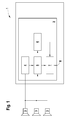
- FIG. 1 shows a schematic block diagram of a video surveillance system 1, which in addition to optional, another Components that are not shown, a segmentation device 2 includes.
- the video surveillance system 1 is connected to one or more surveillance cameras 3 which are directed to a surveillance area in which moving objects can be present.
- the video surveillance system 1 is used, for example, for street surveillance and generally serves for the detection, detection and / or tracking of moving objects.
- the moving objects are designed, for example, as persons or vehicles.
- a search module 4 relevant pixels in one of the video images, which belong to a moving object, are determined in a first step. For example, for this purpose, the current video image is subtracted from a scene reference image which shows the static or quasi-static objects or areas in the surveillance area, and subsequently the remaining pixels are interpreted as relevant pixels over a predefinable limit value.
- the relevant pixels correspond to the image changes between the current video image and the scene reference image. Alternatively, other methods for determining the relevant pixels can be used.
- a real distance in the monitoring area is estimated for at least one of the relevant pixels, which is referred to below as an object pixel of an object.
- the distance may, for example, be related to the position of the video camera receiving surveillance camera 3 or to another reference position.
- the segmentation strategy and the preprocessed image data with the relevant pixels are passed to a segmentation module 7, which, using the segmentation strategy and based on the object pixel, segments an associated object from the relevant pixels.
- the segmented object is output via an output 8 for further processing.
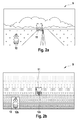
- FIGS. 2 a to d illustrate again the just described steps of a segmentation method, which forms an embodiment of the invention.
- FIG. 2a is a highly schematic representation of an image 9 of a real in this case monitoring area shown in the form of a road in which there are as moving objects, a child 10 and a truck 11.
- the image 9 is the FIG. 2a first compared with a scene reference image showing the surveillance area as a static background.
- the similarities of the image 9 and the scene reference image are eliminated as static components in the image 9, whereby the road, the horizon, etc. are filtered out.
- the FIG. 2b shows the result of this preprocessing, leaving only the image areas of the child 10 and the truck 11 after elimination of the static areas.
- the actual distance in the monitoring area is subsequently estimated for one of the relevant pixels from the regions of the moving objects, in this example the child 10 and the truck 11, as object pixels.
- bases 12a, b of the moving objects are used as object pixels.
- the foot points 12 a, b for example, by so-called "bounding boxes" - ie circumscribing rectangles - are found by accumulations of relevant pixels.
- the foot points 12a, b can also be found by searching the first lowermost lines of the preprocessed image 9.
- the distance of the object pixels can also be estimated via a calibration of the surveillance cameras 3 or other methods.
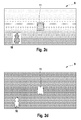
- the Figure 2c illustrates how starting from foot points 12 a, b further relevant pixels of the respective object 10, 11 are combined to form a common pixel cloud. Assuming that all pixels of the object 10 or 11 have the same distance in the surveillance area as the corresponding object pixel, all pixels of the common pixel cloud will be assigned the same distance. In other words, the distance information is transported starting from the foot 12 a, b on the object 10, 11 along.
- FIG. 2d schematically illustrates how the pixel clouds are segmented by the segmentation module 7 to objects or object masks, based on the distance information, an optimal or optimized segmentation strategy is calculated by the strategy model 6 and passed.
Landscapes
- Engineering & Computer Science (AREA)
- Computer Vision & Pattern Recognition (AREA)
- Physics & Mathematics (AREA)
- General Physics & Mathematics (AREA)
- Theoretical Computer Science (AREA)
- Multimedia (AREA)
- Image Analysis (AREA)
- Closed-Circuit Television Systems (AREA)
Applications Claiming Priority (1)
| Application Number | Priority Date | Filing Date | Title |
|---|---|---|---|
| DE102009000810A DE102009000810A1 (de) | 2009-02-12 | 2009-02-12 | Vorrichtung zur Segmentierung eines Objektes in einem Bild, Videoüberwachungssystem, Verfahren und Computerprogramm |
Publications (3)
| Publication Number | Publication Date |
|---|---|
| EP2219155A2 true EP2219155A2 (fr) | 2010-08-18 |
| EP2219155A3 EP2219155A3 (fr) | 2011-11-02 |
| EP2219155B1 EP2219155B1 (fr) | 2013-04-24 |
Family
ID=41606676
Family Applications (1)
| Application Number | Title | Priority Date | Filing Date |
|---|---|---|---|
| EP09179171.5A Active EP2219155B1 (fr) | 2009-02-12 | 2009-12-15 | Appareil, procédé et programme d'ordinateur pour segmentation d'un objet dans une image, et système de vidéosurveillance |
Country Status (3)
| Country | Link |
|---|---|
| US (1) | US20100202688A1 (fr) |
| EP (1) | EP2219155B1 (fr) |
| DE (1) | DE102009000810A1 (fr) |
Families Citing this family (3)
| Publication number | Priority date | Publication date | Assignee | Title |
|---|---|---|---|---|
| US8498480B2 (en) * | 2009-02-25 | 2013-07-30 | The United States Of America, As Represented By The Secretary Of The Navy | Computationally efficient method for image segmentation with intensity and texture discrimination |
| US10473461B2 (en) * | 2013-04-01 | 2019-11-12 | Panasonic Intellectual Property Management Co., Ltd. | Motion-sensor device having multiple light sources |
| US20160225160A1 (en) * | 2013-09-26 | 2016-08-04 | Mitsubishi Electric Corporation | Monitoring camera, monitoring system, and motion detection method |
Family Cites Families (6)
| Publication number | Priority date | Publication date | Assignee | Title |
|---|---|---|---|---|
| WO2000034919A1 (fr) * | 1998-12-04 | 2000-06-15 | Interval Research Corporation | Estimation et segmentation d'arriere-plan fondees sur la portee et la couleur |
| DE19932662A1 (de) * | 1999-07-15 | 2001-01-18 | Bosch Gmbh Robert | Verfahren zur Erkennung von Szenenänderungen und Überwachungseinrichtung hierzu |
| JP2003018604A (ja) * | 2001-07-04 | 2003-01-17 | Matsushita Electric Ind Co Ltd | 画像信号符号化方法、画像信号符号化装置および記録媒体 |
| DE50308363D1 (de) * | 2003-12-16 | 2007-11-22 | Siemens Ag | Verfahren und Gerät zur Identifikation eines Objektes in einem Kamerabild |
| DE102004043694B4 (de) * | 2004-09-09 | 2006-09-28 | Siemens Ag | Verfahren zur Segmentierung anatomischer Strukturen aus 3D-Bilddaten unter Nutzung topologischer Information |
| IES20060559A2 (en) * | 2006-02-14 | 2006-11-01 | Fotonation Vision Ltd | Automatic detection and correction of non-red flash eye defects |
-
2009
- 2009-02-12 DE DE102009000810A patent/DE102009000810A1/de not_active Withdrawn
- 2009-12-15 EP EP09179171.5A patent/EP2219155B1/fr active Active
-
2010
- 2010-01-27 US US12/694,824 patent/US20100202688A1/en not_active Abandoned
Non-Patent Citations (1)
| Title |
|---|
| None |
Also Published As
| Publication number | Publication date |
|---|---|
| EP2219155A3 (fr) | 2011-11-02 |
| DE102009000810A1 (de) | 2010-08-19 |
| EP2219155B1 (fr) | 2013-04-24 |
| US20100202688A1 (en) | 2010-08-12 |
Similar Documents
| Publication | Publication Date | Title |
|---|---|---|
| DE69322306T2 (de) | Gegenstandserkennungssystem mittels Bildverarbeitung | |
| DE102017111203B4 (de) | Videoverarbeitungsvorrichtung, videoverarbeitungsverfahren und programm | |
| DE102014206704B4 (de) | Aktualisierung der kalibrierung einer verkehrskamera unter verwendung einer szenenanalyse | |
| DE102014222226A1 (de) | Verfahren zur objektgrössenkalibrierung zur unterstützung der fahrzeugerkennung für eine videobasierte technologie zum parken auf der strasse | |
| DE102007001649A1 (de) | Verfahren, Vorrichtung und Computerprogramm zur Selbstkalibrierung einer Überwachungskamera | |
| EP2787485B1 (fr) | Procédé et dispositif de détection automatique d'erreurs dans des corps flexibles | |
| DE112009000480T5 (de) | Dynamische Objektklassifikation | |
| WO2018177484A1 (fr) | Procédé et système de prédiction de signaux de capteur d'un véhicule | |
| DE102011111440A1 (de) | Verfahren zur Umgebungsrepräsentation | |
| EP2034461A2 (fr) | Procédé de détection et/ou de suivi d'objets mobiles dans une scène de surveillance présentant des perturbateurs, dispositif et programme informatique | |
| DE10151983A1 (de) | Verfahren zur Dokumentation einer Unfallsituation | |
| DE102018204451A1 (de) | Verfahren und Vorrichtung zur Autokalibrierung eines Fahrzeugkamerasystems | |
| DE102008036219A1 (de) | Verfahren zur Erkennung von Objekten im Umfeld eines Fahrzeugs | |
| DE102017123842A1 (de) | Fahrspurerfassungsverfahren | |
| EP2219155B1 (fr) | Appareil, procédé et programme d'ordinateur pour segmentation d'un objet dans une image, et système de vidéosurveillance | |
| EP3614299A1 (fr) | Procédé et dispositif de détection des objets dans des installations | |
| EP3704631A2 (fr) | Procédé de calcul d'un éloignement entre un véhicule automobile et un objet | |
| DE102015211871A1 (de) | Objekterkennungsvorrichtung | |
| DE102008050456B4 (de) | Verfahren und Vorrichtung zur Fahrspurerkennung | |
| WO2023083620A1 (fr) | Test de système de capteurs d'environnement et/ou de perception de l'environnement d'un véhicule | |
| DE102016120066A1 (de) | Computer-implementiertes Verfahren zum Kontrollieren bzw. Testen eines Objekterkennungssystems | |
| DE102016212716A1 (de) | Steuervorrichtung und verfahren | |
| DE102018208481A1 (de) | Abschätzen eines Verlaufs eines Schienenpfads | |
| DE102013201682A1 (de) | Auswählen von sichtbaren Gebieten in Nachtbildern zum Durchführen einer Detektion eines freien Pfads | |
| DE102020205552A1 (de) | Dynamische Routenplanung einer drohnenbasierten Überprüfung von Streckeneinrichtungen einer Strecke |
Legal Events
| Date | Code | Title | Description |
|---|---|---|---|
| PUAI | Public reference made under article 153(3) epc to a published international application that has entered the european phase |
Free format text: ORIGINAL CODE: 0009012 |
|
| AK | Designated contracting states |
Kind code of ref document: A2 Designated state(s): AT BE BG CH CY CZ DE DK EE ES FI FR GB GR HR HU IE IS IT LI LT LU LV MC MK MT NL NO PL PT RO SE SI SK SM TR |
|
| AX | Request for extension of the european patent |
Extension state: AL BA RS |
|
| PUAL | Search report despatched |
Free format text: ORIGINAL CODE: 0009013 |
|
| AK | Designated contracting states |
Kind code of ref document: A3 Designated state(s): AT BE BG CH CY CZ DE DK EE ES FI FR GB GR HR HU IE IS IT LI LT LU LV MC MK MT NL NO PL PT RO SE SI SK SM TR |
|
| AX | Request for extension of the european patent |
Extension state: AL BA RS |
|
| RIC1 | Information provided on ipc code assigned before grant |
Ipc: G06T 7/00 20060101AFI20110926BHEP Ipc: G06T 7/20 20060101ALI20110926BHEP |
|
| 17P | Request for examination filed |
Effective date: 20120502 |
|
| GRAP | Despatch of communication of intention to grant a patent |
Free format text: ORIGINAL CODE: EPIDOSNIGR1 |
|
| GRAS | Grant fee paid |
Free format text: ORIGINAL CODE: EPIDOSNIGR3 |
|
| GRAA | (expected) grant |
Free format text: ORIGINAL CODE: 0009210 |
|
| AK | Designated contracting states |
Kind code of ref document: B1 Designated state(s): AT BE BG CH CY CZ DE DK EE ES FI FR GB GR HR HU IE IS IT LI LT LU LV MC MK MT NL NO PL PT RO SE SI SK SM TR |
|
| REG | Reference to a national code |
Ref country code: GB Ref legal event code: FG4D Free format text: NOT ENGLISH |
|
| REG | Reference to a national code |
Ref country code: CH Ref legal event code: EP |
|
| REG | Reference to a national code |
Ref country code: AT Ref legal event code: REF Ref document number: 609007 Country of ref document: AT Kind code of ref document: T Effective date: 20130515 |
|
| REG | Reference to a national code |
Ref country code: IE Ref legal event code: FG4D Free format text: LANGUAGE OF EP DOCUMENT: GERMAN |
|
| REG | Reference to a national code |
Ref country code: DE Ref legal event code: R096 Ref document number: 502009006931 Country of ref document: DE Effective date: 20130627 |
|
| REG | Reference to a national code |
Ref country code: LT Ref legal event code: MG4D |
|
| REG | Reference to a national code |
Ref country code: NL Ref legal event code: VDEP Effective date: 20130424 |
|
| PG25 | Lapsed in a contracting state [announced via postgrant information from national office to epo] |
Ref country code: SE Free format text: LAPSE BECAUSE OF FAILURE TO SUBMIT A TRANSLATION OF THE DESCRIPTION OR TO PAY THE FEE WITHIN THE PRESCRIBED TIME-LIMIT Effective date: 20130424 Ref country code: ES Free format text: LAPSE BECAUSE OF FAILURE TO SUBMIT A TRANSLATION OF THE DESCRIPTION OR TO PAY THE FEE WITHIN THE PRESCRIBED TIME-LIMIT Effective date: 20130804 Ref country code: SI Free format text: LAPSE BECAUSE OF FAILURE TO SUBMIT A TRANSLATION OF THE DESCRIPTION OR TO PAY THE FEE WITHIN THE PRESCRIBED TIME-LIMIT Effective date: 20130424 Ref country code: FI Free format text: LAPSE BECAUSE OF FAILURE TO SUBMIT A TRANSLATION OF THE DESCRIPTION OR TO PAY THE FEE WITHIN THE PRESCRIBED TIME-LIMIT Effective date: 20130424 Ref country code: LT Free format text: LAPSE BECAUSE OF FAILURE TO SUBMIT A TRANSLATION OF THE DESCRIPTION OR TO PAY THE FEE WITHIN THE PRESCRIBED TIME-LIMIT Effective date: 20130424 Ref country code: PT Free format text: LAPSE BECAUSE OF FAILURE TO SUBMIT A TRANSLATION OF THE DESCRIPTION OR TO PAY THE FEE WITHIN THE PRESCRIBED TIME-LIMIT Effective date: 20130826 Ref country code: NO Free format text: LAPSE BECAUSE OF FAILURE TO SUBMIT A TRANSLATION OF THE DESCRIPTION OR TO PAY THE FEE WITHIN THE PRESCRIBED TIME-LIMIT Effective date: 20130724 Ref country code: GR Free format text: LAPSE BECAUSE OF FAILURE TO SUBMIT A TRANSLATION OF THE DESCRIPTION OR TO PAY THE FEE WITHIN THE PRESCRIBED TIME-LIMIT Effective date: 20130725 Ref country code: IS Free format text: LAPSE BECAUSE OF FAILURE TO SUBMIT A TRANSLATION OF THE DESCRIPTION OR TO PAY THE FEE WITHIN THE PRESCRIBED TIME-LIMIT Effective date: 20130824 |
|
| PG25 | Lapsed in a contracting state [announced via postgrant information from national office to epo] |
Ref country code: BG Free format text: LAPSE BECAUSE OF FAILURE TO SUBMIT A TRANSLATION OF THE DESCRIPTION OR TO PAY THE FEE WITHIN THE PRESCRIBED TIME-LIMIT Effective date: 20130724 Ref country code: CY Free format text: LAPSE BECAUSE OF FAILURE TO SUBMIT A TRANSLATION OF THE DESCRIPTION OR TO PAY THE FEE WITHIN THE PRESCRIBED TIME-LIMIT Effective date: 20130424 Ref country code: LV Free format text: LAPSE BECAUSE OF FAILURE TO SUBMIT A TRANSLATION OF THE DESCRIPTION OR TO PAY THE FEE WITHIN THE PRESCRIBED TIME-LIMIT Effective date: 20130424 Ref country code: HR Free format text: LAPSE BECAUSE OF FAILURE TO SUBMIT A TRANSLATION OF THE DESCRIPTION OR TO PAY THE FEE WITHIN THE PRESCRIBED TIME-LIMIT Effective date: 20130424 Ref country code: PL Free format text: LAPSE BECAUSE OF FAILURE TO SUBMIT A TRANSLATION OF THE DESCRIPTION OR TO PAY THE FEE WITHIN THE PRESCRIBED TIME-LIMIT Effective date: 20130424 |
|
| PG25 | Lapsed in a contracting state [announced via postgrant information from national office to epo] |
Ref country code: EE Free format text: LAPSE BECAUSE OF FAILURE TO SUBMIT A TRANSLATION OF THE DESCRIPTION OR TO PAY THE FEE WITHIN THE PRESCRIBED TIME-LIMIT Effective date: 20130424 Ref country code: SK Free format text: LAPSE BECAUSE OF FAILURE TO SUBMIT A TRANSLATION OF THE DESCRIPTION OR TO PAY THE FEE WITHIN THE PRESCRIBED TIME-LIMIT Effective date: 20130424 Ref country code: CZ Free format text: LAPSE BECAUSE OF FAILURE TO SUBMIT A TRANSLATION OF THE DESCRIPTION OR TO PAY THE FEE WITHIN THE PRESCRIBED TIME-LIMIT Effective date: 20130424 Ref country code: DK Free format text: LAPSE BECAUSE OF FAILURE TO SUBMIT A TRANSLATION OF THE DESCRIPTION OR TO PAY THE FEE WITHIN THE PRESCRIBED TIME-LIMIT Effective date: 20130424 |
|
| PG25 | Lapsed in a contracting state [announced via postgrant information from national office to epo] |
Ref country code: NL Free format text: LAPSE BECAUSE OF FAILURE TO SUBMIT A TRANSLATION OF THE DESCRIPTION OR TO PAY THE FEE WITHIN THE PRESCRIBED TIME-LIMIT Effective date: 20130424 Ref country code: IT Free format text: LAPSE BECAUSE OF FAILURE TO SUBMIT A TRANSLATION OF THE DESCRIPTION OR TO PAY THE FEE WITHIN THE PRESCRIBED TIME-LIMIT Effective date: 20130424 Ref country code: RO Free format text: LAPSE BECAUSE OF FAILURE TO SUBMIT A TRANSLATION OF THE DESCRIPTION OR TO PAY THE FEE WITHIN THE PRESCRIBED TIME-LIMIT Effective date: 20130424 |
|
| PLBE | No opposition filed within time limit |
Free format text: ORIGINAL CODE: 0009261 |
|
| STAA | Information on the status of an ep patent application or granted ep patent |
Free format text: STATUS: NO OPPOSITION FILED WITHIN TIME LIMIT |
|
| 26N | No opposition filed |
Effective date: 20140127 |
|
| REG | Reference to a national code |
Ref country code: DE Ref legal event code: R097 Ref document number: 502009006931 Country of ref document: DE Effective date: 20140127 |
|
| BERE | Be: lapsed |
Owner name: ROBERT BOSCH G.M.B.H. Effective date: 20131231 |
|
| REG | Reference to a national code |
Ref country code: CH Ref legal event code: PL |
|
| PG25 | Lapsed in a contracting state [announced via postgrant information from national office to epo] |
Ref country code: LU Free format text: LAPSE BECAUSE OF FAILURE TO SUBMIT A TRANSLATION OF THE DESCRIPTION OR TO PAY THE FEE WITHIN THE PRESCRIBED TIME-LIMIT Effective date: 20131215 Ref country code: MC Free format text: LAPSE BECAUSE OF FAILURE TO SUBMIT A TRANSLATION OF THE DESCRIPTION OR TO PAY THE FEE WITHIN THE PRESCRIBED TIME-LIMIT Effective date: 20130424 |
|
| REG | Reference to a national code |
Ref country code: IE Ref legal event code: MM4A |
|
| PG25 | Lapsed in a contracting state [announced via postgrant information from national office to epo] |
Ref country code: LI Free format text: LAPSE BECAUSE OF NON-PAYMENT OF DUE FEES Effective date: 20131231 Ref country code: IE Free format text: LAPSE BECAUSE OF NON-PAYMENT OF DUE FEES Effective date: 20131215 Ref country code: BE Free format text: LAPSE BECAUSE OF NON-PAYMENT OF DUE FEES Effective date: 20131231 Ref country code: CH Free format text: LAPSE BECAUSE OF NON-PAYMENT OF DUE FEES Effective date: 20131231 |
|
| PG25 | Lapsed in a contracting state [announced via postgrant information from national office to epo] |
Ref country code: SM Free format text: LAPSE BECAUSE OF FAILURE TO SUBMIT A TRANSLATION OF THE DESCRIPTION OR TO PAY THE FEE WITHIN THE PRESCRIBED TIME-LIMIT Effective date: 20130424 |
|
| PG25 | Lapsed in a contracting state [announced via postgrant information from national office to epo] |
Ref country code: TR Free format text: LAPSE BECAUSE OF FAILURE TO SUBMIT A TRANSLATION OF THE DESCRIPTION OR TO PAY THE FEE WITHIN THE PRESCRIBED TIME-LIMIT Effective date: 20130424 |
|
| PG25 | Lapsed in a contracting state [announced via postgrant information from national office to epo] |
Ref country code: MK Free format text: LAPSE BECAUSE OF FAILURE TO SUBMIT A TRANSLATION OF THE DESCRIPTION OR TO PAY THE FEE WITHIN THE PRESCRIBED TIME-LIMIT Effective date: 20130424 Ref country code: HU Free format text: LAPSE BECAUSE OF FAILURE TO SUBMIT A TRANSLATION OF THE DESCRIPTION OR TO PAY THE FEE WITHIN THE PRESCRIBED TIME-LIMIT; INVALID AB INITIO Effective date: 20091215 |
|
| PG25 | Lapsed in a contracting state [announced via postgrant information from national office to epo] |
Ref country code: MT Free format text: LAPSE BECAUSE OF FAILURE TO SUBMIT A TRANSLATION OF THE DESCRIPTION OR TO PAY THE FEE WITHIN THE PRESCRIBED TIME-LIMIT Effective date: 20130424 |
|
| REG | Reference to a national code |
Ref country code: FR Ref legal event code: PLFP Year of fee payment: 7 |
|
| REG | Reference to a national code |
Ref country code: AT Ref legal event code: MM01 Ref document number: 609007 Country of ref document: AT Kind code of ref document: T Effective date: 20141215 |
|
| PG25 | Lapsed in a contracting state [announced via postgrant information from national office to epo] |
Ref country code: AT Free format text: LAPSE BECAUSE OF NON-PAYMENT OF DUE FEES Effective date: 20141215 |
|
| REG | Reference to a national code |
Ref country code: FR Ref legal event code: PLFP Year of fee payment: 8 |
|
| REG | Reference to a national code |
Ref country code: FR Ref legal event code: PLFP Year of fee payment: 9 |
|
| PGFP | Annual fee paid to national office [announced via postgrant information from national office to epo] |
Ref country code: DE Payment date: 20251110 Year of fee payment: 17 |
|
| PGFP | Annual fee paid to national office [announced via postgrant information from national office to epo] |
Ref country code: GB Payment date: 20251218 Year of fee payment: 17 |
|
| PGFP | Annual fee paid to national office [announced via postgrant information from national office to epo] |
Ref country code: FR Payment date: 20251218 Year of fee payment: 17 |