EP2219329B1 - Schnellumleitungsverfahren und label switch router - Google Patents
Schnellumleitungsverfahren und label switch router Download PDFInfo
- Publication number
- EP2219329B1 EP2219329B1 EP08854134A EP08854134A EP2219329B1 EP 2219329 B1 EP2219329 B1 EP 2219329B1 EP 08854134 A EP08854134 A EP 08854134A EP 08854134 A EP08854134 A EP 08854134A EP 2219329 B1 EP2219329 B1 EP 2219329B1
- Authority
- EP
- European Patent Office
- Prior art keywords
- path
- tunnel
- message
- node
- path message
- Prior art date
- Legal status (The legal status is an assumption and is not a legal conclusion. Google has not performed a legal analysis and makes no representation as to the accuracy of the status listed.)
- Not-in-force
Links
- 238000000034 method Methods 0.000 title claims abstract description 67
- 238000011144 upstream manufacturing Methods 0.000 claims description 25
- 230000008439 repair process Effects 0.000 claims description 11
- 238000004891 communication Methods 0.000 abstract description 3
- 238000010586 diagram Methods 0.000 description 9
- 230000001681 protective effect Effects 0.000 description 6
- 230000005540 biological transmission Effects 0.000 description 4
- 230000001174 ascending effect Effects 0.000 description 3
- 238000001514 detection method Methods 0.000 description 2
- 230000007547 defect Effects 0.000 description 1
- 238000005516 engineering process Methods 0.000 description 1
- 238000011156 evaluation Methods 0.000 description 1
- 230000007717 exclusion Effects 0.000 description 1
- 238000011867 re-evaluation Methods 0.000 description 1
- 230000001960 triggered effect Effects 0.000 description 1
Images


Classifications
-
- H—ELECTRICITY
- H04—ELECTRIC COMMUNICATION TECHNIQUE
- H04L—TRANSMISSION OF DIGITAL INFORMATION, e.g. TELEGRAPHIC COMMUNICATION
- H04L45/00—Routing or path finding of packets in data switching networks
- H04L45/02—Topology update or discovery
-
- H—ELECTRICITY
- H04—ELECTRIC COMMUNICATION TECHNIQUE
- H04L—TRANSMISSION OF DIGITAL INFORMATION, e.g. TELEGRAPHIC COMMUNICATION
- H04L45/00—Routing or path finding of packets in data switching networks
- H04L45/22—Alternate routing
-
- H—ELECTRICITY
- H04—ELECTRIC COMMUNICATION TECHNIQUE
- H04L—TRANSMISSION OF DIGITAL INFORMATION, e.g. TELEGRAPHIC COMMUNICATION
- H04L45/00—Routing or path finding of packets in data switching networks
- H04L45/28—Routing or path finding of packets in data switching networks using route fault recovery
-
- H—ELECTRICITY
- H04—ELECTRIC COMMUNICATION TECHNIQUE
- H04L—TRANSMISSION OF DIGITAL INFORMATION, e.g. TELEGRAPHIC COMMUNICATION
- H04L45/00—Routing or path finding of packets in data switching networks
- H04L45/50—Routing or path finding of packets in data switching networks using label swapping, e.g. multi-protocol label switch [MPLS]
Definitions
- the present invention relates to the communication technology, and more specifically, to a method and label switching router for fast rerouting.
- Fast ReRoute is a mechanism for providing protection for link failure or node failure on the Label Switching Path (LSP) of Multi-Protocol Label Switch (MPLS) Traffic Engineering by means of providing local protection when failure occurs at a certain place on the label switching path. It allows attempting to establish a new end-to-end LSP at a head-end node to replace an old LSP. Before the new LSP is successfully established, the data may continue to pass through the old LSP.
- Fast ReRoute locally repairs LSPs protected by rerouting the LSPs to bypass tunnels which bypass failed links or failed nodes. The bypass tunnels which bypass failed links provide link protection. The bypass tunnels which bypass failed nodes provide node protection.
- US2006/126496A1 discloses a fast reroute technique that may be deployed at the edge of a network having first and second edge devices coupled to a neighboring routing domain.
- the first edge device detects a node or link failure that prevents it from communicating with the neighboring domain, the first edge device reroutes at least some data packets addressed to the neighboring domain to the second edge device.
- loops are avoided at the edge of the network and packets are rerouted to the neighboring routing domain faster and more efficiently than in prior implementations.
- CN1921456A discloses a label exchange path protective method and relative system, to make the RSVP node able to NNHOP protect the ascending LSP.
- each ascending RSVP node sets interface type mark in relative RRO Node of each interface, and each descending RSVP node receives ascending RRO Node list, based on said interface type mark to find the nearest second RRO Node relative to the outlet, and based on the protective mark of RRO Node to set NNHOP protection on LSP.
- the invention can set interface type mark that recognizes if the RRO Node is relative to the inlet interface in RRO Node, and the RSVP node by exclusive method finds the outlet interface that if the RRO Node is not IPv6 and not RSVP node mark, it is not relative to the inlet interface but the outlet interface.
- CN1816040A discloses a multi-protocol label exchange-network protection switching-over method.
- the method includes steps: building working label switching path (LSP) and protective LSP between inlet label switching route (LSR) and outlet LSR; building fast rerouting (FRR) LSP for a part to be protected in working LSP; through working LSP, inlet LSR sends working flow to outlet LSR, and inserts detection message; if inlet LSR connected to FRRLSP has tested that fault occurs at working LSP, then inlet node switches working flow to FRRLSP from working LSP; if outlet LSR could not receive detection message, then the outlet LSR through inversion route sends message of backward indication of defects to inlet LSR, thus, inlet LSR switches working flow to protective LSR.
- the invention guarantees protective switching speed of LSP, and increase quantity of protective LSP, saves network bandwidth. The method assures use of normal service, but does not cause overweight burden on CPU.
- CN1738286A discloses a method for realizing the re-route in IP network, whose core comprises: setting the port from the original network node to the next network node in the route which is from the original network node to preset target address as the protected port, setting the back-up port of protected port according to the protocol, then, the network node transmits the data message to preset target address according to the protected port and the back-up port.
- the invention utilizes the protocol to automatically set the back-up port of protected port, which improves the switching speed of protecting port and avoids the pack-lose phenomenon coursed by that the back-up port has accidence before the protected port has accidence.
- the invention can apply complex network topology; realize the chain circuit protection, node protection and the whole path protection. At last, the invention simplifies the process of re-route, reduces the cost of network device and improves the reliability of network.
- US2007/070909A1 discloses a network resilient to at least two points of failure comprises a plurality of nodes. A first path between a source node and a destination node is determined and a second path between a source node and a destination node is determined. The first and second paths are node-disjoint.
- KR20030001635A discloses a method for setting a traffic path for a protection switching in an MPLS (Multi-Protocol Label Switching) data communication network. The method is provided to reduce the use of a bandwidth by selecting a repair node among route LSRs (Label Switching Routers) which pass a primary LSP (Label Switched Path) and setting a backup path from an ingress node to the repair node and a backup path from the repair node to an egress node.
- route LSRs Label Switching Routers
- primary LSP Label Switched Path
- the existing traffic fast ReRoute technique is unable to handle double link failures, especially when a point of local repair (PLR) or a merge point (MP) is protected by a bypass tunnel (i.e., nested protection), the existing traffic fast ReRoute mechanism is unable to provide protection.
- the nested protection refers to that a PLR or an MP is protected by a bypass tunnel.
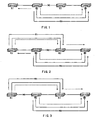
- the existing traffic fast ReRoute mechanism describes a simple protection method, as shown in FIG. 1 .
- R2 may immediately switch all the traffic on the protected tunnel to the bypass tunnel.
- R2 herein is referred to as a point of local repair (PLR).
- PLR point of local repair
- R2 may send a PathErr (path error) message whose error code is 25 (which indicates "notify") and error value is 3 (which indicates that "tunnel is protected locally") to a head-end node R1.
- the message may trigger R1 to attempt to establish an end-to-end LSP to replace the protected LSP.
- R2 When R2 is rerouting the traffic to the bypass tunnel, R2 may at the same time deliver a Path message via the bypass tunnel to the downstream to refresh the path states for the downstream.
- Node R4 which serves as a merge point for the bypass tunnel and the protected tunnel, is referred to as an MP.
- the preceding existing fast ReRoute mechanism is unable to handle a situation that the PLR itself is protected by a node, for instance, when PLR is protected by a bypass tunnel node, as illustrated in FIG. 2 .
- the primary tunnel goes through a path R1, R2, R3 and R4.
- R1 provides node protection for a next hop node R2 by way of a bypass tunnel T1 (path R1-R3).
- R2 provides node protection for a next hop node R3 by way of a bypass tunnel T2 (path R2-R4).
- R2 may send a Path message via T2 and R1 also receives a PathEnr message from R2. All the traffic and the messages on the control plane are sent by R2 via T2. Therefore, R3 may face a Path state timeout and will delete the local states.
- the exclusion of R3 from the data path implies that all the fast ReRoute (FRR) binding where R3 acts as the MP or the PLR are invalid. Therefore, R1 should update its local states and unbind T1 binding. (this action may be triggered by a reserve (Resv) message updating a record route object (RRO) of downstream path and by an FRR timer re-estimating the binding relation with T1). Then, R1 may attempt to search for another suitable bypass tunnel. During the time after R3 deletes its local states and R1 is able to find a substituted binding, the protected tunnel will remain in an unprotected state. Therefore, link protection may not be achieved effectively.
- FRR fast ReRoute
- R1-R2 may also fail immediately.
- R1 may send a Path message to R3 via T1.
- R3 may in turn send a Path refresh message to R4.
- R2 may also send a Path message to R4 via T2.
- R4 may recognize that it is an MP of the protected tunnel. According to the existing fast ReRoute technique, MP may decide to discard the Path message received from the protected tunnel. Therefore, when receiving the Path message of the protected tunnel from R3, R4 may discard this Path message. This situation is unacceptable because the data plane, in this situation, goes via R1, R3 and R4.
- MP is protected by a bypass tunnel node, as illustrated in FIG. 3 .
- R1 provides node protection for a next hop node R2 by way of a bypass tunnel T1 (path R1, R3).
- R2 provides node protection for a next hop node R3 by way of a bypass tunnel T2 (path R2, R4).
- R2 may maintain the binding relation with T2 until the state of R2 expires. If the link R2-R3 fails within this period, R2 may send a Path message via T2 to R4. R4 will receive this Path message. In this case, the path of the control plane and the path of the data plane are not consistent with each other, which is unacceptable.
- the conventional fast ReRoute mechanism is unable to address the problem that two links which connect to a same node fail simultaneously in the case of nested protection.
- a method and label switching router for fast rerouting are provided according to various embodiments of the present invention. Accordingly, the problem that adjacent double link failure in the case of nested protection can be solved.
- a method for fast ReRoute is provided according to an embodiment of the present invention.
- the method includes:
- a label switching router is provided according to the embodiments of the present invention.
- the label switching router includes:
- the present invention effectively handles the situation where adjacent double links fail in the case of nested protection. Therefore, the fast ReRoute technique is refined and the stability of the label switching router is enhanced.
- the method for the node to process the received PathErr message and the Path message of the protected tunnel includes the followings.
- First Embodiment process of handling an upstream node when the link fails.
- the upstream node changes the processing of the PathErr message and timely releases the binding with the bypass tunnel.
- R1 to R4 is a tunnel to be protected.
- the primary tunnel passes through R1, R2, R3, and R4.
- R1 provides node protection for a next hop node R2 via the bypass tunnel T1 (path R1, R3).
- R2 provides node protection for a next hop node R3 via the bypass tunnel T2 (path R2, R4).
- the process includes the following steps.
- R2 sends the upstream a PathErr message with error code which indicates “notify” and error value which indicates that "the tunnel is protected locally” to R1.
- R1 determines whether R1 itself is the PLR based on the node protection bypass tunnel. If R1 is the PLR based on the node protection bypass tunnel, the R1 may re-evaluate the binding relation between the protected tunnel and the bypass tunnel. If R1 is not the head-end node of the protected tunnel, the evaluation procedure is not performed and the message is directly forwarded to an upstream node until the PLR based on the node protection bypass tunnel is reached.
- R1 may check the validity of the egress of the bypass tunnel.
- R1 may delete the binding relation with the primary tunnel and update the sign bit in RRO (i.e., delete the sign bit indicating that R1 is PLR).
- R1 looks for another bypass tunnel which is suitable in a new environment. If R1 finds such bypass tunnel, binding relation may be formed immediately for providing protection for the link R1-R2. When the link R1-R2 fails, the traffic may pass along the new bypass tunnel.
- the upstream node may be able to find a correct binding relation immediately (as long as there is another suitable bypass tunnel) for providing protection for the upstream link of the failed link. Consequently, the problem that the upstream link of the failed link is not properly protected when waiting for the binding relation re-evaluation timer or during the RRO triggering period after receiving downstream update can be avoided.
- the above operation is a process of handling an upstream node on a failed link when an error occurs on a link. If an adjacent link of the failed link fails at the same time, the operation on the upstream node on the failed link may adopt the above described method.
- the operation on the downstream node on the failed link is as follows. After the downstream node receives the Path message of the protected tunnel passing through the bypass tunnel, the downstream node may check whether the protected tunnel passes through a head-end node of this bypass tunnel. If the protected tunnel passes through a head-end node of this bypass tunnel, the process proceeds to handle this Path message; if the protected tunnel does not pass through a head-end node of this bypass tunnel, the Path message is regarded as invalid and is discarded.
- R1 to R4 is a tunnel to be protected.
- the primary tunnel passes through R1, R2, R3, and R4.
- R1 provides node protection for a next hop node R2 via the bypass tunnel T1 (path R1, R3).
- R2 provides node protection for a next hop node R3 by way of a bypass tunnel T2 (path R2, R4).
- the operation is detailed as follows.
- R1 When R1 performs a fast rerouting, R1 sends a Path refresh message of the protected tunnel to R3 which then forwards to R4.
- RRO in the Path states of R4 becomes ⁇ R1,R3,R4 ⁇ .
- R2 may attempt to perform fast rerouting.
- R2 sends a Path message of the protected tunnel to R4 via the bypass tunnel T2.
- R4 checks whether the protected tunnel passes through the head-end node R2 of the bypass tunnel T2. Because R2 is not in the RRO of R4, R4 may no longer receive the Path message from R2 and may discard this Path message.
- the link R1-R2 fails before the link R2-R3 fails. If the link R2-R3 fails before the link R1-R2 fails, the process is described as follows.
- R1 to R4 is a tunnel to be protected.
- the primary tunnel passes through R1, R2, R3, and R4.
- R1 provides node protection for a next hop node R2 via the bypass tunnel T1 (path R1, R3).
- R2 provides node protection for a next hop node R3 via the bypass tunnel T2 (path R2, R4).
- R2 may send the Path message of the protected tunnel to R4 via T2.
- R4 may add an MP sign bit for the current node.
- R2 may send a PathErr message to the upstream node.
- R1 may attempt to release the binding with T1. If the link R1-R2 fails before R1 receives the PathErr message from R2, R1 may send a Path message of the protected tunnel via T1 because the binding relation between R1 and T1 is still valid.
- R3 may send a Path refresh message of the protected tunnel to R4. Because the link R3-R4 is not a bypass tunnel, R4 may receive the Path refresh message of the protected tunnel from R3. Then, R4 may determine whether the head-end node R2 of the bypass tunnel T2 currently in use is in the RRO carried in the Path message. Because the head-end node R2 is not in the RRO, the Path message from R2 is not accepted and the RRO in the local Path states is updated and the sign bit indicating that the current node is the MP may be deleted. From then on, all of the Path messages of the protected tunnel received from T2 are discarded.
- the above process changes the criteria in determining whether the downstream node MP receives the Path message of the protected tunnel sent via the bypass tunnel.
- this Path message is discarded.
- the control message and the traffic are guaranteed to go through the same path, thus avoiding the situation that the node processes incorrect control messages, which may affect the normal traffic forwarding.
- the method according to the first embodiment applies to the link nested protection.
- the operation principle is the same. Description will be made in connection with detailed embodiments.
- R2 is a head-end node of the link protected bypass tunnel T2. Also, R2 is protected by a node in the bypass tunnel T1.
- R2 may send a Path message to R3 via T2. Meanwhile, R2 may also send a PathErr message to R1 to inform to perform a fast rerouting.
- R1 may re-evaluate the binding relation between the protected tunnel and the bypass tunnel T1 and find out that R3 can still act as MP. Therefore, this binding relation will not be deleted.
- R1-R2 fails, R3 receives a Path message from T1.
- FIG. 7 Another instance as shown in FIG. 7 is provided. This instance differs with the instance illustrated in FIG. 6 only in its topology. The specific link protection process and the post-failure process are similar, which are omitted herein for brevity.
- a label switching router is provided according to a third embodiment of the present invention, as illustrated in FIG. 8 .
- the label switching router includes at least:
- the label switching router according to the present embodiment is an upstream node on a failed link.
- a label switching router is provided according to a fourth embodiment of the present invention, as illustrated in FiG. 9 .
- the label switching router includes:
- the label switching router according to the present embodiment is a downstream node of the failed link.
- a node may act as not only an upstream node on a failed link but also a downstream node of another failed link, the above modules may be provided together on one label switching router.
- the embodiment of the present invention effectively solves adjacent double link failure in the case of the nested protection, the problem that failures concur (or within a very short time interval) on two links adjacent to PLR or MP when a PLR or an MP is protected can be solved.
- the fast ReRoute technique is refined and the stability of the label switching router is enhanced.
Landscapes
- Engineering & Computer Science (AREA)
- Computer Networks & Wireless Communication (AREA)
- Signal Processing (AREA)
- Data Exchanges In Wide-Area Networks (AREA)
- Small-Scale Networks (AREA)
- Radio Relay Systems (AREA)
Claims (11)
- Verfahren zum schnellen Umleiten, umfassend:Bestimmen, nachdem ein Downstream-Zusammenführungspunkt (R4) eine Pfadnachricht empfängt, ob die Pfadnachricht über einen Umlenktunnel empfangen wird;falls die Pfadnachricht über einen Umlenktunnel empfangen wird, umfasst das Verfahren weiterhin:Bestimmen, ob ein geschützter Tunnel durch einen Head-End-Knoten (R2) des Umlenktunnels (T2) verläuft, wo der aktuelle Knoten der Zusammenführungspunkt ist;Verwerfen der Pfadnachricht, falls der geschützte Tunnel nicht durch den Head-End-Knoten verläuft;Akzeptieren der Pfadnachricht, falls der geschützte Tunnel durch den Head-End-Knoten verläuft;falls die Pfadnachricht über einen normalen Pfad, der kein Umlenktunnel ist, empfangen wird, umfasst das Verfahren weiterhin:Bestimmen, ob ein Head-End-Knoten eines Umlenktunnels, der aktuell verwendet wird, in einem Record-Route-Objekt der vom normalen Pfad empfangenen Pfadnachricht ist;Verwerfen der Pfadnachricht, falls der Head-End-Knoten nicht im Record-Route-Objekt ist;Aktualisieren des Record-Route-Objekts durch den Downstream-Zusammenführungspunkt auf der Grundlage der Situation des Empfangens der Pfadnachricht.
- Verfahren nach Anspruch 1, dadurch gekennzeichnet, dass es weiterhin umfasst:Senden einer Pfadfehlernachricht durch einen Punkt lokaler Reparatur eines Links an einen Upstream-Knoten, wenn auf dem Link ein Fehler im Fall eines schnellen ReRoute-Schutzes auftritt.
- Verfahren nach Anspruch 2, dadurch gekennzeichnet, dass es weiterhin umfasst:Bestimmen, ob ein Ausgang des Umlenktunnels auf einem Pfad ist, wo ein Datenstrom passiert, nachdem ein Upstream-Punkt lokaler Reparatur die Pfadfehlernachricht empfängt; Freigeben der Bindung mit dem Umlenktunnel, falls sich der Ausgang nicht auf dem Pfad befindet, wo der Datenstrom passiert; Beibehalten der Bindung, falls sich der Ausgang auf dem Pfad befindet, wo der Datenstrom passiert.
- Verfahren nach Anspruch 3, dadurch gekennzeichnet, dass es weiterhin umfasst: Fortsetzen der aufwärts gerichteten Weiterleitung der Pfadfehlernachricht, bis die Pfadfehlernachricht den Head-End-Knoten des geschützten Tunnels erreicht, falls der Upstream-Knoten nicht der Head-End-Knoten des aktuell geschützten Tunnels ist.
- Verfahren nach Anspruch 3, dadurch gekennzeichnet, dass es weiterhin umfasst:Suchen nach einem anderen, geeigneten Umlenktunnel, nachdem der Upstream-Punkt lokaler Reparatur die Bindung mit dem Umlenktunnel freigibt.
- Verfahren nach einem der Ansprüche 1 bis 5, dadurch gekennzeichnet, dass das Bestimmen, ob der geschützte Tunnel durch einen Head-End-Knoten des Umlenktunnels verläuft, wo der aktuelle Knoten der Zusammenführungspunkt ist, weiterhin umfasst:Prüfen, ob der Head-End-Knoten des Umlenktunnels im Record-Route-Objekt der lokalen Pfadzustände des Downstream-Zusammenführungspunkts ist.
- Verfahren nach Anspruch 1, dadurch gekennzeichnet, dass, nachdem der Downstream-Zusammenführungspunkt die Pfadnachricht, die vom normalen Pfad, der kein Umlenktunnel ist, empfangen wird, empfängt und bestätigt, die Pfadnachricht zu akzeptieren, das Verfahren weiterhin umfasst:Löschen eines Vorzeichenbits, das anzeigt, dass der aktuelle Knoten ein Zusammenfiihrungspunkt ist, durch den Downstream-Zusammenführungspunkt.
- Verfahren nach Anspruch 1, dadurch gekennzeichnet, dass es weiterhin ein Verwerfen der vom normalen Pfad empfangenen Pfadnachricht umfasst, falls der Head-End-Knoten im Record-Route-Objekt ist.
- Verfahren nach Anspruch 1, dadurch gekennzeichnet, dass das Aktualisieren des Record-Route-Objekts durch den Downstream-Zusammenführungspunkt auf der Grundlage der Situation des Empfangens der Pfadnachricht umfasst:Aktualisieren des Record-Route-Objekts durch den Downstream-Zusammenführungspunkt, wenn die Pfadnachricht über den normalen Pfad empfangen wird und die Pfadnachricht akzeptiert wird.
- Label Switching Router, umfassend:ein Pfadnachrichtbestimmungsmodul, der konfiguriert ist, zu bestimmen, ob nach dem Empfang einer Pfadnachricht die Pfadnachricht von einem Umlenktunnel empfangen wird;ein erstes Bestimmungsmodul, der konfiguriert ist, ein Bestimmungsergebnis vom Pfadnachrichtbestimmungsmodul zu empfangen, wobei, falls das Bestimmungsergebnis anzeigt, dass die Pfadnachricht vom Umlenktunnel empfangen wird, das erste Bestimmungsmodul bestimmt, ob der geschützte Tunnel durch einen Head-End-Knoten (R2) des Umlenktunnels (T2) verläuft;ein zweites Bestimmungsmodul, der konfiguriert ist, ein Bestimmungsergebnis vom Pfadnachrichtbestimmungsmodul zu empfangen, wobei, falls das Bestimmungsergebnis anzeigt, dass die Pfadnachricht von einem normalen Pfad, der kein Umlenktunnel ist, empfangen wird, das zweite Bestimmungsmodul bestimmt, ob ein Head-End-Knoten (R2) des Umlenktunnels (T2), der aktuell verwendet wird, in einem Record-Route-Objekt der über den normalen Pfad gesendeten Pfadnachricht ist;ein Pfadnachrichtverarbeitungsmodul, der konfiguriert ist, die über den Umlenktunnel gesendeten Pfadnachricht zu verwerfen, wenn auf der Grundlage von Bestimmungsergebnissen vom ersten Bestimmungsmodul und dem zweiten Bestimmungsmodul bestimmt wird, dass der geschützte Tunnel nicht durch den Head-End-Knoten des Umlenktunnels verläuft, und konfiguriert ist, die von einem normalen Pfad empfangenen Pfadnachricht zu verwerfen, wenn der Head-End-Knoten des Umlenktunnels, der aktuell verwendet wird, nicht im Record-Route-Objekt der über den normalen Pfad gesendeten Pfadnachricht ist.
- Label Switching Router nach Anspruch 10, dadurch gekennzeichnet, dass er weiterhin umfasst:ein Bestimmungsmodul, der konfiguriert ist, zu bestimmen, ob nach dem Empfang einer Pfadfehlernachricht der aktuelle Knoten ein Punkt lokaler Reparatur auf der Grundlage eines Knotenschutz-Umlenktunnels ist;ein Pfadfehlernachrichtverarbeitungsmodul, der konfiguriert ist, ein Bestimmungsergebnis vom Bestimmungsmodul zu empfangen, wobei, falls der aktuelle Knoten der Punkt lokaler Reparatur auf der Grundlage des Knotenschutz-Umlenktunnels ist, das Pfadfehlernachrichtverarbeitungsmodul die Gültigkeit des Umlenktunnels nach dem Empfang der Pfadfehlernachricht prüft;ein Bindungsfreigabemodul, der konfiguriert ist, ein Verarbeitungsergebnis vom Pfadfehlernachrichtverarbeitungsmodul zu empfangen und eine Bindung mit dem Umlenktunnel freizugeben, wenn bestimmt wird, dass der Ausgang des Umlenktunnels ungültig ist.
Applications Claiming Priority (2)
| Application Number | Priority Date | Filing Date | Title |
|---|---|---|---|
| CN2007101771336A CN101431466B (zh) | 2007-11-09 | 2007-11-09 | 快速重路由方法及标签交换路由器 |
| PCT/CN2008/072985 WO2009067906A1 (en) | 2007-11-09 | 2008-11-07 | A fast reroute method and a label switch router |
Publications (3)
| Publication Number | Publication Date |
|---|---|
| EP2219329A1 EP2219329A1 (de) | 2010-08-18 |
| EP2219329A4 EP2219329A4 (de) | 2011-05-04 |
| EP2219329B1 true EP2219329B1 (de) | 2012-03-14 |
Family
ID=40646641
Family Applications (1)
| Application Number | Title | Priority Date | Filing Date |
|---|---|---|---|
| EP08854134A Not-in-force EP2219329B1 (de) | 2007-11-09 | 2008-11-07 | Schnellumleitungsverfahren und label switch router |
Country Status (5)
| Country | Link |
|---|---|
| EP (1) | EP2219329B1 (de) |
| CN (1) | CN101431466B (de) |
| AT (1) | ATE549830T1 (de) |
| ES (1) | ES2383119T3 (de) |
| WO (1) | WO2009067906A1 (de) |
Families Citing this family (10)
| Publication number | Priority date | Publication date | Assignee | Title |
|---|---|---|---|---|
| CN102118301B (zh) * | 2009-12-31 | 2014-03-19 | 中兴通讯股份有限公司 | 隧道保护方法及装置 |
| CN102136898B (zh) * | 2010-01-21 | 2016-09-28 | 中兴通讯股份有限公司 | 保护组嵌套的实现方法、以太网保护切换的方法及系统 |
| CN101902396A (zh) * | 2010-06-18 | 2010-12-01 | 中兴通讯股份有限公司 | 一种多协议标签交换流量工程中隧道保护的方法和系统 |
| CN102136965B (zh) | 2010-12-24 | 2013-12-04 | 华为技术有限公司 | 一种隧道故障检测方法和流量工程节点 |
| CN102158397B (zh) * | 2011-02-17 | 2016-06-29 | 中兴通讯股份有限公司 | 一种重路由的方法和本地修复点节点 |
| CN103546317B (zh) * | 2013-10-15 | 2017-06-20 | 华为技术有限公司 | 一种路径载入方法及服务器 |
| CN104702501B (zh) * | 2013-12-05 | 2019-02-15 | 中兴通讯股份有限公司 | 一种提高te frr保护可靠性的方法及装置 |
| CN105991182B (zh) * | 2015-02-13 | 2020-06-02 | 中兴通讯股份有限公司 | 路径保护方法和系统 |
| CN106452853B (zh) * | 2016-09-27 | 2019-11-29 | 上海斐讯数据通信技术有限公司 | 无线路由器自主检测绑定服务器失败原因的方法及系统 |
| CN114073054A (zh) | 2019-05-23 | 2022-02-18 | 慧与发展有限责任合伙企业 | 促进采用基于逐流信用的流控制的数据驱动智能网络的系统和方法 |
Family Cites Families (8)
| Publication number | Priority date | Publication date | Assignee | Title |
|---|---|---|---|---|
| KR100392646B1 (ko) * | 2001-06-25 | 2003-07-25 | 에스케이 텔레콤주식회사 | 멀티-프로토콜 라벨 스위칭 방식이 적용된 데이터통신망에서의 프로텍션 스위칭을 위한 트래픽 경로 설정방법 |
| US6895441B1 (en) * | 2001-07-30 | 2005-05-17 | Atrica Ireland Ltd. | Path rerouting mechanism utilizing multiple link bandwidth allocations |
| US6778492B2 (en) * | 2002-01-17 | 2004-08-17 | Cisco Technology, Inc. | Load balancing for fast reroute backup tunnels |
| CN1738286B (zh) * | 2004-08-18 | 2011-06-22 | 华为技术有限公司 | 一种ip网络中重路由的实现方法 |
| US7551551B2 (en) * | 2004-12-10 | 2009-06-23 | Cisco Technology, Inc. | Fast reroute (FRR) protection at the edge of a RFC 2547 network |
| CN100525301C (zh) * | 2005-02-01 | 2009-08-05 | 华为技术有限公司 | 一种多协议标签交换网络保护切换方法 |
| GB0519648D0 (en) * | 2005-09-27 | 2005-11-02 | Roke Manor Research | Resilient path protocol |
| CN100546284C (zh) * | 2006-09-13 | 2009-09-30 | 华为技术有限公司 | 标签交换路径保护方法及其系统 |
-
2007
- 2007-11-09 CN CN2007101771336A patent/CN101431466B/zh not_active Expired - Fee Related
-
2008
- 2008-11-07 WO PCT/CN2008/072985 patent/WO2009067906A1/zh not_active Ceased
- 2008-11-07 ES ES08854134T patent/ES2383119T3/es active Active
- 2008-11-07 AT AT08854134T patent/ATE549830T1/de active
- 2008-11-07 EP EP08854134A patent/EP2219329B1/de not_active Not-in-force
Also Published As
| Publication number | Publication date |
|---|---|
| WO2009067906A1 (en) | 2009-06-04 |
| ATE549830T1 (de) | 2012-03-15 |
| ES2383119T3 (es) | 2012-06-18 |
| CN101431466A (zh) | 2009-05-13 |
| EP2219329A1 (de) | 2010-08-18 |
| CN101431466B (zh) | 2011-04-06 |
| EP2219329A4 (de) | 2011-05-04 |
Similar Documents
| Publication | Publication Date | Title |
|---|---|---|
| EP2224644B1 (de) | Schutzverfahren, -system und -vorrichtung in einem paketübertragungsnetzwerk | |
| EP2219329A1 (de) | Schnellumleitungsverfahren und label switch router | |
| EP2071768B1 (de) | Verfahren zum implementieren des multicast-schnellumroutens und eines knotens | |
| US6813242B1 (en) | Method of and apparatus for fast alternate-path rerouting of labeled data packets normally routed over a predetermined primary label switched path upon failure or congestion in the primary path | |
| JP4691372B2 (ja) | データ中継装置およびデータ中継方法 | |
| CN103368843B (zh) | 受保护标签交换路径快速重路由的oam标签交换路径 | |
| US7697417B2 (en) | Methods and devices for re-routing MPLS traffic | |
| US8144601B2 (en) | Fault detection method, communication system and label switching router | |
| CN101945049B (zh) | 多协议标签交换系统、节点设备及双向隧道的建立方法 | |
| US20020060985A1 (en) | Method for high speed rerouting in multi protocol label switching network | |
| US20020004843A1 (en) | System, device, and method for bypassing network changes in a routed communication network | |
| JP2012500539A (ja) | ラベルスイッチパスの入口および出口の保護 | |
| EP1845656A1 (de) | Verfahren zur implementierung eines master- und backup-übertragungsweges | |
| CN110417564B (zh) | 全网状的链路保护方法、装置、设备及存储介质 | |
| CN104380671A (zh) | 在分级、冗余、多播路由选择中增加失效覆盖 | |
| CN101616091B (zh) | 实现标签发布协议快速重路由的方法及标签交换路由器 | |
| JP4297636B2 (ja) | 伝送システム | |
| CN104468208A (zh) | 通信故障的检测恢复方法及装置 | |
| EP2658177B1 (de) | Verfahren zur erkennung von tunnelfehlern und verkehrsmanipulationsknoten | |
| CN102857316B (zh) | 一种实现源环网保护的方法及系统 | |
| CN100591051C (zh) | 多链路失效的处理方法及标签交换路由器 | |
| CN101374106A (zh) | 一种mpls lsp上转发数据包的方法、网络节点和系统 | |
| CN100546284C (zh) | 标签交换路径保护方法及其系统 | |
| CN101232453A (zh) | T-mpls网络中快速寻找路径的重路由方法 | |
| CN101902396A (zh) | 一种多协议标签交换流量工程中隧道保护的方法和系统 |
Legal Events
| Date | Code | Title | Description |
|---|---|---|---|
| PUAI | Public reference made under article 153(3) epc to a published international application that has entered the european phase |
Free format text: ORIGINAL CODE: 0009012 |
|
| 17P | Request for examination filed |
Effective date: 20100525 |
|
| AK | Designated contracting states |
Kind code of ref document: A1 Designated state(s): AT BE BG CH CY CZ DE DK EE ES FI FR GB GR HR HU IE IS IT LI LT LU LV MC MT NL NO PL PT RO SE SI SK TR |
|
| AX | Request for extension of the european patent |
Extension state: AL BA MK RS |
|
| DAX | Request for extension of the european patent (deleted) | ||
| A4 | Supplementary search report drawn up and despatched |
Effective date: 20110404 |
|
| GRAP | Despatch of communication of intention to grant a patent |
Free format text: ORIGINAL CODE: EPIDOSNIGR1 |
|
| GRAS | Grant fee paid |
Free format text: ORIGINAL CODE: EPIDOSNIGR3 |
|
| GRAA | (expected) grant |
Free format text: ORIGINAL CODE: 0009210 |
|
| AK | Designated contracting states |
Kind code of ref document: B1 Designated state(s): AT BE BG CH CY CZ DE DK EE ES FI FR GB GR HR HU IE IS IT LI LT LU LV MC MT NL NO PL PT RO SE SI SK TR |
|
| REG | Reference to a national code |
Ref country code: GB Ref legal event code: FG4D |
|
| REG | Reference to a national code |
Ref country code: CH Ref legal event code: EP Ref country code: AT Ref legal event code: REF Ref document number: 549830 Country of ref document: AT Kind code of ref document: T Effective date: 20120315 |
|
| REG | Reference to a national code |
Ref country code: IE Ref legal event code: FG4D |
|
| REG | Reference to a national code |
Ref country code: DE Ref legal event code: R096 Ref document number: 602008014182 Country of ref document: DE Effective date: 20120510 |
|
| REG | Reference to a national code |
Ref country code: ES Ref legal event code: FG2A Ref document number: 2383119 Country of ref document: ES Kind code of ref document: T3 Effective date: 20120618 |
|
| REG | Reference to a national code |
Ref country code: NL Ref legal event code: VDEP Effective date: 20120314 |
|
| PG25 | Lapsed in a contracting state [announced via postgrant information from national office to epo] |
Ref country code: LT Free format text: LAPSE BECAUSE OF FAILURE TO SUBMIT A TRANSLATION OF THE DESCRIPTION OR TO PAY THE FEE WITHIN THE PRESCRIBED TIME-LIMIT Effective date: 20120314 Ref country code: HR Free format text: LAPSE BECAUSE OF FAILURE TO SUBMIT A TRANSLATION OF THE DESCRIPTION OR TO PAY THE FEE WITHIN THE PRESCRIBED TIME-LIMIT Effective date: 20120314 Ref country code: NO Free format text: LAPSE BECAUSE OF FAILURE TO SUBMIT A TRANSLATION OF THE DESCRIPTION OR TO PAY THE FEE WITHIN THE PRESCRIBED TIME-LIMIT Effective date: 20120614 |
|
| LTIE | Lt: invalidation of european patent or patent extension |
Effective date: 20120314 |
|
| PG25 | Lapsed in a contracting state [announced via postgrant information from national office to epo] |
Ref country code: FI Free format text: LAPSE BECAUSE OF FAILURE TO SUBMIT A TRANSLATION OF THE DESCRIPTION OR TO PAY THE FEE WITHIN THE PRESCRIBED TIME-LIMIT Effective date: 20120314 Ref country code: GR Free format text: LAPSE BECAUSE OF FAILURE TO SUBMIT A TRANSLATION OF THE DESCRIPTION OR TO PAY THE FEE WITHIN THE PRESCRIBED TIME-LIMIT Effective date: 20120615 Ref country code: LV Free format text: LAPSE BECAUSE OF FAILURE TO SUBMIT A TRANSLATION OF THE DESCRIPTION OR TO PAY THE FEE WITHIN THE PRESCRIBED TIME-LIMIT Effective date: 20120314 |
|
| REG | Reference to a national code |
Ref country code: AT Ref legal event code: MK05 Ref document number: 549830 Country of ref document: AT Kind code of ref document: T Effective date: 20120314 |
|
| PG25 | Lapsed in a contracting state [announced via postgrant information from national office to epo] |
Ref country code: CY Free format text: LAPSE BECAUSE OF FAILURE TO SUBMIT A TRANSLATION OF THE DESCRIPTION OR TO PAY THE FEE WITHIN THE PRESCRIBED TIME-LIMIT Effective date: 20120314 |
|
| PG25 | Lapsed in a contracting state [announced via postgrant information from national office to epo] |
Ref country code: SI Free format text: LAPSE BECAUSE OF FAILURE TO SUBMIT A TRANSLATION OF THE DESCRIPTION OR TO PAY THE FEE WITHIN THE PRESCRIBED TIME-LIMIT Effective date: 20120314 Ref country code: RO Free format text: LAPSE BECAUSE OF FAILURE TO SUBMIT A TRANSLATION OF THE DESCRIPTION OR TO PAY THE FEE WITHIN THE PRESCRIBED TIME-LIMIT Effective date: 20120314 Ref country code: BE Free format text: LAPSE BECAUSE OF FAILURE TO SUBMIT A TRANSLATION OF THE DESCRIPTION OR TO PAY THE FEE WITHIN THE PRESCRIBED TIME-LIMIT Effective date: 20120314 Ref country code: IS Free format text: LAPSE BECAUSE OF FAILURE TO SUBMIT A TRANSLATION OF THE DESCRIPTION OR TO PAY THE FEE WITHIN THE PRESCRIBED TIME-LIMIT Effective date: 20120714 Ref country code: CZ Free format text: LAPSE BECAUSE OF FAILURE TO SUBMIT A TRANSLATION OF THE DESCRIPTION OR TO PAY THE FEE WITHIN THE PRESCRIBED TIME-LIMIT Effective date: 20120314 Ref country code: PL Free format text: LAPSE BECAUSE OF FAILURE TO SUBMIT A TRANSLATION OF THE DESCRIPTION OR TO PAY THE FEE WITHIN THE PRESCRIBED TIME-LIMIT Effective date: 20120314 Ref country code: EE Free format text: LAPSE BECAUSE OF FAILURE TO SUBMIT A TRANSLATION OF THE DESCRIPTION OR TO PAY THE FEE WITHIN THE PRESCRIBED TIME-LIMIT Effective date: 20120314 Ref country code: SE Free format text: LAPSE BECAUSE OF FAILURE TO SUBMIT A TRANSLATION OF THE DESCRIPTION OR TO PAY THE FEE WITHIN THE PRESCRIBED TIME-LIMIT Effective date: 20120314 |
|
| PG25 | Lapsed in a contracting state [announced via postgrant information from national office to epo] |
Ref country code: SK Free format text: LAPSE BECAUSE OF FAILURE TO SUBMIT A TRANSLATION OF THE DESCRIPTION OR TO PAY THE FEE WITHIN THE PRESCRIBED TIME-LIMIT Effective date: 20120314 Ref country code: PT Free format text: LAPSE BECAUSE OF FAILURE TO SUBMIT A TRANSLATION OF THE DESCRIPTION OR TO PAY THE FEE WITHIN THE PRESCRIBED TIME-LIMIT Effective date: 20120716 |
|
| PLBE | No opposition filed within time limit |
Free format text: ORIGINAL CODE: 0009261 |
|
| STAA | Information on the status of an ep patent application or granted ep patent |
Free format text: STATUS: NO OPPOSITION FILED WITHIN TIME LIMIT |
|
| PG25 | Lapsed in a contracting state [announced via postgrant information from national office to epo] |
Ref country code: NL Free format text: LAPSE BECAUSE OF FAILURE TO SUBMIT A TRANSLATION OF THE DESCRIPTION OR TO PAY THE FEE WITHIN THE PRESCRIBED TIME-LIMIT Effective date: 20120314 Ref country code: AT Free format text: LAPSE BECAUSE OF FAILURE TO SUBMIT A TRANSLATION OF THE DESCRIPTION OR TO PAY THE FEE WITHIN THE PRESCRIBED TIME-LIMIT Effective date: 20120314 Ref country code: DK Free format text: LAPSE BECAUSE OF FAILURE TO SUBMIT A TRANSLATION OF THE DESCRIPTION OR TO PAY THE FEE WITHIN THE PRESCRIBED TIME-LIMIT Effective date: 20120314 |
|
| 26N | No opposition filed |
Effective date: 20121217 |
|
| PG25 | Lapsed in a contracting state [announced via postgrant information from national office to epo] |
Ref country code: IT Free format text: LAPSE BECAUSE OF FAILURE TO SUBMIT A TRANSLATION OF THE DESCRIPTION OR TO PAY THE FEE WITHIN THE PRESCRIBED TIME-LIMIT Effective date: 20120314 |
|
| REG | Reference to a national code |
Ref country code: DE Ref legal event code: R097 Ref document number: 602008014182 Country of ref document: DE Effective date: 20121217 |
|
| REG | Reference to a national code |
Ref country code: CH Ref legal event code: PL |
|
| PG25 | Lapsed in a contracting state [announced via postgrant information from national office to epo] |
Ref country code: BG Free format text: LAPSE BECAUSE OF FAILURE TO SUBMIT A TRANSLATION OF THE DESCRIPTION OR TO PAY THE FEE WITHIN THE PRESCRIBED TIME-LIMIT Effective date: 20120614 Ref country code: CH Free format text: LAPSE BECAUSE OF NON-PAYMENT OF DUE FEES Effective date: 20121130 Ref country code: LI Free format text: LAPSE BECAUSE OF NON-PAYMENT OF DUE FEES Effective date: 20121130 |
|
| REG | Reference to a national code |
Ref country code: IE Ref legal event code: MM4A |
|
| PG25 | Lapsed in a contracting state [announced via postgrant information from national office to epo] |
Ref country code: IE Free format text: LAPSE BECAUSE OF NON-PAYMENT OF DUE FEES Effective date: 20121107 |
|
| PG25 | Lapsed in a contracting state [announced via postgrant information from national office to epo] |
Ref country code: MT Free format text: LAPSE BECAUSE OF FAILURE TO SUBMIT A TRANSLATION OF THE DESCRIPTION OR TO PAY THE FEE WITHIN THE PRESCRIBED TIME-LIMIT Effective date: 20120314 |
|
| PG25 | Lapsed in a contracting state [announced via postgrant information from national office to epo] |
Ref country code: MC Free format text: LAPSE BECAUSE OF NON-PAYMENT OF DUE FEES Effective date: 20121130 Ref country code: TR Free format text: LAPSE BECAUSE OF FAILURE TO SUBMIT A TRANSLATION OF THE DESCRIPTION OR TO PAY THE FEE WITHIN THE PRESCRIBED TIME-LIMIT Effective date: 20120314 |
|
| PG25 | Lapsed in a contracting state [announced via postgrant information from national office to epo] |
Ref country code: LU Free format text: LAPSE BECAUSE OF NON-PAYMENT OF DUE FEES Effective date: 20121107 |
|
| PG25 | Lapsed in a contracting state [announced via postgrant information from national office to epo] |
Ref country code: HU Free format text: LAPSE BECAUSE OF FAILURE TO SUBMIT A TRANSLATION OF THE DESCRIPTION OR TO PAY THE FEE WITHIN THE PRESCRIBED TIME-LIMIT Effective date: 20081107 |
|
| REG | Reference to a national code |
Ref country code: FR Ref legal event code: PLFP Year of fee payment: 8 |
|
| REG | Reference to a national code |
Ref country code: FR Ref legal event code: PLFP Year of fee payment: 9 |
|
| REG | Reference to a national code |
Ref country code: FR Ref legal event code: PLFP Year of fee payment: 10 |
|
| REG | Reference to a national code |
Ref country code: FR Ref legal event code: PLFP Year of fee payment: 11 |
|
| REG | Reference to a national code |
Ref country code: FR Ref legal event code: PLFP Year of fee payment: 15 |
|
| PGFP | Annual fee paid to national office [announced via postgrant information from national office to epo] |
Ref country code: GB Payment date: 20220930 Year of fee payment: 15 |
|
| PGFP | Annual fee paid to national office [announced via postgrant information from national office to epo] |
Ref country code: FR Payment date: 20221010 Year of fee payment: 15 |
|
| PGFP | Annual fee paid to national office [announced via postgrant information from national office to epo] |
Ref country code: ES Payment date: 20221208 Year of fee payment: 15 Ref country code: DE Payment date: 20220621 Year of fee payment: 15 |
|
| REG | Reference to a national code |
Ref country code: DE Ref legal event code: R119 Ref document number: 602008014182 Country of ref document: DE |
|
| GBPC | Gb: european patent ceased through non-payment of renewal fee |
Effective date: 20231107 |
|
| PG25 | Lapsed in a contracting state [announced via postgrant information from national office to epo] |
Ref country code: DE Free format text: LAPSE BECAUSE OF NON-PAYMENT OF DUE FEES Effective date: 20240601 |
|
| PG25 | Lapsed in a contracting state [announced via postgrant information from national office to epo] |
Ref country code: GB Free format text: LAPSE BECAUSE OF NON-PAYMENT OF DUE FEES Effective date: 20231107 |
|
| PG25 | Lapsed in a contracting state [announced via postgrant information from national office to epo] |
Ref country code: FR Free format text: LAPSE BECAUSE OF NON-PAYMENT OF DUE FEES Effective date: 20231130 |
|
| PG25 | Lapsed in a contracting state [announced via postgrant information from national office to epo] |
Ref country code: GB Free format text: LAPSE BECAUSE OF NON-PAYMENT OF DUE FEES Effective date: 20231107 Ref country code: FR Free format text: LAPSE BECAUSE OF NON-PAYMENT OF DUE FEES Effective date: 20231130 Ref country code: DE Free format text: LAPSE BECAUSE OF NON-PAYMENT OF DUE FEES Effective date: 20240601 |
|
| REG | Reference to a national code |
Ref country code: ES Ref legal event code: FD2A Effective date: 20250102 |
|
| PG25 | Lapsed in a contracting state [announced via postgrant information from national office to epo] |
Ref country code: ES Free format text: LAPSE BECAUSE OF NON-PAYMENT OF DUE FEES Effective date: 20231108 |
|
| PG25 | Lapsed in a contracting state [announced via postgrant information from national office to epo] |
Ref country code: ES Free format text: LAPSE BECAUSE OF NON-PAYMENT OF DUE FEES Effective date: 20231108 |