EP2222103B1 - System und Verfahren zum Scannen beim Arbeiten in verschiedenen Regelungsdomänen - Google Patents
System und Verfahren zum Scannen beim Arbeiten in verschiedenen Regelungsdomänen Download PDFInfo
- Publication number
- EP2222103B1 EP2222103B1 EP09174223.9A EP09174223A EP2222103B1 EP 2222103 B1 EP2222103 B1 EP 2222103B1 EP 09174223 A EP09174223 A EP 09174223A EP 2222103 B1 EP2222103 B1 EP 2222103B1
- Authority
- EP
- European Patent Office
- Prior art keywords
- information
- regulatory domain
- user equipment
- list
- wlan
- Prior art date
- Legal status (The legal status is an assumption and is not a legal conclusion. Google has not performed a legal analysis and makes no representation as to the accuracy of the status listed.)
- Not-in-force
Links
- 230000001105 regulatory effect Effects 0.000 title claims description 115
- 238000000034 method Methods 0.000 title claims description 43
- 230000015654 memory Effects 0.000 claims description 21
- 238000004891 communication Methods 0.000 claims description 11
- 230000001737 promoting effect Effects 0.000 claims description 3
- 239000003795 chemical substances by application Substances 0.000 description 17
- 230000008569 process Effects 0.000 description 8
- 230000005540 biological transmission Effects 0.000 description 3
- 230000007246 mechanism Effects 0.000 description 3
- 230000008859 change Effects 0.000 description 2
- 238000004590 computer program Methods 0.000 description 2
- 238000010586 diagram Methods 0.000 description 2
- 238000012545 processing Methods 0.000 description 2
- 241000699670 Mus sp. Species 0.000 description 1
- 230000004075 alteration Effects 0.000 description 1
- 230000015572 biosynthetic process Effects 0.000 description 1
- 230000001413 cellular effect Effects 0.000 description 1
- 238000013500 data storage Methods 0.000 description 1
- 238000005516 engineering process Methods 0.000 description 1
- 239000000835 fiber Substances 0.000 description 1
- 230000006870 function Effects 0.000 description 1
- 239000004973 liquid crystal related substance Substances 0.000 description 1
- 230000007774 longterm Effects 0.000 description 1
- 238000010295 mobile communication Methods 0.000 description 1
- 238000012986 modification Methods 0.000 description 1
- 230000004048 modification Effects 0.000 description 1
- 230000003287 optical effect Effects 0.000 description 1
- 238000013515 script Methods 0.000 description 1
- 238000006467 substitution reaction Methods 0.000 description 1
- 230000001960 triggered effect Effects 0.000 description 1
Images
Classifications
-
- H—ELECTRICITY
- H04—ELECTRIC COMMUNICATION TECHNIQUE
- H04W—WIRELESS COMMUNICATION NETWORKS
- H04W8/00—Network data management
- H04W8/18—Processing of user or subscriber data, e.g. subscribed services, user preferences or user profiles; Transfer of user or subscriber data
-
- H—ELECTRICITY
- H04—ELECTRIC COMMUNICATION TECHNIQUE
- H04W—WIRELESS COMMUNICATION NETWORKS
- H04W24/00—Supervisory, monitoring or testing arrangements
-
- H—ELECTRICITY
- H04—ELECTRIC COMMUNICATION TECHNIQUE
- H04W—WIRELESS COMMUNICATION NETWORKS
- H04W4/00—Services specially adapted for wireless communication networks; Facilities therefor
- H04W4/02—Services making use of location information
-
- H—ELECTRICITY
- H04—ELECTRIC COMMUNICATION TECHNIQUE
- H04W—WIRELESS COMMUNICATION NETWORKS
- H04W48/00—Access restriction; Network selection; Access point selection
- H04W48/20—Selecting an access point
-
- H—ELECTRICITY
- H04—ELECTRIC COMMUNICATION TECHNIQUE
- H04W—WIRELESS COMMUNICATION NETWORKS
- H04W72/00—Local resource management
-
- H—ELECTRICITY
- H04—ELECTRIC COMMUNICATION TECHNIQUE
- H04W—WIRELESS COMMUNICATION NETWORKS
- H04W84/00—Network topologies
- H04W84/02—Hierarchically pre-organised networks, e.g. paging networks, cellular networks, WLAN [Wireless Local Area Network] or WLL [Wireless Local Loop]
- H04W84/10—Small scale networks; Flat hierarchical networks
- H04W84/12—WLAN [Wireless Local Area Networks]
-
- H—ELECTRICITY
- H04—ELECTRIC COMMUNICATION TECHNIQUE
- H04W—WIRELESS COMMUNICATION NETWORKS
- H04W88/00—Devices specially adapted for wireless communication networks, e.g. terminals, base stations or access point devices
- H04W88/02—Terminal devices
- H04W88/06—Terminal devices adapted for operation in multiple networks or having at least two operational modes, e.g. multi-mode terminals
-
- H—ELECTRICITY
- H04—ELECTRIC COMMUNICATION TECHNIQUE
- H04W—WIRELESS COMMUNICATION NETWORKS
- H04W88/00—Devices specially adapted for wireless communication networks, e.g. terminals, base stations or access point devices
- H04W88/08—Access point devices
Definitions
- the terms “user equipment” and “UE” might in some cases refer to mobile devices such as mobile telephones, personal digital assistants, handheld or laptop computers, and similar devices that have telecommunications capabilities.
- a UE might consist of a UE and its associated removable memory module, such as but not limited to a Universal Integrated Circuit Card (UICC) that includes a Subscriber Identity Module (SIM) application, a Universal Subscriber Identity Module (USIM) application, or a Removable User Identity Module (R-UIM) application.
- SIM Subscriber Identity Module
- USIM Universal Subscriber Identity Module
- R-UIM Removable User Identity Module
- UE might consist of the device itself without such a module.
- the term “UE” might refer to devices that have similar capabilities but that are not transportable, such as desktop computers, set-top boxes, or network appliances.
- the term “UE” can also refer to any hardware or software component that can terminate a communication session for a user.
- LTE long-term evolution
- eNB enhanced node B
- wireless access point a wireless access point
- similar component rather than a traditional base station.
- the term "access node” will refer to any component of the wireless network, such as a traditional base station, a wireless access point, or an LTE eNB, that: creates a geographical area of reception and transmission coverage allowing a user equipment (UE) or a relay node to access other components in a telecommunications system.
- UE user equipment
- US 2006/0282554 A1 discloses a method, apparatus and computer program providing network associated system priority list for multi-mode systems selection.
- the method includes provisioning a multi-mode wireless communication terminal with at least one system priority list (SPL) having information that identifies a plurality of wireless network systems types and, for each identified wireless network system type, at least one network of that type.
- SPL system priority list
- the method selects from the SPL a wireless network for service selectively based on one of a manually specified priority, a priority specified automatically and a priority that is specified for use automatically only during a power-on mode of operation.
- US 2006/0040661 A1 discloses a method for operating terminals of a mobile radio communication system.
- This system is for operating terminals of a mobile radio communication system operating preferably under a UMTS standard and at least one wireless local area network (WLAN).
- WLAN wireless local area network
- At least one piece of access data can be stored on the terminal, with the access data being encoded in such a way that the access data comprises at least one first piece of identifying data for the mobile radio communication system and at least one second piece of identifying data for the local area network.
- 3GPP document TS 31.102 V8.3.0 (2008-09 ) describes the Elementary File for user and operator controlled PLMN selector for WLAN access
- Previously UAs had a fixed set of frequencies that the UA would attempt to scan in a particular order. If the UA does not connect to an access point using any of the frequencies in the fixed set, then the UA will scan for any available frequency that the UA can use. Because the required frequency in the new regulatory domain may be different than any of the frequencies in the fixed set, the UA might scan through all of the frequencies in the fixed set and then also scan through many more frequencies in the set of all possible frequencies the UA could use. This process is not only time consuming, but also uses an undesirable amount of battery power.
- the present disclosure provides for identifying the regulatory domain in which the UA physically resides.
- a processor in the UA can then update the set of frequencies to be searched based on the identified regulatory domain. Updating the set of identified domains can be performed by either re-prioritizing the set or by causing a different set of frequencies to be used instead.
- the UA will first scan those frequencies that are most likely to result in a connection to an access point of the particular regulatory domain in which the UA is located.
- a user agent in a specific embodiment, includes a bus, a network connectivity device connected to the bus, and a memory connected to the bus.
- One or more memories of the UA stores at least some contents of an elementary file containing a list of wireless local area network (WLAN) based network frequencies.
- the WLAN based network frequencies are public land mobile network (PLMN) frequencies.
- the contents of the elementary file further contain at least one entry relating to at least one of regulatory domain information and/or channel allocation information.
- the UA also includes a processor connected to the bus. The processor is configured to update the list based on at least one entry and to promote initial access point scanning of the WLAN based frequencies according to an order specified in the updated list.
- the term "elementary file” may refer to an elementary file, or any file, system, format, arrangement, structure, or other data stored on a tangible computer readable medium.
- the "contents of an elementary file” refers to a portion of the total data contained in an elementary file. The contents of an elementary file can be downloaded to a UA for the purpose of initial access point scanning to obtain WLAN connectivity.
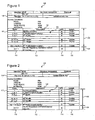
- Figure 1 is a table 100 illustrating an elementary file, or at least some contents of an elementary file, for a user controlled public land mobile network selector for wireless local area network access, according to an embodiment of the present disclosure.
- Table 100 can be stored in a data processing system or a user agent, such as system 415 of Figure 4 , or alternatively can be read by a UA.
- Table 100 shows modifications to known elementary files or elementary file contents that are described in the 3GPP technical specifications.
- table 100 represents a modified "EF UPLMNWLAN ", which is a kind of elementary file that can be described as a user controlled public land network (PLMN) selector for wireless local area network (WLAN) access.
- PLMN public land network
- the information contained in table 100 may be stored in any memory of a UA, but particularly may be stored in a subscriber identity module (SIM) card that is associated with a particular user.
- SIM subscriber identity module
- the UA uses the information in table 100 to attempt, in the order given in priority section 102, to access the WLAN using sets of PLMN frequencies defined in the description section 104.
- Each listing of a "PLMN,” such as in box 106, can relate to either a single frequency or a range of frequencies. Box 106 represents the first frequency or range of frequencies that the UA will attempt to scan when the UA attempts to establish a connection.
- priority list given in priority section 102 is fixed, and possibly hard-coded into a UA.
- Such a fixed priority list can be disadvantageous when moving among different regulatory domains because each regulatory domain may use different sets of frequencies for wireless access.
- a user physically moves back and forth between North America and Europe. These two geographical regions are also different regulatory domains with differently defined WLAN based frequencies for use by user agents.
- the older UA When an older UA that reads a fixed list is powered on, the older UA automatically scans frequencies using the priority list given in priority section 102, regardless of whether the older UA is in North America or Europe.
- the priority section 102 is optimized for use in one of the two regulatory domains. However, the priority section 102 may be optimized for an entirely different regulatory domain, such as one in Asia, which means that the list is not optimized for either of the two regulatory domains.
- the older UA When the older UA is not in a preferred regulatory domain (meaning the priority section 102 is not optimized for the current regulatory domain), the older UA may be forced to scan all channels (sets of frequencies) in the priority list before attempting to associate with an access point (AP). If none of the WLAN based frequencies in description section 104 contain a usable frequency, then the older UA may be forced to scan through all possible frequencies that the older UA can use. This process is not only time consuming, but also uses an undesirable amount of limited battery power.
- table 100 provides devices and methods for overcoming the issues described above.
- table 100 is extended to include a new set of fields identified in sections 107 and 108.
- the new fields in section 107 provide that the first byte identifies the number of PLMNs that are contained in the list (with each PLMN entry containing the frequency list and the transmit power, in addition to the country code and network code).
- the new fields in section 108 allow the UA to update the list provided in priority section 102 by replacing the list provided in priority section 102 with an updated list that is associated with a particular regulatory domain. Specifically, section 108 informs the UA that the UA should read the contents of an elementary file associated with a particular regulatory domain.
- the new fields in section 108 provide for a flag that allows the UA to read a list provided in section 108 or to read the current list provided in section 102.
- the flag may be triggered if the UA senses that it has moved from one regulatory domain to another, as described further below. In any case, the UA will be able to first scan those WLAN based frequencies that are most likely to allow for successful connection to an access point, regardless of the regulatory domain or country in which the UA is currently located.
- field 110 describes which bytes in the elementary file contain the associated regulatory domain information and/or channel information.
- Field 112 represents a reference to the actual regulatory domain information or the channel allocation information; or, optionally, field 112 actually contains the actual regulatory domain information or the channel allocation information.
- Field 114 contains an entry that identifies whether the fields in section 108 are mandatory ("M") or optional ("O"). In the embodiments shown in Figure 1 , section 108 is mandatory, but could potentially be optional.
- Field 116 represents a length of the entry in section 108; however, an entry in field 116 may be of variable length, depending on a number of channels or regulatory domains to be stored and/or read.
- table 100 may contain an updated file size field 118 that describes the overall size of the elementary file.
- field 112 contains or refers to regulatory domain information and/or channel allocation information.
- Field 112 associates the regulatory domain information and/or channel allocation information to a particular regulatory domain.
- the regulatory domain of "North America” is associated with a first set of regulatory domain information and/or channel allocation information
- the regulatory domain of "Europe” is associated with a second set of regulatory domain information and/or channel allocation information.
- Each set of regulatory domain information and/or channel allocation information describes a new list of information.
- field 112 contains or refers to information that will instruct the UA to replace the priority list in priority section 102 in favor of an updated priority list.
- the updated priority list is optimized for use in the particular regulatory domain in which the UA is associated.
- the UA may scan WLAN based frequencies in an order that results in the fastest possible connection to an access point. Stated differently, field 112 allows the UA to scan frequencies in an order that is updated to correspond to the regulatory domain in which the UA happens to be located, even if the user has moved from one regulatory domain to another.
- the information in section 108 may be dynamically changed by a user. In another embodiment, the information in section 102 may be dynamically changed by a user. In yet another embodiment, both may be dynamically changed by a user.
- the UA can be updated as to the regulatory domain in which the UA is located, and/or as to relevant channel information, according to any number of different methods.
- the UA can use field 112 to update the priority list provided in priority section 102 or 108.
- the UA can receive information that indicates the regulatory domain in which the UA is located.
- the UA is equipped with a global positioning satellite (GPS) reader that can determine the physical location of the UA on the Earth. Based on the determined position, the UA can select the proper regulatory domain.
- GPS global positioning satellite
- the UA can establish contact with an access point of a regulatory domain, possibly using the less efficient, prior art, method of access.
- the UA may then determine, based on the channel information used, frequency used, or other downloaded information, the regulatory domain in which the UA is located. If the regulatory domain has changed, then the UA uses the information in field 112 to update the priority list in priority section 102. Thereafter, on subsequent attempts to connect to an access point, the UA will use the updated priority information for the current regulatory domain.
- the UA may be programmed to receive user input regarding the regulatory domain in which the UA is present.
- the UA may scan the WLAN based frequencies after the user has input the current regulatory domain.
- Table 100 represents a user controlled selector file.
- the UA can obtain location information directly through the network, such as a cellular network (or any Wide Area Network) to which the UA attaches.
- the UA can then use the location information obtained from the network to determine the regulatory domain and/or channel information, and from there the UA may use the regulatory domain and/or channel information to update the priority list.
- the network may directly provide the regulatory domain and/or channel information to the UA before the UA attaches to the WLAN network.
- the UA could select a particular priority list based on the physical location of the UA, connect to an access point using a particular frequency, and then update the list again so that the UA will attempt to connect to that particular frequency first on a subsequent attempt.
- the list can be updated again based on the "last registered" frequency or "last registered" regulatory domain.
- Still other techniques can be used for determining the regulatory domain in which a UA is located, either before or after thee UA scans WLAN based frequencies in an attempt to attach to an access point.
- the UA can still scan all frequencies available to the UA in an attempt to attach to an access point. Upon a successful connection, the UA can then store the frequency which resulted in successful communication, and then update field 112 and/or priority section 102 such that the UA will, on subsequent attempts, scan that frequency first.
- regulatory domains including the Americas, Europe, Israel, China, and Japan.
- Other regulatory domains exist, and additional regulatory domains may be added or split off from existing regulatory domains.
- the embodiments contemplate using the above-described devices and techniques for updating priority section 102 for any of these regulatory domains, whether existing currently or in the future.
- the contents of elementary file represented by table 100 can be stored in any convenient memory of a UA.
- the contents of the elementary file (or the entire elementary file) can be stored in a subscriber identity module (SIM) card of the UA.
- SIM subscriber identity module
- Figure 2 is a table 200 illustrating an elementary file, or at least some contents of an elementary file, for an operator controlled public land mobile network selector for wireless local area network access, according to an embodiment of the present disclosure.
- Table 200 can be implemented in a data processing system or a user agent, such as system 415 of Figure 4 .
- Table 200 modifies and extends known elementary files, as described in the 3GPP technical specifications.
- table 200 represents a modified "EF OPLMNWLAN ", which is a kind of elementary file that can be described as an operator controlled public land network (PLMN) selector for wireless local area network (WLAN) access.
- PLMN public land network
- a UA uses the contents of the elementary file represented by table 200 in a manner similar to that described with respect to table 100 of Figure 1 .
- Figure 2 contains reference numerals common to Figure 1 , with common reference numerals having similar functions.
- a UA can use table 200 to scan WLAN based frequencies according to an order that is specific to a particular regulatory domain in which the UA is located, even if the UA has moved from one regulatory domain to another.
- table 200 of Figure 2 represents contents of an elementary file for use as a user controlled PLMN selector for WLAN access, but table 200 represents other contents for an elementary file for use as an operator controlled PLMN selector for WLAN access.
- Current UAs may use both a user controlled selector and an operator controlled selector, though in both cases prior art selectors do not contain the fields in section 108.
- the embodiments contemplate use of one or both of the selectors embodied by the elementary files represented by table 100 or table 200.
- a user may be the operator of the UA.
- An operator may be the company or other entity that provides wireless communication service, or other infrastructure that allows the UA to communicate wirelessly.
- a non-limiting example of an operator is a wireless communications business.
- the operator controlled selector (the contents of the elementary file represented by table 200) allows the operator to provide, transparent to the user, the UA with information regarding in which regulatory domain the UA is operating.
- the operator can automatically update the fields in section 108 and/or priority section 102.
- the operator can also update the fields in section 108 to include new lists, reprioritized lists, and/or new information for new regulatory domains.
- a user could input data into the UA which informs the UA of the regulatory domain in which the UA is located. Possibly, the user could directly change the data in any of the fields in the priority section 102 or section 108. The UA could then receive updates to the operator controlled selector, which in turn updates the list again.
- the regulatory domain/channel allocation information in field 112 may contain or refer to additional information, including but not limited to transmission power. Transmission power could also be added to the fields in the list provided in section 102 or 108. In yet other embodiments, sections in addition to section 108 could be added to include regulatory domain information, channel allocation information, and/or other information for use by the UA to achieve greater efficiency in a given regulatory domain.
- a user agent includes a bus, a network connectivity device connected to the bus, and a memory connected to the bus.
- the memory stores contents of an elementary file referring to a list of wireless local area network (WLAN) based frequencies, which may be public land mobile network (PLMN) frequencies.
- the contents of the elementary file further contain or refer to at least one entry relating to at least one of regulatory domain information and/or channel allocation information.
- the UA also includes a processor connected to the bus. The processor is configured to update the list based on the at least one entry and to promote initial access point scanning of the WLAN based frequencies according to an order specified in the updated list.
- the processor is further configured to, after a successful association with an access point (AP), store in the memory a current regulatory domain associated with the successful association. In this case, the processor is further configured to update the list again based on the current regulatory domain.
- AP access point
- the UA could be programmed to modify existing elementary files.
- the processor may be further configured to add the at least one entry to a pre-existing elementary file.
- the processor is further configured to receive at least one of updated regulatory information and updated channel allocation information. In this case, the processor is further configured to update the list again based on the at least one of updated regulatory information and updated channel allocation information.
- the information is provided by a user for a user controlled elementary file.
- the information is provided by a user for an operator controlled elementary file.
- the information can be defined in association with a physical location of the UA, as either measured by the UA or determined by the operator or the user.
- the information comprises regulatory information comprising a plurality of regulatory domains and their corresponding WLAN based frequencies.
- the information comprises channel allocation information comprising channel ranges.
- the at least one entry comprises a plurality of regulatory domains and corresponding additional lists of WLAN based frequencies associated with the plurality of regulatory domains.
- the processor may be configured to update, by selecting from the additional lists, a particular list that corresponds to a particular detected regulatory domain.
- the processor may be configured to update by changing an order of the list.
- a corresponding field in the elementary file is associated with each PLMN frequency.
- the corresponding field defines at least one of corresponding regulatory domain information and/or corresponding channel allocation information.
- the contents of the elementary file may contain a temporary user identifier for subscriber identification.
- the exemplary computer readable medium may store a data structure comprising contents of an elementary file for selecting wireless local area network (WLAN) based frequencies, which may be public land mobile network (PLMNs) frequency.
- WLAN wireless local area network
- PLMNs public land mobile network
- the contents of the elementary file comprises a list of WLAN based frequencies and at least one entry relating to at least one of regulatory domain information and/or channel allocation information. The at least one entry can be used to update the list.
- WLAN wireless local area network
- PLMNs public land mobile network
- the at least one entry can be used to update the list.
- Other embodiments of a computer readable medium can include the other features described above with respect to a user agent.
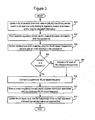
- Figure 3 is a flowchart illustrating a process of using an elementary file during wireless local area network access, according to an embodiment of the disclosure.
- the process shown in Figure 3 can be implemented by a processor, such as system 415 in Figure 4 , using contents of one or more elementary files, such as the contents represented by table 100 of Figure 1 or table 200 of Figure 2 .
- the process begins as the processor updates a list of WLAN based frequencies based on at least one entry relating to regulatory domain formation and/or channel allocation information (block 300).
- the WLAN based frequencies may be WLAN based PLMN frequencies.
- the processor then reads an updated regulatory domain and/or channel allocation information from the updated list (block 302).
- the processor then performs or promotes initial access point scanning using the WLAN based frequencies according to an order specified in the updated list (block 304).
- the processor determines if the UA has connected to a particular frequency (block 306). If the UA has not connected to a particular frequency, then the UA performs a full scan of WLAN based frequencies (block 308). Thereafter, or in the event of a "yes" determination at block 306, the user agent connects to the particular WLAN based frequency (block 310).
- the processor may cause storage of a current regulatory domain associated with the particular WLAN based frequency (block 312).
- the processor may then update the list again such that, on subsequent attempts to connect to the network, the frequencies of the current regulatory domain are scanned first (block 314). The process terminates thereafter.
- the embodiments provide for a method implemented in a user agent having a memory storing contents of an elementary file containing a list of wireless local area network (WLAN) based frequencies, which may be public land mobile networks (PLMN) frequencies.
- the contents of the elementary file further contain at least one entry relating to at least one of regulatory domain information and/or channel allocation information.
- the method includes updating the list based on the at least one entry and thereafter promoting initial access point scanning using the WLAN based frequencies according to an order specified in the updated list.
- WLAN wireless local area network
- PLMN public land mobile networks
- the method further includes connecting to a particular WLAN at a particular frequency, storing in the memory a current regulatory domain associated with the particular WLAN based frequency, and updating the list again such that the UA will, on subsequent attempts to connect, attempt to use a particular ordered set of WLAN based frequencies.
- the particular ordered set is associated with the current regulatory domain.
- At least one of the updated regulatory information and updated channel allocation information is received.
- the list is updated again based on the at least one of updated regulatory information and updated channel allocation information.
- location information is received defining a physical location of the user agent.
- the updated information is then defined in association with the physical location.
- the updated information may be regulatory information comprising a plurality of regulatory domains and their corresponding frequently used WLAN based frequencies.
- the updated information can be channel allocation information comprising channel ranges.
- updating the list can be accomplished by selecting a particular list from a plurality of lists, wherein the particular list corresponds to a particular detected regulatory domain. In another embodiment, updating the list can be accomplished by changing an order of the list.
- a corresponding field is associated with each PLMN.
- the corresponding field defines corresponding regulatory domain information or channel allocation information.
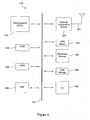
- FIG. 4 is a diagram illustrating an example of a system 415 that includes a processor 410 suitable for implementing one or more embodiments disclosed herein.
- the system 415 might include network connectivity devices 420, random access memory (RAM) 430, read only memory (ROM) 440, secondary storage 450, Global Positioning Satellite (GPS) sensor 480, and input/output (I/O) devices 460.
- These components might communicate with one another via a bus 470. In some cases, some of these components may not be present or may be combined in various combinations with one another or with other components not shown. These components might be located in a single physical entity or in more than one physical entity.
- any actions described herein as being taken by the processor 410 might be taken by the processor 410 alone or by the processor 410 in conjunction with one or more components shown or not shown in the drawing, such as a digital signal processor (DSP) 490.
- DSP digital signal processor
- the DSP 490 is shown as a separate component, the DSP 490 might be incorporated into the processor 410.
- the processor 410 executes instructions, codes, computer programs, or scripts that it might access from the network connectivity devices 420, RAM 430, ROM 440, or secondary storage 450 (which might include various disk-based systems such as hard disk, floppy disk, or optical disk). While only one CPU 410 is shown, multiple processors may be present. Thus, while instructions may be discussed as being executed by a processor, the instructions may be executed simultaneously, serially, or otherwise by one or multiple processors.
- the processor 410 may be implemented as one or more CPU chips.
- the network connectivity devices 420 may take the form of one or more of modems, modem banks, Ethernet devices, universal serial bus (USB) interface devices, serial interfaces, token ring devices, fiber distributed data interface (FDDI) devices, wireless local area network (WLAN) devices, radio transceiver devices such as code division multiple access (CDMA) devices, global system for mobile communications (GSM) radio transceiver devices, worldwide interoperability for microwave access (WiMAX) devices, and/or other well-known devices for connecting to networks.
- These network connectivity devices 420 may enable the processor 410 to communicate with the Internet or one or more telecommunications networks or other networks from which the processor 410 might receive information or to which the processor 410 might output information.
- the network connectivity devices 420 might also include one or more transceiver components 425 capable of transmitting and/or receiving data wirelessly.
- the RAM 430 might be used to store volatile data and perhaps to store instructions that are executed by the processor 410.
- the ROM 440 is a non-volatile memory device that typically has a smaller memory capacity than the memory capacity of the secondary storage 450. ROM 440 might be used to store instructions and perhaps data that are read during execution of the instructions. Access to both RAM 430 and ROM 440 is typically faster than to secondary storage 450.
- the secondary storage 450 is typically comprised of one or more disk drives or tape drives and might be used for non-volatile storage of data or as an over-flow data storage device if RAM 430 is not large enough to hold all working data. Secondary storage 450 may be used to store programs that are loaded into RAM 430 when such programs are selected for execution.
- the I/O devices 460 may include liquid crystal displays (LCDs), touch screen displays, keyboards, keypads, switches, dials, mice, track balls, voice recognizers, card readers, paper tape readers, printers, video monitors, or other well-known input devices.
- the transceiver 425 might be considered to be a component of the I/O devices 460 instead of or in addition to being a component of the network connectivity devices 420.
- the GPS sensor 480 decodes global positioning system signals, thereby enabling the system 415 to determine its location.
- the system 415 may also determine its location using the transceiver 425.
- Location may be determined using Enhanced Observed Time Difference (EOTD), a position-location method wherein the UE triangulates its position using signals received by the transceiver 425.
- EOTD Enhanced Observed Time Difference
- Other common methods of triangulation include Uplink Time Difference of Arrival (U-TDOA), Angle of Arrival (AOA), Location Pattern Matching (LPM) and Advanced Forward Link Trilateration (AFLT).
- system 415 in Figure 4 might be implemented as a user agent.
- system 415 can be referred to as user agent 415.
- User agent 415 may include subscriber identification module (SIM) storage 495, which is connected to user agent 415 via bus 470, or via any other convenient mechanism.
- SIM storage 495 may be implemented as a "SIM card;” however, the information commonly stored on SIM storage 495 could be stored in RAM 430, ROM 440, secondary storage 450, or any other additional storage device suitable for use in user agent 415.
- SIM storage 495 is a "SIM card,” though any of the other described above implementations could be used.
- SIM storage 495 can store elementary files, such as user elementary file 100 in Figure 1 and/or operator elementary file 100 in Figure 2 . These files in SIM storage 495 can be accessed by processor 410, which then uses these files to search preferred WLAN based frequencies first. Thus, SIM storage 495 provides a convenient mechanism for implementing the processes described with respect to Figures 1-3 .
- a user agent that includes a bus, a network connectivity device connected to the bus, and a memory connected to the bus.
- the memory stores contents of an elementary file that contain or refer to a list of wireless local area network (WLAN) based frequencies, which might be public land mobile network (PLMN) frequencies.
- WLAN wireless local area network
- PLMN public land mobile network
- the contents of the elementary file further contain or refer to at least one entry relating to at least one of regulatory domain information and/or channel allocation information.
- the UA also includes a processor connected to the bus. The processor is configured to update the list based on the at least one entry and to promote initial access point scanning of the WLAN based frequencies according to an order specified in the updated list.
- the embodiments also provide for a computer readable medium storing a data structure comprising contents of an elementary file for selecting wireless local area network (WLAN) based frequency, which may be a public land mobile network (PLMNs) frequency.
- WLAN wireless local area network
- PLMNs public land mobile network
- the contents of the elementary file comprises a list of WLAN based frequencies and at least one entry relating to at least one of regulatory domain information and/or channel allocation information. The at least one entry can be used to update the list.
- the embodiments also provide for a method implemented in a user agent having a memory storing contents of an elementary file containing a list of wireless local area network (WLAN) based frequencies, which may be public land mobile networks (PLMN) frequencies.
- WLAN wireless local area network
- PLMN public land mobile networks
- the contents of the elementary file further contain or refer to at least one entry relating to at least one of regulatory domain information and/or channel allocation information.
- the method includes updating the list based on the at least one entry and, thereafter, promoting initial access point scanning using the WLAN based frequencies according to an order specified in the updated list.
Landscapes
- Engineering & Computer Science (AREA)
- Databases & Information Systems (AREA)
- Computer Networks & Wireless Communication (AREA)
- Signal Processing (AREA)
- Mobile Radio Communication Systems (AREA)
Claims (14)
- Eine Benutzereinrichtung, die aufweist:einen Speicher (430, 440, 450, 495), der konfiguriert ist zum Speichern von Inhalten einer 3GPP-Elementardatei, die einen von einem Benutzer oder Betreiber gesteuerten PLMN(public land network)-Selektor für einen WLAN(wireless local area network)-Zugang (100, 200) aufweist, enthaltend oder referenzierend zu:eine Liste von WLAN-Frequenzen und eine Vielzahl von Einträgen in Bezug auf eine Regulierungsdomäne-Information und/oder Kanalzuteilungsinformation; undeinen Prozessor (410) in Kommunikation mit dem Speicher, wobei der Prozessor (410) konfiguriert ist zum:Bestimmen einer aktuellen Regulierungsdomäne;Bestimmen eines entsprechenden der Vielzahl von Einträgen basierend auf der aktuellen Regulierungsdomäne;Aktualisieren der Liste basierend auf dem entsprechenden der Vielzahl von Einträgen; undFördern eines anfänglichen Zugangspunkt-Abtastens der WLAN-basierten Frequenzen gemäß einer Reihenfolge, die in der aktualisierten Liste spezifiziert ist (304).
- Die Benutzereinrichtung gemäß Anspruch 1, wobei der Prozessor (410) weiter konfiguriert ist, nach einer erfolgreichen Assoziierung mit einem Zugangspunkt (AP - access point), zum Speichern in dem Speicher einer aktuellen Regulierungsdomäne, die mit der erfolgreichen Assoziierung assoziiert ist, und wobei der Prozessor (410) weiter konfiguriert ist zum erneuten Aktualisieren der Liste basierend auf der aktuellen Regulierungsdomäne, die mit der erfolgreichen Assoziierung assoziiert ist (314).
- Die Benutzereinrichtung gemäß Anspruch 1 oder Anspruch 2, wobei der Prozessor (410) weiter konfiguriert ist zum Empfangen zumindest einer aus einer aktualisierten Regulierungsinformation und einer aktualisierten Kanalzuteilungsinformation, und wobei der Prozessor (410) weiter konfiguriert ist zum erneuten Aktualisieren der Liste basierend auf der zumindest einen der aktualisierten Regulierungsinformation und der aktualisierten Kanalzuteilungsinformation.
- Die Benutzereinrichtung gemäß einem der vorhergehenden Ansprüche, wobei in den Inhalten der Elementardatei (100, 200) ein entsprechendes Feld mit einer entsprechenden PLMN-Frequenz assoziiert ist und wobei das entsprechende Feld zumindest eines aus entsprechender Regulierungsdomäne-Information und entsprechender Kanalzuteilungsinformation definiert.
- Die Benutzereinrichtung gemäß einem der vorhergehenden Ansprüche, wobei die aktuelle Regulierungsdomäne durch eine physikalische Position der Benutzereinrichtung bestimmt wird.
- Die Benutzereinrichtung gemäß einem der vorhergehenden Ansprüche, wobei die aktuelle Regulierungsdomäne durch eine Eingabe bestimmt wird, die von der Benutzereinrichtung empfangen wird.
- Die Benutzereinrichtung gemäß einem der vorhergehenden Ansprüche, wobei die aktuelle Regulierungsdomäne durch Information bestimmt wird, die von einem Netzwerk vorgesehen ist, mit dem die Benutzereinrichtung verbunden ist.
- Ein Verfahren, das in einer Benutzereinrichtung (UE - user equipment) implementiert ist, die einen Speicher hat zum Speichern von Inhalten einer 3GPP-Elementardatei (100, 200), die einen von einem Benutzer oder Betreiber gesteuerten PLMN(public land network)-Selektor für einen WLAN(wireless local area network)-Zugang aufweist, die eine Liste von WLAN-basierten Frequenzen enthalten oder zu dieser referenzieren, wobei die Inhalte der Elementardatei (100, 200) weiter eine Vielzahl von Einträgen in Bezug auf eine Regulierungsdomäne-Information und/oder Kanalzuteilungsinformation enthalten oder zu dieser referenzieren, wobei das Verfahren aufweist:Bestimmen einer aktuellen Regulierungsdomäne;Bestimmen eines entsprechenden der Vielzahl von Einträgen basierend auf der aktuellen Regulierungsdomäne;Aktualisieren der Liste basierend auf dem entsprechenden der Vielzahl von Einträgen; unddanach Fördern eines anfänglichen Zugangspunkt-Abtastens unter Verwendung der WLAN-basierten Frequenzen gemäß einer Reihenfolge, die in der aktualisierten Liste spezifiziert ist (304).
- Das Verfahren gemäß Anspruch 8, das weiter aufweist:Verbinden mit einem bestimmten WLAN unter Verwendung einer bestimmten Frequenz (310);Speichern in dem Speicher einer aktualisierten aktuellen Regulierungsdomäne, die mit dem bestimmten WLAN assoziiert ist (312); underneutes Aktualisieren der Liste derart, dass die UE, bei nachfolgenden Verbindungsversuchen, versuchen wird, einen bestimmten geordneten Satz von WLAN-basierten Frequenzen zu verwenden, wobei der bestimmte geordnete Satz mit der aktualisierten aktuellen Regulierungsdomäne assoziiert ist (314).
- Das Verfahren gemäß Anspruch 8 oder Anspruch 9, das weiter aufweist:vor einem Aktualisieren der Liste, Hinzufügen des zumindest einen Eintrags zu einer vorher existierenden Elementardatei (100, 200).
- Das Verfahren gemäß einem der Ansprüche 8-10, wobei das Bestimmen der aktuellen Regulierungsdomäne eines oder mehrere aus Folgendem aufweist:Bestimmen einer physikalischen Position der Benutzereinrichtung;Empfangen einer Eingabe an der Benutzereinrichtung;Erlangen von Positionsinformation von einem Netzwerk, mit dem die Benutzereinrichtung verbunden ist; undEmpfangen von Regulierungsdomäne-Information von einem Netzwerk, mit dem die Benutzereinrichtung verbunden ist.
- Die Benutzereinrichtung oder das Verfahren gemäß einem der vorhergehenden Ansprüche, wobei die Regulierungsinformation und/oder die Kanalzuteilungsinformation eine Regulierungsinformation aufweist, die eine Vielzahl von Regulierungsdomänen und deren entsprechende WLAN-basierten Frequenzen aufweist.
- Die Benutzereinrichtung oder das Verfahren gemäß einem der vorhergehenden Ansprüche, wobei die Regulierungsinformation und/oder die Kanalzuteilungsinformation eine Kanalzuteilungsinformation aufweist, die Kanalbereiche aufweist.
- Ein computerlesbares Medium mit darin aufgenommenem computerlesbaren Code zur Ausführung durch einen Prozessor in einer Computervorrichtung, um die Vorrichtung zu veranlassen, die Schritte des Verfahrens gemäß einem der Ansprüche 8 bis 13 zu implementieren.
Applications Claiming Priority (1)
| Application Number | Priority Date | Filing Date | Title |
|---|---|---|---|
| US12/391,597 US20100214958A1 (en) | 2009-02-24 | 2009-02-24 | System and Method for Scanning When Operating in Different Regulatory Domains |
Publications (2)
| Publication Number | Publication Date |
|---|---|
| EP2222103A1 EP2222103A1 (de) | 2010-08-25 |
| EP2222103B1 true EP2222103B1 (de) | 2014-05-07 |
Family
ID=41527772
Family Applications (1)
| Application Number | Title | Priority Date | Filing Date |
|---|---|---|---|
| EP09174223.9A Not-in-force EP2222103B1 (de) | 2009-02-24 | 2009-10-27 | System und Verfahren zum Scannen beim Arbeiten in verschiedenen Regelungsdomänen |
Country Status (3)
| Country | Link |
|---|---|
| US (1) | US20100214958A1 (de) |
| EP (1) | EP2222103B1 (de) |
| CA (1) | CA2693681A1 (de) |
Families Citing this family (11)
| Publication number | Priority date | Publication date | Assignee | Title |
|---|---|---|---|---|
| EP2317443A1 (de) * | 2009-10-29 | 2011-05-04 | Incard SA | Verfahren zur Ausführung von Datenaktualisierungen in einer IC-Karte |
| EP2330753A1 (de) * | 2009-12-04 | 2011-06-08 | Gemalto SA | Verfahren zur Leistungsaushandlung zwischen zwei kontaktlosen Vorrichtungen |
| US8781464B2 (en) * | 2011-01-27 | 2014-07-15 | Qualcomm Incorporated | System and method of decreasing time to begin acquisition of cellular networks after power up |
| US8577300B2 (en) * | 2011-04-08 | 2013-11-05 | Spectrum Bridge, Inc. | Support for wireless radio device in multiple wireless regulatory domains |
| US20130130708A1 (en) * | 2011-11-17 | 2013-05-23 | Texas Instruments Incorporated | Wireless regulatory compliance based on physical location |
| EP3014930A1 (de) * | 2013-06-28 | 2016-05-04 | Telefonaktiebolaget LM Ericsson (publ) | Änderung eines mobilkommunikationssystems mittels auswahl eines bevorzugten systems |
| US20150009876A1 (en) * | 2013-07-05 | 2015-01-08 | Acer Incorporated | Communication system with radio interworking capability and related communication station and user equipment |
| KR101508843B1 (ko) * | 2013-09-10 | 2015-04-07 | 삼성에스디에스 주식회사 | 무선 랜에서 지역에 따라 상이한 사용 주파수 대역을 검색하기 위한 기법 |
| WO2016049386A2 (en) * | 2014-09-25 | 2016-03-31 | Intel IP Corporation | Apparatus, system and method of wireless local area network (wlan) setting of a user equipment (ue) |
| US9883051B2 (en) * | 2015-11-23 | 2018-01-30 | Samsung Electronics Co., Ltd | Method and system for usage of manual PLMN selection mode |
| US12317177B2 (en) | 2022-07-28 | 2025-05-27 | Hewlett Packard Enterprise Development Lp | Seamless regulatory access point updates ensuring continual client connectivity |
Family Cites Families (8)
| Publication number | Priority date | Publication date | Assignee | Title |
|---|---|---|---|---|
| US7826844B2 (en) * | 2002-01-16 | 2010-11-02 | Qualcomm Incorporated | Method and apparatus for efficient selection and acquisition of a wireless communications system |
| DE10308012A1 (de) * | 2003-02-25 | 2004-09-09 | Siemens Ag | Verfahren zum Betreiben von Endgeräten eines Mobilfunkkommunikationssystems |
| US20060068775A1 (en) * | 2004-09-28 | 2006-03-30 | Raytac Corp. | Apparatus and method for detecting wireless local area network signals |
| EP1681804B1 (de) * | 2005-01-14 | 2008-04-23 | Research In Motion Limited | Netzauswahl in einer Mehrfachsystemumgebung in einem besuchten PLMN |
| US7689218B2 (en) * | 2005-04-14 | 2010-03-30 | Nokia Corporation | Method, apparatus and computer program providing network-associated system priority list for multimode system selection |
| US8467784B2 (en) * | 2006-07-14 | 2013-06-18 | Qualcomm Incorporated | WLAN system scanning and selection |
| US7899939B2 (en) * | 2007-04-20 | 2011-03-01 | Research In Motion Limited | Apparatus, and associated method, for facilitating network selection using access technology indicator |
| US8175635B2 (en) * | 2008-10-14 | 2012-05-08 | Qualcomm Incorporated | Methods and apparatus for system selection in a multimode wireless device |
-
2009
- 2009-02-24 US US12/391,597 patent/US20100214958A1/en not_active Abandoned
- 2009-10-27 EP EP09174223.9A patent/EP2222103B1/de not_active Not-in-force
-
2010
- 2010-02-17 CA CA2693681A patent/CA2693681A1/en not_active Abandoned
Also Published As
| Publication number | Publication date |
|---|---|
| EP2222103A1 (de) | 2010-08-25 |
| US20100214958A1 (en) | 2010-08-26 |
| CA2693681A1 (en) | 2010-08-24 |
Similar Documents
| Publication | Publication Date | Title |
|---|---|---|
| EP2222103A1 (de) | System und Verfahren zum Scannen beim Arbeiten in verschiedenen Regelungsdomänen | |
| JP7467661B2 (ja) | ホームネットワークから離れてローミングしている間のスライスサポートplmnの改善された選択 | |
| JP7233535B2 (ja) | ネットワーク検索構成方法、登録方法、装置、及びシステム | |
| KR101634214B1 (ko) | 휴대 단말기의 공중 이동 통신망 선택 방법 및 장치 | |
| US8428584B2 (en) | System and method for accelerating network selection by a wireless user equipment (UE) device | |
| US7689218B2 (en) | Method, apparatus and computer program providing network-associated system priority list for multimode system selection | |
| US20210076310A1 (en) | Wireless communication apparatus for managing access to plurality of wireless networks and management method thereof | |
| US8874710B2 (en) | Access network discovery | |
| CN105101350A (zh) | 有针对性的plmn搜索 | |
| CN101663824A (zh) | 用于在移动计算装置中提供多频操作的设备和方法 | |
| US9560581B2 (en) | Mobile device with improved service acquisition with early MCC detection | |
| WO2017166202A1 (zh) | 一种电子设备及其搜索移动通信网络的方法 | |
| US11330654B2 (en) | Methods for performing mobility procedure in NSA mode and communications apparatus utilizing the same | |
| CN114586419A (zh) | 一种应用于终端的小区搜索方法及通信装置 | |
| EP3557890B1 (de) | Aufbau einer drahtlosen verbindung zu einem mobilfunknetz | |
| US10334553B2 (en) | Wireless communications network registration method and terminal | |
| US20130273908A1 (en) | Specifying Available Telecommunication Standards in Respective Geographic Regions Based on Mobile Country Code | |
| US9713080B1 (en) | Device and method of handling a public land mobile network selection | |
| CN104185257A (zh) | 一种重新注册网络的方法、装置及终端 | |
| US11659479B2 (en) | Network accessing method and communications apparatus utilizing the same | |
| US20170142645A1 (en) | Method for enhancing performance of a communications apparatus in a plmn search procedure and a communications apparatus utilizing the same | |
| US20180332526A1 (en) | Optimizing MuLTEfire Network Discovery | |
| JP2007235593A (ja) | 携帯電話機、その通信方法およびプログラム | |
| KR101574637B1 (ko) | 기지국 스캐닝 방법 및 그를 수행하는 통신 시스템 | |
| EP3209066B1 (de) | Vorrichtung und verfahren zur handhabung einer auswahl eines öffentlichen mobilen netzwerks |
Legal Events
| Date | Code | Title | Description |
|---|---|---|---|
| PUAI | Public reference made under article 153(3) epc to a published international application that has entered the european phase |
Free format text: ORIGINAL CODE: 0009012 |
|
| 17P | Request for examination filed |
Effective date: 20091029 |
|
| AK | Designated contracting states |
Kind code of ref document: A1 Designated state(s): AT BE BG CH CY CZ DE DK EE ES FI FR GB GR HR HU IE IS IT LI LT LU LV MC MK MT NL NO PL PT RO SE SI SK SM TR |
|
| AX | Request for extension of the european patent |
Extension state: AL BA RS |
|
| 17Q | First examination report despatched |
Effective date: 20111206 |
|
| RAP1 | Party data changed (applicant data changed or rights of an application transferred) |
Owner name: BLACKBERRY LIMITED |
|
| RAP1 | Party data changed (applicant data changed or rights of an application transferred) |
Owner name: BLACKBERRY LIMITED |
|
| GRAP | Despatch of communication of intention to grant a patent |
Free format text: ORIGINAL CODE: EPIDOSNIGR1 |
|
| INTG | Intention to grant announced |
Effective date: 20131210 |
|
| GRAS | Grant fee paid |
Free format text: ORIGINAL CODE: EPIDOSNIGR3 |
|
| GRAA | (expected) grant |
Free format text: ORIGINAL CODE: 0009210 |
|
| AK | Designated contracting states |
Kind code of ref document: B1 Designated state(s): AT BE BG CH CY CZ DE DK EE ES FI FR GB GR HR HU IE IS IT LI LT LU LV MC MK MT NL NO PL PT RO SE SI SK SM TR |
|
| REG | Reference to a national code |
Ref country code: GB Ref legal event code: FG4D |
|
| REG | Reference to a national code |
Ref country code: AT Ref legal event code: REF Ref document number: 667468 Country of ref document: AT Kind code of ref document: T Effective date: 20140515 |
|
| REG | Reference to a national code |
Ref country code: IE Ref legal event code: FG4D |
|
| REG | Reference to a national code |
Ref country code: DE Ref legal event code: R096 Ref document number: 602009023822 Country of ref document: DE Effective date: 20140618 |
|
| REG | Reference to a national code |
Ref country code: NL Ref legal event code: T3 |
|
| REG | Reference to a national code |
Ref country code: AT Ref legal event code: MK05 Ref document number: 667468 Country of ref document: AT Kind code of ref document: T Effective date: 20140507 |
|
| REG | Reference to a national code |
Ref country code: LT Ref legal event code: MG4D |
|
| PG25 | Lapsed in a contracting state [announced via postgrant information from national office to epo] |
Ref country code: GR Free format text: LAPSE BECAUSE OF FAILURE TO SUBMIT A TRANSLATION OF THE DESCRIPTION OR TO PAY THE FEE WITHIN THE PRESCRIBED TIME-LIMIT Effective date: 20140808 Ref country code: LT Free format text: LAPSE BECAUSE OF FAILURE TO SUBMIT A TRANSLATION OF THE DESCRIPTION OR TO PAY THE FEE WITHIN THE PRESCRIBED TIME-LIMIT Effective date: 20140507 Ref country code: CY Free format text: LAPSE BECAUSE OF FAILURE TO SUBMIT A TRANSLATION OF THE DESCRIPTION OR TO PAY THE FEE WITHIN THE PRESCRIBED TIME-LIMIT Effective date: 20140507 Ref country code: IS Free format text: LAPSE BECAUSE OF FAILURE TO SUBMIT A TRANSLATION OF THE DESCRIPTION OR TO PAY THE FEE WITHIN THE PRESCRIBED TIME-LIMIT Effective date: 20140907 Ref country code: NO Free format text: LAPSE BECAUSE OF FAILURE TO SUBMIT A TRANSLATION OF THE DESCRIPTION OR TO PAY THE FEE WITHIN THE PRESCRIBED TIME-LIMIT Effective date: 20140807 Ref country code: FI Free format text: LAPSE BECAUSE OF FAILURE TO SUBMIT A TRANSLATION OF THE DESCRIPTION OR TO PAY THE FEE WITHIN THE PRESCRIBED TIME-LIMIT Effective date: 20140507 |
|
| PG25 | Lapsed in a contracting state [announced via postgrant information from national office to epo] |
Ref country code: PL Free format text: LAPSE BECAUSE OF FAILURE TO SUBMIT A TRANSLATION OF THE DESCRIPTION OR TO PAY THE FEE WITHIN THE PRESCRIBED TIME-LIMIT Effective date: 20140507 Ref country code: SE Free format text: LAPSE BECAUSE OF FAILURE TO SUBMIT A TRANSLATION OF THE DESCRIPTION OR TO PAY THE FEE WITHIN THE PRESCRIBED TIME-LIMIT Effective date: 20140507 Ref country code: HR Free format text: LAPSE BECAUSE OF FAILURE TO SUBMIT A TRANSLATION OF THE DESCRIPTION OR TO PAY THE FEE WITHIN THE PRESCRIBED TIME-LIMIT Effective date: 20140507 Ref country code: AT Free format text: LAPSE BECAUSE OF FAILURE TO SUBMIT A TRANSLATION OF THE DESCRIPTION OR TO PAY THE FEE WITHIN THE PRESCRIBED TIME-LIMIT Effective date: 20140507 Ref country code: LV Free format text: LAPSE BECAUSE OF FAILURE TO SUBMIT A TRANSLATION OF THE DESCRIPTION OR TO PAY THE FEE WITHIN THE PRESCRIBED TIME-LIMIT Effective date: 20140507 Ref country code: ES Free format text: LAPSE BECAUSE OF FAILURE TO SUBMIT A TRANSLATION OF THE DESCRIPTION OR TO PAY THE FEE WITHIN THE PRESCRIBED TIME-LIMIT Effective date: 20140507 |
|
| PG25 | Lapsed in a contracting state [announced via postgrant information from national office to epo] |
Ref country code: PT Free format text: LAPSE BECAUSE OF FAILURE TO SUBMIT A TRANSLATION OF THE DESCRIPTION OR TO PAY THE FEE WITHIN THE PRESCRIBED TIME-LIMIT Effective date: 20140908 |
|
| PG25 | Lapsed in a contracting state [announced via postgrant information from national office to epo] |
Ref country code: BE Free format text: LAPSE BECAUSE OF FAILURE TO SUBMIT A TRANSLATION OF THE DESCRIPTION OR TO PAY THE FEE WITHIN THE PRESCRIBED TIME-LIMIT Effective date: 20140507 Ref country code: RO Free format text: LAPSE BECAUSE OF FAILURE TO SUBMIT A TRANSLATION OF THE DESCRIPTION OR TO PAY THE FEE WITHIN THE PRESCRIBED TIME-LIMIT Effective date: 20140507 Ref country code: EE Free format text: LAPSE BECAUSE OF FAILURE TO SUBMIT A TRANSLATION OF THE DESCRIPTION OR TO PAY THE FEE WITHIN THE PRESCRIBED TIME-LIMIT Effective date: 20140507 Ref country code: SK Free format text: LAPSE BECAUSE OF FAILURE TO SUBMIT A TRANSLATION OF THE DESCRIPTION OR TO PAY THE FEE WITHIN THE PRESCRIBED TIME-LIMIT Effective date: 20140507 Ref country code: CZ Free format text: LAPSE BECAUSE OF FAILURE TO SUBMIT A TRANSLATION OF THE DESCRIPTION OR TO PAY THE FEE WITHIN THE PRESCRIBED TIME-LIMIT Effective date: 20140507 Ref country code: DK Free format text: LAPSE BECAUSE OF FAILURE TO SUBMIT A TRANSLATION OF THE DESCRIPTION OR TO PAY THE FEE WITHIN THE PRESCRIBED TIME-LIMIT Effective date: 20140507 |
|
| PGFP | Annual fee paid to national office [announced via postgrant information from national office to epo] |
Ref country code: FR Payment date: 20141017 Year of fee payment: 6 Ref country code: GB Payment date: 20141027 Year of fee payment: 6 Ref country code: DE Payment date: 20141029 Year of fee payment: 6 |
|
| REG | Reference to a national code |
Ref country code: DE Ref legal event code: R097 Ref document number: 602009023822 Country of ref document: DE |
|
| PGFP | Annual fee paid to national office [announced via postgrant information from national office to epo] |
Ref country code: NL Payment date: 20141026 Year of fee payment: 6 |
|
| PLBE | No opposition filed within time limit |
Free format text: ORIGINAL CODE: 0009261 |
|
| STAA | Information on the status of an ep patent application or granted ep patent |
Free format text: STATUS: NO OPPOSITION FILED WITHIN TIME LIMIT |
|
| 26N | No opposition filed |
Effective date: 20150210 |
|
| PG25 | Lapsed in a contracting state [announced via postgrant information from national office to epo] |
Ref country code: IT Free format text: LAPSE BECAUSE OF FAILURE TO SUBMIT A TRANSLATION OF THE DESCRIPTION OR TO PAY THE FEE WITHIN THE PRESCRIBED TIME-LIMIT Effective date: 20140507 |
|
| REG | Reference to a national code |
Ref country code: DE Ref legal event code: R097 Ref document number: 602009023822 Country of ref document: DE Effective date: 20150210 |
|
| PG25 | Lapsed in a contracting state [announced via postgrant information from national office to epo] |
Ref country code: LU Free format text: LAPSE BECAUSE OF FAILURE TO SUBMIT A TRANSLATION OF THE DESCRIPTION OR TO PAY THE FEE WITHIN THE PRESCRIBED TIME-LIMIT Effective date: 20141027 Ref country code: MC Free format text: LAPSE BECAUSE OF FAILURE TO SUBMIT A TRANSLATION OF THE DESCRIPTION OR TO PAY THE FEE WITHIN THE PRESCRIBED TIME-LIMIT Effective date: 20140507 |
|
| REG | Reference to a national code |
Ref country code: CH Ref legal event code: PL |
|
| REG | Reference to a national code |
Ref country code: IE Ref legal event code: MM4A |
|
| PG25 | Lapsed in a contracting state [announced via postgrant information from national office to epo] |
Ref country code: SI Free format text: LAPSE BECAUSE OF FAILURE TO SUBMIT A TRANSLATION OF THE DESCRIPTION OR TO PAY THE FEE WITHIN THE PRESCRIBED TIME-LIMIT Effective date: 20140507 Ref country code: CH Free format text: LAPSE BECAUSE OF NON-PAYMENT OF DUE FEES Effective date: 20141031 Ref country code: LI Free format text: LAPSE BECAUSE OF NON-PAYMENT OF DUE FEES Effective date: 20141031 |
|
| PG25 | Lapsed in a contracting state [announced via postgrant information from national office to epo] |
Ref country code: IE Free format text: LAPSE BECAUSE OF NON-PAYMENT OF DUE FEES Effective date: 20141027 |
|
| PG25 | Lapsed in a contracting state [announced via postgrant information from national office to epo] |
Ref country code: SM Free format text: LAPSE BECAUSE OF FAILURE TO SUBMIT A TRANSLATION OF THE DESCRIPTION OR TO PAY THE FEE WITHIN THE PRESCRIBED TIME-LIMIT Effective date: 20140507 |
|
| REG | Reference to a national code |
Ref country code: DE Ref legal event code: R119 Ref document number: 602009023822 Country of ref document: DE |
|
| GBPC | Gb: european patent ceased through non-payment of renewal fee |
Effective date: 20151027 |
|
| PG25 | Lapsed in a contracting state [announced via postgrant information from national office to epo] |
Ref country code: BG Free format text: LAPSE BECAUSE OF FAILURE TO SUBMIT A TRANSLATION OF THE DESCRIPTION OR TO PAY THE FEE WITHIN THE PRESCRIBED TIME-LIMIT Effective date: 20140507 |
|
| REG | Reference to a national code |
Ref country code: NL Ref legal event code: MM Effective date: 20151101 |
|
| PG25 | Lapsed in a contracting state [announced via postgrant information from national office to epo] |
Ref country code: HU Free format text: LAPSE BECAUSE OF FAILURE TO SUBMIT A TRANSLATION OF THE DESCRIPTION OR TO PAY THE FEE WITHIN THE PRESCRIBED TIME-LIMIT; INVALID AB INITIO Effective date: 20091027 Ref country code: TR Free format text: LAPSE BECAUSE OF FAILURE TO SUBMIT A TRANSLATION OF THE DESCRIPTION OR TO PAY THE FEE WITHIN THE PRESCRIBED TIME-LIMIT Effective date: 20140507 Ref country code: DE Free format text: LAPSE BECAUSE OF NON-PAYMENT OF DUE FEES Effective date: 20160503 Ref country code: GB Free format text: LAPSE BECAUSE OF NON-PAYMENT OF DUE FEES Effective date: 20151027 Ref country code: MT Free format text: LAPSE BECAUSE OF FAILURE TO SUBMIT A TRANSLATION OF THE DESCRIPTION OR TO PAY THE FEE WITHIN THE PRESCRIBED TIME-LIMIT Effective date: 20140507 |
|
| REG | Reference to a national code |
Ref country code: FR Ref legal event code: ST Effective date: 20160630 |
|
| PG25 | Lapsed in a contracting state [announced via postgrant information from national office to epo] |
Ref country code: FR Free format text: LAPSE BECAUSE OF NON-PAYMENT OF DUE FEES Effective date: 20151102 Ref country code: NL Free format text: LAPSE BECAUSE OF NON-PAYMENT OF DUE FEES Effective date: 20151101 |
|
| PG25 | Lapsed in a contracting state [announced via postgrant information from national office to epo] |
Ref country code: MK Free format text: LAPSE BECAUSE OF FAILURE TO SUBMIT A TRANSLATION OF THE DESCRIPTION OR TO PAY THE FEE WITHIN THE PRESCRIBED TIME-LIMIT Effective date: 20140507 |