EP2224381A1 - Procédé et appareil pour composition de service basé sur des cas - Google Patents
Procédé et appareil pour composition de service basé sur des cas Download PDFInfo
- Publication number
- EP2224381A1 EP2224381A1 EP10001861A EP10001861A EP2224381A1 EP 2224381 A1 EP2224381 A1 EP 2224381A1 EP 10001861 A EP10001861 A EP 10001861A EP 10001861 A EP10001861 A EP 10001861A EP 2224381 A1 EP2224381 A1 EP 2224381A1
- Authority
- EP
- European Patent Office
- Prior art keywords
- data
- store
- composition
- state
- processing unit
- Prior art date
- Legal status (The legal status is an assumption and is not a legal conclusion. Google has not performed a legal analysis and makes no representation as to the accuracy of the status listed.)
- Withdrawn
Links
Images



Classifications
-
- G—PHYSICS
- G06—COMPUTING OR CALCULATING; COUNTING
- G06F—ELECTRIC DIGITAL DATA PROCESSING
- G06F8/00—Arrangements for software engineering
- G06F8/30—Creation or generation of source code
- G06F8/36—Software reuse
-
- H—ELECTRICITY
- H04—ELECTRIC COMMUNICATION TECHNIQUE
- H04L—TRANSMISSION OF DIGITAL INFORMATION, e.g. TELEGRAPHIC COMMUNICATION
- H04L67/00—Network arrangements or protocols for supporting network services or applications
- H04L67/50—Network services
- H04L67/51—Discovery or management thereof, e.g. service location protocol [SLP] or web services
-
- H—ELECTRICITY
- H04—ELECTRIC COMMUNICATION TECHNIQUE
- H04L—TRANSMISSION OF DIGITAL INFORMATION, e.g. TELEGRAPHIC COMMUNICATION
- H04L65/00—Network arrangements, protocols or services for supporting real-time applications in data packet communication
- H04L65/10—Architectures or entities
- H04L65/1016—IP multimedia subsystem [IMS]
-
- H—ELECTRICITY
- H04—ELECTRIC COMMUNICATION TECHNIQUE
- H04L—TRANSMISSION OF DIGITAL INFORMATION, e.g. TELEGRAPHIC COMMUNICATION
- H04L65/00—Network arrangements, protocols or services for supporting real-time applications in data packet communication
- H04L65/1066—Session management
- H04L65/1096—Supplementary features, e.g. call forwarding or call holding
Definitions
- the present invention pertains to creating composite services.
- references to the "present invention” or “invention” relate to exemplary embodiments and not necessarily to every embodiment encompassed by the appended claims.
- the present invention pertains to creating a composite service where a past composition decision is reused for a constituent component for the composite service if the past composition decision regarding the constituent component has essentially an equivalent runtime state.
- SIP protocol is one of the core technologies used by IMS (Internet Multimedia Subsystem). It is used for control over the multimedia sessions combining voice and data streams.
- IMS provides a lot of common functions used by mobile IMS networks, e.g. AAA (authentication, authorization), charging, access control, HSS (user profile databases), etc. These functions of IMS are meant to be used by the converged applications in a uniform way, so that there is no need to have separate mechanisms for these functions applied for voice communications and different ones for the data communications.
- AAA authentication, authorization
- HSS user profile databases
- the Service Capability Interaction Manager was introduced in 3GPP TS 23.002, Figure 6a : "Functional architecture for the provision of service in the IMS” as a function within the "SIP Application Server” domain of the IMS architecture.
- the role of the SCIM is that of service broker in more complex service interaction scenarios than can be supported through the service filtering mechanism; for example, feature interaction management that provides intricate intelligence, such as the ability to blend Presence and other network information, or more complex and dynamic application sequencing scenarios.
- the SCIM as proposed to the 3GPP uses ISC and SIP interfaces to enable composite service behaviour leveraging simpler service components.
- a “capability” is a system component that may be used (presumably with other components) to implement a “service” that is packaged and delivered to end users of the network.
- a group list server and a presence server may both be considered “capabilities” that are used to implement a sophisticated conferencing service.
- Composite services are created through aggregation of existing services. They address complex user requirements that cannot be covered by existing services. Composite services offer added value (i.e., in the form of new functionality) compared to the sum of the functionality of their building blocks.
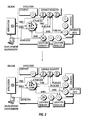
- Figure 1 illustrates a case were a location based service, specifically a location based weather forecast is created out of two existing components, an enabler that provides location information and a weather forecast service.
- service composition functionality as illustrated in the right part of the previous figure, introduces an entity - the service composition engine - that takes care of this complexity for the application.
- the application implements just its core logic, whereas the enabling functionality "location-based weather forecast" is exposed by the composition engine as a single service that may be easily discovered and bound by the application.
- the composition engine executes application logic in the form of the definition of the composite service "location-based weather forecast”.
- This composite service describes the type of required services, so that the engine - at run-time - may discover, bind and execute appropriate services.
- Composition functionality consequently allows for great flexibility e.g. in handling events such as a faulty enabler. In this case the engine could find an alternative service without any disruption of the end-user application. This scenario is illustrated by figure 1 .
- the discussed application scenario illustrates how service composition enables the decoupling of application logic and enabling functions.
- a Service Capability Interaction Manager (or SCIM) orchestrates service delivery among application server platforms within the IP Multimedia Subsystem architecture.
- SCIM Service Capability Interaction Manager
- a “capability” is a system component that may be used (presumably with other components) to implement a “service” that is packaged and delivered to end users of the network.
- a group list server and a presence server may both be considered “capabilities” that are used to implement a sophisticated conferencing service.
- Service composition technology may be used to implement a SCIM as described in references PCT/EP2007/002956 and EP 07010735-4 .
- the approach described in references P23666 and P24100 implies an increase of resources used by the Composition Engine and latency added to session establishment that corresponds to the number of constituent components included in the composite service created.
- This invention optimizes the composition creation process by reducing the number of decisions that need to be made in order to create a new composite service. It has the potential to make composition creation latency constant regardless of the size of the composite service.
- the present invention pertains to an apparatus for creating composite services.
- the apparatus comprises a processing unit which identifies at least one constituent component for a composite service by a processor unit.
- the constituent component has a runtime state.
- the apparatus comprises a data-store having past composition decisions and corresponding runtime states.
- the processing unit locates a past composition decision regarding the constituent component that has essentially the equivalent runtime state in the data-store, and reuses the past composition decision for the constituent component for the composite service.
- the present invention pertains to a method for creating composite services.
- the method comprises the steps of identifying at least one constituent component for a composite service by a processor unit, the constituent component having a runtime state. There is the step of locating a past composition decision regarding the constituent component that has essentially the equivalent runtime state in a data-store by the processing unit. There is the step of reusing the past composition decision for the constituent component for the composite service by the processor unit.
- the apparatus 10 comprises a processing unit 12 which identifies at least one constituent component for a composite service by a processor unit.
- the constituent component has a runtime state.
- the apparatus 10 comprises a data-store 14 having past composition decisions and corresponding runtime states.
- the processing unit 12 locates a past composition decision regarding the constituent component that has essentially the equivalent runtime state in the data-store 14, and reuses the past composition decision for the constituent component for the composite service.
- the processing unit 12 can reuse the past composition decision for the constituent component without renewed consultation of the runtime state or renewed use of a composition algorithm.
- the composition decision can be considered valid when all relevant runtime states are unchanged.
- the data store can have a composition state for composite services previously created and corresponding runtime state for each composition state.
- the processing unit 12 can create composition engine state snapshots in the data-store 14 during runtime by storing a snapshot for each created composite service. Each composition engine state snapshot can have a reference to a corresponding composite service template, a resulting composite service, and a runtime system state at a time of composite service creation.
- the present invention pertains to a method for creating composite services.
- the method comprises the steps of identifying at least one constituent component for a composite service by a processor unit, the constituent component having a runtime state. There is the step of locating a past composition decision regarding the constituent component that has essentially the equivalent runtime state in a data-store 14 by the processing unit 12. There is the step of reusing the past composition decision for the constituent component for the composite service by the processor unit.
- the reusing step can include the step of reusing the past composition decision for the constituent component without renewed consultation of the runtime state or renewed use of a composition algorithm.
- the composition decision can be considered valid when all relevant runtime states are unchanged.
- the data store can have composition state for composite services previously created and corresponding runtime state for each composition state.
- Each composition engine state snapshot can have a reference to a corresponding composite service template, a resulting composite service, and a runtime system state at a time of composite service creation.
- the locating step can include the step of detecting two composite engine state snapshots are completely identical. There can be the step of storing in a snapshot only information which has an effect on the composite service.
- the data-store can include a table and wherein the detecting step can include the step of performing a field by field comparison of values in a row for all rows in the table with the processing unit.
- the detecting step can include the step of performing a field by field comparison with the processing unit, but starting with a row having a smallest number of fields.
- the detecting step can include the steps of building a checksum with the processing unit over all fields in a row, and comparing only the checksum with the processing unit.
- the detecting step can include the steps of building a tree or graph with the processing unit based on the data-store and applying tree or graph search algorithms on them with the processing unit.
- the detecting step can include the step of performing a string comparison of queries to the data-store by the processing unit to locate a corresponding query, and using a result from the corresponding query.
- the locating step can include the steps of detecting that a flag is set to indicate a change to the data-store by the processing unit, and obtaining additional information from the database by the processing unit.
- the locating step can include the steps of building a first checksum from system state data for each composite service in the database by the processing unit, building a second checksum from a present state of the current predetermined values by the processing unit, and determining changes to the system state for each composite service by comparing the first checksum and the second checksum with the processing unit.
- a Composition Engine state snapshot for a given session contains the following data:
- a service composition engine is a system that provides a complex service (composite service) by identifying and executing a number of constituent software components. Such a node requires information about the constituent components for its operation. This information can consist of the following:
- An algorithm for such a composition engine creates a composite service by determining one constituent service after another while taking the run-time state into account. A large part of the latency introduced by the composition algorithm is due to constant consultation of the run-time state.
- a composite service creation algorithm that works deterministically will always create the same composite service under the same circumstances, i.e. given the same run-time state; it will lead to the same service selection decision.
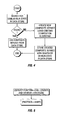
- the invention constitutes a new composition mechanism that efficiently identifies still valid decisions taken by the composition engine in the past, without renewed consultation of the run-time state or renewed use of the composition algorithm. Composition decisions are still valid when all relevant run-time state is still unchanged. See figure 4 .
- This mechanism thereby enables the reuse of past composition decisions thereby eliminating the latency resulting from composite service creation. Consequently, once successfully created, a composite service (and all related service selection criteria) can be reused as long as the current run-time state is the same or equivalent to the run-time state at the time of creation of the original composite service instance.
- Identifying and reusing valid composition decisions is based on the availability of all relevant composition engine state from the time of the original composite service creation is available.
- composition state The information used by the composition engine during composite service creation is defined as composition state.
- the composite state data-store 14 is introduced.
- This data-store 14 contains all composition state for each composite service created in the past. Composition state is stored together with its corresponded run-time state. A previously created composite service can be reused in case the run-time state information that had an impact on this composite service is the same. Only the information that had impact on composite service has to be stored in the data-store 14. Which run-time state information has an impact on composite service can be identified by composition engine state during the composite service creation.
- the data-store 14 may be implemented in number of ways, e.g. as relational database, as hash-table, as tree or graph.
- Table 1 - Example 1 Composition state data-store 14 Data-store ID Composition template ID DB version (service descriptions, composition templates) System state (load, number of sessions, number of alarms, available bandwidth) Session (type, method) User profile (subscription type, prepaid/postpaid, service profile, location, presence) Composite service Xjh56s7dkf Sd34g6s89gh 5hdf28, 9fcx256 45,5320,0,55 SIP, INVITE gold, postpaid, data_profile, 229, online ServiceA ServiceB G78sdjjhj Sd34g6s89gh 5hdf28, 9fcx256 23, 5329, 0, 27 SIP, INVITE silver, postpaid, data_profile, 565, online ServiceA Serviced sdh
- composition state data-store 14 contains following attributes:
- a set of decisions on service selection with related run-time state can be stored in the composition engine state. This enables the reuse of a part of composite service. For example if a composition template contains a conditional statement, the different branches can be stored in the data-store 14 separately (see BlockA, BlockB and BlockC in Figure 3 ).
- How big blocks should be either detected automatically based on some heuristic (e.g., block should depend as a maximum on two runtime variables and should contain a maxim three service templates) or can be defined by a composition template developer, e.g., the developer can mark the most reusable parts of skeletons.
- some heuristic e.g., block should depend as a maximum on two runtime variables and should contain a maxim three service templates
- composition template developer e.g., the developer can mark the most reusable parts of skeletons.
- the information in the data-store 14 has different properties, such as frequency of changes, a value range, etc. This can be taken into consideration for further optimization. For example, while the runtime and session information change continuously, composite service templates and service descriptions change very seldom. Instead of comparing composite service templates and service descriptions every time, the changes can be tracked and reported to a case repository using subscribe-notify algorithms, i.e., data-store 14 subscribes itself by service description database and will be notified in case of changes. In case the composition engine state snapshots were changed, composite service templates or a service description is referenced and will be marked as invalid or removed from data-store 14. Further, instead of storing the run-time in a Composition Engine state snapshot, a hash of run-time or parts of run-time state can be stored.
- the existing composition algorithm has to be extended by three additional activities:
- composition engine state snapshots are considered as similar if they are completely identical.
- the similarity would mean, that the rows of two snapshots have the same values over all as the columns except the two special columns: "data-store id", "composite service”.
- composition engine Which information has an effect on composite service can be identified by the composition engine during the service creation by analyzing the composition template.
- Different search algorithms can be applied to find a snapshot in the data-store that is identical to the current state:
- changes in the environment may be of two general types, i) changes to the service database and ii) changes to the overall system state, e.g., time of day, available bandwidth, presence state of people and services, functional state (registered faults), etc.
- Changes to the database state can be easily detected through a flag that may be set by the Database Management System (DBMS) when performing write access to relevant database areas. This flag may be queried by the Composition Engine as a matter of course before every query to the database. If the query is "true", then further queries to obtain fresh information from the database are needed.
- DBMS Database Management System
- the data-store may contain - on a per composite service basis - a checksum built from relevant system state data for each individual composite service handled by the engine.
- a composite service then behaves differently based on the presence of a group of people, e.g., do something if he is busy, do something else if he is free, and the service may store a checksum of their present states in the data-store. The engine will then be required to keep a corresponding checksum based on the current values of these properties available. Changes on the system state related to an individual composite service may be identified by simply comparing the two checksums.
- the one that has been chosen to be implemented currently and is considered a preferred embodiment is a simple string comparison of the queries towards the service repository.
- the engine When the engine tries to identify a new service to include in the composite service, it would typically consult the service database after processing all constraints to generate the correct query. This query may be stored and compared, if at a later stage the Engine attempts to do the same query, the last valid (provided system state has not changed) result may be used instead.
- Example 1 Service selection is dependent on or independent of run-time state.
- composition template defined in figure 5 .
- This template describes a service composition containing two services:
- the particular service that will be included in the composite service decides the composition engine at runtime based on this composite service template and on service descriptions. Let's assume that service database contains four service descriptions, as shown in figure 6 .
- composition engine will create a composite service containing serviceA and serviceC. As long as service descriptions are not changed the composition engine will make the same service selection dependent on or independent of run-time state. So, this composite service can be stored in data-store 14 and reused again without any adaptation.
- composition template defined in figure 7 .
- the selection of a particular decision at the place of the first service templates depends on a value of runtime variable $preferred_vendor. Consequently, in case the service descriptions database is the same and the $preferred_vendor has the same value the composition engine will take the same service at the place of the first service template.
- the second and third template do not contain any references to runtime information, however the evaluation of these service templates depends on a result of a conditional statement in which the user profile variable $user_profile.type is referenced. Hence, which service will be included as second service in the composite service also depends on this user profile variable.
- composition engine will create the same composition service based on this composition template as long as the database with service description is the same and the runtime variables $preferred_vendor and $user_profile.type have the same values.
- $preferred_vendor has the value "Ericsson” and $user_profile.type has the value "gold” composite service containing the following two services will be created: EricssonLoggingService and SendSMSService.
- $preferred_vendor is "Ericsson” but $user_profile.type is "silver” the composite service will include EricssonLoggingService and SendXMPPService.
- the data-store 14 implemented as a table can look like the following: Data-store ID Composition template ID DB version (service descriptions, composition templates) $preferred_vendor $user_profile.type Composite service Qwrt1 Sd34g6s89gh 5hdf28, 9fcx256 Ericsson gold EricssonLoggingService SendSMSService Dkjsd Sd34g6s89gh Shdf28, 9fcx256 Ericsson Silver EricssonLoggingService SendXMFPService
- the invention leads to shorter lead time for selection of constituent services and therefore to a shorter lead time in building the complete composite service. This improves the user experience as shorter delays can be expected until the wanted telecommunication service is set up. Also a given application server node that works with service composition technology and is enhanced with this invention would show higher capacity (users that can be served) due to the decreased effort needed to set up a single composite service.
Landscapes
- Engineering & Computer Science (AREA)
- Software Systems (AREA)
- General Engineering & Computer Science (AREA)
- Theoretical Computer Science (AREA)
- Physics & Mathematics (AREA)
- General Physics & Mathematics (AREA)
- Computer Networks & Wireless Communication (AREA)
- Signal Processing (AREA)
- Telephonic Communication Services (AREA)
Applications Claiming Priority (1)
| Application Number | Priority Date | Filing Date | Title |
|---|---|---|---|
| US12/393,846 US8224933B2 (en) | 2009-02-26 | 2009-02-26 | Method and apparatus for case-based service composition |
Publications (1)
| Publication Number | Publication Date |
|---|---|
| EP2224381A1 true EP2224381A1 (fr) | 2010-09-01 |
Family
ID=42154357
Family Applications (1)
| Application Number | Title | Priority Date | Filing Date |
|---|---|---|---|
| EP10001861A Withdrawn EP2224381A1 (fr) | 2009-02-26 | 2010-02-24 | Procédé et appareil pour composition de service basé sur des cas |
Country Status (2)
| Country | Link |
|---|---|
| US (1) | US8224933B2 (fr) |
| EP (1) | EP2224381A1 (fr) |
Families Citing this family (6)
| Publication number | Priority date | Publication date | Assignee | Title |
|---|---|---|---|---|
| US8219683B2 (en) * | 2009-03-31 | 2012-07-10 | International Business Machines Corporation | Enabling creation of converged internet protocol multimedia subsystem services by third-party application developers using session initiation protocol support |
| WO2011079854A1 (fr) | 2009-12-31 | 2011-07-07 | Telefonaktiebolaget L M Ericsson (Publ) | Gestion d'une exécution d'un service composite |
| WO2012064278A1 (fr) * | 2010-11-12 | 2012-05-18 | Telefonaktiebolaget L M Ericsson (Publ) | Rapprochement d'un premier profil d'emplacement avec au moins un autre profil d'emplacement |
| US10536508B2 (en) * | 2011-06-30 | 2020-01-14 | Telefonaktiebolaget Lm Ericsson (Publ) | Flexible data communication |
| US9940112B2 (en) * | 2014-11-06 | 2018-04-10 | Capgemini Technology Services India Limited | Efficient framework for deploying middleware services |
| US11042450B2 (en) | 2016-07-28 | 2021-06-22 | International Business Machines Corporation | Mechanism for managing container runtime state |
Family Cites Families (4)
| Publication number | Priority date | Publication date | Assignee | Title |
|---|---|---|---|---|
| US6347312B1 (en) * | 1998-11-05 | 2002-02-12 | International Business Machines Corporation | Lightweight directory access protocol (LDAP) directory server cache mechanism and method |
| US7788225B2 (en) * | 2005-03-18 | 2010-08-31 | Oracle International Corporation | Apparatus and method for identifying asynchronous data in redundant data stores and for re-synchronizing same |
| US7734515B1 (en) * | 2005-08-17 | 2010-06-08 | Amazon Technologies, Inc. | Generating new invocable composite network services based on multiple other invocable constituent network services |
| WO2008119364A1 (fr) | 2007-04-02 | 2008-10-09 | Telefonaktiebolaget Lm Ericsson (Publ) | Technique pour créer, modifier et exécuter des services composites dans un réseau de télécommunications |
-
2009
- 2009-02-26 US US12/393,846 patent/US8224933B2/en not_active Expired - Fee Related
-
2010
- 2010-02-24 EP EP10001861A patent/EP2224381A1/fr not_active Withdrawn
Non-Patent Citations (1)
| Title |
|---|
| EPO: "Mitteilung des Europäischen Patentamts vom 1. Oktober 2007 über Geschäftsmethoden = Notice from the European Patent Office dated 1 October 2007 concerning business methods = Communiqué de l'Office européen des brevets,en date du 1er octobre 2007, concernant les méthodes dans le domaine des activités", JOURNAL OFFICIEL DE L'OFFICE EUROPEEN DES BREVETS.OFFICIAL JOURNAL OF THE EUROPEAN PATENT OFFICE.AMTSBLATTT DES EUROPAEISCHEN PATENTAMTS, OEB, MUNCHEN, DE, vol. 30, no. 11, 1 November 2007 (2007-11-01), pages 592 - 593, XP007905525, ISSN: 0170-9291 * |
Also Published As
| Publication number | Publication date |
|---|---|
| US20100218202A1 (en) | 2010-08-26 |
| US8224933B2 (en) | 2012-07-17 |
Similar Documents
| Publication | Publication Date | Title |
|---|---|---|
| US8050391B1 (en) | System and method for capturing accounting data for a communication session | |
| US8589338B2 (en) | Service-oriented architecture (SOA) management of data repository | |
| CN112114894B (zh) | 基于Activiti流程引擎的流程处理方法、装置及电子设备 | |
| CN113595788B (zh) | 一种基于插件的api网关管理方法及装置 | |
| US20110321011A1 (en) | Application server with a protocol-neutral programming model for developing telecommunications-based applications | |
| EP2224381A1 (fr) | Procédé et appareil pour composition de service basé sur des cas | |
| CN101727475B (zh) | 一种获取数据库访问过程的方法、装置及系统 | |
| CN108064032A (zh) | 一种应用检测控制方法及装置 | |
| US9753789B2 (en) | Distributed system for scheduling action requests | |
| CN107026879A (zh) | 一种数据缓存方法及后台应用系统 | |
| CN102255931A (zh) | 一种物联网架构下统一的通知方法及系统 | |
| CN111381847B (zh) | 信息处理方法及设备 | |
| US10694367B1 (en) | Subscriber data management logs parsing and conversion to analytics use cases | |
| KR101888131B1 (ko) | Dds-dbms 연동 도구의 실시간 변경 데이터 발간 서비스 수행 방법 | |
| CN115134167B (zh) | 一种漏洞扫描方法、装置、设备及存储介质 | |
| US20110125848A1 (en) | Method of performing data mediation, and an associated computer program product, data mediation device and information system | |
| CN107632885A (zh) | 组件间的回调管理方法和装置 | |
| CN113360558B (zh) | 数据处理方法、数据处理装置、电子设备及存储介质 | |
| US12481835B1 (en) | Character turn summaries | |
| CN107220258A (zh) | 用于抓取应用页面的数据的方法、装置及终端 | |
| US20150120607A1 (en) | System and method for customer event email consolidation and delivery | |
| US8195781B2 (en) | Network management with scalable trap definitions | |
| US10419368B1 (en) | Dynamic scaling of computing message architecture | |
| CN119025498A (zh) | 一种数据处理方法、装置、计算机设备以及可读存储介质 | |
| US20150363454A1 (en) | Method and Apparatuses for Handling Concurrent Accesses to Data in a Directory |
Legal Events
| Date | Code | Title | Description |
|---|---|---|---|
| PUAI | Public reference made under article 153(3) epc to a published international application that has entered the european phase |
Free format text: ORIGINAL CODE: 0009012 |
|
| AK | Designated contracting states |
Kind code of ref document: A1 Designated state(s): AT BE BG CH CY CZ DE DK EE ES FI FR GB GR HR HU IE IS IT LI LT LU LV MC MK MT NL NO PL PT RO SE SI SK SM TR |
|
| AX | Request for extension of the european patent |
Extension state: AL BA RS |
|
| STAA | Information on the status of an ep patent application or granted ep patent |
Free format text: STATUS: THE APPLICATION IS DEEMED TO BE WITHDRAWN |
|
| 18D | Application deemed to be withdrawn |
Effective date: 20110302 |