EP2228035A1 - Verwendung von Alginatmatrizen zur Steuerung des Zellwachstums - Google Patents
Verwendung von Alginatmatrizen zur Steuerung des Zellwachstums Download PDFInfo
- Publication number
- EP2228035A1 EP2228035A1 EP10168025A EP10168025A EP2228035A1 EP 2228035 A1 EP2228035 A1 EP 2228035A1 EP 10168025 A EP10168025 A EP 10168025A EP 10168025 A EP10168025 A EP 10168025A EP 2228035 A1 EP2228035 A1 EP 2228035A1
- Authority
- EP
- European Patent Office
- Prior art keywords
- cells
- alginate
- beads
- cell
- matrix
- Prior art date
- Legal status (The legal status is an assumption and is not a legal conclusion. Google has not performed a legal analysis and makes no representation as to the accuracy of the status listed.)
- Withdrawn
Links
- 235000010443 alginic acid Nutrition 0.000 title claims abstract description 339
- 229920000615 alginic acid Polymers 0.000 title claims abstract description 339
- FHVDTGUDJYJELY-UHFFFAOYSA-N 6-{[2-carboxy-4,5-dihydroxy-6-(phosphanyloxy)oxan-3-yl]oxy}-4,5-dihydroxy-3-phosphanyloxane-2-carboxylic acid Chemical compound O1C(C(O)=O)C(P)C(O)C(O)C1OC1C(C(O)=O)OC(OP)C(O)C1O FHVDTGUDJYJELY-UHFFFAOYSA-N 0.000 title claims abstract description 329
- 229940072056 alginate Drugs 0.000 title claims abstract description 327
- 230000010261 cell growth Effects 0.000 title description 47
- 239000011159 matrix material Substances 0.000 claims abstract description 119
- 238000000034 method Methods 0.000 claims abstract description 87
- 239000000203 mixture Substances 0.000 claims abstract description 86
- 239000002356 single layer Substances 0.000 claims abstract description 47
- 239000011248 coating agent Substances 0.000 claims abstract description 21
- 238000000576 coating method Methods 0.000 claims abstract description 21
- 210000004027 cell Anatomy 0.000 claims description 469
- 239000011575 calcium Substances 0.000 claims description 48
- OYPRJOBELJOOCE-UHFFFAOYSA-N Calcium Chemical compound [Ca] OYPRJOBELJOOCE-UHFFFAOYSA-N 0.000 claims description 47
- 229910052791 calcium Inorganic materials 0.000 claims description 47
- 229920000642 polymer Polymers 0.000 claims description 47
- 150000002500 ions Chemical class 0.000 claims description 24
- 210000001519 tissue Anatomy 0.000 claims description 23
- 229910052788 barium Inorganic materials 0.000 claims description 18
- DSAJWYNOEDNPEQ-UHFFFAOYSA-N barium atom Chemical compound [Ba] DSAJWYNOEDNPEQ-UHFFFAOYSA-N 0.000 claims description 18
- HCHKCACWOHOZIP-UHFFFAOYSA-N Zinc Chemical compound [Zn] HCHKCACWOHOZIP-UHFFFAOYSA-N 0.000 claims description 17
- 108090000623 proteins and genes Proteins 0.000 claims description 17
- 239000011701 zinc Substances 0.000 claims description 17
- 229910052725 zinc Inorganic materials 0.000 claims description 17
- RYGMFSIKBFXOCR-UHFFFAOYSA-N Copper Chemical compound [Cu] RYGMFSIKBFXOCR-UHFFFAOYSA-N 0.000 claims description 16
- 229910052802 copper Inorganic materials 0.000 claims description 16
- 239000010949 copper Substances 0.000 claims description 16
- 102000004169 proteins and genes Human genes 0.000 claims description 16
- 210000002950 fibroblast Anatomy 0.000 claims description 10
- 238000004132 cross linking Methods 0.000 claims description 9
- 239000010410 layer Substances 0.000 claims description 9
- 239000013604 expression vector Substances 0.000 claims description 8
- 238000000889 atomisation Methods 0.000 claims description 4
- 210000002919 epithelial cell Anatomy 0.000 claims description 4
- 238000007654 immersion Methods 0.000 claims description 4
- 238000005507 spraying Methods 0.000 claims description 4
- 210000002510 keratinocyte Anatomy 0.000 claims description 2
- 229910052712 strontium Inorganic materials 0.000 abstract description 72
- CIOAGBVUUVVLOB-UHFFFAOYSA-N strontium atom Chemical compound [Sr] CIOAGBVUUVVLOB-UHFFFAOYSA-N 0.000 abstract description 72
- 230000002062 proliferating effect Effects 0.000 abstract description 34
- 241001465754 Metazoa Species 0.000 abstract description 29
- 230000002401 inhibitory effect Effects 0.000 abstract description 27
- 208000012868 Overgrowth Diseases 0.000 abstract description 20
- 230000035755 proliferation Effects 0.000 abstract description 18
- 239000008199 coating composition Substances 0.000 abstract 1
- 239000011324 bead Substances 0.000 description 191
- 239000000499 gel Substances 0.000 description 69
- 230000012010 growth Effects 0.000 description 42
- 239000007943 implant Substances 0.000 description 30
- 235000010410 calcium alginate Nutrition 0.000 description 23
- 239000000648 calcium alginate Substances 0.000 description 23
- 229960002681 calcium alginate Drugs 0.000 description 23
- OKHHGHGGPDJQHR-YMOPUZKJSA-L calcium;(2s,3s,4s,5s,6r)-6-[(2r,3s,4r,5s,6r)-2-carboxy-6-[(2r,3s,4r,5s,6r)-2-carboxylato-4,5,6-trihydroxyoxan-3-yl]oxy-4,5-dihydroxyoxan-3-yl]oxy-3,4,5-trihydroxyoxane-2-carboxylate Chemical compound [Ca+2].O[C@@H]1[C@H](O)[C@H](O)O[C@@H](C([O-])=O)[C@H]1O[C@H]1[C@@H](O)[C@@H](O)[C@H](O[C@H]2[C@H]([C@@H](O)[C@H](O)[C@H](O2)C([O-])=O)O)[C@H](C(O)=O)O1 OKHHGHGGPDJQHR-YMOPUZKJSA-L 0.000 description 23
- 230000004663 cell proliferation Effects 0.000 description 17
- 230000001419 dependent effect Effects 0.000 description 16
- 239000000463 material Substances 0.000 description 16
- NOESYZHRGYRDHS-UHFFFAOYSA-N insulin Chemical compound N1C(=O)C(NC(=O)C(CCC(N)=O)NC(=O)C(CCC(O)=O)NC(=O)C(C(C)C)NC(=O)C(NC(=O)CN)C(C)CC)CSSCC(C(NC(CO)C(=O)NC(CC(C)C)C(=O)NC(CC=2C=CC(O)=CC=2)C(=O)NC(CCC(N)=O)C(=O)NC(CC(C)C)C(=O)NC(CCC(O)=O)C(=O)NC(CC(N)=O)C(=O)NC(CC=2C=CC(O)=CC=2)C(=O)NC(CSSCC(NC(=O)C(C(C)C)NC(=O)C(CC(C)C)NC(=O)C(CC=2C=CC(O)=CC=2)NC(=O)C(CC(C)C)NC(=O)C(C)NC(=O)C(CCC(O)=O)NC(=O)C(C(C)C)NC(=O)C(CC(C)C)NC(=O)C(CC=2NC=NC=2)NC(=O)C(CO)NC(=O)CNC2=O)C(=O)NCC(=O)NC(CCC(O)=O)C(=O)NC(CCCNC(N)=N)C(=O)NCC(=O)NC(CC=3C=CC=CC=3)C(=O)NC(CC=3C=CC=CC=3)C(=O)NC(CC=3C=CC(O)=CC=3)C(=O)NC(C(C)O)C(=O)N3C(CCC3)C(=O)NC(CCCCN)C(=O)NC(C)C(O)=O)C(=O)NC(CC(N)=O)C(O)=O)=O)NC(=O)C(C(C)CC)NC(=O)C(CO)NC(=O)C(C(C)O)NC(=O)C1CSSCC2NC(=O)C(CC(C)C)NC(=O)C(NC(=O)C(CCC(N)=O)NC(=O)C(CC(N)=O)NC(=O)C(NC(=O)C(N)CC=1C=CC=CC=1)C(C)C)CC1=CN=CN1 NOESYZHRGYRDHS-UHFFFAOYSA-N 0.000 description 14
- AEMOLEFTQBMNLQ-AZLKCVHYSA-N (2r,3s,4s,5s,6r)-3,4,5,6-tetrahydroxyoxane-2-carboxylic acid Chemical compound O[C@@H]1O[C@@H](C(O)=O)[C@@H](O)[C@H](O)[C@@H]1O AEMOLEFTQBMNLQ-AZLKCVHYSA-N 0.000 description 10
- AEMOLEFTQBMNLQ-BZINKQHNSA-N D-Guluronic Acid Chemical compound OC1O[C@H](C(O)=O)[C@H](O)[C@@H](O)[C@H]1O AEMOLEFTQBMNLQ-BZINKQHNSA-N 0.000 description 10
- AEMOLEFTQBMNLQ-UHFFFAOYSA-N beta-D-galactopyranuronic acid Natural products OC1OC(C(O)=O)C(O)C(O)C1O AEMOLEFTQBMNLQ-UHFFFAOYSA-N 0.000 description 10
- 238000005538 encapsulation Methods 0.000 description 9
- 238000004519 manufacturing process Methods 0.000 description 9
- 230000001225 therapeutic effect Effects 0.000 description 9
- 238000000338 in vitro Methods 0.000 description 8
- 235000015097 nutrients Nutrition 0.000 description 8
- 102000004877 Insulin Human genes 0.000 description 7
- 108090001061 Insulin Proteins 0.000 description 7
- 239000012620 biological material Substances 0.000 description 7
- 239000003814 drug Substances 0.000 description 7
- 229940125396 insulin Drugs 0.000 description 7
- 210000004153 islets of langerhan Anatomy 0.000 description 7
- 229940079593 drug Drugs 0.000 description 6
- 238000002474 experimental method Methods 0.000 description 6
- 239000001963 growth medium Substances 0.000 description 6
- 230000007773 growth pattern Effects 0.000 description 6
- 210000003494 hepatocyte Anatomy 0.000 description 6
- 230000007246 mechanism Effects 0.000 description 6
- 238000010992 reflux Methods 0.000 description 6
- 239000000758 substrate Substances 0.000 description 6
- 241000282465 Canis Species 0.000 description 5
- 102400001047 Endostatin Human genes 0.000 description 5
- 108010079505 Endostatins Proteins 0.000 description 5
- 230000001919 adrenal effect Effects 0.000 description 5
- 230000008901 benefit Effects 0.000 description 5
- 150000001768 cations Chemical class 0.000 description 5
- 238000004113 cell culture Methods 0.000 description 5
- 206010012601 diabetes mellitus Diseases 0.000 description 5
- 201000010099 disease Diseases 0.000 description 5
- 208000037265 diseases, disorders, signs and symptoms Diseases 0.000 description 5
- 210000003061 neural cell Anatomy 0.000 description 5
- 230000002611 ovarian Effects 0.000 description 5
- 230000000849 parathyroid Effects 0.000 description 5
- 238000010186 staining Methods 0.000 description 5
- 230000002992 thymic effect Effects 0.000 description 5
- 210000001685 thyroid gland Anatomy 0.000 description 5
- 210000003556 vascular endothelial cell Anatomy 0.000 description 5
- 238000006243 chemical reaction Methods 0.000 description 4
- 238000010226 confocal imaging Methods 0.000 description 4
- 230000001900 immune effect Effects 0.000 description 4
- 238000001727 in vivo Methods 0.000 description 4
- 230000005764 inhibitory process Effects 0.000 description 4
- 230000000977 initiatory effect Effects 0.000 description 4
- 238000011160 research Methods 0.000 description 4
- 210000000130 stem cell Anatomy 0.000 description 4
- 230000035899 viability Effects 0.000 description 4
- VEEGZPWAAPPXRB-BJMVGYQFSA-N (3e)-3-(1h-imidazol-5-ylmethylidene)-1h-indol-2-one Chemical compound O=C1NC2=CC=CC=C2\C1=C/C1=CN=CN1 VEEGZPWAAPPXRB-BJMVGYQFSA-N 0.000 description 3
- 102400000068 Angiostatin Human genes 0.000 description 3
- 108010079709 Angiostatins Proteins 0.000 description 3
- 102000000905 Cadherin Human genes 0.000 description 3
- 108050007957 Cadherin Proteins 0.000 description 3
- UXVMQQNJUSDDNG-UHFFFAOYSA-L Calcium chloride Chemical compound [Cl-].[Cl-].[Ca+2] UXVMQQNJUSDDNG-UHFFFAOYSA-L 0.000 description 3
- 102000004127 Cytokines Human genes 0.000 description 3
- 108090000695 Cytokines Proteins 0.000 description 3
- 101000938351 Homo sapiens Ephrin type-A receptor 3 Proteins 0.000 description 3
- 206010021639 Incontinence Diseases 0.000 description 3
- 229940121369 angiogenesis inhibitor Drugs 0.000 description 3
- 239000004037 angiogenesis inhibitor Substances 0.000 description 3
- FZCSTZYAHCUGEM-UHFFFAOYSA-N aspergillomarasmine B Natural products OC(=O)CNC(C(O)=O)CNC(C(O)=O)CC(O)=O FZCSTZYAHCUGEM-UHFFFAOYSA-N 0.000 description 3
- 229920001222 biopolymer Polymers 0.000 description 3
- 210000000481 breast Anatomy 0.000 description 3
- 239000001110 calcium chloride Substances 0.000 description 3
- 229910001628 calcium chloride Inorganic materials 0.000 description 3
- 230000000747 cardiac effect Effects 0.000 description 3
- 230000015556 catabolic process Effects 0.000 description 3
- 210000000170 cell membrane Anatomy 0.000 description 3
- 238000006731 degradation reaction Methods 0.000 description 3
- 238000011161 development Methods 0.000 description 3
- 230000018109 developmental process Effects 0.000 description 3
- 238000005516 engineering process Methods 0.000 description 3
- 210000003238 esophagus Anatomy 0.000 description 3
- 210000002744 extracellular matrix Anatomy 0.000 description 3
- 239000003102 growth factor Substances 0.000 description 3
- 102000057382 human EPHA3 Human genes 0.000 description 3
- 210000005260 human cell Anatomy 0.000 description 3
- 230000003100 immobilizing effect Effects 0.000 description 3
- 238000002513 implantation Methods 0.000 description 3
- 230000003993 interaction Effects 0.000 description 3
- 210000004962 mammalian cell Anatomy 0.000 description 3
- 238000000386 microscopy Methods 0.000 description 3
- 238000004264 monolayer culture Methods 0.000 description 3
- 230000035407 negative regulation of cell proliferation Effects 0.000 description 3
- 229910001631 strontium chloride Inorganic materials 0.000 description 3
- AHBGXTDRMVNFER-UHFFFAOYSA-L strontium dichloride Chemical compound [Cl-].[Cl-].[Sr+2] AHBGXTDRMVNFER-UHFFFAOYSA-L 0.000 description 3
- 229910001427 strontium ion Inorganic materials 0.000 description 3
- 239000000126 substance Substances 0.000 description 3
- 238000012546 transfer Methods 0.000 description 3
- 238000002054 transplantation Methods 0.000 description 3
- 241000251468 Actinopterygii Species 0.000 description 2
- 241000271566 Aves Species 0.000 description 2
- 241000283690 Bos taurus Species 0.000 description 2
- BHPQYMZQTOCNFJ-UHFFFAOYSA-N Calcium cation Chemical compound [Ca+2] BHPQYMZQTOCNFJ-UHFFFAOYSA-N 0.000 description 2
- 208000000094 Chronic Pain Diseases 0.000 description 2
- FBPFZTCFMRRESA-KVTDHHQDSA-N D-Mannitol Chemical compound OC[C@@H](O)[C@@H](O)[C@H](O)[C@H](O)CO FBPFZTCFMRRESA-KVTDHHQDSA-N 0.000 description 2
- 208000010334 End Stage Liver Disease Diseases 0.000 description 2
- 241000283073 Equus caballus Species 0.000 description 2
- QTANTQQOYSUMLC-UHFFFAOYSA-O Ethidium cation Chemical compound C12=CC(N)=CC=C2C2=CC=C(N)C=C2[N+](CC)=C1C1=CC=CC=C1 QTANTQQOYSUMLC-UHFFFAOYSA-O 0.000 description 2
- 241000282324 Felis Species 0.000 description 2
- 241000282412 Homo Species 0.000 description 2
- FYYHWMGAXLPEAU-UHFFFAOYSA-N Magnesium Chemical compound [Mg] FYYHWMGAXLPEAU-UHFFFAOYSA-N 0.000 description 2
- 241000124008 Mammalia Species 0.000 description 2
- 229930195725 Mannitol Natural products 0.000 description 2
- 206010028980 Neoplasm Diseases 0.000 description 2
- 208000002193 Pain Diseases 0.000 description 2
- 208000018737 Parkinson disease Diseases 0.000 description 2
- 241000283984 Rodentia Species 0.000 description 2
- 230000002411 adverse Effects 0.000 description 2
- 150000001413 amino acids Chemical class 0.000 description 2
- 229910001626 barium chloride Inorganic materials 0.000 description 2
- WDIHJSXYQDMJHN-UHFFFAOYSA-L barium chloride Chemical compound [Cl-].[Cl-].[Ba+2] WDIHJSXYQDMJHN-UHFFFAOYSA-L 0.000 description 2
- 230000015572 biosynthetic process Effects 0.000 description 2
- DEGAKNSWVGKMLS-UHFFFAOYSA-N calcein Chemical compound O1C(=O)C2=CC=CC=C2C21C1=CC(CN(CC(O)=O)CC(O)=O)=C(O)C=C1OC1=C2C=C(CN(CC(O)=O)CC(=O)O)C(O)=C1 DEGAKNSWVGKMLS-UHFFFAOYSA-N 0.000 description 2
- 229910001424 calcium ion Inorganic materials 0.000 description 2
- 201000011510 cancer Diseases 0.000 description 2
- 210000001612 chondrocyte Anatomy 0.000 description 2
- 208000011444 chronic liver failure Diseases 0.000 description 2
- 239000004053 dental implant Substances 0.000 description 2
- 230000000694 effects Effects 0.000 description 2
- 238000005421 electrostatic potential Methods 0.000 description 2
- 230000008004 immune attack Effects 0.000 description 2
- 210000000987 immune system Anatomy 0.000 description 2
- 239000012535 impurity Substances 0.000 description 2
- 230000003834 intracellular effect Effects 0.000 description 2
- 210000003734 kidney Anatomy 0.000 description 2
- 210000003292 kidney cell Anatomy 0.000 description 2
- 231100000835 liver failure Toxicity 0.000 description 2
- 230000007774 longterm Effects 0.000 description 2
- 210000004698 lymphocyte Anatomy 0.000 description 2
- 210000002540 macrophage Anatomy 0.000 description 2
- 229910052749 magnesium Inorganic materials 0.000 description 2
- 239000011777 magnesium Substances 0.000 description 2
- 239000000594 mannitol Substances 0.000 description 2
- 235000010355 mannitol Nutrition 0.000 description 2
- 238000005259 measurement Methods 0.000 description 2
- 239000011325 microbead Substances 0.000 description 2
- 210000003098 myoblast Anatomy 0.000 description 2
- 230000017074 necrotic cell death Effects 0.000 description 2
- 229960002378 oftasceine Drugs 0.000 description 2
- 210000000056 organ Anatomy 0.000 description 2
- 230000002265 prevention Effects 0.000 description 2
- 230000008569 process Effects 0.000 description 2
- 238000012545 processing Methods 0.000 description 2
- 230000004044 response Effects 0.000 description 2
- 210000003491 skin Anatomy 0.000 description 2
- 229910001415 sodium ion Inorganic materials 0.000 description 2
- 239000007787 solid Substances 0.000 description 2
- IYMAXBFPHPZYIK-BQBZGAKWSA-N Arg-Gly-Asp Chemical group NC(N)=NCCC[C@H](N)C(=O)NCC(=O)N[C@@H](CC(O)=O)C(O)=O IYMAXBFPHPZYIK-BQBZGAKWSA-N 0.000 description 1
- 102000005701 Calcium-Binding Proteins Human genes 0.000 description 1
- 108010045403 Calcium-Binding Proteins Proteins 0.000 description 1
- 206010061809 Cervix carcinoma stage 0 Diseases 0.000 description 1
- 108010035532 Collagen Proteins 0.000 description 1
- 102000008186 Collagen Human genes 0.000 description 1
- 108010037362 Extracellular Matrix Proteins Proteins 0.000 description 1
- 102000010834 Extracellular Matrix Proteins Human genes 0.000 description 1
- 208000012766 Growth delay Diseases 0.000 description 1
- 108010052285 Membrane Proteins Proteins 0.000 description 1
- 241000551546 Minerva Species 0.000 description 1
- 101710135467 Outer capsid protein sigma-1 Proteins 0.000 description 1
- -1 RGD modified alginate Chemical class 0.000 description 1
- 230000006978 adaptation Effects 0.000 description 1
- 238000004458 analytical method Methods 0.000 description 1
- 210000004102 animal cell Anatomy 0.000 description 1
- 230000006907 apoptotic process Effects 0.000 description 1
- QVGXLLKOCUKJST-UHFFFAOYSA-N atomic oxygen Chemical compound [O] QVGXLLKOCUKJST-UHFFFAOYSA-N 0.000 description 1
- 239000000560 biocompatible material Substances 0.000 description 1
- 230000005540 biological transmission Effects 0.000 description 1
- 210000002798 bone marrow cell Anatomy 0.000 description 1
- 210000004556 brain Anatomy 0.000 description 1
- 239000004067 bulking agent Substances 0.000 description 1
- 235000011148 calcium chloride Nutrition 0.000 description 1
- 235000014633 carbohydrates Nutrition 0.000 description 1
- 150000001720 carbohydrates Chemical class 0.000 description 1
- 210000000845 cartilage Anatomy 0.000 description 1
- 230000030833 cell death Effects 0.000 description 1
- 230000032823 cell division Effects 0.000 description 1
- 239000013553 cell monolayer Substances 0.000 description 1
- 230000009087 cell motility Effects 0.000 description 1
- 230000003833 cell viability Effects 0.000 description 1
- 230000001413 cellular effect Effects 0.000 description 1
- 230000008859 change Effects 0.000 description 1
- 238000007385 chemical modification Methods 0.000 description 1
- 239000003795 chemical substances by application Substances 0.000 description 1
- 229920001436 collagen Polymers 0.000 description 1
- 150000001875 compounds Chemical class 0.000 description 1
- 210000002808 connective tissue Anatomy 0.000 description 1
- 238000010276 construction Methods 0.000 description 1
- 238000012258 culturing Methods 0.000 description 1
- 230000003013 cytotoxicity Effects 0.000 description 1
- 231100000135 cytotoxicity Toxicity 0.000 description 1
- 230000007547 defect Effects 0.000 description 1
- 238000013461 design Methods 0.000 description 1
- 238000001514 detection method Methods 0.000 description 1
- 229910003460 diamond Inorganic materials 0.000 description 1
- 239000010432 diamond Substances 0.000 description 1
- 230000004069 differentiation Effects 0.000 description 1
- 239000002158 endotoxin Substances 0.000 description 1
- 230000007247 enzymatic mechanism Effects 0.000 description 1
- 210000000981 epithelium Anatomy 0.000 description 1
- 230000029142 excretion Effects 0.000 description 1
- 239000000835 fiber Substances 0.000 description 1
- 238000002073 fluorescence micrograph Methods 0.000 description 1
- 238000000799 fluorescence microscopy Methods 0.000 description 1
- 238000009472 formulation Methods 0.000 description 1
- 239000011521 glass Substances 0.000 description 1
- 230000028993 immune response Effects 0.000 description 1
- 238000011065 in-situ storage Methods 0.000 description 1
- 102000006495 integrins Human genes 0.000 description 1
- 108010044426 integrins Proteins 0.000 description 1
- 238000005342 ion exchange Methods 0.000 description 1
- 230000001788 irregular Effects 0.000 description 1
- 238000012423 maintenance Methods 0.000 description 1
- 230000009456 molecular mechanism Effects 0.000 description 1
- 239000003068 molecular probe Substances 0.000 description 1
- 239000000178 monomer Substances 0.000 description 1
- 230000001338 necrotic effect Effects 0.000 description 1
- 210000005036 nerve Anatomy 0.000 description 1
- 231100000989 no adverse effect Toxicity 0.000 description 1
- 238000005457 optimization Methods 0.000 description 1
- 230000000065 osmolyte Effects 0.000 description 1
- 229910052760 oxygen Inorganic materials 0.000 description 1
- 239000001301 oxygen Substances 0.000 description 1
- 230000036961 partial effect Effects 0.000 description 1
- 102000004196 processed proteins & peptides Human genes 0.000 description 1
- 108090000765 processed proteins & peptides Proteins 0.000 description 1
- 230000036647 reaction Effects 0.000 description 1
- 230000008929 regeneration Effects 0.000 description 1
- 238000011069 regeneration method Methods 0.000 description 1
- 230000028327 secretion Effects 0.000 description 1
- 230000004083 survival effect Effects 0.000 description 1
- 239000002699 waste material Substances 0.000 description 1
- 230000003313 weakening effect Effects 0.000 description 1
Images




Classifications
-
- A—HUMAN NECESSITIES
- A61—MEDICAL OR VETERINARY SCIENCE; HYGIENE
- A61L—METHODS OR APPARATUS FOR STERILISING MATERIALS OR OBJECTS IN GENERAL; DISINFECTION, STERILISATION OR DEODORISATION OF AIR; CHEMICAL ASPECTS OF BANDAGES, DRESSINGS, ABSORBENT PADS OR SURGICAL ARTICLES; MATERIALS FOR BANDAGES, DRESSINGS, ABSORBENT PADS OR SURGICAL ARTICLES
- A61L27/00—Materials for grafts or prostheses or for coating grafts or prostheses
- A61L27/36—Materials for grafts or prostheses or for coating grafts or prostheses containing ingredients of undetermined constitution or reaction products thereof, e.g. transplant tissue, natural bone, extracellular matrix
- A61L27/38—Materials for grafts or prostheses or for coating grafts or prostheses containing ingredients of undetermined constitution or reaction products thereof, e.g. transplant tissue, natural bone, extracellular matrix containing added animal cells
- A61L27/3886—Materials for grafts or prostheses or for coating grafts or prostheses containing ingredients of undetermined constitution or reaction products thereof, e.g. transplant tissue, natural bone, extracellular matrix containing added animal cells comprising two or more cell types
-
- A—HUMAN NECESSITIES
- A61—MEDICAL OR VETERINARY SCIENCE; HYGIENE
- A61L—METHODS OR APPARATUS FOR STERILISING MATERIALS OR OBJECTS IN GENERAL; DISINFECTION, STERILISATION OR DEODORISATION OF AIR; CHEMICAL ASPECTS OF BANDAGES, DRESSINGS, ABSORBENT PADS OR SURGICAL ARTICLES; MATERIALS FOR BANDAGES, DRESSINGS, ABSORBENT PADS OR SURGICAL ARTICLES
- A61L27/00—Materials for grafts or prostheses or for coating grafts or prostheses
- A61L27/14—Macromolecular materials
- A61L27/20—Polysaccharides
-
- A—HUMAN NECESSITIES
- A61—MEDICAL OR VETERINARY SCIENCE; HYGIENE
- A61P—SPECIFIC THERAPEUTIC ACTIVITY OF CHEMICAL COMPOUNDS OR MEDICINAL PREPARATIONS
- A61P3/00—Drugs for disorders of the metabolism
- A61P3/08—Drugs for disorders of the metabolism for glucose homeostasis
- A61P3/10—Drugs for disorders of the metabolism for glucose homeostasis for hyperglycaemia, e.g. antidiabetics
Definitions
- the present invention relates to alginate matrices and their uses in compositions and devices to inhibit cell proliferation.
- the present invention also relates to alginate formulations, constructs and devices having cell monolayers, adhered thereto and their uses.
- Alginates are well known as versatile materials for cell encapsulation because of their ability to form highly biocompatible and strong gels under physiologic conditions at constant temperature ( Skj ⁇ k-Br ⁇ k G, and T. Espevik Carbohydrates in Europe 1996; 14: 19-25 ; and Strand BL, et al. Minerva Biotecnologica 2000; 12: 223-233 , which are incorporated herein be reference). Transplantation of alginate based tissue constructs may be useful in the treatment of a large number of diseases. Alginates can be used to entrap cells within microbeads, thus protecting the cells against immune attack from the host and physical stress. (Skj ⁇ k-Br ⁇ k G, and T.
- Cells entrapped within alginate beads excreting therapeutic molecules may be used as implantable bioreactors in the treatment of a large variety of diseases, including cancer, diabetes, Parkinson's disease, chronic pain and liver failure (Emerich DF and HC Salzberg supra ; Lanza RP, and DK Cooper supra; Wang T, et al. Nat Biotechnol 1997; 15: 358-362 ; Read T-A, et al. Nat Biotechnol 2001; 19: 29-34 ; Cai J, et al. Hepatology 2002; 36: 386-394 ; Canaple L, et al.
- diseases including cancer, diabetes, Parkinson's disease, chronic pain and liver failure (Emerich DF and HC Salzberg supra ; Lanza RP, and DK Cooper supra; Wang T, et al. Nat Biotechnol 1997; 15: 358-362 ; Read T-A, et al. Nat Biotechnol 2001; 19: 29-34 ; Cai J,
- alginates are now widely used as immobilizing materials for cells or tissue in the development of bioreactor systems for therapeutic use.
- Alginates are also being studied as a biostructure materials in other types of medical applications. Dependent of the manufacturing process alginates may take various forms such as pastes, sponges, fibers, rods and tubes. Alginate sponges are being studied as materials for cell transplantation ( Miralles G, et al. Journal of Biomedical Materials Research 2001; 57: 268-278 ; and Shapiro L and S. Cohen Biomaterials 1997; 18: 583-590 , which are each incorporated herein by reference.) and nerve regeneration ( Sufan W, et al. Journal of Neurotrauma 2001; 18: 329-338 ; Kataoka K, et al. J Biomed Mater Res 2001; 54: 373-384 ; and Hashimoto T, et al.
- compositions comprising proliferating cells encapsulated in alginate and methods of using such compositions in which the growth and proliferation of the cells is controlled, thereby preventing bead disruption, cell leakage and the immune response that follows.
- compositions comprising cells encapsulated in alginate and methods of using such compositions wherein the cells excrete therapeutic molecules.
- compositions comprising cells encapsulated in alginate and methods of using such compositions in the treatment of diseases.
- the present invention relates to methods of inhibiting proliferation of a plurality of proliferating cells.
- the method comprises the step of maintaining the cells within an alginate matrix that comprises alginate polymers and Strontium.
- the present invention also relates methods of inhibiting cell growth on a composition in a human body.
- the methods comprise the step of maintaining the composition in the human's body.
- the composition comprises an alginate gel comprising Strontium.
- the present invention also relates methods of inhibiting cell growth on a composition in an animal for 180 or more days.
- the methods comprise the step of maintaining the composition in the animal's body for 180 or more days.
- the composition comprises an alginate gel comprising Strontium.
- the present invention also relates to methods of inhibiting cell growth on a device in an animal.
- the methods comprise the step of maintaining the device in the animal.
- the device comprises an alginate gel comprising Strontium.
- the present invention also relates to devices that have on their exterior surface an alginate matrix that comprises Strontium.
- the present invention relates to a method of coating or covering the exterior surface of a cell free composition or device with an alginate matrix.
- the method comprises the step of first covering or coating the cell free composition or device or a component thereof, with an alginate solution, and successively or subsequently applying by immersion, submersion, spraying, atomization or other technique, a divalent cross-linking ion whereby the alginate polymers of the alginate solution coating the device become cross-linked by the divalent cross linking ions and an alginate matrix coating the device is formed.
- the present invention also relates to compositions comprising an alginate body that comprises a single layer of cells coating the exterior surface of the alginate body.
- the alginate body comprises one or more of Calcium, Barium, Zinc and Copper.
- the present invention also relates to sheets of alginate that comprise a single layer of cells on the surface.
- the alginate sheets comprise one or more of Calcium, Barium, Zinc or Copper.
- the present invention also relates to methods of preparing an artificial tissue.
- the methods comprise growing a plurality of sheets of cells, the sheets of cells each comprising a single layer of cells on a sheet comprising an alginate matrix that comprises alginate polymer and one or more of Calcium, Barium, Zinc or Copper, stacking the sheets of cells by placing the bottom of one sheet of cells on the cells of a another sheet of cells and maintaining stacked sheets of cells under conditions in which the alginate matrix of each sheet is dissolved whereby each single layer of cells comes in direct contact with at least one other single layer of cells to produce a tissue having a plurality of layers of cells.
- the present invention arises out of discoveries that demonstrate that the type of divalent cation used to produce an alginate matrix has an effect on the proliferation of cells that come in contact with such alginate matrix. These discoveries allow for the design and production of specific compositions and devices that include specific types of alginate matrices based upon the desire to inhibit or support cell proliferation. Some aspects of the present invention provide compositions and devices and uses thereof which are associated with alginate matrices that inhibit cell proliferation. Some aspects of the present invention provide compositions and devices and uses thereof which are associated with alginate matrices that promote controlled cell growth whereby cells can be grown and maintained as a single monolayers of cells.
- the proliferation of cells encapsulated within an alginate matrix can be inhibited in order to prevent problems that are associated with maintaining proliferating cells within an alginate matrix, particularly the problems that arise when such alginate matrix-encapsulated proliferating cells are implanted in an animal.
- cell proliferation can be inhibited to prevent overgrowth of an implant by the recipient's own cells over implanted compositions and devices that remain in the body of a recipient for extended periods of time. Inhibition of cell overgrowth overcomes problems associated with the use of implantable compositions and devices and provides for improved compositions, devices and methods.
- the presence of Strontium inhibits the overgrowth of cells from the recipient's body which if present can prevent material from being secreted from the compositions into the body of the recipient. By preventing the overgrowth, the secretion from the composition can continue unimpeded over time.
- compositions comprising living cells encapsulated in an alginate matrix also allows the cells within the matrix continued access to nutrients and materials necessary for continued viability for surprising long periods in time.
- compositions in which the composition is an alginate matrix encapsulating proliferating cells
- the presence of the Strontium inhibits the proliferation of the encapsulated cells, which is known to cause many problems that prevent the long-term use of such compositions.
- proliferating cells is meant to refer to cells that are capable of continuous and repeated cell division under the conditions in which they are maintained in the absence of Strontium that is present at a level effective to inhibit cell proliferation. Inhibition of continued cell proliferation prevents disruption of the matrix integrity and the subsequent leakage of the cells into the body. Accordingly, some embodiments of the invention provide methods that allow compositions containing proliferating cells to be maintained in the body of the recipient for surprising long periods of time without matrix disruption and cell leakage.
- the inhibition of cell proliferation by alginate matrices containing Strontium allows for methods of inhibiting cell overgrowth over implanted devices and compositions, thereby overcoming problems associated with the use of implanted devices and compositions.
- Improved devices and improved methods of using the devices are provided.
- Improved devices, such as those having Strontium containing alginate matrices on exterior surfaces and methods of using such compositions are provided. These devices are particularly useful because their use is characterized by an inhibition of cell overgrowth associated with many implanted devices and the problems and undesirable results of such cell overgrowth.
- compositions include those which comprise cells encapsulated within an alginate matrix as described above as well as cell-free compositions such as those comprising or consisting of alginate matrices and methods of using such compositions are also provided.
- compositions comprise an alginate matrix that encapsulates a drug or protein that is secreted from the implanted compositions into the body.
- compositions may be used as bulking agents which can be used, for example, to provide a biocompatible material that can occupy space when needed to support, encase or become integrated with devices and tissues.
- methods of inhibiting proliferation of a plurality of proliferating cells comprise the step of maintaining the proliferating cells within an alginate matrix that comprises alginate polymers and Strontium.
- the encapsulated cells are maintained within the body of an animal.
- the animal is a mammal, preferably a human, a rodent such as a mouse or a rat, or a bovine, ovine, equine, canine or feline species.
- the animal is a fish or an avian species.
- the cells are maintained within the alginate matrix for at least 7 days, preferably at least 30 days, in some embodiments at least 60 days, in some embodiments at least 90 days, more preferably at least 180 days and more preferably one year or more.
- the cells within the alginate matrix are maintained in the body of an animal for at least 7 days, preferably at least 30 days, in some embodiments at least 60 days, in some embodiments at least 90 days, more preferably at least 180 days and more preferably one year or more.
- the cells within the alginate matrix are maintained within an implantable device such as a container that can be maintained in the body of an animal.
- the cells within the alginate matrix that are maintained within an implantable device can be maintained for at least 7 days, preferably at least 30 days, in some embodiments at least 60 days, in some embodiments at least 90 days, more preferably at least 180 days and more preferably one year or more.
- the proliferating cells within the alginate matrix are attached as a monolayer to the exterior surface of an alginate body encapsulated within the alginate matrix.
- that alginate body comprises alginate polymers and Calcium.
- that alginate body comprises alginate polymers and one or more of Calcium, Barium, Zinc and Copper.
- methods of inhibiting cell growth on the exterior surface a composition that comprises a plurality of cells in a human's body for seven or more days.
- the method comprises the step of maintaining the composition in the human's body for seven or more days wherein the composition comprises a plurality of cells encapsulated in an alginate matrix comprising Strontium.
- the cells may be proliferating cells, non-proliferating cells or a combination of both.
- the composition is maintained in the body of a human for one year or more.
- methods of inhibiting cell growth on the exterior surface a composition that comprises a plurality of cells in an animal's body for at least 180 days.
- the method comprises the step of maintaining the composition in the animal's body for seven or more days wherein the composition comprises a plurality of cells encapsulated in an alginate matrix comprising Strontium.
- the cells may be proliferating cells, non-proliferating cells or a combination of both.
- the composition is maintained in the body of an animal for one year or more.
- the matrices are generally spheroid. In some embodiments, the matrices are irregular shaped. Generally, the alginate matrix must be large enough to accommodate an effective number of cells while being small enough such that the surface area of the exterior surface of the matrix is large enough relative to the volume within the matrix. As used herein, the size of the alginate matrix is generally presented for those matrices that are essentially spheroid and the size is expressed as the largest cross section measurement. In the case of a spherical matrix, such a cross-sectional measurement would be the diameter.
- the alginate matrix is spheroid and its size is between about 20 and about 1000 ⁇ m. In some embodiments, the size of the alginate matrix is less than 100 ⁇ m, e.g. between 20 to 100 ⁇ m; in some embodiments, the size of the alginate matrix is greater than 800 ⁇ m, e.g. between 800-1000 ⁇ m.
- the size of the alginate matrix is about 100 ⁇ m, in some embodiments, the size of the alginate matrix is about 200 ⁇ m, in some embodiments, the size of the alginate matrix is about 300 ⁇ m; in some embodiments, the size of the alginate matrix is about 400 ⁇ m, in some embodiments, the size of the alginate matrix is about 500 ⁇ m; in some embodiments, the size of the alginate matrix is about 600 ⁇ m; and in some embodiments about 700 ⁇ m.
- encapsulated cells are mammalian cells, preferably human cells.
- the non-proliferating cells may be selected from the group consisting of, but not limited to: pancreatic islets, hepatic cells, neural cells, renal cortex cells, vascular endothelial cells, thyroid and parathyroid cells, adrenal cells, thymic cells, ovarian cells, and other cell types of primary origin.
- the proliferating cells may derived from established cell lines, such as, but not limited to, for example, HEK 293, MDCK and C2Cl2 cell lines.
- encapsulated cells comprise an expression vector that encodes one or more proteins that are expressed when the cells are maintained.
- the protein is a cytokine, a growth factor, insulin or an angio genesis inhibitor such as angiostatin or endostatin. Proteins with a lower molecular weight, less than about 60-70 kD, are particularly good candidates because of the porosity of the gel-network.
- the encapsulated cells are attached as a monolayer to the exterior surface of an alginate body encapsulated within the alginate matrix. In some embodiments, that alginate body comprises alginate polymers and Calcium.
- a cell-free composition in an animal's body for seven or more days comprises the step of maintaining the cell-free composition in the animal's body wherein the composition comprises an alginate matrix comprising Strontium.
- the cell-free composition comprises a drug encapsulated within the alginate matrix.
- the cell-free composition comprises a protein encapsulated within the alginate matrix.
- the cell-free composition is a tissue bulking implant.
- the cell-free composition is a tissue bulking implant that consists essentially of alginate polymers and Strontium.
- methods of inhibiting cell growth on the exterior surface a device in an animal's body comprise the step of maintaining the device in the animal's body wherein an alginate matrix comprising Strontium is deposited on the exterior surface the device.
- the device is selected from the group consisting of: a stent, a cardiac pacemaker, a catheter, an implantable prosthetic, a surgical screw, a surgical wire, a tissue bulking implant, an esophagus reflux inhibiting implant, an incontinence inhibiting implant, a renal reflux inhibiting implant, a container suitable for holding cells that are deposited on the exterior of a surface and/or encapsulated with an alginate matrix such as a solid device or macrocapsule, a breast implant, a chin implant, a cheek implant, a pectoral implant, a gluteus implant and a dental implant.
- a stent a cardiac pacemaker, a catheter, an implantable prosthetic, a surgical screw, a surgical wire, a tissue bulking implant, an esophagus reflux inhibiting implant, an incontinence inhibiting implant, a renal reflux inhibiting implant, a container suitable for holding cells that are deposited on the exterior of a surface and/or encapsulated with an alg
- the cell-free compositions or devices are maintained within the body of a mammal, preferably a human, a rodent such as a mouse or a rat, or a bovine, ovine, equine, canine or feline species.
- the animal is a fish or an avian species.
- the device is maintained in the body of an animal for at least 7 days, preferably at least 30 days, more preferably at least 60 days, more preferably at least 90 days, more preferably at least 180 days and more preferably one year or more.
- the present invention also relates to implantable devices having an alginate matrix comprising Strontium deposited on the exterior surface.
- the device is selected from the group consisting of: a stent, a cardiac pacemaker, a catheter, a prosthetic, a surgical screw, a surgical wire, a tissue bulking implant , an esophagus reflux inhibiting implant, an incontinence inhibiting implant, a renal reflux implant, a container suitable for holding cells that are deposited on the exterior of a surface and/or encapsulated with an alginate matrix such as a solid device or macrocapsule, a breast implant, a chin implant, a cheek implant, a pectoral implant, a gluteus implant and a dental implant.
- the present invention relates to a method of coating or covering the exterior surface of a cell free composition or device with an alginate matrix
- a method of coating or covering the exterior surface of a cell free composition or device with an alginate matrix comprising the step of first covering or coating the cell free composition or device or a component thereof, with an alginate solution, and successively or subsequently applying by immersion, submersion, spraying, atomization or other technique, a divalent cross-linking ion such as Calcium, Barium, Copper, Zinc or Strontium whereby the alginate polymers of the alginate solution coating the device become cross-linked by the divalent cross linking ions and an alginate matrix coating the device is formed thereby.
- the alginate solution used for the initial coating or covering would be of sufficient viscosity to effectively coat or cover the cell free composition or device.
- the initial covering or coating is further cross-linked in the hydrated (wet) state.
- the initial covering or coating is first dried before reaction with the cross-linking ion
- alginate matrices comprising Strontium.
- the alginate matrix is initially essentially free of one or more of Calcium, Barium, Zinc and Copper.
- the divalent cations in the alginate matrix consist of Strontium.
- the alginate matrix consists essentially of alginate polymers and Strontium.
- the alginate polymers of the alginate matrix contain more than 50% ⁇ -L-guluronic acid. In some embodiments, the alginate polymers of the alginate matrix contain more than 60% ⁇ -L-guluronic acid.
- the alginate polymers of the alginate matrix contain 60% to 80% ⁇ -L-guluronic acid. In some embodiments, the alginate polymers of the alginate matrix contain 65% to 75% ⁇ -L-guluronic acid. In some embodiments, the alginate polymers of the alginate matrix contain more than 70% ⁇ -L-guluronic acid. In some embodiments, the alginate polymers of the alginate matrix have an average molecule weight of from 20 to 500kD. In some embodiments, the alginate polymers of the alginate matrix have an average molecule weight of from 50 to 500kD. In some embodiments, the alginate polymers of the alginate matrix have an average molecule weight of from 100 to 500kD. In some embodiments, the alginate matrix is free of polycationic amino acids.
- alginate matrices that comprise one more of Calcium, Zinc and Barium.
- This discovery provides aspects of the invention which relate to alginate bodies made up of alginate matrices and sheets of alginate matrices having monolayers of cells adhered to their surfaces and to methods of using such alginate bodies and alginate sheets. It has been discovered that cells adhered to such alginate bodies and alginate sheets may be maintained in a stable form as monolayers. Alginate bodies and alginate sheets provide a stable platform on which to maintain, propagate and handle cells.
- Alginate bodies and alginate sheets can comprise a plurality of non-proliferating cells adhered to the surfaces as a monolayers, allowing for ease of handling, efficient maintenance, more regular dispersal in a volume, and prevention of clumping of such cells. Furthermore, such alginate bodies and alginate sheets may be used to keep the cells at a very high density, still allowing the exchange of nutrients keeping the cells viable, and thereby increase the excretion efficiency of therapeutic products. Growing and maintaining monolayers of cells on alginate surfaces is useful to provide specific shapes of cell/matrix compositions. In addition, by growing the cells as monolayers, the cells can be arranged in an optimal way to allow the cells to remain viable at very high concentrations.
- the cells are incorporated or otherwise used in connection with devices or macrocapsules.
- the cells By maintaining cells as a monolayer on an alginate surface, the cells can be more optimally arranged within the device or macrocapsule. This can be particularly useful in such devices where the volume is small and optimization of cell density is critical.
- Alginate bodies and alginate sheets that comprise a plurality of proliferating cells have the same advantages as those with non-proliferating cells with the additional advantage of allowing for more controlled propagation of cells as a monolayer.
- compositions comprise an alginate body that comprises a single layer of cells on the exterior surface of the alginate body, wherein the alginate body comprises one or more of Calcium, Barium, Zinc and Copper.
- the alginate body is generally spheroid in shape and size of the alginate body is between less than 600 ⁇ m, in some embodiments less than 500 ⁇ m, in some embodiments less than 400 ⁇ m, in some embodiments less than 300 ⁇ m, in some embodiments less than 200 ⁇ m and in some embodiments less than 100 ⁇ m.
- the cells are mammalian cells, preferably human cells.
- cells are non-proliferating cells, preferably cells selected from the group consisting of, but not limited to: stem cells, pancreatic islets, hepatic cells, neural cells, renal cortex cells, vascular endothelial cells, thyroid and parathyroid cells, adrenal cells, thymic cells, and ovarian cells.
- the cells are proliferating cells such as cells derived from established cell lines, for example, HEK 293, MDCK and C2C12 cell lines.
- the cells comprise an expression vector that encodes a protein that is expressed when the cells are maintained.
- the protein is a cytokine, a growth factor, insulin or an angiogenesis inhibitor such as angiostatin or endostatin.
- that alginate body is encapsulated within an alginate matrix such as an alginate matrix comprising alginate polymers and Strontium.
- the monolayer is grown using proliferating cells that are then converted to into terminally differentiated or other non-proliferating state.
- the alginate bodies with monolayers of cells adhered thereto are contained within an implantable device.
- encapsulated cells that are contained within an alginate matrix that comprises alginate polymers and Strontium are incorporated into an implantable device which is optionally coated within an alginate matrix that comprises alginate polymers and Strontium.
- the cells within the alginate matrix are attached as a monolayer to the exterior surface of an alginate body which preferably comprises alginate polymers and Calcium, Barium, Zinc, Copper and/or Magnesium.
- Cells used in such embodiments are preferably cells selected from the group consisting of: stem cells, pancreatic islets, hepatic cells, neural cells, renal cortex cells, vascular endothelial cells, thyroid and parathyroid cells, adrenal cells, thymic cells, ovarian cells, HEK 293 cells, MDCK cells and C2Cl2 cell.
- the cells comprise an expression vector that encodes a protein, such as for example a cytokine, a growth factor, insulin or an angiogenesis inhibitor such as angiostatin or endostatin, that is expressed when the cells are maintained.
- an implantable device comprising encapsulated insulin producing cells, such as pancreatic islet cells, that are contained within an alginate matrix that comprises alginate polymers and Strontium are used to treat individuals suffering from diabetes.
- the device which allows for the transfer of materials between its inside and outside is implanted and maintained in the individual and the cells within the device produce and release insulin which travels into the individual's body.
- the implantable device is coated with an alginate matrix that comprises alginate polymers and Strontium.
- the insulin producing cells that are contained within an alginate matrix are attached as a monolayer to the exterior surface of an alginate body which preferably comprises alginate polymers and Calcium, Barium, Zinc, Copper and/or Magnesium.
- compositions comprise an alginate sheet that comprises a single layer of cells on the surface of the alginate sheet, wherein the alginate sheet comprises Calcium.
- the cells are mammalian cells, preferably human cells.
- cells are non-proliferating cells, preferably cells selected from the group consisting of, but not limited to: stem cells, pancreatic islets, hepatic cells, neural cells, renal cortex cells, vascular endothelial cells, thyroid and parathyroid cells, adrenal cells, thymic cells, and ovarian cells.
- the cells are proliferating cells such as cells derived from established cell lines, for example, but not limited to, HEK 293, MDCK and C2C12 cell lines.
- the cells comprise an expression vector that encodes one ore more proteins that are expressed when the cells are maintained.
- methods are provided of preparing an artificial tissue.
- a plurality of sheets of cells are grown in which the sheets of cells each comprising a single layer of cells on a sheet comprising an alginate matrix that comprises alginate polymer and Calcium.
- the sheets of cells are stacked by placing the bottom of one sheet of cells on the top of another sheet of cells.
- the stacked sheets of cells are maintained under conditions in which the alginate matrix of each sheet is dissolved whereby each single layer of cells comes in direct contact with at least one other single layer of cells to produce a tissue having a plurality of layers of cells.
- the plurality of sheets of cells comprises a plurality of sheets of epithelial cells. In some embodiments, the plurality of sheets of cells further comprises one or more sheets of fibroblast cells. In some embodiments, the plurality of sheets of cells comprises a plurality of sheets of hepatocytes. In some embodiments, the plurality of sheets of cells comprises one or more sheets of islet cells. In some embodiments, the cells used herein are stem cells. According to some embodiments, epithelial tissue is constructed as artificial skin. Layers of epithelial cells (keratinorytes and others) are added to layers of connective tissue (fibroblasts) to be used for replacement of damaged skin in patients.
- fibroblasts connective tissue
- alginate matrices comprising one or more of Calcium, Barium, Zinc and Copper.
- the alginate matrix is essentially free of Strontium.
- the divalent cations in the alginate matrix consist of Calcium.
- the alginate matrix consists essentially of alginate polymers and Calcium.
- the alginate polymers of the alginate matrix are greater than 50% ⁇ -L-guluronic acid monomers.
- the alginate polymers of the alginate matrix contain more than 60% ⁇ -L-guluronic acid.
- the alginate polymers of the alginate matrix are between 60% and 80 % ⁇ -L-guluronic acid. In some embodiments, the alginate polymers of the alginate matrix contain more than 70% ⁇ -L-guluronic acid. In some embodiments, the alginate polymers of the alginate matrix contain between 65% and 75 % ⁇ -L-guluronic acid. In some embodiments, the alginate polymers of the alginate matrix have an average molecule weight of from 20 to 500kD. In some embodiments, the alginate polymers of the alginate matrix have an average molecule weight of from 50 to 500kD. In some embodiments, the alginate polymers of the alginate matrix have an average molecule weight of from 100 to 500kD. In some embodiments, the alginate matrix is free of polycationic amino acids.
- Human HEK 293 Endo cells embryonic kidney cells, transfected for endostatin production
- canine MDCK cells were used (derived from an apparently normal kidney of an adult female cocker spaniel). The cells were routinely grown as monolayer cell cultures and recultured three times a week. In each experiment the cells were trypsinized, mixed with 1.8 % PRONOVA SLG 20 alginate solutions and entrapped in alginate beads by using an electrostatic bead generator as previously described in Klokk TI, and JE Melvik, J Microencapsulation 2002; 19: 415-424 , which is incorporated herein by reference.
- Beads with a size of about 400 ⁇ m were made by using an 0.35 mm outer diameter nozzle and operating the bead generator at an electrostatic potential of about 6 kV/cm with a distance between nozzle tip and gelling bath of about 1 cm.
- the presence of sodium ions during gelling was avoided as much as possible by using mannitol as the osmolyte in order to obtain inhomogeneous beads with better properties ( Strand BL, et al. Biotechnol Bioeng 2003; 82: 386-394 , which is incorporated herein by reference).
- the gelling solutions used contained 50 mM CaCl2, SrCl2 or BaCl2. After gelling the beads were transferred into cell culture flasks and added normal cell growth medium. The growth medium was changed 2-3 times each week, and the beads were also regularly transferred into new flasks in order to avoid extensive growth of cells released from the beads on the flask growth surface. The beads and cell growth were followed with time by using light or fluorescence micro
- Detection of live and dead cells was performed by using a LIVE/DEAD Viability/Cytotoxicity Kit (Molecular Probes, Oregon, USA). Staining of cells was performed as described in the procedure following the kit. Green fluorescence is detected from intracellular esterase-converted calcein as an indicator of living cells whereas red fluorescence is detected from simultaneous ethidium staining of dead cells (leaking cell membrane). Alginate bead containing cells were observed by confocal imaging microscopy.
- the growth pattern of cells within the alginate gel network was clearly different between the two cell lines ( Figures 1 and 2 ). Although the MDCK cells showed a more rapid growth in monolayer cultures, the growth within the gel network was slower as compared to the HEK 293 Endo cells. Similar differences have previously also been reported (Rokstad AM, et al. supra ). The higher strength of the Strontium gel network, however, maintained bead integrity with both of the encapsulated cell lines for a longer time as compared to Calcium beads. The strength of the alginate network microstructure is likely to directly influence the growth rate of the cells (Rokstad AM, et al, supra and Stabler CL and A Sambanis supra ).
- the strength of the gel network may also change with time as a result of cell proliferation but also as a result of ion exchange between the gel and the growth medium (Rokstad AM, et al. supra; Smidsr ⁇ d O and G Skj ⁇ k-Br ⁇ k. TIBTECH 1990; 8: 71-78 ; and Read T-A, et al. Int J Devl Neuroscience 1999; 17: 653-663 , which are each incorporated herein by reference).
- the presence of enzymatic mechanisms for degradation of the gel network has also been suggested (Rokstad AM, et al. supra ) .
- Strontium alginate gel Compared to the Calcium alginate gel a Strontium alginate gel will be less susceptible to degradation during time in a solution with low concentration of gelling ions. The release of cells from the different beads is likely to occur as a result of disruption of some of the beads but also as a result of cell growth and movement through the gel network.
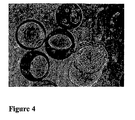
- the growth pattern of cells at the bead surface was also highly different between the two cell lines. While the HEK 293 Endo cells were growing more or less attached to the beads ( Figure 1 ), MDCK-cells covered the beads as a complete spherical monolayer ( Figure 2 ). Clearly the MDCK-cells were strongly attached to the calcium alginate bead surface as demonstrated by confocal imaging. The tight attachment to the calcium bead surface suggests an anchorage dependent growth involving specific attachment mechanisms. Furthermore, the lack of growth at the Strontium gel surface suggests that the presence of specific gelling ions within the gel network is crucial. This may be directly related to the presence of the gelling ions alone or differences in the gel structure. The significance of the gelling ions is supported by Attramdal A.
- Strontium ions Although the chemical properties of the Strontium ions are similar to those of Calcium ions, cell attachment mechanisms may not be supported by the Strontium gel network. After more than five months, no attached cells were observed on the strontium beads while viable cells were still covering all the calcium beads completely.
- Strontium has previously been suggested in encapsulation applications because of good biocompatibility and higher gel strength ( Wideroe H and S Danielsen. Die Naturwissenschaften 2001; 8 8:224-228.44 , which is incorporated herein by reference) and the data herein showing Strontium inhibiting cell proliferation provides additional unexpected benefits when using this gelling ion. Live/dead analysis of Strontium beads clearly showed the presence of viable cells within the beads after months in culture.
- the growth of cells on alginate surfaces holds an interesting potential in applications as a scaffold material supporting cell growth (Wang L, supra; Alsberg E, et al. Proc Natl Acad Sci U S A 2002; 99: 12025-12030 ; and Loebsack A, et al. Journal of Biomedical Materials Research 2001; 57: 575-581 , which are each incorporated herein by reference).
- the growth of cells as monolayers on alginate surfaces could possibly be used to control the growth of proliferating cells and avoiding necrosis.
- the use of confluent monolayers of cells attached to the surface of alginate gel structures has the potential to be used in different applications in the manufacturing of producer systems or tissue constructs.
- Cells attached as spherical layers may be kept at a very high density while still allowing good availability for the exchange of nutrients, waste products as well as producer substance.
- additional coating procedures or macrocapsules protecting attached cells may be needed to make the use of the technology more practical.
- cells entrapped within alginate beads covered with cells will, as a result of lack of nutrients, necessarily die.
- Biocompatible biopolymers may be used to entrap cells within microbeads, thus protecting the cells against immune attack from the host and physical stress.
- alginates in particular, have good properties as immobilizing agents, a property which rests in the ability to form heat-stable gels that can develop and set at physiologically relevant temperatures.
- Cells entrapped in alginate beads excreting therapeutic molecules may be used as bioreactors in vivo in the treatment of a large variety of diseases, including cancer, diabetes, Parkinson's disease, chronic pain and liver failure. Therefore, alginates are now widely used as immobilizing materials for cells or tissue in the development of bioreactor systems for therapeutic use.
- Beads of different size ranging from 150-to about 600 ⁇ m were made by selecting different nozzles and operating the bead generator at an electrostatic potential of about 5 kV/cm.
- the alginate concentration was in most experiments 1.5 or 1.8% and the presence of Na + during gelling was avoided as much as possible by using mannitol (inhomogeneous beads).
- the gelling solution used was mostly 50 mM CaCl 2 or SrCl 2 , but BaCl 2 was also tested.
- the beads were transferred into monolayer cell culture flasks and normal cell growth medium was added. The growth medium was changed 2-3 times each week, and the beads were regularly transferred into new flasks in order to avoid extensive growth of cells released from the beads on the flask growth surface. The beads and cell growth were followed over time using light microscope or other techniques.
- Proliferation of cells within alginate beads was dependent of the alginate gel (i.e. the type of alginate used as well as the gelling conditions).
- alginate gel i.e. the type of alginate used as well as the gelling conditions.
- G guluronic
- Cell proliferation was very limited during the first days for cells entrapped in a high G alginate. After some initial growth delay (typically 2-3 weeks) the cells started to grow more rapidly. This may be a result of weakening of the gel network during time due to the low content of gelling ions (Ca 2 ) in the cellular growth medium. Gelling ions are therefore lost from the gel network, and thereby allowing a more readily cell proliferation.
- MDCK cells attached to calcium alginate beads as a spherical monolayer were in a growth-inhibited state without any expansive proliferation within the beads or at the bead surface.
- Alginate beads covered with spherical monolayer of cells can be subjected to a second entrapment in larger alginate beads or other gels structures (including encapsulation or containment using other biomaterials and/or devices) for further protection of the cells ( Figure 7 ).
- Beads may be coated with one or more layers of alginate or other biopolymer materials. This principle of controlling cell growth therefore may be used in different applications in the manufacturing of producer systems for in vivo or other applications.
- Cells attached as spherical monolayers may hold a very high cell number to bead volume concentration and the cells may also give good availability for the exchange of nutrients and production substance.
- the beads covered with a spherical monolayer of cells may be further coated or subjected to double encapsulation for protection of the beads (i.e. physical protection or immunoprotection).
- This can be used as an optimized producer system with high cell concentrations thus having improved production capacity and cells may be kept viable for long time while the growth is controlled.
- Alginate beads implanted in humans or animals may be subjected to immunological rejection. It has been observed that implanted alginate beads become covered with growing cells (lymphocytes, fibroblasts etc.). The present observations indicate that the attachment and growth of host cells on alginate beads in vivo is not necessarily always caused by an immunologic reaction as the calcium containing gel surface may be an anchorage substrate for cell attachment and proliferation, Cell overgrowth of implanted beads is thus inhibited by incorporating Strontium within the alginate matrix containing cells. An additional manner would be to incorporate calcium beads having cells grown on the outer surface as a monolayer immobilized within a strontium gelled matrix.
Landscapes
- Health & Medical Sciences (AREA)
- Life Sciences & Earth Sciences (AREA)
- Chemical & Material Sciences (AREA)
- General Health & Medical Sciences (AREA)
- Medicinal Chemistry (AREA)
- Engineering & Computer Science (AREA)
- Veterinary Medicine (AREA)
- Public Health (AREA)
- Animal Behavior & Ethology (AREA)
- Biomedical Technology (AREA)
- Transplantation (AREA)
- Oral & Maxillofacial Surgery (AREA)
- Dermatology (AREA)
- Epidemiology (AREA)
- Chemical Kinetics & Catalysis (AREA)
- Diabetes (AREA)
- Botany (AREA)
- Zoology (AREA)
- Cell Biology (AREA)
- Organic Chemistry (AREA)
- Endocrinology (AREA)
- Nuclear Medicine, Radiotherapy & Molecular Imaging (AREA)
- Obesity (AREA)
- Pharmacology & Pharmacy (AREA)
- Hematology (AREA)
- Bioinformatics & Cheminformatics (AREA)
- General Chemical & Material Sciences (AREA)
- Emergency Medicine (AREA)
- Materials For Medical Uses (AREA)
- Medicines Containing Material From Animals Or Micro-Organisms (AREA)
- Micro-Organisms Or Cultivation Processes Thereof (AREA)
- Medicinal Preparation (AREA)
- Immobilizing And Processing Of Enzymes And Microorganisms (AREA)
- Polysaccharides And Polysaccharide Derivatives (AREA)
Applications Claiming Priority (2)
| Application Number | Priority Date | Filing Date | Title |
|---|---|---|---|
| US53191703P | 2003-12-23 | 2003-12-23 | |
| EP04815696A EP1696825B1 (de) | 2003-12-23 | 2004-12-23 | Verwendung von alginat-matrizen zur kontrolle des zellwachstums |
Related Parent Applications (1)
| Application Number | Title | Priority Date | Filing Date |
|---|---|---|---|
| EP04815696.2 Division | 2004-12-23 |
Publications (1)
| Publication Number | Publication Date |
|---|---|
| EP2228035A1 true EP2228035A1 (de) | 2010-09-15 |
Family
ID=34738717
Family Applications (2)
| Application Number | Title | Priority Date | Filing Date |
|---|---|---|---|
| EP04815696A Expired - Lifetime EP1696825B1 (de) | 2003-12-23 | 2004-12-23 | Verwendung von alginat-matrizen zur kontrolle des zellwachstums |
| EP10168025A Withdrawn EP2228035A1 (de) | 2003-12-23 | 2004-12-23 | Verwendung von Alginatmatrizen zur Steuerung des Zellwachstums |
Family Applications Before (1)
| Application Number | Title | Priority Date | Filing Date |
|---|---|---|---|
| EP04815696A Expired - Lifetime EP1696825B1 (de) | 2003-12-23 | 2004-12-23 | Verwendung von alginat-matrizen zur kontrolle des zellwachstums |
Country Status (13)
| Country | Link |
|---|---|
| US (2) | US7790193B2 (de) |
| EP (2) | EP1696825B1 (de) |
| JP (2) | JP4869945B2 (de) |
| CN (1) | CN1897890B (de) |
| AT (1) | ATE486540T1 (de) |
| AU (1) | AU2004308511B2 (de) |
| BR (1) | BRPI0417776A (de) |
| CA (1) | CA2548305C (de) |
| DE (1) | DE602004029928D1 (de) |
| IL (2) | IL176268A0 (de) |
| MX (1) | MXPA06006930A (de) |
| NZ (1) | NZ547829A (de) |
| WO (1) | WO2005063147A1 (de) |
Cited By (1)
| Publication number | Priority date | Publication date | Assignee | Title |
|---|---|---|---|---|
| US8541017B2 (en) | 2003-12-23 | 2013-09-24 | Fmc Biopolymer As | Use of alginate matrices to control cell growth |
Families Citing this family (25)
| Publication number | Priority date | Publication date | Assignee | Title |
|---|---|---|---|---|
| ES2564044T3 (es) * | 2003-06-27 | 2016-03-17 | DePuy Synthes Products, Inc. | Células posparto derivadas de tejido del cordón umbilical y métodos de preparación y uso de las mismas |
| AU2005295927B2 (en) * | 2004-10-12 | 2012-02-02 | Fmc Biopolymer As | Self-gelling alginate systems and uses thereof |
| US9028872B2 (en) * | 2006-03-01 | 2015-05-12 | Fmc Corporation | Gelled composite |
| WO2007147014A2 (en) * | 2006-06-13 | 2007-12-21 | Fmc Biopolymer As | Method and systems for using biopolymer-based beads and hydrogels |
| US8168215B2 (en) * | 2006-06-16 | 2012-05-01 | Fmc Biopolymer As | Alginate coated, collagen matrix cellular device, preparative methods, and uses thereof |
| US20090209019A1 (en) * | 2006-10-17 | 2009-08-20 | Tokai University Educational System | Bioartificial Renal Tubule |
| DE102006054789B4 (de) * | 2006-11-21 | 2008-09-25 | Fraunhofer-Gesellschaft zur Förderung der angewandten Forschung e.V. | Verfahren und Vorrichtung zur Behandlung biologischer Zellen auf einem Substrat |
| WO2008157324A2 (en) * | 2007-06-13 | 2008-12-24 | Fmc Corporation | Peptide linked cell matrix materials for stem cells and methods of using the same |
| US8809521B2 (en) * | 2007-08-28 | 2014-08-19 | Fmc Biopolymer As | Delayed self-gelling alginate systems and uses thereof |
| US9056150B2 (en) * | 2007-12-04 | 2015-06-16 | Warsaw Orthopedic, Inc. | Compositions for treating bone defects |
| US8734527B2 (en) * | 2007-12-20 | 2014-05-27 | Advanced Technologies And Regenerative Medicine, Llc | Encapsulated kidney tissue |
| WO2010032242A1 (en) | 2008-09-17 | 2010-03-25 | Beta O2 Technologies Ltd. | Optimization of alginate encapsulation of islets for transplantation |
| US9446168B2 (en) | 2010-06-07 | 2016-09-20 | Beta-O2 Technologies Ltd. | Multiple-layer immune barrier for donor cells |
| WO2012127224A1 (en) * | 2011-03-21 | 2012-09-27 | University Of Reading | Transport of cells in hydrogels |
| EP4083074A1 (de) | 2011-06-02 | 2022-11-02 | Massachusetts Institute Of Technology | Modifizierte alginate für zellverkapselung und zelltherapie |
| CN104922682A (zh) * | 2014-03-20 | 2015-09-23 | 中国科学院大连化学物理研究所 | 一种胰蛋白酶抑制剂及其应用 |
| CA2956075C (en) * | 2014-08-01 | 2020-03-10 | Massachusetts Institute Of Technology | Modified alginates for anti-fibrotic materials and applications |
| WO2017075630A1 (en) | 2015-11-01 | 2017-05-04 | Massachusetts Institute Of Technology | Materials with improved properties |
| ES2978718T3 (es) | 2015-11-01 | 2024-09-18 | Massachusetts Inst Technology | Alginatos modificados para materiales antifibróticos y aplicaciones |
| US20180327703A1 (en) * | 2015-11-25 | 2018-11-15 | Nutech Ventures | Large scale cell manufacture system |
| JP2019501808A (ja) * | 2016-04-04 | 2019-01-24 | ベータ−オーツー・テクノロジーズ・リミテッドBeta−O2 Technologies Ltd. | 抗炎症能および血管新生能を有する細胞の移植のための移植可能デバイスならびにそれを製造する方法 |
| CA3027200A1 (en) | 2016-06-13 | 2017-12-21 | Massachusetts Institute Of Technology | Biocompatible zwitterionic polymer coatings and hydrogels for reducing foreign body response and fibrosis |
| WO2019090309A1 (en) | 2017-11-06 | 2019-05-09 | Massachusetts Institute Of Technology | Anti-inflammatory coatings to improve biocompatibility of neurological implants |
| GB201801014D0 (en) * | 2018-01-22 | 2018-03-07 | Univ Newcastle | Storage and/or transport for multicellular aggregates |
| CN113573746A (zh) * | 2019-03-20 | 2021-10-29 | 公立大学法人横滨市立大学 | 包覆固定剂 |
Citations (4)
| Publication number | Priority date | Publication date | Assignee | Title |
|---|---|---|---|---|
| WO2002024107A2 (en) * | 2000-09-20 | 2002-03-28 | Islet Sheet Medical Llc | Fabrication of thin sheet bio-artificial organs |
| US6638917B1 (en) * | 2000-02-25 | 2003-10-28 | Scimed Life Systems, Inc. | Reducing adhesion |
| US20030228693A1 (en) * | 2002-03-12 | 2003-12-11 | Fuji Photo Film Co., Ltd. | Carrier for cell culture |
| US6821107B1 (en) * | 1999-10-29 | 2004-11-23 | Secretary Of Agency Of Industrial Science And Technology | Method of forming a structure having multiple cell layers |
Family Cites Families (8)
| Publication number | Priority date | Publication date | Assignee | Title |
|---|---|---|---|---|
| US5459054A (en) * | 1989-12-05 | 1995-10-17 | Neocrin Company | Cells encapsulated in alginate containing a high content of a- l- guluronic acid |
| US5318780A (en) * | 1991-10-30 | 1994-06-07 | Mediventures Inc. | Medical uses of in situ formed gels |
| US5643594A (en) * | 1992-05-29 | 1997-07-01 | The Regents Of The University Of California | Spin encapsulation apparatus and method of use |
| US5531716A (en) * | 1993-09-29 | 1996-07-02 | Hercules Incorporated | Medical devices subject to triggered disintegration |
| US5876742A (en) * | 1994-01-24 | 1999-03-02 | The Regents Of The University Of California | Biological tissue transplant coated with stabilized multilayer alginate coating suitable for transplantation and method of preparation thereof |
| US5900238A (en) * | 1995-07-27 | 1999-05-04 | Immunex Corporation | Vaccine delivery system |
| EP1015042A1 (de) | 1997-09-19 | 2000-07-05 | Reprogenesis, Inc | Verbessertes hydrogel für die gewebetechnologie |
| MXPA06006930A (es) | 2003-12-23 | 2007-01-26 | Fmc Biopolymer As | Uso de matrices de alginato para controlar la proliferacion celular. |
-
2004
- 2004-12-23 MX MXPA06006930A patent/MXPA06006930A/es unknown
- 2004-12-23 NZ NZ547829A patent/NZ547829A/en not_active IP Right Cessation
- 2004-12-23 WO PCT/US2004/043681 patent/WO2005063147A1/en not_active Ceased
- 2004-12-23 EP EP04815696A patent/EP1696825B1/de not_active Expired - Lifetime
- 2004-12-23 US US11/020,622 patent/US7790193B2/en not_active Expired - Fee Related
- 2004-12-23 JP JP2006547488A patent/JP4869945B2/ja not_active Expired - Fee Related
- 2004-12-23 DE DE602004029928T patent/DE602004029928D1/de not_active Expired - Lifetime
- 2004-12-23 AU AU2004308511A patent/AU2004308511B2/en not_active Ceased
- 2004-12-23 BR BRPI0417776-2A patent/BRPI0417776A/pt not_active IP Right Cessation
- 2004-12-23 CN CN2004800381455A patent/CN1897890B/zh not_active Expired - Fee Related
- 2004-12-23 AT AT04815696T patent/ATE486540T1/de not_active IP Right Cessation
- 2004-12-23 EP EP10168025A patent/EP2228035A1/de not_active Withdrawn
- 2004-12-23 CA CA2548305A patent/CA2548305C/en not_active Expired - Fee Related
-
2006
- 2006-06-12 IL IL176268A patent/IL176268A0/en active IP Right Grant
-
2010
- 2010-04-15 IL IL205151A patent/IL205151A/en active IP Right Grant
- 2010-08-12 US US12/854,999 patent/US8541017B2/en not_active Expired - Fee Related
- 2010-11-17 JP JP2010257251A patent/JP5410401B2/ja not_active Expired - Fee Related
Patent Citations (4)
| Publication number | Priority date | Publication date | Assignee | Title |
|---|---|---|---|---|
| US6821107B1 (en) * | 1999-10-29 | 2004-11-23 | Secretary Of Agency Of Industrial Science And Technology | Method of forming a structure having multiple cell layers |
| US6638917B1 (en) * | 2000-02-25 | 2003-10-28 | Scimed Life Systems, Inc. | Reducing adhesion |
| WO2002024107A2 (en) * | 2000-09-20 | 2002-03-28 | Islet Sheet Medical Llc | Fabrication of thin sheet bio-artificial organs |
| US20030228693A1 (en) * | 2002-03-12 | 2003-12-11 | Fuji Photo Film Co., Ltd. | Carrier for cell culture |
Non-Patent Citations (44)
| Title |
|---|
| ALSBERG E ET AL., PROC NATL ACAD SCI USA, vol. 99, 2002, pages 12025 - 12030 |
| ATTRAMDAL A., JOURNAL OF PERIDONTAL RESEARCH, vol. 4, 1969, pages 281 - 285 |
| CAI J ET AL., HOPATOLOGY, vol. 36, 2002, pages 386 - 394 |
| CANAPLE L ET AL., ANNN Y ACAD SCI, vol. 944, 2001, pages 350 - 361 |
| CONSTANTINIDIS I ET AL., BIOMATERIALS, vol. 20, 1999, pages 2019 - 2027 |
| DIAMOND DA; AA CALDAMONE, J UROL, vol. 162, 1999, pages 1185 - 1188 |
| DORNISH JM ET AL., ANN N Y ACAD SCI, vol. 944, 2001, pages 388 - 397 |
| EMERICH DF ET AL., NEUROSCI BIOBEHAV REV, vol. 16, 1992, pages 437 - 447 |
| EMERICH DF., CELL TRANSPLANT, vol. 11, 2002, pages 1 - 3 |
| EMERICH DF; HC SALZBERG, CELL TRANSPLANT, vol. 10, 2001, pages 3 - 24 |
| FRAGONAS E, BIOMATERIALS, vol. 21, 2000, pages 795 - 801 |
| HAGIHARA Y ET AL., CELL TRANSPLANT, vol. 6, 1997, pages 527 - 530 |
| HASHIMOTO T ET AL., EXP BRAIN RES, vol. 146, 2002, pages 356 - 368 |
| HYNES RO, CELL, vol. 110, 2002, pages 673 - 687 |
| KATAOKA K ET AL., J BIOMED MATER RES, vol. 54, 2001, pages 373 - 384 |
| KLOKK TI; JE MELVIK, J MICROENCAPSULATION, vol. 19, 2002, pages 415 - 424 |
| LANZA RP; DK COOPER, MOLECULAR MEDICINE TODAY, vol. 4, 1999, pages 39 - 45 |
| LOEBSACK A, JOURNAL OF BIOMEDICAL MATERIALS RESEARCH, vol. 57, 2001, pages 575 - 581 |
| MIRALLES G ET AL., JOURNAL OF BIOMEDICAL MATERIALS RESEARCH, vol. 57, 2001, pages 268 - 278 |
| O'CONNOR SM ET AL., NEUROSCI LETT, vol. 304, 2001, pages 189 - 193 |
| ORIVE G, NATURE MEDICINE, vol. 9, 2003, pages 104 - 107 |
| READ T-A ET AL., INT J DEVL NEUROSCIENCE, vol. 17, 1999, pages 653 - 663 |
| READ T-A ET AL., NAT BIOTECHNOL, vol. 19, 2001, pages 29 - 34 |
| RISBUD MV; RR BHONDE, J BIOMATER SCI POLYMER EDN, vol. 12, 2001, pages 1243 - 1252 |
| ROKSTAD AM ET AL., ANN N Y ACAD SCI, vol. 944, 2001, pages 216 - 225 |
| ROKSTAD AM ET AL., CELL TRANSPLANT, vol. 11, 2002, pages 313 - 324 |
| ROWLEY JA ET AL., BIOMATERIALS, vol. 20, 1999, pages 45 - 53 |
| ROWLEY JA ET AL., JOURNAL OF BIOMEDICAL MATERIALS RESEARCH, vol. 60, 2003, pages 217 - 223 |
| SAMBANIS A, DIABETES TECHNOL THER, vol. 2, 2000, pages 81 - 89 |
| SHAPIRO L; S. COHEN, BIOMATERIALS, vol. 18, 1997, pages 583 - 590 |
| SIEBERS U ET AL., JOURNAL OF MOLECULAR MEDICINE, vol. 77, 1999, pages 215 - 218 |
| SKAUGRUD 0 ET AL., BIOTECHNOL GENET ENG REV, vol. 16, 1999, pages 23 - 40 |
| SKJÅK-BRÆK G; T. ESPEVIK, CARBOHYDRATES IN EUROPE, vol. 14, 1996, pages 19 - 25 |
| SMIDSROD O; G SKJHK-BREEK., TIBTECH, vol. 8, 1990, pages 71 - 78 |
| STABLER C ET AL., BIOMATERIALS, vol. 22, 2001, pages 1301 - 1310 |
| STABLER CL ET AL., ANN N Y ACAD SCI, vol. 961, 2002, pages 130 - 133 |
| STRAND BL ET AL., BIOTECHNOL BIOENG, vol. 82, 2003, pages 386 - 394 |
| STRAND BL ET AL., MINERVA BIOTECNOLOGICA, vol. 12, 2000, pages 223 - 233 |
| SUFAN W ET AL., JOURNAL OFNEUROTRAUMA, vol. 18, 2001, pages 329 - 338 |
| ULUDAG H ET AL., ADV DRUG DELIV REV, vol. 42, 2000, pages 29 - 64 |
| VANDENBOSSCHE GMR ET AL., J PHARM PHARMACOL, vol. 45, 1993, pages 115 - 120 |
| WANG L ET AL., BIOMATERIALS, vol. 24, 2003, pages 3475 - 3481 |
| WANG T ET AL., NAT BIOTECHNOL, vol. 15, 1997, pages 358 - 362 |
| YANG H ET AL., CELL ENCAPSULATION TECHNOLOGY AND THERAPEUTICS, 1999, pages 3 - 17 |
Cited By (1)
| Publication number | Priority date | Publication date | Assignee | Title |
|---|---|---|---|---|
| US8541017B2 (en) | 2003-12-23 | 2013-09-24 | Fmc Biopolymer As | Use of alginate matrices to control cell growth |
Also Published As
| Publication number | Publication date |
|---|---|
| US20050169895A1 (en) | 2005-08-04 |
| AU2004308511B2 (en) | 2010-09-16 |
| JP5410401B2 (ja) | 2014-02-05 |
| IL176268A0 (en) | 2006-10-05 |
| US20100304484A1 (en) | 2010-12-02 |
| JP2011032290A (ja) | 2011-02-17 |
| CA2548305A1 (en) | 2005-07-14 |
| AU2004308511A1 (en) | 2005-07-14 |
| CN1897890B (zh) | 2012-01-25 |
| WO2005063147A1 (en) | 2005-07-14 |
| BRPI0417776A (pt) | 2007-03-20 |
| US7790193B2 (en) | 2010-09-07 |
| MXPA06006930A (es) | 2007-01-26 |
| EP1696825A1 (de) | 2006-09-06 |
| JP2007517051A (ja) | 2007-06-28 |
| CA2548305C (en) | 2014-07-15 |
| IL205151A (en) | 2012-02-29 |
| ATE486540T1 (de) | 2010-11-15 |
| NZ547829A (en) | 2009-04-30 |
| US8541017B2 (en) | 2013-09-24 |
| EP1696825B1 (de) | 2010-11-03 |
| EP1696825A4 (de) | 2008-05-14 |
| CN1897890A (zh) | 2007-01-17 |
| DE602004029928D1 (de) | 2010-12-16 |
| JP4869945B2 (ja) | 2012-02-08 |
Similar Documents
| Publication | Publication Date | Title |
|---|---|---|
| US8541017B2 (en) | Use of alginate matrices to control cell growth | |
| US6991652B2 (en) | Tissue engineering composite | |
| Asti et al. | Natural and synthetic biodegradable polymers: different scaffolds for cell expansion and tissue formation | |
| CN105688274B (zh) | 一种聚己内酯/明胶电纺复合支架的制备工艺 | |
| US20050129730A1 (en) | Tissue composites and uses thereof | |
| US7105580B2 (en) | Porous structures useful for growing living tissue, and methods of manufacture | |
| SK79698A3 (en) | Implantable acrylamide copolymer hydrogel for therapeutic uses | |
| WO2009154344A1 (ko) | 조직 수복용 다공성 히알루론산-콜라겐 천연 고분자 지지체의 제조방법 | |
| Risbud | Tissue engineering: implications in the treatment of organ and tissue defects | |
| Paige et al. | Engineering new tissue: formation of neo-cartilage | |
| Kumbhar et al. | Self-functionalized, oppositely charged chitosan-alginate scaffolds for biomedical applications | |
| Rotter et al. | Cartilage tissue engineering using resorbable scaffolds | |
| US20070178132A1 (en) | Injectable chondrocyte implant | |
| US12173048B2 (en) | Collagen fiber-based ink and methods of use for bioprinting | |
| Rotter et al. | Behavior of tissue-engineered human cartilage after transplantation into nude mice | |
| Thanos et al. | On the use of hydrogels in cell encapsulation and tissue engineering systems | |
| RU2807692C2 (ru) | Способ получения трансплантата - тканеинженерной надхрящницы на основе клеточных сфероидов | |
| RU2822238C1 (ru) | Трансплантат - тканеинженерная надхрящница для восстановления хряща субъекта | |
| Xu et al. | Evaluation of apatite-coated chitosan microspheres for bone regeneration | |
| Garner | Tissue engineering and the trauma surgeon | |
| KR20030006787A (ko) | 트리칼슘포스페이트를 함유한 골대체제용 키토산 비드 | |
| Peretti et al. | Material Selection for Engineering Cartilage | |
| IKADA | Institute for Frontier Medical Sciences, Kyoto University, Shogoin, Sakyo-ku, Kyoto 606-8507, Japan |
Legal Events
| Date | Code | Title | Description |
|---|---|---|---|
| PUAI | Public reference made under article 153(3) epc to a published international application that has entered the european phase |
Free format text: ORIGINAL CODE: 0009012 |
|
| AC | Divisional application: reference to earlier application |
Ref document number: 1696825 Country of ref document: EP Kind code of ref document: P |
|
| AK | Designated contracting states |
Kind code of ref document: A1 Designated state(s): AT BE BG CH CY CZ DE DK EE ES FI FR GB GR HU IE IS IT LI LT LU MC NL PL PT RO SE SI SK TR |
|
| RIN1 | Information on inventor provided before grant (corrected) |
Inventor name: DORNISH, MICHAEL Inventor name: MELVIK, JAN EGIL |
|
| 17P | Request for examination filed |
Effective date: 20110224 |
|
| 17Q | First examination report despatched |
Effective date: 20111128 |
|
| GRAP | Despatch of communication of intention to grant a patent |
Free format text: ORIGINAL CODE: EPIDOSNIGR1 |
|
| INTG | Intention to grant announced |
Effective date: 20160219 |
|
| STAA | Information on the status of an ep patent application or granted ep patent |
Free format text: STATUS: THE APPLICATION IS DEEMED TO BE WITHDRAWN |
|
| 18D | Application deemed to be withdrawn |
Effective date: 20160630 |