EP2234006B1 - Dispositif d'affichage graphique - Google Patents
Dispositif d'affichage graphique Download PDFInfo
- Publication number
- EP2234006B1 EP2234006B1 EP08740634A EP08740634A EP2234006B1 EP 2234006 B1 EP2234006 B1 EP 2234006B1 EP 08740634 A EP08740634 A EP 08740634A EP 08740634 A EP08740634 A EP 08740634A EP 2234006 B1 EP2234006 B1 EP 2234006B1
- Authority
- EP
- European Patent Office
- Prior art keywords
- graphic
- look
- information
- ahead
- operation history
- Prior art date
- Legal status (The legal status is an assumption and is not a legal conclusion. Google has not performed a legal analysis and makes no representation as to the accuracy of the status listed.)
- Not-in-force
Links
Images










Classifications
-
- G—PHYSICS
- G06—COMPUTING OR CALCULATING; COUNTING
- G06F—ELECTRIC DIGITAL DATA PROCESSING
- G06F12/00—Accessing, addressing or allocating within memory systems or architectures
- G06F12/02—Addressing or allocation; Relocation
- G06F12/08—Addressing or allocation; Relocation in hierarchically structured memory systems, e.g. virtual memory systems
- G06F12/0802—Addressing of a memory level in which the access to the desired data or data block requires associative addressing means, e.g. caches
- G06F12/0862—Addressing of a memory level in which the access to the desired data or data block requires associative addressing means, e.g. caches with prefetch
-
- G—PHYSICS
- G06—COMPUTING OR CALCULATING; COUNTING
- G06F—ELECTRIC DIGITAL DATA PROCESSING
- G06F3/00—Input arrangements for transferring data to be processed into a form capable of being handled by the computer; Output arrangements for transferring data from processing unit to output unit, e.g. interface arrangements
- G06F3/14—Digital output to display device ; Cooperation and interconnection of the display device with other functional units
-
- G—PHYSICS
- G09—EDUCATION; CRYPTOGRAPHY; DISPLAY; ADVERTISING; SEALS
- G09G—ARRANGEMENTS OR CIRCUITS FOR CONTROL OF INDICATING DEVICES USING STATIC MEANS TO PRESENT VARIABLE INFORMATION
- G09G5/00—Control arrangements or circuits for visual indicators common to cathode-ray tube indicators and other visual indicators
- G09G5/34—Control arrangements or circuits for visual indicators common to cathode-ray tube indicators and other visual indicators for rolling or scrolling
- G09G5/346—Control arrangements or circuits for visual indicators common to cathode-ray tube indicators and other visual indicators for rolling or scrolling for systems having a bit-mapped display memory
-
- G—PHYSICS
- G09—EDUCATION; CRYPTOGRAPHY; DISPLAY; ADVERTISING; SEALS
- G09G—ARRANGEMENTS OR CIRCUITS FOR CONTROL OF INDICATING DEVICES USING STATIC MEANS TO PRESENT VARIABLE INFORMATION
- G09G5/00—Control arrangements or circuits for visual indicators common to cathode-ray tube indicators and other visual indicators
- G09G5/36—Control arrangements or circuits for visual indicators common to cathode-ray tube indicators and other visual indicators characterised by the display of a graphic pattern, e.g. using an all-points-addressable [APA] memory
- G09G5/39—Control of the bit-mapped memory
-
- G—PHYSICS
- G09—EDUCATION; CRYPTOGRAPHY; DISPLAY; ADVERTISING; SEALS
- G09G—ARRANGEMENTS OR CIRCUITS FOR CONTROL OF INDICATING DEVICES USING STATIC MEANS TO PRESENT VARIABLE INFORMATION
- G09G2360/00—Aspects of the architecture of display systems
- G09G2360/12—Frame memory handling
- G09G2360/121—Frame memory handling using a cache memory
Definitions
- the present invention relates to a display apparatus for displaying graphic information and a storage medium storing a program for executing such processing.
- a display apparatus for displaying graphic information when displaying the graphic information stored on the network, in order to enable smooth displaying, the graphic information is stored on a memory capable of high-speed read/write of data in comparison with nonvolatile storage such as HD (hard disk).
- nonvolatile storage such as HD (hard disk).
- HD hard disk
- a display apparatus which acquires the information prior or subsequent to the displayed information is described with reference to the case of displaying information of content list acquired from a server on the network on a display screen.
- the content list includes a lot of title information, so that, by and large, it is difficult to display all content title information on the display screen. Therefore, a user views the displayed information of the list operating a scroll bar or an up-down key.
- the display apparatus preliminarily stores in the memory not only the content title information displayed on the display screen but also content title information previous or subsequent to the displayed content title information.
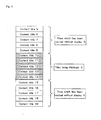
- Fig. 1 is an illustration of a state of storing partial information of the content list in the memory. As shown in Fig. 1 , not only information of content titles 10 to 14, which are displayed on the display screen, but also information of content titles 15 to 19, which are subsequent to the information, are stored in the memory.
- EP-A-0933964 discloses a high-definition image display apparatus that displays a high-definition mega-sized image on a computer display.
- caching of the graphic information, which can be used for display is carried out according to the user's operation history concerning the graphic.
- look-ahead caching of the graphic information which can be used for display in the future, is carried out, thereby enabling smooth display of the graphics in response to the successive and high-speed operations without sufficient capacity of storage area in a memory to store the cache information.
- the first embodiment will mainly describe Claims 1 and 9.
- the second embodiment will mainly describe Claim 2.
- the third embodiment will mainly describe Claim 3.
- the fourth embodiment will mainly describe Claim 4.
- the fifth embodiment will mainly describe Claim 5.
- the sixth embodiment will mainly describe Claim 6.
- the seventh embodiment will mainly describe Claim 7.
- the eighth embodiment will mainly describe Claim 8.
- the present invention is not to be limited to the above embodiments and able to be embodied in various forms without departing from the scope thereof.
- a display apparatus of a first embodiment carries out caching of the graphic information, which can be used for display, according to the user's operation history concerning the graphic. Specifically, in cases where the user does specific operation successively and at high-speed, cache memory is preferentially allocated to the graphic information correlated with the specific operation, thereby enabling smooth display of the graphic in response to the successive and high-speed operation.
- Fig. 2 is a functional block diagram of a display apparatus of the first embodiment.
- the respective units of the present invention can be configured by hardware, software, or both hardware and software.
- the respective units are implemented by the hardware configured by a CPU, a memory, a bus, an interface, and other peripheral devices etc., and by the software operable on the hardware.
- the data in the memory and the data inputted via the interface are processed, stored, and outputted etc., thereby implementing functions of the respective units.
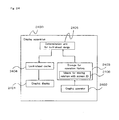
- a 'display apparatus' 0200 of the first embodiment comprises a 'graphic display' 0201, a 'graphic operator' 0202, a 'storage for operation history' 0203, a 'look-ahead cache' 0204, and a 'determination unit for look-ahead range' 0205.
- the present invention can be implemented not only as an apparatus but also as a method (the same applies throughout the entire specification).
- the 'graphic operator' is configured to receive an operation concerning a graphic displayed by the graphic display.
- the terms 'receive an operation concerning a graphic' means that an operation to vary display of the graphic on the display is received.
- Examples of the operation include an operation to move or rotate the graphic components of the display of graphic, or an operation to newly add or delete the graphic components for the display of graphic.
- examples of the operation include an operation to scroll in direction of right to left or up and down or a combination of these directions (relating to the second embodiment), or an operation to scale (relating to in the third embodiment).
- examples of the operation include an operation to select a link on a web page to move from a content page on the web browser to another page, or an operation to select a reproduction button on the display screen to reproduce movie information of a film etc. stored in the electronic device connected with the display apparatus.
- These operations can be executed through a user interface such as a mouse, a keyboard or a tablet.
- the 'storage for operation history' is configured to store operation history of the graphic.
- Examples of the operation history of graphic include content of each operation inputted through the I/O by the user, total number and number of successive operations, an order and date and time of each operation, and elapsed time from one operation to another operation.
- As a storage area for these operation histories a part of storage area in the storage can be allocated and the area can be extended accordingly.
- a capacity etc. of the history information of the operation stored in the storage for operation history excesses a predetermined limit, it is possible to delete operations from the oldest one every time new operation is carried out by the user.
- it can be varied as to how many operations in the past are stored as the operation history.
- the 'look-ahead cache' is configured to carry out look-ahead caching of graphic information, which can be used for display through the graphic operation.
- the term 'graphic information, which can be used for display through the graphic operation' is, for example, graphic information, which is unnecessary for the display at this time, but becomes necessary to be acquired due to operation such as moving, in the case of an operation to move or rotate the graphic components configuring the display of graphic.
- the information is graphic information, which becomes necessary to be acquired due to the operation such as addition.
- the information of graphic components to be added and displayed due to further operation can be used for the display.
- the graphic information which is not displayed at this time but is later displayed as a result of the scrolling, can be used for the display (relating to the second embodiment).
- the graphic information of detail which is not displayed at this time but is later displayed as a result of scaling up, or the graphic information, which is not displayed at this time but is later added as a new area as a result of scaling down, can be used for the display (relating to the third embodiment).
- the term 'look-ahead caching of graphic information' means that the information, which is unnecessary for display at this time but can be displayed, is preliminarily stored in the memory of the display apparatus as the cache data. Therefore, smooth display of the graphics can be executed in response to the successive and high-speed operation.
- the graphic information to be stored in the memory may be received from a broadcast station or an external server, or may be acquired from an electronic device such as a HDD or a DVD-HD, connected with the display apparatus, or an internal storage.
- the 'determination unit for look-ahead range' is configured to determine information range to be looked ahead according to the operation history.
- the term 'determine information range to be looked ahead according to the operation history' means that the acquisition range of the graphic information, which is determined based on the operation history to be necessary to be preliminarily stored in the memory, is determined.
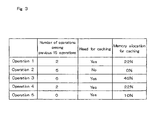
- a description of a determination method for look-ahead range when there is an operation history for the previous 15 operations as shown in Fig. 3 is provided.
- the graphic operations 1 to 5 can be executed.
- the number of executions of operation 1 is 2
- the number of executions of operation 2 is 5
- the number of executions of operation 3 is 6
- the number of executions of operation 4 is 2
- the number of executions of operation 5 is 0.
- operations 1 to 5 are separated into individual operations, having the necessity of caching the graphic information correlated therewith, and an operation, not having the necessity of caching the graphic information correlated therewith, and the cache memory is allocated only to the graphic information correlated with the operation having the necessity of caching.
- 10% of the cache memory is evenly allocated irrespective of the operation history, and 60% is allocated to the operations 1, 3, 4, and 5 in proportion to the number of executions of each operation. Therefore, it is possible to secure minimum cache area for each operation in the memory, and to allocate the cache memory to each operation according to the operation history.
- Such determination of look-ahead range may be executed with respect to each operation, and may be executed with respect to each predetermined number of operations.
- Fig. 4 is a schematic diagram showing an example of a hardware configuration of the display apparatus of the first embodiment.
- the look-ahead cache and determination unit for look-ahead range comprise a 'CPU' 0401 and a 'main memory' 0402.
- the storage for operation history comprises a 'storage (or storage medium)' (0503).
- a 'network interface' 0404 for externally acquiring the graphic information is comprised, and a 'display' 0405 as the graphic display and an 'I/O' 0406 as the graphic operator are comprised.
- the storage carries out nonvolatile storage of various programs executed by the CPU.
- the main memory provides work area used upon execution of the programs by the CPU, and temporarily stores the cached graphic information.
- a plurality of memory addresses are assigned to the main memory and the storage respectively, so that the program executed by the CPU specifies the memory address and accesses thereto, thereby mutually exchanging data and carrying out processing.
- the program is preliminarily developed and resident in the work area of the main memory, it is possible to call the program from the storage as necessary.
- the network interface has a function of storing the received graphic information into the storage or the main memory.
- the CPU executes the process for writing new operation in the operation history, and the updated operation history is stored in the storage.
- necessary operation information may be temporarily stored on the main memory, and may be written with respect to each predetermined number of operations.
- the program for determining look-ahead range causes the CPU to execute calculation for determining the look-ahead range based on the numerical data of the new operation history information stored in the main memory.
- the determination of look-ahead range may be executed with respect to each operation, and may be executed with respect to each predetermined number of operations.
- the program for look-ahead caching outputs an instruction to acquire the graphic information in the look-ahead range indicated by the execution result to the network interface.
- the network interface receives the instruction, the graphic information is acquired and stored in the main memory as the cache information.
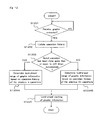
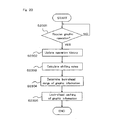
- Fig. 5 is a flowchart showing processes in the display apparatus of the first embodiment.
- the processes in Fig. 5 include the following steps.
- step S0501 it is determined whether the graphic operation has been received.
- step S0502 it is determined whether the graphic operation has been received.
- step S0502 is carried out. If it is determined that the graphic operation has not been received, the processing stays in a standby state. This processing is mainly carried out by the graphic operator.
- step S0502 the operation history is updated based on the received graphic operation information.
- the look-ahead range of the graphic information which can be used for display, is determined according to the updated operation history. This processing is mainly carried out by the determination unit for look-ahead range.
- step S0504 look-ahead caching of the graphic information is carried out. This processing is mainly carried out by the look-ahead cache.
- the above processes can be executed by the program to cause a computer to execute, and the program can be recorded in a recording medium readable by the computer (the same applies to the entire specification).
- the subsequent operation is predicted based on the operations executed for the graphic in the past, and the look-ahead caching of the graphic information, which can be used for the display in the future, is executed, thereby enabling smooth display of the graphic in response to the successive and high-speed operations without sufficient capacity of storage area in a memory to store the cache information.
- a display apparatus of a second embodiment is basically the same as that of the first embodiment, and is different from that of the first embodiment in carrying out look-ahead caching of graphic information for displaying a graphic, which newly appears at some point while scrolling, when the graphic operation is scrolling in a direction of right to left or up and down or a combination of these directions.
- FIG. 6 is a functional block diagram of a display apparatus of the second embodiment.
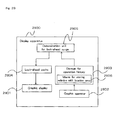
- a 'display apparatus' 0600 of the second embodiment comprises a 'graphic display' 0601, a 'graphic operator' 0602, a 'storage for operation history' 0603, a 'look-ahead cache' 0604, and a 'determination unit for look-ahead range' 0605.
- the 'look-ahead cache' comprises 'means for caching with respect to each scroll direction' 0606.
- the configuration is basically the same as that of the apparatus of the first embodiment, so that only the means for caching with respect to each scroll direction is different from the first embodiment, and description thereof is provided hereinbelow.
- the 'means for caching with respect to each scroll direction' is configured to carry out the look-ahead caching of the graphic information for displaying a graphic, which newly appears at some point while scrolling, when the graphic operation is scrolling in a direction of right to left or up and down or a combination of these directions.
- a predetermined proportion of the cache memory area e.g., 10%
- the remaining cache memory area is additionally allocated to the data in the direction of up and down in proportion to the number of executions of operation in each direction among multiple previous operations (e.g., 10 previous operations).
- a predetermined proportion of the cache memory area e.g., 80%
- the remaining cache memory area may be allocated to the data in the opposite direction.
- Fig. 7 is an illustration of a state of storing partial information of a content list in the display apparatus of the second embodiment when there is a strong tendency of an operation to move the display area upward.
- information of the content titles 10 to 14 is stored in the display memory.
- the determination unit for look-ahead range carries out weighting to the adjacent information in the upward direction, and determines the look-ahead range, so that non-displayed information of the content titles 3 to 9, which is adjacent in the upward direction, and non-displayed information of the content titles 15 to 17, which is adjacent in the downward direction, are stored in the cache memory.
- the means for caching with respect to each scroll direction executes caching of the graphic information of the content titles 3 to 9 and the graphic information of the content titles 15 to 17.
- the scrolling in the direction of up and down was provided, the same applies to the scrolling in the direction of right and left in addition to up and down.
- Fig. 8 is a schematic diagram showing an example of a hardware configuration of the display apparatus of the second embodiment.
- the configuration is basically the same as that of the apparatus of the first embodiment described with reference to Fig. 4 .
- the apparatus of the second embodiment has a program for caching with respect to each scroll direction as one of the programs for look-ahead caching.
- the program for caching with respect to each scroll direction When the program for determining look-ahead range is executed by the CPU, the program for caching with respect to each scroll direction outputs an instruction to acquire the graphic information in the look-ahead range, which has been determined with respect to each scroll direction of up, down, right or left, and is indicated by the execution result.
- the graphic information is acquired through the network interface and stored in the memory.
- Other concrete configurations are the same as those of the display apparatus of the first embodiment, so that descriptions are omitted.
- Fig. 9 is a flowchart showing processes in the display apparatus of the second embodiment.
- the processes in Fig. 9 include the following steps.
- step S0901 it is determined whether the graphic operation has been received.
- step S0902 it is carried out. If it is determined that the graphic operation has not been received, the processing stays in a standby state. This processing is mainly carried out by the graphic operator.
- step S0902 the operation history is updated based on the received graphic operation information.
- step S0903 it is determined based on the operation history that the scroll operation has been done more than or equal to n times (e.g., 5 times) successively. If so, step S0904A is carried out. If not, step S0904B is carried out.
- step S0904A the look-ahead range is determined based on the operation history of previous 2n operations.
- step S0904B the look-ahead range is determined based on the operation history of previous 4n operations. Therefore, when the scroll operation has been executed successively, by utilizing comparatively recent operation history, the successive operations are effectively reflected on the look-ahead range.
- This processing is mainly carried out by the determination unit for look-ahead range.
- step S0905 look-ahead caching of the graphic information is carried out. This processing is mainly carried out by the look-ahead cache.
- the subsequent operation is predicted based on the operations executed for the graphic in the past, and the look-ahead caching of the graphic information, which can be used for the display in the future, is executed, thereby enabling smooth display of the graphic in response to the successive and high-speed operations without sufficient capacity of storage area in a memory to store the cache information.
- a display apparatus of a third embodiment is basically same as that of the first embodiment, and is different from that of the first embodiment in carrying out look-ahead caching of graphic information for displaying a graphic, which newly appears at some point while scrolling, when the graphic operation is scaling.
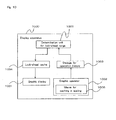
- FIG. 10 is a functional block diagram of a display apparatus of the third embodiment.
- a 'display apparatus' 1000 of the third embodiment comprises a 'graphic display' 1001, a 'graphic operator' 1002, a 'storage for operation history' 1003, a 'look-ahead cache' 1004, and a 'determination unit for look-ahead range' 1005.
- the 'look-ahead cache' comprises 'means for scaling' 1006.
- the other configurations are basically same as those of the apparatus of the first embodiment, so that only the means for caching in scaling is different from the first embodiment, and description thereof is provided hereinbelow.
- the 'means for caching in scaling' is configured to carry out the look-ahead caching of the graphic information for displaying a graphic, which newly appears at some point during scaling, when the graphic operation is scaling of the graphic.
- the look-ahead caching of the graphic information including detailed information, which is not displayed at this time but later becomes necessary to display as a result of the scale-up operation, or the graphic information including information of larger area, which is not displayed at this time but later becomes necessary to display as a result of the scale-down operation is executed.
- the case of displaying a graphic of map information including information of streets and railways etc. is described.
- scaling the map area up it is necessary to acquire the graphic information of the map including narrow streets and small shops etc.
- scaling the map area down it is necessary to newly acquire the graphic information of the map including peripheral area of the displayed area.
- a predetermined proportion of the cache memory area (e.g., 20%) is allocated to the graphic information, which becomes necessary to be acquired for the display due to the scale-up or scale-down operation, and the remaining cache memory area is additionally allocated to the data in the graphic information correlated with the respective operations in proportion to the number of executions of each operation among multiple previous operations (e.g., 10 prior operations).
- a predetermined proportion of the cache memory area (e.g., 60%) may be allocated to the graphic information correlated with the direction of the operation, and the remaining cache memory area may be allocated to the graphic information correlated with the other operation.
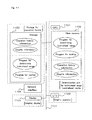
- Fig. 11 is a schematic diagram showing an example of a hardware configuration of the display apparatus of the third embodiment.
- the configuration is basically the same as that of the apparatus of the first embodiment described with reference to Fig. 4 .
- the apparatus of the third embodiment has a program for caching with respect to each scroll direction as one of the programs for look-ahead caching.
- the program for scaling When the program for determining look-ahead range is executed by the CPU, the program for scaling outputs an instruction to acquire the graphic information, which newly appears at some point due to the scaling and is indicated by the execution result. In accordance with this instruction, the graphic information is acquired through the network interface and stored in the memory.
- Other concrete configurations are the same as those of the display apparatus of the first or second embodiment, so that descriptions are omitted.
- Fig. 12 is a flowchart showing processes in the display apparatus of the third embodiment.
- the processes in Fig. 12 include the following steps.
- step S1201 it is determined whether the graphic operation has been received.
- step S1202 it is carried out. If it is determined that the graphic operation has not been received, the processing stays in a standby state. This processing is mainly carried out by the graphic operator.
- step S1202 the operation history is updated based on the received graphic operation information.
- step S1203 it is determined based on the operation history that the scaling operation has been done more than or equal to n/2 times among the previous n operations (e.g., 10 times). If so, step S1204A is carried out. If not, step S1204B is carried out.
- step S1204A the look-ahead range is determined based on the operation history of previous n operations.
- step S0904B the look-ahead range is determined based on the operation history of previous 2n operations. Therefore, when there is a strong tendency to execute the scaling operation, by utilizing comparatively recent operation history, the strong tendency is effectively reflected on the look-ahead range.
- This processing is mainly carried out by the determination unit for look-ahead range.
- step S0905 look-ahead caching of the graphic information is carried out. This processing is mainly carried out by the look-ahead cache.
- the subsequent operation is predicted based on the operations executed for the graphic in the past, and the look-ahead caching of the graphic information, which can be used for the display in the future, is executed, thereby enabling smooth display of the graphic in response to the successive and high-speed operations without sufficient capacity of storage area in a memory to store the cache information.
- a display apparatus of a fourth embodiment is basically same as that of any one of the first to third embodiments, and is different from those of the first to third embodiments in storing the number of operations with respect to each operation executed by the graphic operator as the operation history.
- FIG. 13 is a functional block diagram of a display apparatus of the fourth embodiment.
- a 'display apparatus' 1300 of the fourth embodiment comprises a 'graphic display' 1301, a 'graphic operator' 1302, a 'storage for operation history' 1303, a 'look-ahead cache' 1304, and a 'determination unit for look-ahead range' 1305.
- the 'storage for operation history' comprises 'means for storing number of operations' 1306.
- the other configurations are basically same as those of the apparatus of any one of the first to third embodiments, so that only the means for storing number of operations is different from the first to third embodiments, and description thereof is provided hereinbelow.
- the 'means for storing number of operations' is configured to store the number of operations with respect to each operation executed by the graphic operator as the operation history. By storing the number of operations with respect to each operation, for example, it is possible to determine the proportion of each operation among the total number of operations, thereby determining the look-ahead caching range of the graphic information based on this proportion. As to the number of operations, it is not necessary to carry out storing as to all operations, and it is possible to carry out storing as to only a specific operation. For example, even the operation concerning graphic, when there is no necessity of acquiring new graphic information, the operation may not be acquired.
- Fig. 14 is a schematic diagram showing an example of a hardware configuration of the display apparatus of the fourth embodiment.
- the configuration is basically the same as that of the apparatus of the first embodiment described with reference to Fig. 4 .
- the apparatus of the fourth embodiment stores the number of operations with respect to each operation as the operation history.
- the CPU executes a process for updating the operation history information of the detail of operations.
- necessary operation information may be temporarily stored on the main memory, and may be written with respect to each predetermined number of operations.
- the program for determining look-ahead range causes the CPU to execute calculation for determining the look-ahead range based on the numerical data of the new operation history information stored in the main memory.
- rates of execution of each operation is calculated based on the number of operations stored as the operation history, and further carries out calculation, so that the look-ahead range is allocated to the graphic information correlated with each operation in proportion to the rates.
- the determination of look-ahead range may be executed with respect to each operation, and may be executed with respect to each predetermined number of operations.
- Fig. 15 is a flowchart showing processes in the display apparatus of the fourth embodiment.
- the processes in Fig. 15 include the following steps.
- step S1501 it is determined whether the graphic operation has been received.
- step S1502 it is carried out. If it is determined that the graphic operation has not been received, the processing stays in a standby state. This processing is mainly carried out by the graphic operator.
- step S1502 the operation history including the number of operations is updated based on the received graphic operation information.
- step S1503 the look-ahead range of the graphic information, which can be used for display, is determined according to the operation history. This processing is mainly carried out by the determination unit for look-ahead range.
- step S1504 look-ahead caching of the graphic information is carried out. This processing is mainly carried out by the look-ahead cache.
- the subsequent operation is predicted based on the operation history including the number of operations with respect to each operation for the graphic, and the look-ahead caching of the graphic information, which can be used for the display in the future, is executed, thereby enabling smooth display of the graphic in response to the successive and high-speed operations without sufficient capacity of storage area in a memory to store the cache information.
- a display apparatus of a fifth embodiment is basically the same as that of any one of the first to fourth embodiments, and is different from those of the first to fourth embodiments in storing elapsed time between operations.
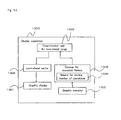
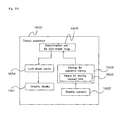
- FIG. 16 is a functional block diagram of a display apparatus of the fifth embodiment.
- a 'display apparatus' 1600 of the fifth embodiment comprises a 'graphic display' 1601, a 'graphic operator' 1602, a 'storage for operation history' 1603, a 'look-ahead cache' 1604, and a 'determination unit for look-ahead range' 1605.
- the 'storage for operation history' comprises 'means for storing elapsed time' 1606.
- the other configurations are basically same as those of the apparatus of any one of the first to fourth embodiments, so that only the means for storing elapsed time is different from the first to fourth embodiments, and description thereof is provided hereinbelow.
- the 'means for storing elapsed time' is configured to store elapsed-time between operations executed by the graphic operator as the operation history.
- prediction performance for a subsequent operation based on the past operation history varies with elapsed time. For example, when executing an operation successively in the last minute, it is predicted that the subsequent operation is to be the same as the previous operation in the last minute. However, when executing the subsequent operation after passage of an extended period of time from the successive execution of the previous operation, in comparison with the above case, the possibility of executing the same operation as the previous operation is low, and the prediction performance based on the operation history decreases.
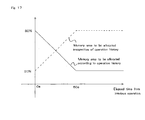
- the determination unit for look-ahead range can gradually decrease the effect of the operation history based on the elapsed-time between the respective operations, thereby determining the look-ahead range. For example, as shown in Fig. 17 , the area in the cache memory allocated according to the operation history is gradually decreased in a linear-functional manner by using the elapsed time as a variable. In this case, at the point of execution of the previous operation, the area allocated according to the operation history is 80%, and the area allocated irrespective of the operation history is 20%.
- the above allocation varies with the elapsed time, and after a lapse of 60 seconds, it is fixed that the area allocated according to the operation history is 80%, and the area allocated irrespective of the operation history is 20%. Therefore, it is possible to secure minimum cache area for the graphic information correlated with each operation, and to allocate the cache memory area according to the operation history and the elapsed time.
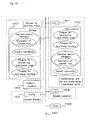
- Fig. 18 is a schematic diagram showing an example of a hardware configuration of the display apparatus of the fifth embodiment.
- the configuration is basically the same as that of the apparatus of the first embodiment described with reference to Fig. 4 .
- the apparatus of the fifth embodiment comprises a 'timer' 1808 for measuring the elapsed-time between the respective operations, and stores the elapsed time information, information of elapsed time between the respective operations, as the operation history.
- the CPU executes a process for updating the operation history information of details of new operation and the elapsed time acquired from the timer.
- necessary operation information may be temporarily stored on the main memory, and may be written with respect to each predetermined number of operations.
- the program for determining look-ahead range causes the CPU to execute calculation for determining the look-ahead range based on the numerical data of the new operation history information stored in the main memory.
- the determination of look-ahead range may be executed with respect to each operation, and may be executed with respect to each predetermined number of operations.
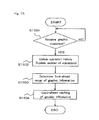
- Fig. 19 is a flowchart showing processes in the display apparatus of the fifth embodiment.
- the processes in Fig. 19 include the following steps.
- step S 1901 it is determined whether the graphic operation has been received.
- step S1902 it is carried out. If it is determined that the graphic operation has not been received, the processing is terminated. This processing is mainly carried out by the graphic operator.
- step S1902 elapsed-time from execution of the previous operation to execution of the current operation is calculated.
- the operation history is updated based on the received graphic operation information and the elapsed time.
- step S1904 the look-ahead range of the graphic information, which can be used for display, is determined according to the operation history including the elapsed time. This processing is mainly carried out by the determination unit for look-ahead range.
- step S1905 look-ahead caching of the graphic information is carried out. This processing is mainly carried out by the look-ahead cache.
- the subsequent operation is predicted based on the operation history for the graphic and the elapsed-time between the respective operations, and the look-ahead caching of the graphic information, which can be used for the display in the future, is executed, thereby enabling smooth display of the graphic in response to the successive and high-speed operations without sufficient capacity of storage area in a memory to store the cache information.
- a display apparatus of a sixth embodiment is basically same as that of any one of the first to fifth embodiments, and is different from those of the first to fifth embodiments in storing shifting rates from one operation to another operation as the operation history.
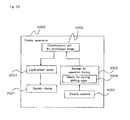
- FIG. 20 is a functional block diagram of a display apparatus of the sixth embodiment.
- a 'display apparatus' 2000 of the sixth embodiment comprises a 'graphic display' 2001, a 'graphic operator' 2002, a 'storage for operation history' 2003, a 'look-ahead cache' 2004, and a 'determination unit for look-ahead range' 2005.
- the 'storage for operation history' comprises 'means for storing shifting rates' 2006.
- the other configurations are basically the same as those of the apparatus of any one of the first to fifth embodiments, so that only the means for storing shifting rates is different from the first to fifth embodiments, and description thereof is provided hereinbelow.
- the 'means for storing shifting rates' is configured to store rates of shifting the operation from one to another, executed through the graphic operator, as the operation history.
- the term 'rates of shifting the operation from one to another, executed through the graphic operator' refers to rates of execution of the other operation after execution of one operation through the graphic operator.
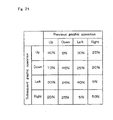
- the information of rates as shown in Fig. 21 can be stored as the operation history information.
- the 'key operation for moving up and down or right and left' is described as the operation concerning graphic.
- the same applies to other operations such as the 'key operation for scaling up or down' and the 'key operation for rotating the graphic components'.
- a method for calculation of the shifting rates for example, a statistical processing of the operation subsequently executed after execution of one operation based on the past operation history, thereby calculating the sifting rates.
- the shifting rates with respect to each key group may be included. Specifically, grouping such as a 'group of key operation for moving up and down or right and left', a 'group of key operation for scaling up or down' or a 'group of key operation for editing display content' may be executed, thereby storing the shifting rates between the key operation groups as the operation history.
- Fig. 22 is a schematic diagram showing an example of a hardware configuration of the display apparatus of the sixth embodiment.
- the configuration is basically the same as that of the apparatus of the first embodiment described with reference to Fig. 4 .
- the apparatus of the sixth embodiment has a program for calculating information of shifting rates, and stores the information of shifting as the operation history.
- the CPU executes a process for updating the operation history information of details of new operation and the elapsed time acquired from the timer.
- necessary operation information may be temporarily stored on the main memory, and may be written with respect to each predetermined number of operations.
- the program for calculating information of shifting rates causes the CPU to execute calculation for the information of shifting rates from one operation to the other operation based on the new operation history stored in the main memory, thereby executing a process for writing the shifting rates of the operation history at a predetermined timing.
- the program for determining look-ahead range causes the CPU to execute calculation for determining the look-ahead range based on the information of shifting rates stored in the memory.
- the determination of look-ahead range may be executed with respect to each operation, and may be executed with respect to each predetermined number of operations.
- Fig. 23 is a flowchart showing processes in the display apparatus of the sixth embodiment.
- the processes in Fig. 23 include the following steps.
- step 2301 it is determined whether the graphic operation has been received.
- step S2302 it is carried out. If it is determined that the graphic operation has not been received, the processing stays in a standby state. This processing is mainly carried out by the graphic operator.
- step S2302 the operation history is updated based on the received graphic operation information.
- step S2303 the shifting rates between operations is calculated from the operation history, thereby updating the operation history based on the calculated information of shifting rates.
- step S2304 the look-ahead range of the graphic information, which can be used for display, is determined according to the operation history including the information of shifting rates. This processing is mainly carried out by the determination unit for look-ahead range.
- step S2305 look-ahead caching of the graphic information is carried out. This processing is mainly carried out by the look-ahead cache.
- the subsequent operation is predicted based on the operation history for the graphic and the shifting rates between operations, and the look-ahead caching of the graphic information, which can be used for the display in the future, is executed, thereby enabling smooth display of the graphic in response to the successive and high-speed operations without sufficient capacity of storage area in a memory to store the cache information.
- a display apparatus of a seventh embodiment is basically the same as that of any one of the first to sixth embodiments, and is different from those of the first to sixth embodiments in storing a relation between an operation with a screen ID of the operation carried out on the graphic display as the operation history.
- FIG. 24 is a functional block diagram of a display apparatus of the seventh embodiment.
- a 'display apparatus' 2400 of the seventh embodiment comprises a 'graphic display' 2401, a 'graphic operator' 2402, a 'storage for operation history' 2403, a 'look-ahead cache' 2404, and a 'determination unit for look-ahead range' 2405.
- the 'storage for operation history' comprises 'means for storing relation with screen ID' 2406.
- the other configurations are basically the same as those of the apparatus of any one of the first to sixth embodiments, so that only the means for storing relation with screen ID is different from the first to sixth embodiments, and description thereof is provided hereinbelow.
- the 'means for storing relation with screen ID' is configured to store a relation between the operation executed through the graphic operator and a screen ID in the graphic display as the operation history.
- the 'screen ID' corresponds to a symbol etc. for identifying the respective graphics configuring the screen.
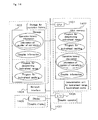
- screen ID is separately assigned to a graphic indicating content list, graphic indicating map information, graphic indicating WEB browser, graphic indicating text editor etc., and a plurality of screen IDs may be contained on one display screen.
- Fig. 25 when the content list has been selected on the screen, the rates of execution of the scrolling up or down is high, and when the map information has been selected on the screen, the rates of execution of the scaling up or down is high. According to such information, even if the plurality of screen IDs may be contained on one display screen, it is possible to specify the graphic information, to which the cache memory area is preferentially allocated, based on the screen ID.
- the allocation may be executed in proportion to the above rates.
- the relation between the graphic operations and the screen ID of the selected graphic has been described, and a relation between the graphic operation and the screen IDs of the plurality of graphics displayed on the screen may be used.
- Fig. 26 is a schematic diagram showing an example of a hardware configuration of the display apparatus of the seventh embodiment.
- the configuration is basically the same as that of the apparatus of the first embodiment described with reference to Fig. 4 .
- the apparatus of the seventh embodiment has a program for calculating information of relation with screen ID for calculating the relation between an operation and a screen ID on the display, where the operation has been executed, based on the operation history, and stores the information of relation with screen ID in the storage.
- the CPU executes a process for writing details of new operation and the screen ID of the screen selected upon the operation of the operation history, thereby storing the updated operation history in the storage.
- necessary operation information may be temporarily stored on the main memory, and may be written with respect to each predetermined number of operations.
- the program for calculating information of relation with screen ID causes the CPU to execute calculation of the rates of executing an operation when the graphic indicated by the screen ID has been selected based on the information of operation history stored in the main memory.
- the program for determining look-ahead range causes the CPU to execute calculation for determining the look-ahead range based on the information of rates stored in the memory.
- the determination of look-ahead range may be executed with respect to each operation, and may be executed with respect to each predetermined number of operations.
- Fig. 27 is a flowchart showing processes in the display apparatus of the seventh embodiment.
- the processes in Fig. 27 include the following steps.
- step 2701 it is determined whether the graphic operation has been received.
- step S2702 it is carried out. If it is determined that the graphic operation has not been received, the processing stays in a standby state. This processing is mainly carried out by the graphic operator.
- step S2702 the operation history is updated based on the received graphic operation information.
- step S2703 the information of rates of executing the respective operations when the screen ID has been selected is calculated from the operation history.
- step S2704 the look-ahead range of the graphic information, which can be used for display, is determined based on the above information of rates. This processing is mainly carried out by the determination unit for look-ahead range. In step S2704, look-ahead caching of the graphic information is carried out. This processing is mainly carried out by the look-ahead cache.
- the subsequent operation is predicted based on the detail of past operation for the graphic and the information of relation with the screen ID of the graphic displayed at the point of graphic operation, and the look-ahead caching of the graphic information, which can be used for the display in the future, is executed, thereby enabling smooth display of the graphic in response to the successive and high-speed operations without sufficient capacity of storage area in a memory to store the cache information.
- a display apparatus of a eighth embodiment is basically the same as that of any one of the first to seventh embodiments, and is different from those of the first to seventh embodiments in storing a relation between an operation and a screen area, in which a graphic pointer has been located upon the operation, as the operation history.
- FIG. 28 is a functional block diagram of a display apparatus of the eighth embodiment.
- a 'display apparatus' 2800 of the eighth embodiment comprises a 'graphic display' 2801, a 'graphic operator' 2802, a 'storage for operation history' 2803, a 'look-ahead cache' 2804, and a 'determination unit for look-ahead range' 2805.
- the 'storage for operation history' comprises 'means for storing a relation with location area' 2806.
- the other configurations are basically the same as those of the apparatus of any one of the first to seventh embodiments, so that only the means for storing a relation with location area is different from the first to seventh embodiments, and description thereof is provided hereinbelow.
- the 'means for storing a relation with location area' is configured to store a relation between the operation executed through the graphic operator and a screen area, in which a graphic pointer has been located upon the operation, as the operation history.
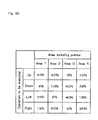
- the number of executions of the respective operations may be stored as the operation history.
- the dividing may be carried out in various manners, and may not be equally-divided.
- the 'key operation for moving up and down or right and left' is described as the operation concerning graphic.
- the same applies to other operations such as the 'key operation for scaling up or down' and the 'key operation for rotating the graphic components'.
- the cache memory is allocated to the graphic information correlated with each operation in proportion to the above rates, thereby enabling cache of the graphic information according to the location of the graphic pointer.
- Fig. 31 is a schematic diagram showing an example of a hardware configuration of the display apparatus of the eighth embodiment.
- the configuration is basically the same as that of the apparatus of the first embodiment described with reference to Fig. 4 .
- the apparatus of the eighth embodiment has a program for calculating a relation between an operation and a screen area, in which a graphic pointer has been located upon the operation, from the operation history, and stores the information of relation with location area.
- the CPU executes a process for writing the location information of the graphic pointer in the screen area of the operation history, thereby storing the updated operation history in the storage.
- necessary operation information may be temporarily stored on the main memory, and may be written with respect to each predetermined number of operations.
- the program for calculating information of relation with location area causes the CPU to execute calculation of the rates of executing an operation when the graphic pointer is located in an area based on the information of operation history stored in the main memory.
- the program for determining look-ahead range causes the CPU to execute calculation for determining the look-ahead range based on the information of rates stored in the memory.
- the determination of look-ahead range may be executed with respect to each operation, and may be executed with respect to each predetermined number of operations.
- Fig. 32 is a flowchart showing processes in the display apparatus of the eighth embodiment.
- the processes in Fig. 32 include the following steps.
- step 3201 it is determined whether the graphic operation has been received.
- step S3202 it is carried out. If it is determined that the graphic operation has not been received, the processing stays in a standby state. This processing is mainly carried out by the graphic operator.
- step S3202 the operation history is updated based on the received graphic operation information.
- step S3203 the information of rates of executing the respective operations when the graphic pointer is located in an area is calculated from the operation history.
- step S3204 the look-ahead range of the graphic information, which can be used for display, is determined based on the above information of rates. This processing is mainly carried out by the determination unit for look-ahead range.
- step S3205 look-ahead caching of the graphic information is carried out. This processing is mainly carried out by the look-ahead cache.
- the subsequent operation is predicted based on the detail of past operation for the graphic and the information of relation with the screen area, where the graphic pointer has been located at the point of graphic operation, and the look-ahead caching of the graphic information, which can be used for the display in the future, is executed, thereby enabling smooth display of the graphic in response to the successive and high-speed operations without sufficient capacity of storage area in a memory to store the cache information.
Landscapes
- Engineering & Computer Science (AREA)
- Theoretical Computer Science (AREA)
- Physics & Mathematics (AREA)
- General Physics & Mathematics (AREA)
- Computer Hardware Design (AREA)
- General Engineering & Computer Science (AREA)
- Human Computer Interaction (AREA)
- User Interface Of Digital Computer (AREA)
- Digital Computer Display Output (AREA)
- Controls And Circuits For Display Device (AREA)
Claims (9)
- Appareil d'affichage (1600) comprenant :un afficheur graphique (1601 ; 1805) ;un opérateur graphique (1602 ; 1806) recevant une opération concernant un graphique affiché par l'afficheur graphique (1601 ; 1805) ;une mémoire (1603 ; 1803) pour un historique des opérations, stockant un historique des opérations du graphique ;une antémémoire à lecture anticipée (1604, 1802) effectuant une antémémorisation à lecture anticipée d'informations graphiques qui peuvent être utilisées en vue d'un affichage par l'intermédiaire de l'opération graphique ; etune unité de détermination (1605, 1802) pour une plage de lecture anticipée, déterminant une plage d'informations devant faire l'objet d'une lecture anticipée en fonction de l'historique d'informationscaractérisé en ce quela mémoire (1603, 1803) pour un historique des opérations comprenddes moyens (1606, 1802) pour mémoriser un temps écoulé, mémorisant un temps écoulé entre des opérations exécutées par l'opérateur graphique en tant qu'historique des opérations et en ce quel'unité de détermination (1605, 1802) est apte à déterminer en plus la plage de lecture anticipée selon le temps écoulé.
- Appareil d'affichage conformément à la revendication 1, dans lequel
l'unité de détermination (1605, 1802) est apte à diminuer l'effet de l'historique des opérations sur la base du temps écoulé entre des opérations, ce qui permet de déterminer la plage de lecture anticipée. - Appareil d'affichage conformément à la revendication 1,
dans lequel l'antémémoire à lecture anticipée (1604, 1802) comprend
des moyens (0606) pour une antémémorisation relativement à chaque direction de défilement, effectuant une antémémorisation à lecture anticipée d'informations graphiques pour afficher un graphique, apparaissant nouvellement à un moment au cours du défilement, lorsque l'opération graphique est un défilement dans une direction allant de gauche à droite ou de haut en bas ou dans les deux directions combinées. - Appareil d'affichage (1600) conformément à l'une quelconque des revendications 1 à 3,
dans lequel l'antémémoire à lecture anticipée comprend
des moyens (1006) pour une antémémorisation lors d'une mise à l'échelle, effectuant une antémémorisation à lecture anticipée d'informations graphiques pour afficher un graphique, apparaissant nouvellement à un moment au cours d'une mise à l'échelle, lorsque l'opération graphique est une mise à l'échelle du graphique. - Appareil d'affichage (1600) conformément à l'une quelconque des revendications 1 à 4,
dans lequel la mémoire pour un historique des opérations comprend
des moyens (1306) pour mémoriser le nombre d'opérations, mémorisant le nombre d'opérations relativement à chaque opération exécutée par l'opérateur graphique en tant qu'historique des opérations. - Appareil d'affichage (1600) conformément à l'une quelconque des revendications 1 à 5,
dans lequel la mémoire pour un historique des opérations comprend
des moyens (2006) pour mémoriser des taux de changement, mémorisant des taux de changement d'une opération à une autre, exécutée par l'intermédiaire de l'opérateur graphique, en tant qu'historique des opérations. - Appareil d'affichage (1600) conformément à l'une quelconque des revendications 1 à 6,
dans lequel la mémoire pour un historique des opérations comprend
des moyens (2406) pour mémoriser une relation avec un identifiant ID, mémorisant une relation entre une opération exécutée par l'intermédiaire de l'opérateur graphique et un ID d'écran dans l'afficheur graphique en tant qu'historique des opérations. - Appareil d'affichage (1600) conformément à l'une quelconque des revendications 1 à 7,
dans lequel la mémoire pour un historique des opérations comprend
des moyens (2806) pour mémoriser une relation avec une zone d'emplacement, mémorisant une relation entre l'opération exécutée par l'intermédiaire de l'opérateur graphique et une zone d'écran, dans laquelle un pointeur graphique a été placé lors de l'opération, en tant qu'historique des opérations. - Procédé d'affichage comprenant les étapes :d'affichage d'un graphique ;de mise en oeuvre du graphique de manière à recevoir une opération du graphique à afficher par l'étape d'affichage de graphique ;de mémorisation d'un historique des opérations du graphique ;d'antémémorisation à lecture anticipée d'informations graphiques, lesquelles peuvent être utilisée en vue d'un affichage par l'intermédiaire de l'opération graphique ; etde détermination d'une plage d'informations devant faire l'objet d'une lecture anticipée en fonction de l'historique des opérations, caractérisé en ce quela mémorisation de l'historique des opérations du graphique comprend la mémorisation d'un temps écoulé entre des opérations respectives et la plage d'informations devant faire l'objet d'une lecture anticipée est en plus déterminée selon le temps écoulé.
Applications Claiming Priority (2)
| Application Number | Priority Date | Filing Date | Title |
|---|---|---|---|
| JP2007314229A JP2009140119A (ja) | 2007-12-05 | 2007-12-05 | グラフィック表示装置及びグラフィック表示方法 |
| PCT/JP2008/057579 WO2009072311A1 (fr) | 2007-12-05 | 2008-04-18 | Dispositif d'affichage graphique |
Publications (3)
| Publication Number | Publication Date |
|---|---|
| EP2234006A1 EP2234006A1 (fr) | 2010-09-29 |
| EP2234006A4 EP2234006A4 (fr) | 2011-05-25 |
| EP2234006B1 true EP2234006B1 (fr) | 2013-01-23 |
Family
ID=40717493
Family Applications (1)
| Application Number | Title | Priority Date | Filing Date |
|---|---|---|---|
| EP08740634A Not-in-force EP2234006B1 (fr) | 2007-12-05 | 2008-04-18 | Dispositif d'affichage graphique |
Country Status (8)
| Country | Link |
|---|---|
| US (1) | US20100302283A1 (fr) |
| EP (1) | EP2234006B1 (fr) |
| JP (1) | JP2009140119A (fr) |
| CN (1) | CN101884023A (fr) |
| BR (1) | BRPI0820934A2 (fr) |
| MX (1) | MX2010006041A (fr) |
| RU (1) | RU2469377C2 (fr) |
| WO (1) | WO2009072311A1 (fr) |
Families Citing this family (17)
| Publication number | Priority date | Publication date | Assignee | Title |
|---|---|---|---|---|
| US20110145714A1 (en) * | 2009-12-15 | 2011-06-16 | At&T Intellectual Property I, L.P. | System and method for web-integrated statistical analysis |
| JP5607556B2 (ja) * | 2010-02-15 | 2014-10-15 | キヤノン株式会社 | 情報処理装置およびその制御方法 |
| JP5674779B2 (ja) * | 2010-06-03 | 2015-02-25 | パナソニック インテレクチュアル プロパティ コーポレーション オブアメリカPanasonic Intellectual Property Corporation of America | スクロール装置、スクロール方法、スクロールプログラムおよび集積回路 |
| JP2012194794A (ja) * | 2011-03-16 | 2012-10-11 | Fujitsu Ltd | 携帯端末及びコンテンツ表示プログラム |
| JP5198646B1 (ja) * | 2011-11-25 | 2013-05-15 | イクス株式会社 | プログラム |
| JP2013167798A (ja) * | 2012-02-16 | 2013-08-29 | Canon Inc | 画像生成装置及びその制御方法 |
| US20130290657A1 (en) * | 2012-04-26 | 2013-10-31 | Nick Baciu | Storing data in containers |
| CN103902197A (zh) * | 2012-12-28 | 2014-07-02 | 北京新媒传信科技有限公司 | Android系统中基于列表显示的数据显示方法及装置 |
| US20140215382A1 (en) * | 2013-01-25 | 2014-07-31 | Agilent Technologies, Inc. | Method for Utilizing Projected Gesture Completion to Improve Instrument Performance |
| JP2015082290A (ja) * | 2013-10-24 | 2015-04-27 | 富士通株式会社 | 端末装置、情報処理装置、情報処理システム、表示制御方法および表示制御プログラム |
| WO2018111246A1 (fr) * | 2016-12-13 | 2018-06-21 | Google Llc | Systèmes et procédés de prélecture d'éléments de contenu |
| US11150786B2 (en) | 2017-09-04 | 2021-10-19 | Rakuten Group, Inc. | Information processing device, information processing method, program and storage medium |
| JP6919509B2 (ja) * | 2017-11-09 | 2021-08-18 | コニカミノルタ株式会社 | 表示装置、画像処理装置、表示システム及びプログラム |
| US11537264B2 (en) | 2018-02-09 | 2022-12-27 | Sony Interactive Entertainment LLC | Methods and systems for providing shortcuts for fast load when moving between scenes in virtual reality |
| CN110442879B (zh) * | 2019-04-30 | 2024-02-13 | 华为技术有限公司 | 一种内容翻译的方法和终端 |
| CN114217724B (zh) * | 2022-02-14 | 2022-07-05 | 北京智象信息技术有限公司 | 一种tv应用中长列表数据的展示与交互方法、系统及介质 |
| CN115061654B (zh) * | 2022-08-11 | 2022-11-22 | 歌尔股份有限公司 | 穿戴产品消息显示方法、装置、设备及可读存储介质 |
Family Cites Families (11)
| Publication number | Priority date | Publication date | Assignee | Title |
|---|---|---|---|---|
| US5968119A (en) * | 1996-12-09 | 1999-10-19 | Wall Data Incorporated | Method of accessing information of an SNA host computer from a client computer using a specific terminal emulation |
| JPH1188866A (ja) * | 1997-07-18 | 1999-03-30 | Pfu Ltd | 高精細画像表示装置及びそのプログラム記憶媒体 |
| US6697099B2 (en) * | 1998-10-30 | 2004-02-24 | Intel Corporation | Method and apparatus for displaying a colored audio/visual program |
| US6801219B2 (en) * | 2001-08-01 | 2004-10-05 | Stmicroelectronics, Inc. | Method and apparatus using a two-dimensional circular data buffer for scrollable image display |
| US7079160B2 (en) * | 2001-08-01 | 2006-07-18 | Stmicroelectronics, Inc. | Method and apparatus using a two-dimensional circular data buffer for scrollable image display |
| US6973457B1 (en) * | 2002-05-10 | 2005-12-06 | Oracle International Corporation | Method and system for scrollable cursors |
| US20070128899A1 (en) * | 2003-01-12 | 2007-06-07 | Yaron Mayer | System and method for improving the efficiency, comfort, and/or reliability in Operating Systems, such as for example Windows |
| JP2005156626A (ja) | 2003-11-20 | 2005-06-16 | Matsushita Electric Ind Co Ltd | スクロール処理付表示装置、記録媒体、コンピュータ読み取り可能なプログラム |
| JP2006113801A (ja) * | 2004-10-14 | 2006-04-27 | Canon Inc | 画像処理結果表示装置、画像処理結果表示方法およびプログラム |
| US8032298B2 (en) * | 2007-03-29 | 2011-10-04 | Alpine Electronics, Inc. | Method and apparatus for incorporating adaptive scroll operation for navigation system |
| US7990394B2 (en) * | 2007-05-25 | 2011-08-02 | Google Inc. | Viewing and navigating within panoramic images, and applications thereof |
-
2007
- 2007-12-05 JP JP2007314229A patent/JP2009140119A/ja active Pending
-
2008
- 2008-04-18 BR BRPI0820934-0A patent/BRPI0820934A2/pt not_active IP Right Cessation
- 2008-04-18 EP EP08740634A patent/EP2234006B1/fr not_active Not-in-force
- 2008-04-18 WO PCT/JP2008/057579 patent/WO2009072311A1/fr not_active Ceased
- 2008-04-18 CN CN2008801196591A patent/CN101884023A/zh active Pending
- 2008-04-18 MX MX2010006041A patent/MX2010006041A/es active IP Right Grant
- 2008-04-18 US US12/746,290 patent/US20100302283A1/en not_active Abandoned
- 2008-04-18 RU RU2010127277/08A patent/RU2469377C2/ru not_active IP Right Cessation
Also Published As
| Publication number | Publication date |
|---|---|
| WO2009072311A1 (fr) | 2009-06-11 |
| BRPI0820934A2 (pt) | 2015-06-23 |
| MX2010006041A (es) | 2010-06-23 |
| EP2234006A1 (fr) | 2010-09-29 |
| EP2234006A4 (fr) | 2011-05-25 |
| JP2009140119A (ja) | 2009-06-25 |
| US20100302283A1 (en) | 2010-12-02 |
| CN101884023A (zh) | 2010-11-10 |
| RU2010127277A (ru) | 2012-01-10 |
| RU2469377C2 (ru) | 2012-12-10 |
Similar Documents
| Publication | Publication Date | Title |
|---|---|---|
| EP2234006B1 (fr) | Dispositif d'affichage graphique | |
| CN102024012B (zh) | 信息处理设备、数据获取方法、以及程序 | |
| US9529866B2 (en) | Efficiently handling large data sets on mobile devices | |
| AU2014308633B2 (en) | Swipe toolbar to switch tabs | |
| US20170017364A1 (en) | Publishing electronic documents utilizing navigation information | |
| CN103853729A (zh) | 页面加载方法及其系统 | |
| WO2008042858A2 (fr) | Affichage de documents fondé sur des images | |
| CN117194828B (zh) | React中Table滚动分页方法、装置及电子设备 | |
| CN106156148A (zh) | 一种页面的渲染方法、装置和终端设备 | |
| CN104598712B (zh) | 定位点筛选方法及其系统 | |
| CN111859883A (zh) | 程序表格创建方法、装置及电子设备 | |
| CN112541140B (zh) | 一种列表加载方法、终端设备、电子设备及存储介质 | |
| CN104601535B (zh) | 视频处理方法和系统 | |
| US20140075384A1 (en) | Context Aware Non-Linear Task Bar Orientation | |
| US10354623B1 (en) | Adaptive buffer latching to reduce display janks caused by variable buffer allocation time | |
| CN112507259A (zh) | 网页加载方法及装置、电子设备、存储介质 | |
| JP5729445B2 (ja) | マルチプロセッサシステム、制御方法、および制御プログラム | |
| CN106055280A (zh) | 一种元数据回写方法和电子设备 | |
| HK1146323A (en) | Graphic display device | |
| US20140136947A1 (en) | Generating website analytics | |
| CN118573950A (zh) | 视频帧存储方法、视频播放器、终端及可读存储介质 | |
| JP5387770B2 (ja) | データ転送制御装置、データ転送制御方法、およびデータ転送制御プログラム | |
| CN117742593A (zh) | Ssd缓存回刷处理方法、系统、设备及储存介质 | |
| CN111538705B (zh) | 视频缩略图预览方法、控制服务器及介质 | |
| CN102314292A (zh) | 生成网络服务的方法和系统 |
Legal Events
| Date | Code | Title | Description |
|---|---|---|---|
| PUAI | Public reference made under article 153(3) epc to a published international application that has entered the european phase |
Free format text: ORIGINAL CODE: 0009012 |
|
| 17P | Request for examination filed |
Effective date: 20100702 |
|
| AK | Designated contracting states |
Kind code of ref document: A1 Designated state(s): AT BE BG CH CY CZ DE DK EE ES FI FR GB GR HR HU IE IS IT LI LT LU LV MC MT NL NO PL PT RO SE SI SK TR |
|
| AX | Request for extension of the european patent |
Extension state: AL BA MK RS |
|
| DAX | Request for extension of the european patent (deleted) | ||
| A4 | Supplementary search report drawn up and despatched |
Effective date: 20110427 |
|
| REG | Reference to a national code |
Ref country code: HK Ref legal event code: DE Ref document number: 1146323 Country of ref document: HK |
|
| GRAP | Despatch of communication of intention to grant a patent |
Free format text: ORIGINAL CODE: EPIDOSNIGR1 |
|
| GRAS | Grant fee paid |
Free format text: ORIGINAL CODE: EPIDOSNIGR3 |
|
| GRAA | (expected) grant |
Free format text: ORIGINAL CODE: 0009210 |
|
| AK | Designated contracting states |
Kind code of ref document: B1 Designated state(s): AT BE BG CH CY CZ DE DK EE ES FI FR GB GR HR HU IE IS IT LI LT LU LV MC MT NL NO PL PT RO SE SI SK TR |
|
| REG | Reference to a national code |
Ref country code: GB Ref legal event code: FG4D |
|
| REG | Reference to a national code |
Ref country code: CH Ref legal event code: EP |
|
| REG | Reference to a national code |
Ref country code: AT Ref legal event code: REF Ref document number: 595280 Country of ref document: AT Kind code of ref document: T Effective date: 20130215 Ref country code: CH Ref legal event code: EP |
|
| REG | Reference to a national code |
Ref country code: IE Ref legal event code: FG4D |
|
| REG | Reference to a national code |
Ref country code: DE Ref legal event code: R096 Ref document number: 602008021865 Country of ref document: DE Effective date: 20130321 |
|
| REG | Reference to a national code |
Ref country code: AT Ref legal event code: MK05 Ref document number: 595280 Country of ref document: AT Kind code of ref document: T Effective date: 20130123 |
|
| REG | Reference to a national code |
Ref country code: LT Ref legal event code: MG4D |
|
| REG | Reference to a national code |
Ref country code: NL Ref legal event code: VDEP Effective date: 20130123 |
|
| PG25 | Lapsed in a contracting state [announced via postgrant information from national office to epo] |
Ref country code: BE Free format text: LAPSE BECAUSE OF FAILURE TO SUBMIT A TRANSLATION OF THE DESCRIPTION OR TO PAY THE FEE WITHIN THE PRESCRIBED TIME-LIMIT Effective date: 20130123 Ref country code: AT Free format text: LAPSE BECAUSE OF FAILURE TO SUBMIT A TRANSLATION OF THE DESCRIPTION OR TO PAY THE FEE WITHIN THE PRESCRIBED TIME-LIMIT Effective date: 20130123 Ref country code: IS Free format text: LAPSE BECAUSE OF FAILURE TO SUBMIT A TRANSLATION OF THE DESCRIPTION OR TO PAY THE FEE WITHIN THE PRESCRIBED TIME-LIMIT Effective date: 20130523 Ref country code: BG Free format text: LAPSE BECAUSE OF FAILURE TO SUBMIT A TRANSLATION OF THE DESCRIPTION OR TO PAY THE FEE WITHIN THE PRESCRIBED TIME-LIMIT Effective date: 20130423 Ref country code: SE Free format text: LAPSE BECAUSE OF FAILURE TO SUBMIT A TRANSLATION OF THE DESCRIPTION OR TO PAY THE FEE WITHIN THE PRESCRIBED TIME-LIMIT Effective date: 20130123 Ref country code: NO Free format text: LAPSE BECAUSE OF FAILURE TO SUBMIT A TRANSLATION OF THE DESCRIPTION OR TO PAY THE FEE WITHIN THE PRESCRIBED TIME-LIMIT Effective date: 20130423 Ref country code: LT Free format text: LAPSE BECAUSE OF FAILURE TO SUBMIT A TRANSLATION OF THE DESCRIPTION OR TO PAY THE FEE WITHIN THE PRESCRIBED TIME-LIMIT Effective date: 20130123 Ref country code: ES Free format text: LAPSE BECAUSE OF FAILURE TO SUBMIT A TRANSLATION OF THE DESCRIPTION OR TO PAY THE FEE WITHIN THE PRESCRIBED TIME-LIMIT Effective date: 20130504 |
|
| PG25 | Lapsed in a contracting state [announced via postgrant information from national office to epo] |
Ref country code: GR Free format text: LAPSE BECAUSE OF FAILURE TO SUBMIT A TRANSLATION OF THE DESCRIPTION OR TO PAY THE FEE WITHIN THE PRESCRIBED TIME-LIMIT Effective date: 20130424 Ref country code: LV Free format text: LAPSE BECAUSE OF FAILURE TO SUBMIT A TRANSLATION OF THE DESCRIPTION OR TO PAY THE FEE WITHIN THE PRESCRIBED TIME-LIMIT Effective date: 20130123 Ref country code: SI Free format text: LAPSE BECAUSE OF FAILURE TO SUBMIT A TRANSLATION OF THE DESCRIPTION OR TO PAY THE FEE WITHIN THE PRESCRIBED TIME-LIMIT Effective date: 20130123 Ref country code: NL Free format text: LAPSE BECAUSE OF FAILURE TO SUBMIT A TRANSLATION OF THE DESCRIPTION OR TO PAY THE FEE WITHIN THE PRESCRIBED TIME-LIMIT Effective date: 20130123 Ref country code: PL Free format text: LAPSE BECAUSE OF FAILURE TO SUBMIT A TRANSLATION OF THE DESCRIPTION OR TO PAY THE FEE WITHIN THE PRESCRIBED TIME-LIMIT Effective date: 20130123 Ref country code: FI Free format text: LAPSE BECAUSE OF FAILURE TO SUBMIT A TRANSLATION OF THE DESCRIPTION OR TO PAY THE FEE WITHIN THE PRESCRIBED TIME-LIMIT Effective date: 20130123 Ref country code: PT Free format text: LAPSE BECAUSE OF FAILURE TO SUBMIT A TRANSLATION OF THE DESCRIPTION OR TO PAY THE FEE WITHIN THE PRESCRIBED TIME-LIMIT Effective date: 20130523 |
|
| PG25 | Lapsed in a contracting state [announced via postgrant information from national office to epo] |
Ref country code: HR Free format text: LAPSE BECAUSE OF FAILURE TO SUBMIT A TRANSLATION OF THE DESCRIPTION OR TO PAY THE FEE WITHIN THE PRESCRIBED TIME-LIMIT Effective date: 20130123 |
|
| PG25 | Lapsed in a contracting state [announced via postgrant information from national office to epo] |
Ref country code: SK Free format text: LAPSE BECAUSE OF FAILURE TO SUBMIT A TRANSLATION OF THE DESCRIPTION OR TO PAY THE FEE WITHIN THE PRESCRIBED TIME-LIMIT Effective date: 20130123 Ref country code: CZ Free format text: LAPSE BECAUSE OF FAILURE TO SUBMIT A TRANSLATION OF THE DESCRIPTION OR TO PAY THE FEE WITHIN THE PRESCRIBED TIME-LIMIT Effective date: 20130123 Ref country code: RO Free format text: LAPSE BECAUSE OF FAILURE TO SUBMIT A TRANSLATION OF THE DESCRIPTION OR TO PAY THE FEE WITHIN THE PRESCRIBED TIME-LIMIT Effective date: 20130123 Ref country code: EE Free format text: LAPSE BECAUSE OF FAILURE TO SUBMIT A TRANSLATION OF THE DESCRIPTION OR TO PAY THE FEE WITHIN THE PRESCRIBED TIME-LIMIT Effective date: 20130123 Ref country code: DK Free format text: LAPSE BECAUSE OF FAILURE TO SUBMIT A TRANSLATION OF THE DESCRIPTION OR TO PAY THE FEE WITHIN THE PRESCRIBED TIME-LIMIT Effective date: 20130123 |
|
| PG25 | Lapsed in a contracting state [announced via postgrant information from national office to epo] |
Ref country code: MC Free format text: LAPSE BECAUSE OF FAILURE TO SUBMIT A TRANSLATION OF THE DESCRIPTION OR TO PAY THE FEE WITHIN THE PRESCRIBED TIME-LIMIT Effective date: 20130123 Ref country code: CY Free format text: LAPSE BECAUSE OF FAILURE TO SUBMIT A TRANSLATION OF THE DESCRIPTION OR TO PAY THE FEE WITHIN THE PRESCRIBED TIME-LIMIT Effective date: 20130123 |
|
| PLBE | No opposition filed within time limit |
Free format text: ORIGINAL CODE: 0009261 |
|
| REG | Reference to a national code |
Ref country code: CH Ref legal event code: PL |
|
| STAA | Information on the status of an ep patent application or granted ep patent |
Free format text: STATUS: NO OPPOSITION FILED WITHIN TIME LIMIT |
|
| PG25 | Lapsed in a contracting state [announced via postgrant information from national office to epo] |
Ref country code: IT Free format text: LAPSE BECAUSE OF FAILURE TO SUBMIT A TRANSLATION OF THE DESCRIPTION OR TO PAY THE FEE WITHIN THE PRESCRIBED TIME-LIMIT Effective date: 20130123 |
|
| 26N | No opposition filed |
Effective date: 20131024 |
|
| REG | Reference to a national code |
Ref country code: IE Ref legal event code: MM4A |
|
| PG25 | Lapsed in a contracting state [announced via postgrant information from national office to epo] |
Ref country code: CH Free format text: LAPSE BECAUSE OF NON-PAYMENT OF DUE FEES Effective date: 20130430 Ref country code: LI Free format text: LAPSE BECAUSE OF NON-PAYMENT OF DUE FEES Effective date: 20130430 |
|
| REG | Reference to a national code |
Ref country code: DE Ref legal event code: R097 Ref document number: 602008021865 Country of ref document: DE Effective date: 20131024 |
|
| PG25 | Lapsed in a contracting state [announced via postgrant information from national office to epo] |
Ref country code: IE Free format text: LAPSE BECAUSE OF NON-PAYMENT OF DUE FEES Effective date: 20130418 |
|
| PG25 | Lapsed in a contracting state [announced via postgrant information from national office to epo] |
Ref country code: MT Free format text: LAPSE BECAUSE OF FAILURE TO SUBMIT A TRANSLATION OF THE DESCRIPTION OR TO PAY THE FEE WITHIN THE PRESCRIBED TIME-LIMIT Effective date: 20130123 |
|
| REG | Reference to a national code |
Ref country code: FR Ref legal event code: PLFP Year of fee payment: 8 |
|
| PG25 | Lapsed in a contracting state [announced via postgrant information from national office to epo] |
Ref country code: TR Free format text: LAPSE BECAUSE OF FAILURE TO SUBMIT A TRANSLATION OF THE DESCRIPTION OR TO PAY THE FEE WITHIN THE PRESCRIBED TIME-LIMIT Effective date: 20130123 |
|
| PG25 | Lapsed in a contracting state [announced via postgrant information from national office to epo] |
Ref country code: LU Free format text: LAPSE BECAUSE OF NON-PAYMENT OF DUE FEES Effective date: 20130418 Ref country code: HU Free format text: LAPSE BECAUSE OF FAILURE TO SUBMIT A TRANSLATION OF THE DESCRIPTION OR TO PAY THE FEE WITHIN THE PRESCRIBED TIME-LIMIT; INVALID AB INITIO Effective date: 20080418 |
|
| PGFP | Annual fee paid to national office [announced via postgrant information from national office to epo] |
Ref country code: DE Payment date: 20150421 Year of fee payment: 8 Ref country code: GB Payment date: 20150420 Year of fee payment: 8 |
|
| PGFP | Annual fee paid to national office [announced via postgrant information from national office to epo] |
Ref country code: FR Payment date: 20150421 Year of fee payment: 8 |
|
| REG | Reference to a national code |
Ref country code: DE Ref legal event code: R119 Ref document number: 602008021865 Country of ref document: DE |
|
| GBPC | Gb: european patent ceased through non-payment of renewal fee |
Effective date: 20160418 |
|
| REG | Reference to a national code |
Ref country code: FR Ref legal event code: ST Effective date: 20161230 |
|
| PG25 | Lapsed in a contracting state [announced via postgrant information from national office to epo] |
Ref country code: DE Free format text: LAPSE BECAUSE OF NON-PAYMENT OF DUE FEES Effective date: 20161101 Ref country code: FR Free format text: LAPSE BECAUSE OF NON-PAYMENT OF DUE FEES Effective date: 20160502 Ref country code: GB Free format text: LAPSE BECAUSE OF NON-PAYMENT OF DUE FEES Effective date: 20160418 |
|
| REG | Reference to a national code |
Ref country code: HK Ref legal event code: WD Ref document number: 1146323 Country of ref document: HK |