EP2235535B1 - Biomarqueurs pour prédire la sensibilité de cellules à des composés immunorégulateurs pendant un traitement de lymphome non hodgkinien - Google Patents
Biomarqueurs pour prédire la sensibilité de cellules à des composés immunorégulateurs pendant un traitement de lymphome non hodgkinien Download PDFInfo
- Publication number
- EP2235535B1 EP2235535B1 EP08859508.7A EP08859508A EP2235535B1 EP 2235535 B1 EP2235535 B1 EP 2235535B1 EP 08859508 A EP08859508 A EP 08859508A EP 2235535 B1 EP2235535 B1 EP 2235535B1
- Authority
- EP
- European Patent Office
- Prior art keywords
- expression
- sparc
- mrna
- patient
- treatment
- Prior art date
- Legal status (The legal status is an assumption and is not a legal conclusion. Google has not performed a legal analysis and makes no representation as to the accuracy of the status listed.)
- Not-in-force
Links
- 0 *c1ccc[o]1 Chemical compound *c1ccc[o]1 0.000 description 2
Images



Classifications
-
- G—PHYSICS
- G01—MEASURING; TESTING
- G01N—INVESTIGATING OR ANALYSING MATERIALS BY DETERMINING THEIR CHEMICAL OR PHYSICAL PROPERTIES
- G01N33/00—Investigating or analysing materials by specific methods not covered by groups G01N1/00 - G01N31/00
- G01N33/48—Biological material, e.g. blood, urine; Haemocytometers
- G01N33/50—Chemical analysis of biological material, e.g. blood, urine; Testing involving biospecific ligand binding methods; Immunological testing
- G01N33/53—Immunoassay; Biospecific binding assay; Materials therefor
- G01N33/575—Immunoassay; Biospecific binding assay; Materials therefor for cancer
- G01N33/57505—Immunoassay; Biospecific binding assay; Materials therefor for cancer of the blood, e.g. leukaemia
-
- C—CHEMISTRY; METALLURGY
- C12—BIOCHEMISTRY; BEER; SPIRITS; WINE; VINEGAR; MICROBIOLOGY; ENZYMOLOGY; MUTATION OR GENETIC ENGINEERING
- C12Q—MEASURING OR TESTING PROCESSES INVOLVING ENZYMES, NUCLEIC ACIDS OR MICROORGANISMS; COMPOSITIONS OR TEST PAPERS THEREFOR; PROCESSES OF PREPARING SUCH COMPOSITIONS; CONDITION-RESPONSIVE CONTROL IN MICROBIOLOGICAL OR ENZYMOLOGICAL PROCESSES
- C12Q1/00—Measuring or testing processes involving enzymes, nucleic acids or microorganisms; Compositions therefor; Processes of preparing such compositions
- C12Q1/68—Measuring or testing processes involving enzymes, nucleic acids or microorganisms; Compositions therefor; Processes of preparing such compositions involving nucleic acids
- C12Q1/6876—Nucleic acid products used in the analysis of nucleic acids, e.g. primers or probes
- C12Q1/6883—Nucleic acid products used in the analysis of nucleic acids, e.g. primers or probes for diseases caused by alterations of genetic material
- C12Q1/6886—Nucleic acid products used in the analysis of nucleic acids, e.g. primers or probes for diseases caused by alterations of genetic material for cancer
-
- C—CHEMISTRY; METALLURGY
- C12—BIOCHEMISTRY; BEER; SPIRITS; WINE; VINEGAR; MICROBIOLOGY; ENZYMOLOGY; MUTATION OR GENETIC ENGINEERING
- C12Q—MEASURING OR TESTING PROCESSES INVOLVING ENZYMES, NUCLEIC ACIDS OR MICROORGANISMS; COMPOSITIONS OR TEST PAPERS THEREFOR; PROCESSES OF PREPARING SUCH COMPOSITIONS; CONDITION-RESPONSIVE CONTROL IN MICROBIOLOGICAL OR ENZYMOLOGICAL PROCESSES
- C12Q2600/00—Oligonucleotides characterized by their use
- C12Q2600/106—Pharmacogenomics, i.e. genetic variability in individual responses to drugs and drug metabolism
-
- C—CHEMISTRY; METALLURGY
- C12—BIOCHEMISTRY; BEER; SPIRITS; WINE; VINEGAR; MICROBIOLOGY; ENZYMOLOGY; MUTATION OR GENETIC ENGINEERING
- C12Q—MEASURING OR TESTING PROCESSES INVOLVING ENZYMES, NUCLEIC ACIDS OR MICROORGANISMS; COMPOSITIONS OR TEST PAPERS THEREFOR; PROCESSES OF PREPARING SUCH COMPOSITIONS; CONDITION-RESPONSIVE CONTROL IN MICROBIOLOGICAL OR ENZYMOLOGICAL PROCESSES
- C12Q2600/00—Oligonucleotides characterized by their use
- C12Q2600/136—Screening for pharmacological compounds
-
- C—CHEMISTRY; METALLURGY
- C12—BIOCHEMISTRY; BEER; SPIRITS; WINE; VINEGAR; MICROBIOLOGY; ENZYMOLOGY; MUTATION OR GENETIC ENGINEERING
- C12Q—MEASURING OR TESTING PROCESSES INVOLVING ENZYMES, NUCLEIC ACIDS OR MICROORGANISMS; COMPOSITIONS OR TEST PAPERS THEREFOR; PROCESSES OF PREPARING SUCH COMPOSITIONS; CONDITION-RESPONSIVE CONTROL IN MICROBIOLOGICAL OR ENZYMOLOGICAL PROCESSES
- C12Q2600/00—Oligonucleotides characterized by their use
- C12Q2600/158—Expression markers
-
- G—PHYSICS
- G01—MEASURING; TESTING
- G01N—INVESTIGATING OR ANALYSING MATERIALS BY DETERMINING THEIR CHEMICAL OR PHYSICAL PROPERTIES
- G01N2333/00—Assays involving biological materials from specific organisms or of a specific nature
- G01N2333/435—Assays involving biological materials from specific organisms or of a specific nature from animals; from humans
- G01N2333/46—Assays involving biological materials from specific organisms or of a specific nature from animals; from humans from vertebrates
- G01N2333/47—Assays involving proteins of known structure or function as defined in the subgroups
- G01N2333/4701—Details
- G01N2333/4727—Calcium binding proteins, e.g. calmodulin
-
- G—PHYSICS
- G01—MEASURING; TESTING
- G01N—INVESTIGATING OR ANALYSING MATERIALS BY DETERMINING THEIR CHEMICAL OR PHYSICAL PROPERTIES
- G01N2333/00—Assays involving biological materials from specific organisms or of a specific nature
- G01N2333/435—Assays involving biological materials from specific organisms or of a specific nature from animals; from humans
- G01N2333/46—Assays involving biological materials from specific organisms or of a specific nature from animals; from humans from vertebrates
- G01N2333/47—Assays involving proteins of known structure or function as defined in the subgroups
- G01N2333/4701—Details
- G01N2333/4739—Cyclin; Prad 1
Definitions
- an immunomodulatory compound to treat cancer e.g ., non-Hodgkin's lymphoma patients.
- immunomodulatory compounds include, but are not limited to, the substituted 2-(2,6-dioxopiperidin-3-yl) phthalimides and substituted 2-(2,6-dioxopiperidin-3-yl)-1-oxoisoindoles described and claimed in United States Patent Nos. 6,281,230 and 6,316,471, both to G.W. Muller, et al .
- 1-oxo-2-(2,6-dioxopiperidin-3-yl)-4-aminoisoindoline is an anti-angiogenic, anti-proliferative and immunomodulatory drug that is approved for the treatment of transfusion-dependent patients with anemia due to low- or intermediate-risk MDS associated with a del 5q cytogenetic abnormality with or without additional cytogenetic abnormalities.
- 1-oxo-2-(2,6-dioxopiperidin-3-yl)-4-aminoisoindoline is also approved for use in combination with dexamethasone for the treatment of previously treated multiple myeloma patients.
- US 2007/117133 provides a method for predicting or determining the response of a mammalian tumor to a chemotherapeutic agent and for treating a mammalian tumor comprising detecting and quantifying the SPARC protein or RNA in a sample isolated from the mammal.
- Document PELLAGATTI et al, PNAS USA, 104(27), 2007, 11406-11411 discloses that lenalidomide inhibits the malignant clone and up-regulates the SPARC gene mapping to the commonly deleted region in 5q-syndrome patients.
- ZHANG et al, BLOOD, 110 (11 Part 1), 2007, 1017A-1018A discloses that lenalidomide displays direct Anti-Non-Hodgkin's Lymphoma (NHL) cell activity in association with enhanced SPARC expression but independent of its ability to strongly inhibit NHL cell VEGF production in vitro.
- ROBINSON et al, BMC BIOINFORMATICS, 8(1), 2007, 449 refers to probe-, exon- and gene-level reproducibility of technical and biological replicates from each of the 3 platforms.
- US 2006/041387 refers to cancer detection and, in particular, to a system for use in early diagnosis of cancer using high-throughput microarray technology.
- US 2006/135423 relates to methods and compositions for the treatment or prevention of ocular angiogenesis and neovascularization associated with neovascular disease.
- mRNAs and proteins as biomarkers to ascertain the effectiveness and progress of the treatment by immunomodulatory compounds.
- the mRNA or protein levels of SPARC, p21, and cyclin D1 can be used to determine whether an immunomodulatory compound, such as 1-oxy-2-(2,6-dioxopiperidin-3-yl)-4-aminoisoindoline, is likely to be successful in treating certain types of cancer, such as NHL.
- an immunomodulatory compound such as 1-oxy-2-(2,6-dioxopiperidin-3-yl)-4-aminoisoindoline
- the expression of these genes or proteins can be used to monitor progress of treatment effectiveness in NHL patients that are receiving treatment with immunomodulatory compounds.
- a method of predicting tumor response to treatment in a Non-Hodgkin's Lymphoma (NHL) patient comprises obtaining tumor cells from the patient, culturing the cells in the presence or absence of an immunomodulatory compound, measuring SPARC expression in the tumor cells, and comparing the levels of SPARC expression level in tumor cells cultured in the presence of an immunomodulatory compound to those in tumor cells cultured in the absence of an immunomodulatory compound, wherein an increased level of SPARC expression in the presence of an immunomodulatory compound indicates the likelihood of an effective patient tumor response to the immunomodulatory compound.
- a method of monitoring tumor response to treatment in a Non-Hodgkin's Lymphoma (NHL) patient comprises obtaining a biological sample from the patient, measuring SPARC expression in the biological sample, administering an immunomodulatory compound to the patient, thereafter obtaining a second biological sample from the patient, measuring SPARC expression in the second biological sample, and comparing the levels of SPARC expression, where an increased level of SPARC expression after treatment indicates the likelihood of an effective tumor response.
- NTL Non-Hodgkin's Lymphoma
- a method for monitoring patient compliance with a drug treatment protocol comprises obtaining a biological sample from the patient, measuring the expression level of at least one of p21, or SPARC in the sample, and determining if the expression level is increased or decreased in the patient sample compared to the expression level in a control untreated sample, wherein an increased or decreased expression indicates patient compliance with the drug treatment protocol.
- the expression of p21 or SPARC is increased.
- the expression monitored can be, for example, mRNA expression or protein expression.
- the expression in the treated sample can increase, for example, by about 1.5X, 2.0X, 3X, 5X, or more.
- the immunomodulatory compound is 1,3-dioxo-2-(2,6-dioxopiperidin-3-yl)-4-aminoisoindoline.
- a method of predicting the sensitivity to treatment with an immunomodulatory compound in an NHL specifically, a Mantle Cell Lymphoma (MCL) patient
- the method comprises obtaining a biological sample from the patient, optionally isolating or purifying mRNA from the biological sample, amplifying the mRNA transcripts by, e.g., RT-PCR, where a higher baseline level of Cyclin D1 (as assessed by, e.g., determining the cycle number at which the fluorescence passes the set threshold level ("CT”) of Cyclin D1 mRNA expression) indicates a higher likelihood that the cancer will be sensitive to treatment with an immunomodulatory compound.
- CT set threshold level
- kits useful for predicting the likelihood of an effective treatment of NHL with an immunomodulatory compound comprises a solid support, nucleic acids contacting the support, where the nucleic acids are complementary to at least 20, 50, 100, 200, 350, or more bases of cyclin D1 mRNA, and a means for detecting the expression of the mRNA in a biological sample.
- kits useful for predicting the likelihood of an effective NHL treatment or for monitoring the effectiveness of a treatment with an immunomodulatory compound comprises a solid support, at least one nucleic acid contacting the support, where the nucleic acid is complementary to at least 20, 50, 100, 200, 350, 500, or more bases of SPARC mRNA, and a means for detecting the expression of the mRNA in a biological sample.
- kits useful for predicting the likelihood of an effective treatment of NHL or for monitoring treatment with an immunomodulatory compound comprises a solid support, and a means for detecting the protein expression of at least one of SPARC, and p21 in a biological sample.
- kit can employ, for example a dipstick, a membrane, a chip, a disk, a test strip, a filter, a microsphere, a slide, a multiwell plate, or an optical fiber.
- the solid support of the kit can be, for example, a plastic, silicon, a metal, a resin, glass, a membrane, a particle, a precipitate, a gel, a polymer, a sheet, a sphere, a polysaccharide, a capillary, a film, a plate, or a slide.
- the biological sample can be, for example, a cell culture, a cell line, a tissue, an oral tissue, gastrointestinal tissue, an organ, an organelle, a biological fluid, a blood sample, a urine sample, or a skin sample.
- the biological sample can be, for example, a lymph node biopsy, a bone marrow biopsy, or a sample of peripheral blood tumor cells.
- mRNAs or proteins in cell samples can be utilized as biomarkers to indicate the effectiveness or progress of a disease treatment.
- these mRNA or protein biomarkers can be used to predict, assess and track the effectiveness of patient treatment with various immunomodulatory compounds.
- immunomodulatory compounds can mediate growth inhibition, apoptosis and inhibition of angiogenic factors in certain types of cancer such as NHL.
- apoptosis Upon examining the expression of several cancer-related genes in several cell types before and after the treatment with an immunomodulatory compound, it was discovered that the expression levels of several cancer-related genes or proteins can be used as biomarkers for predicting and monitoring cancer treatments.
- the terms “treat,” “treating” and “treatment” refer to an action that occurs while a patient is suffering from the specified cancer, which reduces the severity of the cancer, or retards or slows the progression of the cancer.
- sensitivity and “sensitive” when made in reference to treatment with an immunomodulatory compound is a relative term which refers to the degree of effectiveness of the immunomodulatory compound in lessening or decreasing the progress of a tumor or the disease being treated.
- increase sensitivity when used in reference to treatment of a cell or tumor in connection with an immunomodulatory compound refers to an increase of, at least a 5%, or more, in the effectiveness of the tumor treatment.
- the term "therapeutically effective amount" of a compound is an amount sufficient to provide a therapeutic benefit in the treatment or management of a cancer, or to delay or minimize one or more symptoms associated with the presence of the cancer.
- a therapeutically effective amount of a compound means an amount of therapeutic agent, alone or in combination with other therapies, which provides a therapeutic benefit in the treatment or management of the cancer.
- the term "therapeutically effective amount” can encompass an amount that improves overall therapy, reduces or avoids symptoms or causes of cancer, or enhances the therapeutic efficacy of another therapeutic agent.
- an "effective patient tumor response” refers to any increase in the therapeutic benefit to the patient.
- An “effective patient tumor response” can be, for example, a 5%, 10%, 25%, 50%, or 100% decrease in the rate of progress of the tumor.
- An “effective patient tumor response” can be, for example, a 5%, 10%, 25%, 50%, or 100% decrease in the physical symptoms of a cancer.
- An “effective patient tumor response” can also be, for example, a 5%, 10%, 25%, 50%, 100%, 200%, or more increase in the general health of the patient, as measured by any suitable means, such as gene expression, cell counts, assay results, etc.
- the term “likelihood” generally refers to an increase in the probability of an event.
- the term “likelihood” when used in reference to the effectiveness of a patient tumor response generally contemplates an increased probability that the rate of tumor progress or tumor cell growth will decrease.
- the term “likelihood” when used in reference to the effectiveness of a patient tumor response can also generally mean the increase of indicators, such as mRNA or protein expression, that may evidence an increase in the progress in treating the tumor.
- predict generally means to determine or tell in advance.
- the term “predict” can mean that the likelihood of the outcome of the cancer treatment can be determined at the outset, before the treatment has begun, or before the treatment period has progressed substantially.
- monitoring generally refers to the overseeing, supervision, regulation, watching, tracking, or surveillance of an activity.
- monitoring the effectiveness of an immunomodulatory compound refers to tracking the effectiveness in treating a cancer in a patient or in a tumor cell culture.
- monitoring when used in connection with patient compliance, either individually, or in a clinical trial, refers to the tracking or confirming that the patient is actually taking the immunomodulatory compound being tested as prescribed.
- the monitoring can be performed, for example, by following the expression of mRNA or protein biomarkers such as SPARC, cyclin D1 and p21.
- An improvement in the cancer or cancer-related disease can be characterized as a complete or partial response.
- “Complete response” refers to an absence of clinically detectable disease with normalization of any previously abnormal radiographic studies, bone marrow, and cerebrospinal fluid (CSF) or abnormal monoclonal protein measurements.
- Partial response refers to at least about a 10%, 20%, 30%, 40%, 50%, 60%, 70%, 80%, or 90% decrease in all measurable tumor burden (i.e., the number of malignant cells present in the subject, or the measured bulk of tumor masses or the quantity of abnormal monoclonal protein) in the absence of new lesions.
- treatment contemplates both a complete and a partial response.
- Tumor refers to all neoplastic cell growth and proliferation, whether malignant or benign, and all pre-cancerous and cancerous cells and tissues.
- Neoplastic refers to any form of dysregulated or unregulated cell growth, whether malignant or benign, resulting in abnormal tissue growth.
- neoplastic cells include malignant and benign cells having dysregulated or unregulated cell growth.
- cancer and “cancerous” refer to or describe the physiological condition in mammals that is typically characterized by unregulated cell growth.
- Examples of cancer include, but are not limited to, lymphoma and leukemia, and solid tumors.
- polypeptide and “protein” as used interchangeably herein, refer to a polymer of amino acids of three or more amino acids in a serial array, linked through peptide bonds.
- polypeptide includes proteins, protein fragments, protein analogues, oligopeptides and the like.
- polypeptide as used herein can also refer to a peptide.
- the amino acids making up the polypeptide may be naturally derived, or may be synthetic.
- Exemplary polypeptides disclosed herein include but are not limited to SPARC, cyclin D 1, p21, and the like.
- the polypeptide can be purified from a biological sample.
- antibody is used herein in the broadest sense and covers fully assembled antibodies, antibody fragments which retain the ability to specifically bind to the antigen (e.g ., Fab, F(ab')2, Fv, and other fragments), single chain antibodies, diabodies, antibody chimeras, hybrid antibodies, bispecific antibodies, humanized antibodies, and the like.
- antibody covers both polyclonal and monoclonal antibodies.
- expressed or expression refers to the transcription from a gene to give an RNA nucleic acid molecule at least complementary in part to a region of one of the two nucleic acid strands of the gene.
- expressed or expression as used herein also refers to the translation from the RNA molecule to give a protein, a polypeptide or a portion thereof.
- An mRNA that is "upregulated” is generally increased upon a given treatment or condition.
- An mRNA that is “downregulated” generally refers to a decrease in the level of expression of the mRNA in response to a given treatment or condition. In some situations, the mRNA level can remain unchanged upon a given treatment or condition.
- An mRNA from a patient sample can be "upregulated” when treated with an immunomodulatory compound, as compared to a non-treated control.
- This upregulation can be, for example, an increase of about 5%, 10%, 20%, 30%, 40%, 50%, 60%, 70%, 90%, 100%, 200%, 300%, 500%, 1,000%, 5,000% or more of the comparative control mRNA level.
- an mRNA can be "downregulated", or expressed at a lower level, in response to administration of certain immunomodulatory compounds or other agents.
- a downregulated mRNA can be, for example, present at a level of about 99%, 95%, 90%, 80%, 70%, 60%, 50%, 40%, 30%, 20%, 10%, 1% or less of the comparative control mRNA level.
- the level of a polypeptide or protein biomarker from a patient sample can be increased when treated with an immunomodulatory compound, as compared to a non-treated control.
- This increase can be about 5%, 10%, 20%, 30%, 40%, 50%, 60%, 70%, 90%, 100%, 200%, 300%, 500%, 1,000%, 5,000% or more of the comparative control protein level.
- the level of a protein biomarker can be decreased in response to administration of certain immunomodulatory compounds or other agents. This decrease can be, for example, present at a level of about 99%, 95%, 90%, 80%, 70%, 60%, 50%, 40%, 30%, 20%, 10%, 1% or less of the comparative control protein level.
- immunomodulatory agent or “immunomodulatory drug” or “immunomodulatory compound” refers to a molecule or compound, such as a small molecule or drug, an agent, a peptide, or a protein that can alter the immune system in some way.
- the term encompasses a molecule or compound that that can inhibit LPS induced monocyte TNF- ⁇ , IL-1B, IL-12, IL-6, MIP-1 ⁇ , MCP-1, GM-CSF, G-CSF, and COX-2 production.
- determining generally refer to any form of measurement, and include determining if an element is present or not. These terms include both quantitative and/or qualitative determinations. Assessing may be relative or absolute. “Assessing the presence of” can include determining the amount of something present, as well as determining whether it is present or absent.
- nucleic acid and “polynucleotide” are used interchangeably herein to describe a polymer of any length composed of nucleotides, e.g., deoxyribonucleotides or ribonucleotides, or compounds produced synthetically, which can hybridize with naturally occurring nucleic acids in a sequence specific manner analogous to that of two naturally occurring nucleic acids, e.g., can participate in Watson-Crick base pairing interactions.
- bases or “base” is synonymous with “nucleotides” (or “nucleotide”), i.e.
- nucleoside and nucleotide are intended to include those moieties that contain not only the known purine and pyrimidine bases, but also other heterocyclic bases that have been modified. Such modifications include methylated purines or pyrimidines, acylated purines or pyrimidines, alkylated riboses or other heterocycles.
- nucleoside and nucleotide include those moieties that contain not only conventional ribose and deoxyribose sugars, but other sugars as well.
- Modified nucleosides or nucleotides also include modifications on the sugar moiety, e.g., wherein one or more of the hydroxyl groups are replaced with halogen atoms or aliphatic groups, or are functionalized as ethers, amines, or the like.
- Analogues refer to molecules having structural features that are recognized in the literature as being mimetics, derivatives, having analogous structures, or other like terms, and include, for example, polynucleotides incorporating non-natural nucleotides, nucleotide mimetics such as 2'-modified nucleosides, peptide nucleic acids, oligomeric nucleoside phosphonates, and any polynucleotide that has added substituent groups, such as protecting groups or linking moieties.
- first polynucleotide and a second polynucleotide are complementary if they bind to each other in a hybridization assay under stringent conditions, e.g . if they produce a given or detectable level of signal in a hybridization assay.
- Portions of polynucleotides are complementary to each other if they follow conventional base-pairing rules, e.g. A pairs with T (or U) and G pairs with C, although small regions ( e.g . less than about 3 bases) of mismatch, insertion, or deleted sequence may be present.
- Sequence identity or “identity” in the context of two nucleic acid sequences refers to the residues in the two sequences which are the same when aligned for maximum correspondence over a specified comparison window, and can take into consideration additions, deletions and substitutions.
- substantially identical in their various grammatical forms in the context of polynucleotides generally means that a polynucleotide comprises a sequence that has a desired identity, for example, at least 60% identity, preferably at least 70% sequence identity, more preferably at least 80%, still more preferably at least 90% and even more preferably at least 95%, compared to a reference sequence.
- a desired identity for example, at least 60% identity, preferably at least 70% sequence identity, more preferably at least 80%, still more preferably at least 90% and even more preferably at least 95%.
- bound can be used herein to indicate direct or indirect attachment.
- bound (or “bonded”) may refer to the existence of a chemical bond directly joining two moieties or indirectly joining two moieties ( e.g. via a linking group or any other intervening portion of the molecule).
- the chemical bond may be a covalent bond, an ionic bond, a coordination complex, hydrogen bonding, van der Waals interactions, or hydrophobic stacking, or may exhibit characteristics of multiple types of chemical bonds.
- “bound” includes embodiments where the attachment is direct and also embodiments where the attachment is indirect.
- isolated and purified refer to isolation of a substance (such as mRNA or protein) such that the substance comprises a substantial portion of the sample in which it resides, i.e. greater than the substance is typically found in its natural or unisolated state.
- a substantial portion of the sample comprises, e.g., greater than 1%, greater than 2%, greater than 5%, greater than 10%, greater than 20%, greater than 50%, or more, usually up to about 90%-100% of the sample.
- a sample of isolated mRNA can typically comprise at least about 1% total mRNA.
- Techniques for purifying polynucleotides are well known in the art and include, for example, gel electrophoresis, ion-exchange chromatography, affinity chromatography, flow sorting, and sedimentation according to density.
- sample as used herein relates to a material or mixture of materials, typically, although not necessarily, in fluid form, containing one or more components of interest.
- Bio sample refers to a sample obtained from a biological subject, including sample of biological tissue or fluid origin, obtained, reached, or collected in vivo or in situ.
- a biological sample also includes samples from a region of a biological subject containing precancerous or cancer cells or tissues. Such samples can be, but are riot limited to, organs, tissues, fractions and cells isolated from a mammal.
- Exemplary biological samples include but are not limited to cell lysate, a cell culture, a cell line, a tissue, oral tissue, gastrointestinal tissue, an organ, an organelle, a biological fluid, a blood sample, a urine sample, a skin sample, and the like.
- Preferred biological samples include but are not limited to whole blood, partially purified blood, PBMCs, tissue biopsies, and the like.
- analyte refers to a known or unknown component of a sample.
- capture agent refers to an agent that binds an mRNA or protein through an interaction that is sufficient to permit the agent to bind and concentrate the mRNA or protein from a homogeneous mixture.
- probe refers to a capture agent that is directed to a specific target mRNA biomarker sequence. Accordingly, each probe of a probe set has a respective target mRNA biomarker.
- a probe/target mRNA duplex is a structure formed by hybridizing a probe to its target mRNA biomarker.
- nucleic acid or “oligonucleotide probe” refers to a nucleic acid capable of binding to a target nucleic acid of complementary sequence, such as the mRNA biomarkers provided herein, through one or more types of chemical bonds, usually through complementary base pairing, usually through hydrogen bond formation.
- a probe may include natural (e.g ., A, G, C, or T) or modified bases (7-deazaguanosine, inosine, etc.).
- the bases in a probe may be joined by a linkage other than a phosphodiester bond, so long as it does not interfere with hybridization.
- probes may bind target sequences lacking complete complementarity with the probe sequence depending upon the stringency of the hybridization conditions.
- the probes are preferably directly labeled with isotopes, for example, chromophores, lumiphores, chromogens, or indirectly labeled with biotin to which a streptavidin complex may later bind.
- isotopes for example, chromophores, lumiphores, chromogens, or indirectly labeled with biotin to which a streptavidin complex may later bind.
- stringent assay conditions refers to conditions that are compatible to produce binding pairs of nucleic acids, e.g ., probes and target mRNAs, of sufficient complementarity to provide for the desired level of specificity in the assay while being generally incompatible to the formation of binding pairs between binding members of insufficient complementarity to provide for the desired specificity.
- stringent assay conditions generally refers to the combination of hybridization and wash conditions.
- a “label” or a “detectable moiety” in reference to a nucleic acid refers to a composition that, when linked with a nucleic acid, renders the nucleic acid detectable, for example, by spectroscopic, photochemical, biochemical, immunochemical, or chemical means.
- Exemplary labels include, but are not limited to, radioactive isotopes, magnetic beads, metallic beads, colloidal particles, fluorescent dyes, enzymes, biotin, digoxigenin, haptens, and the like.
- a "labeled nucleic acid or oligonucleotide probe” is generally one that is bound, either covalently, through a linker or a chemical bond, or noncovalently, through ionic bonds, van der Waals forces, electrostatic attractions, hydrophobic interactions, or hydrogen bonds, to a label such that the presence of the nucleic acid or probe can be detected by detecting the presence of the label bound to the nucleic acid or probe.
- PCR Polymerase chain reaction
- sequence information from the ends of the region of interest or beyond needs to be available, such that oligonucleotide primers can be designed; these primers will be identical or similar in sequence to opposite strands of the template to be amplified.
- the 5' terminal nucleotides of the two primers may coincide with the ends of the amplified material.
- PCR can be used to amplify specific RNA sequences, specific DNA sequences from total genomic DNA, and cDNA transcribed from total cellular RNA, bacteriophage or plasmid sequences, etc. See generally Mullis et al., Cold Spring Harbor Symp. Quant. Biol., 51: 263 (1987 ); Erlich, ed., PCR Technology, (Stockton Press, NY, 1989 ).
- cycle number refers to the PCR cycle number at which the fluorescence level passes a given set threshold level.
- the CT measurement can be used, for example, to approximate levels of mRNA in an original sample.
- the CT measurement is often used in terms of "dCT” or the “difference in the CT” score, when the CT of one nucleic acid is subtracted from the CT of another nucleic acid.
- optically pure means a composition that comprises one optical isomer of a compound and is substantially free of other isomers of that compound.
- an optically pure composition of a compound having one chiral center will be substantially free of the opposite enantiomer of the compound.
- An optically pure composition of a compound having two chiral centers will be substantially free of other diastereomers of the compound.
- a typical optically pure compound comprises greater than about 80% by weight of one enantiomer of the compound and less than about 20% by weight of other enantiomers of the compound, more preferably greater than about 90% by weight of one enantiomer of the compound and less than about 10% by weight of the other enantiomers of the compound, even more preferably greater than about 95% by weight of one enantiomer of the compound and less than about 5% by weight of the other enantiomers of the compound, more preferably greater than about 97% by weight of one enantiomer of the compound and less than about 3% by weight of the other enantiomers of the compound, and most preferably greater than about 99% by weight of one enantiomer of the compound and less than about 1% by weight of the other enantiomers of the compound.
- Malignant lymphomas are neoplastic transformations of cells that reside predominantly within lymphoid tissues.
- Two groups of malignant lymphomas are Hodgkin's lymphoma and non-Hodgkin's lymphoma (NHL). Both types of lymphomas infiltrate reticuloendothelial tissues. However, they differ in the neoplastic cell of origin, site of disease, presence of systemic symptoms, and response to treatment ( Freedman et al., "Non-Hodgkin's Lymphomas" Chapter 134, Cancer Medicine, (an approved publication of the American Cancer Society, B.C. Decker Inc., Hamilton, Ontario, 2003 ).
- lymphoma examples include but are not limited to Adult T-Cell Lymphoma/Leukemia (ATLL), Anaplastic Large Cell Lymphoma (ALCL), Angiocentric Nasal T-Cell Lymphoma, Angiocentric Pulmonary B-Cell Lymphoma, Angioimmunoblastic Lymphoma, Burkitt's Lympoma (See Small Non-Cleaved Cell Lymphoma), Centrocytic Lymphoma (See Mantle Cell Lymphoma), Cutaneous B-Cell Lymphoma, Cutaneous Marginal Zone Lymphoma (MZL), Diffuse Large Cell Lymphoma (DLBCL), Diffuse Mixed Small and Large Cell Lympoma, Diffuse Small Cleaved Cell, Diffuse Small Lymphocytic Lymphoma, Enteropathy-Type T-Cell Lymphoma, Extranodal Marginal Zone B-cell lymphoma, Extra
- Mantle cell lymphoma is one type of non-Hodgkin's lymphoma that represents about 6% of all B-cell non-Hodgkin's lymphomas (B-NHL) ( Jaffe, et al. ed., World health organization classification of tumours. Pathology and Genetics of Tumours of Haematopoietic and Lymphoid Tissues. Lyon: IARC Press, 2001 ). MCL typically involves a t(11;14)(q13 ;q32) translocation.
- mRNA or protein levels can be used to determine whether a potential immunomodulatory agent is likely to be successful in cell models of disease.
- a biological marker or "biomarker” is a substance whose detection indicates a particular biological state, such as, for example, the presence of cancer.
- biomarkers can either be determined individually, or several biomarkers can be measured simultaneously.
- a “biomarker” indicates a change in the level of mRNA expression that may correlate with the risk or progression of a disease, or with the susceptibility of the disease to a given treatment.
- the biomarker is a nucleic acid, such as a mRNA or cDNA.
- a “biomarker” indicates a change in the level of polypeptide or protein expression that may correlate with the risk, susceptibility to treatment, or progression of a disease.
- the biomarker can be a polypeptide or protein, such as SPARC, cyclin D1, p21, or a fragment thereof.
- the relative level of specific proteins can be determined by methods known in the art. For example, antibody based methods, such as an immunoblot, enzyme-linked immunosorbent assay (ELISA), or other methods can be used.
- SPARC mRNA or protein levels may be used as a biomarker for predicting the sensitivity of a cancer cell to an immunomodulatory compound.
- the SPARC mRNA or protein biomarker can be used to predict the effectiveness of an immunomodulatory treatment in a patient.
- the level of the mRNA or protein is measured in a biological sample obtained from a potential patient.
- An immunomodulatory compound is then administered directly to the patient. After a certain time, such as, for example, 24 hours, another sample is obtained, and the level of the SPARC mRNA or protein biomarker is compared to the level prior to administration of the compound, using, for example, RT-PCR based methods.
- An increased SPARC expression level after administration indicates the likelihood of effectiveness of the treatment in the patient.
- SPARC can also be used as a biomarker for an in vitro assay to predict the success of an immunomodulatory treatment, by taking a sample of cancer cells from the patient, culturing them in the presence or absence of an immunomodulatory compound, and testing the cells for an increase in SPARC expression. Patients having cell samples that exhibit an increased expression of SPARC in the cell-based assay could then be treated with an immunomodulatory compound.
- the progress of cancer treatment with an immunomadulatory compound can be followed using the expression of SPARC as a biomarker.
- a method of assessing or monitoring the effectiveness of a treatment by an immunomodulatory compound in a patient is provided.
- a sample is obtained from the patient, and the SPARC mRNA or protein level is measured to determine whether it is present at an increased or decreased level compared to the level prior to the initiation of treatment.
- NHL patients can submit the cell sample by any desired means, such as, for example, a lymph node biopsy, bone marrow biopsy, or from a circulating tumor. Samples can be taken, for example, every day, once per week, twice per month, once a month, once every two months, quarterly, or yearly, as needed to follow the effectiveness of the treatment.
- an increase in SPARC expression after administration indicates that the treatment protocol is effective.
- a lack of an increase in SPARC expression after administration of the immunomodulatory compound indicates that the treatment may not be effective in the particular patient, and that other treatment methods may need to be pursued.
- the treatment effectiveness can be monitored over time.
- the mRNA or protein-based biomarkers can also be used to track and adjust individual patient treatment effectiveness. mRNA or protein-based biomarkers can be used to gather information needed to make adjustments in a patient's treatment, increasing or decreasing the dose of an agent as needed. For example, a patient receiving an immunomodulatory compound can be tested using a SPARC mRNA or protein-based biomarker to see if the dosage is becoming effective, or if a more aggressive treatment plan may be needed.
- the level of cyclin D1 or p21 in the various cancer cell types allows for the prediction of likelihood of successful treatment with immunomodulatory compounds, such as 1-oxo-2-(2,6-dioxopiperidin-3-yl)-4-aminoisoindoline, by testing a biological sample from the patient and comparing the baseline levels of cyclin D1 and/or p21 gene or protein expression.
- immunomodulatory compounds such as 1-oxo-2-(2,6-dioxopiperidin-3-yl)-4-aminoisoindoline
- the mRNAs can be used as biomarkers to predict the sensitivity to cancer treatment by administration of immunomodulatory compounds.
- the levels of p21 and cyclin D1 can be used to determine whether a potential immunomodulatory agent is likely to be successful in treating certain types of cancer, such as NHL (e.g., MCL).
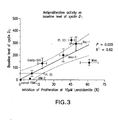
- a higher baseline level of cyclin D1 correlates to a higher likelihood of increased sensitivity to immunomodulatory compounds such as 1-oxo-2-(2,6-dioxopiperidin-3-yl)-4-ammoisoindoline ( FIG. 3 ).
- the level of p21 is determined by assessing the expression of its gene, e.g. , mRNA. In some embodiments, the gene expression is simply measured as the PCR cycle time to reach a threshold fluorescence, or "CT.”
- the level of p21 is determined by assessing the level of protein itself.
- the protein level can be measured using any methods of protein quantification well-known in the art, e.g. , ELISA.
- the expression of p21 can be used as biomarkers to monitor progress of treatment effectiveness in NHL patients that are receiving treatment with immunomodulatory compounds.
- Such a monitoring comprises comparing the level of p21 from a sample obtained after the treatment with that of control samples obtained before the treatment or without the treatment from another subject.
- the p21, cyclin D1, and SPARC mRNA or protein biomarkers can additionally be used to track or perform quality control on human research trials or to monitor the patient compliance to a drug regimen by providing a means to confirm that the patient is receiving specific drug treatments.
- These biomarkers can be used in connection with, for example, the management of patient treatment, clinical trials, and cell-based research.
- the p21, and SPARC mRNA or protein-based biomarkers can be used to track patient compliance during individual treatment regimes, or during clinical trials.
- a method for assessing patient compliance with a drug treatment protocol is provided.
- a biological sample is obtained from the patient, and the levels of at least one of p21, or SPARC mRNA or protein is measured and compared to that of a control untreated sample.
- An altered expression level of the mRNA or protein biomarker compared to that of an untreated control sample indicates compliance with the protocol.
- the expression of SPARC mRNA or protein can be followed at set intervals during a clinical trial to ensure that the patients included in the trial are taking the drugs as instructed.
- the treatment of individual patients can also be followed using the procedure. For example, when at least one of p21, or SPARC mRNA or protein is measured, an altered level of the biomarker compared to that of an untreated control indicates at least partial patient compliance with the drug treatment protocol. An altered level of the mRNA or protein biomarker that is at a similar quantity to that of a positive control indicates the likelihood of full compliance with the treatment protocol.
- immunomodulatory compounds including compounds known as "IMiDs ®" (Celgene Corporation), are a group of compounds that can be useful to treat several types of human diseases, including certain cancers. As provided herein, these compounds can be effective in treating NHL.
- an immunomodulatory compound can be administered to a cell sample or to a patient, and the effectiveness of the treatment can be followed using mRNA or protein biomarkers as described herein.
- the term “immunomodulatory compound” can encompass certain small organic molecules that inhibit LPS induced monocyte TNF- ⁇ , IL-1ß, IL-12, IL-6, MIP-1 ⁇ , MCP-1, GM-CSF, G-CSF, and COX-2 production. These compounds can be prepared synthetically, or can be obtained commercially.
- immunomodulating compounds include but are not limited to N- ⁇ [2-(2,6-dioxo(3-piperidyl)-1,3-dioxoisoindolin-4-yl]methyl ⁇ cyclopropyl-carboxamide; 3 -[2-(2,6-dioxo-piperidin-3-yl)-1,3-dioxo-2,3-dihydro-1H-isoindol-4-ylmethyl]-1,1 - dimethyl-urea; (-)-3-(3,4-Dimethoxy-phenyl)-3-(1-oxo-1,3-dihydro-isoindol-2-yl)-propionamide; (+)-3-(3,4-Dimethoxy-phenyl)-3-(1-oxo-1,3-dihydro-isoindol-2-yl)-propionamide; (+)-3-(3,4-Dimethoxy-phenyl)-3-(1-ox
- the inflammatory cytokine TNF- ⁇ which is produced by macrophages and monocytes during acute inflammation, causes a diverse range of signaling events within cells. Without being limited by a particular theory, one of the biological effects exerted by the immunomodulatory compounds disclosed herein is the reduction of myeloid cell TNF- ⁇ production. Immunomodulatory compounds disclosed herein may enhance the degradation of TNF- ⁇ mRNA.
- immunomodulatory compounds disclosed herein may also be potent co-stimulators of T cells and increase cell proliferation dramatically in a dose dependent manner. Immunomodulatory compounds disclosed herein may also have a greater co-stimulatory effect on the CD8+ T cell subset than on the CD4+ T cell subset. In addition, the compounds may have antiinflammatory properties against myeloid cell responses, yet efficiently co-stimulate T cells to produce greater amounts of IL-2, IFN- ⁇ , and to enhance T cell proliferation and CD8+ T cell cytotoxic activity.
- immunomodulatory compounds disclosed herein may be capable of acting both indirectly through cytokine activation and directly on Natural Killer (“NK”) cells and Natural Killer T (“NKT”) cells, and increase the NK cells' ability to produce beneficial cytokines such as, but not limited to, IFN- ⁇ , and to enhance NK and NKT cell cytotoxic activity.
- NK Natural Killer
- NKT Natural Killer T
- immunomodulatory compounds include cyano and carboxy derivatives of substituted styrenes such as those disclosed in U.S. patent no. 5,929,117 ; 1-oxo-2-(2,6-dioxo-3-fluoropiperidin-3yl) isoindolines and 1,3-dioxo-2-(2,6-dioxo-3-fluoropiperidine-3-yl) isoindolines such as those described in U.S. patent nos. 5,874,448 and 5,955,476 ; the tetra substituted 2-(2,6-dioxopiperdin-3-yl)-1-oxoisoindolines described in U.S. patent no.
- immunomodulatory compounds disclosed herein contain one or more chiral centers, and can exist as racemic mixtures of enantiomers or mixtures of diastereomers.
- stereomerically pure forms of such compounds as well as the use of mixtures of those forms.
- mixtures comprising equal or unequal amounts of the enantiomers of a particular immunomodulatory compounds may be used.
- isomers may be asymmetrically synthesized or resolved using standard techniques such as chiral columns or chiral resolving agents. See, e.g., Jacques, J., et al., Enantiomers, Racemates and Resolutions (Wiley-Interscience, New York, 1981 ); Wilen, S.
- Immunomodulatory compounds provided herein include, but are not limited to, 1-oxo-and 1,3 dioxo-2-(2,6-dioxopiperidin-3-yl) isoindolines substituted with amino in the benzo ring as described in U.S. Patent no. 5,635,517 .
- immunomodulatory compounds include, but are not limited to: 1-oxo-2-(2,6-dioxopiperidin-3-yl)-4-aminoisoindoline; 1,3-dioxo-2-(2,6-dioxopiperidin-3-yl)-4-aminoisoindoline; and 1,3-dioxo-2-(3-methyl-2,6-dioxopiperidin-3-yl)-4-aminoisoindole, and optically pure isomers thereof.
- the compounds can be obtained via standard, synthetic methods (see e.g., United States Patent No. 5,635,517 ).
- the compounds are also available from Celgene Corporation, Warren, NJ.
- Still other specific immunomodulatory compounds disclosed herein belong to a class of isoindole-imides disclosed in U.S. Patent No. 7,091,353 , U.S. Patent Publication No. 2003/0045552 , and International Application No. PCT/US01/50401 (International Publication No. WO 02/059106 ).
- Representative compounds are of formula II: and pharmaceutically acceptable salts, hydrates, solvates, clathrates, enantiomers, diastereomers, racemates, and mixtures of stereoisomers thereof, wherein:
- R 1 is (C 3 -C 7 )cycloalkyl, (C 2 -C 8 )alkenyl, (C 2 -C 8 )alkynyl, benzyl, aryl, (C 0 -C 4 )alkyl-(C 1 -C 6 )heterocycloalkyl, (C 0 -C 4 )alkyl-(C 2 -C 5 )heteroaryl, C(O)R 3 , C(O)OR 4 , (C 1 -C 8 )alkyl-N(R 6 ) 2 , (C 1 -C 8 )alkyl-OR 5 , (C 1 -C 8 )alkyl-C(O)OR 5 , C(S)NHR 3 , or (C 1 -C 8 )alkyl-O(CO)R 5 ;
- R 2 is H or (C 1 -C 4 )alkyl.
- R 1 is (C 1 -C 8 )alkyl or benzyl.
- R 1 is H, (C 1 -C 8 )alkyl, benzyl, CH 2 OCH 3 , CH 2 CH 2 OCH 3 , or
- R 1 is wherein Q is O or S, and each occurrence of R 7 is independently H,(C 1 -C 8 )alkyl, (C 3 -C 7 )cycloalkyl, (C 2 -C 8 )alkenyl, (C 2 -C 8 )alkynyl, benzyl, aryl, halogen, (C 0 -C 4 )alkyl-(C 1 -C 6 )heterocycloalkyl, (C 0 -C 4 )alkyl-(C 2 -C 5 )heteroaryl, (C 0 -C 8 )alkyl-N(R 6 ) 2 , (C 1 -C 8 )alkyl-OR 5 , (C 1 -C 8 )alkyl-C(O)OR 5 , (C 1 -C 8 )alkyl-O(CO)R 5 , or C(O)OR 5 , or adjacent
- R 1 is C(O)R 3 .
- R 3 is (C 0 -C 4 )alkyl-(C 2 -C 5 )heteroaryl, (C 1 -C 8 )alkyl, aryl, or (C 0 -C 4 )alkyl-OR 5 .
- heteroaryl is pyridyl, furyl, or thienyl.
- R 1 is C(O)OR 4 .
- the H of C(O)NHC(O) can be replaced with (C 1 -C 4 )alkyl, aryl, or benzyl.
- compounds in this class include, but are not limited to: [2-(2,6-dioxo-piperidin-3-yl)-1,3-dioxo-2,3-dihydro-1H-isoindol-4-ylmethyl]-amide; (2-(2,6-dioxo-piperidin-3-yl)-1,3-dioxo-2,3-dihydro-1 H -isoindol-4-ylmethyl)-carbamic acid tert -butyl ester; 4-(aminomethyl)-2-(2,6-dioxo(3-piperidyl))-isoindoline-1,3-dione; N- (2-(2,6-dioxo-piperidin-3-yl)-1,3-dioxo-2,3-dihydro-1 H -isoindol-4-ylmethyl)-acetamide; N - ⁇ (2-(2,6-dio)-pipe
- Still other specific immunomodulatory compounds disclosed herein belong to a class of isoindole-imides disclosed in U.S. Patent Application Publication Nos. US 2002/0045643 , International Publication No. WO 98/54170 , and United States Patent No. 6,395,754 .
- Representative compounds are of formula III: and pharmaceutically acceptable salts, hydrates, solvates, clathrates, enantiomers, diastereomers, racemates, and mixtures of stereoisomers thereof, wherein:
- Representative compounds are of formula: in which the carbon atom designated C* constitutes a center of chirality (when n is not zero and R 1 is not the same as R 2 ); one of X 1 and X 2 is amino, nitro, alkyl of one to six carbons, or NH-Z, and the other of X 1 or X 2 is hydrogen; each of R 1 and R 2 independent of the other, is hydroxy or NH-Z; R 3 is hydrogen, alkyl of one to six carbons, halo, or haloalkyl; Z is hydrogen, aryl, alkyl of one to six carbons, formyl, or acyl of one to six carbons; and n has a value of 0, 1, or 2; provided that if X 1 is amino, and n is 1 or 2, then R 1 and R 2 are not both hydroxy; and the salts thereof.
- C* constitutes a center of chirality when n is not zero and R 1 is not R 2 ; one of X 1 and X 2 is amino, nitro, alkyl of one to six carbons, or NH-Z, and the other of X 1 or X 2 is hydrogen; each of R 1 and R 2 independent of the other, is hydroxy or NH-Z; R 3 is alkyl of one to six carbons, halo, or hydrogen; Z is hydrogen, aryl, or an alkyl or acyl of one to six carbons; and n has a value of 0, 1, or 2; and the salts thereof.
- Still other specific immunomodulatory compounds are isoindoline-1-one and isoindoiine-1,3-dione substituted in the 2-position with 2,6-dioxo-3-hydroxypiperidin-5-yl described in U.S. patent no. 6,458,810 .
- Representative compounds are of formula: wherein:
- the compounds may be small organic molecules having a molecular weight less than about 1,000 g/mol, and are not proteins, peptides, oligonucleotides, oligosaccharides or other macromolecules.
- an immunomodulatory compound can be administered by oral, parenteral, intravenous, transdermal, intramuscular, rectal, sublingual, mucosal, nasal, or other means.
- an immunomodulatory compounds can be administered in a form of pharmaceutical composition and/or unit dosage form. Suitable dosage forms include, but are not limited to, capsules, tablets (including rapid dissolving and delayed release tablets), powder, syrups, oral suspensions and solutions for parenteral administration. Suitable administration methods for the immunomodulatory compounds, as well as suitable dosage forms and pharmaceutical compositions, can be found in U.S. Patent Application Publication Nos. US20060188475 , US20060205787 , and US20070049618 .
- Typical dosage forms comprise an immunomodulatory compound or a pharmaceutically acceptable salt, solvate, stereoisomer, or prodrug thereof in an amount of from about 0.001 to about 150 mg.
- dosage forms comprise an immunomodulatory compound or a pharmaceutically acceptable salt, solvate, stereoisomer, or prodrug thereof in an amount of about 0.001, 0.01, 0.1, 1, 2, 5, 7.5, 10, 12.5, 15, 17.5, 20,25, 50,100,150 or 200 mg.
- a dosage form comprises 4-(amino)-2-(2,6-dioxo(3-piperidyl))-isoindoline-1,3-dione in an amount of about 0.001, 0.01, 0.1, 1, 2, 5, 10, 25 or 50 mg.
- compositions provided herein can also contain one of more pharmaceutically acceptable excipients. See, e.g., Rowe et al., Handbook of Pharmaceutical Excipients, 4th Ed. (2003 ).
- an immunomodulatory compound is administered to a subject about 3 months, 30 days, 20 days, 15 days, 12 days, 10 days, 7 days, 5 days, 3 days, 1 day, 12 hours, or 5 hours prior to testing for mRNA or protein biomarker levels.
- an immunomodulatory compound is administered from about 3 months to about 30 days, 30 days to about 5 hours, from about 20 days to about 5 hours, from about 15 days to about 12 hours, from about 12 days to about 5 hours, from about 10 days to about 12 hours, from about 7 days to about 12 hours, from about 5 days to about 12 hours, from about 5 days to about 1 day, from about 3 days to about 12 hours, or from about 3 days to about 1 day prior to testing for mRNA or protein biomarker levels.
- the racemic 4-(amino)-2-(2,6-dioxo(3-piperidyl))-isoindoline-1,3-dione is administered at an amount of 1, 2, 5, 10, or 25 mg per day.
- (S)-isomer of 4-(amino)-2-(2,6-dioxo(3-piperidyl))-isoindoline-1,3-dione is reported to have a higher potency than the racemic mixture, a lower dose can be given when (S)-isomer is used.
- (S)- 4-(amino)-2-(2,6-dioxo(3-piperidyl))-isoindoline-1,3-dione can be administered at an amount of 0.01, 0.1, 1, 2.5, 5, or 10 mg per day.
- the (R)-isomer of 4-(amino)-2-(2,6-dioxo(3-piperidyl))-isoindoline-1,3-dione can be administered at an amount comparable to the racemic mixture.
- a dosage form comprises 3-(4-amino-1-oxo-1,3-dihydro-isoindol-2-yl)-piperidine-2,6-dione in an amount of about 0.001, 0.01, 0.1, 1, 5, 10, 25 or 50 mg. Also provided herein is the use of racemic mixture, (S)-isomer, and (R)-isomer of 3-(4-amino-1-oxo-1,3-dihydro-isoindol-2-yl)-piperidine-2,6-dione.
- racemic 3-(4-amino-1-oxo-1,3-dihydro-isoindol-2-yl)-piperidine-2,6-dione can be administered at an amount of 1, 5, 10, 15, 25, or 50 mg per day.
- Optical isomers also can be administered at an amount comparable to racemic mixture. Doses can be adjusted depending on the type of disease or disorder being treated, prevented or managed, and the amount of an immunomodulatory compound and any optional additional agents concurrently administered to the patient, which are all within the skill of the art.
- the biomarker to be detected is an mRNA molecule.
- the method of measuring gene or protein expression can involve methods such as cDNA hybridization, flow cytometry, immunofluorescence, immunoblots, ELISAs or microspotted-antibody immunofluorescence assays, an antibody-based dipstick assay, cytometric bead arrays, or other common mRNA or protein detecting methods.
- mRNA sequence e.g., SPARC, cyclin D1, p21 mRNA, or a fragment thereof
- the probe can then be used to detect the mRNA sequence in a sample, using any suitable assay, such as PCR-based methods, Northern blotting, a dipstick assay, and the like.
- a nucleic acid assay for testing for immunomodulatory activity in a biological sample can be prepared.
- An assay typically contains a solid support and at least one nucleic acid contacting the support, where the nucleic acid corresponds to at least a portion of an mRNA that has altered expression during an immunomodulatory treatment in a patient, such as SPARC, cyclin D1, or p21 mRNA.
- the assay can also have a means for detecting the altered expression of the mRNA in the sample.
- the assay method can be varied depending on the type of mRNA information desired.
- Exemplary methods include but are not limited to Northern blots and PCR-based methods (e.g., qRT-PCR). Methods such as qRT-PCR can also accurately quantitate the amount of the mRNA in a sample.
- an assay may be in the form of a dipstick, a membrane, a chip, a disk, a test strip, a filter, a microsphere, a slide, a multiwell plate, or an optical fiber.
- An assay system may have a solid support on which a nucleic acid corresponding to the mRNA is attached.
- the solid support may comprise, for example, a plastic, silicon, a metal, a resin, glass, a membrane, a particle, a precipitate, a gel, a polymer, a sheet, a sphere, a polysaccharide, a capillary, a film a plate, or a slide.
- the assay components can be prepared and packaged together as a kit for detecting an mRNA.
- the nucleic acid can be labeled, if desired, to make a population of labeled mRNAs.
- a sample can be labeled using methods that are well known in the art (e.g., using DNA ligase, terminal transferase, or by labeling the RNA backbone, etc.; see, e.g., Ausubel, et al., Short Protocols in Molecular Biology, 3rd ed., Wiley & Sons 1995 and Sambrook et al., Molecular Cloning: A Laboratory Manual, Third Edition, 2001 Cold Spring Harbor, N.Y .).
- the sample is labeled with fluorescent label.
- Exemplary fluorescent dyes include but are not limited to xanthene dyes, fluorescein dyes, rhodamine dyes, fluorescein isothiocyanate (FITC), 6 carboxyfluorescein (FAM), 6 carboxy-2',4',7',4,7-hexachlorofluorescein (HEX), 6 carboxy 4', 5'dichloro 2', 7' dimethoxyfluorescein (JOE or J), N,N,N',N' tetramethyl 6 carboxyrhodamine (TAMRA or T), 6 carboxy X rhodamine (ROX or R), 5 carboxyrhodamine 6G (R6G5 or G5), 6 carboxyrhodamine 6G (R6G6 or G6), and rhodamine 110; cyanine dyes, e.g.
- Cy3, Cy5 and Cy7 dyes include Alexa dyes, e.g. Alexa-fluor-555; coumarin, Diethylaminocoumarin, umbelliferone; benzimide dyes, e.g. Hoechst 33258; phenanthridine dyes, e.g.
- Texas Red ethidium dyes; acridine dyes; carbazole dyes; phenoxazine dyes; porphyrin dyes; polymethine dyes, BODIPY dyes, quinoline dyes, Pyrene, Fluorescein Chlorotriazinyl, R110, Eosin, JOE, R6G, Tetramethylrhodamine, Lissamine, ROX, Napthofluorescein, and the like.
- the mRNA sequences comprise at least one mRNA selected from the group consisting of SPARC mRNA, p21 mRNA, or a fragment thereof.
- the nucleic acids may be present in specific, addressable locations on a solid support; each corresponding to at least a portion of mRNA sequences that are differentially expressed upon treatment of an immunomodulatory compound in a cell or a patient.
- a typical mRNA assay method can contain the steps of 1) obtaining surface-bound subject probes; 2) hybridization of a population of mRNAs to the surface-bound probes under conditions sufficient to provide for specific binding (3) post-hybridization washes to remove nucleic acids not bound in the hybridization; and (4) detection of the hybridized mRNAs.
- the reagents used in each of these steps and their conditions for use may vary depending on the particular application.
- Hybridization can be carried out under suitable hybridization conditions, which may vary in stringency as desired. Typical conditions are sufficient to produce probe/target complexes on a solid surface between complementary binding members, i.e., between surface-bound subject probes and complementary mRNAs in a sample. In certain embodiments, stringent hybridization conditions may be employed.
- Hybridization is typically performed under stringent hybridization conditions.
- Standard hybridization techniques e.g. under conditions sufficient to provide for specific binding of target mRNAs in the sample to the probes
- Kallioniemi et al. Science 258:818-821 (1992 ) and WO 93/18186 .
- Several guides to general techniques are available, e.g., Tijssen, Hybridization with Nucleic Acid Probes, Parts I and II (Elsevier, Amsterdam 1993 ).
- For descriptions of techniques suitable for in situ hybridizations see Gall et al. Meth. Enzymol., 21:470-480 (1981 ); and Angerer et al.
- the surface bound polynucleotides are typically washed to remove unbound nucleic acids. Washing may be performed using any convenient washing protocol, where the washing conditions are typically stringent, as described above. The hybridization of the target mRNAs to the probes is then detected using standard techniques.
- PCR-based methods can also be used to follow the expression of the SPARC, or p21 biomarkers.
- PCR methods can be found in the literature.
- PCR assays can be found in U.S. Patent No. 6,927,024 .
- RT-PCR methods can be found in U.S. Patent No. 7,122,799 .
- a method of fluorescent in situ PCR is described in U.S. Patent No. 7,186,507 .
- qRT-PCR Real-Time Reverse Transcription-PCR
- RNA targets Bustin, et al., 2005, Clin. Sci., 109:365-379 .
- Quantitative results obtained by qRT-PCR are generally more informative than qualitative data.
- qRT-PCR-based assays can be useful to measure mRNA levels during cell-based assays.
- the qRT-PCR method is also useful to monitor patient therapy. Examples of qRT-PCR-based methods can be found, for example, in U.S. Patent No. 7,101,663 .
- real-time PCR In contrast to regular reverse transcriptase-PCR and analysis by agarose gels, real-time PCR gives quantitative results.
- An additional advantage of real-time PCR is the relative ease and convenience of use.
- Instruments for real-time PCR such as the Applied Biosystems 7500, are available commercially, as are the reagents, such as TaqMan Sequence Detection chemistry.
- TaqMan ® Gene Expression Assays can be used, following the manufacturer's instructions.
- kits are pre-formulated gene expression assays for rapid, reliable detection and quantification of human, mouse and rat mRNA transcripts.
- An exemplary PCR program for example, is 50°C for 2 minutes, 95°C for 10 minutes, 40 cycles of 95°C for 15 seconds, then 60°C for 1 minute.
- the data can be analyzed, for example, using a 7500 Real-Time PCR System Sequence Detection software v1.3 using the comparative CT relative quantification calculation method. Using this method, the output is expressed as a fold-change of expression levels.
- the threshold level can be selected to be automatically determined by the software. In some embodiments, the threshold level is set to be above the baseline but sufficiently low to be within the exponential growth region of an amplification curve.
- the biomarker is a protein, such as SPARC, Cyclin D1, or p21 protein
- protein detection and quantitation methods can be used to measure the presence of the biomarker. Any suitable protein quantitation method can be used.
- antibody-based methods are used. Exemplary methods that can be used include but are not limited to immunoblotting (western blot), enzyme-linked immunosorbent assay (ELISA), immunohistochemistry, flow cytometry, cytometric bead array, mass spectroscopy, and the like.
- ELISA enzyme-linked immunosorbent assay
- Several types of ELISA are commonly used, including direct ELISA, indirect ELISA, and sandwich ELISA.
- the biological sample is whole blood, partially purified blood, a PBMC, a tissue biopsy, an RNA or protein extract, a cell extract, a cell lysate, a cell, a cell culture, a cell line, a tissue, an oral tissue, a gastrointestinal tissue, an organ, an organelle, a biological fluid, a blood sample, a urine sample, a skin sample, a plurality of samples from a clinical trial, or the like.
- the sample is a lymph node biopsy, a bone marrow biopsy, or a sample of peripheral blood tumor cells.
- the sample can be a crude sample, or can be purified to various degrees prior to storage, processing, or measurement.
- Samples for mRNA or protein assessment can be taken during any desired intervals. For example, samples can be taken hourly, twice per day, daily, weekly, monthly, every other month, yearly, or the like. The sample can be tested immediately, or can be stored for later testing.
- the samples can be purified prior to testing.
- the mRNA or protein can be isolated from the remaining cell contents prior to testing.
- Control samples can be taken from various sources.
- control samples are taken from the patient prior to treatment.
- a cell-based assay can utilize a control cell culture, for example, that has not been treated with the test compound.
- a method of screening for effective immunomodulatory compounds for treating several types of NHL can be obtained using the methods provided herein.
- an NHL cell type is chosen and cultured.
- Baseline SPARC mRNA or protein is measured.
- the cell (or cells) are then contacted with a drug candidate, or a plurality of drug candidates.
- the level of SPARC mRNA or protein is measured and compared to that of a similar untreated cell.
- the mRNA or protein levels are analyzed to determine whether the treated sample exhibits increased SPARC expression.
- Drug candidates that exhibit a pattern of increased SPARC expression can then be chosen for further studies to elucidate the activity of the candidate compound.
- kits for detecting the SPARC, and/or p21 mRNA biomarkers can be prepared.
- the kits can include, for example, a probe or probe set comprising oligonucleotides that can bind to the mRNA biomarker(s) of interest for a given disease, compound, or other parameter. Washing solutions, reagents for performing a hybridization assay, mRNA isolation or purification means, detection means, as well as positive and negative controls can also be included.
- the kit can also include instructions for using the components of the kit.
- the kit can be tailored for in-home use, clinical use, or research use.
- kits for detecting the SPARC, and/or p21 protein levels can be prepared.
- the kits can include, for example, a dipstick coated with an antibody that recognises the protein, washing solutions, reagents for performing the assay, protein isolation or purification means, detection means, as well as positive and negative controls.
- the kit can also include instructions for using the components of the kit.
- the kit can be tailored for in-home use, clinical use, or research use.
- NHL cell proliferation was assessed by 3H-thymidine incorporation assay. Briefly, cells were cultured in 96 well cell culture plates in complete RPMI-1640 medium in the presence and absence of drugs. Following incubation at 37°C for 3 days, 1 ⁇ Ci 3H-thymidine was added to each well for the last 5 hours of incubation. The 3H incorporation of each well was then measured.
- Flow cytometric assay Cells were harvested following treatment with the test drugs and stained with propidium iodide (PI) and annexin-V-FITC. Cell cycle analysis was carried out on BD FACScanto and analyzed with the ModFit program.
- PI propidium iodide
- annexin-V-FITC Cell cycle analysis was carried out on BD FACScanto and analyzed with the ModFit program.
- Luminex assay for growth factors Cells were treated with the drug for 3 days in 96 well plates. Cell culture supernatants were then collected for measurement of VEGF using Luminex/xMAP® technology.
- Real-time RT-PCR analysis After the cell treatment, total RNA was purified. Real-time PCR was performed with 100 ng of total RNA, using an Applied Biosystems 7500 instrument (Applied Biosystems, Foster City, CA) using TaqMan Sequence Detection chemistry which uses a fluorogenic probe (FAM) to enable the detection of a specific PCR product as it accumulates during PCR. Samples were prepared in triplicate in 50 ⁇ l reaction volumes. The 50 ⁇ l reactions consisted of 25 ⁇ l 2x TaqMan PCR master mix, 2.5 ⁇ l of 20x gene expression assay, 10 ⁇ l of RNA (500 ng) and 12.5 ⁇ l water. Glyceraldehyde-3-phosphate dehydrogenase (GAPDH) was used as the endogenous control to ensure equal RNA amounts in each sample.
- Glyceraldehyde-3-phosphate dehydrogenase Glyceraldehyde-3-phosphate dehydrogenase (GAPDH)
- TaqMan® Gene Expression Assays were pre-formulated gene expression assays for rapid, reliable detection and quantification of human, mouse and rat mRNA transcripts.
- the PCR program used was: 50°C for 2 minutes, 95°C for 10 minutes, 40 cycles of 95°C for 15 seconds, 60°C for 1 minute.
- Data was analyzed using 7500 Real-Time PCR System Sequence Detection software v1.3 using the comparative CT relative quantification calculation method.
- the output was expressed as a fold-change of expression levels.
- the threshold level was selected to be automatically determined by the software and was set to be above the baseline but sufficiently low to be within the exponential growth region of an amplification curve.
- the cycle number at which the fluorescence signal associated with a particular amplicon accumulation crosses the threshold is referred to as the CT.
- RNA transfection Cells were transfected with SPARC or cyclophilin siGENME SMARTpool (Dharmacon, Lafayette, Co) at final concentration of 200 nM using DharmaFECT 2 transfection reagents following the manufacturer's protocol. After 24 hours of transfection, cells were then treated with the drug for 2 days.
- SPARC or cyclophilin siGENME SMARTpool Dharmacon, Lafayette, Co
- the immunomodulatory compounds 1,3-dioxo-2-(2,6-dioxopiperidin-3-yl)-4-aminoisoindoline or 1-oxo-2-(2,6-dioxopiperidin-3-yl)-4-aminoisoindoline were added to the Rec-1 cells at a final concentration of 1, 10, or 100 ⁇ M.
- Jeko-1 cells were treated with immunomodulatory compounds, with or without dexamethasone (10 nM) for 24 hours.
- Total RNA was then isolated from the treated cells, and the samples were subjected to real-time RT-PCR analysis to determine gene transcription at the mRNA level.
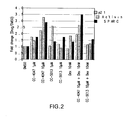
- the immunomodulatory compound 1,3-dioxo-2-(2,6-dioxopiperidin-3-yl)-4-aminoisoindoline (at 1-10 ⁇ M) was found to up-regulate the mRNA levels of p21, activin A and SPARC ( FIG. 2 ).
- 1,3-dioxo-2-(2,6-dioxopiperidin-3-yl)-4-aminoisoindoline (at 10 ⁇ M) enhanced mRNA levels of these genes up to about 3-fold.
- 1-oxo-2-(2,6-dioxopiperidin-3-yl)-4-aminoisoindoline (1 ⁇ M) enhanced activin A mRNA level up to 2.6-fold, and SPARC was enhanced at 10 ⁇ M.
- 1,3-dioxo-2-(2,6-dioxopiperidin-3-yl)-4-aminoisoindoline had a clear enhancing effect on p21.
- the immunomodulatory compound 1-oxo-2-(2,6-dioxopiperidin-3-yl)-4-aminoisoindoline was tested in vitro for its anti-proliferative effect in several NHL cell lines after 1-3 days of treatment.
- the method utilized 3 H-thymidine incorporation, microbead array technology and real time PCR.
- the six tested cell lines were Namalwa, Jeko-1, Rec-1, Granta-519, DB, and JVM-2.
- 1-oxo-2-(2,6-dioxopiperidin-3-yl)-4-aminoisoindoline demonstrated anti-proliferative activity against several types of NHL cells ( FIG. 4A ; FIG. 6 ).
- the sensitivity of these tested NHL cell lines to 1-oxo-2-(2,6-dioxopiperidin-3-yl)-4-aminoisoindoline is as follows: Namalwa > Rec-1 > Jeko-1 > Granta-519 > JVM-2 > DB cells.
- Namalwa cells Upon cytogenetic analysis, it was found that Namalwa cells have a 5q deletion. Rec-1, Jeko-1, Granta-519 and JVM-2 cells have a t(11;14)(q13;q32), which is the hallmark for mantle cell lymphoma (MCL) cell lines; and DB cells have the t(14;18)(q32;q21), which is characteristic of follicular lymphoma.
- the level of constitutive cyclin D1 gene expression correlates with the order of sensitivity to 1-oxy-2-(2,6-dioxopiperidin-3-yl)-4-aminoisoindoline: Rec-1 > Jeko-1 > Granta-519 > JVM-2.
- the cell cycle protein cyclin D1 particularly in combination with the cyclin dependent kinase CdK4, stimulates progression through the cell cycle, resulting in an increase in cell proliferation.
- baseline level of cyclin D1 can also be used as markers to predict whether a patient with a given type of NHL will be likely to be effectively treated with an immunomodulatory compound.
- baseline cyclin D1 expression can be monitored by qRT-PCR in lymph node or bone marrow biopsy, or in peripheral blood tumor cells, from patients with NHL and in particular MCL, as a means of predicting which patient will be most likely to benefit from an immunomodulatory compound therapy.
- a patient with NHL is identified and a lymph node biopsy is taken.
- Baseline level of cyclin D1 gene expression is measured.
- the probability of a successful treatment with an immunomodulatory agent is determined by comparing the levels of cyclin D1 with that of cyclin D1 measured in a sample obtained prior to the treatment by an immunomodulatory compound.
- a patient with a higher baseline cyclin D1 after the treatment is given a high probability of successful treatment with an immunomodulatory compound, and is assigned to a treatment protocol that involves daily oral administration of an immunomodulatory compound.
- 1-oxo-2-(2,6-dioxopiperidin-3-yl)-4-aminoisoindoline administration increased the expression of tumor suppressor genes, such as p21 cip / kip and SPARC in several cell lines.
- the elevation of SPARC mRNA correlated with the anti-proliferative effect of 1-oxo-2-(2,6-dioxopiperidin-3-yl)-4-aminoisoindoline and was not seen in the resistant cells, whereas elevated p21 was observed in both sensitive and resistant (DB) cells.
- 1-oxo-2-(2,6-dioxopiperidin-3-yl)-4-aminoisoindoline increased expression of SPARC mRNA in Non-Hodgkins Lymphoma (NHL) cells lines in a manner that correlates with the antiproliferative activity of 1-oxo-2-(2,6-dioxopiperidin-3-yl)-4-aminoisoindoline against that particular cell line ( FIGs.
- the DB cell line contained the t(14;18) chromosomal translocation that results in overexpression of the anti-apoptotic protein bc12.
- This DB cell line actually responded to 1-oxo-2-(2,6-dioxopiperidin-3-yl)-4-aminoisoindoline with an increased rate of cell proliferation.
- t(14;18) may be a negative prognostic factor in predicting clinical response to 1-oxo-2-(2,6-dioxopiperidin-3-yl)-4-aminoisoindoline.
- SPARC gene expression can be used as a biomarker of NHL or MCL tumor response to 1-oxo-2-(2,6-dioxopiperidin-3-yl)-4-aminoisoindoline.
- 1-oxo-2-(2,6-dioxopiperidin-3-yl)-4-aminoisoindoline inhibited the production of the pro-angiogenic growth factor VEGF from anti-proliferation sensitive NHL cells, such as Namalwa, Jeko-1 and Rec-1 cells. This effect on VEGF occurs at concentrations well below levels required for anti-proliferative effects.
- 1-oxo-2-(2,6-dioxopiperidin-3-yl)-4-aminoisoindoline fails to inhibit VEGF from anti-proliferation resistant NHL cells, such as Granta-519 and DB cells.
- 1-oxo-2-(2,6-dioxopiperidin-3-yl)-4-aminoisoindoline does not inhibit VEGF mRNA expression, implying a post transcriptional inhibitory effect ( FIG. 7 ).
- the 1-oxo-2-(2,6-dioxopiperidin-3-yl)-4-aminoisoindoline treated cells did not exhibit a significant change in expression of several genes involved in angiogenesis, cell proliferation and survival, such as VEGF, p53/p73 (2 members of p53 family transactivating p21 transcritption), BlyS (B lymphocyte stimulator, a member of the TNF ligand family involved in hematopoietic cell survival) and cyclin D1.
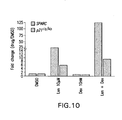
- SPARC siRNA was transfected to Namalwa cells to determine the effect of a SPARC knockdown on the antiproliferative effect of 1-oxo-2-(2,6-dioxopiperidin-3-yl)-4-aminoisoindoline in Namalwa cells.
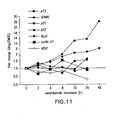
- the anti-proliferative effect of 1-oxo-2-(2,6-dioxopiperidin-3-yl)-4-aminoisoindoline is weaker after SPARC knockdown compared to mock transfected control cells.
Landscapes
- Health & Medical Sciences (AREA)
- Life Sciences & Earth Sciences (AREA)
- Chemical & Material Sciences (AREA)
- Immunology (AREA)
- Engineering & Computer Science (AREA)
- Organic Chemistry (AREA)
- Proteomics, Peptides & Aminoacids (AREA)
- Analytical Chemistry (AREA)
- Pathology (AREA)
- Molecular Biology (AREA)
- Genetics & Genomics (AREA)
- Wood Science & Technology (AREA)
- Zoology (AREA)
- Biochemistry (AREA)
- Biotechnology (AREA)
- Physics & Mathematics (AREA)
- Hematology (AREA)
- General Health & Medical Sciences (AREA)
- Microbiology (AREA)
- Biomedical Technology (AREA)
- Urology & Nephrology (AREA)
- Hospice & Palliative Care (AREA)
- Oncology (AREA)
- General Engineering & Computer Science (AREA)
- Biophysics (AREA)
- Bioinformatics & Cheminformatics (AREA)
- General Physics & Mathematics (AREA)
- Medicinal Chemistry (AREA)
- Cell Biology (AREA)
- Food Science & Technology (AREA)
- Measuring Or Testing Involving Enzymes Or Micro-Organisms (AREA)
- Pharmaceuticals Containing Other Organic And Inorganic Compounds (AREA)
Claims (12)
- Procédé pour prédire la réponse tumorale à un traitement chez un patient souffrant d'un lymphome non-hodgkinien (LNH), comprenant :- la culture de cellules tumorales obtenues à partir du patient en présence ou en l'absence d'un composé d'immunomodulation ;- la mesure de l'expression de SPARC dans les cellules tumorales ; et- la comparaison du niveau de l'expression de SPARC dans des cellules tumorales cultivées en présence d'un composé d'immunomodulation au niveau de l'expression de SPARC dans des cellules tumorales cultivées en l'absence d'un composé d'immunomodulation ;un niveau augmenté de l'expression de SPARC en présence d'un composé d'immunomodulation indiquant la probabilité d'une réponse tumorale efficace du patient au composé d'immunomodulation,
le composé d'immunomodulation étant la 1,3-dioxo-2-(2,6-dioxopipéridin-3-yl)-4-amino-iso-indoline. - Procédé pour surveiller la réponse tumorale à un traitement chez un patient souffrant d'un lymphome non-hodgkinien (LNH), comprenant :- la mesure de l'expression de SPARC dans un échantillon biologique obtenu à partir du patient ;- la mesure de l'expression de SPARC dans un deuxième échantillon biologique obtenu à partir du patient après l'administration d'un composé d'immunomodulation au patient ; et- la comparaison des niveaux de l'expression de SPARC ;un niveau augmenté de l'expression de SPARC après le traitement indiquant la probabilité d'une réponse tumorale efficace,
le composé d'immunomodulation étant la 1,3-dioxo-2-(2,6-dioxopipéridin-3-yl)-4-amino-iso-indoline. - Procédé pour surveiller l'observance d'un patient à un protocole de traitement médicamenteux dans le traitement d'un lymphome non-hodgkinien (LNH), comprenant :- la mesure du niveau de l'expression de SPARC dans un échantillon biologique obtenu à partir dudit patient ; et- la détermination de l'augmentation ou non du niveau d'expression dans l'échantillon du patient comparativement au niveau d'expression dans un échantillon témoin non traité ;une expression augmentée indiquant l'observance du patient audit protocole de traitement médicamenteux,
le médicament étant la 1,3-dioxo-2-(2,6-dioxopipéridin-3-yl)-4-amino-iso-indoline. - Procédé selon l'une quelconque des revendications 1 à 3, l'expression étant l'expression d'ARNm ou l'expression protéinique.
- Procédé selon l'une quelconque des revendications 1 à 4, l'expression dans l'échantillon traité augmentant d'un facteur 1.5, 2, 3, 5 ou plus.
- Utilisation d'un kit pour prédire la probabilité d'un traitement efficace du LNH par un composé d'immunomodulation, le kit comprenant- un support solide ;- un acide nucléique en contact avec ledit support, ledit acide nucléique étant complémentaire à au moins 20, 50, 100, 200, 350 bases ou plus d'au moins un ARNm de p21 ou ARNm de SPARC ; et- un moyen pour détecter l'expression dudit ARNm dans un échantillon biologique ;le composé d'immunomodulation étant la 1,3-dioxo-2-(2,6-dioxopipéridin-3-yl)-4-amino-iso-indoline.
- Utilisation d'un kit pour prédire la probabilité d'un traitement efficace du LNH par un composé d'immunomodulation, ou pour surveiller le traitement du LNH par un composé d'immunomodulation, le kit comprenant- un support solide ; et- un moyen pour détecter l'expression protéinique d'au moins un parmi SPARC et p21 dans un échantillon biologique ;le composé d'immunomodulation étant la 1,3-dioxo-2-(2,6-dioxopipéridin-3-yl)-4-amino-iso-indoline.
- Utilisation selon les revendications 6 ou 7, le kit utilisant une jauge graduée, une membrane, une puce, un disque, une bandelette réactive, un filtre, une microsphère, une lame, une plaque à cuvettes multiples ou une fibre optique.
- Utilisation selon l'une quelconque des revendications 6 à 8, ledit support solide comprenant un constituant choisi dans le groupe constitué par le plastique, la silicone, le métal, la résine, le verre, une membrane, une particule, un précipité, un gel, un polymère, une feuille, une sphère, un polysaccharide, un capillaire, un film, une plaque et une lame.
- Utilisation selon l'une quelconque des revendications 6 à 9, ledit échantillon biologique étant choisi dans le groupe constitué par un lysat cellulaire, une culture cellulaire, une lignée cellulaire, un tissu, un organe, une organelle, un fluide biologique, un échantillon de sang, un échantillon d'urine et un échantillon de la peau.
- Utilisation selon l'une quelconque des revendications 6 à 10, ledit échantillon biologique étant une biopsie de ganglion lymphatique, une biopsie de moelle osseuse ou un échantillon de cellules tumorales du sang périphérique.
- Utilisation selon la revendication 10, le tissu étant un tissu oral ou un tissu gastro-intestinal.
Applications Claiming Priority (2)
| Application Number | Priority Date | Filing Date | Title |
|---|---|---|---|
| US580607P | 2007-12-07 | 2007-12-07 | |
| PCT/US2008/013448 WO2009075797A2 (fr) | 2007-12-07 | 2008-12-05 | Biomarqueurs pour prédire la sensibilité de cellules à des composés immunorégulateurs pendant un traitement de lymphome non hodgkinien |
Publications (2)
| Publication Number | Publication Date |
|---|---|
| EP2235535A2 EP2235535A2 (fr) | 2010-10-06 |
| EP2235535B1 true EP2235535B1 (fr) | 2014-11-12 |
Family
ID=40428144
Family Applications (1)
| Application Number | Title | Priority Date | Filing Date |
|---|---|---|---|
| EP08859508.7A Not-in-force EP2235535B1 (fr) | 2007-12-07 | 2008-12-05 | Biomarqueurs pour prédire la sensibilité de cellules à des composés immunorégulateurs pendant un traitement de lymphome non hodgkinien |
Country Status (7)
| Country | Link |
|---|---|
| US (2) | US20090148853A1 (fr) |
| EP (1) | EP2235535B1 (fr) |
| JP (1) | JP2011505808A (fr) |
| CA (1) | CA2707886A1 (fr) |
| ES (1) | ES2527776T3 (fr) |
| MX (1) | MX2010006090A (fr) |
| WO (1) | WO2009075797A2 (fr) |
Families Citing this family (12)
| Publication number | Priority date | Publication date | Assignee | Title |
|---|---|---|---|---|
| EP2436387B1 (fr) | 2009-05-25 | 2018-07-25 | Celgene Corporation | Composition pharmaceutique contenant crbn et son utilisation dans le traitement des maladies du cortex cerebral. |
| AU2011224166B2 (en) * | 2010-03-12 | 2014-08-21 | Celgene Corporation | Methods for the treatment of non-Hodgkin's lymphomas using lenalidomide, and gene and protein biomarkers as a predictor |
| EP3096142A3 (fr) | 2011-04-29 | 2017-03-08 | Celgene Corporation | Procédés de traitement du cancer et de maladies inflammatoires au moyen de céréblon en tant que prédicteur |
| CA2877736C (fr) | 2012-06-29 | 2021-12-07 | Celgene Corporation | Procedes pour determiner l'efficacite d'un medicament en utilisant des proteines associees au cereblon |
| US9587281B2 (en) | 2012-08-14 | 2017-03-07 | Celgene Corporation | Cereblon isoforms and their use as biomarkers for therapeutic treatment |
| CA2907908A1 (fr) | 2013-04-02 | 2014-10-09 | Celgene Corporation | Procedes et compositions utilisant de la 4-amino-2-(2,6-dioxo-piperidine-3-yl)-isoindoline-1,3-dione pour le traitement et la gestion de cancers du systeme nerveux central |
| EP2815749A1 (fr) | 2013-06-20 | 2014-12-24 | IP Gesellschaft für Management mbH | Forme solide de 4-amino-2-(2,6-dioxopiperidine-3-yl)isoindoline-1,3-dione ayant un réseau de diffraction de rayons X spécifique |
| CA2932120C (fr) | 2013-12-06 | 2023-09-19 | Celgene Corporation | Methodes de determination de l'efficacite pharmacologique du traitement du lymphome diffus a grandes cellules b, du myelome multiple et des cancers myeloides |
| EP3160486B1 (fr) | 2014-06-27 | 2020-11-18 | Celgene Corporation | Compositions et procédés pour induire des modifications conformationnelles dans céréblon et d'autres ubiquitine ligases e3 |
| US10830762B2 (en) | 2015-12-28 | 2020-11-10 | Celgene Corporation | Compositions and methods for inducing conformational changes in cereblon and other E3 ubiquitin ligases |
| US20180238886A1 (en) * | 2017-01-31 | 2018-08-23 | Celgene Corporation | Methods for treating hematological cancer and the use of biomarkers as a predictor for responsiveness to treatment compounds |
| US11535606B2 (en) | 2019-09-23 | 2022-12-27 | Accutar Biotechnology Inc. | Substituted quinoline-8-carbonitrile derivatives with androgen receptor degradation activity and uses thereof |
Family Cites Families (5)
| Publication number | Priority date | Publication date | Assignee | Title |
|---|---|---|---|---|
| US7393862B2 (en) * | 2002-05-17 | 2008-07-01 | Celgene Corporation | Method using 3-(4-amino-1-oxo-1,3-dihydro-isoindol-2-yl)-piperidine-2,6-dione for treatment of certain leukemias |
| US8420603B2 (en) * | 2004-05-14 | 2013-04-16 | Abraxis Bioscience, Llc | SPARC and methods of use thereof |
| US20060041387A1 (en) * | 2004-08-17 | 2006-02-23 | Xiumei Sun | Smart microarray cancer detection system |
| US7553496B2 (en) * | 2004-12-21 | 2009-06-30 | University Of Kentucky Research Foundation | VEGF-A as an inhibitor of angiogenesis and methods of using same |
| ES2434946T3 (es) * | 2005-08-31 | 2013-12-18 | Celgene Corporation | Compuestos de isoindol imida y composiciones que los comprenden y métodos para usarlo |
-
2008
- 2008-12-05 EP EP08859508.7A patent/EP2235535B1/fr not_active Not-in-force
- 2008-12-05 MX MX2010006090A patent/MX2010006090A/es active IP Right Grant
- 2008-12-05 WO PCT/US2008/013448 patent/WO2009075797A2/fr not_active Ceased
- 2008-12-05 JP JP2010536943A patent/JP2011505808A/ja active Pending
- 2008-12-05 US US12/329,489 patent/US20090148853A1/en not_active Abandoned
- 2008-12-05 ES ES08859508.7T patent/ES2527776T3/es active Active
- 2008-12-05 CA CA2707886A patent/CA2707886A1/fr not_active Abandoned
-
2015
- 2015-11-13 US US14/940,896 patent/US20160153998A1/en not_active Abandoned
Also Published As
| Publication number | Publication date |
|---|---|
| JP2011505808A (ja) | 2011-03-03 |
| US20090148853A1 (en) | 2009-06-11 |
| EP2235535A2 (fr) | 2010-10-06 |
| MX2010006090A (es) | 2010-07-28 |
| CA2707886A1 (fr) | 2009-06-18 |
| ES2527776T3 (es) | 2015-01-29 |
| US20160153998A1 (en) | 2016-06-02 |
| WO2009075797A2 (fr) | 2009-06-18 |
| WO2009075797A3 (fr) | 2009-07-30 |
Similar Documents
| Publication | Publication Date | Title |
|---|---|---|
| US20160153998A1 (en) | Biomarkers for predicting the sensitivity of cells to immunomodulatory compounds during treatment of non-hodgkin's lymphoma | |
| Ma et al. | AIM2 controls microglial inflammation to prevent experimental autoimmune encephalomyelitis | |
| US10996215B2 (en) | Methods for determining drug efficacy for the treatment of diffuse large B-cell lymphoma, multiple myeloma, and myeloid cancers | |
| US7964354B2 (en) | Use of micro-RNA as a biomarker of immunomodulatory drug activity | |
| EP3904875B1 (fr) | Procédés pour déterminer l'efficacité d'un médicament en utilisant ikzf3 (aiolos) | |
| JP2017503481A (ja) | 血液癌を治療する方法及び免疫調節療法に対する臨床的感受性の予測因子としてのバイオマーカーの使用 | |
| US20110111396A1 (en) | Biomarkers for monitoring the treatment by quinazolinone compounds |
Legal Events
| Date | Code | Title | Description |
|---|---|---|---|
| PUAI | Public reference made under article 153(3) epc to a published international application that has entered the european phase |
Free format text: ORIGINAL CODE: 0009012 |
|
| 17P | Request for examination filed |
Effective date: 20100707 |
|
| AK | Designated contracting states |
Kind code of ref document: A2 Designated state(s): AT BE BG CH CY CZ DE DK EE ES FI FR GB GR HR HU IE IS IT LI LT LU LV MC MT NL NO PL PT RO SE SI SK TR |
|
| AX | Request for extension of the european patent |
Extension state: AL BA MK RS |
|
| RIN1 | Information on inventor provided before grant (corrected) |
Inventor name: SCHAFER, PETER, H. Inventor name: BARTLETT, JUSTIN, B. Inventor name: ZHANG, LING-HUA |
|
| DAX | Request for extension of the european patent (deleted) | ||
| 17Q | First examination report despatched |
Effective date: 20111027 |
|
| GRAP | Despatch of communication of intention to grant a patent |
Free format text: ORIGINAL CODE: EPIDOSNIGR1 |
|
| INTG | Intention to grant announced |
Effective date: 20140526 |
|
| GRAS | Grant fee paid |
Free format text: ORIGINAL CODE: EPIDOSNIGR3 |
|
| GRAA | (expected) grant |
Free format text: ORIGINAL CODE: 0009210 |
|
| AK | Designated contracting states |
Kind code of ref document: B1 Designated state(s): AT BE BG CH CY CZ DE DK EE ES FI FR GB GR HR HU IE IS IT LI LT LU LV MC MT NL NO PL PT RO SE SI SK TR |
|
| REG | Reference to a national code |
Ref country code: GB Ref legal event code: FG4D |
|
| REG | Reference to a national code |
Ref country code: CH Ref legal event code: EP |
|
| REG | Reference to a national code |
Ref country code: AT Ref legal event code: REF Ref document number: 696058 Country of ref document: AT Kind code of ref document: T Effective date: 20141115 |
|
| REG | Reference to a national code |
Ref country code: IE Ref legal event code: FG4D |
|
| REG | Reference to a national code |
Ref country code: DE Ref legal event code: R096 Ref document number: 602008035385 Country of ref document: DE Effective date: 20141231 |
|
| REG | Reference to a national code |
Ref country code: ES Ref legal event code: FG2A Ref document number: 2527776 Country of ref document: ES Kind code of ref document: T3 Effective date: 20150129 |
|
| REG | Reference to a national code |
Ref country code: CH Ref legal event code: NV Representative=s name: KIRKER AND CIE S.A., CH |
|
| REG | Reference to a national code |
Ref country code: NL Ref legal event code: VDEP Effective date: 20141112 |
|
| REG | Reference to a national code |
Ref country code: AT Ref legal event code: MK05 Ref document number: 696058 Country of ref document: AT Kind code of ref document: T Effective date: 20141112 |
|
| PG25 | Lapsed in a contracting state [announced via postgrant information from national office to epo] |
Ref country code: NO Free format text: LAPSE BECAUSE OF FAILURE TO SUBMIT A TRANSLATION OF THE DESCRIPTION OR TO PAY THE FEE WITHIN THE PRESCRIBED TIME-LIMIT Effective date: 20150212 Ref country code: PT Free format text: LAPSE BECAUSE OF FAILURE TO SUBMIT A TRANSLATION OF THE DESCRIPTION OR TO PAY THE FEE WITHIN THE PRESCRIBED TIME-LIMIT Effective date: 20150312 Ref country code: NL Free format text: LAPSE BECAUSE OF FAILURE TO SUBMIT A TRANSLATION OF THE DESCRIPTION OR TO PAY THE FEE WITHIN THE PRESCRIBED TIME-LIMIT Effective date: 20141112 Ref country code: IS Free format text: LAPSE BECAUSE OF FAILURE TO SUBMIT A TRANSLATION OF THE DESCRIPTION OR TO PAY THE FEE WITHIN THE PRESCRIBED TIME-LIMIT Effective date: 20150312 Ref country code: FI Free format text: LAPSE BECAUSE OF FAILURE TO SUBMIT A TRANSLATION OF THE DESCRIPTION OR TO PAY THE FEE WITHIN THE PRESCRIBED TIME-LIMIT Effective date: 20141112 Ref country code: LT Free format text: LAPSE BECAUSE OF FAILURE TO SUBMIT A TRANSLATION OF THE DESCRIPTION OR TO PAY THE FEE WITHIN THE PRESCRIBED TIME-LIMIT Effective date: 20141112 |
|
| PG25 | Lapsed in a contracting state [announced via postgrant information from national office to epo] |
Ref country code: SE Free format text: LAPSE BECAUSE OF FAILURE TO SUBMIT A TRANSLATION OF THE DESCRIPTION OR TO PAY THE FEE WITHIN THE PRESCRIBED TIME-LIMIT Effective date: 20141112 Ref country code: LV Free format text: LAPSE BECAUSE OF FAILURE TO SUBMIT A TRANSLATION OF THE DESCRIPTION OR TO PAY THE FEE WITHIN THE PRESCRIBED TIME-LIMIT Effective date: 20141112 Ref country code: HR Free format text: LAPSE BECAUSE OF FAILURE TO SUBMIT A TRANSLATION OF THE DESCRIPTION OR TO PAY THE FEE WITHIN THE PRESCRIBED TIME-LIMIT Effective date: 20141112 Ref country code: CY Free format text: LAPSE BECAUSE OF FAILURE TO SUBMIT A TRANSLATION OF THE DESCRIPTION OR TO PAY THE FEE WITHIN THE PRESCRIBED TIME-LIMIT Effective date: 20141112 Ref country code: AT Free format text: LAPSE BECAUSE OF FAILURE TO SUBMIT A TRANSLATION OF THE DESCRIPTION OR TO PAY THE FEE WITHIN THE PRESCRIBED TIME-LIMIT Effective date: 20141112 Ref country code: GR Free format text: LAPSE BECAUSE OF FAILURE TO SUBMIT A TRANSLATION OF THE DESCRIPTION OR TO PAY THE FEE WITHIN THE PRESCRIBED TIME-LIMIT Effective date: 20150213 Ref country code: PL Free format text: LAPSE BECAUSE OF FAILURE TO SUBMIT A TRANSLATION OF THE DESCRIPTION OR TO PAY THE FEE WITHIN THE PRESCRIBED TIME-LIMIT Effective date: 20141112 |
|
| PG25 | Lapsed in a contracting state [announced via postgrant information from national office to epo] |
Ref country code: BE Free format text: LAPSE BECAUSE OF NON-PAYMENT OF DUE FEES Effective date: 20141231 |
|
| PG25 | Lapsed in a contracting state [announced via postgrant information from national office to epo] |
Ref country code: CZ Free format text: LAPSE BECAUSE OF FAILURE TO SUBMIT A TRANSLATION OF THE DESCRIPTION OR TO PAY THE FEE WITHIN THE PRESCRIBED TIME-LIMIT Effective date: 20141112 Ref country code: RO Free format text: LAPSE BECAUSE OF FAILURE TO SUBMIT A TRANSLATION OF THE DESCRIPTION OR TO PAY THE FEE WITHIN THE PRESCRIBED TIME-LIMIT Effective date: 20141112 Ref country code: SK Free format text: LAPSE BECAUSE OF FAILURE TO SUBMIT A TRANSLATION OF THE DESCRIPTION OR TO PAY THE FEE WITHIN THE PRESCRIBED TIME-LIMIT Effective date: 20141112 Ref country code: EE Free format text: LAPSE BECAUSE OF FAILURE TO SUBMIT A TRANSLATION OF THE DESCRIPTION OR TO PAY THE FEE WITHIN THE PRESCRIBED TIME-LIMIT Effective date: 20141112 Ref country code: DK Free format text: LAPSE BECAUSE OF FAILURE TO SUBMIT A TRANSLATION OF THE DESCRIPTION OR TO PAY THE FEE WITHIN THE PRESCRIBED TIME-LIMIT Effective date: 20141112 |
|
| REG | Reference to a national code |
Ref country code: DE Ref legal event code: R097 Ref document number: 602008035385 Country of ref document: DE |
|
| PG25 | Lapsed in a contracting state [announced via postgrant information from national office to epo] |
Ref country code: MC Free format text: LAPSE BECAUSE OF FAILURE TO SUBMIT A TRANSLATION OF THE DESCRIPTION OR TO PAY THE FEE WITHIN THE PRESCRIBED TIME-LIMIT Effective date: 20141112 |
|
| PLBE | No opposition filed within time limit |
Free format text: ORIGINAL CODE: 0009261 |
|
| STAA | Information on the status of an ep patent application or granted ep patent |
Free format text: STATUS: NO OPPOSITION FILED WITHIN TIME LIMIT |
|
| REG | Reference to a national code |
Ref country code: IE Ref legal event code: MM4A |
|
| 26N | No opposition filed |
Effective date: 20150813 |
|
| PG25 | Lapsed in a contracting state [announced via postgrant information from national office to epo] |
Ref country code: IE Free format text: LAPSE BECAUSE OF NON-PAYMENT OF DUE FEES Effective date: 20141205 |
|
| REG | Reference to a national code |
Ref country code: FR Ref legal event code: PLFP Year of fee payment: 8 |
|
| PG25 | Lapsed in a contracting state [announced via postgrant information from national office to epo] |
Ref country code: SI Free format text: LAPSE BECAUSE OF FAILURE TO SUBMIT A TRANSLATION OF THE DESCRIPTION OR TO PAY THE FEE WITHIN THE PRESCRIBED TIME-LIMIT Effective date: 20141112 |
|
| PG25 | Lapsed in a contracting state [announced via postgrant information from national office to epo] |
Ref country code: BG Free format text: LAPSE BECAUSE OF FAILURE TO SUBMIT A TRANSLATION OF THE DESCRIPTION OR TO PAY THE FEE WITHIN THE PRESCRIBED TIME-LIMIT Effective date: 20141112 |
|
| PG25 | Lapsed in a contracting state [announced via postgrant information from national office to epo] |
Ref country code: HU Free format text: LAPSE BECAUSE OF FAILURE TO SUBMIT A TRANSLATION OF THE DESCRIPTION OR TO PAY THE FEE WITHIN THE PRESCRIBED TIME-LIMIT; INVALID AB INITIO Effective date: 20081205 Ref country code: MT Free format text: LAPSE BECAUSE OF FAILURE TO SUBMIT A TRANSLATION OF THE DESCRIPTION OR TO PAY THE FEE WITHIN THE PRESCRIBED TIME-LIMIT Effective date: 20141112 Ref country code: LU Free format text: LAPSE BECAUSE OF NON-PAYMENT OF DUE FEES Effective date: 20141205 Ref country code: TR Free format text: LAPSE BECAUSE OF FAILURE TO SUBMIT A TRANSLATION OF THE DESCRIPTION OR TO PAY THE FEE WITHIN THE PRESCRIBED TIME-LIMIT Effective date: 20141112 |
|
| REG | Reference to a national code |
Ref country code: FR Ref legal event code: PLFP Year of fee payment: 9 |
|
| PG25 | Lapsed in a contracting state [announced via postgrant information from national office to epo] |
Ref country code: IT Free format text: LAPSE BECAUSE OF NON-PAYMENT OF DUE FEES Effective date: 20151205 |
|
| PG25 | Lapsed in a contracting state [announced via postgrant information from national office to epo] |
Ref country code: IT Free format text: LAPSE BECAUSE OF NON-PAYMENT OF DUE FEES Effective date: 20151205 |
|
| PGRI | Patent reinstated in contracting state [announced from national office to epo] |
Ref country code: IT Effective date: 20170710 |
|
| REG | Reference to a national code |
Ref country code: FR Ref legal event code: PLFP Year of fee payment: 10 |
|
| PGFP | Annual fee paid to national office [announced via postgrant information from national office to epo] |
Ref country code: FR Payment date: 20171227 Year of fee payment: 10 |
|
| PGFP | Annual fee paid to national office [announced via postgrant information from national office to epo] |
Ref country code: CH Payment date: 20171227 Year of fee payment: 10 Ref country code: GB Payment date: 20171227 Year of fee payment: 10 |
|
| PGFP | Annual fee paid to national office [announced via postgrant information from national office to epo] |
Ref country code: DE Payment date: 20171229 Year of fee payment: 10 Ref country code: ES Payment date: 20180102 Year of fee payment: 10 |
|
| PGFP | Annual fee paid to national office [announced via postgrant information from national office to epo] |
Ref country code: IT Payment date: 20171221 Year of fee payment: 10 |
|
| REG | Reference to a national code |
Ref country code: DE Ref legal event code: R119 Ref document number: 602008035385 Country of ref document: DE |
|
| REG | Reference to a national code |
Ref country code: CH Ref legal event code: PL |
|
| GBPC | Gb: european patent ceased through non-payment of renewal fee |
Effective date: 20181205 |
|
| PG25 | Lapsed in a contracting state [announced via postgrant information from national office to epo] |
Ref country code: FR Free format text: LAPSE BECAUSE OF NON-PAYMENT OF DUE FEES Effective date: 20181231 Ref country code: IT Free format text: LAPSE BECAUSE OF NON-PAYMENT OF DUE FEES Effective date: 20181205 Ref country code: DE Free format text: LAPSE BECAUSE OF NON-PAYMENT OF DUE FEES Effective date: 20190702 |
|
| PG25 | Lapsed in a contracting state [announced via postgrant information from national office to epo] |
Ref country code: CH Free format text: LAPSE BECAUSE OF NON-PAYMENT OF DUE FEES Effective date: 20181231 Ref country code: GB Free format text: LAPSE BECAUSE OF NON-PAYMENT OF DUE FEES Effective date: 20181205 Ref country code: LI Free format text: LAPSE BECAUSE OF NON-PAYMENT OF DUE FEES Effective date: 20181231 |
|
| REG | Reference to a national code |
Ref country code: ES Ref legal event code: FD2A Effective date: 20200131 |
|
| PG25 | Lapsed in a contracting state [announced via postgrant information from national office to epo] |
Ref country code: ES Free format text: LAPSE BECAUSE OF NON-PAYMENT OF DUE FEES Effective date: 20181206 |