EP2236129A2 - Liposomale pharmazeutische und kosmezeutische ALA-Zusammensetzungen und Behandlungsverfahren - Google Patents
Liposomale pharmazeutische und kosmezeutische ALA-Zusammensetzungen und Behandlungsverfahren Download PDFInfo
- Publication number
- EP2236129A2 EP2236129A2 EP10159177A EP10159177A EP2236129A2 EP 2236129 A2 EP2236129 A2 EP 2236129A2 EP 10159177 A EP10159177 A EP 10159177A EP 10159177 A EP10159177 A EP 10159177A EP 2236129 A2 EP2236129 A2 EP 2236129A2
- Authority
- EP
- European Patent Office
- Prior art keywords
- nanocorpuscles
- ala
- skin
- composition
- present disclosure
- Prior art date
- Legal status (The legal status is an assumption and is not a legal conclusion. Google has not performed a legal analysis and makes no representation as to the accuracy of the status listed.)
- Ceased
Links
- 239000000203 mixture Substances 0.000 title claims abstract description 182
- 238000000034 method Methods 0.000 title claims abstract description 29
- 238000011282 treatment Methods 0.000 title claims description 90
- 239000002537 cosmetic Substances 0.000 title abstract description 39
- 238000002428 photodynamic therapy Methods 0.000 claims abstract description 84
- ZGXJTSGNIOSYLO-UHFFFAOYSA-N 88755TAZ87 Chemical compound NCC(=O)CCC(O)=O ZGXJTSGNIOSYLO-UHFFFAOYSA-N 0.000 claims abstract description 68
- 229960002749 aminolevulinic acid Drugs 0.000 claims abstract description 53
- 239000003795 chemical substances by application Substances 0.000 claims abstract description 49
- 230000003213 activating effect Effects 0.000 claims abstract description 12
- VGEREEWJJVICBM-UHFFFAOYSA-N phloretin Chemical compound C1=CC(O)=CC=C1CCC(=O)C1=C(O)C=C(O)C=C1O VGEREEWJJVICBM-UHFFFAOYSA-N 0.000 claims description 70
- XEEYBQQBJWHFJM-UHFFFAOYSA-N Iron Chemical compound [Fe] XEEYBQQBJWHFJM-UHFFFAOYSA-N 0.000 claims description 56
- 239000003504 photosensitizing agent Substances 0.000 claims description 44
- 239000013522 chelant Substances 0.000 claims description 35
- ZWTDXYUDJYDHJR-UHFFFAOYSA-N (E)-1-(2,4-dihydroxyphenyl)-3-(2,4-dihydroxyphenyl)-2-propen-1-one Natural products OC1=CC(O)=CC=C1C=CC(=O)C1=CC=C(O)C=C1O ZWTDXYUDJYDHJR-UHFFFAOYSA-N 0.000 claims description 34
- YQHMWTPYORBCMF-UHFFFAOYSA-N Naringenin chalcone Natural products C1=CC(O)=CC=C1C=CC(=O)C1=C(O)C=C(O)C=C1O YQHMWTPYORBCMF-UHFFFAOYSA-N 0.000 claims description 34
- 229910052742 iron Inorganic materials 0.000 claims description 28
- QVGXLLKOCUKJST-UHFFFAOYSA-N atomic oxygen Chemical compound [O] QVGXLLKOCUKJST-UHFFFAOYSA-N 0.000 claims description 27
- 239000002502 liposome Substances 0.000 claims description 27
- 239000001301 oxygen Substances 0.000 claims description 27
- 229910052760 oxygen Inorganic materials 0.000 claims description 27
- 208000002874 Acne Vulgaris Diseases 0.000 claims description 24
- 206010000496 acne Diseases 0.000 claims description 24
- 229910052751 metal Inorganic materials 0.000 claims description 21
- 239000002184 metal Substances 0.000 claims description 21
- 229930003935 flavonoid Natural products 0.000 claims description 20
- 150000002215 flavonoids Chemical class 0.000 claims description 20
- 235000017173 flavonoids Nutrition 0.000 claims description 20
- 206010051246 Photodermatosis Diseases 0.000 claims description 19
- 230000008845 photoaging Effects 0.000 claims description 19
- 150000003904 phospholipids Chemical class 0.000 claims description 18
- JIAARYAFYJHUJI-UHFFFAOYSA-L zinc dichloride Chemical compound [Cl-].[Cl-].[Zn+2] JIAARYAFYJHUJI-UHFFFAOYSA-L 0.000 claims description 18
- 150000001879 copper Chemical class 0.000 claims description 16
- 239000003961 penetration enhancing agent Substances 0.000 claims description 15
- 206010028980 Neoplasm Diseases 0.000 claims description 14
- 230000001225 therapeutic effect Effects 0.000 claims description 14
- XLYOFNOQVPJJNP-UHFFFAOYSA-N water Substances O XLYOFNOQVPJJNP-UHFFFAOYSA-N 0.000 claims description 14
- 239000000232 Lipid Bilayer Substances 0.000 claims description 11
- HCHKCACWOHOZIP-UHFFFAOYSA-N Zinc Chemical compound [Zn] HCHKCACWOHOZIP-UHFFFAOYSA-N 0.000 claims description 11
- 150000003751 zinc Chemical class 0.000 claims description 10
- 229910052725 zinc Inorganic materials 0.000 claims description 10
- 239000011701 zinc Substances 0.000 claims description 10
- XPYBSIWDXQFNMH-UHFFFAOYSA-N D-fructose 1,6-bisphosphate Natural products OP(=O)(O)OCC(O)C(O)C(O)C(=O)COP(O)(O)=O XPYBSIWDXQFNMH-UHFFFAOYSA-N 0.000 claims description 9
- RNBGYGVWRKECFJ-ZXXMMSQZSA-N alpha-D-fructofuranose 1,6-bisphosphate Chemical compound O[C@H]1[C@H](O)[C@](O)(COP(O)(O)=O)O[C@@H]1COP(O)(O)=O RNBGYGVWRKECFJ-ZXXMMSQZSA-N 0.000 claims description 9
- RNBGYGVWRKECFJ-UHFFFAOYSA-N fructose-1,6-phosphate Natural products OC1C(O)C(O)(COP(O)(O)=O)OC1COP(O)(O)=O RNBGYGVWRKECFJ-UHFFFAOYSA-N 0.000 claims description 9
- -1 phloretin Chemical class 0.000 claims description 9
- 239000011592 zinc chloride Substances 0.000 claims description 9
- 235000005074 zinc chloride Nutrition 0.000 claims description 9
- 201000004681 Psoriasis Diseases 0.000 claims description 8
- 208000009621 actinic keratosis Diseases 0.000 claims description 8
- 229920006395 saturated elastomer Polymers 0.000 claims description 8
- OCUCCJIRFHNWBP-IYEMJOQQSA-L Copper gluconate Chemical compound [Cu+2].OC[C@@H](O)[C@@H](O)[C@H](O)[C@@H](O)C([O-])=O.OC[C@@H](O)[C@@H](O)[C@H](O)[C@@H](O)C([O-])=O OCUCCJIRFHNWBP-IYEMJOQQSA-L 0.000 claims description 7
- ZOIORXHNWRGPMV-UHFFFAOYSA-N acetic acid;zinc Chemical compound [Zn].CC(O)=O.CC(O)=O ZOIORXHNWRGPMV-UHFFFAOYSA-N 0.000 claims description 7
- 229940108925 copper gluconate Drugs 0.000 claims description 7
- OPQARKPSCNTWTJ-UHFFFAOYSA-L copper(ii) acetate Chemical compound [Cu+2].CC([O-])=O.CC([O-])=O OPQARKPSCNTWTJ-UHFFFAOYSA-L 0.000 claims description 7
- 239000004246 zinc acetate Substances 0.000 claims description 7
- 208000013165 Bowen disease Diseases 0.000 claims description 6
- 208000019337 Bowen disease of the skin Diseases 0.000 claims description 6
- 208000009458 Carcinoma in Situ Diseases 0.000 claims description 6
- 208000003351 Melanosis Diseases 0.000 claims description 6
- 208000000453 Skin Neoplasms Diseases 0.000 claims description 6
- 201000004933 in situ carcinoma Diseases 0.000 claims description 6
- 206010008570 Chloasma Diseases 0.000 claims description 5
- 206010040925 Skin striae Diseases 0.000 claims description 5
- 208000031439 Striae Distensae Diseases 0.000 claims description 5
- WHMDKBIGKVEYHS-IYEMJOQQSA-L Zinc gluconate Chemical compound [Zn+2].OC[C@@H](O)[C@@H](O)[C@H](O)[C@@H](O)C([O-])=O.OC[C@@H](O)[C@@H](O)[C@H](O)[C@@H](O)C([O-])=O WHMDKBIGKVEYHS-IYEMJOQQSA-L 0.000 claims description 5
- 239000003833 bile salt Substances 0.000 claims description 5
- 210000001732 sebaceous gland Anatomy 0.000 claims description 5
- 201000000849 skin cancer Diseases 0.000 claims description 5
- 235000013904 zinc acetate Nutrition 0.000 claims description 5
- 239000011670 zinc gluconate Substances 0.000 claims description 5
- 235000011478 zinc gluconate Nutrition 0.000 claims description 5
- 229960000306 zinc gluconate Drugs 0.000 claims description 5
- 201000001320 Atherosclerosis Diseases 0.000 claims description 4
- 208000003174 Brain Neoplasms Diseases 0.000 claims description 4
- 206010009944 Colon cancer Diseases 0.000 claims description 4
- 208000001333 Colorectal Neoplasms Diseases 0.000 claims description 4
- 208000035473 Communicable disease Diseases 0.000 claims description 4
- 208000000461 Esophageal Neoplasms Diseases 0.000 claims description 4
- 208000010368 Extramammary Paget Disease Diseases 0.000 claims description 4
- 206010017993 Gastrointestinal neoplasms Diseases 0.000 claims description 4
- 206010020112 Hirsutism Diseases 0.000 claims description 4
- 208000007766 Kaposi sarcoma Diseases 0.000 claims description 4
- 206010023347 Keratoacanthoma Diseases 0.000 claims description 4
- 206010024434 Lichen sclerosus Diseases 0.000 claims description 4
- 206010058467 Lung neoplasm malignant Diseases 0.000 claims description 4
- 206010030155 Oesophageal carcinoma Diseases 0.000 claims description 4
- 208000031673 T-Cell Cutaneous Lymphoma Diseases 0.000 claims description 4
- 206010047642 Vitiligo Diseases 0.000 claims description 4
- 208000004631 alopecia areata Diseases 0.000 claims description 4
- 210000000436 anus Anatomy 0.000 claims description 4
- 208000017563 cutaneous Paget disease Diseases 0.000 claims description 4
- 201000007241 cutaneous T cell lymphoma Diseases 0.000 claims description 4
- 208000035250 cutaneous malignant susceptibility to 1 melanoma Diseases 0.000 claims description 4
- 201000004101 esophageal cancer Diseases 0.000 claims description 4
- 208000024519 eye neoplasm Diseases 0.000 claims description 4
- 208000002557 hidradenitis Diseases 0.000 claims description 4
- 201000007162 hidradenitis suppurativa Diseases 0.000 claims description 4
- 206010020718 hyperplasia Diseases 0.000 claims description 4
- 201000005202 lung cancer Diseases 0.000 claims description 4
- 208000020816 lung neoplasm Diseases 0.000 claims description 4
- 201000001441 melanoma Diseases 0.000 claims description 4
- 208000008588 molluscum contagiosum Diseases 0.000 claims description 4
- 201000005962 mycosis fungoides Diseases 0.000 claims description 4
- 201000008106 ocular cancer Diseases 0.000 claims description 4
- 201000002628 peritoneum cancer Diseases 0.000 claims description 4
- 201000003437 pleural cancer Diseases 0.000 claims description 4
- 208000025638 primary cutaneous T-cell non-Hodgkin lymphoma Diseases 0.000 claims description 4
- 206010039073 rheumatoid arthritis Diseases 0.000 claims description 4
- 201000010153 skin papilloma Diseases 0.000 claims description 4
- 210000000813 small intestine Anatomy 0.000 claims description 4
- 238000001429 visible spectrum Methods 0.000 claims description 4
- 239000003599 detergent Substances 0.000 claims description 3
- RGHNJXZEOKUKBD-SQOUGZDYSA-M D-gluconate Chemical compound OC[C@@H](O)[C@@H](O)[C@H](O)[C@@H](O)C([O-])=O RGHNJXZEOKUKBD-SQOUGZDYSA-M 0.000 claims description 2
- 239000000460 chlorine Substances 0.000 claims description 2
- 229910052801 chlorine Inorganic materials 0.000 claims description 2
- 229940050410 gluconate Drugs 0.000 claims description 2
- 230000037380 skin damage Effects 0.000 claims description 2
- 210000003491 skin Anatomy 0.000 description 95
- 210000001519 tissue Anatomy 0.000 description 43
- KSFOVUSSGSKXFI-GAQDCDSVSA-N CC1=C/2NC(\C=C3/N=C(/C=C4\N\C(=C/C5=N/C(=C\2)/C(C=C)=C5C)C(C=C)=C4C)C(C)=C3CCC(O)=O)=C1CCC(O)=O Chemical compound CC1=C/2NC(\C=C3/N=C(/C=C4\N\C(=C/C5=N/C(=C\2)/C(C=C)=C5C)C(C=C)=C4C)C(C)=C3CCC(O)=O)=C1CCC(O)=O KSFOVUSSGSKXFI-GAQDCDSVSA-N 0.000 description 35
- 229950003776 protoporphyrin Drugs 0.000 description 35
- 239000000243 solution Substances 0.000 description 33
- LFQSCWFLJHTTHZ-UHFFFAOYSA-N Ethanol Chemical compound CCO LFQSCWFLJHTTHZ-UHFFFAOYSA-N 0.000 description 27
- 230000035515 penetration Effects 0.000 description 24
- 239000007921 spray Substances 0.000 description 20
- 238000006243 chemical reaction Methods 0.000 description 19
- 230000000694 effects Effects 0.000 description 19
- 150000002632 lipids Chemical class 0.000 description 16
- 150000004032 porphyrins Chemical class 0.000 description 16
- 239000003642 reactive oxygen metabolite Substances 0.000 description 14
- 239000008139 complexing agent Substances 0.000 description 13
- WTJKGGKOPKCXLL-RRHRGVEJSA-N phosphatidylcholine Chemical compound CCCCCCCCCCCCCCCC(=O)OC[C@H](COP([O-])(=O)OCC[N+](C)(C)C)OC(=O)CCCCCCCC=CCCCCCCCC WTJKGGKOPKCXLL-RRHRGVEJSA-N 0.000 description 12
- 239000000126 substance Substances 0.000 description 12
- 239000003963 antioxidant agent Substances 0.000 description 11
- 235000006708 antioxidants Nutrition 0.000 description 11
- 238000011534 incubation Methods 0.000 description 11
- 230000015572 biosynthetic process Effects 0.000 description 10
- 239000003814 drug Substances 0.000 description 10
- 230000001976 improved effect Effects 0.000 description 10
- 238000004519 manufacturing process Methods 0.000 description 10
- 230000001965 increasing effect Effects 0.000 description 9
- 238000006552 photochemical reaction Methods 0.000 description 9
- 210000004027 cell Anatomy 0.000 description 8
- 239000012528 membrane Substances 0.000 description 8
- 210000004379 membrane Anatomy 0.000 description 8
- 230000037361 pathway Effects 0.000 description 8
- 230000004913 activation Effects 0.000 description 7
- 230000003247 decreasing effect Effects 0.000 description 7
- 230000003902 lesion Effects 0.000 description 7
- 239000003595 mist Substances 0.000 description 7
- 150000003839 salts Chemical class 0.000 description 7
- 238000005507 spraying Methods 0.000 description 7
- 238000003786 synthesis reaction Methods 0.000 description 7
- RYGMFSIKBFXOCR-UHFFFAOYSA-N Copper Chemical compound [Cu] RYGMFSIKBFXOCR-UHFFFAOYSA-N 0.000 description 6
- OYHQOLUKZRVURQ-HZJYTTRNSA-N Linoleic acid Chemical compound CCCCC\C=C/C\C=C/CCCCCCCC(O)=O OYHQOLUKZRVURQ-HZJYTTRNSA-N 0.000 description 6
- 206010040829 Skin discolouration Diseases 0.000 description 6
- HEMHJVSKTPXQMS-UHFFFAOYSA-M Sodium hydroxide Chemical compound [OH-].[Na+] HEMHJVSKTPXQMS-UHFFFAOYSA-M 0.000 description 6
- DTOSIQBPPRVQHS-PDBXOOCHSA-N alpha-linolenic acid Chemical compound CC\C=C/C\C=C/C\C=C/CCCCCCCC(O)=O DTOSIQBPPRVQHS-PDBXOOCHSA-N 0.000 description 6
- 235000020661 alpha-linolenic acid Nutrition 0.000 description 6
- 229910052802 copper Inorganic materials 0.000 description 6
- 239000010949 copper Substances 0.000 description 6
- 229940108928 copper Drugs 0.000 description 6
- 230000006378 damage Effects 0.000 description 6
- 239000000797 iron chelating agent Substances 0.000 description 6
- 235000020778 linoleic acid Nutrition 0.000 description 6
- OYHQOLUKZRVURQ-IXWMQOLASA-N linoleic acid Natural products CCCCC\C=C/C\C=C\CCCCCCCC(O)=O OYHQOLUKZRVURQ-IXWMQOLASA-N 0.000 description 6
- 229960004488 linolenic acid Drugs 0.000 description 6
- KQQKGWQCNNTQJW-UHFFFAOYSA-N linolenic acid Natural products CC=CCCC=CCC=CCCCCCCCC(O)=O KQQKGWQCNNTQJW-UHFFFAOYSA-N 0.000 description 6
- 238000000694 mesotherapy Methods 0.000 description 6
- 230000000149 penetrating effect Effects 0.000 description 6
- 238000002360 preparation method Methods 0.000 description 6
- 230000000699 topical effect Effects 0.000 description 6
- 238000010521 absorption reaction Methods 0.000 description 5
- 238000009825 accumulation Methods 0.000 description 5
- 230000003110 anti-inflammatory effect Effects 0.000 description 5
- 230000004888 barrier function Effects 0.000 description 5
- 230000035876 healing Effects 0.000 description 5
- 208000000069 hyperpigmentation Diseases 0.000 description 5
- 230000003810 hyperpigmentation Effects 0.000 description 5
- 230000003211 malignant effect Effects 0.000 description 5
- 231100000760 phototoxic Toxicity 0.000 description 5
- 210000000434 stratum corneum Anatomy 0.000 description 5
- 206010004146 Basal cell carcinoma Diseases 0.000 description 4
- 201000009030 Carcinoma Diseases 0.000 description 4
- 206010061218 Inflammation Diseases 0.000 description 4
- 208000001126 Keratosis Diseases 0.000 description 4
- FAPWRFPIFSIZLT-UHFFFAOYSA-M Sodium chloride Chemical compound [Na+].[Cl-] FAPWRFPIFSIZLT-UHFFFAOYSA-M 0.000 description 4
- 239000000654 additive Substances 0.000 description 4
- 239000003708 ampul Substances 0.000 description 4
- 230000009286 beneficial effect Effects 0.000 description 4
- 239000006184 cosolvent Substances 0.000 description 4
- 238000009792 diffusion process Methods 0.000 description 4
- 230000002255 enzymatic effect Effects 0.000 description 4
- 238000006911 enzymatic reaction Methods 0.000 description 4
- 238000001914 filtration Methods 0.000 description 4
- 230000002757 inflammatory effect Effects 0.000 description 4
- 230000004054 inflammatory process Effects 0.000 description 4
- 230000002165 photosensitisation Effects 0.000 description 4
- 230000002829 reductive effect Effects 0.000 description 4
- 230000008591 skin barrier function Effects 0.000 description 4
- 102000008186 Collagen Human genes 0.000 description 3
- 108010035532 Collagen Proteins 0.000 description 3
- MYMOFIZGZYHOMD-UHFFFAOYSA-N Dioxygen Chemical compound O=O MYMOFIZGZYHOMD-UHFFFAOYSA-N 0.000 description 3
- 206010015150 Erythema Diseases 0.000 description 3
- 102000001554 Hemoglobins Human genes 0.000 description 3
- 108010054147 Hemoglobins Proteins 0.000 description 3
- KFZMGEQAYNKOFK-UHFFFAOYSA-N Isopropanol Chemical compound CC(C)O KFZMGEQAYNKOFK-UHFFFAOYSA-N 0.000 description 3
- KWYUFKZDYYNOTN-UHFFFAOYSA-M Potassium hydroxide Chemical compound [OH-].[K+] KWYUFKZDYYNOTN-UHFFFAOYSA-M 0.000 description 3
- DNIAPMSPPWPWGF-UHFFFAOYSA-N Propylene glycol Chemical compound CC(O)CO DNIAPMSPPWPWGF-UHFFFAOYSA-N 0.000 description 3
- KRKNYBCHXYNGOX-UHFFFAOYSA-N citric acid Chemical compound OC(=O)CC(O)(C(O)=O)CC(O)=O KRKNYBCHXYNGOX-UHFFFAOYSA-N 0.000 description 3
- 229920001436 collagen Polymers 0.000 description 3
- 150000001875 compounds Chemical class 0.000 description 3
- 239000006071 cream Substances 0.000 description 3
- 206010012601 diabetes mellitus Diseases 0.000 description 3
- 229940079593 drug Drugs 0.000 description 3
- 238000009472 formulation Methods 0.000 description 3
- 230000006872 improvement Effects 0.000 description 3
- 239000004615 ingredient Substances 0.000 description 3
- 238000002347 injection Methods 0.000 description 3
- 239000007924 injection Substances 0.000 description 3
- 238000001990 intravenous administration Methods 0.000 description 3
- 210000004072 lung Anatomy 0.000 description 3
- YUUAYBAIHCDHHD-UHFFFAOYSA-N methyl 5-aminolevulinate Chemical compound COC(=O)CCC(=O)CN YUUAYBAIHCDHHD-UHFFFAOYSA-N 0.000 description 3
- 229960005033 methyl aminolevulinate Drugs 0.000 description 3
- 102000004169 proteins and genes Human genes 0.000 description 3
- 108090000623 proteins and genes Proteins 0.000 description 3
- 230000003595 spectral effect Effects 0.000 description 3
- 230000008833 sun damage Effects 0.000 description 3
- 239000004094 surface-active agent Substances 0.000 description 3
- 230000009466 transformation Effects 0.000 description 3
- 238000005406 washing Methods 0.000 description 3
- 230000037303 wrinkles Effects 0.000 description 3
- HZAXFHJVJLSVMW-UHFFFAOYSA-N 2-Aminoethan-1-ol Chemical compound NCCO HZAXFHJVJLSVMW-UHFFFAOYSA-N 0.000 description 2
- QCDWFXQBSFUVSP-UHFFFAOYSA-N 2-phenoxyethanol Chemical compound OCCOC1=CC=CC=C1 QCDWFXQBSFUVSP-UHFFFAOYSA-N 0.000 description 2
- ALYNCZNDIQEVRV-UHFFFAOYSA-N 4-aminobenzoic acid Chemical compound NC1=CC=C(C(O)=O)C=C1 ALYNCZNDIQEVRV-UHFFFAOYSA-N 0.000 description 2
- QFOHBWFCKVYLES-UHFFFAOYSA-N Butylparaben Chemical compound CCCCOC(=O)C1=CC=C(O)C=C1 QFOHBWFCKVYLES-UHFFFAOYSA-N 0.000 description 2
- RTZKZFJDLAIYFH-UHFFFAOYSA-N Diethyl ether Chemical compound CCOCC RTZKZFJDLAIYFH-UHFFFAOYSA-N 0.000 description 2
- 102000004190 Enzymes Human genes 0.000 description 2
- 108090000790 Enzymes Proteins 0.000 description 2
- PEDCQBHIVMGVHV-UHFFFAOYSA-N Glycerine Chemical compound OCC(O)CO PEDCQBHIVMGVHV-UHFFFAOYSA-N 0.000 description 2
- DHMQDGOQFOQNFH-UHFFFAOYSA-N Glycine Chemical compound NCC(O)=O DHMQDGOQFOQNFH-UHFFFAOYSA-N 0.000 description 2
- VEXZGXHMUGYJMC-UHFFFAOYSA-N Hydrochloric acid Chemical compound Cl VEXZGXHMUGYJMC-UHFFFAOYSA-N 0.000 description 2
- DGAQECJNVWCQMB-PUAWFVPOSA-M Ilexoside XXIX Chemical compound C[C@@H]1CC[C@@]2(CC[C@@]3(C(=CC[C@H]4[C@]3(CC[C@@H]5[C@@]4(CC[C@@H](C5(C)C)OS(=O)(=O)[O-])C)C)[C@@H]2[C@]1(C)O)C)C(=O)O[C@H]6[C@@H]([C@H]([C@@H]([C@H](O6)CO)O)O)O.[Na+] DGAQECJNVWCQMB-PUAWFVPOSA-M 0.000 description 2
- 241000220225 Malus Species 0.000 description 2
- DFPAKSUCGFBDDF-UHFFFAOYSA-N Nicotinamide Chemical compound NC(=O)C1=CC=CN=C1 DFPAKSUCGFBDDF-UHFFFAOYSA-N 0.000 description 2
- ISWSIDIOOBJBQZ-UHFFFAOYSA-N Phenol Chemical compound OC1=CC=CC=C1 ISWSIDIOOBJBQZ-UHFFFAOYSA-N 0.000 description 2
- 206010034972 Photosensitivity reaction Diseases 0.000 description 2
- 206010040893 Skin necrosis Diseases 0.000 description 2
- 206010042674 Swelling Diseases 0.000 description 2
- 239000002253 acid Substances 0.000 description 2
- 239000004480 active ingredient Substances 0.000 description 2
- 230000000996 additive effect Effects 0.000 description 2
- 230000008901 benefit Effects 0.000 description 2
- WPYMKLBDIGXBTP-UHFFFAOYSA-N benzoic acid Chemical compound OC(=O)C1=CC=CC=C1 WPYMKLBDIGXBTP-UHFFFAOYSA-N 0.000 description 2
- 239000003613 bile acid Substances 0.000 description 2
- 230000005540 biological transmission Effects 0.000 description 2
- 230000036770 blood supply Effects 0.000 description 2
- 210000004556 brain Anatomy 0.000 description 2
- 239000006172 buffering agent Substances 0.000 description 2
- 201000011510 cancer Diseases 0.000 description 2
- 230000003081 coactivator Effects 0.000 description 2
- 230000037369 collagen remodeling Effects 0.000 description 2
- 238000002316 cosmetic surgery Methods 0.000 description 2
- DTPCFIHYWYONMD-UHFFFAOYSA-N decaethylene glycol Chemical compound OCCOCCOCCOCCOCCOCCOCCOCCOCCOCCO DTPCFIHYWYONMD-UHFFFAOYSA-N 0.000 description 2
- 210000004207 dermis Anatomy 0.000 description 2
- 238000010790 dilution Methods 0.000 description 2
- 239000012895 dilution Substances 0.000 description 2
- 201000010099 disease Diseases 0.000 description 2
- 208000037765 diseases and disorders Diseases 0.000 description 2
- 208000037265 diseases, disorders, signs and symptoms Diseases 0.000 description 2
- 230000009977 dual effect Effects 0.000 description 2
- 229940088598 enzyme Drugs 0.000 description 2
- 231100000321 erythema Toxicity 0.000 description 2
- 210000003238 esophagus Anatomy 0.000 description 2
- 238000000695 excitation spectrum Methods 0.000 description 2
- 210000001061 forehead Anatomy 0.000 description 2
- 230000006870 function Effects 0.000 description 2
- 150000002334 glycols Chemical class 0.000 description 2
- 150000003278 haem Chemical class 0.000 description 2
- 230000009931 harmful effect Effects 0.000 description 2
- IPCSVZSSVZVIGE-UHFFFAOYSA-N hexadecanoic acid Chemical compound CCCCCCCCCCCCCCCC(O)=O IPCSVZSSVZVIGE-UHFFFAOYSA-N 0.000 description 2
- 150000002433 hydrophilic molecules Chemical class 0.000 description 2
- 230000003463 hyperproliferative effect Effects 0.000 description 2
- 230000003993 interaction Effects 0.000 description 2
- 230000003834 intracellular effect Effects 0.000 description 2
- 239000004922 lacquer Substances 0.000 description 2
- JVTAAEKCZFNVCJ-UHFFFAOYSA-N lactic acid Chemical compound CC(O)C(O)=O JVTAAEKCZFNVCJ-UHFFFAOYSA-N 0.000 description 2
- 229940057428 lactoperoxidase Drugs 0.000 description 2
- 230000036210 malignancy Effects 0.000 description 2
- 230000001404 mediated effect Effects 0.000 description 2
- LXCFILQKKLGQFO-UHFFFAOYSA-N methylparaben Chemical compound COC(=O)C1=CC=C(O)C=C1 LXCFILQKKLGQFO-UHFFFAOYSA-N 0.000 description 2
- 230000004048 modification Effects 0.000 description 2
- 238000012986 modification Methods 0.000 description 2
- 239000002674 ointment Substances 0.000 description 2
- 239000000546 pharmaceutical excipient Substances 0.000 description 2
- 239000012071 phase Substances 0.000 description 2
- 229960005323 phenoxyethanol Drugs 0.000 description 2
- 230000036211 photosensitivity Effects 0.000 description 2
- 239000011148 porous material Substances 0.000 description 2
- 239000000843 powder Substances 0.000 description 2
- 239000003755 preservative agent Substances 0.000 description 2
- 229940002612 prodrug Drugs 0.000 description 2
- 239000000651 prodrug Substances 0.000 description 2
- 230000002035 prolonged effect Effects 0.000 description 2
- QELSKZZBTMNZEB-UHFFFAOYSA-N propylparaben Chemical compound CCCOC(=O)C1=CC=C(O)C=C1 QELSKZZBTMNZEB-UHFFFAOYSA-N 0.000 description 2
- 238000001959 radiotherapy Methods 0.000 description 2
- 230000009467 reduction Effects 0.000 description 2
- 230000001105 regulatory effect Effects 0.000 description 2
- 230000008439 repair process Effects 0.000 description 2
- YGSDEFSMJLZEOE-UHFFFAOYSA-N salicylic acid Chemical compound OC(=O)C1=CC=CC=C1O YGSDEFSMJLZEOE-UHFFFAOYSA-N 0.000 description 2
- 210000002374 sebum Anatomy 0.000 description 2
- 210000002966 serum Anatomy 0.000 description 2
- 230000037394 skin elasticity Effects 0.000 description 2
- 239000011734 sodium Substances 0.000 description 2
- 229910052708 sodium Inorganic materials 0.000 description 2
- 239000011780 sodium chloride Substances 0.000 description 2
- NRHMKIHPTBHXPF-TUJRSCDTSA-M sodium cholate Chemical compound [Na+].C([C@H]1C[C@H]2O)[C@H](O)CC[C@]1(C)[C@@H]1[C@@H]2[C@@H]2CC[C@H]([C@@H](CCC([O-])=O)C)[C@@]2(C)[C@@H](O)C1 NRHMKIHPTBHXPF-TUJRSCDTSA-M 0.000 description 2
- 239000003381 stabilizer Substances 0.000 description 2
- 210000002784 stomach Anatomy 0.000 description 2
- 210000004003 subcutaneous fat Anatomy 0.000 description 2
- 230000000475 sunscreen effect Effects 0.000 description 2
- 239000000516 sunscreening agent Substances 0.000 description 2
- 230000008961 swelling Effects 0.000 description 2
- 208000024891 symptom Diseases 0.000 description 2
- 230000002195 synergetic effect Effects 0.000 description 2
- 208000009056 telangiectasis Diseases 0.000 description 2
- 230000001131 transforming effect Effects 0.000 description 2
- 229940088594 vitamin Drugs 0.000 description 2
- 239000011782 vitamin Substances 0.000 description 2
- 229930003231 vitamin Natural products 0.000 description 2
- 235000013343 vitamin Nutrition 0.000 description 2
- 239000002023 wood Substances 0.000 description 2
- PUPZLCDOIYMWBV-UHFFFAOYSA-N (+/-)-1,3-Butanediol Chemical compound CC(O)CCO PUPZLCDOIYMWBV-UHFFFAOYSA-N 0.000 description 1
- WRIDQFICGBMAFQ-UHFFFAOYSA-N (E)-8-Octadecenoic acid Natural products CCCCCCCCCC=CCCCCCCC(O)=O WRIDQFICGBMAFQ-UHFFFAOYSA-N 0.000 description 1
- 229940043375 1,5-pentanediol Drugs 0.000 description 1
- PZNPLUBHRSSFHT-RRHRGVEJSA-N 1-hexadecanoyl-2-octadecanoyl-sn-glycero-3-phosphocholine Chemical compound CCCCCCCCCCCCCCCCCC(=O)O[C@@H](COP([O-])(=O)OCC[N+](C)(C)C)COC(=O)CCCCCCCCCCCCCCC PZNPLUBHRSSFHT-RRHRGVEJSA-N 0.000 description 1
- FDCJDKXCCYFOCV-UHFFFAOYSA-N 1-hexadecoxyhexadecane Chemical compound CCCCCCCCCCCCCCCCOCCCCCCCCCCCCCCCC FDCJDKXCCYFOCV-UHFFFAOYSA-N 0.000 description 1
- IIZPXYDJLKNOIY-JXPKJXOSSA-N 1-palmitoyl-2-arachidonoyl-sn-glycero-3-phosphocholine Chemical compound CCCCCCCCCCCCCCCC(=O)OC[C@H](COP([O-])(=O)OCC[N+](C)(C)C)OC(=O)CCC\C=C/C\C=C/C\C=C/C\C=C/CCCCC IIZPXYDJLKNOIY-JXPKJXOSSA-N 0.000 description 1
- LQJBNNIYVWPHFW-UHFFFAOYSA-N 20:1omega9c fatty acid Natural products CCCCCCCCCCC=CCCCCCCCC(O)=O LQJBNNIYVWPHFW-UHFFFAOYSA-N 0.000 description 1
- QSBYPNXLFMSGKH-UHFFFAOYSA-N 9-Heptadecensaeure Natural products CCCCCCCC=CCCCCCCCC(O)=O QSBYPNXLFMSGKH-UHFFFAOYSA-N 0.000 description 1
- 239000005711 Benzoic acid Substances 0.000 description 1
- 206010006784 Burning sensation Diseases 0.000 description 1
- 229920000742 Cotton Polymers 0.000 description 1
- 230000009946 DNA mutation Effects 0.000 description 1
- 208000008960 Diabetic foot Diseases 0.000 description 1
- 206010056340 Diabetic ulcer Diseases 0.000 description 1
- 206010013786 Dry skin Diseases 0.000 description 1
- 102000016942 Elastin Human genes 0.000 description 1
- 108010014258 Elastin Proteins 0.000 description 1
- 206010014970 Ephelides Diseases 0.000 description 1
- 108091028072 EteRNA Proteins 0.000 description 1
- LYCAIKOWRPUZTN-UHFFFAOYSA-N Ethylene glycol Chemical compound OCCO LYCAIKOWRPUZTN-UHFFFAOYSA-N 0.000 description 1
- 229930091371 Fructose Natural products 0.000 description 1
- 239000005715 Fructose Substances 0.000 description 1
- RFSUNEUAIZKAJO-ARQDHWQXSA-N Fructose Chemical compound OC[C@H]1O[C@](O)(CO)[C@@H](O)[C@@H]1O RFSUNEUAIZKAJO-ARQDHWQXSA-N 0.000 description 1
- YXWOAJXNVLXPMU-ZXXMMSQZSA-N Fructose 2,6-diphosphate Chemical compound OP(=O)(O)O[C@]1(CO)O[C@H](COP(O)(O)=O)[C@@H](O)[C@@H]1O YXWOAJXNVLXPMU-ZXXMMSQZSA-N 0.000 description 1
- 239000004471 Glycine Substances 0.000 description 1
- 229930186217 Glycolipid Natural products 0.000 description 1
- 206010020565 Hyperaemia Diseases 0.000 description 1
- XPJVKCRENWUEJH-UHFFFAOYSA-N Isobutylparaben Chemical compound CC(C)COC(=O)C1=CC=C(O)C=C1 XPJVKCRENWUEJH-UHFFFAOYSA-N 0.000 description 1
- 229920002884 Laureth 4 Polymers 0.000 description 1
- VAYOSLLFUXYJDT-RDTXWAMCSA-N Lysergic acid diethylamide Chemical compound C1=CC(C=2[C@H](N(C)C[C@@H](C=2)C(=O)N(CC)CC)C2)=C3C2=CNC3=C1 VAYOSLLFUXYJDT-RDTXWAMCSA-N 0.000 description 1
- 241000124008 Mammalia Species 0.000 description 1
- 102000000380 Matrix Metalloproteinase 1 Human genes 0.000 description 1
- 108010016113 Matrix Metalloproteinase 1 Proteins 0.000 description 1
- 206010029098 Neoplasm skin Diseases 0.000 description 1
- 206010030113 Oedema Diseases 0.000 description 1
- 239000005642 Oleic acid Substances 0.000 description 1
- ZQPPMHVWECSIRJ-UHFFFAOYSA-N Oleic acid Natural products CCCCCCCCC=CCCCCCCCC(O)=O ZQPPMHVWECSIRJ-UHFFFAOYSA-N 0.000 description 1
- 102000015636 Oligopeptides Human genes 0.000 description 1
- 108010038807 Oligopeptides Proteins 0.000 description 1
- 235000021314 Palmitic acid Nutrition 0.000 description 1
- IOUVKUPGCMBWBT-DARKYYSBSA-N Phloridzin Natural products O[C@H]1[C@@H](O)[C@H](O)[C@H](CO)O[C@H]1OC1=CC(O)=CC(O)=C1C(=O)CCC1=CC=C(O)C=C1 IOUVKUPGCMBWBT-DARKYYSBSA-N 0.000 description 1
- 229920003171 Poly (ethylene oxide) Polymers 0.000 description 1
- 239000002202 Polyethylene glycol Substances 0.000 description 1
- 229920001213 Polysorbate 20 Polymers 0.000 description 1
- 229930182475 S-glycoside Natural products 0.000 description 1
- 206010039509 Scab Diseases 0.000 description 1
- 206010039792 Seborrhoea Diseases 0.000 description 1
- 206010040914 Skin reaction Diseases 0.000 description 1
- 235000021355 Stearic acid Nutrition 0.000 description 1
- 208000000558 Varicose Ulcer Diseases 0.000 description 1
- 208000027418 Wounds and injury Diseases 0.000 description 1
- ATBOMIWRCZXYSZ-XZBBILGWSA-N [1-[2,3-dihydroxypropoxy(hydroxy)phosphoryl]oxy-3-hexadecanoyloxypropan-2-yl] (9e,12e)-octadeca-9,12-dienoate Chemical compound CCCCCCCCCCCCCCCC(=O)OCC(COP(O)(=O)OCC(O)CO)OC(=O)CCCCCCC\C=C\C\C=C\CCCCC ATBOMIWRCZXYSZ-XZBBILGWSA-N 0.000 description 1
- 230000002378 acidificating effect Effects 0.000 description 1
- 230000009471 action Effects 0.000 description 1
- 239000013543 active substance Substances 0.000 description 1
- 230000002411 adverse Effects 0.000 description 1
- 238000013019 agitation Methods 0.000 description 1
- 150000001298 alcohols Chemical class 0.000 description 1
- AWUCVROLDVIAJX-UHFFFAOYSA-N alpha-glycerophosphate Natural products OCC(O)COP(O)(O)=O AWUCVROLDVIAJX-UHFFFAOYSA-N 0.000 description 1
- 150000001413 amino acids Chemical class 0.000 description 1
- 230000000844 anti-bacterial effect Effects 0.000 description 1
- 230000000843 anti-fungal effect Effects 0.000 description 1
- 230000000118 anti-neoplastic effect Effects 0.000 description 1
- 229940121375 antifungal agent Drugs 0.000 description 1
- 230000003078 antioxidant effect Effects 0.000 description 1
- 230000006907 apoptotic process Effects 0.000 description 1
- 235000021016 apples Nutrition 0.000 description 1
- 239000008346 aqueous phase Substances 0.000 description 1
- 230000000712 assembly Effects 0.000 description 1
- 238000000429 assembly Methods 0.000 description 1
- 230000002238 attenuated effect Effects 0.000 description 1
- 235000010233 benzoic acid Nutrition 0.000 description 1
- 230000008499 blood brain barrier function Effects 0.000 description 1
- 210000001218 blood-brain barrier Anatomy 0.000 description 1
- 239000000872 buffer Substances 0.000 description 1
- 229940067596 butylparaben Drugs 0.000 description 1
- 230000015556 catabolic process Effects 0.000 description 1
- 239000003054 catalyst Substances 0.000 description 1
- 230000003822 cell turnover Effects 0.000 description 1
- 230000030570 cellular localization Effects 0.000 description 1
- 239000001913 cellulose Substances 0.000 description 1
- 229920002678 cellulose Polymers 0.000 description 1
- 229940106189 ceramide Drugs 0.000 description 1
- 150000001783 ceramides Chemical class 0.000 description 1
- 229930183167 cerebroside Natural products 0.000 description 1
- 150000001784 cerebrosides Chemical class 0.000 description 1
- 230000008859 change Effects 0.000 description 1
- 238000004140 cleaning Methods 0.000 description 1
- 230000001010 compromised effect Effects 0.000 description 1
- 229910000366 copper(II) sulfate Inorganic materials 0.000 description 1
- GVJHHUAWPYXKBD-UHFFFAOYSA-N d-alpha-tocopherol Natural products OC1=C(C)C(C)=C2OC(CCCC(C)CCCC(C)CCCC(C)C)(C)CCC2=C1C GVJHHUAWPYXKBD-UHFFFAOYSA-N 0.000 description 1
- 238000006731 degradation reaction Methods 0.000 description 1
- 230000001419 dependent effect Effects 0.000 description 1
- 235000014113 dietary fatty acids Nutrition 0.000 description 1
- XXJWXESWEXIICW-UHFFFAOYSA-N diethylene glycol monoethyl ether Chemical compound CCOCCOCCO XXJWXESWEXIICW-UHFFFAOYSA-N 0.000 description 1
- QGGZBXOADPVUPN-UHFFFAOYSA-N dihydrochalcone Chemical class C=1C=CC=CC=1C(=O)CCC1=CC=CC=C1 QGGZBXOADPVUPN-UHFFFAOYSA-N 0.000 description 1
- 238000007865 diluting Methods 0.000 description 1
- 230000003292 diminished effect Effects 0.000 description 1
- 238000009826 distribution Methods 0.000 description 1
- 230000002500 effect on skin Effects 0.000 description 1
- 229920002549 elastin Polymers 0.000 description 1
- 239000003792 electrolyte Substances 0.000 description 1
- 230000002708 enhancing effect Effects 0.000 description 1
- 210000002615 epidermis Anatomy 0.000 description 1
- BEFDCLMNVWHSGT-UHFFFAOYSA-N ethenylcyclopentane Chemical compound C=CC1CCCC1 BEFDCLMNVWHSGT-UHFFFAOYSA-N 0.000 description 1
- SFNALCNOMXIBKG-UHFFFAOYSA-N ethylene glycol monododecyl ether Chemical compound CCCCCCCCCCCCOCCO SFNALCNOMXIBKG-UHFFFAOYSA-N 0.000 description 1
- 230000005284 excitation Effects 0.000 description 1
- 230000001815 facial effect Effects 0.000 description 1
- 239000000194 fatty acid Substances 0.000 description 1
- 229930195729 fatty acid Natural products 0.000 description 1
- 150000004665 fatty acids Chemical class 0.000 description 1
- 239000000835 fiber Substances 0.000 description 1
- 210000002950 fibroblast Anatomy 0.000 description 1
- 239000006260 foam Substances 0.000 description 1
- ZZUFCTLCJUWOSV-UHFFFAOYSA-N furosemide Chemical compound C1=C(Cl)C(S(=O)(=O)N)=CC(C(O)=O)=C1NCC1=CC=CO1 ZZUFCTLCJUWOSV-UHFFFAOYSA-N 0.000 description 1
- 210000001035 gastrointestinal tract Anatomy 0.000 description 1
- 239000011521 glass Substances 0.000 description 1
- 239000008103 glucose Substances 0.000 description 1
- 235000011187 glycerol Nutrition 0.000 description 1
- 229930182470 glycoside Natural products 0.000 description 1
- 150000002338 glycosides Chemical class 0.000 description 1
- 210000003128 head Anatomy 0.000 description 1
- 239000007970 homogeneous dispersion Substances 0.000 description 1
- 239000012456 homogeneous solution Substances 0.000 description 1
- 238000005286 illumination Methods 0.000 description 1
- 239000003018 immunosuppressive agent Substances 0.000 description 1
- 230000001771 impaired effect Effects 0.000 description 1
- 230000001939 inductive effect Effects 0.000 description 1
- 208000015181 infectious disease Diseases 0.000 description 1
- 208000014674 injury Diseases 0.000 description 1
- 238000007918 intramuscular administration Methods 0.000 description 1
- 238000007912 intraperitoneal administration Methods 0.000 description 1
- 238000010253 intravenous injection Methods 0.000 description 1
- QXJSBBXBKPUZAA-UHFFFAOYSA-N isooleic acid Natural products CCCCCCCC=CCCCCCCCCC(O)=O QXJSBBXBKPUZAA-UHFFFAOYSA-N 0.000 description 1
- 208000011379 keloid formation Diseases 0.000 description 1
- 239000004310 lactic acid Substances 0.000 description 1
- 235000014655 lactic acid Nutrition 0.000 description 1
- 229940061515 laureth-4 Drugs 0.000 description 1
- 239000000787 lecithin Substances 0.000 description 1
- 235000010445 lecithin Nutrition 0.000 description 1
- 229940067606 lecithin Drugs 0.000 description 1
- 206010024217 lentigo Diseases 0.000 description 1
- 229940118199 levulan Drugs 0.000 description 1
- 229960003511 macrogol Drugs 0.000 description 1
- 238000012423 maintenance Methods 0.000 description 1
- 230000010534 mechanism of action Effects 0.000 description 1
- 230000008099 melanin synthesis Effects 0.000 description 1
- 150000002739 metals Chemical class 0.000 description 1
- 235000010270 methyl p-hydroxybenzoate Nutrition 0.000 description 1
- 239000004292 methyl p-hydroxybenzoate Substances 0.000 description 1
- 229960002216 methylparaben Drugs 0.000 description 1
- 239000000693 micelle Substances 0.000 description 1
- 238000000520 microinjection Methods 0.000 description 1
- 210000003470 mitochondria Anatomy 0.000 description 1
- 238000002156 mixing Methods 0.000 description 1
- 210000004400 mucous membrane Anatomy 0.000 description 1
- WQEPLUUGTLDZJY-UHFFFAOYSA-N n-Pentadecanoic acid Natural products CCCCCCCCCCCCCCC(O)=O WQEPLUUGTLDZJY-UHFFFAOYSA-N 0.000 description 1
- 239000002105 nanoparticle Substances 0.000 description 1
- 230000017074 necrotic cell death Effects 0.000 description 1
- 210000005170 neoplastic cell Anatomy 0.000 description 1
- 230000007935 neutral effect Effects 0.000 description 1
- 229960003966 nicotinamide Drugs 0.000 description 1
- 235000005152 nicotinamide Nutrition 0.000 description 1
- 239000011570 nicotinamide Substances 0.000 description 1
- QIQXTHQIDYTFRH-UHFFFAOYSA-N octadecanoic acid Chemical compound CCCCCCCCCCCCCCCCCC(O)=O QIQXTHQIDYTFRH-UHFFFAOYSA-N 0.000 description 1
- OQCDKBAXFALNLD-UHFFFAOYSA-N octadecanoic acid Natural products CCCCCCCC(C)CCCCCCCCC(O)=O OQCDKBAXFALNLD-UHFFFAOYSA-N 0.000 description 1
- 230000037312 oily skin Effects 0.000 description 1
- ZQPPMHVWECSIRJ-KTKRTIGZSA-N oleic acid Chemical compound CCCCCCCC\C=C/CCCCCCCC(O)=O ZQPPMHVWECSIRJ-KTKRTIGZSA-N 0.000 description 1
- 210000000056 organ Anatomy 0.000 description 1
- 150000007524 organic acids Chemical class 0.000 description 1
- 235000005985 organic acids Nutrition 0.000 description 1
- 230000036542 oxidative stress Effects 0.000 description 1
- 238000006213 oxygenation reaction Methods 0.000 description 1
- FJKROLUGYXJWQN-UHFFFAOYSA-N papa-hydroxy-benzoic acid Natural products OC(=O)C1=CC=C(O)C=C1 FJKROLUGYXJWQN-UHFFFAOYSA-N 0.000 description 1
- 238000007911 parenteral administration Methods 0.000 description 1
- 230000037368 penetrate the skin Effects 0.000 description 1
- WCVRQHFDJLLWFE-UHFFFAOYSA-N pentane-1,2-diol Chemical compound CCCC(O)CO WCVRQHFDJLLWFE-UHFFFAOYSA-N 0.000 description 1
- 230000035699 permeability Effects 0.000 description 1
- 230000002085 persistent effect Effects 0.000 description 1
- IOUVKUPGCMBWBT-UHFFFAOYSA-N phloridzosid Natural products OC1C(O)C(O)C(CO)OC1OC1=CC(O)=CC(O)=C1C(=O)CCC1=CC=C(O)C=C1 IOUVKUPGCMBWBT-UHFFFAOYSA-N 0.000 description 1
- IOUVKUPGCMBWBT-QNDFHXLGSA-N phlorizin Chemical compound O[C@@H]1[C@@H](O)[C@H](O)[C@@H](CO)O[C@H]1OC1=CC(O)=CC(O)=C1C(=O)CCC1=CC=C(O)C=C1 IOUVKUPGCMBWBT-QNDFHXLGSA-N 0.000 description 1
- 235000019139 phlorizin Nutrition 0.000 description 1
- 239000004033 plastic Substances 0.000 description 1
- 229920003023 plastic Polymers 0.000 description 1
- 229920001223 polyethylene glycol Polymers 0.000 description 1
- 239000000256 polyoxyethylene sorbitan monolaurate Substances 0.000 description 1
- 235000010486 polyoxyethylene sorbitan monolaurate Nutrition 0.000 description 1
- 229920000136 polysorbate Polymers 0.000 description 1
- 229950008882 polysorbate Drugs 0.000 description 1
- 229940068977 polysorbate 20 Drugs 0.000 description 1
- 230000002062 proliferating effect Effects 0.000 description 1
- 230000035755 proliferation Effects 0.000 description 1
- 235000010232 propyl p-hydroxybenzoate Nutrition 0.000 description 1
- 239000004405 propyl p-hydroxybenzoate Substances 0.000 description 1
- 229960003415 propylparaben Drugs 0.000 description 1
- 230000001681 protective effect Effects 0.000 description 1
- 230000005855 radiation Effects 0.000 description 1
- 208000006934 radiodermatitis Diseases 0.000 description 1
- 230000003716 rejuvenation Effects 0.000 description 1
- 230000002441 reversible effect Effects 0.000 description 1
- 229960004889 salicylic acid Drugs 0.000 description 1
- 238000007632 sclerotherapy Methods 0.000 description 1
- 239000003352 sequestering agent Substances 0.000 description 1
- 230000005476 size effect Effects 0.000 description 1
- 230000009759 skin aging Effects 0.000 description 1
- 210000004927 skin cell Anatomy 0.000 description 1
- 230000037370 skin discoloration Effects 0.000 description 1
- 206010040872 skin infection Diseases 0.000 description 1
- 206010040882 skin lesion Diseases 0.000 description 1
- 231100000444 skin lesion Toxicity 0.000 description 1
- 230000035483 skin reaction Effects 0.000 description 1
- 231100000430 skin reaction Toxicity 0.000 description 1
- 230000000391 smoking effect Effects 0.000 description 1
- 230000037339 smooth wrinkles Effects 0.000 description 1
- 239000000344 soap Substances 0.000 description 1
- FHHPUSMSKHSNKW-SMOYURAASA-M sodium deoxycholate Chemical compound [Na+].C([C@H]1CC2)[C@H](O)CC[C@]1(C)[C@@H]1[C@@H]2[C@@H]2CC[C@H]([C@@H](CCC([O-])=O)C)[C@@]2(C)[C@@H](O)C1 FHHPUSMSKHSNKW-SMOYURAASA-M 0.000 description 1
- OABYVIYXWMZFFJ-ZUHYDKSRSA-M sodium glycocholate Chemical compound [Na+].C([C@H]1C[C@H]2O)[C@H](O)CC[C@]1(C)[C@@H]1[C@@H]2[C@@H]2CC[C@H]([C@@H](CCC(=O)NCC([O-])=O)C)[C@@]2(C)[C@@H](O)C1 OABYVIYXWMZFFJ-ZUHYDKSRSA-M 0.000 description 1
- JAJWGJBVLPIOOH-IZYKLYLVSA-M sodium taurocholate Chemical compound [Na+].C([C@H]1C[C@H]2O)[C@H](O)CC[C@]1(C)[C@@H]1[C@@H]2[C@@H]2CC[C@H]([C@@H](CCC(=O)NCCS([O-])(=O)=O)C)[C@@]2(C)[C@@H](O)C1 JAJWGJBVLPIOOH-IZYKLYLVSA-M 0.000 description 1
- 229940045946 sodium taurodeoxycholate Drugs 0.000 description 1
- YXHRQQJFKOHLAP-FVCKGWAHSA-M sodium;2-[[(4r)-4-[(3r,5r,8r,9s,10s,12s,13r,14s,17r)-3,12-dihydroxy-10,13-dimethyl-2,3,4,5,6,7,8,9,11,12,14,15,16,17-tetradecahydro-1h-cyclopenta[a]phenanthren-17-yl]pentanoyl]amino]ethanesulfonate Chemical compound [Na+].C([C@H]1CC2)[C@H](O)CC[C@]1(C)[C@@H]1[C@@H]2[C@@H]2CC[C@H]([C@@H](CCC(=O)NCCS([O-])(=O)=O)C)[C@@]2(C)[C@@H](O)C1 YXHRQQJFKOHLAP-FVCKGWAHSA-M 0.000 description 1
- 239000002904 solvent Substances 0.000 description 1
- 235000010199 sorbic acid Nutrition 0.000 description 1
- 239000004334 sorbic acid Substances 0.000 description 1
- 229940075582 sorbic acid Drugs 0.000 description 1
- 239000008347 soybean phospholipid Substances 0.000 description 1
- 150000003408 sphingolipids Chemical class 0.000 description 1
- 239000008117 stearic acid Substances 0.000 description 1
- 238000011146 sterile filtration Methods 0.000 description 1
- 150000003431 steroids Chemical class 0.000 description 1
- 230000004936 stimulating effect Effects 0.000 description 1
- 238000007920 subcutaneous administration Methods 0.000 description 1
- 238000010254 subcutaneous injection Methods 0.000 description 1
- 239000007929 subcutaneous injection Substances 0.000 description 1
- VNOYUJKHFWYWIR-ITIYDSSPSA-N succinyl-CoA Chemical compound O[C@@H]1[C@H](OP(O)(O)=O)[C@@H](COP(O)(=O)OP(O)(=O)OCC(C)(C)[C@@H](O)C(=O)NCCC(=O)NCCSC(=O)CCC(O)=O)O[C@H]1N1C2=NC=NC(N)=C2N=C1 VNOYUJKHFWYWIR-ITIYDSSPSA-N 0.000 description 1
- 230000036561 sun exposure Effects 0.000 description 1
- 238000001356 surgical procedure Methods 0.000 description 1
- 238000002560 therapeutic procedure Methods 0.000 description 1
- 150000003569 thioglycosides Chemical class 0.000 description 1
- 230000000287 tissue oxygenation Effects 0.000 description 1
- 239000011732 tocopherol Substances 0.000 description 1
- 229960001295 tocopherol Drugs 0.000 description 1
- 235000010384 tocopherol Nutrition 0.000 description 1
- 229930003799 tocopherol Natural products 0.000 description 1
- 239000003860 topical agent Substances 0.000 description 1
- 229940100613 topical solution Drugs 0.000 description 1
- 230000001960 triggered effect Effects 0.000 description 1
- 210000004881 tumor cell Anatomy 0.000 description 1
- 230000001173 tumoral effect Effects 0.000 description 1
- 210000003932 urinary bladder Anatomy 0.000 description 1
- 239000003981 vehicle Substances 0.000 description 1
- 239000003021 water soluble solvent Substances 0.000 description 1
- GVJHHUAWPYXKBD-IEOSBIPESA-N α-tocopherol Chemical compound OC1=C(C)C(C)=C2O[C@@](CCC[C@H](C)CCC[C@H](C)CCCC(C)C)(C)CCC2=C1C GVJHHUAWPYXKBD-IEOSBIPESA-N 0.000 description 1
Images



Classifications
-
- A—HUMAN NECESSITIES
- A61—MEDICAL OR VETERINARY SCIENCE; HYGIENE
- A61K—PREPARATIONS FOR MEDICAL, DENTAL OR TOILETRY PURPOSES
- A61K9/00—Medicinal preparations characterised by special physical form
- A61K9/10—Dispersions; Emulsions
- A61K9/107—Emulsions ; Emulsion preconcentrates; Micelles
- A61K9/1075—Microemulsions or submicron emulsions; Preconcentrates or solids thereof; Micelles, e.g. made of phospholipids or block copolymers
-
- A—HUMAN NECESSITIES
- A61—MEDICAL OR VETERINARY SCIENCE; HYGIENE
- A61K—PREPARATIONS FOR MEDICAL, DENTAL OR TOILETRY PURPOSES
- A61K31/00—Medicinal preparations containing organic active ingredients
- A61K31/185—Acids; Anhydrides, halides or salts thereof, e.g. sulfur acids, imidic, hydrazonic or hydroximic acids
- A61K31/19—Carboxylic acids, e.g. valproic acid
- A61K31/195—Carboxylic acids, e.g. valproic acid having an amino group
- A61K31/197—Carboxylic acids, e.g. valproic acid having an amino group the amino and the carboxyl groups being attached to the same acyclic carbon chain, e.g. gamma-aminobutyric acid [GABA], beta-alanine, epsilon-aminocaproic acid or pantothenic acid
-
- A—HUMAN NECESSITIES
- A61—MEDICAL OR VETERINARY SCIENCE; HYGIENE
- A61K—PREPARATIONS FOR MEDICAL, DENTAL OR TOILETRY PURPOSES
- A61K8/00—Cosmetics or similar toiletry preparations
- A61K8/02—Cosmetics or similar toiletry preparations characterised by special physical form
- A61K8/14—Liposomes; Vesicles
-
- A—HUMAN NECESSITIES
- A61—MEDICAL OR VETERINARY SCIENCE; HYGIENE
- A61K—PREPARATIONS FOR MEDICAL, DENTAL OR TOILETRY PURPOSES
- A61K8/00—Cosmetics or similar toiletry preparations
- A61K8/18—Cosmetics or similar toiletry preparations characterised by the composition
- A61K8/30—Cosmetics or similar toiletry preparations characterised by the composition containing organic compounds
- A61K8/40—Cosmetics or similar toiletry preparations characterised by the composition containing organic compounds containing nitrogen
- A61K8/44—Aminocarboxylic acids or derivatives thereof, e.g. aminocarboxylic acids containing sulfur; Salts; Esters or N-acylated derivatives thereof
-
- A—HUMAN NECESSITIES
- A61—MEDICAL OR VETERINARY SCIENCE; HYGIENE
- A61K—PREPARATIONS FOR MEDICAL, DENTAL OR TOILETRY PURPOSES
- A61K9/00—Medicinal preparations characterised by special physical form
- A61K9/0012—Galenical forms characterised by the site of application
- A61K9/0014—Skin, i.e. galenical aspects of topical compositions
-
- A—HUMAN NECESSITIES
- A61—MEDICAL OR VETERINARY SCIENCE; HYGIENE
- A61K—PREPARATIONS FOR MEDICAL, DENTAL OR TOILETRY PURPOSES
- A61K9/00—Medicinal preparations characterised by special physical form
- A61K9/10—Dispersions; Emulsions
- A61K9/127—Synthetic bilayered vehicles, e.g. liposomes or liposomes with cholesterol as the only non-phosphatidyl surfactant
-
- A—HUMAN NECESSITIES
- A61—MEDICAL OR VETERINARY SCIENCE; HYGIENE
- A61P—SPECIFIC THERAPEUTIC ACTIVITY OF CHEMICAL COMPOUNDS OR MEDICINAL PREPARATIONS
- A61P17/00—Drugs for dermatological disorders
-
- A—HUMAN NECESSITIES
- A61—MEDICAL OR VETERINARY SCIENCE; HYGIENE
- A61P—SPECIFIC THERAPEUTIC ACTIVITY OF CHEMICAL COMPOUNDS OR MEDICINAL PREPARATIONS
- A61P35/00—Antineoplastic agents
-
- A—HUMAN NECESSITIES
- A61—MEDICAL OR VETERINARY SCIENCE; HYGIENE
- A61Q—SPECIFIC USE OF COSMETICS OR SIMILAR TOILETRY PREPARATIONS
- A61Q19/00—Preparations for care of the skin
-
- A—HUMAN NECESSITIES
- A61—MEDICAL OR VETERINARY SCIENCE; HYGIENE
- A61K—PREPARATIONS FOR MEDICAL, DENTAL OR TOILETRY PURPOSES
- A61K2800/00—Properties of cosmetic compositions or active ingredients thereof or formulation aids used therein and process related aspects
- A61K2800/80—Process related aspects concerning the preparation of the cosmetic composition or the storage or application thereof
- A61K2800/81—Preparation or application process involves irradiation
Definitions
- compositions useful for therapeutic or cosmetic purposes e.g. cosmeceutical compositions, and more particularly to liposomal 5-aminolevulinic acid compositions and methods of using the compositions.
- Photodynamic therapy involves the use of photochemical reactions mediated through the interaction of photosensitizing agents, light, and oxygen for the treatment of malignant or benign diseases.
- Conventional PDT is a 2-step procedure.
- a photosensitizer is administered to a patient by one of several routes (e.g., topical, oral, intravenous), and the photosensitizer is allowed to be taken up by target cells.
- the second step involves the activation of the photosensitizer in the presence of oxygen with a specific wavelength of light directed toward the target tissue. Because the photosensitizer is preferentially absorbed by hyperproliferative tissue and the light source is directly targeted on the lesional tissue, PDT achieves dual selectivity, minimizing damage to adjacent healthy structures.
- Liposomal ALA pharmaceutical and cosmeceutical composition and methods of treatment are disclosed herein.
- the invention provides a photodynamic therapy system comprising: a composition comprising nanocorpuscles comprising 5-aminolevulinic acid in a scattering agent; and a light source for activating the 5-aminolevulinic acid.
- the nanocorpuscles may comprise at least one lipid bilayer, the lipid bilayer comprising at least one phospholipid and at least one tensoactive agent or derivatives thereof.
- the the scattering agent may be water.
- the system may further comprise nanocorpuscles comprising a flavonoid, optionally wherein the flavonoid is phloretin.
- the nanocorpuscles of the system may therefore comprise, or consist of, nanocorpuscles comprising phloretin or another flavonoid.
- the system may further comprise nanocorpuscles comprising a metal chelate.
- the nanocorpuscles of the system may therefore comprise, or consist of, nanocorpuscles comprising a metal chelate.
- the metal chelate may be an iron chelate, optionally wherein the iron chelate is an iron-chelating zinc salt, e.g. selected from zinc chloride, zince gluconate or zinc acetate or a combination thereof, or is an iron-chelating copper salt, e.g. copper gluconate or copper acetate, or a combination thereof, or is a combination of such zinc and copper salts.
- the metal chelate may be mentioned a source of metal-complexing agent, e.g. iron-complexing agent.
- an output wavelength of the light source is in the visible spectrum.
- kits for photodynamic therapy comprising:
- the nanocorpuscles further comprise one or both of a flavonoid, e.g. phloretin, and a metal chelate and particularly an iron chelate.
- the iron chelate may be an iron-chelating zinc salt, e.g. selected from zinc chloride, zinc gluconate or zinc acetate, or a combination thereof, or may be an iron-chelating copper salt, e.g. copper gluconate or copper acetate, or a combination thereof, or may be a combination of such zinc and copper salts.
- the metal chelate may be mentioned a source of metal-complexing agent, e.g. iron-complexing agent.
- composition comprising nanocorpuscles comprising 5-aminolevulinic acid, optionally in a scattering agent, for therapeutic use.
- the composition is optionally for use in the treatment of acne vulgaris by photodynamic therapy or for use in the treatment of photoaging of the skin by photodynamic therapy.
- the scattering agent is water.
- the nanocorpuscles comprise, e.g. consist of, nanocorpuscles comprising a flavonoid, optionally wherein the flavonoid is phloretin.
- the nanocorpuscles comprise, e.g. consist of, nanocorpuscles comprising an iron chelate.
- the iron chelate may be an iron-chelating zinc salt, e.g. selected from zinc chloride, zinc gluconate or zinc acetate, or a combination thereof, or may be an iron-chelating copper salt, e.g. copper gluconate or copper acetate, or a combination thereof, or may be a combination of such zinc and copper salts.
- the metal chelate may be mentioned a source of metal-complexing agent, e.g. iron-complexing agent.
- the composition is optionally for use in treating a condition selected from lung cancer, gastrointestinal tract cancers, esophageal cancer, peritoneal cancer, colorectal cancer, tumors of the small intestine, cancers of the anus, pleura cancer, brain cancer, eye cancer, skin cancer, atherosclerosis, infectious diseases, rheumatoid arthritis, cutaneous t-cell lymphoma, Kaposi's sarcoma, malignant melanoma, carcinoma in situ, keratoacanthoma, extramammary paget's disease, melasma, viral warts, acne vulgaris, vitiligo, lichen sclerosus and atrophicus, sebaceous gland hyperplasia, Psoriasis, hidradenitis suppurativa, actinic keratosis, psoriasis vulgaris, verrucae vulgaris, molluscum contagiosum, actinic chelitis,
- the invention includes a method for photodynamic treatment to improve the appearance of the skin comprising:
- the nanocorpuscles comprise, e.g. consist of, nanocorpuscles comprising a flavonoid, optionally wherein the flavonoid is phloretin.
- the nanocorpuscles comprise, e.g. consist of, nanocorpuscles comprising an iron chelate.
- the iron chelate may be an iron-chelating zinc salt, e.g. selected from zinc chloride, zinc gluconate or zinc acetate, or a combination thereof, or may be an iron-chelating copper salt, e.g. copper gluconate or copper acetate, or a combination thereof, or may be a combination of such zinc and copper salts.
- the metal chelate may be mentioned a source of metal-complexing agent, e.g. iron-complexing agent.
- the nanocorpuscles comprise at least one lipid bilayer, the lipid bilayer comprising at least one phospholipid, e.g. phosphatidyl chlorine, and at least one tensoactive agent, optionally wherein the tensoactive agent (e.g. detergent or surfactant) is a bile salt or another tensoactive agent described herein.
- the tensoactive agent e.g. detergent or surfactant
- 5-aminolevulinic acid is in an amount of from 0.01% to 10%, the percentage being weight %/volume of the composition comprising the nanocorpuscles, and optionally is in an amount of from 0.01% to 5%, e.g. 0.1% to 10%, 0.1% to 5% or 0.1% to 4%, for example 0.5% to 10%, 0.5% to 5% or 0.5% to 4%, as in the case of 2.5% to 10% or 2.5% to 5%.
- the amount of 5-aminolevulinic acid expressed in this way may be from 1% to 5%, e.g. 1% to 4%, as in the case of 1% to 2.5%.
- 5-aminolevulinic acid is in an amount of from 0.01% to 10%, the percentage being weight %/volume of the nanocorpuscles, and optionally is in an amount of from 0.01% to 5%, e.g. 0.1% to 10%, 0.1% to 5% or 0.1% to 4%, for example 0.5% to 10%, 0.5% to 5% or 0.5% to 4%, as in the case of 2.5% to 10% or 2.5% to 5%.
- the amount of 5-aminolevulinic acid expressed in this way is from 1% to 5%, e.g. 1% to 4%, as in the case of 1% to 2.5%.
- a photodynamic therapy system includes nanocorpuscles comprising 5-aminolevulinic acid in a scattering agent, wherein a concentration of the 5-aminolevulinic acid is from about 0.01% to about 10%; and a light source for activating the 5-aminolevulinic acid.
- a kit for photodynamic therapy includes a unit dose of a photosensitizer composition, the photosensitizer composition comprising nanocorpuscles comprising the photosensitizer 5-aminolevulinic acid in a scattering agent; a unit dose of a penetration enhancer product, the penetration enhancer product comprising nanocorpuscles comprising a flavonoid in a solution; a unit dose of a chelating product, the chelating product comprising nanocorpuscles comprising a metal chelate in a solution; and a unit dose of an oxygen product, the oxygen product comprising oxygen saturated liposomes and 10 mg/ml of fructose 1, 6 bisphosphate encapsulated in unilamellar liposomes.
- a photodynamic therapy method includes administering nanocorpuscles comprising 5-aminolevulinic acid to a target tissue in a patient; and activating the 5-aminolevulinic acid with a light source.
- nanocorpuscles comprising 5-aminolevulinic acid in a scattering agent can be used for the preparation of a medicament for the treatment of acne vulgaris by photodynamic therapy (PDT).
- PDT photodynamic therapy
- nanocorpuscles comprising 5-aminolevulinic acid in a scattering agent can be used for the preparation of a medicament for the treatment of photoaging of the skin by photodynamic therapy (PDT).
- PDT photodynamic therapy
- nanocorpuscles comprising 5-aminolevulinic acid can be used in the manufacture of a photosensitizer for use in photodynamic therapy treatment of acne vulgaris.
- nanocorpuscles comprising 5-aminolevulinic acid can be used in the manufacture of a photosensitizer for use in photodynamic therapy treatment of photoaging of the skin.
- the term “scattering agent” refers to a watery solution which comprises water.
- the scattering agent further comprises electrolytes such as salts (for example, NaCl, buffers).
- the scattering agent is water.
- nanocorpuscles includes nanoparticles, micellar elements, substances that may be converted into micelles (reversible), liposomes (uni-, oligo- or multilamellar) and nanocolloids, with a mean diameter lower than 500 nm, preferably lower than 250 nm, and most preferably lower than 200 nm, with standard deviations around 30%.
- the nanocorpuscles have a mean diameter ranging from about 100 nm to about 150 nm.
- the liposomal lipid is a phosphatidylcholine (PC).
- the PC comprises from about 12% to about 17% palmitic acid, from about 2% to about 5% stearic acid, from about 12% to about 15% oleic acid, from about 60% to about 70% linoleic acid and from about 3% to about 7% linolenic acid.
- ALA composition As used herein, the terms “ALA composition”, “ALA nanocorpuscle composition”, and “Liposomal ALA composition” are used interchangeably to refer to compositions of the present disclosure including the active ingredient D-Aminolevulinic acid (dALA, ⁇ -ALA, or 5-aminolevulinic acid hereinafter "ALA"), or pharmaceutically acceptable equivalents thereof, encapsulated in nanocorpuscles.
- D-Aminolevulinic acid dALA, ⁇ -ALA, or 5-aminolevulinic acid hereinafter "ALA”
- other ingredients are present in the liposomes of a Liposomal ALA composition of the present disclosure including, but not limited to, gel formers, membrane stabilizers, preservatives, antioxidants, salts, buffering substances, flavenoids, trace metals, proteins and vitamins.
- a Liposomal ALA composition of the present disclosure can be formulated as a cream, an ointment, a solution, a serum, a lacquer spray, a mist spray, a skin stick, a paste, a pledget, a wipe, a cleanser, a gel or suitable combinations thereof.
- the Liposomal ALA composition of the present disclosure is formulated as a chemical solution.
- the Liposomal ALA composition of the present disclosure is formulated as a mist or a nano-spray.
- the terms "cosmeceutical composition” or “photosensitizer composition” refers to a composition that comprises a Liposomal ALA composition as described above alone or a Liposomal ALA composition as described above and at least one additional product.
- the additional product can be formulated as a cream, an ointment, a solution, a serum, a lacquer spray, a mist spray, a skin stick, a paste, a pledget, a wipe, a cleanser, a gel or suitable combinations thereof.
- the additional product used in a cosmeceutical composition of the present disclosure is formulated as a chemical solution.
- a cosmeceutical composition of the present disclosure comprises a Liposomal ALA composition and at least one of an oxygen product, a penetration enhancer product, and a chelating product, including, but not limited to, a liposomal zinc salt product, a liposomal lactoferrin-peroxidase product, a liposomal copper product, a liposomal mix of zinc and copper (or its salts) product, a liposomal zinc chloride, copper (ZnCl-CuSO 4 ) and lactoferrin-peroxidase mix product.
- a cosmeceutical composition of the present disclosure may help to minimize unwanted side effects during photodynamic therapy treatment.
- a cosmeceutical composition of the present disclosure is sufficiently designed to rapidly diffuse into target tissue.
- an ALA nanocorpuscle composition of a cosmecuetical composition of the present disclosure may allow the ALA to rapidly diffuse into the skin, at a rate that is faster then that of conventional ALA.
- an ALA nanocorpuscle composition of a cosmeceutical composition of the present disclosure may speed up the treatment time for a photodynamic therapy by allowing the ALA to penetrate the skin quickly and allowing the ALA to diffuse rapidly to target tissue so that protoporphyrin IX may accumulate in the target tissue.
- a unit dose of a composition of the present disclosure for the face may be defined as enough solution for a person to coat the face.
- the surface area of the face may vary somewhat from person to person.
- a person using a unit dose may have excess solution left over. It is desirable to provide enough solution that even the above-average sized face will have an effective amount of coverage.
- a unit dose of a solution of the present disclosure is contained within a container.
- a unit dose of a solution of the present disclosure is contained in an ampoule.
- Photodynamic therapy involves the use of photochemical reactions mediated through the interaction of photosensitizing agents, light, and oxygen for the treatment of malignant or benign diseases.
- Conventional PDT treatment is a 2-step procedure.
- a photosensitizer is administered to a patient by one of several routes (e.g., topical, oral, intravenous), and the photosensitizer is allowed to be taken up by target cells (which can take from about 3 hours to about 8 hours).
- target cells which can take from about 3 hours to about 8 hours.
- the photosensitizer can be activated in the presence of oxygen by applying or directing selected wavelengths of light toward the target tissue. Because the photosensitizer is preferentially absorbed by hyperproliferative tissue and the light source is directly targeted on the lesional tissue, PDT can achieve dual selectivity, minimizing damage to adjacent healthy structures.
- ALA D-Aminolevulinic acid
- D-Aminolevulinic acid (dALA or ⁇ -ALA or 5-aminolevulinic acid hereinafter "ALA”) (Formula 1), can be used as a photosensitizer in PDT.
- ALA photodynamic therapy (PDT) in dermatology is for the treatment of AKs.
- BCC basal cell carcinoma
- ALA is the first compound in the porphyrin synthesis pathway, the pathway that leads to hemoglobin formation in mammals.
- ALA is a prodrug of protoporphyrin IX.
- ALA actinic keratoses
- BCC basal cell carcinoma
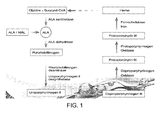
- FIG. 1 is a schematic showing the porphyrin synthesis pathway responsible for the conversion of 5-aminolevulinic acid (“ALA”) to hemoglobin, including an illustration of the enzymatic reactions converting ALA to protoporphyrin IX.
- ALA 5-aminolevulinic acid
- FIG. 1 ALA's role in the porphyrin synthesis pathway allows ALA to function as a prodrug of protoporphyrin IX.
- ALA is a hydrophilic molecule, making it difficult to bypass the natural skin barrier.
- relatively high concentrations of conventional ALA up to 20%
- Conventional ALA also requires a relatively long incubation period.
- conventional ALA may require as long as from about 3 hours to about 8 hours of contact time with the skin to achieve complete transformation, and maximum accumulation of, protoporphyrin IX inside target tissues. It is believed that topical application of conventional ALA induces a photosensibilization of lesional tissue through its transformation to protoporphyrin IX inside the target tissue. Once the lesional tissue has been photosensibilized by sufficient accumulation of protoporphyrin IX in the tissue, the target tissue may be exposed to light of an appropriate wavelength. In most instances, conventional ALA applications apply an occlusive dressing to the skin to avoid the possibility of light inducing a reaction before ALA reaches the target tissue. Occlusive dressings have also been used to allow for greater penetration of conventional ALA into the skin. During the irradiation step, pain may be significant when using conventional ALA, for example, erythema, swelling and burning sensations are frequently observed.
- Conventional ALA is typically available in a prepackaged plastic tube containing two sealed glass ampules, one with the ALA powder and the other with the hydroalcoholic solution (Levulan).
- the vehicle ampule contains 1.5 mL of solution composed of ethanol (48% v/v), water, laureth-4, isopropyl alcohol, and polyethylene glycol.
- the other ampule contains 354 mg of ALA hydrochloric acid as a dry powder.
- the applicator tube is enclosed in a protective cardboard sleeve with a cotton applicator. Due to the relative short shelf life (hours or days), the topical solution (final ALA concentration of 20%) of conventional ALA must be prepared just prior to application.
- methylaminolevulinate is another conventional PDT photosensitizer. MAL is more lipophilic than ALA, and is also transformed to ALA once inside the skin.
- cosmeceutical compositions, kits and methods are provided for use in photodynamic therapy (PDT).
- cosmeceutical compositions, kits and methods are provided for use in photodynamic therapy (PDT) to treat a variety of medical conditions, diseases and disorders, as well as dermatological applications, benign and malignant.
- compositions of the present disclosure can be used for the treatment of conditions including, but not limited to, lung cancer, gastrointestinal tract cancers including: esophageal cancer, tumors of the stomach (peritoneal cancer), colorectal cancer, tumors of the small intestine, cancers of the anus, pleura cancer, brain cancer, eye cancer, skin cancer (basocellular carcinoma), atherosclerosis, infectious diseases, rheumatoid arthritis, cutaneous T-cell lymphoma, Kaposi's sarcoma, malignant melanoma, carcinoma in situ (CIS), keratoacanthoma, extramammary Paget's disease, melasma, viral warts, acne vulgaris, vitiligo, lichen sclerosus and atrophicus, sebaceous gland hyperplasia, Psoriasis, hidradenitis suppurativa, Actinic keratosis, Psorias
- the products of the invention may be used for therapeutic purposes, for example to treat the medical conditions mentioned in the preceding paragraph.
- the products of the invention may be used for cosmetic purposes, in particular to improve the appearance of the skin, for example in the treatment of stretch marks and the cosmetic aspects of skin aging and photoaging.
- Cosmetic treatments may include, by way of example, treatment of one or more of wrinkling, skin thinning, hyperpigmentation and dyschromia.
- a Liposomal ALA composition of the present disclosure comprises ALA encapsulated in nanocorpuscles.
- a Liposomal ALA composition of the present disclosure comprises a scattering of ALA nanocorpuscles in a watery solution as a scattering agent.
- a concentration of ALA in the nanocorpuscles is from about 0.001% to about 10% wt%/volume of the composition.
- a concentration of ALA in the nanocorpuscles is from about 0.010% to about 5% wt%/volume of the composition.
- a concentration of ALA in the nanocorpuscles is from about 0.10% to about 4% wt%/volume of the composition.
- a concentration of ALA in the nanocorpuscles is about 0.5%. In an embodiment, a concentration of ALA in the composition is about 1.0%. In an embodiment, a concentration of ALA in the composition is about 2.5%. In an embodiment, a concentration of ALA in the composition is about 5.0%.
- a concentration of ALA in the nanocorpuscles is from about 0.001% to about 10% wt%/volume of the nanocorpuscles. In an embodiment, a concentration of ALA in the nanocorpuscles is from about 0.010% to about 5% wt%/volume of the nanocorpuscles. In an embodiment, a concentration of ALA in the nanocorpuscles is from about 0.10% to about 4% wt%/volume of the nanocorpuscles. In an embodiment, a concentration of ALA in the nanocorpuscles is about 0.5%. In an embodiment, a concentration of ALA in the nanocorpuscles is about 1.0%. In an embodiment, a concentration of ALA in the nanocorpuscles is about 2.5%. In an embodiment, a concentration of ALA in the nanocorpuscles is about 5.0%.
- a Liposomal ALA composition of the present disclosure comprising a low concentration of ALA can be beneficial for treatment therapies.
- concentrations as low as about 0.5% to about 1% may provide clinical results and at the same time may reduce side effects.
- encapsulating ALA in nanocorpuscles allows a significant decrease of the dose compared to conventional ALA.
- Lower doses of ALA may result decreased side effects and increased tolerance and safety.
- Due to the nature of the lipid based nanocorpuscles e.g., natural skin ingredients
- skin reactions resulting from ALA encapsulated in nanocorpuscles may be mild, if not absent.
- the ALA compositions of the present disclosure produce a "barrier effect" to the skin, opening the skin membrane to the compositions.
- a patient applying the ALA compositions of the present disclosure may experience a pinkish color, however, the reaction is not painful.
- the nanocorpuscles comprise at least one phospholipid and at least one tensoactive agent.
- the nanocorpuscle phospholipid is a phosphatidylcholine (PC).
- the nanocorpuscles of a Liposomal ALA composition is present in a co-solvent or co-scattering agent.
- the co-solvent is a pharmaceutically acceptable alcohol.
- the pharmaceutically acceptable alcohol is ethanol.
- the pH of a Liposomal ALA composition of the present disclosure is about 6.
- the liposomes have a diameter of about 100 nm.
- the pH of a Liposomal ALA composition ranges from between about 1 to about 10.
- the pH of a Liposomal ALA composition ranges between about 2 to about 8.
- the pH of a Liposomal ALA composition ranges from about 2.5 to about 5.
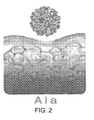
- FIG. 2 is a schematic illustration of an embodiment of a Liposomal ALA composition of the present disclosure prior to administration to target tissue in the skin.
- the Liposomal ALA composition is administered topically, although other routes of administration are possible, including, but not limited to, oral administration and parenteral administration.
- ALA encapsulated in nanocorpuscles are believed to have superior physicochemical characteristics that allow the encapsulated ALA to rapidly diffuse into target tissues. As illustrated in the schematic of FIG.
- FIG. 4 shows protoporphyrin IX being activated by light of the appropriate wavelength during a PDT treatment.
- applying or directing a light of an appropriate wavelength toward target tissue may trigger a photochemical reaction transforming protoporphyrin IX into reactive oxygen species.
- directing or applying a light of an appropriate wavelength onto the skin may trigger a photochemical reaction transforming protoporphyrin IX into reactive oxygen species.
- an appropriate wavelength of light comprises a wavelength corresponding to a peak of the porphyrin excitation spectrum.
- the Soret band (approximately 405-420 nm) is the most important excitation peak of protoporphyrin IX and is included in the spectral output of the US Food and Drug Administration (FDA)-approved Blu-U device, which is used with conventional ALA.
- FDA US Food and Drug Administration
- FIG. 4 by directing light of appropriate wavelengths inside the skin, a photodynamic reaction develops inside the skin leading to the generation of reactive oxygen species (ROS).
- ROS reactive oxygen species
- ALA encapsulated in nanocorpuscles allows a significant decrease in dosage compared to conventional ALA.
- ALA encapsulated in nanocorpuscles may be effective in doses having concentrations of ALA as low as 0.5% whereas conventional ALA typically requires concentrations as high as 20% to be effective. It is believed that providing lower dose ALA results in decreased side effects and increased safety.
- encapsulating ALA in nanocorpuscles transforms conventional ALA from a substantially hydrophilic molecule to an amphiphilic compound.
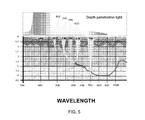
- FIG. 5 shows the skin depth penetration of light of various wavelengths.
- the depth penetration of light into the skin may correlate to the efficacy of a PDT treatment. That is, it is believed that longer output wavelengths of light may correspond to increased depth penetration absorbed light.
- the Soret band about 405 nm to about 420 nm may effectively allow depth penetration sufficient to generate a therapeutic effect for a PDT treatment.
- light having wavelengths as much as 700 nm can effectively penetrate target tissue.
- a light source providing various wavelengths can be useful for generating a therapeutic effect with a PDT treatment.
- a light source providing output wavelengths in the visible spectrum may generate a therapeutic effect during a PDT treatment.
- light having an output wavelength in the Soret band (about 405 nm to about 420 nm) efficiently generates a therapeutic effect in a patient.
- the depth penetration and absorption light of at about 630 nm may be optimal for generating a therapeutic effect in target tissue.
- light penetration at 630 nm corresponds well with substantial penetration into the dermis.
- porphyrins are excited to a higher energy triplet state, which can either emit light (fluorescence) or generate reactive oxygen species, such as singlet oxygen or free radicals.
- reactive oxygen species such as singlet oxygen or free radicals.
- singlet oxygen species labeled type 2 photochemical reactions.
- singlet oxygen does not travel very far within a cell, the molecular effects are influenced by the intracellular localization of the photosensitizer at the time of light exposure.
- Porphyrins derived from ALA are mainly localized in the vicinity of mitochondria, which can lead to apoptosis or necrosis of malignant cells upon light exposure. Both phenomena have been shown to be induced following ALA PDT
- an ALA nanocorpuscle composition of a cosmeceutical composition of the present disclosure comprises unilamellar liposomes. In an embodiment, an ALA nanocorpuscle composition of a cosmeceutical composition of the present disclosure comprises multilamellar liposomes. In an embodiment, an ALA nanocorpuscle composition of a cosmeceutical composition of the present disclosure comprises oligolamellar liposomes. In an embodiment, an ALA nanocorpuscle composition of a cosmeceutical composition of the present disclosure includes at least one lipid bilayer comprising at least one phospholipid and at least one tensoactive agent (e.g., a detergent or surfactant) or a derivative of the tensoactive agent.
- a tensoactive agent e.g., a detergent or surfactant
- the phospholipid used in the ALA nanocorpuscle composition comprises an amphiphilic substance having a hydrophilic polar head and an apolar lipophilic tail.
- the amphiphilic substance comprises lipids.
- the amphiphilic substance comprises lipoids. While not wishing to be bound to any one theory, it is believed that the use of amphiphilic substances can lead to faster skin penetration and provide a deep, homogenous distribution within target sites.
- the lipids comprise physiologically tolerant lipids. It is believed that the use of physiologically tolerant natural lipids may reduce undesirable side effects (e.g., inflammation) and also may lead to enhanced penetration and diffusion into the skin tissue.
- the lipids comprise skin-compatible lipids.
- the lipids can be used to moisturize the skin.
- physiologically tolerant natural lipids include, but are not limited to, steroids, phospholipids, sphingolipids and glycolipids may be beneficial.
- suitable lipids include, but are not limited to, cerebrosides and ceramides, natural phosphocolines, natural phosphatidic or phosphatidylglycerol acid, as well as in this case lysophospholipids, fatty acids and their derivatives.
- the liposomal lipid is a phosphatidylcholine (PC).
- a Liposomal ALA composition of the present disclosure comprises unilamellar liposomes, about 50 mg/ml PC, about 5 mg/ml of 5-ALA in an aqueous phase.
- the concentration of the phospholipid PC is between about 0.3% and about 20%.
- the tensoactive agent is added to the lipids that form the lipid membrane of a ALA nanocorpuscle composition of the present disclosure in order enhance the nanocorpuscles penetration into the skin and mucous membranes.
- Tensoactive agents may be selected, in part, based on physiological tolerance to the tensoactive agent.
- the tensoactive agent comprises a biological substance.
- the biological substances include, but are not limited to, bile acids and derivatives of bile acids, glycosides, maltese, and thioglycosides such as lysophospholipids.
- the tensoactive agent is a bile salt selected from the group consisting of sodium cholate, sodium desoxycholate, sodium glycocholate, sodium taurocholate, sodium taurodeoxycholate, sodium ursocholate and sodium quenoxycholate.
- the tensoactive agent is a polysorbate or derivative, polyoxyethylene, PEG-10 cetyl ether and PEG-10 sterile ether at concentrations ranging between about 0.01% to about 30%.
- a Liposomal ALA composition of the present disclosure is produced by combining phospholipids with tensoactive and mixing until obtaining a homogeneous solution.
- ALA may be dissolved in water or in a combination of water and another water soluble solvent, such us alcohol and glycols, this solution of ALA is incorporated to the first mix of phospholipids with the tensoactive agent.
- the resulting mix is subjected to the application of mechanical energy, especially by vibration or agitation, and the solution is sterilized by filtration to obtain nanocorpuscles of ALA.
- a pH regulator can be added.
- pH regulators include, but are not limited to, sodium hydroxide, potassium hydroxide, ethanolamine and derivatives, citric acid, lactic acid, and other similar substances capable of regulating pH.
- the ratio of alcohol/phospholipid ranges between about 0.5/1 and about 3/1. In an embodiment, the ratio of alcohol/phospholipid is 1/1, in volume/weight. In such embodiments, nanocorpuscles with improved stability may be obtained.
- the molar ratio of phospholipid/tensoactive agent ranges between about 0.5 to about 40, preferably between about 2 to about 20, and most preferably between about 3 to about 5.5.
- a Liposomal ALA composition of the present disclosure includes a co-solvent or co-scattering agent.
- the co-solvent or co-scattering agent is a pharmaceutically acceptable alcohol.
- the pharmaceutically acceptable alcohol is ethanol.
- suitable co-solvents may include, but are not limited to, glycols and derivatives, particularly glycerine, propylene glycol, butylene glycol, pentylene glycol and ethoxydiglycol at concentrations between 0.1% and 20%.
- a Liposomal ALA composition of the present disclosure include additives and coadjuvants.
- additives and coadjuvants include, but are not limited to, gel formers, membrane stabilizers, membrane preservatives, especially those resulting from para-aminobenzoic acid including methylparaben, propylparaben, butylparaben, isobutylparaben, other organic acids and their salts, such as sorbic acid or benzoic acid and alcohol derivatives can also be used, such as phenoxyethanol.
- a Liposomal ALA composition of the present disclosure includes antioxidants. Without wishing to be bound to any one theory, it is believed that adding antioxidants to a Liposomal ALA composition of the present disclosure may minimize size effects resulting from phototoxic reactions from the reactive oxygen species generated during a PDT treatment. That is, antioxidants may counterbalance side effects from the reactive oxygen species generated during the photochemical reaction triggered by directing appropriate wavelengths to the target tissue containing the protoporphyrin IX. In an embodiment, a Liposomal ALA composition of the present disclosure includes antioxidants to counterbalance side effects from reactive oxygen species generated during a PDT treatment. In an embodiment, antioxidants may minimize harmful side effects of reactive oxygen species in the target tissue.
- antioxidants may protect non-target tissue from harmful effects of the reactive oxygen species.
- antioxidants may prevent reactive oxygen species generated during a photodynamic therapy treatment from proliferating in non-target tissue.
- antioxidants include, but are not limited to, oligopeptides, proteins, salts, buffering substances, hydro soluble active ingredients, vitamins, phloretin, and other similar antioxidants.
- a Liposomal ALA composition of the present disclosure includes phloretin.
- the concentration of phloretin ranges between about 0.1% and about 15%.
- phloretin can be added to a Liposomal ALA composition of the present disclosure with lipids, surfactants or separately.
- a Liposomal ALA composition of the present disclosure further comprises relative high amounts of linoleic acid and linolenic acid. It is believed that linoleic acid and linolenic acid restore the skin barrier, reduce oil production, and normalize sebum content. Linoleic acid and linolenic acid may help prevent inflammatory reactions frequently observed when using conventional ALA or MALA. In an embodiment, linoleic acid may reduce inflammation induced during a photodynamic therapy treatment of the present disclosure. In an embodiment, linolenic acid may reduce inflammation induced during a photodynamic therapy session of the present disclosure.
- including linoleic acid in a Liposomal ALA composition of the present disclosure may minimize a patient's pain or discomfort during a photodynamic therapy treatment of the present disclosure.
- linolenic acid may reduce a patient's pain or discomfort during a photodynamic therapy treatment of the present disclosure.
- compositions of the present disclosure exhibit a high capacity of diffusion of the nanocorpuscles through tissues and a high ability to cross biological barriers (such as the skin barrier and even blood brain barrier).
- biological barriers such as the skin barrier and even blood brain barrier.
- the ALA compositions of the present disclosure may be used in production of a medicine for the treatment of skin and various medical conditions where an ability to diffuse across biological barriers is desired.
- the Liposomal ALA compositions of the present disclosure may be provide significant advantages over conventional ALA products, including, but not limited to: enhanced penetration; prolonged product shelf-life; low dose; decreased side effects; decreased incubation time; and improved delivery.
- the Liposomal ALA compositions of the present disclosure may provide enhanced penetration into the skin.
- the enhanced penetration into the skin may include penetrating the skin to a depth reaching the hair bulb and subcutaneous fat.
- the enhanced penetration into the skin may include penetrating the skin to a depth sufficient to provide a therapeutic effect.
- the enhanced penetration into the skin may include penetrating the skin to a depth sufficient to trigger the enzymatic conversion of ALA to protoporphyrin IX.
- the enhanced penetration into the skin may include penetrating the skin to a depth sufficient for a PDT treatment to be effective.
- the enhanced penetration into the skin may include penetrating the skin to a depth sufficient to generate reactive oxygen species.
- the enhanced penetration into the skin may include penetrating the skin to a depth coinciding with a depth of wavelengths directed into the skin.
- the Liposomal ALA compositions of the present disclosure have increased stability.
- the increased stability of the Liposomal ALA compositions of the present disclosure may prolong the shelf life of the composition.
- the shelf life of the Liposomal ALA compositions of the present disclosure may be as long as about one year and a half.
- the prolonged shelf life of the Liposomal ALA compositions, fabrication of ALA encapsulated in nanocorpuscles can be performed for as long as about a year and a half before a treatment using a Liposomal ALA composition.
- ALA encapsulated in nanocorpuscles may be fabricated for up to a year before a treatment using the Liposomal ALA compositions of the present disclosure.
- the Liposomal ALA compositions of the present disclosure may be fabricated or prepared for as much as six months prior to a treatment using the Liposomal ALA composition.
- Liposomal ALA compositions of the present disclosure may be fabricated as much about 6 months, about 12 months, or about 18 months before a PDT treatment using ALA encapsulated in nanocorpuscles.
- the Liposomal ALA compositions of the present disclosure may effectively elicit phototoxic reactions in significantly lower doses than that of conventional ALA. Without wishing to be bound to any one theory, it is believed that the Liposomal ALA compositions of the present disclosure may effectively elicit phototoxic reactions with concentrations ranging from about 0.001 % to about 10%. It is also believed that decreasing the concentration (e.g., dose) of ALA may decrease side effects. In an embodiment, lower doses (e.g., less than about 10%) of ALA mitigate pain during a treatment. In an embodiment, lower doses of ALA mitigate pain during a PDT treatment. In an embodiment, lower doses of ALA mitigate pain following a treatment. In an embodiment, lower doses of ALA mitigate pain following a PDT treatment.
- the Liposomal ALA compositions of the present disclosure include at least one anti-inflammatory to reduce side effects.
- the anti-inflammatory comprises phospholipids.
- side effects reduced from the Liposomal ALA compositions of the present disclosure include, but are not limited to, swelling, redness, crusts, persistent photosensitivity, and combinations thereof.
- the Liposomal ALA compositions of the present disclosure are believed to improve delivery of the 5-ALA photosensitizer to target tissues.
- the improved delivery comprises decreased incubation time. While not wishing to be bound to any one theory, it is believed that 5-ALA encapsulated in nanocorpuscles can reduce the contact time between administration of the 5-ALA and irradiation of the skin because the active 5-ALA is capable of reaching a target, as well as accumulating inside the skin readily within from about 30 minutes to about 90 minutes due to 5-ALAs diffusion rate across membranes.
- contact time e.g., incubation period
- incubation time comprises from about 15 minutes to about 90 minutes.
- the incubation time of 5-ALA encapsulated in nanocorpuscles ranges from about 30 minutes to about 60 minutes. In an embodiment, incubation time ranges from about 30 minutes to about 45 minutes. In an embodiment, incubation time resulting from topical application of the Liposomal ALA compositions of the present disclosure every 5-10 minutes for 6 to 12 times results in incubation times of about 15 minutes to about 90 minutes. In other words, ALA may be converted to protoporphyrin IX within about 15 to about 90 minutes. In an embodiment, intralesional injections can lead to conversion of ALA to protoporphyrin IX within about 15 minutes to about 45 minutes.
- the Liposomal ALA compositions of the present disclosure are believed to improve delivery of the 5-ALA photosensitizer to target tissues.
- the improved delivery comprises rapid diffusion.
- improved delivery of the Liposomal ALA compositions of the present disclosure comprises specificity for target tissues.
- improved delivery of the Liposomal ALA compositions of the present disclosure comprises specificity for tumor cells.
- improved delivery of the Liposomal ALA compositions of the present disclosure comprises high potency.
- improved delivery of the Liposomal ALA compositions of the present disclosure comprises increased availability of routes of administration.
- the Liposomal ALA compositions of the present disclosure can be administered without using an occlusion dressing due to the compatibility of the Liposomal ALA composition and the skin conferred by the nanocorpuscles.
- the cosmeceutical compositions of the present disclosure can be administered topically (e.g., cutaneous, epicutaneous, transdermal, inhalational, and intranasal), parenterally (intradermal, intraperitoneal, intramuscular, subcutaneous, and intravenous), and via mesotherapy techniques, widening the range of applications, and, more generally, one may use any of the galenic forms that do not, by their particular nature or by their components, impede or improperly reduce the release of the ALA in the area to be treated.
- the cosmeceutical compositions of the present disclosure are administered topically.
- the cosmeceutical compositions of the present disclosure are administered topically via a spray.
- the cosmeceutical compositions of the present disclosure are administered topically via a transdermal patch. In an embodiment, the cosmeceutical compositions of the present disclosure are administered topically via a face/body mask. In an embodiment, the cosmeceutical compositions of the present disclosure are administered via injection. In an embodiment, the cosmeceutical compositions of the present disclosure are administered via subcutaneous injection. In an embodiment, the cosmeceutical compositions of the present disclosure are administered via intravenous injection. In an embodiment, the cosmeceutical compositions of the present disclosure are administered directly to a tumor lesion for treatment of a malignancy.
- the cosmeceutical compositions of the present disclosure are administered intravenously for treatment of a malignancy.
- the cosmeceutical compositions of the present disclosure can be injected inside, around or a combination thereof, the tumor.
- the cosmeceutical compositions of the present disclosure are administered via mesotherapy with microinjections of the cosmeceutical compositions into subcutaneous fat.
- Mesotherapy can be performed, for example, via mesotherapy injectors, mesotherapy guns, and mesotherapy injections by hand.
- the present disclosure provides a method of preparing an ALA nanocorpuscle that includes: preparing a watery solution of ALA; preparing a solution of phospholipids with tensoactive or its derivatives; homogenizing both solutions as a whole.
- the method further comprises diluting to add at least an additive, a coadjuvant, a pharmaceutically acceptable excipient and/or their mixtures.
- a Liposomal ALA composition with a concentration of each of the compounds (phospholipid, bile salt or salts, etc.) suitable for administration, or one can obtain a Liposomal ALA composition that would require an additional dilution step (adding, at least, an additive, a coadjuvant, a pharmaceutically acceptable excipient and/or their mixtures) in such a way that a final Liposomal ALA composition suitable for being administered is achieved.
- the dilution step is carried out by adding water.
- the method further comprises after each step and/or at the lasts step filtering.
- the filtering is sterile filtration.
- a Liposomal ALA composition of the present disclosure is fabricated using the following protocol and amounts of agents: approximately 0.17 gram of ALA is dissolved in about 1.35 ml of ethanol and about 11.25 ml of water. Next, approximately 1.53 gram of soy lecithin is mixed in about 0.83 ml of polysorbate 20 with 1.5 ml of ethanol. Both solutions are mixed intensively and the resulting heterogeneous mix is sterilized by filtration at 5 bars of pressure by means of 0.2 microns cellulose filter. The homogeneous dispersion of the obtained liposomes is adjusted to the desired pH and then diluted with bidistillate water until a final concentration of ALA of approximately 0.5%.
- Any light source either laser or nonlaser, with suitable spectral characteristics and a high output at an absorption maximum of the photosensitizer can be used for photodynamic therapy (PDT).
- PDT photodynamic therapy
- lasers in PDT are to initiate photochemical reactions in contradistinction to their photothermal or photomechanical effects, as are seen in other dermatologic uses.
- Almost any laser with an output wavelength within the visible spectrum (400-800 nm) may be used to activate ALA, although efficiency may be compromised if the output wavelength does not approximate the spectral absorption peak of the photosensitizer.
- Laser PDT has many advantages, including, but not limited to the monochromaticity of lasers provides maximum effectiveness if the wavelength of the laser corresponds with the peak absorption of the photosensitizer; lasers can produce high irradiance to minimize the therapeutic exposure time; and lasers can be readily coupled to fiberoptics, enabling light delivery to any organ, such as the bladder, gastrointestinal tract, or lungs.
- noncoherent light sources are superior to laser systems because of their large illumination fields. Additionally, polychromatic light sources allow the use of different photosensitizers with different absorption maxima.
- the most widely accepted application of ALA PDT is with blue light for the treatment of AKs.
- FDA-approved blue light sources include the Blu-U and ClearLight systems. Blue light (410 nm) has a limited skin penetration (less than 0.5 mm).
- Blue light (410 nm) has a limited skin penetration (less than 0.5 mm).
- the nanocorpuscle compositions of the present disclosure merge with the skin barrier layers where the nanocorpuscles release the encapsulated ALA. This leads to an increased local permeability of the barrier layer membranes and the active agents are able to pass through.
- a commercial light source such as TriWings manufactured by Biophoton in France can be used with a PDT treatment of the compositions of the present disclosure.
- the TriWings light source provides an irradiance higher than 100 mW/cm2, which allows shorter treatment times.
- Blue light sources can also be used with the compositions of the present disclosure, for example, for superficial conditions such as hyperpigmentation problems (melasma).
- cosmeceutical compositions of the present disclosure can be used in the treatment of a variety of medical conditions, diseases and disorders, as well as dermatological applications, benign and malignant.
- cosmeceutical compositions of the present disclosure can be used for the treatment of conditions including, but not limited to, lung cancer, gastrointestinal tract cancers including: esophageal cancer, tumors of the stomach (peritoneal cancer), colorectal cancer, tumors of the small intestine, cancers of the anus, pleura cancer, brain cancer, eye cancer, skin cancer (basocellular carcinoma), atherosclerosis, infectious diseases, rheumatoid arthritis, cutaneous T-cell lymphoma, Kaposi's sarcoma, malignant melanoma, carcinoma in situ (CIS), keratoacanthoma, extramammary Paget's disease, melasma, viral warts, acne vulgaris, vitiligo, lichen sclerosus and atrophicus
- the cosmeceutical compositions of the present disclosure can be used as a diagnostic aid in, for example, tumoral lesions, where protoporphyrin IX accumulates and may be detected by fluorescent techniques.
- Phloretin (Formula 2) is a flavonoid found exclusively in apples and in apple-derived products where phloretin is present as the glucosidic form, namely, phloridzin (phloretin 2'- O- glucose). Phloretin may protect against free radicals and other reactive molecules known to cause damage and DNA mutations among the integral cell types. Phloretin may also correct existing damage by stimulating the synthesis of essential proteins and fibers and accelerating cell turnover. For example, phloretin may inhibit the formation of MMP-1, an enzyme responsible for breaking down collagen. Another example in which phloretin may correct existing damage is by interrupting melanin synthesis to potentially reduce unwanted skin discolorations.
- Phloretin is also believed to have immunosuppressor, anti-inflammatory, antifungal, and anti-neoplastic properties which may be useful in accomplishing a synergistic effect in the presently disclosed embodiments. Phloretin may also act as penetration enhancer for the percutaneous delivery of certain topically applied drugs by increasing the fluidity of the intercellular lipid bilayers of the stratum corneum. Its mechanism of action is believed to be due to its increase of the fluidity of the intercellular lipid bilayers of the stratum corneum. In this way phloretin will interact also with the liposome and with the natural skin membranes.
- ALA compositions of the present disclosure comprise phloretin encapsulated in nanocorpuscles.
- phloretin encapsulated in nanocorpuscles can be used to enhance the epidermal penetration of ALA encapsulated in nanocorpuscles.
- phloretin encapsulated in nanocorpuscles can be used to induce an antioxidant reaction to mitigate oxidative stress to the skin resulting from the photochemical reaction.
- a cosmeceutical composition of the present disclosure comprises a phloretin product, which is a concentration of phloretin in a mix of ethanol and macrogol.
- phloretin per se may be used for the presently disclosed embodiments
- derivatives of phloretin e.g., dihydrochalcone derivatives, and other dermatologically effective derivatives of phloretin
- the nanocorpuscles may comprise a flavonoid, for example phloretin.
- cofactors may be used to decrease side effects of PDT and enhance release of the ALA encapsulated in nanocorpuscles once the ALA has penetrated the skin. Cofactors may also be used in aspects of the present disclosure to stimulate the transformation of ALA into protoporphyrin IX. Without wishing to be bound to any one theory, it is believed that cofactors may enhance the conversion of ALA to protoporphyrin IX by activating the pathway from ALA to HEME thereby improving a PDT treatment.
- the rate-limiting enzyme responsible for the synthesis of ALA from the amino acid glycine and succinyl-CoA is ALA synthase.
- ALA synthase is regulated by, among others, intracellular iron levels. Low levels of intracellular iron therefore may lead to decreased porphyrin synthesis.
- iron chelates can be used as cofactors to sequester iron in a manner that catalyzes the enzymatic conversion of ALA to porphyrin IX.
- a cofactor of the present disclosure comprise iron chelates.
- the iron chelate comprises zinc salts encapsulated in nanocorpuscles.
- the iron chelating zinc salt includes, but is not limited to, zinc chloride, zinc gluconate, or zinc acetate.
- the iron chelate comprises copper salts encapsulated in nanocorpuscles.
- the iron chelating copper salt includes, but is not limited to, copper gluconate or copper acetate.
- the iron chelate comprises a mix of zinc and copper or zinc salts or copper salts encapsulated in nanocorpuscles.
- the iron chelate comprises lactoferrin-peroxidase encapsulated in nanocorpuscles.
- the iron chelate comprises a mix of zinc chloride, copper, and lactoferrin-lactoperoxidase encapsulated in nanocorpuscles.
- the iron chelate can sequester iron to catalyze the enzymatic conversion of 5-aminolevulinic acid to the porphyrin.
- iron chelates or metal chelates may be mentioned sources of iron-complexing agents or, respectively, sources of metal complexing agent.
- the aforesaid zinc and copper salts act as a source of iron-complexing agents, as does lactoferrin-peroxidase.
- the metal/iron chelates may be described as metal/iron sequestering agents which remove metal/iron from free solution.
- the nanocorpuscles may therefore comprise a source of metal-complexing agent and in particular a source of iron-complexing agent.
- OxySeS is a mist (spray) provided comprising oxygen saturated liposomes, and 10 mg/ml of fructose 1, 6 bisphosphate encapsulated in unilamellar liposomes.
- OxySes is referred to as an "oxygen product" of the present disclosure.
- OxySeS includes one or more of the following ingredients: water, lecithin, alcohol denat (e.g., denaturated alcohol), fructose, tocopherol, sodium chloride, sodium hydroxide, sodium cholate, and phenoxyethanol.
- OxySeS comprises a spray formulation.
- OxySeS comprises a foam formulation.
- OxySeS increases the oxygen content of the skin by delivering O 2 through unilamellar liposomes. It is believed that the fibroblast cell activity, responsible for manufacturing collagen and elastin, is dependent on the availability of O 2 .
- Fructose 1, 6 bisphosphate is provided for anti-inflammatory and antiradicalar action. Fructose 1, 6 bisphosphate also may promote skin repair and may be useful for conditions associated with poor blood supply or tissular injury.
- a main component of the liposomes is phosphatidylcholine (PC).
- Phosphatidylcholine may be provided: for repairing the stratum corneum to improve the barrier function of skin; for anti-inflammatory action to reduce edema in the treatment area; and for bactericidal activity to avoid proliferation of post-treatment infection.
- OxySeS is applied to the skin to supply additional oxygen to skin tissue before applying a cosmecuetical composition of the present disclosure.
- OxySeS may be effective in cases in which an increase of tissue oxygenation is desired, such as photodynamic therapy. Indications for OxySeS therefore may include plastic surgery, phlebology, diabetes, dermatology, and radiotherapy. OxySeS may be indicated for use in plastic surgery following phenol or TCA peels, skin grafts, and for speeding healing processes. In the area of phlebology, OxySeS may be particularly useful for treating venous ulcers and skin necrosis related to sclerotherapy. In the care of diabetes, OxySeS may help diabetics prevent keloid formation. OxySeS may also ameliorate various skin conditions associated with diabetes, such as diabetic feet, diabetic ulcers, and may improve skin elasticity.
- OxySeS Dermatological uses of OxySeS can include improving skin elasticity, use before, during, or after aesthetic surgery, pre-peel treatment or post-peel treatment, microdermabrasion, or generally for conditions caused by poor blood supply, smoking, or anaerobic skin infections.
- Radiotherapy application of OxySeS may include radiodermatitis treatment, skin necrosis, or the like.
- OxySeS prior to applying a cosmecuetical composition of the present disclosure to the skin, it may be beneficial to apply OxySeS to the areas of skin to be treated on as many as seven or fourteen days prior to treatment for optimal results. In those instances where a patient to be treated has impaired circulation, OxySeS may be applied on the area to be treated. Application twice a day for up to as much as about four weeks before the procedure may be advisable. However, less frequent daily application as early as a day before the procedure may also be helpful.
- Post procedure use of OxySeS may include application of OxySeS immediately after irradiation of the treated area by gentle rubbing.
- post procedure use of OxySeS may include applying OxySeS twice daily for a period of up to about four weeks.
- O 2 depletion can be overcome by lowering the light fluence rate.
- pulse light delivery may allow re-oxygenation of the target tissue.
- OxySeS comprises liposomal fructose 2, 6-bisphosphate in combination with oxygen saturated liposomes to facilitate activation of the ALA pathway to heme.
- using OxySeS in conjunction with iron chelates of the present disclosure may confer a synergistic effect to enhance the enzymatic conversion of ALA to protoporphyrin IX.
- each respective kit assembly is prepackaged to contain the appropriate topical agents and supplies, and includes an effective and convenient instructional means, such as an instructional pamphlet or a videotape or other instructional means containing thereon indicia for administration of sequentially applied products according to steps needed for the respective skin condition to be treated.
- an effective and convenient instructional means such as an instructional pamphlet or a videotape or other instructional means containing thereon indicia for administration of sequentially applied products according to steps needed for the respective skin condition to be treated.
- the kit assembly also provides a sequential dispenser means containing a plurality of daily sets of kit sub-assembly components, such as a series of jars, bottles, containers or ampoules containing a supply (unit dose) of chemical solution.
- kit sub-assembly components such as a series of jars, bottles, containers or ampoules containing a supply (unit dose) of chemical solution.
- kits are further respectively specific with regard to whether a given kit is to be used for the therapeutic phase or, in the alternative, for a maintenance phase.
- each kit provided in the present disclosure has sub-assembly components including therein the following: a unit dose of a photosensitizer composition, the photosensitizer composition comprising nanocorpuscles comprising the photosensitizer 5-aminolevulinic acid in a scattering agent; a unit dose of a penetration enhancer product, the penetration enhancer product comprising nanocorpuscles comprising a flavonoid in a solution; a unit dose of a chelating product, the chelating product comprising nanocorpuscles comprising a metal chelate in a solution; and a unit dose of an oxygen product, the oxygen product comprising 100% oxygen saturated liposomes and 10 mg/ml of fructose 1, 6 bisphosphate encapsulated in unilamellar liposomes.
- Low strength ALA of the present disclosure improves photoaging signs when applied several times in a short period of time (about 30-60 minutes), followed by subsequent exposure of the skin to an appropriate light source.
- improved photoaging sings include hyperpigmentation ((dyschromia-improves pigmented and hypopigmented lesions), wrinkles (collagen remodeling) and fine lines), decrease pore size and acne blemishes, improves skin roughness in the face (leads to smoother skin), neck and V of the shoulder., improves yellowish color, increase skin thickness & dyschromia).
- hyperpigmentation (dyschromia-improves pigmented and hypopigmented lesions), wrinkles (collagen remodeling) and fine lines), decrease pore size and acne blemishes, improves skin roughness in the face (leads to smoother skin), neck and V of the shoulder., improves yellowish color, increase skin thickness & dyschromia).
- a Liposomal ALA composition disclosed herein can be formulated as a nano-spray.
- the Liposomal ALA nano-spray comprises ALA encapsulated in liposomes as a photo mist.
- the Liposomal ALA nano-spray has enhanced penetration, activity, and efficacy inside the skin.
- the Liposomal ALA nano-spray allows for a reduced incubation period (as compared to topical compositions currently on the market). Incubation time can be reduced to a range from about 30 minutes to about 60 minutes.
- the Liposomal ALA nano-spray comprises ALA at a reduced concentration (from about 1% to about 2.5%) (as compared to topical compositions currently on the market).
- the Liposomal ALA nano-spray can be used for treating moderate wrinkles in phototypes I to V, and sebum reduction/Acne blemishes.
- the Liposomal ALA nano-spray can be used to smooth wrinkles (collagen remodeling) and fine lines, improve roughness in the face, neck and V of the shoulder, improve hyperpigmentation - Dyschromia, improve oily skin and acne blemishes, and decrease pore size.
- a method of using a Liposomal ALA nano-spray of the present disclosure includes: spraying the skin to be treated with the Liposomal ALA nano-spray approximately every five minutes, six to twelve times (about 30-60 minutes), wherein the spraying causes a sufficient amount of ALA to be converted to Protoporphyrin IX; and activating the Protoporphyrin IX, wherein the Protoporphyrin IX is activated by exposing the treated skin to visible light covering the Soret band (407 nm) or Q bands (505, 540, 580 and 635 nm) of Protoporphyrin IX. Any light source emitting between 400-720 nm may be used to activate Protoporphyrin IX.
- the light amount is higher than 10 /JCm 2 .
- Omnilux PDT operates at a fluence rate of 80 mW/cm 2 .
- a recommended exposure time is about 20 minutes. Treatments may be repeated every 3-4 weeks in photo rejuvenation type 1.
- the method further comprises evaluating the concentration of Protoporphyrin IX in a dermal layer of the skin by measuring the intensity of the obtained fluorescence indirectly with Wood's light.
- Protoporphyrin IX A characteristic of Protoporphyrin IX is yellowish-red fluorescence when the skin is exposed to blue (410 nm) and red (633 nm) light, a property which ALA does not possess. Therefore the actual concentration of Protoporphyrin IX in the dermis can be evaluated by measuring the intensity of the obtained fluorescence indirectly with Wood's light.
- a treatment procedure for using a Liposomal ALA nano-spray of the present disclosure on a patient includes: examining a skin surface of the patient for signs of carcinoma, wherein the presence of carcinoma would cause the procedure to stop; washing the patient's face and de-greasing the patient's skin; optionally performing a Salicylic acid peel (SaliPeel) or microdermabrasion procedure; washing the patient's face; spraying the Liposomal ALA nano-spray to the patient's entire face (including lids and around lips) every 5 minutes for 30-60 minutes; massaging the patient's skin after each application; repeating the spraying as necessary up to 5 minutes before exposure to a light, even if the spray has been applied for one hour; and exposing the patient's face to an appropriate wavelength of light (400-720 nm).
- the procedure can further include taking pictures to document the treatment.
- the following conditions should be maintained: selecting the appropriate wavelengths (400-720); protecting the patient's and the operator's eyes; applying transmission gel (Ioson IPL, Ioson NAD); carrying out the treatment with the selected hand piece (400-720 nm) using a unique pulse of 3.5 to 5.0 J/cm2 and a pulse duration of 30 to 50 msg; making 3 full face passes (80-1000 shots) or step until adding 10.5 to 15 J/cm 2 , wherein the three passes can be made first on the right half of the face and then on the other half of the face, and wherein the upper and lower lids of the patient are treated with care by dragging the skin to a bony area (a gauze can be used to make a good clip in the skin); avoiding direct light to the eyes; treating less sensitive areas first; and overlapping treatment on areas by about 1 mm.
- transmission gel Ioson IPL, Ioson NAD
- a post-treatment care includes removing the transmission gel and washing the patient's face with soap or with cleaning towelettes; applying sunscreen (for example, ScreenSeS 80 colored cream); and advising the patient to avoid sun exposure for a minimum of 12 hours after the treatment and to use a sunscreen for the next 30 days.
- sunscreen for example, ScreenSeS 80 colored cream
- Nanocorpuscles comprising 5-aminolevulinic acid in a scattering agent can be used for the preparation of a medicament for the treatment of moderate acne vulgaris by photodynamic therapy (PDT).
- a Liposomal ALA composition of the present disclosure having a concentration of about 1% ALA was tested for PDT treatment of moderate acne vulgaris on 24 patients.
- the Liposomal ALA composition was formulated as a mist, and was applied topically to acne lesions approximately every 5 minutes for about 80 minutes. The lesions were irradiated by a LED light having wavelength of 633 nm at dose levels of 50-70 J/cm 2 at 66 mW/cm 2 .
- Nanocorpuscles comprising 5-aminolevulinic acid in a scattering agent can be used for the preparation of a medicament for the treatment of photoaging of the skin by photodynamic therapy (PDT).
- PDT photodynamic therapy
- Two patients were irradiated with Intense Pulsed Light (IPL) (Quanta, eterna Giovienezza).
- IPL Intense Pulsed Light
- FIG. 6A, FIG. 6B and FIG. 6C shows use of nanocorpuscles comprising 5-aminolevulinic acid for the manufacture of a photosensitizer for use in photodynamic therapy treatment of photoaging of the skin.
- a Liposomal ALA composition of the present disclosure is useful for treating symptoms associated with photoaging of the skin due to exposure to solar radiation.
- FIG. 6A shows a patient with sun damage and solar keratoses on the forehead.
- FIG. 6B shows the patient in FIG. 6A with a phototoxic reaction.
- FIG. 6C shows the patient in FIG. 6A and FIG. 6B after a single Liposomal ALA PDT treatment.
- the symptoms of sun damage and solar keratoses have noticeably cleared after a single Liposomal ALA PDT treatment using a Liposomal ALA composition of the present disclosure.
- FIG. 7A and FIG. 7B shows use of nanocorpuscles comprising 5-aminolevulinic acid for the manufacture of a photosensitizer for use in photodynamic therapy treatment of acne vulgaris.
- a Liposomal ALA composition of the present disclosure is useful for treating patients with inflammatory acne.
- FIG. 7A shows a patient with inflammatory acne on the patient's cheek.
- FIG. 7B shows the patient in FIG. 7A after four treatments at one month intervals. As noted in FIG. 7B , the patient's inflammatory acne condition has improved and the patient's skin condition has begun to smooth and clear.
- a photodynamic therapy system includes nanocorpuscles comprising 5-aminolevulinic acid in a scattering agent, wherein a concentration of the 5-aminolevulinic acid is from about 0.01% to about 10%; and a light source for activating the 5-aminolevulinic acid.
- a kit for photodynamic therapy includes a unit dose of a photosensitizer composition, the photosensitizer composition comprising nanocorpuscles comprising the photosensitizer 5-aminolevulinic acid in a scattering agent; a unit dose of a penetration enhancer product, the penetration enhancer product comprising nanocorpuscles comprising a flavonoid in a solution; a unit dose of a chelating product, the chelating product comprising nanocorpuscles comprising a metal chelate in a solution; and a unit dose of an oxygen product, the oxygen product comprising oxygen saturated liposomes and 10 mg/ml of fructose 1, 6 bisphosphate encapsulated in unilamellar liposomes.
- a method for photodynamic therapy includes administering a photosensitizing composition, administering a penetration enhancer for enhancing penetration of the photosensitizing composition into a target tissue, administering a coactivator for catalyzing an enzymatic reaction, and administering a photodynamic therapy treatment.
- the photosensitizing composition comprises ALA encapsulated in nanocorpuscles.
- the photosensitizing composition is converted via the enzymatic reaction to protoporphyrin IX.
- the penetration enhancer comprises phloretin.
- the coactivator comprises one of a mist comprising oxygen saturated liposomes and fructose 1, 6 bisphosphate encapsulated in liposomes to increase the oxygen content to the target tissue or a formulation comprising lactoferrin-lactoperoxidase, zinc, copper, nicotinamide to catalyst the conversion of ALA to protoporphyrin IX.
- a photodynamic therapy method includes administering nanocorpuscles comprising 5-aminolevulinic acid to a target tissue in a patient; and activating the 5-aminolevulinic acid with a light source.
- Nanocorpuscles comprising 5-aminolevulinic acid in a scattering agent can be used for the preparation of a medicament for the treatment of acne vulgaris by photodynamic therapy (PDT).
- Nanocorpuscles comprising 5-aminolevulinic acid in a scattering agent can be used for the preparation of a medicament for the treatment of photoaging of the skin by photodynamic therapy (PDT).
- Nanocorpuscles comprising 5-aminolevulinic acid can be used in the manufacture of a photosensitizer for use in photodynamic therapy treatment of acne vulgaris. Nanocorpuscles comprising 5-aminolevulinic acid can be used in the manufacture of a photosensitizer for use in photodynamic therapy treatment of photoaging of the skin.
Landscapes
- Health & Medical Sciences (AREA)
- Life Sciences & Earth Sciences (AREA)
- Animal Behavior & Ethology (AREA)
- General Health & Medical Sciences (AREA)
- Public Health (AREA)
- Veterinary Medicine (AREA)
- Chemical & Material Sciences (AREA)
- Epidemiology (AREA)
- Medicinal Chemistry (AREA)
- Pharmacology & Pharmacy (AREA)
- Dermatology (AREA)
- Dispersion Chemistry (AREA)
- Birds (AREA)
- Organic Chemistry (AREA)
- Nuclear Medicine, Radiotherapy & Molecular Imaging (AREA)
- Biophysics (AREA)
- Molecular Biology (AREA)
- General Chemical & Material Sciences (AREA)
- Chemical Kinetics & Catalysis (AREA)
- Bioinformatics & Cheminformatics (AREA)
- Engineering & Computer Science (AREA)
- Medicinal Preparation (AREA)
- Acyclic And Carbocyclic Compounds In Medicinal Compositions (AREA)
- Pharmaceuticals Containing Other Organic And Inorganic Compounds (AREA)
Applications Claiming Priority (1)
| Application Number | Priority Date | Filing Date | Title |
|---|---|---|---|
| US16613109P | 2009-04-02 | 2009-04-02 |
Publications (2)
| Publication Number | Publication Date |
|---|---|
| EP2236129A2 true EP2236129A2 (de) | 2010-10-06 |
| EP2236129A3 EP2236129A3 (de) | 2011-10-19 |
Family
ID=42358297
Family Applications (1)
| Application Number | Title | Priority Date | Filing Date |
|---|---|---|---|
| EP10159177A Ceased EP2236129A3 (de) | 2009-04-02 | 2010-04-06 | Liposomale pharmazeutische und kosmezeutische ALA-Zusammensetzungen und Behandlungsverfahren |
Country Status (2)
| Country | Link |
|---|---|
| US (1) | US20100255080A1 (de) |
| EP (1) | EP2236129A3 (de) |
Cited By (3)
| Publication number | Priority date | Publication date | Assignee | Title |
|---|---|---|---|---|
| CN102749449A (zh) * | 2012-07-27 | 2012-10-24 | 复旦大学附属中山医院 | 用于预测肺腺癌生存时间的试剂盒 |
| US8568749B2 (en) | 2009-04-02 | 2013-10-29 | Sesvalia Usa, Llc | Systems and methods for skin rejuvenation |
| CN109821017A (zh) * | 2019-03-20 | 2019-05-31 | 天津医科大学 | 5-氨基酮戊酸和铁螯合剂在制备抗肿瘤联合用药物中的应用 |
Families Citing this family (6)
| Publication number | Priority date | Publication date | Assignee | Title |
|---|---|---|---|---|
| WO2009067203A1 (en) * | 2007-11-19 | 2009-05-28 | Ceramoptec Industries, Inc. | Pegylated compounds for age-related macular degeneration |
| US11039620B2 (en) | 2014-02-19 | 2021-06-22 | Corning Incorporated | Antimicrobial glass compositions, glasses and polymeric articles incorporating the same |
| US11039621B2 (en) | 2014-02-19 | 2021-06-22 | Corning Incorporated | Antimicrobial glass compositions, glasses and polymeric articles incorporating the same |
| US9622483B2 (en) | 2014-02-19 | 2017-04-18 | Corning Incorporated | Antimicrobial glass compositions, glasses and polymeric articles incorporating the same |
| WO2019077362A1 (en) * | 2017-10-18 | 2019-04-25 | Nanoco Technologies Ltd | METHODS FOR IMPROVING MEDICAL IMAGING BASED ON 5-AMINOLEVULINIC ACID AND PHOTOTHERAPY |
| CN111437209A (zh) * | 2020-04-26 | 2020-07-24 | 华熙生物科技股份有限公司 | 一种自发光的光子嫩肤透明质酸保湿面膜 |
Citations (1)
| Publication number | Priority date | Publication date | Assignee | Title |
|---|---|---|---|---|
| WO2008106966A1 (en) * | 2007-03-06 | 2008-09-12 | Christiansen Kaare | A method for non-therapeutic or therapeutic photodynamic skin treatment |
Family Cites Families (13)
| Publication number | Priority date | Publication date | Assignee | Title |
|---|---|---|---|---|
| US5874463A (en) * | 1994-10-24 | 1999-02-23 | Ancira; Margaret | Hydroxy-kojic acid skin peel |
| US7404967B2 (en) * | 1994-12-21 | 2008-07-29 | Cosmederm, Inc. | Topical product formulations containing strontium for reducing skin irritation |
| AU721214B2 (en) * | 1996-02-08 | 2000-06-29 | Albert M. Kligman | Composition and method for effecting superficial chemical skin peels |
| US20030198605A1 (en) * | 1998-02-13 | 2003-10-23 | Montgomery R. Eric | Light-activated tooth whitening composition and method of using same |
| ES2254408T4 (es) * | 2000-04-25 | 2007-10-01 | Immunex Corporation | Procedimiento de tratamiento de tumores usando terapia fotodinamica. |
| EP2269645A3 (de) * | 2000-08-16 | 2011-01-12 | The General Hospital Corporation doing business as Massachusetts General Hospital | Topische photodynamische Therapie mit Aminolävulinsäure für Akne vulgaris |
| ES2196978B1 (es) * | 2001-10-26 | 2005-03-16 | Universitat Autonoma De Barcelona | Composicion farmaceutica. |
| EP1465590B1 (de) * | 2001-11-02 | 2008-03-26 | The Governors Of The University Of Alberta | Micelle-zusammensetzungen enthaltend pegylierten phospholipide und einen photosensibilisator |
| US20070154419A1 (en) * | 2005-12-30 | 2007-07-05 | Judy Hattendorf | Method of treating skin requiring chemical peel procedure |
| US20090137534A1 (en) * | 2007-11-26 | 2009-05-28 | Chaudhuri Ratan K | Skin treatment compositions and methods |
| US8568749B2 (en) * | 2009-04-02 | 2013-10-29 | Sesvalia Usa, Llc | Systems and methods for skin rejuvenation |
| US8470833B2 (en) * | 2009-12-15 | 2013-06-25 | Mcneil-Ppc, Inc. | Hair growth and/or regrowth compositions |
| GB201206486D0 (en) * | 2012-04-12 | 2012-05-30 | Sequessome Technology Holdings Ltd | Vesicular formulations and uses thereof |
-
2010
- 2010-04-02 US US12/798,422 patent/US20100255080A1/en not_active Abandoned
- 2010-04-06 EP EP10159177A patent/EP2236129A3/de not_active Ceased
Patent Citations (1)
| Publication number | Priority date | Publication date | Assignee | Title |
|---|---|---|---|---|
| WO2008106966A1 (en) * | 2007-03-06 | 2008-09-12 | Christiansen Kaare | A method for non-therapeutic or therapeutic photodynamic skin treatment |
Cited By (5)
| Publication number | Priority date | Publication date | Assignee | Title |
|---|---|---|---|---|
| US8568749B2 (en) | 2009-04-02 | 2013-10-29 | Sesvalia Usa, Llc | Systems and methods for skin rejuvenation |
| US9241887B2 (en) | 2009-04-02 | 2016-01-26 | Sesvalia Usa, Llc | Systems and methods for skin rejuvenation |
| CN102749449A (zh) * | 2012-07-27 | 2012-10-24 | 复旦大学附属中山医院 | 用于预测肺腺癌生存时间的试剂盒 |
| CN102749449B (zh) * | 2012-07-27 | 2014-05-21 | 复旦大学附属中山医院 | 用于预测肺腺癌生存时间的试剂盒 |
| CN109821017A (zh) * | 2019-03-20 | 2019-05-31 | 天津医科大学 | 5-氨基酮戊酸和铁螯合剂在制备抗肿瘤联合用药物中的应用 |
Also Published As
| Publication number | Publication date |
|---|---|
| EP2236129A3 (de) | 2011-10-19 |
| US20100255080A1 (en) | 2010-10-07 |
Similar Documents
| Publication | Publication Date | Title |
|---|---|---|
| EP2236129A2 (de) | Liposomale pharmazeutische und kosmezeutische ALA-Zusammensetzungen und Behandlungsverfahren | |
| US9782334B2 (en) | Systems and methods for skin rejuvenation | |
| JP7734222B2 (ja) | 皮膚障害に対する光線力学的治療方法 | |
| Sakamoto et al. | Photodynamic therapy for acne vulgaris: a critical review from basics to clinical practice: part II. Understanding parameters for acne treatment with photodynamic therapy | |
| Gerritsen et al. | Pretreatment to enhance protoporphyrin IX accumulation in photodynamic therapy | |
| EP2131862B1 (de) | Flüssiger Photosensibilisator zur therapeutischen photodynamischen Hautbehandlung sowie dessen Verwendung in nicht-therapeutischen photodynamischen Hautbehandlungsverfahren | |
| US20220313580A1 (en) | Sunscreen Composition | |
| US20230131170A1 (en) | Topical compositions and methods for photodynamic therapy | |
| Zhang et al. | Enhancement techniques for improving 5-aminolevulinic acid delivery through the skin | |
| EA038613B1 (ru) | Смешанные составы | |
| WO2001043716A1 (en) | Compositions for peeling | |
| CA3051727C (en) | Transdermal sunscreen compositions and methods of use thereof | |
| US20230035733A1 (en) | Management of dermal neurofibromatosis lesions | |
| Keratosis | Conventional Photodynamic Therapy for | |
| Alexiades | Conventional Photodynamic Therapy for Actinic Keratosis | |
| HK40031292A (en) | Sunscreen composition | |
| HK40031292B (en) | Sunscreen composition | |
| HK40018057A (en) | Sunscreen composition | |
| HK40018057B (en) | Sunscreen composition | |
| Mikolajewska | Asta Juzeniene | |
| Patel et al. | COS DERM |
Legal Events
| Date | Code | Title | Description |
|---|---|---|---|
| PUAI | Public reference made under article 153(3) epc to a published international application that has entered the european phase |
Free format text: ORIGINAL CODE: 0009012 |
|
| AK | Designated contracting states |
Kind code of ref document: A2 Designated state(s): AT BE BG CH CY CZ DE DK EE ES FI FR GB GR HR HU IE IS IT LI LT LU LV MC MK MT NL NO PL PT RO SE SI SK SM TR |
|
| AX | Request for extension of the european patent |
Extension state: AL BA ME RS |
|
| PUAL | Search report despatched |
Free format text: ORIGINAL CODE: 0009013 |
|
| RIC1 | Information provided on ipc code assigned before grant |
Ipc: A61K 8/44 20060101ALI20110908BHEP Ipc: A61K 8/14 20060101ALI20110908BHEP Ipc: A61K 9/107 20060101ALI20110908BHEP Ipc: A61P 17/00 20060101ALI20110908BHEP Ipc: A61K 31/197 20060101ALI20110908BHEP Ipc: A61K 9/127 20060101AFI20110908BHEP Ipc: A61Q 19/00 20060101ALI20110908BHEP |
|
| AK | Designated contracting states |
Kind code of ref document: A3 Designated state(s): AT BE BG CH CY CZ DE DK EE ES FI FR GB GR HR HU IE IS IT LI LT LU LV MC MK MT NL NO PL PT RO SE SI SK SM TR |
|
| AX | Request for extension of the european patent |
Extension state: AL BA ME RS |
|
| 17P | Request for examination filed |
Effective date: 20120417 |
|
| 17Q | First examination report despatched |
Effective date: 20121106 |
|
| STAA | Information on the status of an ep patent application or granted ep patent |
Free format text: STATUS: THE APPLICATION HAS BEEN REFUSED |
|
| 18R | Application refused |
Effective date: 20161128 |