EP2236477B1 - Kompositzement auf Calciumsilikatbasis und Verfahren zur Herstellung - Google Patents
Kompositzement auf Calciumsilikatbasis und Verfahren zur Herstellung Download PDFInfo
- Publication number
- EP2236477B1 EP2236477B1 EP09157311A EP09157311A EP2236477B1 EP 2236477 B1 EP2236477 B1 EP 2236477B1 EP 09157311 A EP09157311 A EP 09157311A EP 09157311 A EP09157311 A EP 09157311A EP 2236477 B1 EP2236477 B1 EP 2236477B1
- Authority
- EP
- European Patent Office
- Prior art keywords
- calcium
- mixture
- powder
- cement
- solution
- Prior art date
- Legal status (The legal status is an assumption and is not a legal conclusion. Google has not performed a legal analysis and makes no representation as to the accuracy of the status listed.)
- Active
Links
Images





Classifications
-
- C—CHEMISTRY; METALLURGY
- C04—CEMENTS; CONCRETE; ARTIFICIAL STONE; CERAMICS; REFRACTORIES
- C04B—LIME, MAGNESIA; SLAG; CEMENTS; COMPOSITIONS THEREOF, e.g. MORTARS, CONCRETE OR LIKE BUILDING MATERIALS; ARTIFICIAL STONE; CERAMICS; REFRACTORIES; TREATMENT OF NATURAL STONE
- C04B28/00—Compositions of mortars, concrete or artificial stone, containing inorganic binders or the reaction product of an inorganic and an organic binder, e.g. polycarboxylate cements
- C04B28/18—Compositions of mortars, concrete or artificial stone, containing inorganic binders or the reaction product of an inorganic and an organic binder, e.g. polycarboxylate cements containing mixtures of the silica-lime type
-
- A—HUMAN NECESSITIES
- A61—MEDICAL OR VETERINARY SCIENCE; HYGIENE
- A61L—METHODS OR APPARATUS FOR STERILISING MATERIALS OR OBJECTS IN GENERAL; DISINFECTION, STERILISATION OR DEODORISATION OF AIR; CHEMICAL ASPECTS OF BANDAGES, DRESSINGS, ABSORBENT PADS OR SURGICAL ARTICLES; MATERIALS FOR BANDAGES, DRESSINGS, ABSORBENT PADS OR SURGICAL ARTICLES
- A61L24/00—Surgical adhesives or cements; Adhesives for colostomy devices
- A61L24/001—Use of materials characterised by their function or physical properties
- A61L24/0021—Plasticisers
-
- A—HUMAN NECESSITIES
- A61—MEDICAL OR VETERINARY SCIENCE; HYGIENE
- A61L—METHODS OR APPARATUS FOR STERILISING MATERIALS OR OBJECTS IN GENERAL; DISINFECTION, STERILISATION OR DEODORISATION OF AIR; CHEMICAL ASPECTS OF BANDAGES, DRESSINGS, ABSORBENT PADS OR SURGICAL ARTICLES; MATERIALS FOR BANDAGES, DRESSINGS, ABSORBENT PADS OR SURGICAL ARTICLES
- A61L24/00—Surgical adhesives or cements; Adhesives for colostomy devices
- A61L24/0047—Composite materials, i.e. containing one material dispersed in a matrix of the same or different material
- A61L24/0073—Composite materials, i.e. containing one material dispersed in a matrix of the same or different material with a macromolecular matrix
- A61L24/0089—Composite materials, i.e. containing one material dispersed in a matrix of the same or different material with a macromolecular matrix containing inorganic fillers not covered by groups A61L24/0078 or A61L24/0084
-
- A—HUMAN NECESSITIES
- A61—MEDICAL OR VETERINARY SCIENCE; HYGIENE
- A61L—METHODS OR APPARATUS FOR STERILISING MATERIALS OR OBJECTS IN GENERAL; DISINFECTION, STERILISATION OR DEODORISATION OF AIR; CHEMICAL ASPECTS OF BANDAGES, DRESSINGS, ABSORBENT PADS OR SURGICAL ARTICLES; MATERIALS FOR BANDAGES, DRESSINGS, ABSORBENT PADS OR SURGICAL ARTICLES
- A61L2430/00—Materials or treatment for tissue regeneration
- A61L2430/02—Materials or treatment for tissue regeneration for reconstruction of bones; weight-bearing implants
-
- C—CHEMISTRY; METALLURGY
- C04—CEMENTS; CONCRETE; ARTIFICIAL STONE; CERAMICS; REFRACTORIES
- C04B—LIME, MAGNESIA; SLAG; CEMENTS; COMPOSITIONS THEREOF, e.g. MORTARS, CONCRETE OR LIKE BUILDING MATERIALS; ARTIFICIAL STONE; CERAMICS; REFRACTORIES; TREATMENT OF NATURAL STONE
- C04B2111/00—Mortars, concrete or artificial stone or mixtures to prepare them, characterised by specific function, property or use
- C04B2111/00474—Uses not provided for elsewhere in C04B2111/00
- C04B2111/00836—Uses not provided for elsewhere in C04B2111/00 for medical or dental applications
Definitions
- This present invention relates to bone cement especially calcium silicate-based bone cements containing polymers and/or oligomers.
- Silicon an important trace element in the early stages of bone formation, increased directly with calcium at relatively low calcium concentrations and then fell below the detection limit at compositions approaching hydroxyapatite ( Carlisle EM, Silicon: a possible factor in bone calcification. Science 1970:167:279-280 .).
- the soluble form of silicon may stimulate collagen type I synthesis and osteoblastic differentiation in human osteoblast-like cells ( Reffitt DM, Ogston N, Jygdaohsingh R.
- Orthosilicic acid stimulates collagen type I synthesis and osteoblastic differentiation in human osteoblast-like cells in vitro. Bone 2003;32:127-135 .).
- Silicate-based materials may be promising for use in the reconstruction of frontal sinus and spine, augmentation of craniofacial skeletal defects and osteoporosis, endodontics, and repair of periodontal bone defects.
- Calcium silicate-based ceramics such as CaSiO 3 ( Siriphannon P, Kameshima Y, Yasumori A, Okada K, Hayashi S. Influence of preparation conditions on the microstructure and bioactivity of ⁇ -CaSiO3 ceramics: formation of hydroxyapatite in simulated body fluid. J Biomed Mater Res 2000:52:30-39 ; Sarmento C, Luklinska ZB, Brown L, Anseau M, De Aza PN, De Aza S.
- Sol-gel derived calcium silicate materials have been studied for the use of bulk or scaffold. Izquierdo-Barba et al. synthesized a bioactive glass with a composition of 80SiO 2 /20CaO (in mol %) by sol-gel method ( Izquierdo-Barba 1, Salinas AJ, Vallet-Regi M. In vitro calcium phosphate layer formation on sol-gel glasses of the CaO-SiO2 system. J Biomed Mater Res 1999:47:243-250 .).
- Self-setting cements can be handled by the surgeon in paste form and injected into bone cavities or defects, and set to form a mineral matrix.
- the setting time is one of most clinically relevant factors. A long setting duration could cause clinical problems due to the cement's inability to maintain shape and support stresses during this time period ( Ishikawa K, Miyamoto Y, Takechi M, Toh T, Kon M, Nagayama M, Asaoka K. Non-decay type fast-setting calcium phosphate cement:hydroxyapatite putty containing an increased amount of sodium alginate. J Biomed Mater Res 1997;36:393-399 .).
- the prerequisite for materials to bond to living bone is the formation of a "bone-like" apatite layer, an indicator of bioactivity (the ability to form a chemical bond with living tissue), on their surface in the body.
- the cement must promote the precipitation of a "bone-like" HA layer on the cement surfaces when exposed to a physiological solution, which may support its ability to integrate with living tissue.
- Chang and his co-workers prepared dicalcium silicate and tricalcium silicate powders using sol-gel methods.
- they can be mixed with water to produce a calcium silicate cement with the initial setting time of higher than 1 hour, on which the apatite precipitation needed to take several days in simulated body fluid ( Zhao W, Wang J, Zhai W, Wang Z, Chang J.
- Zhao W, Wang J, Zhai W, Wang Z, Chang J. The self-setting properties and in vitro bioactivity of tricalcium silicate.
- the polymeric materials such as chitosan, alginate, and gelatin should have the potential to improve the handling properties of calcium-silicate cements because of their inherent elasticity.
- Bone and teeth are composite materials consisting mainly of an organic matrix (collagen) and a mineral phase (hydroxyapatite).
- the successful design of bone substitute materials requires an appreciation of bone structure.
- a hybrid composite comprised biopolymer and calcium silicate, resembling the morphology and properties of natural bone, may be one way to solve the problem of ceramics' brittleness without reducing mechanical properties, in addition to possessing good biocompatibility, high bioactivity and great bonding properties.
- Li et al. developed a calcium silicate/calcium phosphate composite cement.
- the liquid phase is a solution of chitosan, sodium phosphate and methylcellulose.
- Li and Chang prepared composite scaffolds of poly(D,L-lactic acid) with bioactive wollastonite (CaSiO 3 ) by the conventional solvent casting-particulate leaching method. Wollastonite powders were prepared by chemical co-precipitation method ( Li H, Chang J.
- Hermansson and Engqvist disclosed an injectable cement consisting of calcium aluminate, zirconium oxide, calcium silicate (in an amount of less than 10 wt%).
- Hermansson L, Engqvist H. Injectable cement composition for orthopaedic and dental use. US 2008/0214500 discloses an injectable cement consisting of calcium aluminate, zirconium oxide, calcium silicate (in an amount of less than 10 wt%).
- Chitosan is an abundant, naturally occurring polysaccharide obtained by deacetylation of natural chitin with one of the polysaccharides having a free amino group at the C2 position of the glucose residue of cellulose ( Francis Suh JK, Matthew HWT. Application of chitosan-based polysaccharide biomaterials in cartilage tissue engineering: a review. Biomaterials 2000;21:2589-2598 .). Due to its numerous desirable properties, e.g., low cost, no antigenicity, chemical inertness, low toxicity, high hydrophilicity, and good film-forming property ( Denkbas EB, Odabasi M. Chitosan microspheres and sponges: preparation and characterization.
- Novel injectable calcium phosphate/chitosan composites for bone substitute materials Acta Biomater 2006;2:557-565 .). This material was moldable because of its paste consistency after mixing.
- Yokoyama et al. developed a chitosan-containing calcium phosphate cement that could be molded into any desired shape due to its chewing-gum-like consistency ( Yokoyama A, Yamamoto S, Kawasaki T, Kohgo T, Nakasu M. Development of calcium phosphate cement using chitosan and citric acid for bone substitute materials. Biomaterials 2002-23:1091-1101 .).
- Gelatin is a nature polymer, which is obtained from the bovine bone by thermal denaturation or physical and chemical degradation of collagen. Gelatin has been widely employed as a scaffold material in the field of the tissue engineering or the drug carrier because of biocompatibility, biodegradability and nontoxicity ( Olsen D, Yang C, Bodo M, Chang R, Leigh S, Baez J, Carmichael D, Perälä M, Häffleläinen ER, Jarvinen M, Polarek J. Recombinant collagen and gelatin for drug delivery. Adv Drug Delivery Rev 2003;55:1547-1567 ; Tabata Y. Hong L, Miyamoto S, Miyao M, Hashimoto N, lkada Y.
- Another object of the present invention is to provide an improved composition for polymer-containing calcium silicate bone cement.
- the present invention provides a method for producing calcium silicate-based bone cement, comprising the following steps:
- the material for enhancing plasticity is gelatin weighed in the range of 2-30 wt%.
- said mixture has a molar ratio of calcium to silicon which ranges from 10 to 0.1. In a more preferred embodiment, the mixture has the molar ratio of calcium to silicon range from 4 to 0.25.
- the sol-gel process of said method comprises the following steps:
- the heating process of said method comprises the following steps:
- the adding process comprises the following steps:
- the grinding process comprises the following steps:
- the particle size of the powder ranges from 0.01 to 50 micrometers
- the powder is added to water for 10 ⁇ 60 seconds and the powder to water is at a ratio of 1 g/0.3-2 mL. In a more preferred embodiment, the powder to water is at a ratio of 1 g/0.4-0.8 mL.
- the powder is added to phosphate solution for 10 ⁇ 60 seconds and the powder to phosphate solution is at a ratio of 1 g/0.3-2 mL. In the best embodiment, the powder to phosphate solution is at a ratio of 1 g/0.4-0.8 mL.
- the phosphate solution contains an anion selected from phosphate radical (PO 4 3- ), monohydric phosphate radical (HPO 4 2- ) or dihydric phosphate radical (H 2 PO 4 - ) with a concentration of 0.12 ⁇ 5 M, and the phosphate solution contains a cation selected from ammonium, or a member of group I A.
- the cation of the phosphate solution is ammonium, sodium or potassium.
- the present invention further provides a composition for polymer-containing calcium silicate bone cement, comprising
- the pharmacological acceptable solution is water, sodium chloride solution, calcium chloride solution or phosphate solution.
- composition can be applied to orthopedic surgery, spine fusion surgery or dental application. It can also serve as replacement bone or tooth material. When applied to human, it can further comprise an excipient for oral administration.
- Tetraethyl orthosilicate (Si(OC 2 H 5 ) 4 , TEOS) and calcium nitrate (Ca(NO 3 ) 2 ⁇ 4H 2 O) were used as precursors for SiO 2 and CaO, respectively, and nitric acid as catalyst. Ethanol was used as the solvent. The molar ratio of SiO 2 /CaO is in the range of 7/3 to 3/7, as listed in Table 1.
- Various calcium silicate powders were synthesized by sol-gel method. The general procedure of sol-gel route, such as hydrolysis and ageing, was adopted. Briefly, TEOS was hydrolyzed with the sequential addition of 2 N HNO 3 and absolute ethanol for 1 hour stirring separately.
- the required amount of Ca(NO 3 ) 2 ⁇ 4H 2 O was added to the above ethanol solution, the mixed solutions were stirred for an another 1 hour.
- the molar ratio of (HNO 3 +H 2 O):TEOS:ethanol was 10:1:10.
- the sol solution was sealed and aged at 60°C for 1 day.
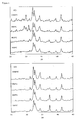
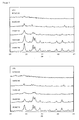
- the diffraction maximum between 29 and 35° at 2 ⁇ can be attributed to different crystalline phases of calcium silicates, such as wollastonite and dicalcium silicate.
- the crystallinity of the powders increased with the increasing sintering temperature.
- Table 1 Composition (molar ratio), setting time and diametral tensile strength (DTS) of the five SiO 2 -CaO cements prepared by using powders at different sintering temperature after mixing with water or 0.5 M Na 2 HPO 4 Sample Code Composition Sintering temperature (°C) Water 0.5 M Na 2 HPO 4 SiO 2 :CaO Setting time (min) DTS (MPa) Setting time (min) DTS (MPa) S70C30 7:3 700 38.4 ⁇ 1.9 0.1 ⁇ 0.0 35.4 ⁇ 1.7 0.2 ⁇ 0.0 800 42.6 ⁇ 2.1 0.6 ⁇ 0.1 36.4 ⁇ 2.5 0.3 ⁇ 0.1 900 44.1 ⁇ 3.0 0.4 ⁇ 0.1 38.5 ⁇
- Tetraethyl orthosilicate (Si(OC 2 H 5 ) 4 , TEOS) and calcium nitrate (Ca(NO 3 ) 2 ⁇ 4H 2 O) were used as precursors for SiO 2 and CaO, respectively, and nitric acid as catalyst. Ethanol was used as the solvent.
- the S70C30, S60C40, S50C50, S40C60, and S30C70 powders were synthesized by sol-gel method and sintered at different temperatures of 800, 900, or 1000°C for 2 hour. After which, the as-sintered powders were ball-milled using agate jars with agate grinding media in an ethanol medium for 12 hours under Retsch centrifugal ball mill S 100.
- the diametral tensile testing of cement specimens was conducted on an EZ-Test machine (Shimadzu, Kyoto, Japan) at a loading rate of 0.5 mm/min.
- the maximal compression load at failure was obtained from the recorded load-deflection curves. At least twenty specimens were used each group. Table 1 presents the results of setting times and DTS values of five calcium silicate cement specimens.
- the setting time ranged from 43 to 11 minutes, significantly depending on the used calcium silicate powders. With the increase in the concentration of calcium component, the setting time of the cement became shorter.
- the sintering temperature used for preparation of solid phases did not distinctly affect the setting time and DTS of the cement specimens.
- 0.5 M Na 2 HPO 4 as a liquid phase presented a similar trend to water.
- Tetraethyl orthosilicate (Si(OC 2 H 5 ) 4 , TEOS) and calcium nitrate (Ca(NO 3 ) 2 ⁇ 4H 2 O) were used as precursors for SiO 2 and CaO, respectively, and nitric acid as catalyst. Ethanol was used as the solvent.
- the S70C30, S60C40, S50C50, S40C60, and S30C70 powders were synthesized by sol-gel method and sintered at 800°C for 2 hour, and then were ball-milled using agate jars with agate grinding media in an ethanol medium for 12 hours under Retsch centrifugal ball mill S 100.
- the precursors for SiO 2 and CaO include Tetraethyl orthosilicate (Si(OC 2 H 5 ) 4 , TEOS), silicon dioxide (SiO 2 ), and silicon tetraacetate (Si(CH 3 COO) 4 ).
- Calcium precursors were calcium nitrate (Ca(NO 3 ) 2 ⁇ 4H 2 O), calcium oxide (CaO), calcium hydroxide (Ca(OH) 2 ), calcium acetate (Ca(CH 3 COO) 2 ), and calcium chloride (CaCl 2 ).
- Nitric acid and ethanol were used as the catalyst and solvent, respectively.
- Calcium silicate powders with equimolar Si/Ca ratio (S50C50) were synthesized by sol-gel method.
- the general procedure of sol-gel route such as hydrolysis and ageing, was adopted. After ageing at 60°C and solvent vaporization in an oven at 120°C, the as-dried gel was heated in air to 900°C for holding 2 hour, and then cooled to room temperature to produce various calcium silicate powders.
- the sintered powders were further ball-milled using agate jars with agate grinding media in an ethanol medium for 12 hours under Retsch centrifugal ball mill S 100.
- the powder was mixed with the (NH 4 ) 2 HPO 4 -NH 4 H 2 PO 4 buffer solution (pH 7.4).
- the setting time of the cements was tested using the 400-g Gillmore needle with a diameter of 1 mm according to the international standard ISO 9917-1 for water-based cements.
- the cement specimens were placed into a cylindrical stainless steel mould to form the specimen dimension of 6 mm (diameter) ⁇ 3 mm (height), and stored in an incubator at 100% relative humidity and 37°C for 1 day.
- the diametral tensile testing of cement specimens was conducted on an EZ-Test machine (Shimadzu, Kyoto, Japan) at a loading rate of 0.5 mm/min.
- Table 2 presents the results of setting times and DTS values of cement specimens.
- the setting time and DTS values appreciably depended on the type of precursors.
- Table 2 Setting time and diametral tensile strength (DTS) of the S50C50 cements prepared by mixing with ammonium hydrogen solution TEOS SiO 2 Si(CH 3 COO) 4 Setting time (min) DTS (MPa) Setting time (min) DTS (MPa) Setting time (min) DTS (MPa) Ca(NO 3 ) 2 3.7 ⁇ 0.8 2.3 ⁇ 0.1 12.3 ⁇ 0.8 0.4 ⁇ 0.0 6.0 ⁇ 1.3 2.5 ⁇ 0.1 CaO 15.2 ⁇ 1.2 0.5 ⁇ 0.0 20.0 ⁇ 2.7 ⁇ 0.0 15.7 ⁇ 2.0 1.0 ⁇ 0.0 CaCl 2 10.3 ⁇ 1.5 0.5 ⁇ 0.1 15.5 ⁇ 1.0 1.2 ⁇ 0.1 12.5 ⁇ 1.4 0.7 ⁇ 0.1 Ca(OH) 2 3
- the sol-gel-derived S70C30, S60C40, S50C50, S40C60, and S30C70 powders were sintered at 800°C for 2 hours. 5 wt% of gelatin was added to the sintered powders. Then, the mixtures with and without gelatin were ball-milled using agate jars with agate grinding media in an ethanol medium for 12 hours under Retsch centrifugal ball mill S 100. After drying, in order to prepare the cement, 0.2 g powder was mixed with 0.1 mL of water or 5 wt% of chitosan solution.
- the sol-gel-derived S70C30, S60C40, S50C50, S40C60, and S30C70 powders were sintered at 800°C for 2 hours. 5 and 10 wt% of gelatin (GLT) was added to the sintered powders. Then, the mixtures with and without gelatin were ball-milled using agate jars with agate grinding media in an ethanol medium for 12 hours under Retsch centrifugal ball mill S 100. After drying, in order to prepare the cement, 0.2 g powder was mixed with 0.1 mL of water or chitosan (CTS) solution.
- CTS chitosan
- the cement specimens were placed into a cylindrical stainless steel mould to form the specimen dimension of 6 mm (diameter) ⁇ 3 mm (height), and stored in an incubator at 100% relative humidity and 37°C for 1 day. Eight specimens from each group were tested. The diametral tensile testing of cement specimens was conducted on an EZ-Test machine (Shimadzu, Kyoto, Japan) at a loading rate of 0.5 mm/min. At least twenty specimens were used each group.
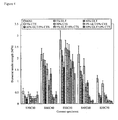
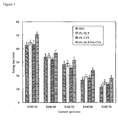
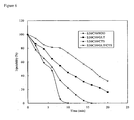
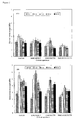
- Figure 4 shows diametral tensile strength (DTS) of various cement specimens. The addition of gelatin or chitosan could decrease DTS of the cement specimens. Similarly, they might also affect the setting time as shown in Figure 5 .
- DTS diametral tensile strength
- the sol-gel-derived S50C50 powders were sintered at 800°C for 2 hours. 5 wt% of gelatin (GLT) was added to the sintered powders. Then, the mixtures with and without gelatin were ball-milled using agate jars with agate grinding media in an ethanol medium for 12 hours under Retsch centrifugal ball mill S 100. After drying, in order to prepare the cement, the powder was mixed with water or 5 wt% of chitosan (CTS) solution liquid-to-powder (L/P) ratio of 0.6 mL/g. The injectability was evaluated by extruding the paste through a disposable syringe of 5-mL equipped with the needle having an opening of 2.0 mm.
- CTS chitosan
- the sol-gel-derived S60C40, S50C50, S40C60, and S30C70 powders were sintered at 800°C for 2 hours. 5 wt% of gelatin (GLT) was added to the sintered powders. Then, the mixtures with and without gelatin were ball-milled using agate jars with agate grinding media in an ethanol medium for 12 hours under Retsch centrifugal ball mill S 100. After mixing with water or 5 wt% chitosan (CTS) solution, each hardened specimen that was stored in an incubator at 100% relative humidity and 37°C for one day was immersed in physiological solution for the predetermined periods of time at 37°C to evaluate the cement bioactivity.
- CTS chitosan
- SBF simulated body fluid
- the SBF solution consisted of 7.9949 g NaCl, 0.3528 g NaHCO 3 , 0.2235 g KCI, 0.147 g K 2 HPO 4 , 0.305 g MgCl 2 ⁇ 6H 2 O, 0.2775 g CaCl 2 , 0.071 g Na 2 SO 4 in 1000 ml distilled H 2 O and was buffered to pH 7.4 with hydrochloric acid (HCl) and trishydroxymethyl aminomethane (CH 2 OH) 3 CNH 2 ). The solution in a shaker water bath was not changed daily.
- HCl hydrochloric acid
- CH 2 OH trishydroxymethyl aminomethane
- Cement biocompatibility was evaluated by incubation with human bone marrow-derived mesenchymal stem cells (hMSCs) obtained from Osiris (Worthington Biochemical, Lakewood, NJ) at passage 4.
- the sol-gel-derived S50C50 powders were sintered at 800°C for 2 hours. 5 wt% of gelatin (GLT) was added to the sintered powders and ground for 12 hours. After drying, in order to prepare the cement, the powder was mixed with water or 5 wt% of chitosan (CTS) solution liquid-to-powder (L/P) ratio of 0.5 mL/g.
- CTS chitosan
- L/P liquid-to-powder
- the 1-day setting cement discs were sterilized by soaking in 75% ethanol and exposure to ultraviolet (UV) light for 2 hour.
- the hMSC cells were seeded to sterilized S50C50 cement at a density of 5 ⁇ 10 3 cells/well in a 24-well plate.
- the cells were grown in the osteogenic induction medium consisted of Dulbecco's modified Eagle's medium (DMEM) supplemented with 15% fetal bovine serum (FBS), 584 mg/L glutamine, 0.1 mM MEM sodium pyruvate, 100 U/mL penicillin, 100 ⁇ g/mL streptomycin, 50 mg/L ascorbic acid, 0.1 mM MEM nonessential amino acids, and 100 nM dexamethasone and 10 mM ⁇ -glycerophosphate disodium salt hydrate. Cultures were incubated at 37°C in a 5% CO 2 atmosphere for different time periods. The medium was changed every three days. The Cell Proliferation Reagent WST-1 (Roche Diagnostics, Mannheim.
- hMSCs cultured on tissue culture plates were used as a control.
- WST-1 assay shows that the number of viable cells increases with an increased incubation, indicating a good biocompatibility.
- the chitosan-containing cement specimens show a better biocompatibility compared with those specimens without chitosan.
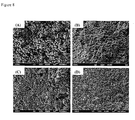
- Cell morphology on the cement surfaces was examined by scanning electron microscopy (SEM). The specimens were washed by phosphate buffer solution three times and fixed with 2.5% glutaraldehyde at 4°C for 2 hours. Then the cements were dehydrated in a graded ethanol series for 20 minutes at each concentration and dried over night. The dried specimens were mounted on stubs, coated with gold layer.
- the cell morphology on the cement surface was observed using JEOL JSM-6700F SEM. The evaluation of SEM images confirmed that cells appeared to have firmly anchored on the cement surfaces ( Fig. 11 ).
Landscapes
- Chemical & Material Sciences (AREA)
- Health & Medical Sciences (AREA)
- Engineering & Computer Science (AREA)
- Materials Engineering (AREA)
- Ceramic Engineering (AREA)
- Public Health (AREA)
- Veterinary Medicine (AREA)
- Inorganic Chemistry (AREA)
- General Health & Medical Sciences (AREA)
- Surgery (AREA)
- Epidemiology (AREA)
- Life Sciences & Earth Sciences (AREA)
- Animal Behavior & Ethology (AREA)
- Chemical Kinetics & Catalysis (AREA)
- Organic Chemistry (AREA)
- Structural Engineering (AREA)
- Composite Materials (AREA)
- Materials For Medical Uses (AREA)
Claims (10)
- Verfahren zur Herstellung von polymerhaltigemGalciumsilikat-Knochenzement, umfassend(a) Mischen eines Calciumsalzes mit einer Siliciumverbindung, wobei das Calciumsalz ausgewählt ist aus der Gruppe bestehend aus Calciumoxid, Calciumhydroxid, Calciumacetat, Calciumcarbonat und Calciumchlorid, und wobei die Siliciumverbindung ausgewählt ist aus der Gruppe bestehend aus Siliciumdioxid und Siliciumtetraacetat;(b) Behandlung des Gemischs aus Schritt (a) mit einem Sol-Gel-Verfahren;(c) Erhitzen des Gemischs aus Schritt (b);(d) Zugabe von Gelatine zum Gemisch aus Schritt (c) im Bereich von 2-30 Gew.-%, bezogen auf das Gesamtgewicht des Gemischs,zur Erhöhung der Plastizität;(e) Zerkleinern des Gemischs aus Schritt (d) zu Pulver; und(f) Zugabe des Pulvers in Wasser oder Phosphatlösung.
- Verfahren nach Anspruch 1, wobei das Gemisch ein Molverhältnis von Calcium zu Silicium im Bereich von 10 zu 0.1, besonders bevorzugt ein Molverhältnis von Calcium zu Silicium im Bereich von 4 zu 0.25, aufweist.
- Verfahren nach Anspruch 1 oder 2, wobei das Sol-Gel-Verfahren die folgenden Schritte umfasst:(a) Mischen des Gemischs mit einem verdünnten Lösungsmittel ausgewählt aus der Gruppe bestehend aus Salpetersäure und Ethanol für 1-12 Stunden;(b) Aufbringen des Gemischs bei einer Temperatur von 20 - 100°C für 1 - 7 Tage; und(c) Trocknen des Gemischs bei -40 -150°C.
- Verfahren nach einem der vorangegangen Ansprüche, wobei der Erhitzungsvorgang die folgenden Schritte umfasst:(a) Erhitzen des getrockneten Gemischs auf 700 - 1300°C mit einer Aufheizratevon 1 -40°C/min;(b) Halten des Gemischs bei einer konstanten Temperatur im Bereich von 700 -1300°C; und(c) Abkühlen des Gemischs auf Raumtemperatur mittels Luftkühlung, Wasserkühlung oder Schnellkühltechniken, um Silikatpulver zu erhalten.
- Verfahren nach einem der vorangegangen Ansprüche, wobei der Zerkleinerungsvorgang die folgenden Schritte umfasst:(a) Mischen des Calciumsilikatpulvers, das die Materialien zur Erhöhung der Plastizität enthält, mit Alkohol;(b) Zerkleinern des Pulvers mit einer Kugelmühle für 0.5 - 3 Tage; und(c) Trocknen des Pulvers bei -40 - 60°C.
- Verfahren nach einem der vorangegangen Ansprüche, wobei das Pulver in einem Verhältnis zu Wasser oder zurPhosphatlösung von 1 g/0.3- 2mL und besonders bevorzugt in einem Verhältnis von 1g/0.4 - 0.8 mL vorliegt.
- Verfahren nach einem der vorangegangen Ansprüche, wobei die Phosphatlösung ein Anion ausgewählt aus einem Phosphatradikal (PO4 3-), einem monohydrischen Phosphatradikal (HPO4 2-), oder einem dihydrischen Phosphatradikal (H2PO4 -), enthält.
- Verfahren nach einem der vorangegangen Ansprüche, wobei die Phosphatlösung ein Kation ausgewählt aus einem Ammonium oder einem Mitglied der Gruppe 1 A enthält, und wobei das Anionvorzugsweise In einer Konzentration von 0.12 - 5 M vorliegt.
- Zusammensetzung fürpolymerhaltigen Calciumsilikat-Knochenzement, umfassend(a) ein Calciumsalz ausgewählt aus der Gruppe bestehend aus Calciumoxid, Calciumhydroxid, Calciumacetat, Calciumcarbonat und Calciumchlorid;(b) eine Siliciumverbindung ausgewählt aus der Gruppe bestehend aus Siliciumdioxid und Siliciumtetraacetat;(c) Gelatine in einem Bereich von 2-30 Gew.-%, bezogen auf das Gesamtgewicht des Gemischs; und(d) einepharmakologisch verträgliche Lösung.
- Zusammensetzung nach Anspruch 9, wobei die pharmakologisch verträgliche Lösung Wasser, Natriumchlorid, Calciumchlorid oder eine Phosphatlösung ist.
Priority Applications (2)
| Application Number | Priority Date | Filing Date | Title |
|---|---|---|---|
| AT09157311T ATE537128T1 (de) | 2009-04-03 | 2009-04-03 | Kompositzement auf calciumsilikatbasis und verfahren zur herstellung |
| EP09157311A EP2236477B1 (de) | 2009-04-03 | 2009-04-03 | Kompositzement auf Calciumsilikatbasis und Verfahren zur Herstellung |
Applications Claiming Priority (1)
| Application Number | Priority Date | Filing Date | Title |
|---|---|---|---|
| EP09157311A EP2236477B1 (de) | 2009-04-03 | 2009-04-03 | Kompositzement auf Calciumsilikatbasis und Verfahren zur Herstellung |
Publications (2)
| Publication Number | Publication Date |
|---|---|
| EP2236477A1 EP2236477A1 (de) | 2010-10-06 |
| EP2236477B1 true EP2236477B1 (de) | 2011-12-14 |
Family
ID=41009911
Family Applications (1)
| Application Number | Title | Priority Date | Filing Date |
|---|---|---|---|
| EP09157311A Active EP2236477B1 (de) | 2009-04-03 | 2009-04-03 | Kompositzement auf Calciumsilikatbasis und Verfahren zur Herstellung |
Country Status (2)
| Country | Link |
|---|---|
| EP (1) | EP2236477B1 (de) |
| AT (1) | ATE537128T1 (de) |
Cited By (1)
| Publication number | Priority date | Publication date | Assignee | Title |
|---|---|---|---|---|
| WO2025178550A1 (en) * | 2024-02-22 | 2025-08-28 | Lea Cares Ab | Method to form supernatant |
Families Citing this family (5)
| Publication number | Priority date | Publication date | Assignee | Title |
|---|---|---|---|---|
| US20160022864A1 (en) * | 2014-07-22 | 2016-01-28 | Chia-Tze Kao | Tiny Bone Defect Repairing Material, Matrix Material Thereof and Producing Method Thereof |
| US9862643B2 (en) * | 2016-05-26 | 2018-01-09 | X Development Llc | Building materials from an aqueous solution |
| CN111012946B (zh) * | 2019-12-31 | 2022-05-17 | 广州润虹医药科技股份有限公司 | 一种温敏性磷酸钙骨水泥及其制备方法 |
| CN115093138B (zh) * | 2022-06-22 | 2023-03-14 | 陕西省建筑科学研究院有限公司 | 一种适用于硅热法炼镁镁渣基胶凝材料的外加剂及其应用 |
| CN117800299B (zh) * | 2023-12-28 | 2026-03-17 | 上海钇玖新材料科技有限公司 | 硅酸钙-磷酸钙晶相复合材料及其应用 |
Family Cites Families (1)
| Publication number | Priority date | Publication date | Assignee | Title |
|---|---|---|---|---|
| US20080214500A1 (en) * | 2007-03-01 | 2008-09-04 | Leif Hermansson | Injectable cement composition for orthopaedic and dental use |
-
2009
- 2009-04-03 EP EP09157311A patent/EP2236477B1/de active Active
- 2009-04-03 AT AT09157311T patent/ATE537128T1/de active
Cited By (1)
| Publication number | Priority date | Publication date | Assignee | Title |
|---|---|---|---|---|
| WO2025178550A1 (en) * | 2024-02-22 | 2025-08-28 | Lea Cares Ab | Method to form supernatant |
Also Published As
| Publication number | Publication date |
|---|---|
| EP2236477A1 (de) | 2010-10-06 |
| ATE537128T1 (de) | 2011-12-15 |
Similar Documents
| Publication | Publication Date | Title |
|---|---|---|
| Huan et al. | Novel bioactive composite bone cements based on the β-tricalcium phosphate–monocalcium phosphate monohydrate composite cement system | |
| Badr-Mohammadi et al. | Mechanical properties and in vitro cellular behavior of zinc-containing nano-bioactive glass doped biphasic calcium phosphate bone substitutes | |
| No et al. | Strontium-doped calcium silicate bioceramic with enhanced in vitro osteogenic properties | |
| Qi et al. | Sr2+ sustained release system augments bioactivity of polymer scaffold | |
| Boroujeni et al. | Development of monetite/phosphorylated chitosan composite bone cement | |
| EP2236477A1 (de) | Kompositzement auf Calciumsilikatbasis und Verfahren zur Herstellung | |
| Wang et al. | Novel fast-setting chitosan/β-dicalcium silicate bone cements with high compressive strength and bioactivity | |
| Boroujeni et al. | Development of multi-walled carbon nanotubes reinforced monetite bionanocomposite cements for orthopedic applications | |
| Sadeghzade et al. | The influence of polycaporolacton fumarate coating on mechanical properties and in vitro behavior of porous diopside-hardystonite nano-composite scaffold | |
| Zhang et al. | A novel bioactive vaterite-containing tricalcium silicate bone cement by self hydration synthesis and its biological properties | |
| Feng et al. | Diopside modified porous polyglycolide scaffolds with improved properties | |
| Menarbazari et al. | 3D-printed polycaprolactone/tricalcium silicate scaffolds modified with decellularized bone ECM-oxidized alginate for bone tissue engineering | |
| Chen et al. | Properties of anti-washout-type calcium silicate bone cements containing gelatin | |
| US20100196514A1 (en) | Calcium silicate-based composite cement and methods for the preparation | |
| US20110232533A1 (en) | Method for producing calcium silicate-based bone cement | |
| CN101698117B (zh) | 骨修复复合材料及其制备方法 | |
| JP5210266B2 (ja) | ケイ酸カルシウム系複合セメントおよびその調製方法 | |
| Medvecky et al. | Osteogenic potential and properties of injectable silk fibroin/tetracalcium phosphate/monetite composite powder biocement systems | |
| Ahmadipour et al. | Polyhedral oligomeric silsesquioxane/platelets rich plasma/gelrite-based hydrogel scaffold for bone tissue engineering | |
| ES2373137B2 (es) | Cemento de fosfato cálcico-silicato cálcico para aplicaciones biomédicas. | |
| Hu et al. | The study on calcium polyphosphate/poly-amino acid composite for supportive bone substitute materials in vitro | |
| KR100559171B1 (ko) | 생체활성 골 시멘트 제조용 혼합물 및 이를 이용한생체활성 골 시멘트의 제조방법 | |
| Rattanachan et al. | Synthesis of chitosan/brushite powders for bone cement composites | |
| Sunendar et al. | The effect of CHA-doped Sr addition to the mechanical strength of metakaolin dental implant geopolymer composite | |
| Wu et al. | Silicate—based bioactive ceramics for bone regeneration application |
Legal Events
| Date | Code | Title | Description |
|---|---|---|---|
| PUAI | Public reference made under article 153(3) epc to a published international application that has entered the european phase |
Free format text: ORIGINAL CODE: 0009012 |
|
| AK | Designated contracting states |
Kind code of ref document: A1 Designated state(s): AT BE BG CH CY CZ DE DK EE ES FI FR GB GR HR HU IE IS IT LI LT LU LV MC MK MT NL NO PL PT RO SE SI SK TR |
|
| AX | Request for extension of the european patent |
Extension state: AL BA RS |
|
| 17P | Request for examination filed |
Effective date: 20100521 |
|
| GRAP | Despatch of communication of intention to grant a patent |
Free format text: ORIGINAL CODE: EPIDOSNIGR1 |
|
| GRAS | Grant fee paid |
Free format text: ORIGINAL CODE: EPIDOSNIGR3 |
|
| GRAA | (expected) grant |
Free format text: ORIGINAL CODE: 0009210 |
|
| AK | Designated contracting states |
Kind code of ref document: B1 Designated state(s): AT BE BG CH CY CZ DE DK EE ES FI FR GB GR HR HU IE IS IT LI LT LU LV MC MK MT NL NO PL PT RO SE SI SK TR |
|
| REG | Reference to a national code |
Ref country code: GB Ref legal event code: FG4D |
|
| REG | Reference to a national code |
Ref country code: CH Ref legal event code: EP |
|
| REG | Reference to a national code |
Ref country code: DE Ref legal event code: R082 Ref document number: 602009004135 Country of ref document: DE Representative=s name: 2K PATENTANWAELTE BLASBERG KEWITZ & REICHEL, P, DE Ref country code: DE Ref legal event code: R082 Ref document number: 602009004135 Country of ref document: DE Representative=s name: 2K PATENTANWAELTE BLASBERG KEWITZ & REICHEL PA, DE |
|
| REG | Reference to a national code |
Ref country code: IE Ref legal event code: FG4D |
|
| REG | Reference to a national code |
Ref country code: SE Ref legal event code: TRGR |
|
| REG | Reference to a national code |
Ref country code: DE Ref legal event code: R096 Ref document number: 602009004135 Country of ref document: DE Effective date: 20120209 |
|
| REG | Reference to a national code |
Ref country code: NL Ref legal event code: T3 |
|
| PG25 | Lapsed in a contracting state [announced via postgrant information from national office to epo] |
Ref country code: LT Free format text: LAPSE BECAUSE OF FAILURE TO SUBMIT A TRANSLATION OF THE DESCRIPTION OR TO PAY THE FEE WITHIN THE PRESCRIBED TIME-LIMIT Effective date: 20111214 Ref country code: NO Free format text: LAPSE BECAUSE OF FAILURE TO SUBMIT A TRANSLATION OF THE DESCRIPTION OR TO PAY THE FEE WITHIN THE PRESCRIBED TIME-LIMIT Effective date: 20120314 |
|
| PGFP | Annual fee paid to national office [announced via postgrant information from national office to epo] |
Ref country code: IE Payment date: 20120208 Year of fee payment: 4 |
|
| LTIE | Lt: invalidation of european patent or patent extension |
Effective date: 20111214 |
|
| PG25 | Lapsed in a contracting state [announced via postgrant information from national office to epo] |
Ref country code: HR Free format text: LAPSE BECAUSE OF FAILURE TO SUBMIT A TRANSLATION OF THE DESCRIPTION OR TO PAY THE FEE WITHIN THE PRESCRIBED TIME-LIMIT Effective date: 20111214 Ref country code: SI Free format text: LAPSE BECAUSE OF FAILURE TO SUBMIT A TRANSLATION OF THE DESCRIPTION OR TO PAY THE FEE WITHIN THE PRESCRIBED TIME-LIMIT Effective date: 20111214 Ref country code: GR Free format text: LAPSE BECAUSE OF FAILURE TO SUBMIT A TRANSLATION OF THE DESCRIPTION OR TO PAY THE FEE WITHIN THE PRESCRIBED TIME-LIMIT Effective date: 20120315 Ref country code: LV Free format text: LAPSE BECAUSE OF FAILURE TO SUBMIT A TRANSLATION OF THE DESCRIPTION OR TO PAY THE FEE WITHIN THE PRESCRIBED TIME-LIMIT Effective date: 20111214 |
|
| PG25 | Lapsed in a contracting state [announced via postgrant information from national office to epo] |
Ref country code: BE Free format text: LAPSE BECAUSE OF FAILURE TO SUBMIT A TRANSLATION OF THE DESCRIPTION OR TO PAY THE FEE WITHIN THE PRESCRIBED TIME-LIMIT Effective date: 20111214 Ref country code: CY Free format text: LAPSE BECAUSE OF FAILURE TO SUBMIT A TRANSLATION OF THE DESCRIPTION OR TO PAY THE FEE WITHIN THE PRESCRIBED TIME-LIMIT Effective date: 20111214 |
|
| PG25 | Lapsed in a contracting state [announced via postgrant information from national office to epo] |
Ref country code: IS Free format text: LAPSE BECAUSE OF FAILURE TO SUBMIT A TRANSLATION OF THE DESCRIPTION OR TO PAY THE FEE WITHIN THE PRESCRIBED TIME-LIMIT Effective date: 20120414 Ref country code: EE Free format text: LAPSE BECAUSE OF FAILURE TO SUBMIT A TRANSLATION OF THE DESCRIPTION OR TO PAY THE FEE WITHIN THE PRESCRIBED TIME-LIMIT Effective date: 20111214 Ref country code: SK Free format text: LAPSE BECAUSE OF FAILURE TO SUBMIT A TRANSLATION OF THE DESCRIPTION OR TO PAY THE FEE WITHIN THE PRESCRIBED TIME-LIMIT Effective date: 20111214 Ref country code: CZ Free format text: LAPSE BECAUSE OF FAILURE TO SUBMIT A TRANSLATION OF THE DESCRIPTION OR TO PAY THE FEE WITHIN THE PRESCRIBED TIME-LIMIT Effective date: 20111214 Ref country code: BG Free format text: LAPSE BECAUSE OF FAILURE TO SUBMIT A TRANSLATION OF THE DESCRIPTION OR TO PAY THE FEE WITHIN THE PRESCRIBED TIME-LIMIT Effective date: 20120314 |
|
| PG25 | Lapsed in a contracting state [announced via postgrant information from national office to epo] |
Ref country code: PT Free format text: LAPSE BECAUSE OF FAILURE TO SUBMIT A TRANSLATION OF THE DESCRIPTION OR TO PAY THE FEE WITHIN THE PRESCRIBED TIME-LIMIT Effective date: 20120416 Ref country code: RO Free format text: LAPSE BECAUSE OF FAILURE TO SUBMIT A TRANSLATION OF THE DESCRIPTION OR TO PAY THE FEE WITHIN THE PRESCRIBED TIME-LIMIT Effective date: 20111214 Ref country code: PL Free format text: LAPSE BECAUSE OF FAILURE TO SUBMIT A TRANSLATION OF THE DESCRIPTION OR TO PAY THE FEE WITHIN THE PRESCRIBED TIME-LIMIT Effective date: 20111214 |
|
| REG | Reference to a national code |
Ref country code: AT Ref legal event code: MK05 Ref document number: 537128 Country of ref document: AT Kind code of ref document: T Effective date: 20111214 |
|
| PLBE | No opposition filed within time limit |
Free format text: ORIGINAL CODE: 0009261 |
|
| STAA | Information on the status of an ep patent application or granted ep patent |
Free format text: STATUS: NO OPPOSITION FILED WITHIN TIME LIMIT |
|
| PG25 | Lapsed in a contracting state [announced via postgrant information from national office to epo] |
Ref country code: DK Free format text: LAPSE BECAUSE OF FAILURE TO SUBMIT A TRANSLATION OF THE DESCRIPTION OR TO PAY THE FEE WITHIN THE PRESCRIBED TIME-LIMIT Effective date: 20111214 |
|
| 26N | No opposition filed |
Effective date: 20120917 |
|
| PG25 | Lapsed in a contracting state [announced via postgrant information from national office to epo] |
Ref country code: IT Free format text: LAPSE BECAUSE OF FAILURE TO SUBMIT A TRANSLATION OF THE DESCRIPTION OR TO PAY THE FEE WITHIN THE PRESCRIBED TIME-LIMIT Effective date: 20111214 Ref country code: MC Free format text: LAPSE BECAUSE OF NON-PAYMENT OF DUE FEES Effective date: 20120430 |
|
| REG | Reference to a national code |
Ref country code: DE Ref legal event code: R097 Ref document number: 602009004135 Country of ref document: DE Effective date: 20120917 |
|
| PG25 | Lapsed in a contracting state [announced via postgrant information from national office to epo] |
Ref country code: AT Free format text: LAPSE BECAUSE OF FAILURE TO SUBMIT A TRANSLATION OF THE DESCRIPTION OR TO PAY THE FEE WITHIN THE PRESCRIBED TIME-LIMIT Effective date: 20111214 |
|
| PG25 | Lapsed in a contracting state [announced via postgrant information from national office to epo] |
Ref country code: MK Free format text: LAPSE BECAUSE OF FAILURE TO SUBMIT A TRANSLATION OF THE DESCRIPTION OR TO PAY THE FEE WITHIN THE PRESCRIBED TIME-LIMIT Effective date: 20111214 |
|
| PG25 | Lapsed in a contracting state [announced via postgrant information from national office to epo] |
Ref country code: ES Free format text: LAPSE BECAUSE OF FAILURE TO SUBMIT A TRANSLATION OF THE DESCRIPTION OR TO PAY THE FEE WITHIN THE PRESCRIBED TIME-LIMIT Effective date: 20120325 |
|
| PG25 | Lapsed in a contracting state [announced via postgrant information from national office to epo] |
Ref country code: FI Free format text: LAPSE BECAUSE OF FAILURE TO SUBMIT A TRANSLATION OF THE DESCRIPTION OR TO PAY THE FEE WITHIN THE PRESCRIBED TIME-LIMIT Effective date: 20111214 |
|
| PG25 | Lapsed in a contracting state [announced via postgrant information from national office to epo] |
Ref country code: MT Free format text: LAPSE BECAUSE OF FAILURE TO SUBMIT A TRANSLATION OF THE DESCRIPTION OR TO PAY THE FEE WITHIN THE PRESCRIBED TIME-LIMIT Effective date: 20111214 |
|
| PGFP | Annual fee paid to national office [announced via postgrant information from national office to epo] |
Ref country code: SE Payment date: 20130423 Year of fee payment: 5 |
|
| PGFP | Annual fee paid to national office [announced via postgrant information from national office to epo] |
Ref country code: NL Payment date: 20130422 Year of fee payment: 5 |
|
| REG | Reference to a national code |
Ref country code: CH Ref legal event code: PL |
|
| REG | Reference to a national code |
Ref country code: IE Ref legal event code: MM4A |
|
| PG25 | Lapsed in a contracting state [announced via postgrant information from national office to epo] |
Ref country code: CH Free format text: LAPSE BECAUSE OF NON-PAYMENT OF DUE FEES Effective date: 20130430 Ref country code: LI Free format text: LAPSE BECAUSE OF NON-PAYMENT OF DUE FEES Effective date: 20130430 |
|
| PG25 | Lapsed in a contracting state [announced via postgrant information from national office to epo] |
Ref country code: TR Free format text: LAPSE BECAUSE OF FAILURE TO SUBMIT A TRANSLATION OF THE DESCRIPTION OR TO PAY THE FEE WITHIN THE PRESCRIBED TIME-LIMIT Effective date: 20111214 Ref country code: IE Free format text: LAPSE BECAUSE OF NON-PAYMENT OF DUE FEES Effective date: 20130403 |
|
| PG25 | Lapsed in a contracting state [announced via postgrant information from national office to epo] |
Ref country code: LU Free format text: LAPSE BECAUSE OF NON-PAYMENT OF DUE FEES Effective date: 20120403 |
|
| PG25 | Lapsed in a contracting state [announced via postgrant information from national office to epo] |
Ref country code: HU Free format text: LAPSE BECAUSE OF FAILURE TO SUBMIT A TRANSLATION OF THE DESCRIPTION OR TO PAY THE FEE WITHIN THE PRESCRIBED TIME-LIMIT Effective date: 20090403 |
|
| REG | Reference to a national code |
Ref country code: NL Ref legal event code: V1 Effective date: 20141101 |
|
| REG | Reference to a national code |
Ref country code: SE Ref legal event code: EUG |
|
| PG25 | Lapsed in a contracting state [announced via postgrant information from national office to epo] |
Ref country code: SE Free format text: LAPSE BECAUSE OF NON-PAYMENT OF DUE FEES Effective date: 20140404 |
|
| PG25 | Lapsed in a contracting state [announced via postgrant information from national office to epo] |
Ref country code: NL Free format text: LAPSE BECAUSE OF NON-PAYMENT OF DUE FEES Effective date: 20141101 |
|
| REG | Reference to a national code |
Ref country code: FR Ref legal event code: PLFP Year of fee payment: 8 |
|
| REG | Reference to a national code |
Ref country code: FR Ref legal event code: PLFP Year of fee payment: 9 |
|
| REG | Reference to a national code |
Ref country code: FR Ref legal event code: PLFP Year of fee payment: 10 |
|
| PGFP | Annual fee paid to national office [announced via postgrant information from national office to epo] |
Ref country code: DE Payment date: 20220429 Year of fee payment: 14 |
|
| REG | Reference to a national code |
Ref country code: DE Ref legal event code: R119 Ref document number: 602009004135 Country of ref document: DE |
|
| PG25 | Lapsed in a contracting state [announced via postgrant information from national office to epo] |
Ref country code: DE Free format text: LAPSE BECAUSE OF NON-PAYMENT OF DUE FEES Effective date: 20231103 |
|
| PGFP | Annual fee paid to national office [announced via postgrant information from national office to epo] |
Ref country code: GB Payment date: 20250430 Year of fee payment: 17 |
|
| PGFP | Annual fee paid to national office [announced via postgrant information from national office to epo] |
Ref country code: FR Payment date: 20250430 Year of fee payment: 17 |