EP2237131A1 - Système de télécommande par gestes - Google Patents
Système de télécommande par gestes Download PDFInfo
- Publication number
- EP2237131A1 EP2237131A1 EP09007019A EP09007019A EP2237131A1 EP 2237131 A1 EP2237131 A1 EP 2237131A1 EP 09007019 A EP09007019 A EP 09007019A EP 09007019 A EP09007019 A EP 09007019A EP 2237131 A1 EP2237131 A1 EP 2237131A1
- Authority
- EP
- European Patent Office
- Prior art keywords
- gesture
- recognition module
- image recognition
- remote control
- control system
- Prior art date
- Legal status (The legal status is an assumption and is not a legal conclusion. Google has not performed a legal analysis and makes no representation as to the accuracy of the status listed.)
- Withdrawn
Links
Images






Classifications
-
- G—PHYSICS
- G06—COMPUTING OR CALCULATING; COUNTING
- G06F—ELECTRIC DIGITAL DATA PROCESSING
- G06F3/00—Input arrangements for transferring data to be processed into a form capable of being handled by the computer; Output arrangements for transferring data from processing unit to output unit, e.g. interface arrangements
- G06F3/01—Input arrangements or combined input and output arrangements for interaction between user and computer
- G06F3/017—Gesture based interaction, e.g. based on a set of recognized hand gestures
-
- G—PHYSICS
- G06—COMPUTING OR CALCULATING; COUNTING
- G06V—IMAGE OR VIDEO RECOGNITION OR UNDERSTANDING
- G06V40/00—Recognition of biometric, human-related or animal-related patterns in image or video data
- G06V40/20—Movements or behaviour, e.g. gesture recognition
- G06V40/28—Recognition of hand or arm movements, e.g. recognition of deaf sign language
-
- G—PHYSICS
- G08—SIGNALLING
- G08C—TRANSMISSION SYSTEMS FOR MEASURED VALUES, CONTROL OR SIMILAR SIGNALS
- G08C17/00—Arrangements for transmitting signals characterised by the use of a wireless electrical link
- G08C17/02—Arrangements for transmitting signals characterised by the use of a wireless electrical link using a radio link
-
- G—PHYSICS
- G08—SIGNALLING
- G08C—TRANSMISSION SYSTEMS FOR MEASURED VALUES, CONTROL OR SIMILAR SIGNALS
- G08C23/00—Non-electrical signal transmission systems, e.g. optical systems
- G08C23/04—Non-electrical signal transmission systems, e.g. optical systems using light waves, e.g. infrared
-
- H—ELECTRICITY
- H04—ELECTRIC COMMUNICATION TECHNIQUE
- H04N—PICTORIAL COMMUNICATION, e.g. TELEVISION
- H04N21/00—Selective content distribution, e.g. interactive television or video on demand [VOD]
- H04N21/40—Client devices specifically adapted for the reception of or interaction with content, e.g. set-top-box [STB]; Operations thereof
- H04N21/41—Structure of client; Structure of client peripherals
- H04N21/4104—Peripherals receiving signals from specially adapted client devices
- H04N21/4113—PC
-
- H—ELECTRICITY
- H04—ELECTRIC COMMUNICATION TECHNIQUE
- H04N—PICTORIAL COMMUNICATION, e.g. TELEVISION
- H04N21/00—Selective content distribution, e.g. interactive television or video on demand [VOD]
- H04N21/40—Client devices specifically adapted for the reception of or interaction with content, e.g. set-top-box [STB]; Operations thereof
- H04N21/41—Structure of client; Structure of client peripherals
- H04N21/4104—Peripherals receiving signals from specially adapted client devices
- H04N21/4131—Peripherals receiving signals from specially adapted client devices home appliance, e.g. lighting, air conditioning system, metering devices
-
- H—ELECTRICITY
- H04—ELECTRIC COMMUNICATION TECHNIQUE
- H04N—PICTORIAL COMMUNICATION, e.g. TELEVISION
- H04N21/00—Selective content distribution, e.g. interactive television or video on demand [VOD]
- H04N21/40—Client devices specifically adapted for the reception of or interaction with content, e.g. set-top-box [STB]; Operations thereof
- H04N21/41—Structure of client; Structure of client peripherals
- H04N21/4104—Peripherals receiving signals from specially adapted client devices
- H04N21/4135—Peripherals receiving signals from specially adapted client devices external recorder
-
- H—ELECTRICITY
- H04—ELECTRIC COMMUNICATION TECHNIQUE
- H04N—PICTORIAL COMMUNICATION, e.g. TELEVISION
- H04N21/00—Selective content distribution, e.g. interactive television or video on demand [VOD]
- H04N21/40—Client devices specifically adapted for the reception of or interaction with content, e.g. set-top-box [STB]; Operations thereof
- H04N21/41—Structure of client; Structure of client peripherals
- H04N21/422—Input-only peripherals, i.e. input devices connected to specially adapted client devices, e.g. global positioning system [GPS]
- H04N21/42204—User interfaces specially adapted for controlling a client device through a remote control device; Remote control devices therefor
-
- H—ELECTRICITY
- H04—ELECTRIC COMMUNICATION TECHNIQUE
- H04N—PICTORIAL COMMUNICATION, e.g. TELEVISION
- H04N21/00—Selective content distribution, e.g. interactive television or video on demand [VOD]
- H04N21/40—Client devices specifically adapted for the reception of or interaction with content, e.g. set-top-box [STB]; Operations thereof
- H04N21/41—Structure of client; Structure of client peripherals
- H04N21/422—Input-only peripherals, i.e. input devices connected to specially adapted client devices, e.g. global positioning system [GPS]
- H04N21/42204—User interfaces specially adapted for controlling a client device through a remote control device; Remote control devices therefor
- H04N21/42206—User interfaces specially adapted for controlling a client device through a remote control device; Remote control devices therefor characterized by hardware details
- H04N21/42222—Additional components integrated in the remote control device, e.g. timer, speaker, sensors for detecting position, direction or movement of the remote control, microphone or battery charging device
-
- H—ELECTRICITY
- H04—ELECTRIC COMMUNICATION TECHNIQUE
- H04N—PICTORIAL COMMUNICATION, e.g. TELEVISION
- H04N21/00—Selective content distribution, e.g. interactive television or video on demand [VOD]
- H04N21/40—Client devices specifically adapted for the reception of or interaction with content, e.g. set-top-box [STB]; Operations thereof
- H04N21/41—Structure of client; Structure of client peripherals
- H04N21/422—Input-only peripherals, i.e. input devices connected to specially adapted client devices, e.g. global positioning system [GPS]
- H04N21/4223—Cameras
-
- H—ELECTRICITY
- H04—ELECTRIC COMMUNICATION TECHNIQUE
- H04N—PICTORIAL COMMUNICATION, e.g. TELEVISION
- H04N21/00—Selective content distribution, e.g. interactive television or video on demand [VOD]
- H04N21/40—Client devices specifically adapted for the reception of or interaction with content, e.g. set-top-box [STB]; Operations thereof
- H04N21/43—Processing of content or additional data, e.g. demultiplexing additional data from a digital video stream; Elementary client operations, e.g. monitoring of home network or synchronising decoder's clock; Client middleware
- H04N21/442—Monitoring of processes or resources, e.g. detecting the failure of a recording device, monitoring the downstream bandwidth, the number of times a movie has been viewed, the storage space available from the internal hard disk
- H04N21/44213—Monitoring of end-user related data
- H04N21/44218—Detecting physical presence or behaviour of the user, e.g. using sensors to detect if the user is leaving the room or changes his face expression during a TV programme
-
- H—ELECTRICITY
- H04—ELECTRIC COMMUNICATION TECHNIQUE
- H04N—PICTORIAL COMMUNICATION, e.g. TELEVISION
- H04N21/00—Selective content distribution, e.g. interactive television or video on demand [VOD]
- H04N21/40—Client devices specifically adapted for the reception of or interaction with content, e.g. set-top-box [STB]; Operations thereof
- H04N21/47—End-user applications
-
- G—PHYSICS
- G08—SIGNALLING
- G08C—TRANSMISSION SYSTEMS FOR MEASURED VALUES, CONTROL OR SIMILAR SIGNALS
- G08C2201/00—Transmission systems of control signals via wireless link
- G08C2201/30—User interface
- G08C2201/32—Remote control based on movements, attitude of remote control device
Definitions
- the present invention relates to a remote control system, and more particularly to a gesture-based remote control system.
- the prevent invention provides a gesture-based remote control system to control at least one controlled electronic appliance.
- the gesture-based remote control system includes a camera module, an image recognition module, a wireless transmitter, and a main-controlling electronic appliance.
- the image recognition module is electrically connected to the camera module.
- the wireless transmitter is electrically connected to the image recognition module.
- the main-controlling electronic appliance is detachably connected to the image recognition module and has a monitor.
- a motion controlling command is obtained by recognizing an image of a user in the camera module with the image recognition module.
- a key controlling command is obtained from the motion controlling command and a key code information by the image recognition module.
- the key controlling command is sent to a controlled electronic application by the wireless transmitter to control the controlled electronic application.
- the prevent invention provides a gesture-based remote control system without the physical remote control to operate the electrical appliances.
- the gesture-based remote control system provides a camera module to fetch different images of the user's gesture.
- the gesture images (the images of the user's gesture) are processed to generate control signals corresponded to buttons of the physical remote control, and the control signals are provided to control the electrical appliances.
- an electronic appliance such as a television
- OSD on-screen display
- Many varied key codes of the various remote controls are imitated, or the key code databases are directly used by the universal remote control.
- the contents of operation menus are directly displayed on a monitor, and the operation menus are operated to control various electronic appliances without using any physical remote controls.
- Fig. 1 is a block diagram of a gesture-based remote control system according to the present invention.
- the gesture-based remote control system includes a camera module 300, an image recognition module 100, a wireless transmitter 400, an infrared port 500, and a main-controlling electronic appliance 200.
- the image recognition module 100 is electrically connected to the camera module 300, the wireless transmitter 400, the infrared port 500, and the main-controlling electronic appliance 200, respectively.
- the image recognition module 100 has key code information of at least one controlled electronic appliance (not shown), and the key code information is stored in the image recognition module 100.
- the image recognition module 100 further includes a digital image processor 102, a microprocessor 104, an analog-to-digital converter 114, and an erasable programmable read-only memory (EEPROM) 112.
- the microprocessor 104 is electrically connected to the wireless transmitter 400, the infrared port 500, the main-controlling electronic appliance 200, the digital image processor 102, the analog-to-digital converter 114, and the erasable programmable read-only memory (EEPROM) 112.
- the digital image processor 102 is electrically connected to the camera module 300.
- the image recognition module 100 is provided to recognize an image of a user in the camera module 300 to obtain a motion controlling command. Further, a key controlling command is obtained from the motion controlling command and the key code information by the image recognition module 100. The image recognition module 100 sends the key controlling command to the wireless transmitter 400. Also, the key controlling command is sent to the controlled electronic application by the wireless transmitter (400) to control the controlled electronic application.
- the image recognition module 100 receives the key code information sent from the controlled electronic appliance through the infrared port 500.
- the key code information is interpreted and then stored in the erasable programmable read-only memory (EEPROM) 112.
- EEPROM erasable programmable read-only memory
- hundreds of known key code databases of the controlled electronic appliance 200 can be stored in the erasable programmable read-only memory (EEPROM) 112.
- the wireless transmitter 400 can send different kinds of IR or RF key controlling commands to control the controlled electronic appliances according to types of the controlled electronic appliances.
- the image recognition module 100 can directly send the key controlling commands to the main-controlling electronic appliance 200 through different transmission interfaces (such as I2C, SPI, or UART). Besides digital signals, the image recognition module 100 can also send analog signals processed by the analog-to-digital converter 114 to the main-controlling electronic appliance 200.
- the controlled electronic appliance can be a television, a DVD player, an air conditioner, or a computer.
- the main-controlling electronic appliance 200 (such as a television) has a monitor 202, and an on-screen display (OSD) 204.
- the key controlling command includes a startup command, a cancel command, an increment command, a decrement command, and a click command.
- the image recognition module 100 is detachably connected to the main-controlling electronic appliance 200 through, for example, a serial port. The image recognition module 100 sends video signals to the main-controlling electronic appliance 200 to display them on the monitor 202 for showing operation messages during the operation process.
- the gesture-based remote control system judges the user's gesture to a location gesture, a click gesture, a slide gesture, and a cancel gesture.
- the detailed description of the different gestures will be given as follows:
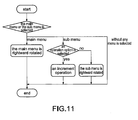
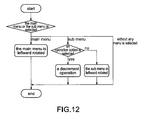
- the above-mentioned operation menu of the universal imitated gesture-based remote control system can be switched to a main menu and a sub menu.
- the main menu is provided to switch appliance options of the controlled electronic appliance and setting options of the remote control system.
- the function adjustment blocks are operated to switch (rotate) the appliance options when the user leftward or rightward waves his/her arms.
- the appliance options of the controlled electronic appliance are the television, the DVD player, the air conditioner, the computer, or so on.
- a corresponding sub menu is activated, namely opened, when one of the appliance options of the controlled electronic appliance is selected.
- the main menu can be closed when the cancel gesture is operated.
- the sub menu is provided to switch operation options of the corresponding appliance options.
- the operation options in the function selection blocks can be selected to operate, further the operation of the operation option can be canceled.
- the operation options (such as a volume control, a channel selection, or a color regulation) of the controlled electronic appliance can be switched (rotated) when any one of the function selection blocks are not selected and one of the imitated touched keys in the function adjustment blocks is clicked.
- the forward-direction function key or the backward-direction function key is sent when one of the function selection blocks is selected and one of the imitated touched keys in the function adjustment blocks is clicked.
- the sub menu can be operated to return to the main menu when the cancel gesture is operated (shown in Fig. 8 ).
- the main menu has to be closed and the position gesture (the user raises both arms leftward and rightward and waves both arms upward and downward) is operated again when another user want to operate the gesture-based remote control system.
- the position gesture the user raises both arms leftward and rightward and waves both arms upward and downward
- only one user can operate the remote control system at the same time, namely, only one user can be captured in visible area by the camera module.
- the gesture-based remote control system is provided to control a controlled electronic appliance by detecting a gesture of the user.
- the controlled electronic appliance can be a television, a DVD player, an air conditioner, a computer, or so on.
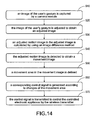
- an image of a user is captured by a camera module (S10).
- the image is adjusted to obtain an adjusted image (S20).
- an adjusted motion image in the adjusted image is calculated by using an image difference method (S30).
- a movement image in the adjusted image is detected (S40).
- a movement area in the movement image is defined (S50).
- a corresponding control signal is generated according to the movement area (S60).
- the control signal is transmitted to control the controlled electronic appliance by the wireless transmitter (S70).
- the detailed description of operating the gesture-based remote control system is given as follows.
- the step S20 of adjusting the image of the user's gesture to obtain an adjusted image includes following sub-steps: (1) to adjust processed size of the image of the user's gesture; (2) to transform colors of the image of the user's gesture (from 24-bit full-color image to 8-bit gray-level image); and (3) to filter speckle noises of the image of the user's gesture. More particularly, speckle noises of the image of the user's gesture can be filtered by an image low pass filter.
- the step S30 the adjusted motion image in the adjusted image is calculated by using an image difference method.
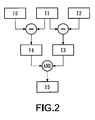
- Fig. 2 which is a schematic view of using an image difference method.
- three continuous gesture images are provided to calculate the adjusted motion image.
- the three continuous gesture images are a current grey-level image I2, a preceding grey-level image I1 before the current grey-level image I2, and a pre-preceding grey-level image I0 before the preceding grey-level image I1, respectively.
- a first gray-level threshold value and a second gray-level threshold are set for converting the grey-level image into a binary image.
- a grey value of each pixel of the first grey-level image is compared to the first gray-level threshold value.
- a pixel is set as a bright pixel when the grey value of the pixel is greater than or equal to the first gray-level threshold value; on the contrary, a pixel is set as a dark pixel when the grey value of the pixel is less than the first gray-level threshold value.
- a first binary image I3 is composed of the bright pixels and the dark pixels.
- the preceding grey-level image I1 is subtracted by the pre-preceding grey-level image I0 to obtain a second grey-level image (not shown).
- a grey value of each pixel of the first grey-level image is compared to the second gray-level threshold value.
- a pixel is set as a bright pixel when the grey value of the pixel is greater than or equal to the second gray-level threshold value; on the contrary, a pixel is set as a dark pixel when the grey value of the pixel is less than the second gray-level threshold value.
- a second binary image 14 is composed of the bright pixels and the dark pixels.
- a logic AND operation is performed between the first binary image I3 and the second binary image 14 to produce a third binary image I5, that the third binary image 15 is the adjusted motion image.
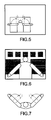
- the third binary image I5 is divided into a plurality of division sections (shown in Fig. 3 ).
- a movement threshold is set to determine whether each of the division sections is a movement section or not.
- the division section is set as a bright section when the amount of motion pixels of the division section is greater than the movement threshold, namely, the division section is regard as the movement section.
- the division section is set as a dark section when the amount of motion pixels of the division section is less than the movement threshold, namely, the division section is not regard as the movement section.
- the movement threshold is set to 50.
- the division section is the movement section when the amount of the motion pixels in one division section is greater than the movement threshold. Hence, a gross motion or a slight motion can be filtered to reduce the possibility of incorrect operations.
- the coordinate boundary of a movement area in the movement image is defined as (LTX, LTY) to (RBX, RBY), as shown in Fig. 4 .
- the top edge of the movement area, LTY is set when the movement section is firstly detected from top to bottom and from left to right in the movement image.
- the bottom edge (RBY), left edge (LTX), and right edge (RBX) of the movement area are set in analogous ways, respectively.
- the movement section is not be detected or area of the movement section is too small when the coordinate boundary of the movement area is (0,0) to (0,0).
- the operation menu (the main menu and the sub menu included) is automatically closed when an elapsed time exceeds a setting time.
- the gesture-based remote control system judges the user's gesture to a location gesture, a click gesture, a slide gesture, and a cancel gesture.
- the click gesture is a time-independent gesture, however, the slide gesture, the location gesture, or the cancel gesture are time-dependent gestures. In order to recognize types of these gestures, the recent coordinate and size of the movement area need to be recorded.
- the click gesture is recognized to provide the click command when the movement area overlaps the click defined block.
- the slide gesture is recognized when the movement area laterally (leftward or rightward) move continuously. More particularly, the movement area continually moves laterally, namely, the movement continually moves leftward or rightward.
- the increment command is provided when the movement area rightward moves in the function adjustment blocks continually; on the contrary, the decrement command is provided when the movement area leftward moves in the function adjustment blocks.
- the cancel gesture is generated when the movement area makes laterally continuously changes (shown in Fig. 7 ).
- the position gesture is generated when the movement area makes lateral-to-lengthwise or lengthwise-to-lateral changes (shown in Fig. 5 ).
- a moving object passes through lens of the camera module to generate abnormal disturbance when the movement area is too large or the movement area makes lengthwise continuously changes. Also, other undefined or unrecognized gesture operations are invalid.
- step S60 The detailed description of the step S60 is given as follows:
- the present invention has the following features:
Landscapes
- Engineering & Computer Science (AREA)
- Multimedia (AREA)
- Signal Processing (AREA)
- General Physics & Mathematics (AREA)
- Human Computer Interaction (AREA)
- Physics & Mathematics (AREA)
- Theoretical Computer Science (AREA)
- Social Psychology (AREA)
- Health & Medical Sciences (AREA)
- General Health & Medical Sciences (AREA)
- Computer Networks & Wireless Communication (AREA)
- General Engineering & Computer Science (AREA)
- Psychiatry (AREA)
- Automation & Control Theory (AREA)
- Computer Vision & Pattern Recognition (AREA)
- Databases & Information Systems (AREA)
- User Interface Of Digital Computer (AREA)
- Details Of Television Systems (AREA)
- Selective Calling Equipment (AREA)
Applications Claiming Priority (1)
| Application Number | Priority Date | Filing Date | Title |
|---|---|---|---|
| TW098110652A TW201035815A (en) | 2009-03-31 | 2009-03-31 | Gesture-based remote control system |
Publications (1)
| Publication Number | Publication Date |
|---|---|
| EP2237131A1 true EP2237131A1 (fr) | 2010-10-06 |
Family
ID=41170937
Family Applications (1)
| Application Number | Title | Priority Date | Filing Date |
|---|---|---|---|
| EP09007019A Withdrawn EP2237131A1 (fr) | 2009-03-31 | 2009-05-26 | Système de télécommande par gestes |
Country Status (2)
| Country | Link |
|---|---|
| EP (1) | EP2237131A1 (fr) |
| TW (1) | TW201035815A (fr) |
Cited By (11)
| Publication number | Priority date | Publication date | Assignee | Title |
|---|---|---|---|---|
| WO2012104772A1 (fr) | 2011-02-04 | 2012-08-09 | Koninklijke Philips Electronics N.V. | Système pouvant être commandé par des gestes et utilisant la proprioception pour créer un cadre de référence absolu |
| CN103034370A (zh) * | 2011-09-29 | 2013-04-10 | 纬创资通股份有限公司 | 用于具有摄影机的电子装置的非接触指令输入方法 |
| CN103375880A (zh) * | 2012-04-27 | 2013-10-30 | 珠海格力电器股份有限公司 | 空调器的遥控装置和方法 |
| WO2015018242A1 (fr) * | 2013-08-07 | 2015-02-12 | 珠海格力电器股份有限公司 | Climatiseur, procédé de commande et dispositif associé |
| EP2636954A3 (fr) * | 2012-03-05 | 2015-03-18 | E.G.O. ELEKTRO-GERÄTEBAU GmbH | Module de caméra pour la détection de gestes de commande et appareil ménager |
| CN105204351A (zh) * | 2015-08-24 | 2015-12-30 | 珠海格力电器股份有限公司 | 空调机组的控制方法及装置 |
| US10067569B2 (en) | 2015-08-14 | 2018-09-04 | Fresenius Medical Care Holdings, Inc. | Touchless interface for a medical treatment system |
| US10288881B2 (en) | 2013-03-14 | 2019-05-14 | Fresenius Medical Care Holdings, Inc. | Wearable interface for remote monitoring and control of a medical device |
| US10623188B2 (en) | 2017-04-26 | 2020-04-14 | Fresenius Medical Care Holdings, Inc. | Securely distributing medical prescriptions |
| US11167071B2 (en) | 2015-12-15 | 2021-11-09 | Fresenius Medical Care Deutschland Gmbh | System and method for detecting an operating state or a course of treatment in a blood treatment |
| US11355235B2 (en) | 2011-07-15 | 2022-06-07 | Fresenius Medical Care Deutschland Gmbh | Method and device for remote monitoring and control of medical fluid management devices |
Families Citing this family (2)
| Publication number | Priority date | Publication date | Assignee | Title |
|---|---|---|---|---|
| TWI452528B (zh) * | 2011-12-06 | 2014-09-11 | Utechzone Co Ltd | 藉由影像辨識之啟動方法 |
| TWI579797B (zh) * | 2012-08-31 | 2017-04-21 | 禾瑞亞科技股份有限公司 | 影像分割的處理器 |
Citations (2)
| Publication number | Priority date | Publication date | Assignee | Title |
|---|---|---|---|---|
| US20020071277A1 (en) | 2000-08-12 | 2002-06-13 | Starner Thad E. | System and method for capturing an image |
| US20090102800A1 (en) * | 2007-10-17 | 2009-04-23 | Smart Technologies Inc. | Interactive input system, controller therefor and method of controlling an appliance |
-
2009
- 2009-03-31 TW TW098110652A patent/TW201035815A/zh unknown
- 2009-05-26 EP EP09007019A patent/EP2237131A1/fr not_active Withdrawn
Patent Citations (2)
| Publication number | Priority date | Publication date | Assignee | Title |
|---|---|---|---|---|
| US20020071277A1 (en) | 2000-08-12 | 2002-06-13 | Starner Thad E. | System and method for capturing an image |
| US20090102800A1 (en) * | 2007-10-17 | 2009-04-23 | Smart Technologies Inc. | Interactive input system, controller therefor and method of controlling an appliance |
Cited By (18)
| Publication number | Priority date | Publication date | Assignee | Title |
|---|---|---|---|---|
| WO2012104772A1 (fr) | 2011-02-04 | 2012-08-09 | Koninklijke Philips Electronics N.V. | Système pouvant être commandé par des gestes et utilisant la proprioception pour créer un cadre de référence absolu |
| US11355235B2 (en) | 2011-07-15 | 2022-06-07 | Fresenius Medical Care Deutschland Gmbh | Method and device for remote monitoring and control of medical fluid management devices |
| US12260958B2 (en) | 2011-07-15 | 2025-03-25 | Fresenius Medical Care Deutschland Gmbh | Method and device for remote monitoring and control of medical fluid management devices |
| US11869660B2 (en) | 2011-07-15 | 2024-01-09 | Fresenius Medical Care Deutschland Gmbh | Method and device for remote monitoring and control of medical fluid management devices |
| CN103034370A (zh) * | 2011-09-29 | 2013-04-10 | 纬创资通股份有限公司 | 用于具有摄影机的电子装置的非接触指令输入方法 |
| CN103034370B (zh) * | 2011-09-29 | 2015-09-23 | 纬创资通股份有限公司 | 用于具有摄影机的电子装置的非接触指令输入方法 |
| EP2636954A3 (fr) * | 2012-03-05 | 2015-03-18 | E.G.O. ELEKTRO-GERÄTEBAU GmbH | Module de caméra pour la détection de gestes de commande et appareil ménager |
| CN103375880A (zh) * | 2012-04-27 | 2013-10-30 | 珠海格力电器股份有限公司 | 空调器的遥控装置和方法 |
| CN103375880B (zh) * | 2012-04-27 | 2016-10-05 | 珠海格力电器股份有限公司 | 空调器的遥控装置和方法 |
| US10288881B2 (en) | 2013-03-14 | 2019-05-14 | Fresenius Medical Care Holdings, Inc. | Wearable interface for remote monitoring and control of a medical device |
| WO2015018242A1 (fr) * | 2013-08-07 | 2015-02-12 | 珠海格力电器股份有限公司 | Climatiseur, procédé de commande et dispositif associé |
| US10067569B2 (en) | 2015-08-14 | 2018-09-04 | Fresenius Medical Care Holdings, Inc. | Touchless interface for a medical treatment system |
| CN105204351B (zh) * | 2015-08-24 | 2018-07-13 | 珠海格力电器股份有限公司 | 空调机组的控制方法及装置 |
| CN105204351A (zh) * | 2015-08-24 | 2015-12-30 | 珠海格力电器股份有限公司 | 空调机组的控制方法及装置 |
| US11167071B2 (en) | 2015-12-15 | 2021-11-09 | Fresenius Medical Care Deutschland Gmbh | System and method for detecting an operating state or a course of treatment in a blood treatment |
| US11424934B2 (en) | 2017-04-26 | 2022-08-23 | Fresenius Medical Care Holdings, Inc. | Securely distributing medical prescriptions |
| US10623188B2 (en) | 2017-04-26 | 2020-04-14 | Fresenius Medical Care Holdings, Inc. | Securely distributing medical prescriptions |
| US12101414B2 (en) | 2017-04-26 | 2024-09-24 | Fresenius Medical Care Holdings, Inc. | Securely distributing medical prescriptions |
Also Published As
| Publication number | Publication date |
|---|---|
| TW201035815A (en) | 2010-10-01 |
Similar Documents
| Publication | Publication Date | Title |
|---|---|---|
| US8112719B2 (en) | Method for controlling gesture-based remote control system | |
| US20100302357A1 (en) | Gesture-based remote control system | |
| EP2237131A1 (fr) | Système de télécommande par gestes | |
| US10007424B2 (en) | Mobile client device, operation method, recording medium, and operation system | |
| EP2711807B1 (fr) | Appareil d'affichage d'images et procédé de contrôle de celui-ci | |
| EP3451335B1 (fr) | Procédé de commande optimale basé sur une commande multimode de voix opérationnelle, et dispositif électronique auquel celui-ci est appliqué | |
| US8693732B2 (en) | Computer vision gesture based control of a device | |
| US8237655B2 (en) | Information processing apparatus, method and program | |
| US10114463B2 (en) | Display apparatus and method for controlling the same according to an eye gaze and a gesture of a user | |
| CN101853561A (zh) | 手势控制的遥控器系统 | |
| US9437106B2 (en) | Techniques for controlling appliances | |
| US20140053115A1 (en) | Computer vision gesture based control of a device | |
| TW201344597A (zh) | 顯示裝置控制方法、控制器及多媒體系統 | |
| US20130271404A1 (en) | Remote controller equipped with touch pad and method for controlling the same | |
| US20120056823A1 (en) | Gesture-Based Addressing of Devices | |
| EP2921937A1 (fr) | Appareil multimédia, procédé de commande d'appareil multimédia, et programme de commande d'appareil multimédia | |
| CN101853562A (zh) | 手势控制的遥控器控制方法 | |
| JP2010079332A (ja) | 遠隔操作装置及び遠隔操作方法 | |
| KR20100131213A (ko) | 제스쳐-기반의 리모컨 시스템 | |
| EP2256590A1 (fr) | Procédé de contrôle de système de commande à distance à base de geste | |
| CN104062909A (zh) | 家电设备及其控制装置和方法 | |
| JP2010283549A (ja) | ジェスチャに基づく遠隔制御システム | |
| CN102778952B (zh) | 手势控制加速的方法及装置 | |
| JP2010282382A (ja) | ジェスチャに基づく遠隔制御システムを制御するための方法 | |
| EP3247122A1 (fr) | Terminal de traitement d'image et procédé de commande d'un dispositif externe l'utilisant |
Legal Events
| Date | Code | Title | Description |
|---|---|---|---|
| PUAI | Public reference made under article 153(3) epc to a published international application that has entered the european phase |
Free format text: ORIGINAL CODE: 0009012 |
|
| 17P | Request for examination filed |
Effective date: 20100311 |
|
| AK | Designated contracting states |
Kind code of ref document: A1 Designated state(s): AT BE BG CH CY CZ DE DK EE ES FI FR GB GR HR HU IE IS IT LI LT LU LV MC MK MT NL NO PL PT RO SE SI SK TR |
|
| AX | Request for extension of the european patent |
Extension state: AL BA RS |
|
| STAA | Information on the status of an ep patent application or granted ep patent |
Free format text: STATUS: THE APPLICATION HAS BEEN WITHDRAWN |
|
| 18W | Application withdrawn |
Effective date: 20110318 |