EP2241150B1 - Procédé et appareil pour effectuer une transition d'état de wtru avec un rach dans des systèmes hspa améliorés - Google Patents
Procédé et appareil pour effectuer une transition d'état de wtru avec un rach dans des systèmes hspa améliorés Download PDFInfo
- Publication number
- EP2241150B1 EP2241150B1 EP08869891.5A EP08869891A EP2241150B1 EP 2241150 B1 EP2241150 B1 EP 2241150B1 EP 08869891 A EP08869891 A EP 08869891A EP 2241150 B1 EP2241150 B1 EP 2241150B1
- Authority
- EP
- European Patent Office
- Prior art keywords
- wtru
- cell
- dch
- state
- transition
- Prior art date
- Legal status (The legal status is an assumption and is not a legal conclusion. Google has not performed a legal analysis and makes no representation as to the accuracy of the status listed.)
- Active
Links
Images







Classifications
-
- H—ELECTRICITY
- H04—ELECTRIC COMMUNICATION TECHNIQUE
- H04W—WIRELESS COMMUNICATION NETWORKS
- H04W52/00—Power management, e.g. Transmission Power Control [TPC] or power classes
- H04W52/04—Transmission power control [TPC]
- H04W52/38—TPC being performed in particular situations
-
- H—ELECTRICITY
- H04—ELECTRIC COMMUNICATION TECHNIQUE
- H04L—TRANSMISSION OF DIGITAL INFORMATION, e.g. TELEGRAPHIC COMMUNICATION
- H04L5/00—Arrangements affording multiple use of the transmission path
- H04L5/003—Arrangements for allocating sub-channels of the transmission path
- H04L5/0053—Allocation of signalling, i.e. of overhead other than pilot signals
-
- H—ELECTRICITY
- H04—ELECTRIC COMMUNICATION TECHNIQUE
- H04W—WIRELESS COMMUNICATION NETWORKS
- H04W52/00—Power management, e.g. Transmission Power Control [TPC] or power classes
- H04W52/04—Transmission power control [TPC]
- H04W52/06—TPC algorithms
- H04W52/14—Separate analysis of uplink or downlink
- H04W52/146—Uplink power control
-
- H—ELECTRICITY
- H04—ELECTRIC COMMUNICATION TECHNIQUE
- H04W—WIRELESS COMMUNICATION NETWORKS
- H04W52/00—Power management, e.g. Transmission Power Control [TPC] or power classes
- H04W52/04—Transmission power control [TPC]
- H04W52/54—Signalisation aspects of the TPC commands, e.g. frame structure
-
- H—ELECTRICITY
- H04—ELECTRIC COMMUNICATION TECHNIQUE
- H04W—WIRELESS COMMUNICATION NETWORKS
- H04W56/00—Synchronisation arrangements
-
- H—ELECTRICITY
- H04—ELECTRIC COMMUNICATION TECHNIQUE
- H04W—WIRELESS COMMUNICATION NETWORKS
- H04W76/00—Connection management
- H04W76/20—Manipulation of established connections
- H04W76/27—Transitions between radio resource control [RRC] states
-
- H—ELECTRICITY
- H04—ELECTRIC COMMUNICATION TECHNIQUE
- H04W—WIRELESS COMMUNICATION NETWORKS
- H04W88/00—Devices specially adapted for wireless communication networks, e.g. terminals, base stations or access point devices
- H04W88/02—Terminal devices
-
- H—ELECTRICITY
- H04—ELECTRIC COMMUNICATION TECHNIQUE
- H04W—WIRELESS COMMUNICATION NETWORKS
- H04W52/00—Power management, e.g. Transmission Power Control [TPC] or power classes
- H04W52/04—Transmission power control [TPC]
- H04W52/38—TPC being performed in particular situations
- H04W52/50—TPC being performed in particular situations at the moment of starting communication in a multiple access environment
Definitions
- This application is related to wireless communications.
- FIG. 1 shows radio resource control (RRC) service states 100 of a Third Generation Partnership Project (3GPP) wireless transmit/receive unit (WTRU) with an enhanced uplink (UL) in a Universal Mobile Telecommunications System (UMTS).
- the WTRU may operate in several states depending on user activity. The following states have been defined for UMTS Terrestrial Radio Access (UTRA) radio resource control (RRC) connected mode: IDLE 110, CELL_DCH 120. CELL_FACH 130. URA_PCH 140. and CELL_PCH 150. Other states that the WTRU may transition to include a general packet radio service (GPRS) packet transfer mode 160, or a global system for mobile communications (GSM) connected mode 170.
- GPRS general packet radio service
- GSM global system for mobile communications
- RRC state transitions are controlled by the network using radio network controller (RNC) parameters. In general the WTRU does not decide to perform state transitions by itself.
- RRC radio network controller
- the UMTS Terrestrial Radio Access Network may direct the WTRU to transition between the states CELL_PCH, URA_PCH, CELL_FACH, and CELL_DCH.
- Communication between the WTRU and the UTRAN known as user plane communication, is only possible while in the CELL_FACH state or the CELL_DCH state.
- a dedicated physical channel is allocated to the WTRU in the UL and the downlink (DL). This corresponds to continuous transmission and continuous reception in the WTRU. which can be demanding on user power requirements.
- the WTRU is known on a cell level according to its current active set.
- An active set is a set of radio links simultaneously involved in a specific communication service between the WTRU and the UTRAN.
- the WTRU may use dedicated transport channels, shared transport channels, or a combination of these transport channels.
- a WTRU is in the CELL_FACH state if it has been assigned to use the common channels (i.e., forward access channel (FACH), random access channel (RACH)).
- FACH forward access channel
- RACH random access channel
- the CELL_FACH state no dedicated physical channel is allocated to the WTRU, which allows for better power consumption, at the expense of a lower UL and DL throughput.
- Downlink communication in the CELL_FACH state may be achieved through a shared transport channel (i.e.. FACH) mapped to a shared common control physical channel (S-CCPCH).
- S-CCPCH shared common control physical channel
- Downlink communication in the CELL_FACH state may also be achieved through a high speed downlink shared channel (HS-DSCH).
- HS-DSCH high speed downlink shared channel
- the WTRU continuously monitors the FACH channel, carried over the S-CCPCH, or the HS-DSCH, in the DL.
- Uplink communication in the CELL_FACH state is achieved through a default common or shared transport channel (i.e., RACH) mapped to the RACH physical channel (PRACH), which the WTRU may use anytime according to the access procedure for that transport channel.
- RACH common or shared transport channel
- PRACH RACH physical channel
- the RACH channel is a contention based channel with a power ramp-up procedure to acquire the channel and to adjust transmit power.
- the position of the WTRU is known by the UTRAN on a cell level according to the cell where the WTRU last performed a cell update.
- a characteristics of the CELL_FACH state includes being well-suited for applications requiring very low uplink throughput.
- Another characteristic of the CELL_FACH state includes being well-suited for signaling traffic, such as transmission of CELL UPDATE messages and URA UPDATE messages.
- Mobility in the CELL_FACH state is handled autonomously by the WTRU. The WTRU independently takes measurements and determines which cell to camp on.
- System information (SI) read from the broadcast channel (BCH), includes setup details for the uplink channel (RACH) and the downlink channels (FACH and HS-DSCH) to be used in the CELL_FACH state.
- the WTRU In the CELL_PCH state, no dedicated physical channel is allocated to the WTRU.
- the WTRU selects a paging channel (PCH), and uses discontinuous reception for monitoring the selected PCH via an associated page indicator channel (PICH). No UL activity is possible.
- PCH paging channel
- PICH page indicator channel
- No UL activity is possible.
- the position of the WTRU is known by the UTRAN on a cell level according to the cell where the WTRU last performed a cell update in the CELL_FACH state.
- URA_PCH In the URA_PCH state, no dedicated channel is allocated to the WTRU.
- the WTRU selects a PCH, and uses discontinuous reception for monitoring the selected PCH via an associated PICH. No UL activity is possible.
- the location of the WTRU is known on a UTRAN registration area (URA) level according to the URA assigned to the WTRU during the last URA update in the CELL_FACH state.
- URA UTRAN registration area
- E-DCH enhanced dedicated channel
- E-RACH Enhanced RACH
- the E-DCH was introduced in Release 6 of the 3GPP specifications to increase uplink throughput.
- the enhanced uplink operates on a request/grant principle. WTRUs send an indication of the requested capacity they require, while the network responds with grants to the requests. The grants are generated by a Node-B scheduler. Also, hybrid automatic repeat requests (HARQ) are used for physical layer transmissions. Further, new UL and DL channels were introduced in Release 6 to support the E-DCH.
- HARQ hybrid automatic repeat requests
- the new UL physical channels are the E-DCH dedicated physical control channel (E-DPCCH), which is used for control information, and the E-DCH dedicated physical data channel (E-DPDCH), which is used for user data.
- the new DL physical channels are the E-DCH absolute grant channel (E-AGCH) and E-DCH relative grant channel (E-RGCH), which are used for transmission of grants, and the E-DCH HARQ acknowledgement indicator channel (E-HICH), which is used for fast Layer 1 acknowledgement (ACK) / negative acknowledgement (NACK).
- the Node-B 220 may issue both absolute grants and relative grants. Grants are signaled in terms of a power ratio. Each WTRU maintains a serving grant, which it may convert to a payload size. For Release 6, WTRU mobility is handled by the network through soft handover and the concept of active sets.
- the WTRU may be signaled to transition between different states.
- the transition between different states is defined, in pre-Release 8, for systems without E-RACH.
- E-DCH in the CELL_FACH state and Idle mode
- there are issues that occur when the WTRU is transitioning between states such as handling of available E-DCH resources, physical channel procedures, and allowing fast and smoother transitions between different states.
- the WTRU transitions from the CELL_DCH state to the CELL_FACH state, all the resources are released because the previous CELL_FACH state did not support E-DCH reception.
- this behavior may not be desirable when the WTRU moves from the CELL_DCH state to the CELL_FACH state where the cell supports E-DCH transmissions.
- FIG 1 shows the RRC states with high speed downlink packet access (HSDPA)/high speed uplink packet access (HSUPA);
- FIG. 2 is an exemplary wireless communication system including a plurality of wireless transmit/receive units (WTRUs), a Node-B, a radio network controller RNC), and a core network;
- WTRUs wireless transmit/receive units
- Node-B Node-B
- RNC radio network controller
- Figure 3 is a functional block diagram of a WTRU and the Node-B of Figure 2 ;
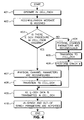
- Figure 4 shows a flow diagram for a transition from the CELL_FACH state to the CELL_DCH state
- Figure 5 shows a flow diagram for a transition from the CELL_FACH state to the CELL_PCH state
- Figure 6 shows a flow diagram for a transition from the CELL_FACH state to the URA_PCH state
- Figure 7 shows a flow diagram for a transition from the CELL_DCH state to the URA_PCH state
- Figure 8 shows a flow diagram for a transition from the CELL_PCH state to the CELL_FACH state
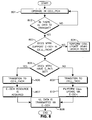
- Figure 9 shows a flow diagram for a transition from the CELL_DCH state to the CELL_FACH state, due to a radio link failure
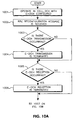
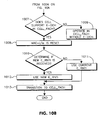
- FIGS. 10A and 10B show a flow diagram for a transition from the CELL_DCH state to the CELL_FACH state, due to a radio resource control (RRC) reconfiguration message;
- RRC radio resource control
- Figure 11 shows a flow diagram for transmitting an RRC message via contention free access
- Figure 12 shows a flow diagram of a synchronization procedure
- Figure 13 shows a flow diagram of a scrambling code assignment.
- wireless transmit/receive unit includes but is not limited to a user equipment (UE), a mobile station, a fixed or mobile subscriber unit, a pager, a cellular telephone, a personal digital assistant (PDA), a computer, or any other type of user device capable of operating in a wireless environment.
- UE user equipment
- PDA personal digital assistant
- Node-B includes but is not limited to a base station, a site controller, an access point (AP), or any other type of interfacing device capable of operating in a wireless environment.
- MAC-i refers to the medium access control (MAC) sub-layer that supports E-DCH transmission in the UL for the CELL_DCH state and the CELL_FACH state, and may include but is not limited to "MAC-e”, “MAC-es” or “MAC-e/es” respectively.
- MAC medium access control
- E-RACH and "E-DCH in the CELL_FACH state” is used to describe a resource that is used by a WTRU for uplink contention-based access in HSPA+ systems.
- E-RACH may also indicate a combination of a scrambling code, a channelization code, a timeslot, an access opportunity and a signature sequence, which are associated to uplink contention-based channels in a future system architecture.
- E-RACH may also indicate the use of E-DCH in the CELL_FACH state, the CELL_PCH state, the URA_PCH state, or Idle mode.
- FIG. 2 shows a wireless communication system 200 including a plurality of WTRUs 210, a Node-B 220, an RNC 230, and a core network 240.
- the WTRUs 210 are in communication with the Node-B 220. which is in communication with the RNC 230, which is in communication with the core network 240.
- the core network 240 which is in communication with the core network 240.
- three WTRUs 210, one Node-B 220, and one RNC 230 are shown in Figure 2 , it should be noted that any combination of wireless and wired devices may be included in the wireless communication system 200.
- FIG 3 is a functional block diagram 300 of a WTRU 210 and the Node-B 220 of the wireless communication system 200 of Figure 2 . As shown in Figure 3 . the WTRU 210 is in communication with the Node-B 220 and the WTRU 210 is configured to perform a method of state transition when the WTRU 210 supports E-DCH in the CELL_FACH state.
- the WTRU 210 includes a processor 215, a receiver 216, a transmitter 217. and an antenna 218.
- the processor 215 is configured to perform a method of state transition when the WTRU 210 supports E-DCH in the CELL_FACH state.
- the receiver 216 and the transmitter 217 are in communication with the processor 215.
- the antenna 218 is in communication with both the receiver 216 and the transmitter 217 to facilitate the transmission and reception of wireless data.
- one WTRU 210 antenna 218 is shown in Figure 3 . it should be noted that more than one antenna may be included in the WTRU 210.
- the Node-B 220 includes a processor 225. a receiver 226, a transmitter 227, and an antenna 228.
- the processor 225 is configured to perform a method of state transition when a cell supports E-DCH in the CELL_FACH state.
- the receiver 226 and the transmitter 227 are in communication with the processor 225.
- the antenna 228 is in communication with both the receiver 226 and the transmitter 227 to facilitate the transmission and reception of wireless data. Although one antenna 228 is shown in Figure 3 , it should be noted that more than one antenna may be included in the Node-B 220.
- FIG 4 shows a flow diagram for a transition from the CELL_FACH state to the CELL_DCH state.
- the WTRU 210 may be configured to operate in the CELL_FACH state (401).
- the WTRU 210 receives a reconfiguration message indicating a reconfiguration of the WTRU 210 to the CELL_DCH state (402).
- the reconfiguration message may also indicate a reconfiguration of physical channel parameters.
- the reconfiguration message may be signaled, for example, via a cell update confirm message or through reception of an RRC reconfiguration message.
- the WTRU 210 determines whether it has an ongoing E-DCH procedure in the CELL_FACH state (403).
- the WTRU 210 has an ongoing E-DCH procedure in the CELL_FACH state, E-DCH resources will already have been assigned to the WTRU 210. If the WTRU 210 has an ongoing E-DCH procedure, reconfigure the physical channel parameters based on the reconfiguration message (407). The WTRU 210 transitions to the CELL_DCH state (408). If an E-DCH procedure is ongoing, the WTRU 210 may be considered in-synch (i.e. in synchronization with the DL physical channels established during the E-DCH procedure in the CELL_FACH state) at the time of the state transition, because the WTRU 210 has already established an RL with the Node-B 220 at the time of the state transition.
- in-synch i.e. in synchronization with the DL physical channels established during the E-DCH procedure in the CELL_FACH state
- the WTRU 210 may immediately transition to the CELL_DCH state without performing synchronization procedure A.
- Synchronization procedure A as defined in 3GPP TS25.214, is a synchronization procedure that may be performed when no prior RL existed before the state transition.
- the WTRU 210 Upon transition to the CELL_DCH state, the WTRU 210 transmits UL data via the E-DCH (409). The WTRU 210 may also transmit UL control information via the E-DCH in the CELL_DCH state.
- the WTRU 210 may wait to resume UL transmissions until an activation time signaled by the network 240, or it may wait and transmit at the UL E-DCH frame boundary.
- the WTRU 210 may monitor radio link synchronization criteria as required in the CELL_DCH state, as defined in 3GPP TS 25.331. More specifically, the WTRU 210 may immediately move to phase 2 of the synchronization procedure A. where the WTRU 210 may report both in-synch and out-of-synch parameters (410). The WTRU 210 may report the parameters to a higher layer radio link monitoring function.
- the synchronization criteria may be monitored immediately after the state transition, or it may be performed after the DL physical channels are established.
- the WTRU 210 receives an enhanced radio network temporary identifier (E-RNTI) assignment from the network 240 and may set an E_RNTI variable based on the assignment, which is used to reduce delays associated with UL data transmission.
- E-RNTI enhanced radio network temporary identifier
- the WTRU 210 may be configured to keep the variable E_RNTI used in the CELL_FACH state.
- the WTRU 210 may reconfigure the variable E_RNTI to the assigned E-RNTI value.
- the WTRU 210 may reset the medium access control (MAC)-i/is entity. The reset may be performed autonomously upon the state transition. Optionally, the reset may be explicitly indicated by an RRC reconfiguration message via a MAC-i/is reset indicator.
- MAC medium access control
- the WTRU 210 may be configured to set an initial UL transmit power level for transmission in the CELL_DCH state.
- the WTRU 210 may set the initial UL transmit power to the same UL transmit power used by the WTRU 210 prior to transitioning to the CELL_DCH state.
- the WTRU 210 may obtain the initial UL transmit power from a power offset, ⁇ dB, which is configured by the network 240.
- the WTRU 210 may apply the power offset to the power used by the WTRU 210 in the CELL_FACH state prior to transitioning to the CELL_DCH state.
- the WTRU 210 may be configured to perform Synchronization Procedure B only.
- Synchronization Procedure B is a synchronization procedure that may be performed when one or more RLs are added to the active set and at least one of the RLs that existed prior to the state transition still exist after the state transition.
- the WTRU 210 may be configured to set an initial UL transmit power for transmission in the CELL_DCH state. The WTRU 210 may set the initial UL transmit power to the same UL transmit power used by the WTRU 210 prior to transitioning to the CELL_DCH state.
- the WTRU 210 may obtain the initial UL transmit power from a power offset, ⁇ dB, which is configured by the network 240.
- the WTRU 210 may apply the power offset to the power used by the WTRU 210 in the CELL_FACH state prior to transitioning to the CELL_DCH state.
- the WTRU 210 may be configured to perform Synchronization Procedure A only, and the initial UL transmit power may be configured to be the same UL transmit power used by the WTRU 210 in the CELL_FACH state prior to transitioning to the CELL_DCH state.
- the WTRU 210 may obtain the initial UL transmit power from a power offset. ⁇ dB, which is configured by the network 240.
- the WTRU 210 may apply the power offset to the power used by the WTRU 210 in the CELL_FACH state prior to transitioning to the CELL_DCH state.
- the WTRU 210 may be configured to use a serving grant, which may be configured to be below a certain value during the synchronization procedure, if a synchronization procedure is executed. Alternatively, no synchronization procedure is executed, but the serving grant of the WTRU 210 is configured to be below a certain value during a pre-determined period of time after physical reconfiguration.
- the maximum value of the serving grant in either case may be signaled by higher layers, for example, signaled by the RRC through system information blocks (SIB)s, or signaled in a reconfiguration message.
- SIB system information blocks
- the Node-B 220 may refrain from issuing a serving grant above the maximum value during the pre-determined period of time, which may be signaled by higher layers.
- a WTRU 210 may be in one of four UL transmission modes in the CELL_FACH state when it receives a state transition message.
- the UL transmission modes may be defined as follows: a) the WTRU 210 is not transmitting E-DCH transmissions; b) the WTRU 210 is transmitting PRACH preambles; c) the WTRU 210 is performing a collision resolution; and d) the WTRU 210 is transmitting E-DCH transmissions, following a collision resolution.
- the WTRU 210 When the WTRU 210 is in the mode of not transmitting E-DCH transmissions and a state transition message is received, the WTRU 210 may be configured to perform the actions as defined in 3GPP release 7 and earlier. If a future activation time is specified, the WTRU 210 may optionally prevent any RACH or E-RACH access attempts until the future activation time.
- the WTRU 210 When the WTRU 210 is in the mode of sending PRACH preambles and a state transition message is received, the WTRU 210 may be configured to terminate its E-DCH transmission attempt. If a future activation time is specified, the WTRU 210 may optionally make a decision whether or not to continue with the E-RACH access based on a combination of any of the following: logical channel, amount of data to transmit, and time until state transition is to take effect. Alternatively, the WTRU 210 may continue with E-DCH transmission if after transmitting the last preamble, prior to receiving the reconfiguration message, it receives a positive acknowledgment on the acquisition indicator channel (AICH) or a resource assignment on the E-DCH AICH (E-AICH).
- AICH acquisition indicator channel
- E-AICH resource assignment on the E-DCH AICH
- the WTRU 210 may wait a period of time (TP-a) prior to deciding to terminate E-RACH access.
- TP-a as defined in 3GPP TS25.214. is a period of time from the transmission of a preamble to the time when the WTRU 210 expects to receive an AICH response. If the WTRU 210 does not receive either a resource assignment or an acknowledgment, the WTRU 210 may not continue E-RACH access.
- the WTRU 210 When a WTRU 210 is in the mode of performing a collision resolution and a state transition message is received, the WTRU 210 may be configured to terminate its E-RACH access attempt. At the time of the state transition, the WTRU 210 may flush the HARQ buffers, or optionally perform a MAC-i/is reset. If a future activation time is specified, the WTRU 210 may optionally make a decision whether or not to continue with the E-DCH transmission based on a combination of any of the following: logical channel, amount of data to transmit, and time until state transition is to take effect.
- the WTRU 210 When the WTRU 210 is in the mode of transmitting an E-DCH transmission, after collision resolution, and a state transition message is received, the WTRU 210 may be configured based on a specified activation time.
- the WTRU 210 may be performing ongoing HARQ processes.
- the WTRU 210 may be configured to complete retransmissions for the ongoing HARQ processes.
- the WTRU 210 may retain the E-DCH resource, including an UL scrambling code, until all retransmissions have been completed.
- the WTRU 210 may refrain from initiating any new HARQ processes on the E-DCH resource and may refrain from transmitting any new data.
- the transition to the CELL_DCH state may be made either after the last protocol data unit (PDU) is transmitted successfully, or after all retransmissions have been attempted.
- the WTRU 210 may then signal the network 240 that it is capable of transitioning to the new E-DCH resource.
- PDU protocol data unit
- the signal may be transmitted by a layer 1 or layer 2 message.
- the network 240 waits to receive this signal or waits until the E-DCH resources are released from the network 240, for example, via explicit signaling, or based on the expiration of a timer.
- the WTRU 210 does not inform the network 240 that it is capable of transitioning to a new state, but rather transitions as soon as it completes the HARQ transmissions.
- the WTRU 210 may be configured to continue using the E-DCH resource until that activation time is reached.
- the WTRU 210 may prevent all new transmissions up until the activation time, or optionally, it may mark a window before the activation time as unavailable for starting new transmissions.
- the size of the window may be specified, configured by the network 240, or determined by the WTRU 210 as a function of the maximum time it would take to transmit a new PDU, including maximum retransmissions. For example, if the maximum time to complete a transmission of a new PDU is greater than the time remaining prior to the expiration of the activation time, the WTRU 210 may not allow the new transmission.
- the WTRU 210 may also base the decision whether or not to start a new transmission on any combination of the following: the logical channel, the amount of data to transmit, and the time until state transition is to take effect.
- the WTRU 210 may be configured to flush all HARQ buffers for PDUs that are not involved in ongoing HARQ processes, but may continue active HARQ process transmissions.
- the active HARQ processes may be transmitted using an interim E-DCH configuration, and may prevent any new transmissions until the active HARQ processes terminate.
- the WTRU 210 may continue transmission of the HARQ processes in the CELL_DCH state seamlessly without having to perform a MAC-i/is reset or flush the HARQ buffers.
- the WTRU 210 may configure the new DL channels as specified in the state transition message.
- the WTRU 210 may only change the scrambling code.
- the WTRU 210 may continue to use all other E-DCH configuration parameters associated to the E-RACH resource.
- the WTRU 210 may transition to the new UL configuration.
- the WTRU 210 may need to signal the network 240 that is has transitioned to the new UL E-DCH resource. The signal may be transmitted by a layer 1 or layer 2 message.
- the WTRU 210 may be configured to perform the state transition at a given activation time.
- the given activation time can be set to "now" or any value determined by the network 240.
- the WTRU 210 may perform one or a combination of the following: flush the HARQ buffers; only flush the HARQ buffers if the HARQ configuration (i.e. the number of HARQ processes, the HARQ memory allocation, or the transmission time interval (TTI) value) changes; reset the MAC-i/is entity or alternatively refrain from resetting the MAC-i/is entity.
- the transmission sequence number (TSN) may be maintained as long as the MAC-i/is entity in the serving RNC (S-RNC) remains unchanged.
- the reset of the MAC-i/is entity may only be performed if there is an explicit MAC-i/is reset indicator in the RRC reconfiguration message.
- FIG. 5 shows a flow diagram for a transition from the CELL_FACH state to the CELL_PCH state.
- the WTRU 210 may be configured to operate in the CELL_FACH state (501).
- the WTRU 210 determines if there is an ongoing E-DCH procedure (502).
- the E-DCH procedure may include one of E-DCH transmission procedures or E-DCH reception procedures, or both procedures.
- E-DCH transmission procedures may include E-DPDCH. DPCCH. or E-DPCCH transmission.
- E-DCH reception may include E-AGCH. E-HICH, or E-RGCH reception. If there is an ongoing E-DCH procedure, terminate any E-DCH transmission procedures and reception procedures which are occurring (503).
- the WTRU 210 releases HARQ resources (504), resets the MAC-i/is entity (505), and transitions to the CELL_PCR state (506). If there is no ongoing E-DCH procedure, the WTRU 210 releases HARQ resources (504), resets the MAC-i/is entity (505), and transitions to the CELL_PCH state (506).
- FIG. 6 shows a flow diagram for a transition from the CELL_FACH state to the URA_PCH state.
- the WTRU 210 may be configured to operate in the CELL_FACH state (601).
- the WTRU 210 determines if there is an ongoing E-DCH procedure (602).
- the E-DCH procedure may include one of E-DCH transmission procedures or E-DCH reception procedures, or both procedures.
- E-DCH transmission procedures may include E-DPDCH, DPCCH, or E-DPCCH transmission.
- E-DCH reception procedures may include E-AGCH, E-HICH. or E-RGCH reception. If there is an ongoing E-DCH procedure, terminate any E-DCH transmission procedures and reception procedures which are occurring (603).
- the WTRU 210 releases HARQ resources (604). Alternatively, the WTRU 210 may be configured to maintain HARQ resources. The WTRU 210 resets the MAC-i/is entity (605). Optionally, the WTRU 210 may be configured to maintain the MAC-i/is entity. The WTRU 210 transitions to the URA_PCH state (606), and clears the E_RNTI variable (607). Alternatively, the WTRU 210 may maintain the variable E_RNTI. Alternatively, the WTRU 210 may receive a primary E-RNTI value and a secondary E-RNTI value from the Node B 220, and may maintain the primary E-RNTI value only, while clearing the secondary E-RNTI value. If there is no ongoing E-DCH procedure, the WTRU 210 releases HARQ resources (604), resets the MAC-i/is entity (605), transitions to the URA_PCH state (606), and clears the E_RNTI variable (607).
- FIG. 7 shows a flow diagram for a transition from the CELL_DCH state to the URA_PCH state.
- the WTRU 210 may be configured to operate in the CELL_DCH state (701).
- the WTRU 210 determines if there is an ongoing E-DCH procedure (702).
- the E-DCH procedure may include one of E-DCH transmission procedures or E-DCH reception procedures, or both procedures.
- E-DCH transmission procedures may include E-DPDCH, DPCCH, or E-DPCCH transmission.
- E-DCH reception procedures may include E-AGCH. E-HICH, or E-RGCH reception. If there is an ongoing E-DCH procedure, terminate any E-DCH transmission procedures and reception procedures which are occurring (703).
- the WTRU 210 releases HARQ resources (704). Alternatively, the WTRU 210 may be configured to maintain HARQ resources. The WTRU 210 resets the MAC-i/is entity (705). Optionally, the WTRU 210 may be configured to maintain the MAC-i/is entity. The WTRU 210 transitions to the URA_PCH state (706) and clears the E_RNTI variable (707). Alternatively, the WTRU 210 may be configured to maintain the variable E_RNTI. Alternatively, the WTRU 210 may be configured to receive a primary E-RNTI value and a secondary E-RNTI value from the Node B 220, and may maintain the primary E-RNTI value only, while clearing the secondary E-RNTI value. If there is no ongoing E-DCH procedure, the WTRU 210 releases HARQ resources (704), resets the MAC-i/is entity (705), transitions to the URA_PCH state (706), and clears the E_RNTI variable (707).
- Allowing the E-RNTI variable. MAC-i/is entity, and HARQ resources to be maintained while in the CELL_PCH state may allow the WTRU 210 to perform a faster transition to the CELL_FACH state in the case of UL transmission of messages other than the common control channel (CCCH).
- CCCH common control channel
- Figure 8 shows a flow diagram for a transition from the CELL_PCH state to the CELL_FACH state.
- the WTRU 210 may be configured to operate in the CELL_PCH state (801).
- the WTRU 210 determines whether there is UL data to transmit (802). If there is no UL data to transmit, the WTRU 210 remains in the CELL_PCH state, unless informed otherwise by the network 240. If there is UL data to transmit, determine if the WTRU 210 supports E-DCH transmission in the CELL_FACH state (803).
- the WTRU 210 determines if the E_RNTI variable is set (805). The WTRU 210 receives an E-RNTI assignment from the network 240 and may set an E_RNTI variable based on the assignment, which is used to reduce delays associated with UL data transmission. If the E_RNTI variable is set, then transition to the CELL_FACH state (806).
- the WTRU 210 acquires a shared E-DCH resource in the CELL_FACH state for UL transmission (807), and transmits UL data via the E-DCH (808). Delays associated with UL transmission are reduced since the WTRU 210 transitions to the CELL_FACH state and may immediately initiate UL data transmission, without having to start a cell update procedure.
- the variable E_RNTI was cleared while the WTRU 210 was in the CELL_FACH state and the WTRU 210 has a cell RNTI (C-RNTI) and an HS-DSCH RNTI (H-RNTI)
- the WTRU 210 may be configured to use the E-RACH to start UL transmission using a common or randomly chosen E-RNTI value. If the WTRU 210 does not have an E_RNTI variable set, then transition to the CELL_FACH state (809) and perform a cell update via the E-DCH (810) before transmitting UL data (808).
- the WTRU 210 may be configured to receive a preamble and acquisition indicators over the AICH from the Node-B 220.
- the WTRU 210 may be configured to set up the HS-DPCCH and to send channel quality indicator (CQI) feedback to the Node-B 220.
- CQI channel quality indicator
- the WTRU 210 may be configured to send the CQI feedback more frequently, for example, at consecutive TTIs, at the beginning of the transmission, or at a configured frequency as specified in system information blocks (SIB), or at a cycle predetermined in the WTRU 210.
- the WTRU 210 may be configured to include a scheduling information (SI) field in its E-DCH transmission and optionally in subsequent E-DCH transmissions.
- SI scheduling information
- the WTRU 210 may be configured to transition from the CELL_DCH state to the CELL_FACH state due to a radio link (RL) failure, where the WTRU 210 may perform a cell update procedure.
- the WTRU 210 may also be configured to transition from the CELL_DCH state to the CELL_FACH state due to an RRC reconfiguration message.
- FIG. 9 shows a flow diagram for a transition from the CELL_DCH state to the CELL_FACH state.
- the WTRU 210 may be configured to operate in the CELL_DCH state (901).
- the WTRU 210 determines if an RL failure occurs (902). If an RL failure does not occur, the WTRU 210 remains in the CELL_DCH state, unless otherwise configured by an RRC message. If an RL failure occurs.
- the WTRU 210 determines if there are any E-DCH transmission procedures or E-DCH reception procedures occurring (903).
- E-DCH transmission may include E-DPDCH, DPCCH, or E-DPCCH transmissions.
- E-DCH reception may include E-AGCH, E-HICH. or E-RGCH reception.
- the WTRU 210 clears the variable E_RNTI (905). If UL dual cell or multi-cell operation is configured, the WTRU 210 may clear the E-RNTI values that are associated with a secondary cell or cells and may also terminate E-DCH transmission and E-DCH reception procedures associated with the secondary cell or cells. Optionally, the WTRU 210 may be configured to clear the variable E_RNTI only if the cell the WTRU 210 is reselecting to after the RL failure is different than the cell serving the E-DCH at the time of the RL failure.
- the WTRU 210 resets the MAC-i/is entity (906), transitions to the CELL_FACH state (908), and transmits a cell update message (909). If there is no E-DCH transmission or E-DCH reception procedures occurring, then clear the variable E_RNTI (907) and transition to the CELL_FACH state (908).
- the WTRU 210 may be configured to perform an E-RACH access procedure in the CELL_FACH state to transmit the cell update message. As part of the E-RACH access procedure, the WTRU 210 may select a new configuration for one or more of the E-DPDCH. E-DPCCH, E-AGCH, E-HICH, or E-RGCH as part of the E-DCH RACH access procedure. Optionally, the WTRU 210 may reconfigure the E-DPDCH and E-DPCCH according to the new configuration that was selected as part of the E-RACH access procedure. Optionally, the WTRU 210 may also reconfigure the E-AGCH. E-HICH, and E-RGCH according to the new configuration that was selected as part of the E-RACH access procedure.
- the WTRU 210 may be configured to transmit data blocks in intervals called transmission time intervals (TTIs).
- TTIs transmission time intervals
- the WTRU 210 may be configured to use a 10 ms TTI if the WTRU 210 was transmitting over the E-DCH using a 2 ms TTI before the RL failure.
- the WTRU 210 may transmit over the RACH as specified in 3GPP pre-Release 6.
- FIGS 10A and 10B show a flow diagram for a transition from the CELL_DCH state to the CELL_FACH state.
- the WTRU 210 may be configured to operate in the CELL_DCH state configured with an E-DCH resource (1001).
- the WTRU 210 receives an RRC reconfiguration message to change to the CELL_FACH state (1002) and determines if there are E-DCH transmission procedures occurring (1003).
- E-DCH transmission may include E-DPDCH or E-DPCCH transmission. If there are E-DCH transmission procedures occurring, the transmission procedures are terminated (1004).
- the WTRU 210 determines if there are E-DCH reception procedures occurring (1005).
- E-DCH reception may include E-AGCH.
- the WTRU 210 determines if the cell supports E-DCH in the CELL_FACH state (1007). If the cell does not support E-DCH in the CELL_FACH state, then operate in the CELL_FACH state without E-DCH (1009). If the cell supports E-DCH in the CELL_FACH state, the WTRU 210 resets the MAC-i/is entity (1008). The reset may be performed each time the state transition occurs. Alternatively, the reset may be performed via explicit signaling from the RRC message via a MAC-i/is reset indicator.
- the WTRU 210 determines if a new E-RNTI assignment is received (1010). If a new E-RNTI assignment is received from the Node B 220, then operate in the CELL_FACH state with the new E-RNTI value assigned (1012). If a new E-RNTI assignment is not received, then use the current E-RNTI value. The WTRU 210 transitions to the CELL_FACH state (1013). Optionally, the WTRU 210 may be configured to flush the HARQ buffers.
- the WTRU 210 may be provided contention free access over the E-RACH. to transmit an UL RRC reconfiguration complete message to the network 240, to confirm that a state transition was successful.
- FIG 11 shows a method for contention free access for transmitting an RRC message.
- the WTRU 210 may be configured to receive an RRC reconfiguration message to change to a new state such as the CELL_FACH state, the CELL_PCH state, or the URA_PCH state, wherein the message contains a contention free E-DCH resource (1101).
- the WTRU 210 transitions to the new state (1102) and transmits an RRC reconfiguration complete message to the network 240 using the contention free E-DCH resource (1103).
- the transmitted message may also be an RRC reconfiguration failure message.
- the WTRU 210 may be configured to receive UL physical channel resources from a pool of broadcasted resources to be used for the contention free access transmission.
- the WTRU 210 may use a preamble signature sequence provided in the RRC reconfiguration message to initiate a preamble power ramping cycle to establish a pre-determined transmission power.
- the WTRU 210 may wait to receive an AICH message, then immediately transmit the RRC reconfiguration complete message, without having to perform a contention resolution phase.
- the WTRU 210 may be configured to transmit the RRC reconfiguration complete message as soon as the pre-determined power is established without waiting for the AICH message.
- the power level used by the WTRU 210 may be the same power that the WTRU 210 was using prior to transitioning to the CELL_FACH state.
- the WTRU 210 may be configured to receive the initial power level, or a power offset, from the network 240 to start using upon transmission, relative to the power of the last transmission.
- the initial power level may be a pre-configured power level.
- the WTRU 210 may be configured to receive a signal from the network 240, containing an explicit E-DCH resource, either in the form of an index to a set of broadcasted resources or a dedicated resource allocation with explicit parameters as part of an existing or new RRC message. The WTRU 210 may then be configured to initiate a synchronization procedure.
- FIG 12 shows a flow diagram of a synchronization procedure.
- the WTRU 210 may be configured to transmit on the DPCCH at a predetermined initial power level (1201).
- the power level may be received from the network 240 as an absolute value or as an offset with respect to the power of the previous transmission.
- the WTRU 210 monitors the fractional dedicated physical channel (F-DPCH) for transmit power control (TPC) commands (1202).
- the WTRU 210 determines whether TPC commands indicating that the power level should be increased (i.e.. "up" commands) are received (1203). If up TPC commands are received, the WTRU 210 increases power on the DPCCH by a pre-determined amount (1204).
- the WTRU 210 continues to monitor the F-DPCH for TPC commands. The WTRU 210 determines whether TPC commands indicating proper power level (i.e., "down" commands) are received on the F-DPCH (1205). If down TPC commands are received, the WTRU 210 transmits a message (1206). If down TPC commands are not received, the WTRU 210 increases the power on the DPCCH by a fixed amount (1204) and determines whether a down TPC command is received (1205).
- TPC commands indicating proper power level i.e., "down” commands
- a longer synchronization period may be used to help stabilize the power control loop.
- the duration of the synchronization period may be pre-configured, signaled by the network 240 using RRC dedicated signaling, or broadcasted.
- Synchronization Procedure A may also be used.
- the E-DCH in the CELL_FACH state or Idle mode may also be used where the network 240 is aware that the WTRU 210 has to respond with an UL transmission in the CELL_FACH state.
- FIG. 13 shows a flow diagram for a scrambling code assignment.
- the WTRU 210 may be configured to transmit an RRC message over the CCCH (1301).
- the WTRU 210 receives a scrambling code assignment from the network 240 (1302).
- the scrambling code assignment may be received, for example, via an RRC confirmation message or an RRC setup message.
- the WTRU 210 configures the physical layer with the scrambling code for UL transmissions (1303) and determines whether a message is received from the network 240 indicating a scrambling code reconfiguration (1304). If a message is received indicating a new scrambling code configuration, the WTRU 210 configures the physical layer with the new scrambling code for UL transmissions (1305). If no scrambling code reconfiguration message is received, the WTRU 210 continues with the currently configured scrambling code until a scrambling code reconfiguration message is received.
- ROM read only memory
- RAM random access memory
- register cache memory
- semiconductor memory devices magnetic media such as internal hard disks and removable disks, magneto-optical media, and optical media such as CD-ROM disks, and digital versatile disks (DVDs).
- Suitable processors include, by way of example, a general purpose processor, a special purpose processor, a conventional processor, a digital signal processor (DSP), a plurality of microprocessors, one or more microprocessors in association with a DSP core, a controller, a microcontroller, Application Specific Integrated Circuits (ASICs), Field Programmable Gate Arrays (FPGAs) circuits, any other type of integrated circuit (IC), and/or a state machine.
- DSP digital signal processor
- ASICs Application Specific Integrated Circuits
- FPGAs Field Programmable Gate Arrays
- a processor in association with software may be used to implement a radio frequency transceiver for use in a wireless transmit receive unit (WTRU), user equipment (UE), terminal, base station, radio network controller (RNC), or any host computer.
- the WTRU may be used in conjunction with modules, implemented in hardware and/or software, such as a camera, a video camera module, a videophone, a speakerphone, a vibration device, a speaker, a microphone, a television transceiver, a hands free headset, a keyboard, a Bluetooth® module, frequency modulated (FM) radio unit, a liquid crystal display (LCD) unit, an organic light-emitting diode (OLED) display unit, a digital music player, a media player, a video game player module, an Internet browser, and/or any wireless local area network (WLAN) or Ultra Wide Band (UWB) module.
- WLAN wireless local area network
- UWB Ultra Wide Band
Landscapes
- Engineering & Computer Science (AREA)
- Signal Processing (AREA)
- Computer Networks & Wireless Communication (AREA)
- Mobile Radio Communication Systems (AREA)
Claims (13)
- Procédé destiné à être utilisé dans une unité émettrice-réceptrice sans fil, WTRU, (210), le procédé comprenant :la transmission par la WTRU (210) d'un premier signal de données de liaison montante par l'intermédiaire d'un canal dédié amélioré, E-DCH, pendant que la WTRU (210) est en fonctionnement dans un état CELL_FACH ; etla réception par la WTRU (210) d'un signal de commande de ressources radio, RRC ;ledit procédé étant caractérisé par :le signal RRC comprenant un message de reconfiguration ;la reconfiguration par la WTRU (210) de paramètres de canal physique sur la base du message de reconfiguration ; etla transition par la WTRU (210) dans un état CELL_DCH en réponse au signal RRC,dans lequel la WTRU (210) effectue une transition dans l'état CELL_DCH sans effectuer ensuite de procédure de synchronisation.
- Procédé selon la revendication 1, comprenant en outre la transmission par la WTRU (210) d'un deuxième signal de données de liaison montante en réponse à la transition dans l'état CELL_DCH.
- Procédé selon la revendication 1, comprenant en outre :la transmission par la WTRU (210) d'informations de commande de liaison montante dans l'état CELL_DCH par l'intermédiaire de l'E-DCH.
- Procédé selon la revendication 1, comprenant en outre le rapport par la WTRU (210) de paramètres en synchronisation et hors synchronisation en réponse à la reconfiguration des paramètres de canal physique.
- Procédé selon la revendication 1, comprenant en outre :le réglage par la WTRU (210) d'un niveau de puissance de transmission de liaison montante dans l'état CELL_DCH, dans lequel le niveau de puissance est basé sur une puissance de transmission utilisée avant la transition dans l'état CELL_DCH.
- Procédé selon la revendication 1, comprenant en outre :la réception par la WTRU (210) d'une affectation de code de brouillage de liaison montante ; etla transmission par la WTRU (210) d'un deuxième signal de données de liaison montante en utilisant le code de brouillage de liaison montante reçu.
- Procédé selon la revendication 1, comprenant en outre :la surveillance par la WTRU (210) d'un canal physique dédié fractionnel, F-DPCH, pour une commande de régulation de puissance de transmission, TPC.
- Procédé selon la revendication 1, dans lequel la procédure de synchronisation est une procédure de synchronisation A.
- Unité émettrice-réceptrice sans fil, WTRU, (210), le procédé comprenant :un émetteur configuré pour effectuer la transmission d'un premier signal de données de liaison montante par l'intermédiaire d'un canal dédié amélioré, E-DCH, pendant que la WTRU (210) est en fonctionnement dans un état CELL_FACH ; etun récepteur configuré pour effectuer la réception d'un signal de commande de ressources radio, RRC ;ladite WTRU (210) étant caractérisée par :le signal RRC comprenant un message de reconfiguration ; etun processeur configuré pour effectuer la reconfiguration de paramètres de canal physique en fonction du message de reconfiguration, et la transition de la WTRU (210) dans un état CELL_DCH en réponse au signal RRC, dans lequel la WTRU (210) effectue une transition dans l'état CELL_DCH sans effectuer ensuite de procédure de synchronisation.
- WTRU (210) selon la revendication 9, le processeur étant en outre configuré pour effectuer le rapport de paramètres en synchronisation et hors synchronisation en réponse à la reconfiguration des paramètres de canal physique.
- WTRU (210) selon la revendication 9, le processeur étant en outre configuré pour effectuer le réglage d'un niveau de puissance de transmission de liaison montante dans l'état CELL_DCH, dans lequel le niveau de puissance est basé sur une puissance de transmission utilisée avant la transition dans l'état CELL_DCH.
- WTRU (210) selon la revendication 9, dans laquelle :le récepteur est en outre configuré pour effectuer la réception d'une affectation de code de brouillage de liaison montante ; etl'émetteur est en outre configuré pour effectuer la transmission d'un deuxième signal de données de liaison montante en utilisant le code de brouillage de liaison montante reçu.
- WTRU (210) selon la revendication 9, dans laquelle la procédure de synchronisation est une procédure de synchronisation A.
Priority Applications (3)
| Application Number | Priority Date | Filing Date | Title |
|---|---|---|---|
| EP13154277.1A EP2592887B1 (fr) | 2008-01-04 | 2008-12-30 | Effectuer des transitions d'état de WTRU dans un réseau HSPA |
| EP13154282.1A EP2592888B1 (fr) | 2008-01-04 | 2008-12-30 | Envoi des données de liaison montante sans synchronisation |
| PL08869891T PL2241150T3 (pl) | 2008-01-04 | 2008-12-30 | Sposób i urządzenie do wykonywania zmiany stanu jednostki wtru z rozszerzonym kanałem rach w systemach hspa |
Applications Claiming Priority (3)
| Application Number | Priority Date | Filing Date | Title |
|---|---|---|---|
| US1915008P | 2008-01-04 | 2008-01-04 | |
| US3844808P | 2008-03-21 | 2008-03-21 | |
| PCT/US2008/088552 WO2009088868A2 (fr) | 2008-01-04 | 2008-12-30 | Procédé et appareil pour effectuer une transition d'état de wtru avec un rach dans des systèmes hspa améliorés |
Related Child Applications (4)
| Application Number | Title | Priority Date | Filing Date |
|---|---|---|---|
| EP13154282.1A Division EP2592888B1 (fr) | 2008-01-04 | 2008-12-30 | Envoi des données de liaison montante sans synchronisation |
| EP13154277.1A Division EP2592887B1 (fr) | 2008-01-04 | 2008-12-30 | Effectuer des transitions d'état de WTRU dans un réseau HSPA |
| EP13154277.1 Division-Into | 2013-02-06 | ||
| EP13154282.1 Division-Into | 2013-02-06 |
Publications (2)
| Publication Number | Publication Date |
|---|---|
| EP2241150A2 EP2241150A2 (fr) | 2010-10-20 |
| EP2241150B1 true EP2241150B1 (fr) | 2013-08-07 |
Family
ID=40530270
Family Applications (3)
| Application Number | Title | Priority Date | Filing Date |
|---|---|---|---|
| EP08869891.5A Active EP2241150B1 (fr) | 2008-01-04 | 2008-12-30 | Procédé et appareil pour effectuer une transition d'état de wtru avec un rach dans des systèmes hspa améliorés |
| EP13154277.1A Active EP2592887B1 (fr) | 2008-01-04 | 2008-12-30 | Effectuer des transitions d'état de WTRU dans un réseau HSPA |
| EP13154282.1A Not-in-force EP2592888B1 (fr) | 2008-01-04 | 2008-12-30 | Envoi des données de liaison montante sans synchronisation |
Family Applications After (2)
| Application Number | Title | Priority Date | Filing Date |
|---|---|---|---|
| EP13154277.1A Active EP2592887B1 (fr) | 2008-01-04 | 2008-12-30 | Effectuer des transitions d'état de WTRU dans un réseau HSPA |
| EP13154282.1A Not-in-force EP2592888B1 (fr) | 2008-01-04 | 2008-12-30 | Envoi des données de liaison montante sans synchronisation |
Country Status (11)
| Country | Link |
|---|---|
| US (5) | US8145253B2 (fr) |
| EP (3) | EP2241150B1 (fr) |
| JP (3) | JP5462184B2 (fr) |
| KR (5) | KR101152045B1 (fr) |
| CN (3) | CN101911804B (fr) |
| AR (1) | AR070094A1 (fr) |
| DK (1) | DK2241150T3 (fr) |
| ES (1) | ES2433208T3 (fr) |
| PL (1) | PL2241150T3 (fr) |
| TW (4) | TWI506974B (fr) |
| WO (1) | WO2009088868A2 (fr) |
Families Citing this family (62)
| Publication number | Priority date | Publication date | Assignee | Title |
|---|---|---|---|---|
| JP4538357B2 (ja) * | 2005-03-29 | 2010-09-08 | 株式会社エヌ・ティ・ティ・ドコモ | 伝送速度制御方法、移動局、無線基地局及び無線回線制御局 |
| KR101265643B1 (ko) | 2006-08-22 | 2013-05-22 | 엘지전자 주식회사 | 무선 통신 시스템에서의 핸드오버 수행 및 그 제어 방법 |
| EP2070368B1 (fr) | 2006-10-02 | 2016-07-06 | LG Electronics Inc. | Méthode de transmission et réception d'un message de radiomessagerie dans un système de communication sans fil |
| US8014359B2 (en) * | 2006-10-27 | 2011-09-06 | Interdigital Technology Corporation | Method and apparatus for assigning radio resources and controlling transmission parameters on a random access channel |
| KR101443618B1 (ko) | 2006-10-30 | 2014-09-23 | 엘지전자 주식회사 | 랜덤 접속 채널 메시지 응답 방법, 랜덤 접속 채널 메시지전송 방법 및 이를 지원하는 이동통신 단말 |
| KR100938754B1 (ko) | 2006-10-30 | 2010-01-26 | 엘지전자 주식회사 | 비연속 수신을 이용한 데이터 수신 및 전송 방법 |
| EP2084928B1 (fr) | 2006-10-30 | 2017-08-23 | LG Electronics Inc. | Procédé permettant d'effectuer un accès direct dans un système de communication sans fil |
| KR101458641B1 (ko) * | 2007-04-30 | 2014-11-05 | 엘지전자 주식회사 | Mbms를 지원하는 무선통신 시스템에서 데이터 전송방법 |
| KR101461236B1 (ko) | 2007-04-30 | 2014-11-12 | 엘지전자 주식회사 | 무선 호를 연결 과정에서 엔티티의 인증을 수행하는 방법 |
| KR101469281B1 (ko) * | 2007-04-30 | 2014-12-04 | 엘지전자 주식회사 | 무선단말의 상태 전환 방식 |
| US8218524B2 (en) | 2007-04-30 | 2012-07-10 | Lg Electronics Inc. | Method for transmitting or receiving data unit using header field existence indicator |
| KR101455999B1 (ko) | 2007-04-30 | 2014-11-03 | 엘지전자 주식회사 | 무선 통신 시스템에서의 데이터 블록 생성 방법 |
| KR101464748B1 (ko) * | 2007-04-30 | 2014-11-24 | 엘지전자 주식회사 | 무선단말의 측정보고 기동방식 |
| KR20080097338A (ko) * | 2007-05-01 | 2008-11-05 | 엘지전자 주식회사 | 불연속 데이터 송수신 방법 |
| KR100917205B1 (ko) * | 2007-05-02 | 2009-09-15 | 엘지전자 주식회사 | 무선 통신 시스템에서의 데이터 블록 구성 방법 |
| US20080273503A1 (en) * | 2007-05-02 | 2008-11-06 | Lg Electronics Inc. | Method and terminal for performing handover in mobile communications system of point-to-multipoint service |
| ES2652668T3 (es) | 2007-06-18 | 2018-02-05 | Lg Electronics Inc. | Procedimiento y equipamiento de usuario para realizar una sincronización de enlace ascendente en un sistema de comunicación inalámbrica |
| EP2168263B1 (fr) | 2007-06-18 | 2018-04-18 | Lg Electronics Inc. | Procédé de transmission d'informations de radiomessagerie pour l'établissement d'un appel efficace |
| KR101387537B1 (ko) * | 2007-09-20 | 2014-04-21 | 엘지전자 주식회사 | 성공적으로 수신했으나 헤더 압축 복원에 실패한 패킷의 처리 방법 |
| EP2241150B1 (fr) | 2008-01-04 | 2013-08-07 | InterDigital Patent Holdings, Inc. | Procédé et appareil pour effectuer une transition d'état de wtru avec un rach dans des systèmes hspa améliorés |
| PL2241144T3 (pl) * | 2008-02-04 | 2012-04-30 | Optis Wireless Technology Llc | Sposób i układ w bezprzewodowym systemie komunikacji do sterowania regulacją czasu wprowadzania sprzętu użytkownika do procedury transmisji połączenia wstępującego |
| US8078184B2 (en) * | 2008-05-08 | 2011-12-13 | Research In Motion Limited | Method and apparatus having improved handling of state transitions |
| CN101790200B (zh) * | 2009-01-23 | 2013-04-24 | 华为技术有限公司 | 上行载频管理方法、设备和系统 |
| US8797949B2 (en) * | 2009-05-22 | 2014-08-05 | Qualcomm Incorporated | Announcing a communication session within a wireless communications system |
| CN102026394B (zh) * | 2009-12-25 | 2014-04-09 | 电信科学技术研究院 | 调度信息上报的触发方法、系统及装置 |
| US8780744B2 (en) | 2010-01-25 | 2014-07-15 | Qualcomm Incorporated | Selective allocation of dedicated channel (DCH) resources within a wireless communications system |
| US8848553B2 (en) * | 2010-02-05 | 2014-09-30 | Qualcomm Incorporated | Assisted state transitions of a user equipment within a wireless communications system |
| US20110194433A1 (en) * | 2010-02-05 | 2011-08-11 | Qualcomm Incorporated | Managing dedicated channel resource allocation to user equipment based on radio bearer traffic within a wireless communications system |
| US8873479B2 (en) * | 2010-02-05 | 2014-10-28 | Qualcomm Incorporated | Assisted state transition of a user equipment (UE) for delay sensitive applications within a wireless communications system |
| US20120082107A1 (en) * | 2010-10-05 | 2012-04-05 | Ou Meng-Hui | Method and apparatus for implicit scell deactivation in a wireless communication system |
| CN103609181B (zh) * | 2011-04-01 | 2017-06-09 | 安华高科技通用Ip(新加坡)公司 | E‑dch中的tti适配 |
| US8520622B2 (en) | 2011-07-06 | 2013-08-27 | Telefonaktiebolaget L M Ericsson (Publ) | Controlling uplink and downlink transmission power during asynchronous switching of control states by user equipment |
| US8954084B2 (en) | 2011-08-01 | 2015-02-10 | Alcatel Lucent | Method and system for reducing MAC-is reset ambiguity for common E-DCH transmissions |
| EP2557870B1 (fr) * | 2011-08-10 | 2020-07-08 | Alcatel Lucent | Configuration de transmissions |
| US8437302B2 (en) * | 2011-08-12 | 2013-05-07 | Renesas Mobile Corporation | Method and apparatus for transmission protocol uplink channel selection |
| GB2493724B (en) * | 2011-08-15 | 2015-01-07 | Broadcom Corp | Wireless communications cell reselection |
| US8954074B2 (en) | 2011-08-15 | 2015-02-10 | Broadcom Corporation | Method and apparatus for triggering cell reselection based on a resource suspension |
| WO2013048307A2 (fr) * | 2011-09-30 | 2013-04-04 | Telefonaktiebolaget L M Ericsson (Publ) | Commande d'une ressource e-dch |
| CN103167579B (zh) * | 2011-12-09 | 2015-12-16 | 华为技术有限公司 | 一种传输时间间隔的指示方法和装置 |
| CN103209489B (zh) * | 2012-01-17 | 2017-04-12 | 华为技术有限公司 | 数据的传输方法、基站和用户设备 |
| JP6002245B2 (ja) * | 2012-01-26 | 2016-10-05 | ノキア ソリューションズ アンド ネットワークス オサケユキチュア | 伝送時間間隔長さを決定する方法及び装置 |
| CN103297170B (zh) * | 2012-02-22 | 2016-12-14 | 中兴通讯股份有限公司 | 终端移动性增强处理的方法及rnc |
| CN103391616B (zh) * | 2012-05-08 | 2015-12-02 | 华为技术有限公司 | 公共增强专用信道资源重配方法和系统以及基站、rnc |
| CN103636177B (zh) | 2012-06-28 | 2015-02-25 | 华为技术有限公司 | 调整资源配置的方法、无线网络控制器和基站 |
| US9320077B2 (en) * | 2012-07-17 | 2016-04-19 | Innovative Sonic Corporation | Method and apparatus for reducing signaling overhead in a wireless communication network |
| JP2015530020A (ja) * | 2012-08-03 | 2015-10-08 | テレフオンアクチーボラゲット エル エム エリクソン(パブル) | 拡張アップリンクのためのユーザ機器ノードの制御及び拡張アップリンクのために構成されたユーザ機器ノード |
| CN103843440A (zh) * | 2012-09-28 | 2014-06-04 | 华为技术有限公司 | 资源的配置方法及装置 |
| US9113467B2 (en) * | 2013-02-28 | 2015-08-18 | Qualcomm Incorporated | Adjusting initial transmit power for high speed data transmission |
| US9237564B2 (en) | 2013-04-17 | 2016-01-12 | Qualcomm Incorporated | Enhanced reconfiguration procedure at a mobile terminal to reduce signaling and power consumption overhead |
| US9479294B2 (en) * | 2013-07-15 | 2016-10-25 | Alcatel Lucent | Wireless transmission control for improved aggregated cell throughput capacity and signaling reliability |
| KR101809150B1 (ko) * | 2013-08-09 | 2017-12-14 | 도쿄엘렉트론가부시키가이샤 | 플라즈마 처리 장치 및 플라즈마 처리 방법 |
| US10334588B2 (en) * | 2013-12-11 | 2019-06-25 | Qualcomm Incorporated | Carrier sense adaptive transmission (CSAT) coordination in unlicensed spectrum |
| CN105075351A (zh) * | 2013-12-24 | 2015-11-18 | 华为技术有限公司 | 一种上行调度的方法、用户设备及基站 |
| US9699048B2 (en) | 2014-02-13 | 2017-07-04 | Samsung Electronics Co., Ltd. | Computing system with channel quality mechanism and method of operation thereof |
| WO2015190986A1 (fr) * | 2014-06-10 | 2015-12-17 | Telefonaktiebolaget L M Ericsson (Publ) | Procédés et agencements pour la commutation d'états |
| US10433364B2 (en) | 2015-02-10 | 2019-10-01 | Telefonaktiebolaget Lm Ericsson (Publ) | Systems and methods for facilitating the transition of a wireless communication device (WCD) from a CELL_FACH state to a CELL_DCH state |
| US9918284B2 (en) * | 2015-09-23 | 2018-03-13 | Futurewei Technologies, Inc. | Methods and systems for downlink transmit power control command transmission |
| CN108076482B (zh) * | 2016-11-17 | 2021-04-23 | 展讯通信(上海)有限公司 | 上行增强数据传输方法、装置及用户设备 |
| CN106912098B (zh) * | 2017-01-13 | 2019-08-09 | 广州慧睿思通信息科技有限公司 | Wcdma测向系统中ue的rrc状态为fach状态时的上行同步方法 |
| US10568007B2 (en) | 2017-03-22 | 2020-02-18 | Comcast Cable Communications, Llc | Handover random access |
| US11057935B2 (en) | 2017-03-22 | 2021-07-06 | Comcast Cable Communications, Llc | Random access process in new radio |
| US11647543B2 (en) * | 2017-03-23 | 2023-05-09 | Comcast Cable Communications, Llc | Power control for random access |
Family Cites Families (13)
| Publication number | Priority date | Publication date | Assignee | Title |
|---|---|---|---|---|
| EP1041850A1 (fr) * | 1999-04-01 | 2000-10-04 | Nortel Matra Cellular | Méthode et appareil pour changer les configurations des liaisons radios dans un système de télécommunications mobiles supportant la commutation douce |
| US7068636B2 (en) * | 2002-06-21 | 2006-06-27 | Asustek Computer Inc. | Method for determining RLC entity re-establishment during SRNS relocation |
| US7986742B2 (en) * | 2002-10-25 | 2011-07-26 | Qualcomm Incorporated | Pilots for MIMO communication system |
| US7089029B2 (en) * | 2003-06-09 | 2006-08-08 | Lucent Technologies Inc. | Adjusting the transmission power of a forward access channel (FACH), and a corresponding network for mobile telecommunications |
| US7406314B2 (en) * | 2003-07-11 | 2008-07-29 | Interdigital Technology Corporation | Wireless transmit receive unit having a transition state for transitioning from monitoring to duplex connected states and method |
| US7184792B2 (en) * | 2004-02-10 | 2007-02-27 | Qualcomm Incorporated | Delayed data transmission in a wireless communication system after physical layer reconfiguration |
| SE0400341D0 (sv) * | 2004-02-13 | 2004-02-13 | Ericsson Telefon Ab L M | Direct transition to cell DCH |
| DE102004027811B4 (de) * | 2004-06-08 | 2012-08-30 | Infineon Technologies Ag | Kommunikationsanordnung, Teilnehmergerät, Steuervorrichtung, Verfahren zum Steuern eines Kommunikationssystems, Verfahren zum Steuern eines Teilnehmergeräts und Verfahren zum Steuern einer Steuervorrichtung |
| EP2267929B1 (fr) * | 2005-08-16 | 2012-10-24 | Panasonic Corporation | Procédé et dispositifs d'activation des processus de demande de répétition automatique hybride (HARQ) |
| PL1980044T3 (pl) * | 2006-02-03 | 2012-09-28 | Nokia Technologies Oy | Sposób, urządzenie oraz program komputerowy do obsługi awarii hybrydowego automatycznego powtarzania żądania |
| TWI528746B (zh) * | 2006-03-24 | 2016-04-01 | 內數位科技公司 | 無線網路中查驗非連續接收(drx)及測量報告 |
| US8867455B2 (en) * | 2007-10-01 | 2014-10-21 | Qualcomm Incorporated | Enhanced uplink for inactive state in a wireless communication system |
| EP2241150B1 (fr) | 2008-01-04 | 2013-08-07 | InterDigital Patent Holdings, Inc. | Procédé et appareil pour effectuer une transition d'état de wtru avec un rach dans des systèmes hspa améliorés |
-
2008
- 2008-12-30 EP EP08869891.5A patent/EP2241150B1/fr active Active
- 2008-12-30 KR KR1020107017321A patent/KR101152045B1/ko active Active
- 2008-12-30 CN CN2008801239239A patent/CN101911804B/zh active Active
- 2008-12-30 KR KR1020107020934A patent/KR101299287B1/ko not_active Expired - Fee Related
- 2008-12-30 US US12/346,339 patent/US8145253B2/en active Active
- 2008-12-30 KR KR1020147015768A patent/KR20140084341A/ko not_active Abandoned
- 2008-12-30 CN CN201310161822.3A patent/CN103369678B/zh not_active Expired - Fee Related
- 2008-12-30 CN CN201310168075.6A patent/CN103369679B/zh not_active Expired - Fee Related
- 2008-12-30 KR KR1020127013331A patent/KR101551527B1/ko not_active Expired - Fee Related
- 2008-12-30 EP EP13154277.1A patent/EP2592887B1/fr active Active
- 2008-12-30 DK DK08869891.5T patent/DK2241150T3/da active
- 2008-12-30 PL PL08869891T patent/PL2241150T3/pl unknown
- 2008-12-30 WO PCT/US2008/088552 patent/WO2009088868A2/fr not_active Ceased
- 2008-12-30 JP JP2010541525A patent/JP5462184B2/ja not_active Expired - Fee Related
- 2008-12-30 ES ES08869891T patent/ES2433208T3/es active Active
- 2008-12-30 KR KR1020137035063A patent/KR20140012200A/ko not_active Abandoned
- 2008-12-30 EP EP13154282.1A patent/EP2592888B1/fr not_active Not-in-force
- 2008-12-31 TW TW097151861A patent/TWI506974B/zh not_active IP Right Cessation
- 2008-12-31 TW TW103104801A patent/TWI513215B/zh active
- 2008-12-31 TW TW103117542A patent/TW201436497A/zh unknown
- 2008-12-31 TW TW100149668A patent/TWI445339B/zh not_active IP Right Cessation
-
2009
- 2009-01-05 AR ARP090100009A patent/AR070094A1/es active IP Right Grant
-
2012
- 2012-03-21 US US13/425,742 patent/US8369886B2/en active Active
-
2013
- 2013-02-04 US US13/758,396 patent/US8644879B2/en active Active
-
2014
- 2014-01-16 JP JP2014006249A patent/JP5778798B2/ja not_active Expired - Fee Related
- 2014-01-28 US US14/166,810 patent/US20140146773A1/en not_active Abandoned
-
2015
- 2015-07-09 JP JP2015137903A patent/JP6139604B2/ja active Active
-
2017
- 2017-04-20 US US15/492,733 patent/US10039065B2/en active Active
Also Published As
Similar Documents
| Publication | Publication Date | Title |
|---|---|---|
| US10039065B2 (en) | State transition procedure in a wireless network | |
| EP2235988B1 (fr) | Procédé et appareil pour permettre une re-sélection de cellule pour une unité de transmission/réception sans fil (wtru) fonctionnant en réception discontinue | |
| HK1151930B (en) | Method and apparatus for performing wtru state transition |
Legal Events
| Date | Code | Title | Description |
|---|---|---|---|
| PUAI | Public reference made under article 153(3) epc to a published international application that has entered the european phase |
Free format text: ORIGINAL CODE: 0009012 |
|
| 17P | Request for examination filed |
Effective date: 20100722 |
|
| AK | Designated contracting states |
Kind code of ref document: A2 Designated state(s): AT BE BG CH CY CZ DE DK EE ES FI FR GB GR HR HU IE IS IT LI LT LU LV MC MT NL NO PL PT RO SE SI SK TR |
|
| AX | Request for extension of the european patent |
Extension state: AL BA MK RS |
|
| DAX | Request for extension of the european patent (deleted) | ||
| 17Q | First examination report despatched |
Effective date: 20110316 |
|
| GRAP | Despatch of communication of intention to grant a patent |
Free format text: ORIGINAL CODE: EPIDOSNIGR1 |
|
| RAP1 | Party data changed (applicant data changed or rights of an application transferred) |
Owner name: INTERDIGITAL PATENT HOLDINGS, INC. |
|
| REG | Reference to a national code |
Ref country code: DE Ref legal event code: R079 Ref document number: 602008026665 Country of ref document: DE Free format text: PREVIOUS MAIN CLASS: H04W0072040000 Ipc: H04W0052500000 |
|
| GRAP | Despatch of communication of intention to grant a patent |
Free format text: ORIGINAL CODE: EPIDOSNIGR1 |
|
| RIC1 | Information provided on ipc code assigned before grant |
Ipc: H04W 52/50 20090101AFI20130411BHEP Ipc: H04W 76/04 20090101ALI20130411BHEP Ipc: H04W 72/12 20090101ALI20130411BHEP Ipc: H04W 72/04 20090101ALI20130411BHEP |
|
| INTG | Intention to grant announced |
Effective date: 20130429 |
|
| GRAS | Grant fee paid |
Free format text: ORIGINAL CODE: EPIDOSNIGR3 |
|
| GRAA | (expected) grant |
Free format text: ORIGINAL CODE: 0009210 |
|
| AK | Designated contracting states |
Kind code of ref document: B1 Designated state(s): AT BE BG CH CY CZ DE DK EE ES FI FR GB GR HR HU IE IS IT LI LT LU LV MC MT NL NO PL PT RO SE SI SK TR |
|
| REG | Reference to a national code |
Ref country code: GB Ref legal event code: FG4D |
|
| REG | Reference to a national code |
Ref country code: AT Ref legal event code: REF Ref document number: 626203 Country of ref document: AT Kind code of ref document: T Effective date: 20130815 Ref country code: CH Ref legal event code: EP |
|
| REG | Reference to a national code |
Ref country code: IE Ref legal event code: FG4D |
|
| REG | Reference to a national code |
Ref country code: DE Ref legal event code: R096 Ref document number: 602008026665 Country of ref document: DE Effective date: 20131002 |
|
| REG | Reference to a national code |
Ref country code: DK Ref legal event code: T3 |
|
| REG | Reference to a national code |
Ref country code: SE Ref legal event code: TRGR |
|
| REG | Reference to a national code |
Ref country code: NL Ref legal event code: T3 |
|
| REG | Reference to a national code |
Ref country code: ES Ref legal event code: FG2A Ref document number: 2433208 Country of ref document: ES Kind code of ref document: T3 Effective date: 20131209 |
|
| REG | Reference to a national code |
Ref country code: AT Ref legal event code: MK05 Ref document number: 626203 Country of ref document: AT Kind code of ref document: T Effective date: 20130807 |
|
| REG | Reference to a national code |
Ref country code: LT Ref legal event code: MG4D |
|
| PG25 | Lapsed in a contracting state [announced via postgrant information from national office to epo] |
Ref country code: LT Free format text: LAPSE BECAUSE OF FAILURE TO SUBMIT A TRANSLATION OF THE DESCRIPTION OR TO PAY THE FEE WITHIN THE PRESCRIBED TIME-LIMIT Effective date: 20130807 Ref country code: NO Free format text: LAPSE BECAUSE OF FAILURE TO SUBMIT A TRANSLATION OF THE DESCRIPTION OR TO PAY THE FEE WITHIN THE PRESCRIBED TIME-LIMIT Effective date: 20131107 Ref country code: CY Free format text: LAPSE BECAUSE OF FAILURE TO SUBMIT A TRANSLATION OF THE DESCRIPTION OR TO PAY THE FEE WITHIN THE PRESCRIBED TIME-LIMIT Effective date: 20130911 Ref country code: PT Free format text: LAPSE BECAUSE OF FAILURE TO SUBMIT A TRANSLATION OF THE DESCRIPTION OR TO PAY THE FEE WITHIN THE PRESCRIBED TIME-LIMIT Effective date: 20131209 Ref country code: HR Free format text: LAPSE BECAUSE OF FAILURE TO SUBMIT A TRANSLATION OF THE DESCRIPTION OR TO PAY THE FEE WITHIN THE PRESCRIBED TIME-LIMIT Effective date: 20130807 Ref country code: AT Free format text: LAPSE BECAUSE OF FAILURE TO SUBMIT A TRANSLATION OF THE DESCRIPTION OR TO PAY THE FEE WITHIN THE PRESCRIBED TIME-LIMIT Effective date: 20130807 Ref country code: IS Free format text: LAPSE BECAUSE OF FAILURE TO SUBMIT A TRANSLATION OF THE DESCRIPTION OR TO PAY THE FEE WITHIN THE PRESCRIBED TIME-LIMIT Effective date: 20131207 |
|
| PG25 | Lapsed in a contracting state [announced via postgrant information from national office to epo] |
Ref country code: BE Free format text: LAPSE BECAUSE OF FAILURE TO SUBMIT A TRANSLATION OF THE DESCRIPTION OR TO PAY THE FEE WITHIN THE PRESCRIBED TIME-LIMIT Effective date: 20130807 Ref country code: GR Free format text: LAPSE BECAUSE OF FAILURE TO SUBMIT A TRANSLATION OF THE DESCRIPTION OR TO PAY THE FEE WITHIN THE PRESCRIBED TIME-LIMIT Effective date: 20131108 Ref country code: LV Free format text: LAPSE BECAUSE OF FAILURE TO SUBMIT A TRANSLATION OF THE DESCRIPTION OR TO PAY THE FEE WITHIN THE PRESCRIBED TIME-LIMIT Effective date: 20130807 Ref country code: SI Free format text: LAPSE BECAUSE OF FAILURE TO SUBMIT A TRANSLATION OF THE DESCRIPTION OR TO PAY THE FEE WITHIN THE PRESCRIBED TIME-LIMIT Effective date: 20130807 |
|
| REG | Reference to a national code |
Ref country code: PL Ref legal event code: T3 |
|
| PG25 | Lapsed in a contracting state [announced via postgrant information from national office to epo] |
Ref country code: CY Free format text: LAPSE BECAUSE OF FAILURE TO SUBMIT A TRANSLATION OF THE DESCRIPTION OR TO PAY THE FEE WITHIN THE PRESCRIBED TIME-LIMIT Effective date: 20130807 |
|
| PG25 | Lapsed in a contracting state [announced via postgrant information from national office to epo] |
Ref country code: RO Free format text: LAPSE BECAUSE OF FAILURE TO SUBMIT A TRANSLATION OF THE DESCRIPTION OR TO PAY THE FEE WITHIN THE PRESCRIBED TIME-LIMIT Effective date: 20130807 Ref country code: EE Free format text: LAPSE BECAUSE OF FAILURE TO SUBMIT A TRANSLATION OF THE DESCRIPTION OR TO PAY THE FEE WITHIN THE PRESCRIBED TIME-LIMIT Effective date: 20130807 Ref country code: SK Free format text: LAPSE BECAUSE OF FAILURE TO SUBMIT A TRANSLATION OF THE DESCRIPTION OR TO PAY THE FEE WITHIN THE PRESCRIBED TIME-LIMIT Effective date: 20130807 Ref country code: CZ Free format text: LAPSE BECAUSE OF FAILURE TO SUBMIT A TRANSLATION OF THE DESCRIPTION OR TO PAY THE FEE WITHIN THE PRESCRIBED TIME-LIMIT Effective date: 20130807 |
|
| PLBE | No opposition filed within time limit |
Free format text: ORIGINAL CODE: 0009261 |
|
| STAA | Information on the status of an ep patent application or granted ep patent |
Free format text: STATUS: NO OPPOSITION FILED WITHIN TIME LIMIT |
|
| 26N | No opposition filed |
Effective date: 20140508 |
|
| REG | Reference to a national code |
Ref country code: CH Ref legal event code: PL |
|
| REG | Reference to a national code |
Ref country code: DE Ref legal event code: R097 Ref document number: 602008026665 Country of ref document: DE Effective date: 20140508 |
|
| PG25 | Lapsed in a contracting state [announced via postgrant information from national office to epo] |
Ref country code: LU Free format text: LAPSE BECAUSE OF FAILURE TO SUBMIT A TRANSLATION OF THE DESCRIPTION OR TO PAY THE FEE WITHIN THE PRESCRIBED TIME-LIMIT Effective date: 20131230 Ref country code: MC Free format text: LAPSE BECAUSE OF FAILURE TO SUBMIT A TRANSLATION OF THE DESCRIPTION OR TO PAY THE FEE WITHIN THE PRESCRIBED TIME-LIMIT Effective date: 20130807 |
|
| PG25 | Lapsed in a contracting state [announced via postgrant information from national office to epo] |
Ref country code: CH Free format text: LAPSE BECAUSE OF NON-PAYMENT OF DUE FEES Effective date: 20131231 Ref country code: LI Free format text: LAPSE BECAUSE OF NON-PAYMENT OF DUE FEES Effective date: 20131231 |
|
| PG25 | Lapsed in a contracting state [announced via postgrant information from national office to epo] |
Ref country code: TR Free format text: LAPSE BECAUSE OF FAILURE TO SUBMIT A TRANSLATION OF THE DESCRIPTION OR TO PAY THE FEE WITHIN THE PRESCRIBED TIME-LIMIT Effective date: 20130807 |
|
| PG25 | Lapsed in a contracting state [announced via postgrant information from national office to epo] |
Ref country code: BG Free format text: LAPSE BECAUSE OF FAILURE TO SUBMIT A TRANSLATION OF THE DESCRIPTION OR TO PAY THE FEE WITHIN THE PRESCRIBED TIME-LIMIT Effective date: 20130807 Ref country code: HU Free format text: LAPSE BECAUSE OF FAILURE TO SUBMIT A TRANSLATION OF THE DESCRIPTION OR TO PAY THE FEE WITHIN THE PRESCRIBED TIME-LIMIT; INVALID AB INITIO Effective date: 20081230 |
|
| PG25 | Lapsed in a contracting state [announced via postgrant information from national office to epo] |
Ref country code: MT Free format text: LAPSE BECAUSE OF FAILURE TO SUBMIT A TRANSLATION OF THE DESCRIPTION OR TO PAY THE FEE WITHIN THE PRESCRIBED TIME-LIMIT Effective date: 20130807 |
|
| REG | Reference to a national code |
Ref country code: FR Ref legal event code: PLFP Year of fee payment: 8 |
|
| REG | Reference to a national code |
Ref country code: FR Ref legal event code: PLFP Year of fee payment: 9 |
|
| PGFP | Annual fee paid to national office [announced via postgrant information from national office to epo] |
Ref country code: FR Payment date: 20161121 Year of fee payment: 9 Ref country code: NL Payment date: 20161123 Year of fee payment: 9 Ref country code: GB Payment date: 20161128 Year of fee payment: 9 Ref country code: DE Payment date: 20161121 Year of fee payment: 9 |
|
| REG | Reference to a national code |
Ref country code: DE Ref legal event code: R119 Ref document number: 602008026665 Country of ref document: DE |
|
| REG | Reference to a national code |
Ref country code: NL Ref legal event code: MM Effective date: 20180101 |
|
| GBPC | Gb: european patent ceased through non-payment of renewal fee |
Effective date: 20171230 |
|
| PG25 | Lapsed in a contracting state [announced via postgrant information from national office to epo] |
Ref country code: NL Free format text: LAPSE BECAUSE OF NON-PAYMENT OF DUE FEES Effective date: 20180101 |
|
| REG | Reference to a national code |
Ref country code: FR Ref legal event code: ST Effective date: 20180831 |
|
| PG25 | Lapsed in a contracting state [announced via postgrant information from national office to epo] |
Ref country code: FR Free format text: LAPSE BECAUSE OF NON-PAYMENT OF DUE FEES Effective date: 20180102 Ref country code: DE Free format text: LAPSE BECAUSE OF NON-PAYMENT OF DUE FEES Effective date: 20180703 |
|
| PG25 | Lapsed in a contracting state [announced via postgrant information from national office to epo] |
Ref country code: GB Free format text: LAPSE BECAUSE OF NON-PAYMENT OF DUE FEES Effective date: 20171230 |
|
| P01 | Opt-out of the competence of the unified patent court (upc) registered |
Effective date: 20230512 |
|
| PGFP | Annual fee paid to national office [announced via postgrant information from national office to epo] |
Ref country code: IT Payment date: 20251218 Year of fee payment: 18 Ref country code: FI Payment date: 20251222 Year of fee payment: 18 Ref country code: DK Payment date: 20251222 Year of fee payment: 18 |
|
| PGFP | Annual fee paid to national office [announced via postgrant information from national office to epo] |
Ref country code: SE Payment date: 20251222 Year of fee payment: 18 |
|
| PGFP | Annual fee paid to national office [announced via postgrant information from national office to epo] |
Ref country code: IE Payment date: 20251218 Year of fee payment: 18 |
|
| PGFP | Annual fee paid to national office [announced via postgrant information from national office to epo] |
Ref country code: PL Payment date: 20251217 Year of fee payment: 18 |
|
| PGFP | Annual fee paid to national office [announced via postgrant information from national office to epo] |
Ref country code: ES Payment date: 20260122 Year of fee payment: 18 |