EP2241339B1 - Composition de phosphate de calcium et son procédé de fabrication - Google Patents
Composition de phosphate de calcium et son procédé de fabrication Download PDFInfo
- Publication number
- EP2241339B1 EP2241339B1 EP09707693.9A EP09707693A EP2241339B1 EP 2241339 B1 EP2241339 B1 EP 2241339B1 EP 09707693 A EP09707693 A EP 09707693A EP 2241339 B1 EP2241339 B1 EP 2241339B1
- Authority
- EP
- European Patent Office
- Prior art keywords
- calcium phosphate
- particles
- phosphate particles
- acid salt
- weight
- Prior art date
- Legal status (The legal status is an assumption and is not a legal conclusion. Google has not performed a legal analysis and makes no representation as to the accuracy of the status listed.)
- Active
Links
- 239000001506 calcium phosphate Substances 0.000 title claims description 265
- 229910000389 calcium phosphate Inorganic materials 0.000 title claims description 260
- 235000011010 calcium phosphates Nutrition 0.000 title claims description 260
- QORWJWZARLRLPR-UHFFFAOYSA-H tricalcium bis(phosphate) Chemical compound [Ca+2].[Ca+2].[Ca+2].[O-]P([O-])([O-])=O.[O-]P([O-])([O-])=O QORWJWZARLRLPR-UHFFFAOYSA-H 0.000 title claims description 260
- 239000000203 mixture Substances 0.000 title claims description 154
- 238000000034 method Methods 0.000 title claims description 29
- 230000008569 process Effects 0.000 title claims description 20
- 238000004519 manufacturing process Methods 0.000 title description 4
- 239000002245 particle Substances 0.000 claims description 280
- 230000002378 acidificating effect Effects 0.000 claims description 84
- 150000003839 salts Chemical class 0.000 claims description 77
- 239000000843 powder Substances 0.000 claims description 67
- 239000002253 acid Substances 0.000 claims description 66
- GBNXLQPMFAUCOI-UHFFFAOYSA-H tetracalcium;oxygen(2-);diphosphate Chemical compound [O-2].[Ca+2].[Ca+2].[Ca+2].[Ca+2].[O-]P([O-])([O-])=O.[O-]P([O-])([O-])=O GBNXLQPMFAUCOI-UHFFFAOYSA-H 0.000 claims description 64
- 239000007788 liquid Substances 0.000 claims description 43
- 239000010954 inorganic particle Substances 0.000 claims description 40
- 239000011246 composite particle Substances 0.000 claims description 34
- BNIILDVGGAEEIG-UHFFFAOYSA-L disodium hydrogen phosphate Chemical compound [Na+].[Na+].OP([O-])([O-])=O BNIILDVGGAEEIG-UHFFFAOYSA-L 0.000 claims description 30
- XLYOFNOQVPJJNP-UHFFFAOYSA-N water Substances O XLYOFNOQVPJJNP-UHFFFAOYSA-N 0.000 claims description 30
- 238000002156 mixing Methods 0.000 claims description 28
- NBIIXXVUZAFLBC-UHFFFAOYSA-N Phosphoric acid Chemical compound OP(O)(O)=O NBIIXXVUZAFLBC-UHFFFAOYSA-N 0.000 claims description 21
- -1 alkali metal salt Chemical class 0.000 claims description 21
- 238000004898 kneading Methods 0.000 claims description 20
- 229910052783 alkali metal Inorganic materials 0.000 claims description 10
- 229910000147 aluminium phosphate Inorganic materials 0.000 claims description 10
- 239000007864 aqueous solution Substances 0.000 claims description 10
- 229920000172 poly(styrenesulfonic acid) Polymers 0.000 claims description 5
- 229940005642 polystyrene sulfonic acid Drugs 0.000 claims description 5
- 229910000403 monosodium phosphate Inorganic materials 0.000 claims description 4
- 235000019799 monosodium phosphate Nutrition 0.000 claims description 4
- AJPJDKMHJJGVTQ-UHFFFAOYSA-M sodium dihydrogen phosphate Chemical compound [Na+].OP(O)([O-])=O AJPJDKMHJJGVTQ-UHFFFAOYSA-M 0.000 claims description 4
- FUFJGUQYACFECW-UHFFFAOYSA-L calcium hydrogenphosphate Chemical compound [Ca+2].OP([O-])([O-])=O FUFJGUQYACFECW-UHFFFAOYSA-L 0.000 description 40
- 102100039298 Phosphatidylserine synthase 1 Human genes 0.000 description 35
- 101710116266 Phosphatidylserine synthase 1 Proteins 0.000 description 35
- 239000003795 chemical substances by application Substances 0.000 description 35
- 235000019700 dicalcium phosphate Nutrition 0.000 description 33
- VYPSYNLAJGMNEJ-UHFFFAOYSA-N Silicium dioxide Chemical compound O=[Si]=O VYPSYNLAJGMNEJ-UHFFFAOYSA-N 0.000 description 30
- 239000000243 solution Substances 0.000 description 29
- 238000007789 sealing Methods 0.000 description 28
- 229910000397 disodium phosphate Inorganic materials 0.000 description 23
- 230000000052 comparative effect Effects 0.000 description 19
- XYJRXVWERLGGKC-UHFFFAOYSA-D pentacalcium;hydroxide;triphosphate Chemical compound [OH-].[Ca+2].[Ca+2].[Ca+2].[Ca+2].[Ca+2].[O-]P([O-])([O-])=O.[O-]P([O-])([O-])=O.[O-]P([O-])([O-])=O XYJRXVWERLGGKC-UHFFFAOYSA-D 0.000 description 17
- MCMNRKCIXSYSNV-UHFFFAOYSA-N Zirconium dioxide Chemical compound O=[Zr]=O MCMNRKCIXSYSNV-UHFFFAOYSA-N 0.000 description 16
- 229910052588 hydroxylapatite Inorganic materials 0.000 description 16
- 239000012153 distilled water Substances 0.000 description 12
- 238000000227 grinding Methods 0.000 description 12
- 239000000463 material Substances 0.000 description 11
- 239000004372 Polyvinyl alcohol Substances 0.000 description 10
- 229920002451 polyvinyl alcohol Polymers 0.000 description 10
- 235000019422 polyvinyl alcohol Nutrition 0.000 description 10
- LFQSCWFLJHTTHZ-UHFFFAOYSA-N Ethanol Chemical compound CCO LFQSCWFLJHTTHZ-UHFFFAOYSA-N 0.000 description 8
- GWEVSGVZZGPLCZ-UHFFFAOYSA-N Titan oxide Chemical compound O=[Ti]=O GWEVSGVZZGPLCZ-UHFFFAOYSA-N 0.000 description 8
- 238000011049 filling Methods 0.000 description 8
- 238000005259 measurement Methods 0.000 description 8
- 239000011259 mixed solution Substances 0.000 description 8
- PNEYBMLMFCGWSK-UHFFFAOYSA-N aluminium oxide Inorganic materials [O-2].[O-2].[O-2].[Al+3].[Al+3] PNEYBMLMFCGWSK-UHFFFAOYSA-N 0.000 description 7
- 239000004570 mortar (masonry) Substances 0.000 description 7
- 229920001467 poly(styrenesulfonates) Polymers 0.000 description 7
- 239000000377 silicon dioxide Substances 0.000 description 7
- 229940006186 sodium polystyrene sulfonate Drugs 0.000 description 7
- 150000003460 sulfonic acids Chemical class 0.000 description 7
- OKTJSMMVPCPJKN-UHFFFAOYSA-N Carbon Chemical compound [C] OKTJSMMVPCPJKN-UHFFFAOYSA-N 0.000 description 6
- 229910052799 carbon Inorganic materials 0.000 description 6
- 230000000694 effects Effects 0.000 description 6
- 210000000988 bone and bone Anatomy 0.000 description 5
- 239000011575 calcium Substances 0.000 description 5
- YYRMJZQKEFZXMX-UHFFFAOYSA-L calcium bis(dihydrogenphosphate) Chemical compound [Ca+2].OP(O)([O-])=O.OP(O)([O-])=O YYRMJZQKEFZXMX-UHFFFAOYSA-L 0.000 description 5
- 210000004262 dental pulp cavity Anatomy 0.000 description 5
- 238000000921 elemental analysis Methods 0.000 description 5
- 229910044991 metal oxide Inorganic materials 0.000 description 5
- 150000004706 metal oxides Chemical class 0.000 description 5
- 229910000150 monocalcium phosphate Inorganic materials 0.000 description 5
- 239000000178 monomer Substances 0.000 description 5
- 229920000642 polymer Polymers 0.000 description 5
- 238000012764 semi-quantitative analysis Methods 0.000 description 5
- 108010020346 Polyglutamic Acid Proteins 0.000 description 4
- VEJCUEBBRSCJRP-UHFFFAOYSA-L calcium;hydron;phosphonato phosphate Chemical compound [Ca+2].OP(O)(=O)OP([O-])([O-])=O VEJCUEBBRSCJRP-UHFFFAOYSA-L 0.000 description 4
- 239000000945 filler Substances 0.000 description 4
- 238000004108 freeze drying Methods 0.000 description 4
- 238000009396 hybridization Methods 0.000 description 4
- 229920002643 polyglutamic acid Polymers 0.000 description 4
- 238000002360 preparation method Methods 0.000 description 4
- 239000002002 slurry Substances 0.000 description 4
- 239000007787 solid Substances 0.000 description 4
- 239000000126 substance Substances 0.000 description 4
- 238000005303 weighing Methods 0.000 description 4
- OYPRJOBELJOOCE-UHFFFAOYSA-N Calcium Chemical compound [Ca] OYPRJOBELJOOCE-UHFFFAOYSA-N 0.000 description 3
- 102100039300 Phosphatidylserine synthase 2 Human genes 0.000 description 3
- 101710116267 Phosphatidylserine synthase 2 Proteins 0.000 description 3
- DNIAPMSPPWPWGF-UHFFFAOYSA-N Propylene glycol Chemical compound CC(O)CO DNIAPMSPPWPWGF-UHFFFAOYSA-N 0.000 description 3
- HEMHJVSKTPXQMS-UHFFFAOYSA-M Sodium hydroxide Chemical compound [OH-].[Na+] HEMHJVSKTPXQMS-UHFFFAOYSA-M 0.000 description 3
- 229920002125 Sokalan® Polymers 0.000 description 3
- 235000010443 alginic acid Nutrition 0.000 description 3
- 229920000615 alginic acid Polymers 0.000 description 3
- 239000000783 alginic acid Substances 0.000 description 3
- 229960001126 alginic acid Drugs 0.000 description 3
- 239000011324 bead Substances 0.000 description 3
- LTPBRCUWZOMYOC-UHFFFAOYSA-N beryllium oxide Inorganic materials O=[Be] LTPBRCUWZOMYOC-UHFFFAOYSA-N 0.000 description 3
- 239000002639 bone cement Substances 0.000 description 3
- 229910052791 calcium Inorganic materials 0.000 description 3
- ZBZJARSYCHAEND-UHFFFAOYSA-L calcium;dihydrogen phosphate;hydrate Chemical compound O.[Ca+2].OP(O)([O-])=O.OP(O)([O-])=O ZBZJARSYCHAEND-UHFFFAOYSA-L 0.000 description 3
- 239000001768 carboxy methyl cellulose Substances 0.000 description 3
- 230000008859 change Effects 0.000 description 3
- 230000006835 compression Effects 0.000 description 3
- 238000007906 compression Methods 0.000 description 3
- 239000002872 contrast media Substances 0.000 description 3
- 238000000151 deposition Methods 0.000 description 3
- RBLGLDWTCZMLRW-UHFFFAOYSA-K dicalcium phosphate dihydrate Substances O.O.[Ca+2].[Ca+2].[O-]P([O-])([O-])=O RBLGLDWTCZMLRW-UHFFFAOYSA-K 0.000 description 3
- 238000009826 distribution Methods 0.000 description 3
- 238000001035 drying Methods 0.000 description 3
- 239000011521 glass Substances 0.000 description 3
- 230000006872 improvement Effects 0.000 description 3
- 235000019691 monocalcium phosphate Nutrition 0.000 description 3
- 229940071745 poly(sodium vinyl sulfonate) Drugs 0.000 description 3
- 239000004584 polyacrylic acid Substances 0.000 description 3
- 238000000550 scanning electron microscopy energy dispersive X-ray spectroscopy Methods 0.000 description 3
- 239000002562 thickening agent Substances 0.000 description 3
- 210000001519 tissue Anatomy 0.000 description 3
- IXPNQXFRVYWDDI-UHFFFAOYSA-N 1-methyl-2,4-dioxo-1,3-diazinane-5-carboximidamide Chemical compound CN1CC(C(N)=N)C(=O)NC1=O IXPNQXFRVYWDDI-UHFFFAOYSA-N 0.000 description 2
- VTYYLEPIZMXCLO-UHFFFAOYSA-L Calcium carbonate Chemical compound [Ca+2].[O-]C([O-])=O VTYYLEPIZMXCLO-UHFFFAOYSA-L 0.000 description 2
- 229920001661 Chitosan Polymers 0.000 description 2
- 235000019739 Dicalciumphosphate Nutrition 0.000 description 2
- PEDCQBHIVMGVHV-UHFFFAOYSA-N Glycerine Chemical compound OCC(O)CO PEDCQBHIVMGVHV-UHFFFAOYSA-N 0.000 description 2
- 229920002153 Hydroxypropyl cellulose Polymers 0.000 description 2
- DGAQECJNVWCQMB-PUAWFVPOSA-M Ilexoside XXIX Chemical compound C[C@@H]1CC[C@@]2(CC[C@@]3(C(=CC[C@H]4[C@]3(CC[C@@H]5[C@@]4(CC[C@@H](C5(C)C)OS(=O)(=O)[O-])C)C)[C@@H]2[C@]1(C)O)C)C(=O)O[C@H]6[C@@H]([C@H]([C@@H]([C@H](O6)CO)O)O)O.[Na+] DGAQECJNVWCQMB-PUAWFVPOSA-M 0.000 description 2
- UQSXHKLRYXJYBZ-UHFFFAOYSA-N Iron oxide Chemical compound [Fe]=O UQSXHKLRYXJYBZ-UHFFFAOYSA-N 0.000 description 2
- 229910019142 PO4 Inorganic materials 0.000 description 2
- OAICVXFJPJFONN-UHFFFAOYSA-N Phosphorus Chemical compound [P] OAICVXFJPJFONN-UHFFFAOYSA-N 0.000 description 2
- 229920000805 Polyaspartic acid Chemical class 0.000 description 2
- ZLMJMSJWJFRBEC-UHFFFAOYSA-N Potassium Chemical compound [K] ZLMJMSJWJFRBEC-UHFFFAOYSA-N 0.000 description 2
- XLOMVQKBTHCTTD-UHFFFAOYSA-N Zinc monoxide Chemical compound [Zn]=O XLOMVQKBTHCTTD-UHFFFAOYSA-N 0.000 description 2
- DPXJVFZANSGRMM-UHFFFAOYSA-N acetic acid;2,3,4,5,6-pentahydroxyhexanal;sodium Chemical compound [Na].CC(O)=O.OCC(O)C(O)C(O)C(O)C=O DPXJVFZANSGRMM-UHFFFAOYSA-N 0.000 description 2
- 150000004781 alginic acids Chemical class 0.000 description 2
- 239000003242 anti bacterial agent Substances 0.000 description 2
- QVGXLLKOCUKJST-UHFFFAOYSA-N atomic oxygen Chemical compound [O] QVGXLLKOCUKJST-UHFFFAOYSA-N 0.000 description 2
- TZCXTZWJZNENPQ-UHFFFAOYSA-L barium sulfate Chemical compound [Ba+2].[O-]S([O-])(=O)=O TZCXTZWJZNENPQ-UHFFFAOYSA-L 0.000 description 2
- 230000015572 biosynthetic process Effects 0.000 description 2
- 229910000416 bismuth oxide Inorganic materials 0.000 description 2
- 239000013078 crystal Substances 0.000 description 2
- 210000003298 dental enamel Anatomy 0.000 description 2
- TYIXMATWDRGMPF-UHFFFAOYSA-N dibismuth;oxygen(2-) Chemical compound [O-2].[O-2].[O-2].[Bi+3].[Bi+3] TYIXMATWDRGMPF-UHFFFAOYSA-N 0.000 description 2
- 229910000390 dicalcium phosphate Inorganic materials 0.000 description 2
- 229940038472 dicalcium phosphate Drugs 0.000 description 2
- 238000004090 dissolution Methods 0.000 description 2
- GVGUFUZHNYFZLC-UHFFFAOYSA-N dodecyl benzenesulfonate;sodium Chemical compound [Na].CCCCCCCCCCCCOS(=O)(=O)C1=CC=CC=C1 GVGUFUZHNYFZLC-UHFFFAOYSA-N 0.000 description 2
- 238000002474 experimental method Methods 0.000 description 2
- 238000000445 field-emission scanning electron microscopy Methods 0.000 description 2
- 239000001863 hydroxypropyl cellulose Substances 0.000 description 2
- 235000010977 hydroxypropyl cellulose Nutrition 0.000 description 2
- 239000001866 hydroxypropyl methyl cellulose Substances 0.000 description 2
- 235000010979 hydroxypropyl methyl cellulose Nutrition 0.000 description 2
- 229920003088 hydroxypropyl methyl cellulose Polymers 0.000 description 2
- UFVKGYZPFZQRLF-UHFFFAOYSA-N hydroxypropyl methyl cellulose Chemical compound OC1C(O)C(OC)OC(CO)C1OC1C(O)C(O)C(OC2C(C(O)C(OC3C(C(O)C(O)C(CO)O3)O)C(CO)O2)O)C(CO)O1 UFVKGYZPFZQRLF-UHFFFAOYSA-N 0.000 description 2
- 238000002513 implantation Methods 0.000 description 2
- OKJPEAGHQZHRQV-UHFFFAOYSA-N iodoform Chemical compound IC(I)I OKJPEAGHQZHRQV-UHFFFAOYSA-N 0.000 description 2
- MRELNEQAGSRDBK-UHFFFAOYSA-N lanthanum(3+);oxygen(2-) Chemical compound [O-2].[O-2].[O-2].[La+3].[La+3] MRELNEQAGSRDBK-UHFFFAOYSA-N 0.000 description 2
- 230000007246 mechanism Effects 0.000 description 2
- 210000000214 mouth Anatomy 0.000 description 2
- PLDDOISOJJCEMH-UHFFFAOYSA-N neodymium(3+);oxygen(2-) Chemical compound [O-2].[O-2].[O-2].[Nd+3].[Nd+3] PLDDOISOJJCEMH-UHFFFAOYSA-N 0.000 description 2
- 229910052760 oxygen Inorganic materials 0.000 description 2
- 239000001301 oxygen Substances 0.000 description 2
- 239000010452 phosphate Substances 0.000 description 2
- NBIIXXVUZAFLBC-UHFFFAOYSA-K phosphate Chemical compound [O-]P([O-])([O-])=O NBIIXXVUZAFLBC-UHFFFAOYSA-K 0.000 description 2
- 235000021317 phosphate Nutrition 0.000 description 2
- 229910052698 phosphorus Inorganic materials 0.000 description 2
- 239000011574 phosphorus Substances 0.000 description 2
- 229920001495 poly(sodium acrylate) polymer Polymers 0.000 description 2
- 108010064470 polyaspartate Chemical class 0.000 description 2
- 229910052700 potassium Inorganic materials 0.000 description 2
- 239000011591 potassium Substances 0.000 description 2
- NROKBHXJSPEDAR-UHFFFAOYSA-M potassium fluoride Chemical compound [F-].[K+] NROKBHXJSPEDAR-UHFFFAOYSA-M 0.000 description 2
- LFULEKSKNZEWOE-UHFFFAOYSA-N propanil Chemical compound CCC(=O)NC1=CC=C(Cl)C(Cl)=C1 LFULEKSKNZEWOE-UHFFFAOYSA-N 0.000 description 2
- 239000002994 raw material Substances 0.000 description 2
- 229910052710 silicon Inorganic materials 0.000 description 2
- 239000010703 silicon Substances 0.000 description 2
- 239000011734 sodium Substances 0.000 description 2
- 229910052708 sodium Inorganic materials 0.000 description 2
- 235000010413 sodium alginate Nutrition 0.000 description 2
- 239000000661 sodium alginate Substances 0.000 description 2
- 229940005550 sodium alginate Drugs 0.000 description 2
- 235000019812 sodium carboxymethyl cellulose Nutrition 0.000 description 2
- 229920001027 sodium carboxymethylcellulose Polymers 0.000 description 2
- 229940080264 sodium dodecylbenzenesulfonate Drugs 0.000 description 2
- PUZPDOWCWNUUKD-UHFFFAOYSA-M sodium fluoride Chemical compound [F-].[Na+] PUZPDOWCWNUUKD-UHFFFAOYSA-M 0.000 description 2
- 241000894007 species Species 0.000 description 2
- 239000012798 spherical particle Substances 0.000 description 2
- 229910001220 stainless steel Inorganic materials 0.000 description 2
- 239000010935 stainless steel Substances 0.000 description 2
- LWIHDJKSTIGBAC-UHFFFAOYSA-K tripotassium phosphate Chemical compound [K+].[K+].[K+].[O-]P([O-])([O-])=O LWIHDJKSTIGBAC-UHFFFAOYSA-K 0.000 description 2
- KIUKXJAPPMFGSW-DNGZLQJQSA-N (2S,3S,4S,5R,6R)-6-[(2S,3R,4R,5S,6R)-3-Acetamido-2-[(2S,3S,4R,5R,6R)-6-[(2R,3R,4R,5S,6R)-3-acetamido-2,5-dihydroxy-6-(hydroxymethyl)oxan-4-yl]oxy-2-carboxy-4,5-dihydroxyoxan-3-yl]oxy-5-hydroxy-6-(hydroxymethyl)oxan-4-yl]oxy-3,4,5-trihydroxyoxane-2-carboxylic acid Chemical compound CC(=O)N[C@H]1[C@H](O)O[C@H](CO)[C@@H](O)[C@@H]1O[C@H]1[C@H](O)[C@@H](O)[C@H](O[C@H]2[C@@H]([C@@H](O[C@H]3[C@@H]([C@@H](O)[C@H](O)[C@H](O3)C(O)=O)O)[C@H](O)[C@@H](CO)O2)NC(C)=O)[C@@H](C(O)=O)O1 KIUKXJAPPMFGSW-DNGZLQJQSA-N 0.000 description 1
- AJTVSSFTXWNIRG-UHFFFAOYSA-N 2-[bis(2-hydroxyethyl)amino]ethanesulfonic acid Chemical compound OCC[NH+](CCO)CCS([O-])(=O)=O AJTVSSFTXWNIRG-UHFFFAOYSA-N 0.000 description 1
- FRWYFWZENXDZMU-UHFFFAOYSA-N 2-iodoquinoline Chemical compound C1=CC=CC2=NC(I)=CC=C21 FRWYFWZENXDZMU-UHFFFAOYSA-N 0.000 description 1
- DDFHBQSCUXNBSA-UHFFFAOYSA-N 5-(5-carboxythiophen-2-yl)thiophene-2-carboxylic acid Chemical compound S1C(C(=O)O)=CC=C1C1=CC=C(C(O)=O)S1 DDFHBQSCUXNBSA-UHFFFAOYSA-N 0.000 description 1
- 229910002014 Aerosil® 130 Inorganic materials 0.000 description 1
- QGZKDVFQNNGYKY-UHFFFAOYSA-O Ammonium Chemical compound [NH4+] QGZKDVFQNNGYKY-UHFFFAOYSA-O 0.000 description 1
- 239000004254 Ammonium phosphate Substances 0.000 description 1
- 229910000014 Bismuth subcarbonate Inorganic materials 0.000 description 1
- HWSISDHAHRVNMT-UHFFFAOYSA-N Bismuth subnitrate Chemical compound O[NH+]([O-])O[Bi](O[N+]([O-])=O)O[N+]([O-])=O HWSISDHAHRVNMT-UHFFFAOYSA-N 0.000 description 1
- 241000283690 Bos taurus Species 0.000 description 1
- JUQPZRLQQYSMEQ-UHFFFAOYSA-N CI Basic red 9 Chemical compound [Cl-].C1=CC(N)=CC=C1C(C=1C=CC(N)=CC=1)=C1C=CC(=[NH2+])C=C1 JUQPZRLQQYSMEQ-UHFFFAOYSA-N 0.000 description 1
- 229910014497 Ca10(PO4)6(OH)2 Inorganic materials 0.000 description 1
- 229910014771 Ca4(PO4)2O Inorganic materials 0.000 description 1
- 229920002134 Carboxymethyl cellulose Polymers 0.000 description 1
- 229920002101 Chitin Polymers 0.000 description 1
- 102000008186 Collagen Human genes 0.000 description 1
- 108010035532 Collagen Proteins 0.000 description 1
- 102100024785 Fibroblast growth factor 2 Human genes 0.000 description 1
- 108090000379 Fibroblast growth factor 2 Proteins 0.000 description 1
- 108010010803 Gelatin Proteins 0.000 description 1
- 241000588731 Hafnia Species 0.000 description 1
- 101000629400 Homo sapiens Mesoderm-specific transcript homolog protein Proteins 0.000 description 1
- WHXSMMKQMYFTQS-UHFFFAOYSA-N Lithium Chemical compound [Li] WHXSMMKQMYFTQS-UHFFFAOYSA-N 0.000 description 1
- 102100026821 Mesoderm-specific transcript homolog protein Human genes 0.000 description 1
- JOCBASBOOFNAJA-UHFFFAOYSA-N N-tris(hydroxymethyl)methyl-2-aminoethanesulfonic acid Chemical compound OCC(CO)(CO)NCCS(O)(=O)=O JOCBASBOOFNAJA-UHFFFAOYSA-N 0.000 description 1
- 239000002202 Polyethylene glycol Substances 0.000 description 1
- HDSBZMRLPLPFLQ-UHFFFAOYSA-N Propylene glycol alginate Chemical compound OC1C(O)C(OC)OC(C(O)=O)C1OC1C(O)C(O)C(C)C(C(=O)OCC(C)O)O1 HDSBZMRLPLPFLQ-UHFFFAOYSA-N 0.000 description 1
- 229920002472 Starch Polymers 0.000 description 1
- 125000004018 acid anhydride group Chemical group 0.000 description 1
- 229920001284 acidic polysaccharide Polymers 0.000 description 1
- 230000002411 adverse Effects 0.000 description 1
- ZRIUUUJAJJNDSS-UHFFFAOYSA-N ammonium phosphates Chemical class [NH4+].[NH4+].[NH4+].[O-]P([O-])([O-])=O ZRIUUUJAJJNDSS-UHFFFAOYSA-N 0.000 description 1
- 235000019289 ammonium phosphates Nutrition 0.000 description 1
- 229940088710 antibiotic agent Drugs 0.000 description 1
- 239000002246 antineoplastic agent Substances 0.000 description 1
- 229910052586 apatite Inorganic materials 0.000 description 1
- 229910052788 barium Inorganic materials 0.000 description 1
- DSAJWYNOEDNPEQ-UHFFFAOYSA-N barium atom Chemical compound [Ba] DSAJWYNOEDNPEQ-UHFFFAOYSA-N 0.000 description 1
- 229940092690 barium sulfate Drugs 0.000 description 1
- 229910002113 barium titanate Inorganic materials 0.000 description 1
- JRPBQTZRNDNNOP-UHFFFAOYSA-N barium titanate Chemical compound [Ba+2].[Ba+2].[O-][Ti]([O-])([O-])[O-] JRPBQTZRNDNNOP-UHFFFAOYSA-N 0.000 description 1
- 229940052223 basic fuchsin Drugs 0.000 description 1
- 230000033228 biological regulation Effects 0.000 description 1
- 230000005540 biological transmission Effects 0.000 description 1
- 229940036359 bismuth oxide Drugs 0.000 description 1
- MGLUJXPJRXTKJM-UHFFFAOYSA-L bismuth subcarbonate Chemical compound O=[Bi]OC(=O)O[Bi]=O MGLUJXPJRXTKJM-UHFFFAOYSA-L 0.000 description 1
- 229940036358 bismuth subcarbonate Drugs 0.000 description 1
- 229960001482 bismuth subnitrate Drugs 0.000 description 1
- 230000017531 blood circulation Effects 0.000 description 1
- 210000001185 bone marrow Anatomy 0.000 description 1
- CJGYSWNGNKCJSB-YVLZZHOMSA-N bucladesine Chemical compound C([C@H]1O2)OP(O)(=O)O[C@H]1[C@@H](OC(=O)CCC)[C@@H]2N1C(N=CN=C2NC(=O)CCC)=C2N=C1 CJGYSWNGNKCJSB-YVLZZHOMSA-N 0.000 description 1
- 238000001354 calcination Methods 0.000 description 1
- 229910000019 calcium carbonate Inorganic materials 0.000 description 1
- XAAHAAMILDNBPS-UHFFFAOYSA-L calcium hydrogenphosphate dihydrate Chemical compound O.O.[Ca+2].OP([O-])([O-])=O XAAHAAMILDNBPS-UHFFFAOYSA-L 0.000 description 1
- 125000003178 carboxy group Chemical group [H]OC(*)=O 0.000 description 1
- 235000010948 carboxy methyl cellulose Nutrition 0.000 description 1
- 239000008112 carboxymethyl-cellulose Substances 0.000 description 1
- 150000001768 cations Chemical class 0.000 description 1
- 210000004027 cell Anatomy 0.000 description 1
- 229920002678 cellulose Polymers 0.000 description 1
- 239000001913 cellulose Substances 0.000 description 1
- 239000004568 cement Substances 0.000 description 1
- CETPSERCERDGAM-UHFFFAOYSA-N ceric oxide Chemical compound O=[Ce]=O CETPSERCERDGAM-UHFFFAOYSA-N 0.000 description 1
- 229910000420 cerium oxide Inorganic materials 0.000 description 1
- 229910000422 cerium(IV) oxide Inorganic materials 0.000 description 1
- 238000006243 chemical reaction Methods 0.000 description 1
- 230000004087 circulation Effects 0.000 description 1
- 229920001436 collagen Polymers 0.000 description 1
- 239000002131 composite material Substances 0.000 description 1
- 230000001143 conditioned effect Effects 0.000 description 1
- 238000001816 cooling Methods 0.000 description 1
- 229920006037 cross link polymer Polymers 0.000 description 1
- 230000007547 defect Effects 0.000 description 1
- 239000011350 dental composite resin Substances 0.000 description 1
- 239000005548 dental material Substances 0.000 description 1
- 210000004268 dentin Anatomy 0.000 description 1
- 230000008021 deposition Effects 0.000 description 1
- 239000000645 desinfectant Substances 0.000 description 1
- 229910003460 diamond Inorganic materials 0.000 description 1
- 239000010432 diamond Substances 0.000 description 1
- ZPWVASYFFYYZEW-UHFFFAOYSA-L dipotassium hydrogen phosphate Chemical compound [K+].[K+].OP([O-])([O-])=O ZPWVASYFFYYZEW-UHFFFAOYSA-L 0.000 description 1
- 230000008034 disappearance Effects 0.000 description 1
- 239000006185 dispersion Substances 0.000 description 1
- 238000009837 dry grinding Methods 0.000 description 1
- 239000000839 emulsion Substances 0.000 description 1
- 239000003822 epoxy resin Substances 0.000 description 1
- 229910001940 europium oxide Inorganic materials 0.000 description 1
- 229940075616 europium oxide Drugs 0.000 description 1
- AEBZCFFCDTZXHP-UHFFFAOYSA-N europium(3+);oxygen(2-) Chemical compound [O-2].[O-2].[O-2].[Eu+3].[Eu+3] AEBZCFFCDTZXHP-UHFFFAOYSA-N 0.000 description 1
- 238000011156 evaluation Methods 0.000 description 1
- 238000001914 filtration Methods 0.000 description 1
- 150000004673 fluoride salts Chemical class 0.000 description 1
- 239000007789 gas Substances 0.000 description 1
- 229920000159 gelatin Polymers 0.000 description 1
- 239000008273 gelatin Substances 0.000 description 1
- 235000019322 gelatine Nutrition 0.000 description 1
- 235000011852 gelatine desserts Nutrition 0.000 description 1
- 235000011187 glycerol Nutrition 0.000 description 1
- 239000003102 growth factor Substances 0.000 description 1
- 229910000449 hafnium oxide Inorganic materials 0.000 description 1
- WIHZLLGSGQNAGK-UHFFFAOYSA-N hafnium(4+);oxygen(2-) Chemical compound [O-2].[O-2].[Hf+4] WIHZLLGSGQNAGK-UHFFFAOYSA-N 0.000 description 1
- CJNBYAVZURUTKZ-UHFFFAOYSA-N hafnium(IV) oxide Inorganic materials O=[Hf]=O CJNBYAVZURUTKZ-UHFFFAOYSA-N 0.000 description 1
- XLYOFNOQVPJJNP-ZSJDYOACSA-N heavy water Substances [2H]O[2H] XLYOFNOQVPJJNP-ZSJDYOACSA-N 0.000 description 1
- 229920002674 hyaluronan Polymers 0.000 description 1
- 229960003160 hyaluronic acid Drugs 0.000 description 1
- 238000011534 incubation Methods 0.000 description 1
- 230000010354 integration Effects 0.000 description 1
- 229910052744 lithium Inorganic materials 0.000 description 1
- SNKMVYBWZDHJHE-UHFFFAOYSA-M lithium;dihydrogen phosphate Chemical compound [Li+].OP(O)([O-])=O SNKMVYBWZDHJHE-UHFFFAOYSA-M 0.000 description 1
- 239000000395 magnesium oxide Substances 0.000 description 1
- CPLXHLVBOLITMK-UHFFFAOYSA-N magnesium oxide Inorganic materials [Mg]=O CPLXHLVBOLITMK-UHFFFAOYSA-N 0.000 description 1
- AXZKOIWUVFPNLO-UHFFFAOYSA-N magnesium;oxygen(2-) Chemical compound [O-2].[Mg+2] AXZKOIWUVFPNLO-UHFFFAOYSA-N 0.000 description 1
- 239000012567 medical material Substances 0.000 description 1
- 239000000693 micelle Substances 0.000 description 1
- 239000011859 microparticle Substances 0.000 description 1
- 229910000476 molybdenum oxide Inorganic materials 0.000 description 1
- 229910000402 monopotassium phosphate Inorganic materials 0.000 description 1
- 235000019796 monopotassium phosphate Nutrition 0.000 description 1
- 230000007935 neutral effect Effects 0.000 description 1
- 230000003472 neutralizing effect Effects 0.000 description 1
- 229910000480 nickel oxide Inorganic materials 0.000 description 1
- 229910000484 niobium oxide Inorganic materials 0.000 description 1
- URLJKFSTXLNXLG-UHFFFAOYSA-N niobium(5+);oxygen(2-) Chemical compound [O-2].[O-2].[O-2].[O-2].[O-2].[Nb+5].[Nb+5] URLJKFSTXLNXLG-UHFFFAOYSA-N 0.000 description 1
- 210000004416 odontoblast Anatomy 0.000 description 1
- 210000000963 osteoblast Anatomy 0.000 description 1
- BMMGVYCKOGBVEV-UHFFFAOYSA-N oxo(oxoceriooxy)cerium Chemical compound [Ce]=O.O=[Ce]=O BMMGVYCKOGBVEV-UHFFFAOYSA-N 0.000 description 1
- SIWVEOZUMHYXCS-UHFFFAOYSA-N oxo(oxoyttriooxy)yttrium Chemical compound O=[Y]O[Y]=O SIWVEOZUMHYXCS-UHFFFAOYSA-N 0.000 description 1
- PQQKPALAQIIWST-UHFFFAOYSA-N oxomolybdenum Chemical compound [Mo]=O PQQKPALAQIIWST-UHFFFAOYSA-N 0.000 description 1
- GNRSAWUEBMWBQH-UHFFFAOYSA-N oxonickel Chemical compound [Ni]=O GNRSAWUEBMWBQH-UHFFFAOYSA-N 0.000 description 1
- MMKQUGHLEMYQSG-UHFFFAOYSA-N oxygen(2-);praseodymium(3+) Chemical compound [O-2].[O-2].[O-2].[Pr+3].[Pr+3] MMKQUGHLEMYQSG-UHFFFAOYSA-N 0.000 description 1
- UZLYXNNZYFBAQO-UHFFFAOYSA-N oxygen(2-);ytterbium(3+) Chemical compound [O-2].[O-2].[O-2].[Yb+3].[Yb+3] UZLYXNNZYFBAQO-UHFFFAOYSA-N 0.000 description 1
- 239000006174 pH buffer Substances 0.000 description 1
- 229920001277 pectin Polymers 0.000 description 1
- 239000001814 pectin Substances 0.000 description 1
- 235000010987 pectin Nutrition 0.000 description 1
- VSIIXMUUUJUKCM-UHFFFAOYSA-D pentacalcium;fluoride;triphosphate Chemical compound [F-].[Ca+2].[Ca+2].[Ca+2].[Ca+2].[Ca+2].[O-]P([O-])([O-])=O.[O-]P([O-])([O-])=O.[O-]P([O-])([O-])=O VSIIXMUUUJUKCM-UHFFFAOYSA-D 0.000 description 1
- PJNZPQUBCPKICU-UHFFFAOYSA-N phosphoric acid;potassium Chemical compound [K].OP(O)(O)=O PJNZPQUBCPKICU-UHFFFAOYSA-N 0.000 description 1
- 150000003016 phosphoric acids Chemical class 0.000 description 1
- 229920000647 polyepoxide Polymers 0.000 description 1
- 229920001223 polyethylene glycol Polymers 0.000 description 1
- 238000006116 polymerization reaction Methods 0.000 description 1
- 229920001282 polysaccharide Polymers 0.000 description 1
- 239000005017 polysaccharide Substances 0.000 description 1
- 150000004804 polysaccharides Chemical class 0.000 description 1
- 239000011698 potassium fluoride Substances 0.000 description 1
- 235000003270 potassium fluoride Nutrition 0.000 description 1
- 229910003447 praseodymium oxide Inorganic materials 0.000 description 1
- 239000011164 primary particle Substances 0.000 description 1
- 235000010409 propane-1,2-diol alginate Nutrition 0.000 description 1
- 239000000770 propane-1,2-diol alginate Substances 0.000 description 1
- 102000004169 proteins and genes Human genes 0.000 description 1
- 108090000623 proteins and genes Proteins 0.000 description 1
- 230000009467 reduction Effects 0.000 description 1
- 230000001105 regulatory effect Effects 0.000 description 1
- 239000011342 resin composition Substances 0.000 description 1
- 229910001954 samarium oxide Inorganic materials 0.000 description 1
- 229940075630 samarium oxide Drugs 0.000 description 1
- FKTOIHSPIPYAPE-UHFFFAOYSA-N samarium(iii) oxide Chemical compound [O-2].[O-2].[O-2].[Sm+3].[Sm+3] FKTOIHSPIPYAPE-UHFFFAOYSA-N 0.000 description 1
- 239000003566 sealing material Substances 0.000 description 1
- 238000007873 sieving Methods 0.000 description 1
- 125000005372 silanol group Chemical group 0.000 description 1
- 238000005245 sintering Methods 0.000 description 1
- 239000011775 sodium fluoride Substances 0.000 description 1
- 235000013024 sodium fluoride Nutrition 0.000 description 1
- 239000001488 sodium phosphate Substances 0.000 description 1
- 239000008107 starch Substances 0.000 description 1
- 235000019698 starch Nutrition 0.000 description 1
- 210000000130 stem cell Anatomy 0.000 description 1
- 238000003756 stirring Methods 0.000 description 1
- 150000005846 sugar alcohols Polymers 0.000 description 1
- 125000000626 sulfinic acid group Chemical group 0.000 description 1
- 125000000020 sulfo group Chemical group O=S(=O)([*])O[H] 0.000 description 1
- 238000006277 sulfonation reaction Methods 0.000 description 1
- 239000004094 surface-active agent Substances 0.000 description 1
- 238000010998 test method Methods 0.000 description 1
- 238000012360 testing method Methods 0.000 description 1
- 150000003582 thiophosphoric acids Chemical group 0.000 description 1
- XOLBLPGZBRYERU-UHFFFAOYSA-N tin dioxide Chemical compound O=[Sn]=O XOLBLPGZBRYERU-UHFFFAOYSA-N 0.000 description 1
- 229910001887 tin oxide Inorganic materials 0.000 description 1
- 230000009772 tissue formation Effects 0.000 description 1
- 210000004746 tooth root Anatomy 0.000 description 1
- 229910000404 tripotassium phosphate Inorganic materials 0.000 description 1
- 235000019798 tripotassium phosphate Nutrition 0.000 description 1
- RYFMWSXOAZQYPI-UHFFFAOYSA-K trisodium phosphate Chemical compound [Na+].[Na+].[Na+].[O-]P([O-])([O-])=O RYFMWSXOAZQYPI-UHFFFAOYSA-K 0.000 description 1
- 229910000406 trisodium phosphate Inorganic materials 0.000 description 1
- 235000019801 trisodium phosphate Nutrition 0.000 description 1
- 210000005239 tubule Anatomy 0.000 description 1
- 238000001291 vacuum drying Methods 0.000 description 1
- 238000001238 wet grinding Methods 0.000 description 1
- 229910003454 ytterbium oxide Inorganic materials 0.000 description 1
- 229940075624 ytterbium oxide Drugs 0.000 description 1
- XASAPYQVQBKMIN-UHFFFAOYSA-K ytterbium(iii) fluoride Chemical compound F[Yb](F)F XASAPYQVQBKMIN-UHFFFAOYSA-K 0.000 description 1
- RUDFQVOCFDJEEF-UHFFFAOYSA-N yttrium(III) oxide Inorganic materials [O-2].[O-2].[O-2].[Y+3].[Y+3] RUDFQVOCFDJEEF-UHFFFAOYSA-N 0.000 description 1
- 239000011787 zinc oxide Substances 0.000 description 1
Images
Classifications
-
- A—HUMAN NECESSITIES
- A61—MEDICAL OR VETERINARY SCIENCE; HYGIENE
- A61L—METHODS OR APPARATUS FOR STERILISING MATERIALS OR OBJECTS IN GENERAL; DISINFECTION, STERILISATION OR DEODORISATION OF AIR; CHEMICAL ASPECTS OF BANDAGES, DRESSINGS, ABSORBENT PADS OR SURGICAL ARTICLES; MATERIALS FOR BANDAGES, DRESSINGS, ABSORBENT PADS OR SURGICAL ARTICLES
- A61L24/00—Surgical adhesives or cements; Adhesives for colostomy devices
- A61L24/02—Surgical adhesives or cements; Adhesives for colostomy devices containing inorganic materials
-
- A—HUMAN NECESSITIES
- A61—MEDICAL OR VETERINARY SCIENCE; HYGIENE
- A61L—METHODS OR APPARATUS FOR STERILISING MATERIALS OR OBJECTS IN GENERAL; DISINFECTION, STERILISATION OR DEODORISATION OF AIR; CHEMICAL ASPECTS OF BANDAGES, DRESSINGS, ABSORBENT PADS OR SURGICAL ARTICLES; MATERIALS FOR BANDAGES, DRESSINGS, ABSORBENT PADS OR SURGICAL ARTICLES
- A61L27/00—Materials for grafts or prostheses or for coating grafts or prostheses
- A61L27/02—Inorganic materials
- A61L27/12—Phosphorus-containing materials, e.g. apatite
Definitions
- the present invention relates to calcium phosphate compositions. It particularly relates to a calcium phosphate composition suitable for a medical material, and a process for production thereof.
- Hydroxyapatite (Ca 10 (PO 4 ) 6 (OH) 2 ), which is obtained by sintering a calcium phosphate composition, has a composition close to inorganic components of bones, teeth and the like and has a bioactivity, which is a property of bonding directly to bones. Therefore, its use as a material for repairing bone defects or bone voids has been reported.
- a material comprising such hydroxyapatite excels in biocompatibility, it might be difficult to apply it to a site with a complicated shape in respect of moldability.
- a cement type of composition that is, a calcium phosphate composition having setting property is converted gradually to living body-absorbable hydroxyapatite in a living body or in an oral cavity and moreover it can integrate with a biological hard tissue while maintaining its form.
- a calcium phosphate composition is reported to not only excel in biocompatibility but also be able to be applicable to a site with a complicated shape because it has moldability.
- JP 2007-190226 A discloses a calcium phosphate composition
- a calcium phosphate composition comprising tetracalcium phosphate particles having an average particle diameter of 5 to 30 ⁇ m and calcium hydrogen phosphate particles having an average particle diameter of 0.1 to 5 ⁇ m, wherein the tetracalcium phosphate particles comprise 2 to 20% by weight of particles having a particle diameter of 1.5 ⁇ m or less.
- a calcium phosphate composition which has a setting time within an appropriate range and has good sealing ability can be provided.
- a calcium phosphate composition paste filled in a desired site is not necessarily good in sealing ability and therefore improvement has been desired.
- JP 2007-99674 A discloses a setting resin composition particularly suitable for dental use comprising a polymerizable monomer containing an acidic group, a polymerizable monomer containing a basic group, a specific reactive monomer, and a calcium filler comprising tetracalcium phosphate (TTCP) and dicalcium phosphate (DCP) in combination, and there are provided a carboxyl group and its acid anhydride group, a phosphoric acid group, a thiophosphoric acid group, a sulfonic group, and a sulfinic acid group as examples of the acidic group of the polymerizable monomer containing an acidic group.
- TTCP tetracalcium phosphate
- DCP dicalcium phosphate
- Patent document 1 JP 2007-190226
- Patent document 2 JP 2007-99674
- JP6219918 discloses hardenable dental composition, comprising tricalcium alpha phosphate and sulfonic acid salt polymer.
- Example 5 discloses compositions which further comprise dibasic calcium phosphate hydrate.
- the present invention was made in order to solve the above-described problems.
- An object thereof is to provide a calcium phosphate composition that has a time between the addition of a liquid agent to the calcium phosphate composition and the completion of setting in the use at a clinical site, i.e., a setting time which is within an appropriate range, and that has high mechanical strength and that has good marginal sealing ability. Further, an object thereof is also to provide a process for producing such a calcium phosphate composition and to provide suitable application of such a calcium phosphate composition.
- the polysulfonic acid salt is a polystyrenesulfonic acid salt and/or a polyvinylsulfonic acid salt.
- an alkali metal salt of phosphoric acid (C) is contained, and it is preferable that the alkali metal salt of phosphoric acid (C) is disodium hydrogen phosphate and/or sodium dihydrogen phosphate.
- the calcium phosphate particles (A) consist of tetracalcium phosphate particles (A1) and acidic calcium phosphate particles (A2), and it is preferable that the acidic calcium phosphate particles (A2) are anhydrous calcium hydrogen phosphate particles, and it is preferable that a blending ratio (A1/A2) of the tetracalcium phosphate particles (A1) to the acidic calcium phosphate particles (A2) are from 40/60 to 60/40 in molar ratio.
- the composition contain acidic calcium phosphate composite particles which contains 1 to 30 parts by weight of inorganic particles (D) other than (A1) and (A2) based on 100 parts by weight of the acidic calcium phosphate particles (A2) and in which the acidic calcium phosphate particles (A2) are covered with the inorganic particles (D), and it is preferable that the inorganic particles (D) have an average particle diameter of from 0.002 to 2 ⁇ m.
- the inorganic particles (D) are particles of silica or a metal oxide, and it is also preferable that the acidic calcium phosphate composite has an average particle diameter of from 0.1 to 7 ⁇ m.
- the embodiment that the calcium phosphate composition is a powder is also a preferable embodiment.
- a process for producing a calcium phosphate composition powder comprising calcium phosphate particles (A) and a polysulfonic acid salt (B), wherein the calcium phosphate composition powder contains 0.5 to 20 parts by weight of the polysulfonic acid salt (B) based on 100 parts by weight of the calcium phosphate particles (A), wherein the calcium phosphate particles (A) consist of tetracalcium phosphate particles (A1) and acidic calcium phosphate particles (A2), and the tetracalcium phosphate particles (A1), the acidic calcium phosphate particles (A2) and the polysulfonic acid salt (B) are mixed in a state of a powder, and it is preferable that the acidic calcium phosphate particles (A2) and inorganic particles (D) other than (A1) and (A2) are mechanochemically hybridized and then mixed with the tetracalcium phosphate particles (A1) and the polysulfonic acid salt (
- At least one device selected from among a jet mill, a pestle and mortar machine, a ball mill, a bead mill, a planetary mill, a hybridizer, a mechanofusion machine, or a kneading extruder is used in the hybridization, and in particular to use a vibrating ball mill is a preferable embodiment.
- a process for producing a calcium phosphate composition paste comprising calcium phosphate particles (A) and a polysulfonic acid salt (B), wherein a liquid comprising water as a main component is added to a powder of a calcium phosphate composition comprising 0.5 to 20 parts by weight of the polysulfonic acid salt (B) based on 100 parts by weight of the calcium phosphate particles (A), followed by kneading, wherein the calcium phosphate particles (A) consist of tetracalcium phosphate particles (A1) and acidic calcium phosphate particles (A2), and the tetracalcium phosphate particles (A1), the acidic calcium phosphate particles (A2) and the polysulfonic acid salt (B) are mixed in a state of a powder.
- a process for producing a calcium phosphate composition paste comprising calcium phosphate particles (A) and a polysulfonic acid salt (B), wherein an aqueous solution containing 0.5 to 20 parts by weight of the polysulfonic acid salt (B) based on 100 parts by weight of the calcium phosphate particles (A) is added to a powder comprising the calcium phosphate particles (A), followed by kneading wherein the calcium phosphate particles (A) consist of tetracalcium phosphate particles (A1) and acidic calcium phosphate particles (A2).
- the calcium phosphate composition is, in a preferred embodiment, a composition for medical use and particularly it is suitable as a bone cement or a filling material for dental use.
- the calcium phosphate composition of the present invention has a time between the addition of a liquid agent to the calcium phosphate composition and the completion of setting in the use at a clinical site and the like, i.e., a setting time which is within an appropriate range, and it is high in mechanical strength and good in marginal sealing ability. Therefore, it is suitable for materials for medical use and it is suitable for, especially, a bone cement and a filling material for dental use.
- the calcium phosphate composition produced by the process of the present invention contains calcium phosphate particles (A) and a polysulfonic acid salt (B).
- a calcium phosphate composition containing calcium phosphate particles (A) will be set when being kneaded in the presence of water. It has become clear that at this time by further containing a polysulfonic acid salt (B) in addition to the calcium phosphate particles (A), the sealing ability of a site filled with a calcium phosphate composition paste having a setting time within an appropriate range and maintaining strong compression strength is improved remarkably. While the reason for this is not necessarily clear, the following mechanism is presumed.
- the calcium phosphate particles (A) to be used for the present invention consist of tetracalcium phosphate particles (A1) and acidic calcium phosphate particles (A2).
- the average particle diameter of the calcium phosphate particles (A) to be used for the present invention is from 0.5 to 30 ⁇ m.
- the average particle diameter of the calcium phosphate particles (A) is more preferably 2 ⁇ m or more, and even more preferably 5 ⁇ m or more.
- the average particle diameter is greater than 30 ⁇ m, a paste to be obtained by mixing with a liquid agent may have unsatisfactory paste properties, for example, it may not show a sufficiently high viscosity.
- the average particle diameter of the calcium phosphate particles (A) is more preferably 25 ⁇ m or less, and even more preferably 20 ⁇ m or less.
- the average particle diameter of the calcium phosphate particles (A) to be used for the present invention is a value calculated by measuring all particles which can constitute the calcium phosphate particles (A), namely tetracalcium phosphate particles (A1) and acidic calcium phosphate particles (A2), by using a laser diffraction type particle size distribution analyzer.
- the calcium phosphate composition of the present invention contains 0.5 to 20 parts by weight of the polysulfonic acid salt (B) based on 100 parts by weight of the calcium phosphate particles (A).
- the content of the polysulfonic acid salt (B) is less than 0.5 part by weight, sealing ability may deteriorate, and it is preferably 2 parts by weight or more, and more preferably 5 parts by weight or more.
- the content of the polysulfonic acid salt (B) exceeds 20 parts by weight, a setting time becomes long and sealing ability and compression strength lower, and the viscosity at the time of preparing a calcium phosphate composition paste becomes high and, as a result, it may become difficult to knead the paste; therefore, the content is preferably 18 parts by weight or less, and more preferably 15 parts by weight or less.
- Polysulfonic acid salts are used from the viewpoint that the marginal sealing ability of a site filled with a calcium phosphate composition paste becomes good.
- the cation of the polysulfonic acid salt (B) is not particularly restricted and may be lithium, sodium, potassium, ammonium, and the like, sodium or potassium is preferably used.
- polysulfonic acid salt represents a product resulting from polymerization of a sulfonic acid salt monomer or a product resulting from introduction of a sulfo group to a polymer by a sulfonation reaction.
- the polysulfonic acid salt to be used for the present invention is not particularly restricted, and examples thereof include a polystyrenesulfonic acid salt, a polynaphthalenesulfonic acid salt, a polynaphthylmethanesulfonic acid, a polyvinylsulfonic acid salt, and the like.
- a polystyrenesulfonic acid salt and/or a polyvinylsulfonic acid salt is used preferably, and both a polystyrenesulfonic acid salt and a polyvinylsulfonic acid salt are used more preferably from the viewpoint that the marginal sealing ability of a site filled with a calcium phosphate composition paste becomes good.
- the molecular weight of the polysulfonic acid salt to be used for the present invention a polysulfonic acid salt with an arbitrary molecular weight between oligomers with a molecular weight of less than 100 and crosslinked polymers can be used.
- the molecular weight is from 1000 to 10 million Da (Dalton).
- the molecular weight is less than 1000 Da, neither an effect of improvement in the compression strength of a set product of a calcium phosphate composition nor an effect of the reduction of a setting time of the composition may be expected and sealing ability may deteriorate, and therefore the molecular weight is more preferably 5000 Da or more and even more preferably 10, 000 Da or more.
- the molecular weight exceeds 10 million Da, the viscosity at the time of preparing a calcium phosphate composition paste may become high, so that it may become difficult to perform kneading, and therefore the molecular weight is more preferably 8 million Da or less, and even more preferably 6 million Da or less.
- the calcium phosphate composition of the present invention further contains an alkali metal salt of phosphoric acid (C).
- the alkali metal salt of phosphoric acid (C) to be used is not particularly restricted, and examples thereof include disodium hydrogen phosphate, dipotassium hydrogen phosphate, lithium dihydrogen phosphate, sodium dihydrogen phosphate, potassium dihydrogen phosphate, trisodium phosphate, tripotassium phosphate, and so on, among which one salt or two or more salts are used.
- the alkali metal salt of phosphoric acid (C) is disodium hydrogen phosphate and/or sodium dihydrogen phosphate.
- the calcium phosphate particles (A) to be used for the present invention consist of tetracalcium phosphate particles (A1) and acidic calcium phosphate particles (A2).
- a calcium phosphate composition containing tetracalcium phosphate particles (A1) and acidic calcium phosphate particles (A2) is kneaded in the presence of water, it forms thermodynamically stable hydroxyapatite to be set.
- a calcium phosphate composition which has a setting time within an appropriate range and is high in mechanical strength and good in sealing ability is obtained.
- a method for producing the tetracalcium phosphate [Ca 4 (PO 4 ) 2 O] particles (A1) to be used for the present invention is not particularly restricted.
- Commercially available tetracalcium phosphate particles may be used as it is, or alternatively, they may be used after appropriate regulation of their particle size by grinding.
- a grinding method a method which is the same as the grinding method of acidic calcium phosphate particles (A2) described below can be used.
- the tetracalcium phosphate particles (A1) have an average particle diameter of from 5 to 30 ⁇ m.
- the average particle diameter is less than 5 ⁇ m, the tetracalcium phosphate particles (A1) dissolve excessively, so that the pH of the aqueous solution becomes so high that hydroxyapatite does not deposit smoothly and, as a result, the mechanical strength of a set product may lower.
- the average particle diameter is more preferably 10 ⁇ m or more.
- a paste to be obtained by mixing with a liquid agent may have undesirable paste properties, for example, it may not exhibit a sufficient viscosity or it may exhibit an increased rougher feeling.
- the tip of a nozzle may be clogged therewith.
- the average particle diameter is more preferably 25 ⁇ m or less.
- the average particle diameter of the tetracalcium phosphate particles (A1) to be used for the present invention is calculated through measurement using a laser diffraction type particle size distribution analyzer.
- acidic calcium phosphate particles (A2) to be used for the present invention may be either such anhydrous particles as anhydrous calcium hydrogen phosphate [CaHPO 4 ] particles, monocalcium phosphate anhydrous [Ca(H 2 PO 4 ) 2 ] particles, and calcium dihydrogen pyrophosphate [CaH 2 P 2 O 7 ], or such hydrous particles as dicalcium phosphate dihydrate [CaHP0 4 ⁇ 2H 2 O] particles and monocalcium phosphate monohydrate [Ca(H 2 PO 4 ) 2 ⁇ H 2 O] particles, anhydrous particles are used preferably, and in particular anhydrous calcium hydrogen phosphate [CaHPO 4 ] particles are used more preferably.
- the molar number of phosphate radials was defined as the molar number of the acidic calcium phosphate particles (A2). It is preferable that the average particle diameter of the acidic calcium phosphate particles (A2) is from 0.1 to 5 ⁇ m. When the average particle diameter is less than 0.1 ⁇ m, the viscosity of a paste to be obtained by mixing with a liquid agent may become excessively high, and it is more preferably 0.5 ⁇ m or more. On the other hand, when the average particle diameter exceeds 5 ⁇ m, the acidic calcium phosphate particles (A2) become less soluble in a liquid agent and, as a result, excessive dissolution of tetracalcium phosphate particles (A1) occurs.
- the average particle diameter is more preferably 2 ⁇ m or less.
- the average particle diameter of the acidic calcium phosphate particles (A2) is calculated in the same manner as the average particle diameter of the tetracalcium phosphate particles (A1).
- a method for producing the acidic calcium phosphate particles (A2) having such an average particle diameter is not particularly restricted. While commercial products may be used if available, it is often preferable to further grind a commercially available product. In such a case, a grinding machine, such as a ball mill, a pestle and mortar machine and a jet mill, can be used. Acidic calcium phosphate particles (A2) can also be obtained by grinding a raw material powder of acidic calcium phosphate together with such a liquid medium as alcohol by the use of a pestle and mortar machine, a ball mill, or the like to prepare a slurry, and drying the obtained slurry. As the grinding machine in this process, a ball mill is preferably used. As the material of its pot and balls, alumina or zirconia is preferably used.
- the average particle diameter of the tetracalcium phosphate particles (A1) is larger that the average particle diameter of the acidic calcium phosphate particles (A2), the solubilities of both of the materials are balanced and the pH of an aqueous solution is maintained almost neutral, and it thereby is possible to make the formation of hydroxyapatite crystals smooth and to increase the mechanical strength of a set product.
- the average particle diameter of (A1) it is more preferable to adjust the average particle diameter of (A1) to be not less than twice, even more preferably not less than four times, and particularly preferably not less than seven times the average particle diameter of (A2).
- it is more preferable to adjust the average particle diameter of (A1) is not more than 35 times, even more preferably not more than 30 times, and particularly preferably not more than 25 times the average particle diameter of (A2).
- the blending ratio (A1/A2) of the tetracalcium phosphate particles (A1) to the acidic calcium phosphate particles (A2) is not particularly restricted, it is preferable for the particles to be used in a blending ratio within the range of from 40/60 to 60/40 in molar ratio. Thereby, a calcium phosphate composition from which a set product having high mechanical strength is formed can be obtained.
- the blending ratio (A1/A2) is more preferably from 45/55 to 55/45, and most preferably is substantially 50/50.
- the composition is a calcium phosphate composition containing acidic calcium phosphate composite particles which further contains inorganic particles (D) other than (A1) and (A2) and in which the acidic calcium phosphate particles (A2) are covered with the inorganic particles (D) is a preferable embodiment.
- the acidic calcium phosphate composite particles which contains the inorganic particles (D) other than (A1) and (A2) and in which the acidic calcium phosphate particles (A2) are covered with the inorganic particles (D)
- the sealing ability of a site filled with a calcium phosphate composition paste is improved remarkably. While the reason for this is not necessarily clear, the following mechanism is presumed.
- the calcium phosphate composition of the present invention by mechanochemically hybridizing acidic calcium phosphate particles (A2) and inorganic particles (D), acidic calcium phosphate composite particles in which the surface of the acidic calcium phosphate particles (A2) is covered with the inorganic particles (D) are obtained.
- acidic calcium phosphate composite particles in which the surface of the acidic calcium phosphate particles (A2) is covered with the silica particles are obtained.
- the calcium phosphate composition of the present invention is obtained by mixing the acidic calcium phosphate composite particles and tetracalcium phosphate particles (A1).
- a calcium phosphate composition paste is prepared by mixing a calcium phosphate composition containing acidic calcium phosphate composite particles and a liquid containing water as a main component, it seems that tetracalcium phosphate particles (A1) and acidic calcium phosphate particles (A2) are dissolved and at the same time hydroxyapatite are formed efficiently starting at polar groups of the inorganic particles (D) located on the surface of the acidic calcium phosphate composite particles. For example, it seems that when silica particles are used as the inorganic particles (D), hydroxyapatite is formed efficiently starting at silanol groups of the silica particles.
- the kind of the inorganic particles (D) to be used for the present invention is not particularly restricted, and it is preferably silica or at least one member selected from among metal oxides.
- the metal oxide include titania, alumina, zirconia, cerium oxide (ceria), hafnium oxide (hafnia), yttrium oxide (yttria), beryllium oxide (beryllia), niobium oxide (niobia), lanthanum oxide, bismuth oxide, tin oxide, zinc oxide, iron oxide, molybdenum oxide, nickel oxide, ytterbium oxide, samarium oxide, europium oxide, praseodymium oxide, magnesium oxide, and neodymium oxide.
- titania, zirconia, or alumina is used preferably as a metal oxide.
- the inorganic particles (D) to be used for the present invention are preferably at least one member selected from among silica, titania, zirconia, or alumina, more preferably at least one member selected from among silica, titania, or zirconia, and particularly preferably silica.
- the average particle diameter of the inorganic particles (D) to be used for the present invention is from 0.002 to 2 ⁇ m.
- the average particle diameter is less than 0.002 ⁇ m, the viscosity of the calcium phosphate composition becomes so high that the handleability may deteriorate, and the average particle diameter is more preferably 0.003 ⁇ m or more, and even more preferably 0.005 ⁇ m or more.
- the average particle diameter exceeds 2 ⁇ m, the setting time of a calcium phosphate composition paste becomes long and marginal sealing ability also may become poorer; therefore it is more preferably 1 ⁇ m or less, even more preferably 0.5 ⁇ m or less, and particularly preferably 0.2 ⁇ m or less.
- the average particle diameter of the inorganic particles (D) is calculated by observing primary particles dispersed in an epoxy resin by using a transmission electron microscope.
- the calcium phosphate composition of the present invention preferably contains 1 to 30 parts by weight of the inorganic particles (D) based on 100 parts by weight of the acidic calcium phosphate particles (A2).
- the content of the inorganic particles (D) is less than 1 part by weight, sealing ability may deteriorate, and it is more preferably 2 parts by weight or more, and even more preferably 5 parts by weight or more.
- the content of the inorganic particles (D) exceeds 30 parts by weight, the setting time becomes long and sealing ability may deteriorate, and it is preferably 20 parts by weight or less, and more preferably 15 parts by weight or less.
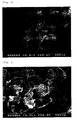
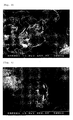
- the acidic calcium phosphate composite particles refer to composite particles in which the surface of acidic calcium phosphate particles (A2) is covered almost uniformly with inorganic particles (D).
- the acidic calcium phosphate composite particles refer to composite particles in which the surface of acidic calcium phosphate particles (A2) are covered almost uniformly with inorganic particles (D) so that the existing ratio of the inorganic particles (D) on the surface of the acidic calcium phosphate composite particles may become almost uniform.
- EDX energy dispersive X-ray analyzer
- anhydrous calcium hydrogen phosphate particles, monocalcium phosphate anhydrous particles, dicalcium phosphate dihydrate particles, monocalcium phosphate monohydrate particles, or calcium dihydrogen pyrophosphate particles are used as acidic calcium phosphate particles (A2), anhydrous calcium hydrogen phosphate composite particles, monocalcium phosphate anhydrous composite particles, dicalcium phosphate dihydrate composite particles, monocalcium phosphate monohydrate composite particles, or calcium dihydrogen pyrophosphate composite particles are obtained, respectively.
- the average particle diameter of the acidic calcium phosphate composite particles to be used for the present invention is from 0.1 to 7 ⁇ m.
- the average particle diameter is less than 0.1 ⁇ m, the viscosity of a paste to be obtained by mixing with a liquid agent may become excessively high, and it is more preferably 0.5 ⁇ m or more.
- the average particle diameter exceeds 7 ⁇ m, because of the decrease in surface area and covering with the inorganic particles (D) thickly, the acidic calcium phosphate particles (A2) may become less soluble in a liquid agent.
- the average particle diameter is more preferably 3 ⁇ m or less.
- the calcium phosphate composition of the present invention may contain components other than tetracalcium phosphate particles (A1), acidic calcium phosphate particles (A2), a polysulfonic acid salt (B), an alkali metal salt of phosphoric acid (C), and at least one member of inorganic particles (D) selected from among silica or a metal oxide within the range in which the effect of the present invention is not adversely affected.
- a thickener may be blended according to need. This is for improving the moldability or uniform filling property of a calcium phosphate composition paste.
- the thickener may be, for example, one or two or more species selected from among carboxymethylcellulose, sodium carboxymethylcellulose, hydroxypropylcellulose, hydroxypropylmethylcellulose, polyvinyl alcohol, polyethylene glycol, polyacrylic acid, polyglutamic acid, polyglutamic acid salts, polyaspartic acid, polyaspartic acid salts, starch other than cellulose, alginic acid, hyaluronic acid, polysaccharides such as pectin, chitin and chitosan, acidic polysaccharide esters such as propylene glycol alginate, and polymers such as proteins, e.g. collagen, gelatin and their derivatives.
- solubility in water and viscosity preferred is at least one species selected from sodium carboxymethylcellulose, hydroxypropylcellulose, hydroxypropylmethylcellulose, alginic acid, chitosan, polyglutamic acid and polyglutamic acid salts.
- the thickener may be blended to a calcium phosphate powder, or may be blended to a liquid agent, or may be incorporated to a paste under kneading.
- An X-ray contrast medium may also be contained according to need. This is because the operation of filling a calcium phosphate composition paste can be monitored or change of the paste after its filling can be traced.
- the X-ray contrast medium include one or two or more agents selected from among barium sulfate, bismuth subnitrate, bismuth oxide, bismuth subcarbonate, ytterbium fluoride, iodoform, barium apatite, barium titanate, and so on.
- the X-ray contrast medium may be incorporated to a calcium phosphate powder, or may be incorporated to a liquid agent, or may be incorporated to a paste under kneading.
- any pharmacologically acceptable agents may be incorporated.
- disinfectants, anticancer agents, antibiotics, antibacterial agents, blood circulation improvers such as actosin and PEG1, growth factors such as bFGF, PDGF and BMP, cells which promotes hard tissue formation, such as osteoblasts, odontoblasts, and anaplastic bone marrow derived stem cells may be incorporated.
- the calcium phosphate composition of the present invention contains calcium phosphate particles (A) and a polysulfonic acid salt (B)
- the calcium phosphate composition of the present invention is preferably a powder.
- a calcium phosphate composition powder is produced by mixing the calcium phosphate particles (A) and the polysulfonic acid salt (B) in a state of a powder.
- Tetracalcium phosphate particles (A1), acidic calcium phosphate particles (A2), and a polysulfonic acid salt (B) are mixed in a state of a powder.
- the mixing method is not particularly restricted; for example, a jet mill, a pestle and mortar machine, a ball mill, a bead mill, a planetary mill, a hybridizer, a mechanofusion machine, a kneading extruder, a high speed rotation mill, and so on can be used, a pestle and mortar machine, a ball mill, a planetary mill, or a high speed rotation mill is preferably used, and a high speed rotation mill is more preferably used. It is also possible to mix in the presence of a water-free liquid medium such as alcohol. Moreover, mixing a polysulfonic acid salt (B) separately with tetracalcium phosphate particles (A1) and acidic calcium phosphate particles (A2), followed by mixing the resulting mixtures can also be performed as a preferable embodiment.
- a jet mill for example, a jet mill, a pestle and mortar machine, a ball mill, a bead mill, a planetary mill, a hybridizer,
- the calcium phosphate composition of the present invention can be obtained also by mechanochemically hybridizing acidic calcium phosphate particles (A2) with inorganic particles (D) and then mixing them with tetracalcium phosphate particles (A1) and a polysulfonic acid salt (B). At this time, by mechanochemically hybridizing acidic calcium phosphate particles (A2) and inorganic particles (D), acidic calcium phosphate composite particles in which the surface of the acidic calcium phosphate particles (A2) is covered with the inorganic particles (D) are obtained. This fact can provide a calcium phosphate composition with good marginal sealing ability.
- the method of the mechanochemical hybridization is not particularly restricted, and it is preferable to use at least one device selected from among a jet mill, a pestle and mortar machine, a ball mill, a bead mill, a planetary mill, a hybridizer, a mechanofusion machine, or a kneading extruder, and it is more preferable to use a vibrating ball mill.
- an example of the hybridizer is a hybridization system manufactured by Nara Machinery Co., Ltd.
- an example of the mechanofusion machine is a circulation type mechanofusion system AMS manufactured by Hosokawa Micron Group
- an example of the kneading extruder is a KEX extruder manufactured by Kurimoto, Ltd.
- the calcium phosphate composition of the present invention comprising calcium phosphate particles (A) and a polysulfonic acid salt (B) is a powder composition, in its use in a medical site, it can be used by being kneaded with a liquid containing water as a main component, i.e., a liquid agent to form a calcium phosphate composition paste, and being filled in or applied to a desired site.
- a liquid containing water as a main component may be pure water or alternatively may be an aqueous solution or an aqueous dispersion containing other components.
- an alkali metal salt of phosphoric acid (C) is preferably contained.
- the alkali metal salt of phosphoric acid (C) the aforementioned salts can be used.
- pH buffers such as ammonium phosphates, N,N-bis(2-hydroxyethyl)-2-aminoethanesulfonic acid, and N-tris(hydroxymethyl)methyl-2-aminoethanesulfonic acid
- fluoride salts such as sodium fluoride, potassium fluoride, and ammonium fluoride
- water-soluble polyhydric alcohols such as glycerin and propylene glycol can also be used.
- a calcium phosphate composition paste can also be obtained by mixing an aqueous solution containing a polysulfonic acid salt (B) not to a calcium phosphate composition containing calcium phosphate particles (A) and a sulfonic acid salt (B) but to a powder of a calcium phosphate composition containing calcium phosphate particles (A).
- a calcium phosphate composition paste is produced by adding an aqueous solution containing 0.5 to 20 parts by weight of the polysulfonic acid salt (B) based on 100 parts by weight of the calcium phosphate particles (A) to a powder containing the calcium phosphate particles (A), followed by kneading, wherein the calcium phosphate particles (A) consist of tetracalcium phosphate particles (A1) and acidic calcium phosphate particles (A2).
- the sulfonic acid salt (B) is not necessarily needed to be dissolved in water uniformly, and it may have formed a micelle in water or alternatively may be in the form of a water-insoluble microparticle emulsion or slurry.
- the mass ratio of a calcium phosphate composition to a liquid agent (calcium phosphate composition/liquid agent) in the preparation of the calcium phosphate composition paste is not particularly limited, it is preferably from 1 to 6, and more preferably from 3 to 5.
- the calcium phosphate composition and the liquid agent are kneaded well so that they can be mixed uniformly, and then they are filled in or applied to a desired site promptly.
- the calcium phosphate composition of the present invention can be used by being filled in or applied to a desired site in the form of a calcium phosphate composition paste as described above. At this time, the calcium phosphate composition paste is usually prepared at a medical site. Therefore, a kit for medical use which comprises a powder comprising calcium phosphate particles (A) and a polysulfonic acid salt (B) and a liquid comprising water as a main component is an embodiment of the present invention. Moreover, a kit for medical use which comprises a powder comprising calcium phosphate particles (A) and an aqueous solution comprising a polysulfonic acid salt (B) is also an embodiment of the present invention.
- the calcium phosphate composition of the present invention is used suitably for various medical applications.
- it is preferably used as a bone cement for adhering or fixing.
- the calcium phosphate composition of the present invention can be filled to all parts with a complicated form because of excellent filling property of a paste, and therefore it is suitable for a material for restoring hard tissue, such as teeth and bones.
- a calcium phosphate composition as a filling material for dental use
- good sealing ability is exhibited due to efficient formation of hydroxyapatite crystals occurring in a hole, and therefore the composition is used preferably as a root canal filler or a root canal restorative material.
- it is excellent in biocompatibility because the paste itself is converted to hydroxyapatite within a short period of time in a living body or an oral cavity, resulting in integration with a biological hard tissue.
- the present invention is illustrated below more concretely with reference to Examples.
- an average particle diameter of calcium phosphate particles (A), tetracalcium phosphate particles (A1), acidic calcium phosphate particles (A2), and acidic calcium phosphate composite particles measurement was conducted using a laser diffraction type particle size distribution analyzer ("SALD-2100" manufactured by Shimadzu Corporation), and a median diameter calculated from the result of the measurement was defined as the average particle diameter.
- SALD-2100 laser diffraction type particle size distribution analyzer
- Tetracalcium phosphate particle (A1) to be used for the experiments were prepared as follows. A cake-like equimolar mixture obtained by adding commercially available anhydrous calcium hydrogen phosphate particles (Product No. 1430, made by J. T. Baker Chemical Co.) and calcium carbonate particles (Product No. 1288, made by J. T. Baker Chemical Co.) in equimolar amount to water, followed by stirring for one hour, filtering and drying was heated in a calcination machine (Model 51333, manufactured by Lindberg, Watertown, WI) at 1500°C for 24 hours, and then a TTCP (tetracalcium phosphate) mass was prepared by cooling the mixture to room temperature in a desiccator.
- a TTCP tetracalcium phosphate
- TTCP mass was crushed roughly with a mortar, and then an impalpable powder and TTCP mass were removed by sieving, so that the particle size was regulated into a range of 0.5 to 3 mm.
- an impalpable powder and TTCP mass were removed by sieving, so that the particle size was regulated into a range of 0.5 to 3 mm.
- rough tetracalcium phosphate particles were obtained.
- tetracalcium phosphate particles (A1) 21.
- anhydrous calcium hydrogen phosphate particles (A2) to be used for this experiment (1.1 ⁇ m in average particle diameter) were obtained by subjecting a slurry resulting from addition of 50 g of commercially available anhydrous calcium hydrogen phosphate particles (Product No. 1430, made by J. T. Baker Chemical Co., 10.
- a calcium phosphate composition was obtained by mixing 145.8 g of the above-mentioned tetracalcium phosphate particles (A1) and 54.2 g of anhydrous calcium hydrogen phosphate particles (A2) by using a high speed rotation mill ("SM-1" manufactured by As One Corporation). In this process, there was substantially no change in the average particle diameter between before and after the mixing with the tetracalcium phosphate particles (A1) and the calcium hydrogen phosphate particles (A2). The average particle diameter of the calcium phosphate particles (A) obtained by mixing the above-mentioned tetracalcium phosphate particles (A1) and the anhydrous calcium hydrogen phosphate particles (A2) in the above-mentioned proportions was 16.8 ⁇ m.
- a liquid agent was prepared by adding distilled water to 10 g of a PSS-1 powder obtained by freeze-drying an aqueous PSS-1 (sodium polystyrene sulfonate) solution ("PS-100" made by TOSOH ORGANIC CHEMICAL CO., LTD., molecular weight: about 1,000,000 Da, solid content: 20%), 51.2 g of an aqueous PVSA (poly (sodium vinylsulfonate)) solution (made by Polysciences Inc., solid content: 25%), and 3.2 g of Na 2 HPO 4 (disodium hydrogen phosphate) so that the whole amount might become 100 g.
- PSS-1 sodium polystyrene sulfonate
- a calcium phosphate composition paste was prepared by precisely weighing 1 g of the calcium phosphate composition obtained above, and adding thereto 0.25 g of the liquid agent prepared above (containing 2.5 parts by weight of PSS-1, 3.2 parts by weight of PVSA, and 0.8 part by weight of Na 2 HPO 4 , respectively, based on 100 parts by weight of (A1) and (A2) in total), followed by kneading (the mixed weight ratio (powder/liquid) at this time was 4).
- the compressive strength of the set product of the calcium phosphate composition obtained from Example 1 was 55.2 ⁇ 2.0 MPa.
- a setting time of the calcium phosphate composition obtained in (1) above was measured by the method in accordance with ISO 6876 (Dental root canal sealing materials).
- a calcium phosphate composition paste was prepared by precisely weighing 1 g of the calcium phosphate composition, and adding thereto a liquid agent prepared in the same manner as (2) above, followed by kneading (the mixed weight ratio (powder/liquid) at this time was 4).
- the calcium phosphate composition paste was filled in a ring-shaped mold made of stainless steel having a cavity with an internal diameter of 10 mm and a height of 2 mm placed on a glass plate, in a cabinet conditioned at 37°C and a 98% relative humidity, and the top of the paste was made smooth with a spatula.
- the setting time of the calcium phosphate composition obtained from Example 1 was 6 minutes and 28 seconds ⁇ 12 seconds.
- a calcium phosphate composition paste was prepared by precisely weighing 1 g of the calcium phosphate composition obtained above, and adding thereto a liquid agent prepared in the same manner as (2) above, followed by kneading (the mixed weight ratio (powder/liquid) at this time was 4), and it was used for measurement of a marginal leakage distance.
- the measurement of a marginal leakage distance was performed in accordance with a method of testing minute leakage of ISO/TS11405 (Second Edition, Dental materials - Testing of adhesion to tooth structure). After removing the root and the pulp of a single-root-canal bovine tooth, the root part was sealed with a dental composite resin ("AP-X" made by Kuraray Medical Inc.).
- the center of a buccal surface was polished with #80 sandpaper and then with #2000 sandpaper, so that a flat surface of enamel was produced.
- a cavity having about 3 mm in diameter and about 2.5 mm in depth was formed in the surface of the enamel by using a high speed handpiece for dental use.
- the aforementioned paste was filled into the cavity and then was set by being held under conditions of 37°C and a 98% relative humidity for 4 hour.
- the sample was stored in distilled water of 37°C for 24 hours and then it was immersed in a 0.2% basic fuchsin solution adjusted to pH 7.2 and stored at 25°C for 24 hours.
- a calcium phosphate composition paste was prepared and evaluated in the same manner as Example 1 except for separating a 0.25-gram portion (containing 5 parts by weight of a PSS-1 powder and 4.8 parts by weight of PVSA based on 100 parts by weight of (A1) and (A2) in total) from a solution prepared by adding distilled water to 10 g of a PSS-1 powder and 76.8 g of an aqueous PVSA solution to dissolve them and adjusting the whole amount to 100 g, and using it as a liquid agent instead of using a mixed solution of the PSS-1 powder, the aqueous PVSA solution, and Na 2 HPO 4 in Example 1.
- Table 1 The results obtained are summarized in Table 1.
- a calcium phosphate composition paste was prepared and evaluated in the same manner as Example 1 except for separating a 0.25-gram portion (containing 5 parts by weight of a PSS-1 powder and 0.8 part by weight of Na 2 HPO 4 based on 100 parts by weight of (A1) and (A2) in total) from a solution prepared by adding distilled water to 10 g of a PSS-1 powder and 3.2 g of Na 2 HPO 4 to dissolve them and adjusting the whole amount to 100 g, and using it as a liquid agent instead of using a mixed solution of the PSS-1 powder, the aqueous PVSA solution, and Na 2 HPO 4 in Example 1.
- Table 1 The results obtained are summarized in Table 1.
- a calcium phosphate composition paste was prepared and evaluated in the same manner as Example 1 except for separating a 0.25-gram portion (containing 5 parts by weight of a PSS-1 powder, based on 100 parts by weight of (A1) and (A2) in total) from a solution prepared by adding distilled water to 10 g of a PSS-1 powder only to dissolve it and adjusting the whole amount to 100 g, and using it as a liquid agent instead of using a mixed solution of the PSS-1 powder, the aqueous PVSA solution, and Na 2 HPO 4 in Example 1.
- Table 1 The results obtained are summarized in Table 1.
- a calcium phosphate composition was obtained by adding 1.6 g of a PSS-1 powder (0.8 part by weight based on 100 parts by weight of (A1) and (A2) in total) in the form of solid to 145.8 g of the above-mentioned tetracalcium phosphate particles (A1) and 54.2 g of anhydrous calcium hydrogen phosphate particles (A2), followed by mixing by using a high speed rotation mill ("SM-1" manufactured by As One Corporation).
- a calcium phosphate composition paste was prepared by adding 0.25 g of water as a liquid agent to 1 g of the obtained calcium phosphate composition, followed by kneading, and then evaluation was done in the same manner as Example 1. The results obtained are summarized in Table 1.
- Calcium phosphate compositions were prepared in the same manner as Example 5 except for changing the content of a PSS-1 powder to 5 parts by weight (Example 6) and to 18 parts by weight (Example 7), respectively, based on 100 parts by weight of (A1) and (A2) in total, and then calcium phosphate composition pastes were prepared by adding water and kneading and were evaluated. The results obtained are summarized in Table 1.
- Example 8 Powder obtained by freeze drying an aqueous PSS-2 solution ("PS-50" made by TOSOH ORGANIC CHEMICAL CO.
- Example 9 Powder obtained by freeze drying an aqueous PSS-3 solution ("PS-5" made by TOSOH ORGANIC CHEMICAL CO., LTD., about 50,000 Da in molecular weight)
- PSS-4 powder made by Polymer Standard Service, about 2,260,000 Da in molecular weight
- PSS-5 powder made by Polymer Standard Service, about 5,640,000 Da in molecular weight
- Calcium phosphate composition pastes were prepared and evaluated in the same manner as Example 1 except for separating a 0.25-gram portion (containing 5 parts by weight of a PSS-1 powder or PVSA (poly (sodium vinylsulfonate)) based on 100 parts by weight of (A1) and (A2) in total) from a solution prepared by adding distilled water to 20 g of DBSS (sodium dodecylbenzenesulfonate), made by Wako pure Chemical Industries, Ltd., to dissolve it and adjusting the whole amount to 100 g (Example 12 comparative example) or from a solution prepared by adding distilled water to 80 g of an aqueous PVSA solution (made by Polysciences, Inc., solid content: 25%) to dissolve it and adjusting the whole amount to 100 g (Example 13), and using them as a liquid agent instead of using a mixed solution of the PSS-1 powder, the aqueous PVSA solution, and Na 2 HPO 4 in Example 1.
- Table 1 The results obtained are
- a calcium phosphate composition was obtained and evaluated in the same manner as Example 1 except for changing the molar ratio (A1/A2) of the tetracalcium phosphate particles (A1) to the anhydrous calcium hydrogen phosphate particles (A2) to 0.7 in Example 1.
- the results obtained are summarized in Table 1.
- Anhydrous calcium hydrogen phosphate composite particles covered with silica particles were obtained by charging 200 g of the anhydrous calcium hydrogen phosphate particles (A2) obtained in Example 1, 20 g of silica particles ("AEROSIL 130" made by Degussa Co., average particle diameter: 0.016 ⁇ m), and 2000 g of zirconia balls having a diameter of 10 mm into a grinding pot made of alumina ("Type HD-B-104 pot mill” manufactured by Nikkato Corporation) and performing dry grinding for 20 hours by using a vibrating ball mill ("NLM” manufactured by Chuo Kakoki Shoji Inc.).
- the average particle diameter of the obtained anhydrous calcium hydrogen phosphate composite particles was 1.2 ⁇ m.
- anhydrous calcium hydrogen phosphate composite particles were observed by using a field emission electron microscope (FE-SEM, "Model S-4200") manufactured by Hitachi Ltd., and anhydrous calcium hydrogen phosphate composite particles in which plate-like particle had been joined randomly to the surface of spherical particles as shown in the SEM photograph of Fig. 1 measured at a high magnification were observed.
- elemental analysis was done by using an energy dispersive X-ray analyzer (EDX, "Model EMAX-5770”) manufactured by HORIBA, Ltd. Results of the obtained SEM/EDX semiquantitative analysis values are summerized in Table 2.
- a calcium phosphate composition was obtained by mixing 59.6 g of the anhydrous calcium hydrogen phosphate composite particles and 145.8 g of the above-mentioned tetracalcium phosphate particles (A1) by using a high speed rotation mill ("SM-1" manufactured by As One Corporation).
- SM-1 high speed rotation mill
- the content of the silica particles in the calcium phosphate composition was 10 parts by weight based on 100 parts by weight of the anhydrous calcium hydrogen phosphate particles (A2).
- a calcium phosphate composition paste was prepared by precisely weighing 1 g of the calcium phosphate composition obtained above, and adding thereto a liquid agent prepared in the same manner as Example 1, followed by kneading, and then the paste was evaluated. The results obtained are summarized in Table 1.
- a calcium phosphate composition paste was prepared and evaluated in the same manner as Example 1 except for separating a 0.25-gram portion (containing 0.8 part by weight based on 100 parts by weight of (A1) and (A2) in total) from a solution prepared by dissolving 3.2 g of Na 2 HPO 4 (disodium hydrogen phosphate) in 100 g of distilled water, and using it as a liquid agent instead of using a mixed solution of the PSS-1 powder, the aqueous PVSA solution, and Na 2 HPO 4 in Example 1.
- Table 1 The results obtained are summarized in Table 1.
- a calcium phosphate composition paste was prepared and evaluated in the same manner as Example 1 except for separating a 0.25-gram portion (containing 5 parts by weight of PVA (polyvinyl alcohol) and 0.8 part by weight of Na 2 HPO 4 based on 100 parts by weight of (A1) and (A2) in total) from a solution prepared by adding distilled water to 20 g of PVA (polyvinyl alcohol) made by Kuraray Co., Ltd. and 3.2 g of Na 2 HPO 4 to dissolve them and adjusting the whole amount to 100 g, and using it as a liquid agent instead of using a mixed solution of the PSS-1 powder, the aqueous PVSA solution, and Na 2 HPO 4 in Example 1.
- Table 1 The results obtained are summarized in Table 1.
- a calcium phosphate composition paste was prepared and evaluated in the same manner as Example 1 except for separating a 0.25-gram portion (containing 5 parts by weight of AGR (sodium alginate) and 0.8 part by weight of Na 2 HPO 4 based on 100 parts by weight of (A1) and (A2) in total) from a solution prepared by adding distilled water to 20 g of AGR made by Wako Pure Chemical Industries, Ltd. and 3.2 g of Na 2 HPO 4 to dissolve them and adjusting the whole amount to 100 g, and using it as a liquid agent instead of using a mixed solution of the PSS-1 powder, the aqueous PVSA solution, and Na 2 HPO 4 in Example 1.
- Table 1 The results obtained are summarized in Table 1.
- a calcium phosphate composition paste was prepared and evaluated in the same manner as Example 1 except for separating a 0.25-gram portion (containing 5 parts by weight of ACR (poly(sodium acrylate)) based on 100 parts by weight of (A1) and (A2) in total) from a solution prepared by adding distilled water to 20 g of ACR only to dissolve it and adjusting the whole amount to 100 g, and using it as a liquid agent instead of using a mixed solution of the PSS-1 powder, the aqueous PVSA solution, and Na 2 HPO 4 in Example 1.
- Table 1 As to an aqueous ACR solution, there was used a product obtained by neutralizing a polyacrylic acid made by Wako Pure Chemical Industries, Ltd. with a 1M aqueous NaOH solution, followed by freeze-drying.
- a calcium phosphate composition paste was prepared and evaluated in the same manner as Example 4 except for using 0.3 part in the amount of a PSS-1 powder by weight based on 100 parts by weight of (A1) and (A2) in total in Example 4. The results obtained are summarized in Table 1.
- a calcium phosphate composition paste was prepared and evaluated in the same manner as Example 5 except for using 22 parts in the amount of a PSS-1 powder by weight based on 100 parts by weight of (A1) and (A2) in total in Example 5. The results obtained are summarized in Table 1.
- a mixture of anhydrous calcium hydrogen phosphate particles (A2) and silica particles was obtained by grinding anhydrous calcium hydrogen phosphate particles (A2) and silica particles for 20 hours by using a rotary blade grinder (high speed rotation mill) ("SM-1" manufactured by As One Corporation) instead of using a vibration ball mill in Example 15.
- SM-1 high speed rotation mill
- the mixture was observed by using a field emission electron microscope (FE-SEM, "Model S-4200”) manufactured by Hitachi Ltd. in the same manner as Example 15, so that large particles (average particle diameter: about 1 ⁇ m) and small particles (average particle diameter: about 10 nm) were observed as shown by the SEM photographs of Figs. 2 to 4 .
- FE-SEM field emission electron microscope
- PSS-1 Sodium polystyrene sulfonate (molecular weight: about 1,000,000 Da)
- PSS-2 Sodium polystyrene sulfonate (molecular weight: about 500,000 Da)
- PSS-3 Sodium polystyrene sulfonate (molecular weight: about 50,000 Da)
- PSS-4 Sodium polystyrene sulfonate (molecular weight: about 2,260,000 Da)
- PSS-5 Sodium polystyrene sulfonate (molecular weight: about 5,640,000 Da)
- PVSA Poly(sodium vinylsulfonate)
- DBSS Sodium dodecylbenzenesulfonate
- PVA Polyvinyl alcohol
- ARG Sodium alginate
- ACR Poly(sodium acrylate) (*3)
- TTCP Tetracalcium phosphate particle
- DCPA Anhydrous calcium hydrogen phosphate particle [Table 3] Observed
- Table 1 shows that since Examples 1 to 11, and 13 to 15 in which 0.5 to 20 parts by weight of a polysulfonic acid salt (B) was contained based on 100 parts by weight of calcium phosphate particles (A) were shorter in marginal leakage distance than Comparative Example 1 in which no polysulfonic acid salt (B) was added and therefore the Examples were better in sealing ability of filled sites. This fact clearly establishes the effect produced by inclusion of a polysulfonic acid salt (B) in a certain amount.
- Comparative Examples 2 to 4 in which an aqueous PVA solution, an aqueous ARG solution, and an aqueous ACR solution were used as a liquid agent instead of a polysulfonic acid salt (B) were lower in compressive strength, longer in setting time, and poorer in marginal sealing ability than Comparative Example 1 in which no polysulfonic acid salt (B) was added.
- Comparative Example 5 in which the content of a polysulfonic acid salt (B) was less than 0.5 part by weight was poorer in marginal sealing ability than Comparative Example 1 in which no polysulfonic acid salt (B) was added.
- Comparative Example 6 in which the content of a polysulfonic acid salt (B) exceeded 20 parts by weight the setting time was very long and the compressive strength lowered greatly.
- a calcium phosphate composition containing a certain amount of a polysulfonic acid salt (B) contains tetracalcium phosphate particles (A1), acidic calcium phosphate particles (A2), and inorganic particles (D) other than (A1) and (A2) and the acidic calcium phosphate particles (A2) contain acidic calcium phosphate composite particles covered with the inorganic particles (D) as in Example 15.
Landscapes
- Health & Medical Sciences (AREA)
- Chemical & Material Sciences (AREA)
- Veterinary Medicine (AREA)
- Inorganic Chemistry (AREA)
- Public Health (AREA)
- General Health & Medical Sciences (AREA)
- Animal Behavior & Ethology (AREA)
- Epidemiology (AREA)
- Life Sciences & Earth Sciences (AREA)
- Surgery (AREA)
- Transplantation (AREA)
- Oral & Maxillofacial Surgery (AREA)
- Medicinal Chemistry (AREA)
- Dermatology (AREA)
- Dental Preparations (AREA)
- Materials For Medical Uses (AREA)
Claims (9)
- Procédé de production d'une poudre de composition à base de phosphate de calcium comprenant des particules de phosphate de calcium (A) et un sel d'acide polysulfonique (B),
dans lequel la poudre de composition à base de phosphate de calcium contient de 0,5 à 20 parties en poids du sel d'acide polysulfonique (B) sur la base de 100 parties en poids des particules de phosphate de calcium (A), dans lequel les particules de phosphate de calcium (A) consistent en des particules de phosphate de tétracalcium (A1) et des particules de phosphate de calcium acide (A2), et les particules de phosphate de tétracalcium (A1), les particules de phosphate de calcium acide (A2) et le sel d'acide polysulfonique (B) sont mélangés à l'état de poudre. - Procédé de production d'une poudre de composition à base de phosphate de calcium selon la revendication 1, dans lequel le sel d'acide polysulfonique (B) est un sel d'acide polystyrènesulfonique et/ou un sel d'acide polyvinylsulfonique.
- Procédé de production d'une poudre de composition à base de phosphate de calcium selon la revendication 1 ou 2, dans lequel la poudre de composition à base de phosphate de calcium comprend en outre un sel de métal alcalin d'acide phosphorique (C).
- Procédé de production d'une poudre de composition à base de phosphate de calcium selon la revendication 3, dans lequel le sel de métal alcalin d'acide phosphorique (C) est du phosphate d'hydrogène disodique et/ou du phosphate dihydrogène de sodium.
- Procédé de production d'une poudre de composition à base de phosphate de calcium selon l'une quelconque des revendications 1 à 4, dans lequel un ratio de mélange (A1/A2) des particules de phosphate de tétracalcium (A1) avec les particules de phosphate de calcium acide (A2) présente un rapport molaire dans la plage de 40/60 à 60/40.
- Procédé de production d'une poudre de composition à base de phosphate de calcium selon l'une quelconque des revendications 1 à 5, dans lequel la composition contient des particules de composite de phosphate de calcium acide qui contiennent de 1 à 30 parties en poids de particules inorganiques (D) autres que (A1) et (A2) sur la base de 100 parties en poids des particules de phosphate de calcium acide (A2) et dans lequel les particules de phosphate de calcium acide (A2) sont recouvertes par les particules inorganiques (D).
- Procédé de production d'une poudre de composition à base de phosphate de calcium selon l'une quelconque des revendications 1 à 6, dans lequel les particules de phosphate de calcium acide (A2) et les particules inorganiques (D) autre que (A1) et (A2) sont soumises à une hybridation mécanochimique et ensuite mélangées avec les particules de phosphate de tétracalcium (A1) et le sel d'acide polysulfonique (B) dans un état de poudre.
- Procédé de production d'une pâte de composition à base de phosphate de calcium comprenant des particules de phosphate de calcium (A) et un sel d'acide polysulfonique (B),
dans lequel un liquide comprenant de l'eau en tant que composant principal est ajouté à la poudre d'une composition à base de phosphate de calcium comprenant de 0,5 à 20 parties en poids du sel d'acide polysulfonique (B) sur la base de 100 parties en poids des particules de phosphate de calcium (A), avec ensuite un malaxage, dans lequel les particules de phosphate de calcium (A) consistent en des particules de phosphate de tétracalcium (A1) et des particules de phosphate de calcium acide (A2), et les particules de phosphate de tétracalcium (A1), les particules de phosphate de calcium acide (A2) et le sel d'acide polysulfonique (B) sont mélangées à l'état de poudre. - Procédé de production d'une pâte de composition à base de phosphate de calcium comprenant des particules de phosphate de calcium (A) et un sel d'acide polysulfonique (B), dans lequel une solution aqueuse contenant de 0,5 à 20 parties en poids du sel d'acide polysulfonique (B) sur la base de 100 parties en poids des particules de phosphate de calcium (A) est ajoutée à une poudre comprenant les particules de phosphate de calcium (A), avec ensuite un malaxage, dans lequel les particules de phosphate de calcium (A) consistent en des particules de phosphate de tétracalcium (A1) et des particules de phosphate de calcium acide (A2).
Applications Claiming Priority (2)
| Application Number | Priority Date | Filing Date | Title |
|---|---|---|---|
| JP2008027827 | 2008-02-07 | ||
| PCT/JP2009/051949 WO2009099136A1 (fr) | 2008-02-07 | 2009-02-05 | Composition de phosphate de calcium et son procédé de fabrication |
Publications (3)
| Publication Number | Publication Date |
|---|---|
| EP2241339A1 EP2241339A1 (fr) | 2010-10-20 |
| EP2241339A4 EP2241339A4 (fr) | 2013-05-22 |
| EP2241339B1 true EP2241339B1 (fr) | 2015-01-14 |
Family
ID=40952209
Family Applications (1)
| Application Number | Title | Priority Date | Filing Date |
|---|---|---|---|
| EP09707693.9A Active EP2241339B1 (fr) | 2008-02-07 | 2009-02-05 | Composition de phosphate de calcium et son procédé de fabrication |
Country Status (6)
| Country | Link |
|---|---|
| US (2) | US20100323022A1 (fr) |
| EP (1) | EP2241339B1 (fr) |
| JP (1) | JP5436229B2 (fr) |
| CN (1) | CN101983076A (fr) |
| CA (1) | CA2713856A1 (fr) |
| WO (1) | WO2009099136A1 (fr) |
Families Citing this family (10)
| Publication number | Priority date | Publication date | Assignee | Title |
|---|---|---|---|---|
| ATE544472T1 (de) * | 2008-12-19 | 2012-02-15 | Biolitec Ag | Kalziumphosphat-nanopartikel als farbstoffträger für die photodynamische therapie |
| US20120027829A1 (en) | 2009-03-30 | 2012-02-02 | Kuraray Medical Inc. | Dentin mineralizing agent and method for production thereof |
| CN104368042A (zh) * | 2014-11-19 | 2015-02-25 | 上海纳米技术及应用国家工程研究中心有限公司 | 一种透钙磷石骨水泥的制备方法 |
| EP3393598B1 (fr) * | 2015-12-24 | 2020-11-11 | Unilever NV | Materiel composite pour la controle du biofilm |
| CN105832565A (zh) * | 2016-05-24 | 2016-08-10 | 苏州蔻美新材料有限公司 | 一种低收缩补牙树脂材料的制备方法 |
| CN113227249B (zh) | 2018-12-27 | 2024-03-15 | 株式会社钟化 | 树脂组合物及其应用 |
| WO2020196921A1 (fr) | 2019-03-28 | 2020-10-01 | 株式会社カネカ | Procédé de production de composition de résine et composition de résine |
| CN110314249A (zh) * | 2019-08-02 | 2019-10-11 | 科先医疗科技(苏州)有限公司 | 一种医用人工骨支架复合材料及其制备方法 |
| CN114341233B (zh) * | 2019-09-27 | 2025-02-07 | 株式会社钟化 | 粉粒体及粉粒体的制造方法 |
| CN113353905B (zh) * | 2021-06-29 | 2024-05-17 | 湖北兴发化工集团股份有限公司 | 药用级粗颗粒无水磷酸氢钙的制备工艺 |
Citations (4)
| Publication number | Priority date | Publication date | Assignee | Title |
|---|---|---|---|---|
| JPH06219918A (ja) * | 1993-01-27 | 1994-08-09 | Lion Corp | 歯科用硬化性組成物 |
| EP1541321A2 (fr) * | 2003-10-28 | 2005-06-15 | Hewlett-Packard Development Company, L.P. | Système et méthode de fabrication de formes libres solides pour la production d'objets tridimensionnels |
| US20090258966A1 (en) * | 2005-10-04 | 2009-10-15 | Nihon University | Dental Composition |
| US20100236449A1 (en) * | 2006-01-16 | 2010-09-23 | Kuraray Medical Inc. | Calcium phosphate composition and process for producing the same |
Family Cites Families (9)
| Publication number | Priority date | Publication date | Assignee | Title |
|---|---|---|---|---|
| JPH03141956A (ja) * | 1989-10-30 | 1991-06-17 | Mitsubishi Materials Corp | 骨欠損部及び骨空隙部充填材 |
| JP3419835B2 (ja) * | 1993-08-02 | 2003-06-23 | サンメディカル株式会社 | 生体硬組織に隙間なく接着できる硬化性組成物の製品キット |
| WO2001041822A1 (fr) * | 1999-12-09 | 2001-06-14 | Biosyntech Canada Inc. | Composition hybride mineral polymere |
| JP4932210B2 (ja) | 2005-10-04 | 2012-05-16 | 学校法人日本大学 | 歯科用組成物 |
| JP4986275B2 (ja) * | 2006-01-16 | 2012-07-25 | クラレノリタケデンタル株式会社 | リン酸カルシウム粉体及びその用途 |
| JP2007190169A (ja) * | 2006-01-19 | 2007-08-02 | Kuraray Medical Inc | リン酸カルシウム粉体組成物及びその製造方法 |
| JP4951244B2 (ja) | 2006-01-19 | 2012-06-13 | クラレメディカル株式会社 | 医療用リン酸カルシウム組成物及びその製造方法 |
| JP4986276B2 (ja) * | 2006-01-19 | 2012-07-25 | クラレノリタケデンタル株式会社 | リン酸カルシウム組成物からなる骨セメント及びその製造方法 |
| JP2007197329A (ja) * | 2006-01-23 | 2007-08-09 | Kuraray Medical Inc | リン酸カルシウム組成物及びその製造方法 |
-
2009
- 2009-02-05 US US12/866,689 patent/US20100323022A1/en not_active Abandoned
- 2009-02-05 JP JP2009552508A patent/JP5436229B2/ja active Active
- 2009-02-05 CN CN2009801119335A patent/CN101983076A/zh active Pending
- 2009-02-05 EP EP09707693.9A patent/EP2241339B1/fr active Active
- 2009-02-05 CA CA2713856A patent/CA2713856A1/fr not_active Abandoned
- 2009-02-05 WO PCT/JP2009/051949 patent/WO2009099136A1/fr not_active Ceased
-
2013
- 2013-04-05 US US13/857,801 patent/US20130224263A1/en not_active Abandoned
Patent Citations (4)
| Publication number | Priority date | Publication date | Assignee | Title |
|---|---|---|---|---|
| JPH06219918A (ja) * | 1993-01-27 | 1994-08-09 | Lion Corp | 歯科用硬化性組成物 |
| EP1541321A2 (fr) * | 2003-10-28 | 2005-06-15 | Hewlett-Packard Development Company, L.P. | Système et méthode de fabrication de formes libres solides pour la production d'objets tridimensionnels |
| US20090258966A1 (en) * | 2005-10-04 | 2009-10-15 | Nihon University | Dental Composition |
| US20100236449A1 (en) * | 2006-01-16 | 2010-09-23 | Kuraray Medical Inc. | Calcium phosphate composition and process for producing the same |
Non-Patent Citations (2)
| Title |
|---|
| DATABASE EPODOC EUROPEAN PATENT OFFICE, THE HAGUE, NL; XP002694916 * |
| INAGE I ET AL: "Dental hardenable compsn. having sufficient fluidity on filling tooth root - contains tri:calcium alpha-phosphate, X=ray contrast agent, fluorine cpd., unsatd. carboxylic acid or sulphonic acid polymer and water", WPI / THOMSON, AN 1994-290821, vol. 1994, no. 36, 9 August 1994 (1994-08-09), XP002694915 * |
Also Published As
| Publication number | Publication date |
|---|---|
| EP2241339A1 (fr) | 2010-10-20 |
| CN101983076A (zh) | 2011-03-02 |
| EP2241339A4 (fr) | 2013-05-22 |
| CA2713856A1 (fr) | 2009-08-13 |
| US20130224263A1 (en) | 2013-08-29 |
| WO2009099136A1 (fr) | 2009-08-13 |
| JP5436229B2 (ja) | 2014-03-05 |
| JPWO2009099136A1 (ja) | 2011-05-26 |
| US20100323022A1 (en) | 2010-12-23 |
Similar Documents
| Publication | Publication Date | Title |
|---|---|---|
| EP2241339A1 (fr) | Composition de phosphate de calcium et son procédé de fabrication | |
| EP0520690B1 (fr) | Matériau durcissable du type phosphate de calcium pour réparer les tissus durs vivants | |
| CN102448471B (zh) | 牙本质矿化剂和其制造方法 | |
| US8906151B2 (en) | Calcium phosphate composition and process for producing the same | |
| JP4951244B2 (ja) | 医療用リン酸カルシウム組成物及びその製造方法 | |
| JPH05168692A (ja) | 生体硬組織修復用硬化性材料 | |
| EP3031441B1 (fr) | Composition de phosphate de calcium durcissable pour matériel dentaire | |
| US20040250729A1 (en) | Fast-setting carbonated hydroxyapatite compositions and uses | |
| JP5834355B2 (ja) | 知覚過敏抑制剤及びその製造方法 | |
| JP2007197329A (ja) | リン酸カルシウム組成物及びその製造方法 | |
| JP5363743B2 (ja) | リン酸カルシウム組成物及びその製造方法 | |
| JP4986275B2 (ja) | リン酸カルシウム粉体及びその用途 | |
| JP5363744B2 (ja) | リン酸カルシウム組成物及びその製造方法 | |
| JP5386091B2 (ja) | リン酸カルシウム組成物の製造方法 | |
| JP4986276B2 (ja) | リン酸カルシウム組成物からなる骨セメント及びその製造方法 | |
| JP2007190169A (ja) | リン酸カルシウム粉体組成物及びその製造方法 | |
| JP5386094B2 (ja) | リン酸カルシウム組成物の製造方法 | |
| JP6083742B2 (ja) | 象牙細管封鎖材キット | |
| WO2015133149A1 (fr) | Procédé de régulation de temps de travail pour former une forme de phosphate de calcium auto-durcissant à deux phases | |
| JP5463392B2 (ja) | リン酸カルシウム組成物の製造方法 | |
| JP2008136603A (ja) | リン酸カルシウム組成物及びその用途 | |
| JP2008142213A (ja) | リン酸カルシウム組成物及びその用途 | |
| JPH07267617A (ja) | リン酸四カルシウムの製造方法及びこの方法によって得られたリン酸四カルシウム、並びにこのリン酸四カルシウムを含有するセメント用組成物 | |
| JPWO1990001341A1 (ja) | 医科用および歯科用硬化性材料 |
Legal Events
| Date | Code | Title | Description |
|---|---|---|---|
| PUAI | Public reference made under article 153(3) epc to a published international application that has entered the european phase |
Free format text: ORIGINAL CODE: 0009012 |
|
| 17P | Request for examination filed |
Effective date: 20100805 |
|
| AK | Designated contracting states |
Kind code of ref document: A1 Designated state(s): AT BE BG CH CY CZ DE DK EE ES FI FR GB GR HR HU IE IS IT LI LT LU LV MC MK MT NL NO PL PT RO SE SI SK TR |
|
| AX | Request for extension of the european patent |
Extension state: AL BA RS |
|
| DAX | Request for extension of the european patent (deleted) | ||
| RAP1 | Party data changed (applicant data changed or rights of an application transferred) |
Owner name: KURARAY NORITAKE DENTAL INC. |
|
| RIC1 | Information provided on ipc code assigned before grant |
Ipc: A61L 27/00 20060101AFI20130409BHEP Ipc: A61K 6/033 20060101ALI20130409BHEP |
|
| A4 | Supplementary search report drawn up and despatched |
Effective date: 20130418 |
|
| 17Q | First examination report despatched |
Effective date: 20131209 |
|
| GRAP | Despatch of communication of intention to grant a patent |
Free format text: ORIGINAL CODE: EPIDOSNIGR1 |
|
| INTG | Intention to grant announced |
Effective date: 20140828 |
|
| GRAS | Grant fee paid |
Free format text: ORIGINAL CODE: EPIDOSNIGR3 |
|
| GRAA | (expected) grant |
Free format text: ORIGINAL CODE: 0009210 |
|
| AK | Designated contracting states |
Kind code of ref document: B1 Designated state(s): AT BE BG CH CY CZ DE DK EE ES FI FR GB GR HR HU IE IS IT LI LT LU LV MC MK MT NL NO PL PT RO SE SI SK TR |
|
| REG | Reference to a national code |
Ref country code: GB Ref legal event code: FG4D |
|
| REG | Reference to a national code |
Ref country code: CH Ref legal event code: EP Ref country code: CH Ref legal event code: NV Representative=s name: LATSCHA SCHOELLHORN PARTNER AG, CH |
|
| REG | Reference to a national code |
Ref country code: IE Ref legal event code: FG4D |
|
| REG | Reference to a national code |
Ref country code: AT Ref legal event code: REF Ref document number: 706668 Country of ref document: AT Kind code of ref document: T Effective date: 20150215 |
|
| REG | Reference to a national code |
Ref country code: DE Ref legal event code: R096 Ref document number: 602009028951 Country of ref document: DE Effective date: 20150305 |
|
| REG | Reference to a national code |
Ref country code: NL Ref legal event code: VDEP Effective date: 20150114 |
|
| REG | Reference to a national code |
Ref country code: AT Ref legal event code: MK05 Ref document number: 706668 Country of ref document: AT Kind code of ref document: T Effective date: 20150114 |
|
| REG | Reference to a national code |
Ref country code: LT Ref legal event code: MG4D |
|
| PG25 | Lapsed in a contracting state [announced via postgrant information from national office to epo] |
Ref country code: NO Free format text: LAPSE BECAUSE OF FAILURE TO SUBMIT A TRANSLATION OF THE DESCRIPTION OR TO PAY THE FEE WITHIN THE PRESCRIBED TIME-LIMIT Effective date: 20150414 Ref country code: SE Free format text: LAPSE BECAUSE OF FAILURE TO SUBMIT A TRANSLATION OF THE DESCRIPTION OR TO PAY THE FEE WITHIN THE PRESCRIBED TIME-LIMIT Effective date: 20150114 Ref country code: BG Free format text: LAPSE BECAUSE OF FAILURE TO SUBMIT A TRANSLATION OF THE DESCRIPTION OR TO PAY THE FEE WITHIN THE PRESCRIBED TIME-LIMIT Effective date: 20150414 Ref country code: LT Free format text: LAPSE BECAUSE OF FAILURE TO SUBMIT A TRANSLATION OF THE DESCRIPTION OR TO PAY THE FEE WITHIN THE PRESCRIBED TIME-LIMIT Effective date: 20150114 Ref country code: ES Free format text: LAPSE BECAUSE OF FAILURE TO SUBMIT A TRANSLATION OF THE DESCRIPTION OR TO PAY THE FEE WITHIN THE PRESCRIBED TIME-LIMIT Effective date: 20150114 Ref country code: HR Free format text: LAPSE BECAUSE OF FAILURE TO SUBMIT A TRANSLATION OF THE DESCRIPTION OR TO PAY THE FEE WITHIN THE PRESCRIBED TIME-LIMIT Effective date: 20150114 Ref country code: FI Free format text: LAPSE BECAUSE OF FAILURE TO SUBMIT A TRANSLATION OF THE DESCRIPTION OR TO PAY THE FEE WITHIN THE PRESCRIBED TIME-LIMIT Effective date: 20150114 |
|
| PG25 | Lapsed in a contracting state [announced via postgrant information from national office to epo] |
Ref country code: AT Free format text: LAPSE BECAUSE OF FAILURE TO SUBMIT A TRANSLATION OF THE DESCRIPTION OR TO PAY THE FEE WITHIN THE PRESCRIBED TIME-LIMIT Effective date: 20150114 Ref country code: LV Free format text: LAPSE BECAUSE OF FAILURE TO SUBMIT A TRANSLATION OF THE DESCRIPTION OR TO PAY THE FEE WITHIN THE PRESCRIBED TIME-LIMIT Effective date: 20150114 Ref country code: NL Free format text: LAPSE BECAUSE OF FAILURE TO SUBMIT A TRANSLATION OF THE DESCRIPTION OR TO PAY THE FEE WITHIN THE PRESCRIBED TIME-LIMIT Effective date: 20150114 Ref country code: PL Free format text: LAPSE BECAUSE OF FAILURE TO SUBMIT A TRANSLATION OF THE DESCRIPTION OR TO PAY THE FEE WITHIN THE PRESCRIBED TIME-LIMIT Effective date: 20150114 Ref country code: GR Free format text: LAPSE BECAUSE OF FAILURE TO SUBMIT A TRANSLATION OF THE DESCRIPTION OR TO PAY THE FEE WITHIN THE PRESCRIBED TIME-LIMIT Effective date: 20150415 Ref country code: IS Free format text: LAPSE BECAUSE OF FAILURE TO SUBMIT A TRANSLATION OF THE DESCRIPTION OR TO PAY THE FEE WITHIN THE PRESCRIBED TIME-LIMIT Effective date: 20150514 |
|
| REG | Reference to a national code |
Ref country code: DE Ref legal event code: R097 Ref document number: 602009028951 Country of ref document: DE |
|
| PG25 | Lapsed in a contracting state [announced via postgrant information from national office to epo] |
Ref country code: DK Free format text: LAPSE BECAUSE OF FAILURE TO SUBMIT A TRANSLATION OF THE DESCRIPTION OR TO PAY THE FEE WITHIN THE PRESCRIBED TIME-LIMIT Effective date: 20150114 Ref country code: CZ Free format text: LAPSE BECAUSE OF FAILURE TO SUBMIT A TRANSLATION OF THE DESCRIPTION OR TO PAY THE FEE WITHIN THE PRESCRIBED TIME-LIMIT Effective date: 20150114 Ref country code: MC Free format text: LAPSE BECAUSE OF FAILURE TO SUBMIT A TRANSLATION OF THE DESCRIPTION OR TO PAY THE FEE WITHIN THE PRESCRIBED TIME-LIMIT Effective date: 20150114 Ref country code: SK Free format text: LAPSE BECAUSE OF FAILURE TO SUBMIT A TRANSLATION OF THE DESCRIPTION OR TO PAY THE FEE WITHIN THE PRESCRIBED TIME-LIMIT Effective date: 20150114 Ref country code: EE Free format text: LAPSE BECAUSE OF FAILURE TO SUBMIT A TRANSLATION OF THE DESCRIPTION OR TO PAY THE FEE WITHIN THE PRESCRIBED TIME-LIMIT Effective date: 20150114 Ref country code: RO Free format text: LAPSE BECAUSE OF FAILURE TO SUBMIT A TRANSLATION OF THE DESCRIPTION OR TO PAY THE FEE WITHIN THE PRESCRIBED TIME-LIMIT Effective date: 20150114 |
|
| REG | Reference to a national code |
Ref country code: IE Ref legal event code: MM4A |
|
| PLBE | No opposition filed within time limit |
Free format text: ORIGINAL CODE: 0009261 |
|
| STAA | Information on the status of an ep patent application or granted ep patent |
Free format text: STATUS: NO OPPOSITION FILED WITHIN TIME LIMIT |
|
| 26N | No opposition filed |
Effective date: 20151015 |
|
| PG25 | Lapsed in a contracting state [announced via postgrant information from national office to epo] |
Ref country code: IT Free format text: LAPSE BECAUSE OF FAILURE TO SUBMIT A TRANSLATION OF THE DESCRIPTION OR TO PAY THE FEE WITHIN THE PRESCRIBED TIME-LIMIT Effective date: 20150114 |
|
| REG | Reference to a national code |
Ref country code: FR Ref legal event code: PLFP Year of fee payment: 8 |
|
| PG25 | Lapsed in a contracting state [announced via postgrant information from national office to epo] |
Ref country code: IE Free format text: LAPSE BECAUSE OF NON-PAYMENT OF DUE FEES Effective date: 20150205 |
|
| PG25 | Lapsed in a contracting state [announced via postgrant information from national office to epo] |
Ref country code: SI Free format text: LAPSE BECAUSE OF FAILURE TO SUBMIT A TRANSLATION OF THE DESCRIPTION OR TO PAY THE FEE WITHIN THE PRESCRIBED TIME-LIMIT Effective date: 20150114 |
|
| PG25 | Lapsed in a contracting state [announced via postgrant information from national office to epo] |
Ref country code: MT Free format text: LAPSE BECAUSE OF FAILURE TO SUBMIT A TRANSLATION OF THE DESCRIPTION OR TO PAY THE FEE WITHIN THE PRESCRIBED TIME-LIMIT Effective date: 20150114 |
|
| REG | Reference to a national code |
Ref country code: FR Ref legal event code: PLFP Year of fee payment: 9 |
|
| PG25 | Lapsed in a contracting state [announced via postgrant information from national office to epo] |
Ref country code: HU Free format text: LAPSE BECAUSE OF FAILURE TO SUBMIT A TRANSLATION OF THE DESCRIPTION OR TO PAY THE FEE WITHIN THE PRESCRIBED TIME-LIMIT; INVALID AB INITIO Effective date: 20090205 |
|
| PG25 | Lapsed in a contracting state [announced via postgrant information from national office to epo] |
Ref country code: CY Free format text: LAPSE BECAUSE OF FAILURE TO SUBMIT A TRANSLATION OF THE DESCRIPTION OR TO PAY THE FEE WITHIN THE PRESCRIBED TIME-LIMIT Effective date: 20150114 |
|
| PG25 | Lapsed in a contracting state [announced via postgrant information from national office to epo] |
Ref country code: PT Free format text: LAPSE BECAUSE OF FAILURE TO SUBMIT A TRANSLATION OF THE DESCRIPTION OR TO PAY THE FEE WITHIN THE PRESCRIBED TIME-LIMIT Effective date: 20150514 |
|
| PG25 | Lapsed in a contracting state [announced via postgrant information from national office to epo] |
Ref country code: TR Free format text: LAPSE BECAUSE OF FAILURE TO SUBMIT A TRANSLATION OF THE DESCRIPTION OR TO PAY THE FEE WITHIN THE PRESCRIBED TIME-LIMIT Effective date: 20150114 |
|
| PG25 | Lapsed in a contracting state [announced via postgrant information from national office to epo] |
Ref country code: LU Free format text: LAPSE BECAUSE OF NON-PAYMENT OF DUE FEES Effective date: 20150205 |
|
| REG | Reference to a national code |
Ref country code: FR Ref legal event code: PLFP Year of fee payment: 10 |
|
| PG25 | Lapsed in a contracting state [announced via postgrant information from national office to epo] |
Ref country code: MK Free format text: LAPSE BECAUSE OF FAILURE TO SUBMIT A TRANSLATION OF THE DESCRIPTION OR TO PAY THE FEE WITHIN THE PRESCRIBED TIME-LIMIT Effective date: 20150114 |
|
| REG | Reference to a national code |
Ref country code: CH Ref legal event code: PCAR Free format text: NEW ADDRESS: GRELLINGERSTRASSE 60, 4052 BASEL (CH) |
|
| PGFP | Annual fee paid to national office [announced via postgrant information from national office to epo] |
Ref country code: GB Payment date: 20221215 Year of fee payment: 15 Ref country code: FR Payment date: 20221208 Year of fee payment: 15 |
|
| PGFP | Annual fee paid to national office [announced via postgrant information from national office to epo] |
Ref country code: CH Payment date: 20230307 Year of fee payment: 15 |
|
| PGFP | Annual fee paid to national office [announced via postgrant information from national office to epo] |
Ref country code: DE Payment date: 20221213 Year of fee payment: 15 Ref country code: BE Payment date: 20230117 Year of fee payment: 15 |
|
| P01 | Opt-out of the competence of the unified patent court (upc) registered |
Effective date: 20230529 |
|
| REG | Reference to a national code |
Ref country code: DE Ref legal event code: R119 Ref document number: 602009028951 Country of ref document: DE |
|
| REG | Reference to a national code |
Ref country code: CH Ref legal event code: PL |
|
| PG25 | Lapsed in a contracting state [announced via postgrant information from national office to epo] |
Ref country code: CH Free format text: LAPSE BECAUSE OF NON-PAYMENT OF DUE FEES Effective date: 20240229 |
|
| GBPC | Gb: european patent ceased through non-payment of renewal fee |
Effective date: 20240205 |
|
| PG25 | Lapsed in a contracting state [announced via postgrant information from national office to epo] |
Ref country code: CH Free format text: LAPSE BECAUSE OF NON-PAYMENT OF DUE FEES Effective date: 20240229 |
|
| REG | Reference to a national code |
Ref country code: BE Ref legal event code: MM Effective date: 20240229 |
|
| PG25 | Lapsed in a contracting state [announced via postgrant information from national office to epo] |
Ref country code: DE Free format text: LAPSE BECAUSE OF NON-PAYMENT OF DUE FEES Effective date: 20240903 |
|
| PG25 | Lapsed in a contracting state [announced via postgrant information from national office to epo] |
Ref country code: BE Free format text: LAPSE BECAUSE OF NON-PAYMENT OF DUE FEES Effective date: 20240229 |
|
| PG25 | Lapsed in a contracting state [announced via postgrant information from national office to epo] |
Ref country code: GB Free format text: LAPSE BECAUSE OF NON-PAYMENT OF DUE FEES Effective date: 20240205 |
|
| PG25 | Lapsed in a contracting state [announced via postgrant information from national office to epo] |
Ref country code: FR Free format text: LAPSE BECAUSE OF NON-PAYMENT OF DUE FEES Effective date: 20240229 |
|
| PG25 | Lapsed in a contracting state [announced via postgrant information from national office to epo] |
Ref country code: GB Free format text: LAPSE BECAUSE OF NON-PAYMENT OF DUE FEES Effective date: 20240205 Ref country code: FR Free format text: LAPSE BECAUSE OF NON-PAYMENT OF DUE FEES Effective date: 20240229 Ref country code: DE Free format text: LAPSE BECAUSE OF NON-PAYMENT OF DUE FEES Effective date: 20240903 Ref country code: BE Free format text: LAPSE BECAUSE OF NON-PAYMENT OF DUE FEES Effective date: 20240229 |