EP2243016B1 - Détection à distance de sécurité de substances dangereuses telles que des explosifs et des composants d'explosifs - Google Patents
Détection à distance de sécurité de substances dangereuses telles que des explosifs et des composants d'explosifs Download PDFInfo
- Publication number
- EP2243016B1 EP2243016B1 EP09711570.3A EP09711570A EP2243016B1 EP 2243016 B1 EP2243016 B1 EP 2243016B1 EP 09711570 A EP09711570 A EP 09711570A EP 2243016 B1 EP2243016 B1 EP 2243016B1
- Authority
- EP
- European Patent Office
- Prior art keywords
- light
- wavelengths
- substance
- wavelength
- molecules
- Prior art date
- Legal status (The legal status is an assumption and is not a legal conclusion. Google has not performed a legal analysis and makes no representation as to the accuracy of the status listed.)
- Active
Links
- 239000002360 explosive Substances 0.000 title claims description 20
- 239000000383 hazardous chemical Substances 0.000 title claims description 7
- 238000001514 detection method Methods 0.000 title description 14
- 239000000126 substance Substances 0.000 claims description 91
- 238000010521 absorption reaction Methods 0.000 claims description 70
- 238000001237 Raman spectrum Methods 0.000 claims description 37
- 238000000034 method Methods 0.000 claims description 25
- 238000005259 measurement Methods 0.000 claims description 23
- 238000004458 analytical method Methods 0.000 claims description 18
- 230000003287 optical effect Effects 0.000 claims description 15
- 238000005286 illumination Methods 0.000 claims description 9
- 238000001069 Raman spectroscopy Methods 0.000 description 58
- 238000001228 spectrum Methods 0.000 description 45
- SPSSULHKWOKEEL-UHFFFAOYSA-N 2,4,6-trinitrotoluene Chemical compound CC1=C([N+]([O-])=O)C=C([N+]([O-])=O)C=C1[N+]([O-])=O SPSSULHKWOKEEL-UHFFFAOYSA-N 0.000 description 12
- 238000009434 installation Methods 0.000 description 8
- ZTLXICJMNFREPA-UHFFFAOYSA-N 3,3,6,6,9,9-hexamethyl-1,2,4,5,7,8-hexaoxonane Chemical compound CC1(C)OOC(C)(C)OOC(C)(C)OO1 ZTLXICJMNFREPA-UHFFFAOYSA-N 0.000 description 7
- 238000010586 diagram Methods 0.000 description 6
- 230000035945 sensitivity Effects 0.000 description 5
- 230000008859 change Effects 0.000 description 4
- 230000000694 effects Effects 0.000 description 4
- 230000008901 benefit Effects 0.000 description 3
- 230000008878 coupling Effects 0.000 description 3
- 238000010168 coupling process Methods 0.000 description 3
- 238000005859 coupling reaction Methods 0.000 description 3
- MHAJPDPJQMAIIY-UHFFFAOYSA-N Hydrogen peroxide Chemical compound OO MHAJPDPJQMAIIY-UHFFFAOYSA-N 0.000 description 2
- 239000013307 optical fiber Substances 0.000 description 2
- 238000001945 resonance Rayleigh scattering spectroscopy Methods 0.000 description 2
- 230000009471 action Effects 0.000 description 1
- 238000013459 approach Methods 0.000 description 1
- 239000013043 chemical agent Substances 0.000 description 1
- 239000003795 chemical substances by application Substances 0.000 description 1
- 239000000356 contaminant Substances 0.000 description 1
- 230000005284 excitation Effects 0.000 description 1
- 238000001914 filtration Methods 0.000 description 1
- 239000003517 fume Substances 0.000 description 1
- 239000007792 gaseous phase Substances 0.000 description 1
- 230000006872 improvement Effects 0.000 description 1
- 230000031700 light absorption Effects 0.000 description 1
- 239000007791 liquid phase Substances 0.000 description 1
- 239000000463 material Substances 0.000 description 1
- 230000008520 organization Effects 0.000 description 1
- 239000002245 particle Substances 0.000 description 1
- 230000008569 process Effects 0.000 description 1
- 239000007790 solid phase Substances 0.000 description 1
Images




Classifications
-
- G—PHYSICS
- G01—MEASURING; TESTING
- G01N—INVESTIGATING OR ANALYSING MATERIALS BY DETERMINING THEIR CHEMICAL OR PHYSICAL PROPERTIES
- G01N21/00—Investigating or analysing materials by the use of optical means, i.e. using sub-millimetre waves, infrared, visible or ultraviolet light
- G01N21/62—Systems in which the material investigated is excited whereby it emits light or causes a change in wavelength of the incident light
- G01N21/63—Systems in which the material investigated is excited whereby it emits light or causes a change in wavelength of the incident light optically excited
- G01N21/65—Raman scattering
-
- G—PHYSICS
- G01—MEASURING; TESTING
- G01N—INVESTIGATING OR ANALYSING MATERIALS BY DETERMINING THEIR CHEMICAL OR PHYSICAL PROPERTIES
- G01N21/00—Investigating or analysing materials by the use of optical means, i.e. using sub-millimetre waves, infrared, visible or ultraviolet light
- G01N21/62—Systems in which the material investigated is excited whereby it emits light or causes a change in wavelength of the incident light
- G01N21/63—Systems in which the material investigated is excited whereby it emits light or causes a change in wavelength of the incident light optically excited
- G01N21/65—Raman scattering
- G01N21/658—Raman scattering enhancement Raman, e.g. surface plasmons
-
- G—PHYSICS
- G01—MEASURING; TESTING
- G01J—MEASUREMENT OF INTENSITY, VELOCITY, SPECTRAL CONTENT, POLARISATION, PHASE OR PULSE CHARACTERISTICS OF INFRARED, VISIBLE OR ULTRAVIOLET LIGHT; COLORIMETRY; RADIATION PYROMETRY
- G01J3/00—Spectrometry; Spectrophotometry; Monochromators; Measuring colours
- G01J3/02—Details
-
- G—PHYSICS
- G01—MEASURING; TESTING
- G01J—MEASUREMENT OF INTENSITY, VELOCITY, SPECTRAL CONTENT, POLARISATION, PHASE OR PULSE CHARACTERISTICS OF INFRARED, VISIBLE OR ULTRAVIOLET LIGHT; COLORIMETRY; RADIATION PYROMETRY
- G01J3/00—Spectrometry; Spectrophotometry; Monochromators; Measuring colours
- G01J3/02—Details
- G01J3/0205—Optical elements not provided otherwise, e.g. optical manifolds, diffusers, windows
- G01J3/0208—Optical elements not provided otherwise, e.g. optical manifolds, diffusers, windows using focussing or collimating elements, e.g. lenses or mirrors; performing aberration correction
-
- G—PHYSICS
- G01—MEASURING; TESTING
- G01J—MEASUREMENT OF INTENSITY, VELOCITY, SPECTRAL CONTENT, POLARISATION, PHASE OR PULSE CHARACTERISTICS OF INFRARED, VISIBLE OR ULTRAVIOLET LIGHT; COLORIMETRY; RADIATION PYROMETRY
- G01J3/00—Spectrometry; Spectrophotometry; Monochromators; Measuring colours
- G01J3/02—Details
- G01J3/0272—Handheld
-
- G—PHYSICS
- G01—MEASURING; TESTING
- G01J—MEASUREMENT OF INTENSITY, VELOCITY, SPECTRAL CONTENT, POLARISATION, PHASE OR PULSE CHARACTERISTICS OF INFRARED, VISIBLE OR ULTRAVIOLET LIGHT; COLORIMETRY; RADIATION PYROMETRY
- G01J3/00—Spectrometry; Spectrophotometry; Monochromators; Measuring colours
- G01J3/28—Investigating the spectrum
- G01J3/44—Raman spectrometry; Scattering spectrometry ; Fluorescence spectrometry
Definitions
- the present invention relates to detection of substances or molecules of one kind, in particular of hazardous substances such as explosives and components of explosives.
- Substances of different types such as hazardous substances, for example explosives and substances dangerous to the environment can be detected using Raman-spectroscopy, for example see the published International patent application No. WO 2007/008151 .
- a homogeneous substance i.e. a substance that consists of molecules of one kind, has one or more unique light absorption wavelengths.
- an enhancement so called resonance, of the Raman spectrum is obtained.
- the enhancement effect increases the sensitivity of detection using Raman spectroscopy, which can allow detection of small quantities of the substance.
- the tuning of the wavelength to an absorption wavelength provides an improvement in selectivity, i.e. the substance can by analysis of recorded Raman spectra more easily be distinguished from other substances.
- Application of light of wavelengths tuned to absorption wavelengths in Raman spectroscopy is referred to as resonance enhanced Raman spectroscopy RRS (also abbreviated as RERS).
- the collected light can be provided to a grating based spectroscope using a bundle of optical fibres, which at its output end has the fibres arranged in a row along the input slot of the spectroscope.
- Resonance Raman spectroscopy with a telescopic system for detecting explosives is known from Gaft, M. et al., "UV gated Raman spectroscopy for standoff detection of explosives", Optical Materials 30, 2008, 1739-1746 .
- Resonance Raman spectroscopy for standoff detection of explosives is briefly mentioned.
- ordinary Raman spectroscopy i.e. not resonance enhanced Raman spectroscopy is employed using a plurality of different excitation wavelengths.
- a procedure based on Raman spectroscopy can be used.
- a Raman spectrum for a homogeneous substance is recorded using ordinary Raman spectroscopy by illuminating with light of a wavelength, which is so much separated from the resonance wavelengths of the substance that resonance effects are totally negligible.
- Such a similar "ordinary" Raman spectrum is then in principle obtained by illumination with light having another wavelength, which also is distant from the wavelengths of resonance.
- An RRS spectrum i.e. a spectrum recorded using resonance effects, i.e. using resonance enhanced Raman spectroscopy, is on the contrary unique also to the illuminating light and thus separated from the RRS spectrum which is obtained by illumination with light of another wavelength.
- the differences can include that intensities and widths of lines in recorded RRS spectra differ and also which lines that are discernable therein.
- RRS spectra for different wavelengths around an absorption wavelength of a substance is unique for the substance and for a chosen absorption wavelength.
- RRS spectra can thus be recorded for a plurality of wavelengths around an absorption wavelength of the substance or generally for molecules of a given kind and thereafter be analysed.
- the change of the magnitude of the light intensity for a certain wavelength can be used, for example for the absorption wavelength or for a multiple of the corresponding wave number or frequency, such as for the double frequency.
- the intensity for all these frequencies can be used.
- the analysis can also include the intensity at one or more other absorption wavelengths of the substance, as intensities at such other wavelengths can also become discernible and measurable when the wavelength of the illuminating light is near the chosen absorption wavelength.
- Raman and in particular RRS spectra for different wavelengths of the illuminating light of one or more substances, which one desires to identify can be recorded and analysed in advance, for example as has been indicated above. They can also or alternatively be stored in a database. Light scattered by a sample or an object is thereafter collected, for example using a telescopic system, and the corresponding Raman spectrum is in conventional way obtained by dividing the light in wavelengths in a spectrometer. To identify one or several substances in the sample or the object the recorded spectrum can then be compared to spectra in the database or it can be analysed in some other way.
- the object in a procedure of determining whether an object contains a substance or molecules of some specific kind, in particular a hazardous substance such as an explosive or a component of an explosive, the object can be illuminated with light of a definite wavelength from a light source and the light scattered by the object be analysed to obtain a Raman spectrum.
- the light scattered by the object can be collected and concentrated using an optical system, in particular an optical system of telescopic type, to be analysed by a spectrometer.
- the light emitted from the light source is chosen to be of a plurality of different wavelengths around a wavelength agreeing with an absorption wavelength of said substance or molecules of the specific kind.
- a Raman spectrum is recorded for each such wavelength and the obtained Raman spectra are thereafter analysed to determine whether the object contains said substance or molecules of the specific kind.
- the different wavelengths with which the light is emitted can be chosen so that they are larger than said absorption wavelength or so that they are smaller than said absorption wavelength or so that they are both larger and smaller than said absorption wavelength.
- the wavelengths can be evenly distributed, i.e. have a constant distance between adjacent wavelengths either taken in wavelengths, wave numbers or frequencies.
- the wavelengths should be at small distance from said absorption wavelength compared to the distance between adjacent absorption wavelengths, for example at most 10 nm, and the distance between adjacent wavelengths can for example be in the range of less than 0.5 nm and typically be around 0.1 nm.
- Such a procedure using the change of RRS spectra at wavelengths relatively near an absorption wavelength, can with a relatively high sensitivity and selectivity decide whether a substance or molecules of the specific kind exist/s/ in an object or a sample.
- a setup for Raman spectroscopy is schematically shown.
- Monochromatic light from a laser 1 is directed towards an object of measurement or a sample 3.
- the scattered light has for the most part the same wavelength as the incoming light. However, a small part of the scattered light will have shifted wavelengths.
- the scattered light is received and detected by a spectrometer 5.
- the spectrometer can, using suitable signal processing, display or in some other way output a spectrum, which can be displayed as a diagram.
- the spectrum of the wavelength shifted light is called a Raman spectrum.
- the Raman spectrum contains a number of sharp bands/lines or peaks, which project from an underlying more evenly varying background level, compare Fig. 3 .
- the bands, lines or peaks are characteristic of the molecules included in the object of measurement. Every line of a Raman spectrum actually corresponds to a vibrational mode in the bonds of the molecules of one kind.
- an enhanced Raman spectrum can be obtained.
- This effect is used in so called resonance enhanced Raman spectroscopy (RRS).
- the resonance enhancement is very useful both for increasing the sensitivity and for increasing the selectivity using Raman spectroscopy in identifying molecules of different kinds, i.e. for distinguishing molecules of one kind from molecules of other kinds.
- the increased sensitivity can also be used for detection at relatively large geographic distances ("stand-off detection") as will be described below.
- Simple Raman spectroscopy and RRS are schematically illustrated in Figs. 2a and 2b , respectively.
- FIG. 1b An installation for performing measurements of an object located at a distance from the measuring equipment is schematically illustrated in Fig. 1b .
- the installation mainly differs from the installation of Fig. 1a in the larger distance between the laser 1 and the object 3 of measurement and between the spectrometer 5 and the object of measurement and in the fact that the spectrometer 5 is provided with telescope optics 7, i.e. an optical system of the type used in a telescope except the ocular thereof.
- the optical system focuses light incoming from the object 3 of measurement towards the spectrometer and in particular towards a frequency dividing device, not shown, included therein, from which the frequency divided light is provided to a light sensitive surface of a light detector, not shown.
- FIG. 8 Examples of components which can be included in the installation appear from Fig. 8 .
- a laser 1 outputs light pulses towards a mirror 11, which reflects the light pulses in the direction of object 3.
- the object is said to be located at a distance of 55 m.
- the installation can of course be used for detection at distances within a wide range, for example within a range between 5 and 2000 m.
- Light from the object is collected by an optical system 7 of telescopic type, corresponding to that is used in a Schmidt-Cassegrain telescope in this embodiment of the installation, but other optical systems can of course be used.
- the mirror 11 can be placed so that the light that is directed towards the object 3 is parallel to and directed opposite the light, which is collected by the optical system, compare the prisms 12 in Fig.
- the collected light is provided to a unit 13, which includes filters and a device, such as one or more lenses, for coupling with an optical fibre 15.
- the optical fibre conducts the filtered, collected light to a spectrometer 5, including a wavelength dividing device, for example of the grating type, and a light detector, here shown as an ICCD ("Intensified gated Charge Coupled Device") 17.
- the output signal of the ICCD is conducted to an analysis and image processing module 19 of a computer 21.
- the result of the image processing can be displayed on the monitor 23.
- a control unit or control module 25 suitably arranged in or coupled to the computer 21, controls the laser 1 and in particular the times when light pulses will be emitted.
- the control module also controls the ICCD unit 17, so that the unit can read received light during a time window, which has a chosen delay relative to each emitted light pulse and which has a suitably chosen length to achieve an optimum detection of the scattered light of interest.
- peaks in the original Raman spectrum are enhanced in various degrees, i.e. the mutual relationship between the heights of peaks is changed. Moreover, peaks can appear at multiples of the corresponding wave number or frequency, when the wavelength of the by the laser emitted light is at or near the considered absorption wavelength. If there is a peak at the wave number 1000 cm -1 there can accordingly appear peaks at the wave numbers 2000 cm -1 , 3000 cm -1 etc.
- RRS spectra captured for illumination with monochromatic light of wavelengths around an absorption wavelength of one or more homogeneous substances/molecules of one or more kinds of interest can first be determined in measurements. Measured spectra can be analysed to obtain characteristics of different types such as a characteristic change of a line intensity for illumination with light pulses of wavelengths near an absorption wavelength. As an alternative or in addition measured spectra can be stored in a database. Thereupon, RRS spectra are in the corresponding way recorded for a sample or a quantity 3 of an unknown substance for a plurality of different wavelengths around an absorption peak of a homogeneous substance, the RRS spectra of which already have been recorded according to the description above.
- the recorded spectra are analysed as by determining whether they have the previously determined characteristics of a homogenous substance. If there is a sufficiently good correspondence between one or more such characteristics, it can be decided that the unknown sample or quantity contains the homogeneous substance.
- the Raman spectra recorded for the unknown sample or quantity can be compared to the already determined spectra which are stored in the database. If there is a sufficiently large agreement between the now recorded spectra and the stored spectra for a homogeneous substance, it can with a relatively high accuracy be decided that the other substance exists in the sample or quantity of the unknown substance. This gives the determination method a high selectivity.
- the sample 3 of the unknown substance has to be illuminated with light of a plurality of different wavelengths. This can in the easiest way be achieved if the exciting laser 1 is tunable or is provided with a wavelength modulator, not shown. Then, the control module 25 also controls the wavelength of the light pulses output from the laser. A plurality of exciting lasers can also be used, for example if so required for different wavelength regions, compare Fig. 9 .
- the Raman spectrum of a substance is changed in relatively high degree and in a way specific to the substance, when the wavelength of the light, with which the substance is illuminated, approaches an absorption wavelength of the substance.
- An RRS spectrum of a substance can for example look as in the diagram of Fig. 3 for a good signal-to-noise ratio. This spectrum has been obtained by illumination with light of a wavelength, that corresponds to the wave number 0 in the diagram and that agrees with to a chosen or considered absorption wavelength of the substance.
- the displayed spectrum shows the result of so called anti-Stokes scattering, for which the Raman scattering results in a light of higher energy, i.e. light having a shorter wavelength.
- the Raman spectrum of the substance here has two peaks, one at the wave number 1000 cm -1 and one at 3200 cm -1 , the wave numbers given relative to the wave number of the illuminating light.
- an RRS spectrum is obtained, which has a peak corresponding to the wave number deviation 1000 cm -1 , and in addition peaks can be obtained at multiples of this wavelength, i.e. at wavelengths corresponding to the wave number deviations 2000 cm -1 and 3000 cm -1 calculated relative to the wave number corresponding the considered absorption wavelength of the substance.
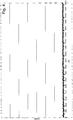
- the peak at the second Raman line corresponding to the wave number deviation 3200 cm -1 is not visible in this spectrum, see Fig. 5 .
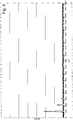
- the Raman lines at the wavelength corresponding to the wave number deviation 1000 cm -1 and at multiples of this wave number deviation have their maximum heights, see Fig. 7 .
- the method briefly described above can for example be used to monitor whether an unknown object, which can be available in a solid phase, in a liquid or gaseous phase and which can be located at a distance, contains one of the substances, for example explosives, which can be found in a database together with their associated Raman and RRS spectra.
- An installation for carrying out the method can then include one or more tunable lasers 1, which are tunable to emit light of different wavelengths, for example within a range between 200 nm and 400 nm, in which many substances of interest have absorption wavelengths.
- the analysis and image processing unit 19 is coupled to a database stored in a memory 27 and analyses Raman spectra recorded by the spectrometer 5, for example compares them to stored Raman spectra for different substances of interest and presents the result of the comparison for example on the monitor 23.
- the method can include the following steps:
- the examination can be performed using illumination with light of wavelengths corresponding to two or more absorption wavelengths for the same substance.
- the light source can then alternately be tuned to these two wavelengths.
- the light source can for example first emit a sequence of light pulses of a wavelength near or close to a first absorption wavelength, thereafter another sequence of light pulses of another wavelength near or close to a second absorption wavelength, then yet another sequence of light pulses of another wavelength near or close to the first absorption wavelength, etc.
- the light source 1 can in such an examination procedure include a plurality of light emitting units as shown in Fig. 9 and they can then simultaneously emit light pulses of two or more wavelengths, which are tuned in regard of two or more absorption wavelengths for the substance. Of course, this procedure can be used for a simultaneous examination in regard of different substances.
- the light pulses from the at least two light emitting units then have wavelengths tuned to the absorption wavelengths for two or more different substances.
- the light from the laser units 1 can be deflected using prisms 12, which are placed, so that the light rays which directly hit the object 3 have a path which is the same as the path for the light, which is collected by the optical system 7.
- the unit 13 for coupling and filtering instead can include a coupling lens 13' at the optical system and a filter 14 arranged at the input of the spectrometer 7.
- the equipment according to the description above mainly including laser, telescopic optics, spectrometer including a CCD, calculating unit and presentation unit, can be assembled on/in a vehicle such as truck or private car, not shown.
- the laser 1 and the telescopic optics 7 can be mounted to the roof of the vehicle and the spectrometer 5 including the CCD unit, control unit, analysis and image processing unit and presentation unit inside the vehicle and an operator in the car issues commands to and supervises the different included components.
- such a vehicle can be used to monitor that e.g. no bombs are placed along a road.
- the following steps may be performed:
- measurements may, as been indicated, be performed for a number of separate wavelengths positioned on both sides of the absorption wavelength. Measurements for a number of separate wavelengths within a one-sided interval taken from the absorption wavelength can alternatively be performed, for example when it is known that the highest significance or at least enough significance will be obtained by measurements for smaller wavelengths or for larger wavelengths.
- the interval of measurement can as been indicated be at most 2 nm corresponding to an one-sided interval of 1 nm.
- the interval of measurement taken from the absorption wavelength can generally be for example at most 10 nm or still better have a length of at most 5 nm or less than 2 nm, calculated from the absorption wavelength, which for a double-sided measurement corresponds to a total interval of measurement of 20, 10 and 4 nm.
- the number of measurements in each one-sided interval can be chosen considering the desired accuracy of measurement or more strictly considering the security that is desired in determining whether the sought-after substance or molecules of the specific kind exist/s/ in the object being examined. Even for such a small number as measurements for one or two separate wavelengths on either side of the absorption wavelength, for example at a wavelength distance of 0.5 nm between adjacent wavelengths, a significantly increased security in such a decision can be obtained. However, obviously measurements at more than ten separate wavelengths in each one-sided interval may be used when required or suitable.
Landscapes
- Physics & Mathematics (AREA)
- Spectroscopy & Molecular Physics (AREA)
- General Physics & Mathematics (AREA)
- Health & Medical Sciences (AREA)
- Biochemistry (AREA)
- Analytical Chemistry (AREA)
- Chemical & Material Sciences (AREA)
- General Health & Medical Sciences (AREA)
- Life Sciences & Earth Sciences (AREA)
- Immunology (AREA)
- Pathology (AREA)
- Nuclear Medicine, Radiotherapy & Molecular Imaging (AREA)
- Investigating, Analyzing Materials By Fluorescence Or Luminescence (AREA)
- Investigating Or Analysing Materials By Optical Means (AREA)
Claims (14)
- Procédé pour déterminer si un objet situé à une distance d'un équipement de mesure contient une substance ou des molécules d'un type, en particulier une substance dangereuse telle qu'un explosif ou un composant d'un explosif, l'objet étant éclairé avec une lumière d'une longueur d'onde définie provenant d'une source de lumière et la lumière diffusée par l'objet étant analysée pour obtenir un spectre Raman de résonnance, la lumière diffusée par l'objet étant collectée et concentrée en utilisant un système optique de type télescopique, pour être analysée par un spectromètre,
selon lequel la lumière provenant de la source de lumière est émise à une longueur d'onde qui correspond à une longueur d'onde d'absorption de ladite substance ou desdites molécules dudit un type et un spectre Raman de résonnance est produit,
caractérisé en ce qu'en plus la lumière provenant de la source de lumière est émise avec une pluralité de longueurs d'onde différentes autour de ladite longueur d'onde d'absorption, dans lequel la pluralité de longueurs d'onde différentes sont à une petite distance de ladite longueur d'onde d'absorption par rapport à la distance entre des longueurs d'onde d'absorption adjacentes,
en ce qu'un spectre Raman de résonnance est produit pour chacune de ces longueurs d'onde, et en ce que les spectres Raman de résonnance obtenus sont analysés pour déterminer si l'objet contient ladite substance ou lesdites molécules dudit un type. - Procédé selon la revendication 1, caractérisé en ce que les spectres Raman de résonnance obtenus sont comparés à des spectres Raman de résonnance pour les mêmes longueurs d'onde pour ladite substance ou lesdites molécules dudit un type et en ce qu'il est déterminé que l'objet contient ladite substance ou lesdites molécules dudit un type dans le cas où le résultat de la comparaison indique qu'il y a suffisamment de concordance.
- Procédé selon la revendication 1, caractérisé en ce que la longueur d'onde de la lumière émise par la source de lumière est modifiée par pas d'une longueur prédéterminée, en particulier par pas d'une longueur de moins de 0,5 nm, de préférence d'environ 0,1 nm, autour de la longueur d'onde d'absorption.
- Procédé selon la revendication 1, caractérisé en ce qu'un intervalle total de mesure est de moins de 20 nm, de préférence de moins de 10 nm, plus préférentiellement de moins de 4 nm, centré autour de la longueur d'onde d'absorption.
- Procédé selon la revendication 1, caractérisé en ce que la lumière provenant de la source de lumière est émise avec des longueurs d'onde qui sont alternativement proches de deux ou plus de deux longueurs d'onde d'absorption d'une substance ou de molécules dudit un type dans l'objet.
- Procédé selon la revendication 1, caractérisé en ce que la lumière provenant de la source de lumière est émise simultanément avec deux ou plus de deux longueurs d'onde proches de deux ou plus de deux longueurs d'onde d'absorption, respectivement, d'une substance ou de molécules dudit un type dans l'objet.
- Procédé selon la revendication 1, caractérisé en ce que la lumière provenant de la source de lumière est émise simultanément avec deux ou plus de deux longueurs d'onde proches des longueurs d'onde d'absorption de deux ou plus de deux substances ou molécules de deux ou plus de deux types, respectivement, dans l'objet.
- Procédé selon la revendication 1, caractérisé en ce que la lumière est émise sous forme d'impulsions présentant des temps de départ et des longueurs contrôlés et en ce que les spectres Raman de résonnance sont enregistrés pendant une fenêtre temporelle présentant un temps de départ et une longueur contrôlés après que la source de lumière a émis chaque impulsion lumineuse.
- Système pour déterminer si un objet situé à une distance du système contient une substance ou des molécules d'un type, en particulier un explosif ou des composants d'un explosif, incluant- une source de lumière pour éclairer l'objet avec une lumière d'une longueur d'onde définie,- un système optique de type télescopique pour la collecte et la concentration de la lumière diffusée par l'objet, et- un spectromètre pour l'analyse de la lumière collectée par le système optique pour obtenir un spectre Raman de résonnance, dans lequel la source de lumière est agencée pour émettre une lumière d'une longueur d'onde accordable, en particulier la source de lumière inclut au moins un laser accordable,- une unité de commande couplée à la source de lumière afin de la faire émettre une lumière d'une longueur d'onde qui correspond à une longueur d'onde d'absorption de ladite substance ou desdites molécules dudit un type et de la faire émettre une lumière d'une pluralité de longueurs d'onde autour de ladite longueur d'onde d'absorption, dans lequel la pluralité de longueurs d'onde sont à une petite distance de ladite longueur d'onde d'absorption par rapport à la distance entre des longueurs d'onde d'absorption adjacentes,- un détecteur couplé à ou inclus dans le spectromètre pour sortir des signaux représentant des spectres Raman de résonnance enregistrés,caractérisé en ce que le système comprend en outre :- une unité d'analyse et de traitement d'image couplée au détecteur et agencée pour analyser les spectres Raman de résonnance obtenus par éclairage avec une lumière d'une longueur d'onde à ladite longueur d'onde d'absorption et par éclairage avec une lumière de ladite pluralité de longueurs d'onde autour de la longueur d'onde d'absorption afin de déterminer si l'objet contient ladite substance ou lesdites molécules dudit un type.
- Système selon la revendication 9, caractérisé en ce que l'unité d'analyse et de traitement d'image est agencée- pour comparer les spectres Raman de résonnance, qui sont représentés par les signaux reçus depuis le détecteur, à des spectres Raman de résonnance pour les mêmes longueurs d'onde pour ladite substance ou pour les molécules dudit un type, et- pour décider que l'objet contient ladite substance ou lesdites molécules dudit un type dans le cas où le résultat de la comparaison indique qu'il y a une concordance suffisante.
- Système selon la revendication 9, caractérisé en ce que l'unité de commande est agencée pour que la source de lumière émette la lumière sous forme d'impulsions présentant des temps de départ et des longueurs contrôlés et est également couplée au détecteur pour lui faire enregistrer des signaux représentant des spectres Raman de résonnance enregistrés pendant une fenêtre temporelle présentant un temps de départ et une longueur contrôlés après que la source de lumière a émis chaque impulsion lumineuse.
- Système selon la revendication 9, caractérisé en ce que la source de lumière est agencée pour émettre une lumière de longueurs d'onde qui sont alternativement proches de deux ou plus de deux longueurs d'onde d'absorption pour une substance ou des molécules dudit un type dans l'objet.
- Système selon la revendication 9, caractérisé en ce que la source de lumière inclut deux ou plus de deux unités qui émettent simultanément ou alternativement une lumière de deux ou plus de deux longueurs d'onde, respectivement, qui sont proches de deux ou plus de deux longueurs d'onde d'absorption, respectivement, pour une substance ou des molécules dudit un type dans l'objet.
- Système selon la revendication 9, caractérisé en ce que la source de lumière inclut deux ou plus de deux unités d'émission de lumière qui émettent simultanément ou alternativement une lumière de deux ou plus de deux longueurs d'onde, qui sont proches de longueurs d'onde d'absorption pour deux ou plus de deux substances, respectivement, ou molécules de deux ou plus de deux types, respectivement, dans l'objet.
Applications Claiming Priority (3)
| Application Number | Priority Date | Filing Date | Title |
|---|---|---|---|
| US2969808P | 2008-02-19 | 2008-02-19 | |
| SE0800374A SE533197C2 (sv) | 2008-02-19 | 2008-02-19 | Avståndsdetektion av farliga ämnen såsom explosivämnen och beståndsdelar till explosivämnen |
| PCT/SE2009/000097 WO2009105009A1 (fr) | 2008-02-19 | 2009-02-19 | Détection de distance de sécurité de substances dangereuses telles que des explosifs et des composants d’explosifs |
Publications (3)
| Publication Number | Publication Date |
|---|---|
| EP2243016A1 EP2243016A1 (fr) | 2010-10-27 |
| EP2243016A4 EP2243016A4 (fr) | 2017-06-28 |
| EP2243016B1 true EP2243016B1 (fr) | 2021-04-07 |
Family
ID=40985758
Family Applications (1)
| Application Number | Title | Priority Date | Filing Date |
|---|---|---|---|
| EP09711570.3A Active EP2243016B1 (fr) | 2008-02-19 | 2009-02-19 | Détection à distance de sécurité de substances dangereuses telles que des explosifs et des composants d'explosifs |
Country Status (3)
| Country | Link |
|---|---|
| EP (1) | EP2243016B1 (fr) |
| SE (1) | SE533197C2 (fr) |
| WO (1) | WO2009105009A1 (fr) |
Families Citing this family (6)
| Publication number | Priority date | Publication date | Assignee | Title |
|---|---|---|---|---|
| CN102128818A (zh) * | 2010-11-30 | 2011-07-20 | 浙江理工大学 | 一种检测环境中硝基苯类污染物的方法 |
| AT511512B1 (de) | 2011-05-20 | 2013-02-15 | Univ Wien Tech | Vorrichtung zur detektion von reflektiertem, in einem objekt gestreuten licht |
| US9551649B2 (en) | 2015-05-28 | 2017-01-24 | Src, Inc. | Surface sampling method, device, and system for enhanced detection of chemical and biological agents |
| CN105842748B (zh) * | 2016-06-06 | 2017-11-10 | 上海理工大学 | 一种危险品车载拉曼远距离探测装置 |
| CN111133296B (zh) * | 2017-09-29 | 2023-05-26 | 株式会社四国综合研究所 | 物质远程确定装置和物质远程确定方法 |
| CN116678869A (zh) * | 2023-06-19 | 2023-09-01 | 北京理工大学 | 基于co2激光辐照的火炸药感度调控新方法 |
Family Cites Families (3)
| Publication number | Priority date | Publication date | Assignee | Title |
|---|---|---|---|---|
| US6040906A (en) * | 1996-07-11 | 2000-03-21 | Harhay; Gregory P. | Resonance raman spectroscopy for identifying and quantitating biomatter, organic, and inorganic analytes |
| US6608677B1 (en) * | 1998-11-09 | 2003-08-19 | Brookhaven Science Associates Llc | Mini-lidar sensor for the remote stand-off sensing of chemical/biological substances and method for sensing same |
| WO2006130921A1 (fr) * | 2005-06-08 | 2006-12-14 | Monash University | Etude de cellules biologiques par spectroscopie raman amelioree |
-
2008
- 2008-02-19 SE SE0800374A patent/SE533197C2/sv not_active IP Right Cessation
-
2009
- 2009-02-19 WO PCT/SE2009/000097 patent/WO2009105009A1/fr not_active Ceased
- 2009-02-19 EP EP09711570.3A patent/EP2243016B1/fr active Active
Non-Patent Citations (1)
| Title |
|---|
| None * |
Also Published As
| Publication number | Publication date |
|---|---|
| WO2009105009A1 (fr) | 2009-08-27 |
| EP2243016A1 (fr) | 2010-10-27 |
| SE533197C2 (sv) | 2010-07-20 |
| SE0800374L (sv) | 2009-08-20 |
| EP2243016A4 (fr) | 2017-06-28 |
Similar Documents
| Publication | Publication Date | Title |
|---|---|---|
| US8054454B2 (en) | Time and space resolved standoff hyperspectral IED explosives LIDAR detector | |
| US6310686B1 (en) | Raman probe with spatial filter and semi-confocal lens | |
| US8553210B2 (en) | System and method for combined Raman and LIBS detection with targeting | |
| US9228892B2 (en) | Compact, low cost Raman monitor for single substances | |
| US8508729B2 (en) | Compact, low cost Raman monitor for single substances | |
| US20130341509A1 (en) | Portable system for detecting explosive materials using near infrared hyperspectral imaging and method for using thereof | |
| US8379193B2 (en) | SWIR targeted agile raman (STAR) system for on-the-move detection of emplace explosives | |
| US6608677B1 (en) | Mini-lidar sensor for the remote stand-off sensing of chemical/biological substances and method for sensing same | |
| US20040155202A1 (en) | Methods and apparatus for molecular species detection, inspection and classification using ultraviolet fluorescence | |
| US20120140981A1 (en) | System and Method for Combining Visible and Hyperspectral Imaging with Pattern Recognition Techniques for Improved Detection of Threats | |
| US20110080577A1 (en) | System and Method for Combined Raman, SWIR and LIBS Detection | |
| US20120099102A1 (en) | Dual and multi-wavelength sampling probe for raman spectroscopy | |
| US20120062874A1 (en) | System and Method for Combined Raman and LIBS Detection with Targeting | |
| US20070279629A1 (en) | Method and apparatus for identifying a substance using a spectral library database | |
| US7692776B2 (en) | Chemical imaging explosives (CHIMED) optical sensor | |
| WO2014072736A1 (fr) | Procédé de caractérisation de fluides d'hydrocarbures | |
| EP2243016A1 (fr) | Détection de distance de sécurité de substances dangereuses telles que des explosifs et des composants d explosifs | |
| US20120154792A1 (en) | Portable system for detecting hazardous agents using SWIR and method for use thereof | |
| US7045757B1 (en) | Apparatus and method for chemical imaging of a biological sample | |
| CN111638203A (zh) | 一种拉曼探头的双波长激光共焦点探测方法 | |
| EP3850343B1 (fr) | Dispositif d'analyse de la composition de matière d'un échantillon par analyse de spectre de plasma | |
| JP2004527767A (ja) | 濃縮媒質に含まれる化学種の光学検出方法 | |
| US20070091306A1 (en) | Method and apparatus for detection and analysis of biological materials through laser induced fluorescence | |
| EP4127678A1 (fr) | Procédé de sélection de longueurs d'onde d'excitation raman dans une sonde raman à sources multiples |
Legal Events
| Date | Code | Title | Description |
|---|---|---|---|
| PUAI | Public reference made under article 153(3) epc to a published international application that has entered the european phase |
Free format text: ORIGINAL CODE: 0009012 |
|
| 17P | Request for examination filed |
Effective date: 20100806 |
|
| AK | Designated contracting states |
Kind code of ref document: A1 Designated state(s): AT BE BG CH CY CZ DE DK EE ES FI FR GB GR HR HU IE IS IT LI LT LU LV MC MK MT NL NO PL PT RO SE SI SK TR |
|
| AX | Request for extension of the european patent |
Extension state: AL BA RS |
|
| DAX | Request for extension of the european patent (deleted) | ||
| RAP1 | Party data changed (applicant data changed or rights of an application transferred) |
Owner name: PORTENDO STANDOFF DETECTION AB |
|
| 19U | Interruption of proceedings before grant |
Effective date: 20130412 |
|
| 19W | Proceedings resumed before grant after interruption of proceedings |
Effective date: 20160502 |
|
| RA4 | Supplementary search report drawn up and despatched (corrected) |
Effective date: 20170531 |
|
| RIC1 | Information provided on ipc code assigned before grant |
Ipc: G01N 21/65 20060101AFI20170524BHEP Ipc: G01J 3/02 20060101ALI20170524BHEP Ipc: G01J 3/44 20060101ALI20170524BHEP |
|
| STAA | Information on the status of an ep patent application or granted ep patent |
Free format text: STATUS: REQUEST FOR EXAMINATION WAS MADE |
|
| GRAP | Despatch of communication of intention to grant a patent |
Free format text: ORIGINAL CODE: EPIDOSNIGR1 |
|
| STAA | Information on the status of an ep patent application or granted ep patent |
Free format text: STATUS: GRANT OF PATENT IS INTENDED |
|
| INTG | Intention to grant announced |
Effective date: 20200625 |
|
| GRAS | Grant fee paid |
Free format text: ORIGINAL CODE: EPIDOSNIGR3 |
|
| GRAA | (expected) grant |
Free format text: ORIGINAL CODE: 0009210 |
|
| STAA | Information on the status of an ep patent application or granted ep patent |
Free format text: STATUS: THE PATENT HAS BEEN GRANTED |
|
| AK | Designated contracting states |
Kind code of ref document: B1 Designated state(s): AT BE BG CH CY CZ DE DK EE ES FI FR GB GR HR HU IE IS IT LI LT LU LV MC MK MT NL NO PL PT RO SE SI SK TR |
|
| REG | Reference to a national code |
Ref country code: GB Ref legal event code: FG4D |
|
| REG | Reference to a national code |
Ref country code: AT Ref legal event code: REF Ref document number: 1380315 Country of ref document: AT Kind code of ref document: T Effective date: 20210415 Ref country code: CH Ref legal event code: EP |
|
| REG | Reference to a national code |
Ref country code: DE Ref legal event code: R096 Ref document number: 602009063546 Country of ref document: DE |
|
| REG | Reference to a national code |
Ref country code: IE Ref legal event code: FG4D |
|
| REG | Reference to a national code |
Ref country code: LT Ref legal event code: MG9D |
|
| REG | Reference to a national code |
Ref country code: NL Ref legal event code: MP Effective date: 20210407 Ref country code: AT Ref legal event code: MK05 Ref document number: 1380315 Country of ref document: AT Kind code of ref document: T Effective date: 20210407 |
|
| PG25 | Lapsed in a contracting state [announced via postgrant information from national office to epo] |
Ref country code: BG Free format text: LAPSE BECAUSE OF FAILURE TO SUBMIT A TRANSLATION OF THE DESCRIPTION OR TO PAY THE FEE WITHIN THE PRESCRIBED TIME-LIMIT Effective date: 20210707 Ref country code: AT Free format text: LAPSE BECAUSE OF FAILURE TO SUBMIT A TRANSLATION OF THE DESCRIPTION OR TO PAY THE FEE WITHIN THE PRESCRIBED TIME-LIMIT Effective date: 20210407 Ref country code: HR Free format text: LAPSE BECAUSE OF FAILURE TO SUBMIT A TRANSLATION OF THE DESCRIPTION OR TO PAY THE FEE WITHIN THE PRESCRIBED TIME-LIMIT Effective date: 20210407 Ref country code: FI Free format text: LAPSE BECAUSE OF FAILURE TO SUBMIT A TRANSLATION OF THE DESCRIPTION OR TO PAY THE FEE WITHIN THE PRESCRIBED TIME-LIMIT Effective date: 20210407 Ref country code: LT Free format text: LAPSE BECAUSE OF FAILURE TO SUBMIT A TRANSLATION OF THE DESCRIPTION OR TO PAY THE FEE WITHIN THE PRESCRIBED TIME-LIMIT Effective date: 20210407 Ref country code: NL Free format text: LAPSE BECAUSE OF FAILURE TO SUBMIT A TRANSLATION OF THE DESCRIPTION OR TO PAY THE FEE WITHIN THE PRESCRIBED TIME-LIMIT Effective date: 20210407 |
|
| PG25 | Lapsed in a contracting state [announced via postgrant information from national office to epo] |
Ref country code: GR Free format text: LAPSE BECAUSE OF FAILURE TO SUBMIT A TRANSLATION OF THE DESCRIPTION OR TO PAY THE FEE WITHIN THE PRESCRIBED TIME-LIMIT Effective date: 20210708 Ref country code: IS Free format text: LAPSE BECAUSE OF FAILURE TO SUBMIT A TRANSLATION OF THE DESCRIPTION OR TO PAY THE FEE WITHIN THE PRESCRIBED TIME-LIMIT Effective date: 20210807 Ref country code: LV Free format text: LAPSE BECAUSE OF FAILURE TO SUBMIT A TRANSLATION OF THE DESCRIPTION OR TO PAY THE FEE WITHIN THE PRESCRIBED TIME-LIMIT Effective date: 20210407 Ref country code: SE Free format text: LAPSE BECAUSE OF FAILURE TO SUBMIT A TRANSLATION OF THE DESCRIPTION OR TO PAY THE FEE WITHIN THE PRESCRIBED TIME-LIMIT Effective date: 20210407 Ref country code: NO Free format text: LAPSE BECAUSE OF FAILURE TO SUBMIT A TRANSLATION OF THE DESCRIPTION OR TO PAY THE FEE WITHIN THE PRESCRIBED TIME-LIMIT Effective date: 20210707 Ref country code: PL Free format text: LAPSE BECAUSE OF FAILURE TO SUBMIT A TRANSLATION OF THE DESCRIPTION OR TO PAY THE FEE WITHIN THE PRESCRIBED TIME-LIMIT Effective date: 20210407 Ref country code: PT Free format text: LAPSE BECAUSE OF FAILURE TO SUBMIT A TRANSLATION OF THE DESCRIPTION OR TO PAY THE FEE WITHIN THE PRESCRIBED TIME-LIMIT Effective date: 20210809 Ref country code: ES Free format text: LAPSE BECAUSE OF FAILURE TO SUBMIT A TRANSLATION OF THE DESCRIPTION OR TO PAY THE FEE WITHIN THE PRESCRIBED TIME-LIMIT Effective date: 20210407 |
|
| REG | Reference to a national code |
Ref country code: DE Ref legal event code: R097 Ref document number: 602009063546 Country of ref document: DE |
|
| PG25 | Lapsed in a contracting state [announced via postgrant information from national office to epo] |
Ref country code: EE Free format text: LAPSE BECAUSE OF FAILURE TO SUBMIT A TRANSLATION OF THE DESCRIPTION OR TO PAY THE FEE WITHIN THE PRESCRIBED TIME-LIMIT Effective date: 20210407 Ref country code: DK Free format text: LAPSE BECAUSE OF FAILURE TO SUBMIT A TRANSLATION OF THE DESCRIPTION OR TO PAY THE FEE WITHIN THE PRESCRIBED TIME-LIMIT Effective date: 20210407 Ref country code: CZ Free format text: LAPSE BECAUSE OF FAILURE TO SUBMIT A TRANSLATION OF THE DESCRIPTION OR TO PAY THE FEE WITHIN THE PRESCRIBED TIME-LIMIT Effective date: 20210407 Ref country code: SK Free format text: LAPSE BECAUSE OF FAILURE TO SUBMIT A TRANSLATION OF THE DESCRIPTION OR TO PAY THE FEE WITHIN THE PRESCRIBED TIME-LIMIT Effective date: 20210407 Ref country code: RO Free format text: LAPSE BECAUSE OF FAILURE TO SUBMIT A TRANSLATION OF THE DESCRIPTION OR TO PAY THE FEE WITHIN THE PRESCRIBED TIME-LIMIT Effective date: 20210407 |
|
| PLBE | No opposition filed within time limit |
Free format text: ORIGINAL CODE: 0009261 |
|
| STAA | Information on the status of an ep patent application or granted ep patent |
Free format text: STATUS: NO OPPOSITION FILED WITHIN TIME LIMIT |
|
| 26N | No opposition filed |
Effective date: 20220110 |
|
| PG25 | Lapsed in a contracting state [announced via postgrant information from national office to epo] |
Ref country code: IS Free format text: LAPSE BECAUSE OF FAILURE TO SUBMIT A TRANSLATION OF THE DESCRIPTION OR TO PAY THE FEE WITHIN THE PRESCRIBED TIME-LIMIT Effective date: 20210807 |
|
| PG25 | Lapsed in a contracting state [announced via postgrant information from national office to epo] |
Ref country code: IT Free format text: LAPSE BECAUSE OF FAILURE TO SUBMIT A TRANSLATION OF THE DESCRIPTION OR TO PAY THE FEE WITHIN THE PRESCRIBED TIME-LIMIT Effective date: 20210407 |
|
| PG25 | Lapsed in a contracting state [announced via postgrant information from national office to epo] |
Ref country code: MC Free format text: LAPSE BECAUSE OF FAILURE TO SUBMIT A TRANSLATION OF THE DESCRIPTION OR TO PAY THE FEE WITHIN THE PRESCRIBED TIME-LIMIT Effective date: 20210407 |
|
| REG | Reference to a national code |
Ref country code: CH Ref legal event code: PL |
|
| REG | Reference to a national code |
Ref country code: BE Ref legal event code: MM Effective date: 20220228 |
|
| PG25 | Lapsed in a contracting state [announced via postgrant information from national office to epo] |
Ref country code: LU Free format text: LAPSE BECAUSE OF NON-PAYMENT OF DUE FEES Effective date: 20220219 |
|
| PG25 | Lapsed in a contracting state [announced via postgrant information from national office to epo] |
Ref country code: LI Free format text: LAPSE BECAUSE OF NON-PAYMENT OF DUE FEES Effective date: 20220228 Ref country code: IE Free format text: LAPSE BECAUSE OF NON-PAYMENT OF DUE FEES Effective date: 20220219 Ref country code: CH Free format text: LAPSE BECAUSE OF NON-PAYMENT OF DUE FEES Effective date: 20220228 |
|
| PG25 | Lapsed in a contracting state [announced via postgrant information from national office to epo] |
Ref country code: BE Free format text: LAPSE BECAUSE OF NON-PAYMENT OF DUE FEES Effective date: 20220228 |
|
| PGFP | Annual fee paid to national office [announced via postgrant information from national office to epo] |
Ref country code: FR Payment date: 20230215 Year of fee payment: 15 |
|
| PGFP | Annual fee paid to national office [announced via postgrant information from national office to epo] |
Ref country code: GB Payment date: 20230216 Year of fee payment: 15 Ref country code: DE Payment date: 20230217 Year of fee payment: 15 |
|
| PG25 | Lapsed in a contracting state [announced via postgrant information from national office to epo] |
Ref country code: HU Free format text: LAPSE BECAUSE OF FAILURE TO SUBMIT A TRANSLATION OF THE DESCRIPTION OR TO PAY THE FEE WITHIN THE PRESCRIBED TIME-LIMIT; INVALID AB INITIO Effective date: 20090219 |
|
| PG25 | Lapsed in a contracting state [announced via postgrant information from national office to epo] |
Ref country code: MK Free format text: LAPSE BECAUSE OF FAILURE TO SUBMIT A TRANSLATION OF THE DESCRIPTION OR TO PAY THE FEE WITHIN THE PRESCRIBED TIME-LIMIT Effective date: 20210407 Ref country code: CY Free format text: LAPSE BECAUSE OF FAILURE TO SUBMIT A TRANSLATION OF THE DESCRIPTION OR TO PAY THE FEE WITHIN THE PRESCRIBED TIME-LIMIT Effective date: 20210407 |
|
| PG25 | Lapsed in a contracting state [announced via postgrant information from national office to epo] |
Ref country code: TR Free format text: LAPSE BECAUSE OF FAILURE TO SUBMIT A TRANSLATION OF THE DESCRIPTION OR TO PAY THE FEE WITHIN THE PRESCRIBED TIME-LIMIT Effective date: 20210407 |
|
| REG | Reference to a national code |
Ref country code: DE Ref legal event code: R119 Ref document number: 602009063546 Country of ref document: DE |
|
| PG25 | Lapsed in a contracting state [announced via postgrant information from national office to epo] |
Ref country code: MT Free format text: LAPSE BECAUSE OF FAILURE TO SUBMIT A TRANSLATION OF THE DESCRIPTION OR TO PAY THE FEE WITHIN THE PRESCRIBED TIME-LIMIT Effective date: 20210407 |
|
| GBPC | Gb: european patent ceased through non-payment of renewal fee |
Effective date: 20240219 |
|
| PG25 | Lapsed in a contracting state [announced via postgrant information from national office to epo] |
Ref country code: DE Free format text: LAPSE BECAUSE OF NON-PAYMENT OF DUE FEES Effective date: 20240903 |
|
| PG25 | Lapsed in a contracting state [announced via postgrant information from national office to epo] |
Ref country code: GB Free format text: LAPSE BECAUSE OF NON-PAYMENT OF DUE FEES Effective date: 20240219 |
|
| PG25 | Lapsed in a contracting state [announced via postgrant information from national office to epo] |
Ref country code: FR Free format text: LAPSE BECAUSE OF NON-PAYMENT OF DUE FEES Effective date: 20240229 |
|
| PG25 | Lapsed in a contracting state [announced via postgrant information from national office to epo] |
Ref country code: GB Free format text: LAPSE BECAUSE OF NON-PAYMENT OF DUE FEES Effective date: 20240219 Ref country code: FR Free format text: LAPSE BECAUSE OF NON-PAYMENT OF DUE FEES Effective date: 20240229 Ref country code: DE Free format text: LAPSE BECAUSE OF NON-PAYMENT OF DUE FEES Effective date: 20240903 |