EP2243302B1 - Procédé et noeuds pour notification d'encombrement - Google Patents
Procédé et noeuds pour notification d'encombrement Download PDFInfo
- Publication number
- EP2243302B1 EP2243302B1 EP09702846.8A EP09702846A EP2243302B1 EP 2243302 B1 EP2243302 B1 EP 2243302B1 EP 09702846 A EP09702846 A EP 09702846A EP 2243302 B1 EP2243302 B1 EP 2243302B1
- Authority
- EP
- European Patent Office
- Prior art keywords
- node
- receiver
- data transmission
- congestion
- control message
- Prior art date
- Legal status (The legal status is an assumption and is not a legal conclusion. Google has not performed a legal analysis and makes no representation as to the accuracy of the status listed.)
- Active
Links
Images






Classifications
-
- H—ELECTRICITY
- H04—ELECTRIC COMMUNICATION TECHNIQUE
- H04Q—SELECTING
- H04Q3/00—Selecting arrangements
- H04Q3/0016—Arrangements providing connection between exchanges
- H04Q3/0062—Provisions for network management
- H04Q3/0091—Congestion or overload control
-
- H—ELECTRICITY
- H04—ELECTRIC COMMUNICATION TECHNIQUE
- H04L—TRANSMISSION OF DIGITAL INFORMATION, e.g. TELEGRAPHIC COMMUNICATION
- H04L47/00—Traffic control in data switching networks
- H04L47/10—Flow control; Congestion control
- H04L47/11—Identifying congestion
-
- H—ELECTRICITY
- H04—ELECTRIC COMMUNICATION TECHNIQUE
- H04L—TRANSMISSION OF DIGITAL INFORMATION, e.g. TELEGRAPHIC COMMUNICATION
- H04L47/00—Traffic control in data switching networks
- H04L47/10—Flow control; Congestion control
- H04L47/26—Flow control; Congestion control using explicit feedback to the source, e.g. choke packets
- H04L47/263—Rate modification at the source after receiving feedback
-
- H—ELECTRICITY
- H04—ELECTRIC COMMUNICATION TECHNIQUE
- H04L—TRANSMISSION OF DIGITAL INFORMATION, e.g. TELEGRAPHIC COMMUNICATION
- H04L47/00—Traffic control in data switching networks
- H04L47/10—Flow control; Congestion control
- H04L47/30—Flow control; Congestion control in combination with information about buffer occupancy at either end or at transit nodes
-
- H—ELECTRICITY
- H04—ELECTRIC COMMUNICATION TECHNIQUE
- H04L—TRANSMISSION OF DIGITAL INFORMATION, e.g. TELEGRAPHIC COMMUNICATION
- H04L47/00—Traffic control in data switching networks
- H04L47/10—Flow control; Congestion control
- H04L47/33—Flow control; Congestion control using forward notification
-
- H—ELECTRICITY
- H04—ELECTRIC COMMUNICATION TECHNIQUE
- H04L—TRANSMISSION OF DIGITAL INFORMATION, e.g. TELEGRAPHIC COMMUNICATION
- H04L47/00—Traffic control in data switching networks
- H04L47/10—Flow control; Congestion control
- H04L47/35—Flow control; Congestion control by embedding flow control information in regular packets, e.g. piggybacking
-
- H—ELECTRICITY
- H04—ELECTRIC COMMUNICATION TECHNIQUE
- H04W—WIRELESS COMMUNICATION NETWORKS
- H04W28/00—Network traffic management; Network resource management
- H04W28/02—Traffic management, e.g. flow control or congestion control
- H04W28/0252—Traffic management, e.g. flow control or congestion control per individual bearer or channel
-
- H—ELECTRICITY
- H04—ELECTRIC COMMUNICATION TECHNIQUE
- H04W—WIRELESS COMMUNICATION NETWORKS
- H04W28/00—Network traffic management; Network resource management
- H04W28/02—Traffic management, e.g. flow control or congestion control
- H04W28/0284—Traffic management, e.g. flow control or congestion control detecting congestion or overload during communication
-
- H—ELECTRICITY
- H04—ELECTRIC COMMUNICATION TECHNIQUE
- H04W—WIRELESS COMMUNICATION NETWORKS
- H04W8/00—Network data management
- H04W8/02—Processing of mobility data, e.g. registration information at HLR [Home Location Register] or VLR [Visitor Location Register]; Transfer of mobility data, e.g. between HLR, VLR or external networks
- H04W8/04—Registration at HLR or HSS [Home Subscriber Server]
Definitions
- the present application relates to a method for performing congestion notification in a data transmission of data packets over a communication network, as well as to communication network nodes adapted for participating in such a data transmission.
- packet marking is typically used by Internet routers to alert applications that congestion has occurred somewhere along the transmission path.
- the application or transport layer can then reduce the transmission rate to reduce the congestion.
- IP Internet Protocol
- ECN Explicit Congestion Notification
- RRC Request for Comments
- the IP header indicates per packet the support for ECN.
- the actual packet marking is done in ECN capable IP routers by modifying the ECN field of the IP header to indicate congestion.
- IP header For nodes that are not directly accessing the IP header (i.e. for non-routers), this presents a problem, as it may not always be possible to observe or modify the encapsulated IP packet header. This situation occurs for example with MPLS (Multiprotocol Label Switching) or PPTP (Point-to-point tunneling protocol), and in general whenever ciphering or integrity protection is used and/or the modification of the IP header is impossible.
- MPLS Multiprotocol Label Switching
- PPTP Point-to-point tunneling protocol
- ECN On the IP layer.
- the application in the receiver can use the received ECN indication as a trigger to inform the sender application to lower the packet rate and by that avoid packet losses.
- This can be achieved by using application layer signaling (e.g. the Real-Time Control Protocol (RTCP)).
- RTCP Real-Time Control Protocol
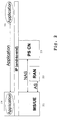
- FIG 2 shows in figure 2 in relation to a mobile network consisting of a Radio Access Network (RAN) and Packet Switched Core Network (PS CN) parts.
- RAN Radio Access Network
- PS CN Packet Switched Core Network
- the control of the Access Stratum (AS) communication on the section (e.g. link) between the MS and the RAN can not access the IP packets, in contrast to the control of the Non-Access Stratum (NAS) on the section between the MS and the PS CN.
- AS Access Stratum
- NAS Non-Access Stratum
- the link layer does not support packet marking at intermediate nodes.
- the marking is only possible at the UE and Gateway General Packet Radio Service Support Node (GGSN) (and System Architecture Evolution Gateway (SAE-GW)) nodes.
- GGSN Gateway General Packet Radio Service Support Node
- SAE-GW System Architecture Evolution Gateway
- entity 22 of the RAN in Fig. 2 may not be able to ECN mark IP packets for lack of being able to access the IP header.
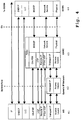
- the problems related to packet marking are further shown in figure 3 in relation to the Packet Switched (PS) domain in GERAN (GSM EDGE Radio Access Network, where GSM stands for Global System for Mobile communications and EDGE for Enhanced Data Rates for GSM Evolution).
- GSM Packet Switched
- GERAN GSM EDGE Radio Access Network
- an application 35 communicates with another application (not shown) via a protocol stacked network comprising an MS 31, a Base Station Subsystem (BSS) 32, a Serving GPRS Support Node (SGSN) 33 and a Gateway GPRS Support Node (GGSN) 34.
- BSS Base Station Subsystem
- SGSN Serving GPRS Support Node
- GGSN Gateway GPRS Support Node
- SNDCP Sub-Network Dependent Convergence Protocol
- LLC Logical Link Control
- RLC Radio Link Control
- MAC Medium Access Control
- RF Radio Frequency
- BSSGP Base Station Subsystem GPRS Protocol
- L1 Layer 1
- GTP GPRS Tunneling Protocol
- GTP-U GPRS Tunneling Protocol for User Plane
- UDP User Datagram Protocol
- L2 Layer 2
- Um, Gb, Gn and Gi are known interfaces.
- the Base Station Subsystem (BSS) 32 comprises a Base Station Controller (BSC) and a number of Base Transceiver Stations (BTS) and would be a good place to perform packet marking, for example based on the radio conditions and the different packet queues in the downlink direction.
- BSC Base Station Controller
- BTS Base Transceiver Stations
- the main problem in this case is that the LLC-protocol (Logical Link Control protocol) between the MS 31 and the SGSN 33 is normally operating in ciphered mode. This means that the BSS 32 has no way to perform packet marking in the IP packet header, as the IP packet is sent ciphered through the BSS 32.
- LLC-protocol Logical Link Control protocol
- FIG. 4 Another example of the same problem is shown in figure 4 , where the PS domain user plane is shown for a Generic Access Network (GAN).
- GAN Generic Access Network
- the communication generically shown in Fig. 2 is embodied by an MS 41, a node 42 of a generic IP network, a GAN controller (GANC) 43 and an SGSN 44.
- GANC 43 Similar to the BSS in the case of Fig. 3 , the GANC 43 is not able to perform packet marking as the LLC-layer between the MS 41 and the SGSN 44 is normally functioning in ciphered mode.
- the basic structure is known, such that a further explanation is not necessary.
- the existing link layer mechanisms in GERAN, GAN, WCDMA (Wideband Code Division Multiple Access) and LTE do not support packet marking in those nodes which handle and/or control the link layer on the air interface to the MS, e.g. BSS/BSC, GANC, RNC or eNodeB (E-UTRAN NodeB where E-UTRAN stands for Evolved UTRAN and UTRAN stands for Universal Terrestrial Radio Access Network).
- BSS/BSC Global System for Mobile communications
- GANC Global System for Mobile Network
- RNC Radio Network
- the object of the present application is to provide an improved mechanism for performing congestion notification.
- a method of performing congestion notification for a data transmission from a sender to a receiver is suggested, said data transmission involving a first node and a second node between said sender and receiver, said data packets passing from said second node to said first node towards said receiver, where said method comprises:
- ECN explicit congestion notification
- RFC 3168 The specific ECN concept described in RFC 3168 is thus one example of such a generic explicit congestion notification.
- node relates to a single unit or a group of units that provide one or more functionalities in a network.
- the advantage of the proposed concept is that the performing of congestion notification becomes more flexible and easy to implement, as e.g. even a node that for any given reason is unable to directly send an explicit congestion notification to the receiver (for example a node that can not access a certain protocol header in which a field is defined for markings that indicate congestion) can be involved in the process of congestion monitoring and congestion notification, namely by sending appropriate messages upstream to another node that in turn is capable of sending the explicit congestion notification to the receiver (for example a node that can access a certain protocol header in which a field is defined for markings that indicate congestion).
- the decision on whether to notify can be made by the first node or the second node.
- the message to the second node may comprise the result of the decision, i.e. a congestion indication that triggers the second node to send an explicit congestion notification
- the message may contain information for making the decision (e.g. results of monitoring queue lengths, link delays, etc.), and the second node then proceeds to make the decision based on that information.
- a data transmission 10 between a sender 14 and a receiver 11 is taking place, which involves the sending of data packets from sender 14 to receiver 11, where the example assumes that both are communication system terminals, e.g. telephone terminals of two different telephone systems or of the same system. Furthermore, the example assumes that receiver 11 is a mobile terminal or mobile station MS of a mobile communications system that furthermore comprises an access network node such as a radio access network (RAN) node 12 and a core network (CN) node 13. It is noted that the transmission 10 may involve further nodes and elements, as is well known, but which are not shown for simplicity.
- RAN radio access network
- CN core network
- a method embodiment of the invention then comprises:
- the decision on whether to notify the receiver 11 of a congestion condition can be made in the first node 12 or the second node 13, as will be explained in more detail in connection with the embodiments of figures 8 to 11 .
- the decision itself can be performed in any suitable or desirable way, e.g. by evaluating the state of resources that can potentially become congested, such as link conditions (especially conditions on a radio link) and queue states. Measurement results relating to the state of such resources can be compared with threshold values, and if the comparison results in the judgment that a congestion condition is present or threatens to occur, then it can be decided to notify the receiver 11, who can then appropriately signal this to the sender (e.g. via feedback messages relating to the flow control of packets in transmission 10), such that the sender can adjust the flow of packets, for example reduce the sending rate.
- the sender e.g. via feedback messages relating to the flow control of packets in transmission 10
- the message 15 from the first node to the second node can be sent in any suitable or desirable way, for example in dedicated control messages, or as a part of feedback messages being sent from receiver 11 to sender 14.
- the explicit congestion notification 16 can also be sent in any suitable or desirable way. For example, this can be done through dedicated signaling separate from the flow of packets in transmission 10. However, preferably the explicit congestion notification is sent within the packets of the transmission, e.g. by marking an appropriate section of a header of said packets.
- Fig. 8 shows a flow chart of a method in which the first node 12 makes the decision and the message 15 comprises a congestion indication. More specifically, in step S81 the first node 12 determines whether a congestion condition is present or threatening, and if this is the case, proceeds to step S82, in which a congestion indication is sent in message 15 upstream to second node 13. The second node 13 receives the message and then sends the explicit congestion notification 16 to receiver 11, see step S83.
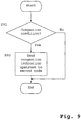
- Fig. 9 shows a flow chart of a corresponding method of controlling a first node 12 of a transmission network for handling a data transmission 10 from a sender 14 to a receiver 11, the data transmission 10 involving said first 12 node and a further node 13 between said sender 14 and receiver 11, said data packets passing from said further node 13 to said node 12 towards said receiver 11, where the method comprises: making a decision S91 on whether to notify the receiver 11 of a congestion condition in said data transmission 10 and, if it is decided to notify said receiver 11, sending a control message 15 comprising a congestion indication to said further node 13, see S92.
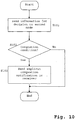
- message 15 comprises information for making said decision and the second node 13 makes said decision. More specifically, first node 12 sends information for the decision to the second node 13 in step S101. This information can e.g. be measurement results relating to the previously mentioned state of resources that can potentially become congested. This message 15 is then received by second node 13, which then makes a decision on whether or not a congestion condition is present, e.g. compares the state information with corresponding thresholds, see step S102. If the result is that a congestion condition is present or threatening, then an explicit congestion notification 16 is sent to the receiver 11, see S103.
- Fig. 11 shows a flow chart of a corresponding method of controlling a second node 13 of a transmission network for handling a data transmission 10 from a sender 14 to a receiver 11, said data transmission 10 involving said second node 13 and a further node 12 between said sender 14 and receiver 11, said data packets passing from said node 13 to said further node 12 towards said receiver 14, where said method comprises:
- control methods may be implemented in the form of a computer program product comprising computer code parts arranged for performing the method steps when loaded into and executed on a programmable node of a communication network.
- Fig. 12 shows a schematic representation of an embodiment of a first node 120 according to the invention.
- the node 120 comprises a control part 121, which e.g. can be a processor or a group of processors that execute appropriate programs.
- Numeral 122 refers to a memory part that e.g. comprises buffers for holding packets, volatile memories, non-volatile memories for programs, etc.
- Numeral 123 refers to a communication part that is adapted to receive and send signals and data packets.
- Such elements of a node of a communication system are basically known, such that a further description is not necessary here.
- node 120 is for handling a data transmission from a sender to a receiver, the data transmission involving node 120 and a further node (e.g. node 13 of Fig. 1 ) between said sender and receiver, the data packets passing from said further node to node 120 towards said receiver, where node 120 comprises a controller 121 arranged for making a decision on whether to notify the receiver of a congestion condition in said data transmission and sending a control message comprising a congestion indication to the further node.
- controller 121 comprises a part 1210 that provides the functionality of making a decision and controlling to send the control message.
- Part 1210 can e.g. be an appropriate set of code parts of a computer program executed on controller 121.
- Fig. 13 shows a schematic representation of an embodiment of a second node 130 according to the invention.
- the node 130 comprises a control part 131, which e.g. can be a processor or a group of processors that execute appropriate programs.
- Numeral 132 refers to a memory part that e.g. comprises buffers for holding packets, volatile memories, non-volatile memories for programs, etc.
- Numeral 133 refers to a communication part that is adapted to receive and send signals and data packets.
- Such elements of a node of a communication system are basically known, such that a further description is not necessary here.
- node 130 is for handling a data transmission from a sender to a receiver, the data transmission involving said node 130 and a further node (like node 12 in Fig. 1 ) between said sender and receiver, said data packets passing from node 130 to said further node towards said receiver, where node 130 comprises a controller 131 arranged for receiving a message from said further node relating to a decision on whether to notify said receiver of a congestion condition in said data transmission, and for sending an explicit congestion notification to said receiver if it is decided to notify said receiver of said congestion condition.
- controller 131 comprises a part 1310 that provides the functionality of making a decision and controlling to send the explicit congestion notification, based on information received from the further node (node 12), or of controlling to send the explicit congestion notification in response to receiving the congestion indication from the further node.
- Part 1310 can e.g. be an appropriate set of code parts of a computer program executed on controller 131.
- the described functionalities can be provided as hardware, software or any suitable combination of hardware and software.
- the concept of the invention is applied to data transmissions that are protocol stacked data transmissions using data packets of a first layer, and where the first node controls at least a section of the protocol stacked data transmission at a second layer lower than said first layer and is not adapted or unable to access the data packets of said first layer.
- the section may be a specific link, e.g. a radio between a radio access network node (such as a BSS) and a mobile terminal.
- the first layer may then be the network layer, e.g. IP packets, and the second layer may be the link layer.
- the inability to access the data packets, especially to access the header of the data packets can e.g. be due to encryption of said first layer data packets.
- this embodiment provides a simple and easy to implement mechanism for letting the first node contribute in an explicit congestion notification scheme, without having to modify the first node or the process of packet transmission for letting the first node access the data packets.
- the data packets are Internet Protocol (IP) packets
- IP Internet Protocol
- the first node may comprise one of a controller in a Base Station Subsystem (BSS) and a Generic Access Network Controller (GANC).
- BSS 32 and SGSN 33 of Fig. 3 can be arranged to respectively act as first and second nodes as described above
- GANC 43 and SGSN 44 of Fig. 4 can also be arranged to respectively act as first and second nodes as described above.
- the message 15 from the first node to the second node can be sent in any suitable or desirable way.
- the message is sent using existing and implemented mechanisms, like Packet Flow Context (PFC) Flow Control or Mobile Station Flow Control.
- PFC Packet Flow Context
- Mobile Station Flow Control Mobile Station Flow Control
- the first node identifies one or more flows concerned by congestion and adds to the message information for identifying the one or more flows concerned by congestion.
- the second node can then send the explicit congestion notification accordingly, e.g. only mark the packets of affected flows or specifically identify the affected flows in the explicit congestion notification sent to the receiver, such that this information can again be appropriately passed on to the sender for flow control adjustment.
- the explicit congestion notification is sent by said second node in a control message to said first node, e.g. in a Logical Link Control message, that is distinguishable from user plane messages, and that the first node in response to identifying the control message forwarding the explicit congestion notification to the receiver according to a low delay transmission procedure that provides lower delays towards said receiver than experienced by user plane traffic.
- the explicit congestion notification packets are then not queued like regular user plane traffic, but are transmitted with priority, in order to reduce the delay as far as possible.
- the BSC/GANC informs the SGSN, or in general terms a core network node, about the need to perform packet marking and then the SGSN may access the IP packet header and perform the packet marking if it is adapted to perform this modification of the IP packets.
- a method of congestion notification can also be provided by duplicating the ECN field in the link layer protocols, performing marking on a link layer, and copying the link layer marking to the ECN field at the other end of the link.
- the marking of the IP packets can be initiated by the BSC and GANC by using the underlying protocols between the BSC and the MS (i.e. RLC) and between the GANC and the MS (i.e. GA-PSR) to transfer the explicit congestion notification information from the BSC/GANC to the MS and perform there the marking of IP packets according to the notification received via the underlying protocol.
- RLC the underlying protocols between the BSC and the MS
- GA-PSR the MS
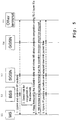
- FIG. 6 shows an example in which the BSS 52, e.g. a BSC in the BSS, detects possible packet congestion in the downlink direction towards the MS 51. The detection can for example be performed by monitoring radio conditions and/or packet queues.
- the BSS 52 informs the SGSN 53 about possible congestion in the downlink and then the SGSN 53 informs the MS 51 by performing packet marking on the IP packet or by including this indication on LLC or SNDCP protocols.
- the SGSN 53 can inform the MS 51 about a congestion using IP, LLC or SNDCP layer based on the congestion notification provided by the BSS.
- the MS 51 can in turn inform a sender 55 of the packets, e.g. a server or another terminal, to adapt the data rate.
- Such congestion notification can be conveyed to SGSN 53 using enhanced existing messages like PFC Flow Control or MS Flow Control, see 3GPP TS 48.018, incorporated by reference.
- Another alternative is that SGSN 53 evaluates the information about the link rate provided by the BSS in the existing MS Flow Control message (3GPP TS 48.018) and uses it as a base for a decision whether a congestion notification shall be conveyed to the mobile station or not,
- PFC Flow Control addresses a packet flow associated with a particular Packet Data Protocol (PDP) Context, i.e. the congestion notification would then be associated with a particular one packet flow and the SGSN could provide this indication to the MS as well on the packet flow or PDP context level, e.g. by only marking IP packets belonging to this specific PFC.
- MS Flow Control as currently specified, is a general means to control the downlink (DL) packet rate associated with an MS and thus does not provide the same granularity as the Packet Flow Control mechanism. However, adding information indicating the congested packet flow's PFI (Packet Flow Identifier) enables a similar granularity as provided by the PFC Flow Control mechanism.
- PFI Packet Flow Identifier
- Both alternatives that involve sending a message upstream towards the SGSN have larger reaction time compared to an example where it is the BSS that is the node closest to the bottleneck and thus fastest to discover of a potential congestion, that takes the decision to notify the mobile station over the shortest possible path using the RLC layer.
- a method to avoid the anticipated delay is to convey the congestion notification to the MS using an LLC control message, e.g. a so called exchange IDentification (XID) message.
- XID exchange IDentification
- LLC control messages are marked in BSSGP messages, when sent over the Gb interface between the CN/SGSN and the BSS, in such a way that the BSS can distinguish these messages from the User Plane (UP) messages and thus send these messages over the radio interface with a higher priority, i.e. avoiding queuing and creation of unnecessary extra delay.
- UP User Plane
- the BSS comprises measurement means for evaluating the state of resources which can potentially be congested, e.g. monitors for determining radio conditions or queue states.
- the node that takes the decision to notify the mobile station has a processing system to perform the decision, e.g. by comparing the measurement results to corresponding thresholds indicative of an actual or potential congestion.
- the processing system may also execute further evaluations for determining whether an indication to the MS should be sent, e.g. by averaging results over a period of time.
- the nodes comprise transmitters and receivers connected to the processing system and/or measurement means.
- the congestion indication “ECN” can be received on any of the lower layers (MAC, RLC, LLC, SNDCP or even IP) and needs to be passed to the receiver application so that it may inform the sending application about the congestion.
- the above mentioned lower layers are somewhat different and are shown in figure 4 (e.g. Remote IP, UDP, GA-PSR, LLC, SNDCP or IP).
- the packet drop rate can be reduced in the GERAN and GAN as a potential congestion can be indicated by the BSC/GANC to the receiving MS already before any congestion takes place. This gives the applications the possibility to adapt the packet transfer rate and bitrate.
- a first node may be handling or controlling a lower protocol layer in a data transmission from a sender to a receiver.
- the first node may control the lower layer only on a section of the data transmission, e.g. on a selected link.
- a higher layer in the protocol stack of the data transmission may be adapted to forward an indication of a potential congestion to the receiver.
- the first node may not be adapted to access data packets in the higher layer.
- the first node comprises measurement means to monitor quantities indicative of a congestion in the data transmission, for example a potential imminent congestion.
- the results of the measurements are evaluated to determine whether an indication of the congestion shall be sent to the receiver. If the evaluation is performed in a further node, the measurement results can be forwarded for this purpose.
- the indication is sent by the node performing the evaluation, i.e. the first or further node, to the receiver of the communication. If the first node sends the indication it can be sent on the lower protocol layer. Alternatively, the further node can send the information on the higher layer or a protocol layer between the lower layer and the higher layer.
- the receiver is adapted to inform an application layer of an indication received on the higher layer. If the indication is received on a layer below the higher layer, the receiver is adapted to inform the application layer also of an indication received on a layer below the higher layer. An application in the receiver can then inform the sender to adapt the transmission rate in the data transmission.
Landscapes
- Engineering & Computer Science (AREA)
- Computer Networks & Wireless Communication (AREA)
- Signal Processing (AREA)
- Databases & Information Systems (AREA)
- Data Exchanges In Wide-Area Networks (AREA)
- Mobile Radio Communication Systems (AREA)
Claims (16)
- Procédé de mise en oeuvre d'une notification d'encombrement pour une transmission de données (10) depuis un expéditeur (14) vers un récepteur (11), ladite transmission de données impliquant un premier noeud (12) et un deuxième noeud (13) entre lesdits expéditeur et récepteur, lesdits paquets de données passant dudit deuxième noeud audit premier noeud en direction dudit récepteur, ledit procédé comprenant :- l'envoi (S82) d'un message (15) depuis ledit premier noeud vers ledit deuxième noeud, ledit message se rapportant à une décision indiquant s'il faut notifier ledit récepteur d'une condition d'encombrement dans ladite transmission de données,- l'envoi (S83) d'une notification d'encombrement explicite (16) depuis ledit deuxième noeud vers ledit récepteur s'il est décidé de notifier ledit récepteur de ladite condition d'encombrement, caractérisé en ce que ladite notification d'encombrement explicite est envoyée par ledit deuxième noeud (13) dans un message de commande vers ledit premier noeud (12), ledit message de commande étant distinctif par rapport aux messages de plan utilisateur, et en ce que le procédé comprend en outre ledit premier noeud (12), en réponse à l'identification dudit message de commande, transférant ladite notification d'encombrement explicite audit récepteur (11) selon une procédure de transmission à faible délai qui fournit des délais en direction dudit récepteur (11) plus faibles que ceux subis par le trafic de plan utilisateur.
- Procédé selon la revendication 1, dans lequel ledit premier noeud prend ladite décision et ledit message comprend une indication d'encombrement.
- Procédé selon la revendication 1, dans lequel ledit message comprend des informations pour prendre ladite décision et ledit deuxième noeud prend ladite décision.
- Procédé selon l'une des revendications précédentes, dans lequel ladite transmission de données est une transmission de données empilées de protocole en utilisant des paquets de données d'une première couche, et ledit premier noeud commande au moins une section de ladite transmission de données empilées de protocole au niveau d'une seconde couche inférieure à ladite première couche et n'est pas conçu pour accéder auxdits paquets de données de ladite première couche.
- Procédé selon la revendication 4, dans lequel ladite première couche est la couche réseau et ladite seconde couche est la couche liaison.
- Procédé selon l'une des revendications précédentes, où lesdits paquets de données sont des paquets de protocole Internet, et ledit deuxième noeud est conçu pour mettre en oeuvre un marquage d'encombrement dans un en-tête desdits paquets de protocole Internet.
- Procédé selon l'une des revendications précédentes, dans lequel ledit récepteur est un terminal mobile d'un réseau de communication mobile, ledit premier noeud est compris dans un réseau d'accès et ledit deuxième noeud est compris dans un réseau central.
- Procédé selon l'une des revendications précédentes, dans lequel ledit premier noeud comprend l'un d'un contrôleur dans un sous-système de station de base et d'un contrôleur de réseau d'accès générique.
- Procédé selon l'une des revendications précédentes, dans lequel ledit deuxième noeud est un noeud de prise en charge de service radio de paquet général de desserte.
- Procédé selon l'une des revendications précédentes, dans lequel ledit message est envoyé en utilisant l'une parmi une commande de flux de contexte de flux de paquets et une commande de flux de station mobile.
- Procédé selon l'une des revendications précédentes, dans lequel ledit premier noeud identifie un ou plusieurs flux concernés par un encombrement et ajoute audit message des informations pour l'identification dudit ou desdits flux concernés par un encombrement.
- Procédé selon la revendication 1, dans lequel ledit message de commande est un message de commande de liaison logique.
- Noeud (12 ; 120) d'un réseau de transmission pour la prise en charge d'une transmission de données depuis un expéditeur vers un récepteur, ladite transmission de données impliquant ledit noeud et un autre noeud (13) entre lesdits expéditeur et récepteur, lesdits paquets de données passant dudit autre noeud audit noeud en direction dudit récepteur, où ledit noeud comprend un contrôleur (121) agencé pour prendre une décision indiquant s'il faut notifier ledit récepteur d'une condition d'encombrement dans ladite transmission de données et envoyer un premier message de commande comprenant une indication d'encombrement audit autre noeud (13), caractérisé en ce que ledit noeud (12 ; 120) est conçu pour recevoir une notification d'encombrement explicite depuis ledit autre noeud (13) dans un deuxième message de commande, ledit message de commande étant distinctif par rapport aux messages de plan utilisateur, et en ce que ledit noeud (12 ; 120) est en outre conçu pour transférer ladite notification d'encombrement explicite audit récepteur (11) selon une procédure de transmission à faible délai qui fournit des délais en direction dudit récepteur (11) plus faibles que ceux subis par le trafic de plan utilisateur en réponse à l'identification dudit deuxième message de commande.
- Procédé de commande d'un noeud (12) d'un réseau de transmission pour la prise en charge d'une transmission de données depuis un expéditeur (14) vers un récepteur (11), ladite transmission de données impliquant ledit noeud et un autre noeud (13) entre lesdits expéditeur et récepteur, lesdits paquets de données passant dudit autre noeud audit noeud en direction dudit récepteur, ledit procédé comprenant :la prise (S91) d'une décision indiquant s'il faut notifier ledit récepteur d'une condition d'encombrement dans ladite transmission de données et, s'il est décidé de notifier ledit récepteur, l'envoi (S92) d'un premier message de commande comprenant une indication d'encombrement audit autre noeud,caractérisé en ce que le procédé comprend en outre :la réception d'une notification d'encombrement explicite depuis ledit autre noeud (13) dans un deuxième message de commande par ledit noeud (12), ledit message de commande étant distinctif par rapport aux messages de plan utilisateur, et ledit noeud (12), en réponse à l'identification dudit deuxième message de commande,transférant ladite notification d'encombrement explicite audit récepteur (11) selon une procédure de transmission à faible délai qui fournit des délais en direction dudit récepteur (11) plus faibles que ceux subis par le trafic de plan utilisateur.
- Noeud (13 ; 130) d'un réseau de transmission pour la prise en charge d'une transmission de données depuis un expéditeur (14) vers un récepteur (11), ladite transmission de données impliquant ledit noeud et un autre noeud (12) entre lesdits expéditeur et récepteur, lesdits paquets de données passant dudit noeud (13 ; 130) audit autre noeud (12) en direction dudit récepteur, où ledit noeud comprend un contrôleur (131) agencé pour recevoir un message dudit autre noeud se rapportant à une décision indiquant s'il faut notifier ledit récepteur d'une condition d'encombrement dans ladite transmission de données, et pour envoyer une notification d'encombrement explicite audit récepteur s'il est décidé de notifier ledit récepteur (11) de ladite condition d'encombrement, caractérisé en ce que ledit noeud (13 ; 130) est conçu pour envoyer ladite notification d'encombrement explicite dans un message de commande audit autre noeud (12), ledit message de commande étant distinctif par rapport aux messages de plan utilisateur, et en ce que ledit autre noeud (12) est conçu pour transférer ladite notification d'encombrement explicite audit récepteur (11) selon une procédure de transmission à faible délai qui fournit des délais en direction dudit récepteur (11) plus faibles que ceux subis par le trafic de plan utilisateur en réponse à l'identification dudit deuxième message de commande.
- Procédé pour commander un noeud d'un réseau de transmission pour la prise en charge d'une transmission de données depuis un expéditeur vers un récepteur, ladite transmission de données impliquant ledit noeud et un autre noeud entre lesdits expéditeur et récepteur, lesdits paquets de données passant dudit noeud audit autre noeud en direction dudit récepteur, ledit procédé comprenant :- la réception (S111) d'un message depuis ledit autre noeud se rapportant à une décision indiquant s'il faut notifier ledit récepteur d'une condition d'encombrement dans ladite transmission de données, et- l'envoi (S113) d'une notification d'encombrement explicite audit récepteur s'il est décidé de notifier ledit récepteur de ladite condition d'encombrement, caractérisé en ce que ladite notification d'encombrement explicite est envoyée par ledit noeud (13) dans un message de commande audit autre noeud (12), ledit message de commande étant distinctif par rapport aux messages de plan utilisateur, et en ce que ledit autre noeud (12), en réponse à l'identification dudit message de commande, transférant ladite notification d'encombrement explicite audit récepteur (11) selon une procédure de transmission à faible délai qui fournit des délais en direction dudit récepteur (11) plus faibles que ceux subis par le trafic de plan utilisateur.
Applications Claiming Priority (2)
| Application Number | Priority Date | Filing Date | Title |
|---|---|---|---|
| US2079908P | 2008-01-14 | 2008-01-14 | |
| PCT/EP2009/050302 WO2009090160A1 (fr) | 2008-01-14 | 2009-01-13 | Procédé et nœuds pour notification d'encombrement |
Publications (2)
| Publication Number | Publication Date |
|---|---|
| EP2243302A1 EP2243302A1 (fr) | 2010-10-27 |
| EP2243302B1 true EP2243302B1 (fr) | 2018-10-10 |
Family
ID=40547966
Family Applications (1)
| Application Number | Title | Priority Date | Filing Date |
|---|---|---|---|
| EP09702846.8A Active EP2243302B1 (fr) | 2008-01-14 | 2009-01-13 | Procédé et noeuds pour notification d'encombrement |
Country Status (3)
| Country | Link |
|---|---|
| US (1) | US8411561B2 (fr) |
| EP (1) | EP2243302B1 (fr) |
| WO (1) | WO2009090160A1 (fr) |
Families Citing this family (28)
| Publication number | Priority date | Publication date | Assignee | Title |
|---|---|---|---|---|
| US8239567B1 (en) * | 2008-09-09 | 2012-08-07 | Marvell International Ltd. | Filtering superfluous data fragments on a computer network |
| US9007914B2 (en) * | 2009-09-30 | 2015-04-14 | Qualcomm Incorporated | Methods and apparatus for enabling rate adaptation across network configurations |
| WO2011040793A2 (fr) | 2009-10-01 | 2011-04-07 | Lg Electronics Inc. | Procédé de commande de flux de données dans un système de communication sans fil |
| EP2468036B1 (fr) * | 2009-12-23 | 2019-06-19 | Nec Corporation | Procédé pour la gestion des ressources dans un réseau sans fil et un réseau sans fil |
| US8867362B2 (en) * | 2010-01-15 | 2014-10-21 | Telefonaktiebolaget Lm Ericsson (Publ) | Congestion control for interworking between networks |
| US8681626B1 (en) * | 2010-02-17 | 2014-03-25 | Sprint Communications Company L.P. | Translation of congestion notification indicators in a base station system |
| US8982694B2 (en) | 2010-09-01 | 2015-03-17 | Telefonaktiebolaget L M Ericsson (Publ) | Localized congestion exposure |
| US20120087245A1 (en) | 2010-10-06 | 2012-04-12 | Qualcomm Incorporated | Methods and apparatus for ecn receiver driven congestion control |
| US9083627B2 (en) * | 2011-12-20 | 2015-07-14 | Cisco Technology, Inc. | Assisted traffic engineering for minimalistic connected object networks |
| KR101594942B1 (ko) * | 2012-02-06 | 2016-02-26 | 인텔 코포레이션 | 다운링크 협력 멀티포인트 통신의 구성을 위한 시그널링 |
| US9585054B2 (en) * | 2012-07-19 | 2017-02-28 | Interdigital Patent Holdings, Inc. | Method and apparatus for detecting and managing user plane congestion |
| US9973966B2 (en) | 2013-01-11 | 2018-05-15 | Interdigital Patent Holdings, Inc. | User-plane congestion management |
| WO2014200397A1 (fr) * | 2013-06-12 | 2014-12-18 | Telefonaktiebolaget L M Ericsson (Publ) | Adaptation de débit multimédia ip |
| WO2014198710A1 (fr) * | 2013-06-12 | 2014-12-18 | Telefonaktiebolaget L M Ericsson (Publ) | Nœud et procédé pour la gestion du statut de congestion d'un ran |
| US9497125B2 (en) | 2013-07-28 | 2016-11-15 | Mellanox Technologies Ltd. | Congestion control enforcement in a virtualized environment |
| US20150103667A1 (en) * | 2013-10-13 | 2015-04-16 | Mellanox Technologies Ltd. | Detection of root and victim network congestion |
| US9648560B2 (en) | 2013-10-16 | 2017-05-09 | At&T Intellectual Property I, L.P. | Utilizing explicit congestion notification for network selection |
| WO2015192344A1 (fr) * | 2014-06-18 | 2015-12-23 | 华为技术有限公司 | Procédé et dispositif pour commander un flux de données de service |
| US9923836B1 (en) * | 2014-11-21 | 2018-03-20 | Sprint Spectrum L.P. | Systems and methods for configuring a delay based scheduler for an access node |
| US9807024B2 (en) | 2015-06-04 | 2017-10-31 | Mellanox Technologies, Ltd. | Management of data transmission limits for congestion control |
| US10009277B2 (en) | 2015-08-04 | 2018-06-26 | Mellanox Technologies Tlv Ltd. | Backward congestion notification in layer-3 networks |
| US10237376B2 (en) | 2015-09-29 | 2019-03-19 | Mellanox Technologies, Ltd. | Hardware-based congestion control for TCP traffic |
| EP3420690B1 (fr) | 2016-02-25 | 2019-11-13 | Telefonaktiebolaget LM Ericsson (PUBL) | Régulation de contre-pression dans un réseau de télécommunications |
| EP3420689B1 (fr) | 2016-02-25 | 2019-11-13 | Telefonaktiebolaget LM Ericsson (PUBL) | Gestion de l'encombrement dans un réseau de télécommunication |
| EP3442180B1 (fr) * | 2016-04-28 | 2020-11-11 | Huawei Technologies Co., Ltd. | Procédé, hôte et système de traitement de congestion |
| US10567300B2 (en) * | 2017-11-22 | 2020-02-18 | Cisco Technology, Inc. | Layer 3 fair rate congestion control notification |
| CN112700662B (zh) * | 2020-12-17 | 2021-12-14 | 江苏长路智造科技有限公司 | 一种公路交叉口交通预警调节装置和方法 |
| CN114745331B (zh) * | 2022-03-23 | 2023-11-07 | 新华三技术有限公司合肥分公司 | 一种拥塞通知方法及设备 |
Family Cites Families (7)
| Publication number | Priority date | Publication date | Assignee | Title |
|---|---|---|---|---|
| CA2237264A1 (fr) * | 1998-05-08 | 1999-11-08 | Northern Telecom Limited | Controle de l'encombrement au niveau du recepteur |
| EP1317151A1 (fr) | 2001-11-30 | 2003-06-04 | BRITISH TELECOMMUNICATIONS public limited company | Contrôle d'enconbrement dans un réseau de télécommunication sans fil |
| US7447181B1 (en) * | 2001-12-05 | 2008-11-04 | Nokia Corporation | Method and apparatus for improving a mobile station cell change operation in the general packet radio system (GPRS) |
| US7733770B2 (en) | 2004-11-15 | 2010-06-08 | Intel Corporation | Congestion control in a network |
| EP1936880A1 (fr) * | 2006-12-18 | 2008-06-25 | British Telecommunications Public Limited Company | Procédé et système de marquage de congestion |
| BRPI0813927B1 (pt) * | 2007-07-09 | 2020-10-20 | Telefonaktiebolaget Lm Ericsson (Publ) | método para controlar uma taxa de bits de uma sessão, receptor para receber mídia codificada comutada por pacote, remetente para transmitir mídia codificada comutada por pacote e sistema de comunicações comutado por pacote |
| US8233404B2 (en) * | 2007-12-14 | 2012-07-31 | Telefonaktiebolaget L M Ericsson (Publ) | Uplink transmit power control |
-
2009
- 2009-01-13 US US12/812,475 patent/US8411561B2/en active Active
- 2009-01-13 WO PCT/EP2009/050302 patent/WO2009090160A1/fr not_active Ceased
- 2009-01-13 EP EP09702846.8A patent/EP2243302B1/fr active Active
Non-Patent Citations (1)
| Title |
|---|
| None * |
Also Published As
| Publication number | Publication date |
|---|---|
| EP2243302A1 (fr) | 2010-10-27 |
| WO2009090160A1 (fr) | 2009-07-23 |
| US20110032819A1 (en) | 2011-02-10 |
| US8411561B2 (en) | 2013-04-02 |
Similar Documents
| Publication | Publication Date | Title |
|---|---|---|
| EP2243302B1 (fr) | Procédé et noeuds pour notification d'encombrement | |
| RU2590917C2 (ru) | Локализованное выявление перегрузки | |
| CN104717221B (zh) | 数据传输控制方法和设备 | |
| JP5456203B2 (ja) | 通信ネットワークにおける輻輳処理 | |
| RU2515997C2 (ru) | Активное управление очередью для восходящей линии связи в сети беспроводной связи | |
| US9100871B2 (en) | Hybrid congestion control | |
| EP2204016B1 (fr) | Contrôle de flux efficace dans un contrôleur de réseau radio (rnc) | |
| US9887921B2 (en) | Methods and nodes for handling congestion in backhaul networks | |
| US20140233390A1 (en) | Method and system for congestion avoidance in mobile communication networks | |
| US9313686B2 (en) | Managing communications within a wireless communications network | |
| CN101611601A (zh) | 用于无线通信系统中流媒体服务的基于代理的信令体系结构 | |
| EP2777317B1 (fr) | Contrôle de congestion pour la communication de données multiflux | |
| US9231874B2 (en) | Method and network node for handling TCP traffic | |
| KR20180134612A (ko) | 무선 통신 시스템에서 혼잡을 제어하기 위한 장치 및 방법 | |
| JP4234680B2 (ja) | 通信システムにおけるビットレート制御手段 | |
| US9100855B2 (en) | Technique for handling congestion control | |
| US20240334243A1 (en) | RAN Driven L4S Marking and Processing for Congestion Management in an O-RAN Based Network Architecture | |
| US20240334244A1 (en) | RAN and UE Driven L4S Marking and Processing for Congestion Management in an O-RAN Based Network Architecture | |
| EP2652985B1 (fr) | Surveillance d'efficacité dans réseau de communication mobile | |
| EP3222014B1 (fr) | Gestion active de files d'attente pour un réseau de communication sans fil | |
| EP4440189A1 (fr) | Marquage et traitement de l4s piloté par ran pour gestion de congestion dans une architecture de réseau basée sur un o-ran | |
| EP4440074A1 (fr) | Marquage et traitement de l4s piloté par ran et ue pour gestion de congestion dans une architecture de réseau basée sur un o-ran | |
| CN121264020A (zh) | 装置、方法和计算机程序 | |
| WO2023130453A1 (fr) | Procédés et appareil de classification de paquets pour trafic xr | |
| WO2025202262A1 (fr) | Gestion de flux de données |
Legal Events
| Date | Code | Title | Description |
|---|---|---|---|
| PUAI | Public reference made under article 153(3) epc to a published international application that has entered the european phase |
Free format text: ORIGINAL CODE: 0009012 |
|
| 17P | Request for examination filed |
Effective date: 20100812 |
|
| AK | Designated contracting states |
Kind code of ref document: A1 Designated state(s): AT BE BG CH CY CZ DE DK EE ES FI FR GB GR HR HU IE IS IT LI LT LU LV MC MK MT NL NO PL PT RO SE SI SK TR |
|
| AX | Request for extension of the european patent |
Extension state: AL BA RS |
|
| DAX | Request for extension of the european patent (deleted) | ||
| STAA | Information on the status of an ep patent application or granted ep patent |
Free format text: STATUS: EXAMINATION IS IN PROGRESS |
|
| 17Q | First examination report despatched |
Effective date: 20170920 |
|
| GRAP | Despatch of communication of intention to grant a patent |
Free format text: ORIGINAL CODE: EPIDOSNIGR1 |
|
| RIC1 | Information provided on ipc code assigned before grant |
Ipc: H04W 28/12 20090101ALI20180626BHEP Ipc: H04Q 3/00 20060101AFI20180626BHEP |
|
| STAA | Information on the status of an ep patent application or granted ep patent |
Free format text: STATUS: GRANT OF PATENT IS INTENDED |
|
| INTG | Intention to grant announced |
Effective date: 20180802 |
|
| GRAS | Grant fee paid |
Free format text: ORIGINAL CODE: EPIDOSNIGR3 |
|
| GRAA | (expected) grant |
Free format text: ORIGINAL CODE: 0009210 |
|
| STAA | Information on the status of an ep patent application or granted ep patent |
Free format text: STATUS: THE PATENT HAS BEEN GRANTED |
|
| AK | Designated contracting states |
Kind code of ref document: B1 Designated state(s): AT BE BG CH CY CZ DE DK EE ES FI FR GB GR HR HU IE IS IT LI LT LU LV MC MK MT NL NO PL PT RO SE SI SK TR |
|
| REG | Reference to a national code |
Ref country code: GB Ref legal event code: FG4D |
|
| REG | Reference to a national code |
Ref country code: CH Ref legal event code: EP Ref country code: AT Ref legal event code: REF Ref document number: 1052672 Country of ref document: AT Kind code of ref document: T Effective date: 20181015 |
|
| REG | Reference to a national code |
Ref country code: IE Ref legal event code: FG4D |
|
| REG | Reference to a national code |
Ref country code: DE Ref legal event code: R096 Ref document number: 602009054964 Country of ref document: DE |
|
| REG | Reference to a national code |
Ref country code: NL Ref legal event code: FP |
|
| REG | Reference to a national code |
Ref country code: LT Ref legal event code: MG4D |
|
| REG | Reference to a national code |
Ref country code: AT Ref legal event code: MK05 Ref document number: 1052672 Country of ref document: AT Kind code of ref document: T Effective date: 20181010 |
|
| PG25 | Lapsed in a contracting state [announced via postgrant information from national office to epo] |
Ref country code: BG Free format text: LAPSE BECAUSE OF FAILURE TO SUBMIT A TRANSLATION OF THE DESCRIPTION OR TO PAY THE FEE WITHIN THE PRESCRIBED TIME-LIMIT Effective date: 20190110 Ref country code: NO Free format text: LAPSE BECAUSE OF FAILURE TO SUBMIT A TRANSLATION OF THE DESCRIPTION OR TO PAY THE FEE WITHIN THE PRESCRIBED TIME-LIMIT Effective date: 20190110 Ref country code: HR Free format text: LAPSE BECAUSE OF FAILURE TO SUBMIT A TRANSLATION OF THE DESCRIPTION OR TO PAY THE FEE WITHIN THE PRESCRIBED TIME-LIMIT Effective date: 20181010 Ref country code: PL Free format text: LAPSE BECAUSE OF FAILURE TO SUBMIT A TRANSLATION OF THE DESCRIPTION OR TO PAY THE FEE WITHIN THE PRESCRIBED TIME-LIMIT Effective date: 20181010 Ref country code: AT Free format text: LAPSE BECAUSE OF FAILURE TO SUBMIT A TRANSLATION OF THE DESCRIPTION OR TO PAY THE FEE WITHIN THE PRESCRIBED TIME-LIMIT Effective date: 20181010 Ref country code: IS Free format text: LAPSE BECAUSE OF FAILURE TO SUBMIT A TRANSLATION OF THE DESCRIPTION OR TO PAY THE FEE WITHIN THE PRESCRIBED TIME-LIMIT Effective date: 20190210 Ref country code: ES Free format text: LAPSE BECAUSE OF FAILURE TO SUBMIT A TRANSLATION OF THE DESCRIPTION OR TO PAY THE FEE WITHIN THE PRESCRIBED TIME-LIMIT Effective date: 20181010 Ref country code: LT Free format text: LAPSE BECAUSE OF FAILURE TO SUBMIT A TRANSLATION OF THE DESCRIPTION OR TO PAY THE FEE WITHIN THE PRESCRIBED TIME-LIMIT Effective date: 20181010 Ref country code: LV Free format text: LAPSE BECAUSE OF FAILURE TO SUBMIT A TRANSLATION OF THE DESCRIPTION OR TO PAY THE FEE WITHIN THE PRESCRIBED TIME-LIMIT Effective date: 20181010 Ref country code: FI Free format text: LAPSE BECAUSE OF FAILURE TO SUBMIT A TRANSLATION OF THE DESCRIPTION OR TO PAY THE FEE WITHIN THE PRESCRIBED TIME-LIMIT Effective date: 20181010 |
|
| PG25 | Lapsed in a contracting state [announced via postgrant information from national office to epo] |
Ref country code: SE Free format text: LAPSE BECAUSE OF FAILURE TO SUBMIT A TRANSLATION OF THE DESCRIPTION OR TO PAY THE FEE WITHIN THE PRESCRIBED TIME-LIMIT Effective date: 20181010 Ref country code: GR Free format text: LAPSE BECAUSE OF FAILURE TO SUBMIT A TRANSLATION OF THE DESCRIPTION OR TO PAY THE FEE WITHIN THE PRESCRIBED TIME-LIMIT Effective date: 20190111 Ref country code: PT Free format text: LAPSE BECAUSE OF FAILURE TO SUBMIT A TRANSLATION OF THE DESCRIPTION OR TO PAY THE FEE WITHIN THE PRESCRIBED TIME-LIMIT Effective date: 20190210 |
|
| REG | Reference to a national code |
Ref country code: DE Ref legal event code: R097 Ref document number: 602009054964 Country of ref document: DE |
|
| PG25 | Lapsed in a contracting state [announced via postgrant information from national office to epo] |
Ref country code: IT Free format text: LAPSE BECAUSE OF FAILURE TO SUBMIT A TRANSLATION OF THE DESCRIPTION OR TO PAY THE FEE WITHIN THE PRESCRIBED TIME-LIMIT Effective date: 20181010 Ref country code: DK Free format text: LAPSE BECAUSE OF FAILURE TO SUBMIT A TRANSLATION OF THE DESCRIPTION OR TO PAY THE FEE WITHIN THE PRESCRIBED TIME-LIMIT Effective date: 20181010 Ref country code: CZ Free format text: LAPSE BECAUSE OF FAILURE TO SUBMIT A TRANSLATION OF THE DESCRIPTION OR TO PAY THE FEE WITHIN THE PRESCRIBED TIME-LIMIT Effective date: 20181010 |
|
| PLBE | No opposition filed within time limit |
Free format text: ORIGINAL CODE: 0009261 |
|
| STAA | Information on the status of an ep patent application or granted ep patent |
Free format text: STATUS: NO OPPOSITION FILED WITHIN TIME LIMIT |
|
| PG25 | Lapsed in a contracting state [announced via postgrant information from national office to epo] |
Ref country code: MC Free format text: LAPSE BECAUSE OF FAILURE TO SUBMIT A TRANSLATION OF THE DESCRIPTION OR TO PAY THE FEE WITHIN THE PRESCRIBED TIME-LIMIT Effective date: 20181010 Ref country code: RO Free format text: LAPSE BECAUSE OF FAILURE TO SUBMIT A TRANSLATION OF THE DESCRIPTION OR TO PAY THE FEE WITHIN THE PRESCRIBED TIME-LIMIT Effective date: 20181010 Ref country code: SK Free format text: LAPSE BECAUSE OF FAILURE TO SUBMIT A TRANSLATION OF THE DESCRIPTION OR TO PAY THE FEE WITHIN THE PRESCRIBED TIME-LIMIT Effective date: 20181010 Ref country code: EE Free format text: LAPSE BECAUSE OF FAILURE TO SUBMIT A TRANSLATION OF THE DESCRIPTION OR TO PAY THE FEE WITHIN THE PRESCRIBED TIME-LIMIT Effective date: 20181010 |
|
| REG | Reference to a national code |
Ref country code: CH Ref legal event code: PL |
|
| 26N | No opposition filed |
Effective date: 20190711 |
|
| PG25 | Lapsed in a contracting state [announced via postgrant information from national office to epo] |
Ref country code: LU Free format text: LAPSE BECAUSE OF NON-PAYMENT OF DUE FEES Effective date: 20190113 |
|
| REG | Reference to a national code |
Ref country code: BE Ref legal event code: MM Effective date: 20190131 |
|
| REG | Reference to a national code |
Ref country code: IE Ref legal event code: MM4A |
|
| PG25 | Lapsed in a contracting state [announced via postgrant information from national office to epo] |
Ref country code: SI Free format text: LAPSE BECAUSE OF FAILURE TO SUBMIT A TRANSLATION OF THE DESCRIPTION OR TO PAY THE FEE WITHIN THE PRESCRIBED TIME-LIMIT Effective date: 20181010 Ref country code: FR Free format text: LAPSE BECAUSE OF NON-PAYMENT OF DUE FEES Effective date: 20190131 |
|
| PG25 | Lapsed in a contracting state [announced via postgrant information from national office to epo] |
Ref country code: BE Free format text: LAPSE BECAUSE OF NON-PAYMENT OF DUE FEES Effective date: 20190131 |
|
| PG25 | Lapsed in a contracting state [announced via postgrant information from national office to epo] |
Ref country code: LI Free format text: LAPSE BECAUSE OF NON-PAYMENT OF DUE FEES Effective date: 20190131 Ref country code: CH Free format text: LAPSE BECAUSE OF NON-PAYMENT OF DUE FEES Effective date: 20190131 |
|
| PG25 | Lapsed in a contracting state [announced via postgrant information from national office to epo] |
Ref country code: IE Free format text: LAPSE BECAUSE OF NON-PAYMENT OF DUE FEES Effective date: 20190113 |
|
| PG25 | Lapsed in a contracting state [announced via postgrant information from national office to epo] |
Ref country code: TR Free format text: LAPSE BECAUSE OF FAILURE TO SUBMIT A TRANSLATION OF THE DESCRIPTION OR TO PAY THE FEE WITHIN THE PRESCRIBED TIME-LIMIT Effective date: 20181010 |
|
| PG25 | Lapsed in a contracting state [announced via postgrant information from national office to epo] |
Ref country code: MT Free format text: LAPSE BECAUSE OF NON-PAYMENT OF DUE FEES Effective date: 20190113 |
|
| PG25 | Lapsed in a contracting state [announced via postgrant information from national office to epo] |
Ref country code: CY Free format text: LAPSE BECAUSE OF FAILURE TO SUBMIT A TRANSLATION OF THE DESCRIPTION OR TO PAY THE FEE WITHIN THE PRESCRIBED TIME-LIMIT Effective date: 20181010 |
|
| PG25 | Lapsed in a contracting state [announced via postgrant information from national office to epo] |
Ref country code: HU Free format text: LAPSE BECAUSE OF FAILURE TO SUBMIT A TRANSLATION OF THE DESCRIPTION OR TO PAY THE FEE WITHIN THE PRESCRIBED TIME-LIMIT; INVALID AB INITIO Effective date: 20090113 |
|
| PG25 | Lapsed in a contracting state [announced via postgrant information from national office to epo] |
Ref country code: MK Free format text: LAPSE BECAUSE OF FAILURE TO SUBMIT A TRANSLATION OF THE DESCRIPTION OR TO PAY THE FEE WITHIN THE PRESCRIBED TIME-LIMIT Effective date: 20181010 |
|
| PGFP | Annual fee paid to national office [announced via postgrant information from national office to epo] |
Ref country code: NL Payment date: 20260126 Year of fee payment: 18 |
|
| PGFP | Annual fee paid to national office [announced via postgrant information from national office to epo] |
Ref country code: GB Payment date: 20260127 Year of fee payment: 18 |
|
| PGFP | Annual fee paid to national office [announced via postgrant information from national office to epo] |
Ref country code: DE Payment date: 20260128 Year of fee payment: 18 |