EP2244061B1 - Procédé de rapport de route, système et support d'enregistrement l'utilisant - Google Patents
Procédé de rapport de route, système et support d'enregistrement l'utilisant Download PDFInfo
- Publication number
- EP2244061B1 EP2244061B1 EP09008815A EP09008815A EP2244061B1 EP 2244061 B1 EP2244061 B1 EP 2244061B1 EP 09008815 A EP09008815 A EP 09008815A EP 09008815 A EP09008815 A EP 09008815A EP 2244061 B1 EP2244061 B1 EP 2244061B1
- Authority
- EP
- European Patent Office
- Prior art keywords
- route
- path
- information
- touch
- mark
- Prior art date
- Legal status (The legal status is an assumption and is not a legal conclusion. Google has not performed a legal analysis and makes no representation as to the accuracy of the status listed.)
- Not-in-force
Links
- 238000000034 method Methods 0.000 title claims abstract description 45
- 230000001755 vocal effect Effects 0.000 claims description 56
- 238000004590 computer program Methods 0.000 claims description 6
- 238000010586 diagram Methods 0.000 description 8
- 230000006870 function Effects 0.000 description 5
- 230000001413 cellular effect Effects 0.000 description 3
- 238000004891 communication Methods 0.000 description 2
- 230000008520 organization Effects 0.000 description 2
- 238000005516 engineering process Methods 0.000 description 1
- 230000006872 improvement Effects 0.000 description 1
- 238000012986 modification Methods 0.000 description 1
- 230000004048 modification Effects 0.000 description 1
- 230000008569 process Effects 0.000 description 1
- 230000004044 response Effects 0.000 description 1
Images



Classifications
-
- G—PHYSICS
- G01—MEASURING; TESTING
- G01C—MEASURING DISTANCES, LEVELS OR BEARINGS; SURVEYING; NAVIGATION; GYROSCOPIC INSTRUMENTS; PHOTOGRAMMETRY OR VIDEOGRAMMETRY
- G01C21/00—Navigation; Navigational instruments not provided for in groups G01C1/00 - G01C19/00
- G01C21/26—Navigation; Navigational instruments not provided for in groups G01C1/00 - G01C19/00 specially adapted for navigation in a road network
- G01C21/34—Route searching; Route guidance
- G01C21/36—Input/output arrangements for on-board computers
- G01C21/3664—Details of the user input interface, e.g. buttons, knobs or sliders, including those provided on a touch screen; remote controllers; input using gestures
-
- G—PHYSICS
- G01—MEASURING; TESTING
- G01C—MEASURING DISTANCES, LEVELS OR BEARINGS; SURVEYING; NAVIGATION; GYROSCOPIC INSTRUMENTS; PHOTOGRAMMETRY OR VIDEOGRAMMETRY
- G01C21/00—Navigation; Navigational instruments not provided for in groups G01C1/00 - G01C19/00
- G01C21/26—Navigation; Navigational instruments not provided for in groups G01C1/00 - G01C19/00 specially adapted for navigation in a road network
- G01C21/34—Route searching; Route guidance
- G01C21/36—Input/output arrangements for on-board computers
- G01C21/3667—Display of a road map
- G01C21/3676—Overview of the route on the road map
Definitions
- the vocal reporting method basically indicates a route finder how to reach a destination through route marks and directions described by a route reporter. Accordingly, the describing ability of the route reporter and the memory of the route finder usually affect the result of whether the route finder can find the destination successfully.
- the present application provides a route reporting method, in which paths are drawn to establish a route map according to moving trajectories of touches detected by a touch screen, so as to resolve foregoing problems.
- a reporting method suitable for a mobile device with a touch screen detects a touch with the touch screen and draws a path according a moving trajectory of the touch. Wherein, when detecting the touch is finished, a dialog block is displayed to insert route mark information in the drawn path. The foregoing steps are repeated for drawing a plurality of paths. When an end signal is received, the plurality of drawn paths are assembled to form a complete route map.
- a route reporting system comprising a touch screen and a path drawing module.
- the touch screen is used for detecting a touch.
- the route drawing module is used for drawing a path according to a moving trajectory of the touch and assembling a plurality of drawn paths to form a route map when receiving an end signal.
- a dialog block is displayed to insert route mark information in the drawn path.
- the present application further provides a recording medium for storing a computer program, which is used to execute the aforementioned route reporting method.
- the computer program is assembled by a plurality of program sections (i.e. an organization diagram building program section, a list approving program section, a setting program section, and a deploying program section). Moreover, after the plurality of program sections are loaded to the mobile device and executed, the steps of the route reporting method and the functions of the route reporting system can be accomplished.
- Fig. 1 is a flowchart illustrating a route reporting method for drawing a route map according to one embodiment of the present application.
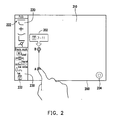
- Fig. 2 is a schematic diagram illustrating an example of a route reporting method for drawing a route map according to one embodiment of the present application.
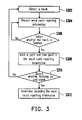
- Fig. 3 is a flowchart illustrating a route reporting method for recording vocal route reporting information according to one embodiment of the present application.
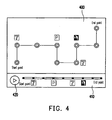
- Fig. 4 is an example, of a route map drawn according to a route reporting method of the present application.
- Fig. 5 is a flowchart illustrating a route reporting method for playing vocal route reporting information according to one embodiment of the present application.
- Fig. 6 is a schematic diagram illustrating an example of a route reporting method for playing vocal route reporting information according to one embodiment of the present application.
- Fig. 7 is a block diagram of a route reporting system according to one embodiment of the present application.
- Fig. 1 is a flowchart illustrating a route reporting method for drawing a route map according to one embodiment of the present application.
- the method is suitable for a mobile device with a touch screen, such as a cellular phone, a PDA, a PDA phone, a laptop, or a car PC. Please refer to Fig. 1 .
- the steps in Fig. 1 are described as follows.
- the mobile device uses the touch screen to detect a touch of a user (S102) and draws a path on a drawing page according to a moving trajectory of the touch (S104).
- the mobile device additionally displays a path tool bar on the side of the drawing page.
- the path tool bar comprises a plurality of path drawing tools (e.g.. a line drawing tool, or a curve drawing tool) and commonly used path objects (e.g., an intersection, or a circular path), which are provided for the user to draw corresponding paths or path objects.
- the mobile device detects whether the aforementioned touch is finished (S106).
- the mobile device automatically displays a dialog block on the drawn path for the user to insert route mark information in the drawn path (S108).
- the mobile device may insert a character string in the dialog block input by the user at a path end of the drawn path as the route mark information of the path end.
- the mobile device additionally displays a route mark tool bar on the side of the drawing page.
- the route mark tool bar comprises a plurality of commonly used route mark icons (e.g., a hospital icon, a school icon, a train station icon, a park icon, a convenient store icon, or a traffic sign), which are provided for the user to select to insert in the path end of the drawn path as the route mark information of the path end.
- route mark icons e.g., a hospital icon, a school icon, a train station icon, a park icon, a convenient store icon, or a traffic sign
- the mobile device when detecting the touch is finished, may display another dialog block on the drawn path to insert a character string input by the user as a path information of the drawn path.
- the user may input a road name as the path information of the drawn path.
- the mobile device determines whether to terminate the drawing of the route map according to receiving an end signal or not (S110). If an end signal is received (e.g., the user touches a drawing accomplished button), the mobile device assembles all the paths being drawn on the drawing page to form a complete route map (S112). On the other hand, if no end signal is received, the mobile device keeps detecting the touch input by the user to draw other paths (S102).
- an end signal e.g., the user touches a drawing accomplished button
- the mobile device assembles all the paths being drawn on the drawing page to form a complete route map (S112). On the other hand, if no end signal is received, the mobile device keeps detecting the touch input by the user to draw other paths (S102).
- Fig. 2 is a schematic diagram illustrating an example of a route reporting method for drawing a route map according to one embodiment of the present application. Please refer to Fig. 2 .
- a route map drawing interface 200 is displayed on a touch screen of a mobile device, and comprises a drawing page 210 on the right side and a path tool bar 220 and a route mark bar 230 on the left side.
- the user can select a path type he/she intends to draw from the path tool bar 220 and then draw a path on the drawing page 210 by touching and moving on the touch screen.
- the user may touch the line drawing tool 222 to select a line drawing tool 222 from the path tool bar 220, and then move the finger from a start point A to an end point B on the drawing page 210 to draw a path.
- the mobile device will draw a path from the point A to the point B on the drawing page 210 in response to a moving trajectory of the user's finger on the touch screen.
- the mobile device displays a dialog block 202 at the end point B because of detecting the touch is finished. Then, the user can select a desired route mark icon from the route mark tool bar 230 on the left side or input a character string as the route mark of the path end.
- the mobile device when the user selects a 7-11 icon 232 from the route mark tool bar 230 and inputs a character string "7-11", the mobile device inserts the 7-11 icon 232 and the character string "7-11" in the end point B as the route mark information of the drawn path.
- the foregoing content is used as an example for illustration, but not used to limit the scope of the present application.
- the mobile device may only insert the route mark icon selected by the user, or only insert the character string input by the user as the route mark of the path end.
- a route map can be drawn in a short time.
- the user may end the drawing of the route map by touching an end button 204.
- the route reporting method of the present application further comprises recording vocal route reporting information while drawing the route map.
- the vocal route reporting information is, for example, an illustration or a description of the route map given by the route reporter.
- Fig. 3 is a flowchart illustrating a route reporting method for recording vocal route reporting information according to one embodiment of the present application.
- the present embodiment is also suitable for a mobile device with a touch screen. The steps in Fig. 3 are described as follows.
- the mobile device uses a touch screen disposed thereon to detect a touch of a user (S302) and starts recording vocal route reporting information when the touch screen first receives the touch (S304).
- the mobile device additionally displays a recording time bar during recording the vocal route reporting information.
- a length of the recording time bar corresponds to a time length of the recorded vocal route reporting information. In other words, the length of the recording time bar increases as the increment of the recording time.
- the mobile device detects whether the touch is finished (S306).
- the touch is finished (e.g., the user's finger leaves the touch panel of the mobile device)
- the mobile device marks a path end time point in the recorded vocal route reporting information (S308).
- the mobile device when the mobile device detects that the touch is finished, it additionally inserts route mark information of the path corresponding to the path end time point at a position on the recording time bar corresponding to the path end time point. That is to say, the mobile device not only inserts the route mark information in the drawn path, but also inserts the route mark information in the displayed recording time bar, so as to remind the user of where the vocal route reporting information is played.
- the mobile device detects whether receiving an end signal (S310). When receiving the end signal, the mobile device terminates recording the vocal route reporting information (S312). On the contrary, if no end signal is received, the mobile device keeps detecting the touch (S302) and recording the vocal route reporting information (S304).
- the mobile device can display the recording time bar and insert the route mark information into the recording time bar after receiving the end signal.
- the display of the recording time bar is not a limitation of the present application.
- the mobile device may not display the recording time bar. Such design variation is also included in the scope of the present application.
- Fig. 4 is an example of a route map drawn according to a route reporting method of the present application.
- a recording time bar 410 is displayed under the route map 400.
- each of the route mark icons on the recording time bar 410 is corresponding to a route mark icon of the path end on the route map 400.
- the user may play the vocal route reporting information by pressing a play button 420 on the left side of the recording time bar 410.
- Fig. 5 is a flowchart illustrating a route reporting method for playing vocal route reporting information according to one embodiment of the present application.
- the present method is suitable for the route map drawn by using aforementioned method to help the route finder recognize how to reach the destination more clearly.
- the steps in Fig. 4 are described as follows.
- the mobile device displays a route map (S502), such as the route map 400 shown in Fig. 4 .
- the route map can be obtained by, for example, sketching drawn by user on the mobile device or downloading from other mobile devices; however, this is not used to limit the scope of the present application.
- the mobile device detects whether receiving a play command (S504).
- the mobile device plays the vocal route reporting information (S506).
- the mobile device While playing the vocal route reporting information, the mobile device also displays a play mark at a position on the route map corresponding to where the vocal route reporting information is played. Accordingly, the user can know which position on the route map the currently playing vocal route reporting information corresponds to by checking the position of the play mark on the route map.
- the route map comprises a recording time bar (e.g., the recording time bar 410 shown in Fig. 4 )
- the mobile device displays another play mark at a position on the recording time bar corresponding to where the vocal route reporting information is played. Accordingly, the user can know where the vocal route reporting information is now being played by checking the position of the play mark on the recording time bar.
- the mobile device detects whether receiving any select command of the route mark information on the route map (or on the recording time bar).
- the mobile device changes to play the recorded vocal route reporting information from the path end time point corresponding to the selected route mark information (S512).
- the mobile device keeps playing the vocal route reporting information (S506).
- Fig. 6 is a schematic diagram illustrating an example of a route reporting method for playing vocal route reporting information according to one embodiment of the present application.
- the route map shown in Fig. 6 is the same as the route map 400 shown in Fig. 4 .
- a play mark 402 and a play mark 412 are respectively displayed on the route map 400 and the recording time bar 410.
- the play mark 402 is to indicate which position on the route map 400 corresponds to where the vocal route reporting information is currently played.
- the play mark 412 is to indicate which position on the time bar 410 corresponds to where the vocal route reporting information is currently played.
- the user can select any one of the route mark icons on the route map 400 or on the recording time bar 410 (e.g., the route mark icon 414). Once a route mark icon is selected, the vocal route reporting information is changed to be played from the selected route mark icon according to the user preference.
- the present application also provides a hardware device for the aforesaid route reporting method, such that the method may be applied to the mobile device such as a cellular phone, a PDA. a PDA phone, a laptop, or a car PC. Another embodiment is described in detail hereinafter.
- FIG. 7 is a block diagram of a route reporting system according to one embodiment of the present application. Please refer to Fig. 7 .
- a route reporting system 700 of the present embodiment comprises a touch screen 702, a route drawing module 704, a recording module 706, a recording time bar displaying module 708, and a play module 710. The functions thereof are described respectively in the following.
- the touch screen 702 is, for example, a resistive touch screen, a capacitive touch screen, a single-point touch screen, or a multiple-point touch screen, for detecting a touch of a user.
- the route drawing module 704 is used for drawing a path on the touch screen 702 according to a moving trajectory of the touch detected by the touch screen 702 and assembling a plurality of drawn paths to form a route map.
- the route drawing module 704 detects that the touch is finished, it displays a dialog block on the touch screen for a user to insert route mark information in the drawn path.
- the route reporting system 700 further comprises a route mark icon selecting module (not shown) for displaying a plurality of route mark icons and inserting a route mark icon which is selected based on a selecting signal received by the touch screen 702 at a corresponding path end as the route mark information of the path end.
- the route reporting system 700 comprises a character string input module for inserting a character string input into the route reporting system 700 at a corresponding path end as the route mark information of the path end.
- the recording module 706 starts recording vocal route reporting information when the touch screen 702 first detects a touch from a user, and keeps recording the vocal route reporting information until the drawing of the route map is accomplished.
- the recording time bar displaying module 708 displays a recording time bar on the touch screen 702, and a length of the recording time bar corresponds to a time length of the vocal route reporting information recorded by the recording module 706.
- the recording module 706 further marks a path end time point in the vocal route reporting information when the touch screen detects the touch is finished.
- the recording time bar displaying module 708 further inserts the route mark information of the paths corresponding to the path end time points at a plurality of positions on the recording time bar corresponding to the path end time points.
- the play module 710 is used for playing the vocal route reporting information previously recorded by the recording module 706 when receiving a play command. While playing the vocal route reporting information, the play module 710 also controls the recording time bar displaying module 708 to display a play mark on the recording time bar, and the position of the play mark on the recording time bar indicates where the vocal route reporting information is played. In addition, the play module 710 controls the route drawing module 704 to display a play mark on the route map, and the position of the play mark on the route map indicates which position on the route map the currently playing vocal route reporting information corresponds to.
- the present application further provides a recording medium for storing a computer program, which is used to execute the aforementioned route reporting method.
- the computer program is assembled by a plurality of program sections (i.e. an organization diagram building program section, a list approving program section, a setting program section, and a deploying program section). Moreover, after the plurality of program sections are loaded to the mobile device and executed, the steps in the route reporting method and the functions of the route reporting system can be accomplished.
- the route reporting method, the route reporting system, and the recording medium using the same report a route through drawing a route map according to the touch received by the touch screen.
- the present application automatically displays a dialog block to insert a route mark or a path name, so as to help the route reporter to establish the route map quickly.
- the present application further records the vocal route reporting information corresponding to the route map, so as to further help the user to reach the destination more smoothly.
Landscapes
- Engineering & Computer Science (AREA)
- Radar, Positioning & Navigation (AREA)
- Remote Sensing (AREA)
- Automation & Control Theory (AREA)
- Physics & Mathematics (AREA)
- General Physics & Mathematics (AREA)
- Human Computer Interaction (AREA)
- Navigation (AREA)
- Traffic Control Systems (AREA)
- Instructional Devices (AREA)
Claims (15)
- Procédé de signalisation d'itinéraire adapté pour un dispositif mobile avec écran tactile, comprenant :la détection d'un toucher avec l'écran tactile ;le dessin d'un chemin selon une trajectoire de déplacement du toucher ;l'affichage d'un bloc de dialogue pour insérer des informations de marque d'itinéraire dans le chemin dessiné lorsque la détection du toucher est terminée ;la répétition des étapes ci-dessus pour dessiner une pluralité de chemins ; etl'assemblage de la pluralité de chemins pour former une carte d'itinéraire lors de la réception d'un signal de fin.
- Procédé de signalisation d'itinéraire selon la revendication 1, dans lequel l'étape d'affichage du bloc de dialogue pour insérer les informations de marque d'itinéraire dans le chemin dessiné comprend :l'affichage du bloc de dialogue à une extrémité de chemin du chemin dessiné ;la réception d'un signal de sélection et la sélection de l'une d'une pluralité d'icônes de marque d'itinéraire en fonction du signal de sélection ; etl'affichage de l'icône de marque d'itinéraire sélectionnée à l'extrémité de chemin en tant qu'informations de marque d'itinéraire de l'extrémité de chemin.
- Procédé de signalisation d'itinéraire selon la revendication 1, dans lequel l'étape d'affichage du bloc de dialogue pour insérer les informations de marque d'itinéraire dans le chemin dessiné comprend :l'affichage du bloc de dialogue à une extrémité de chemin du chemin dessiné ;la réception d'une chaîne de caractères d'entrée ; etl'affichage de la chaîne de caractères d'entrée à l'extrémité de chemin en tant qu'informations de marque d'itinéraire de l'extrémité de chemin.
- Procédé de signalisation d'itinéraire selon la revendication 1, comprenant en outre :l'affichage d'un autre bloc de dialogue pour insérer des informations de chemin dans le chemin dessiné lorsque la détection du toucher est terminée.
- Procédé de signalisation d'itinéraire selon la revendication 1, comprenant en outre :le démarrage d'enregistrement d'informations vocales de signalisation d'itinéraire lorsque le toucher est initialement détecté ;la terminaison de l'enregistrement des informations vocales de signalisation d'itinéraire lors de la réception du signal de fin ; etl'affichage d'une barre de temps d'enregistrement, où la longueur de la barre de temps d'enregistrement correspond à la durée des informations vocales de signalisation d'itinéraire enregistrées.
- Procédé de signalisation d'itinéraire selon la revendication 5, comprenant en outre :le marquage d'un temps d'extrémité de chemin dans les informations vocales de signalisation d'itinéraire lorsque la détection du toucher est terminée ; etla répétition des étapes ci-dessus pour marquer une pluralité de temps d'extrémité de chemin ; etl'étape d'affichage de la barre de temps d'enregistrement comprend en outre :l'affichage des informations de marque d'itinéraire des extrémités de chemin correspondant aux temps d'extrémité de chemin à une pluralité de positions sur la barre de temps d'enregistrement correspondant aux temps d'extrémité de chemin.
- Procédé de signalisation d'itinéraire selon la revendication 6, dans lequel après l'étape de terminaison de l'enregistrement des informations vocales de signalisation d'itinéraire, le procédé comprend en outre :la réception d'une commande de lecture ; etla lecture des informations vocales de signalisation d'itinéraire enregistrées.
- Procédé de signalisation d'itinéraire selon la revendication 7, dans lequel l'étape de lecture des informations vocales de signalisation d'itinéraire enregistrées comprend en outre :la réception d'une commande de sélection de l'une des informations de marque d'itinéraire affichées sur la barre de temps d'enregistrement ou la carte d'itinéraire ; etla lecture des informations vocales de signalisation d'itinéraire enregistrées à partir du temps d'extrémité de chemin correspondant aux informations de marque d'itinéraire sélectionnées.
- Procédé de signalisation d'itinéraire selon la revendication 7, dans lequel l'étape de lecture des informations vocales de signalisation d'itinéraire enregistrées comprend en outre :l'affichage d'une marque de lecture à une position sur la barre de temps d'enregistrement correspondant à l'emplacement où les informations vocales de signalisation d'itinéraire sont lues.
- Procédé de signalisation d'itinéraire selon la revendication 7, dans lequel l'étape de lecture des informations vocales de signalisation d'itinéraire enregistrées comprend en outre :l'affichage d'une marque de lecture à une position sur la carte d'itinéraire correspondant à l'emplacement où les informations vocales de signalisation d'itinéraire sont lues.
- Système de signalisation d'itinéraire (700), comprenant :un écran tactile (702), pour détecter un toucher ; etun module de dessin d'itinéraire (704) pour dessiner un chemin selon une trajectoire de déplacement du toucher et assembler une pluralité de chemins dessinés pour former une carte d'itinéraire lors de la réception d'un signal de fin,le module de dessin d'itinéraire (704) étant configuré pour afficher, lorsque la détection du toucher est terminée, une boîte de dialogue pour insérer des informations de marque d'itinéraire dans le chemin dessiné.
- Système de signalisation d'itinéraire selon la revendication 11, comprenant en outre :un module de sélection d'icône de marque d'itinéraire pour afficher une pluralité d'icônes de marque d'itinéraire, pour sélectionner une des icônes de marque d'itinéraire et pour insérer à une extrémité de chemin du chemin dessiné l'icône sélectionnée en tant qu'information de marque d'itinéraire de l'extrémité de chemin en fonction d'un signal de sélection reçu par l'écran tactile.
- Système de signalisation d'itinéraire selon la revendication 11, comprenant en outre :un module d'entrée de chaîne de caractères, pour générer une chaîne de caractères d'entrée en fonction du toucher détecté par l'écran tactile, et pour insérer la chaîne de caractères d'entrée à une extrémité de chemin du chemin dessiné en tant qu'informations de marque de chemin de l'extrémité de chemin.
- Système de signalisation d'itinéraire selon la revendication 11, comprenant en outre :un module d'enregistrement, pour démarrer l'enregistrement d'informations vocales de signalisation d'itinéraire lorsque l'écran tactile détecte dans un premier temps le toucher, et terminer l'enregistrement des informations vocales de signalisation d'itinéraire lorsque le module de dessin d'itinéraire reçoit le signal de fin ; etun module d'affichage de barre de temps d'enregistrement, pour afficher une barre de temps d'enregistrement, dans lequel la longueur de la barre de temps d'enregistrement correspond à la durée des informations vocales de signalisation d'itinéraire enregistrées.
- Support d'enregistrement stockant un programme informatique, ledit programme informatique comprenant une pluralité de codes utilisés pour être chargés dans un dispositif mobile et permettre au dispositif mobile d'exécuter le procédé de signalisation d'itinéraire de la revendication 1.
Applications Claiming Priority (1)
| Application Number | Priority Date | Filing Date | Title |
|---|---|---|---|
| TW098113527A TWI362483B (en) | 2009-04-23 | 2009-04-23 | Method, system and computer program product for reporting route |
Publications (2)
| Publication Number | Publication Date |
|---|---|
| EP2244061A1 EP2244061A1 (fr) | 2010-10-27 |
| EP2244061B1 true EP2244061B1 (fr) | 2011-12-14 |
Family
ID=41076783
Family Applications (1)
| Application Number | Title | Priority Date | Filing Date |
|---|---|---|---|
| EP09008815A Not-in-force EP2244061B1 (fr) | 2009-04-23 | 2009-07-06 | Procédé de rapport de route, système et support d'enregistrement l'utilisant |
Country Status (4)
| Country | Link |
|---|---|
| US (1) | US8209119B2 (fr) |
| EP (1) | EP2244061B1 (fr) |
| AT (1) | ATE537428T1 (fr) |
| TW (1) | TWI362483B (fr) |
Families Citing this family (4)
| Publication number | Priority date | Publication date | Assignee | Title |
|---|---|---|---|---|
| US20120092266A1 (en) * | 2010-10-14 | 2012-04-19 | Motorola Mobility, Inc. | Method and Apparatus for Providing a Navigation Path on a Touch Display of a Portable Device |
| CN102829793A (zh) * | 2011-06-16 | 2012-12-19 | 环达电脑(上海)有限公司 | 导航装置及其控制方法 |
| CN104808932B (zh) * | 2014-01-23 | 2020-04-10 | 腾讯科技(深圳)有限公司 | 一种路线信息获取方法及终端 |
| US9372092B2 (en) | 2014-08-08 | 2016-06-21 | Here Global B.V. | Method and apparatus for providing a contextual menu in a map display |
Family Cites Families (9)
| Publication number | Priority date | Publication date | Assignee | Title |
|---|---|---|---|---|
| US5999892A (en) | 1997-05-05 | 1999-12-07 | Fan; Rodric C. | Method for providing an instant distance measurement on a map |
| TW410321B (en) | 1998-11-30 | 2000-11-01 | Holux Technology Inc | Customized voice navigation device |
| US7865306B2 (en) | 2000-09-28 | 2011-01-04 | Michael Mays | Devices, methods, and systems for managing route-related information |
| US6941224B2 (en) | 2002-11-07 | 2005-09-06 | Denso Corporation | Method and apparatus for recording voice and location information |
| TWI274303B (en) | 2005-09-09 | 2007-02-21 | Inventec Appliances Corp | Car navigation system and application method thereof |
| JP4769062B2 (ja) | 2005-11-08 | 2011-09-07 | クラリオン株式会社 | ナビゲーション装置 |
| JP2007280212A (ja) * | 2006-04-10 | 2007-10-25 | Sony Corp | 表示制御装置、表示制御方法及び表示制御プログラム |
| TW200802080A (en) | 2006-06-16 | 2008-01-01 | Mitac Int Corp | Prompt speech recording system and method |
| US20080201074A1 (en) | 2007-02-15 | 2008-08-21 | Garmin Ltd. | System and method for creating and sharing navigation routes with electronic devices |
-
2009
- 2009-04-23 TW TW098113527A patent/TWI362483B/zh not_active IP Right Cessation
- 2009-06-26 US US12/492,161 patent/US8209119B2/en not_active Expired - Fee Related
- 2009-07-06 EP EP09008815A patent/EP2244061B1/fr not_active Not-in-force
- 2009-07-06 AT AT09008815T patent/ATE537428T1/de active
Also Published As
| Publication number | Publication date |
|---|---|
| EP2244061A1 (fr) | 2010-10-27 |
| TW201038924A (en) | 2010-11-01 |
| TWI362483B (en) | 2012-04-21 |
| US20100274471A1 (en) | 2010-10-28 |
| US8209119B2 (en) | 2012-06-26 |
| ATE537428T1 (de) | 2011-12-15 |
Similar Documents
| Publication | Publication Date | Title |
|---|---|---|
| KR102107491B1 (ko) | 리스트 스크롤 바 제어 방법 및 모바일 장치 | |
| US9942302B2 (en) | Terminal apparatus mountable in vehicle, mobile device for working with the terminal apparatus, and methods for providing service thereof | |
| KR101992192B1 (ko) | 이동 단말기 | |
| US8630803B2 (en) | Method and apparatus for trip planning and recording medium | |
| CN101995258B (zh) | 邻近兴趣点的浏览方法、系统及所使用的计算机程序产品 | |
| US20140092291A1 (en) | Image display control apparatus, image display apparatus, non-transitory computer readable medium, and image display control method | |
| CN101490641A (zh) | 用户界面装置、计算机程序及其记录介质 | |
| JP2012068133A (ja) | 地図画像表示装置、地図画像の表示方法及びコンピュータプログラム | |
| KR101538691B1 (ko) | 휴대 단말기를 이용한 길 안내 방법 및 장치 | |
| KR20110011054A (ko) | 휴대 단말기의 검색 아이템 출력 방법 및 장치 | |
| US8209119B2 (en) | Route reporting method, system and recording medium using the same | |
| JP2012113096A (ja) | 地図表示装置、地図表示方法及びコンピュータプログラム | |
| JP5742314B2 (ja) | 画像表示システム、画像表示装置、画像表示方法及びコンピュータプログラム | |
| JP2012113070A (ja) | 制御装置、制御装置の制御方法及びコンピュータプログラム | |
| CN101876548B (zh) | 报路的方法及系统 | |
| JP4966628B2 (ja) | 電子機器およびプログラム | |
| CN103995655B (zh) | 列表显示装置以及列表显示方法 | |
| JP2011080851A (ja) | ナビゲーション装置および地図画像表示方法 | |
| KR102184797B1 (ko) | 리스트 스크롤 바 제어 방법 및 모바일 장치 | |
| JP2011118605A (ja) | 情報処理装置およびプログラム | |
| JP2006003664A (ja) | 地図表示装置及びナビゲーション装置 | |
| KR20080023566A (ko) | 복합기능을 구비한 네비게이션 시스템 및 그 동작방법 | |
| JP2009276656A (ja) | ナビゲーション装置、プログラム、及び地図スクロール方法 | |
| JP4705398B2 (ja) | 音声案内装置、音声案内装置の制御方法及び制御プログラム | |
| KR102424428B1 (ko) | 이동통신 단말기의 제어 방법 |
Legal Events
| Date | Code | Title | Description |
|---|---|---|---|
| PUAI | Public reference made under article 153(3) epc to a published international application that has entered the european phase |
Free format text: ORIGINAL CODE: 0009012 |
|
| 17P | Request for examination filed |
Effective date: 20090731 |
|
| AK | Designated contracting states |
Kind code of ref document: A1 Designated state(s): AT BE BG CH CY CZ DE DK EE ES FI FR GB GR HR HU IE IS IT LI LT LU LV MC MK MT NL NO PL PT RO SE SI SK SM TR |
|
| AX | Request for extension of the european patent |
Extension state: AL BA RS |
|
| GRAP | Despatch of communication of intention to grant a patent |
Free format text: ORIGINAL CODE: EPIDOSNIGR1 |
|
| RIC1 | Information provided on ipc code assigned before grant |
Ipc: G01C 21/00 20060101AFI20110502BHEP |
|
| GRAS | Grant fee paid |
Free format text: ORIGINAL CODE: EPIDOSNIGR3 |
|
| GRAA | (expected) grant |
Free format text: ORIGINAL CODE: 0009210 |
|
| AK | Designated contracting states |
Kind code of ref document: B1 Designated state(s): AT BE BG CH CY CZ DE DK EE ES FI FR GB GR HR HU IE IS IT LI LT LU LV MC MK MT NL NO PL PT RO SE SI SK SM TR |
|
| REG | Reference to a national code |
Ref country code: GB Ref legal event code: FG4D |
|
| REG | Reference to a national code |
Ref country code: CH Ref legal event code: EP |
|
| REG | Reference to a national code |
Ref country code: IE Ref legal event code: FG4D |
|
| REG | Reference to a national code |
Ref country code: NL Ref legal event code: T3 |
|
| REG | Reference to a national code |
Ref country code: DE Ref legal event code: R096 Ref document number: 602009004117 Country of ref document: DE Effective date: 20120308 |
|
| PG25 | Lapsed in a contracting state [announced via postgrant information from national office to epo] |
Ref country code: NO Free format text: LAPSE BECAUSE OF FAILURE TO SUBMIT A TRANSLATION OF THE DESCRIPTION OR TO PAY THE FEE WITHIN THE PRESCRIBED TIME-LIMIT Effective date: 20120314 Ref country code: LT Free format text: LAPSE BECAUSE OF FAILURE TO SUBMIT A TRANSLATION OF THE DESCRIPTION OR TO PAY THE FEE WITHIN THE PRESCRIBED TIME-LIMIT Effective date: 20111214 |
|
| LTIE | Lt: invalidation of european patent or patent extension |
Effective date: 20111214 |
|
| PG25 | Lapsed in a contracting state [announced via postgrant information from national office to epo] |
Ref country code: SE Free format text: LAPSE BECAUSE OF FAILURE TO SUBMIT A TRANSLATION OF THE DESCRIPTION OR TO PAY THE FEE WITHIN THE PRESCRIBED TIME-LIMIT Effective date: 20111214 Ref country code: SI Free format text: LAPSE BECAUSE OF FAILURE TO SUBMIT A TRANSLATION OF THE DESCRIPTION OR TO PAY THE FEE WITHIN THE PRESCRIBED TIME-LIMIT Effective date: 20111214 Ref country code: GR Free format text: LAPSE BECAUSE OF FAILURE TO SUBMIT A TRANSLATION OF THE DESCRIPTION OR TO PAY THE FEE WITHIN THE PRESCRIBED TIME-LIMIT Effective date: 20120315 Ref country code: LV Free format text: LAPSE BECAUSE OF FAILURE TO SUBMIT A TRANSLATION OF THE DESCRIPTION OR TO PAY THE FEE WITHIN THE PRESCRIBED TIME-LIMIT Effective date: 20111214 Ref country code: HR Free format text: LAPSE BECAUSE OF FAILURE TO SUBMIT A TRANSLATION OF THE DESCRIPTION OR TO PAY THE FEE WITHIN THE PRESCRIBED TIME-LIMIT Effective date: 20111214 |
|
| PG25 | Lapsed in a contracting state [announced via postgrant information from national office to epo] |
Ref country code: CY Free format text: LAPSE BECAUSE OF FAILURE TO SUBMIT A TRANSLATION OF THE DESCRIPTION OR TO PAY THE FEE WITHIN THE PRESCRIBED TIME-LIMIT Effective date: 20111214 Ref country code: BE Free format text: LAPSE BECAUSE OF FAILURE TO SUBMIT A TRANSLATION OF THE DESCRIPTION OR TO PAY THE FEE WITHIN THE PRESCRIBED TIME-LIMIT Effective date: 20111214 |
|
| PG25 | Lapsed in a contracting state [announced via postgrant information from national office to epo] |
Ref country code: BG Free format text: LAPSE BECAUSE OF FAILURE TO SUBMIT A TRANSLATION OF THE DESCRIPTION OR TO PAY THE FEE WITHIN THE PRESCRIBED TIME-LIMIT Effective date: 20120314 Ref country code: CZ Free format text: LAPSE BECAUSE OF FAILURE TO SUBMIT A TRANSLATION OF THE DESCRIPTION OR TO PAY THE FEE WITHIN THE PRESCRIBED TIME-LIMIT Effective date: 20111214 Ref country code: IS Free format text: LAPSE BECAUSE OF FAILURE TO SUBMIT A TRANSLATION OF THE DESCRIPTION OR TO PAY THE FEE WITHIN THE PRESCRIBED TIME-LIMIT Effective date: 20120414 Ref country code: SK Free format text: LAPSE BECAUSE OF FAILURE TO SUBMIT A TRANSLATION OF THE DESCRIPTION OR TO PAY THE FEE WITHIN THE PRESCRIBED TIME-LIMIT Effective date: 20111214 Ref country code: EE Free format text: LAPSE BECAUSE OF FAILURE TO SUBMIT A TRANSLATION OF THE DESCRIPTION OR TO PAY THE FEE WITHIN THE PRESCRIBED TIME-LIMIT Effective date: 20111214 |
|
| PG25 | Lapsed in a contracting state [announced via postgrant information from national office to epo] |
Ref country code: PT Free format text: LAPSE BECAUSE OF FAILURE TO SUBMIT A TRANSLATION OF THE DESCRIPTION OR TO PAY THE FEE WITHIN THE PRESCRIBED TIME-LIMIT Effective date: 20120416 Ref country code: RO Free format text: LAPSE BECAUSE OF FAILURE TO SUBMIT A TRANSLATION OF THE DESCRIPTION OR TO PAY THE FEE WITHIN THE PRESCRIBED TIME-LIMIT Effective date: 20111214 Ref country code: PL Free format text: LAPSE BECAUSE OF FAILURE TO SUBMIT A TRANSLATION OF THE DESCRIPTION OR TO PAY THE FEE WITHIN THE PRESCRIBED TIME-LIMIT Effective date: 20111214 |
|
| REG | Reference to a national code |
Ref country code: AT Ref legal event code: MK05 Ref document number: 537428 Country of ref document: AT Kind code of ref document: T Effective date: 20111214 |
|
| PLBE | No opposition filed within time limit |
Free format text: ORIGINAL CODE: 0009261 |
|
| STAA | Information on the status of an ep patent application or granted ep patent |
Free format text: STATUS: NO OPPOSITION FILED WITHIN TIME LIMIT |
|
| PG25 | Lapsed in a contracting state [announced via postgrant information from national office to epo] |
Ref country code: DK Free format text: LAPSE BECAUSE OF FAILURE TO SUBMIT A TRANSLATION OF THE DESCRIPTION OR TO PAY THE FEE WITHIN THE PRESCRIBED TIME-LIMIT Effective date: 20111214 |
|
| 26N | No opposition filed |
Effective date: 20120917 |
|
| PG25 | Lapsed in a contracting state [announced via postgrant information from national office to epo] |
Ref country code: IT Free format text: LAPSE BECAUSE OF FAILURE TO SUBMIT A TRANSLATION OF THE DESCRIPTION OR TO PAY THE FEE WITHIN THE PRESCRIBED TIME-LIMIT Effective date: 20111214 |
|
| REG | Reference to a national code |
Ref country code: DE Ref legal event code: R097 Ref document number: 602009004117 Country of ref document: DE Effective date: 20120917 |
|
| PG25 | Lapsed in a contracting state [announced via postgrant information from national office to epo] |
Ref country code: AT Free format text: LAPSE BECAUSE OF FAILURE TO SUBMIT A TRANSLATION OF THE DESCRIPTION OR TO PAY THE FEE WITHIN THE PRESCRIBED TIME-LIMIT Effective date: 20111214 |
|
| PG25 | Lapsed in a contracting state [announced via postgrant information from national office to epo] |
Ref country code: MK Free format text: LAPSE BECAUSE OF FAILURE TO SUBMIT A TRANSLATION OF THE DESCRIPTION OR TO PAY THE FEE WITHIN THE PRESCRIBED TIME-LIMIT Effective date: 20111214 Ref country code: MC Free format text: LAPSE BECAUSE OF NON-PAYMENT OF DUE FEES Effective date: 20120731 |
|
| PG25 | Lapsed in a contracting state [announced via postgrant information from national office to epo] |
Ref country code: ES Free format text: LAPSE BECAUSE OF FAILURE TO SUBMIT A TRANSLATION OF THE DESCRIPTION OR TO PAY THE FEE WITHIN THE PRESCRIBED TIME-LIMIT Effective date: 20120325 |
|
| REG | Reference to a national code |
Ref country code: IE Ref legal event code: MM4A |
|
| PG25 | Lapsed in a contracting state [announced via postgrant information from national office to epo] |
Ref country code: FI Free format text: LAPSE BECAUSE OF FAILURE TO SUBMIT A TRANSLATION OF THE DESCRIPTION OR TO PAY THE FEE WITHIN THE PRESCRIBED TIME-LIMIT Effective date: 20111214 |
|
| PG25 | Lapsed in a contracting state [announced via postgrant information from national office to epo] |
Ref country code: MT Free format text: LAPSE BECAUSE OF FAILURE TO SUBMIT A TRANSLATION OF THE DESCRIPTION OR TO PAY THE FEE WITHIN THE PRESCRIBED TIME-LIMIT Effective date: 20111214 Ref country code: IE Free format text: LAPSE BECAUSE OF NON-PAYMENT OF DUE FEES Effective date: 20120706 |
|
| REG | Reference to a national code |
Ref country code: CH Ref legal event code: PL |
|
| PG25 | Lapsed in a contracting state [announced via postgrant information from national office to epo] |
Ref country code: CH Free format text: LAPSE BECAUSE OF NON-PAYMENT OF DUE FEES Effective date: 20130731 Ref country code: TR Free format text: LAPSE BECAUSE OF FAILURE TO SUBMIT A TRANSLATION OF THE DESCRIPTION OR TO PAY THE FEE WITHIN THE PRESCRIBED TIME-LIMIT Effective date: 20111214 Ref country code: LI Free format text: LAPSE BECAUSE OF NON-PAYMENT OF DUE FEES Effective date: 20130731 |
|
| PG25 | Lapsed in a contracting state [announced via postgrant information from national office to epo] |
Ref country code: SM Free format text: LAPSE BECAUSE OF FAILURE TO SUBMIT A TRANSLATION OF THE DESCRIPTION OR TO PAY THE FEE WITHIN THE PRESCRIBED TIME-LIMIT Effective date: 20111214 Ref country code: LU Free format text: LAPSE BECAUSE OF NON-PAYMENT OF DUE FEES Effective date: 20120706 |
|
| PG25 | Lapsed in a contracting state [announced via postgrant information from national office to epo] |
Ref country code: HU Free format text: LAPSE BECAUSE OF FAILURE TO SUBMIT A TRANSLATION OF THE DESCRIPTION OR TO PAY THE FEE WITHIN THE PRESCRIBED TIME-LIMIT Effective date: 20090706 |
|
| REG | Reference to a national code |
Ref country code: FR Ref legal event code: PLFP Year of fee payment: 7 |
|
| REG | Reference to a national code |
Ref country code: FR Ref legal event code: PLFP Year of fee payment: 8 |
|
| REG | Reference to a national code |
Ref country code: FR Ref legal event code: PLFP Year of fee payment: 9 |
|
| REG | Reference to a national code |
Ref country code: FR Ref legal event code: PLFP Year of fee payment: 10 |
|
| PGFP | Annual fee paid to national office [announced via postgrant information from national office to epo] |
Ref country code: GB Payment date: 20180704 Year of fee payment: 10 |
|
| PGFP | Annual fee paid to national office [announced via postgrant information from national office to epo] |
Ref country code: FR Payment date: 20190627 Year of fee payment: 11 |
|
| PGFP | Annual fee paid to national office [announced via postgrant information from national office to epo] |
Ref country code: DE Payment date: 20190625 Year of fee payment: 11 |
|
| GBPC | Gb: european patent ceased through non-payment of renewal fee |
Effective date: 20190706 |
|
| PG25 | Lapsed in a contracting state [announced via postgrant information from national office to epo] |
Ref country code: NL Free format text: LAPSE BECAUSE OF NON-PAYMENT OF DUE FEES Effective date: 20190801 Ref country code: GB Free format text: LAPSE BECAUSE OF NON-PAYMENT OF DUE FEES Effective date: 20190706 |
|
| REG | Reference to a national code |
Ref country code: NL Ref legal event code: MM Effective date: 20190801 |
|
| REG | Reference to a national code |
Ref country code: DE Ref legal event code: R119 Ref document number: 602009004117 Country of ref document: DE |
|
| PG25 | Lapsed in a contracting state [announced via postgrant information from national office to epo] |
Ref country code: FR Free format text: LAPSE BECAUSE OF NON-PAYMENT OF DUE FEES Effective date: 20200731 |
|
| PG25 | Lapsed in a contracting state [announced via postgrant information from national office to epo] |
Ref country code: DE Free format text: LAPSE BECAUSE OF NON-PAYMENT OF DUE FEES Effective date: 20210202 |