EP2244147A2 - Utilisation de facteurs de durabilité pour l'optimisation de produits - Google Patents
Utilisation de facteurs de durabilité pour l'optimisation de produits Download PDFInfo
- Publication number
- EP2244147A2 EP2244147A2 EP20100160838 EP10160838A EP2244147A2 EP 2244147 A2 EP2244147 A2 EP 2244147A2 EP 20100160838 EP20100160838 EP 20100160838 EP 10160838 A EP10160838 A EP 10160838A EP 2244147 A2 EP2244147 A2 EP 2244147A2
- Authority
- EP
- European Patent Office
- Prior art keywords
- sustainability
- factors
- product
- automatically
- production
- Prior art date
- Legal status (The legal status is an assumption and is not a legal conclusion. Google has not performed a legal analysis and makes no representation as to the accuracy of the status listed.)
- Withdrawn
Links
Images





Classifications
-
- G—PHYSICS
- G05—CONTROLLING; REGULATING
- G05B—CONTROL OR REGULATING SYSTEMS IN GENERAL; FUNCTIONAL ELEMENTS OF SUCH SYSTEMS; MONITORING OR TESTING ARRANGEMENTS FOR SUCH SYSTEMS OR ELEMENTS
- G05B19/00—Program-control systems
- G05B19/02—Program-control systems electric
- G05B19/418—Total factory control, i.e. centrally controlling a plurality of machines, e.g. direct or distributed numerical control [DNC], flexible manufacturing systems [FMS], integrated manufacturing systems [IMS] or computer integrated manufacturing [CIM]
- G05B19/41865—Total factory control, i.e. centrally controlling a plurality of machines, e.g. direct or distributed numerical control [DNC], flexible manufacturing systems [FMS], integrated manufacturing systems [IMS] or computer integrated manufacturing [CIM] characterised by job scheduling, process planning, material flow
-
- G—PHYSICS
- G06—COMPUTING OR CALCULATING; COUNTING
- G06Q—INFORMATION AND COMMUNICATION TECHNOLOGY [ICT] SPECIALLY ADAPTED FOR ADMINISTRATIVE, COMMERCIAL, FINANCIAL, MANAGERIAL OR SUPERVISORY PURPOSES; SYSTEMS OR METHODS SPECIALLY ADAPTED FOR ADMINISTRATIVE, COMMERCIAL, FINANCIAL, MANAGERIAL OR SUPERVISORY PURPOSES, NOT OTHERWISE PROVIDED FOR
- G06Q10/00—Administration; Management
- G06Q10/06—Resources, workflows, human or project management; Enterprise or organisation planning; Enterprise or organisation modelling
- G06Q10/063—Operations research, analysis or management
-
- Y—GENERAL TAGGING OF NEW TECHNOLOGICAL DEVELOPMENTS; GENERAL TAGGING OF CROSS-SECTIONAL TECHNOLOGIES SPANNING OVER SEVERAL SECTIONS OF THE IPC; TECHNICAL SUBJECTS COVERED BY FORMER USPC CROSS-REFERENCE ART COLLECTIONS [XRACs] AND DIGESTS
- Y02—TECHNOLOGIES OR APPLICATIONS FOR MITIGATION OR ADAPTATION AGAINST CLIMATE CHANGE
- Y02P—CLIMATE CHANGE MITIGATION TECHNOLOGIES IN THE PRODUCTION OR PROCESSING OF GOODS
- Y02P90/00—Enabling technologies with a potential contribution to greenhouse gas [GHG] emissions mitigation
- Y02P90/02—Total factory control, e.g. smart factories, flexible manufacturing systems [FMS] or integrated manufacturing systems [IMS]
-
- Y—GENERAL TAGGING OF NEW TECHNOLOGICAL DEVELOPMENTS; GENERAL TAGGING OF CROSS-SECTIONAL TECHNOLOGIES SPANNING OVER SEVERAL SECTIONS OF THE IPC; TECHNICAL SUBJECTS COVERED BY FORMER USPC CROSS-REFERENCE ART COLLECTIONS [XRACs] AND DIGESTS
- Y02—TECHNOLOGIES OR APPLICATIONS FOR MITIGATION OR ADAPTATION AGAINST CLIMATE CHANGE
- Y02P—CLIMATE CHANGE MITIGATION TECHNOLOGIES IN THE PRODUCTION OR PROCESSING OF GOODS
- Y02P90/00—Enabling technologies with a potential contribution to greenhouse gas [GHG] emissions mitigation
- Y02P90/80—Management or planning
-
- Y—GENERAL TAGGING OF NEW TECHNOLOGICAL DEVELOPMENTS; GENERAL TAGGING OF CROSS-SECTIONAL TECHNOLOGIES SPANNING OVER SEVERAL SECTIONS OF THE IPC; TECHNICAL SUBJECTS COVERED BY FORMER USPC CROSS-REFERENCE ART COLLECTIONS [XRACs] AND DIGESTS
- Y02—TECHNOLOGIES OR APPLICATIONS FOR MITIGATION OR ADAPTATION AGAINST CLIMATE CHANGE
- Y02P—CLIMATE CHANGE MITIGATION TECHNOLOGIES IN THE PRODUCTION OR PROCESSING OF GOODS
- Y02P90/00—Enabling technologies with a potential contribution to greenhouse gas [GHG] emissions mitigation
- Y02P90/80—Management or planning
- Y02P90/84—Greenhouse gas [GHG] management systems
Definitions
- the claimed subject matter relates generally to industrial control systems and more particularly to methods that optimize manufacturing operations in view of various sustainability factors.
- each step of a supply chain involves material.
- each material When used in manufacturing or business, each material typically has a specification. This specification is most often a written statement of an item's required characteristics, documented in a manner that facilitates its procurement or production and acceptance. These characteristics are typically divided into three categories: (1) physical, (2) functional, and (3) operational. The specification describes the criteria to which the material must conform in terms of quality, design, compatibility, performance, price, and so forth.
- the raw materials would be butter, eggs, sugar, flour, salt and chocolate chips as well as the packaging material.
- the intramaterials might have been: butter + eggs; butter mixture + sugar; flour + salt; sugar mixture + flour mixture; all mixtures + chocolate chips; the baked cookie; and finished good: the baked, packaged cookie.
- specifications describe the color, weight, potency, size, odor, or similar physical characteristics of the products in each stage of the production process.
- the product information including how much of which product to use, is contained on a document commonly referred to as the "Bill of Materials” or BOM.
- BOM Bill of Materials
- work instructions are written out to describe precisely how to transform the material and the type of machinery to process the material.
- the work instructions might be: Beat butter + eggs for 5 minutes using stand mixer #1; and Bake for 15 minutes at 350 degrees in oven #3 and so forth.
- These work instructions are variously described as routings, standard operating procedures, workflow, and so forth. Together, the combination of the BOM and work instructions, create the "recipe" (also known by other names such as a production procedure).
- recipes can exist both in the automation layer, which typically controls machinery and other automated equipment, and the MES layer, which typically contains instructions that involve human interaction and manual instructions as well. Increasingly, these two layers also interact with a higher, ERP layer to connect to business-level systems. Some recipes, especially in regulated environments such as life sciences or food operations, also outline the necessary skills and training of the human resources interacting with the production process. These skill-sets can be managed and tracked via manual or automated procedures. When automated, the automated system will preclude operations from being performed by an unqualified person, thus leading to enhanced protections for quality and safety.
- some recipes outline the required parameters of the machine being used for production. Often a machine is 'qualified' or 'validated', or proven to operate according to certain standards. This qualification is maintained through testing and maintenance schedules. When performance is automated, the automation system will preclude operations from being conducted on an unqualified machine, thus leading to enhanced protections for quality and safety.
- the Sustainability Factors can be utilized to extend a) the specification of materials and products b) the work instructions used to transform the products into finished material c) descriptors and other factors associated with the human resources performing production d) factors associated with the machines performing production and e) factors associated with the facility and utilities supply chain involved in production, such as type of electricity used (solar vs. wind vs. coal, for example).
- responsible manufacturers can optimize their operations to minimize their overall energy, environmental, and negative human/community impact, from raw material to finished goods, while maintaining quality, regulatory compliance, and customer satisfaction.
- production can be optimized in the supply chain to enable recycling of materials. For example, depending on the destination of a product shipment, different packaging could be automatically selected for a product to align with the requirements and needs of the destination location (e.g., change packaging based on recycling regulations of destination).
- production is optimized in the supply chain based on carbon labeling. For example, production can be modified depending on an acceptable range of values for the carbon footprint of a destination location.
- optimization of procurement and shipping systems within the supply chain can be provided.
- automated purchasing decisions can be made to reduce the environmental impact of a given product line.
- regulatory decision-making and implementation can be optimized in view of various sustainability factors that can be derived from a dynamic scoring system.
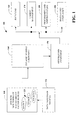
- Fig. 1 is a schematic block diagram illustrating an optimization component to control production and procurement processes in view of various sustainability factors.
- Fig. 2 is a flow diagram illustrating a method to alter product packaging in view of determined recycling requirements.
- Fig. 3 is a flow diagram illustrating a method for optimizing production in view of detected carbon footprint ranges.
- Fig. 4 is a flow diagram illustrating a method for optimizing procurement and shipping systems in view of detected environmental factors.
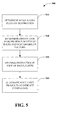
- Fig. 5 is a flow diagram illustrating a method for optimizing regulatory compliance in view of various sustainability factors.
- Fig. 6 is a block diagram illustrating a dynamic scoring system for sustainability factors.
- Fig. 7 is a schematic block diagram illustrating a manufacturing model that is associated with sustainability-factor associated source data to enhance the efficiencies of an industrial process.
- Fig. 8 is a diagram illustrating a model specification that has been associated with sustainability factors.
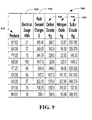
- Fig. 9 is a diagram illustrating an example bill of material having associated sustainability factors.
- Fig. 10 is a diagram illustrating example manufacturing models that can be associated with sustainability factors.
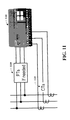
- Fig. 11 is a diagram illustrating an energy monitoring component.
- An industrial control system that automatically adjusts supply-chain processes in view of dynamically scored sustainability factors.
- an industrial control system includes a processor to analyze one or more sustainability factors and a scoring component to assign a weight to the sustainability factors.
- An optimizer automatically adjusts a production process in view of the sustainability factors, the weight, and at least one of a recycling requirement, a carbon footprint, a procurement process, a shipping process, or a regulatory requirement.
- a component may be, but is not limited to being, a process running on a processor, a processor, an object, an executable, a thread of execution, a program and a computer.
- an application running on a server and the server can be components.
- One or more components may reside within a process or thread of execution and a component may be localized on one computer or distributed between two or more computers, industrial controllers, or modules communicating therewith.
- a system 100 illustrates an optimization component to control production and procurement processes in view of various sustainability factors.
- the system 100 includes a plurality of discrete monitors 110 that are stationed throughout an industrial system or process and are employed to collect data from various sustainability-factor associated data sources 120.
- the sustainability-factor associated data sources 120 can be from various portions of a process and related to such factors as energy or waste for example and are described in more detail below with respect to Fig. 8 .
- a tagging component 130 is provided to label or mark the collected source data 120 as to which portion of an industrial process the data is associated with.
- the source data 120 may be tagged to indicate which pipe or valve a recipe component was transported across and how much energy such pipe or valve consumed as part of the process.
- the pipe or valve may be attributed to the amount of waste associated with a portion of the batch process and in its own manner, reflect a type of energy or sustainability factor that is attributable to the respective process.
- Sustainability factors can also include factors outside the respective process such as environmental regulations, carbon requirements, recycling considerations, and the like.
- the sources 120 may be tagged to indicate a sustainability factor for the various components of the discrete process (e.g., discrete process A building an engine lists various components of the engine where the tagged data from the sources 120 is associated with the engine components).
- a dynamic scoring component 140 is provided to rate or score the sustainability factors and is described in more detail below with respect to Fig. 6 .
- An optimization component 150 processes sustainability data and optimizes various portions of a production, shipping, or procurement process in view of the data.
- factors affecting the sustainability score of a unit/product/batch occurs as part of pre-and post-production processes.
- optimization of the overall supply chain for sustainability can be enabled.
- One optimization that can be provided is shown at 160 where production in the supply chain is optimized to enable responsible recycling.
- a Sustainability Optimization System can be optimized to account for the availability of recycling facilities in the destination region for the product.
- the system could determine that for a particular manufacturing run of soaps (or other products) within a container, that plastic recycling is available in the ultimate destination of the soaps for Batch A but not for Batch B.
- the production system could then select the recipe for Batch A that uses plastic packaging but the recipe for Batch B that uses paper packaging.
- a plurality of different packaging options can be automatically selected based on the detected recycling needs of the target shipping location.
- carbon management can be optimized. For example, optimizing production in the supply chain for carbon labeling. In the context of carbon labeling and carbon taxes, factors outside of the production process itself can impact the ultimate cost and profitability of the end product. Production using resources from various regions, or targeted for shipment to various regions, can be automatically modified depending upon the acceptable range of detected values for the carbon footprint of the end product. For example, if a North American company were to produce a chocolate bar for worldwide distribution, they might have a choice of using sugar in their warehouse that came from the a neighboring state vs. sugar that came from Africa.
- the modeling system could determine: Which batch of raw ingredients or; which manufacturing method and/or; which shipping method provides the lowest overall carbon footprint for the candy on the shelf in Europe, for example.
- Advanced modeling could ascertain that under certain conditions, high ozone days are likely to occur in an upcoming week, and thus the manufacturer should pre-order those materials that require truck shipments to avoid increasing the ozone impact.
- production and shipping could be optimized to take advantage of 'hotter' or 'colder' routes for products requiring controlled storage and transport, such as ice cream, for example.
- regulatory compliance is considered where optimizing regulatory decision making and implementation can be provided.
- issues related to sustainability such as safety compliance, emissions monitoring, carbon taxes, water-use issues, and so forth
- the data and processes from a Sustainability Optimization System could include interconnectivity with a database containing regulatory rules to simplify regulatory decision making and oversight.
- a particular government authority may desire to encourage the use of solar power. Merely having energy usage information on a label would be insufficient to administer a tax on a product, as that would not indicate what type of energy was used.
- Sustainability factors can be associated with the product, the process, or a combination.
- the Sustainability factors can be used to extend a) the specification of materials and products b) the work instructions used to transform the products into finished material c) descriptors and other factors associated with the human resources performing production d) factors associated with the machines performing production e) factors associated with the facility and utilities supply chain involved in production, such as type of electricity used (solar vs. wind vs.
- a system for controlling an industrial process includes means for scoring (scoring component 140) one or more sustainability factors and means for weighting the sustainability factors (see metrics 630 in Fig. 6 below).
- the system also includes means for adjusting (optimization component 150) a production process in view of at least one of a recycling requirement, a carbon footprint, a procurement process, a shipping process, or a regulatory requirement.
- Figs. 2-5 are flow diagrams illustrating methods for optimizing production and shipping processes in view of sustainability factors. While, for purposes of simplicity of explanation, the methodologies are shown and described as a series of acts, it is to be understood and appreciated that the methodologies are not limited by the order of acts, as some acts may occur in different orders or concurrently with other acts from that shown and described herein. For example, those skilled in the art will understand and appreciate that a methodology could alternatively be represented as a series of interrelated states or events, such as in a state diagram. Moreover, not all illustrated acts may be required to implement a methodology as described herein.
- Fig. 2 illustrates a method 200 to alter product packaging in view of determined recycling requirements.
- a destination region is determined for a potential product.
- parameters for the region's recycling requirements are determined. These could include the types of material to be employed in packaging such as plastic, aluminum, paper, biodegradable, and so forth.
- a production process is automatically adjusted in view of the requirements. For example, if the current process is to bottle a product in an aluminum container, and the recycling requirement is for plastic containers, batch processes can be automatically re-routed to a packaging line that employs plastic containers rather than aluminum. As can be appreciated, a plurality of such routing decisions can be performed depending on the number of recycling options supported.
- products are shipped to the destination locations with the appropriate packaging that has been tailored for the recycling requirements of the location.
- Fig. 3 illustrates a method 300 for optimizing production in view of detected carbon footprint ranges.
- sustainability factors are monitored at 310 and as previously described.
- a decision is made as to whether or not current production methods are within an acceptable range to meet the desired carbon footprint. If the current range is acceptable at 320, the process proceeds to 330 and employs current production methods that satisfy the respective ranges. If the current production is not within acceptable ranges at 320, the process proceeds to 340 ingredients may be altered, shipping methods may be altered, and/or manufacturing methods may be altered to achieve desired carbon footprint levels. As noted previously, factors outside of the production process itself can impact the ultimate cost and profitability of the end product.
- Production using resources from various regions, or targeted for shipment to various regions, can be automatically modified depending upon the acceptable range of detected values for the carbon footprint of the end product.
- modeling can determine: which batch of raw ingredients or; which manufacturing method and/or; which shipping method provides the lowest (or suitable) overall carbon footprint for a particular product and/or destination.
- Fig. 4 illustrates a method 400 for optimizing procurement and shipping systems in view of detected environmental factors.
- environmental factors are considered such as weather or other climate goals that may be desired for a particular product or process.
- current environmental data is processed. Thus, it may be determined that a particular location is cooler than projected thus a different type of shipping or packaging could be employed.
- procurement of supplies and/or production methods are adjusted in view of current environmental data.
- material or products are purchased or transported to support the environmental goals determined at 410.
- shipments and additional factors could be aligned with environmental factors such as weather, to minimize environmental impact. For example, by coordinating with weather systems, truck shipments in affected regions could be delayed during 'ozone alert' times, or shifted to rail transport.
- the overall objective could be to optimize production while minimizing environmental impact.
- Advanced modeling could ascertain that under certain conditions, high ozone days are likely to occur in an upcoming week, and thus the manufacturer should pre-order those materials that require truck shipments to avoid increasing the ozone impact.
- production and shipping could be optimized to take advantage of 'hotter' or 'colder' routes for products requiring controlled storage, for example.
- Fig. 5 illustrates a method 500 for optimizing regulatory compliance in view of various sustainability factors.
- regulatory rules are determined for a destination location. These can include safety compliance, emissions, carbon taxes, in addition to other sustainability factors.
- production requirements are determined in view of the rules and related sustainability factors.
- production is optimized in view of the regulations. This can include manufacturing with alternative energy sources in order to meet some incentive offered by a regulating body.
- labels can be automatically updated to reflect compliance with regulations and sustainability factors.
- data and processes from a sustainability optimization system could include interconnectivity with a database containing regulatory rules to simplify regulatory decision making and oversight. For example, a particular government authority may desire to encourage the use of solar power.
- Fig. 6 illustrates a dynamic scoring system 600 for sustainability factors.
- the system 600 includes a dynamic scoring component 610 that processes one or more sustainability factors 620 and scoring metrics 630.
- one or more sustainability scores 640 are generated that can be employed to automatically adjust productions shipping, manufacturing methods, product procurement, packaging, and/or labeling.
- the use of metrics 640 can enable the calculation of a dynamic sustainability score for each product/method such as a unit or batch perspective, for example.
- the sustainability score 640 can be the result of an algorithm to calculate the optimal result from desired metrics 630 to result in the 'most sustainable' product or process for the end user.
- This score 640 can be an individual value, a combinatorial value, a multi-factorial value, or a weighted value, for example.
- the consumer's primary concern is the safety performance of the company that made the product to be purchased.
- the calculation could be: Find a bottle of wine whose sustainability score is: 30 * A + 20 * B + 10 * C .
- the consumer could choose the Chardonnay, as the weighted score would indicate that by balancing the factors of importance to them - with safety performance of the employer being more important - the Chardonnay is thus the better choice.
- Another consumer - from a drought prone area, perhaps - might find water usage to be of most importance, and thus assign the sustainability factors 620 different weights.
- Production modulation can be applied to implement production while facilitating the best sustainable return.
- the sustainability score 640 could be used for decision making related to:
- a dynamic sustainability score could accompany materials through their lifecycle from extraction to disposal/recycling adding up the cumulative sustainability impact of the steps completed, in a manner that is optimally customizable according to consumer-defined, manufacturer/company/organization-defined, or governmentally-defined weighting of sustainability factors 620.
- a system 700 illustrates illustrating a manufacturing model that is associated with sustainable source data to enhance the efficiencies of an industrial process.
- the system 700 includes a plurality of discrete monitors 710 that are stationed throughout an industrial system or process and are employed to collect data from various sustainable sources 720.
- the sustainable sources 720 can be from various portions of a process and related to such factors as energy or waste for example and are described in more detail below with respect to Fig. 8 .
- a tagging component 730 is provided to label or mark the collected source data 720 as to which portion of an industrial process the data is associated with.
- the source data 720 may be tagged to indicate which pipe or valve a recipe component was transported across and how much energy such pipe or valve consumed as part of the process. From another point of view, the pipe or valve may be attributed to the amount of waste associated with a portion of the batch process and in its own manner, reflect a type of energy or sustainability factor that is attributable to the respective process.
- the sources 720 may be tagged to indicate a sustainability factor for the various components of the discrete process (e.g., discrete process A building an engine lists various components of the engine where the tagged data from the sources 720 is associated with the engine components).
- an energy manager or processor 740 collects the tagged data and links the tagged data with a manufacturing model 750 to produce a model or specification 760 that includes the discrete or batch process components that have been associated with the respective sustainability factors or source data 720.
- a manufacturing model 750 to produce a model or specification 760 that includes the discrete or batch process components that have been associated with the respective sustainability factors or source data 720.
- the system 700 sustainability factors such as energy are monitored throughout a plant or process and associated with the model 750 such as a bill of material in order to increase plant efficiencies.
- Automated monitors 710 can receive data from a plurality of sustainability factor sources 720 that are distributed across an industrial process. Such processes can include discrete processes where automated assemblies occur (e.g., packaged assemblies) or can include batch processes where mixtures of various ingredients are combined to form a recipe or other combination of elements (e.g., chemical process, food process, beverage process, and so forth).
- sustainability factor sources 720 such as energy that is collected is tagged at 730 to indicate which portion of the discrete or batch process that the source contributed to.
- the data is associated with the manufacturing model at 760 such as a bill of material (BOM) for example, where industrial managers or automated processes can then analyze the process for the components of energy that were attributed to the various portions of the respective process.
- BOM bill of material
- the source data that is associated with the BOM can now be analyzed in real-time or via offline modeling to optimize and mitigate energy usage. For example, portions of a process may be rearranged to minimize overall energy usage (e.g., perform step C before step A in order to conserve energy from the reverse order of A and C).
- various models other than BOM models can have associated sustainability factors. Such models include MRP models (material requirement planning), MES models (manufacturing execution system), ERP models (enterprise resource planning), programming models (e.g., ladder logic, SFC, batch program, function block), and so forth.
- the system 700 allows extracting energy or other consumption data from the plant floor and correlating it to production output. This enables applying standard production modeling tools for production energy and emission forecasting and optimization, while extending the existing facility demand management system to include production, and lastly, link that system to the Demand Response and Smart Grid (DRSG), as well as, Cap and Trade systems, for example.
- DRSG Demand Response and Smart Grid
- components associated with the system 700 can include various computer or network components such as servers, clients, controllers, industrial controllers, programmable logic controllers (PLCs), energy monitors, batch controllers or servers, distributed control systems (DCS), communications modules, mobile computers, wireless components, control components and so forth that are capable of interacting across a network.
- controller or PLC as used herein can include functionality that can be shared across multiple components, systems, or networks.
- one or more controllers can communicate and cooperate with various network devices across the network. This can include substantially any type of control, communications module, computer, I/O device, sensors, Human Machine Interface (HMI) that communicate via the network that includes control, automation, or public networks.
- the controller can also communicate to and control various other devices such as Input/Output modules including Analog, Digital, Programmed/Intelligent I/O modules, other programmable controllers, communications modules, sensors, output devices, and the like.
- the network can include public networks such as the Internet, Intranets, and automation networks such as Control and Information Protocol (CIP) networks including DeviceNet and ControlNet. Other networks include Ethernet, DH/DH+, Remote I/O, Fieldbus, Modbus, Profibus, wireless networks, serial protocols, and so forth.
- the network devices can include various possibilities (hardware or software components). These include components such as switches with virtual local area network (VLAN) capability, LANs, WANs, proxies, gateways, routers, firewalls, virtual private network (VPN) devices, servers, clients, computers, configuration tools, monitoring tools, or other devices.
- VLAN virtual local area network
- WANs wide area network
- proxies proxies
- gateways gateways
- routers firewalls
- VPN virtual private network
- the energy manager or processing component 740 is typically a server or computer system such as a batch server for industrial control systems. This can include processing components of a recipe that are subsequently executed by the processing or manager component 740, where the recipe identifies what aspects of a process are employed to produce a given recipe.
- an S88 standard provides models that define equipment control, procedure control, and activity. One aspect to implementing this and other standards is creating the ability to separate recipe development from equipment control through the use of an equipment module (not shown) that includes both actual equipment (e.g., tanks, pumps, etc.) and a software representation of the same hardware that includes all the process capabilities. For a given grouping of equipment, each process task is typically designated as a phase against that equipment module.
- the S88 model can function as the manufacturing model 750 in one example for a respective model.
- the model can include a process unit that can be broken down into its equipment modules, which represent all the possible tasks for that grouping, where the respective groupings can be associated with sustainable source data 720 that has been aggregated and tagged from across the factory or other facilities.
- Each unit can represent an organization of code in the controller designed by the process engineers that performs a task each time it is called.
- Each equipment module is also designed to accept one or more parameters. With material addition for example, two parameters specify which material to add and how much. Under the S88 standard, this represents the equipment model.
- the next step in the S88 standard is the procedural model, where the process engineer maps which equipment modules to call, in what order. This map is called an operation under the standard.
- the process engineer creates a procedure that supports the ability first to purge the unit, add two materials, mix, react, and then transfer out.
- the parameters or formulation can be managed independently of operation templates.
- the process engineers create a family of templates to cover multiple arrangements of equipment usage.
- the formulators then create parameter sets.
- the proper operation can be matched up with the proper formula set to create an S88 control recipe that can be executed against the equipment.
- procedural models other than S88 can also be employed.
- each component of the S88 model can be mapped and associated with a collected piece of sustainability factor source data 720 and ultimately generated as a model or specification that is tagged at 760 with the items of collected source data.
- the specification 800 includes one or more components or process steps 810-830, where components may typically relate to a discrete manufacturing process and process steps relate to a batch manufacturing process. Some specifications 800 may include a hybrid where discrete processes and batch process are identified on the same specification. In addition to the component or process steps 810-830, the specification 800 includes one or more sustainability factors 850-870. Such factors 850-870 may be associated with a singular component or process step or a single factor can be associated with a subset of component or process steps.
- Example sustainability factors 850-870 can include energy or waste factors or include other factors such as illustrated in the example table below:
- Example Sustainability Factors Planet People Profit Water usage • Diversity factors (employment of • Utilities costs, including demand charges • Expected lifetime energy use of the product minorities etc.) for the employer • Marketing/ end user appeal (e.g., package design A tested better than package design B and is expected to be more profitable) • Expected energy use of the process • "Training" score-skilled vs. unskilled labor • Any financial measurement impacting the cost or profitability of a product • TYPE of energy used for manufacturing (solar, wind, nuclear, etc) • Use of union vs.
- LWDCR Lost Work Day Case Rate (Work related injuries and illnesses that result in the employee not being able to perform work; cases per 100 employees) • "Waste" factor (for product and process) • LWDR: Lost Work Day Rate (Measure of severity by accounting for the number of days lost due to work related injuries and illnesses; cases per 100 employees) • Any other factor which relates to the environmental impact of a product or process • RCR: Recordable Case Rate (Recordable cases includes any work related injury or illness above a first aid) • Any other factor which relates to the safety performance of a product, machine, process, organization, etc.
- the product itself may be associated with a factor as illustrated in Fig. 9 , where various products outlined in an example bill of material 900 in a left column 910 are associated with example sustainability factors such as electrical usage 920, peak demand 930, carbon dioxide 940, nitrogen oxide 950, and sulfur dioxide 960.
- manufactures make scheduling decisions based on the availability of materials and high cost of labor. As energy prices rise, they will need to add energy to their scheduling decisions.
- Today, the wrong scheduling choices are costing producers tens, if not hundreds, of thousands of dollars in demand penalties and tariffs. Some penalties stay in place for upwards of 12 months.
- Automated production lines can monitor some level of energy usage for startup profiles, maintaining recipe optimization, or for regulatory compliance. Manufacturers could, by applying various monitoring components, have the ability to make scheduling, forecasting and optimizing choices against energy demands through the use of standard production simulation tools. They could manipulate schedules to move orders that consume large amounts of energy to off peak pricing (load leveling). Also, in areas where energy has been de-regulated, manufactures will be able to make wiser choices based on manufacturing schedules.
- FIG. 9 shows an example of electricity data at 910 and 920 extracted from the BOM 900.
- Production process simulations performed to analyze labor could be adjusted to analyze energy consumption just by exchanging KWh for minutes, for example.
- Empirical energy data could be used to optimize energy consumed against products per hour.
- Lean tools such as value stream mapping could mitigate not just labor waste but energy waste in a manufacturing process. Higher output generally has a negative impact on energy consumption.
- Production tools for material forecasting can be used for energy forecasting when energy is added to the BOM 900.
- Manufacturing can forecast demands on infrastructure such as compressed air, steam, electricity, natural gas, and water, for example. Rates with utility brokers in unregulated areas could be negotiated more accurately.
- Production emission rates can be calculated and applied to the BOM 900. Again, allowing standard production forecasting tools to forecast emission against Cap and Trade regulations, for example.
- Energy information on the BOM 900 can aid in prioritizing production schedules to load level demand. Adjusting schedules based on peak demand times can reduce the overall cost of energy consumed.
- a system 1000 illustrates example manufacturing models 1010 that can be associated with sustainability factors 1020.
- the models 1010 can include a bill of material.
- Another model 1010 can include a material reservation system model (MRP).
- MRP material reservation system model
- an MRP system ensures materials and products are available for production and delivery to customers. This includes maintaining the lowest possible level of inventory along with planning manufacturing activities, delivery schedules and purchasing activities.
- any type of specification that is generated by the MRP system can be associated with the sustainability factors 1020.
- Another type of model includes an enterprise resource and planning system (ERP).
- ERP enterprise resource planning
- ERP enterprise resource planning
- An ERP system has a service-oriented architecture with modular hardware and software units or "services" that communicate on a local area network.
- the modular design allows a business to add or reconfigure modules while preserving data integrity in a shared database that may be centralized or distributed.
- Still yet another model includes a manufacturing execution system (MES).
- MES manufacturing execution system
- a manufacturing execution system (MES) is a control system for managing and monitoring work-in-process on a factory floor.
- An MES tracks manufacturing information in real time, receiving up-to-the-minute data from robots, machine monitors and employees.
- another type of model 1010 that can be employed includes an S88 type model.
- Still yet other models for associating with sustainability factors include programming models which can include ladder programs, SFC programs, functions block programs, and other control programs, for example.
- Fig. 11 illustrates an example energy monitoring component 1100.
- Energy monitoring components 1100 can come in various packages and be designed to monitor a plurality of different sustainability factors.
- the monitor 1100 is monitoring potential transformers 1110 or current transformers 1120 for energy usage in a process.
- Monitoring components can include smart devices that can monitor and tag energy data as it is employed in various parts of a process. Such data could be collected and tagged in a device network for example before being transferred to some high level network such as a control network or an Ethernet/Internet, for example.
Landscapes
- Engineering & Computer Science (AREA)
- Business, Economics & Management (AREA)
- Human Resources & Organizations (AREA)
- Economics (AREA)
- Entrepreneurship & Innovation (AREA)
- General Physics & Mathematics (AREA)
- Strategic Management (AREA)
- Quality & Reliability (AREA)
- Physics & Mathematics (AREA)
- Manufacturing & Machinery (AREA)
- Operations Research (AREA)
- Educational Administration (AREA)
- Development Economics (AREA)
- Game Theory and Decision Science (AREA)
- Automation & Control Theory (AREA)
- Marketing (AREA)
- General Engineering & Computer Science (AREA)
- Tourism & Hospitality (AREA)
- General Business, Economics & Management (AREA)
- Theoretical Computer Science (AREA)
- Management, Administration, Business Operations System, And Electronic Commerce (AREA)
- General Factory Administration (AREA)
- Processing Of Solid Wastes (AREA)
Applications Claiming Priority (1)
| Application Number | Priority Date | Filing Date | Title |
|---|---|---|---|
| US12/429,824 US20100274612A1 (en) | 2009-04-24 | 2009-04-24 | Utilizing sustainability factors for product optimization |
Publications (2)
| Publication Number | Publication Date |
|---|---|
| EP2244147A2 true EP2244147A2 (fr) | 2010-10-27 |
| EP2244147A3 EP2244147A3 (fr) | 2014-10-29 |
Family
ID=42289013
Family Applications (1)
| Application Number | Title | Priority Date | Filing Date |
|---|---|---|---|
| EP10160838.8A Withdrawn EP2244147A3 (fr) | 2009-04-24 | 2010-04-23 | Utilisation de facteurs de durabilité pour l'optimisation de produits |
Country Status (3)
| Country | Link |
|---|---|
| US (1) | US20100274612A1 (fr) |
| EP (1) | EP2244147A3 (fr) |
| CN (1) | CN101872160B (fr) |
Cited By (14)
| Publication number | Priority date | Publication date | Assignee | Title |
|---|---|---|---|---|
| WO2013023691A1 (fr) * | 2011-08-17 | 2013-02-21 | Siemens Aktiengesellschaft | Gestion de l'énergie en cas de variations de l'état de fonctionnement d'une installation d'automatisation |
| EP2600289A1 (fr) * | 2011-11-30 | 2013-06-05 | Eliadis | Système de surveillance, de contrôle de la contribution à et de réduction de l'émission de gaz à effet de serre |
| WO2013143583A1 (fr) * | 2012-03-28 | 2013-10-03 | Siemens Aktiengesellschaft | Procédé et dispositif pour détecter des états de fonctionnement, à employer pour commander une installation avec un bon rendement énergétique |
| ITPD20130033A1 (it) * | 2013-02-13 | 2014-08-14 | Filippo Zuppichin | Sistema integrato di monitoraggio dei consumi specifici di energia e previsione di anomalie in impianti di trattamento/trasformazione di granuli plastici |
| WO2022136522A1 (fr) * | 2020-12-23 | 2022-06-30 | Topsoe A/S | Procédés et systèmes de surveillance mis en œuvre par ordinateur pour une installation de source d'énergie renouvelable |
| EP4198664A1 (fr) * | 2021-12-17 | 2023-06-21 | Tetra Laval Holdings & Finance S.A. | Procédé de surveillance d'un système de traitement d'aliments |
| WO2023117972A1 (fr) * | 2021-12-21 | 2023-06-29 | Basf Se | Équilibrage d'attributs environnementaux dans des réseaux de production |
| WO2023194404A1 (fr) * | 2022-04-04 | 2023-10-12 | Basf Se | Procédé de détermination d'un impact d'une différence entre deux processus de production sur une empreinte carbone de produits |
| WO2023194403A1 (fr) * | 2022-04-04 | 2023-10-12 | Basf Se | Procédé de surveillance d'une production tenant compte d'un impact environnemental |
| EP4482081A1 (fr) * | 2023-06-21 | 2024-12-25 | Basf Se | Attributs environnementaux pour excipients pharmaceutiques |
| EP4482082A1 (fr) * | 2023-06-21 | 2024-12-25 | Basf Se | Attributs environnementaux pour principes actifs pharmaceutiques et/ou leurs intermédiaires |
| WO2024260908A1 (fr) * | 2023-06-19 | 2024-12-26 | Basf Se | Attributs environnementaux pour arôme chimique |
| WO2025157665A1 (fr) * | 2024-01-24 | 2025-07-31 | Basf Se | Propriétés environnementales de mélanges d'entrée |
| EP4697225A3 (fr) * | 2021-12-21 | 2026-04-22 | Basf Se | Attributs environnementaux pour matériaux |
Families Citing this family (57)
| Publication number | Priority date | Publication date | Assignee | Title |
|---|---|---|---|---|
| US8892540B2 (en) * | 2009-04-24 | 2014-11-18 | Rockwell Automation Technologies, Inc. | Dynamic sustainability search engine |
| US9406036B2 (en) * | 2009-04-24 | 2016-08-02 | Rockwell Automation Technologies, Inc. | Discrete energy assignments for manufacturing specifications |
| US10013666B2 (en) * | 2009-04-24 | 2018-07-03 | Rockwell Automation Technologies, Inc. | Product lifecycle sustainability score tracking and indicia |
| US10223167B2 (en) | 2009-04-24 | 2019-03-05 | Rockwell Automation Technologies, Inc. | Discrete resource management |
| US20100274603A1 (en) * | 2009-04-24 | 2010-10-28 | Rockwell Automation Technologies, Inc. | Dynamic sustainability factor management |
| US8321187B2 (en) * | 2009-04-24 | 2012-11-27 | Rockwell Automation Technologies, Inc. | Process simulation utilizing component-specific consumption data |
| US20100275147A1 (en) * | 2009-04-24 | 2010-10-28 | Rockwell Automation Technologies, Inc. | Industrial energy demand management and services |
| US9129231B2 (en) * | 2009-04-24 | 2015-09-08 | Rockwell Automation Technologies, Inc. | Real time energy consumption analysis and reporting |
| EP2309432A1 (fr) * | 2009-09-07 | 2011-04-13 | Siemens Aktiengesellschaft | Procédé et système de propagation d'un mode de mise à l'échelle dans un procédé de production |
| US8738190B2 (en) * | 2010-01-08 | 2014-05-27 | Rockwell Automation Technologies, Inc. | Industrial control energy object |
| US9274518B2 (en) | 2010-01-08 | 2016-03-01 | Rockwell Automation Technologies, Inc. | Industrial control energy object |
| CA3108569A1 (en) * | 2010-10-05 | 2012-04-12 | Bayer Cropscience Lp | A system and method of establishing an agricultural pedigree for at least one agricultural product |
| US8626327B2 (en) | 2010-11-05 | 2014-01-07 | The Coca-Cola Company | System for optimizing drink blends |
| US20120123953A1 (en) * | 2010-11-16 | 2012-05-17 | Jabara John F | Methods and systems for assessing the environmental impact of a product |
| JP5436406B2 (ja) * | 2010-12-27 | 2014-03-05 | シャープ株式会社 | 画像形成装置、プログラムおよび記録媒体 |
| DE102011081547A1 (de) * | 2011-08-25 | 2013-02-28 | Siemens Aktiengesellschaft | Einstellung einer industriellen Anlage |
| US20130151303A1 (en) * | 2011-12-13 | 2013-06-13 | Sap Ag | Carbon footprint restriction in sequencing process |
| US20130311215A1 (en) * | 2012-05-16 | 2013-11-21 | Sap Ag | Sustainability based distribution evaluation |
| US20140149188A1 (en) * | 2012-11-26 | 2014-05-29 | The Hong Kong Polytechnic University | Methods, apparatus and systems for green shipping practice assessment |
| US9423848B2 (en) | 2013-03-15 | 2016-08-23 | Rockwell Automation Technologies, Inc. | Extensible energy management architecture |
| US9842372B2 (en) | 2013-03-15 | 2017-12-12 | Rockwell Automation Technologies, Inc. | Systems and methods for controlling assets using energy information determined with an organizational model of an industrial automation system |
| US9501804B2 (en) | 2013-03-15 | 2016-11-22 | Rockwell Automation Technologies, Inc. | Multi-core processor for performing energy-related operations in an industrial automation system using energy information determined with an organizational model of the industrial automation system |
| US9911163B2 (en) | 2013-03-15 | 2018-03-06 | Rockwell Automation Technologies, Inc. | Systems and methods for determining energy information using an organizational model of an industrial automation system |
| CN103824163A (zh) * | 2014-03-04 | 2014-05-28 | 信雅达系统工程股份有限公司 | 一种确定产品供应链的方法 |
| CN103839147A (zh) * | 2014-03-04 | 2014-06-04 | 杭州信雅达科技有限公司 | 货物物流运输过程的碳足迹获取方法及系统 |
| CN104240023A (zh) * | 2014-09-04 | 2014-12-24 | 浪潮通用软件有限公司 | 一种基于可配置指标阀值的采购优化方法 |
| US9798306B2 (en) | 2014-11-25 | 2017-10-24 | Rockwell Automation Technologies, Inc. | Energy usage auto-baseline for diagnostics and prognostics |
| US9785126B2 (en) | 2014-11-25 | 2017-10-10 | Rockwell Automation Technologies, Inc. | Inferred energy usage and multiple levels of energy usage |
| US9798343B2 (en) | 2014-11-25 | 2017-10-24 | Rockwell Automation Technologies, Inc. | Quantifying operating strategy energy usage |
| WO2017133779A1 (fr) * | 2016-02-04 | 2017-08-10 | Symrise Ag | Carte de pointage de durabilité de produit |
| US11055288B2 (en) | 2017-07-25 | 2021-07-06 | Sap Se | Evaluation of programmable conditions applicable to an operation |
| US10929380B2 (en) | 2017-07-25 | 2021-02-23 | Sap Se | Definition of programmable conditions applicable to an operation |
| US11131473B2 (en) | 2019-07-12 | 2021-09-28 | Johnson Controls Tyco IP Holdings LLP | HVAC system design and operational tool for building infection control |
| US11960261B2 (en) | 2019-07-12 | 2024-04-16 | Johnson Controls Tyco IP Holdings LLP | HVAC system with sustainability and emissions controls |
| US12393992B2 (en) | 2018-10-18 | 2025-08-19 | Tyco Fire & Security Gmbh | Systems and methods for assessing and controlling sustainability of an energy plant |
| US12007732B2 (en) | 2019-07-12 | 2024-06-11 | Johnson Controls Tyco IP Holdings LLP | HVAC system with building infection control |
| CN111353775B (zh) * | 2018-12-21 | 2023-11-07 | 赫普科技发展(北京)有限公司 | 一种加油站扫码支付及碳税缴纳系统及方法 |
| DE102019209110A1 (de) * | 2019-06-24 | 2020-12-24 | Sms Group Gmbh | Industrielle Anlage, insbesondere Anlage der metallerzeugenden Industrie oder der Aluminium- oder Stahlindustrie und Verfahren zum Betreiben einer industriellen Anlage, insbesondere einer Anlage der metallerzeugenden Industrie oder der Aluminium- oder Stahlindustrie |
| US11274842B2 (en) | 2019-07-12 | 2022-03-15 | Johnson Controls Tyco IP Holdings LLP | Systems and methods for optimizing ventilation, filtration, and conditioning schemes for buildings |
| US12264828B2 (en) | 2019-07-12 | 2025-04-01 | Tyco Fire & Security Gmbh | Air quality control and disinfection system |
| CN111160581A (zh) * | 2019-12-31 | 2020-05-15 | 成都理工大学 | 一种基于主动维保的节能环保型绿色循环包装管理方法 |
| US11222293B2 (en) * | 2020-01-24 | 2022-01-11 | Registrar Corp | Systems and methods for analyzing product movement information and generating compliance profiles |
| US12026653B2 (en) * | 2020-09-08 | 2024-07-02 | Sap Se | Database system and method for carbon footprint optimization |
| US12223513B2 (en) * | 2020-10-05 | 2025-02-11 | Basf Se | Method for determining the carbon footprint of a product in production processes of a production plant |
| US12261434B2 (en) | 2022-02-10 | 2025-03-25 | Tyco Fire & Security Gmbh | Control system with multi-factor carbon emissions optimization |
| US12398905B2 (en) | 2021-05-28 | 2025-08-26 | Tyco Fire & Security Gmbh | Building control system with multi-objective control of carbon emissions and occupant comfort |
| US12529492B2 (en) | 2021-05-28 | 2026-01-20 | Tyco Fire & Security Gmbh | Building control system with predictive control of carbon emissions using marginal operating emissions rate |
| US20230020417A1 (en) * | 2021-07-12 | 2023-01-19 | Johnson Controls Tyco IP Holdings LLP | Control system with adaptive carbon emissions optimization |
| US20220405590A1 (en) * | 2021-06-18 | 2022-12-22 | Sustainli Inc. | Machine learning models for automated sustainability data source ingestion and processing |
| TWI776596B (zh) * | 2021-07-15 | 2022-09-01 | 逢甲大學 | 整合智慧製造與碳排放最佳化決策資訊管理系統 |
| US20230089850A1 (en) * | 2021-09-21 | 2023-03-23 | Capital One Services, Llc | Real-time product environmental impact scoring |
| WO2023139159A1 (fr) * | 2022-01-20 | 2023-07-27 | Basf Se | Commande optimale d'un système de fabrication circulaire distribué |
| US12596363B2 (en) | 2022-06-15 | 2026-04-07 | International Business Machines Corporation | Determining component part combination using artificial intelligence |
| EP4659078A1 (fr) * | 2023-01-31 | 2025-12-10 | Apriori Technologies Inc. | Systèmes et procédés d'analyse de conception assistée par ordinateur |
| WO2024223607A1 (fr) * | 2023-04-27 | 2024-10-31 | Merck Patent Gmbh | Analytique exploitable permettant une amélioration de production durable |
| EP4528612A1 (fr) * | 2023-09-21 | 2025-03-26 | Siemens AG Österreich | Sélection de variante de produit durable par des calculs de probabilité basés sur la confiance |
| WO2026083225A1 (fr) * | 2024-10-17 | 2026-04-23 | Kenvue Brands Llc | Profileur d'innovation durable |
Citations (1)
| Publication number | Priority date | Publication date | Assignee | Title |
|---|---|---|---|---|
| WO2005017786A2 (fr) * | 2003-08-04 | 2005-02-24 | Delphi Technologies, Inc. | Systeme, procede, et support de stockage destines a determiner une conception du conditionnement d'un conteneur |
Family Cites Families (107)
| Publication number | Priority date | Publication date | Assignee | Title |
|---|---|---|---|---|
| US4039392A (en) * | 1973-10-04 | 1977-08-02 | Singh Alamjit D | Process and apparatus for producing char and co-products from coal and the like |
| US4300125A (en) * | 1979-06-01 | 1981-11-10 | Loshing Clement T | System for monitoring, transmitting and conditioning of information gathered at selected locations |
| US4341345A (en) * | 1980-02-19 | 1982-07-27 | Honeywell Inc. | Method and apparatus for power load shedding |
| US4383298A (en) * | 1980-04-10 | 1983-05-10 | Ciba-Geigy Corporation | Plant maintenance control system |
| US4827395A (en) * | 1983-04-21 | 1989-05-02 | Intelli-Tech Corporation | Manufacturing monitoring and control systems |
| US4624685A (en) * | 1985-01-04 | 1986-11-25 | Burns & McDonnell Engineering Co., Inc. | Method and apparatus for optimizing power consumption in an electrostatic precipitator |
| US5202996A (en) * | 1985-10-11 | 1993-04-13 | Hitachi, Ltd. | Software structuring system and method by data table translation |
| US5043929A (en) * | 1989-06-13 | 1991-08-27 | Schlumberger Technologies, Inc. | Closed-form kinematics |
| US5297057A (en) * | 1989-06-13 | 1994-03-22 | Schlumberger Technologies, Inc. | Method and apparatus for design and optimization for simulation of motion of mechanical linkages |
| US5251205A (en) * | 1990-09-04 | 1993-10-05 | Digital Equipment Corporation | Multiple protocol routing |
| US5646862A (en) * | 1994-09-29 | 1997-07-08 | Ford Motor Company | Vendor-neutral integrated vehicle electrical design and analysis system and method |
| US5831606A (en) * | 1994-12-13 | 1998-11-03 | Microsoft Corporation | Shell extensions for an operating system |
| AUPN547595A0 (en) * | 1995-09-15 | 1995-10-12 | Uponor B.V. | Biaxial stretching of plastic tubes |
| AR005601A1 (es) * | 1996-01-29 | 1999-06-23 | Novozymes As | Proceso para la remocion o blanqueo de suciedad o manchas presentes en telas celulosicas y proceso para el lavado de telas celulosicas manchadas o sucias y composicion detergente |
| US5822207A (en) * | 1996-05-06 | 1998-10-13 | Amadasoft America, Inc. | Apparatus and method for integrating intelligent manufacturing system with expert sheet metal planning and bending system |
| US6427063B1 (en) * | 1997-05-22 | 2002-07-30 | Finali Corporation | Agent based instruction system and method |
| US6434435B1 (en) * | 1997-02-21 | 2002-08-13 | Baker Hughes Incorporated | Application of adaptive object-oriented optimization software to an automatic optimization oilfield hydrocarbon production management system |
| US5983622A (en) * | 1997-03-13 | 1999-11-16 | Siemens Westinghouse Power Corporation | Diffusion flame combustor with premixing fuel and steam method and system |
| US6473893B1 (en) * | 1997-05-30 | 2002-10-29 | International Business Machines Corporation | Information objects system, method, and computer program organization |
| US6012053A (en) * | 1997-06-23 | 2000-01-04 | Lycos, Inc. | Computer system with user-controlled relevance ranking of search results |
| US5924486A (en) * | 1997-10-29 | 1999-07-20 | Tecom, Inc. | Environmental condition control and energy management system and method |
| US6076108A (en) * | 1998-03-06 | 2000-06-13 | I2 Technologies, Inc. | System and method for maintaining a state for a user session using a web system having a global session server |
| US6275979B1 (en) * | 1998-03-11 | 2001-08-14 | International Business Machines Corporation | Implementation for an object oriented run-time extensible item |
| US6263255B1 (en) * | 1998-05-18 | 2001-07-17 | Advanced Micro Devices, Inc. | Advanced process control for semiconductor manufacturing |
| US6122603A (en) * | 1998-05-29 | 2000-09-19 | Powerweb, Inc. | Multi-utility energy control system with dashboard |
| JP2000048066A (ja) * | 1998-07-27 | 2000-02-18 | Hitachi Ltd | ライフサイクル管理方法、システム、および製品 |
| US6289252B1 (en) * | 1998-08-31 | 2001-09-11 | Fisher-Rosemount Systems, Inc. | Distributed batch processing system and methods |
| US6281784B1 (en) * | 1999-02-26 | 2001-08-28 | Redgate Industries, Inc. | Information and control communication over power lines |
| CA2271448A1 (fr) * | 1999-05-12 | 2000-11-12 | Stuart Energy Systems Inc. | Reseau de distribution d'energie |
| EP1057907A1 (fr) * | 1999-05-31 | 2000-12-06 | Barco N.V. | Procédés et systèmes de controlle d'opération de filature |
| US6785592B1 (en) * | 1999-07-16 | 2004-08-31 | Perot Systems Corporation | System and method for energy management |
| US6701298B1 (en) * | 1999-08-18 | 2004-03-02 | Envinta/Energetics Group | Computerized management system and method for energy performance evaluation and improvement |
| US6507774B1 (en) * | 1999-08-24 | 2003-01-14 | The University Of Chicago | Intelligent emissions controller for substance injection in the post-primary combustion zone of fossil-fired boilers |
| US7069236B1 (en) * | 2000-07-10 | 2006-06-27 | Canon Usa, Inc. | System and methods to effect return of a consumer product |
| WO2002007365A2 (fr) * | 2000-07-13 | 2002-01-24 | Nxegen | Systeme et procede permettant de surveiller et de commander l'utilisation d'energie |
| ATE285594T1 (de) * | 2000-07-27 | 2005-01-15 | Abb Research Ltd | Verfahren und computerprogramm zum herstellen einer regelung oder steuerung |
| AU2001286421A1 (en) * | 2000-08-09 | 2002-02-18 | Murphy Company | Material and labor cost estimating method and system |
| US20020178047A1 (en) * | 2000-09-15 | 2002-11-28 | Or Ellen Pak-Wah | Energy management system and method for monitoring and optimizing energy usage, identifying energy savings and facilitating procurement of energy savings products and services |
| US20020128933A1 (en) * | 2000-09-27 | 2002-09-12 | Michael Day | Interactive method and apparatus for product customization and purchase |
| US6857020B1 (en) * | 2000-11-20 | 2005-02-15 | International Business Machines Corporation | Apparatus, system, and method for managing quality-of-service-assured e-business service systems |
| US7149884B2 (en) * | 2001-01-25 | 2006-12-12 | Dell Products L.P. | Method and system for configuring a computer system via a wireless communication link |
| US6694206B2 (en) * | 2001-01-25 | 2004-02-17 | Dell Products L.P. | Method and system for manufacturing and servicing a computing product with the assistance of a wireless communication subsystem attached to a peripheral port |
| US20020116239A1 (en) * | 2001-02-21 | 2002-08-22 | Reinsma Jeffrey Dean | Systems and methods for optimizing building materials |
| US6859755B2 (en) * | 2001-05-14 | 2005-02-22 | Rosemount Inc. | Diagnostics for industrial process control and measurement systems |
| US7003503B2 (en) * | 2001-06-07 | 2006-02-21 | Idealswork Inc. | Ranking items |
| US20020198755A1 (en) * | 2001-06-22 | 2002-12-26 | Birkner Charles Christian | Integrated quality assurance control system to manage construction projects |
| US7162534B2 (en) * | 2001-07-10 | 2007-01-09 | Fisher-Rosemount Systems, Inc. | Transactional data communications for process control systems |
| US20030061091A1 (en) * | 2001-09-25 | 2003-03-27 | Amaratunga Mohan Mark | Systems and methods for making prediction on energy consumption of energy-consuming systems or sites |
| US6732055B2 (en) * | 2001-11-06 | 2004-05-04 | General Electric Company | Methods and systems for energy and emissions monitoring |
| US20030110369A1 (en) * | 2001-12-11 | 2003-06-12 | Fish Andrew J. | Firmware extensions |
| US20030110065A1 (en) * | 2001-12-11 | 2003-06-12 | Hatch Associates, Ltd. | Method for enhancing sustainability |
| US7299193B2 (en) * | 2002-02-06 | 2007-11-20 | International Business Machines Corporation | Method and meeting scheduler for automated meeting scheduling using delegates, representatives, quorums and teams |
| US20030171851A1 (en) * | 2002-03-08 | 2003-09-11 | Peter J. Brickfield | Automatic energy management and energy consumption reduction, especially in commercial and multi-building systems |
| DE10214834A1 (de) * | 2002-04-04 | 2003-10-16 | Volkswagen Ag | Verfahren zum gezielten Zerlegen eines Altfahrzeuges |
| US7877235B2 (en) * | 2003-01-31 | 2011-01-25 | Verisae, Inc. | Method and system for tracking and managing various operating parameters of enterprise assets |
| US7146232B2 (en) * | 2002-12-16 | 2006-12-05 | Rockwell Automation Technologies, Inc. | Agent program environment |
| US20050034023A1 (en) * | 2002-12-16 | 2005-02-10 | Maturana Francisco P. | Energy management system |
| AT501256A2 (de) * | 2003-02-06 | 2006-07-15 | Mobilkom Austria Ag & Co Kg | System zur verwaltung von produkten und produktteilen oder zugeordneten seriennummern sowie datenverarbeitungsanlage |
| US7043316B2 (en) * | 2003-02-14 | 2006-05-09 | Rockwell Automation Technologies Inc. | Location based programming and data management in an automated environment |
| US7085660B2 (en) * | 2003-05-13 | 2006-08-01 | Siemens Power Transmission & Distribution, Inc. | Energy management system in a power and distribution system |
| US20090222307A1 (en) * | 2003-05-22 | 2009-09-03 | Beaver Earl R | Means for incorporating sustainability metrics and total cost benefit analysis in decision-making |
| US20050015287A1 (en) * | 2003-05-22 | 2005-01-20 | Beaver Earl R. | Means for incorporating sustainability metrics and total cost and benefit analysis in decision-making |
| US20050055432A1 (en) * | 2003-09-08 | 2005-03-10 | Smart Synch, Inc. | Systems and methods for remote power management using 802.11 wireless protocols |
| US7689579B2 (en) * | 2003-12-03 | 2010-03-30 | Siemens Aktiengesellschaft | Tag modeling within a decision, support, and reporting environment |
| US7177728B2 (en) * | 2003-12-30 | 2007-02-13 | Jay Warren Gardner | System and methods for maintaining power usage within a set allocation |
| US20050171910A1 (en) * | 2004-02-02 | 2005-08-04 | Chuan-Yu Wu | Method for integrating enterprise collaborative operations in product lifecycle management and system thereof |
| US7277864B2 (en) * | 2004-03-03 | 2007-10-02 | Asset4 | Sustainability ratings and benchmarking for legal entities |
| US7329358B2 (en) * | 2004-05-27 | 2008-02-12 | Siemens Water Technologies Holding Corp. | Water treatment process |
| US20050278296A1 (en) * | 2004-06-08 | 2005-12-15 | Peter Bostwick | Method and system for creating, sustaining and using a transactional bill of materials (T-BOM ™) |
| US8183995B2 (en) * | 2005-03-08 | 2012-05-22 | Jackson Kit Wang | Systems and methods for modifying power usage |
| US7565351B1 (en) * | 2005-03-14 | 2009-07-21 | Rockwell Automation Technologies, Inc. | Automation device data interface |
| US20060248002A1 (en) * | 2005-04-28 | 2006-11-02 | Rockwell Electronic Commerce Technologies Llc | Business strategy transaction router |
| US7421429B2 (en) * | 2005-08-04 | 2008-09-02 | Microsoft Corporation | Generate blog context ranking using track-back weight, context weight and, cumulative comment weight |
| US7587251B2 (en) * | 2005-12-21 | 2009-09-08 | Rockwell Automation Technologies, Inc. | Remote monitoring and control of an I/O module |
| DE202006008180U1 (de) * | 2006-04-21 | 2006-09-07 | Logipack Gmbh | System zum Distribuieren von Getränken in Mehrwegflaschen |
| US20080046387A1 (en) * | 2006-07-23 | 2008-02-21 | Rajeev Gopal | System and method for policy based control of local electrical energy generation and use |
| US7902965B2 (en) * | 2006-09-29 | 2011-03-08 | Rockwell Automation Technologies, Inc. | Subscribing to alarms and events in a hierarchy |
| ZA200708340B (en) * | 2006-10-27 | 2008-10-29 | Biosigma Sa | Process to increase the bioleaching speed of ores or concentrates of sulfide metal species, by means of continuous inoculation with leaching solution that contains isolated microorganisms, with or without the presence of native microorganisms |
| US20080154749A1 (en) * | 2006-12-23 | 2008-06-26 | Agile Software Corporation | Integrated System and Method for Improved Product Substance Compliance |
| US20090138415A1 (en) * | 2007-11-02 | 2009-05-28 | James Justin Lancaster | Automated research systems and methods for researching systems |
| CN101261695A (zh) * | 2007-03-07 | 2008-09-10 | 杭州电子科技大学 | 一种流程工业生产调度系统的实时动态再调度方法 |
| CN101276439A (zh) * | 2007-03-30 | 2008-10-01 | 上海宝信软件股份有限公司 | 大宗物料资源集中统筹平衡优化仿真方法及系统 |
| US20080255889A1 (en) * | 2007-04-02 | 2008-10-16 | Dan Geisler | System and method for ticket selection and transactions |
| US8327130B2 (en) * | 2007-09-25 | 2012-12-04 | Rockwell Automation Technologies, Inc. | Unique identification of entities of an industrial control system |
| US20090099887A1 (en) * | 2007-10-12 | 2009-04-16 | Sklar Michael S | Method of undertaking and implementing a project using at least one concept, method or tool which integrates lean six sigma and sustainability concepts |
| CN101251908A (zh) * | 2007-12-27 | 2008-08-27 | 北京奥腾讯达科技有限公司 | 远程物流优化管理和咨询系统 |
| US20090259718A1 (en) * | 2008-04-09 | 2009-10-15 | International Business Machines Corporation | Collaborative accountability in meeting workflow |
| US20100023360A1 (en) * | 2008-07-24 | 2010-01-28 | Nadhan Easwaran G | System and method for quantitative assessment of the agility of a business offering |
| US20100042455A1 (en) * | 2008-08-12 | 2010-02-18 | Gm Global Technology Operations, Inc. | Model-based real-time cost allocation and cost flow |
| EP2192457B1 (fr) * | 2008-11-28 | 2013-08-14 | Siemens Aktiengesellschaft | Elément d'automatisation pour une installation d'automatisation industrielle et procédé d'activation d'un état de fonctionnement |
| US9093862B2 (en) * | 2009-01-16 | 2015-07-28 | Zbb Energy Corporation | Method and apparatus for controlling a hybrid power system |
| US20100217642A1 (en) * | 2009-02-26 | 2010-08-26 | Jason Crubtree | System and method for single-action energy resource scheduling and participation in energy-related securities |
| US20100332373A1 (en) * | 2009-02-26 | 2010-12-30 | Jason Crabtree | System and method for participation in energy-related markets |
| US20100218108A1 (en) * | 2009-02-26 | 2010-08-26 | Jason Crabtree | System and method for trading complex energy securities |
| US20100217651A1 (en) * | 2009-02-26 | 2010-08-26 | Jason Crabtree | System and method for managing energy resources based on a scoring system |
| US20100249975A1 (en) * | 2009-03-24 | 2010-09-30 | Siemens Product Lifecycle Management Software Inc. | System and method for sustainability analysis |
| US8510139B2 (en) * | 2009-04-10 | 2013-08-13 | The Wercs, Ltd. | Product sustainability indicator |
| US9129231B2 (en) * | 2009-04-24 | 2015-09-08 | Rockwell Automation Technologies, Inc. | Real time energy consumption analysis and reporting |
| US8321187B2 (en) * | 2009-04-24 | 2012-11-27 | Rockwell Automation Technologies, Inc. | Process simulation utilizing component-specific consumption data |
| US20100275147A1 (en) * | 2009-04-24 | 2010-10-28 | Rockwell Automation Technologies, Inc. | Industrial energy demand management and services |
| US9406036B2 (en) * | 2009-04-24 | 2016-08-02 | Rockwell Automation Technologies, Inc. | Discrete energy assignments for manufacturing specifications |
| US10013666B2 (en) * | 2009-04-24 | 2018-07-03 | Rockwell Automation Technologies, Inc. | Product lifecycle sustainability score tracking and indicia |
| US20100274603A1 (en) * | 2009-04-24 | 2010-10-28 | Rockwell Automation Technologies, Inc. | Dynamic sustainability factor management |
| US8892540B2 (en) * | 2009-04-24 | 2014-11-18 | Rockwell Automation Technologies, Inc. | Dynamic sustainability search engine |
| US10223167B2 (en) * | 2009-04-24 | 2019-03-05 | Rockwell Automation Technologies, Inc. | Discrete resource management |
| US8855830B2 (en) * | 2009-08-21 | 2014-10-07 | Allure Energy, Inc. | Energy management system and method |
| US8738190B2 (en) * | 2010-01-08 | 2014-05-27 | Rockwell Automation Technologies, Inc. | Industrial control energy object |
-
2009
- 2009-04-24 US US12/429,824 patent/US20100274612A1/en not_active Abandoned
-
2010
- 2010-04-23 EP EP10160838.8A patent/EP2244147A3/fr not_active Withdrawn
- 2010-04-26 CN CN201010159421.0A patent/CN101872160B/zh not_active Expired - Fee Related
Patent Citations (1)
| Publication number | Priority date | Publication date | Assignee | Title |
|---|---|---|---|---|
| WO2005017786A2 (fr) * | 2003-08-04 | 2005-02-24 | Delphi Technologies, Inc. | Systeme, procede, et support de stockage destines a determiner une conception du conditionnement d'un conteneur |
Cited By (43)
| Publication number | Priority date | Publication date | Assignee | Title |
|---|---|---|---|---|
| WO2013023691A1 (fr) * | 2011-08-17 | 2013-02-21 | Siemens Aktiengesellschaft | Gestion de l'énergie en cas de variations de l'état de fonctionnement d'une installation d'automatisation |
| EP2600289A1 (fr) * | 2011-11-30 | 2013-06-05 | Eliadis | Système de surveillance, de contrôle de la contribution à et de réduction de l'émission de gaz à effet de serre |
| WO2013079419A1 (fr) * | 2011-11-30 | 2013-06-06 | Eliadis | Système de surveillance, de contrôle de la contribution a et de réduction de l'émission de gaz a effet de serre. |
| WO2013143583A1 (fr) * | 2012-03-28 | 2013-10-03 | Siemens Aktiengesellschaft | Procédé et dispositif pour détecter des états de fonctionnement, à employer pour commander une installation avec un bon rendement énergétique |
| ITPD20130033A1 (it) * | 2013-02-13 | 2014-08-14 | Filippo Zuppichin | Sistema integrato di monitoraggio dei consumi specifici di energia e previsione di anomalie in impianti di trattamento/trasformazione di granuli plastici |
| WO2022136522A1 (fr) * | 2020-12-23 | 2022-06-30 | Topsoe A/S | Procédés et systèmes de surveillance mis en œuvre par ordinateur pour une installation de source d'énergie renouvelable |
| WO2022140558A3 (fr) * | 2020-12-23 | 2022-08-25 | Topsoe A/S | Procédés et systèmes de surveillance mis en oeuvre par ordinateur pour une usine de production de produits chimiques et de combustibles utilisant la capture de carbone |
| EP4198664A1 (fr) * | 2021-12-17 | 2023-06-21 | Tetra Laval Holdings & Finance S.A. | Procédé de surveillance d'un système de traitement d'aliments |
| WO2023111065A1 (fr) * | 2021-12-17 | 2023-06-22 | Tetra Laval Holdings & Finance S.A. | Procédé de surveillance d'un système de traitement des aliments |
| WO2023117936A1 (fr) * | 2021-12-21 | 2023-06-29 | Basf Se | Attributs environnementaux pour des composés chimiques comprenant un groupe carbonyle |
| WO2023117891A1 (fr) * | 2021-12-21 | 2023-06-29 | Basf Se | Procédé permettant de commander la production d'un produit |
| WO2023117969A1 (fr) * | 2021-12-21 | 2023-06-29 | Basf Se | Attributs environnementaux pour matériaux |
| WO2023117926A1 (fr) * | 2021-12-21 | 2023-06-29 | Basf Se | Attributs environnementaux pour produits chimiques contenant de l'azote |
| WO2023117986A1 (fr) * | 2021-12-21 | 2023-06-29 | Basf Se | Attributs environnementaux pour une composition durcissable |
| WO2023118015A1 (fr) * | 2021-12-21 | 2023-06-29 | Basf Se | Attributs environnementaux pour des ingrédients de composition de soins |
| WO2023117877A1 (fr) * | 2021-12-21 | 2023-06-29 | Basf Se | Attributs environnementaux pour compositions d'isocyanate |
| WO2023117939A1 (fr) * | 2021-12-21 | 2023-06-29 | Basf Se | Attributs environnementaux pour composés chimiques insaturés |
| WO2023117878A1 (fr) * | 2021-12-21 | 2023-06-29 | Basf Se | Attributs environnementaux pour compositions de polyamide |
| WO2023117927A1 (fr) * | 2021-12-21 | 2023-06-29 | Basf Se | Attributs environnementaux pour compositions polymères et/ou composants réactifs formant lesdits polymères |
| WO2023117931A1 (fr) * | 2021-12-21 | 2023-06-29 | Basf Se | Attributs environnementaux pour produits chimiques choisis parmi les alcools, les éthers, les oxiranes, les alcanes, les chlorures aliphatiques, les phosphines organiques, les phosphates organiques et les acides sulfoniques |
| WO2023117972A1 (fr) * | 2021-12-21 | 2023-06-29 | Basf Se | Équilibrage d'attributs environnementaux dans des réseaux de production |
| WO2023117915A1 (fr) * | 2021-12-21 | 2023-06-29 | Basf Se | Produit chimique entrant avec attributs environnementaux |
| WO2023117903A1 (fr) * | 2021-12-21 | 2023-06-29 | Basf Se | Attribution d'attributs environnementaux dans des réseaux de production |
| WO2023117893A1 (fr) * | 2021-12-21 | 2023-06-29 | Basf Se | Attributs environnementaux pour fluides pour machine et polyisobutène |
| WO2023117874A1 (fr) * | 2021-12-21 | 2023-06-29 | Basf Se | Attributs environnementaux pour ingrédients cosmétiques |
| WO2023118017A1 (fr) * | 2021-12-21 | 2023-06-29 | Basf Se | Attributs environnementaux pour des ingrédients de compositions de formulateurs industriels |
| WO2023117950A1 (fr) * | 2021-12-21 | 2023-06-29 | Basf Se | Produit chimique avec attributs environnementaux |
| WO2023117980A1 (fr) * | 2021-12-21 | 2023-06-29 | Basf Se | Attributs environnementaux pour additifs plastiques |
| WO2023117989A1 (fr) * | 2021-12-21 | 2023-06-29 | Basf Se | Attributs environnementaux pour additifs de formulation |
| WO2023117897A1 (fr) * | 2021-12-21 | 2023-06-29 | Basf Se | Produits chimiques sortants avec des attributs environnementaux |
| WO2023117937A1 (fr) * | 2021-12-21 | 2023-06-29 | Basf Se | Attributs environnementaux pour matériaux de revêtement |
| WO2023117875A1 (fr) * | 2021-12-21 | 2023-06-29 | Basf Se | Attributs environnementaux pour compositions d'amino-résine |
| WO2023117992A1 (fr) * | 2021-12-21 | 2023-06-29 | Basf Se | Attributs environnementaux pour composition polymère aqueuse |
| EP4697225A3 (fr) * | 2021-12-21 | 2026-04-22 | Basf Se | Attributs environnementaux pour matériaux |
| WO2023194403A1 (fr) * | 2022-04-04 | 2023-10-12 | Basf Se | Procédé de surveillance d'une production tenant compte d'un impact environnemental |
| US20250342428A1 (en) * | 2022-04-04 | 2025-11-06 | Basf Se | Method for determining an impact of a difference between two production processes on a product's carbon footprint |
| WO2023194404A1 (fr) * | 2022-04-04 | 2023-10-12 | Basf Se | Procédé de détermination d'un impact d'une différence entre deux processus de production sur une empreinte carbone de produits |
| WO2024260908A1 (fr) * | 2023-06-19 | 2024-12-26 | Basf Se | Attributs environnementaux pour arôme chimique |
| EP4482081A1 (fr) * | 2023-06-21 | 2024-12-25 | Basf Se | Attributs environnementaux pour excipients pharmaceutiques |
| EP4482082A1 (fr) * | 2023-06-21 | 2024-12-25 | Basf Se | Attributs environnementaux pour principes actifs pharmaceutiques et/ou leurs intermédiaires |
| WO2024260993A1 (fr) * | 2023-06-21 | 2024-12-26 | Basf Se | Attributs environnementaux pour excipients pharmaceutiques |
| WO2024260988A1 (fr) * | 2023-06-21 | 2024-12-26 | Basf Se | Attributs environnementaux pour principes pharmaceutiques actifs et/ou leurs intermédiaires |
| WO2025157665A1 (fr) * | 2024-01-24 | 2025-07-31 | Basf Se | Propriétés environnementales de mélanges d'entrée |
Also Published As
| Publication number | Publication date |
|---|---|
| CN101872160A (zh) | 2010-10-27 |
| CN101872160B (zh) | 2014-07-09 |
| EP2244147A3 (fr) | 2014-10-29 |
| US20100274612A1 (en) | 2010-10-28 |
Similar Documents
| Publication | Publication Date | Title |
|---|---|---|
| EP2244147A2 (fr) | Utilisation de facteurs de durabilité pour l'optimisation de produits | |
| US9406036B2 (en) | Discrete energy assignments for manufacturing specifications | |
| Maheshwari et al. | Digital twin implementation for performance improvement in process industries-A case study of food processing company | |
| Pool et al. | Lean planning in the semi-process industry, a case study | |
| Beamon | Supply chain design and analysis:: Models and methods | |
| EP2244223A1 (fr) | Gestion du facteur de durabilité dynamique | |
| Sanders | The Definitive Guide to Manufacturing and Service Operations: Master the Strategies and Tactics for Planning, Organizing, and Managing How Products and Services Are Produced | |
| Pourhejazy | Production management and supply chain integration | |
| Fink et al. | Flexibility planning in global inbound logistics | |
| Seeanner | Multi-stage simultaneous lot-sizing and scheduling: Planning of flow lines with shifting bottlenecks | |
| Ashayeri et al. | Cyclic production–inventory planning and control in the pre-Deco industry: A case study | |
| Benson et al. | Understanding operational waste from a lean biopharmaceutical perspective | |
| Mallya et al. | A decision support system for production/distribution planning in continuous manufacturing | |
| Budde et al. | Smart Factory Framework | |
| Elberegli | An integrated framework for improving supply chain performance | |
| Majoie | A Centralized Model Predictive Control Framework for Just-In-Time Outbound Logistics under Information Asymmetries | |
| Metaxas | Business plan of industrial system automation company | |
| Cigerdelen | Integrated scheduling of ice cream production with rework via mixing | |
| Giménez Marín | Lean-based improvement of a logistics process under growing demand | |
| Pietro | Lean distribution | |
| Helo et al. | Designing and modeling agile supply-demand networks | |
| Seeanner | Production planning in the consumer packaged goods industry | |
| Pereira | Integrating Production Planning in a Manufacturing Execution System (MES) | |
| Venkumar | Supply and Demand Management During Industrial Evolutions: Present and Future Outlook | |
| Pinedo | Planning and scheduling in supply chains |
Legal Events
| Date | Code | Title | Description |
|---|---|---|---|
| PUAI | Public reference made under article 153(3) epc to a published international application that has entered the european phase |
Free format text: ORIGINAL CODE: 0009012 |
|
| AK | Designated contracting states |
Kind code of ref document: A2 Designated state(s): AT BE BG CH CY CZ DE DK EE ES FI FR GB GR HR HU IE IS IT LI LT LU LV MC MK MT NL NO PL PT RO SE SI SK SM TR |
|
| AX | Request for extension of the european patent |
Extension state: AL BA ME RS |
|
| RIC1 | Information provided on ipc code assigned before grant |
Ipc: G05B 19/418 20060101AFI20140616BHEP |
|
| PUAL | Search report despatched |
Free format text: ORIGINAL CODE: 0009013 |
|
| AK | Designated contracting states |
Kind code of ref document: A3 Designated state(s): AT BE BG CH CY CZ DE DK EE ES FI FR GB GR HR HU IE IS IT LI LT LU LV MC MK MT NL NO PL PT RO SE SI SK SM TR |
|
| AX | Request for extension of the european patent |
Extension state: AL BA ME RS |
|
| RIC1 | Information provided on ipc code assigned before grant |
Ipc: G05B 19/418 20060101AFI20140926BHEP |
|
| 17P | Request for examination filed |
Effective date: 20150427 |
|
| RBV | Designated contracting states (corrected) |
Designated state(s): AT BE BG CH CY CZ DE DK EE ES FI FR GB GR HR HU IE IS IT LI LT LU LV MC MK MT NL NO PL PT RO SE SI SK SM TR |
|
| 17Q | First examination report despatched |
Effective date: 20160610 |
|
| STAA | Information on the status of an ep patent application or granted ep patent |
Free format text: STATUS: THE APPLICATION HAS BEEN WITHDRAWN |
|
| 18W | Application withdrawn |
Effective date: 20201119 |