EP2244389B1 - Procédé et appareil de régulation de puissance d'émission pour système de communication mobile - Google Patents
Procédé et appareil de régulation de puissance d'émission pour système de communication mobile Download PDFInfo
- Publication number
- EP2244389B1 EP2244389B1 EP20100166200 EP10166200A EP2244389B1 EP 2244389 B1 EP2244389 B1 EP 2244389B1 EP 20100166200 EP20100166200 EP 20100166200 EP 10166200 A EP10166200 A EP 10166200A EP 2244389 B1 EP2244389 B1 EP 2244389B1
- Authority
- EP
- European Patent Office
- Prior art keywords
- value
- radio access
- sir
- base station
- rab
- Prior art date
- Legal status (The legal status is an assumption and is not a legal conclusion. Google has not performed a legal analysis and makes no representation as to the accuracy of the status listed.)
- Expired - Lifetime
Links
Images






Classifications
-
- H—ELECTRICITY
- H04—ELECTRIC COMMUNICATION TECHNIQUE
- H04W—WIRELESS COMMUNICATION NETWORKS
- H04W52/00—Power management, e.g. Transmission Power Control [TPC] or power classes
- H04W52/04—Transmission power control [TPC]
- H04W52/06—TPC algorithms
- H04W52/12—Outer and inner loops
-
- H—ELECTRICITY
- H04—ELECTRIC COMMUNICATION TECHNIQUE
- H04W—WIRELESS COMMUNICATION NETWORKS
- H04W52/00—Power management, e.g. Transmission Power Control [TPC] or power classes
- H04W52/04—Transmission power control [TPC]
- H04W52/18—TPC being performed according to specific parameters
- H04W52/24—TPC being performed according to specific parameters using SIR [Signal to Interference Ratio] or other wireless path parameters
- H04W52/241—TPC being performed according to specific parameters using SIR [Signal to Interference Ratio] or other wireless path parameters taking into account channel quality metrics, e.g. SIR, SNR, CIR or Eb/lo
-
- H—ELECTRICITY
- H04—ELECTRIC COMMUNICATION TECHNIQUE
- H04W—WIRELESS COMMUNICATION NETWORKS
- H04W52/00—Power management, e.g. Transmission Power Control [TPC] or power classes
- H04W52/04—Transmission power control [TPC]
- H04W52/38—TPC being performed in particular situations
- H04W52/386—TPC being performed in particular situations centralized, e.g. when the radio network controller or equivalent takes part in the power control
-
- H—ELECTRICITY
- H04—ELECTRIC COMMUNICATION TECHNIQUE
- H04W—WIRELESS COMMUNICATION NETWORKS
- H04W52/00—Power management, e.g. Transmission Power Control [TPC] or power classes
- H04W52/04—Transmission power control [TPC]
- H04W52/06—TPC algorithms
- H04W52/14—Separate analysis of uplink or downlink
- H04W52/146—Uplink power control
Definitions
- the present invention generally relates to transmission power control methods and apparatuses for mobile communication systems, and more particularly to a transmission power control method and an apparatus for controlling a transmission power of a mobile terminal equipment (UE) based on a wave reception quality at a base station apparatus (Node-B) when making a radio connection between the mobile terminal equipment (UE) and the base station apparatus (Node-B) in a mobile communication system employing Code Division Multiple Access (CDMA).
- UE mobile terminal equipment
- Node-B base station apparatus
- CDMA Code Division Multiple Access
- SIR Signal-power-to-Interference-power Ratio
- the wave that is transmitted on the up-link after being subjected to a spectrum spreading process in a mobile terminal equipment UE is subjected to a despreading process and a demodulation process by Rake combining in a base station apparatus Node-B so as to detect the desired wave.
- Reception powers of the desired wave and the interference wave are measured after the despreading and the Rake combining, and a measured value SIR_mes of a power relative value of the desired wave with respect to the interference wave is calculated.
- a reference SIR value SIR_tag is set in the base station apparatus Node-B for each physical channel.
- a received SIR value SIR_mes obtained for each slot is compared with the reference SIR value SIR_tag, and a comparison result is reflected to power control information bits (TPC) that are transmitted to the mobile terminal equipment UE.
- TPC power control information bits
- the mobile terminal equipment UE uses the received power control information bits (TPC) to vary an up-link transmission power level to the base station apparatus Node-B.
- TPC power control information bits
- the base station apparatus Node-B carries out an inner loop transmission power control with respect to the mobile terminal equipment EU. For example, in a case where the received SIR value SIR_mes in the base station apparatus Node-B is smaller than the reference SIR value SIR_tag, the base station apparatus Node-B uses the power control information bits (TPC) and controls the transmission power of the mobile terminal equipment EU so as to increase. On the other hand, in a case where the received SIR value SIR_mes in the base station apparatus Node-B is larger than the reference SIR value SIR_tag, the base station apparatus Node-B uses the power control information bits (TPC) and controls the transmission power of the mobile terminal equipment EU so as to decrease.
- TPC power control information bits
- an outer loop transmission power control is employed to control the set value of the reference SIR value SIR_tag for maintaining the reception quality constant, from a radio network control apparatus RNC with respect to the base station apparatus Node-B.
- the radio network control apparatus RNC monitors the reception quality of the up-link in the base station apparatus Node-B for every predetermined period, and changes the set value of the reference SIR value SIR_tag using the information that is obtained as a result of the monitoring. In a case where the reception quality at the base station apparatus Node-B has not reached a target quality, the radio network control apparatus RNC changes the set value of the reference SIR value SIR_tag to a higher value. On the other hand, in a case where the reception quality at the base station apparatus Node-B has exceeded the target quality, the radio network control apparatus RNC changes the set value of the reference SIR value SIR_tag to a lower value.
- the radio network control apparatus RNC carries out the outer loop transmission power control in this manner.
- Evaluation parameters that are used for the reception quality include Quality Estimate (QE) and Cyclic Redundancy Check Indicator (CRCI).
- FIGS. 2A and 2B respectively are diagrams for explaining control of the reference SIR value SIR_tag when the QE and the RCI are used for the reception quality.
- a Bit Error Rate (BIR) is measured when carrying out a decoding (error correction) process with respect to the received signal from the mobile terminal equipment UE, and the QE is calculated from the measured BER.
- the value QE_cal of the calculated QE is notified to the radio network control apparatus RNC as the reception quality.
- a target QE value QE_req is set in the radio network control apparatus RNC for each Radio Access Bearer RAB, and the radio network control apparatus RNC compares the received QE value QE_cal and the target QE value QE_req.
- the radio network control apparatus RNC decreases the reference SIR value that is presently set if the received QE value QE_cal is larger than the target QE value QE_req as a result of the comparison, and increases the reference SIR value that is presently set if the received QE value QE_cal is smaller than the target QE value QE_req as a result of the comparison.
- the reference SIR value that is set is updated in this manner.
- the updated reference SIR value is notified to the base station apparatus Node-B by a signal transmitting and receiving interface Iub between the radio network control apparatus RNC and the base station apparatus Node-B.
- the base station apparatus Node-B sets the notified updated reference SIR value as the reference SIR value SIR_tag.
- a reception error is detected from Cyclic Redundancy Check (CRC) bits of a transport block in units of Transport Time Intervals (TTIs) when carrying out a decoding (error correction) process with respect to the received signal from the mobile terminal equipment UE.
- CRC Cyclic Redundancy Check
- TTIs Transport Time Intervals
- a detection result of the reception error is notified to the radio network control apparatus RNC as the Cyclic Redundancy Check Indicator (CRCI).
- CRCI Cyclic Redundancy Check Indicator
- the radio network control apparatus RNC updates the reference SIR value by decreasing the reference SIR value if the notified CRC indicates "normal reception (OK)" and increasing the reference SIR value if the notified CRCI indicates "reception error (NG)".
- the updated reference SIR value is notified from the signal transmitting and receiving interface lub to the base station apparatus Node-B, and set as the reference SIT. value SIR_tag for the base station apparatus Node-B.
- One value is set for the up-link reference SIR value with respect to each physical channel.
- the radio network control apparatus RNC monitors the reception quality of a single transport channel of the plurality of transport channels, and reference SIR value SIR_tag is controlled by reflecting the information that is obtained by the monitoring of the reception quality.
- the reference SIR value SIR_tag is increased or decreased depending on whether or not the CRC or QE value for the measured transport channel that has reached a target value.
- An International Publication Number No. 98/47253 proposes a CDMA communication method that improves the utilization efficiency of frequency resources and the communication quality, by increasing the transmission power in only a single a specified physical channel and transmitting control information (pilot symbol and TPC symbol) in multicode transmission.
- a Japanese Laid-Open Patent Application No. 2001-217770 proposes a transmission power control that avoids mismatch of the outer loop controls before and after a handover connection.
- a Japanese Laid-Open Patent Application No. 2001-285193 proposes an outer loop transmission power control that maintains a desired communication quality in each of a plurality of channels even in a case where the transmission control information from the base station to the mobile station is made up of only one bit.
- a Japanese Laid-Open Patent Application No. 2003-18089 proposes a radio communication apparatus that maintains the reception quality to a desired quality regardless of a magnitude of the change in the propagation environment when carrying out the outer loop transmission power control.
- FIG. 3 is a diagram showing coding and multiplexing schemes for the up-link when carrying out a multi-call transmission of packet channels (Interactive or Background/UL:32 kbps/Packet Switching Radio Access Bearer (RAB)) and audio channels (Conversational/Speech/UL:12.2 kbps/Circuit Switching RAB) by Adaptive Multi-Rate (AMR) coding.
- packet channels Interactive or Background/UL:32 kbps/Packet Switching Radio Access Bearer (RAB)
- RAB Packet Switching Radio Access Bearer
- AMR Adaptive Multi-Rate
- Radio access bearers RAB#1, RAB#2 and RAB#3 are prescribed for the audio transmission, and the number of kinds of transport block (TB) sizes is one (0 bit, 39 bits and 81 bits) for the radio access bearer RAB#L, one (103 bits) for the radio access bearer RAB#2, and one (60 bits) for the radio access bearer RAB#3.
- the 0-bit transport block (TB) of the radio access bearer RAB#1 is transmitted even in a state (silent state) where there are no data bits to be transmitted, and the CRC bits are transmitted according to the transport block (TB) that is transmitted.
- a single radio access bearer (RAB) is used when making a packet transmission, and the number of kinds of transport block (TB) sizes is one (336 bits).
- the number of transport blocks (TBs) transmitted during the TTI and the transport block (B) size are indicated by the value of a Transport Format Indicator (TFI).
- TFI Transport Format Indicator
- TFCI Transport Format Combination Indicator
- TFCI Transport Format Combination Indicator
- the Transport Format Indicator (TFI) and the Transport Format Combination Indicator (TFCI) are respectively allocated as shown in FIGS. 4A and 4B .
- FIGS. 4A and 4B there are nine Transport Format Combination Indicators (TFCIs) C0 through C8.
- the Transport Format Combination Indicators are transmitted from the mobile terminal equipment UE to the base station apparatus Node-B in a state mapped on the physical channel.
- the base station apparatus Node-B detects the transport format from the received Transport Format Combination Indicator (TFCI), so as to carry out the decoding process and a separation process to make a separation into the transport blocks (TBs) of each of the radio access bearers (RABs).
- a convolution encoder (constraint length 9, code rate 1/3) shown in FIG. 5A is used, but the coding efficiency changes depending on the number of data bits.
- K x An encoding gain K x in this case can be described by the following formula.
- K X X + C + T x 3 / X + C
- K 0 C + T x 3 / C
- the encoding gain in the silent state is larger, because the proportion of the tail bits within the total number of bits input to the encoder increases. Since the encoding gain differs between the voiced state and the silent state, the error correction capability during the decoding process after the signal of the up-link is received by the base station apparatus Node-B becomes different between the two states, to thereby affect the result of the quality measurements.
- a Bit Error Rate (BER) of the transport channels can be calculated from the following formula, and the calculated BER value is used as the quality information for the outer loop control.
- the CRCI judgement result may be affected depending on the magnitude of the encoding gain.
- the outer loop control is carried out with respect to the audio transmission, the error correction capability during the decoding process is improved in the silent state because the encoding gain in the silent state is large compared to that in the voiced state, and the CRCI judgement result becomes "normal reception (OK)" for most transport blocks (TBs).
- the quality in the silent state is estimated as being high compared to that in the voiced state. Consequently, in order to obtain a transmission quality such that the transmission block error rate (BLER) is approximately the same for the silent and voiced states, the reference STR. that is demanded has a smaller value for the silent state.
- BLER transmission block error rate
- the outer loop transmission power control for monitoring the transmission quality is carried out for the audio transmission radio access bearer RAB#1, with respect to the physical channel in which a plurality of radio access bearers (RABs) are mapped, which transmit packets of Internet-adapted contents service data, mail and the like, in addition to making audio transmission, a large difference may be introduced between the qualities of the audio transmission radio access bearer RAB#1 and another data transmission radio access bearer (RAB) when the audio switches from the voiced state to the silent state.
- RAB radio access bearers
- the quality difference between the radio access bearers is adjusted by bit repetition or puncture during a rate matching process.
- the quality difference is considerably large, such an adjustment is insufficient.
- the outer loop control is carried out with respect to the quality of the audio transmission radio access bearer RAB#1 in such a situation, the transmission quality of the radio access bearer (RAB) other than the audio may deteriorate in some cases.
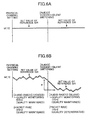
- FIG. 6A shows a transition of the reference SIP value with time when the loop transmission power control is not carried out
- FIG. 6B shows a transition of the reference SIR value with time when the outer loop transmission power control is carried out based on the quality monitoring of the audio transmission radio access bearer RAB#1.
- the reference SIR value is fixed to sir_12 as shown in FIG. 6A , regardless of the value of the transport format indicator (TFI) of the audio transmission radio access bearer (RAB).
- the reference SIR value decreases by ⁇ as shown in FIG. 6B .
- the audio quality is maintained constant, but the transmission quality of the packet deteriorates when the switching to the silent state is occurs due to the decrease of the reference SIR value.
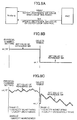
- the reference SIR value is set to sir_1 in the base station apparatus Node-B by the NAP notification.
- the reference SIR value is constant (sir_1).
- a process is carried out to increase or decrease the reference SIR value based on the Iub notification using sir_1 as a starting point. A change in the reference SIR value with time will be considered, for the case where the radio access bearer RAB(2) is added to the physical channel to which the radio access bearer RAB(1) is mapped.
- the radio network control apparatus RNC notifies the reference SIR value to the base station apparatus Node-B by the NBAP when adding the radio access bearer RAB(2), and updates the reference SIR value by carrying out the outer loop transmission power control via the interface Iub.
- the reference SIR value notified by the NAP is sir_12 when adding the radio access bearer RAB(2) and the outer loop transmission power control is not carried out, the reference SIR value in the base station apparatus Node-B becomes sir_12 and constant when adding the radio access bearer RAB(2), as shown in FIG. 7B .
- the reference SIR value is once set to sir_12 in the base station apparatus Node-B by the NBAP notification, as shown in FIG. 7C .
- the process of increasing or decreasing the reference SIR value by the Iub notification from the radio network control apparatus RNC is carried out regardless of the setting by the NBAP notification, and the set value of the reference SIR value by the outer loop transmission power control is updated by inheriting the value before the radio access bearer RAB(2) was added.
- the reference SIR value increases to sir_12 immediately after the radio access bearer RAB(2) is added, but thereafter decreases to the original value due to the Iub notification.
- it is necessary to increase the reference SIR value to follow sir_12 but if the reference SIR value, sir_12, after adding the radio access bearer RAB(2) is sufficiently large with respect to the reference SIR value, sir_1, before the radio access bearer RAB(2) was added, it requires a long time to increase the SIR value to a value that satisfies the target quality, and until this value that satisfies the target quality is reached, the transmission quality continues be deteriorated.
- the reference SIR value is set to sir_12' in the base station apparatus Node-B by the NBAP notification.
- the reference SIR value is sir_12' when the outer loop transmission power control is not carried out.
- the process of increasing or decreasing the reference SIR value is carried out based on the Iub notification using sir_12' as a starting point.
- the radio network control apparatus RNC notifies the reference SIR value to the base station apparatus Node-B by the NBAP when deleting the radio access bearer RAB(2), and carries out the outer loop transmission power control via the interface Iub, to update the reference SIR value.
- the reference SIR value in the base station apparatus Node-B becomes sir_1 and constant as shown in FIG. 8B when deleting the radio access bearer RAB(2).
- the reference SIR value in the base station apparatus (Node-B) is once set to sir_1' by the NBAP notification, as shown in FIG. 8C .
- the process of increasing or decreasing the reference SIR value by the Iub notification is carried out regardless of the setting by the NBAP notification. Consequently, the set value of the reference SIR value by the outer loop transmission power control is updated by inheriting the value before the radio access bearer RAB(2) was deleted.
- the reference SIR value decreases to sir_1' in the base station apparatus Node-B immediately after the deletion of the radio access bearer RAB(2), but thereafter increases to the original value by the Iub notification.
- the quality of the radio access bearer RAB(1) becomes excessively high with respect to the target value.
- WO 03/027527 discloses techniques for controlling the transmit power for a data transmission that uses a number of formats (e.g., rates, transport formats).
- Individual target block error rate (BLER) may be specified for each format of each data channel, or various power control schemes are provided to achieve different target SNIPS for different formats.
- BLER block error rate
- a first power scheme multiple individual outer loops are maintained for multiple formats, and the associated outer loop of each format attempts to set the target SNIR such that the target BLER specified for that format is achieved.
- a second power control scheme multiple individual outer loops are maintained and the base station further applies different adjustments to the transmit power levels for different formats.
- WO 03/021807 discloses systems and techniques for power control, which include receiving a transmission having a channel with an active portion and a silent portion, and controlling power of the received transmission as a function of a parameter of the active portion of the channel during a first time period and independent of the parameter during a second time period.
- EP 1139685 discloses a transmission power control method, wherein desired signal power is averaged over a plurality of slots to reduce a power error in desired signal power of each slot.
- the SIR(n) of each slot is calculated from the average value of desired signal power in the plurality of slots and the measured value of interference signal power of each slot, and the SIR(n) of each slot is compared to a threshold value so as to generate transmission power control information.
- WO 03/021976 discloses a method and a network element for determining cell-based values of a parameter of a selected active uplink transport channel multiplexed with other transport channels to a dedicated physical channel.
- a value for the parameter of the selected uplink transport channel is computed in predetermined periods of time based on the value of at least one available parameter associated to the dedicated physical channel. Further it is determined for the predetermined periods of time for each of the transport channels whether it is active in the respective period of time. Those periods of time for which it was determined that any other than the selected transport channel was active are excluded from supplying a relevant value for the parameter of the selected active uplink transport channel.
- Another and more specific object of the present invention is to provide a transmission power control method and apparatus for mobile communication system, which can carry out a transmission that always enables a reception quality immediately conforming to a target quality for a set radio access bearer (RAB) to be obtained, even if a change is made in the radio access bearers (RABs) or a considerable change is made in a number of data bits, such as a case where an audio switching is made from a voiced state to a silent state and a case where a radio access bearer (RAB) is added or deleted, to thereby improve the performance of an outer loop control of a multi-call setting, when carrying out a transmission power control in a mobile communication system.
- RAB radio access bearer
- An example of a transmission power control apparatus is adapted to control a reference value for controlling a transmission power of a mobile terminal equipment based on a reception quality of a plurality of radio access bearers at a base station apparatus, with respect to a physical channel to which the plurality of radio access bearers are mapped, when making a radio connection between the mobile terminal equipment and the base station apparatus in a mobile communication system.
- the transmission power control apparatus comprises judging means for judging whether or not a radio access bearer that is a monitoring target of the reception quality is an audio transmission radio access bearer in a silent state, based on multiplexed information, and switching means for switching the radio access bearer that is the monitoring target of the reception quality to a radio access bearer other than the audio transmission radio access bearer in the silent state, if the judging means judges that the radio access bearer that is the monitoring target of the reception quality is the audio transmission radio access bearer in the silent state, wherein the reference value for controlling the transmission power of the mobile terminal equipment is controlled based on a reception quality of the radio access bearer other than the audio transmission radio access bearer in the silent state.
- a transmission power control apparatus it is possible to prevent a sharp drop in the reference value when the switching is made to the silent state, and to maintain the quality of the other radio access bearers.
- RAB radio access bearer
- An aspect of the present invention provides a transmission power control apparatus according to claim 1.
- the transmission power control apparatus of the present invention it is possible to prevent the quality from becoming deteriorated or to prevent an excessively high quality from being maintained, when the radio access bearer is added or deleted.
- RAB radio access bearer
- An example of a transmission power control method, not in accordance with the present invention, for controlling a reference value for controlling a transmission power of a mobile terminal equipment based on a reception quality of a plurality of radio access bearers at a base station apparatus, with respect to a physical channel to which the plurality of radio access bearers are mapped, when making a radio connection between the mobile terminal equipment and the base station apparatus in a mobile communication system comprises the steps of:(a) judging whether or not a radio access bearer that is a monitoring target of the reception quality is an audio transmission radio access bearer in a silent state, based on multiplexed information; and (b) switching the radio access bearer that is the monitoring target of the reception quality to a radio access bearer other than the audio transmission radio access bearer in the silent state, if the step (a) judges that the radio access bearer that is the monitoring target of the reception quality is the audio transmission radio access bearer in the silent state, wherein the reference value for controlling the transmission power of the mobile terminal equipment is controlled based on a
- the transmission power control method it is possible to prevent a sharp drop in the reference value when the switching is made to the silent state, and to maintain the quality of the other radio access bearers.
- RAB radio access bearer
- a second aspect of the present invention provides a transmission power control method according to claim 2.
- the transmission power control method of the present invention it is possible to prevent the quality from becoming deteriorated or to prevent an excessively high quality from being maintained, when the radio access bearer is added or deleted.
- RAB radio access bearer
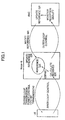
- FTGS. 9A and 9B respectively are diagrams for explaining an operation and a change in SIR value with time when switching to a silent state in an example of a transmission power control apparatus not in accordance with the present invention.
- This example of a transmission power control apparatus employs a transmission power control method not in accordance with the present invention.
- a quality monitoring of a radio access bearer (RAB) in a radio network control apparatus RNC is carried out as follows when carrying out an outer loop transmission power control, if an audio transmission radio access bearer RAB#1 that employs an Adaptive Multi-Rate (AMR) coding including no data bits is mapped in a physical channel.
- AMR Adaptive Multi-Rate
- the audio transmission radio access bearer RAB#1 is excluded from a target of a quality monitoring of the outer loop transmission power control. If the value of the transport format indicator (TFI) switches to 0 in a state where the quality monitoring is carried out with respect to the audio transmission radio access bearer RAB#1, the radio network control apparatus RNC continues the outer loop transmission power control by switching the target of the quality monitoring of the outer loop transmission power control to another radio access bearer (RAB) having a transport format indicator (TFI) that is not 0.
- RAB radio access bearer
- the base station apparatus derives the transport format indicator (TFI) of each radio access bearer (RAB) from the received transport format combination indicator (TFCI) and notifies the transport format indicator (TFI) to the radio network control apparatus RNC.
- the radio network control apparatus RNC carries out the outer loop transmission power control with the target of the quality monitoring being the voiced audio transmission radio access bearer RAB#1, as indicated in the top portion of FIG. 9A .
- FIG. 9B shows a change in the reference SIR value with time.
- the radio network control apparatus RNC recognizes that the transport format indicator (TFI) of the audio transmission radio access bearer RAB#1 has become 0 and excludes the audio transmission radio access bearer RAB#1 from the target of the quality monitoring.
- the radio network control apparatus RNC continues the outer loop transmission power control by switching the target of the quality monitoring to the packet transmission radio access bearer (RAB) having the transport format index (TFI) that is 2, and notifies the reference SIR value to the base station apparatus Node-B.
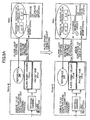
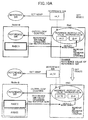
- FIGS. 10A and 10B respectively are diagrams for explaining an operation and a change in SIR value with time when adding a radio access bearer (RAB) in the first embodiment of the transmission power control apparatus according to the present invention.
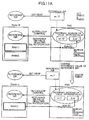
- FIGS. 11A and 11B respectively are diagrams for explaining an operation and a change in SIR value with time when adding a radio access bearer (RAB) in the first embodiment of the transmission power control apparatus according to the present invention.
- This first embodiment of the transmission power control apparatus employs a first embodiment of the transmission power control method according to the present invention.
- the setting of the reference SIR value is made as follows if the radio access bearer (RAB) is added or deleted.
- RAB radio access bearer
- an increase or decrease (change) value ⁇ SIR of the reference SIR value is derived based on up-link reception quality information that is obtained from the base station apparatus Node-B.
- the increase or decrease value ⁇ SIR changes for every specific period of the outer loop transmission power control.
- SIR_before is added as a reference value every time the increase or decrease value ⁇ SIR is updated, and an added value (SIR before+ ⁇ SIR) that is obtained is notified to the base station apparatus Node-B by the Iub.
- the added value (SIR_before+ ⁇ SIR) is set as the reference SIR value so as to update the reference SIR value.
- the reference SIR value notified by the NBAP is set to SIR_after.
- the reference value of the reference SIR value is changed from SIR_before to SIR_after, and an added value (SIR_after+ ⁇ SIR) of the reference value and the ⁇ SIR value is notified to the base station apparatus Node-B by the Iub every time the ⁇ SIR value is updated, so as to set and update the reference SIR value.
- the reference value of the reference SIR value is notified to the base station apparatus (Node-B) by the NBAP, and is successively updated every time the adding or deleting process is carried out with respect to the radio access bearer (RAB).
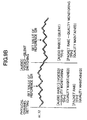
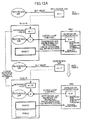
- FIG. 10A shows the operation of the outer loop transmission power control before and after the adding process with respect to the radio access bearer (RAB) in this first embodiment
- FIG. 10B shows a change in the reference SIR value with time.
- the outer loop transmission power control is carried out in the physical channel to which the radio access bearer RAB(1) is mapped.
- the reference SIR value is set to sir_1 by the NBAP notification, and an increase or decrease (change) value ⁇ sir of the reference SIR value is calculated by the outer loop transmission power control that is carried out with the radio access bearer RAB(1) as the target of the quality monitoring.
- the radio network control apparatus RNC When the value of the increase or decrease value ⁇ sir is updated, the radio network control apparatus RNC notifies an added value (sir_1+ ⁇ sir) of the reference value sir_1 and the increase or decrease value ⁇ sir to the base station apparatus Node-B by the Iub.
- the base station apparatus Node-B updates the reference SIR value to the added value (sir-1+ ⁇ sir).
- the radio network control apparatus RNC changes the reference value of the reference SIR value to sir_12 and continues the outer loop transmission power control.
- the radio network control apparatus RNC notifies the calculated reference SIR value (sir_12+ ⁇ sir) to the base station apparatus Node-B, so as to set and update the reference SIR value in the base station apparatus Node-B.
- sir_12 is the reference SIR value that is set by the NBAP when carrying out the adding process of the radio access bearer RAB (2), and sir_1 ⁇ sir_12.
- FIG. 11A shows the operation of the outer loop transmission power control before and after the deleting process with respect to the radio access bearer (RAB) in this first embodiment
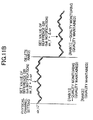
- FIG. 11B shows a change in the reference SIR value with time.
- the outer loop transmission power control is carried out in the physical channel to which the radio access bearers RAB(1) and RAB(2) are mapped.
- the reference SIR value is set to sir_12' by the NBAP notification, and an increase or decrease (change) value ⁇ sir of the reference SIR value is calculated by the outer loop transmission power control that is carried out with the radio access bearer RAB(1) as the target of the quality monitoring.
- the radio network control apparatus RNC When the value of the increase or decrease value ⁇ sir is updated, the radio network control apparatus RNC notifies an added value (sir_12'+ ⁇ sir) of the reference value sir_12' and the increase or decrease value ⁇ sir to the base station apparatus Node-B by the Iub.
- the base station apparatus Node-B updates the reference SIR value to the added value (sir_12'+ ⁇ sir).
- the radio network control apparatus RNC changes the reference value of the reference STR value to sir_1' and continues the outer loop transmission power control.
- the radio network control apparatus RNC notifies the calculated reference SIR value (sir_1'+ ⁇ sir) to the base station apparatus Node-B, so as to set and update the reference SIR value in the base station apparatus Node-B.
- sir_1' is the reference SIR value that is set by the NBAP when carrying out the deleting process of the radio access bearer RAB(2), and sir_12' ⁇ sir_1'.
- FIGS. 12A and 12B respectively are diagrams for explaining an operation and a change in SIR value with time when adding a radio access bearer (RAB) in the second embodiment of the transmission power control apparatus according to the present invention.
- FIGS. 13A and 13B respectively are diagrams for explaining an operation and a change in SIR value with time when deleting a radio access bearer (RAB) in the second embodiment of the transmission power control apparatus according to the present invention.
- This second embodiment of the transmission power control apparatus employs a second embodiment of the transmission power control method according to the present invention.
- the setting of the reference SIR value is made as follows if the radio access bearer (RAB) is added or deleted.
- RAB radio access bearer
- an increase or decrease (change) value ⁇ SIR of the reference SIR value is derived based on up-link reception quality information that is obtained from the base station apparatus Node-B.
- the increase or decrease value ⁇ SIR changes for every specific period of the outer loop transmission power control.
- the radio network control apparatus RNC notifies the increase or decrease value ⁇ SIR to the base station apparatus Node-B by the Iub every time the increase or decrease value ⁇ SIR is updated.
- SIR_before is added as a reference value to the increase or decrease value ⁇ SIR that is received from the radio network control apparatus RNC, and sets the reference SIR value to the added value (SIR_before+ ⁇ SIR) so as to update the reference SIR value.
- RNC radio access bearer
- the reference value of the reference SIR value is changed from SIR_before to SIR_after, and every time the increase or decrease value ⁇ SIR is notified from the radio network control apparatus RNC to the base station Node-B by the Iub, an added value (SIR_after+ ⁇ SIR) of the reference value and the ⁇ SIR value is calculated, so as to set and update the reference SIR value.
- the reference value of the reference SIR value is successively updated every time the adding or deleting process is carried out with respect to the radio access bearer (RAB) by the NBAP.
- FIG. 12A shows the operation of the outer loop transmission power control before and after the adding process with respect to the radio access bearer (RAB) in this second embodiment
- FIG. 12B shows a change in the reference SIR value with time.
- the outer loop transmission power control is carried out in the physical channel to which the radio access bearer RAB(1) is mapped.
- the reference SIR value is set to sir_1 by the NBAP notification, and an increase or decrease (change) value ⁇ sir of the reference SIR value is calculated by the outer loop transmission power control that is carried out with the radio access bearer RAB(1) as the target of the quality monitoring.
- the radio network control apparatus RNC When the value of the increase or decrease value ⁇ sir is updated, the radio network control apparatus RNC notifies the increase or decrease value ⁇ sir to the base station apparatus Node-B by the Iub.
- the base station apparatus Node-B updates and sets the reference SIR value to an added value (sir 1+ ⁇ sir) of the reference value sir_1 of the reference SIR value and the increase or decrease value ⁇ sir, by adding the reference value sir_1 of the reference SIR value to the increase or decrease value ⁇ sir that is received from the radio network control apparatus RNC.
- the base station apparatus Node-B changes the reference value on the reference SIR value to sir_12, and adds the increase or decrease value ⁇ sir notified from the radio network control apparatus RNC by the outer loop transmission power control, so as to set and update the reference SIR value to the obtained value (sir_12+ ⁇ sir).
- sir_12 is the reference SIR value that is set by the NBAP when carrying out the adding process of the radio access bearer RAB(2), and sir_1 ⁇ sir_12.
- FIG. 13A shows the operation of the outer loop transmission power control before and after the deleting process with respect to the radio access bearer (RAB) in this second embodiment
- FIG. 13B shows a change in the reference SIR value with time.
- the outer loop transmission power control is carried out in the physical channel to which the radio access bearers RAB(1) and RAB(2) are mapped.
- the reference SIR value is set to sir_12' by the NBAP notification, and an increase or decrease (change) value ⁇ sir of the reference SIR value is calculated by the outer loop transmission power control that is carried out with the radio access bearer RAB(1) as the target of the quality monitoring.
- the radio network control apparatus RNC When the value of the increase or decrease value ⁇ sir is updated, the radio network control apparatus RNC notifies the increase or decrease value ⁇ sir to the base station apparatus Node-B by the Iub.
- the base station apparatus Node-B adds a reference value sir_12' of the reference SIR value to the increase or decrease value ⁇ sir that is received from the radio network control apparatus RNC, and sets and updates the reference SIR value to the added value (sir 12'+ ⁇ sir).
- the base station apparatus Node-B changes the reference value of the reference SIR value to sir_1' and adds the increase or decrease value ⁇ sir that is notified from the radio network control apparatus RNC by the outer loop transmission power control, to set and update the reference SIR value to the added value (sir 1'+ ⁇ sir).
- sir_1' is the reference SIR value that is set by the NBAP when carrying out the deleting process of the radio access bearer RAB(2), and sir_12' ⁇ sir_1'.
Landscapes
- Engineering & Computer Science (AREA)
- Computer Networks & Wireless Communication (AREA)
- Signal Processing (AREA)
- Quality & Reliability (AREA)
- Mobile Radio Communication Systems (AREA)
- Transmitters (AREA)
Claims (2)
- Appareil de contrôle de réseau de radiocommunication (RNC) conçu pour contrôler une valeur de rapport de puissance de signal sur puissance d'interférence (SIR) de référence pour contrôler une puissance d'émission d'un équipement de terminal mobile par rapport à un canal physique sur lequel sont mappés une pluralité de supports d'accès radio, ledit contrôle de la valeur de rapport de puissance de signal sur puissance d'interférence (SIR) de référence étant basé sur une qualité de réception de la pluralité de supports d'accès radio (RAB) au niveau d'un appareil de station de base (Noeud B), lors de l'établissement d'une connexion radio entre l'équipement de terminal mobile et l'appareil de station de base dans un système de communication mobile, comprenant :des moyens de réglage pour régler la valeur SIR de référence dans la station de base grâce à une NBAP - notification de protocole d'application de noeud B - lorsqu'un canal physique spécifique est défini, un contrôle de puissance d'émission en boucle externe étant réalisé dans cet état ;des moyens de calcul pour calculer une valeur d'augmentation ou de diminution (ΔSIR) de la valeur SIR de référence pour un contrôle de puissance d'émission en boucle interne sur la base des informations de qualité de réception ;des moyens de notification pour notifier la valeur d'augmentation ou de diminution (ΔSIR) à l'appareil de station de base (Noeud B) grâce à une interface (Iub) chaque fois que la valeur d'augmentation ou de diminution (ΔSIR) est mise à jour ; etdes moyens de mise à jour pour mettre à jour la valeur SIR de référence dans l'appareil de station de base chaque fois que l'on ajoute ou supprime un support d'accès radio (RAB) grâce à la notification,dans lequel lorsque la valeur d'augmentation ou de diminution (ΔSIR) est notifiée depuis un appareil de contrôle de réseau de radiocommunication (RNC) à l'appareil de station de base (Noeud B) par l'interface (Iub), une valeur ajoutée de la valeur SIR de référence et la valeur d'augmentation ou de diminution (ΔSIR) sont calculées comme valeur SIR de référence, afin de définir et de mettre à jour la valeur SIR de référence.
- Procédé de contrôle de puissance d'émission pour contrôler une valeur de rapport de puissance de signal sur puissance d'interférence (SIR) de référence pour contrôler une puissance d'émission d'un équipement de terminal mobile par rapport à un canal physique sur lequel sont mappés une pluralité de supports d'accès radio, ledit contrôle de la valeur de rapport de puissance de signal sur puissance d'interférence (SIR) étant basé sur une qualité de réception de la pluralité de supports d'accès radio (RAB) au niveau d'un appareil de station de base (Noeud B), lors de l'établissement d'une connexion radio entre l'équipement de terminal mobile et l'appareil de station de base dans un système de communication mobile, consistant à :(a) définir la valeur SIR de référence dans la station de base grâce à une NBAP - notification de protocole d'application de noeud B - lorsqu'un canal physique spécifique est défini, un contrôle de puissance d'émission en boucle externe étant réalisé dans cet état ;(b) calculer une valeur d'augmentation ou de diminution (ΔSIR) de la valeur SIR de référence pour un contrôle de puissance d'émission en boucle interne sur la base des informations de qualité de réception ;(c) notifier la valeur d'augmentation ou de diminution (ΔSIR) à l'appareil de station de base (Noeud B) grâce à une interface (Iub) chaque fois que la valeur d'augmentation ou de diminution (ΔSIR) est mise à jour ; et(d) mettre à jour la valeur SIR de référence dans l'appareil de station de base chaque fois que l'on ajoute ou supprime un support d'accès radio grâce à la notification NBAP,dans lequel lesdites étapes (a) à (d) sont réalisées grâce à un appareil de contrôle de réseau de radiocommunication (RNC) qui contrôle l'appareil de station de base, et lorsque la valeur d'augmentation ou de diminution et la valeur de référence sont notifiées depuis un appareil de réseau de radiocommunication à l'appareil de station de base (noeud B) par l'interface (Iub), une valeur ajoutée de la valeur SIR de référence et la valeur d'augmentation ou de diminution (ΔSIR) sont calculées comme valeur SIR de référence, afin de définir et de mettre à jour la valeur SIR de référence.
Applications Claiming Priority (2)
| Application Number | Priority Date | Filing Date | Title |
|---|---|---|---|
| JP2003359250A JP4447281B2 (ja) | 2003-10-20 | 2003-10-20 | 移動通信システムにおける送信電力制御装置 |
| EP04256435.1A EP1526653B1 (fr) | 2003-10-20 | 2004-10-19 | Procédé et appareil de régulation de puissance d'émission pour système de communication mobile |
Related Parent Applications (3)
| Application Number | Title | Priority Date | Filing Date |
|---|---|---|---|
| EP04256435.1A Division EP1526653B1 (fr) | 2003-10-20 | 2004-10-19 | Procédé et appareil de régulation de puissance d'émission pour système de communication mobile |
| EP04256435.1A Division-Into EP1526653B1 (fr) | 2003-10-20 | 2004-10-19 | Procédé et appareil de régulation de puissance d'émission pour système de communication mobile |
| EP04256435.1 Division | 2004-10-19 |
Publications (3)
| Publication Number | Publication Date |
|---|---|
| EP2244389A2 EP2244389A2 (fr) | 2010-10-27 |
| EP2244389A3 EP2244389A3 (fr) | 2010-12-22 |
| EP2244389B1 true EP2244389B1 (fr) | 2012-08-22 |
Family
ID=34386457
Family Applications (2)
| Application Number | Title | Priority Date | Filing Date |
|---|---|---|---|
| EP20100166200 Expired - Lifetime EP2244389B1 (fr) | 2003-10-20 | 2004-10-19 | Procédé et appareil de régulation de puissance d'émission pour système de communication mobile |
| EP04256435.1A Expired - Lifetime EP1526653B1 (fr) | 2003-10-20 | 2004-10-19 | Procédé et appareil de régulation de puissance d'émission pour système de communication mobile |
Family Applications After (1)
| Application Number | Title | Priority Date | Filing Date |
|---|---|---|---|
| EP04256435.1A Expired - Lifetime EP1526653B1 (fr) | 2003-10-20 | 2004-10-19 | Procédé et appareil de régulation de puissance d'émission pour système de communication mobile |
Country Status (3)
| Country | Link |
|---|---|
| US (2) | US7436794B2 (fr) |
| EP (2) | EP2244389B1 (fr) |
| JP (1) | JP4447281B2 (fr) |
Families Citing this family (45)
| Publication number | Priority date | Publication date | Assignee | Title |
|---|---|---|---|---|
| JP2001320326A (ja) * | 2000-03-03 | 2001-11-16 | Sony Corp | 通信システム、通信方法及び通信装置 |
| US6983166B2 (en) * | 2001-08-20 | 2006-01-03 | Qualcomm, Incorporated | Power control for a channel with multiple formats in a communication system |
| GB0410481D0 (en) * | 2004-05-11 | 2004-06-16 | Nokia Corp | Frame transmission interval |
| WO2006104208A1 (fr) * | 2005-03-29 | 2006-10-05 | Ntt Docomo, Inc. | Procede de controle de puissance de transmission et station mobile |
| US8965440B2 (en) * | 2005-05-31 | 2015-02-24 | Alcatel Lucent | Method of estimating a current channel condition in a wireless communications network |
| DE602005009340D1 (de) * | 2005-06-17 | 2008-10-09 | Fujitsu Ltd | Leistungsregelung im Mehrstreckenkommunikationssystem |
| JP4572146B2 (ja) * | 2005-08-03 | 2010-10-27 | 日本電気株式会社 | 送信電力制御方法 |
| KR20070073059A (ko) * | 2006-01-03 | 2007-07-10 | 삼성전자주식회사 | 이동통신 시스템의 전력 제어 장치 및 방법 |
| CN100417103C (zh) * | 2006-05-18 | 2008-09-03 | 华为技术有限公司 | 一种业务性能测量的方法 |
| US8892112B2 (en) * | 2011-07-21 | 2014-11-18 | At&T Mobility Ii Llc | Selection of a radio access bearer resource based on radio access bearer resource historical information |
| KR101481549B1 (ko) * | 2008-09-18 | 2015-01-13 | 엘지전자 주식회사 | 다중사용자 mimo에서 전송 전력값 전달 및 확인 방법 |
| US8326319B2 (en) | 2009-01-23 | 2012-12-04 | At&T Mobility Ii Llc | Compensation of propagation delays of wireless signals |
| JP5468797B2 (ja) * | 2009-03-13 | 2014-04-09 | 日本電気通信システム株式会社 | 基地局制御装置、移動通信システム、基地局制御方法、移動通信システムの電力制御方法及びプログラム |
| US8724741B2 (en) * | 2009-10-02 | 2014-05-13 | Telefonaktiebolaget L M Ericsson (Publ) | Signal quality estimation from coupling matrix |
| US8081604B2 (en) * | 2010-02-22 | 2011-12-20 | Htc Corporation | Method and apparatus for handling SRVCC in an inter radio access technology handover |
| US9053513B2 (en) | 2010-02-25 | 2015-06-09 | At&T Mobility Ii Llc | Fraud analysis for a location aware transaction |
| US9008684B2 (en) | 2010-02-25 | 2015-04-14 | At&T Mobility Ii Llc | Sharing timed fingerprint location information |
| US9196157B2 (en) | 2010-02-25 | 2015-11-24 | AT&T Mobolity II LLC | Transportation analytics employing timed fingerprint location information |
| US8224349B2 (en) | 2010-02-25 | 2012-07-17 | At&T Mobility Ii Llc | Timed fingerprint locating in wireless networks |
| US8447328B2 (en) | 2010-08-27 | 2013-05-21 | At&T Mobility Ii Llc | Location estimation of a mobile device in a UMTS network |
| US9009629B2 (en) | 2010-12-01 | 2015-04-14 | At&T Mobility Ii Llc | Motion-based user interface feature subsets |
| US9462497B2 (en) | 2011-07-01 | 2016-10-04 | At&T Mobility Ii Llc | Subscriber data analysis and graphical rendering |
| US8897802B2 (en) | 2011-07-21 | 2014-11-25 | At&T Mobility Ii Llc | Selection of a radio access technology resource based on radio access technology resource historical information |
| US9519043B2 (en) | 2011-07-21 | 2016-12-13 | At&T Mobility Ii Llc | Estimating network based locating error in wireless networks |
| US8761799B2 (en) | 2011-07-21 | 2014-06-24 | At&T Mobility Ii Llc | Location analytics employing timed fingerprint location information |
| US8923134B2 (en) | 2011-08-29 | 2014-12-30 | At&T Mobility Ii Llc | Prioritizing network failure tickets using mobile location data |
| US8762048B2 (en) | 2011-10-28 | 2014-06-24 | At&T Mobility Ii Llc | Automatic travel time and routing determinations in a wireless network |
| KR101986865B1 (ko) | 2011-11-04 | 2019-06-07 | 인터디지탈 패튼 홀딩스, 인크 | 다수의 타이밍 어드밴스와 관련된 다수의 컴포넌트 반송파 상의 무선 전송에 대한 전력 제어를 위한 방법 및 장치 |
| US8909247B2 (en) | 2011-11-08 | 2014-12-09 | At&T Mobility Ii Llc | Location based sharing of a network access credential |
| US9026133B2 (en) | 2011-11-28 | 2015-05-05 | At&T Mobility Ii Llc | Handset agent calibration for timing based locating systems |
| US8970432B2 (en) | 2011-11-28 | 2015-03-03 | At&T Mobility Ii Llc | Femtocell calibration for timing based locating systems |
| US9008047B2 (en) | 2012-01-18 | 2015-04-14 | Qualcomm Incorporated | Methods and apparatuses for implementing a multi-RAB minimum TFC determination algorithm based on transmit power |
| US8925104B2 (en) | 2012-04-13 | 2014-12-30 | At&T Mobility Ii Llc | Event driven permissive sharing of information |
| US9094929B2 (en) | 2012-06-12 | 2015-07-28 | At&T Mobility Ii Llc | Event tagging for mobile networks |
| US9046592B2 (en) | 2012-06-13 | 2015-06-02 | At&T Mobility Ii Llc | Timed fingerprint locating at user equipment |
| US9326263B2 (en) | 2012-06-13 | 2016-04-26 | At&T Mobility Ii Llc | Site location determination using crowd sourced propagation delay and location data |
| US8938258B2 (en) | 2012-06-14 | 2015-01-20 | At&T Mobility Ii Llc | Reference based location information for a wireless network |
| US8897805B2 (en) | 2012-06-15 | 2014-11-25 | At&T Intellectual Property I, L.P. | Geographic redundancy determination for time based location information in a wireless radio network |
| US9408174B2 (en) | 2012-06-19 | 2016-08-02 | At&T Mobility Ii Llc | Facilitation of timed fingerprint mobile device locating |
| US8892054B2 (en) | 2012-07-17 | 2014-11-18 | At&T Mobility Ii Llc | Facilitation of delay error correction in timing-based location systems |
| US9351223B2 (en) | 2012-07-25 | 2016-05-24 | At&T Mobility Ii Llc | Assignment of hierarchical cell structures employing geolocation techniques |
| US9351111B1 (en) | 2015-03-06 | 2016-05-24 | At&T Mobility Ii Llc | Access to mobile location related information |
| TWI625064B (zh) * | 2016-03-07 | 2018-05-21 | Industrial Technology Research Institute | 管理發送通知訊息的通訊方法及應用其的電子裝置及系統 |
| US10516972B1 (en) | 2018-06-01 | 2019-12-24 | At&T Intellectual Property I, L.P. | Employing an alternate identifier for subscription access to mobile location information |
| CN110996332A (zh) * | 2019-12-25 | 2020-04-10 | 公安部第一研究所 | 一种基于干扰的覆盖自适应调整方法 |
Family Cites Families (18)
| Publication number | Priority date | Publication date | Assignee | Title |
|---|---|---|---|---|
| US5838671A (en) * | 1995-06-23 | 1998-11-17 | Ntt Mobile Communications Network Inc. | Method and apparatus for call admission control in CDMA mobile communication system |
| JPH1047253A (ja) | 1996-07-31 | 1998-02-17 | Matsushita Refrig Co Ltd | 密閉型電動圧縮機 |
| CA2278755A1 (fr) | 1997-04-16 | 1998-10-22 | Ntt Mobile Communications Network Inc. | Procede de communication amdc |
| US6173162B1 (en) | 1997-06-16 | 2001-01-09 | Telefonaktiebolaget Lm Ericsson (Publ) | Multiple code channel power control in a radio communication system |
| FI108181B (fi) * | 1998-02-13 | 2001-11-30 | Nokia Mobile Phones Ltd | Tehonsäätömenetelmä |
| KR100605978B1 (ko) * | 1999-05-29 | 2006-07-28 | 삼성전자주식회사 | 부호분할다중접속 이동통신시스템의 불연속 전송모드에서 연속적인 외부순환 전력제어를 위한 송수신 장치 및 방법 |
| JP3621310B2 (ja) * | 1999-10-07 | 2005-02-16 | 松下電器産業株式会社 | 無線通信装置及び送信電力制御方法 |
| JP2001217770A (ja) | 2000-01-31 | 2001-08-10 | Oki Electric Ind Co Ltd | 送信電力制御方法及び装置 |
| JP2001285193A (ja) | 2000-03-29 | 2001-10-12 | Oki Electric Ind Co Ltd | 送信電力制御方式 |
| GB2363034B (en) * | 2000-05-31 | 2004-04-28 | Motorola Inc | Communications system, call establishment procedure and method of power control in a radio communications environment |
| JPWO2002102109A1 (ja) * | 2001-06-06 | 2004-09-30 | 松下電器産業株式会社 | セルラ無線伝送装置およびセルラ無線伝送方法 |
| JP2003018089A (ja) | 2001-06-29 | 2003-01-17 | Matsushita Electric Ind Co Ltd | 無線通信装置および送信電力制御方法 |
| US6983166B2 (en) | 2001-08-20 | 2006-01-03 | Qualcomm, Incorporated | Power control for a channel with multiple formats in a communication system |
| US6842624B2 (en) * | 2001-08-29 | 2005-01-11 | Qualcomm, Incorporated | Systems and techniques for power control |
| CN1247030C (zh) * | 2001-09-04 | 2006-03-22 | 诺基亚公司 | 上行链路传送信道参数值的确定 |
| DE60127138T2 (de) * | 2001-11-12 | 2007-11-22 | Lucent Technologies Inc. | Regelung der Sendeleistung in einem CDMA-basierten System |
| JP4025979B2 (ja) * | 2002-04-24 | 2007-12-26 | 日本電気株式会社 | Cdma移動通信方式における送信電力制御方法および無線基地局とcdma通信システム |
| AU2002368118A1 (en) * | 2002-07-29 | 2004-02-16 | Mitsubishi Denki Kabushiki Kaisha | Internet communication system, internet communication method, session management server, radio communication device, communication relay server, and program |
-
2003
- 2003-10-20 JP JP2003359250A patent/JP4447281B2/ja not_active Expired - Fee Related
-
2004
- 2004-10-19 EP EP20100166200 patent/EP2244389B1/fr not_active Expired - Lifetime
- 2004-10-19 EP EP04256435.1A patent/EP1526653B1/fr not_active Expired - Lifetime
- 2004-10-19 US US10/968,366 patent/US7436794B2/en not_active Expired - Fee Related
-
2008
- 2008-09-03 US US12/203,265 patent/US7647066B2/en not_active Expired - Fee Related
Also Published As
| Publication number | Publication date |
|---|---|
| JP4447281B2 (ja) | 2010-04-07 |
| US7436794B2 (en) | 2008-10-14 |
| EP1526653A3 (fr) | 2009-07-15 |
| EP2244389A3 (fr) | 2010-12-22 |
| EP1526653B1 (fr) | 2015-09-09 |
| US20090011771A1 (en) | 2009-01-08 |
| US20050083869A1 (en) | 2005-04-21 |
| US7647066B2 (en) | 2010-01-12 |
| EP2244389A2 (fr) | 2010-10-27 |
| EP1526653A2 (fr) | 2005-04-27 |
| JP2005124044A (ja) | 2005-05-12 |
Similar Documents
| Publication | Publication Date | Title |
|---|---|---|
| EP1526653B1 (fr) | Procédé et appareil de régulation de puissance d'émission pour système de communication mobile | |
| US9674798B2 (en) | Transport format combination selecting method, wireless communication system, and mobile station | |
| EP2107841B1 (fr) | Attribution de ressources en boucle fermée dans un réseau de communication sans fil à grand vitesse | |
| EP1117184A1 (fr) | Procédé et dispositif pour un système de radiocommunication cellulaire du type AMRC | |
| EP1436925A1 (fr) | Systeme et procede pour adaptation de lien dynamique rapide | |
| EP1639715A2 (fr) | Reglage adaptatif de puissance pour systeme 1xev-dv | |
| US7680052B2 (en) | Closed loop resource allocation | |
| JP3860538B2 (ja) | 無線システムでの送信電力調整方法 | |
| JP4499817B2 (ja) | 移動通信システムにおける送信電力制御装置 | |
| HK1106884A (en) | Transport format combination selecting method, wireless communication system, and mobile station | |
| HK1079304B (en) | Block error rate estimate reporting for target signal to interference ratio adjustment | |
| HK1079304A1 (en) | Block error rate estimate reporting for target signal to interference ratio adjustment | |
| HK1151650B (en) | Transport format combination selecting method, wireless communication system, and mobile station |
Legal Events
| Date | Code | Title | Description |
|---|---|---|---|
| PUAI | Public reference made under article 153(3) epc to a published international application that has entered the european phase |
Free format text: ORIGINAL CODE: 0009012 |
|
| AC | Divisional application: reference to earlier application |
Ref document number: 1526653 Country of ref document: EP Kind code of ref document: P |
|
| AK | Designated contracting states |
Kind code of ref document: A2 Designated state(s): DE FR GB |
|
| PUAL | Search report despatched |
Free format text: ORIGINAL CODE: 0009013 |
|
| AK | Designated contracting states |
Kind code of ref document: A3 Designated state(s): DE FR GB |
|
| 17P | Request for examination filed |
Effective date: 20110615 |
|
| REG | Reference to a national code |
Ref country code: DE Ref legal event code: R079 Ref document number: 602004039087 Country of ref document: DE Free format text: PREVIOUS MAIN CLASS: H04B0007005000 Ipc: H04W0052240000 |
|
| GRAP | Despatch of communication of intention to grant a patent |
Free format text: ORIGINAL CODE: EPIDOSNIGR1 |
|
| RIC1 | Information provided on ipc code assigned before grant |
Ipc: H04W 52/24 20090101AFI20120113BHEP Ipc: H04W 52/12 20090101ALI20120113BHEP Ipc: H04W 52/38 20090101ALI20120113BHEP |
|
| GRAS | Grant fee paid |
Free format text: ORIGINAL CODE: EPIDOSNIGR3 |
|
| GRAA | (expected) grant |
Free format text: ORIGINAL CODE: 0009210 |
|
| AC | Divisional application: reference to earlier application |
Ref document number: 1526653 Country of ref document: EP Kind code of ref document: P |
|
| AK | Designated contracting states |
Kind code of ref document: B1 Designated state(s): DE FR GB |
|
| REG | Reference to a national code |
Ref country code: GB Ref legal event code: FG4D |
|
| REG | Reference to a national code |
Ref country code: DE Ref legal event code: R096 Ref document number: 602004039087 Country of ref document: DE Effective date: 20121018 |
|
| PLBE | No opposition filed within time limit |
Free format text: ORIGINAL CODE: 0009261 |
|
| STAA | Information on the status of an ep patent application or granted ep patent |
Free format text: STATUS: NO OPPOSITION FILED WITHIN TIME LIMIT |
|
| 26N | No opposition filed |
Effective date: 20130523 |
|
| REG | Reference to a national code |
Ref country code: DE Ref legal event code: R097 Ref document number: 602004039087 Country of ref document: DE Effective date: 20130523 |
|
| REG | Reference to a national code |
Ref country code: FR Ref legal event code: PLFP Year of fee payment: 12 |
|
| PGFP | Annual fee paid to national office [announced via postgrant information from national office to epo] |
Ref country code: FR Payment date: 20150908 Year of fee payment: 12 |
|
| PGFP | Annual fee paid to national office [announced via postgrant information from national office to epo] |
Ref country code: GB Payment date: 20151014 Year of fee payment: 12 Ref country code: DE Payment date: 20151013 Year of fee payment: 12 |
|
| REG | Reference to a national code |
Ref country code: DE Ref legal event code: R119 Ref document number: 602004039087 Country of ref document: DE |
|
| GBPC | Gb: european patent ceased through non-payment of renewal fee |
Effective date: 20161019 |
|
| REG | Reference to a national code |
Ref country code: FR Ref legal event code: ST Effective date: 20170630 |
|
| PG25 | Lapsed in a contracting state [announced via postgrant information from national office to epo] |
Ref country code: DE Free format text: LAPSE BECAUSE OF NON-PAYMENT OF DUE FEES Effective date: 20170503 Ref country code: FR Free format text: LAPSE BECAUSE OF NON-PAYMENT OF DUE FEES Effective date: 20161102 Ref country code: GB Free format text: LAPSE BECAUSE OF NON-PAYMENT OF DUE FEES Effective date: 20161019 |