EP2244442A1 - Amélioration du protocole de découverte de service - Google Patents
Amélioration du protocole de découverte de service Download PDFInfo
- Publication number
- EP2244442A1 EP2244442A1 EP10157165A EP10157165A EP2244442A1 EP 2244442 A1 EP2244442 A1 EP 2244442A1 EP 10157165 A EP10157165 A EP 10157165A EP 10157165 A EP10157165 A EP 10157165A EP 2244442 A1 EP2244442 A1 EP 2244442A1
- Authority
- EP
- European Patent Office
- Prior art keywords
- transports
- complimentary
- service
- initial transport
- transport
- Prior art date
- Legal status (The legal status is an assumption and is not a legal conclusion. Google has not performed a legal analysis and makes no representation as to the accuracy of the status listed.)
- Withdrawn
Links
- 230000032258 transport Effects 0.000 claims abstract description 110
- 238000000034 method Methods 0.000 claims description 24
- 230000000694 effects Effects 0.000 claims description 14
- 230000000295 complement effect Effects 0.000 claims description 7
- 230000006855 networking Effects 0.000 claims description 3
- 238000004590 computer program Methods 0.000 claims 5
- 238000004891 communication Methods 0.000 description 51
- 230000008569 process Effects 0.000 description 16
- 230000003993 interaction Effects 0.000 description 13
- 230000015654 memory Effects 0.000 description 9
- 230000005540 biological transmission Effects 0.000 description 7
- 238000012545 processing Methods 0.000 description 5
- 230000001413 cellular effect Effects 0.000 description 4
- 238000012937 correction Methods 0.000 description 3
- 230000009471 action Effects 0.000 description 2
- 230000008859 change Effects 0.000 description 2
- 238000012546 transfer Methods 0.000 description 2
- 230000004913 activation Effects 0.000 description 1
- 230000006978 adaptation Effects 0.000 description 1
- 230000004075 alteration Effects 0.000 description 1
- 238000013459 approach Methods 0.000 description 1
- 230000009286 beneficial effect Effects 0.000 description 1
- 230000008901 benefit Effects 0.000 description 1
- 238000004364 calculation method Methods 0.000 description 1
- 238000006243 chemical reaction Methods 0.000 description 1
- 239000002131 composite material Substances 0.000 description 1
- 230000001627 detrimental effect Effects 0.000 description 1
- 238000011161 development Methods 0.000 description 1
- 230000018109 developmental process Effects 0.000 description 1
- 238000010586 diagram Methods 0.000 description 1
- 238000011156 evaluation Methods 0.000 description 1
- 230000006872 improvement Effects 0.000 description 1
- 230000010365 information processing Effects 0.000 description 1
- NUHSROFQTUXZQQ-UHFFFAOYSA-N isopentenyl diphosphate Chemical compound CC(=C)CCO[P@](O)(=O)OP(O)(O)=O NUHSROFQTUXZQQ-UHFFFAOYSA-N 0.000 description 1
- 230000003287 optical effect Effects 0.000 description 1
- 230000002093 peripheral effect Effects 0.000 description 1
- 230000004044 response Effects 0.000 description 1
- 230000011218 segmentation Effects 0.000 description 1
- 230000003068 static effect Effects 0.000 description 1
- 238000013519 translation Methods 0.000 description 1
- 230000001960 triggered effect Effects 0.000 description 1
- 230000000007 visual effect Effects 0.000 description 1
Images



Classifications
-
- H—ELECTRICITY
- H04—ELECTRIC COMMUNICATION TECHNIQUE
- H04L—TRANSMISSION OF DIGITAL INFORMATION, e.g. TELEGRAPHIC COMMUNICATION
- H04L67/00—Network arrangements or protocols for supporting network services or applications
- H04L67/50—Network services
- H04L67/51—Discovery or management thereof, e.g. service location protocol [SLP] or web services
-
- H—ELECTRICITY
- H04—ELECTRIC COMMUNICATION TECHNIQUE
- H04L—TRANSMISSION OF DIGITAL INFORMATION, e.g. TELEGRAPHIC COMMUNICATION
- H04L69/00—Network arrangements, protocols or services independent of the application payload and not provided for in the other groups of this subclass
- H04L69/18—Multiprotocol handlers, e.g. single devices capable of handling multiple protocols
Definitions
- the present invention relates to systems for facilitating access to resources on at least one other apparatus, and in particular, to a system for discovering available services via an initial transport and any complimentary transports that may also be used to access the service.
- Various example embodiments of the present invention are directed to facilitating access to service-related information via a service discovery protocol (SDP) defined in an initial transport.
- the initial transport may be employed in establishing a link with at least one other apparatus.
- An SDP may then be utilized in order to determine the services that are available on the at least one other apparatus.
- the service information may further comprise information on complimentary transports that are usable with a service (e.g., transports in addition to the initial transport).
- the information on complimentary transports may incorporated as part of the profile information corresponding to each service.
- one or more attributes in the profile of each service may indicate other transports that may be utilized with the service. If at least one other complimentary transport is available, a determination may be made amongst the initial transport and the at least one other complimentary transports as to the most appropriate for use in subsequent transactions. The determination of the most appropriate transport may be based on operational requirements defined in view of the subsequent transactions, which may in some instances pertain to the activity that originally necessitated the link via the initial transport.
- wireless links may be established between apparatuses via an initial wireless transport in order to provide access to services amongst the apparatuses.
- the initial wireless transport may employ an SDP to locate desired (or required) services.
- Part of this process may comprise reading information associated with each service including, for example, service functionality, inputs, outputs, configuration, etc.
- the service discovery may also read service attributes reserved for identifying other transports (e.g., complimentary wireless transports) that can be utilized with each service. If no complimentary transports are identified, then the initial wireless transport may be used for any subsequent interaction. If complimentary transports are available, a further determination may be made as to the most appropriate transport to utilize based on, for example, the characteristics of the service access.
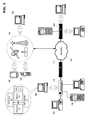
- FIG. 1 discloses examples of hardware and software resources that may be utilized when implementing various example embodiments of the present invention.
- FIG. 2 discloses an example operational diagram including detail regarding a Bluetooth TM protocol stack in accordance with at least one embodiment of the present invention.
- FIG. 3 discloses additional detail regarding the example Bluetooth TM profiles of FIG. 2 in accordance with at least one embodiment of the present invention.
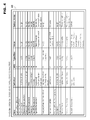
- FIG. 4 discloses an example Personal Area Network (PANU) service record in accordance with at least one embodiment of the present invention.
- PANU Personal Area Network
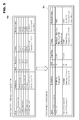
- FIG. 5 discloses an example PANU service record including modified attributes in accordance with at least one embodiment of the present invention.
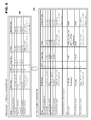
- FIG. 6 discloses an alternative example PANU service record including modified attributes in accordance with at least one embodiment of the present invention.
- FIG. 7 discloses another alternative example PANU service record including modified attributes in accordance with at least one embodiment of the present invention.
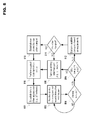
- FIG. 8 discloses a flow chart for an example service access process in accordance with at least one embodiment of the present invention.
- FIG. 1 An example of a system that is usable for implementing various embodiments of the present invention is disclosed in FIG. 1 .
- the system comprises elements that may be included in, or omitted from, configurations depending, for example, on the requirements of a particular application, and therefore, is not intended to limit present invention in any manner.
- Computing device 100 may be, for example, a laptop computer. Elements that represent basic example components comprising functional elements in computing device 100 are disclosed at 102-108.
- Processor 102 may include one or more devices configured to execute instructions. In at least one scenario, the execution of program code (e.g., groups of computer-executable instructions stored in a memory) by processor 102 may cause computing device 100 to perform processes including, for example, method steps that may result in data, events or other output activities.
- Processor 102 may be a dedicated (e.g., monolithic) microprocessor device, or may be part of a composite device such as an ASIC, gate array, multi-chip module (MCM), etc.
- Processor 102 may be electronically coupled to other functional components in computing device 100 via a wired or wireless bus.
- processor 102 may access memory 102 in order to obtain stored information (e.g., program code, data, etc.) for use during processing.
- Memory 104 may generally include removable or imbedded memories that operate in a static or dynamic mode. Further, memory 104 may include read only memories (ROM), random access memories (RAM), and rewritable memories such as Flash, EPROM, etc.
- Code may include any interpreted or compiled computer language including computer-executable instructions. The code and/or data may be used to create software modules such as operating systems, communication utilities, user interfaces, more specialized program modules, etc.
- One or more interfaces 106 may also be coupled to various components in computing device 100. These interfaces may allow for inter-apparatus communication (e.g., a software or protocol interface), apparatus-to-apparatus communication (e.g., a wired or wireless communication interface) and even apparatus to user communication (e.g., a user interface). These interfaces allow components within computing device 100, other apparatuses and users to interact with computing device 100.
- inter-apparatus communication e.g., a software or protocol interface
- apparatus-to-apparatus communication e.g., a wired or wireless communication interface
- apparatus to user communication e.g., a user interface
- interfaces 106 may communicate machine-readable data, such as electronic, magnetic or optical signals embodied on a computer readable medium, or may translate the actions of users into activity that may be understood by computing device 100 (e.g., typing on a keyboard, speaking into the receiver of a cellular handset, touching an icon on a touch screen device, etc.) Interfaces 106 may further allow processor 102 and/or memory 104 to interact with other modules 108.
- other modules 108 may comprise one or more components supporting more specialized functionality provided by computing device 100.
- Computing device 100 may interact with other apparatuses via various networks as further shown in FIG. 1 .
- hub 110 may provide wired and/or wireless support to devices such as computer 114 and server 116.
- Hub 110 may be further coupled to router 112 that allows devices on the local area network (LAN) to interact with devices on a wide area network (WAN, such as Internet 120).
- LAN local area network
- WAN wide area network
- another router 130 may transmit information to, and receive information from, router 112 so that devices on each LAN may communicate.
- all of the components depicted in this example configuration are not necessary for implementation of the present invention. For example, in the LAN serviced by router 130 no additional hub is needed since this functionality may be supported by the router.
- interaction with remote devices may be supported by various providers of short and long range wireless communication 140. These providers may use, for example, long range terrestrial-based cellular systems and satellite communication, and/or short-range wireless access points in order to provide a wireless connection to Internet 120.
- PDA personal digital assistant
- cellular handset 144 may communicate with computing device 100 via an Internet connection provided by a provider of wireless communication 140.
- Similar functionality may be included in devices, such as laptop computer 146, in the form of hardware and/or software resources configured to allow short and/or long range wireless communication.
- Bluetooth TM While Bluetooth TM structures and operation are referenced extensively in the following disclosure, implementation of the various embodiments of the present invention are not limited to operation with this particular communication transport. Bluetooth TM has been used merely for the sake of explanation herein, and is not intended to affect the scope of the present invention. Other wired/wireless communication transports may also be employed accordingly.
- FIG. 2 discloses a stacked approach to understanding the operation of a WCD in accordance with at least one embodiment of the present invention.
- users may interact with apparatuses. Interaction may involve, for example, users entering information via a user interface in order to activate functionality in application level 210.
- programs related to specific functionality within apparatuses may interact with both the user and the system level. These programs may include various applications such as programs for conveying visual information (e.g., web browser, DVB-H receiver, etc.), audio information (e.g., cellular telephone, voice mail, conferencing software, DAB or analog radio receiver, etc.), recording information (e.g., digital photography software, word processing, scheduling, etc.) or other information processing.
- visual information e.g., web browser, DVB-H receiver, etc.
- audio information e.g., cellular telephone, voice mail, conferencing software, DAB or analog radio receiver, etc.
- recording information e.g., digital photography software, word processing, scheduling, etc.
- Actions initiated in application level 210 may require information to be transmitted from, or received into, the apparatus.
- the transmission of data via Bluetooth TM communication is being requested, which may trigger a request for access to system level resources in order to initiate the required processing and routing of data.
- System level 220 may process data requests and route the data for transmission. Processing may include, for example, calculation, translation, conversion and/or packetizing the data. Any resulting information may then be routed to an appropriate communication resource in the service level. If desired communication resources are active and available in service level 230, the packets may then be routed accordingly for delivery via wired or wireless transmission. In some instances there may be a plurality of wired and/or wireless communication modules that support one or more different communication transports. In the example of FIG. 2 , radio modem 4 may be active and available to transmit packets via Bluetooth TM wireless communication. However, communication modules (as a hardware resource) need not be dedicated to specific transports, and thus, may be employed for different types of wired/wireless communication depending on the requirements of the transport and the hardware characteristics of the module.
- radio modem 4 may implement a series of protocol steps (e.g., depicted as a protocol stack) when transmitting/receiving using Bluetooth TM .
- the protocol stack may include elements that convey information from the system level to the physical layer, from which it may be transmitted wirelessly to another device.
- Bluetooth TM Profiles 232 may include various types of definitions describing, for example, wireless communication configurations needed to access other apparatuses or standards profiles that applications may utilize when engaging in wireless communication via Bluetooth TM .
- L2CAP level 234 includes at least a logical link controller and adaptation protocol that support higher level protocol multiplexing packet segmentation and reassembly and the conveyance of quality of service (QoS) information. Information prepared by L2CAP level 234 may then be passed to application-optional host controller interface (HCI) 236.
- HCI host controller interface
- This layer may act as a command interface to lower link manager protocol (LMP) layers (e.g., link manager (LM) 238 and link controller (LC) 240).
- LMP link manager protocol
- LM 238 may establish link setup, authentication, link configuration and other protocols related to establishing a wireless link between two or more apparatuses.
- LC 440 may also help to manage active links between apparatuses by handling low-level baseband protocols. Actual wireless interaction may then be conducted utilizing wireless hardware (modem, antenna, etc.) and corresponding support software associated with physical layer (PHY) 242.
- the Bluetooth TM protocol stack may also be utilized in an order reversed from that disclosed above in order to receive wireless transmissions.
- FIG. 3 discloses further detail regarding Bluetooth TM profiles layer 232.
- the profiles 300-324 define various standardized tasks that may be completed using Bluetooth TM communication. For example, developers may check these profiles in order to make sure that their application will interface correctly with the Bluetooth TM . Profiles may be organized in a hierarchy, wherein each subsequent profile relies on the definitions in the profile from which it depends.
- General access profile (GAP) 300 provides the basis for all other profiles and defines a consistent means with which to establish a wireless link between apparatuses (e.g., apparatus requirements and procedures needed to establish links). Under GAP 300 exist basic profiles that may be used to execute transactions between apparatuses.
- Service discovery profile (SDP) 302 delineates how services can be identified in other apparatuses.
- SDP Service discovery profile
- Serial port profile (SPP) 304 defines how a virtual serial port may be established between apparatuses.
- Human interface device profile (HID) 306 defines how pointing devices and other user interface peripherals can wirelessly interact with an apparatus.
- Generic object exchange profile (GOEP) 308 is a general profile that controls the transfer of software objects between devices, and Hardcopy cable replacement profile (HCRP) 310 defines how driver-based printing is done over a wireless link.
- PAN Personal Area Network
- PAN Personal Area Network
- PAN can be used when configuring networks with other apparatuses, regardless of device type (e.g., mobile apparatus, access point, etc.). PAN Users can connect to either Network Access Points (NAP) or to already existing Ad-hoc networks.
- NAP Network Access Points
- Bluetooth TM Profiles 232 may have dependencies to other profiles.
- dial-up networking profile (DUN) 314 and headset profile (HSP) 316 may depend on SPP 304.
- DUN 314 may be utilized for accessing the Internet using Bluetooth TM
- HSP 316 controls how Bluetooth TM -enabled headsets communicate with apparatuses.
- file transfer profile (FTP) 318, object push profile (OPP) 320, synchronization profile (SYNC) 322 and Basic Printing Profile (BPP) 324 may depend on GEOP 308.
- FTP file transfer profile
- OPP object push profile
- SYNC synchronization profile
- BPP Basic Printing Profile
- Apparatuses may contain various types of services. Some services are mainly intended to service requirements existing on the apparatus, while other services may be able to fulfill the requirements for consumers situated on other devices. Services may be employed, for example, in situations where data residing on one apparatus, such as multimedia data, is required on another apparatus. In this scenario many individual services may be accessed in order to support an interaction which appears relatively simple on its face. Such services may be tasked with establishing a wireless link, services for providing browsing functionality for stored information, services for conveying (e.g., streaming) the required information between apparatuses, etc.
- SDP 302 may "discover" accessible services residing in other apparatuses by exchanging service information as shown at 326 in FIG. 3 .
- One example of a discoverable service is PAN profile 312.
- PAN profile 312 After establishing a network with other devices using PAN profile 312, further discovery can be performed in order to find services in the network that were not identifiable by SDP 302 during the initial discovery (e.g., via further service information exchanges at 328).
- the linked apparatuses may access one or more of these services in performing activities including, for example, accessing data stored on other apparatuses, etc.
- FIG. 4 discloses an example of a Personal Area Network User (PANU) Service record 400 for Bluetooth TM .
- the format of service records are defined by the PAN profile in Bluetooth TM , however, similar record constructs may also be employed for other communication transports.
- the attributes of service records such as 400 may be read during service discovery in order to determine service communication characteristics that are relevant to the communication transport currently in use such as service name, universally unique identifiers (UUID), version information, load factor information, security settings, and other communication parameters.
- service name service name
- UUID universally unique identifiers
- version information version information
- load factor information load factor information
- security settings and other communication parameters.
- a user may desire to wirelessly browse and then stream multimedia information residing on a remote apparatus.
- Connection establishment navigation to and browsing of stored data files may not involve the conveyance of substantial amounts of data, and thus, low-power/low-capacity transports may be appropriate for such activities.
- Selection of stored data e.g., at least one multimedia file stored on the remote apparatus may then trigger wireless transmission of the stored data to the user's device.
- service records corresponding to an initial communication transport may comprise attributes containing identification and/or configuration information for complimentary communication transports that are available for use with the service. Attribute information may be utilized for customizing a communication link based on pending communication activities. For example, a determination of the most appropriate transport for performing pending communication activities may be based on the ability of the initial transport and any complimentary transports taken in view of the performance requirements dictated by the pending communication activities. For example, if the attribute for the Bluetooth TM IP Network printing service is:
- example attributes for other communication transports e.g., WLAN or Ethernet
- example attributes for other communication transports e.g., WLAN or Ethernet
- FIG. 5-7 Generalized examples of complimentary communication transport attributes are shown in FIG. 5-7 .
- the example include relevant fields from the record structure of the existing Bluetooth TM PANU service record at 500 for comparison with three alternative attribute configurations shown at 502, 600 and 700.
- new values pertaining to complementary transports may be defined by being included as new information in the existing attribute ProtocolDescriptorList as shown at 502.
- information regarding complementary transports may be included (e.g., defined and utilized) in a different attribute such as, for example, AdditionalProtocolDescriptorLists.
- This configuration may be able to maintain the existing ProtocolDescriptorList attribute structure while adding similar information corresponding to each additional supported transport under a different attribute.
- FIG. 7 discloses a third example attribute implementation at 700, wherein a new attribute (e.g., ComplementaryTransports ) may be defined to indicate availability of complementary transports.
- a flowchart of a service discovery and/or access process is disclosed in FIG. 8 .
- this example process employs Bluetooth TM (BT) only for the sake of explanation, and thus, is not limited to being implemented using only this communication transport.
- BT Bluetooth TM
- a link may be established between apparatuses. Link initialization may be triggered by a multitude of activities that occur in apparatuses, such as the activation of programs that require information residing on another apparatus, automated utilities that execute periodically, user interaction with an apparatus, etc.
- Part of the flow initiated in step 800 may include service discovery processes (SDP, step 802), wherein service discovery protocol records may be received from other devices.
- SDP service discovery processes
- Service discovery protocol records may comprise attribute information corresponding to service functionality, characteristics and/or configuration.
- the discovery process may continue in steps 802-804 until at least one service is selected based on, for example, pending communication requirements such as query services, data streaming services, application-specific services, etc.
- the service attributes that may be read in SDP steps 802-804 may further include the identification of complimentary transports that are usable with the service. This information may be organized in accordance with any of the previously described example implementations. A determination may then be made in step 806 as to whether any complimentary transports are available (e.g., if any other transports are identified in the received service discovery protocol records as usable with a service). If no complimentary transports are determined to be available in step 806, then the connection established using the initial transport (BT in this example) may continue to be used in step 808 to support subsequent communication activities in step 810. On the contrary, if complimentary transports are identified, the process may proceed to step 812 wherein all available transports (e.g., initial and complimentary) may be evaluated in view of pending communication activity requirements. Using one of the previous operational scenarios as an example, where the pending communication comprises presenting multimedia information that is streamed from a separate apparatus, the requirements for preferred communication transports may include high speed and/or data capacity including some level of error-correction.
- the result of the evaluation in step 812 may be used in selecting communication transports to employ in step 814. Either the initial communication transport will continue to be utilized (in this example BT), which would cause the process to return to step 808, or at least one complimentary communication transport (e.g., one or more transports may be selected in cases where more than one complimentary transport is available and appropriate for use) may be selected.
- the process may then move to step 816 where a new link may be established using complimentary transports in order to perform the activities included in step 810.
- the process may then return to step 800 to await the next situation requiring inter-apparatus communication.
Landscapes
- Engineering & Computer Science (AREA)
- Computer Networks & Wireless Communication (AREA)
- Signal Processing (AREA)
- Mobile Radio Communication Systems (AREA)
Applications Claiming Priority (2)
| Application Number | Priority Date | Filing Date | Title |
|---|---|---|---|
| US19672809P | 2009-04-24 | 2009-04-24 | |
| US12/434,561 US20100274874A1 (en) | 2009-04-24 | 2009-05-01 | Service discovery protocol enhancement |
Publications (1)
| Publication Number | Publication Date |
|---|---|
| EP2244442A1 true EP2244442A1 (fr) | 2010-10-27 |
Family
ID=42370904
Family Applications (1)
| Application Number | Title | Priority Date | Filing Date |
|---|---|---|---|
| EP10157165A Withdrawn EP2244442A1 (fr) | 2009-04-24 | 2010-03-22 | Amélioration du protocole de découverte de service |
Country Status (2)
| Country | Link |
|---|---|
| US (1) | US20100274874A1 (fr) |
| EP (1) | EP2244442A1 (fr) |
Families Citing this family (7)
| Publication number | Priority date | Publication date | Assignee | Title |
|---|---|---|---|---|
| KR101710452B1 (ko) * | 2010-04-21 | 2017-02-28 | 삼성전자주식회사 | 멀티미디어 전송 시스템에서 서비스 발견 정보를 송수신하는 방법 및 장치와 이를 위한 파일 구조 |
| US9398437B2 (en) | 2013-12-16 | 2016-07-19 | Nokia Technologies Oy | Method, apparatus, and computer program product for service discovery in wireless short-range communication |
| US9258695B2 (en) | 2013-12-16 | 2016-02-09 | Nokia Technologies Oy | Method, apparatus, and computer program product for service discovery in short-range communication environment |
| US9380119B2 (en) | 2013-12-16 | 2016-06-28 | Nokia Technologies Oy | Method, apparatus, and computer program product for network discovery |
| US9258193B2 (en) | 2014-01-14 | 2016-02-09 | Nokia Technologies Oy | Method, apparatus, and computer program product for wireless network cluster discovery and concurrency management |
| US10873637B2 (en) | 2016-05-02 | 2020-12-22 | Microsoft Technology Licensing, Llc | Controlling service discovery and activation among peers |
| WO2017193385A1 (fr) * | 2016-05-13 | 2017-11-16 | 华为技术有限公司 | Procédé et appareil permettant d'établir une connexion sans fil |
Citations (2)
| Publication number | Priority date | Publication date | Assignee | Title |
|---|---|---|---|---|
| US20050286478A1 (en) * | 2004-06-29 | 2005-12-29 | Nokia Corporation | Method and apparatus for utilizing bluetooth for WLAN service authentication and discovery |
| WO2008145808A1 (fr) * | 2007-05-31 | 2008-12-04 | Nokia Corporation | Partage d'informations dans un espace intelligent |
Family Cites Families (6)
| Publication number | Priority date | Publication date | Assignee | Title |
|---|---|---|---|---|
| US20030236890A1 (en) * | 2002-06-25 | 2003-12-25 | Intel Corporation | Wireless communication device and method for sharing device resources |
| US7352998B2 (en) * | 2003-09-12 | 2008-04-01 | Nokia Corporation | Method and system for establishing a wireless communications link |
| US7299009B2 (en) * | 2004-02-25 | 2007-11-20 | Nokia Corporation | Blue-tooth assisted wireless local area network (WLAN) home network systems |
| WO2006055784A2 (fr) * | 2004-11-19 | 2006-05-26 | The Trustees Of The Stevens Institute Of Technology | Terminal a utilisateurs multiples avec capacite de connectabilite simultanee a de multiples canaux de communication |
| US7471200B2 (en) * | 2005-06-30 | 2008-12-30 | Nokia Corporation | RFID optimized capability negotiation |
| US8131858B2 (en) * | 2008-04-04 | 2012-03-06 | Motorola Solutions, Inc. | Method and devices for enabling a multi-mode device to establish a session through multiple networks |
-
2009
- 2009-05-01 US US12/434,561 patent/US20100274874A1/en not_active Abandoned
-
2010
- 2010-03-22 EP EP10157165A patent/EP2244442A1/fr not_active Withdrawn
Patent Citations (2)
| Publication number | Priority date | Publication date | Assignee | Title |
|---|---|---|---|---|
| US20050286478A1 (en) * | 2004-06-29 | 2005-12-29 | Nokia Corporation | Method and apparatus for utilizing bluetooth for WLAN service authentication and discovery |
| WO2008145808A1 (fr) * | 2007-05-31 | 2008-12-04 | Nokia Corporation | Partage d'informations dans un espace intelligent |
Also Published As
| Publication number | Publication date |
|---|---|
| US20100274874A1 (en) | 2010-10-28 |
Similar Documents
| Publication | Publication Date | Title |
|---|---|---|
| US7536182B2 (en) | Method and system for extending the capabilities of handheld devices using local resources | |
| US8499079B2 (en) | Apparatus and methods for providing service discovery over alternate transports | |
| JP4462840B2 (ja) | 無線ケイパビリティの発見とプロトコルの交渉の方法およびこれらを含む無線装置 | |
| US11418383B2 (en) | Techniques for instantiation and termination of virtualized network functions | |
| EP2244442A1 (fr) | Amélioration du protocole de découverte de service | |
| US20110105024A1 (en) | Transport independent service discovery | |
| US9185627B2 (en) | Low cost mesh network capability | |
| US7493373B2 (en) | Providing service distribution between distributed applications | |
| CN101170315A (zh) | 动态的多无线电带宽保留 | |
| US20110167182A1 (en) | Transport prioritization based on message type | |
| CN101257327A (zh) | 通过质量水平控制的多无线接入管理 | |
| WO2009014864A2 (fr) | Découverte de services de proximité initiés par station de base et établissement de connexion | |
| JP6517279B2 (ja) | 発行データの信頼性の動的選択 | |
| US20090210537A1 (en) | Mobile communications device and associated application for use thereon | |
| US8224257B2 (en) | Collaborative spectrum sensing in radio environment | |
| CN105429900B (zh) | 一种带宽提速的方法、装置及系统 | |
| US7325048B1 (en) | Method for automatically creating a modem interface for use with a wireless device | |
| EP2317726A1 (fr) | Découverte d'un service indépendant du transport | |
| US7873735B2 (en) | Method and apparatus to terminate dial-up connections on mobile devices | |
| CN102883275A (zh) | 一种优化策略实现无线接入点提供内容服务的方法 | |
| Rajeshirke et al. | Communication in a self-reliant ad hoc network | |
| Pinte et al. | Network-aware references for pervasive social applications | |
| Sun et al. | Adaptive Connectivity Management for Hybrid Wireless and Mobile Networking Environment | |
| Zhang | Bluetooth helper environment | |
| WO2010086489A1 (fr) | Commande de qualité de service (qos) pour architectures indépendantes du transport |
Legal Events
| Date | Code | Title | Description |
|---|---|---|---|
| PUAI | Public reference made under article 153(3) epc to a published international application that has entered the european phase |
Free format text: ORIGINAL CODE: 0009012 |
|
| AK | Designated contracting states |
Kind code of ref document: A1 Designated state(s): AT BE BG CH CY CZ DE DK EE ES FI FR GB GR HR HU IE IS IT LI LT LU LV MC MK MT NL NO PL PT RO SE SI SK SM TR |
|
| AX | Request for extension of the european patent |
Extension state: AL BA ME RS |
|
| 17P | Request for examination filed |
Effective date: 20101122 |
|
| STAA | Information on the status of an ep patent application or granted ep patent |
Free format text: STATUS: THE APPLICATION IS DEEMED TO BE WITHDRAWN |
|
| 18D | Application deemed to be withdrawn |
Effective date: 20121002 |