EP2244526B1 - Procédé de synchronisation de noeuds dormants dans un réseau sans fil - Google Patents
Procédé de synchronisation de noeuds dormants dans un réseau sans fil Download PDFInfo
- Publication number
- EP2244526B1 EP2244526B1 EP10160960.0A EP10160960A EP2244526B1 EP 2244526 B1 EP2244526 B1 EP 2244526B1 EP 10160960 A EP10160960 A EP 10160960A EP 2244526 B1 EP2244526 B1 EP 2244526B1
- Authority
- EP
- European Patent Office
- Prior art keywords
- node
- beacon
- nodes
- potential replacement
- network
- Prior art date
- Legal status (The legal status is an assumption and is not a legal conclusion. Google has not performed a legal analysis and makes no representation as to the accuracy of the status listed.)
- Active
Links
Images



Classifications
-
- H—ELECTRICITY
- H04—ELECTRIC COMMUNICATION TECHNIQUE
- H04W—WIRELESS COMMUNICATION NETWORKS
- H04W84/00—Network topologies
- H04W84/18—Self-organising networks, e.g. ad-hoc networks or sensor networks
- H04W84/20—Leader-follower arrangements
-
- H—ELECTRICITY
- H04—ELECTRIC COMMUNICATION TECHNIQUE
- H04W—WIRELESS COMMUNICATION NETWORKS
- H04W52/00—Power management, e.g. Transmission Power Control [TPC] or power classes
- H04W52/02—Power saving arrangements
- H04W52/0209—Power saving arrangements in terminal devices
- H04W52/0212—Power saving arrangements in terminal devices managed by the network, e.g. network or access point is leader and terminal is follower
- H04W52/0216—Power saving arrangements in terminal devices managed by the network, e.g. network or access point is leader and terminal is follower using a pre-established activity schedule, e.g. traffic indication frame
-
- H—ELECTRICITY
- H04—ELECTRIC COMMUNICATION TECHNIQUE
- H04W—WIRELESS COMMUNICATION NETWORKS
- H04W52/00—Power management, e.g. Transmission Power Control [TPC] or power classes
- H04W52/02—Power saving arrangements
- H04W52/0209—Power saving arrangements in terminal devices
- H04W52/0212—Power saving arrangements in terminal devices managed by the network, e.g. network or access point is leader and terminal is follower
- H04W52/0219—Power saving arrangements in terminal devices managed by the network, e.g. network or access point is leader and terminal is follower where the power saving management affects multiple terminals
-
- H—ELECTRICITY
- H04—ELECTRIC COMMUNICATION TECHNIQUE
- H04W—WIRELESS COMMUNICATION NETWORKS
- H04W52/00—Power management, e.g. Transmission Power Control [TPC] or power classes
- H04W52/02—Power saving arrangements
- H04W52/0209—Power saving arrangements in terminal devices
- H04W52/0225—Power saving arrangements in terminal devices using monitoring of external events, e.g. the presence of a signal
- H04W52/0229—Power saving arrangements in terminal devices using monitoring of external events, e.g. the presence of a signal where the received signal is a wanted signal
-
- H—ELECTRICITY
- H04—ELECTRIC COMMUNICATION TECHNIQUE
- H04J—MULTIPLEX COMMUNICATION
- H04J3/00—Time-division multiplex systems
- H04J3/02—Details
- H04J3/06—Synchronising arrangements
- H04J3/0635—Clock or time synchronisation in a network
- H04J3/0638—Clock or time synchronisation among nodes; Internode synchronisation
- H04J3/0641—Change of the master or reference, e.g. take-over or failure of the master
-
- Y—GENERAL TAGGING OF NEW TECHNOLOGICAL DEVELOPMENTS; GENERAL TAGGING OF CROSS-SECTIONAL TECHNOLOGIES SPANNING OVER SEVERAL SECTIONS OF THE IPC; TECHNICAL SUBJECTS COVERED BY FORMER USPC CROSS-REFERENCE ART COLLECTIONS [XRACs] AND DIGESTS
- Y02—TECHNOLOGIES OR APPLICATIONS FOR MITIGATION OR ADAPTATION AGAINST CLIMATE CHANGE
- Y02D—CLIMATE CHANGE MITIGATION TECHNOLOGIES IN INFORMATION AND COMMUNICATION TECHNOLOGIES [ICT], I.E. INFORMATION AND COMMUNICATION TECHNOLOGIES AIMING AT THE REDUCTION OF THEIR OWN ENERGY USE
- Y02D30/00—Reducing energy consumption in communication networks
- Y02D30/70—Reducing energy consumption in communication networks in wireless communication networks
Definitions
- the disclosure relates generally to synchronizing nodes in a wireless mesh network.
- a node shuts down its communication and other major functions and draws very little current, thereby saving power.
- a node powers its transceiver and exchanges messages with other nodes in the network.
- One problem faced in such networks is how to maintain agreement, or to synchronize, the clocks of different network nodes so that they wake at approximately the same time.
- networks have addressed the problem of synchronization is a number of ways. Some networks have relied, directly or indirectly, on an external time reference such as the internet.
- the internet ultimately uses the Internet Time Service (ITS), provided by NIST and USNO, where servers respond to requests using the Network Time Protocol (NTP) by supplying time of day responses with accuracy and precision traceable to centralized government standards.
- ITS Internet Time Service
- NTP Network Time Protocol
- the US patent US 7,461,130 B1 discloses a method in a wireless network comprising a node that may broadcast a query looking for a master node. If the query produces no responses, the node may self-elect as the master node and may broadcast its presence as the master node. If multiple nodes self-elect as master nodes, the nodes may negotiate to determine which node will be the master node. If the master node becomes unavailable, the remaining nodes may elect a new master node.
- only one node at a time acts as the beacon of time synchronization messages.
- the synch message is broadcast during the waking cycle.
- the synch message contains a field which describes the time offset until the start of the next waking cycle.
- the relaying node reduces the time offset value in the message to compensate for the time which was lost during reception and re-transmission.
- beaconed messages may be conveyed by the beacon node during the waking interval.
- One beaconed message is clock synchronization.
- Another beaconed message is a status inquiry regarding node activity. For example, a node may drop out of the wireless network for any number of reasons, and network status may be adjusted depending on the number of active nodes.
- the beacon node can also transmit messages containing its address, or a guard interval used by the receiving node to delay a certain time before accepting a synchronization message.
- the nomination-election process is invoked when the designated beacon node fails.
- nodes in the network detect the absence of synch messages.
- One or more nodes nominate themselves as the new beacon nodes. In one example, if a node experiences a configured number of consecutive cycles without receiving a time synchronization message, then, by a configured probability, it nominates itself to act as a beacon during the next waking cycle.
- the system uses an election process to select between nodes nominated for the beacon.
- a beaconing node removes itself as a beacon candidate should it receive a synch message from a competing node which outranks it.
- Nodes may, for instance, be ranked by MAC address, the value of which is unique for every node.
- the election criteria should be such that every node is ranked in a unique and ordinal manner. For example, one could decide by which node has the superior rank according to a preconfigured value which is unique to each node.
- a node if a node received a sync message during the waking interval, an update to the time clock is deferred until just before the node goes to sleep. This allows the node to select between sync messages in the event more than one was received during that wake interval.
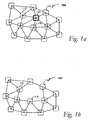
- FIG. 1a is a schematic representation of a wireless network 100 according to one aspect of the present invention.
- wireless network 100 includes a plurality of wireless nodes. Several nodes are depicted, including a beacon node 110. The remaining nodes, including nodes 112, 114, and 116, are referred to as common nodes.
- beacon node 110 is depicted in heavy outline.
- a "beacon node” is a node in a wireless network that provides a beacon signal to other nodes in network 100. An assignment as beacon node may be temporary and of indeterminate duration.
- a "common node” is any other node in wireless network 100. Each common node is designed to have the potential to become the beacon node if necessary.
- the common nodes 112 and 116 may be referred to as "interior nodes 112 and 116" since they each are located within the geographic interior of the wireless network 100.
- the common node 114 may be referred to as an "exterior node 114" since it is located on exterior of the geographic limitations of the wireless network 100.
- a node that is currently the beacon node synchronizes all other nodes in the mesh network for cyclic sleep and wake intervals.
- the beacon node synchronizes for specific tasks such as network maintenance functions or to compensate for latency.
- any node in network 100 may take over as the beacon node for synchronization purposes.
- a given node may lose its position as beacon node when a difficulty arises in wireless network 100 that causes the beacon node to fail or to lose efficiency such that the wireless network fails or loses useful efficiency. Consequently, common nodes in the wireless network have the capability of self-nomination to assert their interest in becoming the beacon node.
- a common node determines if it should nominate itself as the new beacon node as a function of a self-nomination calculation performed by the common node.
- the self-nomination calculation is a function of a probability parameter that is set for each common node.
- the probability parameter is a function of the geographic location in the network; that is, the closer the node is to the center of the network, the higher the probability that the node should assert itself as the new beacon node.
- each common node in wireless network 100 is capable of generating the beacon signal used to synchronize a cyclic function.
- Each node looks to receive the beacon signal at predetermined intervals. If a node fails to receive the beacon signal within the predetermined interval, it determines if it should assert itself as the new beacon node. In one example, each node that fails to receive the beacon signal within the predetermined interval calculates a random number. If the random number is below a given threshold number, the node nominates itself as the new beacon node at the start of the next waking cycle. If the random number is greater than the given threshold number, the node waits a cycle before determining if it should try to nominate itself again.
- Random number generation may be carried out by a number of conventional methods.
- An example method of determining whether to generate a beacon signal at a given common node is given in pseudo code below.
- the beacon signal from the new beacon node informs neighbor nodes the extent of the time until the next cyclic function starts. Neighbor nodes update the message to compensate for latency, and relay the message to their neighbor nodes until the beacon propagates throughout the wireless network. In one example, where a node receives multiple beacon signals during the same cycle, then it uses the last received beacon as the authority for setting the time offset until the start of the next cycle.
- nodes receive more synchronization messages, they are designed to reduce the frequency of transmitting synchronization messages.
- beacon node 110 has just succeeded in transforming from an interior common node by one of the methods described above. Beacon node 110 continues to transmit the beacon signal until it fails or is replaced.
- FIG. 1b is a schematic representation of a failed beacon node in a wireless network 101 according to an example.
- a beacon node 110 was present but it has failed for any number of reasons.
- the beacon node 110 may have been a mobile device that has been removed from the vicinity of the wireless network 100 ( FIG. 1a ) such that communication has been lost from the wireless network 101 ( FIG 1b ).
- the beacon node 110 ( FIG. 1a ) by way of example may have suffered a power failure such as a depleted battery that was the power source such that communication has been lost.
- the beacon node 110 ( FIG. 1a ) by way of example may have been blocked in signal strength by an object such as a door opening or closing or such as a vehicle that has moved into the main path of broadcasting for the former beacon node, such that communication has been lost.
- the wireless network 101 exists without a beacon node.
- each common node When no beacon is received after a period of time, each common node generates a random number that is compared to a predefined threshold value in order to determine whether that node should transmit a beacon signal.
- Each node that transmits a beacon signal in a given cycle is nominated to become the new beacon node.
- the election method consisting of some programmed criteria, removes a nominated beacon node if it receives a synch message from a competing node which outranks it.
- the election criteria should be such that every node is ranked in a unique and ordinal manner. For example, the ranking could be by which node has the greater (or lesser) MAC address, the value of which is unique per node. Or the ranking could be by which node has the superior rank according to a preconfigured value which is unique to each node.
- the receiving node compares its clock accuracy against that of the transmitting node and stops sending the beacon signal if its clock accuracy is worse than that of the transmitting beacon.
- the receiving node looks at a field in the beacon signal. If the field has been coded as a result of operator configuration to indicate the transmitting node's beacon should prevail, the receiving beacon stops sending the beacon signal.
- the receiving node compares its operator configured ranking against that of the transmitting node, or compares the time since its last operator configuration against that of the transmitting node.
- the node that received the beacon signal could compare its total node-hop tally with the node-hop tally of the transmitting node. If the receiving node compared to the transmitter node has the lower total number of node hops between it and all other nodes, it continues to send out the beacon signal. If, however, the receiving node compared to the transmitter node does not have the lower total number of node hops between it and all other nodes, it stops sending out the beacon signal. This continues until only a single beacon node remains.
- the network is, therefore, synchronized by an emergent behavior of the mob of nodes, rather than by that of a selected or predetermined node, or a centralized time authority, or a time reference external to the network.
- FIG. 1c is a schematic representation of a plurality of nodes that make up a wireless network 102 after the result depicted in FIG. 1b according to an example.
- the wireless network 102 is represented as a more recent state of the wireless network 101 depicted in FIG. 1b .
- the former common node 116 FIG. 1b
- the new beacon node 117 FIG. 1c
- FIG. 1d is a schematic representation of a plurality of nodes that make up a wireless network 103 after the result depicted in FIG. 1b according to an example.
- FIG. 1d represents an alternative example after the event depicted in FIG. 1b .
- the wireless network 103 is represented as a more recent state of the wireless network 101 depicted in FIG. 1b .
- the former common node 114 FIG. 1b
- the new beacon node 115 FIG. 1d
- the new beacon node 115 is an exterior beacon node 115.
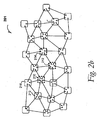
- FIG. 2a is a schematic representation of a plurality of nodes that make up a wireless network 200 according to an example.
- Several nodes are depicted including a beacon node 210 and some common nodes 212, 214, and 216 are also depicted, although all unmarked nodes may be referred to as common nodes.
- the beacon node 210 is depicted in heavy outline.
- a cyclic function for the wireless network 200 has initiated an election to find a useful beacon node.
- the election may result in the beacon node 210 losing beacon node status and a new beacon node being elected.
- each common node as well as the beacon node 210 initiate a self-nomination process according to an example.
- the self-nomination process may use a metric that weights an interior node heavier toward election than an exterior node.
- FIG. 2a may represent the result of an election wherein the beacon node 210 has become the new beacon node in part by virtue of its geographic location. For example, an election may have considered all nodes including the interior common nodes 210 and 212, the election may have also considered all nodes including the exterior common nodes 214 and 216.
- a first metric in the election includes the geographical type of each node, such that the exterior common nodes 214 and 216 are disqualified. In an example after all exterior common nodes are disqualified, the remaining common nodes are interior nodes such as the nodes 210 and 212.
- a geographical centrality metric is used to select among all common nodes. For example, an evaluation may be made of a tally of the total number of node hops that must be accomplished for communication of each node in the wireless network with every other node.
- a node-hop tally is tabulated for each node.
- An exterior node e.g., the exterior node 214 must accomplish at least two node hops to reach an interior node, e.g. the interior node 210.
- the exterior node 216 must accomplish one node hop to reach the interior node 210.
- a most central interior node may have a node-hop tally that is less than all other node-hop tallies.
- the metric then weights these nodes by use of a random number generation algorithm. Thereafter among these nodes, the node with the highest random number, for example, is elected to be the new beacon node. Other methods for breaking ties can be used as well.
- FIG. 2b is a schematic representation of a plurality of nodes that make up a wireless network 201 after the passage of time of the wireless network 200 depicted in FIG. 2a according to an example.
- Several nodes have joined the wireless network 200 depicted in FIG. 2a to become the wireless network 201 depicted in FIG. 2b .
- the common node 214 depicted in FIG. 2a was an exterior node, the common node 214 has become an interior node due to the accretion of several other nodes.
- the beacon node 210 as was depicted in FIG. 2a is depicted in heavy dashed lines to indicate an election for a new beacon node.
- any one of the indicated nodes 210, 212, and 214 may become the new beacon node.
- the frequency of reevaluation of the entire wireless network 210 may be inversely proportional to the size of the wireless network 201.
- the probability of any common node becoming the new beacon node is adjusted downwards as the size of the size of the wireless network 201 increases. Consequently, where each node may use the random-number generation method for self-nomination, as the size of the wireless network 201 has increased, each node has a relatively higher threshold to overcome to become a self-nominated node.
- a self-nomination event is being carried out as depicted in FIG. 2b .
- a node-hop tally method has resulted in three nodes 210, 212, and 214 being tied or otherwise indeterminate as the three most useful nodes that could become the new beacon node.
- FIG. 2c is a schematic representation of a plurality of nodes that make up a wireless network 202 after the passage of time of the wireless network 201 depicted in FIG. 2c according to an example.
- the node 212 has been elected the new beacon node 212.
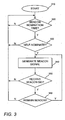
- FIG. 3 is a diagram of a method flow 300 for electing a beacon node according to an example.
- the method originates such as when a wireless node has awakened from a sleep-wake cycle. After the origination of the method, the method proceeds to 320.
- the method includes executing a query whether it is appropriate to nominate itself as a beacon node.
- a beacon node election time may be appropriate where the beacon node has failed for instance.
- Beacon node failure may include removal of the mobile platform that was the beacon node or a reduction or blockage in quality of the beacon signal as discussed above.
- a beacon node nomination time may be initiated for reasons other than beacon node failure.
- a metric to trigger a beacon node nomination time may be that the beacon node has a high volume of traffic and that the excessive traffic could cause latency and delay in the beacon node being able to efficiently execute the beaconing process to all other nodes.
- Other burdens on a beacon node may be a full or near capacity routing table (RT), or a full or near capacity neighbor table (NT). Consequently, comparison between a current beacon node and a neighbor node may reveal the neighbor nodes may have a lesser traffic load and that the lower traffic would make the node better able to operate usefully as the beacon node.
- the method may continue by returning to START at 310 including the beacon node executing various functions including the beaconing process.
- the method includes determining if each node should self-nominate.
- a random number generator is used on each node in the wireless network to determine whether the node should self-nominate.
- the node self nominates and, at the beginning of the next cycle, sends out a beacon signal. For example, if the threshold is set at 0.6 and the random number generator generates a number between 0 and 1, the node will send out a beacon signal in those conditions approximately 60% of the time. If the node determines it should self-nominate, control moves to 340 and a beacon signal is generated at the appropriate time. Control then moves to 350.
- each self-nominated node looks to see if it received a beacon signal from another node. If not, control moves to 320 and the node remains the beacon node.
- control moves to 360.
- each node looks at any beacon signals it has received from other nodes and determines if those nodes have a higher priority for becoming the beacon node. If any of the nodes have a higher priority, control moves to 320 and the node stops sending out beacon signals. If, however, at 350 the node determines that none of the other nodes from which it received a beacon signal have a higher priority, control moves to 340 and a new beacon signal is generated at the appropriate time. The process is repeated until a single beacon node remains.
- the network executing the method above is synchronized by an emergent behavior of the mob of nodes, rather than by that of a selected or predetermined node, or a centralized time authority, or a time reference external to the network.
- This beaconing process occurs as well when new networks are established.
- a new sleeper node awakens without being preconfigured for a network.
- a newly powered up node assumes default values for wake and sleep intervals, then stays awake for a whole wake and sleep interval in order to listen for a sync message broadcast. If the node does not detect any beacon signal during that first wake/sleep cycle, it becomes a "loner node" and sends its own beacon signal.
- a loner node has a high probability of sending out a beacon signal.
- the loner node makes a decision.
- the loner node may initiate a command for the node that sent the response to join the loner node in order to form a network.
- the loner node may also initiate a request to join the node that sent the response. Consequently, a loner node will either join an existing subnet, or it will join to another loner node to form a new network.
- the new subnet of two previous loner nodes will attempt to seek out and join to another subnet.
- the new subnet of two previous loner nodes then may attempt to aggregate itself with other subnets to make larger networks.
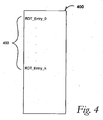
- FIG. 4 is a representation of a route-discovery table (RDT) 400 that may be used to lodge link quality data etc. for modifying a pure random-number election of the new beacon node according to an example embodiment.
- the RDT 400 includes a plurality of entries 450.
- each entry 450 includes information detailing a route discovery in process between the given node and at least the neighbor nodes to the given node.
- each entry 450 includes the following information:
- a network layer may include a mesh network such as XMesh.
- a medium-access control (MAC) layer may include a standard such as IEEE 802.15.4, established and periodically updated by the WPANTM Task Group 4 known in industry.
- the physical layer (PHY) may be frequent-hopping spread-spectrum (FHSS) radio communication.
- the NWK and MAC layers are used to estimate link quality for a given node as a function of the quality of its component links. The quality of a link between two nodes may be determined as a function of factors such as link count and the signal strength in each link.
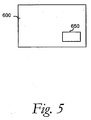
- FIG. 5 is a schematic diagram illustrating a medium having an instruction set that results in election of a new beacon node according to an example embodiment.
- a machine-readable medium 600 includes any type of storage medium such as a disk drive or a solid state memory device, or the like.
- a machine-readable medium 600 includes instructions within an instruction set 650. The instruction set 650, when executed by a machine such as an information handling system or a processor, cause the machine to perform operations that include electing a new beacon node.
- the instructions when executed by a machine, cause the machine to perform operations such as modifying a random number node election based upon a link-quality metric or a node-burden metric.
Landscapes
- Engineering & Computer Science (AREA)
- Computer Networks & Wireless Communication (AREA)
- Signal Processing (AREA)
- Mobile Radio Communication Systems (AREA)
Claims (17)
- Procédé exécuté dans un réseau sans fil (100, 101, 102, 103, 200, 201, 202) comportant une pluralité de noeuds (110, 112, 114, 115, 116, 117, 210, 212, 214, 216), comprenant un noeud de type balise (110, 210), le procédé comprenant :déterminer, au niveau de chaque noeud, si un signal de balise a été reçu au niveau du noeud en provenance du noeud de type balise actuel (110, 210) pendant un intervalle prédéterminé ;si un noeud détermine qu'un signal de balise n'a pas été reçu au niveau du noeud en provenance du noeud de type balise actuel (110, 210) pendant l'intervalle prédéterminé, déterminer si le noeud devrait se nommer lui-même en tant que noeud de type balise de remplacement potentiel, dans lequel déterminer si le noeud devrait se nommer lui-même en tant que noeud de type balise de remplacement potentiel est fonction de la probabilité de nomination associée au noeud ;si le noeud détermine qu'il devrait se nommer lui-même en tant que noeud de type balise de remplacement potentiel, l'envoi d'un ou de plusieurs signaux de balise ;la réception d'un signal de balise d'autres noeuds qui se sont nommés eux-mêmes en tant que noeuds de type balise de remplacement potentiels ; etla sélection du noeud de type balise de remplacement, dans lequel la sélection comprend :la détermination, au niveau de chaque noeud de type balise de remplacement potentiel, si le noeud de type balise de remplacement potentiel a reçu un signal de balise d'un noeud de type balise de remplacement potentiel d'un rang supérieur ; etsi le noeud de type balise de remplacement potentiel a reçu un signal de balise d'un noeud de type balise de remplacement potentiel d'un rang supérieur, son retrait par lui-même en tant que candidat pour le noeud de type balise de remplacement.
- Procédé selon la revendication 1, dans lequel déterminer si le noeud devrait se nommer lui-même en tant que noeud de type balise de remplacement potentiel comprend la génération d'un nombre aléatoire au niveau du noeud et la comparaison du nombre aléatoire à une valeur seuil.
- Procédé selon la revendication 1, dans lequel déterminer si le noeud devrait se nommer lui-même en tant que noeud de type balise de remplacement potentiel comprend la génération d'un nombre aléatoire au niveau du noeud et la comparaison du nombre aléatoire à une valeur seuil associée au noeud.
- Procédé selon la revendication 3, dans lequel la valeur seuil associée au noeud est l'une ou plusieurs des suivantes :a) une fonction d'une métrique de qualité de liaison associée au noeud,b) une fonction de l'emplacement du noeud par rapport aux autres noeuds dans le réseau sans fil, etc) une fonction d'un compte de sauts de noeud, dans lequel le compte de sauts de noeud comprend le nombre total de sauts de noeud nécessaire pour que le noeud atteigne chaque autre noeud dans le réseau sans fil.
- Procédé selon l'une quelconque des revendications précédentes, dans lequel le réseau sans fil comprend des noeuds extérieurs (114, 214, 216) situés à l'extérieur des limites géographiques du réseau sans fil et des noeuds intérieurs (110, 112, 116, 210, 212) situés à l'intérieur des limites géographiques du réseau sans fil, et dans lequel déterminer si le noeud devrait se nommer lui-même en tant que noeud de type balise de remplacement potentiel comprend d'examiner si le noeud est un noeud intérieur ou extérieur et l'interdiction de la nomination si le noeud est un noeud extérieur.
- Procédé selon l'une quelconque des revendications précédentes, dans lequel déterminer si le noeud de type balise de remplacement potentiel a reçu un signal de balise d'un noeud de type balise de remplacement potentiel d'un rang supérieur comprend une ou plusieurs des étapes :a) de comparaison de la précision de l'appareil de chronométrage du noeud de type balise de remplacement potentiel à la précision de l'appareil de chronométrage du noeud recevant le signal de balise,b) de comparaison d'un paramètre d'intervalle de temps de chaque noeud mesuré à partir de l'instant auquel les paramètres de sommeil de chaque noeud ont été configurés en dernier.
- Procédé selon l'une quelconque des revendications précédentes, dans lequel déterminer si le noeud de type balise de remplacement potentiel a reçu un signal de balise d'un noeud de type balise de remplacement potentiel d'un rang supérieur comprend la comparaison d'un paramètre mémorisé dans chaque noeud, dans lequel le paramètre est mémorisé par un opérateur.
- Procédé selon la revendication 7, dans lequel le paramètre est une adresse MAC.
- Procédé selon la revendication 1, dans lequel déterminer si le noeud de type balise de remplacement potentiel a reçu un signal de balise d'un noeud de type balise de remplacement potentiel d'un rang supérieur comprend la comparaison du compte de sauts de noeud du noeud de type balise de remplacement potentiel au compte de sauts de noeud de chaque noeud qui a envoyé un signal de balise, dans lequel le compte de sauts de noeud de chaque noeud est le nombre total de sauts de noeud nécessaire pour que le noeud atteigne chaque autre noeud dans le réseau sans fil.
- Procédé selon la revendication 1, dans lequel déterminer si le noeud devrait se nommer lui-même en tant que noeud de type balise de remplacement potentiel comprend une ou plusieurs des étapes :a) de génération d'un nombre aléatoire au niveau du noeud et de comparaison du nombre aléatoire à une valeur seuil, dans lequel la valeur seuil est sélectionnée pour diminuer les nominations par des noeuds dans le réseau alors que le nombre de noeuds dans le réseau augmente,b) de génération d'un nombre aléatoire au niveau du noeud et de comparaison du nombre aléatoire à une valeur seuil, dans lequel la valeur seuil est sélectionnée pour favoriser la nomination des noeuds à proximité du centre géographique du réseau et pour défavoriser les noeuds éloignés du centre géographique du réseau, etc) de génération d'un nombre aléatoire au niveau du noeud et de comparaison du nombre aléatoire à une valeur seuil, dans lequel la valeur seuil est sélectionnée pour favoriser les noeuds avec de meilleures métriques de qualité de liaison.
- Procédé selon la revendication 1, dans lequel la sortie d'un ou de plusieurs signaux de balise comprend l'émission d'un signal de balise périodiquement tant que le noeud reste un noeud de type balise de remplacement potentiel.
- Procédé selon la revendication 11, dans lequel l'émission d'un signal de balise périodiquement comprend le ralentissement de l'émission de signaux de balise en fonction du volume de signaux de balise reçus d'autres noeuds de type balise de remplacement potentiels.
- Réseau sans fil (100, 101, 102, 103, 200, 201, 202) comprenantune pluralité de noeuds (110, 112, 114, 115, 116, 117, 210, 212, 214, 216),dans lequel chaque noeud communique par une liaison sans fil avec un ou plusieurs autres noeuds dans le réseau, et dans lequel un noeud fonctionne en tant que noeud de type balise pour synchroniser chacun des noeuds restants ; dans lequel chaque noeud comprend :un mécanisme de détection pour détecter quand un signal de balise a été reçu au niveau du noeud en provenance du noeud de type balise actuel (110, 210) pendant un intervalle prédéterminé ;un mécanisme d'auto-nomination pour déterminer quand le noeud devrait se nommer lui-même en tant que noeud de type balise de remplacement potentiel si le noeud détermine qu'un signal de balise n'a pas été reçu au niveau du noeud en provenance du noeud de type balise actuel (110, 210) pendant l'intervalle prédéterminé ; etun mécanisme d'élection pour retirer le noeud en tant que candidat pour le noeud de type balise de remplacement ;dans lequel le mécanisme d'auto-nomination fonctionne pour déterminer si le noeud devrait se nommer lui-même en tant que noeud de type balise de remplacement potentiel, dans lequel le noeud se nomme lui-même en fonction d'une probabilité de nomination associée au noeud ;dans lequel le noeud émet un signal de balise vers les autres noeuds dans le réseau périodiquement tant qu'il subsiste un noeud de type balise de remplacement potentiel ; etdans lequel le mécanisme d'élection retire le noeud en tant que candidat pour le noeud de type balise de remplacement lorsque le noeud reçoit un signal de balise d'un noeud de type balise de remplacement potentiel d'un rang supérieur.
- Réseau selon la revendication 13, dans lequel le noeud se nomme lui-même en fonction d'un nombre aléatoire généré par le noeud et d'une valeur seuil associée au noeud.
- Réseau selon la revendication 14, dans lequel la valeur seuil associée au noeud esta) fonction d'une métrique de qualité de liaison associée au noeud, oub) fonction de l'emplacement du noeud par rapport aux autres noeuds dans le réseau sans fil, ou est sélectionnée pour favoriser la nomination des noeuds à proximité du centre géographique du réseau et défavoriser les noeuds éloignés du centre géographique du réseau.
- Réseau selon la revendication 13, dans lequel la période pour émettre le signal de balise augmente en fonction du nombre de signaux de balise reçus par le noeud.
- Support pouvant être lu par un ordinateur comportant des instructions sur celui-ci, dans lequel les instructions, lorsqu'elles sont exécutées par une machine, créent un système pour exécuter le procédé selon l'une quelconque des revendications 1 à 12.
Applications Claiming Priority (1)
| Application Number | Priority Date | Filing Date | Title |
|---|---|---|---|
| US12/429,358 US8593991B2 (en) | 2009-04-24 | 2009-04-24 | Method for synchronizing sleeping nodes in a wireless network |
Publications (3)
| Publication Number | Publication Date |
|---|---|
| EP2244526A2 EP2244526A2 (fr) | 2010-10-27 |
| EP2244526A3 EP2244526A3 (fr) | 2013-05-15 |
| EP2244526B1 true EP2244526B1 (fr) | 2016-02-10 |
Family
ID=42537913
Family Applications (1)
| Application Number | Title | Priority Date | Filing Date |
|---|---|---|---|
| EP10160960.0A Active EP2244526B1 (fr) | 2009-04-24 | 2010-04-23 | Procédé de synchronisation de noeuds dormants dans un réseau sans fil |
Country Status (2)
| Country | Link |
|---|---|
| US (1) | US8593991B2 (fr) |
| EP (1) | EP2244526B1 (fr) |
Cited By (1)
| Publication number | Priority date | Publication date | Assignee | Title |
|---|---|---|---|---|
| US11405127B2 (en) * | 2019-04-25 | 2022-08-02 | Microchip Technology Incorporated | Changing a master node in a wired local area network and related systems, methods, and devices |
Families Citing this family (10)
| Publication number | Priority date | Publication date | Assignee | Title |
|---|---|---|---|---|
| EP2681866B1 (fr) * | 2011-03-03 | 2016-05-11 | Telefonaktiebolaget LM Ericsson (publ) | Attribution de signal pilote |
| US8737378B2 (en) | 2011-10-31 | 2014-05-27 | Itron, Inc. | Synchronization of nodes in a network |
| EP2587872B1 (fr) * | 2011-10-31 | 2014-08-13 | Itron, Inc. | Synchronisation des noeuds dans un réseau |
| FR2988549B1 (fr) * | 2012-03-22 | 2015-06-26 | Bodysens | Procede, terminal et casque de communication vocale sans fil avec auto-synchronisation |
| RU2484585C1 (ru) * | 2012-03-23 | 2013-06-10 | Закрытое акционерное общество "Современные беспроводные технологии" | Способ инициализации беспроводных устройств для считывания показаний счетчиков и устройство для его осуществления |
| US10057859B2 (en) | 2012-11-06 | 2018-08-21 | Digi International Inc. | Synchronized network for battery backup |
| US9706481B2 (en) * | 2013-03-15 | 2017-07-11 | Futurewei Technologies, Inc. | System and method for time-power frequency hopping for D2D discovery |
| US10102759B2 (en) | 2015-09-25 | 2018-10-16 | Honeywell International Inc. | Systems and methods for collecting weather information for selected airspace regions |
| US10257278B2 (en) | 2016-01-27 | 2019-04-09 | Honeywell International Inc. | Vehicle defined source transmitter |
| JP6557619B2 (ja) * | 2016-03-10 | 2019-08-07 | 東京瓦斯株式会社 | 無線通信端末機 |
Family Cites Families (15)
| Publication number | Priority date | Publication date | Assignee | Title |
|---|---|---|---|---|
| GB0004919D0 (en) * | 2000-03-02 | 2000-04-19 | Koninkl Philips Electronics Nv | Ad-hoc radio communication system |
| US6732189B1 (en) * | 2000-03-20 | 2004-05-04 | International Business Machines Corporation | Method and apparatus for fault tolerant tunneling of multicast datagrams |
| AU2001296378A1 (en) * | 2000-09-29 | 2002-04-08 | The Regents Of The University Of California | Ad hoc network accessing using distributed election of a shared transmission schedule |
| US7342896B2 (en) * | 2003-03-03 | 2008-03-11 | Sharp Laboratories Of America, Inc. | Centralized network organization and topology discover in Ad-Hoc network with central controller |
| KR100518795B1 (ko) | 2003-03-13 | 2005-10-05 | 삼성전자주식회사 | 무선 애드호크 네트워크 환경에서의 재동기화 방법 |
| US7333460B2 (en) * | 2003-03-25 | 2008-02-19 | Nokia Corporation | Adaptive beacon interval in WLAN |
| JP4080366B2 (ja) | 2003-04-01 | 2008-04-23 | シャープ株式会社 | ネットワーク端末、ネットワークシステム、ネットワーク端末の制御方法 |
| KR100552490B1 (ko) | 2003-06-13 | 2006-02-15 | 삼성전자주식회사 | 무선 애드혹 네트워크 환경에서 중재자 교체방법 및 그방법을 사용하는 통신시스템 |
| US20050174950A1 (en) * | 2004-02-09 | 2005-08-11 | Sharp Laboratories Of America, Inc. | Distributed network organization and topology discovery in ad-hoc network |
| US7403744B2 (en) * | 2004-03-11 | 2008-07-22 | Symbol Technologies, Inc. | Self-associating wireless personal area network |
| US7395064B2 (en) * | 2004-07-14 | 2008-07-01 | Intel Corporation | Systems and methods of distributed self-configuration for wireless networks |
| US7461130B1 (en) * | 2004-11-24 | 2008-12-02 | Sun Microsystems, Inc. | Method and apparatus for self-organizing node groups on a network |
| US7356350B2 (en) * | 2005-03-14 | 2008-04-08 | Broadcom Corporation | Method and apparatus for generating clocks for a handheld multistandard communication system |
| US7593376B2 (en) * | 2005-12-07 | 2009-09-22 | Motorola, Inc. | Method and apparatus for broadcast in an ad hoc network using elected broadcast relay nodes |
| US8457553B2 (en) | 2007-03-22 | 2013-06-04 | Qualcomm Incorporated | Removal of ambiguities in forming new piconet controller (PNC) when the current PNC controller is suddenly unavailable |
-
2009
- 2009-04-24 US US12/429,358 patent/US8593991B2/en active Active
-
2010
- 2010-04-23 EP EP10160960.0A patent/EP2244526B1/fr active Active
Cited By (2)
| Publication number | Priority date | Publication date | Assignee | Title |
|---|---|---|---|---|
| US11405127B2 (en) * | 2019-04-25 | 2022-08-02 | Microchip Technology Incorporated | Changing a master node in a wired local area network and related systems, methods, and devices |
| US11876616B2 (en) | 2019-04-25 | 2024-01-16 | Microchip Technology Incorporated | Changing a master node in a wired local area network and related systems, methods, and devices |
Also Published As
| Publication number | Publication date |
|---|---|
| EP2244526A3 (fr) | 2013-05-15 |
| US8593991B2 (en) | 2013-11-26 |
| US20100271993A1 (en) | 2010-10-28 |
| EP2244526A2 (fr) | 2010-10-27 |
Similar Documents
| Publication | Publication Date | Title |
|---|---|---|
| EP2244525B1 (fr) | Système et procédé pour le réglage adaptatif de la probabilité de générer une diffusion de balises dans un réseau sans fil | |
| EP2244526B1 (fr) | Procédé de synchronisation de noeuds dormants dans un réseau sans fil | |
| CN110089160B (zh) | 网状网络中的跳频扩频通信 | |
| US12191984B2 (en) | Time synchronization of mesh network nodes | |
| US10763992B2 (en) | Techniques for maintaining network connectivity in wireless mesh networks | |
| AU2019295486B2 (en) | Coordinating communications between nodes having asynchronous time slot schedules | |
| US12250725B2 (en) | Resolving beacon transmission and receipt conflicts in mesh network nodes | |
| EP4093103A1 (fr) | Résolution de conflits de transmission de balise dans des n uds de réseau maillé | |
| US12395259B2 (en) | Unicast transmissions in mesh network nodes | |
| US12439327B2 (en) | Reboot time metric determination for access points | |
| CA3104898C (fr) | Coordination de communications entre des noeuds ayant des plannifications de creneaux temporels asynchrones | |
| US20240205786A1 (en) | Parent selection using access point reboot times | |
| Anwar et al. | DORMS: design of multi-objective optimized RPL and MAC protocols for wireless sensor network applications | |
| NZ788025A (en) | Time synchronization of mesh network nodes | |
| NZ787941A (en) | Resolving beacon transmission conflicts in mesh network nodes | |
| NZ788316A (en) | Unicast transmissions in mesh network nodes |
Legal Events
| Date | Code | Title | Description |
|---|---|---|---|
| PUAI | Public reference made under article 153(3) epc to a published international application that has entered the european phase |
Free format text: ORIGINAL CODE: 0009012 |
|
| AK | Designated contracting states |
Kind code of ref document: A2 Designated state(s): AT BE BG CH CY CZ DE DK EE ES FI FR GB GR HR HU IE IS IT LI LT LU LV MC MK MT NL NO PL PT RO SE SI SK SM TR |
|
| AX | Request for extension of the european patent |
Extension state: AL BA ME RS |
|
| RAP1 | Party data changed (applicant data changed or rights of an application transferred) |
Owner name: DIGI INTERNATIONAL INC. |
|
| RIN1 | Information on inventor provided before grant (corrected) |
Inventor name: GEORGE, J DOUGLAS Inventor name: FILOSO, JOHN P. Inventor name: BYARD, ROBERT P. |
|
| PUAL | Search report despatched |
Free format text: ORIGINAL CODE: 0009013 |
|
| AK | Designated contracting states |
Kind code of ref document: A3 Designated state(s): AT BE BG CH CY CZ DE DK EE ES FI FR GB GR HR HU IE IS IT LI LT LU LV MC MK MT NL NO PL PT RO SE SI SK SM TR |
|
| AX | Request for extension of the european patent |
Extension state: AL BA ME RS |
|
| RIC1 | Information provided on ipc code assigned before grant |
Ipc: H04W 84/20 20090101AFI20130410BHEP |
|
| 17P | Request for examination filed |
Effective date: 20131029 |
|
| RBV | Designated contracting states (corrected) |
Designated state(s): AT BE BG CH CY CZ DE DK EE ES FI FR GB GR HR HU IE IS IT LI LT LU LV MC MK MT NL NO PL PT RO SE SI SK SM TR |
|
| GRAP | Despatch of communication of intention to grant a patent |
Free format text: ORIGINAL CODE: EPIDOSNIGR1 |
|
| RIC1 | Information provided on ipc code assigned before grant |
Ipc: H04W 84/20 20090101AFI20150309BHEP Ipc: H04J 3/06 20060101ALN20150309BHEP Ipc: H04W 52/02 20090101ALI20150309BHEP |
|
| INTG | Intention to grant announced |
Effective date: 20150326 |
|
| RIC1 | Information provided on ipc code assigned before grant |
Ipc: H04W 84/20 20090101AFI20150317BHEP Ipc: H04W 52/02 20090101ALI20150317BHEP Ipc: H04J 3/06 20060101ALN20150317BHEP |
|
| GRAP | Despatch of communication of intention to grant a patent |
Free format text: ORIGINAL CODE: EPIDOSNIGR1 |
|
| RIC1 | Information provided on ipc code assigned before grant |
Ipc: H04J 3/06 20060101ALN20150811BHEP Ipc: H04W 52/02 20090101ALI20150811BHEP Ipc: H04W 84/20 20090101AFI20150811BHEP |
|
| INTG | Intention to grant announced |
Effective date: 20150828 |
|
| GRAS | Grant fee paid |
Free format text: ORIGINAL CODE: EPIDOSNIGR3 |
|
| GRAA | (expected) grant |
Free format text: ORIGINAL CODE: 0009210 |
|
| AK | Designated contracting states |
Kind code of ref document: B1 Designated state(s): AT BE BG CH CY CZ DE DK EE ES FI FR GB GR HR HU IE IS IT LI LT LU LV MC MK MT NL NO PL PT RO SE SI SK SM TR |
|
| REG | Reference to a national code |
Ref country code: GB Ref legal event code: FG4D |
|
| REG | Reference to a national code |
Ref country code: AT Ref legal event code: REF Ref document number: 775184 Country of ref document: AT Kind code of ref document: T Effective date: 20160215 Ref country code: CH Ref legal event code: EP |
|
| REG | Reference to a national code |
Ref country code: IE Ref legal event code: FG4D |
|
| REG | Reference to a national code |
Ref country code: DE Ref legal event code: R096 Ref document number: 602010030507 Country of ref document: DE |
|
| REG | Reference to a national code |
Ref country code: FR Ref legal event code: PLFP Year of fee payment: 7 |
|
| REG | Reference to a national code |
Ref country code: LT Ref legal event code: MG4D |
|
| REG | Reference to a national code |
Ref country code: NL Ref legal event code: MP Effective date: 20160210 |
|
| REG | Reference to a national code |
Ref country code: AT Ref legal event code: MK05 Ref document number: 775184 Country of ref document: AT Kind code of ref document: T Effective date: 20160210 |
|
| PG25 | Lapsed in a contracting state [announced via postgrant information from national office to epo] |
Ref country code: HR Free format text: LAPSE BECAUSE OF FAILURE TO SUBMIT A TRANSLATION OF THE DESCRIPTION OR TO PAY THE FEE WITHIN THE PRESCRIBED TIME-LIMIT Effective date: 20160210 Ref country code: ES Free format text: LAPSE BECAUSE OF FAILURE TO SUBMIT A TRANSLATION OF THE DESCRIPTION OR TO PAY THE FEE WITHIN THE PRESCRIBED TIME-LIMIT Effective date: 20160210 Ref country code: NO Free format text: LAPSE BECAUSE OF FAILURE TO SUBMIT A TRANSLATION OF THE DESCRIPTION OR TO PAY THE FEE WITHIN THE PRESCRIBED TIME-LIMIT Effective date: 20160510 Ref country code: IT Free format text: LAPSE BECAUSE OF FAILURE TO SUBMIT A TRANSLATION OF THE DESCRIPTION OR TO PAY THE FEE WITHIN THE PRESCRIBED TIME-LIMIT Effective date: 20160210 Ref country code: GR Free format text: LAPSE BECAUSE OF FAILURE TO SUBMIT A TRANSLATION OF THE DESCRIPTION OR TO PAY THE FEE WITHIN THE PRESCRIBED TIME-LIMIT Effective date: 20160511 Ref country code: FI Free format text: LAPSE BECAUSE OF FAILURE TO SUBMIT A TRANSLATION OF THE DESCRIPTION OR TO PAY THE FEE WITHIN THE PRESCRIBED TIME-LIMIT Effective date: 20160210 |
|
| PG25 | Lapsed in a contracting state [announced via postgrant information from national office to epo] |
Ref country code: BE Free format text: LAPSE BECAUSE OF NON-PAYMENT OF DUE FEES Effective date: 20160430 Ref country code: NL Free format text: LAPSE BECAUSE OF FAILURE TO SUBMIT A TRANSLATION OF THE DESCRIPTION OR TO PAY THE FEE WITHIN THE PRESCRIBED TIME-LIMIT Effective date: 20160210 Ref country code: LT Free format text: LAPSE BECAUSE OF FAILURE TO SUBMIT A TRANSLATION OF THE DESCRIPTION OR TO PAY THE FEE WITHIN THE PRESCRIBED TIME-LIMIT Effective date: 20160210 Ref country code: SE Free format text: LAPSE BECAUSE OF FAILURE TO SUBMIT A TRANSLATION OF THE DESCRIPTION OR TO PAY THE FEE WITHIN THE PRESCRIBED TIME-LIMIT Effective date: 20160210 Ref country code: PL Free format text: LAPSE BECAUSE OF FAILURE TO SUBMIT A TRANSLATION OF THE DESCRIPTION OR TO PAY THE FEE WITHIN THE PRESCRIBED TIME-LIMIT Effective date: 20160210 Ref country code: IS Free format text: LAPSE BECAUSE OF FAILURE TO SUBMIT A TRANSLATION OF THE DESCRIPTION OR TO PAY THE FEE WITHIN THE PRESCRIBED TIME-LIMIT Effective date: 20160610 Ref country code: PT Free format text: LAPSE BECAUSE OF FAILURE TO SUBMIT A TRANSLATION OF THE DESCRIPTION OR TO PAY THE FEE WITHIN THE PRESCRIBED TIME-LIMIT Effective date: 20160613 Ref country code: LV Free format text: LAPSE BECAUSE OF FAILURE TO SUBMIT A TRANSLATION OF THE DESCRIPTION OR TO PAY THE FEE WITHIN THE PRESCRIBED TIME-LIMIT Effective date: 20160210 Ref country code: AT Free format text: LAPSE BECAUSE OF FAILURE TO SUBMIT A TRANSLATION OF THE DESCRIPTION OR TO PAY THE FEE WITHIN THE PRESCRIBED TIME-LIMIT Effective date: 20160210 |
|
| PG25 | Lapsed in a contracting state [announced via postgrant information from national office to epo] |
Ref country code: EE Free format text: LAPSE BECAUSE OF FAILURE TO SUBMIT A TRANSLATION OF THE DESCRIPTION OR TO PAY THE FEE WITHIN THE PRESCRIBED TIME-LIMIT Effective date: 20160210 Ref country code: DK Free format text: LAPSE BECAUSE OF FAILURE TO SUBMIT A TRANSLATION OF THE DESCRIPTION OR TO PAY THE FEE WITHIN THE PRESCRIBED TIME-LIMIT Effective date: 20160210 |
|
| REG | Reference to a national code |
Ref country code: DE Ref legal event code: R097 Ref document number: 602010030507 Country of ref document: DE |
|
| PG25 | Lapsed in a contracting state [announced via postgrant information from national office to epo] |
Ref country code: SM Free format text: LAPSE BECAUSE OF FAILURE TO SUBMIT A TRANSLATION OF THE DESCRIPTION OR TO PAY THE FEE WITHIN THE PRESCRIBED TIME-LIMIT Effective date: 20160210 Ref country code: CZ Free format text: LAPSE BECAUSE OF FAILURE TO SUBMIT A TRANSLATION OF THE DESCRIPTION OR TO PAY THE FEE WITHIN THE PRESCRIBED TIME-LIMIT Effective date: 20160210 Ref country code: SK Free format text: LAPSE BECAUSE OF FAILURE TO SUBMIT A TRANSLATION OF THE DESCRIPTION OR TO PAY THE FEE WITHIN THE PRESCRIBED TIME-LIMIT Effective date: 20160210 Ref country code: RO Free format text: LAPSE BECAUSE OF FAILURE TO SUBMIT A TRANSLATION OF THE DESCRIPTION OR TO PAY THE FEE WITHIN THE PRESCRIBED TIME-LIMIT Effective date: 20160210 |
|
| REG | Reference to a national code |
Ref country code: CH Ref legal event code: PL |
|
| PLBE | No opposition filed within time limit |
Free format text: ORIGINAL CODE: 0009261 |
|
| STAA | Information on the status of an ep patent application or granted ep patent |
Free format text: STATUS: NO OPPOSITION FILED WITHIN TIME LIMIT |
|
| PG25 | Lapsed in a contracting state [announced via postgrant information from national office to epo] |
Ref country code: BE Free format text: LAPSE BECAUSE OF FAILURE TO SUBMIT A TRANSLATION OF THE DESCRIPTION OR TO PAY THE FEE WITHIN THE PRESCRIBED TIME-LIMIT Effective date: 20160210 Ref country code: LU Free format text: LAPSE BECAUSE OF FAILURE TO SUBMIT A TRANSLATION OF THE DESCRIPTION OR TO PAY THE FEE WITHIN THE PRESCRIBED TIME-LIMIT Effective date: 20160423 |
|
| 26N | No opposition filed |
Effective date: 20161111 |
|
| REG | Reference to a national code |
Ref country code: IE Ref legal event code: MM4A |
|
| PG25 | Lapsed in a contracting state [announced via postgrant information from national office to epo] |
Ref country code: CH Free format text: LAPSE BECAUSE OF NON-PAYMENT OF DUE FEES Effective date: 20160430 Ref country code: LI Free format text: LAPSE BECAUSE OF NON-PAYMENT OF DUE FEES Effective date: 20160430 |
|
| PG25 | Lapsed in a contracting state [announced via postgrant information from national office to epo] |
Ref country code: BG Free format text: LAPSE BECAUSE OF FAILURE TO SUBMIT A TRANSLATION OF THE DESCRIPTION OR TO PAY THE FEE WITHIN THE PRESCRIBED TIME-LIMIT Effective date: 20160510 Ref country code: SI Free format text: LAPSE BECAUSE OF FAILURE TO SUBMIT A TRANSLATION OF THE DESCRIPTION OR TO PAY THE FEE WITHIN THE PRESCRIBED TIME-LIMIT Effective date: 20160210 |
|
| REG | Reference to a national code |
Ref country code: FR Ref legal event code: PLFP Year of fee payment: 8 |
|
| PG25 | Lapsed in a contracting state [announced via postgrant information from national office to epo] |
Ref country code: IE Free format text: LAPSE BECAUSE OF NON-PAYMENT OF DUE FEES Effective date: 20160423 |
|
| REG | Reference to a national code |
Ref country code: FR Ref legal event code: PLFP Year of fee payment: 9 |
|
| PG25 | Lapsed in a contracting state [announced via postgrant information from national office to epo] |
Ref country code: CY Free format text: LAPSE BECAUSE OF FAILURE TO SUBMIT A TRANSLATION OF THE DESCRIPTION OR TO PAY THE FEE WITHIN THE PRESCRIBED TIME-LIMIT Effective date: 20160210 Ref country code: HU Free format text: LAPSE BECAUSE OF FAILURE TO SUBMIT A TRANSLATION OF THE DESCRIPTION OR TO PAY THE FEE WITHIN THE PRESCRIBED TIME-LIMIT; INVALID AB INITIO Effective date: 20100423 |
|
| PG25 | Lapsed in a contracting state [announced via postgrant information from national office to epo] |
Ref country code: MT Free format text: LAPSE BECAUSE OF NON-PAYMENT OF DUE FEES Effective date: 20160430 Ref country code: TR Free format text: LAPSE BECAUSE OF FAILURE TO SUBMIT A TRANSLATION OF THE DESCRIPTION OR TO PAY THE FEE WITHIN THE PRESCRIBED TIME-LIMIT Effective date: 20160210 Ref country code: MK Free format text: LAPSE BECAUSE OF FAILURE TO SUBMIT A TRANSLATION OF THE DESCRIPTION OR TO PAY THE FEE WITHIN THE PRESCRIBED TIME-LIMIT Effective date: 20160210 Ref country code: MC Free format text: LAPSE BECAUSE OF FAILURE TO SUBMIT A TRANSLATION OF THE DESCRIPTION OR TO PAY THE FEE WITHIN THE PRESCRIBED TIME-LIMIT Effective date: 20160210 |
|
| PGFP | Annual fee paid to national office [announced via postgrant information from national office to epo] |
Ref country code: DE Payment date: 20250430 Year of fee payment: 16 |
|
| PGFP | Annual fee paid to national office [announced via postgrant information from national office to epo] |
Ref country code: FR Payment date: 20250429 Year of fee payment: 16 |
|
| PGFP | Annual fee paid to national office [announced via postgrant information from national office to epo] |
Ref country code: GB Payment date: 20260331 Year of fee payment: 17 |