EP2244703B1 - Médicament, sa fabrication et son utilisation pour le traitement de neuropathies douloureuses - Google Patents
Médicament, sa fabrication et son utilisation pour le traitement de neuropathies douloureuses Download PDFInfo
- Publication number
- EP2244703B1 EP2244703B1 EP08868390A EP08868390A EP2244703B1 EP 2244703 B1 EP2244703 B1 EP 2244703B1 EP 08868390 A EP08868390 A EP 08868390A EP 08868390 A EP08868390 A EP 08868390A EP 2244703 B1 EP2244703 B1 EP 2244703B1
- Authority
- EP
- European Patent Office
- Prior art keywords
- pain
- tarenflurbil
- compound
- use according
- ester
- Prior art date
- Legal status (The legal status is an assumption and is not a legal conclusion. Google has not performed a legal analysis and makes no representation as to the accuracy of the status listed.)
- Not-in-force
Links
Images

Classifications
-
- A—HUMAN NECESSITIES
- A61—MEDICAL OR VETERINARY SCIENCE; HYGIENE
- A61K—PREPARATIONS FOR MEDICAL, DENTAL OR TOILETRY PURPOSES
- A61K31/00—Medicinal preparations containing organic active ingredients
- A61K31/185—Acids; Anhydrides, halides or salts thereof, e.g. sulfur acids, imidic, hydrazonic or hydroximic acids
- A61K31/19—Carboxylic acids, e.g. valproic acid
- A61K31/192—Carboxylic acids, e.g. valproic acid having aromatic groups, e.g. sulindac, 2-aryl-propionic acids, ethacrynic acid
-
- A—HUMAN NECESSITIES
- A61—MEDICAL OR VETERINARY SCIENCE; HYGIENE
- A61P—SPECIFIC THERAPEUTIC ACTIVITY OF CHEMICAL COMPOUNDS OR MEDICINAL PREPARATIONS
- A61P25/00—Drugs for disorders of the nervous system
-
- A—HUMAN NECESSITIES
- A61—MEDICAL OR VETERINARY SCIENCE; HYGIENE
- A61P—SPECIFIC THERAPEUTIC ACTIVITY OF CHEMICAL COMPOUNDS OR MEDICINAL PREPARATIONS
- A61P25/00—Drugs for disorders of the nervous system
- A61P25/04—Centrally acting analgesics, e.g. opioids
-
- A—HUMAN NECESSITIES
- A61—MEDICAL OR VETERINARY SCIENCE; HYGIENE
- A61P—SPECIFIC THERAPEUTIC ACTIVITY OF CHEMICAL COMPOUNDS OR MEDICINAL PREPARATIONS
- A61P29/00—Non-central analgesic, antipyretic or antiinflammatory agents, e.g. antirheumatic agents; Non-steroidal antiinflammatory drugs [NSAID]
-
- A—HUMAN NECESSITIES
- A61—MEDICAL OR VETERINARY SCIENCE; HYGIENE
- A61P—SPECIFIC THERAPEUTIC ACTIVITY OF CHEMICAL COMPOUNDS OR MEDICINAL PREPARATIONS
- A61P29/00—Non-central analgesic, antipyretic or antiinflammatory agents, e.g. antirheumatic agents; Non-steroidal antiinflammatory drugs [NSAID]
- A61P29/02—Non-central analgesic, antipyretic or antiinflammatory agents, e.g. antirheumatic agents; Non-steroidal antiinflammatory drugs [NSAID] without antiinflammatory effect
Definitions
- the present invention relates to Tarenflurbil (proposed INN designation, formerly termed R-flurbiprofen) in pure or in relation to the racemate in enriched form as an active ingredient-containing drug, on the preparation and use of the drug in systemically or topically administrable pharmaceutical preparation as fast or modified releasing formulations for the treatment of painful neuropathies or neuropathic pain in mammals, especially in humans.
- Tarenflurbil proposed INN designation, formerly termed R-flurbiprofen
- Neuropathies are abnormal states of the nerves that affect two very different types of diseases.
- One type of disease is the disease due to nerve damage in the sense of a somatic disease.
- the other type of disease affects the nervous system in terms of irritable weakness (e.g., nervousness, neurasthenia, neurosis). The latter meaning can be seen more historically, but today it is rather the term mental illness.
- Somatic neuropathies can have various causes, such as nerve transection in amputation or accident, circulatory disorders in arterial disease or diabetes mellitus, mechanically damaging effects (traumas) on the nerve, tumors, metabolic (metabolic) disorder or damage to nerves by diabetes mellitus, vitamin deficiency, Liver and kidney diseases, infectious diseases such as herpes zoster, toxic diseases caused by alcohol, heavy metals, drugs, cyclic hydrocarbons, autoimmune diseases, especially in Guillain-Barré syndrome, and central, ie the spinal cord or the brain concerned, disorders or damage.
- causes such as nerve transection in amputation or accident, circulatory disorders in arterial disease or diabetes mellitus, mechanically damaging effects (traumas) on the nerve, tumors, metabolic (metabolic) disorder or damage to nerves by diabetes mellitus, vitamin deficiency, Liver and kidney diseases, infectious diseases such as herpes zoster, toxic diseases caused by alcohol, heavy metals, drugs, cyclic hydrocarbons,
- somatic neuropathy disturbs or damages the pain-transmitting system itself, it often causes nervous pains, the so-called neuropathic pain.
- This type of pain is characterized by burning, lightning spontaneous pain, shooting attacks of pain and evoked pain (allodynia, hyperalgesia), but also by paresthesia and hypoaesthesia.
- Neuropathic pain is completely different from nociceptor pain due to the different causes and different development of the disease.
- Nociceptor pain in contrast to neuropathic pain, occurs after tissue damage or inflammation, in which the peripheral and central nervous structures are intact.
- nociceptor pain the triggering, transmission and central processing of the pain impulses by the peripheral and central nervous system, the so-called nociception, are fully functional.
- nociceptive pain include all chronic inflammatory pain, visceral pain, many components of chronic back pain and most components of cancer pain.
- the point prevalence of painful neuropathies in the general population is estimated at about 5% according to a survey in six European countries [ McDermott AM, Tölle TR, Rowbotham DJ, Schaefer CP, Dukes EM: The burden of neuropathic pain: results from a cross-sectional survey. Eur J Pain 2006; 10 (2): 127-135 .].
- the diagnostic options range from clinically oriented diagnoses [ Dworkin RH, Backonja M, Rowbotham MC, Allen RR, Argoff CR, Bennett GJ et al .: Advances in neuropathic pain: diagnosis, mechanisms, and treatment recommendations. Arch Neurol 2003; 60 (11): 1524-34 , Cruccu G, Anand P, Attal N, Garcia-Larrea L, Haanpaa M, Jorum E et al .: EFNS guidelines on neuropathic pain assessment. Eur J Neurol 2004; 11 (3): 153-62 , Jensen TS, Baron R: Translation of symptoms and signs into mechanisms in neuropathic pain.
- antidepressants eg amitriptyline, nortriptyline, desipramine, maprotiline, venlafaxine, duloxetine, bupropion
- anticonvulsants eg carbamazepine, oxcarbazepine, lamotrigine, gabapentin, pregabalin
- opioids eg tramadol, morphine, oxycodone
- cannabinoids eg tetrahydro-cannabinol
- myotonolytics eg baclofen
- NMDA N-methyl-D-aspartate
- dextromethorphan, ketamine, memantine radical scavenger
- Opioid analgesics and non-opioid analgesics are used for the pharmacotherapy of nociceptive pain.
- non-opioid analgesics include the analgesic, anti-inflammatory and antipyretic non-steroidal anti-inflammatory drugs (NSAIDs) including the COX-2 selective inhibitors.
- NSAIDs have not been included in current therapy recommendations and EMEA official guidelines for the treatment of painful neuropathies because they are ineffective and therefore only cause side effects. This applies z.
- opioid analgesics are suitable both for the treatment of painful neuropathies and for the treatment of nociceptive pain. All other agents are suitable because of the differences in the cause of pain and because of their mechanism of action either only for the treatment of painful neuropathies or only for the treatment of nociceptive pain. Accordingly, mixed pain syndromes consisting of neuropathic and nociceptive pain must be treated on a regular basis with the appropriate drugs for each type of pain.
- NSAIDs contain an asymmetric carbon atom and therefore exist as R enantiomer and as S enantiomer.
- This also includes the active ingredient class of 2-arylpropionic acids, which include, for example, known substances such as ibuprofen, flurbiprofen, ketoprofen, naproxen and tiaprofenic acid.
- Ibuprofen and ketoprofen are used therapeutically both as a racemate (50% S enantiomer, 50% R enantiomer) and as a pure S enantiomer, with only the S enantiomer being considered active.
- Naproxen is used exclusively as an S-enantiomer in medicinal products. Flurbiprofen and tiaprofenic acid have been used therapeutically only as a racemate.
- R- (2) -aryl propionic acids preferably tarenflurbil
- tarenflurbil have an anti-inflammatory effect after administration of doses which are higher than the analgesically effective doses, whereby the mode of action indicated an inhibition of the induction of COX-2 at the level of the mRNA becomes.
- R- (2) -aryl propionic acids preferably tarenflurbil
- chemopreventive agents for the treatment of neoplastic diseases (colorectal cancer) as well as for the treatment of cystic fibrosis and Alzheimer's disease are known in WO 98/09603 described.
- EP 1 322 305 claims the use of R- (2) -aryl propionic acids, preferably tarenflurbil, for the treatment of chronic-destructive cartilage and joint diseases in rheumatism.
- Ketoprofen has been shown to induce an inhibitory effect on tactile allodynia after spinal administration of R-ketoprofen or mixtures of morphine and S-ketoprofen in rats. It is concluded that the spinal application of these substances might be suitable for the treatment of neuropathic pain [ Ossipov MH, Jerussi TP, Ren K, Sun H, Porreca F: Differential effects of spinal (R) -ketoprofen and (S) -ketoprofen against signs of neuropathic pain and tonic nociception: evidence for a novel mechanism of action (R) -ketoprofen against tactile allodynia. Pain. 2000 Aug; 87 (2): 193-9 ].
- the pain model used suggests that nociceptive pain or mixed pain consisting of nociceptive and neuropathic pain were not detected, but not neuropathic pain.
- the spinal application selected in the animal experiment is limitedly clinically applicable because of the high cost. This mode of administration would only allow the treatment of central neuropathic pain. Treatment of peripheral neuropathic pain would not be possible.
- the continuous use of this type of application is only possible with a high technical complexity, eg with implantable pumps. A pharmacological effect of this substance according to other, common in therapeutic practice for long-term therapy types of administration is not described.
- R-ketoprofen on other R-arylpropionic acids due to the very different effects or potencies found in previous studies and especially of species to species and of arylpropionic acid to arylpropionic acid.
- the R-arylpropionic acids are not to be considered as a single class of active substance.
- the present invention relates to an agent for use in the treatment of painful neuropathy; painful neuropathy accompanied by nociceptive pain; from peripheral or predominantly peripheral neuropathic pain; or of central or predominantly central, neuropathic pain in a mammal, especially in humans.
- the invention relates to an agent for use in the treatment of neuropathic pain and neuropathic pain, respectively, having a cause selected from the group of the following: systemic diseases, e.g. diabetic neuropathy; Drug-induced lesions, e.g.
- Neuropathy due to chemotherapy Traumatic syndrome and entrapment syndrome; Lesions of the nerve roots and posterior ganglia; Neuropathies after HIV infections; Neuralgia after herpes infections; Nervenwurzelavulsionen; Lesions of cranial nerves; Cranial neuralgia, e.g., trigeminal neuralgia; neuropathic cancer pain; Phantom limb pain; Compression of the peripheral nerves, nerve plexus and nerve roots; paraneoplastic peripheral neuropathy and ganglionopathy; Complications of cancer therapies, e.g. Chemotherapy, radiation and surgical procedures; complex regional pain syndrome; Lesions of type I (formerly known as sympathetic reflex dystrophy); and lesions of type II (corresponding approximately to the causalgia).
- the invention relates to an agent for use in the treatment of neuropathic pain with a cause selected from the following group of causes: cerebral lesions predominantly thalamic; Infarction, eg thalamic infarction or brain stem infarct; cerebral tumors or abscesses that compress the thalamus or brainstem; Multiple sclerosis; Brain surgery, eg thalamotomy in motor disorders; Lesions of the spinal cord; Spinal cord injury; Spinal cord surgery, eg anterolateral cordotomy; ischemic lesions; Anterior Spinal Artery Syndrome; Wallenberg's syndrome; and syringomyelia.
- cerebral lesions predominantly thalamic Infarction, eg thalamic infarction or brain stem infarct
- cerebral tumors or abscesses that compress the thalamus or brainstem
- Multiple sclerosis Brain surgery, eg thalamotomy in motor disorders; Lesions of the spinal cord; Spinal cord injury; Spinal cord surgery, eg an
- the present invention relates to the use of Tarenflurbil or a pharmaceutically acceptable salt or derivative thereof in enantiomerically pure or substantially enantiomerically pure or enriched to flurbiprofen racemate or a racemate of said salt or derivative form for the preparation of a medicament for the treatment of the above painful neuropathies or neuropathic pain in a mammal, especially a human.
- the invention relates to Tarenflurbil or a pharmaceutically acceptable salt or derivative thereof in enantiomerically pure or substantially enantiomerically pure or enriched to flurbiprofen racemate or a racemate of said salt or derivative form, and drug or drug compositions containing them, for use for the treatment of the aforementioned painful neuropathies or neuropathic pain in a mammal, especially a human.
- RF Spared Nerve Injury Model
- CCI model Chronic Constriction Injury Model
- SF S-flurbiprofen
- Gaba gabapentin
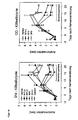
- FIG. 3 shows the effects of tarenflurbil (9 mg / kg single dose ip) compared to vehicle in untreated rats.
- NSAIDs are widely used in the treatment of nociceptive pain and inflammatory diseases, in previous studies they have proven ineffective in the treatment of painful neuropathies and are therefore not included in the therapeutic algorithms for the treatment of pain in neuropathies.
- Tarenflurbil the R-enantiomer of the racemate commercially available NSAID flurbiprofen
- the effect of tarenflurbil in painful neuropathies is selective and is not evoked by the S enantiomer of flurbiprofen.
- the pharmacological investigations carried out in the context of the present invention show the dose-dependent effect of tarenflurbil in pharmacologically recognized models of painful neuropathies.
- the potency is sufficient dosage in the range of potency of 25 mg / kg body weight of gabapentin as reference substance.
- S-Flurbiprofen shows no significant effect on these models.
- Tarenflurbil (or a pharmaceutically acceptable salt or ester thereof) containing drugs can thus be used in the invention in all forms of painful neuropathy or neuropathic pain described above as the sole therapy or in combination with other drugs or treatment methods.
- the dosage should be based on the current therapy guidelines for the known active ingredients. This means that the dosage should be individual, depending on efficacy and side effects.
- effectiveness is understood as a pain reduction of at least 30 to 50%. This should preferably be assessed after a treatment period of two to four weeks at high daily doses. Thereafter, the dose can be adjusted upwards or downwards or a combination therapy with the known active substances can be initiated.
- Tarenflurbil or forms of the pharmaceutically acceptable salt or ester thereof are forms of Tarenflurbil or forms of the pharmaceutically acceptable salt or ester thereof, in which the Tarenflurbil or its pharmaceutically acceptable salt or ester in a molar ratio to S-flurbiprofen or to the respective pharmaceutically acceptable salt or ester of S-flurbiprofen of greater than or equal to 60:40. It is particularly preferred if the molar ratio is greater than or equal to 95: 5, wherein a molar ratio from 95: 5 "is essentially enantiomerically pure" in the context of the invention.
- the molar ratio is greater than or equal to 98: 2, ⁇ 99.5: 0.5 or ⁇ 99.9: 0.1, with a molar ratio from 98: 2 being "enantiomerically pure" within the meaning of the invention.
- the drugs and pharmaceutical compositions prepared according to the use of the invention or the pharmaceutical and pharmaceutical compositions for use according to the invention preferably contain tarenflurbil or its pharmaceutically acceptable salt or ester in the said appropriate forms of enantiomeric purity or enrichment.
- Tarenflurbil unlike most other R-NSAIDs, shows little or no inversion from the R-form to the S-form in vivo when administered to humans. Therefore, even after administration of high therapeutic doses, there is no risk that inversion of tarenflurbil to S-flurbiprofen may result in toxic levels of S-flurbiprofen in the human organism. Because of the high enantiomeric stability of tarenflurbil in vivo in humans, drugs should be prepared with the greatest possible enantiomerically pure active substance in order to be able to achieve a particularly favorable benefit-risk ratio in the treatment according to the invention of painful neuropathies or neuropathic pain. Enantiomerically pure or substantially enantiomerically pure tarenflurbil is available to several commercial drug manufacturers in accordance with the International Good Manufacturing Practices (GMP) for pharmaceutical active ingredients.
- GMP International Good Manufacturing Practices
- the administered daily dose can be adjusted within wide limits to the individual circumstances of the patient.
- the daily dose should be at least 1 mg / kg body weight and may be increased to 50 mg / kg or higher.
- a preferred dosage for systemic use is a daily dose of 2 to 30 mg / kg body weight, more preferably 3 to 25 mg / kg body weight, more preferably 5 to 20 mg / kg body weight, and most preferably 10 to 20 mg / kg body weight.
- the daily dose should, depending on the release kinetics of the pharmaceutical preparation and the administration form, be divided into one to five, preferably one to four units, so that an application of once daily totechnischaml, preferably four times daily.
- all known administration routes such as oral, peroral, intramuscular, intravenous, intraperitoneal, buccal, sublingual, nasal, transdermal, by inhalation and rectally, are suitable for which the known pharmaceutical formulations can be used.
- Oral or rectal formulations administered in solid form preferably contain, as a unit dosage form, 30 mg to 1800 mg, preferably 50 mg to 1200 mg, more preferably 100-1000 mg and most preferably 200-800 mg Tarenflurbil or a pharmaceutically acceptable salt or esters thereof.
- the single doses are divided similarly to the solid oral formulations.
- Solutions or suspensions for parenteral administration preferably contain the total daily dose in a unit dosage form, but can also be formulated as lower dose single dose forms for repeated daily use, depending on the therapeutic need.
- Solutions or suspensions for oral administration may be administered for a typical therapy period, such as one or more weeks or one or more months, contain required amount, in which case a daily dose or a single dose is obtained by measuring a subset.
- Tarenflurbil or a pharmaceutically acceptable salt or ester thereof can be used for local therapy of painful neuropathies or neuropathic pain.
- a topically administered pharmaceutical formulation is applied to the skin of the diseased body site.
- suitable for this application route are all pharmaceutical formulations known from topicals, e.g. Ointments, creams, emulsions, gels, plasters.
- the pharmaceutical formulation of the pharmaceutical compositions of the present invention may be prepared in any desired form known in the pharmaceutical art. These include e.g. Tablets, capsules, dragees, granules, non-sterile solutions and suspensions for oral administration, nanopellets, sterile solutions and suspensions for parenteral administration, suppositories, aerosols, ointments, creams, emulsions and liposome preparations.
- the oral pharmaceutical preparations and intramuscular or intraperitoneal preparations to be administered according to the invention may be prepared in both fast-release and modified-release formulations and used therapeutically. Particularly in the case of oral preparations, it is possible to provide delayed-release pharmaceutical formulations in order to reduce the frequency of administration, to improve the compliance of the patient and to improve the compatibility.
- the release can be controlled continuously or pulsatile over several time-shifted single releases.
- the known in pharmaceutical technology preparations for sustained release of active substances such as crystal suspensions and biodegradable auxiliaries can be used.
- the Tarenflurbil or its pharmaceutically acceptable salt or ester in the context of the inventive methods uses and pharmaceutical or drug compositions over a longer period of time is applied or administered, preferably over several weeks or several months, z. For more than 3 months, more than 6 months, or more than 12 months.
- medicaments or pharmaceutical compositions according to the invention may optionally comprise further active ingredients and one or more pharmaceutically acceptable excipients.
- pharmaceutically acceptable derivatives refers to derivatives prepared from Tarenflurbil and pharmaceutically acceptable inorganic or organic bases for salt formation, alcoholic compounds for ester formation. These include in particular metal salts, for example with aluminum, calcium, lithium, magnesium, potassium, sodium and zinc or ogranische salts, eg with lysine, N, N'-dibenzylethylenediamine, choline, diethanolamine, ethylenediamine, meglumine, trometamine, arginine and alkylamines with 1 to 6 C-atoms or esters, eg with aliphatic or isoaliphatic alcohols having 1 to 8 carbon atoms. Tarenflurbil can also be used as free acid within the scope of the invention.
- the tarenflurbil or the pharmaceutically acceptable salt or ester thereof may advantageously be administered in free or fixed combination with other agents suitable for the treatment of painful neuropathies or neuropathic pain.
- Tarenflurbil or a pharmaceutically acceptable salt or ester thereof may be used in fixed combinations with other, effective in this indication substances.
- topical combination therapy combinations of tarenflurbil and topical analgesics or local anesthetics may be used.
- the doses are chosen such that tarenflurbil (or the pharmaceutically acceptable salt or ester thereof used) in the doses described above and the combination agent is used in the usual therapeutic dose for the individual active substance in question.
- Tarenflurbil is thus not only suitable for the treatment of painful neuropathies but also for the treatment of pain which, due to the present damage, consists of painful neuropathies and nociceptor pain.
- pain which, due to the present damage, consists of painful neuropathies and nociceptor pain.
- These mixed pains occur when there are at the same time painful tissue trauma and painful peripheral or central nerve damage in tightly circumscribed areas of the body.
- this type of pain is often inadequate in practice because the known non-opioid analgesics are effective only in nociceptor pain but not in painful neuropathies, while most drugs used to treat painful neuropathies are effective only in this type of pain but not in nociceptor pain.
- Tarenflurbil or a pharmaceutically acceptable salt or ester thereof is effective simultaneously in both the known analgesic effect on nociceptor pain and on the effect found in painful neuropathies according to the invention.
- Tarenflurbil and its pharmaceutically acceptable salts and esters therefore have a known nociceptive and a previously unknown, neuropathic pain potential similar to the opioid active substances, but without their known addictive potential and respiratory depressive potential. This pain combination is so far described for no other non-opioid substance and therefore represents a high heretofore unknown therapeutic benefit. Because of its excellent tolerability Tarenflurbil (or its pharmaceutically acceptable salts and esters) in mixed pain from the beginning in high dose become.
- Opioid analgesics show a comparably broad spectrum of action in painful neuropathies and nociceptor pain, but due to their side-effect profile, they should only be used with strict indications. Frequently occurring mixed pain is back pain and cancer pain, for the treatment of which Tarenflurbil (or its pharmaceutically acceptable salts and esters) would be a drug to be preferred regardless of a differential diagnosis.
- active ingredients which can be produced in combination with Tarenflurbil (or its pharmaceutically acceptable salts or esters), for example as systemically applicable drugs and used as a fixed combination, all active ingredients used for the therapy of painful neuropathies, such as antidepressants (amitriptyline, nortriptyline; Desipramine, maprotiline, venlafaxine, duloxetine, bupropion), anticonvulsants (carbamazepine, oxcarbazepine, lamotrigine, gabapentin, pregabalin), opioids (tramadol, morphine, oxycodone), cannabinoids (tetrahydro-cannabinol), myotonolytics (baclofen), NMDA antagonists (dextromethorphan , Ketamine, memantine), or radical scavengers (alpha-lipoic acid).
- antidepressants amitriptyline, nortriptyline; Desipramine, maprotiline, venlafax
- the pharmaceutically acceptable auxiliaries are to be understood as meaning excipients such as starch, sugar, microcrystalline cellulose, thinners, granulating aids, lubricants, binders, disintegrants and the like.
- Particularly advantageous pharmaceutical formulations for Tarenflurbil containing drugs are in EP 0 607 128 .
- the following examples are intended to further illustrate the invention without, however, limiting it to the specific embodiments described. Unless otherwise indicated, all parts and percentages in the context of the present invention are based on the weight or the total weight of the composition / mixture.
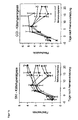
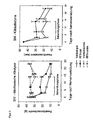
- the experimental animals were surgically treated with a nerve lesion based on the SNI model and the CCI model. From the 10th day to the 21st day after the operation, groups of 12 animals each received intraperitoneally twice daily the test substances.
- tarenflurbil referred to as RF2.5, RF4.5 and RF9
- SF4.5 S-flurbiprofen
- pure vehicle vehicle-as control
- gabapentin Gaba25- as Reference substance
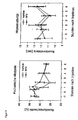
- the animals were treated after nerve damage according to the SNI model already from the first postoperative day for two weeks with twice daily 9 mg / kg body weight Tarenflurbil or vehicle intraperitoneally.
- Mechanically dynamic allodynia was measured only by ipsilateral motion using the Frey Aesthesiometer on both the ipsilateral and contralateral sides, and the cold allodynia with the 10 ° C cold plate.
- Tarenflurbil (RF9-ipsi) shows a significantly different effect in mechanical allodynia and in cold allodynia during the entire two-week treatment period compared to the vehicle (vehicle ipsi) on the ipsilateral side. On the contralateral side, Tarenflurbil (RF9-contra) and vehicle (vehicle-contra) do not differ.
- the analgesic effect in the tarenflurbil-treated group slowly decreases and reaches the pain intensity of the vehicle group eight days after the end of treatment.
Landscapes
- Health & Medical Sciences (AREA)
- Pharmacology & Pharmacy (AREA)
- Medicinal Chemistry (AREA)
- Life Sciences & Earth Sciences (AREA)
- Public Health (AREA)
- General Health & Medical Sciences (AREA)
- Chemical & Material Sciences (AREA)
- Animal Behavior & Ethology (AREA)
- Veterinary Medicine (AREA)
- Chemical Kinetics & Catalysis (AREA)
- Nuclear Medicine, Radiotherapy & Molecular Imaging (AREA)
- Organic Chemistry (AREA)
- General Chemical & Material Sciences (AREA)
- Pain & Pain Management (AREA)
- Neurology (AREA)
- Neurosurgery (AREA)
- Engineering & Computer Science (AREA)
- Biomedical Technology (AREA)
- Bioinformatics & Cheminformatics (AREA)
- Rheumatology (AREA)
- Epidemiology (AREA)
- Acyclic And Carbocyclic Compounds In Medicinal Compositions (AREA)
- Pharmaceuticals Containing Other Organic And Inorganic Compounds (AREA)
- Medicines That Contain Protein Lipid Enzymes And Other Medicines (AREA)
- Medicinal Preparation (AREA)
Claims (15)
- Tarenflurbil, respectivement un de ses sels pharmaceutiquement acceptables ou un de ses esters avec des alcools aliphatiques ou isoaliphatiques contenant de 1 à 8 atomes de carbone, sous forme enrichie par rapport au racémate de flurbiprofen, respectivement à un racémate du sel ou de l'ester mentionné, pour une utilisation dans le traitementa) d'une neuropathie douloureuse ;b) d'une neuropathie douloureuse qui s'accompagne en même temps d'états de douleurs nociceptives ;c) d'une douleur neuropathique périphérique, respectivement principalement périphérique ; oud) d'une douleur neuropathique centrale, respectivement principalement centrale.
- Composé pour l'utilisation selon la revendication 1, dans lequel il s'agit, en ce qui concerne la douleur neuropathique principalement périphérique, d'une douleur qui est choisie parmi les douleurs neuropathiques suivantes, respectivement dont la cause est choisie parmi le groupe des causes suivantes :- des maladies systémiques, par exemple une neuropathie diabétique ;- des lésions induites par des médicaments, par exemple une neuropathie sur base d'une chimiothérapie ;- un syndrome traumatique et le syndrome des défilés ;- des lésions des racines nerveuses et des ganglions postérieurs ;- des neuropathies après des infections dues au VIH ;- des névralgies après des infections herpétiques ;- des avulsions des racines nerveuses ;- des lésions des nerfs crâniens ;- des névralgies crâniennes, par exemple la névralgie du trijumeau ;- une douleur neuropathique d'origine cancéreuse ;- une douleur fantôme ;- la compression des nerfs périphériques, du plexus nerveux et des racines nerveuses ;- une ganglionopathie et une neuropathie périphérique paranéoplasique ;- des complications de thérapies anticancéreuses, par exemple la chimiothérapie, l'irradiation et des interventions chirurgicales ;- le syndrome de douleur régionale complexe ;- des lésions de type I (que l'on désignait autrefois par l'expression « dystrophie réflexe sympathique ») ; et- des lésions de type II (correspondant par exemple à une causalgie),
ou bien dans lequel il s'agit, en ce qui concerne une douleur neuropathique principalement centrale, d'une douleur dont la cause est choisie parmi le groupe des causes suivantes :- des lésions cérébrales qui sont principalement de type thalamique ;- l'infarctus par exemple l'infarctus thalamique ou l'infarctus du tronc cérébral ;- des tumeurs ou des abcès cérébraux qui compriment le thalamus ou le tronc cérébral ;- la sclérose en plaques ;- des opérations cervicales par exemple la thalamotomie dans le cas de troubles moteurs ;- des lésions de la moëlle épinière ;- des blessures de la moëlle épinière ;- des opérations qui visent la moëlle épinière, par exemple une chordotomie antérolatérale ;- des lésions ischémiques ;- le syndrome de l'artère spinale antérieure ;- le syndrome de Wallenberg ; et- la syringomyélie. - Composé pour l'utilisation selon la revendication 1 ou 2, dans lequel le tarenflurbil, respectivement son sel ou son ester pharmaceutiquement acceptable est présent dans un rapport molaire au S-flurbiprofen, respectivement au sel ou à l'ester respectif pharmaceutiquement acceptable du S-flurbiprofen, supérieur ou égal à 60:40, de préférence supérieur ou égal à 95:5, de manière particulièrement préférée supérieur ou égal à 98:2, de manière tout particulièrement préférée supérieur ou égal à 99,5:0,5 et de manière de loin préférée supérieur ou égal à 99,9:0,1.
- Composé pour l'utilisation selon l'une quelconque des revendications précédentes, dans lequel le tarenflurbil et le S-flurbiprofen présent le cas échéant, sont présents sous la forme de l'acide libre, sous la forme d'un sel avec des agents de salification inorganiques ou organiques, sous la forme d'un complexe avec des agents complexants inorganiques ou organiques, ou sous la forme d'un ester d'acide.
- Composé pour l'utilisation selon l'une quelconque des revendications précédentes, dans lequel le tarenflurbil, respectivement son sel ou son ester pharmaceutiquement acceptable est mis en oeuvre pour l'application systémique dans une dose quotidienne d'au moins 1 mg/kg de poids du corps à 50 mg/kg de poids du corps ou plus, de préférence dans des doses quotidiennes de 2 mg/kg à 30 mg/kg de poids du corps, de manière particulièrement préférée de 3 à 25 mg/kg de poids du corps, de manière tout particulièrement préférée de 5 à 20 mg/kg de poids du corps, et de manière de loin préférée de 10 à 20 mg/kg de poids du corps.
- Composé pour l'utilisation selon l'une quelconque des revendications 1 à 5, dans lequel la dose quotidienne est administrée sous la forme d'une dose unique ou sous la forme de plusieurs doses fractionnées.
- Composé pour l'utilisation selon l'une quelconque des revendications 1 à 6, dans lequel on prépare, respectivement on administre, pour des formulations à appliquer entièrement par voie orale ou par voie rectale, des formes posologiques individuelles possédant une teneur en substance active de 30 mg à 1800 mg, de préférence de 50 mg à 1200 mg, de manière particulièrement préférée de 100 à 1000 mg et de manière tout particulièrement préférée de 200 à 800 mg, et pour des formes orales buvables ainsi que pour des formes d'injection, des formes posologiques individuelles allant d'une dose minimale de 30 mg jusqu'à la dose quotidienne maximale.
- Composé pour l'utilisation selon l'une quelconque des revendications 1 à 7, dans lequel le médicament est appliqué pendant un laps de temps prolongé, de préférence pendant plusieurs semaines ou mois.
- Composé pour l'utilisation selon l'une quelconque des revendications 1 à 8, dans lequel le tarenflurbil, respectivement son sel ou son ester pharmaceutiquement acceptable est combiné dans la dose thérapeutique habituelle avec une ou plusieurs substances actives appropriées pour le traitement systémique de douleurs neuropathiques, par exemple avec des antidépresseurs (l'amitriptyline, la nortriptyline, la désipramine, la maprotiline, la venlafaxine, la duloxétine, le bupropion), des anticonvulsifs (la carbamazépine, l'oxcarbazépine, la lamotrigine, la gabapentine, la prégabaline), des opioïdes (le tramadol, la morphine, l'oxycodon), des cannabinoïdes (le tétrahydro-cannabinol), des myotonolytiques (le baclofen), des antagonistes du NMDA (le dextrométhorphane, la cétamine, la mémantine), des fixateurs de radicaux libres (l'acide alpha-lipoïque).
- Composé pour l'utilisation selon l'une quelconque des revendications 1 à 9, dans lequel la substance active/les substances actives est/sont libérée(s) rapidement ou est/ sont libérée(s) à l'état modifié, par exemple sous forme retardée ou sous forme pulsatile.
- Composé pour l'utilisation selon l'une quelconque des revendications 1 à 10, dans lequel l'application systémique a lieu par voie orale, par voie perorale, par voie intramusculaire, par voie intraveineuse, par voie intrapéritonéales, par voie buccale, par voie nasale, par voie transdermique, par inhalation ou par voie rectale.
- Composé pour l'utilisation selon l'une quelconque des revendications 1 à 11, dans lequel l'application a lieu par voie orale et le médicament est présent sous la forme de comprimés, de capsules, de dragées, de granulés, d'une solution non stérilisée ou d'une suspension ou bien l'application a lieu par voie parentérale et le médicament est présent sous la forme d'une suspension ou d'une solution stérilisée ou bien l'application a lieu par voie rectale et le médicament est présent sous la forme de suppositoires ou bien l'application a lieu par voie orale ou par voie nasale et le médicament est présent sous la forme d'un aérosol.
- Composé pour l'utilisation selon l'une quelconque des revendications 1 à 12, dans lequel l'application a lieu par voie locale et la concentration de la substance active ou des substances actives pour l'application locale a lieu sous la forme d'agents topiques à concurrence de moins de 0,5 g/100 g à 25 g/100 g de préparation ou plus, de préférence à concurrence de 1 g/100 g à 20 g/100 g de préparation, de manière particulièrement préférée à concurrence de 1 g/100 g à 15 g/100 g de préparation, de manière tout particulièrement préférée à concurrence de 1,5 g/100 g à 10 g/100 g de préparation, et de manière de loin préférée à concurrence de 5 g/100 g à 10 g/100 g de préparation.
- Composé pour l'utilisation selon la revendication 13, dans lequel le tarenflurbil, respectivement son sel ou son ester pharmaceutiquement acceptable est combiné à une ou plusieurs substances actives appropriées pour le traitement local de neuropathies douloureuses, dans la concentration thérapeutique habituelle, par exemple à de la capsaïcine, à de la lidocaïne ou à de la benzocaïne.
- Composé pour l'utilisation selon la revendication 13 ou 14, dans lequel le médicament est présent sous la forme d'une formulation appropriée pour l'application topique sur la peau, par exemple sous la forme d'une pommade, d'une crème, d'un gel, d'une solution, d'une préparation liposomiale, d'un emplâtre ou sous la forme d'un bandage enduit.
Priority Applications (1)
| Application Number | Priority Date | Filing Date | Title |
|---|---|---|---|
| PL08868390T PL2244703T3 (pl) | 2007-12-21 | 2008-12-12 | Lekarstwo, jego wytwarzanie i zastosowanie w leczeniu bolesnych neuropatii |
Applications Claiming Priority (2)
| Application Number | Priority Date | Filing Date | Title |
|---|---|---|---|
| DE102007062139 | 2007-12-21 | ||
| PCT/EP2008/010592 WO2009083115A1 (fr) | 2007-12-21 | 2008-12-12 | Médicament, sa fabrication et son utilisation pour le traitement de neuropathies douloureuses |
Publications (2)
| Publication Number | Publication Date |
|---|---|
| EP2244703A1 EP2244703A1 (fr) | 2010-11-03 |
| EP2244703B1 true EP2244703B1 (fr) | 2011-09-28 |
Family
ID=40456375
Family Applications (1)
| Application Number | Title | Priority Date | Filing Date |
|---|---|---|---|
| EP08868390A Not-in-force EP2244703B1 (fr) | 2007-12-21 | 2008-12-12 | Médicament, sa fabrication et son utilisation pour le traitement de neuropathies douloureuses |
Country Status (10)
| Country | Link |
|---|---|
| EP (1) | EP2244703B1 (fr) |
| JP (1) | JP2011506505A (fr) |
| CN (1) | CN101932316A (fr) |
| AT (1) | ATE526015T1 (fr) |
| CA (1) | CA2710318A1 (fr) |
| DK (1) | DK2244703T3 (fr) |
| ES (1) | ES2373838T3 (fr) |
| MX (1) | MX2010006608A (fr) |
| PL (1) | PL2244703T3 (fr) |
| WO (1) | WO2009083115A1 (fr) |
Families Citing this family (9)
| Publication number | Priority date | Publication date | Assignee | Title |
|---|---|---|---|---|
| EP2387391B1 (fr) | 2009-07-24 | 2017-01-11 | MIKA Pharma Gesellschaft für die Entwicklung und Vermarktung pharmazeutischer Produkte mbH | Procédé pour mettre au point une composition liquide à appliquer sous forme de mousse sur la peau et composition pour application topique |
| GB2485169A (en) * | 2010-11-03 | 2012-05-09 | Univ Jw Goethe Frankfurt Main | (R)-flurbiprofen for use in the treatment of multiple sclerosis |
| EP2468270A1 (fr) | 2010-12-21 | 2012-06-27 | GALENpharma GmbH | Acide (R)-2-(3-fluoro-4-phénylphényl)propionique pour une utilisation dans le traitement de maladies cutanées |
| US9320725B2 (en) | 2012-05-18 | 2016-04-26 | Gruenenthal Gmbh | Pharmaceutical composition comprising (1r,4r)-6′-fluoro-N,N-dimethyl-4-phenyl-4′9′-dihydro-3′H-spiro[cyclohexane-1,1′-pyrano[3,4,b]indol]-4-amine and a gabapentinoid |
| US9345689B2 (en) * | 2012-05-18 | 2016-05-24 | Gruenenthal Gmbh | Pharmaceutical composition comprising (1r,4r)-6′-fluoro-N, N-dimethyl-4-phenyl-4,9′-dihydro-3′H-spiro[cyclohexane-1,1′-pyrano[3,4,b]indol]-4-amine and an anticonvulsant |
| US20130310385A1 (en) * | 2012-05-18 | 2013-11-21 | Gruenenthal Gmbh | Pharmaceutical Composition Comprising (1r,4r)-6'-fluoro-N,N-dimethyl-4-phenyl-4',9'-dihydro-3'H-spiro[cyclohexane-1,1'-pyrano[3,4,b]indol]-4-amine and Antidepressants |
| CN104906276A (zh) * | 2015-06-25 | 2015-09-16 | 刘艳红 | 一种治疗幻肢痛的中药组合物 |
| EP3900715A1 (fr) * | 2020-04-21 | 2021-10-27 | Dompe' Farmaceutici S.P.A. | Adjuvants synergiques de gabapentine et de kétoprofène, compositions pharmaceutiques et leur utilisation médicale |
| CN116966184B (zh) * | 2022-04-21 | 2026-03-13 | 中国医学科学院基础医学研究所 | 伊曲康唑作为镇痛药物的应用 |
Family Cites Families (6)
| Publication number | Priority date | Publication date | Assignee | Title |
|---|---|---|---|---|
| DE4028906A1 (de) * | 1990-09-12 | 1992-03-19 | Paz Arzneimittelentwicklung | Arzneimittel sowie deren herstellung und deren verwendung bei der bekaempfung von schmerzen und/oder entzuendungen und/oder fieber an tieren und menschen |
| PL314036A1 (en) * | 1993-10-20 | 1996-08-05 | Boots Co Plc | Pharmaceutical composition |
| ITMI962356A1 (it) * | 1996-11-13 | 1998-05-13 | Uni Degli Studi Di Brescia D I | Uso di composti derivati da molecole ad attivita' antinfiammatoria di tipo non steroideo per la prevenzione e il trattamento di |
| CA2350531A1 (fr) * | 1998-11-13 | 2000-05-25 | Smriti Iyengar | Methode de traitement de la douleur |
| MXPA06011891A (es) * | 2004-04-20 | 2007-04-24 | Pfizer | Metodo para tratar el dolor neuropatico. |
| WO2008036733A2 (fr) * | 2006-09-19 | 2008-03-27 | Myriad Genetics, Inc. | Méthodes de traitement de troubles du transport vésiculaire |
-
2008
- 2008-12-12 MX MX2010006608A patent/MX2010006608A/es active IP Right Grant
- 2008-12-12 AT AT08868390T patent/ATE526015T1/de active
- 2008-12-12 CN CN2008801218586A patent/CN101932316A/zh active Pending
- 2008-12-12 PL PL08868390T patent/PL2244703T3/pl unknown
- 2008-12-12 EP EP08868390A patent/EP2244703B1/fr not_active Not-in-force
- 2008-12-12 WO PCT/EP2008/010592 patent/WO2009083115A1/fr not_active Ceased
- 2008-12-12 JP JP2010538424A patent/JP2011506505A/ja active Pending
- 2008-12-12 DK DK08868390.9T patent/DK2244703T3/da active
- 2008-12-12 ES ES08868390T patent/ES2373838T3/es active Active
- 2008-12-12 CA CA2710318A patent/CA2710318A1/fr not_active Abandoned
Also Published As
| Publication number | Publication date |
|---|---|
| ATE526015T1 (de) | 2011-10-15 |
| MX2010006608A (es) | 2010-10-05 |
| CA2710318A1 (fr) | 2009-07-09 |
| JP2011506505A (ja) | 2011-03-03 |
| PL2244703T3 (pl) | 2012-05-31 |
| CN101932316A (zh) | 2010-12-29 |
| ES2373838T3 (es) | 2012-02-09 |
| EP2244703A1 (fr) | 2010-11-03 |
| DK2244703T3 (da) | 2011-12-05 |
| WO2009083115A1 (fr) | 2009-07-09 |
Similar Documents
| Publication | Publication Date | Title |
|---|---|---|
| EP2244703B1 (fr) | Médicament, sa fabrication et son utilisation pour le traitement de neuropathies douloureuses | |
| US20090162421A1 (en) | Drugs as well as their production and use in the treatment of pain-associated neuropathies | |
| DE69722426T3 (de) | Isobutylgaba und dessen derivate zur schmerzbehandlung | |
| EP0267321B1 (fr) | Médicament contenant l'ibuprofen | |
| DE60016602T2 (de) | Zusammensetzung enthaltend ein tramadol und ein antikonvulsives arzneimittel | |
| DE69914084T2 (de) | Phenylacetylglutamin, phenylacetylisoglutamin, und/oder phenylacetat zur behandlung von neoplastischen erkrankungen | |
| EP2323645B1 (fr) | Utilisation à faible dose d'anesthésiques locaux ou de leurs dérivés pour la thérapie de douleurs chroniques, en particulier la migraine | |
| DE69933049T2 (de) | Pharmazeutische zusammensetzung und verwendung von rnsaid zur behandlung der entzündung | |
| WO1997015300A2 (fr) | Utilisation de 4-amino-4-(4-fluorobenzylamino)-1-ethoxy-carbonylaminobenzene pour la prophylaxie et le traitement des sequelles d'une insuffisance de vascularisation cerebrale aigüe et chronique et de maladies neurodegeneratives | |
| WO2001015682A1 (fr) | Sels pharmaceutiques de tramadol | |
| DE102007019417A1 (de) | Tapentadol zur Schmerzbehandlung bei Arthrose | |
| DE3390114C2 (fr) | ||
| DE3390116C2 (de) | Verbesserte, Koffein enthaltende, analgetische und antiinflammatorische Mittel | |
| EP0250648A2 (fr) | Préparation pharmaceutique pour la libération retardée de l'ibuprofène | |
| DE69922787T2 (de) | N,n'-bis(2-hydroxybenzyl)ethylendiamin-n,n'-diessigsäure und natriumsalze davon zur eisenchelatierungstherapie | |
| EP1154766B1 (fr) | Utilisation d'acides r-aryl-propioniques pour la production de medicaments, pour le traitement de maladies touchant l'homme et l'animal et sur lesquelles l'inhibition de l'activation du facteur de transcription nf-kappa b peut exercer une influence d'un point de vue therapeutique | |
| Ding et al. | The antiallodynic action of pregabalin may depend on the suppression of spinal neuronal hyperexcitability in rats with spared nerve injury | |
| DE69529819T2 (de) | Neue kombination eines betablockers mit einem lokalanästhetikum | |
| EP2155179B1 (fr) | Axomadol pour le traitement de la douleur en cas d'arthrose | |
| DE19726871C1 (de) | Synergistisch wirkende Zusammensetzungen zur selektiven Bekämpfung von Tumorgewebe | |
| DE2611976A1 (de) | Pharmazeutisches praeparat zur besserung und wiederherstellung bei verminderten bewusstseinszustaenden | |
| DE60028787T2 (de) | Methode zur behandlung von verletzungen des traumatisierten gehirns mit nicht-steroid entzündungshemmenden medikamenten | |
| DE19629802A1 (de) | Arzneimittel zur Behandlung von Neuropathien | |
| DE60212813T2 (de) | Metronomische dosierung von taxanen zur hemmung von krebswachstum | |
| JP2016523975A (ja) | 穿通性頭部外傷の処置におけるn−アセチルシステインアミドの使用 |
Legal Events
| Date | Code | Title | Description |
|---|---|---|---|
| PUAI | Public reference made under article 153(3) epc to a published international application that has entered the european phase |
Free format text: ORIGINAL CODE: 0009012 |
|
| 17P | Request for examination filed |
Effective date: 20100721 |
|
| AK | Designated contracting states |
Kind code of ref document: A1 Designated state(s): AT BE BG CH CY CZ DE DK EE ES FI FR GB GR HR HU IE IS IT LI LT LU LV MC MT NL NO PL PT RO SE SI SK TR |
|
| AX | Request for extension of the european patent |
Extension state: AL BA MK RS |
|
| GRAP | Despatch of communication of intention to grant a patent |
Free format text: ORIGINAL CODE: EPIDOSNIGR1 |
|
| DAX | Request for extension of the european patent (deleted) | ||
| RAP1 | Party data changed (applicant data changed or rights of an application transferred) |
Owner name: HORIZON PHARMA AG |
|
| GRAS | Grant fee paid |
Free format text: ORIGINAL CODE: EPIDOSNIGR3 |
|
| GRAA | (expected) grant |
Free format text: ORIGINAL CODE: 0009210 |
|
| AK | Designated contracting states |
Kind code of ref document: B1 Designated state(s): AT BE BG CH CY CZ DE DK EE ES FI FR GB GR HR HU IE IS IT LI LT LU LV MC MT NL NO PL PT RO SE SI SK TR |
|
| REG | Reference to a national code |
Ref country code: GB Ref legal event code: FG4D Free format text: NOT ENGLISH |
|
| REG | Reference to a national code |
Ref country code: CH Ref legal event code: EP |
|
| REG | Reference to a national code |
Ref country code: IE Ref legal event code: FG4D |
|
| REG | Reference to a national code |
Ref country code: DE Ref legal event code: R096 Ref document number: 502008005060 Country of ref document: DE Effective date: 20111124 |
|
| REG | Reference to a national code |
Ref country code: DK Ref legal event code: T3 |
|
| REG | Reference to a national code |
Ref country code: CH Ref legal event code: NV Representative=s name: SCHNEIDER FELDMANN AG PATENT- UND MARKENANWAELTE |
|
| REG | Reference to a national code |
Ref country code: SE Ref legal event code: TRGR |
|
| REG | Reference to a national code |
Ref country code: NL Ref legal event code: T3 |
|
| PG25 | Lapsed in a contracting state [announced via postgrant information from national office to epo] |
Ref country code: NO Free format text: LAPSE BECAUSE OF FAILURE TO SUBMIT A TRANSLATION OF THE DESCRIPTION OR TO PAY THE FEE WITHIN THE PRESCRIBED TIME-LIMIT Effective date: 20111228 Ref country code: FI Free format text: LAPSE BECAUSE OF FAILURE TO SUBMIT A TRANSLATION OF THE DESCRIPTION OR TO PAY THE FEE WITHIN THE PRESCRIBED TIME-LIMIT Effective date: 20110928 Ref country code: LT Free format text: LAPSE BECAUSE OF FAILURE TO SUBMIT A TRANSLATION OF THE DESCRIPTION OR TO PAY THE FEE WITHIN THE PRESCRIBED TIME-LIMIT Effective date: 20110928 Ref country code: HR Free format text: LAPSE BECAUSE OF FAILURE TO SUBMIT A TRANSLATION OF THE DESCRIPTION OR TO PAY THE FEE WITHIN THE PRESCRIBED TIME-LIMIT Effective date: 20110928 |
|
| PGFP | Annual fee paid to national office [announced via postgrant information from national office to epo] |
Ref country code: FR Payment date: 20120103 Year of fee payment: 4 Ref country code: ES Payment date: 20111219 Year of fee payment: 4 Ref country code: NL Payment date: 20111221 Year of fee payment: 4 Ref country code: SE Payment date: 20111220 Year of fee payment: 4 |
|
| REG | Reference to a national code |
Ref country code: ES Ref legal event code: FG2A Ref document number: 2373838 Country of ref document: ES Kind code of ref document: T3 Effective date: 20120209 |
|
| LTIE | Lt: invalidation of european patent or patent extension |
Effective date: 20110928 |
|
| PG25 | Lapsed in a contracting state [announced via postgrant information from national office to epo] |
Ref country code: SI Free format text: LAPSE BECAUSE OF FAILURE TO SUBMIT A TRANSLATION OF THE DESCRIPTION OR TO PAY THE FEE WITHIN THE PRESCRIBED TIME-LIMIT Effective date: 20110928 Ref country code: GR Free format text: LAPSE BECAUSE OF FAILURE TO SUBMIT A TRANSLATION OF THE DESCRIPTION OR TO PAY THE FEE WITHIN THE PRESCRIBED TIME-LIMIT Effective date: 20111229 Ref country code: CY Free format text: LAPSE BECAUSE OF FAILURE TO SUBMIT A TRANSLATION OF THE DESCRIPTION OR TO PAY THE FEE WITHIN THE PRESCRIBED TIME-LIMIT Effective date: 20110928 Ref country code: LV Free format text: LAPSE BECAUSE OF FAILURE TO SUBMIT A TRANSLATION OF THE DESCRIPTION OR TO PAY THE FEE WITHIN THE PRESCRIBED TIME-LIMIT Effective date: 20110928 |
|
| PGFP | Annual fee paid to national office [announced via postgrant information from national office to epo] |
Ref country code: BE Payment date: 20111220 Year of fee payment: 4 |
|
| REG | Reference to a national code |
Ref country code: IE Ref legal event code: FD4D |
|
| PG25 | Lapsed in a contracting state [announced via postgrant information from national office to epo] |
Ref country code: CZ Free format text: LAPSE BECAUSE OF FAILURE TO SUBMIT A TRANSLATION OF THE DESCRIPTION OR TO PAY THE FEE WITHIN THE PRESCRIBED TIME-LIMIT Effective date: 20110928 Ref country code: IS Free format text: LAPSE BECAUSE OF FAILURE TO SUBMIT A TRANSLATION OF THE DESCRIPTION OR TO PAY THE FEE WITHIN THE PRESCRIBED TIME-LIMIT Effective date: 20120128 Ref country code: SK Free format text: LAPSE BECAUSE OF FAILURE TO SUBMIT A TRANSLATION OF THE DESCRIPTION OR TO PAY THE FEE WITHIN THE PRESCRIBED TIME-LIMIT Effective date: 20110928 |
|
| PG25 | Lapsed in a contracting state [announced via postgrant information from national office to epo] |
Ref country code: RO Free format text: LAPSE BECAUSE OF FAILURE TO SUBMIT A TRANSLATION OF THE DESCRIPTION OR TO PAY THE FEE WITHIN THE PRESCRIBED TIME-LIMIT Effective date: 20110928 Ref country code: EE Free format text: LAPSE BECAUSE OF FAILURE TO SUBMIT A TRANSLATION OF THE DESCRIPTION OR TO PAY THE FEE WITHIN THE PRESCRIBED TIME-LIMIT Effective date: 20110928 Ref country code: PT Free format text: LAPSE BECAUSE OF FAILURE TO SUBMIT A TRANSLATION OF THE DESCRIPTION OR TO PAY THE FEE WITHIN THE PRESCRIBED TIME-LIMIT Effective date: 20120130 |
|
| PGFP | Annual fee paid to national office [announced via postgrant information from national office to epo] |
Ref country code: DE Payment date: 20120222 Year of fee payment: 4 |
|
| REG | Reference to a national code |
Ref country code: PL Ref legal event code: T3 |
|
| PGFP | Annual fee paid to national office [announced via postgrant information from national office to epo] |
Ref country code: IT Payment date: 20111231 Year of fee payment: 4 |
|
| PG25 | Lapsed in a contracting state [announced via postgrant information from national office to epo] |
Ref country code: MC Free format text: LAPSE BECAUSE OF NON-PAYMENT OF DUE FEES Effective date: 20111231 Ref country code: IE Free format text: LAPSE BECAUSE OF FAILURE TO SUBMIT A TRANSLATION OF THE DESCRIPTION OR TO PAY THE FEE WITHIN THE PRESCRIBED TIME-LIMIT Effective date: 20110928 |
|
| PLBE | No opposition filed within time limit |
Free format text: ORIGINAL CODE: 0009261 |
|
| STAA | Information on the status of an ep patent application or granted ep patent |
Free format text: STATUS: NO OPPOSITION FILED WITHIN TIME LIMIT |
|
| PGFP | Annual fee paid to national office [announced via postgrant information from national office to epo] |
Ref country code: PL Payment date: 20111208 Year of fee payment: 4 |
|
| 26N | No opposition filed |
Effective date: 20120629 |
|
| REG | Reference to a national code |
Ref country code: DE Ref legal event code: R097 Ref document number: 502008005060 Country of ref document: DE Effective date: 20120629 |
|
| PG25 | Lapsed in a contracting state [announced via postgrant information from national office to epo] |
Ref country code: MT Free format text: LAPSE BECAUSE OF FAILURE TO SUBMIT A TRANSLATION OF THE DESCRIPTION OR TO PAY THE FEE WITHIN THE PRESCRIBED TIME-LIMIT Effective date: 20110928 |
|
| PG25 | Lapsed in a contracting state [announced via postgrant information from national office to epo] |
Ref country code: LU Free format text: LAPSE BECAUSE OF NON-PAYMENT OF DUE FEES Effective date: 20111212 |
|
| PG25 | Lapsed in a contracting state [announced via postgrant information from national office to epo] |
Ref country code: BG Free format text: LAPSE BECAUSE OF FAILURE TO SUBMIT A TRANSLATION OF THE DESCRIPTION OR TO PAY THE FEE WITHIN THE PRESCRIBED TIME-LIMIT Effective date: 20111228 |
|
| BERE | Be: lapsed |
Owner name: HORIZON PHARMA A.G. Effective date: 20121231 |
|
| REG | Reference to a national code |
Ref country code: NL Ref legal event code: V1 Effective date: 20130701 |
|
| PG25 | Lapsed in a contracting state [announced via postgrant information from national office to epo] |
Ref country code: SE Free format text: LAPSE BECAUSE OF NON-PAYMENT OF DUE FEES Effective date: 20121213 |
|
| REG | Reference to a national code |
Ref country code: CH Ref legal event code: PL |
|
| REG | Reference to a national code |
Ref country code: DK Ref legal event code: EBP |
|
| GBPC | Gb: european patent ceased through non-payment of renewal fee |
Effective date: 20121212 |
|
| PG25 | Lapsed in a contracting state [announced via postgrant information from national office to epo] |
Ref country code: IT Free format text: LAPSE BECAUSE OF NON-PAYMENT OF DUE FEES Effective date: 20121212 |
|
| REG | Reference to a national code |
Ref country code: FR Ref legal event code: ST Effective date: 20130830 |
|
| PG25 | Lapsed in a contracting state [announced via postgrant information from national office to epo] |
Ref country code: TR Free format text: LAPSE BECAUSE OF FAILURE TO SUBMIT A TRANSLATION OF THE DESCRIPTION OR TO PAY THE FEE WITHIN THE PRESCRIBED TIME-LIMIT Effective date: 20110928 Ref country code: BE Free format text: LAPSE BECAUSE OF NON-PAYMENT OF DUE FEES Effective date: 20121231 |
|
| REG | Reference to a national code |
Ref country code: DE Ref legal event code: R119 Ref document number: 502008005060 Country of ref document: DE Effective date: 20130702 |
|
| PG25 | Lapsed in a contracting state [announced via postgrant information from national office to epo] |
Ref country code: CH Free format text: LAPSE BECAUSE OF NON-PAYMENT OF DUE FEES Effective date: 20121231 Ref country code: NL Free format text: LAPSE BECAUSE OF NON-PAYMENT OF DUE FEES Effective date: 20130701 Ref country code: LI Free format text: LAPSE BECAUSE OF NON-PAYMENT OF DUE FEES Effective date: 20121231 Ref country code: HU Free format text: LAPSE BECAUSE OF FAILURE TO SUBMIT A TRANSLATION OF THE DESCRIPTION OR TO PAY THE FEE WITHIN THE PRESCRIBED TIME-LIMIT Effective date: 20110928 Ref country code: DE Free format text: LAPSE BECAUSE OF NON-PAYMENT OF DUE FEES Effective date: 20130702 |
|
| PG25 | Lapsed in a contracting state [announced via postgrant information from national office to epo] |
Ref country code: FR Free format text: LAPSE BECAUSE OF NON-PAYMENT OF DUE FEES Effective date: 20130102 Ref country code: GB Free format text: LAPSE BECAUSE OF NON-PAYMENT OF DUE FEES Effective date: 20121212 |
|
| PG25 | Lapsed in a contracting state [announced via postgrant information from national office to epo] |
Ref country code: DK Free format text: LAPSE BECAUSE OF NON-PAYMENT OF DUE FEES Effective date: 20130102 |
|
| PG25 | Lapsed in a contracting state [announced via postgrant information from national office to epo] |
Ref country code: PL Free format text: LAPSE BECAUSE OF NON-PAYMENT OF DUE FEES Effective date: 20121212 |
|
| REG | Reference to a national code |
Ref country code: ES Ref legal event code: FD2A Effective date: 20140602 |
|
| PG25 | Lapsed in a contracting state [announced via postgrant information from national office to epo] |
Ref country code: ES Free format text: LAPSE BECAUSE OF NON-PAYMENT OF DUE FEES Effective date: 20121213 |
|
| REG | Reference to a national code |
Ref country code: AT Ref legal event code: MM01 Ref document number: 526015 Country of ref document: AT Kind code of ref document: T Effective date: 20131212 |
|
| PG25 | Lapsed in a contracting state [announced via postgrant information from national office to epo] |
Ref country code: AT Free format text: LAPSE BECAUSE OF NON-PAYMENT OF DUE FEES Effective date: 20131212 |