EP2246423B1 - Verfahren zur Einführung eines Fremdgens in einen frühen Krallenaffenembryo, ein Verfahren zur Herstellung eines transgenen Krallenaffens, das Einführungsverfahren umfassend, und ein transgener Krallenaffe - Google Patents
Verfahren zur Einführung eines Fremdgens in einen frühen Krallenaffenembryo, ein Verfahren zur Herstellung eines transgenen Krallenaffens, das Einführungsverfahren umfassend, und ein transgener Krallenaffe Download PDFInfo
- Publication number
- EP2246423B1 EP2246423B1 EP08871871.3A EP08871871A EP2246423B1 EP 2246423 B1 EP2246423 B1 EP 2246423B1 EP 08871871 A EP08871871 A EP 08871871A EP 2246423 B1 EP2246423 B1 EP 2246423B1
- Authority
- EP
- European Patent Office
- Prior art keywords
- marmoset
- gene
- human
- transgenic
- embryo
- Prior art date
- Legal status (The legal status is an assumption and is not a legal conclusion. Google has not performed a legal analysis and makes no representation as to the accuracy of the status listed.)
- Active
Links
Images


Classifications
-
- A—HUMAN NECESSITIES
- A01—AGRICULTURE; FORESTRY; ANIMAL HUSBANDRY; HUNTING; TRAPPING; FISHING
- A01K—ANIMAL HUSBANDRY; AVICULTURE; APICULTURE; PISCICULTURE; FISHING; REARING OR BREEDING ANIMALS, NOT OTHERWISE PROVIDED FOR; NEW BREEDS OF ANIMALS
- A01K67/00—Rearing or breeding animals, not otherwise provided for; New or modified breeds of animals
- A01K67/027—New or modified breeds of vertebrates
- A01K67/0275—Genetically modified vertebrates, e.g. transgenic
-
- C—CHEMISTRY; METALLURGY
- C07—ORGANIC CHEMISTRY
- C07K—PEPTIDES
- C07K14/00—Peptides having more than 20 amino acids; Gastrins; Somatostatins; Melanotropins; Derivatives thereof
- C07K14/435—Peptides having more than 20 amino acids; Gastrins; Somatostatins; Melanotropins; Derivatives thereof from animals; from humans
- C07K14/43504—Peptides having more than 20 amino acids; Gastrins; Somatostatins; Melanotropins; Derivatives thereof from animals; from humans from invertebrates
- C07K14/43595—Peptides having more than 20 amino acids; Gastrins; Somatostatins; Melanotropins; Derivatives thereof from animals; from humans from invertebrates from coelenteratae, e.g. medusae
-
- C—CHEMISTRY; METALLURGY
- C07—ORGANIC CHEMISTRY
- C07K—PEPTIDES
- C07K14/00—Peptides having more than 20 amino acids; Gastrins; Somatostatins; Melanotropins; Derivatives thereof
- C07K14/435—Peptides having more than 20 amino acids; Gastrins; Somatostatins; Melanotropins; Derivatives thereof from animals; from humans
- C07K14/46—Peptides having more than 20 amino acids; Gastrins; Somatostatins; Melanotropins; Derivatives thereof from animals; from humans from vertebrates
- C07K14/47—Peptides having more than 20 amino acids; Gastrins; Somatostatins; Melanotropins; Derivatives thereof from animals; from humans from vertebrates from mammals
-
- C—CHEMISTRY; METALLURGY
- C12—BIOCHEMISTRY; BEER; SPIRITS; WINE; VINEGAR; MICROBIOLOGY; ENZYMOLOGY; MUTATION OR GENETIC ENGINEERING
- C12N—MICROORGANISMS OR ENZYMES; COMPOSITIONS THEREOF; PROPAGATING, PRESERVING, OR MAINTAINING MICROORGANISMS; MUTATION OR GENETIC ENGINEERING; CULTURE MEDIA
- C12N15/00—Mutation or genetic engineering; DNA or RNA concerning genetic engineering, vectors, e.g. plasmids, or their isolation, preparation or purification; Use of hosts therefor
- C12N15/09—Recombinant DNA-technology
- C12N15/63—Introduction of foreign genetic material using vectors; Vectors; Use of hosts therefor; Regulation of expression
- C12N15/79—Vectors or expression systems specially adapted for eukaryotic hosts
- C12N15/85—Vectors or expression systems specially adapted for eukaryotic hosts for animal cells
- C12N15/8509—Vectors or expression systems specially adapted for eukaryotic hosts for animal cells for producing genetically modified animals, e.g. transgenic
-
- A—HUMAN NECESSITIES
- A01—AGRICULTURE; FORESTRY; ANIMAL HUSBANDRY; HUNTING; TRAPPING; FISHING
- A01K—ANIMAL HUSBANDRY; AVICULTURE; APICULTURE; PISCICULTURE; FISHING; REARING OR BREEDING ANIMALS, NOT OTHERWISE PROVIDED FOR; NEW BREEDS OF ANIMALS
- A01K2217/00—Genetically modified animals
- A01K2217/05—Animals comprising random inserted nucleic acids (transgenic)
- A01K2217/052—Animals comprising random inserted nucleic acids (transgenic) inducing gain of function
-
- A—HUMAN NECESSITIES
- A01—AGRICULTURE; FORESTRY; ANIMAL HUSBANDRY; HUNTING; TRAPPING; FISHING
- A01K—ANIMAL HUSBANDRY; AVICULTURE; APICULTURE; PISCICULTURE; FISHING; REARING OR BREEDING ANIMALS, NOT OTHERWISE PROVIDED FOR; NEW BREEDS OF ANIMALS
- A01K2227/00—Animals characterised by species
- A01K2227/10—Mammal
- A01K2227/106—Primate
-
- A—HUMAN NECESSITIES
- A01—AGRICULTURE; FORESTRY; ANIMAL HUSBANDRY; HUNTING; TRAPPING; FISHING
- A01K—ANIMAL HUSBANDRY; AVICULTURE; APICULTURE; PISCICULTURE; FISHING; REARING OR BREEDING ANIMALS, NOT OTHERWISE PROVIDED FOR; NEW BREEDS OF ANIMALS
- A01K2267/00—Animals characterised by purpose
- A01K2267/03—Animal model, e.g. for test or diseases
- A01K2267/0306—Animal model for genetic diseases
- A01K2267/0318—Animal model for neurodegenerative disease, e.g. non- Alzheimer's
-
- A—HUMAN NECESSITIES
- A01—AGRICULTURE; FORESTRY; ANIMAL HUSBANDRY; HUNTING; TRAPPING; FISHING
- A01K—ANIMAL HUSBANDRY; AVICULTURE; APICULTURE; PISCICULTURE; FISHING; REARING OR BREEDING ANIMALS, NOT OTHERWISE PROVIDED FOR; NEW BREEDS OF ANIMALS
- A01K2267/00—Animals characterised by purpose
- A01K2267/03—Animal model, e.g. for test or diseases
- A01K2267/035—Animal model for multifactorial diseases
- A01K2267/0356—Animal model for processes and diseases of the central nervous system, e.g. stress, learning, schizophrenia, pain, epilepsy
-
- A—HUMAN NECESSITIES
- A01—AGRICULTURE; FORESTRY; ANIMAL HUSBANDRY; HUNTING; TRAPPING; FISHING
- A01K—ANIMAL HUSBANDRY; AVICULTURE; APICULTURE; PISCICULTURE; FISHING; REARING OR BREEDING ANIMALS, NOT OTHERWISE PROVIDED FOR; NEW BREEDS OF ANIMALS
- A01K2267/00—Animals characterised by purpose
- A01K2267/03—Animal model, e.g. for test or diseases
- A01K2267/0393—Animal model comprising a reporter system for screening tests
-
- C—CHEMISTRY; METALLURGY
- C12—BIOCHEMISTRY; BEER; SPIRITS; WINE; VINEGAR; MICROBIOLOGY; ENZYMOLOGY; MUTATION OR GENETIC ENGINEERING
- C12N—MICROORGANISMS OR ENZYMES; COMPOSITIONS THEREOF; PROPAGATING, PRESERVING, OR MAINTAINING MICROORGANISMS; MUTATION OR GENETIC ENGINEERING; CULTURE MEDIA
- C12N2740/00—Reverse transcribing RNA viruses
- C12N2740/00011—Details
- C12N2740/10011—Retroviridae
- C12N2740/15011—Lentivirus, not HIV, e.g. FIV, SIV
- C12N2740/15041—Use of virus, viral particle or viral elements as a vector
- C12N2740/15043—Use of virus, viral particle or viral elements as a vector viral genome or elements thereof as genetic vector
-
- C—CHEMISTRY; METALLURGY
- C12—BIOCHEMISTRY; BEER; SPIRITS; WINE; VINEGAR; MICROBIOLOGY; ENZYMOLOGY; MUTATION OR GENETIC ENGINEERING
- C12N—MICROORGANISMS OR ENZYMES; COMPOSITIONS THEREOF; PROPAGATING, PRESERVING, OR MAINTAINING MICROORGANISMS; MUTATION OR GENETIC ENGINEERING; CULTURE MEDIA
- C12N2799/00—Uses of viruses
- C12N2799/02—Uses of viruses as vector
- C12N2799/021—Uses of viruses as vector for the expression of a heterologous nucleic acid
- C12N2799/027—Uses of viruses as vector for the expression of a heterologous nucleic acid where the vector is derived from a retrovirus
-
- C—CHEMISTRY; METALLURGY
- C12—BIOCHEMISTRY; BEER; SPIRITS; WINE; VINEGAR; MICROBIOLOGY; ENZYMOLOGY; MUTATION OR GENETIC ENGINEERING
- C12N—MICROORGANISMS OR ENZYMES; COMPOSITIONS THEREOF; PROPAGATING, PRESERVING, OR MAINTAINING MICROORGANISMS; MUTATION OR GENETIC ENGINEERING; CULTURE MEDIA
- C12N2999/00—Further aspects of viruses or vectors not covered by groups C12N2710/00 - C12N2796/00 or C12N2800/00
- C12N2999/007—Technological advancements, e.g. new system for producing known virus, cre-lox system for production of transgenic animals
Definitions
- the present invention relates to production of a transgenic marmoset that can be used as a human disease model animal and relates to a method for introducing a gene(s) into an early marmoset embryo.
- mice or rats By genetic manipulation, such as introduction of a gene involved in a human disease into a non-human animal, knocking out of a gene homologous to a gene involved in a human disease, or the like, a transgenic non-human animal is produced.
- the transgenic non-human animal can be used as a human disease model animal.
- the use of primates evolutionarily closely related to humans as transgenic animals has been desired.
- transgenic non-human animal requires introduction of a foreign gene(s) such as a gene involved in a human disease into an early embryo of a non-human animal.
- Conventional methods therefor are DNA microinjection, a method using a virus such as a lentivirus as a vector, and the like.
- microinjection is problematic in that embryonic damage is significant and in lowering gene transfer efficiency (see Hammer, R. E. et al. Nature 315, 680-3 (1985 )). It has been necessary to use many oocytes to compensate for such inefficiency.
- transgenic rhesus monkeys ( Macaca mulatta ) has been attempted using retroviruses and lentiviruses (see Chan, A. W. et al., Science 291, 309-12 (2001 ); and Wolfgang, M. J. et al. Proc Natl Acad Sci U.S.A. 98, 10728-32 (2001 )).
- retroviruses and lentiviruses see Chan, A. W. et al., Science 291, 309-12 (2001 ); and Wolfgang, M. J. et al. Proc Natl Acad Sci U.S.A. 98, 10728-32 (2001 )
- transgene expression is observed in placenta, but it has never been observed in neonates (see Wolfgang, M. J. et al. Proc Natl Acad Sci U.S.A. 98, 10728-32 (2001 )).
- transgenic animals can be produced using ES cells.
- transgenic primate animals wherein a foreign transgene is transmitted to the germline have not been produced using ES cells.
- the present inventors have succeeded in production of marmoset ES cells (see International Patent Publication WO2006/029093 Pamphlet), but failed to produce transgenic primates wherein germline transmission takes place via techniques using ES cells.
- subzonal insemination has been used as an artificial insemination technique (see JPH10185919 (1998 )).
- This technique accelerates fertilization by injecting spermatozoa into the perivitelline space, which is the space between the vitelline membrane and the zona pellucida.
- oocytes have been treated with a sucrose solution in advance, so as to expand the perivitelline space, for example.
- This is a technique for artificially causing spermatozoa which have impaired ability for penetrating the clear zone to enter the egg.
- an object is to cause single spermatozoon to enter a single oocyte, but introduction of a large amount of DNA into one cell is not an object. It has not always been possible to achieve a high fertilization rate with this method. Subsequently, this has been replaced by intracytoplasmic sperm injection, which involves direct sperm injection into cytoplasm.
- An object of the present invention is to provide a gene transfer method as recited in the claims for introducing a gene into an early marmoset embryo to produce a human disease model animal using a marmoset.
- the common marmoset ( Callithrix jacchus ) is a kind of very small New World monkey belonging to an anthropoid family closely related to humans.
- the common marmosets have advantages over large monkeys in that their reproductive efficiency is high and they can be easily handled because of their small size.
- the present inventors have considered that if it becomes possible to produce human disease (e.g., Parkinson's disease and Huntington's disease) model marmosets via foreign gene introduction or disruption of a target gene, such human disease model marmosets will significantly contribute to the development of regenerative medicine for nerves or other organs.
- the present inventors have previously succeeded in production of ES cells of the common marmoset ( WO2006/029093 ) and then attempted but failed in the production of transgenic common marmosets using ES cells.
- the present inventors have attempted to produce transgenic common marmosets with other techniques, conducted basic research concerning developmental engineering and molecular biological techniques that are essential for production of transgenic common marmosets, and then intensively examined cell preparation methods or the like for efficient production of transgenic common marmosets.
- the present inventors have established a gene transfer method as recited in the claims for introducing a gene into an early embryo of a common marmoset, which is an essential technique for production of transgenic common marmosets.
- it has been conventionally difficult to increase the efficiency of introducing a foreign gene into an early embryo of non-human primates.
- Successful production of transgenic non-human primates through introduction of a human gene has almost never been reported.
- the present inventors have discovered that a foreign gene can be efficiently introduced into an early embryo of a marmoset through the use of a solution containing sucrose upon introduction of a foreign gene into an early embryo of a marmoset using a viral vector.
- the present inventors have completed the present invention.
- the present invention provides non-therapeutic methods for introducing a foreign gene into an early embryo of a marmoset, non-therapeutic methods for producing a transgenic marmoset in which a foreign gene can be transmitted to the germline, and transgenic marmosets, all as defined in the claims.
- Marmosets such as the common marmoset ( Callithrix jacchus ), which is a kind of New World monkey, are very small anthropoid monkeys closely related to humans. Marmosets have higher reproductive efficiency than large monkeys and can be easily handled because of their small size. Moreover, marmosets have a short gestation period (about 144 days) and reach sexual maturity within 12-18 months. Female marmosets have 2 to 3 offspring per delivery and have 40 to 80 offspring throughout their life.
- Human disease model animals which are primate animals such as marmosets, can be obtained by: introducing an orthologue gene of a primate animal corresponding to a human gene involved in a human disease or a human gene involved in a human disease into a primate animal and then causing high-level expression of the protein of such causative gene; or knocking out such an orthologue gene of a primate animal or knocking in a human gene involved in a human disease.
- Parkinson's disease and Huntington's disease examples include Parkinson's disease and Huntington's disease.
- Parkinson's disease model animals can be produced by introducing a mutant ⁇ -synuclein gene into primate animals.
- the nucleotide sequence of a human wild-type ⁇ -synuclein gene is shown in SEQ ID NO: 16 and the amino acid sequence of an ⁇ -Synuclein protein is shown in SEQ ID NO: 17.
- the mutant ⁇ -synuclein gene is a causative gene of human Parkinson's disease, in which the nucleotide sequence (gca) ranging from nucleotide 101 to 103 of SEQ ID NO: 16, which corresponds to alanine at position 30, is mutated to ccc, cct, cca, or ccg, so that alanine at position 30 of the ⁇ -Synuclein protein is mutated to proline.
- the nucleotide sequence (gca) ranging from nucleotide 101 to 103 of SEQ ID NO: 16, which corresponds to alanine at position 30, is mutated to ccc, cct, cca, or ccg, so that alanine at position 30 of the ⁇ -Synuclein protein is mutated to proline.
- mutant ⁇ -synuclein gene is characterized in that the nucleotide sequence (gca) ranging from nucleotide 170 to 172 of SEQ ID NO: 16, which corresponds to alanine at position 53, is mutated to acu, acc, aca, or acg, so that alanine at position 53 of the ⁇ -Synuclein protein is mutated to threonine.
- a mutant gene which has nucleotide mutations including substitution of alanine at position 30 of the ⁇ -synuclein protein with proline and substitution of alanine at position 53 of the same with threonine with respect to a human wild-type ⁇ -synuclein gene, is referred to as a mutant human ⁇ -synuclein gene causing Parkinson's disease.
- mutant ⁇ -Synuclein protein comprises the amino acid sequence shown in SEQ ID NO: 17 in which alanine at position 30 is mutated to proline and alanine at position 53 is mutated to threonine (SEQ ID NO: 18).
- nucleotide sequence ranging from nucleotide 170 to nucleotide 172 of the human wild-type ⁇ -synuclein gene is "gca" in the nucleotide sequence shown in SEQ ID NO: 16, the same of a marmoset wild-type ⁇ -synuclein gene is "aca.”
- Amino acid at position 53 of the wild-type marmoset ⁇ -Synuclein protein is threonine, whereas the same of the wild-type human ⁇ -Synuclein protein is alanine.
- the mutant human ⁇ -Synuclein protein is identical to a protein in which alanine at position 30 of a wild-type marmoset ⁇ -Synuclein protein is mutated to proline.
- An example of a mutant ⁇ -synuclein gene sequence that can be introduced into a human Parkinson's disease model marmoset is shown in SEQ ID NO: 19.
- nucleotide sequence of SEQ ID NO: 19 not only the nucleotide sequence ("gca” is mutated to "ccc") corresponding to alanine at position 30 of an ⁇ -Synuclein protein, but also the nucleotide sequence corresponding to glycine at position 31 is mutated with respect to a wild-type gene ("gga” is mutated to "ggg”).
- a mutation in the nucleotide sequence corresponding to glycine at position 31 causes no amino acid substitution. This mutation is due to the provision of a convenience for mutant gene selection.
- nucleotide sequence corresponding to amino acids 30 to 31 is cccggg, so that a new recognition sequence (the sequence not existing in the wild-type) for a restriction enzyme Sma I is produced.
- Sma I restriction enzyme
- human Parkinson's disease model primate animals presenting the symptoms of human Parkinson's disease can be obtained by introducing a DNA comprising the nucleotide sequence shown in SEQ ID NO: 19 or a DNA comprising a nucleotide sequence that has a deletion, a substitution, or an addition of one or several nucleotides with respect to the nucleotide sequence shown in SEQ ID NO: 19 into primate animals.
- the term "one or several” refers to 1 to 5, preferably 1 to 4, and 1 to 3, further preferably 1 or 2, and particularly preferably 1.
- a DNA that can also be introduced herein has at least 95% or more, preferably 97% or more, further preferably 98% or more, and particularly preferably 99% or more identity with the nucleotide sequence shown in SEQ ID NO: 19 as calculated using BLAST (e.g., with the use of default; that is, initial set parameters) or the like; and can cause a primate animal to present the symptoms of human Parkinson's disease when introduced into the animal.
- BLAST e.g., with the use of default; that is, initial set parameters
- a DNA that can be introduced herein hybridizes under stringent conditions to the nucleotide sequence shown in SEQ ID NO: 19 and can cause a primate animal to present the symptoms of human Parkinson's disease when introduced into the animal.
- stringent conditions refers to the conditions described in Sambrook et al., Molecular Cloning: A Laboratory Manual, 2 ed. Vol.1, pp. 1. 101-104, Cold Spring Harbor Laboratory Press, (1989 ), for example. According to Sambrook et al., such conditions are overnight hybridization conditions of about 55°C, and 5 ⁇ SSC using a pre-washing solution (5 ⁇ SSC, 0.5% SDS, and 1.0 mM EDTA (pH 8.0)), for example. Also, hybridization that is performed at an even higher temperature and washing are also included in such conditions. At this time, the temperature and the salt concentration of a washing solution can be appropriately adjusted depending on various factors such as the lengths of probes. For example, conditions of 5 ⁇ SSC or less and 20°C or higher can be employed herein.
- mutant human ⁇ -synuclein gene When a mutant human ⁇ -synuclein gene is introduced into a primate animal, an ⁇ -synuclein gene that is originally present in the primate animal and the mutant human ⁇ -synuclein gene coexist within the thus obtained transgenic primate animal.
- the expression product of the mutant human ⁇ -synuclein gene causes the development of the symptoms of human Parkinson's disease.
- a Huntington's disease model primate animal can be produced by introducing a mutant in which a repeating sequence of CAG sequence ranging from 37 to 876 is present in the 1 st exon of a human huntington gene (HTT gene) into a primate animal.
- HTT gene human huntington gene
- the transgenic primate animal will develop pathological conditions of the above human disease.
- pathological conditions for example, in the case of a Parkinson's disease model primate animal, it will develop symptoms such as tremor, akinesia, muscle rigidity, impairment of postural reflexes, and dopamine decreases in nerve cells within 1 to several years after birth.
- animals will develop symptoms such as shrunken basal ganglia, shrunken frontal lobes, symptoms of dementia, and symptoms of epilepsy. Depending on the disease, it can take time for the animal to develop such symptoms.
- a transgenic marmoset produced by introducing a causative gene, which is in a state of not yet presenting such symptoms is also referred to as a disease model animal.
- transgenic marmoset of the present invention a transgene that is a foreign gene introduced therein is transmitted to the germline and then inherited to offspring via the germline.
- the transgenic marmoset of the present invention has germline transmission ability, so that transgene expression is observed in its offspring and the offspring of human disease model marmosets can also be used as human disease model marmosets.
- Germline transmission can be confirmed by collecting germ cells (egg or sperm) from a primary transgenic marmoset, fertilizing thereof with germ cells collected from a normal marmoset, developing fertilized eggs, and then detecting the presence of the transgene, for example.
- a transgenic marmoset is produced via the following steps. Therefore, it becomes possible to efficiently produce transgenic marmosets only when each of the following steps is optimized and the steps are performed in combination:
- Unfertilized eggs can be collected by stimulating the ovary of a marmoset.
- An example of a method for stimulating ovaries is a method that involves administering follicle stimulating hormone (FSH) to a sexually mature female marmoset and then administering chorionic gonadotropin (CG).
- FSH and CG marmoset FSH and CG can be used and FSH and CG of species belonging to other primates including humans can also be used.
- natural hormones may also be used and recombinant hormones may also be used.
- human recombinant FSH (hFSH) or CG (hCG) can be properly used.
- the concentration of FSH to be administered ranges from 100 IU/ml to 1000 IU/ml, preferably ranges from 100 IU/ml to 750 IU/ml, and further preferably ranges from 100 IU/ml to 500 IU/ml.
- the dose of FSH ranges from 10 IU/animal to 100 IU/animal.
- FSH is continuously administered for 6 to 15 days, preferably for 7 to 15 days, more preferably for 8 to 15 days, further more preferably for 9 to 15 days, even further more preferably for 10 to 15 days, and particularly preferably for 10 or 11 days.
- intramuscular administration is preferred.
- CG is administered.
- concentration of CG to be administered ranges from 100 IU/ml to 1000 IU/ml, preferably ranges from 100 IU/ml to 750 IU/ml, and further preferably ranges from 100 IU/ml to 500 IU/ml.
- the dose of CG ranges from 10 IU/animal to 100 IU/animal.
- CG is administered for 7 to 21 days, preferably for 10 to 15 days, and further preferably for 12 days.
- intramuscular administration is preferred.
- Follicular oocytes are collected. Follicular oocytes can be collected by aspiration using surgical operation techniques, for example..
- collected oocytes are cultured for several hours to several days and preferably overnight in medium appropriate for maturation of primate oocytes, so as to cause in vitro maturation (IVM).
- IVM in vitro maturation
- Waymouth medium Invitrogen
- IVM medium Medicult
- IVM medium is desirable in view of the embryonic development rate after in vitro fertilization.
- Fertilized eggs are cultured in ISM1 medium or ISM2 medium, so as to cause the eggs to develop into early embryos.
- the term "early embryo” refers to an embryo between the pronuclear stage and the blastocyst stage. To produce a transgenic marmoset through introduction of a foreign gene, embryos between the pronuclear stage (the PN stage to the 2PN stage) and the morula stage are preferred.
- a phosphate buffer-based vitrification solution (containing only 10% (v/v) to 15% (v/v) propylene glycol as polyhydric alcohol) for mammalian early embryos or mammalian ES cells ( JP 2007105013 ) is preferably used.
- the vitrification solution is a phosphate buffer-based preservative solution.
- preservative solution include PB10 prepared by adding propylene glycol to a modified phosphate buffer (PB1) and PEPeS prepared by adding propylene glycol, ethylene glycol, Percoll (registered trademark), and sucrose to PB1.
- P10 is prepared by adding 5% (v/v) to 15% (v/v), preferably 10% (v/v) to 15% (v/v), and particularly preferably 10% (v/v) propylene glycol to PB1.
- PEPeS is prepared by adding 5% (v/v) to 15%(v/v), preferably 10% (v/v) to 15%(v/v), and particularly preferably 10% (v/v) propylene glycol, 25% (v/v) to 35% (v/v), preferably 30% (v/v) ethylene glycol, 15% (v/v) to 25% (v/v), preferably 20% (v/v) Percoll (registered trademark), and 0.2 M to 0.5 M, and preferably 0.3 M sucrose to PB1.
- Marmoset early embryos are immersed in the P10 vitrification solution for 1 to 20 minutes, preferably 3 to 15 minutes, and further preferably 5 to 10 minutes. Immersion may be performed at room temperature (22°C to 25°C). Subsequently, embryos pre-treated by immersion are added with the P10 vitrification solution into a cryopreservation tube and then cooled for dozens of seconds to several minutes, preferably 30 seconds to 2 minutes, and further preferably 1 minute at 0°C to 5°C, and preferably at 0°C. Subsequently, embryos in P10 are placed in a PEPeS vitrification solution and then frozen at a low temperature of -196°C or lower. The thus cryopreserved early embryos are treated as follows.
- a frozen tube containing frozen embryos is removed from liquid nitrogen and placed at room temperature for 10 seconds to 60 seconds, and preferably for about 30 seconds. Then a solution for thawing in an amount 5 to 10 times the content in the tube, which is kept at room temperature, is then injected for thawing. Subsequently, embryos are washed with the solution for thawing.
- a solution prepared by adding 0.2 M to 0.5 M and preferably 0.3 M sucrose to the above BP1 can be used, for example.
- transgenic marmosets Genetic manipulation is carried out by introducing a gene involved in a human disease into a marmoset early embryo
- a marmoset into which a human gene has been introduced is referred to as transgenic marmosets.
- Genes to be introduced are determined depending on disease type.
- Gene introduction can be carried out by known genetic engineering techniques.
- a DNA to be introduced into a marmoset is ligated to a promoter that can be expressed in marmoset cells.
- promoter that can be expressed include mammalian cell-derived promoters such as a CAG (chicken ⁇ -actin) promoter, a PGK (phosphoglycerate kinase) promoter, and an EF1 ⁇ (elongation factor 1 ⁇ ) promoter and virus promoters such as a cytomegalovirus (CMV) promoter, a simian virus 40 (SV40) promoter, a retrovirus promoter, a polyomavirus promoter, and an adenovirus promoter.
- CMV cytomegalovirus
- SV40 simian virus 40
- a CAG promoter and a CMV promoter are preferred.
- an enhancer that enhances gene expression can also be integrated.
- a gene to be introduced and a promoter are operably linked and then introduced into a retroviral vector.
- a vector in which a promoter is integrated in advance may also be used herein.
- retroviral vectors a lentiviral vector is preferred.
- An example of lentiviruses is human immunodeficiency virus (HIV).
- a SIN vector SIGN 3 rd generation VSV-G pseudotype human immunodeficiency viral vector (3 rd generation lentiviral vector) ( Miyoshi, H. et al., J Virol 72, 8150-7 (1998 )
- SIN vector SIN 3 rd generation VSV-G pseudotype human immunodeficiency viral vector (3 rd generation lentiviral vector)
- the retroviral vector is injected into the perivitelline space of an early marmoset embryo.
- an embryo obtained by artificial insemination or a preimplantation embryo obtained via fertilization by natural mating may be used.
- a viral vector to be injected preferably has a high titer.
- a vector with a titer ranging from 1.3 ⁇ 10 3 CFU to 1.3 ⁇ 10 5 CFU is desirably injected into each embryo.
- an embryo between pronuclear stages (PN stage to 2PN stage) and the morula stage is preferred. At such time, injection is performed by placing an early embryo in 0.2 M to 0.3 M and preferably 0.25 M sucrose in order to cause temporary shrinkage of the cytoplasm.
- the volume of the perivitelline space is expanded about 1.2- to 10-fold, preferably about 1.2- to 8-fold, further preferably about 1.3- to 8-fold, and even further preferably about 1.5- to 8-fold, or about 1.2- to 6.5-fold and preferably 1.3- to 6.5-fold.
- the volume of the perivitelline space of a marmoset embryo at the pronuclear stage is about 31.5 pl, which can be increased by sucrose treatment to about 231 pl, which is about 7.3-fold the original volume.
- the volume of the perivitelline space of an early marmoset embryo is increased by sucrose treatment about 1.2- to 10-fold, preferably about 1.3- to 8-fold, further preferably about 1.5- to 8-fold, and even further preferably about 2- to 8-fold the volume of the perivitelline space not treated with sucrose.
- the increased volume of the perivitelline space ranges from 100 pl to 500 pl, preferably ranges from 150 pl to 400 pl, and further preferably ranges from 200 ⁇ l to 300 ⁇ l.
- the amounts of genes that can be introduced into an early embryo treated with sucrose are about 1.2- to 10-fold, preferably about 1.3-to 8-fold, further preferably about 1.5- to 8-fold, and even further preferably about 2- to 8-fold the amounts of genes that can be introduced into an early embryo not treated with sucrose.
- Sucrose is desirably used at a concentration of 0.3 M or lower.
- Implantation into a surrogate mother is performed by implantation into the uterus of a surrogate mother by a known method.
- the sexual cycle (ovulation cycle) of a recipient marmoset which is a surrogate mother
- that of a donor marmoset which is a donor of embryos
- sexual cycle synchronization can be performed by administering a sex hormone such as prostaglandin.
- a human recombinant follicle stimulating hormone (hFSH) was continuously administered intramuscularly at 50 IU/marmoset to sexually mature female marmosets for 5 days, 10 days, and 11 days.
- hFSH human recombinant follicle stimulating hormone
- hCG human chorionic gonadotropin
- follicular oocytes were aspirated by surgical techniques and then oocytes were cultured overnight under 5% CO 2 using Waymouth medium (Invitrogen).
- In vitro maturation (IVM) culture was performed for oocytes and then in vitro fertilization (IVF) was performed. Thus, ovarian stimulation was examined.
- an appropriate duration of hFSH administration is 10 days or 11 days when a balance among the number of oocytes collected, oocyte maturation rate, and in vitro maturation rate is taken into consideration and the proper time for exposure to hCG ranges from 21 to 22 hours.
- in vitro fertilization requires the steps of follicular oocyte collection, in vitro oocyte maturation, and in vitro fertilization.
- in vitro maturation medium was examined as the first stage of the examination of an in vitro fertilization method.
- Waymouth medium which has been reported to be appropriate for monkey oocyte maturation, was compared with IVM medium (Medicult), which is used for human fertility treatment.
- IVM medium Medicult
- the oocyte maturation rate (39.7%) in IVM medium was significantly lower than the maturation rate (61.5%) in Waymouth medium, but the rate of development to blastocysts (22.2%) after in vitro fertilization of oocytes that had matured in IVM medium was significantly higher than that in the case of maturation in Waymouth medium (4.3%).
- PN pronuclear embryos were placed in 0.25 M sucrose or M2 medium containing no sucrose. Then, a lentiviral vector into which EGFP had been introduced was injected into the perivitelline spaces. In the case of embryos at the blastocyst stage, the virus was injected into blastocoels (injection into blastoceols being outside the scope of the invention). Injection into embryos was performed using a DNA injection needle. A CAG promoter, a CMV promoter, a PGK promoter, or an EF1 ⁇ promoter was used.
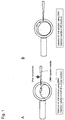
- Fig. 1 shows an outline of a method for introducing a lentiviral vector into a perivitelline space.
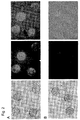
- Fig. 2 shows photos of PN embryos immediately after injection of a lentiviral vector solution.
- Fig. 2A shows embryos for which a 0.25 M sucrose solution was used.
- Fig. 2B shows embryos for which M2 medium was used.
- the viral solution was observed throughout the perivitelline spaces of PN embryos, for which the injection of the lentiviral vector solution had been performed in a sucrose solution.
- the lentiviral vector was observed only in the periphery of the injection parts of PN embryos, for which injection of the lentiviral vector had been performed in M2 medium.
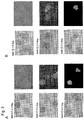
- Fig. 3 shows photos of PN embryos on days 2.5, 3.5, and 8.5 after injection of a lentiviral solution.
- Fig. 3A shows PN embryos for which a 0.25 M sucrose solution was used and
- Fig. 3B shows PN embryos for which M2 medium was used.
- Table 1 shows the gene expression rate of a case in which sucrose was used and the same of a case in which no sucrose was used. As shown in Table 1, GFP expression efficiency was significantly high in the case in which sucrose was used.
- a human recombinant follicle stimulating hormone (hFSH) was intramuscularly administered continuously at 50 IU/animal to sexually mature female marmosets for 11 days.
- hFSH human recombinant follicle stimulating hormone
- hCG human chorionic gonadotropin
- follicular oocytes were aspirated by surgical techniques using a 2.9-ml syringe and a 23-gauge injection needle. Follicular oocytes were aspirated in Waymouth medium containing 10% FBS.
- Oocytes were collected from medium, washed twice, and then cultured for 24 hours under conditions of 5%CO 2 and 38°C using Waymouth medium. Only mature oocytes (metaphase II) were collected after culture and then used for in vitro fertilization (IV).
- Marmoset semen was collected using a Ferti Care personel vibrator ( Kuederling, I. et al., Am J Primatol 52, 149-54 (2000 )). Semen was collected in TYH medium and then washed twice with 3 ml of TYH medium. TYH medium (300 ⁇ l) was added and then left to stand in a CO 2 incubator at 30°C for 10 minutes, so as to cause spermatozoa to swim.
- Oocytes treated with hyaluronidase were washed with TYH medium and then 70 ⁇ l thereof was dispensed in the form of droplets.
- the 70 ⁇ l of droplets contained a maximum of 10 oocytes.
- Spermatozoa (10 ⁇ l) prepared by the above method were added to the droplets. The final sperm concentration at this time was 5 ⁇ 10 9 spermatozoa/ml.
- ISM1 medium Medicult
- Fertilized eggs were cultured in ISM1 medium for 48 hours, transferred into IISM2 medium containing feeder cells of mouse fetuses, and then cultured.
- Cloprostenol (Estrumate, Takeda Schering-Plough K.K.), which is a prostaglandin F2 ⁇ analog, was administered to donor and recipient common marmosets at 0.75 mg/animal on day 10 after the luteal phase, so that the ovulation cycles were synchronized ( Summers, P. M. et al., J Reprod Fertil 73, 133-8 (1985 )).
- a blood plasma sample (0.1 ml) was collected via the femoral vein on days 2, 9, 11, and 13 after cloprostenol administration. Ovulation dates were determined based on measurment of blood plasma progesterone levels using RIA.
- the date on which the blood plasma progesterone level reached 10 ng/ml was determined to be the ovulation date (day 0).
- a donor marmoset was anaesthesized and eggs were collected from the common marmoset.
- the uterine cervix and both uterine tubes were exteriorized by paramedian laparotomy and then clamped.
- Uterine lumen ranging from an end (adjacent to the uterus) to the uterine cervix was flushed with 2.5 ml of DMEM (Dalbecco's-modified Eagle's medium) containing 10% FBS (fetal bovine serum).
- DMEM Dalbecco's-modified Eagle's medium
- FBS fetal bovine serum
- the medium used for flushing was collected from the uterine bottom using a 23-gauge injection needle placed on the uterine lumen. On day 4 after embryo collection, cloprostenol was further administered. Blood plasma progesteron concentration was determined using a DPC progesterone kit (Diagnostic Products Corp.).
- Human embryonic kidney 293T cells were grown in DMEM supplemented with 10% heat-inactivated fetal calf serum, 100 units/ml penicillin, 100 ⁇ g/ml streptomycin, and 250 ng/ml amphotericin B.
- An SIN vector system was used for introduction of foreign DNA into CMES.
- Three types of vector expressing EGFP (Enhanced Green Fluorescence Protein) having 4 different promoters (CAG, CMV, EF-1 ⁇ , and PGK promoters) were constructed. The vectors were designated CAG-EGFP, CMV-EGFP, EF1 ⁇ -EGFP, and PGK-EGFP, respectively.
- a lentiviral vector was constructed by co-transfection of a vector and a packaging construct with VSV-G arid Rev expression constructs into 293T cells using a Fugene 6 transfection reagent. On day 4 after transfection, viral particles contained in the medium were collected, filtered through a 0.22- ⁇ m filter, and then subjected to 4 hours of centrifugation at 25,000 rpm and 4°C. The viral precipitate was suspended with an original lentiviral vector supernatant with 1/1000 the volume of the viral precipitate in ISM2 medium (Medicult).
- a lentivirus was introduced by injection of a viral solution into common marmoset embryos.
- 2PN (2 pronuclear)-to-morula embryos were placed in 0.25 M sucrose and then the virus was injected into the perivitelline spaces. In the case of embryos at the blastocyst stage, the virus was injected into blastocoels.
- RNA samples were subjected to reverse transcription using an Improm-II Reverse Transcription system (Promega). Half of each Poly A + RNA sample was reacted with reverse transcriptase for first strand cDNA synthesis and the remaining half thereof was reacted as a negative control sample without reverse transcriptase.
- Total RNAs were isolated from the placentae using an RNA II kit (MACHEREY-NAGEL). Total RNAs in amounts ranging from 100 ng to 1 ⁇ g were subjected to reverse transcription.
- PCR was carried out using a 1/40-3/20 cDNA synthesis reaction mixture as a template.
- Ten (10) ⁇ l of a PCR mixture contained 1 ⁇ PCR buffer (10 mM Tris-HCl (pH 9.0), 1.5mM MgCl 2 , and 50 mM KCl), 0.2 mM dNTPs, 0.2 ⁇ M primers, and 1.0 U of Taq polymerase.
- PCR was performed for 35 cycles each consisting of denaturation at 94°C for 30 seconds, annealing at 62°C for 30 seconds, and extension at 72°C for 30 seconds. Primer sequences used herein are as shown below.
- Tissues were embedded in OCT Compound, frozen in liquid nitrogen, and then stored at -80°C until analysis.
- Five (5)- ⁇ m sections were prepared from the mass and then fixed using 4% paraformaldehyde at 4°C for 30 minutes. Endogenous peroxidase activity was suppressed by 30 minutes of treatment at room temperature using 0.03% hydrogen peroxide solution. Sections were washed with water for 5 minutes and then washed with PBS for 2 minutes. Slides were subjected to blocking treatment at room temperature using 10% goat serum (Nichirei Corporation) for 10 minutes, followed by overnight reaction with rabbit anti-P.v antibody at 4°C.
- Peripheral blood samples were subjected to centrifugation at 2000 rpm for 5 minutes, whole blood cells were collected and then washed with 1 ml of PBS. Whole blood cells were suspended in 0.13 M NH 4 Cl and then subjected to centrifugation at 2000 rpm for 5 minutes. The resultants were washed again with 1 ml of PBS. Precipitates were incubated with mouse IgG1 anti-marmoset CD45 and 6C9 antibodies on ice for 30 minutes. Samples were washed with PBS and then mixed with an APC-labeled anti-mouse IgG antibody as a secondary antibody. The mixtures were incubated for 30 minutes on ice. After incubation with the secondary antibody, samples were washed with PBS and then suspended in 200 ⁇ l of a PI solution. FACS analysis was then performed.
- Genomic DNA was extracted from skin, whole blood cells, and placental fibroblasts using a DNeasy Blood and Tissue kit (Qiagen).
- the genomic DNA of an animal into which CAG-EGFP had been injected was digested with Bam H I.
- the genomic DNA of an animal into which CMV-EGFP had been injected was digested with Eco R I.
- Southern blot analysis was carried out using a DIG system product (Roche). Specifically, 5 ⁇ g of genomic DNA was subjected to overnight eletrophoresis with 25 volts on 0.8% agarose gel and then the resultant was transferred to a Hybond-N + nylon membrane.
- CMV-EGFP was digested with EcoR I and then labeled with DIG using a PCR DIG probe synthesis kit.
- the membrane was subjected to hybridization with a DIG-labeled probe in DIG Easy Hyb Granules (Roche). After the membrane was washed, probes that had hybridized were immersed in a blocking solution for 30 minutes, for reaction with an anti-DIG alkaline phosphatase conjugate. After the membrane was washed, detection was performed using a CSPD probe that had hybridized, and then the resultant was exposed to an X-ray film.
- Genomic DNA was extracted using a Mag Extractor System MFX-9600 Magnia R Plus (Toyobo Co., Ltd.). Furthermore, genomic DNA was extracted from whole blood samples of mature animals and hair roots of neonates using a DNeasy Blood & Tissue kit (Qiagen) and a QIAmp DNA Micro kit (Qiagen), respectively.
- EGFP transgene was detected using the following PCR primer set.
- GFPF1 CTGGTCGAGCTGGACGGCGACG (SEQ ID NO: 5)
- GFPR1 CACGAACTCCAGCAGGACCATG (SEQ ID NO: 6)
- ⁇ -actin gene that is an endogenous control gene was detected using the following PCR primer set.
- Comm- ⁇ -ActinF TGTAGGTACTAACACTGGCTCGTGTGACAA (SEQ ID NO: 7)
- Comm- ⁇ -ActinR GGGTGTTGAAGGTCTCAAACATGATCTGTA (SEQ ID NO: 8)
- Peripheral blood samples were cultured for several days in RPMI1640 medium containing phytohemagglutinin, concanavalin A, lipopolysaccharide, and 2-mercaptoethanol. After several hours of culture with BrdU having a final concentration of 30 ⁇ g/ml, colcemide having a final concentration of 0.02 ⁇ g/ml was added to the medium, and then samples were further cultured for several hours. Lymphocytes were collected and then treated with a hypotonic solution. Erythrocytes were removed and then precipitates were fixed using methanol/acetic acid (3 : 1 vol/vol). After fixation, cells were spread over a slide, air-dried overnight, stained using Hoechst33258, and then subjected to ultraviolet treatment.
- CAG-EGFP was labeled with digoxigenin-11-dUTP and then hybridized as a probe at 37°C overnight. Slides were washed under stringent conditions and then bound labels were detected using anti-Dig-Cy3. Leica CW4000 FISH and Leica CW4000 karyo were used for chromosome analysis.
- an EGFP gene was introduced using 3 types of SIN vector containing 3 types of promoter (CAG, CMV, and EF1- ⁇ promoters).
- the vectors were designated CAG-EGFP, CMV-EGFP, and EF1 ⁇ -EGFP, respectively.
- the thus constructed SIN vectors were injected into the perivitelline spaces of embryos.
- the perivitelline space of an early embryo of the common marmoset is so small that a sufficient amount of a viral solution cannot be injected. Even if a virus is injected into such small space, the resulting transgene expression rate is as low as 46%.
- a method was attempted that involved placing an early embryo in a 0.25 M sucrose solution to cause temporary shrinkage of the cytoplasm and thus to increase the amount of a viral solution to be injected.
- Pronuclear-to-morula embryos were used herein. In the case of embryos at the blastula stage, the SIN vectors were injected into blastocoels.
- Transgene integration was firstly determined immediately after birth for placentae and hair roots and then secondly determined by real-time PCR using genomic DNA extracted 1 to 2 months after birth from skin and blood. Table 5 shows the results of real-time PCR in terms of EGFP transgene levels relative to the blood of non-transgenic common marmosets. Transgene integration was observed in animals No. 584 and No. 588, but was detected at extremely low level in Nos. 594/666. Transgene integration in body hair, ear sections, and blood was observed in animals No. 584, No. 587, No. 594, and No. 666.
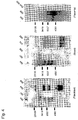
- Southern blot analysis was conducted using DNA extracted from: cultured fibroblasts of skin sections of animals No. 584, No. 587, No. 594, and No. 666; blood of all 5 offspring; and placentae of animals No. 584, No. 588, and Nos. 594/666. Fibroblasts could not be obtained from No. 588 since they did not grow even when cultured. Southern blot analysis revealed that at least 4 copies of the transgene had been integrated into No. 584 and 2 copies of the transgene had been integrated into No. 587 ( Fig. 4 ). Furthermore, integration of a plural number of copies of the transgene into the genome was confirmed in the fibroblasts and peripheral blood cells of No. 594 and No.
- FISH fluorescence in situ hybridization
- Fig. 5 shows photos of the thus born transgenic common marmosets.
- EGFP fluorescence was directly detected by fluorescence microscopy using hair roots, skin sections, and placental samples.
- small pieces of ear skin and placental samples were embedded in OCT Compound (sakura-finetek), frozen in liquid nitrogen, and then stored at -80°C until analysis.
- OCT Compound sakura-finetek
- immunohistochemical analysis was conducted for small pieces of ear skin and placental tissue samples. Immunohistochemical analysis revealed that EGFP was strongly expressed in the ear skin and stromal cells of the placentae. In all the animals except No. 588, EGFP expression was observed in hair roots and skin. Placental samples from No. 584 and No. 588 showed EGFP expression at high levels, but no EGFP expression was detected in Nos. 594/666 ( Figs. 7 , 8 , and 9 ).
- FACS flow cytometric analysis
- transgenic common marmosets As described above, it was demonstrated by the Examples that in 4 transgenic common marmosets, the transgene was not only integrated into somatic cells, but was expressed therein. The results of the Examples demonstrate that the SIN vectors used herein are effective for gene transfer for the production of transgenic common marmosets. Furthermore, in the Examples, lentiviral injection performed at as early an embryonic stage as possible also contributed to this success.
- Semen samples were collected from animal #666, live spermatozoa were collected by the swim-up method in TYH medium, and then RT-PCR analysis was conducted. Subsequently, in vitro fertilization (IVF) was performed by the following method using semen collected from #666, and then the fertility of germ cells having the transgene was analyzed.
- IVF in vitro fertilization
- Oocytes treated with hyaluronidase were washed using TYH medium and then added to 70 ⁇ l of droplets.
- the 70 ⁇ l each of TYH droplets contained 10 oocytes at maximum.
- Ten (10) ⁇ L of semen was added to each oocyte incubation droplet.
- the final concentration of spermatozoa was 5 ⁇ 10 6 spermatozoa/mL.
- ISM1 medium Medicult; Nosan
- Fertilized embryos were cultured for 48 hours in ISM1 medium and then transferred to ISM2 (Nosan) medium containing feeder cells of mouse fetuses.
- RT-PCR was performed by the following method.
- Poly(A)+RNA was isolated from tissue samples using a Quick Prep Micro mRNA Purification Kit (GE Healthcare Biosciences). RNA samples were subjected to reverse transcription using an Improm-II Reverse Transcription System (Promega KK). Half of each poly(A)+RNA sample was reacted with reverse transcriptase for first strand cDNA synthesis. The other half was used as a negative control without reaction with reverse transcriptase. For germline transmission analysis, 2 to 8 embryos were used for RT-PCR. PCR was performed using 1/10 the first strand cDNA and a Prime STAR HS PCR enzyme (Takara Bio Inc.). PCR reaction was performed according to the manufacturer's protocols.
- PCR was performed for 35 cycles each consisting of denaturing at 98°C for 10 seconds, annealing at 60°C for 10 seconds, and extension at 72°C for 30 seconds.
- Primers used herein were EGFP5-4 (5'-CAAGGACGACGGCAACTACAAGACC-3') (SEQ ID NO: 9) and EGFP3-3es (5'-GCTCGTCCATGCCGAGAGTGA-3') (SEQ ID NO: 10).
- PCR was performed for 35 cycles each consisting of denaturing at 98°C for 10 seconds, annealing at 60°C for 10 seconds, and extension at 72°C for 30 seconds.
- PCR was performed for 35 cycles each consisting of denaturing at 94°C for 10 seconds, annealing at 60°C for 10 seconds, and extension at 72°C for 30 seconds.
- ⁇ -actin 003 (5'-TGGACTTCGAGCAGGAGAT-3') (SEQ ID NO: 13)
- ⁇ -actin 006R (5'-CCTGCTTGCTGATCCACATG-3')
- 005R (5'-GAGCCACCAATCCACACTGA-3')
- FIG. 11 shows the results of RT-PCR analysis for swim-up spermatozoa and IVF embryos from #666, and natural embryos from #584 and wild-type animals.
- the top center shows the result of RT-PCR analysis using EGFP and the bottom shows the ⁇ -action gene expressed as a control.
- IVF in vitro fertilization
- cDNA DNA complementary to the common marmoset ⁇ -synuclein gene was cloned, a mutant ⁇ -synuclein gene corresponding to a mutant ⁇ -synuclein gene of human familial Parkinson's disease was prepared, and then the marmoset mutant ⁇ -synuclein gene and a red fluorescent protein (mRFP) gene were flanked by 2A peptide sequences downstream of an EF1 ⁇ promoter, so that a lentiviral vector expressing a fusion protein of the two genes was constructed. At this time, EF1 ⁇ was used as a promoter.
- Fig. 13 shows the structure of the lentiviral vector.
- Ovarian stimulation, oocyte collection, and then in vitro maturation were performed by the methods described in Examples 1 and 2.
- a viral vector expressing a fusion protein of the common marmoset mutant ⁇ -synuclein gene and the red fluorescent protein mRFP gene flanked by 2A peptide sequences was injected into the mature oocytes (obtained via IVM) at the MII stage in a 0.2 M-0.3 M sucrose solution.
- IVM In vitro fertilization
- the mutant ⁇ -synuclein gene and the red fluorescent protein mRFP gene were separated after expression because of the 2A peptides, so that the two proteins were expressed at a ratio of 1 : 1 in terms of molecular weight.
- Fig. 14 shows photos of in vitro fertilization (A) and the thus generated morula (B and C).
- Fig. 15 the two samples (12343 offspring 1 and I2343 offspring 2) shown in the lower two cases indicate offspring born.
- the genotype of the 1CJ003-NED marker and that of the CJ091-FAM marker agreed with that of sample IH555
- the genotype of the CJ081-VIC marker agreed with that of I2991. This result indicates that the offspring that have been born were derived from the donors (I2991 and IH555).
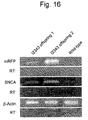
- Fig. 16 shows th e results of RT-PCR for hair root samples from the thus obtained neonates.
- the left and the center lanes in Fig. 16 indicate hair root samples from neonates and the right lane indicates a sample from a wild-type common marmoset.
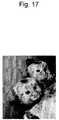
- Fig. 17 shows a photo of the thus obtained human Parkinson's disease model common marmoset.
- developmental engineering techniques are provided for producing transgenic marmosets that can be used as human disease model animals, for example.
- the use of the techniques of the present invention makes possible the efficient introduction of foreign genes into early embryos of A marmosets, so that transgenic marmosets can be efficiently produced.
Landscapes
- Health & Medical Sciences (AREA)
- Life Sciences & Earth Sciences (AREA)
- Chemical & Material Sciences (AREA)
- Organic Chemistry (AREA)
- Genetics & Genomics (AREA)
- Zoology (AREA)
- General Health & Medical Sciences (AREA)
- Engineering & Computer Science (AREA)
- Biochemistry (AREA)
- Molecular Biology (AREA)
- Biotechnology (AREA)
- Biophysics (AREA)
- Toxicology (AREA)
- Bioinformatics & Cheminformatics (AREA)
- Medicinal Chemistry (AREA)
- Veterinary Medicine (AREA)
- Environmental Sciences (AREA)
- Wood Science & Technology (AREA)
- Biomedical Technology (AREA)
- Gastroenterology & Hepatology (AREA)
- General Engineering & Computer Science (AREA)
- Proteomics, Peptides & Aminoacids (AREA)
- Plant Pathology (AREA)
- Microbiology (AREA)
- Tropical Medicine & Parasitology (AREA)
- Animal Behavior & Ethology (AREA)
- Animal Husbandry (AREA)
- Biodiversity & Conservation Biology (AREA)
- Physics & Mathematics (AREA)
- Micro-Organisms Or Cultivation Processes Thereof (AREA)
Claims (12)
- Nichttherapeutisches Verfahren zum Einführen eines Fremdgens in einen frühen Embryo eines Marmosetten, umfassend das Zusetzen eines frühen Embryos eines Marmosets zu einer 0,2 M bis 0,3 M Saccharoselösung, um eine Saccharose-behandlung durchzuführen, um das Volumen des perivitellinen Raums zu erhöhen, und das anschließende Injizieren eines retroviralen Vektors, der ein operabel mit einem Promotor verbundenes menschliches Fremdgen umfasst, in den perivitellinen Raum des frühen Embryos.
- Nichttherapeutisches Verfahren nach Anspruch 1, worin das Volumen des perivitellinen Raums des frühen Embryos durch Saccharosebehandlung auf das 1,2-bis 8-fache Volumen desselben vor der Saccharosebehandlung erhöht wird, so dass das Fremdgen in einer Menge in den perivitellinen Raum des behandelten frühen Embryos injiziert wird, die dem 1,2- bis 8-Fachen der Menge des Fremdgens entspricht, die in einen nicht mit Saccharose behandelten frühen Embryo injiziert werden kann.
- Nichttherapeutisches Verfahren nach Anspruch 1 oder 2, worin der retrovirale Vektor ein lentiviraler Vektor ist.
- Nichttherapeutisches Verfahren nach einem der Ansprüche 1 bis 3, worin der frühe Embryo ein durch natürlich Paarung erhaltener Präimplantationsembryo ist.
- Nichttherapeutisches Verfahren nach einem der Ansprüche 1 bis 3, worin der frühe Embryo ein durch künstliche Besamung erhaltener Embryo ist.
- Nichttherapeutisches Verfahren nach einem der Ansprüche 1 bis 6, worin der frühe Embryo ein Embryo zwischen dem Pronukleusstadium und dem Blastozystenstadium ist.
- Nichttherapeutisches Verfahren nach einem der Ansprüche 1 bis 6, worin der retrovirale Vektor in einem Titer injiziert wird, der von 1,3 x 10³ CFU bis 1,3 x 10⁵ CFU pro Embryo reicht.
- Nichttherapeutisches Verfahren zur Herstellung eines transgenen Marmosets, in dem ein Fremdgen in die Keimbahn übertragen werden kann, welches das Einführen eines Fremdgens in einen frühen Embryo durch ein Verfahren nach einem der Ansprüche 1 bis 7, das Implantieren des frühen Embryos, der das darin eingeführte Fremdgen enthält, in eine Leihmutter und das anschließende Entwickeln des Embryos umfasst.
- Nichttherapeutisches Verfahren zur Herstellung eines transgenen Marmosets nach Anspruch 8, worin das Fremdgen ein Gen ist, das an einer Krankheit bei Menschen beteiligt ist.
- Verfahren zur Herstellung eines transgenen Marmosets nach Anspruch 9, worin das Gen, das an einer Krankheit bei Menschen beteiligt ist, ein mutiertes α-Synuclein-Gen, das ein Verursachergen für die Parkinson-Krankheit bei Menschen ist, oder ein mutiertes Huntington-Gen, das ein Verursachergen für die Huntington-Krankheit bei Menschen ist, ist und der Marmoset mit menschlichem Krankheitsmodell ein Marmoset mit menschlichem Parkinson-Krankheitsmodell oder ein Marmoset mit menschlichem Huntington-Krankheitsmodell ist.
- Transgener Marmoset, der entweder (1) durch ein Verfahren nach Anspruch 9 oder 10 gebildet ist und der das Transgen über seine Keimbahn überträgt, oder (2) worin ein mutiertes menschliches α-Synuclein-Gen, das ein Verursachergen für die Parkinson-Krankheit bei Menschen ist, oder ein mutiertes menschliches Huntington-Gen, das ein Verursachergen für die Huntington-Krankheit bei Menschen ist, als Transgen vorliegt und über die Keimbahn übertragbar ist.
- Transgener Marmoset nach Anspruch 11, Punkt (2), der ein Marmoset mit menschlichem Parkinson-Krankheitsmodell oder ein Marmoset mit menschlichem Huntington-Krankheitsmodell ist.
Applications Claiming Priority (2)
| Application Number | Priority Date | Filing Date | Title |
|---|---|---|---|
| JP2008017955 | 2008-01-29 | ||
| PCT/JP2008/072732 WO2009096101A1 (ja) | 2008-01-29 | 2008-12-09 | 霊長類動物の初期胚への外来遺伝子導入法及び該導入法を含むトランスジェニック霊長類動物を作出する方法 |
Publications (3)
| Publication Number | Publication Date |
|---|---|
| EP2246423A1 EP2246423A1 (de) | 2010-11-03 |
| EP2246423A4 EP2246423A4 (de) | 2013-02-20 |
| EP2246423B1 true EP2246423B1 (de) | 2016-03-23 |
Family
ID=40912460
Family Applications (1)
| Application Number | Title | Priority Date | Filing Date |
|---|---|---|---|
| EP08871871.3A Active EP2246423B1 (de) | 2008-01-29 | 2008-12-09 | Verfahren zur Einführung eines Fremdgens in einen frühen Krallenaffenembryo, ein Verfahren zur Herstellung eines transgenen Krallenaffens, das Einführungsverfahren umfassend, und ein transgener Krallenaffe |
Country Status (7)
| Country | Link |
|---|---|
| US (1) | US8592643B2 (de) |
| EP (1) | EP2246423B1 (de) |
| JP (1) | JP5374389B2 (de) |
| KR (1) | KR101588474B1 (de) |
| CN (1) | CN102016029B8 (de) |
| AU (1) | AU2008349175B2 (de) |
| WO (1) | WO2009096101A1 (de) |
Families Citing this family (3)
| Publication number | Priority date | Publication date | Assignee | Title |
|---|---|---|---|---|
| KR101250991B1 (ko) * | 2010-12-30 | 2013-04-04 | 성균관대학교산학협력단 | 초음파 영상 기반의 유전자 전달 기술 및 아데노바이러스 벡터를 이용한 형질전환 동물의 제조방법 |
| US20230027317A1 (en) * | 2019-12-20 | 2023-01-26 | Riken | Non-human primate alzheimer's disease model animal and method for producing same |
| WO2025137637A2 (en) * | 2023-12-21 | 2025-06-26 | Shape Therapeutics Inc. | Wobble base pairs for improving specificity of rna editing |
Family Cites Families (8)
| Publication number | Priority date | Publication date | Assignee | Title |
|---|---|---|---|---|
| GB8901778D0 (en) * | 1989-01-27 | 1989-03-15 | Univ Court Of The University O | Manipulatory technique |
| JPH10185919A (ja) * | 1996-12-27 | 1998-07-14 | Fuso Yakuhin Kogyo Kk | ヒト精子受精能評価方法 |
| US6080912A (en) | 1997-03-20 | 2000-06-27 | Wisconsin Alumni Research Foundation | Methods for creating transgenic animals |
| EP1241935A2 (de) * | 1999-12-17 | 2002-09-25 | Gerald Schatten | Verfahren zur erzeugung transgener tiere |
| JP2005538685A (ja) * | 2001-12-21 | 2005-12-22 | トランザイム, インコーポレイテッド | レンチウイルスベクターを使用して遺伝的に改変された動物を生成するための方法および組成物 |
| JP4138453B2 (ja) * | 2002-10-31 | 2008-08-27 | アーク・リソース株式会社 | 哺乳動物の透明帯穿孔卵およびその作製方法 |
| US20060177926A1 (en) | 2004-09-07 | 2006-08-10 | Erika Sasaki | Common marmoset embryonic stem cell lines |
| JP2008017955A (ja) | 2006-07-11 | 2008-01-31 | Hi-Lex Corporation | 骨切りワイヤおよびそれに用いるワイヤガイドチューブ |
-
2008
- 2008-12-09 EP EP08871871.3A patent/EP2246423B1/de active Active
- 2008-12-09 CN CN200880128383.3A patent/CN102016029B8/zh not_active Expired - Fee Related
- 2008-12-09 JP JP2009551406A patent/JP5374389B2/ja active Active
- 2008-12-09 KR KR1020107018774A patent/KR101588474B1/ko not_active Expired - Fee Related
- 2008-12-09 WO PCT/JP2008/072732 patent/WO2009096101A1/ja not_active Ceased
- 2008-12-09 US US12/865,304 patent/US8592643B2/en active Active
- 2008-12-09 AU AU2008349175A patent/AU2008349175B2/en not_active Ceased
Also Published As
| Publication number | Publication date |
|---|---|
| JP5374389B2 (ja) | 2013-12-25 |
| EP2246423A1 (de) | 2010-11-03 |
| CN102016029A (zh) | 2011-04-13 |
| KR20100113594A (ko) | 2010-10-21 |
| US8592643B2 (en) | 2013-11-26 |
| AU2008349175A1 (en) | 2009-08-06 |
| WO2009096101A1 (ja) | 2009-08-06 |
| AU2008349175B2 (en) | 2014-01-30 |
| CN102016029B8 (zh) | 2017-08-01 |
| CN102016029B (zh) | 2014-11-26 |
| EP2246423A4 (de) | 2013-02-20 |
| US20110055939A1 (en) | 2011-03-03 |
| JPWO2009096101A1 (ja) | 2011-05-26 |
| KR101588474B1 (ko) | 2016-01-25 |
Similar Documents
| Publication | Publication Date | Title |
|---|---|---|
| US9499808B2 (en) | Using cytosine deaminases to diminish retroelement transfer from pigs to humans | |
| KR20210005661A (ko) | 변형된 아미노펩티다제 n(anpep) 유전자를 갖는 병원체-내성 동물 | |
| Hagemann et al. | In vitro and early in vivo development of sheep gynogenones and putative androgenones | |
| EP2246423B1 (de) | Verfahren zur Einführung eines Fremdgens in einen frühen Krallenaffenembryo, ein Verfahren zur Herstellung eines transgenen Krallenaffens, das Einführungsverfahren umfassend, und ein transgener Krallenaffe | |
| JP2010110254A (ja) | 共通サイトカイン受容体γ鎖遺伝子ノックアウトブタ | |
| AU5268800A (en) | Genetic modification of male germ cells for generation of transgenic species and genetic therapies | |
| CN116887671B (zh) | 具有经修饰的肌肉生长抑制素基因的转基因动物 | |
| US20020032915A1 (en) | Method of screening for large offspring syndrome | |
| KR20060106590A (ko) | 자연살해 세포의 활성을 억제하기 위한 hla-g 유전자를발현하는 형질 전환 복제 돼지 및 그의 제조 방법 | |
| KR101147409B1 (ko) | 세포성 면역 억제를 위한 인간 FasL 단백질을 발현하는 형질전환 돼지 클론 체세포주 및 이를 이용한 형질전환 복제돼지 | |
| KR20090068646A (ko) | Hla-g 유전자 및 daf 유전자를 발현하는 형질전환복제 돼지 및 그의 제조 방법 | |
| KR20120089067A (ko) | 목적유전자를 조건적으로 발현하는 복제된 개과동물의 생산방법 | |
| Duszewska et al. | Obtaining calves after transfer of embryos microinjected with the human interferon alpha (IFNα) gene, pbLGIFN-GFPBsd | |
| MX2008000199A (en) | Using cytosine deaminases to diminish retroelement transfer from pigs to humans | |
| MXPA01003049A (en) | Method of screening for large offspring syndrome |
Legal Events
| Date | Code | Title | Description |
|---|---|---|---|
| PUAI | Public reference made under article 153(3) epc to a published international application that has entered the european phase |
Free format text: ORIGINAL CODE: 0009012 |
|
| 17P | Request for examination filed |
Effective date: 20100817 |
|
| AK | Designated contracting states |
Kind code of ref document: A1 Designated state(s): AT BE BG CH CY CZ DE DK EE ES FI FR GB GR HR HU IE IS IT LI LT LU LV MC MT NL NO PL PT RO SE SI SK TR |
|
| AX | Request for extension of the european patent |
Extension state: AL BA MK RS |
|
| RAP1 | Party data changed (applicant data changed or rights of an application transferred) |
Owner name: KEIO UNIVERSITY Owner name: CENTRAL INSTITUTE FOR EXPERIMENTAL ANIMALS |
|
| RAP1 | Party data changed (applicant data changed or rights of an application transferred) |
Owner name: KEIO UNIVERSITY Owner name: CENTRAL INSTITUTE FOR EXPERIMENTAL ANIMALS |
|
| DAX | Request for extension of the european patent (deleted) | ||
| A4 | Supplementary search report drawn up and despatched |
Effective date: 20130123 |
|
| RIC1 | Information provided on ipc code assigned before grant |
Ipc: C12N 15/09 20060101AFI20130117BHEP Ipc: A01K 67/027 20060101ALI20130117BHEP |
|
| GRAP | Despatch of communication of intention to grant a patent |
Free format text: ORIGINAL CODE: EPIDOSNIGR1 |
|
| INTG | Intention to grant announced |
Effective date: 20150814 |
|
| GRAS | Grant fee paid |
Free format text: ORIGINAL CODE: EPIDOSNIGR3 |
|
| GRAA | (expected) grant |
Free format text: ORIGINAL CODE: 0009210 |
|
| RAP1 | Party data changed (applicant data changed or rights of an application transferred) |
Owner name: KEIO UNIVERSITY Owner name: CENTRAL INSTITUTE FOR EXPERIMENTAL ANIMALS |
|
| AK | Designated contracting states |
Kind code of ref document: B1 Designated state(s): AT BE BG CH CY CZ DE DK EE ES FI FR GB GR HR HU IE IS IT LI LT LU LV MC MT NL NO PL PT RO SE SI SK TR |
|
| REG | Reference to a national code |
Ref country code: GB Ref legal event code: FG4D |
|
| REG | Reference to a national code |
Ref country code: CH Ref legal event code: EP |
|
| RAP2 | Party data changed (patent owner data changed or rights of a patent transferred) |
Owner name: CENTRAL INSTITUTE FOR EXPERIMENTAL ANIMALS Owner name: KEIO UNIVERSITY |
|
| REG | Reference to a national code |
Ref country code: AT Ref legal event code: REF Ref document number: 783180 Country of ref document: AT Kind code of ref document: T Effective date: 20160415 |
|
| REG | Reference to a national code |
Ref country code: IE Ref legal event code: FG4D |
|
| REG | Reference to a national code |
Ref country code: DE Ref legal event code: R096 Ref document number: 602008043113 Country of ref document: DE |
|
| REG | Reference to a national code |
Ref country code: LT Ref legal event code: MG4D |
|
| REG | Reference to a national code |
Ref country code: NL Ref legal event code: MP Effective date: 20160323 |
|
| PG25 | Lapsed in a contracting state [announced via postgrant information from national office to epo] |
Ref country code: GR Free format text: LAPSE BECAUSE OF FAILURE TO SUBMIT A TRANSLATION OF THE DESCRIPTION OR TO PAY THE FEE WITHIN THE PRESCRIBED TIME-LIMIT Effective date: 20160624 Ref country code: HR Free format text: LAPSE BECAUSE OF FAILURE TO SUBMIT A TRANSLATION OF THE DESCRIPTION OR TO PAY THE FEE WITHIN THE PRESCRIBED TIME-LIMIT Effective date: 20160323 Ref country code: NO Free format text: LAPSE BECAUSE OF FAILURE TO SUBMIT A TRANSLATION OF THE DESCRIPTION OR TO PAY THE FEE WITHIN THE PRESCRIBED TIME-LIMIT Effective date: 20160623 Ref country code: FI Free format text: LAPSE BECAUSE OF FAILURE TO SUBMIT A TRANSLATION OF THE DESCRIPTION OR TO PAY THE FEE WITHIN THE PRESCRIBED TIME-LIMIT Effective date: 20160323 |
|
| REG | Reference to a national code |
Ref country code: AT Ref legal event code: MK05 Ref document number: 783180 Country of ref document: AT Kind code of ref document: T Effective date: 20160323 |
|
| PG25 | Lapsed in a contracting state [announced via postgrant information from national office to epo] |
Ref country code: NL Free format text: LAPSE BECAUSE OF FAILURE TO SUBMIT A TRANSLATION OF THE DESCRIPTION OR TO PAY THE FEE WITHIN THE PRESCRIBED TIME-LIMIT Effective date: 20160323 Ref country code: SE Free format text: LAPSE BECAUSE OF FAILURE TO SUBMIT A TRANSLATION OF THE DESCRIPTION OR TO PAY THE FEE WITHIN THE PRESCRIBED TIME-LIMIT Effective date: 20160323 Ref country code: LT Free format text: LAPSE BECAUSE OF FAILURE TO SUBMIT A TRANSLATION OF THE DESCRIPTION OR TO PAY THE FEE WITHIN THE PRESCRIBED TIME-LIMIT Effective date: 20160323 Ref country code: LV Free format text: LAPSE BECAUSE OF FAILURE TO SUBMIT A TRANSLATION OF THE DESCRIPTION OR TO PAY THE FEE WITHIN THE PRESCRIBED TIME-LIMIT Effective date: 20160323 |
|
| PG25 | Lapsed in a contracting state [announced via postgrant information from national office to epo] |
Ref country code: IS Free format text: LAPSE BECAUSE OF FAILURE TO SUBMIT A TRANSLATION OF THE DESCRIPTION OR TO PAY THE FEE WITHIN THE PRESCRIBED TIME-LIMIT Effective date: 20160723 Ref country code: PL Free format text: LAPSE BECAUSE OF FAILURE TO SUBMIT A TRANSLATION OF THE DESCRIPTION OR TO PAY THE FEE WITHIN THE PRESCRIBED TIME-LIMIT Effective date: 20160323 Ref country code: EE Free format text: LAPSE BECAUSE OF FAILURE TO SUBMIT A TRANSLATION OF THE DESCRIPTION OR TO PAY THE FEE WITHIN THE PRESCRIBED TIME-LIMIT Effective date: 20160323 |
|
| PG25 | Lapsed in a contracting state [announced via postgrant information from national office to epo] |
Ref country code: AT Free format text: LAPSE BECAUSE OF FAILURE TO SUBMIT A TRANSLATION OF THE DESCRIPTION OR TO PAY THE FEE WITHIN THE PRESCRIBED TIME-LIMIT Effective date: 20160323 Ref country code: RO Free format text: LAPSE BECAUSE OF FAILURE TO SUBMIT A TRANSLATION OF THE DESCRIPTION OR TO PAY THE FEE WITHIN THE PRESCRIBED TIME-LIMIT Effective date: 20160323 Ref country code: ES Free format text: LAPSE BECAUSE OF FAILURE TO SUBMIT A TRANSLATION OF THE DESCRIPTION OR TO PAY THE FEE WITHIN THE PRESCRIBED TIME-LIMIT Effective date: 20160323 Ref country code: CZ Free format text: LAPSE BECAUSE OF FAILURE TO SUBMIT A TRANSLATION OF THE DESCRIPTION OR TO PAY THE FEE WITHIN THE PRESCRIBED TIME-LIMIT Effective date: 20160323 Ref country code: SK Free format text: LAPSE BECAUSE OF FAILURE TO SUBMIT A TRANSLATION OF THE DESCRIPTION OR TO PAY THE FEE WITHIN THE PRESCRIBED TIME-LIMIT Effective date: 20160323 Ref country code: PT Free format text: LAPSE BECAUSE OF FAILURE TO SUBMIT A TRANSLATION OF THE DESCRIPTION OR TO PAY THE FEE WITHIN THE PRESCRIBED TIME-LIMIT Effective date: 20160725 |
|
| REG | Reference to a national code |
Ref country code: FR Ref legal event code: PLFP Year of fee payment: 9 |
|
| PG25 | Lapsed in a contracting state [announced via postgrant information from national office to epo] |
Ref country code: BE Free format text: LAPSE BECAUSE OF FAILURE TO SUBMIT A TRANSLATION OF THE DESCRIPTION OR TO PAY THE FEE WITHIN THE PRESCRIBED TIME-LIMIT Effective date: 20160323 Ref country code: IT Free format text: LAPSE BECAUSE OF FAILURE TO SUBMIT A TRANSLATION OF THE DESCRIPTION OR TO PAY THE FEE WITHIN THE PRESCRIBED TIME-LIMIT Effective date: 20160323 |
|
| REG | Reference to a national code |
Ref country code: DE Ref legal event code: R097 Ref document number: 602008043113 Country of ref document: DE |
|
| PLBE | No opposition filed within time limit |
Free format text: ORIGINAL CODE: 0009261 |
|
| STAA | Information on the status of an ep patent application or granted ep patent |
Free format text: STATUS: NO OPPOSITION FILED WITHIN TIME LIMIT |
|
| PG25 | Lapsed in a contracting state [announced via postgrant information from national office to epo] |
Ref country code: DK Free format text: LAPSE BECAUSE OF FAILURE TO SUBMIT A TRANSLATION OF THE DESCRIPTION OR TO PAY THE FEE WITHIN THE PRESCRIBED TIME-LIMIT Effective date: 20160323 |
|
| REG | Reference to a national code |
Ref country code: DE Ref legal event code: R082 Ref document number: 602008043113 Country of ref document: DE Representative=s name: LEINWEBER & ZIMMERMANN PATENTANWALTS-PARTG MBB, DE Ref country code: DE Ref legal event code: R082 Ref document number: 602008043113 Country of ref document: DE Representative=s name: LEINWEBER & ZIMMERMANN, DE Ref country code: DE Ref legal event code: R081 Ref document number: 602008043113 Country of ref document: DE Owner name: CENTRAL INSTITUTE FOR EXPERIMENTAL ANIMALS, JP Free format text: FORMER OWNERS: CENTRAL INSTITUTE FOR EXPERIMENTAL ANIMALS, KAWASAKI-SHI, JP; KEIO UNIVERSITY, TOKIO/TOKYO, JP Ref country code: DE Ref legal event code: R081 Ref document number: 602008043113 Country of ref document: DE Owner name: CENTRAL INSTITUTE FOR EXPERIMENTAL ANIMALS, JP Free format text: FORMER OWNERS: CENTRAL INSTITUTE FOR EXPERIMENTAL ANIMALS, KAWASAKI-SHI, JP; KEIO UNIVERSITY, TOKYO, JP |
|
| PG25 | Lapsed in a contracting state [announced via postgrant information from national office to epo] |
Ref country code: BG Free format text: LAPSE BECAUSE OF FAILURE TO SUBMIT A TRANSLATION OF THE DESCRIPTION OR TO PAY THE FEE WITHIN THE PRESCRIBED TIME-LIMIT Effective date: 20160623 |
|
| 26N | No opposition filed |
Effective date: 20170102 |
|
| REG | Reference to a national code |
Ref country code: GB Ref legal event code: 732E Free format text: REGISTERED BETWEEN 20170309 AND 20170315 |
|
| PG25 | Lapsed in a contracting state [announced via postgrant information from national office to epo] |
Ref country code: SI Free format text: LAPSE BECAUSE OF FAILURE TO SUBMIT A TRANSLATION OF THE DESCRIPTION OR TO PAY THE FEE WITHIN THE PRESCRIBED TIME-LIMIT Effective date: 20160323 |
|
| REG | Reference to a national code |
Ref country code: CH Ref legal event code: PL |
|
| REG | Reference to a national code |
Ref country code: FR Ref legal event code: TP Owner name: CENTRAL INSTITUTE FOR EXPERIMENTAL ANIMALS, JP Effective date: 20170706 |
|
| PG25 | Lapsed in a contracting state [announced via postgrant information from national office to epo] |
Ref country code: MC Free format text: LAPSE BECAUSE OF FAILURE TO SUBMIT A TRANSLATION OF THE DESCRIPTION OR TO PAY THE FEE WITHIN THE PRESCRIBED TIME-LIMIT Effective date: 20160323 |
|
| REG | Reference to a national code |
Ref country code: IE Ref legal event code: MM4A |
|
| PG25 | Lapsed in a contracting state [announced via postgrant information from national office to epo] |
Ref country code: LU Free format text: LAPSE BECAUSE OF NON-PAYMENT OF DUE FEES Effective date: 20161209 Ref country code: CH Free format text: LAPSE BECAUSE OF NON-PAYMENT OF DUE FEES Effective date: 20161231 Ref country code: LI Free format text: LAPSE BECAUSE OF NON-PAYMENT OF DUE FEES Effective date: 20161231 |
|
| PG25 | Lapsed in a contracting state [announced via postgrant information from national office to epo] |
Ref country code: IE Free format text: LAPSE BECAUSE OF NON-PAYMENT OF DUE FEES Effective date: 20161209 |
|
| REG | Reference to a national code |
Ref country code: FR Ref legal event code: PLFP Year of fee payment: 10 |
|
| PG25 | Lapsed in a contracting state [announced via postgrant information from national office to epo] |
Ref country code: HU Free format text: LAPSE BECAUSE OF FAILURE TO SUBMIT A TRANSLATION OF THE DESCRIPTION OR TO PAY THE FEE WITHIN THE PRESCRIBED TIME-LIMIT; INVALID AB INITIO Effective date: 20081209 Ref country code: CY Free format text: LAPSE BECAUSE OF FAILURE TO SUBMIT A TRANSLATION OF THE DESCRIPTION OR TO PAY THE FEE WITHIN THE PRESCRIBED TIME-LIMIT Effective date: 20160323 |
|
| PG25 | Lapsed in a contracting state [announced via postgrant information from national office to epo] |
Ref country code: TR Free format text: LAPSE BECAUSE OF FAILURE TO SUBMIT A TRANSLATION OF THE DESCRIPTION OR TO PAY THE FEE WITHIN THE PRESCRIBED TIME-LIMIT Effective date: 20160323 |
|
| PG25 | Lapsed in a contracting state [announced via postgrant information from national office to epo] |
Ref country code: MT Free format text: LAPSE BECAUSE OF NON-PAYMENT OF DUE FEES Effective date: 20161209 |
|
| PGFP | Annual fee paid to national office [announced via postgrant information from national office to epo] |
Ref country code: DE Payment date: 20251211 Year of fee payment: 18 |
|
| PGFP | Annual fee paid to national office [announced via postgrant information from national office to epo] |
Ref country code: GB Payment date: 20251219 Year of fee payment: 18 |
|
| PGFP | Annual fee paid to national office [announced via postgrant information from national office to epo] |
Ref country code: FR Payment date: 20251222 Year of fee payment: 18 |