EP2246433A1 - Concatémères destinés à la modulation immunologique - Google Patents
Concatémères destinés à la modulation immunologique Download PDFInfo
- Publication number
- EP2246433A1 EP2246433A1 EP09075220A EP09075220A EP2246433A1 EP 2246433 A1 EP2246433 A1 EP 2246433A1 EP 09075220 A EP09075220 A EP 09075220A EP 09075220 A EP09075220 A EP 09075220A EP 2246433 A1 EP2246433 A1 EP 2246433A1
- Authority
- EP
- European Patent Office
- Prior art keywords
- tumors
- molecule
- agent according
- combination agent
- molecules
- Prior art date
- Legal status (The legal status is an assumption and is not a legal conclusion. Google has not performed a legal analysis and makes no representation as to the accuracy of the status listed.)
- Withdrawn
Links
Images

Classifications
-
- C—CHEMISTRY; METALLURGY
- C12—BIOCHEMISTRY; BEER; SPIRITS; WINE; VINEGAR; MICROBIOLOGY; ENZYMOLOGY; MUTATION OR GENETIC ENGINEERING
- C12N—MICROORGANISMS OR ENZYMES; COMPOSITIONS THEREOF; PROPAGATING, PRESERVING, OR MAINTAINING MICROORGANISMS; MUTATION OR GENETIC ENGINEERING; CULTURE MEDIA
- C12N15/00—Mutation or genetic engineering; DNA or RNA concerning genetic engineering, vectors, e.g. plasmids, or their isolation, preparation or purification; Use of hosts therefor
- C12N15/09—Recombinant DNA-technology
- C12N15/11—DNA or RNA fragments; Modified forms thereof; Non-coding nucleic acids having a biological activity
- C12N15/117—Nucleic acids having immunomodulatory properties, e.g. containing CpG-motifs
-
- A—HUMAN NECESSITIES
- A61—MEDICAL OR VETERINARY SCIENCE; HYGIENE
- A61K—PREPARATIONS FOR MEDICAL, DENTAL OR TOILETRY PURPOSES
- A61K31/00—Medicinal preparations containing organic active ingredients
- A61K31/70—Carbohydrates; Sugars; Derivatives thereof
- A61K31/7088—Compounds having three or more nucleosides or nucleotides
- A61K31/713—Double-stranded nucleic acids or oligonucleotides
-
- A—HUMAN NECESSITIES
- A61—MEDICAL OR VETERINARY SCIENCE; HYGIENE
- A61K—PREPARATIONS FOR MEDICAL, DENTAL OR TOILETRY PURPOSES
- A61K48/00—Medicinal preparations containing genetic material which is inserted into cells of the living body to treat genetic diseases; Gene therapy
-
- A—HUMAN NECESSITIES
- A61—MEDICAL OR VETERINARY SCIENCE; HYGIENE
- A61P—SPECIFIC THERAPEUTIC ACTIVITY OF CHEMICAL COMPOUNDS OR MEDICINAL PREPARATIONS
- A61P35/00—Antineoplastic agents
-
- A—HUMAN NECESSITIES
- A61—MEDICAL OR VETERINARY SCIENCE; HYGIENE
- A61P—SPECIFIC THERAPEUTIC ACTIVITY OF CHEMICAL COMPOUNDS OR MEDICINAL PREPARATIONS
- A61P35/00—Antineoplastic agents
- A61P35/04—Antineoplastic agents specific for metastasis
-
- A—HUMAN NECESSITIES
- A61—MEDICAL OR VETERINARY SCIENCE; HYGIENE
- A61P—SPECIFIC THERAPEUTIC ACTIVITY OF CHEMICAL COMPOUNDS OR MEDICINAL PREPARATIONS
- A61P37/00—Drugs for immunological or allergic disorders
- A61P37/02—Immunomodulators
-
- A—HUMAN NECESSITIES
- A61—MEDICAL OR VETERINARY SCIENCE; HYGIENE
- A61P—SPECIFIC THERAPEUTIC ACTIVITY OF CHEMICAL COMPOUNDS OR MEDICINAL PREPARATIONS
- A61P37/00—Drugs for immunological or allergic disorders
- A61P37/02—Immunomodulators
- A61P37/04—Immunostimulants
-
- C—CHEMISTRY; METALLURGY
- C12—BIOCHEMISTRY; BEER; SPIRITS; WINE; VINEGAR; MICROBIOLOGY; ENZYMOLOGY; MUTATION OR GENETIC ENGINEERING
- C12N—MICROORGANISMS OR ENZYMES; COMPOSITIONS THEREOF; PROPAGATING, PRESERVING, OR MAINTAINING MICROORGANISMS; MUTATION OR GENETIC ENGINEERING; CULTURE MEDIA
- C12N2310/00—Structure or type of the nucleic acid
- C12N2310/10—Type of nucleic acid
- C12N2310/17—Immunomodulatory nucleic acids
-
- C—CHEMISTRY; METALLURGY
- C12—BIOCHEMISTRY; BEER; SPIRITS; WINE; VINEGAR; MICROBIOLOGY; ENZYMOLOGY; MUTATION OR GENETIC ENGINEERING
- C12N—MICROORGANISMS OR ENZYMES; COMPOSITIONS THEREOF; PROPAGATING, PRESERVING, OR MAINTAINING MICROORGANISMS; MUTATION OR GENETIC ENGINEERING; CULTURE MEDIA
- C12N2310/00—Structure or type of the nucleic acid
- C12N2310/50—Physical structure
- C12N2310/51—Physical structure in polymeric form, e.g. multimers, concatemers
-
- C—CHEMISTRY; METALLURGY
- C12—BIOCHEMISTRY; BEER; SPIRITS; WINE; VINEGAR; MICROBIOLOGY; ENZYMOLOGY; MUTATION OR GENETIC ENGINEERING
- C12N—MICROORGANISMS OR ENZYMES; COMPOSITIONS THEREOF; PROPAGATING, PRESERVING, OR MAINTAINING MICROORGANISMS; MUTATION OR GENETIC ENGINEERING; CULTURE MEDIA
- C12N2310/00—Structure or type of the nucleic acid
- C12N2310/50—Physical structure
- C12N2310/53—Physical structure partially self-complementary or closed
-
- C—CHEMISTRY; METALLURGY
- C12—BIOCHEMISTRY; BEER; SPIRITS; WINE; VINEGAR; MICROBIOLOGY; ENZYMOLOGY; MUTATION OR GENETIC ENGINEERING
- C12N—MICROORGANISMS OR ENZYMES; COMPOSITIONS THEREOF; PROPAGATING, PRESERVING, OR MAINTAINING MICROORGANISMS; MUTATION OR GENETIC ENGINEERING; CULTURE MEDIA
- C12N2320/00—Applications; Uses
- C12N2320/30—Special therapeutic applications
- C12N2320/31—Combination therapy
Definitions
- the invention relates to a polymeric, non-coding nucleic acid molecule for modulating the activity of the human or animal immune system and a preparation method thereof and a vaccine containing the polymeric, non-coding nucleic acid molecule, wherein polymeric, non-coding nucleic acid molecules understood as non-coding nucleic acid molecules which consist of at least four covalently linked molecules (tetramer) of these non-coding nucleic acid molecules.
- pathogenassociated molecular patterns PAMPs
- the different reactions for different cell types include the secretion of cytokines (eg IL-1, IL-6, TNF- ⁇ ) and chemokines (eg IL-8 / CXCL8, MIP-1 ⁇ / ⁇ , MCP-1), activation of effector mechanisms (Phagocytosis, respiratory discharge, release of bactericidal or cytotoxic substances from lytic granules), expression of co-stimulatory molecules (CD80, CD86) and increased expression of MHC molecules.
- cytokines eg IL-1, IL-6, TNF- ⁇
- chemokines eg IL-8 / CXCL8, MIP-1 ⁇ / ⁇ , MCP-1
- effector mechanisms Phagocytosis, respiratory discharge, release of bactericidal or cytotoxic substances from lytic granules
- co-stimulatory molecules CD80, CD86
- MHC molecules co-stimulatory molecules
- CpG oligonucleotides have been used as a new class of immunomodulatory molecules.
- Such non-methylated CG motifs occur in bacterial DNA and represent a “danger signal” to the immune system.
- pathogen associated molecular pattern PAMP
- they mainly cause the unspecific activation of the innate immune system ( War, Nat. Med 2003, 9: 831-835 ).
- CpG ODN induce a T H 1-emphasized immune response via the cytokines interleukin-12, interferon- ⁇ and tumor necrosis factor- ⁇ .
- Immunostimulatory nucleic acids carrying the designated CpG ODN are only a few bases long and do not contain open reading frames for the expression of proteins.
- the ISS are linear nucleic acid molecules whose ends are open (free hydroxyl or phosphate group) or are protected by synthetic groups.
- the stimulation of the cellular immune response makes it possible to influence control circuits which, without intervention, do not lead to satisfactory immune activity for the patient.
- the molecules according to the WO 01/07055 as they are for example in FIG. 1 or in Claim 11 are composed of several Deoxyribonukleotidresten forming a partially single-stranded dumbbell-shaped and covalently closed DNA molecule, which is referred to as dimer in the present invention.
- dimer in the present invention.
- the monomeric nucleic acids used as the starting material were heated prior to ligation, resulting in the formation of uniform molecules of nucleic acids, each consisting of a dumbbell-shaped dimer (see also FIG Fig. 1 of the WO 01/07055 ) consist.
- the formed nucleic acid molecule is a dumbbell according to Fig.
- Monomer according to the invention therefore does not mean a structure of z.
- immunomodulation means that the mediator and effector cells of the immune system, that is to say the thymocytes with helper function currently known and the cytotoxic thymocytes, B cells and so-called NK (natural killer) cells, macrophages and monocytes as well as dendritic cells and their precursors, as well as cell populations with functions within the immune system that have not yet been elucidated in their function, are stimulated by the use of nucleic acid molecules for proliferation, migration, differentiation or activity.
- Immunomodulation means that in addition to a general improvement of the immune response in the above defined sense, the nature or character of an immune response is affected, whether it is an immune reaction that is developing or maturing affected, be it that an already established response in their character is changed.
- Concatemers consist of covalently linked monomer units, which are circularly closed in their entirety, have double-stranded regions at the spacing of the constituent monomers and immunomodulatory CG motifs preferably in the single-stranded regions. It was completely surprising that these polymers, consisting of tetramers, hexamers or higher molecular weight assemblies of covalently closed immunomodulatory DNA, have a surprisingly improved effect over the dimeric molecules of the prior art.
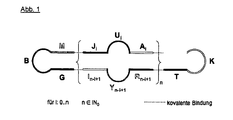
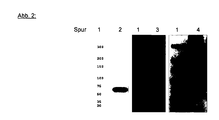
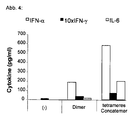
- the claimed polymeric molecules are characterized by the in Fig. 1 and 2 represented molecular and the in Fig. 3 and 4 defined functional properties resulting from the application of the method of its preparation to those skilled in the art.
- nucleic acid molecules with palindromic 5 'or 3' ends as starting materials, polymers of various sizes are prepared in the described method, of which only the tetramers and higher molecular assemblies described here fulfill the highly potent functions.
- the labeling is due to structural features due to the vast and diverse Molecular size is not practical, the representation of the polymers on the manufacturing process is very precise.
- the new method provides a product other than that described in the prior art. This can be achieved by significant differences in the properties of the dimers and the polymers according to the invention according to Fig. 3 to be shown.
- the higher molecular weight polymers according to the invention are surprisingly better suited for immunomodulation than the non-polymeric structures of the prior art.
- a molecule according to the invention consists of at least four monomers and is formed conformationally during the abovementioned synthesis. Add the monomers to form chains of two, four, six, and more through the formation of covalent bonds. There are then formed so-called di-, tetra- or hexamers, of which all but the dimers should be referred to as polymers.
- the molecule according to the invention can be defined as a concatemer.
- the molecule according to the invention is a concatemer molecule in which at least four loop constituents of individual monomers are connected to one another, preferably linearly joined to one another, so that preferably two, particularly preferably several double-stranded regions are each formed by a single-stranded loop Elements are separated from each other.
- the molecules of the invention are capable of better modulating the activity of the human or animal immune system than prior art molecules.
- the molecules of the prior art are the known immunomodulatory nucleic acids which act as low molecular weight dumbbell-shaped structures. Most known immunomodifying short oligodeoxyribonucleic acids contain an unmethylated cytosine-guanosine motif. The physiological action of these nucleic acids is understood as immunomodulation or modulation of the activity of the immune system in the sense of the invention.
- various molecules are disclosed which consist of a stem and at least one loop, as for example in the FIGS. 1 and 2 of the EP 1 196 178 are disclosed. For the purposes of the present invention, these molecules are a dimer structure.
- polymer is used in science several times with different meanings.
- a polymer may be a longer nucleic acid, but may also be a structure composed of several identical or similar molecules and assembled into a larger assembly.
- polymer is to be understood as meaning molecule chains which consist of at least 4 monomers.
- the molecular weight of the resulting tetramer is about 170 kDa (see Fig. 2 ).
- Polymers in the sense of the invention would be, for example, several stem-loop structures as in Fig. 1 which have been assembled with several identical or similar stem-loop structures to a higher structure (a polymer).
- Polymer are all molecules of the invention designated greater than 23 kDa are. Due to the indicated reaction conditions, a transient juxtaposition of the monomers takes place during the ligation, which are then esterified by the ligase. A resulting polymer is conformationally formed during the synthesis only under special reaction conditions. It is not possible to produce higher molecular weight polymers from dimers formed once. The polymer forming monomer structures are covalently bonded together. The polymer once formed is stable to heat and denaturing agents, which also means conversely that the dimers can no longer be obtained by simple physical means from the higher molecular weight molecules according to the invention.
- the synthesis of the educts with the preferred sequences leads to molecules that can be used surprisingly well for modulating the immune response. It is particularly preferred if the base sequence in the single-stranded molecular regions of the sequence 5'-TCATTGGAAACGTTCTTCGGGGCGTTCTT-3 '(SEQ ID NO: 2) partially or completely. Surprisingly, the presence of these sequences leads to a particularly good activity of the concatameric polymers. Within the concatemeric structure of the molecules, the partially single-stranded covalently closed chains of deoxyribonucleotides are responsible for effectively functioning the molecules in the target organism into which they are introduced over a longer period of time.
- the monomer comprises the base sequence N 1 N 2 CGN 3 N 4 , where N 1 N 2 is an element from the group GT, GG, GA, AT or AA, N 3 N 4 Element from the group CT or TT, and C is deoxycytosine, G is deoxyguanosine, A is deoxyadenosine and T is deoxythymidine.
- the base sequence N 1 N 2 CGN 3 N 4 is positioned in the single-stranded group region W of the closed chain of deoxyribonucleotides.
- these preferred molecules show a very effective and potent effect in modulating the immune system.
- the molecule according to the invention is linked to one or more substituents by covalent bonding.
- substituents may be, for example, peptides, proteins, saccharides, lipids, antigenic structures, DNA and / or RNA.
- Precipitation or lyophilization in the presence of magnesium chloride achieves the same results with respect to the preparation of polymers, particularly when the deoxyribonucleic acid was purified by polyacrylamide gel electrophoresis, or with a combination of HPLC and FPLC.
- the polymer according to the invention preferably consists of 2 + 2n monomers (see Fig. 1 ), preferably from partially single-stranded, covalently closed chains of deoxyribonucleotide units, wherein the monomers have a stem region and a loop region, wherein the stem region has at least 2 deoxyribonucleotides and the loop region at least 4 deoxyribonucleotides, and in the loop region 1 to 6 CG motifs are present and the variable n is an element of the set of natural numbers.
- the invention also relates to a combination agent which comprises at least one molecule according to the invention and a chemotherapeutic agent. It was surprising that the unexpectedly strong improvement of the immune response can be significantly improved by the molecule according to the invention once again, when the agent according to the invention is combined with known chemotherapeutic agents and the combination agent preferably z. B. is used against tumors.
- the agent according to the invention is combined with known chemotherapeutic agents and the combination agent preferably z. B. is used against tumors.
- the dimers according to the WO 01/07055 have an immunomodulatory effect and it was also known that chemotherapeutic agents have an effect on tumors, but it was surprising that the immunomodulatory dimers formed from the monomers showed a superadditive effect together with the chemotherapeutic agents.
- the polymers or concatemers formed from the monomers in combination with the chemotherapeutic agents showed a far more positive synergistic effect than the dimers.
- the elements combined in the combination agent according to the invention act on the uniform goal of controlling pathogens, in particular from tumors. In the combination of the invention, each element not only develops its known individual effects, but by the interaction of the individual elements, a surprisingly large overall effect is achieved, which is even more pronounced with the polymers than with the dimers.
- the combination agent according to the invention may also be present as a kit in which the molecule according to the invention and the chemotherapeutic agent according to the prior art are present separately. Thus, in preferred embodiments, the at least two constituents of the kit can be administered simultaneously or with a time delay.
- the administration of the combination agent according to the invention can activate the immune system in such a way that a subsequent application of a chemotherapeutic agent can develop its effect particularly effectively.
- the chemotherapeutic agent it is also possible for the chemotherapeutic agent to be applied first and then, at a later time, the molecule according to the invention to be introduced into the human or animal organism.
- simultaneous administration of the molecule and chemotherapeutic agent according to the invention is preferred.
- the chemotherapeutic agent is selected from the group comprising antibodies, alkylating agents, platinum analogs, intercalants, antibiotics, mitosis inhibitors, taxanes, topoisomerase inhibitors, antimetabolites and / or L-asparaginase, hydroxycarbamide, mitotanes and / or amanitines.
- the alkylating agents are particularly effective on tumors, thereby inhibiting their growth.
- the invention also relates to a kit comprising the molecule of the invention and the chemotherapeutic agent, optionally with information for combining the contents of the kit.
- the invention also relates to a pharmaceutical agent which optionally comprises the molecule or the combination agent according to the invention with a pharmaceutically acceptable carrier.
- the invention further relates to the use of the molecule, the combination agent or the pharmaceutical agent for the production of an agent for modulating a human or animal immune system or for modulating the activity of this immune system.
- Modulation of the human or animal immune system is understood to mean any influence on the immune system which leads to the immune system in particular inhibiting tumors or cancer.
- the modulation of the activity of the immune system can be understood synonymously or it describes the activities of the immune system known to those skilled in the art, which are directed against tumors and which are surprisingly enhanced by the agents according to the invention to their effect.
- the modulation is therefore in particular a stimulation or increase of effects of the immune system or of the immune system itself in the sense of a tumor-suppressive, -remittierenden or prophylactic effect.
- the agents of the invention may be used to alter the T cell mediated immune response as well as the T cell independent immune response. In a preferred embodiment of the invention, this process may include proliferation of B cells or B cell activation.
- the nucleic acid with the sequence 5'-pCTAGGGGTTACCACCTACAAAAAAACACGAAATTCGGGGCGAAGGGAGGTGGTAACCC-3 '(SEQ ID NO: 7) at the concentration 1 mg / ml was mixed with 0.3 M sodium acetate (pH 5.25), 10 mM MgCl 2 and a threefold volume of ethanol like. After centrifugation (4 ° C, 13000 rpm), the ODN was dried at 50 ° C for 10 min. The pellet was inserted directly into the ligation mixture (0.5 U / ⁇ g ODN) and incubated for 60 min at 37 ° C.
- the molecules produced were separated on a 3% agarose gel.
- the molecular weights of double-stranded DNA are listed and assigned to the DNA bands of the respective size, recognizable by the different migration distances.
- Lanes 2-4 the products of the various polymerization reactions were applied. It shows a single band, which corresponds to the dimer (lane 2) or a tetramer (lane 3) or a conductor, which includes all polymer forms (lane 4).
- peripheral blood mononuclear cells were obtained from whole human blood or the so-called "buffy coat".
- the isolated cells were seeded in multi-well-plates.
- the negative control was unstimulated cells
- the second approach was stimulated with the dimers as a comparison to the prior art
- the third with a tetrameric polymer; in each case equal mass quantities of dimer or polymer in equal volumes were used.
- the secretion of the cytokines interferon- ⁇ , interferon- ⁇ and interleukin-6 was determined 2 days later by ELISA from the cell culture supernatant, see Fig. 4 ,
- stimulation of PBMCs with the polymeric molecules of the invention achieves a doubling of interferon secretion as compared to dimeric stimulation.
- the figure also shows that IL-6 secretion is significantly stronger due to stimulation with polymeric molecules than after stimulation with dimers.
- the educt-deoxyribonucleic acids are not heated prior to ligation and are present with the degree of purification of a polyacrylamide gel electrophoresis.
- the starting materials can also be purified by HPLC followed by another chromatography step (FPLC).
- FPLC chromatography step
- the combination of HPLC and FPLC achieves an equivalent degree of purification to polyacrylamide gel electrophoresis.
- the DNA starting materials are lyophilized at 50 ° C until a dry residue is obtained.
- a resuspension is carried out in buffer solution and there is the addition of a T4 DNA ligase with subsequent incubation at 37 ° C for 40 minutes. It is surprising that the obtained concatemers lead to improved immunomodulation in mice.
- chemotherapeutic agents antibodies, alkylating agents, platinum analogs, intercalants, antibiotics, mitotic inhibitors, taxanes, topoisomerase inhibitors, antimetabolites, L-asparaginase, hydroxycarbamide, mitotanes or amanitines may be used.
Landscapes
- Health & Medical Sciences (AREA)
- Life Sciences & Earth Sciences (AREA)
- Engineering & Computer Science (AREA)
- Chemical & Material Sciences (AREA)
- Genetics & Genomics (AREA)
- Organic Chemistry (AREA)
- Biomedical Technology (AREA)
- General Health & Medical Sciences (AREA)
- Immunology (AREA)
- Bioinformatics & Cheminformatics (AREA)
- Molecular Biology (AREA)
- Biotechnology (AREA)
- Animal Behavior & Ethology (AREA)
- Pharmacology & Pharmacy (AREA)
- Public Health (AREA)
- Veterinary Medicine (AREA)
- Medicinal Chemistry (AREA)
- Zoology (AREA)
- Wood Science & Technology (AREA)
- General Engineering & Computer Science (AREA)
- Biochemistry (AREA)
- Nuclear Medicine, Radiotherapy & Molecular Imaging (AREA)
- General Chemical & Material Sciences (AREA)
- Chemical Kinetics & Catalysis (AREA)
- Plant Pathology (AREA)
- Microbiology (AREA)
- Biophysics (AREA)
- Physics & Mathematics (AREA)
- Epidemiology (AREA)
- Oncology (AREA)
- Pharmaceuticals Containing Other Organic And Inorganic Compounds (AREA)
- Medicines Containing Antibodies Or Antigens For Use As Internal Diagnostic Agents (AREA)
- Medicines That Contain Protein Lipid Enzymes And Other Medicines (AREA)
- Acyclic And Carbocyclic Compounds In Medicinal Compositions (AREA)
Priority Applications (17)
| Application Number | Priority Date | Filing Date | Title |
|---|---|---|---|
| EP09075220A EP2246433A1 (fr) | 2009-04-30 | 2009-04-30 | Concatémères destinés à la modulation immunologique |
| JP2012507779A JP5873794B2 (ja) | 2009-04-30 | 2010-04-30 | 免疫調節用コンカテマー |
| EP10715870A EP2424988A1 (fr) | 2009-04-30 | 2010-04-30 | Concatémères pour modulation immunitaire |
| RU2011148511/10A RU2556119C2 (ru) | 2009-04-30 | 2010-04-30 | Конкатемеры для иммуномодуляции |
| CA2759165A CA2759165A1 (fr) | 2009-04-30 | 2010-04-30 | Concatemeres pour modulation immunitaire |
| TW099113941A TWI454277B (zh) | 2009-04-30 | 2010-04-30 | 用於免疫調節之連鎖子 |
| KR1020117025614A KR101410146B1 (ko) | 2009-04-30 | 2010-04-30 | 면역조절을 위한 연쇄체 |
| HK12110251.9A HK1169669B (en) | 2009-04-30 | 2010-04-30 | Concatamers for immunemodulation |
| MX2011011436A MX2011011436A (es) | 2009-04-30 | 2010-04-30 | Concatemeros para inmunomodulacion. |
| US13/266,905 US20120093804A1 (en) | 2009-04-30 | 2010-04-30 | Concatamers for Immunemodulation |
| BRPI1014638A BRPI1014638A2 (pt) | 2009-04-30 | 2010-04-30 | concatâmeros para imunomodulação |
| SG2011074739A SG175209A1 (en) | 2009-04-30 | 2010-04-30 | Concatamers for immunemodulation |
| MYPI2011005014A MY160401A (en) | 2009-04-30 | 2010-04-30 | Concatamers for immunemodulation |
| CN201080019291.9A CN102421901B (zh) | 2009-04-30 | 2010-04-30 | 用于免疫调节的多联体 |
| AU2010243546A AU2010243546B2 (en) | 2009-04-30 | 2010-04-30 | Concatamers for immunemodulation |
| PCT/EP2010/055903 WO2010125182A1 (fr) | 2009-04-30 | 2010-04-30 | Concatémères pour modulation immunitaire |
| IL216039A IL216039A (en) | 2009-04-30 | 2011-10-30 | Immunomodulatory Immunomodulatory Connectors |
Applications Claiming Priority (1)
| Application Number | Priority Date | Filing Date | Title |
|---|---|---|---|
| EP09075220A EP2246433A1 (fr) | 2009-04-30 | 2009-04-30 | Concatémères destinés à la modulation immunologique |
Publications (1)
| Publication Number | Publication Date |
|---|---|
| EP2246433A1 true EP2246433A1 (fr) | 2010-11-03 |
Family
ID=41582158
Family Applications (2)
| Application Number | Title | Priority Date | Filing Date |
|---|---|---|---|
| EP09075220A Withdrawn EP2246433A1 (fr) | 2009-04-30 | 2009-04-30 | Concatémères destinés à la modulation immunologique |
| EP10715870A Withdrawn EP2424988A1 (fr) | 2009-04-30 | 2010-04-30 | Concatémères pour modulation immunitaire |
Family Applications After (1)
| Application Number | Title | Priority Date | Filing Date |
|---|---|---|---|
| EP10715870A Withdrawn EP2424988A1 (fr) | 2009-04-30 | 2010-04-30 | Concatémères pour modulation immunitaire |
Country Status (15)
| Country | Link |
|---|---|
| US (1) | US20120093804A1 (fr) |
| EP (2) | EP2246433A1 (fr) |
| JP (1) | JP5873794B2 (fr) |
| KR (1) | KR101410146B1 (fr) |
| CN (1) | CN102421901B (fr) |
| AU (1) | AU2010243546B2 (fr) |
| BR (1) | BRPI1014638A2 (fr) |
| CA (1) | CA2759165A1 (fr) |
| IL (1) | IL216039A (fr) |
| MX (1) | MX2011011436A (fr) |
| MY (1) | MY160401A (fr) |
| RU (1) | RU2556119C2 (fr) |
| SG (1) | SG175209A1 (fr) |
| TW (1) | TWI454277B (fr) |
| WO (1) | WO2010125182A1 (fr) |
Cited By (3)
| Publication number | Priority date | Publication date | Assignee | Title |
|---|---|---|---|---|
| WO2012085291A1 (fr) * | 2010-12-23 | 2012-06-28 | Mologen Ag | Construction d'adn immunomodulateur non codant |
| US11578331B2 (en) | 2015-09-09 | 2023-02-14 | Gilead Sciences, Inc. | Combination comprising immunostimulatory oligonucleotides |
| US11583581B2 (en) | 2015-09-21 | 2023-02-21 | Gilead Sciences, Inc. | Methods of treating a retroviral infection |
Families Citing this family (7)
| Publication number | Priority date | Publication date | Assignee | Title |
|---|---|---|---|---|
| GB2523187A (en) | 2014-02-18 | 2015-08-19 | Mologen Ag | Covalently closed non-coding immunomodulatory DNA construct |
| AU2015269412B2 (en) | 2014-06-04 | 2020-03-12 | Exicure Operating Company | Multivalent delivery of immune modulators by liposomal spherical nucleic acids for prophylactic or therapeutic applications |
| WO2016081911A2 (fr) | 2014-11-21 | 2016-05-26 | Northwestern University | Absorption cellulaire spécifique à une séquence de conjugués nanoparticulaires d'acides nucléiques sphériques |
| JP6407357B2 (ja) * | 2016-06-03 | 2018-10-17 | 日新製鋼株式会社 | Tig溶接ステンレス鋼管の製造方法、tig溶接ステンレス鋼管、およびtig溶接ステンレス部材 |
| WO2018039629A2 (fr) | 2016-08-25 | 2018-03-01 | Northwestern University | Acides nucléiques sphériques micellaires obtenus à partir de matrices thermosensibles sans trace |
| MX2019009070A (es) * | 2017-02-01 | 2019-10-30 | Modernatx Inc | Composiciones de arnm terapeuticas inmunomoduladoras que codifican peptidos de mutacion de oncogenes de activacion. |
| WO2018209270A1 (fr) | 2017-05-11 | 2018-11-15 | Northwestern University | Thérapie cellulaire adoptive utilisant des acides nucléiques sphériques (sna) |
Citations (4)
| Publication number | Priority date | Publication date | Assignee | Title |
|---|---|---|---|---|
| WO2001007055A1 (fr) | 1999-07-27 | 2001-02-01 | Mologen Forschungs-, Entwicklungs- Und Vertriebs Gmbh | Molecule d'acide nucleique fermee par covalence pour l'immunostimulation |
| WO2006015560A1 (fr) * | 2004-08-09 | 2006-02-16 | Mologen Ag | Agent immunomodulateur associe a des mesures de chimiotherapie |
| WO2007131495A2 (fr) | 2006-05-11 | 2007-11-22 | Mologen Ag | Multimère pour l'immunostimulation |
| WO2009059805A1 (fr) * | 2007-11-07 | 2009-05-14 | Mologen Ag | Caténates pour l'immunostimulation |
Family Cites Families (1)
| Publication number | Priority date | Publication date | Assignee | Title |
|---|---|---|---|---|
| EP1238105A2 (fr) * | 1999-12-02 | 2002-09-11 | Molecular Staging Inc. | Generation d'adn circulaire a un seul brin a partir de segments lineaires de renaturation automatique |
-
2009
- 2009-04-30 EP EP09075220A patent/EP2246433A1/fr not_active Withdrawn
-
2010
- 2010-04-30 RU RU2011148511/10A patent/RU2556119C2/ru not_active IP Right Cessation
- 2010-04-30 CN CN201080019291.9A patent/CN102421901B/zh not_active Expired - Fee Related
- 2010-04-30 US US13/266,905 patent/US20120093804A1/en not_active Abandoned
- 2010-04-30 KR KR1020117025614A patent/KR101410146B1/ko not_active Expired - Fee Related
- 2010-04-30 AU AU2010243546A patent/AU2010243546B2/en not_active Ceased
- 2010-04-30 WO PCT/EP2010/055903 patent/WO2010125182A1/fr not_active Ceased
- 2010-04-30 EP EP10715870A patent/EP2424988A1/fr not_active Withdrawn
- 2010-04-30 MX MX2011011436A patent/MX2011011436A/es active IP Right Grant
- 2010-04-30 TW TW099113941A patent/TWI454277B/zh not_active IP Right Cessation
- 2010-04-30 MY MYPI2011005014A patent/MY160401A/en unknown
- 2010-04-30 JP JP2012507779A patent/JP5873794B2/ja not_active Expired - Fee Related
- 2010-04-30 BR BRPI1014638A patent/BRPI1014638A2/pt not_active IP Right Cessation
- 2010-04-30 SG SG2011074739A patent/SG175209A1/en unknown
- 2010-04-30 CA CA2759165A patent/CA2759165A1/fr not_active Abandoned
-
2011
- 2011-10-30 IL IL216039A patent/IL216039A/en not_active IP Right Cessation
Patent Citations (5)
| Publication number | Priority date | Publication date | Assignee | Title |
|---|---|---|---|---|
| WO2001007055A1 (fr) | 1999-07-27 | 2001-02-01 | Mologen Forschungs-, Entwicklungs- Und Vertriebs Gmbh | Molecule d'acide nucleique fermee par covalence pour l'immunostimulation |
| EP1196178A1 (fr) | 1999-07-27 | 2002-04-17 | Mologen Forschungs-, Entwicklungs- und Vertriebs GmbH | Molecule d'acide nucleique fermee par covalence pour l'immunostimulation |
| WO2006015560A1 (fr) * | 2004-08-09 | 2006-02-16 | Mologen Ag | Agent immunomodulateur associe a des mesures de chimiotherapie |
| WO2007131495A2 (fr) | 2006-05-11 | 2007-11-22 | Mologen Ag | Multimère pour l'immunostimulation |
| WO2009059805A1 (fr) * | 2007-11-07 | 2009-05-14 | Mologen Ag | Caténates pour l'immunostimulation |
Non-Patent Citations (2)
| Title |
|---|
| KRIEG, NAT. MED, vol. 9, 2003, pages 831 - 835 |
| SEYHAN ATTILA A ET AL: "RNA interference from multimeric shRNAs generated by rolling circle transcription", OLIGONUCLEOTIDES, vol. 16, no. 4, 2006, pages 353 - 363, XP002567312, ISSN: 1545-4576 * |
Cited By (6)
| Publication number | Priority date | Publication date | Assignee | Title |
|---|---|---|---|---|
| WO2012085291A1 (fr) * | 2010-12-23 | 2012-06-28 | Mologen Ag | Construction d'adn immunomodulateur non codant |
| CN103370417A (zh) * | 2010-12-23 | 2013-10-23 | 莫洛根股份公司 | 非编码免疫调节dna构建体 |
| RU2583291C2 (ru) * | 2010-12-23 | 2016-05-10 | Мологен Аг | Некодирующий иммуномодулирующий днк конструкт |
| CN107299101A (zh) * | 2010-12-23 | 2017-10-27 | 莫洛根股份公司 | 非编码免疫调节dna 构建体 |
| US11578331B2 (en) | 2015-09-09 | 2023-02-14 | Gilead Sciences, Inc. | Combination comprising immunostimulatory oligonucleotides |
| US11583581B2 (en) | 2015-09-21 | 2023-02-21 | Gilead Sciences, Inc. | Methods of treating a retroviral infection |
Also Published As
| Publication number | Publication date |
|---|---|
| CN102421901B (zh) | 2015-04-08 |
| JP2012525132A (ja) | 2012-10-22 |
| MY160401A (en) | 2017-03-15 |
| AU2010243546B2 (en) | 2013-10-17 |
| JP5873794B2 (ja) | 2016-03-01 |
| MX2011011436A (es) | 2011-11-18 |
| RU2556119C2 (ru) | 2015-07-10 |
| WO2010125182A1 (fr) | 2010-11-04 |
| KR20120007519A (ko) | 2012-01-20 |
| KR101410146B1 (ko) | 2014-06-19 |
| TW201038281A (en) | 2010-11-01 |
| CN102421901A (zh) | 2012-04-18 |
| IL216039A0 (en) | 2012-01-31 |
| CA2759165A1 (fr) | 2010-11-04 |
| TWI454277B (zh) | 2014-10-01 |
| SG175209A1 (en) | 2011-11-28 |
| IL216039A (en) | 2016-10-31 |
| RU2011148511A (ru) | 2013-06-10 |
| HK1169669A1 (en) | 2013-02-01 |
| AU2010243546A1 (en) | 2011-11-10 |
| BRPI1014638A2 (pt) | 2016-04-05 |
| US20120093804A1 (en) | 2012-04-19 |
| EP2424988A1 (fr) | 2012-03-07 |
Similar Documents
| Publication | Publication Date | Title |
|---|---|---|
| EP2027266B1 (fr) | Multimère pour l'immunostimulation | |
| EP1716234B1 (fr) | Molecule d'acide nucleique substituee et non codante pour la stimulation immunitaire therapeutique et prophylactique chez l'homme et les animaux superieurs | |
| EP1214945B2 (fr) | Methode et medicament destines a inhiber l'expression d'un gene donne | |
| KR101126030B1 (ko) | 사이토킨 및/또는 화학치료제 또는 방사선 치료와 연계하여면역자극 올리고누클레오티드 및/또는 이뮤노머 화합물을이용하여 면역계를 공동 상승 자극시키는 방법 | |
| RU2468819C2 (ru) | Новые синтетические агонисты tlr9 | |
| DE60125797T2 (de) | Impfstoffzusammesetzung | |
| WO2009059805A1 (fr) | Caténates pour l'immunostimulation | |
| RU2556119C2 (ru) | Конкатемеры для иммуномодуляции | |
| EP3317410B1 (fr) | Ligands oligonucléotidiques discontinus | |
| DE19935756A1 (de) | Kovalent geschlossenes Nukleinsäuremolekül zur Immunstimulation | |
| WO2007095976A2 (fr) | Adjuvant sous forme d'acide nucléique modifié par un lipide | |
| EP1349927A2 (fr) | Procede d'inhibition de l'expression d'un gene cible et medicament destine a la therapie d'une maladie tumorale | |
| JP2009521218A (ja) | 異なる長さのパリンドロームセグメントを含むパリンドローム免疫調節オリゴヌクレオチド(imo(tm))の免疫賦活作用 | |
| WO2003062423A2 (fr) | Procede d'inhibition de l'expression d'un gene cible issu d'une aberration chromosomique | |
| DE10211558A1 (de) | Neue Formen RNAi | |
| HK1169669B (en) | Concatamers for immunemodulation | |
| DE60030754T2 (de) | Potenzierung der wirksamkeit von sn-38-prodrogen |
Legal Events
| Date | Code | Title | Description |
|---|---|---|---|
| PUAI | Public reference made under article 153(3) epc to a published international application that has entered the european phase |
Free format text: ORIGINAL CODE: 0009012 |
|
| AK | Designated contracting states |
Kind code of ref document: A1 Designated state(s): AT BE BG CH CY CZ DE DK EE ES FI FR GB GR HR HU IE IS IT LI LT LU LV MC MK MT NL NO PL PT RO SE SI SK TR |
|
| AX | Request for extension of the european patent |
Extension state: AL BA RS |
|
| STAA | Information on the status of an ep patent application or granted ep patent |
Free format text: STATUS: THE APPLICATION IS DEEMED TO BE WITHDRAWN |
|
| 18D | Application deemed to be withdrawn |
Effective date: 20110504 |