EP2247021A2 - Système et procédé pour indiquer les attributions de ressource continue dans des systèmes OFDM - Google Patents
Système et procédé pour indiquer les attributions de ressource continue dans des systèmes OFDM Download PDFInfo
- Publication number
- EP2247021A2 EP2247021A2 EP10161289A EP10161289A EP2247021A2 EP 2247021 A2 EP2247021 A2 EP 2247021A2 EP 10161289 A EP10161289 A EP 10161289A EP 10161289 A EP10161289 A EP 10161289A EP 2247021 A2 EP2247021 A2 EP 2247021A2
- Authority
- EP
- European Patent Office
- Prior art keywords
- sub
- resource allocation
- bands
- sbi
- field
- Prior art date
- Legal status (The legal status is an assumption and is not a legal conclusion. Google has not performed a legal analysis and makes no representation as to the accuracy of the status listed.)
- Granted
Links
Images




Classifications
-
- H—ELECTRICITY
- H04—ELECTRIC COMMUNICATION TECHNIQUE
- H04L—TRANSMISSION OF DIGITAL INFORMATION, e.g. TELEGRAPHIC COMMUNICATION
- H04L5/00—Arrangements affording multiple use of the transmission path
- H04L5/003—Arrangements for allocating sub-channels of the transmission path
- H04L5/0037—Inter-user or inter-terminal allocation
- H04L5/0039—Frequency-contiguous, i.e. with no allocation of frequencies for one user or terminal between the frequencies allocated to another
-
- H—ELECTRICITY
- H04—ELECTRIC COMMUNICATION TECHNIQUE
- H04L—TRANSMISSION OF DIGITAL INFORMATION, e.g. TELEGRAPHIC COMMUNICATION
- H04L5/00—Arrangements affording multiple use of the transmission path
- H04L5/003—Arrangements for allocating sub-channels of the transmission path
- H04L5/0037—Inter-user or inter-terminal allocation
- H04L5/0041—Frequency-non-contiguous
-
- H—ELECTRICITY
- H04—ELECTRIC COMMUNICATION TECHNIQUE
- H04L—TRANSMISSION OF DIGITAL INFORMATION, e.g. TELEGRAPHIC COMMUNICATION
- H04L5/00—Arrangements affording multiple use of the transmission path
- H04L5/0091—Signalling for the administration of the divided path, e.g. signalling of configuration information
- H04L5/0092—Indication of how the channel is divided
-
- H—ELECTRICITY
- H04—ELECTRIC COMMUNICATION TECHNIQUE
- H04W—WIRELESS COMMUNICATION NETWORKS
- H04W72/00—Local resource management
- H04W72/20—Control channels or signalling for resource management
- H04W72/23—Control channels or signalling for resource management in the downlink direction of a wireless link, i.e. towards a terminal
-
- H—ELECTRICITY
- H04—ELECTRIC COMMUNICATION TECHNIQUE
- H04W—WIRELESS COMMUNICATION NETWORKS
- H04W72/00—Local resource management
- H04W72/04—Wireless resource allocation
- H04W72/044—Wireless resource allocation based on the type of the allocated resource
- H04W72/0453—Resources in frequency domain, e.g. a carrier in FDMA
Definitions
- the present application relates generally to wireless communications and, more specifically, although not exclusively, to a system and method for indicating a contiguous resource allocation in an orthogonal frequency division multiplexing system.
- a certain geographical region is divided into regions referred to as cells.
- the mobile stations (MSs) in each cell are served by a single base station (BS).
- a BS transmits information to a particular MS (or a group of MSs) in its cell on the radio path referred to as the downlink (DL), while the MSs transmit information to the BS on the radio path referred to as the uplink (UL).
- the transmissions on the UL and the DL may be on the same time intervals but on different frequency bands, referred to as frequency division duplexing (FDD), or on the same frequency band but during non-overlapping time intervals, referred to as time division duplexing (TDD) .
- FDD frequency division duplexing
- TDD time division duplexing
- the transmissions on the DL and UL are based on Orthogonal Frequency Division Multiplexing (OFDM) modulation.
- OFDM modulation the available bandwidth for the radio link (DL or UL) is divided into a large number of smaller-bandwidth units referred to as sub-carriers (SCs), onto which the information to be transmitted is embedded.
- SCs sub-carriers
- MS(i) uses SC set ⁇ Si ⁇ to perform UL transmissions to the BS; and the SC sets used by different MSs are non-overlapping. Then, when received at the MS, the transmissions from MS(i) on SC set ⁇ Si ⁇ are not interfered with by any of the transmissions to the BS from any of the MSs j, where j ⁇ i.
- the BS uses non-overlapping SCs to make simultaneous transmissions to different MSs, then at any MS, the transmissions meant for other MSs appear orthogonal to the transmissions meant for it.
- the BS can transmit to MS (i) using SC set ⁇ Si ⁇ , and use non-overlapping SC sets to perform transmissions to various MSs. Then, when received at MS(i), the transmissions from the BS on SC set ⁇ Si ⁇ are not interfered with by any of the transmissions from the BS to any of the MSs j , where j ⁇ i.
- This property of OFDM modulation allows simultaneous communications between several MSs and the BS on the UL, and the BS and several MSs on the DL.
- the mobile station capable of communicating with a base station in a wireless network.
- the mobile station includes at least one antenna and a controller coupled to the at least one antenna.
- the controller is configured to receive an allocation of a set of sub-bands for use in communicating with the base station.
- the controller receives a resource allocation message from the base station.
- the resource allocation message includes a sub-band index (SBI) field and at least one message field.
- the controller can use the SBI field and the at least one message field to determine the set of sub-bands.
- SBI sub-band index
- Another aspect of the present invention provides a method for communicating with a base station in a wireless network.
- the method includes receiving a resource allocation message from a base station.
- the resource allocation message is configured to identify an allocation of a set of sub-bands for use in communicating with the base station.
- the resource allocation message includes a sub-band index (SBI) field and at least one of message field.
- the method further includes determining the set of sub-bands using the SBI field and the at least one message field.
- SI sub-band index
- the base station capable of communicating with a mobile station in a wireless network.
- the base station includes at least one antenna and a controller coupled to the at least one antenna.
- the controller is configured to allocate a set of sub-bands to the mobile station.
- the controller is configured to transmit a resource allocation message to the mobile station.
- the resource allocation message includes a sub-band index (SBI) field and at least one message field.
- the resource allocation message is configured to be used to determine the set of sub-bands based on the SBI field and the at least one message field.
- SI sub-band index
- Another aspect of the present invention provides a method for communicating with a subscriber station in a wireless network.
- the method includes transmitting at least one resource allocation message to the at least one subscriber station.
- the resource allocation message is configured to identify an allocation of a set of sub-bands including at least one sub-band for use in communicating by the at least one subscriber station.
- the resource allocation message includes a sub-band index (SBI) field, and at least one message field.
- the at least one resource allocation message is configured to be used to determine the set of sub-bands including at least one sub-band based on the SBI field and the at least one message field.
- Another aspect of the invention provides a computer program comprising instructions arranged, when executed, to implement a method and/or apparatus in accordance with any one of the above-described aspects.
- a further aspect provides machine-readable storage storing such a program.
- FIGURE 1 illustrates an exemplary wireless network 100 that is capable of decoding data streams according to an embodiment of the invention
- FIGURE 2 illustrates an exemplary base station in greater detail according to an embodiment of the present invention
- FIGURE 3 illustrates an exemplary wireless mobile station according to an embodiment of the present invention
- FIGURE 4 illustrates a sub-band with a number of contiguous resource units (CRUs) according to an embodiment of the present invention
- FIGURE 5 illustrates exemplary radio channel conditions across sub-bands according to an embodiment of the present invention
- FIGURE 6 illustrates a resource allocation message according to an embodiment of the present invention
- FIGURES 7 and 9 illustrate a processes for interpreting resource allocations according to an embodiment of the present invention.
- FIGURE 8 illustrates an example of the process for interpreting resource allocations according to an embodiment of the present invention.
- FIGURES 1 through 9 discussed below, and the various embodiments used to describe the principles of the present disclosure in this patent document are by way of illustration only and should not be construed in any way to limit the scope of the disclosure. Those skilled in the art will understand that the principles of the present disclosure may be implemented in any suitably arranged wireless communications system.
- the LTE term “node B” is another term for “base station” used below.
- the term “cell” is a logical concept that can represent a “base station” or a “sector” that belongs to a “base station”.
- “cell” and “base station” are used interchangeably to indicate the actual transmission units (may be “sector” or “base station” and the like) in the wireless system.
- the LTE term “user equipment” or “UE” is another term for “subscriber station” used below. It is noted that in all the following figures, some optional features are explicitly marked while some are omitted for clarity purpose.
- FIGURE 1 illustrates exemplary wireless network 100 that is capable of decoding data streams according to one embodiment of the present disclosure.
- wireless network 100 includes base station (BS) 101, base station (BS) 102, and base station (BS) 103.
- Base station 101 communicates with base station 102 and base station 103.
- Base station 101 also communicates with Internet protocol (IP) network 130, such as the Internet, a proprietary IP network, or other data network.
- IP Internet protocol
- Base station 102 provides wireless broadband access to network 130, via base station 101, to a first plurality of subscriber stations within coverage area 120 of base station 102.
- the first plurality of subscriber stations includes subscriber station (SS) 111, subscriber station (SS) 112, subscriber station (SS) 113, subscriber station (SS) 114, subscriber station (SS) 115 and subscriber station (SS) 116.
- Subscriber station (SS) may be any wireless communication device, such as, but not limited to, a mobile phone, mobile PDA and any mobile station (MS).
- SS 111 may be located in a small business (B), SS 112 may be located in an enterprise (E), SS 113 may be located in a WiFi hotspot (HS), SS 114 may be located in a residence, SS 115 may be a mobile (M) device, and SS 116 may be a mobile (M) device.
- Base station 103 provides wireless broadband access to network 130, via base station 101, to a second plurality of subscriber stations within coverage area 125 of base station 103.
- the second plurality of subscriber stations includes subscriber station 115 and subscriber station 116.
- base stations 102 and 103 may be connected directly to the Internet or other controller unit by means of a wired broadband connection, such as an optical fiber, DSL, cable or T1/E1 line, rather than indirectly through base station 101.
- base station 101 may be in communication with either fewer or more base stations.
- wireless network 100 may provide wireless broadband access to more than six subscriber stations.
- subscriber station 115 and subscriber station 116 are on the edge of both coverage area 120 and coverage area 125.
- Subscriber station 115 and subscriber station 116 each communicate with both base station 102 and base station 103 and may be said to be cell-edge devices interfering with each other.
- the communications between BS 102 and SS 116 may be interfering with the communications between BS 103 and SS 115.
- the communications between BS 103 and SS 115 may be interfering with the communications between BS 102 and SS 116.
- base stations 101-103 may communicate with each other and with subscriber stations 111-116 using an IEEE-802.16 wireless metropolitan area network standard, such as, for example, an IEEE-802.16e standard. In another embodiment, however, a different wireless protocol may be employed, such as, for example, a HIPERMAN wireless metropolitan area network standard.
- Base station 101 may communicate through direct line-of-sight or non-line-of-sight with base station 102 and base station 103, depending on the technology used for the wireless backhaul.
- Base station 102 and base station 103 may each communicate through non-line-of-sight with subscriber stations 111-116 using OFDM and/or OFDMA techniques.
- Base station 102 may provide a T1 level service to subscriber station 112 associated with the enterprise and a fractional T1 level service to subscriber station 111 associated with the small business.
- Base station 102 may provide wireless backhaul for subscriber station 113 associated with the WiFi hotspot, which may be located in an airport, café, hotel, or college campus.
- Base station 102 may provide digital subscriber line (DSL) level service to subscriber stations 114, 115 and 116.
- DSL digital subscriber line
- Subscriber stations 111-116 may use the broadband access to network 130 to access voice, data, video, video teleconferencing, and/or other broadband services.
- one or more of subscriber stations 111-116 may be associated with an access point (AP) of a WiFi WLAN.
- Subscriber station 116 may be any of a number of mobile devices, including a wireless-enabled laptop computer, personal data assistant, notebook, handheld device, or other wireless-enabled device.
- Subscriber station 114 may be, for example, a wireless-enabled personal computer, a laptop computer, a gateway, or another device.
- Dotted lines show the approximate extents of coverage areas 120 and 125, which are shown as approximately circular for the purposes of illustration and explanation only. It should be clearly understood that the coverage areas associated with base stations, for example, coverage areas 120 and 125, may have other shapes, including irregular shapes, depending upon the configuration of the base stations and variations in the radio environment associated with natural and man-made obstructions.
- the coverage areas associated with base stations are not constant over time and may be dynamic (expanding or contracting or changing shape) based on changing transmission power levels of the base station and/or the subscriber stations, weather conditions, and other factors.
- the radius of the coverage areas of the base stations for example, coverage areas 120 and 125 of base stations 102 and 103, may extend in the range from less than 2 kilometers to about fifty kilometers from the base stations.
- a base station such as base station 101, 102, or 103, may employ directional antennas to support a plurality of sectors within the coverage area.
- base stations 102 and 103 are depicted approximately in the center of coverage areas 120 and 125, respectively.
- the use of directional antennas may locate the base station near the edge of the coverage area, for example, at the point of a cone-shaped or pear-shaped coverage area.
- the connection to network 130 from base station 101 may comprise a broadband connection, for example, a fiber optic line, to servers located in a central office or another operating company point-of-presence.
- the servers may provide communication to an Internet gateway for internet protocol-based communications and to a public switched telephone network gateway for voice-based communications.
- voice-based communications in the form of voice-over-IP (VoIP)
- VoIP voice-over-IP
- the traffic may be forwarded directly to the Internet gateway instead of the PSTN gateway.
- the servers, Internet gateway, and public switched telephone network gateway are not shown in FIGURE 1 .
- the connection to network 130 may be provided by different network nodes and equipment.
- one or more of base stations 101-103 and/or one or more of subscriber stations 111-116 include a receiver that is operable to decode a plurality of data streams received as a combined data stream from a plurality of transmit antennas using an MMSE-SIC algorithm.
- the receiver is operable to determine a decoding order for the data streams based on a decoding prediction metric for each data stream that is calculated based on a strength-related characteristic of the data stream.
- the receiver is able to decode the strongest data stream first, followed by the next strongest data stream, and so on.
- the decoding performance of the receiver is improved as compared to a receiver that decodes streams in a random or pre-determined order without being as complex as a receiver that searches all possible decoding orders to find the optimum order.
- FIGURE 2 illustrates an exemplary base station in greater detail according to one embodiment of the present disclosure.
- the embodiment of base station 102 illustrated in FIGURE 2 is for illustration only. Other embodiments of the base station 102 could be used without departing from the scope of this disclosure.
- Base station 102 comprises base station controller (BSC) 210 and base transceiver subsystem (BTS) 220.
- BSC base station controller
- BTS base transceiver subsystem
- a base station controller is a device that manages wireless communications resources, including the base transceiver subsystems, for specified cells within a wireless communications network.
- a base transceiver subsystem comprises the RF transceivers, antennas, and other electrical equipment located in each cell site. This equipment may include air conditioning units, heating units, electrical supplies, telephone line interfaces and RF transmitters and RF receivers.
- the base transceiver subsystems in each of cells 121, 122 and 123 and the base station controller associated with each base transceiver subsystem are collectively represented by BS 101, BS 102 and BS 103, respectively.
- BSC 210 manages the resources in cell site 121, including BTS 220.
- BTS 220 comprises BTS controller 225, channel controller 235, transceiver interface (IF) 245, RF transceiver unit 250, and antenna array 255.
- Channel controller 235 comprises a plurality of channel elements, including exemplary channel element 240.
- BTS 220 also comprises a memory 260.
- the embodiment memory 260 included within BTS 220 is for illustration only. Memory 260 can be located in other portions of BS 102 without departing from the scope of this disclosure.
- BTS controller 225 comprises processing circuitry and memory capable of executing an operating program that communicates with BSC 210 and controls the overall operation of BTS 220. Under normal conditions, BTS controller 225 directs the operation of channel controller 235, which contains a number of channel elements, including channel element 240, that perform bi-directional communications in the forward channels and the reverse channels.
- a forward channel refers to a channel in which signals are transmitted from the base station to the mobile station (also referred to as DOWNLINK communications).
- a reverse channel refers to a channel in which signals are transmitted from the mobile station to the base station (also referred to as UPLINK communications).
- the channel elements communicate according to an OFDMA protocol with the mobile stations in cell 120.
- Transceiver IF 245 transfers the bi-directional channel signals between channel controller 240 and RF transceiver unit 250.
- the embodiment of RF transceiver unit 250 as a single device is for illustration only. RF transceiver unit 250 can separate transmitter and receiver devices without departing from the scope of this disclosure.
- Antenna array 255 transmits forward channel signals received from RF transceiver unit 250 to mobile stations in the coverage area of BS 102. Antenna array 255 also sends to transceiver 250 reverse channel signals received from mobile stations in the coverage area of BS 102.
- antenna array 255 is a multi-sector antenna, such as a three-sector antenna in which each antenna sector is responsible for transmitting and receiving in a 120E arc of coverage area.
- RF transceiver 250 may contain an antenna selection unit to select among different antennas in antenna array 255 during transmit and receive operations.
- BTS controller 225 is operable to execute programs, such as an operating system (OS) and processes for resource allocations, stored in a memory 260.
- Memory 260 can be any computer readable medium, for example, the memory 260 can be any electronic, magnetic, electromagnetic, optical, electro-optical, electro-mechanical, and/or other physical device that can contain, store, communicate, propagate, or transmit a computer program, software, firmware, or data for use by the microprocessor or other computer-related system or method.
- Memory 260 comprises a random access memory (RAM) and another part of memory 260 comprises a Flash memory, which acts as a read-only memory (ROM) .
- BSC 210 is operable to maintain communications between BS 102 and BS 101 and BS 103.
- BS 102 communicates to BS 101 and BS 103 via the wireless connection 131.
- the wireless connection 131 is wire-line connection.
- FIGURE 3 illustrates an exemplary wireless subscriber station according to embodiments of the present disclosure.
- the embodiment of wireless subscriber station 116 illustrated in FIGURE 3 is for illustration only. Other embodiments of the wireless subscriber station 116 could be used without departing from the scope of this disclosure.
- Wireless subscriber station 116 comprises antenna 305, radio frequency (RF) transceiver 310, transmit (TX) processing circuitry 315, microphone 320, and receive (RX) processing circuitry 325.
- SS 116 also comprises speaker 330, main processor 340, input/output (I/O) interface (IF) 345, keypad 350, display 355, and memory 360.
- Memory 360 further comprises basic operating system (OS) program 361 and applications and/or instructions for determining resource allocations 362.
- OS basic operating system
- Radio frequency (RF) transceiver 310 receives from antenna 305 an incoming RF signal transmitted by a base station of wireless network 100. Radio frequency (RF) transceiver 310 down-converts the incoming RF signal to produce an intermediate frequency (IF) or a baseband signal. The IF or baseband signal is sent to receiver (RX) processing circuitry 325 that produces a processed baseband signal by filtering, decoding, and/or digitizing the baseband or IF signal. Receiver (RX) processing circuitry 325 transmits the processed baseband signal to speaker 330 (i.e., voice data) or to main processor 340 for further processing (e.g., web browsing).
- IF intermediate frequency
- RX receiver
- Receiver (RX) processing circuitry 325 transmits the processed baseband signal to speaker 330 (i.e., voice data) or to main processor 340 for further processing (e.g., web browsing).
- Transmitter (TX) processing circuitry 315 receives analog or digital voice data from microphone 320 or other outgoing baseband data (e.g., web data, e-mail, interactive video game data) from main processor 340. Transmitter (TX) processing circuitry 315 encodes, multiplexes, and/or digitizes the outgoing baseband data to produce a processed baseband or IF signal. Radio frequency (RF) transceiver 310 receives the outgoing processed baseband or IF signal from transmitter (TX) processing circuitry 315. Radio frequency (RF) transceiver 310 up-converts the baseband or IF signal to a radio frequency (RF) signal that is transmitted via antenna 305.
- RF radio frequency
- main processor 340 is a microprocessor or microcontroller.
- Memory 360 is coupled to main processor 340.
- part of memory 360 comprises a random access memory (RAM) and another part of memory 360 comprises a Flash memory, which acts as a read-only memory (ROM).
- RAM random access memory
- ROM read-only memory
- Main processor 340 executes basic operating system (OS) program 361 stored in memory 360 in order to control the overall operation of wireless subscriber station 116. In one such operation, main processor 340 controls the reception of forward channel signals and the transmission of reverse channel signals by radio frequency (RF) transceiver 310, receiver (RX) processing circuitry 325, and transmitter (TX) processing circuitry 315, in accordance with well-known principles.
- OS basic operating system
- Main processor 340 is capable of executing other processes and programs resident in memory 360. Main processor 340 can move data into or out of memory 360, as required by an executing process. In some embodiments, the main processor 340 is configured to execute programs, such as processes for determining resource allocations 362. The main processor 340 can execute processes for determining resource allocations 362 based on OS program 361 or in response to a signal received from BS 102. Main processor 340 is also coupled to I/O interface 345. I/O interface 345 provides subscriber station 116 with the ability to connect to other devices such as laptop computers and handheld computers. I/O interface 345 is the communication path between these accessories and main controller 340.
- Main processor 340 is also coupled to keypad 350 and display unit 355.
- the operator of subscriber station 116 uses keypad 350 to enter data into subscriber station 116.
- Display 355 may be a liquid crystal display capable of rendering text and/or at least limited graphics from web sites. Alternate embodiments may use other types of displays.
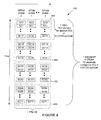
- FIGURE 4 illustrates a sub-band with a number of contiguous resource units (CRUs) according to embodiments of the present disclosure.
- the embodiment of the sub-band 400 shown in FIGURE 4 is for illustration only. Other embodiments could be used without departing from the scope of this disclosure.
- the basic time unit over which the transmissions (from BS 102 to SS 111-116, and from SS 111-116 to BS 102) occur is called an OFDM symbol.
- the transmissions by SS 111-116 are coordinated to ensure that non-overlapping SC sets are being used, and each SS has been instructed, by BS 102, as to which SC set to use for transmissions to BS 102.
- BS 102 uses non-overlapping SC sets to make transmissions to SS 111-116, and the SSs are instructed, by BS 102, as to which SC sets to listen to receive the transmissions meant for them.
- the instructions to the SSs are referred to as Resource Allocation Messages.
- the resource allocation messages are transmitted by BS 102 on an SC set referred to as the Resource Allocation Region.
- several resource allocation messages are carried on SCs that are part of the Resource Allocation Region.
- Each of SS 111-116 is aware of the resource allocation region; and each of SS 111-116 receives, decodes and interprets the resource allocation messages in the resource allocation region to learn about the SC set it is to use for UL transmissions and/or the SC set on which it is to receive DL transmissions.
- the SC sets that are available for transmissions by BS 102 to SS 111-116 on the DL, and by SS 111-116 to BS 102 on the UL, are classified into two broad categories: distributed resources and contiguous resources. It is first noted that a logical index of a resource is the index with which it is referred to in allocations, and which, along with a convention for translation to physical resources, allows a BS or an SS to determine which physical resource to which the allocation refers.
- Distributed resources are collections of distributed resource units, where a Distributed Resource Unit (DRU) is a subset of a known size (in the number of SCs and OFDM symbols), of logical indices of SCs, in which SCs that are contiguous with respect to their logical indices are not physically contiguous with respect to their location in the physical bandwidth of transmission. Transmitting on distributed resources allows the receiver to experience the average channel conditions over the entire, or a relatively large portion of, the total available bandwidth.
- DRU Distributed Resource Unit
- Contiguous resources are collections of contiguous resource units, where a Contiguous Resource Unit (CRU) 405 is a subset of a known size (in the number of SCs and OFDM symbols), of logical indices of SCs consisting of physically contiguous SCs, i.e., in which the component SCs that have contiguous logical indices are also physically contiguous.
- CRU Contiguous Resource Unit
- the sub-band (SB) 400 consists of a pre-determined (known to all BSs and all SSs) number of CRUs 405, such that the set of SCs in the sub-band are physically contiguous.
- SB 400 resources can be utilized in order to perform "frequency selective" transmissions.
- SB 400 can span a small portion of the overall available bandwidth, or “sample” a small portion of the overall bandwidth. Due to the fact that the all the SCs in SB 400 are physically contiguous, the channel conditions across them may be expected to be similar in many cases.
- An SS such as SS 116, may experience a wide variation in radio channel conditions across the entire bandwidth.
- SS 116 can estimate the radio channel conditions across the many SBs 400 that make up the entire bandwidth, and feed them back to BS 102.
- BS 102 can then schedule transmissions to the SS 116 on only the good SBs 400.
- FIGURE 4 illustrates one frame in a Worldwide Interoperability for Microwave Access (WiMAX) system.
- a CRU 405 consists of an SC-OFDM symbol grid consisting of eighteen physically contiguous SCs per OFDM symbol ⁇ six OFDM symbols.
- the SB 400 can include four CRUs 405; forming a grid of seventy-two contiguous SCs ⁇ six OFDM symbols.
- the 72 SCs in the sub-band are physically contiguous.
- illustration of SB 400 comprising six OFDM symbols and four CRUs 405, each with eighteen SCs is for example purposes only and embodiments with different numbers of symbols, CRUs and SCs could be used without departing from the scope of this disclosure.
- IEEE 802.16e system described in IEEE Std. 802.16e-2005, IEEE Standard for Local and metropolitan area networks, - Part 16:
- IEEE 802.16m system described in IEEE 802.16m-09/0010r1, "Part 16: Air Interface for Fixed and Mobile Broadband Wireless Access Systems", March 2008, the contents of which hereby are incorporated by reference in their entirety, is another example of an OFDM based system employing the above descriptions.
- the following specializations apply.
- FIGURE 5 illustrates exemplary radio channel conditions across sub-bands according to embodiments of the present disclosure.
- FIGURE 5 depicts a 10MHz system 500.
- the 10MHz system 500 includes twelve SBs 400.
- the radio channel conditions 505 vary across the SBs 400.
- the radio channel conditions 505 are poor in SB1 400b, SB6 400g, SB7 400h, and SB8 400i.
- the radio channel conditions are good in SB2 400c, SB3 400d, SB4 400e, SB5 400f, SB9 400j, SB10 400k and SB11 4001.
- BS 102 can allocate a number of resources to SS 116. BS 102 then transmits the resource allocations to SS 116. Additionally, BS 102 allocates a number of resources to SS 115 and transmits the resource allocation to SS 115. For example, referring to FIGURE 5 , BS 102 can allocate SB2 400c, SB3 400d, SB4 400e, SB5 400f, SB9 400j, SB10 400k and SB11 4001 to SS 116. SB2 400c, SB3 400d, SB4 400e, SB5 400f, SB9 400j, SB10 400k and SB11 4001 have non-contiguous resource indices.
- FIGURE 6 illustrates a resource allocation message according to embodiments of the present disclosure.
- the embodiment of the resource allocation message 600 shown in FIGURE 6 is for illustration only. Other embodiments could be used without departing from the scope of this disclosure.
- the BS 102 transmits the resource allocation message 600 to SS 116.
- the resource allocation message 600 can include a contiguous allocation indicator (CAI) 605.
- the CAI 605 can be a single- or multi-bit field, referred to as a CONTIGUOUS ALLOCATION INDICATOR field, which includes information configured to allow SS 116 to interpret at least a portion of the resource allocation.
- the resource allocation message 600 can include a number of messages indicator 610.
- the number of messages indicator 610 can be a multi-bit field, referred to as a NUM_MSGS_CARRYING_ALLOCATION field, which is configured to enable SS 116 to infer the number of resource allocation messages over which the allocation is carried.
- the resource allocation message 600 can include a Sub-band Index (SBI) field 615.
- the SBI field 615 can be a multi-bit field that is configured to enable SS 116 to infer the indices of the allocated SBs.
- the fields in the resource allocation message can be limited in the size, in number of bits allowed to be used. For example, a total number of distinct allocations of SBs may exceed what can be indicated by the allowed size of the field in a resource allocation message. In some examples, only a portion of the possible allocations are indicated in a single message, and the allocation message is designed with the number of bits to cover the most likely cases. In some examples, the allocation is indicated across multiple messages.
- a concatenation rule is employed.
- the concatenation rule allows the efficient combination of the SBI field to indicate a wide range of allocations with multiple messages, in a completely flexible way. For example, in the case of twelve SBs and a 7-bit SBI field 615, one-hundred twenty-eight (128) combinations of SB allocation can be indicated with the seven bits.
- one concatenated allocation message includes fourteen bits for indexing. The first twelve bits can be used as a bit map to convey an arbitrary allocation of twelve SBs.
- the radio channel conditions for a mobile are similar over the entire bandwidth or a large portion of the bandwidth; these are referred to as "frequency flat" channels.
- BS 102 is configured to allocate contiguous SBs.
- SS 116 is able to interpret the SBI field 615 depending upon whether or not one makes contiguous or non-contiguous allocations.
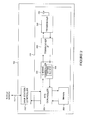
- FIGURE 7 illustrates a process for interpreting resource allocations according to embodiments of the present disclosure.
- the embodiment of the process 700 shown in FIGURE 7 is for illustration only. Other embodiments could be used without departing from the scope of this disclosure.
- SS 116 receives the resource allocation message 600 from BS 102.
- the resource allocation message includes the CAI 605, the number of messages indicator 610, and the SBI field 615.
- SS 116 determines that more than one message includes the allocation, that is "NUM_MSGS_CARRYING_ALLOCATION>1," then SS 116 concatenates the SBI field 615 in block 710. SS 116 concatenates all the SBI fields 615 in all the resource allocation messages carrying the allocation. SS 116 can interpret all or parts of the allocations in the form of a bitmap. For example, each position in the concatenated SBI field 615 can correspond to a logical index of a particular SB 400. A "1" can indicate that the corresponding SB has been allocated and a "0" can indicate that the corresponding SB 400 has not been allocated. Thereafter, SS 116 can utilize the allocated SBs for UL and DL communications with BS 102.
- the contiguous indexing scheme provides an allocation of SBs 400 with contiguous logical indices.
- a portion of the SBI 615 can specify the lowest SB logical index in the allocation, another portion of the SBI 615 can specify the highest SB logical index in the allocation, and the allocation can consists of all SBs 400 with logical indices that lie between, including the lowest and highest indicated indices. Therefore, SS 116 can use a portion of the SBI 615 to identify the beginning of a contiguous allocation of SBs 400 and another portion of the SBI 615 to identify the end of the contiguous allocation of SBs 400. Thereafter, SS 116 can utilize the allocated SBs for UL and DL communications with BS 102.
- SS 116 interprets the SBI field 615 according to a non-contiguous indexing scheme in block 725.
- the contiguous indexing scheme provides an allocation of SBs 400 with non-contiguous logical indices. Thereafter, SS 116 can utilize the allocated SBs for UL and DL communications with BS 102.
- FIGURE 8 illustrates an example of the process for interpreting resource allocations according to embodiments of the present disclosure.
- the example process 800 shown in FIGURE 8 is for illustration only. Other examples could be used without departing from the scope of this disclosure.
- SS 116 receives the resource allocation message 600 from BS 102 in a 10MHz 802.16m system (e.g., twelve SBs 400) .
- the resource allocation message includes the CAI 605, the number of messages indicator 610, and the SBI field 615.
- SS 116 uses the first four bits of the 8-bit SBI 615 to identify a Lowest SB Index. Four bits can be enough to indicate sixteen values, wherein only twelve SBs 400 are available in the 802.16M 10MHz system. SS 116 uses the last four bits of the 8-bit SBI 615 to identify the Highest_SB_Index. The allocation can consist of all SBs 400 with logical indices that lie between. The allocation includes the Lowest SB Index and Highest SB Index such that: Lowest SB Index ⁇ SB ⁇ Highest SB Index.
- SS 116 interprets the SBI field 615 according to a non-contiguous indexing scheme in block 825.
- SS 116 interprets the 8-bit SBI using a look-up table (LUT) or a set of LUTs. For each of the two-hundred fifty-six (256) values of the SBI field 615, the LUT indicates a particular combination of SB 400 allocations.
- LUT look-up table
- the number of messages indicator 610 (i.e., the NUM MSGS CARRYING ALLOCATION field) is not transmitted as a part of the resource allocation message 600.
- SS 116 is able to determine the number of resource allocation messages carrying the allocation implicitly through other means. The interpretation conventions remain the same as those in FIGURE 7 (e.g., blocks 710, 715, 720 and 725); however, the NUM MSGS CARRYING ALLOCATION field is replaced by knowledge from other means of the number of resource allocation messages carrying the allocation.
- FIGURE 9 illustrates the process for interpreting resource allocations according to embodiments of the present disclosure.
- the embodiment of the process 700 shown in FIGURE 7 is for illustration only. Other embodiments could be used without departing from the scope of this disclosure.
- CONTIGUOUS_ALLOCATION_INDICATOR i.e., the CAI 605
- SS 116 is configured to implicitly determine the CAI 605.
- SS 116 receives the resource allocation message 600 from BS 102.
- the resource allocation message includes the number of messages indicator 610, and the SBI field 615 but does not include the CAI 605.
- SS 116 determines that more than one message includes the allocation, that is "NUM_MSGS_CARRYING_ALLOCATION>1," then SS 116 concatenates the SBI field 615 in block 910. SS 116 concatenates all the SBI fields 615 in all the resource allocation messages carrying the allocation. SS 116 can interpret all or parts of the allocations in form of a bitmap. For example, each position in the concatenated SBI field 615 can correspond to a logical index of a particular SB 400. A "1" can indicate that the corresponding SB has been allocated and a "0" can indicate that the corresponding SB 400 has not been allocated.
- the indexing scheme provides an allocation of SBs 400. It will be appreciated that embodiments of the present invention can be realized in the form of hardware, software or a combination of hardware and software.
- Any such software may be stored in the form of volatile or non-volatile storage such as, for example, a storage device like a ROM, whether erasable or rewritable or not, or in the form of memory such as, for example, RAM, memory chips, device or integrated circuits or on an optically or magnetically readable medium such as, for example, a CD, DVD, magnetic disk or magnetic tape or the like.
- volatile or non-volatile storage such as, for example, a storage device like a ROM, whether erasable or rewritable or not
- memory such as, for example, RAM, memory chips, device or integrated circuits or on an optically or magnetically readable medium such as, for example, a CD, DVD, magnetic disk or magnetic tape or the like.
- the storage devices and storage media are embodiments of machine-readable storage that are suitable for storing a program or programs comprising instructions that, when executed, implement embodiments of the present invention.
- embodiments provide a program comprising code for implementing apparatus or a method as claimed in any one of the claims of this specification and a machine-readable storage storing such a program. Still further, such programs may be conveyed electronically via any medium such as a communication signal carried over a wired or wireless connection and embodiments suitably encompass the same.
- the words “comprise” and “contain” and variations of the words, for example “comprising” and “comprises” means “including but not limited to”, and is not intended to (and does not) exclude other moieties, additives, components, integers or steps.
- the singular encompasses the plural unless the context otherwise requires.
Landscapes
- Engineering & Computer Science (AREA)
- Signal Processing (AREA)
- Computer Networks & Wireless Communication (AREA)
- Mobile Radio Communication Systems (AREA)
Applications Claiming Priority (2)
| Application Number | Priority Date | Filing Date | Title |
|---|---|---|---|
| US21479209P | 2009-04-28 | 2009-04-28 | |
| US12/730,090 US8619688B2 (en) | 2009-04-28 | 2010-03-23 | System and method for indication of contiguous resource allocations in OFDM-based systems |
Publications (3)
| Publication Number | Publication Date |
|---|---|
| EP2247021A2 true EP2247021A2 (fr) | 2010-11-03 |
| EP2247021A3 EP2247021A3 (fr) | 2012-02-08 |
| EP2247021B1 EP2247021B1 (fr) | 2015-12-16 |
Family
ID=42710801
Family Applications (1)
| Application Number | Title | Priority Date | Filing Date |
|---|---|---|---|
| EP10161289.3A Not-in-force EP2247021B1 (fr) | 2009-04-28 | 2010-04-28 | Système et procédé pour indiquer les attributions de ressource dans des systèmes OFDM |
Country Status (4)
| Country | Link |
|---|---|
| US (1) | US8619688B2 (fr) |
| EP (1) | EP2247021B1 (fr) |
| KR (1) | KR101645984B1 (fr) |
| WO (1) | WO2010126303A2 (fr) |
Families Citing this family (12)
| Publication number | Priority date | Publication date | Assignee | Title |
|---|---|---|---|---|
| WO2010126317A2 (fr) * | 2009-04-30 | 2010-11-04 | Lg Electronics Inc. | Procédé de réglage de précodeur dans un système entrées multiples / sorties multiples (mimo) en boucle ouverte |
| KR101717298B1 (ko) * | 2010-05-10 | 2017-03-17 | 엘지전자 주식회사 | 무선 통신 시스템에서 상향링크 제어 채널을 위한 자원 할당 방법 및 장치 |
| WO2013008966A1 (fr) * | 2011-07-13 | 2013-01-17 | 엘지전자 주식회사 | Procédé et appareil pour l'allocation de ressources en vue de la transmission de données sur la liaison montante sur un terminal coopératif, dans un système de connexion sans fil prenant en charge une procédure de coopération d'un terminal client |
| US8553725B2 (en) * | 2011-07-22 | 2013-10-08 | Infinera Corporation | Super-channel assignment using a flexible grid |
| US9622230B2 (en) * | 2012-05-17 | 2017-04-11 | Qualcomm Incorporated | Narrow band partitioning and efficient resource allocation for low cost user equipments |
| KR101311514B1 (ko) * | 2012-06-13 | 2013-09-25 | 주식회사 케이티 | 무선 통신 시스템 및 그 시스템에서의 무선 자원 스케줄링 방법 |
| EP3776974A4 (fr) * | 2018-04-06 | 2022-04-20 | QUALCOMM Incorporated | Déclenchement et rapport d'informations d'état de canal non périodiques dans des communications sans fil |
| WO2020167106A1 (fr) * | 2019-02-15 | 2020-08-20 | 엘지전자 주식회사 | Procédé et appareil permettant d'émettre et de recevoir un signal sans fil dans un système de communication sans fil |
| US11956044B2 (en) * | 2020-05-13 | 2024-04-09 | Qualcomm Incorporated | Dynamic adaptation of semi-persistent CSI report setting |
| US11943616B2 (en) | 2020-11-13 | 2024-03-26 | Oracle International Corporation | Methods, systems, and computer readable media for utilizing network function identifiers to implement ingress message rate limiting |
| US11895501B2 (en) | 2020-12-08 | 2024-02-06 | Oracle International Corporation | Methods, systems, and computer readable media for automatic key management of network function (NF) repository function (NRF) access token public keys for 5G core (5GC) authorization to mitigate security attacks |
| US11553524B2 (en) * | 2021-03-04 | 2023-01-10 | Oracle International Corporation | Methods, systems, and computer readable media for resource object level authorization at a network function (NF) |
Family Cites Families (8)
| Publication number | Priority date | Publication date | Assignee | Title |
|---|---|---|---|---|
| KR100747600B1 (ko) | 2005-08-19 | 2007-08-08 | 한국전자통신연구원 | 직교 주파수 분할 다중접속 시스템을 위한 주파수 재사용율분할 방식에 기반을 둔 동적 자원 할당 방법 및 그를 위한프레임 전송 방법 |
| KR100834677B1 (ko) | 2006-01-16 | 2008-06-02 | 삼성전자주식회사 | 주파수 분할 다중접속 방식의 무선 통신 시스템에서 자원할당 장치 및 방법 |
| US20070206559A1 (en) | 2006-02-11 | 2007-09-06 | Samsung Electronics Co., Ltd. | Method and apparatus for allocating transmission resources and signaling the allocated transmission resources for frequency diversity |
| KR100849329B1 (ko) * | 2006-02-11 | 2008-07-29 | 삼성전자주식회사 | 주파수 다이버시티를 위한 전송 자원 할당과 시그널링 방법및 장치 |
| US8400998B2 (en) * | 2006-08-23 | 2013-03-19 | Motorola Mobility Llc | Downlink control channel signaling in wireless communication systems |
| WO2008081313A2 (fr) | 2006-12-28 | 2008-07-10 | Nokia Corporation | Attribution de ressources restreinte dans une technique d'accès par paquets ofdm haut débit |
| US8625568B2 (en) | 2007-09-21 | 2014-01-07 | Lg Electronics Inc. | Method of mapping physical resource to logical resource in wireless communication system |
| CN101808069B (zh) * | 2009-03-24 | 2014-07-16 | 开曼群岛威睿电通股份有限公司 | 用于多输入多输出正交频分复用的装置和方法 |
-
2010
- 2010-03-23 US US12/730,090 patent/US8619688B2/en active Active
- 2010-04-28 WO PCT/KR2010/002684 patent/WO2010126303A2/fr not_active Ceased
- 2010-04-28 KR KR1020100039403A patent/KR101645984B1/ko not_active Expired - Fee Related
- 2010-04-28 EP EP10161289.3A patent/EP2247021B1/fr not_active Not-in-force
Non-Patent Citations (1)
| Title |
|---|
| None |
Also Published As
| Publication number | Publication date |
|---|---|
| KR101645984B1 (ko) | 2016-08-05 |
| EP2247021A3 (fr) | 2012-02-08 |
| EP2247021B1 (fr) | 2015-12-16 |
| US20100272036A1 (en) | 2010-10-28 |
| WO2010126303A2 (fr) | 2010-11-04 |
| WO2010126303A3 (fr) | 2011-01-20 |
| US8619688B2 (en) | 2013-12-31 |
| KR20100118540A (ko) | 2010-11-05 |
Similar Documents
| Publication | Publication Date | Title |
|---|---|---|
| EP2247021B1 (fr) | Système et procédé pour indiquer les attributions de ressource dans des systèmes OFDM | |
| US12089237B2 (en) | Beam indication channel in a multi-beam system | |
| EP2443894B1 (fr) | Procédé et système d'agencement de messages d'allocation de ressources pour réduire la complexité de décodage à l'aveugle dans des systèmes basés sur ofdma | |
| EP4132136A1 (fr) | Procédé et appareil de configuration d'ensemble de ressources de commande dans un système de communication sans fil | |
| CN102907013B (zh) | 采用盲解码的系统中包含可变长度字段的消息的尺寸的高效隐含指示 | |
| KR20210029281A (ko) | 무선 통신 시스템에서 다중 빔 동작을 위한 방법 및 장치 | |
| EP2471294B1 (fr) | Système et procédé permettant d'indiquer efficacement des ressources de sous-bandes distribuées | |
| JP5178907B2 (ja) | モバイルネットワークにおける通信方法 | |
| US10791527B2 (en) | Apparatus for signaling of control messages for fronthaul interface | |
| JP6783920B2 (ja) | 無線通信方法および装置 | |
| KR20190138675A (ko) | 랜덤 액세스 방법, 랜덤 액세스 응답 방법, 단말 기기 및 네트워크 기기 | |
| AU2021319714B2 (en) | Transmission method for physical uplink control channel, terminal, and base station | |
| US8259664B2 (en) | Method and apparatus for resource allocation in a communication system | |
| US9948424B2 (en) | System and method for reducing blind decoding complexity in OFDMA-based systems | |
| CN106416400B (zh) | 无线通信的方法和装置以及相应的计算机可读存储介质 | |
| CN110475352A (zh) | 一种参考信号传输方法及通信设备 | |
| CN116830712A (zh) | 传输物理下行控制信道的方法及设备 | |
| EP4250854B1 (fr) | Procédé de communication sans fil | |
| CN116801398A (zh) | 彼此通信的用户设备和基站及其操作方法 |
Legal Events
| Date | Code | Title | Description |
|---|---|---|---|
| PUAI | Public reference made under article 153(3) epc to a published international application that has entered the european phase |
Free format text: ORIGINAL CODE: 0009012 |
|
| AK | Designated contracting states |
Kind code of ref document: A2 Designated state(s): AT BE BG CH CY CZ DE DK EE ES FI FR GB GR HR HU IE IS IT LI LT LU LV MC MK MT NL NO PL PT RO SE SI SK SM TR |
|
| AX | Request for extension of the european patent |
Extension state: AL BA ME RS |
|
| PUAL | Search report despatched |
Free format text: ORIGINAL CODE: 0009013 |
|
| AK | Designated contracting states |
Kind code of ref document: A3 Designated state(s): AT BE BG CH CY CZ DE DK EE ES FI FR GB GR HR HU IE IS IT LI LT LU LV MC MK MT NL NO PL PT RO SE SI SK SM TR |
|
| AX | Request for extension of the european patent |
Extension state: AL BA ME RS |
|
| RIC1 | Information provided on ipc code assigned before grant |
Ipc: H04W 72/04 20090101ALI20111230BHEP Ipc: H04L 5/00 20060101AFI20111230BHEP |
|
| 17P | Request for examination filed |
Effective date: 20120326 |
|
| RAP1 | Party data changed (applicant data changed or rights of an application transferred) |
Owner name: SAMSUNG ELECTRONICS CO., LTD. |
|
| 17Q | First examination report despatched |
Effective date: 20140110 |
|
| GRAP | Despatch of communication of intention to grant a patent |
Free format text: ORIGINAL CODE: EPIDOSNIGR1 |
|
| INTG | Intention to grant announced |
Effective date: 20150813 |
|
| GRAS | Grant fee paid |
Free format text: ORIGINAL CODE: EPIDOSNIGR3 |
|
| GRAA | (expected) grant |
Free format text: ORIGINAL CODE: 0009210 |
|
| AK | Designated contracting states |
Kind code of ref document: B1 Designated state(s): AT BE BG CH CY CZ DE DK EE ES FI FR GB GR HR HU IE IS IT LI LT LU LV MC MK MT NL NO PL PT RO SE SI SK SM TR |
|
| REG | Reference to a national code |
Ref country code: GB Ref legal event code: FG4D |
|
| REG | Reference to a national code |
Ref country code: CH Ref legal event code: EP |
|
| REG | Reference to a national code |
Ref country code: IE Ref legal event code: FG4D |
|
| REG | Reference to a national code |
Ref country code: AT Ref legal event code: REF Ref document number: 766016 Country of ref document: AT Kind code of ref document: T Effective date: 20160115 |
|
| REG | Reference to a national code |
Ref country code: DE Ref legal event code: R096 Ref document number: 602010029467 Country of ref document: DE |
|
| REG | Reference to a national code |
Ref country code: NL Ref legal event code: MP Effective date: 20151216 |
|
| REG | Reference to a national code |
Ref country code: LT Ref legal event code: MG4D |
|
| PG25 | Lapsed in a contracting state [announced via postgrant information from national office to epo] |
Ref country code: NO Free format text: LAPSE BECAUSE OF FAILURE TO SUBMIT A TRANSLATION OF THE DESCRIPTION OR TO PAY THE FEE WITHIN THE PRESCRIBED TIME-LIMIT Effective date: 20160316 Ref country code: LT Free format text: LAPSE BECAUSE OF FAILURE TO SUBMIT A TRANSLATION OF THE DESCRIPTION OR TO PAY THE FEE WITHIN THE PRESCRIBED TIME-LIMIT Effective date: 20151216 Ref country code: HR Free format text: LAPSE BECAUSE OF FAILURE TO SUBMIT A TRANSLATION OF THE DESCRIPTION OR TO PAY THE FEE WITHIN THE PRESCRIBED TIME-LIMIT Effective date: 20151216 |
|
| REG | Reference to a national code |
Ref country code: AT Ref legal event code: MK05 Ref document number: 766016 Country of ref document: AT Kind code of ref document: T Effective date: 20151216 |
|
| PG25 | Lapsed in a contracting state [announced via postgrant information from national office to epo] |
Ref country code: NL Free format text: LAPSE BECAUSE OF FAILURE TO SUBMIT A TRANSLATION OF THE DESCRIPTION OR TO PAY THE FEE WITHIN THE PRESCRIBED TIME-LIMIT Effective date: 20151216 Ref country code: GR Free format text: LAPSE BECAUSE OF FAILURE TO SUBMIT A TRANSLATION OF THE DESCRIPTION OR TO PAY THE FEE WITHIN THE PRESCRIBED TIME-LIMIT Effective date: 20160317 Ref country code: FI Free format text: LAPSE BECAUSE OF FAILURE TO SUBMIT A TRANSLATION OF THE DESCRIPTION OR TO PAY THE FEE WITHIN THE PRESCRIBED TIME-LIMIT Effective date: 20151216 Ref country code: LV Free format text: LAPSE BECAUSE OF FAILURE TO SUBMIT A TRANSLATION OF THE DESCRIPTION OR TO PAY THE FEE WITHIN THE PRESCRIBED TIME-LIMIT Effective date: 20151216 Ref country code: SE Free format text: LAPSE BECAUSE OF FAILURE TO SUBMIT A TRANSLATION OF THE DESCRIPTION OR TO PAY THE FEE WITHIN THE PRESCRIBED TIME-LIMIT Effective date: 20151216 |
|
| PG25 | Lapsed in a contracting state [announced via postgrant information from national office to epo] |
Ref country code: IT Free format text: LAPSE BECAUSE OF FAILURE TO SUBMIT A TRANSLATION OF THE DESCRIPTION OR TO PAY THE FEE WITHIN THE PRESCRIBED TIME-LIMIT Effective date: 20151216 Ref country code: ES Free format text: LAPSE BECAUSE OF FAILURE TO SUBMIT A TRANSLATION OF THE DESCRIPTION OR TO PAY THE FEE WITHIN THE PRESCRIBED TIME-LIMIT Effective date: 20151216 Ref country code: CZ Free format text: LAPSE BECAUSE OF FAILURE TO SUBMIT A TRANSLATION OF THE DESCRIPTION OR TO PAY THE FEE WITHIN THE PRESCRIBED TIME-LIMIT Effective date: 20151216 |
|
| PG25 | Lapsed in a contracting state [announced via postgrant information from national office to epo] |
Ref country code: SM Free format text: LAPSE BECAUSE OF FAILURE TO SUBMIT A TRANSLATION OF THE DESCRIPTION OR TO PAY THE FEE WITHIN THE PRESCRIBED TIME-LIMIT Effective date: 20151216 Ref country code: BE Free format text: LAPSE BECAUSE OF NON-PAYMENT OF DUE FEES Effective date: 20160430 Ref country code: EE Free format text: LAPSE BECAUSE OF FAILURE TO SUBMIT A TRANSLATION OF THE DESCRIPTION OR TO PAY THE FEE WITHIN THE PRESCRIBED TIME-LIMIT Effective date: 20151216 Ref country code: RO Free format text: LAPSE BECAUSE OF FAILURE TO SUBMIT A TRANSLATION OF THE DESCRIPTION OR TO PAY THE FEE WITHIN THE PRESCRIBED TIME-LIMIT Effective date: 20151216 Ref country code: IS Free format text: LAPSE BECAUSE OF FAILURE TO SUBMIT A TRANSLATION OF THE DESCRIPTION OR TO PAY THE FEE WITHIN THE PRESCRIBED TIME-LIMIT Effective date: 20160416 Ref country code: SK Free format text: LAPSE BECAUSE OF FAILURE TO SUBMIT A TRANSLATION OF THE DESCRIPTION OR TO PAY THE FEE WITHIN THE PRESCRIBED TIME-LIMIT Effective date: 20151216 Ref country code: AT Free format text: LAPSE BECAUSE OF FAILURE TO SUBMIT A TRANSLATION OF THE DESCRIPTION OR TO PAY THE FEE WITHIN THE PRESCRIBED TIME-LIMIT Effective date: 20151216 Ref country code: PT Free format text: LAPSE BECAUSE OF FAILURE TO SUBMIT A TRANSLATION OF THE DESCRIPTION OR TO PAY THE FEE WITHIN THE PRESCRIBED TIME-LIMIT Effective date: 20160418 |
|
| REG | Reference to a national code |
Ref country code: DE Ref legal event code: R097 Ref document number: 602010029467 Country of ref document: DE |
|
| PLBE | No opposition filed within time limit |
Free format text: ORIGINAL CODE: 0009261 |
|
| STAA | Information on the status of an ep patent application or granted ep patent |
Free format text: STATUS: NO OPPOSITION FILED WITHIN TIME LIMIT |
|
| PG25 | Lapsed in a contracting state [announced via postgrant information from national office to epo] |
Ref country code: PL Free format text: LAPSE BECAUSE OF FAILURE TO SUBMIT A TRANSLATION OF THE DESCRIPTION OR TO PAY THE FEE WITHIN THE PRESCRIBED TIME-LIMIT Effective date: 20151216 Ref country code: DK Free format text: LAPSE BECAUSE OF FAILURE TO SUBMIT A TRANSLATION OF THE DESCRIPTION OR TO PAY THE FEE WITHIN THE PRESCRIBED TIME-LIMIT Effective date: 20151216 |
|
| 26N | No opposition filed |
Effective date: 20160919 |
|
| REG | Reference to a national code |
Ref country code: CH Ref legal event code: PL |
|
| PG25 | Lapsed in a contracting state [announced via postgrant information from national office to epo] |
Ref country code: BE Free format text: LAPSE BECAUSE OF FAILURE TO SUBMIT A TRANSLATION OF THE DESCRIPTION OR TO PAY THE FEE WITHIN THE PRESCRIBED TIME-LIMIT Effective date: 20151216 Ref country code: LU Free format text: LAPSE BECAUSE OF FAILURE TO SUBMIT A TRANSLATION OF THE DESCRIPTION OR TO PAY THE FEE WITHIN THE PRESCRIBED TIME-LIMIT Effective date: 20160428 |
|
| REG | Reference to a national code |
Ref country code: IE Ref legal event code: MM4A |
|
| REG | Reference to a national code |
Ref country code: FR Ref legal event code: ST Effective date: 20161230 |
|
| PG25 | Lapsed in a contracting state [announced via postgrant information from national office to epo] |
Ref country code: FR Free format text: LAPSE BECAUSE OF NON-PAYMENT OF DUE FEES Effective date: 20160502 Ref country code: LI Free format text: LAPSE BECAUSE OF NON-PAYMENT OF DUE FEES Effective date: 20160430 Ref country code: CH Free format text: LAPSE BECAUSE OF NON-PAYMENT OF DUE FEES Effective date: 20160430 |
|
| PG25 | Lapsed in a contracting state [announced via postgrant information from national office to epo] |
Ref country code: SI Free format text: LAPSE BECAUSE OF FAILURE TO SUBMIT A TRANSLATION OF THE DESCRIPTION OR TO PAY THE FEE WITHIN THE PRESCRIBED TIME-LIMIT Effective date: 20151216 |
|
| PG25 | Lapsed in a contracting state [announced via postgrant information from national office to epo] |
Ref country code: IE Free format text: LAPSE BECAUSE OF NON-PAYMENT OF DUE FEES Effective date: 20160428 |
|
| PG25 | Lapsed in a contracting state [announced via postgrant information from national office to epo] |
Ref country code: CY Free format text: LAPSE BECAUSE OF FAILURE TO SUBMIT A TRANSLATION OF THE DESCRIPTION OR TO PAY THE FEE WITHIN THE PRESCRIBED TIME-LIMIT Effective date: 20151216 Ref country code: HU Free format text: LAPSE BECAUSE OF FAILURE TO SUBMIT A TRANSLATION OF THE DESCRIPTION OR TO PAY THE FEE WITHIN THE PRESCRIBED TIME-LIMIT; INVALID AB INITIO Effective date: 20100428 |
|
| PG25 | Lapsed in a contracting state [announced via postgrant information from national office to epo] |
Ref country code: MT Free format text: LAPSE BECAUSE OF NON-PAYMENT OF DUE FEES Effective date: 20160430 Ref country code: TR Free format text: LAPSE BECAUSE OF FAILURE TO SUBMIT A TRANSLATION OF THE DESCRIPTION OR TO PAY THE FEE WITHIN THE PRESCRIBED TIME-LIMIT Effective date: 20151216 Ref country code: MK Free format text: LAPSE BECAUSE OF FAILURE TO SUBMIT A TRANSLATION OF THE DESCRIPTION OR TO PAY THE FEE WITHIN THE PRESCRIBED TIME-LIMIT Effective date: 20151216 Ref country code: MC Free format text: LAPSE BECAUSE OF FAILURE TO SUBMIT A TRANSLATION OF THE DESCRIPTION OR TO PAY THE FEE WITHIN THE PRESCRIBED TIME-LIMIT Effective date: 20151216 |
|
| PG25 | Lapsed in a contracting state [announced via postgrant information from national office to epo] |
Ref country code: BG Free format text: LAPSE BECAUSE OF FAILURE TO SUBMIT A TRANSLATION OF THE DESCRIPTION OR TO PAY THE FEE WITHIN THE PRESCRIBED TIME-LIMIT Effective date: 20151216 |
|
| PGFP | Annual fee paid to national office [announced via postgrant information from national office to epo] |
Ref country code: DE Payment date: 20210322 Year of fee payment: 12 |
|
| REG | Reference to a national code |
Ref country code: DE Ref legal event code: R119 Ref document number: 602010029467 Country of ref document: DE |
|
| PG25 | Lapsed in a contracting state [announced via postgrant information from national office to epo] |
Ref country code: DE Free format text: LAPSE BECAUSE OF NON-PAYMENT OF DUE FEES Effective date: 20221103 |
|
| PGFP | Annual fee paid to national office [announced via postgrant information from national office to epo] |
Ref country code: GB Payment date: 20230320 Year of fee payment: 14 |
|
| GBPC | Gb: european patent ceased through non-payment of renewal fee |
Effective date: 20240428 |
|
| PG25 | Lapsed in a contracting state [announced via postgrant information from national office to epo] |
Ref country code: GB Free format text: LAPSE BECAUSE OF NON-PAYMENT OF DUE FEES Effective date: 20240428 |
|
| PG25 | Lapsed in a contracting state [announced via postgrant information from national office to epo] |
Ref country code: GB Free format text: LAPSE BECAUSE OF NON-PAYMENT OF DUE FEES Effective date: 20240428 |