EP2247062A1 - Dispositifs and méthode pour la vérification de l'authenticité et de l'autorisation d'un message de demande - Google Patents
Dispositifs and méthode pour la vérification de l'authenticité et de l'autorisation d'un message de demande Download PDFInfo
- Publication number
- EP2247062A1 EP2247062A1 EP10008062A EP10008062A EP2247062A1 EP 2247062 A1 EP2247062 A1 EP 2247062A1 EP 10008062 A EP10008062 A EP 10008062A EP 10008062 A EP10008062 A EP 10008062A EP 2247062 A1 EP2247062 A1 EP 2247062A1
- Authority
- EP
- European Patent Office
- Prior art keywords
- computer
- communication
- network connection
- control computer
- communication unit
- Prior art date
- Legal status (The legal status is an assumption and is not a legal conclusion. Google has not performed a legal analysis and makes no representation as to the accuracy of the status listed.)
- Withdrawn
Links
- 238000000034 method Methods 0.000 title claims abstract description 45
- 238000013475 authorization Methods 0.000 title claims abstract description 32
- 238000004891 communication Methods 0.000 claims abstract description 225
- 230000005540 biological transmission Effects 0.000 claims description 26
- 230000004044 response Effects 0.000 claims description 23
- 238000012986 modification Methods 0.000 description 7
- 230000004048 modification Effects 0.000 description 7
- 238000006243 chemical reaction Methods 0.000 description 6
- 238000013519 translation Methods 0.000 description 4
- 238000012795 verification Methods 0.000 description 4
- 230000008901 benefit Effects 0.000 description 3
- 230000007246 mechanism Effects 0.000 description 3
- 230000008569 process Effects 0.000 description 3
- 230000008859 change Effects 0.000 description 2
- 238000013459 approach Methods 0.000 description 1
- 238000004364 calculation method Methods 0.000 description 1
- 230000001419 dependent effect Effects 0.000 description 1
- 238000011161 development Methods 0.000 description 1
- 230000000977 initiatory effect Effects 0.000 description 1
- 230000011664 signaling Effects 0.000 description 1
Images





Classifications
-
- H—ELECTRICITY
- H04—ELECTRIC COMMUNICATION TECHNIQUE
- H04M—TELEPHONIC COMMUNICATION
- H04M7/00—Arrangements for interconnection between switching centres
- H04M7/006—Networks other than PSTN/ISDN providing telephone service, e.g. Voice over Internet Protocol (VoIP), including next generation networks with a packet-switched transport layer
- H04M7/0078—Security; Fraud detection; Fraud prevention
-
- H—ELECTRICITY
- H04—ELECTRIC COMMUNICATION TECHNIQUE
- H04L—TRANSMISSION OF DIGITAL INFORMATION, e.g. TELEGRAPHIC COMMUNICATION
- H04L63/00—Network architectures or network communication protocols for network security
- H04L63/08—Network architectures or network communication protocols for network security for authentication of entities
- H04L63/0823—Network architectures or network communication protocols for network security for authentication of entities using certificates
-
- H—ELECTRICITY
- H04—ELECTRIC COMMUNICATION TECHNIQUE
- H04L—TRANSMISSION OF DIGITAL INFORMATION, e.g. TELEGRAPHIC COMMUNICATION
- H04L63/00—Network architectures or network communication protocols for network security
- H04L63/10—Network architectures or network communication protocols for network security for controlling access to devices or network resources
-
- H—ELECTRICITY
- H04—ELECTRIC COMMUNICATION TECHNIQUE
- H04L—TRANSMISSION OF DIGITAL INFORMATION, e.g. TELEGRAPHIC COMMUNICATION
- H04L65/00—Network arrangements, protocols or services for supporting real-time applications in data packet communication
- H04L65/1066—Session management
- H04L65/1069—Session establishment or de-establishment
-
- H—ELECTRICITY
- H04—ELECTRIC COMMUNICATION TECHNIQUE
- H04L—TRANSMISSION OF DIGITAL INFORMATION, e.g. TELEGRAPHIC COMMUNICATION
- H04L65/00—Network arrangements, protocols or services for supporting real-time applications in data packet communication
- H04L65/1066—Session management
- H04L65/1101—Session protocols
- H04L65/1106—Call signalling protocols; H.323 and related
-
- H—ELECTRICITY
- H04—ELECTRIC COMMUNICATION TECHNIQUE
- H04M—TELEPHONIC COMMUNICATION
- H04M3/00—Automatic or semi-automatic exchanges
- H04M3/38—Graded-service arrangements, i.e. some subscribers prevented from establishing certain connections
-
- H—ELECTRICITY
- H04—ELECTRIC COMMUNICATION TECHNIQUE
- H04M—TELEPHONIC COMMUNICATION
- H04M7/00—Arrangements for interconnection between switching centres
- H04M7/006—Networks other than PSTN/ISDN providing telephone service, e.g. Voice over Internet Protocol (VoIP), including next generation networks with a packet-switched transport layer
-
- H—ELECTRICITY
- H04—ELECTRIC COMMUNICATION TECHNIQUE
- H04L—TRANSMISSION OF DIGITAL INFORMATION, e.g. TELEGRAPHIC COMMUNICATION
- H04L65/00—Network arrangements, protocols or services for supporting real-time applications in data packet communication
- H04L65/1066—Session management
- H04L65/1101—Session protocols
Definitions
- the invention relates to a communication system having as communication elements a connection control computer, a network connection computer coupled to the connection control computer and at least one communication unit coupled to the network connection computer.
- the invention further relates to a method for registering a communication relationship in such a communication system and a network connection computer.
- Security mechanisms for packet-oriented network communication are defined in ITU Standard H.235 (published in ITU-T Recommendation H.235 Version 3 "Security and Encryption for H-Series (H.323 and other H.245 based) Multimedia Terminals") , Integrity and authenticity of the registration and signaling data are thereby u.a. ensured by cryptographic checksums involving a shared secret. If an error occurs during the check of a cryptographic checksum, then the messages, which also contain address information, are discarded.
- a communication unit and a connection control computer which is also referred to as a gatekeeper, authenticate by means of a password which was previously administered.
- the communication unit and the connection control computer use digital signatures and certificates when they register or register.
- a shared secret is dynamically negotiated with the Diffie-Hellman method during the logon procedure.
- connection control computer In a communication system having a connection control computer, a network connection computer and at least one communication unit, the authentication and authorization of the communication unit is usually performed by the connection control computer, while the network connection computers, also known as gateway, the messages without any changes from the communication unit to the connection control computer.
- network connection computers also known as gateway
- IP address Translation Network Address Translation
- the network connection computers would have to be given access to a database connected to the connection control computer for checking the authorization, so that when the IP address is converted, a new, correct checksum is calculated by the network connection computer can be. In this case, both the authentication and the authorization are checked by the network connection computer.
- the object of the present invention is therefore to provide a communication system and a method for registering a communication relationship in a communication system, which ensure high security with low administration costs.
- the communication system according to the invention is set up in such a way that, for the purpose of registering a communication relationship of the communication unit in the communication system, a request message is transmitted from the communication unit via the network connection computer to the connection control computer which checks authenticity in the network connection computer and in the connection control unit. Calculator is checked for authorization.
- the inventive method comprises the following steps: transmitting a request message from the communication unit to the connection control computer via the network connection computer; Performing an authentication of the request message by the network connection computer; Forwarding the request message to the connection control computer if the authentication was positive; Checking the authorization of the request message by the connection control computer; and transmitting a response message to the communication unit sending the request message.
- the network connection computer is set up in such a way that it checks a request message to be forwarded by a communication unit to a connection control computer only for its authenticity and makes a forwarding only in the case of a positive authentication.
- the basic principle of the invention is a division of the verification of authenticity and authorization. While authentication of a request message is made in a network connection computer, authorization is not made until the request message has been sent to the connection control computer.
- the advantage is that only the connection control computer has to be made with a connection to a database in which user-related data for checking an authorization is located. On the other hand, these data need not be made available to respective intermediary network connection computers because no further user-related data is needed to verify the authenticity.
- the authenticity can be made with information contained in a request message alone.
- the invention can be used advantageously when the communication unit and the connection control computer are assigned to different communication networks, wherein the conversion of respective IP addresses by a network connection computer he follows.
- This implementation is called Network Address Translation (NAT). Since cryptographic checksums are transmitted during the transmission of a request message to ensure integrity and authenticity, the check-sum is also changed as part of the implementation of the IP address. Since the checking of the checksum of the request message from the network connection computer connected to the communication unit and thus the authentication takes place, the message for address conversion can easily be changed since this original check sum or signature for checking the authorization in the Connection control computer is no longer needed.
- NAT Network Address Translation
- the communication unit is a computer or another network connection computer, which is coupled to at least one further communication unit.
- the inventive method can thus be used equally for the registration of a computer (hardware or software on a computer) or another network connection computer.
- a plurality of serially coupled network connection computers serve to interconnect a corresponding plurality of communication networks, wherein a respective network connection computer performs address translation between two communication networks.
- two of the communication elements are preferably connected to one another by a trust relationship.
- the term "established” here means that such communication elements are already authenticated and authorized, so that the transmission of messages with greatly simplified checks can take place. In particular, no authorization of the message of the communication unit needs to take place, whereas an authentication of the later data messages also takes place.
- the trust relationship may, for example, be represented by a (pre-administrated) password or a secret formed according to the Diffie-Hellman method.
- each trust relationship is represented by a password or a secret formed according to the Diffie-Hellman method. In other words, this means that the password or the secret can be different between each pair of communication elements.
- a trust relationship exists only after prior positive authentication and positive authorization by the connection control computer.
- each communication element has a personal certificate and a private key. Furthermore, each communication element has at least one so-called root certificate with which the personal certificate of the connected communication elements is or are signed. This allows, despite an address conversion and thus change the data to be transmitted, the verification of the authenticity of a message that has been transmitted from an adjacent communication element.
- the invention makes it possible in an advantageous manner that each communication element only knows the addresses of the communication elements connected to it. This procedure considerably facilitates the administration of the entire communication system.
- the establishment of a trust relationship between the network connection computer and the connection control computer takes place before the request message is transmitted.
- the establishment of the trust relationship takes place as described above. using a digital certificate.
- the network connection computer connected to the connection control computer sends a request message to it, which is authenticated and authorized by the connection control computer. If both checks were positive, the connection control computer transmits a response message to the network connection computer, at the same time a secret is agreed. This forms the basis for the existing trust relationship.
- the forwarding of the request message sent from the communication unit to the connection control computer is performed using the trust relationship agreed between the network connection computer and the connection control computer, i. the negotiated secret.
- the data transmission between two communication elements, between which there is no trust relationship exists using certificates and the data transmission between two communication elements, between which there is already a trust relationship, using a secret or password.
- connection control computer In order to set up a communication system efficiently, it makes sense to establish trust relationships, starting from the connection control computer in the direction of remote network connection computers or in general communication elements. Therefore, in a communication system having a plurality of network connection computers, they must have established a trust relationship with the connection control computer before a communication unit wishes to log into the communication system. In this case, only the transmission of the request message from the communication unit to the network connection computer connected thereto must be handled via a certificate. This means the network connection computer connected to the communication unit checks the authenticity of the request message. If this is positive, then the request message via the network connection computer or the majority of network connection computers directly - possibly under respective address implementation - be forwarded to the connection control computer without further verification of the authenticity of the communication unit by the intermediate network connection computer needs to find instead. However, this only applies if all network connection computers lying in the transmission link already have a trust relationship with the connection control computer.
- the registration of the plurality of network connection computers takes place in order, starting with the network connection computer connected to the connection control computer.
- the establishment of a relationship of trust between the communication unit transmitting the request message and the network connection computer connected thereto takes place as a further step.
- the communication unit may transmit messages to the call control computer using simpler cryptographic techniques.
- the request message is at least partially modified by each network connection computer during the transmission from the communication unit to the connection control computer.
- the modification of the data preferably comprises the implementation of respective IP addresses.
- the response message is expediently checked for authenticity during the transmission from the connection control computers to the communication unit by the communication unit.
- the basic principle consists in a division of authentication and authorization of a communication unit registering in a communication system. While the authentication of the request message sent by the communication unit is made to the network connection computer connected thereto, the authorization is performed by the connection control computer. More precisely, this means that the communication unit is authenticated by the network connection computer, which already has a security relationship with it through prior registration with the connection control computer.
- the network connection computer then passes on a modified request message, possibly via other network connection computers, to the connection control computer. Preferably, since this is not a standard but a modified message, a special identifier is used.
- the connection control computer which is separated from the communication unit by one or a plurality of network connection computers, the authorization is finally checked.
- the response message from the connection control computer is then transmitted over the chain of network connection computers to the network connection computer connected to the communication unit.
- This network connection computer answers the request message of the communication unit with a standard compliant response message whose authenticity can be checked by the communication unit.
- a handshake in the case of a successful login, for example, Diffie-Hellman parameters are exchanged between the communication unit and the network connection computer connected to it. These parameters become a shared secret calculated, so that now also a security relationship between the communication unit and connected to this network connection computer and thus also with the connection control computer.
- the advantages of the method according to the invention consist in a secure registration of a communication unit in a communication system, even if a multiplicity of address conversions takes place in it.
- the administration of the communication system is simplified, since only a single database of user-related data is necessary, which alone is connected to the connection control computer.
- a communication system as described above does not require any changes of a technical nature to a communication unit.
- the effort for authentication, in particular signature and complex Diffie-Hellman calculations are almost completely relocated from the previously centrally used connection control computer to each network connection computer.
- IP Internet Protocol
- FIG. 1 shows the simplest form of a communication system KS according to the invention in a first embodiment.
- the communication system KS according to the invention comprises a communication unit KEH, a network connection computer GW, a connection control computer GK and a database DB.
- the database DB which contains user-specific information about the communication unit KEH, according to the invention is connected exclusively to the connection control computer GK. It contains authorization data, such as the certificates of all communication units and network connection computers.
- the communication unit KEH is assigned to a first communication network NW1.
- the connection control computer GK and the database DB connected to it are assigned to a second communication network NW2.
- Respective communication elements in the first or the second communication network NW1, NW2 can operate on the basis of different protocols.
- the network connection computer GW which connects the communication elements of the first communication network NW1 with the communication elements of the second communication network NW2, undertakes the protocol conversion and translation, in particular the addresses, formats, codes, etc.
- the network connection computer which is also referred to as the gateway, works on the smallest common layer of the communication networks to be connected.
- the network connection computer can be addressed as a network node and addressed by the first and the second communication network NW1, NW2.
- the first communication network NW1 may comprise a multiplicity of communication units KEH which are connected to one another and / or to the network connection computer GW. The same applies to the second communication network NW2.
- each communication element KE a personal certificate and the matching private key.
- each communication element KE requires a root certificate, with which the personal certificate of each immediately adjacent communication element was signed.
- the communication unit KEH has the root certificate of the network connection computer GW and a personal certificate Zert_KEH.
- the network connection computer GW has a personal certificate Zert_GW and the root certificates of the communication unit KEH and the connection control computer GK.
- the connection control computer has a personal certificate Zert_GK and the root certificate of the network connection computer GW.
- a respective root certificate is used to verify the authenticity of the personal certificate.
- the communication unit KEH requires, instead of the address of the connection control computer GK, the address of the network connection computer GW connected to the communication unit KEH.
- This network connection computer again requires the address of the next network connection computer, if available. Only the network connection computer GW connected to the connection control computer GK receives the address of the connection control computer GK.
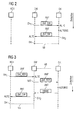
- FIGS. 2 to 9 Various operations of the device and the operation of the communication system according to the invention according to the first embodiment after FIG. 1 described.
- the network connection computer GW For a fast and efficient signing of a communication unit in a communication system KS according to the invention, it is first necessary that the data transmission between the network connection computer GW and the connection control computer GK can be done in a quick and easy way. For this purpose, it is expedient for the network connection computer GW to first log on to the connection control computer GK. The timing and the security mechanisms used are in FIG. 2 shown.
- the network connection computer GW sends a request message ANF, which is signed by means of the personal certificate of the network connection computer Zert_GW, to the connection control computer GK.
- a so-called Diffie-Hellman-Halfset which includes, inter alia, the public parameters for the Diffie-Hellman method include (indicated by the reference numeral DH 1 ).
- the authorization AUTORIS
- the connection control computer GK transmits a response message ANT signed with its personal certificate Zert_GK to the network connection computer GW, likewise transmitting a Diffie-Hellman halfset (reference number DH 2 ), to a common secret between the network connection computer GW and the connection control computer GK.
- the response message ANT is checked for authenticity (AUTC) by means of the root certificate of the connection control computer GK present to the network connection computer GW. If this check was successful, a secret is calculated using the Diffie-Hellman method (reference character DH), which establishes the basis of the trust relationship VB.
- the existence of a trust relationship VB now allows the transmission of a message between the network connection computer GW and the connection control computer GK without the use of the certificates. Instead, the negotiated secret can be used, which simplifies and significantly speeds up the process of checking a message.
- HMAC Hash-Based Message Authentication Code
- RFC2104 This is a message authentication mechanism specified in RFC2104 that uses cryptographic hash functions.
- HMAC can be used in conjunction with a secret, shared key with any one-way cryptographic hash function, eg SHA-1 (Secure Hash Algorithm).
- SHA-1 Secure Hash Algorithm
- the cryptographic strength of the HMAC depends on the properties of the underlying hash function.
- the registration of the communication unit KEH in the communication system KS, in particular on the connection control computer GK, take place.
- This process is in FIG. 3 shown.
- the communication unit KEH transmits a request message ANF, which has been supplemented by a Diffie-Hellman half set DH 1 and signed by means of its personal certificate Zert_KEH, to the network connection computer GW.
- This takes over, according to the inventive method, the authentication of the request message ANF. This is possible for him due to the present root certificate of the KEH communication unit.
- the authentication If the authentication is positive, it forwards the request message while changing at least part of the data (NAT) to the connection control computer GK.
- the encryption of the modified request message ANF takes place by means of the HMAC encryption method.
- the change of the data concerns in particular the conversion of the address.
- FIG. 4 shows two tables, with identical message fields included among others in the request message ANF.
- the fields include Message Type, Sender IP Address, Destination IP Address, Time, Sequence Number, General ID, DH Halfset, Certificate, Algorithm OID, and Signature.
- the network connection computer GW will be the one associated with FIG. 4 At least partially overwrite described fields, since the IP addresses in the second communication network NW2 are different.
- the recipient of the modified request message ANF must be able to distinguish whether it is an ordinary signed or "modified" request message. This is indicated by a modified algorithm OID.
- the profile of the communication unit KEH initiating the request message is now queried by the connection control computer GK for authorization control from the database DB.
- This the Communication unit associated profile contains information that uniquely identify the allowable certificate of the communication unit, either the certificate itself, or eg the serial number and the name of the publisher (so-called Issuer).
- connection control computer now sends a response message - depending on the result of the checks - in the H.235 baseline profile, which uses the HMAC, to the network connection computer GW.
- the network connection computer GW takes over a modification of the data (NAT) as described above, adds a DH halfset DH 2 and transmits the modified response message ANT 'to the communication unit KEH with the aid of its private certificate Zert_GW.
- the communication unit KEH checks the modified response message ANT 'for authenticity. If the check was successful, a shared secret is calculated from the received DH halfset with the network connection computer GW (reference character DH).
- the integrity protection of the modified reply message is done by means of the digital signature using Zert_GW.
- FIGS. 6 and 7 show the sequence of a failed logon of a network connection computer GW to the connection control computer GK.
- the logon fails because one of the related FIG. 4 mentioned authentication criteria was not met. In this case, there is no check for authorization the connection control computer instead. Instead, instead, a corresponding response message, using the certificate Zert_GK, is transmitted to the network connection computer GW, which in turn performs an authenticity check. In the reply message, the network connection computer is informed of the refusal of the login.
- the check for authenticity in the example is according to FIG. 7 positive, but there is an error checking for authorization. Also in this case, the network connection computer is informed by a response message ANT about the failure of the application.
- FIGS. 6 and 7 is dispensed with the transmission of a DH half set by the connection control computer GK, since the agreement of a shared secret is not necessary.
- connection control computer GK performs the above-described check for authorization. If this check fails, the connection control computer GK transmits a response message ANT to the network connection computer GW using HMAC. This modifies the message and sends it using its certificate Zert_GW to the communication unit KEH, which authenticates the modified response message ANT '.
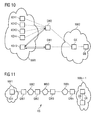
- FIG. 10 shows a second embodiment of a communication system with parallel network connection computers GW1, GW2, which are each coupled to the connection control computer GK.
- GW1 Connected to the network connection computer GW2 is a plurality of communication units KEH1,... KEH4.
- the network connection computer GW1 only a single communication unit KEH 5 is connected by way of example.
- the communication units KEH1, ... KEH4 and the communication unit KEH5 are located in a common communication network NW1.
- the connection control computer GK and the database DB are arranged in a communication network NW2.
- the communication unit KEH5 now wants to register in the communication system. For this purpose, it can send a request message both to the network connection computer GW2 and to the network connection computer GW1. Because of his heavy load transmits the network connection computer GW2 after checking the authenticity of the request message of the communication unit KEH5 a response message to this, in which he refuses a forwarding of the request message to the connection control computer GK. The communication unit KEH5 can now send another request message to the network connection computer GW1, which handles the handling of the request message. The further procedure corresponds to that in connection with the FIGS. 1 to 9 described procedure.
- FIGS. 11 to 15 refer to a third embodiment of a communication system according to the invention, which in FIG. 11 is shown in more detail.
- the communication system KS is characterized in that a plurality of network connection computers GW1, ... GWn are provided.
- the plurality of network connection computers are connected in series between the communication unit KEH1, which is located in a first communication network NW1, and the connection control computer GK, which is located together with the database DB in a communication network NWn + 1.
- Between two network connection computers GW1, GW2; GW2, GW3; GWn-1, GWn is a respective communication network NW2, NW3, ..., NWn arranged.
- connection control computer GK Based on FIG. 12 the transmission of a request message ANF from the communication unit KEH via the plurality of network connection computers GW1, ... GWn is described to the connection control computer GK. It is assumed that there is already a relationship of trust VB between respective network connection computers GW1, ... GWn and between the network connection computer GWn and the connection control computer GK. First, a trust relationship must be established between the network connection computer GWn connected to the connection control computer GK and the connection control computer GK. The further development of the trust relationship then takes place from the Connection Control Calculator GK off. This approach makes it possible to use the simpler HMAC integrity protection method when transferring a majority of messages. The signing of a message by means of a certificate is then necessary only in the first step between the registering communication element and the adjacent communication element.
- the procedure for the registration of the communication unit is in principle identical to that in connection with the FIGS. 1 to 9 described.
- a check of the request message ANF for authentication takes place only in the network connection computer GW1 adjacent to the communication unit. If the check for authentication was positive, the message is passed on to the connection control computer, in each case at least partially changing data from the other network connection computers GW2,..., GWn. The same applies to the transmission of the response message from the connection control computer GK to the network connection computer GW1.
- only integrity protection using HMAC takes place, with the response message being modified by each network connection computer in the data path.
- the transmission of the response message ANT '''from the network connection computer GW1 to the communication unit KEH takes place as in FIG. 3 , described.
- FIGS. 14 and 15 show failed login attempts of the communication unit KEH in the communication system. There checking the request message for authenticity is performed exclusively by the network connection computer GW1, in the case of a negative check immediately a response message ANT sent back to the communication unit KEH. A modification and transmission of the request message ANF to one of the other network connection computers GW2, ..., GWn does not take place ( FIG. 14 ).
- the authenticity check has proceeded positively, so that the request message ANF is transmitted with modification by each network connection computer GW1,... GWn to the connection control computer GK.
- a response message is generated which is transmitted to the network connection computer GW1 using the HMAC method. Since a login is denied by the connection control computer GK, no further Diffie-Hellman halfset is added to the re-modified reply message ANT "'Thus, the establishment of a trust relationship between the communication unit and the network connection computer GW1 is not possible.
- connection control computer is formed by a computer.
- connection control computer can also be divided into several computers.
Landscapes
- Engineering & Computer Science (AREA)
- Signal Processing (AREA)
- Computer Networks & Wireless Communication (AREA)
- Computer Security & Cryptography (AREA)
- Business, Economics & Management (AREA)
- General Business, Economics & Management (AREA)
- Multimedia (AREA)
- Computer Hardware Design (AREA)
- Computing Systems (AREA)
- General Engineering & Computer Science (AREA)
- Data Exchanges In Wide-Area Networks (AREA)
Applications Claiming Priority (2)
| Application Number | Priority Date | Filing Date | Title |
|---|---|---|---|
| DE102004004048A DE102004004048A1 (de) | 2004-01-27 | 2004-01-27 | Kommunikationssystem, Verfahren zum Anmelden einer Kommunikationsbeziehung und Netzwerkverbindungs-Rechner |
| EP04106363.7A EP1560393B1 (fr) | 2004-01-27 | 2004-12-07 | Dispositifs and méthode pour la vérification de l'authenticité et de l'autorisation d'un message de demande |
Related Parent Applications (1)
| Application Number | Title | Priority Date | Filing Date |
|---|---|---|---|
| EP04106363.7 Division | 2004-12-07 |
Publications (1)
| Publication Number | Publication Date |
|---|---|
| EP2247062A1 true EP2247062A1 (fr) | 2010-11-03 |
Family
ID=34638756
Family Applications (3)
| Application Number | Title | Priority Date | Filing Date |
|---|---|---|---|
| EP10008062A Withdrawn EP2247062A1 (fr) | 2004-01-27 | 2004-12-07 | Dispositifs and méthode pour la vérification de l'authenticité et de l'autorisation d'un message de demande |
| EP04106363.7A Expired - Lifetime EP1560393B1 (fr) | 2004-01-27 | 2004-12-07 | Dispositifs and méthode pour la vérification de l'authenticité et de l'autorisation d'un message de demande |
| EP10008065A Withdrawn EP2247063A1 (fr) | 2004-01-27 | 2004-12-07 | Dispositifs and méthode pour la vérification de l'authenticité et de l'autorisation d'un message de demande |
Family Applications After (2)
| Application Number | Title | Priority Date | Filing Date |
|---|---|---|---|
| EP04106363.7A Expired - Lifetime EP1560393B1 (fr) | 2004-01-27 | 2004-12-07 | Dispositifs and méthode pour la vérification de l'authenticité et de l'autorisation d'un message de demande |
| EP10008065A Withdrawn EP2247063A1 (fr) | 2004-01-27 | 2004-12-07 | Dispositifs and méthode pour la vérification de l'authenticité et de l'autorisation d'un message de demande |
Country Status (4)
| Country | Link |
|---|---|
| US (1) | US7787441B2 (fr) |
| EP (3) | EP2247062A1 (fr) |
| CN (1) | CN1649331B (fr) |
| DE (1) | DE102004004048A1 (fr) |
Families Citing this family (4)
| Publication number | Priority date | Publication date | Assignee | Title |
|---|---|---|---|---|
| DE102004039407A1 (de) | 2004-08-13 | 2006-02-23 | Siemens Ag | Kommunikationssystem, Verfahren zum Anmelden in einem Kommunikationssystem und Netzwerkverbindungs-Rechner |
| US8533339B2 (en) * | 2006-10-13 | 2013-09-10 | Cisco Technology, Inc. | Discovering security devices located on a call path and extending bindings at those discovered security devices |
| CN101296085B (zh) * | 2008-06-23 | 2011-07-13 | 中兴通讯股份有限公司 | 基于分叉的认证方法、系统以及分叉认证装置 |
| CN113760405B (zh) * | 2021-01-29 | 2024-05-17 | 北京京东拓先科技有限公司 | 一种网关接口的验签方法、装置、存储介质及电子设备 |
Citations (2)
| Publication number | Priority date | Publication date | Assignee | Title |
|---|---|---|---|---|
| EP1267548A2 (fr) * | 2001-06-14 | 2002-12-18 | Microsoft Corporation | Dispositif et procédé pour l'intégration de mécanismes de sécurité dans les messages de requête SIP pour l'authentification client-proxy |
| EP1381201A2 (fr) * | 2002-07-10 | 2004-01-14 | Sony Corporation | Système, méthode et programme pour l'accès à distance à une ressource avec certificats |
Family Cites Families (13)
| Publication number | Priority date | Publication date | Assignee | Title |
|---|---|---|---|---|
| DE19833969A1 (de) | 1998-07-28 | 2000-02-03 | Siemens Ag | Verfahren zum Aufbau einer Kommunikationsverbindung |
| US6031896A (en) * | 1998-10-23 | 2000-02-29 | Gte Laboratories Incorporated | Real-time voicemail monitoring and call control over the internet |
| US6654366B1 (en) * | 1999-02-25 | 2003-11-25 | 3Com Corporation | Use of virtual gateway in H.323 system |
| US6985957B2 (en) * | 1999-06-29 | 2006-01-10 | Nec Corporation | Gateway system, gateway system configuring method, and gateway apparatus |
| EP1277318A2 (fr) | 2000-04-25 | 2003-01-22 | Nokia Corporation | Procede et passerelle permettant d'assurer le transfert des appels de communication sans fil |
| US6757275B2 (en) * | 2000-09-11 | 2004-06-29 | Bob Sorrentino | Method and system of managing connections between circuit-switched and packet-switched networks |
| US20030106067A1 (en) * | 2001-11-30 | 2003-06-05 | Hoskins Steve J. | Integrated internet protocol (IP) gateway services in an RF cable network |
| US7185359B2 (en) * | 2001-12-21 | 2007-02-27 | Microsoft Corporation | Authentication and authorization across autonomous network systems |
| US7668306B2 (en) * | 2002-03-08 | 2010-02-23 | Intel Corporation | Method and apparatus for connecting packet telephony calls between secure and non-secure networks |
| US7114180B1 (en) * | 2002-07-16 | 2006-09-26 | F5 Networks, Inc. | Method and system for authenticating and authorizing requestors interacting with content servers |
| US7031450B2 (en) * | 2002-08-27 | 2006-04-18 | Itxl Ip Holdings, S.A.R.L. | Call routing system and method |
| WO2005011232A2 (fr) * | 2003-07-24 | 2005-02-03 | 3E Technologies International, Inc. | Procede et systeme de configuration rapide de communications de voix de groupe sur ip |
| US20050240765A1 (en) * | 2004-04-22 | 2005-10-27 | International Business Machines Corporation | Method and apparatus for authorizing access to grid resources |
-
2004
- 2004-01-27 DE DE102004004048A patent/DE102004004048A1/de not_active Withdrawn
- 2004-12-07 EP EP10008062A patent/EP2247062A1/fr not_active Withdrawn
- 2004-12-07 EP EP04106363.7A patent/EP1560393B1/fr not_active Expired - Lifetime
- 2004-12-07 EP EP10008065A patent/EP2247063A1/fr not_active Withdrawn
-
2005
- 2005-01-25 US US11/042,871 patent/US7787441B2/en active Active
- 2005-01-27 CN CN200510005820.0A patent/CN1649331B/zh not_active Expired - Lifetime
Patent Citations (2)
| Publication number | Priority date | Publication date | Assignee | Title |
|---|---|---|---|---|
| EP1267548A2 (fr) * | 2001-06-14 | 2002-12-18 | Microsoft Corporation | Dispositif et procédé pour l'intégration de mécanismes de sécurité dans les messages de requête SIP pour l'authentification client-proxy |
| EP1381201A2 (fr) * | 2002-07-10 | 2004-01-14 | Sony Corporation | Système, méthode et programme pour l'accès à distance à une ressource avec certificats |
Non-Patent Citations (3)
| Title |
|---|
| 1 January 1996, O'REILLY VERLAG, ISBN: 3930673185, article KIRCH OLAF: "Linux Wegweiser für Netzwerker, Kapitel 9: Wichtige Netzwerk-Features", pages: 135 - 145, XP002601372 * |
| ITU-T SG16: "H.235 - Security and encryption for H-series (H.323 and other H.245-based) multimedia terminals (H.235v3)", ITU-T RECOMMENDATION, August 2003 (2003-08-01), pages 1 - 118, XP002325059, Retrieved from the Internet <URL:www.itu.int/itu-t> [retrieved on 20050418] * |
| J. ROSENBERG; H. SCHULZRINNE; G. CAMARILLO; A. JOHNSTON; J. PETERSON; R. SPARKS; M. HANDLEY; E. SCHOOLER: "RFC 3261 - SIP: Session Initiation Protocol", IETF REQUEST FOR COMMENTS, June 2002 (2002-06-01), pages 1 - 269, XP015009039 * |
Also Published As
| Publication number | Publication date |
|---|---|
| US7787441B2 (en) | 2010-08-31 |
| CN1649331A (zh) | 2005-08-03 |
| EP1560393A1 (fr) | 2005-08-03 |
| EP2247063A1 (fr) | 2010-11-03 |
| CN1649331B (zh) | 2011-12-14 |
| US20050169251A1 (en) | 2005-08-04 |
| DE102004004048A1 (de) | 2005-08-18 |
| EP1560393B1 (fr) | 2013-05-01 |
Similar Documents
| Publication | Publication Date | Title |
|---|---|---|
| DE19740547B4 (de) | Vorrichtung und Verfahren zum Sicherstellen sicherer Kommunikation zwischen einer anfordernden Entität und einer bedienenden Entität | |
| EP0903026B1 (fr) | Procédé de négociation d'une politique de sécurité entre une première et une seconde unité informatique | |
| DE60201522T2 (de) | Ermöglichen legales abfangen von ip-verbindungen | |
| EP1982494B1 (fr) | Procédé, dispositif et produit-programme informatique permettant la transmission codée de données multimédia entre le serveur multimédia et le terminal utilisateur | |
| EP2245832A1 (fr) | Procédé d'authentification d'une information de codage entre des points finaux d'une relation de communication | |
| EP2014010B1 (fr) | Procédé, dispositifs et programme informatique pour coder et décoder des données multimédias | |
| EP1316188A1 (fr) | Procede d'identification d'utilisateurs d'internet | |
| EP3799379B1 (fr) | Procédé et système de communication à base d'ip permettant de changer les instances de commande de connexion sans nouvel enregistrement des abonnés finaux | |
| EP1560393B1 (fr) | Dispositifs and méthode pour la vérification de l'authenticité et de l'autorisation d'un message de demande | |
| EP1468520B1 (fr) | Procede de securisation du trafic de donnees dans un environnement de reseau de telephonie mobile | |
| EP1430693B1 (fr) | Procede et dispositif de mise en oeuvre d'une application de pare-feu pour des donnees de communication | |
| EP1776821B1 (fr) | Systeme et procede de demande de communication fiable dans un systeme de communication comprenant des ordinateurs de communication reseau et des ordinateurs de commande de communication | |
| EP3955511B1 (fr) | Transfert de données sécurisé dans un noeud de réseau qkd | |
| EP3170295A1 (fr) | Procédé de libération de systèmes informatiques externes dans une infrastructure de réseau informatique, réseau informatique distribué ayant une telle infrastructure de réseau informatique, et un produit programme d'ordinateur | |
| DE60219915T2 (de) | Verfahren zur Sicherung von Kommunikationen in einem Computersystem | |
| EP2027670B1 (fr) | Procédé de protection des connexions ip pour des interconnexions entre exploitants de réseau | |
| EP1847092A1 (fr) | Procede pour intervenir dans des liaisons de communication codees dans un reseau oriente paquet | |
| EP2773081A1 (fr) | Appareil de communication pour un réseau de communication industriel et procédé de mise à disposition de données, en particulier de fichiers, dans un réseau de communication industriel au moyen d'un protocole FTP | |
| EP1496665B1 (fr) | Procédé de configuration de sécurité dans un réseau d'automatisation | |
| WO2005020534A1 (fr) | Procede et dispositif pour transmettre des informations de securite et des informations utiles par l'intermediaire de liaisons securisees separees | |
| DE102018117611B3 (de) | Verschlüsselungssystem für Telefongespräche | |
| DE10255618A1 (de) | Verfahren zur Datenverkehrssicherung in einer mobilen Netzumgebung | |
| DE19833969A1 (de) | Verfahren zum Aufbau einer Kommunikationsverbindung | |
| EP2101468B1 (fr) | Prise en compte d'informations de signalisation dans un protocole de gestion de clé pour le transport de médias sûr | |
| EP3823235A1 (fr) | Transfert de données vérifié de manière spécifique à la connexion à l'aide d'une connexion réseau authentifiée de manière cryptographique |
Legal Events
| Date | Code | Title | Description |
|---|---|---|---|
| PUAI | Public reference made under article 153(3) epc to a published international application that has entered the european phase |
Free format text: ORIGINAL CODE: 0009012 |
|
| AC | Divisional application: reference to earlier application |
Ref document number: 1560393 Country of ref document: EP Kind code of ref document: P |
|
| AK | Designated contracting states |
Kind code of ref document: A1 Designated state(s): AT BE BG CH CY CZ DE DK EE ES FI FR GB GR HU IE IS IT LI LT LU MC NL PL PT RO SE SI SK TR |
|
| 17P | Request for examination filed |
Effective date: 20110503 |
|
| 17Q | First examination report despatched |
Effective date: 20120621 |
|
| RAP1 | Party data changed (applicant data changed or rights of an application transferred) |
Owner name: SIEMENS AKTIENGESELLSCHAFT |
|
| STAA | Information on the status of an ep patent application or granted ep patent |
Free format text: STATUS: THE APPLICATION IS DEEMED TO BE WITHDRAWN |
|
| 18D | Application deemed to be withdrawn |
Effective date: 20130730 |