EP2247121A1 - Lautsprecherkurven-korrektureinrichtung, lautsprecherkurven-korrekturverfahren und lautsprecherkurven-korrekturprogramm - Google Patents
Lautsprecherkurven-korrektureinrichtung, lautsprecherkurven-korrekturverfahren und lautsprecherkurven-korrekturprogramm Download PDFInfo
- Publication number
- EP2247121A1 EP2247121A1 EP08703387A EP08703387A EP2247121A1 EP 2247121 A1 EP2247121 A1 EP 2247121A1 EP 08703387 A EP08703387 A EP 08703387A EP 08703387 A EP08703387 A EP 08703387A EP 2247121 A1 EP2247121 A1 EP 2247121A1
- Authority
- EP
- European Patent Office
- Prior art keywords
- speaker
- characteristic
- sound field
- correction
- unit
- Prior art date
- Legal status (The legal status is an assumption and is not a legal conclusion. Google has not performed a legal analysis and makes no representation as to the accuracy of the status listed.)
- Withdrawn
Links
Images








Classifications
-
- H—ELECTRICITY
- H04—ELECTRIC COMMUNICATION TECHNIQUE
- H04R—LOUDSPEAKERS, MICROPHONES, GRAMOPHONE PICK-UPS OR LIKE ACOUSTIC ELECTROMECHANICAL TRANSDUCERS; ELECTRIC HEARING AIDS; PUBLIC ADDRESS SYSTEMS
- H04R29/00—Monitoring arrangements; Testing arrangements
- H04R29/001—Monitoring arrangements; Testing arrangements for loudspeakers
-
- H—ELECTRICITY
- H04—ELECTRIC COMMUNICATION TECHNIQUE
- H04R—LOUDSPEAKERS, MICROPHONES, GRAMOPHONE PICK-UPS OR LIKE ACOUSTIC ELECTROMECHANICAL TRANSDUCERS; ELECTRIC HEARING AIDS; PUBLIC ADDRESS SYSTEMS
- H04R3/00—Circuits for transducers
- H04R3/04—Circuits for transducers for correcting frequency response
Definitions
- the present invention relates to a technique of calculating a sound field characteristic of a speaker.
- a sound field characteristic in a car by a speaker is calculated.
- a car audio apparatus mounted on a car which obtains an optimum sound field per car model in Patent Preference-1.
- this technique reads out an equalizer characteristic data per existing speaker based on selection information, and performs an adjustment of an output signal.
- Patent Reference-2 there is disclosed a technique related to the present invention in Patent Reference-2.
- Patent Reference-2 there is not disclosed the method for calculating the sound field characteristic in case of using a variety of speakers.
- the present invention has been achieved in order to solve the above problem. It is an object of the present invention to provide a speaker characteristic correction device, a speaker characteristic correction method and a speaker characteristic correction program which can easily calculate a sound field characteristic at an evaluation point in case of using a variety of speakers.
- a speaker characteristic correction device includes: a first speaker information obtaining unit which obtains a first speaker information of a first speaker; a sound field characteristic obtaining unit which obtains a first sound field characteristic at an evaluation point that is obtained by using the first speaker in advance; a second speaker parameter obtaining unit which obtains a second speaker parameter indicating a mechanical characteristic and an electric characteristic of a second speaker; a correction characteristic calculating unit which calculates a correction characteristic to be applied to the first sound field characteristic in order to calculate a second sound field characteristic of the second speaker, based on the first speaker information and the second speaker parameter; and a correction characteristic applying unit which calculates the second sound field characteristic by applying the correction characteristic to the first sound field characteristic.
- a speaker characteristic correction method includes: a first speaker information obtaining process which obtains a first speaker information of a first speaker; a sound field characteristic obtaining process which obtains a first sound field characteristic at an evaluation point that is obtained by using the first speaker in advance; a second speaker parameter obtaining process which obtains a second speaker parameter indicating a mechanical characteristic and an electric characteristic of a second speaker; a correction characteristic calculating process which calculates a correction characteristic to be applied to the first sound field characteristic in order to calculate a second sound field characteristic of the second speaker, based on the first speaker information and the second speaker parameter; and a correction characteristic applying process which calculates the second sound field characteristic by applying the correction characteristic to the first sound field characteristic.
- a speaker characteristic correction program executed by a computer, making the computer function as: a first speaker information obtaining unit which obtains a first speaker information of a first speaker; a sound field characteristic obtaining unit which obtains a first sound field characteristic at an evaluation point that is obtained by using the first speaker in advance; a second speaker parameter obtaining unit which obtains a second speaker parameter indicating a mechanical characteristic and an electric characteristic of a second speaker; a correction characteristic calculating unit which calculates a correction characteristic to be applied to the first sound field characteristic in order to calculate a second sound field characteristic of the second speaker, based on the first speaker information and the second speaker parameter; and a correction characteristic applying unit which calculates the second sound field characteristic by applying the correction characteristic to the first sound field characteristic.
- a speaker characteristic correction device including: a first speaker information obtaining unit which obtains a first speaker information of a first speaker; a sound field characteristic obtaining unit which obtains a first sound field characteristic at an evaluation point that is obtained by using the first speaker in advance; a second speaker parameter obtaining unit which obtains a second speaker parameter indicating a mechanical characteristic and an electric characteristic of a second speaker; a correction characteristic calculating unit which calculates a correction characteristic to be applied to the first sound field characteristic in order to calculate a second sound field characteristic of the second speaker, based on the first speaker information and the second speaker parameter; and a correction characteristic applying unit which calculates the second sound field characteristic by applying the correction characteristic to the first sound field characteristic.
- the above speaker characteristic correction device is preferably used for correcting the sound field characteristic of the speaker used in the car audio.
- the first speaker information obtaining unit obtains the first speaker information
- the sound field characteristic obtaining unit obtains the first sound field characteristic at the evaluation point
- the second speaker parameter obtaining unit obtains the second speaker parameter.
- the correction characteristic calculating unit calculates the correction characteristic (correction curve) to be applied to the first sound field characteristic based on the first speaker information and the second speaker parameter
- the correction characteristic applying unit calculates the second sound field characteristic by applying the correction characteristic to the first sound field characteristic.
- the speaker characteristic correction device calculates the second sound field characteristic by applying the calculated correction characteristic to the results of the preliminary measurement and the preliminary analysis.
- the correction characteristic calculating unit calculates the correction characteristic based on a difference between a diaphragm velocity of the first speaker and a diaphragm velocity of the second speaker.
- the correction characteristic calculating unit calculates the correction characteristic based on a difference between a voltage of the first speaker and a voltage of the second speaker.
- the first speaker information obtaining unit obtains, as the first speaker information, a voltage of the first speaker, a diaphragm velocity of the first speaker and a force that the first speaker receives from a medium. Namely, the first speaker information obtaining unit obtains the operating condition of the first speaker as the first speaker information.
- the first speaker information obtaining unit obtains, as the first speaker information, a first speaker parameter indicating a mechanical characteristic and an electric characteristic of the first speaker.
- the correction characteristic calculating unit calculates a diaphragm velocity of the first speaker and a diaphragm velocity of the second speaker so as to calculate the correction characteristic, by setting a force that the first speaker receives from a medium and a force that the second speaker receives from a medium to a predetermined value and setting a voltage of the first speaker and a voltage of the second speaker to a predetermined value.
- the speaker characteristic correction device calculates the sound field characteristic without using the operating condition of the first speaker. Thereby, it is possible to reduce the burden of measuring and analyzing the operating condition of the first speaker in advance, and it is possible to calculate the sound field characteristic more easily.
- the correction characteristic calculating unit calculates a voltage of the first speaker and a voltage of the second speaker so as to calculate the correction characteristic, by setting a force that the first speaker receives from a medium and a force that the second speaker receives from a medium to a predetermined value and setting a diaphragm velocity of the first speaker and a diaphragm velocity of the second speaker to a predetermined value.
- the correction characteristic calculating unit calculates the correction characteristic based on a difference between an area of a diaphragm of the first speaker and an area of a diaphragm of the second speaker. Thereby, it becomes possible to calculate the sound field characteristic with higher accuracy.
- the above speaker characteristic correction device further includes a display unit which displays the second sound field characteristic calculated by the correction characteristic applying unit. Therefore, by visually judging the second sound field characteristic, it is possible to evaluate the second sound field characteristic.
- the above speaker characteristic correction device further includes a correction unit which corrects a sound signal by using an equalizer curve based on the second sound field characteristic calculated by the correction characteristic applying unit.
- the above speaker characteristic correction device further includes comprising an evaluation unit which evaluates the second speaker based on the second sound field characteristic calculated by the correction characteristic applying unit.
- the correction characteristic applying unit may calculate the second sound field characteristics of plural speakers, and the evaluation unit may determine an optimum speaker from the plural speakers by executing the evaluation based on the second sound field characteristics of the plural speakers calculated by the correction characteristic applying unit.
- the above speaker characteristic correction device further may include a storage unit which stores the first speaker information, the first sound field characteristic and the second speaker parameter, wherein the first speaker information obtaining unit, the sound field characteristic obtaining unit and the second speaker parameter obtaining unit obtain the first speaker information, the first sound field characteristic and the second speaker parameter from the storage unit, respectively.
- the first speaker information obtaining unit may obtain the first speaker information of the first speaker corresponding to the model number from the storage unit, in such a case that a model number of the first speaker and a car model are input, the sound field characteristic obtaining unit may obtain the first sound field characteristic of the first speaker corresponding to the model number and the car model from the storage unit, and in such a case that a model number of the second speaker is input, the second speaker parameter obtaining unit may obtain the second speaker parameter of the second speaker corresponding to the model number from the storage unit.
- a speaker characteristic correction method including: a first speaker information obtaining process which obtains a first speaker information of a first speaker; a sound field characteristic obtaining process which obtains a first sound field characteristic at an evaluation point that is obtained by using the first speaker in advance; a second speaker parameter obtaining process which obtains a second speaker parameter indicating a mechanical characteristic and an electric characteristic of a second speaker; a correction characteristic calculating process which calculates a correction characteristic to be applied to the first sound field characteristic in order to calculate a second sound field characteristic of the second speaker, based on the first speaker information and the second speaker parameter; and a correction characteristic applying process which calculates the second sound field characteristic by applying the correction characteristic to the first sound field characteristic.
- a speaker characteristic correction program executed by a computer, making the computer function as: a first speaker information obtaining unit which obtains a first speaker information of a first speaker; a sound field characteristic obtaining unit which obtains a first sound field characteristic at an evaluation point that is obtained by using the first speaker in advance; a second speaker parameter obtaining unit which obtains a second speaker parameter indicating a mechanical characteristic and an electric characteristic of a second speaker; a correction characteristic calculating unit which calculates a correction characteristic to be applied to the first sound field characteristic in order to calculate a second sound field characteristic of the second speaker, based on the first speaker information and the second speaker parameter; and a correction characteristic applying unit which calculates the second sound field characteristic by applying the correction characteristic to the first sound field characteristic.
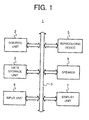
- FIG. 1 shows a schematic configuration of a car audio 1 to which a speaker characteristic correction device according to the first embodiment is applied.
- the car audio 1 mainly includes a control unit 2, a data storage unit 3, an input unit 4, a reproducing device 5, a speaker 6 and a display unit 7.
- the control unit 2 includes a CPU (Central Processing Unit), a ROM (Read Only Memory) and a RAM (Random Access Memory), which are not shown, and controls the entire car audio 1.
- the data storage unit 3 includes HDD, for example, and stores various kinds of data used for a process.
- the input unit 4 includes keys, switches, buttons and a remote controller, which are used for inputting various kinds of commands and data.
- the reproducing device 5 reads contents data such as sound data and video data from a disc such as a CD and a DVD to output the contents data.
- the speaker 6 includes a tweeter, a mid bass and a woofer, which are not shown, and outputs a sound under the control of the control unit 2.
- the control unit 2 executes a variety of processes to a sound signal transmitted from the reproducing device 5 via a bus line 9, and the speaker 6 converts the processed sound signal into the sound to output the sound.
- the display unit 7 displays various kinds of display data under the control of the control unit 2.
- the display unit 7 includes a graphic controller, a buffer memory, a display such as a liquid crystal and a CRT (Cathode Ray Tube) and a drive circuit for driving the display, which are not shown. Additionally, in such a case that the display unit 7 is in a touch panel system, a touch panel provided on the display screen of the display functions as the input unit 4, too.
- FIG. 2 shows a control block of the control unit 2 according to the first embodiment.
- the control unit 2 includes a first speaker information obtaining unit 2a, a sound field characteristic obtaining unit 2b, a second speaker parameter obtaining unit 2c, a correction characteristic calculating unit 2d and a correction characteristic applying unit 2e.
- the control unit 2 mainly executes the process for calculating the sound field characteristic at the evaluation point in case of using the changed speaker.
- the control unit 2 uses the first sound field characteristic that is preliminarily obtained by the measurement and the analysis in case of using the original speaker (it corresponds to the speaker that is preliminarily installed in the car, and it is hereinafter referred to as "first speaker”) so as to calculate the second sound field characteristic of the changed speaker (it is the target speaker for calculating the sound field characteristic, and it is hereinafter referred to as "second speaker").
- the control unit 2 calculates the correction characteristic based on the difference of the operating condition in case of driving the two types of speakers including the first speaker and the second speaker on approximately the same condition, and calculates the second sound field characteristic by applying the correction characteristic to the first sound field characteristic. Specifically, the control unit 2 calculates the correction characteristic to be applied to the first sound field characteristic so as to calculate the second sound field characteristic, based on the first sound field characteristic, the first speaker information of the first speaker and the second speaker parameter of the second speaker.
- the first sound field characteristic, the first speaker information and the second speaker parameter are stored in the data storage unit 3, for example.
- the first speaker information is stored in association with a model number of the first speaker
- the first sound field characteristic is stored in association with the model number of the first speaker and a car model (for example, sedan, wagon, minivan) for which the measurement and the analysis of the sound field characteristic of the first speaker is performed.
- the second speaker parameter is stored in association with a model number of the second speaker.
- control unit 2 functions as the speaker characteristic correction device.
- control unit 2 corresponds to the sound field characteristic obtaining unit, the first speaker information obtaining unit, the second speaker parameter obtaining unit, the correction characteristic calculating unit and the correction characteristic applying unit.
- the data storage unit 3 corresponds to the storage unit.
- the first speaker information obtaining unit 2a obtains the first speaker information of the first speaker. Specifically, the first speaker information obtaining unit 2a obtains, as the first speaker information, any combination of a first speaker parameter indicating a mechanical characteristic and an electric characteristic of the first speaker, a voltage of the first speaker, a diaphragm velocity of the first speaker and a force that the first speaker receives from a medium (hereinafter, the voltage, the diaphragm velocity and the receiving force from the medium are collectively referred to as "operating condition"), which is required for calculating the correction characteristic. In this case, the first speaker information obtaining unit 2a obtains the first speaker information from the input unit 4 or the data storage unit 3.
- the first speaker information obtaining unit 2a obtains the first speaker information that is directly input by the user via the input unit 4, or obtains the first speaker information that is preliminarily stored in the data storage unit 3. In such a case that the model number of the first speaker is input by the user, the first speaker information obtaining unit 2a obtains the first speaker information corresponding to the model number from the data storage unit 3.
- the sound field characteristic obtaining unit 2b obtains the first sound field characteristic at the evaluation point (the predetermined point in the car compartment) that is preliminarily measured and analyzed by using the first speaker. Concretely, the sound field characteristic obtaining unit 2b obtains the first sound field characteristic from the input unit 4 or the data storage unit 3. Namely, the sound field characteristic obtaining unit 2b obtains the first sound field characteristic that is directly input by the user via the input unit 4, or obtains the first sound field characteristic that is preliminarily stored in the data storage unit 3.
- the sound field characteristic obtaining unit 2b obtains the first sound field characteristic corresponding to the model number and the car model from the data storage unit 3.
- the second speaker parameter obtaining unit 2c obtains the second speaker parameter indicating the mechanical characteristic and the electric characteristic of the second speaker.
- the second speaker parameter obtaining unit 2c obtains the second speaker parameter from the input unit 4 or the data storage unit 3. Namely, the second speaker parameter obtaining unit 2c obtains the second speaker parameter that is directly input by the user via the input unit 4, or obtains the second speaker parameter that is stored in the data storage unit 3. In such a case that the model number of the second speaker is input by the user, the second speaker parameter obtaining unit 2c obtains the second speaker parameter corresponding to the model number from the data storage unit 3.
- the correction characteristic calculating unit 2d calculates the correction characteristic (hereinafter referred to as "correction curve") to be applied to the first sound field characteristic in order to calculate the second sound field characteristic, based on the first speaker information obtained by the first speaker information obtaining unit 2a and the second speaker parameter obtained by the second speaker parameter obtaining unit 2c. Concretely, the correction characteristic calculating unit 2d calculates the correction curve based on the difference between the voltage of the first speaker and the voltage of the second speaker or the difference between the diaphragm velocity of the first speaker and the diaphragm velocity of the second speaker.
- the correction characteristic calculating unit 2d calculates the correction curve as a correction filter to be applied to the first sound field characteristic, based on the difference of the voltage or the difference of the diaphragm velocity in case of driving the two types of speakers including the first speaker and the second speaker on approximately the same condition.
- the correction characteristic applying unit 2e calculates the second sound field characteristic by applying the correction curve calculated by the correction characteristic calculating unit 2d to the first sound field characteristic.
- the calculated second sound field characteristic is displayed on the display unit 7.
- the speaker type when the speaker type is changed, by applying the calculated correction curve to the results of the preliminary measurement and the preliminary analysis, it is possible to easily calculate the sound field characteristic without per forming the re-measurement by installing the speaker and without performing the re-analysis by setting the analysis condition. Therefore, by applying the calculated sound field characteristic to the original sound field characteristic, as for the combination of the variety of speakers, it becomes possible to easily evaluate the characteristic with taking the actual sound field into account. Concretely, if the first sound field characteristic is measured and analyzed per the plural car models, and the first sound field characteristic is stored in the data storage unit 3, it is possible to easily calculate the sound field characteristic in case of applying the variety of speakers to the plural car models, and it becomes possible to evaluate the sound field characteristic.
- the control unit 2 can execute the process other than the above-mentioned process.
- the control unit 2 can correct a sound signal by using an equalizer curve based on the calculated second sound field characteristic. Therefore, when the speaker in the car is changed, it becomes possible to easily obtain an optimum sound space.
- the car audio 1 includes the display unit 7. Namely, it is not limited that the calculated second sound field characteristic is displayed on the display unit 7. In this case, the car audio 1 performs the correction of the sound signal by using the equalizer curve based on the second sound field characteristic without displaying the second sound field characteristic.
- FIG. 3 shows an example of the speaker mounted on the car 80.
- a head unit 11 is installed in the car 80, and a tweeter (TW) 12, a mid bass (MID) 13 and a woofer (WF) 14 are installed as a speaker 15.
- the head unit 11 executes a variety of processes to a sound signal that is read out from such as a CD or a DVD, and outputs a sound signal to each of the tweeter 12, the mid bass 13 and the woofer 14.
- the head unit 11 includes a reproducing device which reproduces such as the CD or the DVD and a DSP (Digital Signal Processor) which processes the sound signal.
- the head unit 11 corresponds to the above control unit 2.
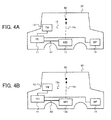
- FIGS. 4A and 4B are diagrams for explaining a characteristic change when the speaker is changed.
- FIG. 4A shows the same diagram as FIG. 3
- FIG. 4B shows a diagram in case of changing the mid bass 13 shown in FIG. 4A to a mid bass 13a.
- the speaker 15 shown in FIG. 4A corresponds to the first speaker
- the speaker 15a shown in FIG. 4B corresponds to the second speaker.
- a point shown by a reference numeral 90 shows the evaluation point (listening position). It is assumed that the first sound field characteristic at the evaluation point 90 in case of using the speaker 15 is obtained by the preliminary measurement and the preliminary analysis. Further, it is assumed that the speaker information (the first speaker information) of the speaker 15 is obtained.
- a transfer characteristic Hb from the mid bass 13a to the evaluation point 90 is little different from a transfer characteristic Ha from the original mid bass 13 to the evaluation point 90.
- a transfer characteristic H2 from the head unit 11 to the mid bass 13a is different from a transfer characteristic H1 from the head unit 11 to the mid bass 13.
- the characteristic H1, H2 are defined by a mechanical characteristic and an electric characteristic from the head unit 11 to the mid basses 13 and 13a.
- the control unit 2 calculates the correction curve based on the first speaker information and the second speaker parameter, and applies the correction curve to the first sound field characteristic so as to calculate the second sound field characteristic. Namely, the control unit 2 calculates the correction curve to be applied to the first sound field characteristic so as to calculate the second sound field characteristic, based on the difference of the voltage or the difference of the diaphragm velocity in case of driving the two types of speakers (the first speaker and the second speaker) on approximately the same condition. In this case, it can be said that the difference of the voltage between the first speaker and the second speaker or the difference of the diaphragm velocity between the first speaker and the second speaker approximately corresponds to the difference between the characteristic H1 and the characteristic H2.
- calculating the correction curve based on the difference of the voltage or the difference of the diaphragm velocity and applying the correction curve to the first sound field characteristic corresponds to performing the transformation from the characteristic H1 into the characteristic H2 and calculating the sound field characteristic of the speaker 15a.
- the correction curve is calculated by the difference between the diaphragm velocity of the first speaker and the diaphragm velocity of the second speaker based on the first speaker information and the second speaker parameter
- the second sound field characteristic is calculated by applying the correction curve to the first sound field characteristic.
- the control unit 2 uses the operating condition (the voltage, the diaphragm velocity and the receiving force from the medium) of the first speaker as the first speaker information, and calculates the correction curve by the difference of the diaphragm velocity between the first speaker and the second speaker based on the operating condition and the second speaker parameter.
- FIG. 5 schematically shows the behavior of the speaker.
- the current of the speaker 60 (corresponding to the above speaker 6, 15) is i, and the voltage of the speaker 60 is V.
- the diaphragm 60a receives the force F from the medium and vibrates at the velocity ud.
- the balance of the electric system of the speaker 60 is expressed by the equation (1), and the balance of the mechanical system is expressed by the equation (2).
- the speaker parameter can be obtained by the measurement of the electric impedance characteristic.
- the DC resistance Re, the force coefficient A, the mechanical resistance Rm, the equivalent mass Mo and the stiffness So are calculated by the resonance characteristic around f0.
- the inductance Le is calculated by the high frequency characteristic of the electric impedance.
- the electric impedance Ze and the mechanical impedance Zm are calculated by the equation (3) and the equation (4), respectively.
- the above-mentioned speaker parameter is stored in the above data storage unit 3. Even if the speaker parameter is not calculated as described above, the speaker parameter is sometimes described as a specification in a commercially available speaker unit.
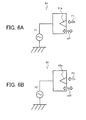
- FIGS. 6A and 6B are diagrams for concretely explaining the first method for calculating the sound field characteristic.
- FIG. 6A shows a schematic diagram of an original speaker 61 before changing the speaker
- FIG. 6B shows a schematic diagram of a speaker 62 after changing the speaker.
- the speaker 61 corresponds to the first speaker
- the speaker 62 corresponds to the second speaker.
- the speaker 61 is referred to as "first speaker”
- the speaker 62 is referred to as "second speaker”.
- the voltage of the first speaker is V1
- the diaphragm 61a vibrates at the velocity ud1 by receiving the force F1 from the medium.
- the voltage of the second speaker is V2
- the diaphragm 62a vibrates at the velocity ud2 by receiving the force F2 from the medium.
- the control unit 2 calculates the correction curve by the difference between the diaphragm velocity ud1 of the first speaker and the diaphragm velocity ud2 of the second speaker based on the first speaker information and the second speaker parameter, and calculates the second sound field characteristic by applying the correction curve to the first sound field characteristic. Concretely, first, the control unit 2 obtains, as the first speaker information, the voltage V1, the diaphragm velocity ud1 and the receiving force F1 from the medium (these correspond to the operating condition of the first speaker).
- FIGS. 7A to 7C show examples of the obtained operating condition of the first speaker.
- FIG. 7A shows the voltage V1
- FIG. 7B shows the diaphragm velocity ud1
- FIG. 7C shows the receiving force F1 from the medium.
- control unit 2 obtains the first sound field characteristic at the evaluation point that is preliminarily measured and analyzed by using the first speaker. Further, the control unit 2 obtains, as the second speaker parameter, the force coefficient A2, the electric impedance Ze2 and the mechanical impedance Zm2. Then, the control unit 2 calculates the diaphragm velocity ud2 of the second speaker by the following equation (7), based on the obtained first speaker information and the obtained second speaker parameter as described above.
- the control unit 2 calculates the diaphragm velocity ud2 of the second speaker by substituting, into the equation (7), the voltage V1 and the receiving force F1 from the medium, which are included in the first speaker information, and the force coefficient A2, the electric impedance Ze2 and the mechanical impedance Zm2, which are included in the second speaker parameter. Then, the control unit 2 calculates the correction curve by the difference between the diaphragm velocity ud1 of the first speaker and the diaphragm velocity ud2 of the second speaker based on the following equation (8).
- FIGS. 8A and 8B show examples of the calculated diaphragm velocity ud2 of the second speaker and the calculated correction curve as described above. Concretely, FIG. 8A shows the diaphragm velocity ud1 of the first speaker and the diaphragm velocity ud2 of the second speaker, and FIG. 8B shows the correction curve.
- control unit 2 calculates the second sound field characteristic by applying the calculated correction curve to the first sound field characteristic.
- FIG. 9 shows an example of the second sound field characteristic calculated by the first method.
- FIG. 9 shows the original first sound field characteristic, the second sound field characteristic of the second speaker obtained by the actual analysis and the second sound field characteristic calculated by the first method.
- the second sound field characteristic calculated by the first method approximately coincides with the second sound field characteristic obtained by actually analyzing the second speaker.
- the first method it can be said that it is possible to calculates the second sound field characteristic with high accuracy.
- the result shown in FIG. 9 can be displayed on the display unit 7 by the control unit 2. Therefore, when the speaker is changed, it becomes possible to easily compare the changed sound field characteristic with the original sound field.
- the first method when the speaker type is changed, it is possible to calculate the sound field characteristic with high accuracy and easily calculate the sound field characteristic.
- the correction curve is calculated by the difference between the voltage V1 of the first speaker and the voltage V2 of the second speaker based on the first speaker information and the second speaker parameter, and the second sound field characteristic is calculated by applying the correction curve to the first sound field characteristic. Namely, though the correction curve is calculated based on the difference of the diaphragm velocity in the first method, the correction curve is calculated based on the difference of the voltage instead of the difference of the diaphragm velocity in the second method.
- the control unit 2 obtains, as the first speaker information, the voltage V1, the diaphragm velocity ud1 and the receiving force F1 from the medium (these correspond to the operating condition of the first speaker). For example, the control unit 2 obtains the operating condition as shown in FIGS. 7A to 7C . In addition, the control unit 2 obtains the first sound field characteristic at the evaluation point that is preliminarily measured and analyzed by using the first speaker. Further, the control unit 2 obtains, as the second speaker parameter, the force coefficient A2, the electric impedance Ze2 and the mechanical impedance Zm2. Then, the control unit 2 calculates the voltage V2 of the second speaker by the following equation (9), based on the obtained first speaker information and the obtained second speaker parameter as described above.
- V ⁇ 2 A ⁇ 2 + Ze ⁇ 2 ⁇ Zm ⁇ 2 A ⁇ 2 ⁇ ud ⁇ 1 + F ⁇ 1 ⁇ Ze ⁇ 2 A ⁇ 2
- the control unit 2 calculates the voltage V2 of the second speaker by substituting, into the equation (9), the diaphragm velocity ud1 and the receiving force F1 from the medium, which are included in the first speaker information, and the force coefficient A2, the electric impedance Ze2 and the mechanical impedance Zm2, which are included in the second speaker parameter. Then, the control unit 2 calculates the correction curve by the difference between the voltage V1 of the first speaker and the voltage V2 of the second speaker based on the following equation (10).
- control unit 2 calculates the second sound field characteristic by applying the calculated correction curve to the first sound field characteristic.
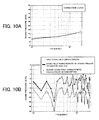
- FIGS. 10A and 10B show examples of the correction curve and the second sound field characteristic calculated by the second method.
- FIG. 10A shows the correction curve.
- FIG. 10B shows the original first sound field characteristic, the second sound field characteristic of the second speaker obtained by the actual analysis and the second sound field characteristic calculated by the second method.
- the second sound field characteristic calculated by the second method approximately coincides with the second sound field characteristic obtained by actually analyzing the second speaker.
- the second method it can be said that it is possible to calculate the second sound field characteristic with high accuracy, too.
- the result shown in FIG. 10B can be displayed on the display unit 7 by the control unit 2.
- the second method when the speaker type is changed, it is possible to calculate the sound field characteristic with high accuracy and easily calculate the sound field characteristic, too.
- the third method for calculating the sound field characteristic.
- the first speaker parameter indicating the mechanical characteristic and the electric characteristic of the first speaker is used as the first speaker information
- the correction curve is calculated based on the first speaker parameter and the second speaker parameter. Namely, though the operating condition (the voltage V1, the diaphragm velocity ud1 and the receiving force F1 from the medium) of the first speaker is used as the first speaker information in the first method and the second method, the correction curve is calculated by using the first speaker parameter as the first sneaker information without using the operating condition of the first speaker in the third method.
- the correction curve is calculated by the difference between the diaphragm velocity of the first speaker and the diaphragm velocity of the second speaker based on the first speaker parameter and the second speaker parameter, and the second sound field characteristic is calculated by applying the correction curve to the first sound field characteristic.
- the control unit 2 obtains, as the first speaker information, the force coefficient A1, the electric impedance Ze1 and the mechanical impedance Zm1 (these correspond to the first speaker parameter).
- the control unit 2 obtains the first sound field characteristic at the evaluation point that is preliminarily measured and analyzed by using the first speaker.
- the control unit 2 obtains, as the second speaker parameter, the force coefficient A2, the electric impedance Ze2 and the mechanical impedance Zm2.
- ud ⁇ 1 A ⁇ 1 ⁇ V ⁇ 1 - Ze ⁇ 1 ⁇ F ⁇ 1 A ⁇ 1 2 + Ze ⁇ 1 ⁇ Zm ⁇ 1
- the control unit 2 calculates the correction curve by the difference between the diaphragm velocity ud1 of the first speaker and the diaphragm velocity ud2 of the second speaker based on the above equation (8). Then, the control unit 2 calculates the second sound field characteristic by applying the calculated correction curve to the first sound field characteristic.
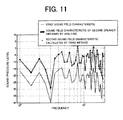
- FIG. 11 shows an example of the second sound field characteristic calculated by the third method.
- FIG. 11 shows the original first sound field characteristic, the second sound field characteristic of the second speaker obtained by the actual analysis and the second sound field characteristic calculated by the third method.
- the second sound field characteristic calculated by the third method approximately coincides with the second sound field characteristic obtained by actually analyzing the second speaker.
- the third method it can be said that it is possible to calculate the second sound field characteristic with high accuracy, too.
- the result shown in FIG. 11 can be displayed on the display unit 7 by the control unit 2.
- the third method since the sound field characteristic can be calculated without using the operating condition of the first speaker, it is possible to reduce the burden of measuring and analyzing the operating condition of the first speaker in advance. Therefore, the third method can calculate the sound field characteristic more easily than the first method and the second method. Additionally, since the second sound field characteristic calculated by the third method approximately coincides with the second sound field characteristic obtained by actually analyzing the second speaker as shown in FIG. 11 , it can be said that it is possible to obtain the satisfactory accuracy by the simplified method.
- the fourth method like the third method, the first speaker parameter is used as the first speaker information, and the correction curve is calculated based on the first speaker parameter and the second speaker parameter. Namely, the correction curve is calculated by using the first speaker parameter without using the operating condition (the voltage V1, the diaphragm velocity ud1 and the receiving force F1 from the medium) of the first speaker. Though the correction curve is calculated based on the difference of the diaphragm velocity in the third method, the correction curve is calculated based on the difference of the voltage instead of the difference of the diaphragm velocity in the fourth method.
- the control unit 2 obtains, as the first speaker information, the force coefficient A1, the electric impedance Ze1 and the mechanical impedance Zm1 (these correspond to the first speaker parameter).
- the control unit 2 obtains the first sound field characteristic at the evaluation point that is preliminarily measured and analyzed by using the first speaker.
- the control unit 2 obtains, as the second speaker parameter, the force coefficient A2, the electric impedance Ze2 and the mechanical impedance Zm2.
- V ⁇ 1 A ⁇ 1 + Ze ⁇ 1 ⁇ Zm ⁇ 1 A ⁇ 1 ⁇ ud ⁇ 1 + F ⁇ 1 ⁇ Ze ⁇ 1 A ⁇ 1
- V ⁇ 2 A ⁇ 2 + Ze ⁇ 2 ⁇ Zm ⁇ 2 A ⁇ 2 ⁇ ud ⁇ 2 + F ⁇ 2 ⁇ Ze ⁇ 2 A ⁇ 2
- the control unit 2 calculates the correction curve by the difference between the voltage V1 of the first speaker and the voltage V2 of the second speaker based on the above equation (10).
- the control unit 2 calculates the second sound field characteristic by applying the calculated correction curve to the first sound field characteristic.
- FIG. 12 shows an example of the second sound field characteristic calculated by the fourth, method.
- FIG. 12 shows the original first sound field characteristic, the sound field characteristic of the second speaker obtained by the actual analysis and the second sound field characteristic calculated by the fourth method.
- the second sound field characteristic calculated by the fourth method approximately coincides with the second sound field characteristic obtained by actually analyzing the second speaker.
- the fourth method it can be said that it is possible to calculate the second sound field characteristic with high accuracy, too.
- the result shown in FIG. 12 can be displayed on the display unit 7 by the control unit 2.
- the fourth method since the sound field characteristic can be calculated without using the operating condition of the first speaker, it is possible to reduce the burden of measuring and analyzing the operating condition of the first speaker in advance. Therefore, the fourth method can calculate the sound field characteristic more easily than the first method and the second method. Additionally, since the second sound field characteristic calculated by the fourth method approximately coincides with the second sound field characteristic obtained by actually analyzing the second speaker as shown in FIG. 12 , it can be said that it is possible to obtain the satisfactory accuracy by the simplified method.
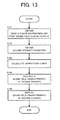
- FIG. 13 is a flow chart showing the speaker characteristic correction process according to the first embodiment.
- the control unit 2 obtains the first speaker information and the first sound field characteristic.
- the first speaker information obtaining unit 2a in the control unit 2 obtains, as the first speaker information, any combination of the first speaker parameter and the operating condition of the first speaker, which is required for calculating the correction characteristic.
- the first speaker information obtaining unit 2a obtains the operating condition of the first speaker in case of executing the first method or the second method, or obtains the first speaker parameter in case of executing the third method or the fourth method.
- the sound field characteristic obtaining unit 2b in the control unit 2 obtains the first sound field characteristic at the evaluation point that is preliminarily measured and analyzed by using the first speaker.
- the first speaker information obtaining unit 2a and the sound field characteristic obtaining unit 2b obtain the first speaker information and the first sound field characteristic from the input unit 4 or the data storage unit 3, respectively. Namely, the first speaker information obtaining unit 2a and the sound field characteristic obtaining unit 2b obtain the information that is directly input by the user via the input unit 4, or obtain the information that is preliminarily stored in the data storage unit 3. Further, in such a case that the model number of the first speaker and the car model are input by the user, the first speaker information obtaining unit 2a obtains the first speaker information corresponding to the model number from the data storage unit 3, and the sound field characteristic obtaining unit 2b obtains the first sound field characteristic corresponding to the model number and the car model from the data storage unit 3. When the above process ends, the process goes to step S102.
- step S102 the control unit 2 obtains the second speaker parameter indicating the mechanical characteristic and the electric characteristic of the second speaker.
- the second speaker parameter obtaining unit 2c in the control unit 2 obtains the second speaker parameter from the input unit 4 or the data storage unit 3.
- the second speaker parameter obtaining unit 2c obtains the second speaker parameter that is directly input by the user via the input unit 4, or obtains the second speaker parameter that is stored in the data storage unit 3.
- the second speaker parameter obtaining unit 2c obtains the second speaker parameter corresponding to the model number from the data storage unit 3.
- step S103 the control unit 2 calculates the correction curve to be applied to the first sound field characteristic in order to calculate the second sound field characteristic, based on the first speaker information obtained in step S101 and the second speaker parameter obtained in step S102.
- the correction characteristic calculating unit 2d in the control unit 2 calculates the correction curve based on the difference between the voltage of the first speaker and the voltage of the second speaker or the difference between the diaphragm velocity of the first speaker and the diaphragm velocity of the second speaker.
- the correction characteristic calculating unit 2d calculates the diaphragm velocity or the voltage of the second speaker by the equation (7) or the equation (9).
- the correction characteristic calculating unit 2d calculates the diaphragm velocities or the voltages of each of the first speaker and the second speaker by the equations (11) and (12) or the equations (13) and (14). Then, the correction characteristic calculating unit 2d calculates the correction curve by the equation (8) based on the difference of the diaphragm velocity in case of executing the first method or the third method, or calculates the correction curve by the equation (10) based on the difference of the voltage in case of executing the second method or the fourth method.
- the process goes to step S104.
- step S104 the control unit 2 calculates the second sound field characteristic by applying the correction curve calculated in step S103 to the first sound field characteristic. Then, the process goes two step S105.
- step S105 the control unit 2 executes the process for displaying the second sound field characteristic calculated in step S104 on the display unit 7. When the above process ends, the process goes out of the flow.
- the speaker characteristic correction process when the speaker type is changed, by applying the calculated correction curve to the results of the preliminary measurement and the preliminary analysis, it is possible to easily calculate the sound field characteristic without performing the re-measurement by installing the speaker and without performing the re-analysis by setting the analysis condition. Therefore, by applying the calculated sound field characteristic to the original sound field characteristic, as for the combination of the variety of car models and the variety of speaker types, it becomes possible to easily evaluate the characteristic with taking the actual sound field into account.
- the correction curve to be applied to the first sound field characteristic is calculated so as to calculate the second sound field characteristic, based on the difference of the voltage or the difference of the diaphragm velocity between the first speaker and the second speaker.
- the correction curve can be calculated so as to calculate the second sound field characteristic, in consideration of not only the difference of the voltage or the difference of the diaphragm velocity but also a difference between an area of the diaphragm of the first speaker and an area of the diaphragm of the second speaker.
- the second sound field characteristic is calculated by correcting the first sound field characteristic.
- the above control unit 2 calculates the correction curve by the following equation (15).
- correction Curve ⁇ 20 ⁇ log ⁇ 10 S ⁇ 2 / S ⁇ 1
- the equation (15) expresses that the correction curve is calculated by the difference between the area S1 of the diaphragm of the first speaker and the area S2 of the diaphragm of the second speaker. Then, the control unit 2 calculates the second sound field characteristic by using both the correction curve calculated by the equation (15) and the correction curve calculated by any one of the first method to the fourth method.
- FIG. 14 shows an example of the second sound field characteristic calculated by the method according to the modification.
- FIG. 14 shows the original first sound field characteristic and the second sound field characteristic calculated by the method according to the modification.
- the second sound field characteristic corresponds to the sound field characteristic which is calculated by applying, to the first sound field characteristic, both the correction curve calculated by any one or the first method to the fourth method and the correction curve calculated by the difference of the area of the diaphragm between the first speaker and the second speaker.
- the second embodiment is different from the first embodiment in that the calculated second wound field characteristic as described above is evaluated.
- the second sound field characteristics of the plural second speakers are calculated, and the optimum speaker is determined from the plural second speakers by evaluating the calculated plural second sound field characteristics.
- FIG. 15 shows a control block of a control unit 2x according to the second embodiment.
- the same reference numerals are given to the same components as those of the above control unit 2 according to the first embodiment (see FIG. 2 ), and explanations thereof are omitted.
- the control unit 2x is also applied to the car audio 1.
- the control unit According to the second embodiment is different from the control unit 2 according to the first embodiment in that an evaluation unit 2f is included.
- the evaluation unit 2f evaluates the second sound field characteristic calculated by the correction characteristic applying unit 2e. Concretely, the evaluation unit 2f determines the optimum speaker from the plural second speakers by evaluating the plural second sound field characteristics. For example, the evaluation unit 2f preliminarily sets a desired characteristic of the sound field characteristic, and determines the optimum speaker by using a residual between the desired characteristic and the second sound field characteristic as an evaluation value. Further, the evaluation unit 2f makes the display unit 7 display the information of the determined optimum speaker.
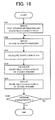
- FIG. 16 is a flow chart showing a process according to the second embodiment.
- the process is executed by inputting an initial condition, of a target car model in order to evaluate the sound field characteristics with taking the first sound field characteristic at the original evaluation point into account, while the second speaker is changed more than once, thereby to determine the optimum speaker. Additionally, the process is executed by the control unit 2x.
- step S206 the control unit 2x evaluates the second sound field characteristic calculated in step S205.
- the evaluation unit 2f in the control unit 2x determines whether or not the second sound field characteristic is optimum.
- the evaluation unit 2f uses, as the evaluation value, the residual between the pre-set desired characteristic and the second sound field characteristic, and compares the evaluation value calculated this time with the evaluation value previously calculated so as to execute the determination.
- the control unit 2x determines that the second sound field characteristic is optimum (step S206; Yes)
- the process goes out of the flow.
- the speaker corresponding to the second sound field characteristic for which the process is executed this time is determined as the optimum speakers, for example.
- the control unit 2x determines that the second sound field characteristic is not optimum (step S206; No)
- the control unit 2x executed the processes in steps S202 to S206 with respect to a new second speaker. Namely, the control unit 2x calculates the second sound field characteristic of the new second speaker to evaluate the second sound field characteristic.
- the control unit in the car audio functions as: the first speaker information obtaining unit which obtains the first speaker information of a first speaker; the sound field characteristic obtaining unit which obtains the first sound field characteristic at the evaluation point that is obtained by using the first speaker in advance; the second speaker parameter obtaining unit which obtains the second speaker parameter indicating the mechanical characteristic and the electric characteristic of the second speaker; the correction characteristic calculating unit which calculates the correction characteristic to be applied to the first sound field characteristic in order to calculate a second sound field characteristic of the second speaker, based on the first speaker information and the second speaker parameter; and the correction characteristic applying unit which calculates the second sound field characteristic by applying the correction characteristic to the first sound field characteristic. Therefore, when the speaker type is changed, it becomes possible to easily calculate the sound field characteristic.
- the above process is executed by the control units 2 and 2x executing the preliminary prepared program (speaker characteristic correction program). Instead, the above process may be executed by a hardware process of a circuit.
- the speaker characteristic correction program may be preliminarily stored in a In the control units 2 and 2x.
- the speaker characteristic correction program may be provided from outside by a recording medium such as a CD or a DVD on which the program is recorded, and the program read out by the reproducing device 5 may be stored in the ROM.
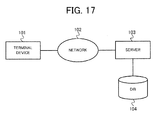
- FIG. 17 shows an example of a system in which the speaker characteristic correction device of the present invention is applied to a server 103.
- a terminal device 101 is connected to the server 103 via a network 102 such as Internet.
- the server 103 is connected to DB (Data Base) 104.
- the server 103 has the similar function as the above control units 2 and 2x.
- the server 103 functions as the sound field characteristic obtaining unit, the first speaker information obtaining unit, the second speaker parameter obtaining unit, the correction characteristic calculating unit and the correction characteristic applying unit.
- the first sound field characteristic, the first speaker information and the second speaker parameter are stored.
- the first speaker information is stored in association with the model number of the first speaker
- the first sound field characteristic is stored in association with the model number of the first speaker and the car model that is performed the measurement and the analysis of the sound field characteristic of the first speaker.
- the second speaker parameter is stored in association with the model number of the second speaker.
- the user inputs, into the terminal device 101, the information of the speaker presently mounted on the car and the information of the second speaker that the user wants to examine the sound field characteristic. Concretely, the user directly inputs the first sound field characteristic, the first speaker information and the second speaker parameter, or inputs the model numbers of the first speaker and the second speaker and the car model.
- the server 103 obtains the information input by the user via the network 102.
- the server 103 obtains the first sound field characteristic corresponding to the model number of the first speaker and the car model, obtains the first speaker information corresponding to the model number of the first speaker, and obtains the second speaker parameter corresponding to the model number of the second speaker, by searching in the DB 104.
- the server 103 calculates the correction curve based on the obtained first speaker information and the obtained second speaker parameter, and calculates the second sound field characteristic by applying the correction curve to the first sound field characteristic. Then, the server 103 provides the calculated the second sound field characteristic to the terminal device 101 via the network 102, and makes the terminal device 101 display the second sound field characteristic. Further, in such a case that the user inputs the information of the plural second speakers, the server 103 calculates the second sound field characteristics of the plural second speakers, and determines the optimum speaker from the plural second speakers by evaluating the second sound field characteristics. In this case, the server 103 provides the information of the determined optimum speaker to the terminal device 101 via the network 102, and makes the terminal device 101 display the information, too.
- the system in which the speaker characteristic correction device is applied to a server 103 can be used for a speaker characteristic evaluation service and a speaker install tool.
- the speaker characteristic correction device may be applied to a terminal device.
- a CPU in the terminal device executes the similar process as the above control units 2 and 2x, and the first sound field characteristic, the first speaker information and the second speaker parameter are stored in a hard disk in the terminal device.
- the speaker characteristic correction device is applied to the speaker installed in the car compartment.
- the speaker characteristic correction device can calculate the sound field characteristic of the changed speaker by using the sound field characteristic in case of changing the original speaker.
- the above speaker characteristic correction device can be applied to an amplifier in a home. Namely, when the speaker in the home is changed, it is also possible to calculate the sound field characteristic of the changed speaker. In this case, it is possible to appropriately correct the sound signal by using the equalizer curve used by the original speaker.
- the above speaker characteristic correction device can be used for a speaker analysis tool and a design support tool of a speaker.
- a speaker analysis tool and a design support tool of a speaker.
- the correction curve is calculated by using "log” (see the equations (8), (10) and (15)), it is not limited to this.
- the correction curve is expressed by the unit of "dB".
- the correction curve can be calculated without using "log”.
- the correction curve can be calculated in the form before applying "log”. For example, by using the diaphragm velocity ud1 of the first speaker and the diaphragm velocity ud2 of the second speaker, the correction curve can be calculated by the following equation (16).
- correction curve ud ⁇ 2 / ud ⁇ 1
- the correction curve can be calculated by using the equation (16) instead of the above equation (8).
- the correction curve can be calculated by an equation expressed without using "log”, based on the voltage V1 of the first speaker and the voltage V2 of the second speaker.
- the correction curve can be calculated by an equation expressed without using "log”, based on the area S1 of the diaphragm of the first speaker and the area S2 of the diaphragm of the second speaker. In such a case that the correction curve is calculated in the form before applying "log” as described above, the correction curve becomes the complex number. Thereby, it is also possible to consider the phase.
- the first sound field characteristic is expressed by the unit of "N/m 2 " (i.e., expressed by the complex number)
- the second sound field characteristic expressed by the complex number is obtained.
- the second sound field characteristic expressed by the unit of "dB" which is similar to the above second sound field characteristic (see FIG. 9 ) is obtained.
- This invention can be used for a speaker install tool, a speaker characteristic evaluation service, a speaker analysis tool and a design support tool of a speaker, by calculating a sound field characteristic of a speaker at an evaluation point.
Landscapes
- Health & Medical Sciences (AREA)
- General Health & Medical Sciences (AREA)
- Otolaryngology (AREA)
- Physics & Mathematics (AREA)
- Engineering & Computer Science (AREA)
- Acoustics & Sound (AREA)
- Signal Processing (AREA)
- Fittings On The Vehicle Exterior For Carrying Loads, And Devices For Holding Or Mounting Articles (AREA)
- Circuit For Audible Band Transducer (AREA)
Applications Claiming Priority (1)
| Application Number | Priority Date | Filing Date | Title |
|---|---|---|---|
| PCT/JP2008/050532 WO2009090741A1 (ja) | 2008-01-17 | 2008-01-17 | スピーカ特性補正装置、スピーカ特性補正方法、及びスピーカ特性補正プログラム |
Publications (2)
| Publication Number | Publication Date |
|---|---|
| EP2247121A1 true EP2247121A1 (de) | 2010-11-03 |
| EP2247121A4 EP2247121A4 (de) | 2012-11-28 |
Family
ID=40885151
Family Applications (1)
| Application Number | Title | Priority Date | Filing Date |
|---|---|---|---|
| EP08703387A Withdrawn EP2247121A4 (de) | 2008-01-17 | 2008-01-17 | Lautsprecherkurven-korrektureinrichtung, lautsprecherkurven-korrekturverfahren und lautsprecherkurven-korrekturprogramm |
Country Status (4)
| Country | Link |
|---|---|
| US (1) | US20100290642A1 (de) |
| EP (1) | EP2247121A4 (de) |
| JP (1) | JP5005045B2 (de) |
| WO (1) | WO2009090741A1 (de) |
Cited By (1)
| Publication number | Priority date | Publication date | Assignee | Title |
|---|---|---|---|---|
| TWI480522B (zh) * | 2012-10-09 | 2015-04-11 | Univ Feng Chia | 電聲換能器之參數測量方法 |
Families Citing this family (4)
| Publication number | Priority date | Publication date | Assignee | Title |
|---|---|---|---|---|
| CN102047686B (zh) | 2008-04-07 | 2013-10-16 | 美国高思公司 | 在无线网络间转换的无线耳机 |
| JP6097048B2 (ja) * | 2012-10-31 | 2017-03-15 | パナソニックオートモーティブシステムズアジアパシフィックカンパニーリミテッド | 端末装置、サーバ装置、音声処理方法、設定方法、音声処理システム |
| JP2016181858A (ja) * | 2015-03-25 | 2016-10-13 | パイオニア株式会社 | 携帯端末、試聴方法、及び、試聴プログラム |
| JPWO2019135269A1 (ja) * | 2018-01-04 | 2020-12-17 | 株式会社 Trigence Semiconductor | スピーカ駆動装置、スピーカ装置およびプログラム |
Family Cites Families (36)
| Publication number | Priority date | Publication date | Assignee | Title |
|---|---|---|---|---|
| JPH0722438B2 (ja) * | 1984-05-31 | 1995-03-08 | 松下電器産業株式会社 | スピ−カ装置 |
| JPH0397400A (ja) * | 1989-09-11 | 1991-04-23 | Matsushita Electric Ind Co Ltd | 音場制御装置 |
| US5148115A (en) * | 1990-04-19 | 1992-09-15 | Sanyo Electric Co., Ltd. | Load connection state detector circuit |
| JPH08163688A (ja) * | 1994-12-01 | 1996-06-21 | Clarion Co Ltd | 車載用音場補正装置 |
| US5881103A (en) * | 1995-08-03 | 1999-03-09 | Motorola, Inc. | Electronic device with equalized audio accessory and method for same |
| JP3447888B2 (ja) * | 1996-03-28 | 2003-09-16 | フオスター電機株式会社 | スピーカパラメータの測定方法及び測定装置 |
| US6269318B1 (en) * | 1997-04-30 | 2001-07-31 | Earl R. Geddes | Method for determining transducer linear operational parameters |
| DK199901256A (da) * | 1998-10-06 | 1999-10-05 | Bang & Olufsen As | MMS-System |
| US6859538B1 (en) * | 1999-03-17 | 2005-02-22 | Hewlett-Packard Development Company, L.P. | Plug and play compatible speakers |
| DE19960979A1 (de) * | 1999-12-17 | 2001-07-05 | Bosch Gmbh Robert | Adaptives Verfahren zur Bestimmung von Lautsprecherparametern |
| JP2001301536A (ja) | 2000-04-25 | 2001-10-31 | Alpine Electronics Inc | 車載用オーディオ装置のメインユニット |
| US20020196951A1 (en) * | 2001-06-26 | 2002-12-26 | Kuo-Liang Tsai | System for automatically performing a frequency response equalization tuning on speaker of electronic device |
| US7668718B2 (en) * | 2001-07-17 | 2010-02-23 | Custom Speech Usa, Inc. | Synchronized pattern recognition source data processed by manual or automatic means for creation of shared speaker-dependent speech user profile |
| US20030069710A1 (en) * | 2001-09-24 | 2003-04-10 | Earl Geddes | Method for quantifying the polar response of transducers |
| ATE372658T1 (de) * | 2003-02-27 | 2007-09-15 | Siemens Audiologische Technik | Vorrichtung und verfahren zur einstellung eines hörgeräts |
| JP2005004013A (ja) * | 2003-06-12 | 2005-01-06 | Pioneer Electronic Corp | ノイズ低減装置 |
| GB0315342D0 (en) * | 2003-07-01 | 2003-08-06 | Univ Southampton | Sound reproduction systems for use by adjacent users |
| US20060104451A1 (en) * | 2003-08-07 | 2006-05-18 | Tymphany Corporation | Audio reproduction system |
| US20050031137A1 (en) * | 2003-08-07 | 2005-02-10 | Tymphany Corporation | Calibration of an actuator |
| US20050031138A1 (en) * | 2003-08-07 | 2005-02-10 | Tymphany Corporation | Method of measuring a cant of an actuator |
| US20050031131A1 (en) * | 2003-08-07 | 2005-02-10 | Tymphany Corporation | Method of modifying dynamics of a system |
| KR100814143B1 (ko) * | 2003-10-03 | 2008-03-14 | 아사히 가세이 가부시키가이샤 | 데이터 처리 장치 및 데이터 처리 장치 제어 프로그램 |
| JP4361354B2 (ja) * | 2003-11-19 | 2009-11-11 | パイオニア株式会社 | 自動音場補正装置及びそのためのコンピュータプログラム |
| JP4150750B2 (ja) * | 2004-03-24 | 2008-09-17 | パイオニア株式会社 | 音声出力装置、音声信号出力調整方法、及び音声信号出力調整処理プログラム等 |
| JP2006042247A (ja) * | 2004-07-30 | 2006-02-09 | Matsushita Electric Ind Co Ltd | 音響装置 |
| KR100584609B1 (ko) * | 2004-11-02 | 2006-05-30 | 삼성전자주식회사 | 이어폰 주파수 특성 보정 방법 및 장치 |
| US7365605B1 (en) * | 2005-01-05 | 2008-04-29 | Hoover D Robert | High voltage, high current, and high accuracy amplifier |
| JP4300194B2 (ja) * | 2005-03-23 | 2009-07-22 | 株式会社東芝 | 音響再生装置、音響再生方法および音響再生プログラム |
| JP4285457B2 (ja) * | 2005-07-20 | 2009-06-24 | ソニー株式会社 | 音場測定装置及び音場測定方法 |
| JP2007142875A (ja) * | 2005-11-18 | 2007-06-07 | Sony Corp | 音響特性補正装置 |
| US20070140058A1 (en) * | 2005-11-21 | 2007-06-21 | Motorola, Inc. | Method and system for correcting transducer non-linearities |
| WO2007068257A1 (en) * | 2005-12-16 | 2007-06-21 | Tc Electronic A/S | Method of performing measurements by means of an audio system comprising passive loudspeakers |
| US20070183620A1 (en) * | 2006-02-07 | 2007-08-09 | Stiles Enrique M | Selectable impedance, constant efficiency electromagnetic transducer |
| US20090232318A1 (en) * | 2006-07-03 | 2009-09-17 | Pioneer Corporation | Output correcting device and method, and loudspeaker output correcting device and method |
| JP5025217B2 (ja) * | 2006-10-02 | 2012-09-12 | 京セラ株式会社 | 情報処理装置、情報処理方法および情報処理プログラム |
| KR101368859B1 (ko) * | 2006-12-27 | 2014-02-27 | 삼성전자주식회사 | 개인 청각 특성을 고려한 2채널 입체 음향 재생 방법 및장치 |
-
2008
- 2008-01-17 EP EP08703387A patent/EP2247121A4/de not_active Withdrawn
- 2008-01-17 WO PCT/JP2008/050532 patent/WO2009090741A1/ja not_active Ceased
- 2008-01-17 JP JP2009549931A patent/JP5005045B2/ja not_active Expired - Fee Related
- 2008-01-17 US US12/812,627 patent/US20100290642A1/en not_active Abandoned
Cited By (1)
| Publication number | Priority date | Publication date | Assignee | Title |
|---|---|---|---|---|
| TWI480522B (zh) * | 2012-10-09 | 2015-04-11 | Univ Feng Chia | 電聲換能器之參數測量方法 |
Also Published As
| Publication number | Publication date |
|---|---|
| JPWO2009090741A1 (ja) | 2011-05-26 |
| EP2247121A4 (de) | 2012-11-28 |
| WO2009090741A1 (ja) | 2009-07-23 |
| US20100290642A1 (en) | 2010-11-18 |
| JP5005045B2 (ja) | 2012-08-22 |
Similar Documents
| Publication | Publication Date | Title |
|---|---|---|
| EP2453670A1 (de) | Steuerung einer Lautsprecherausgabe | |
| CN109547910B (zh) | 电子设备声学组件性能测试方法、装置、设备及存储介质 | |
| US9553553B2 (en) | Engine sound synthesis system | |
| EP2247121A1 (de) | Lautsprecherkurven-korrektureinrichtung, lautsprecherkurven-korrekturverfahren und lautsprecherkurven-korrekturprogramm | |
| CN102740216B (zh) | 混音设备 | |
| CN103686530A (zh) | 通过对电动扬声器的总响应建模来处理音频信号的方法 | |
| CN110271560B (zh) | 一种车辆真人语音报警系统和方法 | |
| EP3261362B1 (de) | Korrekturvorrichtung für schallfeld, schallfeldkorekturverfahren und schallfeldkorekturprogramm | |
| CN111800713B (zh) | 一种信号非线性补偿方法、装置、电子设备和存储介质 | |
| EP3489944A1 (de) | Steuerungsverfahren und steuerungsvorrichtung | |
| WO2021000188A1 (zh) | 马达信息展示方法、装置和计算机设备 | |
| WO2019181955A1 (ja) | 音声/振動変換装置 | |
| JP2008245123A (ja) | 音場補正装置、音場補正方法及び制御プログラム | |
| CN118230763A (zh) | 车辆异响检测方法、装置、电子设备及存储介质 | |
| EP2058795A2 (de) | Simulationsgerät und Programm | |
| JP4757034B2 (ja) | 音場補正装置及びその制御方法 | |
| KR100964755B1 (ko) | 음악 장르 판별 장치 및 이를 구비한 게임기 | |
| JP2017203931A (ja) | 音響特性測定装置及び音響特性測定方法 | |
| CN119760978B (zh) | 振动处理方法、装置、电子设备及存储介质 | |
| US12615486B2 (en) | In-ear headphone testing system and method | |
| JP2008242940A (ja) | 表示装置、表示方法、表示制御プログラム、および記録媒体 | |
| JP2010122404A (ja) | 音場補正用データ調整装置および音場補正用データ調整方法 | |
| JP2007329821A (ja) | 音響特性補正装置 | |
| CN118464174A (zh) | 路噪诊断方法、装置、设备及存储介质 | |
| CN118378057A (zh) | 电池包异响优化方法、装置、设备及存储介质 |
Legal Events
| Date | Code | Title | Description |
|---|---|---|---|
| PUAI | Public reference made under article 153(3) epc to a published international application that has entered the european phase |
Free format text: ORIGINAL CODE: 0009012 |
|
| 17P | Request for examination filed |
Effective date: 20100816 |
|
| AK | Designated contracting states |
Kind code of ref document: A1 Designated state(s): AT BE BG CH CY CZ DE DK EE ES FI FR GB GR HR HU IE IS IT LI LT LU LV MC MT NL NO PL PT RO SE SI SK TR |
|
| AX | Request for extension of the european patent |
Extension state: AL BA MK RS |
|
| RAP1 | Party data changed (applicant data changed or rights of an application transferred) |
Owner name: PIONEER CORPORATION |
|
| DAX | Request for extension of the european patent (deleted) | ||
| A4 | Supplementary search report drawn up and despatched |
Effective date: 20121024 |
|
| RIC1 | Information provided on ipc code assigned before grant |
Ipc: H04R 3/04 20060101ALN20121019BHEP Ipc: H04R 29/00 20060101AFI20121019BHEP |
|
| STAA | Information on the status of an ep patent application or granted ep patent |
Free format text: STATUS: THE APPLICATION IS DEEMED TO BE WITHDRAWN |
|
| 18D | Application deemed to be withdrawn |
Effective date: 20130523 |