EP2247235B1 - Système et coffret de gestion du stress et de la relaxation - Google Patents
Système et coffret de gestion du stress et de la relaxation Download PDFInfo
- Publication number
- EP2247235B1 EP2247235B1 EP09712038.0A EP09712038A EP2247235B1 EP 2247235 B1 EP2247235 B1 EP 2247235B1 EP 09712038 A EP09712038 A EP 09712038A EP 2247235 B1 EP2247235 B1 EP 2247235B1
- Authority
- EP
- European Patent Office
- Prior art keywords
- user
- stress
- rules
- relaxation
- hrv
- Prior art date
- Legal status (The legal status is an assumption and is not a legal conclusion. Google has not performed a legal analysis and makes no representation as to the accuracy of the status listed.)
- Not-in-force
Links
Images

Classifications
-
- A—HUMAN NECESSITIES
- A61—MEDICAL OR VETERINARY SCIENCE; HYGIENE
- A61B—DIAGNOSIS; SURGERY; IDENTIFICATION
- A61B5/00—Measuring for diagnostic purposes; Identification of persons
- A61B5/24—Detecting, measuring or recording bioelectric or biomagnetic signals of the body or parts thereof
- A61B5/316—Modalities, i.e. specific diagnostic methods
- A61B5/318—Heart-related electrical modalities, e.g. electrocardiography [ECG]
- A61B5/346—Analysis of electrocardiograms
- A61B5/349—Detecting specific parameters of the electrocardiograph cycle
- A61B5/352—Detecting R peaks, e.g. for synchronising diagnostic apparatus; Estimating R-R interval
-
- A—HUMAN NECESSITIES
- A61—MEDICAL OR VETERINARY SCIENCE; HYGIENE
- A61B—DIAGNOSIS; SURGERY; IDENTIFICATION
- A61B5/00—Measuring for diagnostic purposes; Identification of persons
- A61B5/02—Detecting, measuring or recording for evaluating the cardiovascular system, e.g. pulse, heart rate, blood pressure or blood flow
- A61B5/0205—Simultaneously evaluating both cardiovascular conditions and different types of body conditions, e.g. heart and respiratory condition
-
- A—HUMAN NECESSITIES
- A61—MEDICAL OR VETERINARY SCIENCE; HYGIENE
- A61B—DIAGNOSIS; SURGERY; IDENTIFICATION
- A61B5/00—Measuring for diagnostic purposes; Identification of persons
- A61B5/02—Detecting, measuring or recording for evaluating the cardiovascular system, e.g. pulse, heart rate, blood pressure or blood flow
- A61B5/024—Measuring pulse rate or heart rate
- A61B5/02405—Determining heart rate variability
-
- A—HUMAN NECESSITIES
- A61—MEDICAL OR VETERINARY SCIENCE; HYGIENE
- A61B—DIAGNOSIS; SURGERY; IDENTIFICATION
- A61B5/00—Measuring for diagnostic purposes; Identification of persons
- A61B5/02—Detecting, measuring or recording for evaluating the cardiovascular system, e.g. pulse, heart rate, blood pressure or blood flow
- A61B5/024—Measuring pulse rate or heart rate
- A61B5/02438—Measuring pulse rate or heart rate with portable devices, e.g. worn by the patient
-
- A—HUMAN NECESSITIES
- A61—MEDICAL OR VETERINARY SCIENCE; HYGIENE
- A61B—DIAGNOSIS; SURGERY; IDENTIFICATION
- A61B5/00—Measuring for diagnostic purposes; Identification of persons
- A61B5/16—Devices for psychotechnics; Testing reaction times ; Devices for evaluating the psychological state
- A61B5/165—Evaluating the state of mind, e.g. depression, anxiety
-
- A—HUMAN NECESSITIES
- A61—MEDICAL OR VETERINARY SCIENCE; HYGIENE
- A61B—DIAGNOSIS; SURGERY; IDENTIFICATION
- A61B5/00—Measuring for diagnostic purposes; Identification of persons
- A61B5/68—Arrangements of detecting, measuring or recording means, e.g. sensors, in relation to patient
- A61B5/6887—Arrangements of detecting, measuring or recording means, e.g. sensors, in relation to patient mounted on external non-worn devices, e.g. non-medical devices
-
- A—HUMAN NECESSITIES
- A61—MEDICAL OR VETERINARY SCIENCE; HYGIENE
- A61B—DIAGNOSIS; SURGERY; IDENTIFICATION
- A61B5/00—Measuring for diagnostic purposes; Identification of persons
- A61B5/48—Other medical applications
- A61B5/486—Biofeedback
Definitions
- the present invention relates to a system and a kit for stress and relaxation management.
- Stress has become a social issue because of its growing deleterious effect on performance, quality of life and health. Some attempts have been done to define stress indexes, but are more related to stress reactivity and recovery, e.g. during specific relaxation exercises and not to a real-life level.
- stress management devices have been developed that rely on the measurement of at least one vital parameter and give feedback to the user about changes of that parameter or a stress index into which it is translated. The procedure is called biofeedback. By observing the direct feedback, the user can learn to control his bodily functions in a way that is favorable in some context.
- Biofeedback devices for stress management employ measurements of various vital parameters that can easily be measured, like ECG, skin temperature, skin conductivity (galvanic skin response) and heart rate (often a finger- or ear-clip containing an optical heart rate measurement).
- ECG ECG
- skin temperature skin conductivity
- heart rate often a finger- or ear-clip containing an optical heart rate measurement
- the idea is in any case that by displaying the measurement results or some kind of index into which the measurement results are translated, the user learns to control his bodily functions such that he gets into a more relaxed state.
- the overall stress level is difficult to assess and is characterized by a pronounced variability between subjects. Stress also depends largely on the individual perception, which can vary from day to day. That is why the proposed stress index depends on several parameters, including outputs of a questionnaire and a measurement protocol.
- the object of the present invention is to overcome the above mentioned drawbacks by providing a system and a kit that assesses the user's stress level and assists him or her in reducing the stress level.
- the present invention relates to system for stress and relaxation management, comprising:
- the motivation related messages may be provided to the user e.g. on daily basis and may relate to stress/relaxation scores and suggestions to reduce the stress level and perform a relaxation exercises.
- the input unit may be presented to the user on e.g. a display where various questionnaires are presented to the user.
- the system can be customized to the user, who can enter data e.g. relating to age, gender, smoking habits, blood pressure and the like. Additional input data may e.g. be whether the user has previously been stressed or has had heart attack or nervous breakdown etc.
- the system is customized to the user and is capable to take these various input data into account when e.g. making a training program for the user.
- said user specific data comprises:
- the data obtained from the measured signals may be over a pre-fixed period, e.g. I week.
- the user specific data typically also comprises all measured data in the past and not only that obtained during this initialization phase.
- At least a portion of said user specific data is further used to define a second set of rules indicating the user's personal goals.
- said goals may be set according to the individual preferences of the user. For example goals may be oriented towards improved performance or oriented towards changes in behavior.
- the data from the questionnaires may thus be used to define the personalized set of goals in addition to the baseline data measured during the pre-fixed time period, which could be called the "initialization phase", of duration of e.g. 1 week.
- the processor is further adapted to assess the stress level of the user by determining a user related stress index based on the HRV signal in combination with the received user specific data, the user related stress index being determined based on a first and a second HRV parameter value associated to a first and a second posture, where the difference between HRV parameter values is used as an indicator to determine the user related stress index.
- the system will thus be able to determine a personalized stress index.
- Stress assessment is based on heart rate variability (HRV), where the measurement procedure consists typically of a simple protocol where in the first posture the user rests for a few minutes and in the second posture the user stands. During the protocol, a few HRV parameters in frequency domain will be derived. It has been namely observed during active standing - a stimulus that physiologically enhances sympathetic activity - that a significantly smaller increase of the normalized Low Frequency (LF) component and a significantly smaller reduction of the normalized High Frequency (HF) component occur in stressed patients compared to control ones. Such changes suggest a reduced responsiveness to excitatory stimuli during stress.
- HRV heart rate variability
- said processor is further adapted to compare the user related stress index, initially with baseline measures and subsequently with the previous determined stress indexes, wherein said comparing results in triggering commands instructing the output unit to provide the user with messages indicating the stress level of the user and trends.
- said baseline measures are determined during an initialization phase where the processor uses the measured signals to determine one or more of the following parameters:
- the initialization phase may last for one week, where during this week cardiac activity and respiratory signals are measured.
- Some of the sensors may be integrated in the user's bed so as to monitor the user during the nights.
- the user may also be asked to perform the stress assessment and the relaxation exercises, but the user could decide to do it several times. From these measurements, typical values for the stress/relaxation indexes and for the vital signs are derived.
- the user may have to answer several questionnaires to retrieve user's general information, subjective stress assessment (stress perception) and user's preferences. Based on the data obtained during the week, said baseline measures are provided.
- the system is able to generate a recommendation with respect to the stress level the user could achieve in the near future, following said improvement plan.
- This goal in terms of the stress index should represent for the user an improvement (more relaxed state), but also be feasible.
- the system may also use other information coming from the baseline measures, such as the stress profile during the week, the performance the user showed during the relaxation exercise, etc. The analysis could lead to a recommendation, which is more ambitious or not for the user.
- said user specific data comprises:
- the system may be able to compare the current stress index achieved by the user with his goal, i.e. the desired stress index. If the user reached his goal, the system may recommend the user to modify the goal to a more ambitious level and may compliment the user. If the user has not reached his goal, but is not so far, the system may encourage the user to continue his efforts and give some individualized support messages. If the user is far away from his goal, the system may suggest to set a less ambitious goal, to propose other tips and relaxation exercises (such as yoga and other standard relaxation techniques) to help further the user.
- other tips and relaxation exercises such as yoga and other standard relaxation techniques
- the processor is further adapted to determine at least one of the following parameters:
- the current stress index is compared with the previous values of the stress index
- the performance related parameter of the relaxation exercise is compared with the previous values obtained in previous relaxation exercises.
- the relaxation index varies continuously during the relaxation exercise, so that there is no unique value per relaxation exercise, but many of them.
- a related parameter summarizing the performance of the exercise This could be the last value of the relaxation index obtained during the relaxation exercise, or the mean value of all relaxation indexes during the relaxation exercise, etc.
- comparing said indexes with said second set of rules is preferably meant that objective measurements via the indexes are compared to goals set by the user. Moreover, objective measurements are also compared to subjective assessment of stress via said questionnaires.
- the compliance is typically determined by looking at said questionnaires and the measurements.
- the measurements indicate whether the user has performed the exercises or not (these could be the stress assessment, the relaxation exercises, etc.), how often and how long he has performed. This allows evaluating if the user followed correctly his plans or not. For compliance, there is no comparison with previous indexes, but just the monitoring of when, how long and how often the user has done something. This is then compared to said improvement plan, which is adapted if the compliance is too low.
- proposal rules are presented to the user via said output unit, where in case the user agrees on the proposal rules via said input unit, said processor issues a command triggering said proposal rules to become said second set of rules.
- the second set of rules is used as input in defining said first set of rules.
- the user goals are accordingly used as input in the comparison between the current stress indexes obtained by the user and what he set in his goals. Thus, it may be determined if the user has reached his objectives, or not, and how far he is. This is preferably then used to adapt the improvement plan, e.g. proposal rules for goal settings are modified, e.g. specific coaching is set up, etc.
- said comparing of the user related stress index with the baseline measures and subsequently with the previous determined stress indexes further includes means of comparing the subsequent stress indexes with the previous determined stress indexes along with said second set of rules indicating the user's personal goals.
- the at least one cardiac activity and respiration sensors are wireless and unobtrusive.
- unobtrusive is meant that the dimension of the sensors is such that they are comfortable and do not disturb the user's life.
- said at least one cardiac activity and respiration sensors are integrated into textiles.
- the user can carry the sensors without noticing it.
- system further comprises
- the processor is an external processor comprised in an external computer system or in a hand-held device, the system further comprising a transceiver for transmitting the measured signals to the external computer system or the hand-held device where said processing steps are performed.
- the processing power is located externally the intelligence of the system does not have to be very high, which can lead to a reduced cost of the system and thus an economical benefit for the user purchasing the system.
- system further comprises a transceiver, the processor, the user interaction device and the transceiver being integrated into a hand-held device.
- the first posture of said stress assessment is a rest posture and the second posture is a stand-up posture or any posture change resulting in a new balance of the cardiovascular system.
- the at least one wireless respiration sensor is further adapted to measure the respiratory signal of the user during said stress assessment.
- the present invention relates to a kit for stress management comprising:
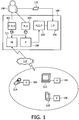
- FIG. 1 shows a system 100 according to the present invention 1 for stress and relaxation management.
- the system comprises at least one cardiac activity sensor (C_A_V) 101, at least one respiration sensor (R_S) 102 adapted to be placed on a user 109 for measuring the heart rate variability (HRV) signal and the respiratory signal of the user respectively, a user interaction device (C_M) 103 and a processor (P) 106.
- C_A_V cardiac activity sensor
- R_S respiration sensor
- HRV heart rate variability
- P processor
- the user interaction device (U_I_D) 103 comprises an input unit (I_U) 104 for receiving user specific data and an output unit (not shown) for providing information output to the user.
- the user specific data may include data entered manually by the user, or data defining the user's profile via e.g. answering questionnaires, where the questionnaires may include questions relating to the gender of the user, whether the user is a smoker or non smoker, the weight, height, etc. of the user and the like.
- the questionnaires may further be adapted to receive goal setting input data from the user indicating the personal goals the user aims to achieve, the goal setting input data being used in addition to said user's profile for determining long term action plan for the user.
- the processor (P) 106 is adapted to assess the stress level of the user by determining a user related stress index.
- the stress index is used as an input in triggering commands instructing the output unit to provide the user with messages indicating the stress level of the user. Accordingly, such messages could as an example inform the user whether he/she should start with a relaxation exercise or not.
- the processor (P) 106 is further adapted to monitor the user during a relaxation exercise by means of determining a relaxation index based on the measured HRV and respiratory signals by means of calculating an index of coherence between the HRV signal and the respiratory signal during the relaxation exercise.
- the relaxation index is continuously adapted to the incoming measured signals and based thereon the processor instructs the output unit to provide the user with biofeedback and support messages.
- the processor (P) 106 is further being adapted to use the user specific data as an input in generating a first set of rules defining an improvement plan for self-management of stress and relaxation.
- This first set of rules is adapted to trigger commands instructing the output unit to provide the user with motivation related messages.
- the stress level of the user is assessed by measuring the heart rate variability (HRV) signal of the user 109 while the user is initially in a first posture and moves towards at least a second posture where the measuring is continued.
- HRV heart rate variability
- first and second postures may be a lying (resting) and stand up postures.
- the measuring may be performed while the user is resting for e.g. few minutes, and while the user is standing for e.g. few minutes. It has been namely observed during active standing - a stimulus that physiologically enhances sympathetic activity - that a significantly smaller increase of normalized low frequency (LF) and a significantly smaller reduction of normalized high frequency (HF) occur in stressed patients compared to control ones.
- LF normalized low frequency
- HF normalized high frequency
- HRV parameters may be analyzed in their variation and can be combined with standard information relative to the subject, such as age, gender, weight, smoke habits, blood pressure, etc. (see the embodiment here below), as well as the results of questionnaires.
- standard information relative to the subject such as age, gender, weight, smoke habits, blood pressure, etc. (see the embodiment here below), as well as the results of questionnaires.
- variations in the power spectral density of the HRV due to posture will be moreover evaluated and taken into account.
- the system can therefore provide stress assessment.
- An example of calculating said stress index is by, during said stress assessment, using a first HRV parameter associated to the first position and a second HRV parameter associated to the second position.
- Such HRV parameters may e.g.
- the HRV parameter may as an example be the power contained in certain frequency components estimated with spectral analysis, as described in " European Heart Journal; 1996; vol. 17, p. 358 ".
- Other standard HRV measurements principle and HRV parameters may be implemented. The difference between HRV parameters is then used as an indicator to determine the user related stress index.
- the at least one respiration sensor (R_S) 102 is, as mentioned previously, adapted to be placed on the user for measuring the respiratory signal of the user during the relaxation exercise.
- the respiration sensor (R_S) 102 may further be adapted to measure the respiratory signals of the user during said stress assessment.
- the cardiac activity sensor (C_A_V) 101 and the respiration sensor (R_S) 102 are wireless and unobtrusive and may be adapted to be integrated into textiles such as bra/vest/belt and the like.
- the processor (P) 106 is further adapted to compare the user related stress index, initially with baseline measures and subsequently with the previous determined stress indexes, wherein said comparing results in triggering commands instructing the output unit to provide the user with messages indicating the stress level of the user and trends.
- the baseline measures are typically determined during an initialization phase where the processor uses the measured signals to determine one or more of the following parameters:
- the processor (P) 106 is further adapted to monitor the user's stress index over time by comparing with previous measured values. In case the stress index exhibits a negative trend, recommendations may be issued to assist the user 109 to reduce his stress level.
- the user is free to choose the frequency at which he would like to assess his stress, e.g. once every hour, once every day, once a week etc. Per default, it is recommended to measure the stress level at least once a week.
- the processor may further be adapted to monitor the user's compliance over time, the user's performance during relaxation exercise, and the user's progress over time.
- the processor (P) 106 is an external processor comprised in an external computer system 113, where the system 100 may thus communicate with the external computer system 113 via a communication channel 112 such as a wireless communication channel, e.g. Zigbee, blue tooth and the like, or via a wired connection.
- the system 100 further comprises a transceiver (T) 111 for transmitting the measured signals to the external computer system 113 where said processing steps are performed.
- the external computer system 113 is thus adapted to transmit the stress index, the relaxation index and other calculations back to the system 100.
- the processor (P) 106 may also be comprised in a hand-held device 114, 115 that is coupled to said sensors 101, 102, where the hand-held device can be a mobile phone 114, a PDA 115 and the like with e.g. a LCD screen as the output unit and the keyboard as the input unit (I_U) 104. Accordingly, the hand held device is coupled to the sensors 101, 102, either wired or wirelessly, for receiving and processing the measured signals as discussed previously and display said messages on the LCD screen.
- the user 109 wearing such a hand-held device 114, 115 is provided with a personalized feedback about the stress index via e.g. the display on the hand-held device 114, 115 or via a voice command, based on relative comparisons with previous measurements.
- the hand-held device 114, 115 provides the user with a coaching strategy to address the problems detected by monitoring and information derived from said questionnaires.
- the hand-held device 114, 115 may be adapted to offer actively monitored relaxation exercises for lowering the overall stress level.
- relaxation exercises e.g. based on regular and slower respiration, are significantly effective in lowering blood pressure, "Treating hypertension with a device that slows and regularizes breathing: A randomized , double-blind controlled study . Schein M, Gavish B, Herz M, Rosner-Kahana D, Naveh P, Knishkowy B, Zlotnikov E, Ben-Zvi N, Melmed RN. Journal of Human Hypertension; 2001, 15:271-278 ", "Breathing-control lowers blood pressure.
- the system 100 or said hand-held device 114, 115 having integrated said features can support the user 109 with e.g. the following coaching measures:
- the system 100 or said hand-held device 114, 115 may in regular intervals test other factors influencing stress by means of a questionnaire.
- a specific relaxation exercise may be monitored and coached by use of a real-time algorithm based on HRV analysis.
- the input signals are heart rate variability and respiratory activity computed on a beat-to-beat basis. They are obtained from the sensors integrated in a textile bra/vest.
- the algorithm calculates the coherence between HRV and respiration for the assessment of the current stress/relaxation level and displays the result on the hand-held device 114, 115. It is indeed well known that during a relaxed state, heartbeats and respiration are well synchronized.
- the biofeedback for biofeedback visualization on the user interface via the LCD screen on the hand-held device 114, 115, the biofeedback consists of two bars.
- One represents synchrony between HRV and respiration, which relates to a relaxed state and the other represents asynchrony between these two signals, which indicates a stressed state.
- the objective is thus to make the first bar as high as possible, e.g. by a slow and regular respiration rhythm, or equivalently to reduce the height of the second bar.
- Such an algorithm has been tested with a young, healthy user who first underwent a mental stress situation (examination) and after that performed a relaxation exercise.
- the stress bar is dominant during the first half of the recording whereas in the second half of the recording, the relaxation bar is dominant. Additionally, support will be provided with music.
- the sound content, as well as the pictures could be adjusted according to the detected stress/relaxation level and/or combined with a game.
- the user of the system gets information on his stress/relaxation level by means of graphical representations. This way it can be directly seen whether the user progresses on the way to a higher level of relaxation.
- the user 109 gets direct feedback on the exercise's efficiency and quality and learns therefore how to better control his bodily functions.
- the sensors used to obtain the HR, HRV, respiration frequency and amplitude may be integrated into textiles such as a vest or a. Additional embodiments include the measurement of parameters such as the skin temperature and the galvanic skin response, which are also shown to be correlated with stress, see " Sympathetic nervous System activity in stress and biofeedback relaxation. Shusterman V., Barnea O. IEEE Engineering in Medicine and Biology Magazine. MarchlApril 2005 ". The results may be calculated on the on-body electronics and sent via wireless technology to said portable or hand-held device 114, 115 for direct feedback and coaching. It should be noted that for the relaxation exercises, only the embodiment using the vest/bra is here explained, but other alternatives could be equally used.
- the relaxation system could be integrated in a sofa / chair / bed or a car seat, e.g. the co-driver seat. Relaxation could hence be performed without wearing a special textile. Instead of a vest, a belt could also be used for measuring ECG and respiration, see " Getting risk factors to goal: Lifestyle intervention is worth the effort in patients with hypertension, hyperlipidemia and/or hyperglycemia. Gordon NF, Salon RD, Saxon WE, et al. Paper presented at: 53rd annual scientific sessions of American College of Cardiology; March 7-10, 2004; New Orleans ".
- the stress module is combined with a nightly monitoring, which might be recommended for long-term HR and HRV analysis, the following sensors are preferred to be integrated into the bed. Some of them deliver redundant information but could be combined to improve robustness and accuracy of the measurements.
- Bed foil e.g. an electret foil, see " ElectroMechanical Film (EMFi) - A new multipurpose electret material. Paajanen M., Lekkala J., Kirjavainen K., Sensors and Actuators A, Vol. 84. pp. 95-102, 2000 " ):
- the pillow and the foot mat electrode will be used as sensors for HR and HRV estimation during night if the signal quality from the bed foil is not sufficient.
- the pillow and the foot mat electrode are composed of conductive woven yarn.
- the electronics provides various channels (one for each sensor) for data acquisition. For the two considered applications - day monitoring for relaxation exercises and night monitoring - two separate electronics are used.
- the electronics does typically not require user interface, but detect when the user puts on the wearable or enters the bed. The measurements are hence automatically started and stopped.
- ECG ECG, respiration, activity accelerometer (part of on-body electronics)
- raw data typically stores raw data of 5 last sessions. (storage of raw data is optional. Raw data might be of interest for coaching by professionals)
- Embodiment of a user interaction device requirements for said system/hand-held device :
- Active user input is required for example to fill in questionnaires about the subjective evaluation of the user's stress. Use should be simple, which means that a variety of standard actions should be addressable in a one-button manner.
- Embodiment of a user interaction device/hand-held device is a user interaction device/hand-held device
- Remote control RC5 receiver 7 function remote control included Battery Replaceable high quality rechargeable Li-Ion battery (2200 mAh). Dimensions 145 x 107 x 38 mm Weight 420 g Upgrades Firmware fully user upgradeable. Interfaces: Memory cards: Supports CompactFlash (CF) cards, Type I/II and Microdrives. through optional Other media (SmartMedia, Memory Stick, SD, MMC, xD) supported adapter). Interfaces: upper: USB 2.0 high speed interface. The xSilo is recognized as a cogmputer's external HDD, for fast up- and downloading from or to PC. lower: USB 2 high speed OTG interface for connection to cameras and PictBridge enabled printers.
- CF CompactFlash
- MMC Mobility Management Entity
- WiFi enabled the WiFi (IEEE802.11b) CompactFlash card is sold as an option).
- Extension connector Ethernet 2 JTAG connections (AMD and FPGA)
- Analog video out PAL / NTSC selectable.
- Analog audio out Headphone / audio line out compatible. Built in loudspeaker with volume control.
- Digital video out BHigh quality digital video out for connecting to LCD or plasma TVs and PC monitors.
- Device functions Play, Stop, Fast Forward, Rewind
- the software used for extracting information from the signals that can be fed back to the user is an important feature.
- two main algorithms can be distinguished:
- the algorithm provides a personalized stress index, based on frequency parameters derived from heart rate variability signal estimated during the measurement protocol (e.g. rest/stand) on a beat-to-beat basis, standard information relative to the user (such as age, gender, weight, smoking habits, blood pressure, etc.) and outputs of questionnaire.
- the Subjective Stress-related Somatic Symptoms Questionnaire (4S-Q) could be used. It has shown to be significantly correlated with stress perception scale, see Impart of Chronic Psychosocial Strews on Autonomic Cardiovascular Regulation in Otherwise Healthy Subject. Lucini D, Di Fede G, Parati G, Pagani M. Hypertension 2005;46;1201-1206 .
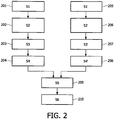
- a raw ECG is measured from e.g. bra/vest
- a preprocessing (S2) 202 is performed, e.g. filtering, motion artifact detection
- a R-peak detection is performed (S3) 203.
- a HRV analysis is then performed from the tachogram (S4) 204.
- the raw respiratory signal is measured from e.g. bra/vest, (S1') 205, then a preprocessing (S2') 206 is performed, e.g. filtering, motion artifact detection, a breathing cycle detection is performed (S3') 207, and the respirogram is then determined (S4') 208.
- Coaching and motivation strategies are used to support the customer in lowering his stress level, for example by learning relaxation techniques.
- the relaxation exercises are performed with direct biofeedback to teach the user how to relax in an optimal way.
- the stress management module offers two types of stress applications: coping with stress in daily life by relaxing e.g. at home and relaxation exercises as a help to fall asleep. This fall-asleep aid will contribute to the motivation and coaching in the sleep management module, as it will increase the sleep quality.
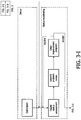
- Figure 3 depicts a block diagram of a beginning phase of the system according to the present invention.
- Goals will be set according to the individual preferences of the user. For example goals may be oriented towards improved performance or oriented towards changes in behavior. Daily assignments will be made and can be controlled, e.g. by questionnaires or by the monitoring unit. Furthermore, the goal setting takes into account the actual behavior of the user.
- a user exhibiting a sedentary lifestyle may be advised to practice some sport for relaxing and hence reducing his stress, while for the same purpose an active sportsman may be advised to relax by yoga.
- This strategy also implies that the parameters used to optimize the improvement program should be checked on different time scales. For example there are fixed parameters like user name, birthday and so on. Certain preferences or environmental factors vary slowly (e.g. a subjective evaluation of the work stress or family situation should be given approximately every month). Other parameters should be measured or evaluated daily - as long as the user does not feel annoyed by it.
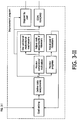
- Figure 4 shows a flowchart of a compliance check of the user, which is another parameter that will be continuously monitored. If compliance goes down, countermeasures can be taken, in form of changing motivational patterns, asking for additional feedback, or stopping certain programs. As a fall back scenario human interaction via call centre should be taken into account.
- the system offers the option that the customer can send the data (stress index, trends) to a medical call centre to get personal advice by professionals.
Landscapes
- Health & Medical Sciences (AREA)
- Life Sciences & Earth Sciences (AREA)
- Cardiology (AREA)
- Engineering & Computer Science (AREA)
- Public Health (AREA)
- Veterinary Medicine (AREA)
- Biophysics (AREA)
- Biomedical Technology (AREA)
- Heart & Thoracic Surgery (AREA)
- Medical Informatics (AREA)
- Molecular Biology (AREA)
- Surgery (AREA)
- Animal Behavior & Ethology (AREA)
- General Health & Medical Sciences (AREA)
- Physics & Mathematics (AREA)
- Pathology (AREA)
- Physiology (AREA)
- Psychiatry (AREA)
- Pulmonology (AREA)
- Child & Adolescent Psychology (AREA)
- Developmental Disabilities (AREA)
- Educational Technology (AREA)
- Hospice & Palliative Care (AREA)
- Psychology (AREA)
- Social Psychology (AREA)
- Measurement Of The Respiration, Hearing Ability, Form, And Blood Characteristics Of Living Organisms (AREA)
- Measuring Pulse, Heart Rate, Blood Pressure Or Blood Flow (AREA)
- Measuring And Recording Apparatus For Diagnosis (AREA)
Claims (19)
- Système (100) de gestion du stress et de la relaxation, comprenant :au moins un capteur d'activité cardiaque (101) pour mesurer un signal de variabilité de la fréquence cardiaque (VFC) d'un utilisateur (109),au moins un capteur de respiration (102) pour mesurer un signal respiratoire de l'utilisateur (109),un dispositif d'interaction utilisateur (103) comprenant une unité d'entrée (104) pour recevoir des données spécifiques à l'utilisateur et une unité de sortie pour fournir des informations produites en sortie à l'utilisateur (109), etun processeur (106) conçu pour évaluer le niveau de stress de l'utilisateur (109) en déterminant un indice de stress lié à l'utilisateur, l'indice de stress étant utilisé en tant qu'entrée pour déclencher des commandes donnant l'instruction à l'unité de sortie de fournir à l'utilisateur des messages indiquant le niveau de stress de l'utilisateur (109),le processeur (106) étant en outre conçu pour surveiller l'utilisateur pendant un exercice de relaxation au moyen de la détermination d'un indice de relaxation d'après les signaux VFC et respiratoires mesurés au moyen du calcul d'un indice de cohérence entre le signal VFC et le signal respiratoire pendant l'exercice de relaxation, l'indice de relaxation étant adapté en continu aux signaux mesurés entrants et d'après ceux-ci, le processeur donne l'instruction à l'unité de sortie de fournir à l'utilisateur des messages de rétroaction biologique et de soutien,le processeur (106) étant en outre conçu pour utiliser les données spécifiques à l'utilisateur en tant qu'entrée pour générer un premier ensemble de règles définissant un plan d'amélioration d'autogestion du stress et de la relaxation, ledit premier ensemble de règles étant conçu pour déclencher des commandes donnant l'instruction à l'unité de sortie de fournir à l'utilisateur des messages liés à la motivation.
- Système selon la revendication 1, dans lequel lesdites données spécifiques à l'utilisateur comprennent :- des données d'entrée entrées par l'utilisateur via ladite unité d'entrée,- des données d'entrée obtenues de l'utilisateur via une réponse à des questionnaires présentés à l'utilisateur,- des données d'entrée provenant d'un agent externe communiquant via ladite unité d'entrée,- des données obtenues de signaux mesurés provenant desdits capteurs, et- une combinaison d'un ou de plusieurs des éléments ci-dessus.
- Système selon la revendication 2, dans lequel au moins une partie desdites données spécifiques à l'utilisateur est en outre utilisée pour définir un second ensemble de règles indiquant les objectifs personnels de l'utilisateur.
- Système selon la revendication 1, dans lequel le processeur (106) est en outre conçu pour évaluer le niveau de stress de l'utilisateur (109) en déterminant un indice de stress lié à l'utilisateur d'après le signal VFC en combinaison avec les données spécifiques à l'utilisateur reçues, l'indice de stress lié à l'utilisateur étant déterminé d'après une première et une seconde valeur de paramètre VFC associées à une première et une seconde posture, où la différence entre des valeurs de paramètre VFC est utilisée en tant qu'indicateur pour déterminer l'indice de stress lié à l'utilisateur.
- Système selon la revendication 4, dans lequel ledit processeur (106) est en outre conçu pour comparer l'indice de stress lié à l'utilisateur, initialement avec des mesures de ligne de base et ensuite avec les indices de stress déterminés précédents, dans lequel ladite comparaison se traduit par le déclenchement de commandes donnant l'instruction à l'unité de sortie de fournir à l'utilisateur des messages indiquant le niveau de stress de l'utilisateur et des tendances.
- Système selon la revendication 5, dans lequel lesdites mesures de ligne de base sont déterminées pendant une phase d'initialisation où le processeur utilise les signaux mesurés pour déterminer un ou plusieurs des paramètres suivants :- une plage personnelle pour la valeur d'indice de stress, déterminée à partir de ladite évaluation du stress,- une plage personnelle pour la valeur d'indice de relaxation déterminée à partir dudit exercice de relaxation,- des paramètres qui peuvent être extraits des capteurs respiratoires et d'activité cardiaque, incluant un ou plusieurs des éléments suivants :- des paramètres VFC,- un paramètre de rythme respiratoire,- un paramètre d'amplitude respiratoire.
- Système selon la revendication 4, dans lequel lesdites données spécifiques à l'utilisateur comprennent :- des données d'entrée entrées par l'utilisateur via ladite unité d'entrée (104),- des données d'entrée obtenues de l'utilisateur via une réponse à des questionnaires présentés à l'utilisateur (109),- des données d'entrée provenant d'un agent externe communiquant via ladite unité d'entrée (104),- des données obtenues de signaux mesurés provenant desdits capteurs, et- une combinaison d'un ou de plusieurs des éléments ci-dessus,dans lequel ladite comparaison avec les indices de stress déterminés précédents comporte en outre la comparaison de l'indice de stress avec le second ensemble de règles indiquant les objectifs personnels de l'utilisateur et l'adaptation du second ensemble de règles au résultat de la comparaison avec le second ensemble de règles.
- Système selon la revendication 1, dans lequel le processeur (106) est en outre conçu pour déterminer au moins l'un des paramètres suivants :- un paramètre lié à la tendance et au progrès indiquant les tendances et le progrès de l'utilisateur, où la détermination est fondée sur un ou plusieurs des éléments suivants :- la comparaison desdits indices avec des indices précédents,- la comparaison desdits indices avec ledit second ensemble de règles,- la comparaison desdits indices avec des indices précédents et ledit second ensemble de règles,- un paramètre lié à la performance indiquant la performance de l'utilisateur pendant l'exercice de relaxation, ladite détermination étant fondée sur la comparaison de l'indice de relaxation déterminé avec les indices précédents, et- un paramètre lié à l'assiduité indiquant l'assiduité de l'utilisateur à suivre ledit second ensemble de règles, ladite détermination étant fondée sur la surveillance d'indices déterminés et dudit second ensemble actuel de règles,dans lequel le processeur (106) est en outre conçu pour adapter le premier ensemble de règles à un ou plusieurs desdits paramètres.
- Système selon la revendication 3, dans lequel avant de définir ledit second ensemble de règles, des règles de proposition sont présentées à l'utilisateur (109) via ladite unité de sortie, où dans le cas où l'utilisateur accepte les règles de proposition via ladite unité d'entrée, ledit processeur (106) émet une commande déclenchant lesdites règles de proposition pour qu'elles deviennent ledit second ensemble de règles.
- Système selon la revendication 3, dans lequel ledit second ensemble de règles est utilisé en tant qu'entrée pour définir ledit premier ensemble de règles.
- Système selon la revendication 5 ou 6, dans lequel ladite comparaison de l'indice de stress lié à l'utilisateur avec les mesures de ligne de base et ensuite avec les indices de stress déterminés précédents comporte en outre un moyen de comparaison des indices de stress ultérieurs avec les indices de stress déterminés précédents conjointement avec ledit second ensemble de règles indiquant les objectifs personnels de l'utilisateur.
- Système selon la revendication 1, dans lequel le au moins un capteur d'activité cardiaque (101) et le au moins un capteur de respiration (102) sont sans fil et discrets.
- Système selon la revendication 12, dans lequel ledit au moins un capteur d'activité cardiaque (101) et ledit au moins un capteur de respiration (102) sont intégrés dans des textiles.
- Système selon la revendication 1, comprenant en outre- un capteur de température conçu pour mesurer la température de la peau de l'utilisateur,- un capteur de réponse électrodermale conçu pour mesurer la réponse électrodermale,- une électrode d'oreiller intégrée dans un oreiller, combinée à une électrode de tapis de pieds intégrée dans un drap, pour mesurer des signaux de fréquence cardiaque (FC) et des VFC,- un capteur de colonne de lit conçu pour être intégré ou monté dans un cadre de lit pour mesurer des signaux FC ou VFC ou les deux,- un capteur de latte ou un capteur de feuille conçu pour être intégré dans un lit ou un canapé ou une chaise pour mesurer au moins l'un des éléments suivants :- un signal FC,- un signal VFC,- la respiration de l'utilisateur,- l'activité de l'utilisateur- une combinaison d'un ou plusieurs desdits capteurs.
- Système selon la revendication 1, dans lequel le processeur est un processeur externe compris dans un système informatique externe (113) ou un dispositif portable (114, 115), le système comprenant en outre un émetteur-récepteur (111) pour transmettre les signaux mesurés au système informatique externe ou au dispositif portable lorsque lesdites étapes de traitement sont réalisées.
- Système selon la revendication 1, dans lequel le système comprend en outre un émetteur-récepteur (111), le processeur (106), le dispositif d'interaction utilisateur (103) et l'émetteur-récepteur (111) étant intégré dans un dispositif portable (114, 115).
- Système selon la revendication 4, dans lequel la première posture est une posture de repos et la seconde posture est une posture debout.
- Système selon la revendication 1, dans lequel le au moins un capteur de respiration sans fil (102) est en outre conçu pour mesurer le signal respiratoire de l'utilisateur (109) pendant ladite évaluation du stress.
- Nécessaire de gestion de stress comprenant :- un ensemble de capteurs comprenant :- au moins un capteur d'activité cardiaque (101) pour mesurer le signal de variabilité de fréquence cardiaque (VFC) de l'utilisateur,- au moins un capteur de respiration (102) pour mesurer le signal respiratoire de l'utilisateur,- un dispositif portable (114, 115) comprenant :- un récepteur conçu pour recevoir les signaux mesurés,- un dispositif d'interaction utilisateur,- une mémoire pour stocker les signaux reçus, et- un processeur conçu pour :-- évaluer le niveau de stress de l'utilisateur en déterminant un indice de stress lié à l'utilisateur, l'indice de stress étant utilisé en tant qu'entrée pour déclencher des commandes donnant l'instruction à l'unité de sortie de fournir à l'utilisateur des messages indiquant le niveau de stress de l'utilisateur,-- surveiller l'utilisateur pendant un exercice de relaxation au moyen de la détermination d'un indice de relaxation d'après les signaux VFC et respiratoires mesurés au moyen du calcul d'un indice de cohérence entre le signal VFC et le signal respiratoire pendant l'exercice de relaxation, l'indice de relaxation étant adapté en continu aux signaux mesurés entrants et d'après ceux-ci, le processeur donne l'instruction à l'unité de sortie de fournir à l'utilisateur des messages de rétroaction biologique et de soutien,-- utiliser les données spécifiques à l'utilisateur en tant qu'entrée pour générer un premier ensemble de règles définissant un plan d'amélioration d'autogestion du stress et de la relaxation, ledit premier ensemble de règles étant conçu pour déclencher des commandes donnant l'instruction à l'unité de sortie de fournir à l'utilisateur des messages liés à la motivation.
Priority Applications (1)
| Application Number | Priority Date | Filing Date | Title |
|---|---|---|---|
| EP09712038.0A EP2247235B1 (fr) | 2008-02-22 | 2009-02-16 | Système et coffret de gestion du stress et de la relaxation |
Applications Claiming Priority (3)
| Application Number | Priority Date | Filing Date | Title |
|---|---|---|---|
| EP08151805 | 2008-02-22 | ||
| EP09712038.0A EP2247235B1 (fr) | 2008-02-22 | 2009-02-16 | Système et coffret de gestion du stress et de la relaxation |
| PCT/IB2009/050628 WO2009104127A1 (fr) | 2008-02-22 | 2009-02-16 | Système et coffret de gestion du stress et de la relaxation |
Publications (2)
| Publication Number | Publication Date |
|---|---|
| EP2247235A1 EP2247235A1 (fr) | 2010-11-10 |
| EP2247235B1 true EP2247235B1 (fr) | 2016-04-13 |
Family
ID=40566257
Family Applications (1)
| Application Number | Title | Priority Date | Filing Date |
|---|---|---|---|
| EP09712038.0A Not-in-force EP2247235B1 (fr) | 2008-02-22 | 2009-02-16 | Système et coffret de gestion du stress et de la relaxation |
Country Status (5)
| Country | Link |
|---|---|
| US (1) | US8529457B2 (fr) |
| EP (1) | EP2247235B1 (fr) |
| JP (1) | JP5727231B2 (fr) |
| CN (1) | CN102065759B (fr) |
| WO (1) | WO2009104127A1 (fr) |
Cited By (1)
| Publication number | Priority date | Publication date | Assignee | Title |
|---|---|---|---|---|
| WO2018042261A1 (fr) * | 2016-09-02 | 2018-03-08 | Tata Consultancy Services Limited | Procédé et système de surveillance d'effort mental |
Families Citing this family (76)
| Publication number | Priority date | Publication date | Assignee | Title |
|---|---|---|---|---|
| KR101435680B1 (ko) * | 2007-09-11 | 2014-09-02 | 삼성전자주식회사 | 다중 측정된 생체신호를 기반으로한 스트레스 분석방법 |
| US20110015765A1 (en) * | 2009-07-15 | 2011-01-20 | Apple Inc. | Controlling an audio and visual experience based on an environment |
| US10186163B1 (en) | 2009-11-25 | 2019-01-22 | Peter D. Letterese | System and method for reducing stress and/or pain |
| CN102883786A (zh) * | 2010-02-05 | 2013-01-16 | 费城儿童医院 | 用于促进对疾病和创伤的积极调节的工具包和方法 |
| HUP1000229A2 (en) * | 2010-04-27 | 2012-11-28 | Christian Berger | Equipment for registering the excitement level as well as determining and recording the excitement condition of human beings |
| EP2575601B1 (fr) * | 2010-05-31 | 2018-04-25 | seca ag | Équipement d'analyse modulaire |
| US9017256B2 (en) * | 2010-09-22 | 2015-04-28 | Milieu Institute, Llc | System and method for physiological monitoring |
| EP2622568A4 (fr) | 2010-09-29 | 2014-04-02 | Dacadoo Ag | Système automatisé d'acquisition, de traitement et de communication de données de santé |
| CN102462489A (zh) * | 2010-11-15 | 2012-05-23 | 绿谷(集团)有限公司 | 检测静修过程中人体静定程度的方法及静坐装置 |
| AT511044B1 (de) * | 2011-02-09 | 2013-06-15 | Pulse7 Gmbh | Verfahren und vorrichtung zur bestimmung des leistungspotentials einer testperson |
| WO2012151607A1 (fr) * | 2011-05-06 | 2012-11-15 | Invatec Health Pty Ltd | Surveillance de niveaux de stress |
| CN102793538A (zh) * | 2011-05-25 | 2012-11-28 | 旺三丰兴业股份有限公司 | 心率变异性装置及云端健康管理系统 |
| HK1198223A1 (en) * | 2011-07-06 | 2015-03-13 | Dacadoo Ag | System and method for personal stress analysis |
| US20130184517A1 (en) * | 2011-07-07 | 2013-07-18 | Ronda Collier | System and Method for Measuring and Controlling Stress |
| US9339193B2 (en) * | 2012-05-21 | 2016-05-17 | Fujitsu Limited | Physiological adaptability system with multiple sensors |
| KR102025571B1 (ko) * | 2012-07-27 | 2019-09-27 | 삼성전자주식회사 | 호흡 조절에 의한 혈압 변화를 측정하기 위한 장치 및 방법 |
| DE102012214697A1 (de) * | 2012-08-01 | 2014-02-06 | Soma Analytics Ug (Haftungsbeschränkt) | Vorrichtung, Verfahren und Applikation zur Ermittlung eines aktuellenBelastungsniveaus |
| US9104231B2 (en) | 2012-09-27 | 2015-08-11 | Microsoft Technology Licensing, Llc | Mood-actuated device |
| WO2014064580A1 (fr) | 2012-10-23 | 2014-05-01 | Koninklijke Philips N.V. | Système de mesure de stress |
| GB201219242D0 (en) * | 2012-10-26 | 2012-12-12 | 3M Innovative Properties Co | Monitoring system for determining the efficiency of a compression device |
| CN102934998B (zh) * | 2012-11-29 | 2015-07-01 | 深圳市健康鼠科技有限公司 | 压力评估系统、舒缓压力控制系统和运动减压控制方法 |
| US9046884B2 (en) | 2012-12-31 | 2015-06-02 | Microsoft Technology Licensing, Llc | Mood-actuated device |
| US10244986B2 (en) | 2013-01-23 | 2019-04-02 | Avery Dennison Corporation | Wireless sensor patches and methods of manufacturing |
| US12208216B2 (en) | 2015-09-15 | 2025-01-28 | Sleep Solutions Inc. | System for enhancing sleep recovery and promoting weight loss |
| US11633053B2 (en) | 2013-03-15 | 2023-04-25 | Sleepme Inc. | Weighted blanket with thermally regulated fluid |
| US11602611B2 (en) | 2013-03-15 | 2023-03-14 | Sleepme Inc. | System for enhancing sleep recovery and promoting weight loss |
| US11813076B2 (en) | 2013-03-15 | 2023-11-14 | Sleepme Inc. | Stress reduction and sleep promotion system |
| US11013883B2 (en) | 2013-03-15 | 2021-05-25 | Kryo, Inc. | Stress reduction and sleep promotion system |
| US12588768B2 (en) | 2013-03-15 | 2026-03-31 | Sleep Solutions Inc. | Article and system for heating or cooling a surface |
| WO2014145436A1 (fr) | 2013-03-15 | 2014-09-18 | Youngblood Todd | Article comprenant une surface à température conditionnée, unité de commande thermoélectrique, et procédé pour conditionnement de température de la surface d'un article |
| US10986933B2 (en) | 2013-03-15 | 2021-04-27 | Kryo, Inc. | Article comprising a temperature-conditioned surface, thermoelectric control unit, and method for temperature-conditioning the surface of an article |
| US11883606B2 (en) | 2013-03-15 | 2024-01-30 | Sleep Solutions Inc. | Stress reduction and sleep promotion system |
| US11896774B2 (en) | 2013-03-15 | 2024-02-13 | Sleep Solutions Inc. | System for enhancing sleep recovery and promoting weight loss |
| US11812859B2 (en) | 2013-03-15 | 2023-11-14 | Sleepme Inc. | System for enhancing sleep recovery and promoting weight loss |
| US11896132B2 (en) | 2013-03-15 | 2024-02-13 | Sleep Solutions Inc. | System for heat exchange with a circulating fluid |
| US12576237B2 (en) | 2013-03-15 | 2026-03-17 | Sleep Solutions Inc. | Smart platform for stress reduction and sleep promotion |
| WO2015021223A1 (fr) | 2013-08-07 | 2015-02-12 | Nike Innovate C.V. | Dispositif athlétique porté au poignet comportant la reconnaissance des gestes et la gestion de l'énergie |
| US9270825B2 (en) * | 2014-03-18 | 2016-02-23 | Xerox Corporation | Non-contact stress assessment devices |
| DK3127350T3 (da) * | 2014-04-04 | 2020-01-27 | Starkey Labs Inc | Brugerstyret tilpasningsredskab til en hørehjælpsanordning ved anvendelse af gamification |
| US9675258B2 (en) * | 2014-04-24 | 2017-06-13 | Fujitsu Limited | Streaming updates of central moments for heart rate variability quantification |
| US10524711B2 (en) | 2014-06-09 | 2020-01-07 | International Business Machines Corporation | Cognitive event predictor |
| US10085690B2 (en) * | 2014-06-16 | 2018-10-02 | Rochester Institute Of Technology | System and method for feedback of dynamically weighted values |
| CN104042204B (zh) * | 2014-06-23 | 2016-09-21 | 深圳市宏电技术股份有限公司 | 一种基于穿戴式设备的抗压、减压能力检测方法及装置 |
| US20160007910A1 (en) | 2014-07-10 | 2016-01-14 | International Business Machines Corporation | Avoidance of cognitive impairment events |
| WO2016036114A1 (fr) | 2014-09-03 | 2016-03-10 | Samsung Electronics Co., Ltd. | Dispositif électronique et procédé de mesure de signal vital |
| CN106793878B (zh) | 2014-09-30 | 2018-07-06 | 深圳市大耳马科技有限公司 | 姿态和生命体征监测系统及方法 |
| US10506980B2 (en) * | 2015-01-23 | 2019-12-17 | Under Armour, Inc. | Scale for displaying workout readiness |
| CN105125186B (zh) * | 2015-06-29 | 2018-05-25 | 王丽婷 | 一种确定干预治疗方式的方法及系统 |
| US11116397B2 (en) | 2015-07-14 | 2021-09-14 | Welch Allyn, Inc. | Method and apparatus for managing sensors |
| US10368810B2 (en) | 2015-07-14 | 2019-08-06 | Welch Allyn, Inc. | Method and apparatus for monitoring a functional capacity of an individual |
| US10123745B1 (en) | 2015-08-21 | 2018-11-13 | Greatbatch Ltd. | Apparatus and method for cardiac signal noise detection and disposition based on physiologic relevance |
| GB201515177D0 (en) * | 2015-08-26 | 2015-10-07 | Future Solutions London Ltd | An apparatus for regulating biological rhythms |
| US10617350B2 (en) | 2015-09-14 | 2020-04-14 | Welch Allyn, Inc. | Method and apparatus for managing a biological condition |
| US10905373B2 (en) * | 2015-09-24 | 2021-02-02 | Intel Corporation | Breathing management mechanism |
| US10918340B2 (en) | 2015-10-22 | 2021-02-16 | Welch Allyn, Inc. | Method and apparatus for detecting a biological condition |
| US10964421B2 (en) | 2015-10-22 | 2021-03-30 | Welch Allyn, Inc. | Method and apparatus for delivering a substance to an individual |
| DE102015014725A1 (de) * | 2015-11-17 | 2017-05-18 | Marco BELLOF | Vorrichtung und Verfahren zur kontinuierlichen Ermittlung der Herz- und /oder Atemrate mit Rückmeldung von Atemempfehlungen |
| JP2019503020A (ja) | 2015-11-24 | 2019-01-31 | ダカドー エージー | 自動健康データ取得、処理および通信システムならびに方法 |
| US9426292B1 (en) * | 2015-12-29 | 2016-08-23 | International Business Machines Corporation | Call center anxiety feedback processor (CAFP) for biomarker based case assignment |
| EP3448330A4 (fr) | 2016-04-27 | 2019-11-06 | Radial Medical, Inc. | Systèmes et méthodes de compressothérapie adaptative |
| US10973416B2 (en) | 2016-08-02 | 2021-04-13 | Welch Allyn, Inc. | Method and apparatus for monitoring biological conditions |
| US10791994B2 (en) | 2016-08-04 | 2020-10-06 | Welch Allyn, Inc. | Method and apparatus for mitigating behavior adverse to a biological condition |
| US10258273B2 (en) * | 2017-05-18 | 2019-04-16 | International Business Machines Corporation | Real-time continuous stress monitoring using wearable devices |
| KR102187803B1 (ko) * | 2018-03-30 | 2020-12-07 | 주식회사 바디프랜드 | 스트레스 지수를 제공하는 마사지 장치 및 사용자 단말기 |
| JP7262006B2 (ja) * | 2018-05-30 | 2023-04-21 | パナソニックIpマネジメント株式会社 | ストレス評価装置、ストレス評価方法及びプログラム |
| JP2020074864A (ja) * | 2018-11-06 | 2020-05-21 | エヌ・ティ・ティ・コミュニケーションズ株式会社 | 判定装置、判定方法及びコンピュータープログラム |
| EP3534373B1 (fr) * | 2019-06-04 | 2026-03-11 | Polar Electro Oy | Système de mesure du niveau de stress |
| CN110236574B (zh) * | 2019-07-15 | 2024-06-07 | 万东百胜(苏州)医疗科技有限公司 | 一种超声医师情绪量化方法与装置 |
| US20220133227A1 (en) * | 2020-11-04 | 2022-05-05 | BioPause LLC | Method for stress detection utilizing analysis of cardiac rhythms and morphologies |
| US12165771B2 (en) * | 2021-04-27 | 2024-12-10 | Oura Health Oy | Method and system for supplemental sleep detection |
| CN114190916B (zh) * | 2021-12-07 | 2023-05-23 | 河南省儿童医院郑州儿童医院 | 一种基于织物传感器的儿童呼吸监控方法及系统 |
| CN114326921B (zh) * | 2021-12-23 | 2022-05-20 | 极限人工智能有限公司 | 运动趋势检测方法、装置、电子设备及存储介质 |
| US20230207098A1 (en) * | 2021-12-23 | 2023-06-29 | Luvo LLC | Vibratory output health device |
| GB202201101D0 (en) | 2022-01-28 | 2022-03-16 | Prevayl Innovations Ltd | Method, computer-readable medium and system for guiding a breathing exercise performed by a user |
| JP2023172476A (ja) * | 2022-05-24 | 2023-12-06 | 株式会社ココロミル | ストレス状態推定システム |
| WO2024014875A1 (fr) * | 2022-07-14 | 2024-01-18 | 주식회사 메디컬에이아이 | Procédé, programme et dispositif pour amélioration de précision d'extraction de caractéristiques pour variabilité de la fréquence cardiaque |
Family Cites Families (26)
| Publication number | Priority date | Publication date | Assignee | Title |
|---|---|---|---|---|
| US5304112A (en) * | 1991-10-16 | 1994-04-19 | Theresia A. Mrklas | Stress reduction system and method |
| SE9404553D0 (sv) | 1994-12-29 | 1994-12-29 | Bo Von Scheele | Anordning för indikering av stresstillstånd |
| WO1997023254A1 (fr) * | 1995-12-25 | 1997-07-03 | Matsushita Electric Works, Ltd. | Appareil favorisant la relaxation |
| JP4096376B2 (ja) * | 1996-07-09 | 2008-06-04 | セイコーエプソン株式会社 | リラックス指導装置 |
| US6358201B1 (en) * | 1999-03-02 | 2002-03-19 | Doc L. Childre | Method and apparatus for facilitating physiological coherence and autonomic balance |
| US6493578B1 (en) * | 1999-09-29 | 2002-12-10 | Defeo Michael | Portable tension and stress detector and method |
| JP2001344352A (ja) * | 2000-05-31 | 2001-12-14 | Toshiba Corp | 生活支援装置および生活支援方法および広告情報提供方法 |
| US20020083122A1 (en) * | 2000-12-21 | 2002-06-27 | Lemchen Marc S. | Method and apparatus for the use of a network system for biofeedback stress reduction |
| US6836681B2 (en) * | 2001-02-15 | 2004-12-28 | Jon R. Stabler | Method of reducing stress |
| US20030130595A1 (en) | 2001-08-13 | 2003-07-10 | Mault James R. | Health improvement systems and methods |
| US7213600B2 (en) * | 2002-04-03 | 2007-05-08 | The Procter & Gamble Company | Method and apparatus for measuring acute stress |
| US20030204412A1 (en) * | 2002-04-29 | 2003-10-30 | John Brier | Apparatus and method for providing on-line customized nutrition, fitness, and lifestyle plans based upon a user profile and goals |
| FI20025039A0 (fi) * | 2002-08-16 | 2002-08-16 | Joni Kettunen | Menetelmä II fysiologisen signaalin analysoimiseksi |
| US20040267565A1 (en) | 2002-12-17 | 2004-12-30 | Grube James A | Interactive system for tracking and improving health and well-being of users by targeted coaching |
| US7713212B2 (en) | 2003-11-03 | 2010-05-11 | Coherence Llc | Method and system for consciously synchronizing the breathing cycle with the natural heart rate cycle |
| JP2007512860A (ja) | 2003-11-04 | 2007-05-24 | クアンタム・インテック・インコーポレーテッド | 呼吸訓練を使用した生理学的調和を促進するシステムと方法 |
| US20050154264A1 (en) | 2004-01-08 | 2005-07-14 | International Business Machines Corporation | Personal stress level monitor and systems and methods for using same |
| AU2005222712A1 (en) * | 2004-03-18 | 2005-09-29 | Helicor Inc. | Methods and devices for relieving stress |
| JP3788463B2 (ja) * | 2004-03-19 | 2006-06-21 | ダイキン工業株式会社 | 生体リズム調整装置、生体リズム調整システム |
| JP4528583B2 (ja) * | 2004-08-31 | 2010-08-18 | 株式会社山武 | 生体負荷検査装置 |
| US8684924B2 (en) * | 2005-02-07 | 2014-04-01 | Koninklijke Philips N.V. | Device for determining a stress level of a person and providing feedback on the basis of the stress level as determined |
| WO2006105085A2 (fr) * | 2005-03-28 | 2006-10-05 | Theta Technologies, Llc | Procede et appareil de retroaction biologique |
| US20090192402A1 (en) * | 2008-01-30 | 2009-07-30 | Engineered Vigilance, Llc | System and method providing biofeedback for anxiety and stress reduction |
| CN100374074C (zh) * | 2005-05-17 | 2008-03-12 | 刘宇新 | 一种身心压力监测仪 |
| US8323191B2 (en) * | 2005-12-23 | 2012-12-04 | Koninklijke Philips Electronics N.V. | Stressor sensor and stress management system |
| US20080214944A1 (en) * | 2007-02-09 | 2008-09-04 | Morris Margaret E | System, apparatus and method for mobile real-time feedback based on changes in the heart to enhance cognitive behavioral therapy for anger or stress reduction |
-
2009
- 2009-02-16 EP EP09712038.0A patent/EP2247235B1/fr not_active Not-in-force
- 2009-02-16 CN CN200980105993.6A patent/CN102065759B/zh not_active Expired - Fee Related
- 2009-02-16 JP JP2010547283A patent/JP5727231B2/ja not_active Expired - Fee Related
- 2009-02-16 US US12/918,531 patent/US8529457B2/en not_active Expired - Fee Related
- 2009-02-16 WO PCT/IB2009/050628 patent/WO2009104127A1/fr not_active Ceased
Cited By (1)
| Publication number | Priority date | Publication date | Assignee | Title |
|---|---|---|---|---|
| WO2018042261A1 (fr) * | 2016-09-02 | 2018-03-08 | Tata Consultancy Services Limited | Procédé et système de surveillance d'effort mental |
Also Published As
| Publication number | Publication date |
|---|---|
| JP5727231B2 (ja) | 2015-06-03 |
| US20100324427A1 (en) | 2010-12-23 |
| US8529457B2 (en) | 2013-09-10 |
| EP2247235A1 (fr) | 2010-11-10 |
| JP2011512222A (ja) | 2011-04-21 |
| CN102065759B (zh) | 2014-10-29 |
| CN102065759A (zh) | 2011-05-18 |
| WO2009104127A1 (fr) | 2009-08-27 |
Similar Documents
| Publication | Publication Date | Title |
|---|---|---|
| US8529457B2 (en) | System and kit for stress and relaxation management | |
| JP5079879B2 (ja) | 姿勢に基づき健康度を判定する健康度判定装置 | |
| JP6755356B2 (ja) | 検出装置 | |
| CN101198277B (zh) | 用于生理学和心理生理学监控的系统 | |
| WO2008096307A1 (fr) | Gestion du sommeil | |
| US11089998B2 (en) | System for increasing a patient's compliance with a therapy relating to an upper airway disorder | |
| JP7057284B6 (ja) | 被検者の1又は複数の生理的特徴の基準を決定する機器の作動方法及び機器及びコンピュータプログラム | |
| CN112957687A (zh) | 一种腹式呼吸训练系统 | |
| US20250040830A1 (en) | System and method for monitoring a physiological state of a user and providing at least one personalized breathing exercise to the user, and virtual monitoring program for executing the method | |
| KR20140015678A (ko) | 생체신호 피드백을 이용한 맞춤 가상현실 운동 시스템 | |
| JP5622202B2 (ja) | 呼吸訓練装置および呼吸訓練システム | |
| CN114983355B (zh) | 一种心衰监测系统 | |
| KR20120045660A (ko) | 수면의 질 결정 장치 및 방법 | |
| US20110245703A1 (en) | System and method providing biofeedback for treatment of menopausal and perimenopausal symptoms | |
| JP2012035056A (ja) | 呼吸レベル測定装置および呼吸レベル測定システム | |
| KR101218629B1 (ko) | 실시간 심박 측정을 통한 수면의 질 결정 장치 및 방법 | |
| CN214679922U (zh) | 一种腹式呼吸训练系统 | |
| WO2009138927A1 (fr) | Procédé et appareil de surveillance de la pression sanguine | |
| JP7716679B2 (ja) | 健康管理システム、及び、健康管理方法 | |
| CN117179717A (zh) | 实现血压测量的方法、可穿戴设备、移动终端和存储介质 | |
| TWI392525B (zh) | 腹式呼吸訓練裝置、腹式呼吸訓練系統及其方法 | |
| CN119679381A (zh) | 一种用于高血压患者的智能化实时血压监测与干预系统 |
Legal Events
| Date | Code | Title | Description |
|---|---|---|---|
| PUAI | Public reference made under article 153(3) epc to a published international application that has entered the european phase |
Free format text: ORIGINAL CODE: 0009012 |
|
| 17P | Request for examination filed |
Effective date: 20100922 |
|
| AK | Designated contracting states |
Kind code of ref document: A1 Designated state(s): AT BE BG CH CY CZ DE DK EE ES FI FR GB GR HR HU IE IS IT LI LT LU LV MC MK MT NL NO PL PT RO SE SI SK TR |
|
| AX | Request for extension of the european patent |
Extension state: AL BA RS |
|
| DAX | Request for extension of the european patent (deleted) | ||
| RAP1 | Party data changed (applicant data changed or rights of an application transferred) |
Owner name: KONINKLIJKE PHILIPS N.V. Owner name: PHILIPS INTELLECTUAL PROPERTY & STANDARDS GMBH |
|
| GRAP | Despatch of communication of intention to grant a patent |
Free format text: ORIGINAL CODE: EPIDOSNIGR1 |
|
| INTG | Intention to grant announced |
Effective date: 20150929 |
|
| GRAS | Grant fee paid |
Free format text: ORIGINAL CODE: EPIDOSNIGR3 |
|
| GRAA | (expected) grant |
Free format text: ORIGINAL CODE: 0009210 |
|
| AK | Designated contracting states |
Kind code of ref document: B1 Designated state(s): AT BE BG CH CY CZ DE DK EE ES FI FR GB GR HR HU IE IS IT LI LT LU LV MC MK MT NL NO PL PT RO SE SI SK TR |
|
| REG | Reference to a national code |
Ref country code: GB Ref legal event code: FG4D |
|
| REG | Reference to a national code |
Ref country code: AT Ref legal event code: REF Ref document number: 789168 Country of ref document: AT Kind code of ref document: T Effective date: 20160415 Ref country code: CH Ref legal event code: EP |
|
| REG | Reference to a national code |
Ref country code: IE Ref legal event code: FG4D |
|
| REG | Reference to a national code |
Ref country code: DE Ref legal event code: R096 Ref document number: 602009037738 Country of ref document: DE |
|
| REG | Reference to a national code |
Ref country code: LT Ref legal event code: MG4D |
|
| REG | Reference to a national code |
Ref country code: AT Ref legal event code: MK05 Ref document number: 789168 Country of ref document: AT Kind code of ref document: T Effective date: 20160413 |
|
| REG | Reference to a national code |
Ref country code: NL Ref legal event code: MP Effective date: 20160413 |
|
| PG25 | Lapsed in a contracting state [announced via postgrant information from national office to epo] |
Ref country code: NO Free format text: LAPSE BECAUSE OF FAILURE TO SUBMIT A TRANSLATION OF THE DESCRIPTION OR TO PAY THE FEE WITHIN THE PRESCRIBED TIME-LIMIT Effective date: 20160713 Ref country code: NL Free format text: LAPSE BECAUSE OF FAILURE TO SUBMIT A TRANSLATION OF THE DESCRIPTION OR TO PAY THE FEE WITHIN THE PRESCRIBED TIME-LIMIT Effective date: 20160413 Ref country code: LT Free format text: LAPSE BECAUSE OF FAILURE TO SUBMIT A TRANSLATION OF THE DESCRIPTION OR TO PAY THE FEE WITHIN THE PRESCRIBED TIME-LIMIT Effective date: 20160413 Ref country code: PL Free format text: LAPSE BECAUSE OF FAILURE TO SUBMIT A TRANSLATION OF THE DESCRIPTION OR TO PAY THE FEE WITHIN THE PRESCRIBED TIME-LIMIT Effective date: 20160413 Ref country code: FI Free format text: LAPSE BECAUSE OF FAILURE TO SUBMIT A TRANSLATION OF THE DESCRIPTION OR TO PAY THE FEE WITHIN THE PRESCRIBED TIME-LIMIT Effective date: 20160413 |
|
| PG25 | Lapsed in a contracting state [announced via postgrant information from national office to epo] |
Ref country code: GR Free format text: LAPSE BECAUSE OF FAILURE TO SUBMIT A TRANSLATION OF THE DESCRIPTION OR TO PAY THE FEE WITHIN THE PRESCRIBED TIME-LIMIT Effective date: 20160714 Ref country code: PT Free format text: LAPSE BECAUSE OF FAILURE TO SUBMIT A TRANSLATION OF THE DESCRIPTION OR TO PAY THE FEE WITHIN THE PRESCRIBED TIME-LIMIT Effective date: 20160816 Ref country code: HR Free format text: LAPSE BECAUSE OF FAILURE TO SUBMIT A TRANSLATION OF THE DESCRIPTION OR TO PAY THE FEE WITHIN THE PRESCRIBED TIME-LIMIT Effective date: 20160413 Ref country code: ES Free format text: LAPSE BECAUSE OF FAILURE TO SUBMIT A TRANSLATION OF THE DESCRIPTION OR TO PAY THE FEE WITHIN THE PRESCRIBED TIME-LIMIT Effective date: 20160413 Ref country code: LV Free format text: LAPSE BECAUSE OF FAILURE TO SUBMIT A TRANSLATION OF THE DESCRIPTION OR TO PAY THE FEE WITHIN THE PRESCRIBED TIME-LIMIT Effective date: 20160413 Ref country code: SE Free format text: LAPSE BECAUSE OF FAILURE TO SUBMIT A TRANSLATION OF THE DESCRIPTION OR TO PAY THE FEE WITHIN THE PRESCRIBED TIME-LIMIT Effective date: 20160413 Ref country code: AT Free format text: LAPSE BECAUSE OF FAILURE TO SUBMIT A TRANSLATION OF THE DESCRIPTION OR TO PAY THE FEE WITHIN THE PRESCRIBED TIME-LIMIT Effective date: 20160413 |
|
| PG25 | Lapsed in a contracting state [announced via postgrant information from national office to epo] |
Ref country code: BE Free format text: LAPSE BECAUSE OF FAILURE TO SUBMIT A TRANSLATION OF THE DESCRIPTION OR TO PAY THE FEE WITHIN THE PRESCRIBED TIME-LIMIT Effective date: 20160413 Ref country code: IT Free format text: LAPSE BECAUSE OF FAILURE TO SUBMIT A TRANSLATION OF THE DESCRIPTION OR TO PAY THE FEE WITHIN THE PRESCRIBED TIME-LIMIT Effective date: 20160413 |
|
| REG | Reference to a national code |
Ref country code: DE Ref legal event code: R097 Ref document number: 602009037738 Country of ref document: DE |
|
| PG25 | Lapsed in a contracting state [announced via postgrant information from national office to epo] |
Ref country code: CZ Free format text: LAPSE BECAUSE OF FAILURE TO SUBMIT A TRANSLATION OF THE DESCRIPTION OR TO PAY THE FEE WITHIN THE PRESCRIBED TIME-LIMIT Effective date: 20160413 Ref country code: EE Free format text: LAPSE BECAUSE OF FAILURE TO SUBMIT A TRANSLATION OF THE DESCRIPTION OR TO PAY THE FEE WITHIN THE PRESCRIBED TIME-LIMIT Effective date: 20160413 Ref country code: DK Free format text: LAPSE BECAUSE OF FAILURE TO SUBMIT A TRANSLATION OF THE DESCRIPTION OR TO PAY THE FEE WITHIN THE PRESCRIBED TIME-LIMIT Effective date: 20160413 Ref country code: SK Free format text: LAPSE BECAUSE OF FAILURE TO SUBMIT A TRANSLATION OF THE DESCRIPTION OR TO PAY THE FEE WITHIN THE PRESCRIBED TIME-LIMIT Effective date: 20160413 Ref country code: RO Free format text: LAPSE BECAUSE OF FAILURE TO SUBMIT A TRANSLATION OF THE DESCRIPTION OR TO PAY THE FEE WITHIN THE PRESCRIBED TIME-LIMIT Effective date: 20160413 |
|
| PLBE | No opposition filed within time limit |
Free format text: ORIGINAL CODE: 0009261 |
|
| STAA | Information on the status of an ep patent application or granted ep patent |
Free format text: STATUS: NO OPPOSITION FILED WITHIN TIME LIMIT |
|
| REG | Reference to a national code |
Ref country code: FR Ref legal event code: PLFP Year of fee payment: 9 |
|
| 26N | No opposition filed |
Effective date: 20170116 |
|
| PG25 | Lapsed in a contracting state [announced via postgrant information from national office to epo] |
Ref country code: SI Free format text: LAPSE BECAUSE OF FAILURE TO SUBMIT A TRANSLATION OF THE DESCRIPTION OR TO PAY THE FEE WITHIN THE PRESCRIBED TIME-LIMIT Effective date: 20160413 |
|
| PG25 | Lapsed in a contracting state [announced via postgrant information from national office to epo] |
Ref country code: MC Free format text: LAPSE BECAUSE OF FAILURE TO SUBMIT A TRANSLATION OF THE DESCRIPTION OR TO PAY THE FEE WITHIN THE PRESCRIBED TIME-LIMIT Effective date: 20160413 |
|
| REG | Reference to a national code |
Ref country code: CH Ref legal event code: PL |
|
| PG25 | Lapsed in a contracting state [announced via postgrant information from national office to epo] |
Ref country code: LI Free format text: LAPSE BECAUSE OF NON-PAYMENT OF DUE FEES Effective date: 20170228 Ref country code: CH Free format text: LAPSE BECAUSE OF NON-PAYMENT OF DUE FEES Effective date: 20170228 |
|
| REG | Reference to a national code |
Ref country code: IE Ref legal event code: MM4A |
|
| PG25 | Lapsed in a contracting state [announced via postgrant information from national office to epo] |
Ref country code: LU Free format text: LAPSE BECAUSE OF NON-PAYMENT OF DUE FEES Effective date: 20170216 |
|
| REG | Reference to a national code |
Ref country code: FR Ref legal event code: PLFP Year of fee payment: 10 |
|
| PG25 | Lapsed in a contracting state [announced via postgrant information from national office to epo] |
Ref country code: IE Free format text: LAPSE BECAUSE OF NON-PAYMENT OF DUE FEES Effective date: 20170216 |
|
| REG | Reference to a national code |
Ref country code: DE Ref legal event code: R082 Ref document number: 602009037738 Country of ref document: DE Representative=s name: MEISSNER BOLTE PATENTANWAELTE RECHTSANWAELTE P, DE Ref country code: DE Ref legal event code: R081 Ref document number: 602009037738 Country of ref document: DE Owner name: PHILIPS GMBH, DE Free format text: FORMER OWNER: PHILIPS INTELLECTUAL PROPERTY & STANDARDS GMBH, 20099 HAMBURG, DE |
|
| PGFP | Annual fee paid to national office [announced via postgrant information from national office to epo] |
Ref country code: GB Payment date: 20180227 Year of fee payment: 10 |
|
| PGFP | Annual fee paid to national office [announced via postgrant information from national office to epo] |
Ref country code: FR Payment date: 20180227 Year of fee payment: 10 Ref country code: TR Payment date: 20180205 Year of fee payment: 10 |
|
| PGFP | Annual fee paid to national office [announced via postgrant information from national office to epo] |
Ref country code: DE Payment date: 20180430 Year of fee payment: 10 |
|
| PG25 | Lapsed in a contracting state [announced via postgrant information from national office to epo] |
Ref country code: MT Free format text: LAPSE BECAUSE OF NON-PAYMENT OF DUE FEES Effective date: 20170216 |
|
| PG25 | Lapsed in a contracting state [announced via postgrant information from national office to epo] |
Ref country code: HU Free format text: LAPSE BECAUSE OF FAILURE TO SUBMIT A TRANSLATION OF THE DESCRIPTION OR TO PAY THE FEE WITHIN THE PRESCRIBED TIME-LIMIT; INVALID AB INITIO Effective date: 20090216 |
|
| PG25 | Lapsed in a contracting state [announced via postgrant information from national office to epo] |
Ref country code: BG Free format text: LAPSE BECAUSE OF FAILURE TO SUBMIT A TRANSLATION OF THE DESCRIPTION OR TO PAY THE FEE WITHIN THE PRESCRIBED TIME-LIMIT Effective date: 20160413 |
|
| REG | Reference to a national code |
Ref country code: DE Ref legal event code: R119 Ref document number: 602009037738 Country of ref document: DE |
|
| GBPC | Gb: european patent ceased through non-payment of renewal fee |
Effective date: 20190216 |
|
| PG25 | Lapsed in a contracting state [announced via postgrant information from national office to epo] |
Ref country code: CY Free format text: LAPSE BECAUSE OF NON-PAYMENT OF DUE FEES Effective date: 20160413 |
|
| PG25 | Lapsed in a contracting state [announced via postgrant information from national office to epo] |
Ref country code: MK Free format text: LAPSE BECAUSE OF FAILURE TO SUBMIT A TRANSLATION OF THE DESCRIPTION OR TO PAY THE FEE WITHIN THE PRESCRIBED TIME-LIMIT Effective date: 20160413 |
|
| PG25 | Lapsed in a contracting state [announced via postgrant information from national office to epo] |
Ref country code: DE Free format text: LAPSE BECAUSE OF NON-PAYMENT OF DUE FEES Effective date: 20190903 Ref country code: GB Free format text: LAPSE BECAUSE OF NON-PAYMENT OF DUE FEES Effective date: 20190216 |
|
| PG25 | Lapsed in a contracting state [announced via postgrant information from national office to epo] |
Ref country code: FR Free format text: LAPSE BECAUSE OF NON-PAYMENT OF DUE FEES Effective date: 20190228 |
|
| PG25 | Lapsed in a contracting state [announced via postgrant information from national office to epo] |
Ref country code: IS Free format text: LAPSE BECAUSE OF FAILURE TO SUBMIT A TRANSLATION OF THE DESCRIPTION OR TO PAY THE FEE WITHIN THE PRESCRIBED TIME-LIMIT Effective date: 20160813 |
|
| PG25 | Lapsed in a contracting state [announced via postgrant information from national office to epo] |
Ref country code: TR Free format text: LAPSE BECAUSE OF NON-PAYMENT OF DUE FEES Effective date: 20190216 |