EP2248042B1 - Verfahren und system für sofortige nachrichtenübermittlung - Google Patents
Verfahren und system für sofortige nachrichtenübermittlung Download PDFInfo
- Publication number
- EP2248042B1 EP2248042B1 EP09715081.7A EP09715081A EP2248042B1 EP 2248042 B1 EP2248042 B1 EP 2248042B1 EP 09715081 A EP09715081 A EP 09715081A EP 2248042 B1 EP2248042 B1 EP 2248042B1
- Authority
- EP
- European Patent Office
- Prior art keywords
- instant messaging
- account
- message
- primary
- auxiliary
- Prior art date
- Legal status (The legal status is an assumption and is not a legal conclusion. Google has not performed a legal analysis and makes no representation as to the accuracy of the status listed.)
- Not-in-force
Links
Images




Classifications
-
- H—ELECTRICITY
- H04—ELECTRIC COMMUNICATION TECHNIQUE
- H04L—TRANSMISSION OF DIGITAL INFORMATION, e.g. TELEGRAPHIC COMMUNICATION
- H04L51/00—User-to-user messaging in packet-switching networks, transmitted according to store-and-forward or real-time protocols, e.g. e-mail
- H04L51/04—Real-time or near real-time messaging, e.g. instant messaging [IM]
- H04L51/043—Real-time or near real-time messaging, e.g. instant messaging [IM] using or handling presence information
-
- H—ELECTRICITY
- H04—ELECTRIC COMMUNICATION TECHNIQUE
- H04L—TRANSMISSION OF DIGITAL INFORMATION, e.g. TELEGRAPHIC COMMUNICATION
- H04L51/00—User-to-user messaging in packet-switching networks, transmitted according to store-and-forward or real-time protocols, e.g. e-mail
- H04L51/21—Monitoring or handling of messages
- H04L51/214—Monitoring or handling of messages using selective forwarding
Definitions
- the present disclosure relates to the fields of instant messaging, and particularly to methods and systems for message transmission in instant messaging.
- Instant messaging (IM) technology allows one to recognize the online status of other users and exchange information (text messages, files, voice and video, etc.) with the other users in real time on the Internet. Because of such inherent advantages as timeliness, low-cost and high efficiency, instant messaging has become one of the most popular network communication methods.
- instant messaging involves a message exchange process between a terminal or a network platform and an instant messaging server over a network.
- a typical process of instant messaging includes a procedure described as follows.
- user A enters a username and a password to log in an instant messaging server which verifies the user identity by reading a user database. If the username and the password are correct, the server registers the user A's IP address, version number of IM client software and the port number used for TCP/UDP, and then returns a flag indicating a successful login of the user A. The user A's status in the instant messaging system becomes "Online Presence" at that time.
- the server sends information related to the user A's online status to PCs of the user A's IM buddies who are online (i.e., having an online presence) at that time.
- the information sent includes the online status, the IP address, and the TCP port number used by the IM client.
- the instant messaging server sends the Buddy List of the user A and related information to the user A's PC.
- the information includes the online statuses of the users in the Buddy List, IP address, and TCP port number used by the IM clients of the users.
- the IM client of the user A's PC displays the Buddy List and corresponding online status of the users in the Buddy List.
- the user A may directly send a chat message to the user B's PC using such information as the user B's IP address and TCP port number sent from the server.
- the user B Upon receiving and displaying the message on a screen by the user B's IM client software, the user B responds directly to the user A's PC.
- the two parties' instant messages are communicated over a network through direct point-to-point communication, or in other words, through peer-to-peer communication.
- the IM server may provide a message relay service, in which instant messages of the user A and the user B are first sent to the IM server, which then relays the messages to corresponding users.
- Document CN 1 960 345 A describes an instant message system wherein a user has multiple accounts.
- a server establishes a plurality of sub-accounts associated with a primary account of an instant message user.
- an account which is online and which has been recently contacted by the sender is preferably selected.
- Document US 7,298,831 B1 and document US 7,295,657 B1 describe a chat support system for instant messaging, wherein the message is distributed to a back-up messaging account when the intended recipient is unavailable.
- the chat support system then updates the intended recipient with the message log in such a way that the intended recipient can nevertheless monitor communication between the sender and the back-up recipient.
- a plurality of criteria are defined, which of a plurality of possible back-up recipients to select, depending on contents of a message, message category, etc.
- Document US 2006/168 049 A1 describes a method for re-directing instant messages to an alternative recipient of the message in the event that the initial recipient does not respond to the message within a predetermined time period.
- An alternative recipient can be selected from a list. The list can be configured by both sender and receiver.
- the present disclosure provides a message transmission method in instant messaging for more reasonable allocation of burdens and resources to IM accounts in order to improve system efficiency and user experience.
- the disclosure also provides an instant messaging system that incorporates the disclosed method.
- the auxiliary instant messaging accounts are associated with the primary instant messaging account in such a way that online presence of one of the auxiliary instant messaging accounts is deemed to give online presence to the primary instant messaging account. At least some of the auxiliary instant messaging accounts may be subaccounts of the primary instant messaging account.
- requesting the message receiving end to receive a message includes triggering the primary instant messaging account and/or at least one of the auxiliary instant messaging accounts into a message transmission mode. Requesting the message receiving end to receive a message may also be done by activating a presence indicator of the primary instant messaging account and/or at least one of the auxiliary instant messaging accounts.
- the method may also determine whether the primary instant messaging account and at least one of the auxiliary instant messaging accounts are set to share messages before selecting a subaccount as the target account. If none of the auxiliary instant messaging accounts is set to share messages with the primary instant messaging account, the method may select the primary instant messaging account to be the target account.
- the message receiving end is adapted for rendering a web page showing an online status of the primary instant messaging account and/or the associated auxiliary instant messaging accounts.
- the method and the system optimize resource allocation by allowing a message to be selectively sent to a target account among the primary account and its associated auxiliary accounts.
- the method and system disclosed herein can be used in a variety of computer system environments or configurations. Examples of these computing system environments or configurations include personal computers, servers, handhelds or portable devices, tablet devices, multi-processer systems, and distributed computing environment of any systems or devices described above.
- the method and system may be embodied within a general context of computer-executable instructions executed by a computer, such as a program module.
- a program module includes routines, programs, objects, modules, and data structure, etc., for executing specific tasks or implementing specific abstract data types. It is noted that, delineation of a first, a second, and so on for a certain module or device does not necessarily suggest that different and separate modules are used for such. Instead, the delineation may be only functional, and the functions of several modules or devices may be performed by a single combined module or device.
- the present disclosure may also be implemented in a distributed computing environment.
- a task is executed by remote processing devices which are connected through a communication network.
- the program module may be located in storage media (including storage devices) of local and remote computers.
- One of the core concepts illustrated in the exemplary embodiments of the present disclosure setting up a unified message receiving end to include a primary instant messaging account and multiple auxiliary instant messaging accounts associated with the primary instant messaging account, and sending the message to a target account selected among the primary instant messaging account and the auxiliary instant messaging accounts.
- the instant messaging system selects a suitable target account from the primary instant messaging account and the auxiliary instant messaging accounts based on different messaging situations, and send the message to the selected target account to complete the message transmission from the message sending end to the message receiving end.
- the primary instant messaging account is the face of the corresponding message receiving end
- the actual message receiving task is shared by the auxiliary instant messaging accounts associated with the primary messaging account.
- the disclosed method maintains a single "face" of the message receiving end to simplify the user interface.
- the primary messaging account is a customer service account of a company
- the messages directed to the primary instant messaging account may be distributed and shared among multiple auxiliary instant messaging accounts associated with the primary messaging accounts.
- These auxiliary instant messaging accounts may be accessed and handled by authorized individuals who are either employees of the company or individuals outside of company authorized through contract.
- the auxiliary instant messaging accounts may either be subaccounts created under the primary instant messaging account or accounts generated separately but subsequently associated with the primary instant messaging account for the message sharing purpose described herein. Such account association may be done in a variety of ways by giving a certain characteristic property to each account. For example, the auxiliary instant messaging accounts may be associated with the primary instant messaging account in groups, each group given similar preference parameters.
- the disclosed instant messaging method configures the message receiving end to include a primary instant messaging account and multiple auxiliary instant messaging accounts associated with the primary instant messaging account.
- the method selects a preferred target account from the primary account and the associated auxiliary accounts for receiving the message.
- the preferred target account satisfies a precedent-messaging condition and, such as having been most recently contacted by the same message sending end according to a message delivery history.
- the preferred target account may additionally or alternatively has a current online presence.
- the preferred target account may be required to satisfy a precedent-messaging condition but not required to have a current online presence.
- the preferred target account may be required to have a current online presence but not required to satisfy a precedent-messaging condition.
- the preferred target account may be required to both have a current online presence and satisfy a precedent-messaging condition.
- the method also determines a backup target account according to a preset rule if no preferred target account is found.
- An exemplary preset rule for determining a backup target account upon finding no preferred target account is randomly selecting one of the auxiliary instant messaging accounts to be the target account.
- Another exemplary preset rule for determining a backup target account upon finding no preferred target account is selecting a least busy account to be the target account.
- the auxiliary instant messaging accounts are associated with the primary instant messaging account in such a way that online presence of one of the auxiliary instant messaging accounts is deemed to give online presence to the primary instant messaging account.
- FIG. 1 shows a flow chart of a first exemplary method for transmitting an instant message in accordance with the present disclosure.
- the message is sent from a messaging sending end to a message receiving end.
- the message sending end may include one or more instant messaging accounts.
- the message receiving end has a primary instant messaging account and multiple auxiliary instant messaging accounts associated with the primary instant messaging account.
- the method is carried out using an instant messaging system described herein.
- the exemplary embodiment of the method may include a procedure described as follows.
- Block 101 triggers the message receiving end which includes the primary instant messaging account and the auxiliary instant messaging accounts into a message transmission mode.
- the message receiving end may be triggered into a message transmission mode by triggering the primary account and/or at least one of the associated auxiliary accounts into a transmission mode.
- the triggering of the message receiving end may be done through a user interface interacting with a user at the messaging sending end.
- a presence indicator of the primary instant messaging account and/or at least one of the auxiliary instant messaging accounts may be activated by the user at the message sending end.
- the presence indicator may be an interactive button on a webpage and can be activated by a mouse click, for instance.
- Block 102 reads a message delivery history between the message sending end and the message receiving end, determines whether the primary instant messaging account and the auxiliary instant messaging accounts include a preferred account that has been recently contacted and/or has online presence. If yes, the process continues to Block 103. Otherwise, the process proceeds to Block 104.
- Block 103 selects the above preferred account to be a target account and the process proceeds to Block 105.
- the precedent-messaging condition for a target account is that the account has been recently contacted by the same message sending end (e.g., the same instant messaging account from which the message is being sent).
- This exemplary precedent-messaging condition ensures continuity of the conversation between the message sending end (e.g., a customer) and the particular instant messaging account (e.g., a representative of the company of the primary instant messaging account). This is beneficial in a context where the continuity of the conversation between two particular parties is important. For example, suppose a certain customer has previously contacted a company at the message receiving end to resolve a product issue and started a conversation with a certain individual using a particular instant messaging account at the message receiving end. Under such circumstance, it is usually better for the customer to speak to the same individual or a person accessing the same instant messaging account when contacting the company again.
- Block 104 finds a target account according to a preset rule and the process continues to Block 105 upon finding no preferred account.
- the process comes to block 104 when a preferred account (e.g., a recently-contacted account having online presence) is not found among the primary instant messaging account and the associated auxiliary instant messaging accounts at the message receiving end.
- a preferred account as described in blocks 102 and 103 does not exist to be used as a target account, but a secondary (or backup) target account may still be selected among the primary instant messaging account and the associated auxiliary instant messaging accounts according to a preset rule.
- Any suitable preset rule such as a random selection, can be used.
- Block 105 sends the message to the target account selected above.
- the primary instant messaging account and the auxiliary instant messaging accounts may each be an account used for logging in IM.
- the auxiliary instant messaging accounts are subaccounts created from the primary instant messaging account.
- the auxiliary instant messaging accounts may also be separately created accounts subsequently associated with the primary instant messaging account.
- the primary instant messaging account and the auxiliary messaging accounts can be associated based on characteristic properties ascribed to the accounts.
- the auxiliary instant messaging accounts may be associated with the primary instant messaging account in groups, and the characteristic properties may include grouping information to describe the group relationships of the auxiliary.
- Each primary instant messaging account may have its own set of associated auxiliary instant messaging accounts.
- An auxiliary instant messaging account may be associated with one or more primary instant messaging accounts.
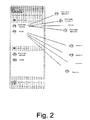
- FIG. 2 shows a schematic diagram of a grouping interface of instant messaging accounts belonging to the same message receiving end.
- "customer service” and “sales” each represent a primary instant messaging account belonging to the same company
- "customer service 1", “customer service 2", ..., “customer service N” are corresponding auxiliary accounts associated with the primary account "customer service”
- "sales 1", “sales 2", ..., “sales N” are corresponding auxiliary accounts associated with the primary account "sales”.
- auxiliary accounts when customers contact the company's customer service, for example, all messages are directed to the primary account "customer service", potentially resulting in excessive messaging traffic to the single account.
- the primary instant messaging account may set up a script (javascript, for example) for message assignment in an associated web page, and display the primary instant messaging account's IM icon or presence indicator on the web page. After a customer has clicked on the primary instant messaging account's IM icon or used other methods to trigger the message transmission mode of the primary instant messaging account at the messaging receiving end, the system may send the message to a certain target account selected from the primary instant messaging account and its multiple associated auxiliary instant messaging accounts according to the script.
- a script javascript, for example
- FIG. 3 shows a flow chart of a second exemplary method for transmitting an instant message in accordance with the present disclosure.
- the message is sent from a messaging sending end to a message receiving end.
- the message receiving end has a primary instant messaging account and multiple auxiliary instant messaging accounts associated therewith.
- the exemplary embodiment of the method is described as follows.
- Block 301 triggers the message receiving end which includes the primary instant messaging account and the auxiliary instant messaging account into a message transmission mode.
- Block 302 determines whether the primary instant messaging account and at least one auxiliary instant messaging account have a message sharing property. If yes, the process continues to Block 303. Otherwise, the process proceeds to Block 306.
- Block 303 reads message delivery history between the message sending end and the message receiving end, and determines whether the primary instant messaging account and the auxiliary instant messaging accounts include an account that has been recently contacted and has online presence. If yes, the process continues to Block 304. Otherwise, the process proceeds to Block 305.
- Block 304 sets the recently-contacted account to be a target account for receiving the message, and the process proceeds to Block 307.
- Block 305 finds an alternative target account according to a preset rule, and the process proceeds to Block 307.
- Block 306 selects the primary instant messaging account to be the target account and the process continues to Block 307.
- the process comes to block 306 when the primary instant messaging account does not share messages with any of the auxiliary instant messaging account. In this situation, the message is sent to the primary account and not sent to any of the auxiliary instant messaging account. This procedure is added as a safeguard for authorization to share messages.
- Block 307 sends the message to the target account selected in the previous procedures.
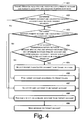
- FIG. 4 shows a flow chart of a third exemplary method for transmitting an instant message in accordance with the present disclosure.
- the message is sent from a messaging sending end to a message receiving end.
- the message receiving end has a primary instant messaging account and auxiliary instant messaging accounts associated with the primary instant messaging account.
- Block 401 triggers the message receiving end which includes primary instant messaging account and the auxiliary instant messaging account into a message transmission mode.
- Block 402 determines whether the primary instant messaging account and the auxiliary instant messaging accounts have a message sharing property. If yes, the process continues to Block 403. Otherwise, the process proceeds to Block 407.
- Block 403 determines whether at least one of the auxiliary instant messaging accounts is online. If yes, the process continues to block 404. Otherwise, the process proceeds to block 408.
- Block 404 reads message delivery history between the message sending end and the message receiving end, and determines whether the primary instant messaging account and the auxiliary instant messaging accounts include a preferred account that has been recently contacted and/or has online presence. If yes, the process continues to block 405. Otherwise, the process proceeds to block 406.
- Block 405 selects the above preferred account (e.g., recently-contacted) to be the target account and the process proceeds to block 409.
- the above preferred account e.g., recently-contacted
- Block 406 finds a target account according to a preset rule and the process proceeds to block 409.
- Block 407 selects the primary instant messaging account to be the target account and the process proceeds to Block 409.
- Block 408 randomly selects one of the auxiliary accounts to be the target account, and the process continues to Block 409.
- Block 409 sends the message to the target account.
- the preset rule for finding a target account upon finding no preferred account to be the target account can be any rule that is suitable for reasonably distributing the message under the circumstance.
- One preferred example of the preset rule is selecting a least busy account to be the target account. For example, if no recently-contacted account having online presence is found, the benefit of keeping the continuity of an existing conversation may not be present in the circumstance. It is therefore reasonable to choose a least busy account among the auxiliary accounts to deliver the message.
- a least busy account may be defined as account that has received the fewest number of messages from the message sending end (or all message sending ends) during a recent appearance time.
- the preset rule may require that the message be sent to an auxiliary account which currently has online presence. If multiple auxiliary accounts have online presence, a random selection can be made among these auxiliary accounts to deliver the message.
- a person of ordinary technical knowledge in the art may use any other suitable method to find the target account. For example, one may find an account which has not received a message recently and is not set to block any message, and select the such an account to be the target account.
- the present disclosure does not intend to impose any limitation on this matter.
- S is the primary instant messaging account of a seller.
- Sn including S1, S2, (7) are first-level auxiliary accounts associated with S, while Snn (including S11, S12, S21, S22, ...) are second-level subaccounts associated with Sn.
- the buyer B may communicate with S' through an instant messaging tool.
- the buyer B obtains the online status of S' on a web page supporting the e-commerce of the seller. Because the message receiving end S' of the seller has multiple instant messaging accounts, its online presence status shown may be determined according to a certain rule.
- An exemplary rule for displaying the online status of S' is as follows. As long as any one of the first-level auxiliary account has online presence, the primary account is deemed to have online presence, and accordingly the presence indicator of the primary account is displayed to show an online presence. Likewise, as long as any one of the second-level auxiliary account has online presence, the corresponding first-level auxiliary account is deemed to have online presence, and the presence indicator of the corresponding first-level auxiliary account, if displayed, is displayed to show an online presence.
- Step 1 determine whether the buyer B is set up by the primary instant messaging account S to have message sharing with its auxiliary instant messaging accounts. If yes, the process continues to step 2. Otherwise, the process proceeds to step 6.
- Step 2 obtain online status of S and S1, S2, ...,Sn. If at least one of S1, S2, ...,Sn is online, the process continues to step 3. Otherwise, the process proceeds to step 7.
- Step 3 read message delivery history between the buyer B and the seller (the message receiving end including instant messaging accounts S and S1, S2, ...,Sn), and determine whether a recently-contacted account exists among S and S1, S2, ..., Sn. If yes, the process continues to step 4. Otherwise, the process proceeds to step 5.
- Step 4 send the message to the recently-contacted account.
- the recent-contacted account may also be required to have a current online presence.
- Step 5 find a least busy account which is not set to block any message from the buyer B, and send the message to the least busy account.
- Step 6 send the message to S.
- Step 7 upon finding no recently-contact account, randomly select a first level auxiliary account among S1, S2, ..., Sn and send the message to the selected first level auxiliary account.
- first level auxiliary account may be seen as a primary account in relation to the second-level auxiliary accounts associated therewith, and a similar procedure may be used to select a target account among this first level auxiliary account and its associated second-level auxiliary accounts.
- One exemplary application of the present method is for processing complicated messages for a seller who has a large volume of transactions in instant messaging provided by an online transaction platform.
- the method allows the seller to employ any desirable number of auxiliary instant messaging accounts associated with the seller's primary instant messaging account to achieve even distribution of resources and workload.
- the auxiliary instant messaging accounts may be handled by appointed employees of the seller's company or authorized third-party contractors.
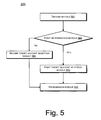
- FIG. 5 shows a diagram of a first exemplary system for transmitting an instant message in accordance with the present disclosure.
- the message is sent from a messaging sending end to a message receiving end.
- the message receiving end has a primary instant messaging account and auxiliary instant messaging accounts associated with the primary instant messaging account.
- the exemplary instant messaging system 500 may include trigger module 501, first determination module 502, first target account selection module 503, second target account selection module 504, and transmission module 505.
- the trigger module 501 is used for triggering the primary instant messaging account or its associated auxiliary accounts into a message transmission mode.
- the first determination module 502 is used for reading message delivery history between the message sending end and the message receiving end, and determining whether the primary instant messaging account and auxiliary instant messaging accounts include a preferred account that has been recently contacted and/or has online presence.
- the first determination module 502 is also used for triggering the first target account selection module 503 if the result of the above determination is affirmative, or triggering a second target account selection module 504 if the result of the above determination is negative.
- the first target account selection module 503 is used for selecting the above preferred account to be a target account.
- the second target account selection module 504 is used for finding a target account according to a preset rule if a preferred account is not found.
- the transmission module 505 is used for transmitting the message to the target account.
- FIG. 6 shows a diagram of a second exemplary system for transmitting an instant message in accordance with the present disclosure.
- the message is sent from a messaging sending end to a message receiving end.
- the message receiving end has a primary instant messaging account and auxiliary instant messaging accounts associated with the primary instant messaging account.
- the exemplary instant messaging system 600 includes trigger module 601, second determination module 602, first determination module 603, first target account selection module 604, second target account selection module 605, third target account selection module 606, and transmission module 607.
- the trigger module 601 is used for triggering the primary instant messaging account or the associated auxiliary instant messaging accounts into a message transmission mode.
- the second determination module 602 is used for determining whether the primary instant messaging account and the auxiliary instant messaging accounts have a message sharing property, and triggering the first determination module 603 if yes, or triggering a third target account selection module 606 otherwise.
- the first determination module 603 is used for reading message delivery history between the message sending end and the message receiving end, determining whether the primary instant messaging account and auxiliary instant messaging accounts include a preferred account that has been recently contacted and/or has online presence, and triggering the first target account selection module 604 if yes, or triggering the second target account selection module 605 otherwise.
- the first target account selection module 604 is used for selecting the above preferred account to be a target account.
- the second target account selection module 605 is used for finding an alternative target account according to a preset rule if a preferred account is not found.
- the third target account selection module 606 is used for selecting the primary instant messaging account to be the target account if no auxiliary account is assigned to share messages with the primary account.
- the transmission module 607 is used for transmitting the message to the target account selected in the above process.
- FIG. 7 shows a diagram of a third exemplary system for transmitting an instant message in accordance with the present disclosure.
- the message is sent from a messaging sending end to a message receiving end.
- the message receiving end has a primary instant messaging account and auxiliary instant messaging accounts associated with the primary instant messaging account.
- the exemplary instant messaging system 700 includes trigger module 701, second determination module 702, third determination module 703, first determination module 704, first target account selection module 705, second target account selection module 706, third target account selection module 707, fourth target account selection module 708, and transmission module 709.
- the trigger module 701 is used for triggering the primary instant messaging account or at least one of the auxiliary instant messaging accounts into a message transmission mode.
- the second determination module 702 is used for determining whether the primary instant messaging account and the auxiliary instant messaging account have a message sharing property, and triggering the first determination module 703 if yes, or triggering the third target account selection module 707 otherwise.
- the third determination module 703 is used for determining whether the primary instant messaging account and/or at least one of the auxiliary instant messaging accounts are online, and triggering the first determination module 704 if yes, or triggering the fourth target account selection module 708 otherwise.
- the first determination module 704 is used for reading a message delivery history between the message sending end and the message receiving end, determining whether the primary instant messaging account and auxiliary instant messaging accounts include a preferred account that has been recently contacted and/or has online presence, and triggering the first target account selection module 705 if yes, or triggering the second target account selection module 706 otherwise.
- the first target account selection module 705 is used for selecting the above preferred account to be a target account.
- the second target account selection module 706 is used for finding an alternative target account according to a preset rule if a preferred account is not found.
- the third target account selection module 707 is used for selecting the primary instant messaging account to be the target account when no auxiliary account is sharing the messages with the primary account.
- the fourth target account selection module 708 is used for randomly selecting one of the auxiliary accounts to be the target account when no auxiliary account has online presence.
- the transmission module 709 is used for transmitting the message to the target account selected in the above process.
- the primary instant messaging account and its associated auxiliary instant messaging accounts may be characterized by certain properties such as grouping information to describe the association relationships of the accounts.
- the second target account selection module finds a least busy account to be the target account.
- the message receiving end may use a web page showing an online presence indicator of the related instant messaging accounts (the primary instant messaging account and/or the associated auxiliary instant messaging accounts).
- FIG. 5 , FIG. 6 and FIG. 7 can be used for incorporating the exemplary methods described herein, the descriptions of these exemplary systems simplified and details can be found in the descriptions of related parts of the instant messaging method.
- the disclosed method and the system optimize resource allocation by allowing a message to be selectively sent to a target account among the primary account and its associated auxiliary accounts.
- the present disclosure may have several potential advantages. Setting up a primary instant messaging account and auxiliary instant messaging account in the message receiving end allows selecting a suitable target account from the primary instant messaging account and the auxiliary instant messaging accounts based on different instant messaging circumstances. This avoids the situation where a single instant messaging account has too much messaging traffic to be handled by its owner and its system.
- not all accounts involved at the message receiving end need to be presented in the user interface to the user sending a message. Instead, the primary account and the associated auxiliary accounts may be presented as a unified message receiving end to the user sending a message to simplify the user interface.
Landscapes
- Engineering & Computer Science (AREA)
- Computer Networks & Wireless Communication (AREA)
- Signal Processing (AREA)
- Information Transfer Between Computers (AREA)
Claims (9)
- Verfahren zum Übertragen einer Sofortnachricht, wobei die Sofortnachricht von einem Nachrichtensendeende zu einem Nachrichtenempfangsende, welches ein primäres Sofortnachrichtenkonto und eine Mehrzahl von damit assoziierten Hilfs-Sofortnachrichtenkonten einschließt, gesendet wird, wobei das Verfahren die Schritte umfasst:Versetzen (Original: triggering) (301; 401) des Nachrichtenempfangsendes in einen Nachrichtenliefermodus;Bestimmen eines Zielkontos unter dem primären Sofortnachrichtenkonto und den Hilfs-Sofortnachrichtenkonten, um die Sofortnachricht zu liefern; wobei dieser Schritt einschließtBestimmen (302, 402), ob das primäre Sofortnachrichtenkonto und wenigstens eines der Hilfs-Sofortnachrichtenkonten eingestellt sind, um Nachrichten gemeinsam zu nutzen, wenn nicht, Auswählen (306; 407) des primären Sofortnachrichtenkontos als das Zielkonto, und wenn ja,Bestimmen des Zielkontos durch Lesen (303; 404) einer Nachrichtenübertragungshistorie zwischen dem Nachrichtensendeende und dem Nachrichtenempfangsende und Auswählen (304; 405) eines kürzlich kontaktierten Kontos mit aktueller Online-Präsenz als das Zielkonto, wenn ein solches Konto unter dem primären Sofortnachrichtenkonto und den Hilfs-Sofortnachrichtenkonten gefunden wird, basierend auf der Nachrichtenübertragungshistorie, oder Ermitteln (305; 406) des Zielkontos gemäß einer vorgegebenen Regel, wenn kein solches kürzlich kontaktiertes Konto gefunden wird; undÜbertragen (307; 409) der Nachricht an das Zielkonto.
- Verfahren nach Anspruch 1, wobei die Mehrzahl von Hilfs-Sofortnachrichtenkonten so mit dem primären Sofortnachrichtenkonto assoziiert sind, dass die Online-Präsenz eines der Hilfs-Sofortnachrichtenkonten so angesehen wird (Original: is deemed to), dass sie dem primären Sofortnachrichtenkonto Online-Präsenz gibt.
- Verfahren nach Anspruch 1 oder 2, wobei wenigstens einige der Hilfs-Sofortnachrichtenkonten Unterkonten des primären Sofortnachrichtenkontos sind.
- Verfahren nach einem der Ansprüche 1 bis 3, wobei der Schritt des Versetzens (301; 401) des Nachrichtenempfangsendes in einen Nachrichtenliefermodus das Versetzen des primären Sofortnachrichtenkontos und/oder wenigstens eines der Hilfs-Sofortnachrichtenkonten in einen Nachrichtenübertragungsmodus umfasst.
- Verfahren nach Anspruch 4, wobei das Versetzen (301; 401) des primären Sofortnachrichtenkontos und/oder wenigstens eines der Hilfs-Sofortnachrichtenkonten in einen Nachrichtenliefermodus das Aktivieren eines Präsenz-Indikators des primären Sofortnachrichtenkontos und/oder wenigstens eines der Hilfs-Sofortnachrichtenkonten umfasst.
- Verfahren nach einem der Ansprüche 1 bis 5, wobei die Hilfs-Sofortnachrichtenkonten mit dem primären Sofortnachrichtenkonto in Gruppen assoziiert sind.
- Sofortnachrichtenübermittlungssystem, angepasst zum Senden einer Nachricht von einem Nachrichtensendeende zu einem Nachrichtenempfangsende, welches ein primäres Sofortnachrichtenkonto und eine Mehrzahl von damit assoziierten Hilfs-Sofortnachrichtenkonten einschließt, wobei das System umfasst:ein Triggermodul (501; 601; 701), benutzt zum Versetzen (Original: triggering) des Nachrichtenempfangsendes in einen Nachrichtenübertragungsmodus;ein erstes Bestimmungsmodul (502; 603; 704) zum Lesen einer Nachrichtenübertragungshistorie zwischen dem Nachrichtensendeende und dem Nachrichtenempfangsende, Bestimmen, basierend auf der Nachrichtenübertragungshistorie, ob das primäre Sofortnachrichtenkonto und die Hilfs-Sofortnachrichtenkonten ein kürzlich kontaktiertes Konto mit aktueller Online-Präsenz einschließen, und Initiieren eines ersten Zielkonto-Auswahlmoduls (503; 604; 705), wenn ein solches Konto gefunden wird;wobei das erste Zielkonto-Auswahlmodul (503; 604; 705) zum Auswählen des kürzlich kontaktierten Kontos als das Zielkonto zum Empfangen der Nachricht ist;ein zweites Zielkonto-Auswahlmodul (504; 605; 706), benutzt zum Ermitteln eines Ersatz-Zielkontos gemäß einer vorgegebenen Regel, wobei das erste Bestimmungsmodul (502; 603; 704) das zweite Zielkonto-Auswahlmodul (504; 605; 706) initiiert, wenn das kürzlich kontaktierte Konto nicht gefunden wird; undein Übertragungsmodul (505; 607; 709), benutzt zum Übertragen der Nachricht an das Zielkonto;gekennzeichnet durchein zweites Bestimmungsmodul (602; 702), benutzt zum Bestimmen, ob das primäre Sofortnachrichtenkonto und wenigstens eines der Hilfs-Sofortnachrichtenkonten eine Eigenschaft zum gemeinsamen Nutzen von Nachrichten haben, und Initiierten des ersten Bestimmungsmoduls (502; 603; 704), wenn bejahend, oder Initiieren eines dritten Zielkonto-Auswahlmoduls (606; 707), wenn verneinend;wobei das dritte Zielkonto-Auswahlmodul (606; 707) zum Auswählen des primären Sofortnachrichtenkontos als das Zielkonto ist.
- Sofortnachrichtenübermittlungssystem nach Anspruch 7, weiterhin umfassend:ein drittes Bestimmungsmodul (703) zum Bestimmen, ob das primäre Sofortnachrichtenkonto und/oder wenigstens eines der Hilfs-Sofortnachrichtenkonten online ist und Initüeren des ersten Bestimmungsmoduls (704), wenn bejahend, und Initiieren eines vierten Zielkonto-Auswahlmoduls (708), wenn verneinend;wobei das vierte Zielkonto-Auswahlmodul (708) zum zufälligen Auswählen eines der HilfsSofortnachrichtenkonten als das Zielkonto ist.
- Sofortnachrichtenübermittlungssystem nach Anspruch 7 oder 8, wobei das System zum Aufbereiten (Original: rendering) einer Web-Seite, die einen Online-Präsenzindikator des primären Sofortnachrichtenkontos zeigt, eingerichtet ist.
Priority Applications (1)
| Application Number | Priority Date | Filing Date | Title |
|---|---|---|---|
| EP15175713.5A EP2958277B1 (de) | 2008-02-28 | 2009-03-02 | Verfahren und system für sofortige nachrichtenübermittlung |
Applications Claiming Priority (2)
| Application Number | Priority Date | Filing Date | Title |
|---|---|---|---|
| CN200810009371A CN101521633A (zh) | 2008-02-28 | 2008-02-28 | 即时通讯中的消息传送方法及装置 |
| PCT/US2009/035692 WO2009108923A1 (en) | 2008-02-28 | 2009-03-02 | Instant messaging method and system |
Related Child Applications (2)
| Application Number | Title | Priority Date | Filing Date |
|---|---|---|---|
| EP15175713.5A Division-Into EP2958277B1 (de) | 2008-02-28 | 2009-03-02 | Verfahren und system für sofortige nachrichtenübermittlung |
| EP15175713.5A Division EP2958277B1 (de) | 2008-02-28 | 2009-03-02 | Verfahren und system für sofortige nachrichtenübermittlung |
Publications (3)
| Publication Number | Publication Date |
|---|---|
| EP2248042A1 EP2248042A1 (de) | 2010-11-10 |
| EP2248042A4 EP2248042A4 (de) | 2011-08-31 |
| EP2248042B1 true EP2248042B1 (de) | 2015-09-02 |
Family
ID=41016491
Family Applications (2)
| Application Number | Title | Priority Date | Filing Date |
|---|---|---|---|
| EP15175713.5A Not-in-force EP2958277B1 (de) | 2008-02-28 | 2009-03-02 | Verfahren und system für sofortige nachrichtenübermittlung |
| EP09715081.7A Not-in-force EP2248042B1 (de) | 2008-02-28 | 2009-03-02 | Verfahren und system für sofortige nachrichtenübermittlung |
Family Applications Before (1)
| Application Number | Title | Priority Date | Filing Date |
|---|---|---|---|
| EP15175713.5A Not-in-force EP2958277B1 (de) | 2008-02-28 | 2009-03-02 | Verfahren und system für sofortige nachrichtenübermittlung |
Country Status (5)
| Country | Link |
|---|---|
| US (1) | US20100312839A1 (de) |
| EP (2) | EP2958277B1 (de) |
| JP (1) | JP5579084B2 (de) |
| CN (1) | CN101521633A (de) |
| WO (1) | WO2009108923A1 (de) |
Families Citing this family (11)
| Publication number | Priority date | Publication date | Assignee | Title |
|---|---|---|---|---|
| CN102821056B (zh) * | 2011-06-08 | 2015-08-05 | 阿里巴巴集团控股有限公司 | 一种即时通信消息的传输方法及设备 |
| US10182147B2 (en) | 2011-09-21 | 2019-01-15 | Twilio Inc. | System and method for determining and communicating presence information |
| CN104348698B (zh) * | 2013-07-25 | 2019-12-06 | 腾讯科技(深圳)有限公司 | 一种基于即时通讯的服务的消息提醒方法和装置 |
| CN104468319B (zh) * | 2013-09-18 | 2018-11-16 | 阿里巴巴集团控股有限公司 | 一种会话内容合并方法和系统 |
| CN105022939B (zh) * | 2014-04-25 | 2018-10-30 | 腾讯科技(深圳)有限公司 | 信息验证方法及装置 |
| CN105407029B (zh) * | 2014-08-06 | 2019-10-22 | 阿里巴巴集团控股有限公司 | 一种账号分流方法及通信终端 |
| CN105515949B (zh) * | 2015-12-08 | 2019-08-27 | 贵阳朗玛信息技术股份有限公司 | 实现多人随机邀约的方法及装置 |
| US10467710B2 (en) * | 2017-05-19 | 2019-11-05 | BlackBook Media Inc. | Social media platform enabling multiple social media aliases |
| CN110351178A (zh) * | 2018-04-02 | 2019-10-18 | 深圳市六度人和科技有限公司 | 一种信息监管方法及装置 |
| CN111680961B (zh) * | 2020-04-29 | 2023-08-29 | 北京网聘咨询有限公司 | 一种空中双选会视频面谈实现方法和设备 |
| CN116418769A (zh) * | 2023-04-03 | 2023-07-11 | 北京达佳互联信息技术有限公司 | 通信方法、装置、电子设备及存储介质 |
Family Cites Families (31)
| Publication number | Priority date | Publication date | Assignee | Title |
|---|---|---|---|---|
| US596811A (en) * | 1898-01-04 | Vehicle-tire | ||
| US596548A (en) * | 1898-01-04 | Automatic music turner and holder | ||
| US642716A (en) * | 1899-02-02 | 1900-02-06 | Joy L Reichelt | Oil-burner. |
| US638945A (en) * | 1899-02-10 | 1899-12-12 | Thomas Tripp | Apparatus for flushing water-closets. |
| US643858A (en) * | 1899-10-10 | 1900-02-20 | Earl C Akers | Portable fire-escape. |
| US706256A (en) * | 1901-04-12 | 1902-08-05 | John E Reyburn | Hoisting-machine. |
| US5956486A (en) * | 1995-12-20 | 1999-09-21 | Hickman; Paul Lawrence | Method and apparatus for monitoring multiple electronic mail systems |
| US5968117A (en) * | 1998-01-20 | 1999-10-19 | Aurora Communications Exchange Ltd. | Device and system to facilitate accessing electronic mail from remote user-interface devices |
| JP3511573B2 (ja) * | 1998-04-10 | 2004-03-29 | 富士通株式会社 | データ転送装置、データ転送プログラムを記録したコンピュータ読み取り可能な記録媒体及びデータ転送方法 |
| US6389455B1 (en) * | 1998-09-22 | 2002-05-14 | Richard C. Fuisz | Method and apparatus for bouncing electronic messages |
| US6427164B1 (en) * | 1999-06-23 | 2002-07-30 | Mail Registry, Inc. | Systems and methods for automatically forwarding electronic mail when the recipient is otherwise unknown |
| US6438583B1 (en) * | 1999-06-23 | 2002-08-20 | Re-Route Corporation | System and method for re-routing of e-mail messages |
| EP1242918A1 (de) * | 1999-12-22 | 2002-09-25 | Setnet Corp. | System und verfahren eines post-servers mit industrieller kapazität |
| US20010049745A1 (en) * | 2000-05-03 | 2001-12-06 | Daniel Schoeffler | Method of enabling transmission and reception of communication when current destination for recipient is unknown to sender |
| US6957248B2 (en) * | 2000-07-31 | 2005-10-18 | Pitney Bowes Inc. | System and method for forwarding electronic messages |
| US20020042815A1 (en) * | 2000-09-22 | 2002-04-11 | Arthur Salzfass | Automated system and method for routing undeliverable e-mail messages and otherwise managing e-mail |
| US7730136B2 (en) * | 2002-08-16 | 2010-06-01 | Research In Motion Limited | System and method for integrating electronic mail accounts |
| US7062564B2 (en) * | 2002-09-13 | 2006-06-13 | Cingular Wireless Ii, Llc | Systems and methods for an e-mail clearing house |
| US20040189698A1 (en) * | 2003-03-26 | 2004-09-30 | Nortel Networks Limited | Instant messaging to service bureau |
| US20050114159A1 (en) * | 2003-11-25 | 2005-05-26 | Timucin Ozugur | Web based CRM service using on-line presence information |
| US7298831B1 (en) * | 2004-12-07 | 2007-11-20 | International Business Machines Corporation | Automated distribution of an instant messaging request for an unavailable intended recipient to a backup recipient |
| US7295657B1 (en) * | 2004-12-07 | 2007-11-13 | International Business Machines Corporation | Automated selection of a backup recipient and distribution of an instant messaging request to the backup recipient |
| US20060168049A1 (en) | 2005-01-27 | 2006-07-27 | Liliana Orozco | Method for redirection of instant messages |
| US20070022213A1 (en) * | 2005-07-20 | 2007-01-25 | Research In Motion Limited | Scheme for sharing IM message history |
| US8774389B2 (en) * | 2005-09-13 | 2014-07-08 | International Business Machines Corporation | Call routing between shared service centers |
| US20070124400A1 (en) * | 2005-11-30 | 2007-05-31 | Digital River, Inc. | Sub Accounts System and Method |
| JP4679396B2 (ja) * | 2006-03-08 | 2011-04-27 | Necインフロンティア株式会社 | 通信システム、サーバ装置及びそれらに用いる端末連携方法 |
| US20070268864A1 (en) * | 2006-05-22 | 2007-11-22 | Motorola, Inc. | Method and system to enhance social networking through random location connectivity |
| US8775214B2 (en) * | 2006-07-19 | 2014-07-08 | Thompson Reuters (Market) LLC | Management method and system for a user |
| CN1960345B (zh) | 2006-09-28 | 2011-01-19 | 阿里巴巴集团控股有限公司 | 在即时通信系统中创建多账号用户的方法及系统 |
| US20080244011A1 (en) * | 2007-03-30 | 2008-10-02 | Patrick Herbert Cox | System and Method for providing instant messaging session backups |
-
2008
- 2008-02-28 CN CN200810009371A patent/CN101521633A/zh active Pending
-
2009
- 2009-03-02 EP EP15175713.5A patent/EP2958277B1/de not_active Not-in-force
- 2009-03-02 JP JP2010548934A patent/JP5579084B2/ja not_active Expired - Fee Related
- 2009-03-02 US US12/600,630 patent/US20100312839A1/en not_active Abandoned
- 2009-03-02 EP EP09715081.7A patent/EP2248042B1/de not_active Not-in-force
- 2009-03-02 WO PCT/US2009/035692 patent/WO2009108923A1/en not_active Ceased
Also Published As
| Publication number | Publication date |
|---|---|
| EP2248042A4 (de) | 2011-08-31 |
| JP5579084B2 (ja) | 2014-08-27 |
| JP2011515737A (ja) | 2011-05-19 |
| EP2958277B1 (de) | 2018-05-09 |
| CN101521633A (zh) | 2009-09-02 |
| EP2248042A1 (de) | 2010-11-10 |
| EP2958277A1 (de) | 2015-12-23 |
| US20100312839A1 (en) | 2010-12-09 |
| WO2009108923A1 (en) | 2009-09-03 |
Similar Documents
| Publication | Publication Date | Title |
|---|---|---|
| EP2248042B1 (de) | Verfahren und system für sofortige nachrichtenübermittlung | |
| US11711329B2 (en) | Occasionally-connected computing interface | |
| EP2319009B1 (de) | Aufrechterhaltung einer gruppe in einer sofortnachrichtenanwendung | |
| KR101642450B1 (ko) | 콜 상태 공유 | |
| US20090254616A1 (en) | Simultaneous Instant Messaging In Single Window | |
| US20150358271A1 (en) | Enhanced buddy list interface | |
| US8873735B1 (en) | Selective contact between customers and customer service agents | |
| US9270622B2 (en) | Systems and methods for conveying information to an instant messaging client | |
| WO2019072197A1 (zh) | 一种红包发放方法、设备以及介质 | |
| US10574782B2 (en) | Method and server for generating contact relationship data in network communication system | |
| WO2011144167A1 (zh) | 一种即时通讯的方法、装置和系统 | |
| EP3268910A1 (de) | Verteilung von bestätigungshinweisen in kommunikationsumgebungen | |
| CN112395509A (zh) | 信息显示方法、信息提供方法、设备和计算机可读介质 | |
| US9686214B2 (en) | Status and time-based delivery services for instant messengers | |
| WO2015148589A1 (en) | Cross-client subscription to groups | |
| US8949344B2 (en) | Asynchronous queued messaging for web applications | |
| US20080155030A1 (en) | Systems and methods for conveying information to an instant messaging client | |
| WO2021098446A1 (zh) | 数据处理方法、终端设备及服务器设备 | |
| WO2009064289A1 (en) | Watcher proposed presence states | |
| CN107920019A (zh) | 关注好友的方法及装置、计算机设备及存储介质 | |
| CN106789568A (zh) | 一种通讯信息获取方法及装置 | |
| TWI462534B (zh) | Information transmission method and device in instant messaging | |
| CA2653208A1 (en) | Personal directory services with presence indication | |
| CA2673420C (en) | Systems and methods for conveying information to an instant messaging client | |
| KR20050114805A (ko) | 웹과 문서상에서 메신저 사용자의 상태를 실시간으로 알수 있고, 실시간 대화를 지원하는 시스템과 그 서비스방법 그리고 이를 수행하기 위한 프로그램을 기록한컴퓨터로 판독가능한 기록매체 |
Legal Events
| Date | Code | Title | Description |
|---|---|---|---|
| PUAI | Public reference made under article 153(3) epc to a published international application that has entered the european phase |
Free format text: ORIGINAL CODE: 0009012 |
|
| 17P | Request for examination filed |
Effective date: 20100823 |
|
| AK | Designated contracting states |
Kind code of ref document: A1 Designated state(s): AT BE BG CH CY CZ DE DK EE ES FI FR GB GR HR HU IE IS IT LI LT LU LV MC MK MT NL NO PL PT RO SE SI SK TR |
|
| AX | Request for extension of the european patent |
Extension state: AL BA RS |
|
| DAX | Request for extension of the european patent (deleted) | ||
| REG | Reference to a national code |
Ref country code: DE Ref legal event code: R079 Ref document number: 602009033322 Country of ref document: DE Free format text: PREVIOUS MAIN CLASS: G06F0015160000 Ipc: H04L0012580000 |
|
| RIC1 | Information provided on ipc code assigned before grant |
Ipc: H04L 12/58 20060101AFI20110721BHEP |
|
| A4 | Supplementary search report drawn up and despatched |
Effective date: 20110729 |
|
| GRAP | Despatch of communication of intention to grant a patent |
Free format text: ORIGINAL CODE: EPIDOSNIGR1 |
|
| INTG | Intention to grant announced |
Effective date: 20150320 |
|
| GRAS | Grant fee paid |
Free format text: ORIGINAL CODE: EPIDOSNIGR3 |
|
| GRAA | (expected) grant |
Free format text: ORIGINAL CODE: 0009210 |
|
| AK | Designated contracting states |
Kind code of ref document: B1 Designated state(s): AT BE BG CH CY CZ DE DK EE ES FI FR GB GR HR HU IE IS IT LI LT LU LV MC MK MT NL NO PL PT RO SE SI SK TR |
|
| REG | Reference to a national code |
Ref country code: GB Ref legal event code: FG4D |
|
| REG | Reference to a national code |
Ref country code: AT Ref legal event code: REF Ref document number: 747199 Country of ref document: AT Kind code of ref document: T Effective date: 20150915 Ref country code: CH Ref legal event code: EP |
|
| REG | Reference to a national code |
Ref country code: IE Ref legal event code: FG4D |
|
| REG | Reference to a national code |
Ref country code: DE Ref legal event code: R096 Ref document number: 602009033322 Country of ref document: DE |
|
| REG | Reference to a national code |
Ref country code: SE Ref legal event code: TRGR |
|
| REG | Reference to a national code |
Ref country code: AT Ref legal event code: MK05 Ref document number: 747199 Country of ref document: AT Kind code of ref document: T Effective date: 20150902 |
|
| PG25 | Lapsed in a contracting state [announced via postgrant information from national office to epo] |
Ref country code: GR Free format text: LAPSE BECAUSE OF FAILURE TO SUBMIT A TRANSLATION OF THE DESCRIPTION OR TO PAY THE FEE WITHIN THE PRESCRIBED TIME-LIMIT Effective date: 20151203 Ref country code: LT Free format text: LAPSE BECAUSE OF FAILURE TO SUBMIT A TRANSLATION OF THE DESCRIPTION OR TO PAY THE FEE WITHIN THE PRESCRIBED TIME-LIMIT Effective date: 20150902 Ref country code: LV Free format text: LAPSE BECAUSE OF FAILURE TO SUBMIT A TRANSLATION OF THE DESCRIPTION OR TO PAY THE FEE WITHIN THE PRESCRIBED TIME-LIMIT Effective date: 20150902 Ref country code: NO Free format text: LAPSE BECAUSE OF FAILURE TO SUBMIT A TRANSLATION OF THE DESCRIPTION OR TO PAY THE FEE WITHIN THE PRESCRIBED TIME-LIMIT Effective date: 20151202 |
|
| REG | Reference to a national code |
Ref country code: LT Ref legal event code: MG4D Ref country code: NL Ref legal event code: MP Effective date: 20150902 |
|
| PG25 | Lapsed in a contracting state [announced via postgrant information from national office to epo] |
Ref country code: AT Free format text: LAPSE BECAUSE OF FAILURE TO SUBMIT A TRANSLATION OF THE DESCRIPTION OR TO PAY THE FEE WITHIN THE PRESCRIBED TIME-LIMIT Effective date: 20150902 Ref country code: ES Free format text: LAPSE BECAUSE OF FAILURE TO SUBMIT A TRANSLATION OF THE DESCRIPTION OR TO PAY THE FEE WITHIN THE PRESCRIBED TIME-LIMIT Effective date: 20150902 Ref country code: PL Free format text: LAPSE BECAUSE OF FAILURE TO SUBMIT A TRANSLATION OF THE DESCRIPTION OR TO PAY THE FEE WITHIN THE PRESCRIBED TIME-LIMIT Effective date: 20150902 |
|
| REG | Reference to a national code |
Ref country code: FR Ref legal event code: PLFP Year of fee payment: 8 |
|
| PG25 | Lapsed in a contracting state [announced via postgrant information from national office to epo] |
Ref country code: NL Free format text: LAPSE BECAUSE OF FAILURE TO SUBMIT A TRANSLATION OF THE DESCRIPTION OR TO PAY THE FEE WITHIN THE PRESCRIBED TIME-LIMIT Effective date: 20150902 Ref country code: CZ Free format text: LAPSE BECAUSE OF FAILURE TO SUBMIT A TRANSLATION OF THE DESCRIPTION OR TO PAY THE FEE WITHIN THE PRESCRIBED TIME-LIMIT Effective date: 20150902 Ref country code: SK Free format text: LAPSE BECAUSE OF FAILURE TO SUBMIT A TRANSLATION OF THE DESCRIPTION OR TO PAY THE FEE WITHIN THE PRESCRIBED TIME-LIMIT Effective date: 20150902 Ref country code: EE Free format text: LAPSE BECAUSE OF FAILURE TO SUBMIT A TRANSLATION OF THE DESCRIPTION OR TO PAY THE FEE WITHIN THE PRESCRIBED TIME-LIMIT Effective date: 20150902 Ref country code: IS Free format text: LAPSE BECAUSE OF FAILURE TO SUBMIT A TRANSLATION OF THE DESCRIPTION OR TO PAY THE FEE WITHIN THE PRESCRIBED TIME-LIMIT Effective date: 20160102 Ref country code: IT Free format text: LAPSE BECAUSE OF FAILURE TO SUBMIT A TRANSLATION OF THE DESCRIPTION OR TO PAY THE FEE WITHIN THE PRESCRIBED TIME-LIMIT Effective date: 20150902 |
|
| PG25 | Lapsed in a contracting state [announced via postgrant information from national office to epo] |
Ref country code: PT Free format text: LAPSE BECAUSE OF FAILURE TO SUBMIT A TRANSLATION OF THE DESCRIPTION OR TO PAY THE FEE WITHIN THE PRESCRIBED TIME-LIMIT Effective date: 20160104 Ref country code: RO Free format text: LAPSE BECAUSE OF FAILURE TO SUBMIT A TRANSLATION OF THE DESCRIPTION OR TO PAY THE FEE WITHIN THE PRESCRIBED TIME-LIMIT Effective date: 20150902 |
|
| REG | Reference to a national code |
Ref country code: DE Ref legal event code: R097 Ref document number: 602009033322 Country of ref document: DE |
|
| PLBE | No opposition filed within time limit |
Free format text: ORIGINAL CODE: 0009261 |
|
| STAA | Information on the status of an ep patent application or granted ep patent |
Free format text: STATUS: NO OPPOSITION FILED WITHIN TIME LIMIT |
|
| 26N | No opposition filed |
Effective date: 20160603 |
|
| PG25 | Lapsed in a contracting state [announced via postgrant information from national office to epo] |
Ref country code: DK Free format text: LAPSE BECAUSE OF FAILURE TO SUBMIT A TRANSLATION OF THE DESCRIPTION OR TO PAY THE FEE WITHIN THE PRESCRIBED TIME-LIMIT Effective date: 20150902 Ref country code: BE Free format text: LAPSE BECAUSE OF NON-PAYMENT OF DUE FEES Effective date: 20160331 Ref country code: SI Free format text: LAPSE BECAUSE OF FAILURE TO SUBMIT A TRANSLATION OF THE DESCRIPTION OR TO PAY THE FEE WITHIN THE PRESCRIBED TIME-LIMIT Effective date: 20150902 |
|
| PG25 | Lapsed in a contracting state [announced via postgrant information from national office to epo] |
Ref country code: MC Free format text: LAPSE BECAUSE OF FAILURE TO SUBMIT A TRANSLATION OF THE DESCRIPTION OR TO PAY THE FEE WITHIN THE PRESCRIBED TIME-LIMIT Effective date: 20150902 Ref country code: LU Free format text: LAPSE BECAUSE OF FAILURE TO SUBMIT A TRANSLATION OF THE DESCRIPTION OR TO PAY THE FEE WITHIN THE PRESCRIBED TIME-LIMIT Effective date: 20160302 |
|
| REG | Reference to a national code |
Ref country code: CH Ref legal event code: PL |
|
| REG | Reference to a national code |
Ref country code: IE Ref legal event code: MM4A |
|
| PG25 | Lapsed in a contracting state [announced via postgrant information from national office to epo] |
Ref country code: BE Free format text: LAPSE BECAUSE OF FAILURE TO SUBMIT A TRANSLATION OF THE DESCRIPTION OR TO PAY THE FEE WITHIN THE PRESCRIBED TIME-LIMIT Effective date: 20150902 |
|
| PG25 | Lapsed in a contracting state [announced via postgrant information from national office to epo] |
Ref country code: LI Free format text: LAPSE BECAUSE OF NON-PAYMENT OF DUE FEES Effective date: 20160331 Ref country code: CH Free format text: LAPSE BECAUSE OF NON-PAYMENT OF DUE FEES Effective date: 20160331 Ref country code: IE Free format text: LAPSE BECAUSE OF NON-PAYMENT OF DUE FEES Effective date: 20160302 |
|
| REG | Reference to a national code |
Ref country code: FR Ref legal event code: PLFP Year of fee payment: 9 |
|
| PG25 | Lapsed in a contracting state [announced via postgrant information from national office to epo] |
Ref country code: MT Free format text: LAPSE BECAUSE OF FAILURE TO SUBMIT A TRANSLATION OF THE DESCRIPTION OR TO PAY THE FEE WITHIN THE PRESCRIBED TIME-LIMIT Effective date: 20150902 |
|
| REG | Reference to a national code |
Ref country code: FR Ref legal event code: PLFP Year of fee payment: 10 |
|
| PG25 | Lapsed in a contracting state [announced via postgrant information from national office to epo] |
Ref country code: CY Free format text: LAPSE BECAUSE OF FAILURE TO SUBMIT A TRANSLATION OF THE DESCRIPTION OR TO PAY THE FEE WITHIN THE PRESCRIBED TIME-LIMIT Effective date: 20150902 Ref country code: HU Free format text: LAPSE BECAUSE OF FAILURE TO SUBMIT A TRANSLATION OF THE DESCRIPTION OR TO PAY THE FEE WITHIN THE PRESCRIBED TIME-LIMIT; INVALID AB INITIO Effective date: 20090302 |
|
| PG25 | Lapsed in a contracting state [announced via postgrant information from national office to epo] |
Ref country code: MK Free format text: LAPSE BECAUSE OF FAILURE TO SUBMIT A TRANSLATION OF THE DESCRIPTION OR TO PAY THE FEE WITHIN THE PRESCRIBED TIME-LIMIT Effective date: 20150902 Ref country code: HR Free format text: LAPSE BECAUSE OF FAILURE TO SUBMIT A TRANSLATION OF THE DESCRIPTION OR TO PAY THE FEE WITHIN THE PRESCRIBED TIME-LIMIT Effective date: 20150902 Ref country code: MT Free format text: LAPSE BECAUSE OF FAILURE TO SUBMIT A TRANSLATION OF THE DESCRIPTION OR TO PAY THE FEE WITHIN THE PRESCRIBED TIME-LIMIT Effective date: 20160331 Ref country code: TR Free format text: LAPSE BECAUSE OF FAILURE TO SUBMIT A TRANSLATION OF THE DESCRIPTION OR TO PAY THE FEE WITHIN THE PRESCRIBED TIME-LIMIT Effective date: 20150902 |
|
| PG25 | Lapsed in a contracting state [announced via postgrant information from national office to epo] |
Ref country code: BG Free format text: LAPSE BECAUSE OF FAILURE TO SUBMIT A TRANSLATION OF THE DESCRIPTION OR TO PAY THE FEE WITHIN THE PRESCRIBED TIME-LIMIT Effective date: 20150902 |
|
| REG | Reference to a national code |
Ref country code: DE Ref legal event code: R079 Ref document number: 602009033322 Country of ref document: DE Free format text: PREVIOUS MAIN CLASS: H04L0012580000 Ipc: H04L0051000000 |
|
| PGFP | Annual fee paid to national office [announced via postgrant information from national office to epo] |
Ref country code: FR Payment date: 20230328 Year of fee payment: 15 Ref country code: FI Payment date: 20230327 Year of fee payment: 15 |
|
| PGFP | Annual fee paid to national office [announced via postgrant information from national office to epo] |
Ref country code: SE Payment date: 20230315 Year of fee payment: 15 Ref country code: GB Payment date: 20230327 Year of fee payment: 15 Ref country code: DE Payment date: 20230329 Year of fee payment: 15 |
|
| P01 | Opt-out of the competence of the unified patent court (upc) registered |
Effective date: 20230418 |
|
| REG | Reference to a national code |
Ref country code: DE Ref legal event code: R119 Ref document number: 602009033322 Country of ref document: DE |
|
| PG25 | Lapsed in a contracting state [announced via postgrant information from national office to epo] |
Ref country code: FI Free format text: LAPSE BECAUSE OF NON-PAYMENT OF DUE FEES Effective date: 20240302 |
|
| REG | Reference to a national code |
Ref country code: SE Ref legal event code: EUG |
|
| PG25 | Lapsed in a contracting state [announced via postgrant information from national office to epo] |
Ref country code: FI Free format text: LAPSE BECAUSE OF NON-PAYMENT OF DUE FEES Effective date: 20240302 |
|
| GBPC | Gb: european patent ceased through non-payment of renewal fee |
Effective date: 20240302 |
|
| PG25 | Lapsed in a contracting state [announced via postgrant information from national office to epo] |
Ref country code: DE Free format text: LAPSE BECAUSE OF NON-PAYMENT OF DUE FEES Effective date: 20241001 |
|
| PG25 | Lapsed in a contracting state [announced via postgrant information from national office to epo] |
Ref country code: GB Free format text: LAPSE BECAUSE OF NON-PAYMENT OF DUE FEES Effective date: 20240302 |
|
| PG25 | Lapsed in a contracting state [announced via postgrant information from national office to epo] |
Ref country code: FR Free format text: LAPSE BECAUSE OF NON-PAYMENT OF DUE FEES Effective date: 20240331 |
|
| PG25 | Lapsed in a contracting state [announced via postgrant information from national office to epo] |
Ref country code: GB Free format text: LAPSE BECAUSE OF NON-PAYMENT OF DUE FEES Effective date: 20240302 Ref country code: FR Free format text: LAPSE BECAUSE OF NON-PAYMENT OF DUE FEES Effective date: 20240331 Ref country code: DE Free format text: LAPSE BECAUSE OF NON-PAYMENT OF DUE FEES Effective date: 20241001 |
|
| PG25 | Lapsed in a contracting state [announced via postgrant information from national office to epo] |
Ref country code: SE Free format text: LAPSE BECAUSE OF NON-PAYMENT OF DUE FEES Effective date: 20240303 |