EP2248325B1 - Verfahren und vorrichtung zum verbinden von legacy-knoten - Google Patents
Verfahren und vorrichtung zum verbinden von legacy-knoten Download PDFInfo
- Publication number
- EP2248325B1 EP2248325B1 EP08708428A EP08708428A EP2248325B1 EP 2248325 B1 EP2248325 B1 EP 2248325B1 EP 08708428 A EP08708428 A EP 08708428A EP 08708428 A EP08708428 A EP 08708428A EP 2248325 B1 EP2248325 B1 EP 2248325B1
- Authority
- EP
- European Patent Office
- Prior art keywords
- service
- local network
- gateway
- ims
- user agent
- Prior art date
- Legal status (The legal status is an assumption and is not a legal conclusion. Google has not performed a legal analysis and makes no representation as to the accuracy of the status listed.)
- Not-in-force
Links
- 238000000034 method Methods 0.000 title claims abstract description 31
- 230000004044 response Effects 0.000 claims abstract description 16
- 238000013507 mapping Methods 0.000 claims abstract description 9
- 239000003795 chemical substances by application Substances 0.000 description 13
- 230000008569 process Effects 0.000 description 7
- 238000004891 communication Methods 0.000 description 4
- 238000010586 diagram Methods 0.000 description 4
- 230000000977 initiatory effect Effects 0.000 description 3
- 230000007246 mechanism Effects 0.000 description 3
- 230000011664 signaling Effects 0.000 description 3
- 238000005516 engineering process Methods 0.000 description 1
- 230000003993 interaction Effects 0.000 description 1
- 239000012092 media component Substances 0.000 description 1
- 238000010295 mobile communication Methods 0.000 description 1
- 238000012986 modification Methods 0.000 description 1
- 230000004048 modification Effects 0.000 description 1
- 238000013519 translation Methods 0.000 description 1
Images


Classifications
-
- H—ELECTRICITY
- H04—ELECTRIC COMMUNICATION TECHNIQUE
- H04L—TRANSMISSION OF DIGITAL INFORMATION, e.g. TELEGRAPHIC COMMUNICATION
- H04L67/00—Network arrangements or protocols for supporting network services or applications
- H04L67/50—Network services
- H04L67/51—Discovery or management thereof, e.g. service location protocol [SLP] or web services
-
- H—ELECTRICITY
- H04—ELECTRIC COMMUNICATION TECHNIQUE
- H04L—TRANSMISSION OF DIGITAL INFORMATION, e.g. TELEGRAPHIC COMMUNICATION
- H04L67/00—Network arrangements or protocols for supporting network services or applications
- H04L67/50—Network services
- H04L67/54—Presence management, e.g. monitoring or registration for receipt of user log-on information, or the connection status of the users
Definitions
- the present invention relates to a method and apparatus for connecting legacy nodes and in particular, though not necessarily, to a method and apparatus for connecting legacy clients and/or servers attached to different local networks or to the public Internet.
- Multi-user Internet applications such as games are typically implemented using a client-server paradigm. If a particular client does not know the location of a required server it must discover that location before any interaction can occur (e.g. participate in a game session hosted by the server).
- a client will typically use a discovery protocol in order to discover servers in the network.
- a new client that is started somewhere in the network generally uses the discovery protocol to broadcast a discovery message.
- Servers in the network receive the discovery message and respond to it informing the client about their presence in the network and the services that they offer.
- a server's response to a discovery message has enough information so that the client can contact the server at a later point (e.g. an IP address and port number).
- a directory server may be provided which acts as a focal point for service information, broadcasting discovery messages across the local network in order to collect service information from network servers (including respective IP addresses and port numbers), and responding to discovery requests from clients.
- An example service discovery protocol is specific to the well known game QUAKETM is the "Quake Network Protocol".
- Discovery protocols relying upon broadcast discovery messages can, typically, only be used within local networks. These protocols do not scale to the public Internet or to large networks with different sites (e.g., a corporate or a university network) where the broadcasting of such signalling messages would result in an intolerable burden on the available bandwidth. This means that users are restricted to their local networks unless of course they have prior knowledge of the location of a remote server (e.g. due to the location being advertised on a web site or obtained from a "rendezvous" server). Even in this case however, problems can arise due to the presence within local networks of Network Address Translators (NATs) and firewalls.
- NATs Network Address Translators
- a method of enabling a legacy host, attached to a local network, to discover a service provided by a remote server comprises the following steps to be performed by an IP Multimedia Subsystem Gateway within said local network: subscribing to an IP Multimedia Subsystem presence service and receiving presence information published by the presence service including Globally Routable User agent URIs; receiving a service discovery message sent by said legacy host; searching said presence information to identify a requested service provided by said remote server and an associated Globally Routable User agent URI; and sending a response to said legacy host including a local network address of the Gateway, whilst maintaining a mapping between said local network address and said Globally Routable User agent URI.
- Embodiments of the invention allow a host to continue to use a legacy service discovery protocol on a local network, to discover remotely available services. As far as the host is concerned, discovered services appear as if they are on the local network.
- the IMS Gateway registers to the IMS using a public user identity (IMPU) of the legacy host. It subscribes to the presence service using the IMPU.
- IMPU public user identity
- said step of searching said presence information identifies a plurality of services matching said request, the method comprising sending a plurality of responses identifying respective local network addresses, and maintaining at the gateway a mapping between said local network addresses and respective Globally Routable User agent URIs.
- said presence information includes, for each Globally Routable User agent URI, a service description, and said step of searching said presence information comprises searching the service descriptions for a service matching said request.
- the method comprises: discovering said service using the method of the above first aspect of the present invention; receiving a connection request at said local network address of said Gateway; mapping said local network address to a Globally Routable User agent URI; sending a SIP INVITE to said Globally Routable User agent URI; and establishing an IMS session.
- apparatus configured to operate as an IP Multimedia Subsystem Gateway within a local network for the purpose of enabling a legacy host, attached to said local network, to discover a service provided by a remote server, the apparatus being configured to subscribe to an IP Multimedia Subsystem presence service and to receive presence information published by the presence service including Globally Routable User agent URIs, to receive a service discovery message sent by said legacy host, to search said presence information to identify a requested service provided by said remote server and an associated Globally Routable User agent URI, and to send a response to said legacy host including a local network address of the Gateway, whilst maintaining a mapping between said local network address and said Globally Routable User agent URI.
- legacy'' is used here to denote a node, host, server, etc, that utilises a conventional, e.g. broadcast based, service discovery protocol to identify and/or publish available services.
- the IP Multimedia Subsystem is a technology defined by the Third Generation Partnership Project (3GPP) and ETSI TISPAN group to provide IP Multimedia services over mobile communication networks (3GPP TS 22.228, TS 23.228, TS 24.229, TS 29.228, TS 29.229, TS 29.328 and TS 29.329 Releases 5 to 7, and TS24.173 Release 7).
- IMS provides key features to enrich the end-subscriber person-to-person communication experience through the use of standardised IMS Service Enablers, which facilitate new rich person-to-person (client-to-client) communication services as well as person-to-content (client-to-server) services over IP-based networks.
- IMS makes use of the Session Initiation Protocol (SIP) to set up and control calls or sessions between subscriber terminals (or subscriber terminals and application servers).
- SIP Session Initiation Protocol
- SDP Session Description Protocol
- SIP was created as a subscriber-to-subscriber protocol
- IMS allows operators and service providers to control subscriber access to services and to charge subscribers accordingly.
- IMS Gateway In the case of legacy terminals within a local network, access to IMS services may be facilitated by introducing into the local network an IMS Gateway functionality. Such a Gateway will provide interworking between legacy protocols (used within the local network) and the IMS protocols.
- the Gateway can be used to connect a legacy terminal, either a client or a server, to a peer node either directly or via a further IMS Gateway via the IMS network, with a guaranteed reliability and Quality of Service (QoS).
- QoS Quality of Service
- a user will possess an IMS subscription, e.g. as a result of subscribing to a "triple-play" service of a network operator.
- the IMS Gateway When the user wishes to access IMS service via a (broadband) network terminal, e.g. a PC, the IMS Gateway will register the user's IMS public user identity (IMPU) with the IMS network, on behalf of the user.
- the Gateway will register its own address (SIP URI) as
- An IMS core network comprises Call/Session Control Functions (CSCFs) that operate as SIP proxies within the IMS.
- CSCFs Call/Session Control Functions
- the 3GPP architecture defines three types of CSCFs: the Proxy CSCF (P-CSCF) which is the first point of contact within the IMS for a SIP terminal; the Serving CSCF (S-CSCF) which provides services to the subscriber that the subscriber is subscribed to; and the Interrogating CSCF (I-CSCF) whose role is to identify the correct S-CSCF and to forward to that S-CSCF a request received from a SIP terminal via a P-CSCF.
- P-CSCF Proxy CSCF
- S-CSCF Serving CSCF
- I-CSCF Interrogating CSCF
- Application Servers are provided for implementing IMS service functionality.
- Application Servers provide services to end users in an IMS system, and may be connected either as end-points over the 3GPP defined Mr interface, or "linked in” by an S-CSCF over the 3GPP defined ISC interface.
- IFC Initial Filter Criteria
- S-CSCF Session Establishment
- the IFCs are received by the S-CSCF from an HSS during the IMS registration procedure as part of a subscriber's Subscriber Profile.
- ASs may also be coupled to user terminals via non-3G interfaces, e.g. to allow users to access IMS services via a web (http) interface.
- the user terminal may contain an IMS/SIP client, or some other application in which case the AS is required to perform some translation (proxy) function on behalf of the user terminal.
- the IMS appears to provide a suitable mechanism for connecting a legacy terminal to a peer node at a remote location, it remains necessary to provide an efficient method for determining and advertising the locations of servers offering services to clients, which locations are not known a priori.
- IMS can be used to discover servers running in different remote networks and to establish connections to them. Servers are discovered through the IMS presence service which is provisioned by a dedicated presence Application Server.
- the presence service is specified in 3GPP TS 24.141 and is intended to provide a mechanism whereby users can determine the availability and possibly the location of other users.
- users or their proxies publish their presence information on a home presence AS. This information can include a status, e.g. available/unavailable, and one or more contact addresses. Users subscribe to the presence information of other users using IMPUs. Presence ASs interact with one another to disseminate presence information.
- this new functionality causes the IMS Gateway to listen to discovery messages (e.g. Quake Network Protocol discovery messages) broadcast from clients within the local network.
- the IMS gateway searches for servers using the IMS presence service and returns this information to the client from which the discovery message originated.
- the IMS Gateway receives the legacy connection establishment message from the client and establishes a connection towards the remote server using the IMS.
- the new functionality also allows legacy servers within a local network to advertise their locations via the IMS presence service.
- the IMS Gateway When the IMS Gateway receives a connection establishment request from the IMS for a server in the local network, the IMS Gateway accepts the connection on the IMS side and establishes a connection, using a legacy protocol, with the server in the local network.
- the use of IMS is transparent to the legacy clients and servers which still use the broadcast-based discovery protocols.
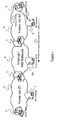
- FIG. 1 illustrates schematically a first IMS Gateway 1 located within a first local network 2 to which a client 3 is attached.
- This first network could be a LAN, WLAN, WiMAX network or the like.
- the first network 2 is coupled to the Internet or other IP network 4 (such as the IP backbone of a Telco) via a router and firewall 5.
- IP network 4 such as the IP backbone of a Telco
- Within the IP network 4 or connected to that network is an IMS core network as described above.
- the IP network 4 is shown connected to a second local network 6, again via a router and firewall 7.
- a second IMS Gateway 8 is present, as well as a server 9.
- the server 9 is a game server which interacts with multiple game clients, one of which is the client 3 within the first local network 2.
- the Gateway When an IMS Gateway is initialised, the Gateway is configured to register to the IMS using the IMPU(s) of the user(s), client or server, present in the local network. Once registered it is configured for each user to subscribe to the presence information of a few peer users (e.g. the "friends" of the owner of the IMS gateway), via the IMS presence Application Server 10.
- Both IMS Gateways broadcast discovery messages in their respective local networks, e.g. according to the Quake Network Protocol.
- a server becomes active in the local network, it responds to a discovery message by advertising its service(s).
- the IMS Gateway updates the server's IMS presence information for the server (corresponding IMPU) using a SIP (Session Initiation Protocol) PUBLISH request.
- SIP Session Initiation Protocol
- PUBLISH request the IMS Gateway includes a GRUU (Globally Routable User agent URI) that remote clients can use to contact the server in the context of the application (e.g., the game).
- GRUU Globally Routable User agent URI
- the GRUU is allocated by the IMS Gateway and is a SIP URI that can be used to route messages across the IMS to the Gateway.
- the IMS Gateway also includes in the PUBLISH request a description, name, or reference that describes the application (e.g., use this URI to play "Game_name" with me).
- the IMS Gateway can be configured with this information beforehand or to ask for input every time it receives a new response to a discovery message.
- server 9 will respond to the broadcast of a discovery message by the second IMS Gateway 8.
- the response will include the local IP address and port number at which the server will receive client requests in respect of a particular application (to initiate a game session).
- the second IMS Gateway will map this IP address and port number to the GRUU and to the IMPU associated with the server, and will publish the GRUU for the IMPU in the IMS presence service.
- the IMS Gateway can be configured to always update the presence information of a particular server, or to first ask for further input from the server in order to decide which user's presence information needs to be updated, in case the IMS Gateway serves multiple users.
- the first IMS Gateway is configured to subscribe, using the IMS SUBSCRIBE method, to the presence information of a set of users (i.e. a set of IMPUs). This information is periodically sent from the IMS presence AS to the IMS Gateway in SIP NOTIFY messages as illustrated in Figure 2 .
- the first IMS Gateway performs an IMS registration for each IMPU present on the local network, it will make separate subscriptions to the presence service for each of these local IMPUs. Indeed, subscribing to the presence information published for a peer user (in a remote network) may only be possible when acting on behalf of one of the local IMPUs, i.e. a peer use may only permit its presence information to be provided to certain specified IMPUs.
- the IMS Gateway will search for appropriate servers in the presence information that it has obtained.
- the IMS Gateway may perform this search by checking if the description of a GRUU contains the name of the application (e.g. game) requested by the client in the service discovery message. If the IMS Gateway finds such a server, it will respond to the discovery message by identifying a server location to the client. However, this location is not the GRUU of the remote server, but rather an IP address and port number within the local network and which belongs to the first IMS Gateway.
- the address and port number are allocated from a pool of addresses belonging to the IMS Gateway, and are mapped to the GRUU.
- the IMS Gateway finds more than one server in the previously retrieved presence information, it may need to use different ports or even IP addresses to send several responses (one per server that was found) to the client, so that the client understands that each response represents a different server.
- the client may send a legacy protocol message to that address requesting a connection to the application.
- the request is received by the local IMS Gateway and is mapped to the corresponding GRUU.
- the IMS Gateway then generates a SIP INVITE addressed to the GRUU, and sends this towards the IMS as illustrated in Figure 3 .
- the message is routed across the IMS and is received by the second IMS Gateway, which maps the GRUU to the local address of the game server and contacts the server using the legacy protocol.
- the 200 OK response is routed from the second to the first IMS Gateway via the IMS network.
- the IMS Gateways When a session is established, the IMS Gateways relay legacy protocol messages between the local networks, thus ensuring that the messages are delivered reliably. It is noted that user plane traffic is also routed via the IMS Gateways and the IMS network ensuring a guaranteed QoS for the session.
- Figure 4 is a flow diagram further illustrating a process for publishing services available on a legacy server via the IMS presence service.
- the process comprises initial service discovery steps, steps 400 and 401, followed by a step of allocating a GRUU at the IMS Gateway, step 402, and a step of publishing the GRUU on the IMS presence service, step 403.
- Figure 5 is a flow diagram illustrating a process for identifying a service to a legacy terminal, and for establishing a connection to such a service. It includes the steps of the IMS Gateway subscribing to the IMS presence service, step 500, performing the discovery process in the local network, steps 501 and 502, and mapping the service to a local network address, step 503. Thereafter, the steps of a client initiating a connection, step 504, and sending and receiving the INVITE, steps 505 and 506, are performed prior to the step of setting up the connection over the IMS, step 507.
- FIG. 6 illustrates schematically an IMS Gateway 11 arranged to provide the services described above.
- the gateway comprises a first interface 12 for connection to the local network and a second interface 13 for connection to the IP network (IMS). It also comprises an IMS/SIP client 14 and a database 15 for storing presence information, and an interworking function 16 which provides interworking between the IMS and local network domains.
- IMS IP network
- the embodiment described is concerned with a most complex scenario, i.e. where both the client and the server are both located behind an IMS Gateway
- the invention is also applicable to the case where only one of the client and server are located behind an IMS Gateway.
- the client is an IMS/SIP client.
- the client can subscribe directly to the IMS presence service, whilst the services offered by the server are published on its behalf by the IMS Gateway.
- the server may publish its presence information directly.
- a client and server may subscribe to different IMS networks, i.e. owned by different operators.
- presence servers within one network can subscribe to information published on the presence servers of the other network, and SIP messages are seamlessly routed between the networks.
Landscapes
- Engineering & Computer Science (AREA)
- Computer Networks & Wireless Communication (AREA)
- Signal Processing (AREA)
- Data Exchanges In Wide-Area Networks (AREA)
- Mobile Radio Communication Systems (AREA)
- Telephonic Communication Services (AREA)
Claims (8)
- Verfahren, um einem Legacy-Host, der an ein lokales Netzwerk angeschaltet ist, zu ermöglichen, einen Dienst aufzufinden, der durch einen entfernten Server bereitgestellt wird, das Verfahren gekennzeichnet durch die folgenden Schritte, die von einem IP-Multimedia-Subsystem-Gateway innerhalb des lokalen Netzwerks durchzuführen sind:Teilnehmen an einem IP-Multimedia-Subsystem-Präsenzdienst und Empfangen von Präsenzinformationen, die von dem Präsenzdienst veröffentlicht werden, die Globally Routable User-Agent URIs (500) enthalten;Empfangen einer Dienstauffindungsnachricht, die von dem Legacy-Host gesandt wird (502);Durchsuchen der Präsenzinformationen zum Identifizieren eines angeforderten Dienstes, der von dem entfernten Server bereitgestellt wird, und eines Globally Routable User-Agenten URI (502); undSenden einer Antwort an den Legacy-Host, die eine lokale Netzwerkadresse des Gateways enthält, unter Aufrechterhaltung einer Zuordnung zwischen der lokalen Netzwerkadresse und dem Globally Routable User-Agenten URI (503).
- Verfahren nach Anspruch 1, wobei der Benutzer des Legacy-Host ein Teilnehmer eines IP-Multimedia-Subsystems ist, das den Präsenzdienst bereitstellt, wobei das Gateway eine IP-Multimedia-Subsystem-Registrierung für den Benutzer durchführt.
- Verfahren nach Anspruch 1 oder 2, wobei die lokale Netzwerkadresse eine IP-Adresse und Port-Nummer des Gateways ist.
- Verfahren nach einem der vorstehenden Ansprüche, wobei der Schritt zum Suchen der Präsenzinformationen eine Vielzahl von Diensten, die der Anforderung entsprechen, identifiziert, wobei das Verfahren umfasst, eine Vielzahl von Antworten zu senden, die jeweilige lokale Netzwerkadressen identifizieren, und an dem Gateway eine Zuordnung zwischen der lokalen Netzwerkadresse und dem jeweiligen Globally Routable User-Agenten URIs aufrechtzuerhalten.
- Verfahren nach einem der vorstehenden Ansprüche, wobei die Präsenzinformationen für jeden Globally Routable User-Agenten URI eine Dienstbeschreibung enthalten und der Schritt zum Suchen der Präsenzinformationen umfasst, die Dienstbeschreibungen nach einem Dienst zu durchsuchen, der der Anforderung entspricht.
- Verfahren nach einem der vorstehenden Ansprüche, wobei die Dienstauffindungsnachricht in dem lokalen Netzwerk gemäß einem Dienstauffindungsprotokoll rundgesendet wird.
- Vorrichtung, die konfiguriert ist zum Operieren als ein IP-Multimedia-Subsystem-Gateway (1) innerhalb eines lokalen Netzwerks (2) für den Zweck, einem Legacy-Host (3), der an das lokale Netzwerk angeschaltet ist, zu ermöglichen, einen Dienst aufzufinden, der durch einen entfernten Server (9) bereitgestellt wird, die Vorrichtung dadurch gekennzeichnet, dass sie konfiguriert ist zum Teilnehmen an einem IP-Multimedia-Subsystem-Präsenzdienst und zum Empfangen von Präsenzinformationen, die von dem Präsenzdienst veröffentlicht werden, die Globally Routable User-Agent URIs enthalten, zum Empfangen einer Dienstauffindungsnachricht, die von dem Legacy-Host gesandt wird, zum Durchsuchen der Präsenzinformationen zum Identifizieren eines angeforderten Dienstes, der von dem entfernten Server bereitgestellt wird, und eines Globally Routable User-Agenten URI und zum Senden einer Antwort an den Legacy-Host, die eine lokale Netzwerkadresse des Gateway enthält, unter Aufrechterhaltung einer Zuordnung zwischen der lokalen Netzwerkadresse und dem Globally Routable User-Agenten URI.
- Vorrichtung nach Anspruch 7, wobei die lokale Netzwerkadresse eine IP-Adresse und Port-Nummer der Vorrichtung ist.
Applications Claiming Priority (1)
| Application Number | Priority Date | Filing Date | Title |
|---|---|---|---|
| PCT/EP2008/051113 WO2009095074A1 (en) | 2008-01-30 | 2008-01-30 | A method and apparatus for connecting legacy nodes |
Publications (2)
| Publication Number | Publication Date |
|---|---|
| EP2248325A1 EP2248325A1 (de) | 2010-11-10 |
| EP2248325B1 true EP2248325B1 (de) | 2011-09-21 |
Family
ID=40029029
Family Applications (1)
| Application Number | Title | Priority Date | Filing Date |
|---|---|---|---|
| EP08708428A Not-in-force EP2248325B1 (de) | 2008-01-30 | 2008-01-30 | Verfahren und vorrichtung zum verbinden von legacy-knoten |
Country Status (6)
| Country | Link |
|---|---|
| US (1) | US8849963B2 (de) |
| EP (1) | EP2248325B1 (de) |
| CN (1) | CN101897169B (de) |
| AT (1) | ATE525846T1 (de) |
| ES (1) | ES2371587T3 (de) |
| WO (1) | WO2009095074A1 (de) |
Families Citing this family (9)
| Publication number | Priority date | Publication date | Assignee | Title |
|---|---|---|---|---|
| WO2011032701A1 (en) * | 2009-09-18 | 2011-03-24 | Deutsche Telekom Ag | Method for supporting a user equipment lacking globally routable user agent uri - gruu support in an internet protocol multimedia subsystem - ims |
| US8812685B2 (en) * | 2010-07-16 | 2014-08-19 | At&T Intellectual Property I, L.P. | Advanced gateway device |
| CN102413454B (zh) * | 2010-09-21 | 2014-08-20 | 中兴通讯股份有限公司 | 一种数据传输的方法及aog系统 |
| US20140313929A1 (en) * | 2013-04-17 | 2014-10-23 | Emily H. Qi | Enabling devices to discover services through a network controller or group owner |
| US9876864B2 (en) | 2014-01-08 | 2018-01-23 | Hewlett Packard Enterprise Development Lp | Service discovery management |
| US10419497B2 (en) * | 2015-03-31 | 2019-09-17 | Bose Corporation | Establishing communication between digital media servers and audio playback devices in audio systems |
| WO2016176862A1 (zh) * | 2015-05-07 | 2016-11-10 | 华为技术有限公司 | 一种业务处理方法及用户设备 |
| EP3496357A1 (de) * | 2017-12-08 | 2019-06-12 | Cork Institute Of Technology | Verfahren und vorrichtung für interoperabilität zwischen iot vorrichtungen in heterogenen netzwerken |
| US11496595B2 (en) * | 2021-02-02 | 2022-11-08 | Dell Products L.P. | Proxy management controller system |
Family Cites Families (6)
| Publication number | Priority date | Publication date | Assignee | Title |
|---|---|---|---|---|
| FR2813471B1 (fr) * | 2000-08-31 | 2002-12-20 | Schneider Automation | Systeme de communication d'un equipement d'automatisme base sur le protocole soap |
| US20060106968A1 (en) * | 2004-11-15 | 2006-05-18 | Wooi Teoh Gary C | Intelligent platform management bus switch system |
| JP4041118B2 (ja) * | 2004-11-24 | 2008-01-30 | 株式会社東芝 | ゲートウェイ装置、ネットワークシステム、通信プログラム及び通信方法 |
| US8391165B2 (en) * | 2005-12-30 | 2013-03-05 | Motorola Mobility Llc | Method and apparatus for identifying caller preferences matched to callee capabilities for IMS communications |
| US8406400B2 (en) * | 2007-06-12 | 2013-03-26 | At&T Intellectual Property I, Lp | Techniques for providing multimedia communication services to a subscriber |
| CN101448200B (zh) * | 2007-11-27 | 2010-08-18 | 中兴通讯股份有限公司 | 一种支持动态交互式多媒体场景的移动终端 |
-
2008
- 2008-01-30 EP EP08708428A patent/EP2248325B1/de not_active Not-in-force
- 2008-01-30 ES ES08708428T patent/ES2371587T3/es active Active
- 2008-01-30 CN CN200880119454.3A patent/CN101897169B/zh not_active Expired - Fee Related
- 2008-01-30 WO PCT/EP2008/051113 patent/WO2009095074A1/en not_active Ceased
- 2008-01-30 AT AT08708428T patent/ATE525846T1/de not_active IP Right Cessation
- 2008-01-30 US US12/865,603 patent/US8849963B2/en not_active Expired - Fee Related
Also Published As
| Publication number | Publication date |
|---|---|
| CN101897169A (zh) | 2010-11-24 |
| EP2248325A1 (de) | 2010-11-10 |
| US20100325248A1 (en) | 2010-12-23 |
| ATE525846T1 (de) | 2011-10-15 |
| WO2009095074A1 (en) | 2009-08-06 |
| CN101897169B (zh) | 2013-10-16 |
| ES2371587T3 (es) | 2012-01-05 |
| US8849963B2 (en) | 2014-09-30 |
Similar Documents
| Publication | Publication Date | Title |
|---|---|---|
| US8849963B2 (en) | Method and apparatus for connecting legacy nodes | |
| EP1723769B1 (de) | Verfahren und system zur web-dienst-abwicklung | |
| EP2168353B1 (de) | Ip-verbindungsherstellung über ein datennetz | |
| US20070286100A1 (en) | Local discovery of mobile network services | |
| US20060123116A1 (en) | Service discovery using session initiating protocol (SIP) | |
| EP2078403A1 (de) | Verfahren und anordnung zur ermöglichung von multimediakommunikation mit einem privaten netzwerk | |
| EP1843547A2 (de) | Verfahren, System und Benutzergerät in einer Kombination aus CS-Aufruf und IMS-Sitzung | |
| US9578068B2 (en) | Methods and apparatus for processing an IMS session | |
| EP2502395B1 (de) | Sichere xdm-kommunikation zwischen ims-netze | |
| EP2845359B1 (de) | Anrufrouting für ip multimedia subsystem benutzer | |
| US20150063345A1 (en) | Ip multimedia subsystem support for private branch exchanges | |
| US20050249152A1 (en) | Method for processing messages | |
| US11418635B2 (en) | Method of dynamic selection, by a caller, from a plurality of terminals of a callee | |
| US12010154B2 (en) | Support for IMS virtual clients in multi-operator environment | |
| JP5226798B2 (ja) | イベントパケット処理の方法 | |
| EP2675133A2 (de) | Verfahren und Vorrichtung zur Implementierung von Nebenstellenanlagenzugriff auf ein IP-Multimediasubsystem | |
| KR100789075B1 (ko) | 웹 서비스 처리용 방법 및 시스템 | |
| Tung et al. | Service discovery of IP cameras using SIP and zeroconf protocols | |
| HK1140327A1 (en) | Group access to ip multimedia subsystem service | |
| HK1140327B (en) | Group access to ip multimedia subsystem service |
Legal Events
| Date | Code | Title | Description |
|---|---|---|---|
| PUAI | Public reference made under article 153(3) epc to a published international application that has entered the european phase |
Free format text: ORIGINAL CODE: 0009012 |
|
| 17P | Request for examination filed |
Effective date: 20100514 |
|
| AK | Designated contracting states |
Kind code of ref document: A1 Designated state(s): AT BE BG CH CY CZ DE DK EE ES FI FR GB GR HR HU IE IS IT LI LT LU LV MC MT NL NO PL PT RO SE SI SK TR |
|
| AX | Request for extension of the european patent |
Extension state: AL BA MK RS |
|
| GRAP | Despatch of communication of intention to grant a patent |
Free format text: ORIGINAL CODE: EPIDOSNIGR1 |
|
| DAX | Request for extension of the european patent (deleted) | ||
| GRAS | Grant fee paid |
Free format text: ORIGINAL CODE: EPIDOSNIGR3 |
|
| GRAA | (expected) grant |
Free format text: ORIGINAL CODE: 0009210 |
|
| AK | Designated contracting states |
Kind code of ref document: B1 Designated state(s): AT BE BG CH CY CZ DE DK EE ES FI FR GB GR HR HU IE IS IT LI LT LU LV MC MT NL NO PL PT RO SE SI SK TR |
|
| REG | Reference to a national code |
Ref country code: GB Ref legal event code: FG4D |
|
| REG | Reference to a national code |
Ref country code: CH Ref legal event code: EP |
|
| REG | Reference to a national code |
Ref country code: IE Ref legal event code: FG4D |
|
| REG | Reference to a national code |
Ref country code: DE Ref legal event code: R096 Ref document number: 602008009970 Country of ref document: DE Effective date: 20111208 |
|
| REG | Reference to a national code |
Ref country code: ES Ref legal event code: FG2A Ref document number: 2371587 Country of ref document: ES Kind code of ref document: T3 Effective date: 20120105 |
|
| REG | Reference to a national code |
Ref country code: NL Ref legal event code: VDEP Effective date: 20110921 |
|
| PG25 | Lapsed in a contracting state [announced via postgrant information from national office to epo] |
Ref country code: LT Free format text: LAPSE BECAUSE OF FAILURE TO SUBMIT A TRANSLATION OF THE DESCRIPTION OR TO PAY THE FEE WITHIN THE PRESCRIBED TIME-LIMIT Effective date: 20110921 Ref country code: SE Free format text: LAPSE BECAUSE OF FAILURE TO SUBMIT A TRANSLATION OF THE DESCRIPTION OR TO PAY THE FEE WITHIN THE PRESCRIBED TIME-LIMIT Effective date: 20110921 Ref country code: HR Free format text: LAPSE BECAUSE OF FAILURE TO SUBMIT A TRANSLATION OF THE DESCRIPTION OR TO PAY THE FEE WITHIN THE PRESCRIBED TIME-LIMIT Effective date: 20110921 Ref country code: NO Free format text: LAPSE BECAUSE OF FAILURE TO SUBMIT A TRANSLATION OF THE DESCRIPTION OR TO PAY THE FEE WITHIN THE PRESCRIBED TIME-LIMIT Effective date: 20111221 Ref country code: FI Free format text: LAPSE BECAUSE OF FAILURE TO SUBMIT A TRANSLATION OF THE DESCRIPTION OR TO PAY THE FEE WITHIN THE PRESCRIBED TIME-LIMIT Effective date: 20110921 |
|
| LTIE | Lt: invalidation of european patent or patent extension |
Effective date: 20110921 |
|
| PG25 | Lapsed in a contracting state [announced via postgrant information from national office to epo] |
Ref country code: AT Free format text: LAPSE BECAUSE OF FAILURE TO SUBMIT A TRANSLATION OF THE DESCRIPTION OR TO PAY THE FEE WITHIN THE PRESCRIBED TIME-LIMIT Effective date: 20110921 Ref country code: CY Free format text: LAPSE BECAUSE OF FAILURE TO SUBMIT A TRANSLATION OF THE DESCRIPTION OR TO PAY THE FEE WITHIN THE PRESCRIBED TIME-LIMIT Effective date: 20110921 Ref country code: GR Free format text: LAPSE BECAUSE OF FAILURE TO SUBMIT A TRANSLATION OF THE DESCRIPTION OR TO PAY THE FEE WITHIN THE PRESCRIBED TIME-LIMIT Effective date: 20111222 Ref country code: SI Free format text: LAPSE BECAUSE OF FAILURE TO SUBMIT A TRANSLATION OF THE DESCRIPTION OR TO PAY THE FEE WITHIN THE PRESCRIBED TIME-LIMIT Effective date: 20110921 Ref country code: LV Free format text: LAPSE BECAUSE OF FAILURE TO SUBMIT A TRANSLATION OF THE DESCRIPTION OR TO PAY THE FEE WITHIN THE PRESCRIBED TIME-LIMIT Effective date: 20110921 |
|
| REG | Reference to a national code |
Ref country code: AT Ref legal event code: MK05 Ref document number: 525846 Country of ref document: AT Kind code of ref document: T Effective date: 20110921 |
|
| PG25 | Lapsed in a contracting state [announced via postgrant information from national office to epo] |
Ref country code: BE Free format text: LAPSE BECAUSE OF FAILURE TO SUBMIT A TRANSLATION OF THE DESCRIPTION OR TO PAY THE FEE WITHIN THE PRESCRIBED TIME-LIMIT Effective date: 20110921 |
|
| PG25 | Lapsed in a contracting state [announced via postgrant information from national office to epo] |
Ref country code: IS Free format text: LAPSE BECAUSE OF FAILURE TO SUBMIT A TRANSLATION OF THE DESCRIPTION OR TO PAY THE FEE WITHIN THE PRESCRIBED TIME-LIMIT Effective date: 20120121 Ref country code: CZ Free format text: LAPSE BECAUSE OF FAILURE TO SUBMIT A TRANSLATION OF THE DESCRIPTION OR TO PAY THE FEE WITHIN THE PRESCRIBED TIME-LIMIT Effective date: 20110921 Ref country code: SK Free format text: LAPSE BECAUSE OF FAILURE TO SUBMIT A TRANSLATION OF THE DESCRIPTION OR TO PAY THE FEE WITHIN THE PRESCRIBED TIME-LIMIT Effective date: 20110921 |
|
| PG25 | Lapsed in a contracting state [announced via postgrant information from national office to epo] |
Ref country code: PL Free format text: LAPSE BECAUSE OF FAILURE TO SUBMIT A TRANSLATION OF THE DESCRIPTION OR TO PAY THE FEE WITHIN THE PRESCRIBED TIME-LIMIT Effective date: 20110921 Ref country code: PT Free format text: LAPSE BECAUSE OF FAILURE TO SUBMIT A TRANSLATION OF THE DESCRIPTION OR TO PAY THE FEE WITHIN THE PRESCRIBED TIME-LIMIT Effective date: 20120123 Ref country code: IT Free format text: LAPSE BECAUSE OF FAILURE TO SUBMIT A TRANSLATION OF THE DESCRIPTION OR TO PAY THE FEE WITHIN THE PRESCRIBED TIME-LIMIT Effective date: 20110921 Ref country code: NL Free format text: LAPSE BECAUSE OF FAILURE TO SUBMIT A TRANSLATION OF THE DESCRIPTION OR TO PAY THE FEE WITHIN THE PRESCRIBED TIME-LIMIT Effective date: 20110921 Ref country code: RO Free format text: LAPSE BECAUSE OF FAILURE TO SUBMIT A TRANSLATION OF THE DESCRIPTION OR TO PAY THE FEE WITHIN THE PRESCRIBED TIME-LIMIT Effective date: 20110921 Ref country code: EE Free format text: LAPSE BECAUSE OF FAILURE TO SUBMIT A TRANSLATION OF THE DESCRIPTION OR TO PAY THE FEE WITHIN THE PRESCRIBED TIME-LIMIT Effective date: 20110921 |
|
| PLBE | No opposition filed within time limit |
Free format text: ORIGINAL CODE: 0009261 |
|
| STAA | Information on the status of an ep patent application or granted ep patent |
Free format text: STATUS: NO OPPOSITION FILED WITHIN TIME LIMIT |
|
| PG25 | Lapsed in a contracting state [announced via postgrant information from national office to epo] |
Ref country code: DK Free format text: LAPSE BECAUSE OF FAILURE TO SUBMIT A TRANSLATION OF THE DESCRIPTION OR TO PAY THE FEE WITHIN THE PRESCRIBED TIME-LIMIT Effective date: 20110921 |
|
| 26N | No opposition filed |
Effective date: 20120622 |
|
| PG25 | Lapsed in a contracting state [announced via postgrant information from national office to epo] |
Ref country code: MC Free format text: LAPSE BECAUSE OF NON-PAYMENT OF DUE FEES Effective date: 20120131 |
|
| REG | Reference to a national code |
Ref country code: CH Ref legal event code: PL |
|
| REG | Reference to a national code |
Ref country code: DE Ref legal event code: R097 Ref document number: 602008009970 Country of ref document: DE Effective date: 20120622 |
|
| REG | Reference to a national code |
Ref country code: FR Ref legal event code: ST Effective date: 20120928 |
|
| REG | Reference to a national code |
Ref country code: IE Ref legal event code: MM4A |
|
| PG25 | Lapsed in a contracting state [announced via postgrant information from national office to epo] |
Ref country code: LI Free format text: LAPSE BECAUSE OF NON-PAYMENT OF DUE FEES Effective date: 20120131 Ref country code: CH Free format text: LAPSE BECAUSE OF NON-PAYMENT OF DUE FEES Effective date: 20120131 |
|
| PG25 | Lapsed in a contracting state [announced via postgrant information from national office to epo] |
Ref country code: FR Free format text: LAPSE BECAUSE OF NON-PAYMENT OF DUE FEES Effective date: 20120131 |
|
| PG25 | Lapsed in a contracting state [announced via postgrant information from national office to epo] |
Ref country code: IE Free format text: LAPSE BECAUSE OF NON-PAYMENT OF DUE FEES Effective date: 20120130 |
|
| PG25 | Lapsed in a contracting state [announced via postgrant information from national office to epo] |
Ref country code: BG Free format text: LAPSE BECAUSE OF FAILURE TO SUBMIT A TRANSLATION OF THE DESCRIPTION OR TO PAY THE FEE WITHIN THE PRESCRIBED TIME-LIMIT Effective date: 20111221 |
|
| PG25 | Lapsed in a contracting state [announced via postgrant information from national office to epo] |
Ref country code: MT Free format text: LAPSE BECAUSE OF FAILURE TO SUBMIT A TRANSLATION OF THE DESCRIPTION OR TO PAY THE FEE WITHIN THE PRESCRIBED TIME-LIMIT Effective date: 20110921 |
|
| PG25 | Lapsed in a contracting state [announced via postgrant information from national office to epo] |
Ref country code: TR Free format text: LAPSE BECAUSE OF FAILURE TO SUBMIT A TRANSLATION OF THE DESCRIPTION OR TO PAY THE FEE WITHIN THE PRESCRIBED TIME-LIMIT Effective date: 20110921 |
|
| PG25 | Lapsed in a contracting state [announced via postgrant information from national office to epo] |
Ref country code: LU Free format text: LAPSE BECAUSE OF NON-PAYMENT OF DUE FEES Effective date: 20120130 |
|
| PG25 | Lapsed in a contracting state [announced via postgrant information from national office to epo] |
Ref country code: HU Free format text: LAPSE BECAUSE OF FAILURE TO SUBMIT A TRANSLATION OF THE DESCRIPTION OR TO PAY THE FEE WITHIN THE PRESCRIBED TIME-LIMIT Effective date: 20080130 |
|
| PGFP | Annual fee paid to national office [announced via postgrant information from national office to epo] |
Ref country code: ES Payment date: 20190201 Year of fee payment: 12 Ref country code: GB Payment date: 20190128 Year of fee payment: 12 Ref country code: DE Payment date: 20190129 Year of fee payment: 12 |
|
| REG | Reference to a national code |
Ref country code: DE Ref legal event code: R119 Ref document number: 602008009970 Country of ref document: DE |
|
| GBPC | Gb: european patent ceased through non-payment of renewal fee |
Effective date: 20200130 |
|
| PG25 | Lapsed in a contracting state [announced via postgrant information from national office to epo] |
Ref country code: GB Free format text: LAPSE BECAUSE OF NON-PAYMENT OF DUE FEES Effective date: 20200130 Ref country code: DE Free format text: LAPSE BECAUSE OF NON-PAYMENT OF DUE FEES Effective date: 20200801 |
|
| REG | Reference to a national code |
Ref country code: ES Ref legal event code: FD2A Effective date: 20210607 |
|
| PG25 | Lapsed in a contracting state [announced via postgrant information from national office to epo] |
Ref country code: ES Free format text: LAPSE BECAUSE OF NON-PAYMENT OF DUE FEES Effective date: 20200131 |