EP2248823A1 - Neues die Funktionsfähigkeit stimulierendes Peptid - Google Patents
Neues die Funktionsfähigkeit stimulierendes Peptid Download PDFInfo
- Publication number
- EP2248823A1 EP2248823A1 EP09305367A EP09305367A EP2248823A1 EP 2248823 A1 EP2248823 A1 EP 2248823A1 EP 09305367 A EP09305367 A EP 09305367A EP 09305367 A EP09305367 A EP 09305367A EP 2248823 A1 EP2248823 A1 EP 2248823A1
- Authority
- EP
- European Patent Office
- Prior art keywords
- thermophilus
- bacteria
- firmicutes
- strain
- competence
- Prior art date
- Legal status (The legal status is an assumption and is not a legal conclusion. Google has not performed a legal analysis and makes no representation as to the accuracy of the status listed.)
- Withdrawn
Links
Images

Classifications
-
- C—CHEMISTRY; METALLURGY
- C07—ORGANIC CHEMISTRY
- C07K—PEPTIDES
- C07K14/00—Peptides having more than 20 amino acids; Gastrins; Somatostatins; Melanotropins; Derivatives thereof
- C07K14/195—Peptides having more than 20 amino acids; Gastrins; Somatostatins; Melanotropins; Derivatives thereof from bacteria
- C07K14/315—Peptides having more than 20 amino acids; Gastrins; Somatostatins; Melanotropins; Derivatives thereof from bacteria from Streptococcus (G), e.g. Enterococci
-
- C—CHEMISTRY; METALLURGY
- C12—BIOCHEMISTRY; BEER; SPIRITS; WINE; VINEGAR; MICROBIOLOGY; ENZYMOLOGY; MUTATION OR GENETIC ENGINEERING
- C12N—MICROORGANISMS OR ENZYMES; COMPOSITIONS THEREOF; PROPAGATING, PRESERVING, OR MAINTAINING MICROORGANISMS; MUTATION OR GENETIC ENGINEERING; CULTURE MEDIA
- C12N1/00—Microorganisms; Compositions thereof; Processes of propagating, maintaining or preserving microorganisms or compositions thereof; Processes of preparing or isolating a composition containing a microorganism; Culture media therefor
- C12N1/20—Bacteria; Culture media therefor
-
- C—CHEMISTRY; METALLURGY
- C12—BIOCHEMISTRY; BEER; SPIRITS; WINE; VINEGAR; MICROBIOLOGY; ENZYMOLOGY; MUTATION OR GENETIC ENGINEERING
- C12N—MICROORGANISMS OR ENZYMES; COMPOSITIONS THEREOF; PROPAGATING, PRESERVING, OR MAINTAINING MICROORGANISMS; MUTATION OR GENETIC ENGINEERING; CULTURE MEDIA
- C12N1/00—Microorganisms; Compositions thereof; Processes of propagating, maintaining or preserving microorganisms or compositions thereof; Processes of preparing or isolating a composition containing a microorganism; Culture media therefor
- C12N1/38—Chemical stimulation of growth or activity by addition of chemical compounds which are not essential growth factors; Stimulation of growth by removal of a chemical compound
-
- C—CHEMISTRY; METALLURGY
- C12—BIOCHEMISTRY; BEER; SPIRITS; WINE; VINEGAR; MICROBIOLOGY; ENZYMOLOGY; MUTATION OR GENETIC ENGINEERING
- C12N—MICROORGANISMS OR ENZYMES; COMPOSITIONS THEREOF; PROPAGATING, PRESERVING, OR MAINTAINING MICROORGANISMS; MUTATION OR GENETIC ENGINEERING; CULTURE MEDIA
- C12N15/00—Mutation or genetic engineering; DNA or RNA concerning genetic engineering, vectors, e.g. plasmids, or their isolation, preparation or purification; Use of hosts therefor
- C12N15/09—Recombinant DNA-technology
- C12N15/63—Introduction of foreign genetic material using vectors; Vectors; Use of hosts therefor; Regulation of expression
- C12N15/74—Vectors or expression systems specially adapted for prokaryotic hosts other than E. coli, e.g. Lactobacillus, Micromonospora
- C12N15/746—Vectors or expression systems specially adapted for prokaryotic hosts other than E. coli, e.g. Lactobacillus, Micromonospora for lactic acid bacteria (Streptococcus; Lactococcus; Lactobacillus; Pediococcus; Enterococcus; Leuconostoc; Propionibacterium; Bifidobacterium; Sporolactobacillus)
Definitions
- the present invention relates to Firmicutes, in particular Streptococcus, and more preferably S. thermophilus competence, and more specifically to a new competence stimulating peptide.
- TCS TCS
- ComD membrane embedded histidine kinase
- ComE its cognate response regulator
- ComX is an alternative competence specific sigma factor required for expression of late CSP-induced genes, which comprise genes encoding the DNA uptake machinery.
- Oligopeptide transport systems involved in these signaling pathways belong to the superfamily of ATP-binding cassette (ABC) transporters. They are composed of five subunits: an extracellular oligopeptide-binding protein, OppA that specifically captures the substrates, two transmembrane proteins, OppB and OppC that form the pore and two membrane-bound cytoplasmic ATP-binding proteins, OppD and OppF that provide the energy for peptide translocation.
- Several copies of the opp operon and/or of the genes encoding the oligopeptide-binding proteins can be present in a single genome.
- Streptococcus thermophilus encodes one oligopeptide transport system and depending on the strain, two (strain LMD-9 and CNRZ1066) or three (strain LMG18311) oligopeptide-binding proteins.
- two main functions have been attributed to the Opp transporters: nutrition and sensing.
- the nutritional role has been well studied in lactic acid bacteria such as Lactococcus lactis or S. thermophilus.
- the Opp transporters supply these auxotrophic bacteria with peptides that serve as amino acid sources.
- the sensing function is more complex and is poorly documented, particularly in nonpathogenic bacteria.
- S. thermophilus is of major importance for the food industry since it is massively used for the manufacture of yoghurt and Swiss or Italian-type cheeses with an annual market value of approximately $40 billion making S. thermophilus a species of major economic importance.
- the industry is continuously working to improve the properties of S. thermophilus starter strains. Even though the fermentation properties of this bacterium have been gradually improved by classical methods, there is great potential for further improvement through genetic engineering.
- Havarstein has disclosed an inducible system (stb system) that permits the surexpression of proteins in S. thermophilus ( Blomgvist T. et al "Pheromone-induced expression of recombinant proteins in Streptococcus thermophilus” Arch Microbiol. 2006 Dec;186(6):465-73 . Epub 2006 Aug 24.).
- this article discloses that a possible peptide-pheromone (STP) regulates bacteriocin production in S. thermophilus LMG 18311, and show that the StbABCHR (system that regulates bacteriocin production) quorum-sensing system can be exploited for inducible expression of recombinant proteins in this bacterial species.
- StbABCHR system that regulates bacteriocin production
- the present invention relates to an isolated polypeptide comprising the amino acids sequence SEQ ID N°1 (LKTLKIFVLFSLLIAILPYFAGCL), and derivatives thereof.
- the present invention also relates to an isolated nucleic acid encoding for said isolated polypeptide.
- the present invention still relates to a vector comprising said nucleic acid operably linked to a gene expression sequence.
- the present invention still relates to a host cell genetically engineered with said vector.
- the present invention also relates to a culture medium comprising an effective amount of said isolated polypeptide and nutrients that allow the growing of Firmicutes, in particular Streptococcus, and more preferably S. thermophilus.
- the present invention further relates to a use of said polypeptide, said nucleic acid, said vector, said host cell, or said culture medium for stimulating competence in Firmicutes, in particular Streptococcus, and more preferably S. thermophilus.
- the present invention still relates to a method of producing transformation competent Firmicutes, in particular Streptococcus, and more preferably S. thermophilus bacteria comprising the step (i) of contacting said Firmicutes, in particular Streptococcus, and more preferably S. thermophilus bacteria with an effective amount of an isolated polypeptide as defined in any one of claims 1 to 5 for obtaining said transformation competent Firmicutes, in particular Streptococcus, and more preferably S. thermophilus bacteria.
- Ami oligopeptide transport system is implicated in the control of competence in Streptococcus, in particular S. thermophilus. This transport system functions with several oligopeptide binding proteins. In strain LMD9 where two oligopeptide binding proteins are present, AmiA3 and AmiA1, AmiA3 plays the major role in the control of competence.
- the inventors have identifying one new polypeptide implicated in the control of competence.
- the present invention relates to an isolated polypeptide comprising the amino acids sequence SEQ ID N°1 (LKTLKIFVLFSLLIAILPYFAGCL), or derivatives and fragments capable of stimulating competence in Firmicutes, in particular Streptococcus, and more preferably S. thermophilus, thereof.
- the isolated polypeptide of the invention has the ability to stimulate the competence in Firmicutes, in particular Streptococcus, and more preferably S. thermophilus strains.
- the length of the isolated polypeptide of the invention is less than 100 amino acids, preferably less than 50 amino acids.
- the isolated polypeptide of the present invention consists in the amino acids sequence SEQ ID N°1 (LKTLKIFVLFSLLIAILPYFAGCL), and derivatives thereof.
- the isolated polypeptide of the present invention further comprises an amino acid sequence corresponding to a signal peptide.
- Said signal peptide allows the secretion of the polypeptide of the invention in the extracellular medium when said polypeptide is expressed in a prokaryotic or .an eukaryotic cell, preferably in a prokaryotic cell, such as in a bacteria from the Streptococcus genus, more preferably in a Firmicutes, in particular Streptococcus, and more preferably S. thermophilus bacteria.
- derivatives refer to an amino acid sequence having a percentage of identity of at least 70% with the amino acid sequence SEQ ID N°:1, as an example at least 85% (i.e. 3 amino acids substitution), preferably of at least 90% (i.e. 2 amino acids substitution), and more preferably of at least 95% (i.e. 1 amino acids substitution).
- percentage of identity between two amino acids sequences, means the percentage of identical amino-acids, between the two sequences to be compared, obtained with the best alignment of said sequences, this percentage being purely statistical and the differences between these two sequences being randomly spread over the amino acids sequences.
- best alignment or “optimal alignment” means the alignment for which the determined percentage of identity (see below) is the highest. Sequences comparison between two amino acids sequences are usually realized by comparing these sequences that have been previously aligned according to the best alignment; this comparison is realized on segments of comparison in order to identify and compared the local regions of similarity.
- the best sequences alignment to perform comparison can be realized, beside by a manual way, by using computer softwares using such algorithms (GAP, BESTFIT, BLAST P, BLAST N, FASTA, TFASTA).
- the identity percentage between two sequences of amino acids is determined by comparing these two sequences optimally aligned, the amino acids sequences being able to comprise additions or deletions in respect to the reference sequence in order to get the optimal alignment between these two sequences.
- the percentage of identity is calculated by determining the number of identical position between these two sequences, and dividing this number by the total number of compared positions, and by multiplying the result obtained by 100 to get the percentage of identity between these two sequences.
- an amino acid sequence having the ability to stimulate the competence in Firmicutes, in particular Streptococcus, and more preferably S. thermophilus strains can simply be identified by one of skill in the art in view of the following examples.
- the skilled person can screen for polypeptides derivated from SEQ ID N°1 inducing competence in Firmicutes, in particular Streptococcus, and more preferably S. thermophilus when present in the culture medium.
- natural amino acids may be replaced by chemically modified amino acids.
- chemically modified amino acids enable to increase the polypeptide half life.
- the present invention relates to an isolated nucleic acid encoding for the isolated polypeptide as described above.
- Said nucleic acid corresponds to RNA or DNA, preferably to DNA.
- said isolated nucleic acid comprises a nucleic acid sequence selected in the group comprising and
- the present invention relates to a vector comprising the nucleic acid encoding for the isolated polypeptide of the invention as described above operably linked to a gene expression sequence.
- Said gene expression sequence directs the expression of said nucleic acid within a prokarotic or an eukaryotic cell, preferably within a prokariotic cell, and more preferably within Firmicutes, in particular Streptococcus, and more preferably S. thermophilus bacteria.
- the "gene expression sequence” is any regulatory nucleotide sequence, such as a promoter sequence or promoter-enhancer combination, which facilitates the efficient transcription and translation of the nucleic acid to which it is operatively linked.
- the gene expression sequence may be a constitutive or inducible promoter.
- Promoters for use in the invention are preferably strong promoters, i.e. on induction in the relevant cell yield high levels of transcription of the downstream gene.
- strong inducible promoters include by examples promoters, from bacteria, involved in the production of bacteriocins such as the stb promoter.
- the gene expression sequence shall include, as necessary, 5' non-transcribing and 5' non-translating sequences involved with the initiation of transcription and translation, respectively.
- the gene expression sequences optionally include enhancer sequences or upstream activator sequences as desired.
- nucleic acid sequence encoding the polypeptide of the invention and the gene expression sequence are said to be "operably linked" when they are covalently linked in such a way as to place the expression or transcription and/or translation of the polypeptide of the invention coding sequence under the influence or control of the gene expression sequence.
- Two DNA sequences are said to be operably linked if induction of a promoter in the 5' gene expression sequence results in the transcription of the polypeptide of the invention and if the nature of the linkage between the two DNA sequences does not result in the introduction of a frame-shift mutation, interfere with the ability of the promoter region to direct the transcription of the polypeptide of the invention, or interfere with the ability of the corresponding RNA transcript to be translated into a protein.
- a gene expression sequence would be operably linked to a nucleic acid sequence coding for the polypeptide of the invention if the gene expression sequence was capable of effecting transcription of that nucleic acid sequence such that the resulting transcript is translated into the desired polypeptide.
- Preferred vectors are plasmid vectors, which have been extensively described in the art and are well known to those of skill in the art. See e.g., SAMBROOK et al., "Molecular Cloning: A Laboratory Manual,” Second Edition, Cold Spring Harbor Laboratory Press, 1989 .
- the vector of the invention can include a selectable marker that is active in bacteria.
- the present invention relates to a host cell genetically engineered with the vector described previously.
- host cell genetically engineered relates to host cells which have been transformed with the vector described previously.
- Said host cell is preferably a bacterial cell, such as a bacteria belonging to the Firmicutes phylum, preferably the Streptococcous genus, and more preferably a Streptococcus thermophilus bacteria.
- the introduction of the vector described previously into the host cell can be effected by method well known from one of skill in the art such as calcium phosphate transfection or electroporation.
- the present invention relates to a culture medium comprising an effective amount of the isolated polypeptide as described above and nutrients that allow the growing of Firmicutes, in particular Streptococcus, and more preferably S. thermophilus.
- an "effective amount" of said isolated polypeptide is one which is sufficient to achieve a desired biological effect, in this case stimulating competence in Firmicutes, in particular Streptococcus, and more preferably S. thermophilus.
- said effective amount is comprised between 0,1 ng/ml and 1 mg/ml, preferably between 0,5 ng/ml and 1mg/ml, and more preferably between 1 ng/ml and 100 ng/ml.
- Such nutrients are well known from the skilled person and include, as an example dextrose, sodium chloride, sodium carbonate, disodium phosphate, sodium carbonate, amino acids or neopeptone.
- the culture medium of the invention further comprises at least one stabilizer.
- Stabilizers include cyclodextrine and derivatives thereof (see U.S. Pat. No.5,730,969 ). Suitable preservatives such as sucrose, mannitol, sorbitol, trehalose, dextran and glycerin can also be added to stabilize the final formulation.
- Polyols may stabilize a peptide, and are water-miscible or water-soluble. Suitable polyols may be polyhydroxy alcohols, monosaccharides and disaccharides including mannitol, glycerol, ethylene glycol, propylene glycol, trimethyl glycol, vinyl pyrrolidone, glucose, fructose, arabinose, mannose, maltose, sucrose, and polymers thereof.
- Various excipients may also stabilize peptides, including serum albumin, amino acids, heparin, fatty acids and phospholipids.
- the present invention relates to the use of a polypeptide as described above, a nucleic acid as described previously, a vector comprising such a nucleic acid, a host cell as defined previously, or a culture medium as described previously for stimulating competence in Firmicutes, in particular Streptococcus, and more preferably S. thermophilus.
- the present invention relates to a method of producing transformation competent Firmicutes, in particular Streptococcus, and more preferably S. thermophilus bacteria comprising the step (i) of contacting said Firmicutes, in particular Streptococcus, and more preferably S. thermophilus bacteria with an effective amount of an isolated polypeptide as defined previously for obtaining said transformation competent Firmicutes, in particular Streptococcus, and more preferably S. thermophilus bacteria.
- the method of the invention is performed in a culture medium as described previously.
- the present invention relates to a method of producing transformation competent Firmicutes, in particular Streptococcus, and more preferably S. thermophilus bacteria comprising the step (i) of culturing said Firmicutes, in particular Streptococcus, and more preferably S. thermophilus bacteria in a peptide free medium allowing the growth of said bacteria to an OD 600 comprised between 1.5 and 2.5 preferably about 2 and (i') diluting said culture to an OD 600 comprised between 0.01 and 0.1, preferably about 0.05.
- the present invention relates to a method of producing transformation competent Firmicutes, in particular Streptococcus, and more preferably S. thermophilus bacteria comprising the step (i) of culturing said Firmicutes, in particular Streptococcus, and more preferably S. thermophilus bacteria in M17 lactose (10g/l) for 8 hours and (i') diluting said culture 50 fold in a peptide free medium .
- the diluted culture is then incubated at 4°C for 10 hours and further incubated at 42°C for 6 hours allowing the growth of said bacteria to an OD600 comprised between 1.5 and 2.5 preferably about 2, and (i") diluting said culture in a peptide free medium to an OD600 comprised between 0.01 and 0.1, preferably about 0.05.
- said peptide free medium comprises: g/mol g/l Lactose/Buffer lactose 360,32 10 g Na acetate 82,03 1 g ammonium citrate 243,2 0,6 g KH2PO4 136,09 3 g K2HPO4 174,18 2,5 g urea 60,06 0,240 g Vitamines 1 Ascorbic acid L+ 176,13 0,5 g 2 pyridoxamin 241,1 5 mg 3 nicotinic acid 123,1 1 mg 4 riboflavin 376,4 1 mg 5 panthothenic acid 238,3 1 mg 6 thiamin 337,3 1 mg 7 pyridoxin 205,6 2 mg 8 aminobenzoic acid 137,1 10 mg 9 biotin 244,3 10 mg 10 folic ac 441,4 1 mg 11 B12 1355,4 1 mg 12 orotic ac 156,1 5 mg 13 thymidine 242,2 5 mg 14 inos
- the medium is adjusted to pH 6,6 with HCl, completed to 1 L with water and filtered on GV filter.
- said Firmicutes, in particular Streptococcus, and more preferably S. thermophilus bacteria is selected in the group comprising S. thermophilus LMD-9, S. thermophilus CNRZ1066 and S. thermophilus LMG18311, preferably S. thermophilus LMD-9.
- said methods are for producing a mutant bacteria and said method further comprises the step (ii) contacting said transformation competent Firmicutes, in particular Streptococcus, and more preferably S. thermophilus bacteria with homologous DNA under conditions to allow transformation of said bacteria with said homologous DNA and insertion of the homologous DNA in the chromosome of Firmicutes, in particular Streptococcus, and more preferably S. thermophilus by homologous recombination.
- Said homologous DNA can be linear DNA (PCR fragment), plasmid DNA or chromosomal DNA.
- said contacting step (ii) is realised simultaneously with the step (i') of diluting the culture of the method according to the eighth aspect.
- the transformation happened essentially during the 100 minutes following said contacting, more specifically essentially during the first 60 minutes.
- said methods may comprise the steps (iii) of selecting and/or amplifying the mutant bacteria thus generated.
- the present invention concerns a method of screening a compound, preferably a polypeptide, capable of stimulating competence in Firmicutes, in particular Streptococcus, and more preferably S. thermophilus using AMI-3 target and comprising the steps of contacting said compound with AMI-3, verifying the binding between AMI-3 and said compound, and selecting compound that bind to AMI-3 as a compound capable of stimulating competence in Firmicutes, in particular Streptococcus, and more preferably S. thermophilus.
- the present invention concerns a method for identifying a compound stimulating competence in Firmicutes, in particular Streptococcus, and more preferably S. thermophilus comprising the steps of:
- the method of the invention can further comprise the steps of:
- Ami transporter controls the synthesis of several proteins essential for natural transformation in streptococci.
- CDM free-peptide chemically defined medium
- OD 600 Optical density at 600 nm (OD 600 ) of the cultures was measured using a spectrophotometer UVIKON 931 (KONTRON).
- Proteins were prepared from cells grown in CDM and harvested at OD 600 0.7 in two independent cultures for each strain. Bacteria were mechanically disrupted and the supernantants were ultracentrifuged at 220, 000 g for 30 min at 4°C to enrich the 'cell envelope pellets' in cell-envelope proteins. Finally the pellet were resuspended in disruption buffer and sonicated for 15 min at 4°C in an ultrasonic bath. The cell-envelope pellet fractions (10 ⁇ g) were separated by 1D electrophoresis. Each 1D electrophoresis lane was cut into 26 pieces of gel (2 mm width). In-gel digestion of the proteins was performed with the Progest system (Genomic Solution) according to the following protocol.
- Gel pieces were washed firstly, in two successive baths of (i) 10% acetic acid 40% ethanol and (ii) 100% acetonitrile (ACN) and secondly, in two successive baths of (i) 25 mM NH 4 CO 3 and (ii) 100% ACN. Gel pieces were further incubated in 10 mM DTT in 25 mM NH 4 CO 3 , 30 min at 55°C and in 50 mM iodoacetamide in 25 mM NH 4 CO 3 , 45 min at room temperature for cysteine reduction and alkylation, respectively.
- ACN acetonitrile
- Fractions enriched in cell envelope proteins were then analyzed by a label-free comparative proteomic approach combining 1D electrophoresis with LC-MS/MS analysis.
- LC-MS/MS analysis was performed on Ultimate 3000 LC system (DIONEX) connected to LTQ Orbitrap mass spectrometer (THERMO FISHER) by nanoelectrospray ion source. Tryptic peptide mixtures (4 ⁇ l) were loaded at flow rate 20 ⁇ l min -1 onto precolumn Pepmap C18 (0.3 X 5 mm, 100 ⁇ , 5 ⁇ m; DIONEX).
- the precolumn was connected with the separating nanocolumn Pepmap C18 (0.075 X 15cm, 100 ⁇ , 3 ⁇ m) and the linear gradient was started from 2 to 36% of buffer B (0.1 % formic acid, 80% acetonitrile) in buffer A (0.1% formic acid, 2% acetonitrile) at 300 nl min -1 over 50 min. Ionization was performed on liquid junction with a spray voltage of 1.3 kV applied to non-coated capillary probe (PicoTip EMITER 10 ⁇ m tip ID; NEW OBJECTIVE).
- the raw data produced on LTQ-Orbitrap mass spectrometer were first converted in mzXML file with ReADW (http://sashimi.sourceforge.net) and in a second step, protein identification was performed with X!Tandem software (X!Tandem tornado 2008.02.01.3, http://www.thegpm.org) against a protein database of S. thermophilus LMD-9 (GenBank: CP000419.1), associated to a proteomic contaminant database.
- the X!Tandem search parameters were: trypsin specificity with one missed cleavage, fixed alkylation of cysteine and variable oxydation of methionine.
- the mass tolerance was fixed to 10 ppm for precursor ions and 0.5 Da for fragment ions.
- the final search results were filtered using a multiple threshold filter applied at the protein level and consisting of the following criteria: protein E-value ⁇ 10 -8 identified with a minimum of two different peptides sequences, detected in at least one piece of gel, with an peptide E -value ⁇ 0.05.
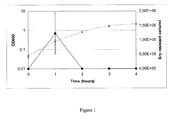
- the figure 1 shows the development of competence during growth of strain LMD-9 in CDM using pG + host9 plasmid as transformant DNA.
- Optical density (OD 600 ) ( ⁇ , dashed line) was used to measure cell numbers and count of cells resistant to erythromycin (Ery resistant cells) ( ⁇ , plain line) was used to assess competence.
- 1 ⁇ g of plasmid DNA was mixed with 100 ⁇ l of cells. The mean of three independent experiments are presented and error bars indicate standard deviation.
- strain TIL1192 (LMD-9 feoB :: erm ) containing an erythromycin ( erm ) resistant cassette introduced into the chromosome of strain LMD-9 at the ⁇ eo locus. Integration of a PCR fragment by homologous recombination in the chromosome of strain LMD-9 was demonstrated in the framework of this construction.
- Chromosomal DNA of strain TIL1192 was further used as donor DNA to study the timing of the triggering of the competence state during growth in CDM.
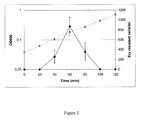
- the figure 2 shows the development of competence during growth of strain LMD-9 in CDM using chromosomal DNA of strain TIL1192 as transformant DNA.
- Optical density (OD 600 ) ( ⁇ , dashed line) was used to measure cell number and count of cells resistant to erythromycin (Ery resistant cells) ( ⁇ , plained line) was used to assess competence.
- 1 ⁇ g of chromosomal DNA was mixed with 100 ⁇ l of cells. The mean of four independent experiments are presented and error bars indicate standard deviation.
- strain TIL1195 (LMD-9 comEC :: erm ).
- ComEC is one of the proteins of the DNA uptake machinery essential for natural transformation in S. pneumoniae and B.subtilis.
- TIL1193 (LMD-9 feo :: aphA3 ) as a chromosomal DNA source with a different antibiotic resistance than erythromycin.
- LMD-9 chromosomal DNA of strain TIL1193
- TIL1192 chromosomal DNA of strain TIL1192
- strain TIL1196 (LMD-9 comX :: erm ) . Samples of strain'cells TIL1196 grown in CDM were harvested every 30 min for 2 hours and tested for transformation with chromosomal DNA of strain TIL1193.
- the pG+host plasmids generate linear plasmid multimers in Lactococcus lactis ( Maguin et al., Efficient insertional mutagenesis in lactococci and other gram-positive bacteria. J. Bacteriol. 178:931-935, 1996 ). Such is probably also the case in S. thermophilus.
- the Ami transporter indirectly controls the transcription of genes necessary for the development of competence in streptococci.
- the figure 3 shows the relative expression levels of comX, recA, dprA and comGA between S. thermophilus LMD-9 and strain TIL883 (LMD9 ⁇ amiCDE ) or strain TIL1196 (LMD-9 comX :: erm ) .
- Relative expression levels were computed using the comparative critical threshold method (2 - ⁇ C T) as described by Livak and Schmittgen (Analysis of relative gene expression data using real-time quantitative PCR and the 2(- ⁇ C(T)) Method. Methods, 25:402-408, 2001 ). Data are expressed as means from three independent experiments and were significant according to an analysis of variance (P ⁇ 0.05).
- the oligopeptide-binding protein AmiA3 plays the major role in the control of competence.
- strain LMD-9 displays only two genes encoding oligopeptide-binding proteins, amiA1 ( ster_1409 ), the first gene of the ami operon ( ster_1408 to ster _ 1405 ) and amiA3 ( ster _ 1411 ) that is flanked by two transposase encoding genes.
- TIL1197 ( amiA3 :: erm )
- TIL1198 ( ⁇ amiA1 )
- TIL1199 ( amiA3 :: erm ⁇ amiA1 ) corresponding to insertional mutagenesis of amiA3 , deletion of amiA1 and a combination of both mutations, respectively.
- the transformability of the three strains was tested using chromosomal DNA of strain TIL 1193 and compared to that of strain LMD-9 at its optimum of competence, i.e. one hour after the dilution of the cells in CDM.
- the Ami3 oligopeptide-binding protein imports a peptide involved with a transcriptional regulator in the control of the expression of comX.
- This peptide could be a specific pheromone or a peptide resulting from the degradation of secreted proteins or proteins released by lysis of bacteria.
- the growth medium composition influences the competence state of S. thermophilus.
- the transformability of the mutant was assessed for three hours every thirty minutes using chromosomal DNA of strain TIL1193 ( ⁇ eo :: aphA3 ). Three independent experiments were performed and no kanamycin resistant transformants were obtained indicating that ster0316 is involved in the triggering of competence in S. thermophilus.
- a small CDS, papR-like is located downstream of gene ster0316 and is not annotated in Genbank.
- PlcR regulators As the activity of PlcR regulators is controlled by peptides, we suspected that the peptide encoded by this small CDS papR-like could be involved in the controlled of the activity of Ster0316.
- papR-like was deleted and replaced by a spectinomycin resistance cassette leading to the construction of a papR-like :: spec mutant. The transformability of the mutant was assessed for three hours every thirty minutes using plasmid DNA (pGhost9). Four independent experiments were performed and no erythromycin resistant transformants were obtained indicating that papR-like is most probably involved in the triggering of competence in S. thermophilus probably through the control of the activity of Ster0316.
- S. thermophilus cells are grown overnight at 42°C in CDM. The culture is then diluted in CDM at an OD 600 0.05. Thirty minutes after dilution, the competence stimulating peptide (CSP), which is the mature peptide comprising SEQ ID N°1 or fragments or derivatives of SEQ ID N°1 that allow to induce competence in S. thermophilus, is added to the culture at a concentration of 1 ⁇ g/ml.
- CSP competence stimulating peptide
- 100 ⁇ l of the culture containing the CSP is mixed with 1 ⁇ g of DNA and incubated for 2 hours at 28°C when mixed with a thermosensitive replicative plasmid DNA or at 42°C when mixed with chromosomal DNA or PCR fragments, before being serially diluted and spread on M17lac plates with the appropriate antibiotic.
- S. thermophilus cells are electroporated with a replicative plasmid where the papR-like gene is under the control of a strong constitutive promoter. Cells containing this plasmid are grown overnight at 42°C in CDM. The culture is then diluted in CDM at an OD 600 0.05. One hour after dilution, 100 ⁇ l of the culture is mixed with 1 ⁇ g of DNA and incubated for 2 hours at 28°C when mixed with a thermosensitive replicative plasmid DNA or at 42°C when mixed with chromosomal DNA or PCR fragments, before being serially diluted and spread on M17lac plates with the appropriate antibiotic. The transformants can further be easily cured of the replicative plasmid by growth in the absence of antibiotic.
Landscapes
- Chemical & Material Sciences (AREA)
- Health & Medical Sciences (AREA)
- Life Sciences & Earth Sciences (AREA)
- Engineering & Computer Science (AREA)
- Genetics & Genomics (AREA)
- Organic Chemistry (AREA)
- Zoology (AREA)
- Biotechnology (AREA)
- Bioinformatics & Cheminformatics (AREA)
- Wood Science & Technology (AREA)
- General Health & Medical Sciences (AREA)
- Biochemistry (AREA)
- General Engineering & Computer Science (AREA)
- Biomedical Technology (AREA)
- Medicinal Chemistry (AREA)
- Microbiology (AREA)
- Virology (AREA)
- Tropical Medicine & Parasitology (AREA)
- Biophysics (AREA)
- Molecular Biology (AREA)
- Gastroenterology & Hepatology (AREA)
- Proteomics, Peptides & Aminoacids (AREA)
- General Chemical & Material Sciences (AREA)
- Physics & Mathematics (AREA)
- Plant Pathology (AREA)
- Micro-Organisms Or Cultivation Processes Thereof (AREA)
- Peptides Or Proteins (AREA)
Priority Applications (7)
| Application Number | Priority Date | Filing Date | Title |
|---|---|---|---|
| EP09305367A EP2248823A1 (de) | 2009-04-28 | 2009-04-28 | Neues die Funktionsfähigkeit stimulierendes Peptid |
| US13/266,103 US20120040365A1 (en) | 2009-04-28 | 2010-04-28 | New competence stimulating peptide |
| EP10715552.5A EP2424883B1 (de) | 2009-04-28 | 2010-04-28 | Neues die funktionsfähigkeit stimulierendes peptid |
| ES10715552.5T ES2617130T3 (es) | 2009-04-28 | 2010-04-28 | Nuevo péptido estimulante de la competencia |
| DK10715552.5T DK2424883T3 (en) | 2009-04-28 | 2010-04-28 | NEW COMPETENCY STIMULATING PEPTID |
| PCT/EP2010/055692 WO2010125091A1 (en) | 2009-04-28 | 2010-04-28 | New competence stimulating peptide |
| US14/327,422 US9340585B2 (en) | 2009-04-28 | 2014-07-09 | Competence stimulating peptide |
Applications Claiming Priority (1)
| Application Number | Priority Date | Filing Date | Title |
|---|---|---|---|
| EP09305367A EP2248823A1 (de) | 2009-04-28 | 2009-04-28 | Neues die Funktionsfähigkeit stimulierendes Peptid |
Publications (1)
| Publication Number | Publication Date |
|---|---|
| EP2248823A1 true EP2248823A1 (de) | 2010-11-10 |
Family
ID=40941479
Family Applications (2)
| Application Number | Title | Priority Date | Filing Date |
|---|---|---|---|
| EP09305367A Withdrawn EP2248823A1 (de) | 2009-04-28 | 2009-04-28 | Neues die Funktionsfähigkeit stimulierendes Peptid |
| EP10715552.5A Active EP2424883B1 (de) | 2009-04-28 | 2010-04-28 | Neues die funktionsfähigkeit stimulierendes peptid |
Family Applications After (1)
| Application Number | Title | Priority Date | Filing Date |
|---|---|---|---|
| EP10715552.5A Active EP2424883B1 (de) | 2009-04-28 | 2010-04-28 | Neues die funktionsfähigkeit stimulierendes peptid |
Country Status (5)
| Country | Link |
|---|---|
| US (2) | US20120040365A1 (de) |
| EP (2) | EP2248823A1 (de) |
| DK (1) | DK2424883T3 (de) |
| ES (1) | ES2617130T3 (de) |
| WO (1) | WO2010125091A1 (de) |
Cited By (4)
| Publication number | Priority date | Publication date | Assignee | Title |
|---|---|---|---|---|
| US20130259834A1 (en) * | 2010-05-19 | 2013-10-03 | University Of Virginia Patent Foundation | Compositions and methods for the delivery of therapeutic peptides |
| US8663655B2 (en) | 2009-06-23 | 2014-03-04 | Dupont Nutrition Biosciences Aps | Method for transforming a bacterium belonging to the Streptococcus genus by natural competence |
| US9340585B2 (en) | 2009-04-28 | 2016-05-17 | Institut National De La Recherche Agronomique | Competence stimulating peptide |
| WO2018114983A1 (en) * | 2016-12-19 | 2018-06-28 | Dupont Nutrition Biosciences Aps | Methods and strain |
Families Citing this family (3)
| Publication number | Priority date | Publication date | Assignee | Title |
|---|---|---|---|---|
| WO2018138271A1 (en) | 2017-01-26 | 2018-08-02 | Biomillenia Sas | High-throughput microfluidic screening in droplets |
| JP7003240B2 (ja) | 2017-06-12 | 2022-02-10 | ビオミレニア ソシエテ パ アクシオンス シンプリフィエ | マイクロ流体システムにおける粘度を測定する方法 |
| FR3107902B1 (fr) | 2020-03-06 | 2025-04-25 | Institut National De Rech Pour Lagriculture Lalimentation Et Lenvironnement | Bacteries gram-positives de l’espece lactococcus lactis ou streptococcus thermophilus ayant une tres faible proteolyse de surface, leurs methodes d’obtention et leurs utilisations |
Citations (2)
| Publication number | Priority date | Publication date | Assignee | Title |
|---|---|---|---|---|
| US5730969A (en) | 1988-10-05 | 1998-03-24 | Chiron Corporation | Method and compositions for solubilization and stabilization of polypeptides, especially proteins |
| WO2006060903A1 (en) * | 2004-12-06 | 2006-06-15 | Kane Biotech Inc. | Signal peptides, nucleic acid molecules and methods of treatment |
Family Cites Families (7)
| Publication number | Priority date | Publication date | Assignee | Title |
|---|---|---|---|---|
| WO1994005314A1 (en) * | 1992-09-08 | 1994-03-17 | Centocor, Inc. | Peptide inhibitors of leukocyte adhesion |
| US6800744B1 (en) | 1997-07-02 | 2004-10-05 | Genome Therapeutics Corporation | Nucleic acid and amino acid sequences relating to Streptococcus pneumoniae for diagnostics and therapeutics |
| US7393663B2 (en) | 1997-08-01 | 2008-07-01 | Serono Genetics Institute S.A. | Expressed sequence tags and encoded human proteins |
| US8106174B2 (en) | 2000-05-08 | 2012-01-31 | Monsanto Technology Llc | Nucleic acid molecules and other molecules associated with plants and uses thereof for plant improvement |
| GB0608966D0 (en) | 2006-05-05 | 2006-06-14 | Norwegian University Of Life S | Method and product |
| EP2248823A1 (de) | 2009-04-28 | 2010-11-10 | Institut National de la Recherche Agronomique | Neues die Funktionsfähigkeit stimulierendes Peptid |
| CN102574898B (zh) * | 2009-06-23 | 2016-02-03 | 杜邦营养生物科学有限公司 | 通过天然感受态转化属于链球菌属的细菌的方法 |
-
2009
- 2009-04-28 EP EP09305367A patent/EP2248823A1/de not_active Withdrawn
-
2010
- 2010-04-28 US US13/266,103 patent/US20120040365A1/en not_active Abandoned
- 2010-04-28 EP EP10715552.5A patent/EP2424883B1/de active Active
- 2010-04-28 WO PCT/EP2010/055692 patent/WO2010125091A1/en not_active Ceased
- 2010-04-28 DK DK10715552.5T patent/DK2424883T3/en active
- 2010-04-28 ES ES10715552.5T patent/ES2617130T3/es active Active
-
2014
- 2014-07-09 US US14/327,422 patent/US9340585B2/en active Active
Patent Citations (2)
| Publication number | Priority date | Publication date | Assignee | Title |
|---|---|---|---|---|
| US5730969A (en) | 1988-10-05 | 1998-03-24 | Chiron Corporation | Method and compositions for solubilization and stabilization of polypeptides, especially proteins |
| WO2006060903A1 (en) * | 2004-12-06 | 2006-06-15 | Kane Biotech Inc. | Signal peptides, nucleic acid molecules and methods of treatment |
Non-Patent Citations (11)
| Title |
|---|
| BLOMGVIST T. ET AL.: "Pheromone-induced expression of recombinant proteins in Streptococcus thermophilus", ARCH MICROBIOL., vol. 186, no. 6, December 2006 (2006-12-01), pages 465 - 73 |
| BOLOTIN ET AL.: "Complete sequence and comparative genome analysis of the dairy bacterium Streptococcus thermophilus.", NAT. BIOTECHNOL., vol. 22, 2004, pages 1554 - 1558 |
| CVITKOVITCH D G ET AL: "Quorum sensing and biofilm formation by Streptococcus mutans", ADVANCES IN EXPERIMENTAL MEDICINE AND BIOLOGY - BACTERIAL SIGNAL TRANSDUCTION: NETWORKS AND DRUG TARGETS 2008 US, vol. 631, 2008, pages 178 - 188, XP009121571, ISSN: 0065-2598 978-0-387-78884-5 * |
| GARDAN ROZENN ET AL: "The Oligopeptide Transport System Is Essential for the Development of Natural Competence in Streptococcus thermophilus Strain LMD-9", JOURNAL OF BACTERIOLOGY, AMERICAN SOCIETY FOR MICROBIOLOGY, US, vol. 191, no. 14, 1 July 2009 (2009-07-01), pages 4647 - 4655, XP009121572, ISSN: 0021-9193 * |
| IBRAHIM ET AL., J BACTERIOL., vol. 189, 2007, pages 8844 - 8854 |
| JOHNSBORG OLA ET AL: "A hydrophobic patch in the competence-stimulating peptide, a pneumococcal competence pheromone, is essential for specificity and biological activity", JOURNAL OF BACTERIOLOGY, vol. 188, no. 5, March 2006 (2006-03-01), pages 1744 - 1749, XP002541817, ISSN: 0021-9193 * |
| LAWSON J W ET AL: "Growth and development of competence in the group H streptococci.", JOURNAL OF BACTERIOLOGY JUN 1970, vol. 102, no. 3, June 1970 (1970-06-01), pages 820 - 825, XP002550550, ISSN: 0021-9193 * |
| MAKAROVA ET AL.: "Comparative genomics of the lactic acid bacteria.", PROC NATL ACAD SCI U S A., vol. 103, no. 42, 2006, pages 15611 - 6 |
| PETERSON ET AL.: "Identification of competence pheromone responsive genes in Streptococcus pneumoniae by use of DNA microarrays", MOL. MICROBIOL., vol. 51, 2004, pages 1051 - 1070 |
| SAMBROOK ET AL.: "Molecular Cloning: A Laboratory Manual", 1989, COLD SPRING HARBOR LABORATORY PRESS |
| STREPTOCOCCUS THERMOPHILUS, J APPL. MICROBIOL., vol. 91, 2001, pages 1023 - 1029 |
Cited By (8)
| Publication number | Priority date | Publication date | Assignee | Title |
|---|---|---|---|---|
| US9340585B2 (en) | 2009-04-28 | 2016-05-17 | Institut National De La Recherche Agronomique | Competence stimulating peptide |
| US8663655B2 (en) | 2009-06-23 | 2014-03-04 | Dupont Nutrition Biosciences Aps | Method for transforming a bacterium belonging to the Streptococcus genus by natural competence |
| US9243254B2 (en) | 2009-06-23 | 2016-01-26 | Dupont Nutrition Biosciences Aps | Method for transforming a bacterium belonging to the streptococcus genus by natural competence |
| EP2445929B1 (de) * | 2009-06-23 | 2016-05-11 | DuPont Nutrition Biosciences ApS | Methode zur transformierung eines bakteriums des genus streptococcus durch natürliche genetische transformation |
| US20130259834A1 (en) * | 2010-05-19 | 2013-10-03 | University Of Virginia Patent Foundation | Compositions and methods for the delivery of therapeutic peptides |
| US9040302B2 (en) * | 2010-05-19 | 2015-05-26 | North Carolina State University | Genetically modified Streptococcus thermophilus bacterium |
| WO2018114983A1 (en) * | 2016-12-19 | 2018-06-28 | Dupont Nutrition Biosciences Aps | Methods and strain |
| US12297448B2 (en) | 2016-12-19 | 2025-05-13 | International N&H Denmark Aps | Methods and strain |
Also Published As
| Publication number | Publication date |
|---|---|
| US9340585B2 (en) | 2016-05-17 |
| US20140322718A1 (en) | 2014-10-30 |
| ES2617130T3 (es) | 2017-06-15 |
| EP2424883B1 (de) | 2017-01-18 |
| US20120040365A1 (en) | 2012-02-16 |
| WO2010125091A1 (en) | 2010-11-04 |
| DK2424883T3 (en) | 2017-03-06 |
| EP2424883A1 (de) | 2012-03-07 |
Similar Documents
| Publication | Publication Date | Title |
|---|---|---|
| US9340585B2 (en) | Competence stimulating peptide | |
| Gardan et al. | The oligopeptide transport system is essential for the development of natural competence in Streptococcus thermophilus strain LMD-9 | |
| Kronemeyer et al. | Structure of the gluABCD cluster encoding the glutamate uptake system of Corynebacterium glutamicum | |
| EP1507798B2 (de) | Export und modifizierung von (poly)peptiden im lantibiotischen weg | |
| Garault et al. | Three oligopeptide-binding proteins are involved in the oligopeptide transport of Streptococcus thermophilus | |
| Dodd et al. | A lactococcal expression system for engineered nisins | |
| Alcántara et al. | Peptide and amino acid metabolism is controlled by an OmpR‐family response regulator in Lactobacillus casei | |
| EP2445929B1 (de) | Methode zur transformierung eines bakteriums des genus streptococcus durch natürliche genetische transformation | |
| EP3555320B1 (de) | Verfahren und stamm | |
| JP2011019524A (ja) | コリネバクテリウム属細菌に由来するプロモーター核酸、プロモーターを含む発現カセットおよびカセットを含むベクター、ベクターを含む宿主細胞およびそれを利用して遺伝子を発現させる方法 | |
| CN103975072B (zh) | 蛋白酶缺陷性炭疽芽孢杆菌 | |
| US9187754B2 (en) | Modified Bordetella pertussis strains | |
| JP2013000064A (ja) | 組換え微生物、当該組換え微生物を用いたアラニンの製造方法 | |
| Budin‐Verneuil et al. | Proteome phenotyping of acid stress‐resistant mutants of Lactococcus lactis MG1363 | |
| Zagorec et al. | Cloning and nucleotide sequence of the ptsG gene of Bacillus subtilis | |
| EP1268808B1 (de) | Lactobacillus casei mutanten mit einem defekt in die regulation des kohlenstoffkatabolismus | |
| JP7706628B2 (ja) | 改変5’非翻訳領域及びそれを用いた目的物質の製造方法 | |
| EP1801117A1 (de) | Mittel und Methoden zur Regulierung des Aminosäurevorrats bzw. -transports | |
| CN115747126B (zh) | 生产微菌素j25的枯草芽孢杆菌重组整合工程菌株、构建方法及应用 | |
| KR100801437B1 (ko) | 돼지 유래 유산균으로부터 분리한 신규한 플라스미드 및이의 용도 | |
| Lindbäck et al. | Characterization of the mbl determinant and cloning of the spoIIID gene from Bacillus cereus ATCC 10987 | |
| US7358083B1 (en) | Food-grade cloning vector and their use in lactic acid bacteria | |
| Chen et al. | Genetic operation system of lactic acid bacteria and its applications | |
| WO2025163125A1 (en) | Methods for unlocking competence for natural transformation in lactic acid bacteria | |
| Jack et al. | Modification Enzymes |
Legal Events
| Date | Code | Title | Description |
|---|---|---|---|
| PUAI | Public reference made under article 153(3) epc to a published international application that has entered the european phase |
Free format text: ORIGINAL CODE: 0009012 |
|
| AK | Designated contracting states |
Kind code of ref document: A1 Designated state(s): AT BE BG CH CY CZ DE DK EE ES FI FR GB GR HR HU IE IS IT LI LT LU LV MC MK MT NL NO PL PT RO SE SI SK TR |
|
| AX | Request for extension of the european patent |
Extension state: AL BA RS |
|
| STAA | Information on the status of an ep patent application or granted ep patent |
Free format text: STATUS: THE APPLICATION IS DEEMED TO BE WITHDRAWN |
|
| 18D | Application deemed to be withdrawn |
Effective date: 20110511 |