EP2249156A1 - Enzymatischer Assay zur quantitativen Bestimmung von Phospholipase-A1- oder -A2-Aktivität in einer Probe, der auf der Verwendung einer festen Phase basiert, die mit einem mit Fluorchrom markierten Substrat überzogen ist - Google Patents
Enzymatischer Assay zur quantitativen Bestimmung von Phospholipase-A1- oder -A2-Aktivität in einer Probe, der auf der Verwendung einer festen Phase basiert, die mit einem mit Fluorchrom markierten Substrat überzogen ist Download PDFInfo
- Publication number
- EP2249156A1 EP2249156A1 EP09305380A EP09305380A EP2249156A1 EP 2249156 A1 EP2249156 A1 EP 2249156A1 EP 09305380 A EP09305380 A EP 09305380A EP 09305380 A EP09305380 A EP 09305380A EP 2249156 A1 EP2249156 A1 EP 2249156A1
- Authority
- EP
- European Patent Office
- Prior art keywords
- substrate
- phospholipase
- activity
- labelled
- solid phase
- Prior art date
- Legal status (The legal status is an assumption and is not a legal conclusion. Google has not performed a legal analysis and makes no representation as to the accuracy of the status listed.)
- Withdrawn
Links
- 230000000694 effects Effects 0.000 title claims abstract description 100
- 239000000758 substrate Substances 0.000 title claims abstract description 88
- 108010058864 Phospholipases A2 Proteins 0.000 title claims abstract description 56
- 108010013563 Lipoprotein Lipase Proteins 0.000 title claims abstract description 51
- 239000007790 solid phase Substances 0.000 title claims abstract description 29
- 102100031415 Hepatic triacylglycerol lipase Human genes 0.000 title claims abstract 6
- 238000007824 enzymatic assay Methods 0.000 title description 4
- 102100037611 Lysophospholipase Human genes 0.000 title 1
- 238000000034 method Methods 0.000 claims abstract description 63
- 239000011324 bead Substances 0.000 claims description 46
- 102000015439 Phospholipases Human genes 0.000 claims description 36
- 108010064785 Phospholipases Proteins 0.000 claims description 36
- ZIIUUSVHCHPIQD-UHFFFAOYSA-N 2,4,6-trimethyl-N-[3-(trifluoromethyl)phenyl]benzenesulfonamide Chemical compound CC1=CC(C)=CC(C)=C1S(=O)(=O)NC1=CC=CC(C(F)(F)F)=C1 ZIIUUSVHCHPIQD-UHFFFAOYSA-N 0.000 claims description 31
- 150000004665 fatty acids Chemical group 0.000 claims description 22
- 230000002209 hydrophobic effect Effects 0.000 claims description 20
- 150000002190 fatty acyls Chemical group 0.000 claims description 17
- 230000002255 enzymatic effect Effects 0.000 claims description 14
- 150000002327 glycerophospholipids Chemical class 0.000 claims description 13
- 208000024172 Cardiovascular disease Diseases 0.000 claims description 9
- 201000010099 disease Diseases 0.000 claims description 9
- 208000037265 diseases, disorders, signs and symptoms Diseases 0.000 claims description 9
- YNPNZTXNASCQKK-UHFFFAOYSA-N phenanthrene Chemical compound C1=CC=C2C3=CC=CC=C3C=CC2=C1 YNPNZTXNASCQKK-UHFFFAOYSA-N 0.000 claims description 8
- 230000007211 cardiovascular event Effects 0.000 claims description 7
- 239000007853 buffer solution Substances 0.000 claims description 5
- 125000005605 benzo group Chemical group 0.000 claims description 3
- 125000002467 phosphate group Chemical group [H]OP(=O)(O[H])O[*] 0.000 claims description 3
- 102100026918 Phospholipase A2 Human genes 0.000 claims 6
- 101100083853 Homo sapiens POU2F3 gene Proteins 0.000 claims 2
- 101100058850 Oryza sativa subsp. japonica CYP78A11 gene Proteins 0.000 claims 2
- 101150059175 PLA1 gene Proteins 0.000 claims 2
- 102100026466 POU domain, class 2, transcription factor 3 Human genes 0.000 claims 2
- 101710096328 Phospholipase A2 Proteins 0.000 claims 2
- 108010031873 Secretory Phospholipases A2 Proteins 0.000 abstract description 73
- 102000005473 Secretory Phospholipases A2 Human genes 0.000 abstract description 72
- 102000006447 Phospholipases A2 Human genes 0.000 abstract description 51
- 238000003556 assay Methods 0.000 description 59
- 239000000523 sample Substances 0.000 description 58
- 102100031375 Endothelial lipase Human genes 0.000 description 50
- 150000003904 phospholipids Chemical class 0.000 description 45
- -1 hydrocarbon radical Chemical class 0.000 description 36
- OKKJLVBELUTLKV-UHFFFAOYSA-N Methanol Chemical compound OC OKKJLVBELUTLKV-UHFFFAOYSA-N 0.000 description 30
- FAPWRFPIFSIZLT-UHFFFAOYSA-M Sodium chloride Chemical compound [Na+].[Cl-] FAPWRFPIFSIZLT-UHFFFAOYSA-M 0.000 description 25
- 210000002966 serum Anatomy 0.000 description 23
- 210000002381 plasma Anatomy 0.000 description 20
- 239000002502 liposome Substances 0.000 description 19
- 102000004190 Enzymes Human genes 0.000 description 18
- 108090000790 Enzymes Proteins 0.000 description 18
- 229940088598 enzyme Drugs 0.000 description 18
- 239000000243 solution Substances 0.000 description 18
- DEFVIWRASFVYLL-UHFFFAOYSA-N ethylene glycol bis(2-aminoethyl)tetraacetic acid Chemical compound OC(=O)CN(CC(O)=O)CCOCCOCCN(CC(O)=O)CC(O)=O DEFVIWRASFVYLL-UHFFFAOYSA-N 0.000 description 14
- 125000003118 aryl group Chemical group 0.000 description 12
- 125000004432 carbon atom Chemical group C* 0.000 description 12
- 235000014113 dietary fatty acids Nutrition 0.000 description 12
- 239000000194 fatty acid Substances 0.000 description 12
- 229930195729 fatty acid Natural products 0.000 description 12
- 150000002500 ions Chemical class 0.000 description 12
- 239000011780 sodium chloride Substances 0.000 description 12
- 125000000217 alkyl group Chemical group 0.000 description 11
- 230000005284 excitation Effects 0.000 description 11
- 230000007062 hydrolysis Effects 0.000 description 11
- 238000006460 hydrolysis reaction Methods 0.000 description 11
- 239000012528 membrane Substances 0.000 description 11
- 125000003710 aryl alkyl group Chemical group 0.000 description 10
- 239000000725 suspension Substances 0.000 description 10
- PORPENFLTBBHSG-MGBGTMOVSA-N 1,2-dihexadecanoyl-sn-glycerol-3-phosphate Chemical compound CCCCCCCCCCCCCCCC(=O)OC[C@H](COP(O)(O)=O)OC(=O)CCCCCCCCCCCCCCC PORPENFLTBBHSG-MGBGTMOVSA-N 0.000 description 9
- TZCPCKNHXULUIY-RGULYWFUSA-N 1,2-distearoyl-sn-glycero-3-phosphoserine Chemical compound CCCCCCCCCCCCCCCCCC(=O)OC[C@H](COP(O)(=O)OC[C@H](N)C(O)=O)OC(=O)CCCCCCCCCCCCCCCCC TZCPCKNHXULUIY-RGULYWFUSA-N 0.000 description 9
- QKNYBSVHEMOAJP-UHFFFAOYSA-N 2-amino-2-(hydroxymethyl)propane-1,3-diol;hydron;chloride Chemical compound Cl.OCC(N)(CO)CO QKNYBSVHEMOAJP-UHFFFAOYSA-N 0.000 description 9
- 238000005259 measurement Methods 0.000 description 9
- BBEAQIROQSPTKN-UHFFFAOYSA-N pyrene Chemical compound C1=CC=C2C=CC3=CC=CC4=CC=C1C2=C43 BBEAQIROQSPTKN-UHFFFAOYSA-N 0.000 description 9
- BPYKTIZUTYGOLE-IFADSCNNSA-N Bilirubin Chemical compound N1C(=O)C(C)=C(C=C)\C1=C\C1=C(C)C(CCC(O)=O)=C(CC2=C(C(C)=C(\C=C/3C(=C(C=C)C(=O)N\3)C)N2)CCC(O)=O)N1 BPYKTIZUTYGOLE-IFADSCNNSA-N 0.000 description 8
- RTZKZFJDLAIYFH-UHFFFAOYSA-N Diethyl ether Chemical compound CCOCC RTZKZFJDLAIYFH-UHFFFAOYSA-N 0.000 description 8
- 239000012131 assay buffer Substances 0.000 description 8
- 229910052799 carbon Inorganic materials 0.000 description 8
- 239000002738 chelating agent Substances 0.000 description 8
- 238000006243 chemical reaction Methods 0.000 description 8
- 239000003153 chemical reaction reagent Substances 0.000 description 8
- 238000001514 detection method Methods 0.000 description 8
- GVEPBJHOBDJJJI-UHFFFAOYSA-N fluoranthene Chemical compound C1=CC(C2=CC=CC=C22)=C3C2=CC=CC3=C1 GVEPBJHOBDJJJI-UHFFFAOYSA-N 0.000 description 8
- 238000003756 stirring Methods 0.000 description 8
- ZWZWYGMENQVNFU-UHFFFAOYSA-N Glycerophosphorylserin Natural products OC(=O)C(N)COP(O)(=O)OCC(O)CO ZWZWYGMENQVNFU-UHFFFAOYSA-N 0.000 description 7
- MHMNJMPURVTYEJ-UHFFFAOYSA-N fluorescein-5-isothiocyanate Chemical compound O1C(=O)C2=CC(N=C=S)=CC=C2C21C1=CC=C(O)C=C1OC1=CC(O)=CC=C21 MHMNJMPURVTYEJ-UHFFFAOYSA-N 0.000 description 7
- 102000016752 1-Alkyl-2-acetylglycerophosphocholine Esterase Human genes 0.000 description 6
- 108010024976 Asparaginase Proteins 0.000 description 6
- 238000001327 Förster resonance energy transfer Methods 0.000 description 6
- 238000004458 analytical method Methods 0.000 description 6
- 230000015572 biosynthetic process Effects 0.000 description 6
- 239000011248 coating agent Substances 0.000 description 6
- 238000000576 coating method Methods 0.000 description 6
- 230000001419 dependent effect Effects 0.000 description 6
- 238000010790 dilution Methods 0.000 description 6
- 239000012895 dilution Substances 0.000 description 6
- 239000004816 latex Substances 0.000 description 6
- 229920000126 latex Polymers 0.000 description 6
- 150000002632 lipids Chemical class 0.000 description 6
- KCXVZYZYPLLWCC-UHFFFAOYSA-N EDTA Chemical compound OC(=O)CN(CC(O)=O)CCN(CC(O)=O)CC(O)=O KCXVZYZYPLLWCC-UHFFFAOYSA-N 0.000 description 5
- 101710087274 Endothelial lipase Proteins 0.000 description 5
- PEDCQBHIVMGVHV-UHFFFAOYSA-N Glycerine Chemical group OCC(O)CO PEDCQBHIVMGVHV-UHFFFAOYSA-N 0.000 description 5
- 102000001554 Hemoglobins Human genes 0.000 description 5
- 108010054147 Hemoglobins Proteins 0.000 description 5
- 241000124008 Mammalia Species 0.000 description 5
- 208000029078 coronary artery disease Diseases 0.000 description 5
- 238000009826 distribution Methods 0.000 description 5
- 239000011521 glass Substances 0.000 description 5
- YHHSONZFOIEMCP-UHFFFAOYSA-O phosphocholine Chemical compound C[N+](C)(C)CCOP(O)(O)=O YHHSONZFOIEMCP-UHFFFAOYSA-O 0.000 description 5
- 239000013641 positive control Substances 0.000 description 5
- 229920006395 saturated elastomer Polymers 0.000 description 5
- MPLHNVLQVRSVEE-UHFFFAOYSA-N texas red Chemical compound [O-]S(=O)(=O)C1=CC(S(Cl)(=O)=O)=CC=C1C(C1=CC=2CCCN3CCCC(C=23)=C1O1)=C2C1=C(CCC1)C3=[N+]1CCCC3=C2 MPLHNVLQVRSVEE-UHFFFAOYSA-N 0.000 description 5
- 210000001519 tissue Anatomy 0.000 description 5
- 108091003079 Bovine Serum Albumin Proteins 0.000 description 4
- OYPRJOBELJOOCE-UHFFFAOYSA-N Calcium Chemical compound [Ca] OYPRJOBELJOOCE-UHFFFAOYSA-N 0.000 description 4
- HEDRZPFGACZZDS-UHFFFAOYSA-N Chloroform Chemical compound ClC(Cl)Cl HEDRZPFGACZZDS-UHFFFAOYSA-N 0.000 description 4
- 108090001060 Lipase Proteins 0.000 description 4
- UFWIBTONFRDIAS-UHFFFAOYSA-N Naphthalene Chemical compound C1=CC=CC2=CC=CC=C21 UFWIBTONFRDIAS-UHFFFAOYSA-N 0.000 description 4
- ATBOMIWRCZXYSZ-XZBBILGWSA-N [1-[2,3-dihydroxypropoxy(hydroxy)phosphoryl]oxy-3-hexadecanoyloxypropan-2-yl] (9e,12e)-octadeca-9,12-dienoate Chemical compound CCCCCCCCCCCCCCCC(=O)OCC(COP(O)(=O)OCC(O)CO)OC(=O)CCCCCCC\C=C\C\C=C\CCCCC ATBOMIWRCZXYSZ-XZBBILGWSA-N 0.000 description 4
- 238000002835 absorbance Methods 0.000 description 4
- 230000009471 action Effects 0.000 description 4
- AWUCVROLDVIAJX-UHFFFAOYSA-N alpha-glycerophosphate Natural products OCC(O)COP(O)(O)=O AWUCVROLDVIAJX-UHFFFAOYSA-N 0.000 description 4
- MWPLVEDNUUSJAV-UHFFFAOYSA-N anthracene Chemical compound C1=CC=CC2=CC3=CC=CC=C3C=C21 MWPLVEDNUUSJAV-UHFFFAOYSA-N 0.000 description 4
- YZXBAPSDXZZRGB-DOFZRALJSA-N arachidonic acid Chemical compound CCCCC\C=C/C\C=C/C\C=C/C\C=C/CCCC(O)=O YZXBAPSDXZZRGB-DOFZRALJSA-N 0.000 description 4
- CUFNKYGDVFVPHO-UHFFFAOYSA-N azulene Chemical compound C1=CC=CC2=CC=CC2=C1 CUFNKYGDVFVPHO-UHFFFAOYSA-N 0.000 description 4
- 239000003659 bee venom Substances 0.000 description 4
- 229940098773 bovine serum albumin Drugs 0.000 description 4
- 229910052791 calcium Inorganic materials 0.000 description 4
- 239000011575 calcium Substances 0.000 description 4
- 238000011088 calibration curve Methods 0.000 description 4
- 230000008859 change Effects 0.000 description 4
- 125000004122 cyclic group Chemical group 0.000 description 4
- 150000002148 esters Chemical class 0.000 description 4
- 238000002347 injection Methods 0.000 description 4
- 239000007924 injection Substances 0.000 description 4
- 238000004519 manufacturing process Methods 0.000 description 4
- 239000000463 material Substances 0.000 description 4
- 239000000693 micelle Substances 0.000 description 4
- 239000003068 molecular probe Substances 0.000 description 4
- 239000013642 negative control Substances 0.000 description 4
- WTJKGGKOPKCXLL-RRHRGVEJSA-N phosphatidylcholine Chemical compound CCCCCCCCCCCCCCCC(=O)OC[C@H](COP([O-])(=O)OCC[N+](C)(C)C)OC(=O)CCCCCCCC=CCCCCCCCC WTJKGGKOPKCXLL-RRHRGVEJSA-N 0.000 description 4
- 239000000047 product Substances 0.000 description 4
- 150000003220 pyrenes Chemical class 0.000 description 4
- 238000010791 quenching Methods 0.000 description 4
- 230000009467 reduction Effects 0.000 description 4
- 230000003248 secreting effect Effects 0.000 description 4
- 239000000126 substance Substances 0.000 description 4
- 125000001424 substituent group Chemical group 0.000 description 4
- 238000012360 testing method Methods 0.000 description 4
- 238000012546 transfer Methods 0.000 description 4
- 238000005406 washing Methods 0.000 description 4
- NJYVEMPWNAYQQN-UHFFFAOYSA-N 5-carboxyfluorescein Chemical compound C12=CC=C(O)C=C2OC2=CC(O)=CC=C2C21OC(=O)C1=CC(C(=O)O)=CC=C21 NJYVEMPWNAYQQN-UHFFFAOYSA-N 0.000 description 3
- BZTDTCNHAFUJOG-UHFFFAOYSA-N 6-carboxyfluorescein Chemical compound C12=CC=C(O)C=C2OC2=CC(O)=CC=C2C11OC(=O)C2=CC=C(C(=O)O)C=C21 BZTDTCNHAFUJOG-UHFFFAOYSA-N 0.000 description 3
- UHOVQNZJYSORNB-UHFFFAOYSA-N Benzene Chemical compound C1=CC=CC=C1 UHOVQNZJYSORNB-UHFFFAOYSA-N 0.000 description 3
- 239000004215 Carbon black (E152) Substances 0.000 description 3
- 201000010046 Dilated cardiomyopathy Diseases 0.000 description 3
- 102000019267 Hepatic lipases Human genes 0.000 description 3
- 108050006747 Hepatic lipases Proteins 0.000 description 3
- 102100033357 Pancreatic lipase-related protein 2 Human genes 0.000 description 3
- 239000004793 Polystyrene Substances 0.000 description 3
- 125000003342 alkenyl group Chemical group 0.000 description 3
- 125000000304 alkynyl group Chemical group 0.000 description 3
- 238000013459 approach Methods 0.000 description 3
- 239000007864 aqueous solution Substances 0.000 description 3
- 238000002474 experimental method Methods 0.000 description 3
- 150000002313 glycerolipids Chemical class 0.000 description 3
- 229930195733 hydrocarbon Natural products 0.000 description 3
- 125000004435 hydrogen atom Chemical group [H]* 0.000 description 3
- 239000004005 microsphere Substances 0.000 description 3
- 239000000203 mixture Substances 0.000 description 3
- 230000036470 plasma concentration Effects 0.000 description 3
- 229920002223 polystyrene Polymers 0.000 description 3
- 238000002360 preparation method Methods 0.000 description 3
- 230000008569 process Effects 0.000 description 3
- 230000000171 quenching effect Effects 0.000 description 3
- 230000035945 sensitivity Effects 0.000 description 3
- 238000000527 sonication Methods 0.000 description 3
- 239000011550 stock solution Substances 0.000 description 3
- 150000003573 thiols Chemical class 0.000 description 3
- YBYIRNPNPLQARY-UHFFFAOYSA-N 1H-indene Chemical compound C1=CC=C2CC=CC2=C1 YBYIRNPNPLQARY-UHFFFAOYSA-N 0.000 description 2
- HJCUTNIGJHJGCF-UHFFFAOYSA-N 9,10-dihydroacridine Chemical compound C1=CC=C2CC3=CC=CC=C3NC2=C1 HJCUTNIGJHJGCF-UHFFFAOYSA-N 0.000 description 2
- 208000004476 Acute Coronary Syndrome Diseases 0.000 description 2
- 201000001320 Atherosclerosis Diseases 0.000 description 2
- 241000283690 Bos taurus Species 0.000 description 2
- 239000004151 Calcium iodate Substances 0.000 description 2
- UNMYWSMUMWPJLR-UHFFFAOYSA-L Calcium iodide Chemical compound [Ca+2].[I-].[I-] UNMYWSMUMWPJLR-UHFFFAOYSA-L 0.000 description 2
- WWZKQHOCKIZLMA-UHFFFAOYSA-N Caprylic acid Natural products CCCCCCCC(O)=O WWZKQHOCKIZLMA-UHFFFAOYSA-N 0.000 description 2
- KRKNYBCHXYNGOX-UHFFFAOYSA-K Citrate Chemical compound [O-]C(=O)CC(O)(CC([O-])=O)C([O-])=O KRKNYBCHXYNGOX-UHFFFAOYSA-K 0.000 description 2
- 241000283073 Equus caballus Species 0.000 description 2
- 241000282326 Felis catus Species 0.000 description 2
- HTTJABKRGRZYRN-UHFFFAOYSA-N Heparin Chemical compound OC1C(NC(=O)C)C(O)OC(COS(O)(=O)=O)C1OC1C(OS(O)(=O)=O)C(O)C(OC2C(C(OS(O)(=O)=O)C(OC3C(C(O)C(O)C(O3)C(O)=O)OS(O)(=O)=O)C(CO)O2)NS(O)(=O)=O)C(C(O)=O)O1 HTTJABKRGRZYRN-UHFFFAOYSA-N 0.000 description 2
- SIKJAQJRHWYJAI-UHFFFAOYSA-N Indole Chemical compound C1=CC=C2NC=CC2=C1 SIKJAQJRHWYJAI-UHFFFAOYSA-N 0.000 description 2
- XEEYBQQBJWHFJM-UHFFFAOYSA-N Iron Chemical compound [Fe] XEEYBQQBJWHFJM-UHFFFAOYSA-N 0.000 description 2
- 241000699666 Mus <mouse, genus> Species 0.000 description 2
- SEQKRHFRPICQDD-UHFFFAOYSA-N N-tris(hydroxymethyl)methylglycine Chemical compound OCC(CO)(CO)[NH2+]CC([O-])=O SEQKRHFRPICQDD-UHFFFAOYSA-N 0.000 description 2
- 108050006759 Pancreatic lipases Proteins 0.000 description 2
- 241000009328 Perro Species 0.000 description 2
- JUJWROOIHBZHMG-UHFFFAOYSA-N Pyridine Chemical compound C1=CC=NC=C1 JUJWROOIHBZHMG-UHFFFAOYSA-N 0.000 description 2
- SMWDFEZZVXVKRB-UHFFFAOYSA-N Quinoline Chemical compound N1=CC=CC2=CC=CC=C21 SMWDFEZZVXVKRB-UHFFFAOYSA-N 0.000 description 2
- 241000700159 Rattus Species 0.000 description 2
- 208000006011 Stroke Diseases 0.000 description 2
- 102000014384 Type C Phospholipases Human genes 0.000 description 2
- 108010079194 Type C Phospholipases Proteins 0.000 description 2
- 208000007814 Unstable Angina Diseases 0.000 description 2
- 208000027418 Wounds and injury Diseases 0.000 description 2
- 238000010521 absorption reaction Methods 0.000 description 2
- IPPKPBRKIKWIPN-UHFFFAOYSA-N acetic acid ethane-1,1-diamine Chemical compound CC(N)N.CC(O)=O.CC(O)=O.CC(O)=O.CC(O)=O IPPKPBRKIKWIPN-UHFFFAOYSA-N 0.000 description 2
- 239000002253 acid Substances 0.000 description 2
- DZBUGLKDJFMEHC-UHFFFAOYSA-N acridine Chemical compound C1=CC=CC2=CC3=CC=CC=C3N=C21 DZBUGLKDJFMEHC-UHFFFAOYSA-N 0.000 description 2
- 125000000129 anionic group Chemical group 0.000 description 2
- 239000008346 aqueous phase Substances 0.000 description 2
- 229940114079 arachidonic acid Drugs 0.000 description 2
- 235000021342 arachidonic acid Nutrition 0.000 description 2
- 238000003149 assay kit Methods 0.000 description 2
- 201000003710 autoimmune thrombocytopenic purpura Diseases 0.000 description 2
- IOJUPLGTWVMSFF-UHFFFAOYSA-N benzothiazole Chemical compound C1=CC=C2SC=NC2=C1 IOJUPLGTWVMSFF-UHFFFAOYSA-N 0.000 description 2
- GONOPSZTUGRENK-UHFFFAOYSA-N benzyl(trichloro)silane Chemical compound Cl[Si](Cl)(Cl)CC1=CC=CC=C1 GONOPSZTUGRENK-UHFFFAOYSA-N 0.000 description 2
- 239000012472 biological sample Substances 0.000 description 2
- 210000004369 blood Anatomy 0.000 description 2
- 239000008280 blood Substances 0.000 description 2
- 239000000872 buffer Substances 0.000 description 2
- UHWJJLGTKIWIJO-UHFFFAOYSA-L calcium iodate Chemical compound [Ca+2].[O-]I(=O)=O.[O-]I(=O)=O UHWJJLGTKIWIJO-UHFFFAOYSA-L 0.000 description 2
- 235000019390 calcium iodate Nutrition 0.000 description 2
- 229940046413 calcium iodide Drugs 0.000 description 2
- 229910001640 calcium iodide Inorganic materials 0.000 description 2
- OSGAYBCDTDRGGQ-UHFFFAOYSA-L calcium sulfate Chemical compound [Ca+2].[O-]S([O-])(=O)=O OSGAYBCDTDRGGQ-UHFFFAOYSA-L 0.000 description 2
- 238000006555 catalytic reaction Methods 0.000 description 2
- 238000004113 cell culture Methods 0.000 description 2
- VYXSBFYARXAAKO-WTKGSRSZSA-N chembl402140 Chemical compound Cl.C1=2C=C(C)C(NCC)=CC=2OC2=C\C(=N/CC)C(C)=CC2=C1C1=CC=CC=C1C(=O)OCC VYXSBFYARXAAKO-WTKGSRSZSA-N 0.000 description 2
- 208000024042 cholesterol ester storage disease Diseases 0.000 description 2
- 208000013760 cholesteryl ester storage disease Diseases 0.000 description 2
- WDECIBYCCFPHNR-UHFFFAOYSA-N chrysene Chemical compound C1=CC=CC2=CC=C3C4=CC=CC=C4C=CC3=C21 WDECIBYCCFPHNR-UHFFFAOYSA-N 0.000 description 2
- 150000001875 compounds Chemical class 0.000 description 2
- VPUGDVKSAQVFFS-UHFFFAOYSA-N coronene Chemical compound C1=C(C2=C34)C=CC3=CC=C(C=C3)C4=C4C3=CC=C(C=C3)C4=C2C3=C1 VPUGDVKSAQVFFS-UHFFFAOYSA-N 0.000 description 2
- 230000001186 cumulative effect Effects 0.000 description 2
- 238000013461 design Methods 0.000 description 2
- 206010012601 diabetes mellitus Diseases 0.000 description 2
- 238000003745 diagnosis Methods 0.000 description 2
- 201000011304 dilated cardiomyopathy 1A Diseases 0.000 description 2
- 239000000975 dye Substances 0.000 description 2
- 125000001495 ethyl group Chemical group [H]C([H])([H])C([H])([H])* 0.000 description 2
- 239000000284 extract Substances 0.000 description 2
- 238000007421 fluorometric assay Methods 0.000 description 2
- 238000007429 general method Methods 0.000 description 2
- YMAWOPBAYDPSLA-UHFFFAOYSA-N glycylglycine Chemical compound [NH3+]CC(=O)NCC([O-])=O YMAWOPBAYDPSLA-UHFFFAOYSA-N 0.000 description 2
- 229960002897 heparin Drugs 0.000 description 2
- 229920000669 heparin Polymers 0.000 description 2
- IPCSVZSSVZVIGE-UHFFFAOYSA-N hexadecanoic acid Chemical compound CCCCCCCCCCCCCCCC(O)=O IPCSVZSSVZVIGE-UHFFFAOYSA-N 0.000 description 2
- 150000002430 hydrocarbons Chemical class 0.000 description 2
- 229910052739 hydrogen Inorganic materials 0.000 description 2
- PQNFLJBBNBOBRQ-UHFFFAOYSA-N indane Chemical compound C1=CC=C2CCCC2=C1 PQNFLJBBNBOBRQ-UHFFFAOYSA-N 0.000 description 2
- 239000011159 matrix material Substances 0.000 description 2
- 230000007246 mechanism Effects 0.000 description 2
- 238000012544 monitoring process Methods 0.000 description 2
- FUZZWVXGSFPDMH-UHFFFAOYSA-N n-hexanoic acid Natural products CCCCCC(O)=O FUZZWVXGSFPDMH-UHFFFAOYSA-N 0.000 description 2
- VOFUROIFQGPCGE-UHFFFAOYSA-N nile red Chemical compound C1=CC=C2C3=NC4=CC=C(N(CC)CC)C=C4OC3=CC(=O)C2=C1 VOFUROIFQGPCGE-UHFFFAOYSA-N 0.000 description 2
- 238000012856 packing Methods 0.000 description 2
- 125000002080 perylenyl group Chemical group C1(=CC=C2C=CC=C3C4=CC=CC5=CC=CC(C1=C23)=C45)* 0.000 description 2
- CSHWQDPOILHKBI-UHFFFAOYSA-N peryrene Natural products C1=CC(C2=CC=CC=3C2=C2C=CC=3)=C3C2=CC=CC3=C1 CSHWQDPOILHKBI-UHFFFAOYSA-N 0.000 description 2
- 125000001997 phenyl group Chemical group [H]C1=C([H])C([H])=C(*)C([H])=C1[H] 0.000 description 2
- 150000003905 phosphatidylinositols Chemical class 0.000 description 2
- GBROPGWFBFCKAG-UHFFFAOYSA-N picene Chemical compound C1=CC2=C3C=CC=CC3=CC=C2C2=C1C1=CC=CC=C1C=C2 GBROPGWFBFCKAG-UHFFFAOYSA-N 0.000 description 2
- 125000002924 primary amino group Chemical group [H]N([H])* 0.000 description 2
- 125000001436 propyl group Chemical group [H]C([*])([H])C([H])([H])C([H])([H])[H] 0.000 description 2
- 108090000623 proteins and genes Proteins 0.000 description 2
- 230000004044 response Effects 0.000 description 2
- PYWVYCXTNDRMGF-UHFFFAOYSA-N rhodamine B Chemical compound [Cl-].C=12C=CC(=[N+](CC)CC)C=C2OC2=CC(N(CC)CC)=CC=C2C=1C1=CC=CC=C1C(O)=O PYWVYCXTNDRMGF-UHFFFAOYSA-N 0.000 description 2
- 238000005070 sampling Methods 0.000 description 2
- 230000003595 spectral effect Effects 0.000 description 2
- YBBRCQOCSYXUOC-UHFFFAOYSA-N sulfuryl dichloride Chemical compound ClS(Cl)(=O)=O YBBRCQOCSYXUOC-UHFFFAOYSA-N 0.000 description 2
- 239000006228 supernatant Substances 0.000 description 2
- XOAAWQZATWQOTB-UHFFFAOYSA-N taurine Chemical compound NCCS(O)(=O)=O XOAAWQZATWQOTB-UHFFFAOYSA-N 0.000 description 2
- ABZLKHKQJHEPAX-UHFFFAOYSA-N tetramethylrhodamine Chemical compound C=12C=CC(N(C)C)=CC2=[O+]C2=CC(N(C)C)=CC=C2C=1C1=CC=CC=C1C([O-])=O ABZLKHKQJHEPAX-UHFFFAOYSA-N 0.000 description 2
- 150000003626 triacylglycerols Chemical class 0.000 description 2
- UFTFJSFQGQCHQW-UHFFFAOYSA-N triformin Chemical compound O=COCC(OC=O)COC=O UFTFJSFQGQCHQW-UHFFFAOYSA-N 0.000 description 2
- 125000004417 unsaturated alkyl group Chemical group 0.000 description 2
- VQTBINYMFPKLQD-UHFFFAOYSA-N (2,5-dioxopyrrolidin-1-yl) 2-(3-hydroxy-6-oxoxanthen-9-yl)benzoate Chemical compound C=12C=CC(=O)C=C2OC2=CC(O)=CC=C2C=1C1=CC=CC=C1C(=O)ON1C(=O)CCC1=O VQTBINYMFPKLQD-UHFFFAOYSA-N 0.000 description 1
- 125000004169 (C1-C6) alkyl group Chemical group 0.000 description 1
- WRIDQFICGBMAFQ-UHFFFAOYSA-N (E)-8-Octadecenoic acid Natural products CCCCCCCCCC=CCCCCCCC(O)=O WRIDQFICGBMAFQ-UHFFFAOYSA-N 0.000 description 1
- SNKAWJBJQDLSFF-NVKMUCNASA-N 1,2-dioleoyl-sn-glycero-3-phosphocholine Chemical compound CCCCCCCC\C=C/CCCCCCCC(=O)OC[C@H](COP([O-])(=O)OCC[N+](C)(C)C)OC(=O)CCCCCCC\C=C/CCCCCCCC SNKAWJBJQDLSFF-NVKMUCNASA-N 0.000 description 1
- BCMCBBGGLRIHSE-UHFFFAOYSA-N 1,3-benzoxazole Chemical compound C1=CC=C2OC=NC2=C1 BCMCBBGGLRIHSE-UHFFFAOYSA-N 0.000 description 1
- 125000004973 1-butenyl group Chemical group C(=CCC)* 0.000 description 1
- 125000004972 1-butynyl group Chemical group [H]C([H])([H])C([H])([H])C#C* 0.000 description 1
- HIYWOHBEPVGIQN-UHFFFAOYSA-N 1h-benzo[g]indole Chemical compound C1=CC=CC2=C(NC=C3)C3=CC=C21 HIYWOHBEPVGIQN-UHFFFAOYSA-N 0.000 description 1
- QZTKDVCDBIDYMD-UHFFFAOYSA-N 2,2'-[(2-amino-2-oxoethyl)imino]diacetic acid Chemical compound NC(=O)CN(CC(O)=O)CC(O)=O QZTKDVCDBIDYMD-UHFFFAOYSA-N 0.000 description 1
- 125000001917 2,4-dinitrophenyl group Chemical group [H]C1=C([H])C(=C([H])C(=C1*)[N+]([O-])=O)[N+]([O-])=O 0.000 description 1
- JKMHFZQWWAIEOD-UHFFFAOYSA-N 2-[4-(2-hydroxyethyl)piperazin-1-yl]ethanesulfonic acid Chemical compound OCC[NH+]1CCN(CCS([O-])(=O)=O)CC1 JKMHFZQWWAIEOD-UHFFFAOYSA-N 0.000 description 1
- UXFQFBNBSPQBJW-UHFFFAOYSA-N 2-amino-2-methylpropane-1,3-diol Chemical compound OCC(N)(C)CO UXFQFBNBSPQBJW-UHFFFAOYSA-N 0.000 description 1
- 125000004974 2-butenyl group Chemical group C(C=CC)* 0.000 description 1
- TWJNQYPJQDRXPH-UHFFFAOYSA-N 2-cyanobenzohydrazide Chemical compound NNC(=O)C1=CC=CC=C1C#N TWJNQYPJQDRXPH-UHFFFAOYSA-N 0.000 description 1
- ACERFIHBIWMFOR-UHFFFAOYSA-N 2-hydroxy-3-[(1-hydroxy-2-methylpropan-2-yl)azaniumyl]propane-1-sulfonate Chemical compound OCC(C)(C)NCC(O)CS(O)(=O)=O ACERFIHBIWMFOR-UHFFFAOYSA-N 0.000 description 1
- LVQFQZZGTZFUNF-UHFFFAOYSA-N 2-hydroxy-3-[4-(2-hydroxy-3-sulfonatopropyl)piperazine-1,4-diium-1-yl]propane-1-sulfonate Chemical compound OS(=O)(=O)CC(O)CN1CCN(CC(O)CS(O)(=O)=O)CC1 LVQFQZZGTZFUNF-UHFFFAOYSA-N 0.000 description 1
- KRTGJZMJJVEKRX-UHFFFAOYSA-N 2-phenylethan-1-yl Chemical group [CH2]CC1=CC=CC=C1 KRTGJZMJJVEKRX-UHFFFAOYSA-N 0.000 description 1
- 125000003903 2-propenyl group Chemical group [H]C([*])([H])C([H])=C([H])[H] 0.000 description 1
- 125000001494 2-propynyl group Chemical group [H]C#CC([H])([H])* 0.000 description 1
- LQJBNNIYVWPHFW-UHFFFAOYSA-N 20:1omega9c fatty acid Natural products CCCCCCCCCCC=CCCCCCCCC(O)=O LQJBNNIYVWPHFW-UHFFFAOYSA-N 0.000 description 1
- CMLFRMDBDNHMRA-UHFFFAOYSA-N 2h-1,2-benzoxazine Chemical compound C1=CC=C2C=CNOC2=C1 CMLFRMDBDNHMRA-UHFFFAOYSA-N 0.000 description 1
- BCHZICNRHXRCHY-UHFFFAOYSA-N 2h-oxazine Chemical compound N1OC=CC=C1 BCHZICNRHXRCHY-UHFFFAOYSA-N 0.000 description 1
- OALHHIHQOFIMEF-UHFFFAOYSA-N 3',6'-dihydroxy-2',4',5',7'-tetraiodo-3h-spiro[2-benzofuran-1,9'-xanthene]-3-one Chemical compound O1C(=O)C2=CC=CC=C2C21C1=CC(I)=C(O)C(I)=C1OC1=C(I)C(O)=C(I)C=C21 OALHHIHQOFIMEF-UHFFFAOYSA-N 0.000 description 1
- GOLORTLGFDVFDW-UHFFFAOYSA-N 3-(1h-benzimidazol-2-yl)-7-(diethylamino)chromen-2-one Chemical compound C1=CC=C2NC(C3=CC4=CC=C(C=C4OC3=O)N(CC)CC)=NC2=C1 GOLORTLGFDVFDW-UHFFFAOYSA-N 0.000 description 1
- 125000000474 3-butynyl group Chemical group [H]C#CC([H])([H])C([H])([H])* 0.000 description 1
- BPVHBBXCESDRKW-UHFFFAOYSA-N 5(6)-carboxyfluorescein Chemical compound C12=CC=C(O)C=C2OC2=CC(O)=CC=C2C21OC(=O)C1=CC(C(=O)O)=CC=C21.C12=CC=C(O)C=C2OC2=CC(O)=CC=C2C11OC(=O)C2=CC=C(C(=O)O)C=C21 BPVHBBXCESDRKW-UHFFFAOYSA-N 0.000 description 1
- VIMKZQFYGSNULS-UHFFFAOYSA-N 5-oxido-10h-phenoxazin-5-ium Chemical compound C1=CC=C2[O+]([O-])C3=CC=CC=C3NC2=C1 VIMKZQFYGSNULS-UHFFFAOYSA-N 0.000 description 1
- ZCQBPACVENBWSF-UHFFFAOYSA-N 6-[(3',6'-dihydroxy-3-oxospiro[2-benzofuran-1,9'-xanthene]-5-carbonyl)amino]hexanoic acid Chemical compound C12=CC=C(O)C=C2OC2=CC(O)=CC=C2C21OC(=O)C1=CC(C(=O)NCCCCCC(=O)O)=CC=C21 ZCQBPACVENBWSF-UHFFFAOYSA-N 0.000 description 1
- HWQQCFPHXPNXHC-UHFFFAOYSA-N 6-[(4,6-dichloro-1,3,5-triazin-2-yl)amino]-3',6'-dihydroxyspiro[2-benzofuran-3,9'-xanthene]-1-one Chemical compound C=1C(O)=CC=C2C=1OC1=CC(O)=CC=C1C2(C1=CC=2)OC(=O)C1=CC=2NC1=NC(Cl)=NC(Cl)=N1 HWQQCFPHXPNXHC-UHFFFAOYSA-N 0.000 description 1
- VDABVNMGKGUPEY-UHFFFAOYSA-N 6-carboxyfluorescein succinimidyl ester Chemical compound C=1C(O)=CC=C2C=1OC1=CC(O)=CC=C1C2(C1=C2)OC(=O)C1=CC=C2C(=O)ON1C(=O)CCC1=O VDABVNMGKGUPEY-UHFFFAOYSA-N 0.000 description 1
- QSBYPNXLFMSGKH-UHFFFAOYSA-N 9-Heptadecensaeure Natural products CCCCCCCC=CCCCCCCCC(O)=O QSBYPNXLFMSGKH-UHFFFAOYSA-N 0.000 description 1
- GJCOSYZMQJWQCA-UHFFFAOYSA-N 9H-xanthene Chemical compound C1=CC=C2CC3=CC=CC=C3OC2=C1 GJCOSYZMQJWQCA-UHFFFAOYSA-N 0.000 description 1
- 101150035093 AMPD gene Proteins 0.000 description 1
- QTBSBXVTEAMEQO-UHFFFAOYSA-M Acetate Chemical compound CC([O-])=O QTBSBXVTEAMEQO-UHFFFAOYSA-M 0.000 description 1
- 208000007788 Acute Liver Failure Diseases 0.000 description 1
- 206010000804 Acute hepatic failure Diseases 0.000 description 1
- 108010088751 Albumins Proteins 0.000 description 1
- 102000009027 Albumins Human genes 0.000 description 1
- 206010002383 Angina Pectoris Diseases 0.000 description 1
- 206010002910 Aortic thrombosis Diseases 0.000 description 1
- 102000006991 Apolipoprotein B-100 Human genes 0.000 description 1
- 108010008150 Apolipoprotein B-100 Proteins 0.000 description 1
- 206010003178 Arterial thrombosis Diseases 0.000 description 1
- 206010003210 Arteriosclerosis Diseases 0.000 description 1
- 208000023275 Autoimmune disease Diseases 0.000 description 1
- 108010040551 BCR 693 Proteins 0.000 description 1
- 239000007989 BIS-Tris Propane buffer Substances 0.000 description 1
- 208000023328 Basedow disease Diseases 0.000 description 1
- YIACCIUSWLCHAQ-UHFFFAOYSA-N C[N+](C)(C)CCOP([O-])(O)=O.C1=CC(C2=CC=CC3=CC=CC4=C23)=C2C4=CC=CC2=C1 Chemical group C[N+](C)(C)CCOP([O-])(O)=O.C1=CC(C2=CC=CC3=CC=CC4=C23)=C2C4=CC=CC2=C1 YIACCIUSWLCHAQ-UHFFFAOYSA-N 0.000 description 1
- RTAVQPFAPLSWTP-UHFFFAOYSA-N C[N+](C)(C)CCOP([O-])(O)=O.C1=CC2=CC=C(C=CC=C3C=C4)C3=C2C4=C1 Chemical compound C[N+](C)(C)CCOP([O-])(O)=O.C1=CC2=CC=C(C=CC=C3C=C4)C3=C2C4=C1 RTAVQPFAPLSWTP-UHFFFAOYSA-N 0.000 description 1
- UXVMQQNJUSDDNG-UHFFFAOYSA-L Calcium chloride Chemical compound [Cl-].[Cl-].[Ca+2] UXVMQQNJUSDDNG-UHFFFAOYSA-L 0.000 description 1
- 206010009900 Colitis ulcerative Diseases 0.000 description 1
- 206010056370 Congestive cardiomyopathy Diseases 0.000 description 1
- 208000011231 Crohn disease Diseases 0.000 description 1
- BWGNESOTFCXPMA-UHFFFAOYSA-N Dihydrogen disulfide Chemical compound SS BWGNESOTFCXPMA-UHFFFAOYSA-N 0.000 description 1
- 102000002322 Egg Proteins Human genes 0.000 description 1
- 108010000912 Egg Proteins Proteins 0.000 description 1
- LFQSCWFLJHTTHZ-UHFFFAOYSA-N Ethanol Chemical compound CCO LFQSCWFLJHTTHZ-UHFFFAOYSA-N 0.000 description 1
- JZNWSCPGTDBMEW-UHFFFAOYSA-N Glycerophosphorylethanolamin Natural products NCCOP(O)(=O)OCC(O)CO JZNWSCPGTDBMEW-UHFFFAOYSA-N 0.000 description 1
- 108010008488 Glycylglycine Proteins 0.000 description 1
- 208000015023 Graves' disease Diseases 0.000 description 1
- 239000007995 HEPES buffer Substances 0.000 description 1
- OWXMKDGYPWMGEB-UHFFFAOYSA-N HEPPS Chemical compound OCCN1CCN(CCCS(O)(=O)=O)CC1 OWXMKDGYPWMGEB-UHFFFAOYSA-N 0.000 description 1
- 239000007996 HEPPS buffer Substances 0.000 description 1
- GIZQLVPDAOBAFN-UHFFFAOYSA-N HEPPSO Chemical compound OCCN1CCN(CC(O)CS(O)(=O)=O)CC1 GIZQLVPDAOBAFN-UHFFFAOYSA-N 0.000 description 1
- 206010018910 Haemolysis Diseases 0.000 description 1
- 208000030836 Hashimoto thyroiditis Diseases 0.000 description 1
- 101001064302 Homo sapiens Lipase member I Proteins 0.000 description 1
- 101001134456 Homo sapiens Pancreatic triacylglycerol lipase Proteins 0.000 description 1
- 241000950629 Icteria Species 0.000 description 1
- OYHQOLUKZRVURQ-HZJYTTRNSA-N Linoleic acid Chemical compound CCCCC\C=C/C\C=C/CCCCCCCC(O)=O OYHQOLUKZRVURQ-HZJYTTRNSA-N 0.000 description 1
- 102000004882 Lipase Human genes 0.000 description 1
- 102100030659 Lipase member I Human genes 0.000 description 1
- 208000001145 Metabolic Syndrome Diseases 0.000 description 1
- 235000021360 Myristic acid Nutrition 0.000 description 1
- TUNFSRHWOTWDNC-UHFFFAOYSA-N Myristic acid Natural products CCCCCCCCCCCCCC(O)=O TUNFSRHWOTWDNC-UHFFFAOYSA-N 0.000 description 1
- XXTSLJVEEZIDTL-UHFFFAOYSA-N NCCOP(O)(O)=O.C1=CC=C2C=CC3=CC=CC4=CC=C1C2=C43 Chemical compound NCCOP(O)(O)=O.C1=CC=C2C=CC3=CC=CC4=CC=C1C2=C43 XXTSLJVEEZIDTL-UHFFFAOYSA-N 0.000 description 1
- 206010028980 Neoplasm Diseases 0.000 description 1
- SUHOOTKUPISOBE-UHFFFAOYSA-N O-phosphoethanolamine Chemical compound NCCOP(O)(O)=O SUHOOTKUPISOBE-UHFFFAOYSA-N 0.000 description 1
- RTMAHPXBEYGGDB-DKWTVANSSA-N OCC(O)CO.OC(=O)[C@@H](N)COP(O)(O)=O Chemical compound OCC(O)CO.OC(=O)[C@@H](N)COP(O)(O)=O RTMAHPXBEYGGDB-DKWTVANSSA-N 0.000 description 1
- NTEHJRRHEMHQIC-UHFFFAOYSA-N OCC(O)COP(O)(O)=O.C1=CC=C2C=CC3=CC=CC4=CC=C1C2=C43 Chemical compound OCC(O)COP(O)(O)=O.C1=CC=C2C=CC3=CC=CC4=CC=C1C2=C43 NTEHJRRHEMHQIC-UHFFFAOYSA-N 0.000 description 1
- 239000005642 Oleic acid Substances 0.000 description 1
- ZQPPMHVWECSIRJ-UHFFFAOYSA-N Oleic acid Natural products CCCCCCCCC=CCCCCCCCC(O)=O ZQPPMHVWECSIRJ-UHFFFAOYSA-N 0.000 description 1
- ZCQWOFVYLHDMMC-UHFFFAOYSA-N Oxazole Chemical compound C1=COC=N1 ZCQWOFVYLHDMMC-UHFFFAOYSA-N 0.000 description 1
- 229910019142 PO4 Inorganic materials 0.000 description 1
- 102100035593 POU domain, class 2, transcription factor 1 Human genes 0.000 description 1
- 101710084414 POU domain, class 2, transcription factor 1 Proteins 0.000 description 1
- 235000021314 Palmitic acid Nutrition 0.000 description 1
- 206010033645 Pancreatitis Diseases 0.000 description 1
- 208000005228 Pericardial Effusion Diseases 0.000 description 1
- 208000018262 Peripheral vascular disease Diseases 0.000 description 1
- 101710117809 Phospholipase A(2) Proteins 0.000 description 1
- 102000004861 Phosphoric Diester Hydrolases Human genes 0.000 description 1
- 108090001050 Phosphoric Diester Hydrolases Proteins 0.000 description 1
- 206010036790 Productive cough Diseases 0.000 description 1
- 201000004681 Psoriasis Diseases 0.000 description 1
- 206010040047 Sepsis Diseases 0.000 description 1
- 244000258044 Solanum gilo Species 0.000 description 1
- 208000007718 Stable Angina Diseases 0.000 description 1
- 235000021355 Stearic acid Nutrition 0.000 description 1
- PJANXHGTPQOBST-VAWYXSNFSA-N Stilbene Natural products C=1C=CC=CC=1/C=C/C1=CC=CC=C1 PJANXHGTPQOBST-VAWYXSNFSA-N 0.000 description 1
- UZMAPBJVXOGOFT-UHFFFAOYSA-N Syringetin Natural products COC1=C(O)C(OC)=CC(C2=C(C(=O)C3=C(O)C=C(O)C=C3O2)O)=C1 UZMAPBJVXOGOFT-UHFFFAOYSA-N 0.000 description 1
- FZWLAAWBMGSTSO-UHFFFAOYSA-N Thiazole Chemical compound C1=CSC=N1 FZWLAAWBMGSTSO-UHFFFAOYSA-N 0.000 description 1
- 239000007997 Tricine buffer Substances 0.000 description 1
- GSEJCLTVZPLZKY-UHFFFAOYSA-N Triethanolamine Chemical compound OCCN(CCO)CCO GSEJCLTVZPLZKY-UHFFFAOYSA-N 0.000 description 1
- SLGBZMMZGDRARJ-UHFFFAOYSA-N Triphenylene Natural products C1=CC=C2C3=CC=CC=C3C3=CC=CC=C3C2=C1 SLGBZMMZGDRARJ-UHFFFAOYSA-N 0.000 description 1
- 208000034953 Twin anemia-polycythemia sequence Diseases 0.000 description 1
- 201000006704 Ulcerative Colitis Diseases 0.000 description 1
- 208000026589 Wolman disease Diseases 0.000 description 1
- QVXFGVVYTKZLJN-KHPPLWFESA-N [(z)-hexadec-7-enyl] acetate Chemical compound CCCCCCCC\C=C/CCCCCCOC(C)=O QVXFGVVYTKZLJN-KHPPLWFESA-N 0.000 description 1
- 201000000690 abdominal obesity-metabolic syndrome Diseases 0.000 description 1
- 238000011481 absorbance measurement Methods 0.000 description 1
- JDPAVWAQGBGGHD-UHFFFAOYSA-N aceanthrylene Chemical group C1=CC=C2C(C=CC3=CC=C4)=C3C4=CC2=C1 JDPAVWAQGBGGHD-UHFFFAOYSA-N 0.000 description 1
- 125000004054 acenaphthylenyl group Chemical group C1(=CC2=CC=CC3=CC=CC1=C23)* 0.000 description 1
- SQFPKRNUGBRTAR-UHFFFAOYSA-N acephenanthrylene Chemical group C1=CC(C=C2)=C3C2=CC2=CC=CC=C2C3=C1 SQFPKRNUGBRTAR-UHFFFAOYSA-N 0.000 description 1
- HXGDTGSAIMULJN-UHFFFAOYSA-N acetnaphthylene Natural products C1=CC(C=C2)=C3C2=CC=CC3=C1 HXGDTGSAIMULJN-UHFFFAOYSA-N 0.000 description 1
- 230000003213 activating effect Effects 0.000 description 1
- 230000001154 acute effect Effects 0.000 description 1
- 231100000836 acute liver failure Toxicity 0.000 description 1
- 125000002015 acyclic group Chemical group 0.000 description 1
- 125000002252 acyl group Chemical group 0.000 description 1
- UDMBCSSLTHHNCD-KQYNXXCUSA-N adenosine 5'-monophosphate Chemical compound C1=NC=2C(N)=NC=NC=2N1[C@@H]1O[C@H](COP(O)(O)=O)[C@@H](O)[C@H]1O UDMBCSSLTHHNCD-KQYNXXCUSA-N 0.000 description 1
- 150000001335 aliphatic alkanes Chemical class 0.000 description 1
- 150000001336 alkenes Chemical class 0.000 description 1
- 150000001345 alkine derivatives Chemical class 0.000 description 1
- HSFWRNGVRCDJHI-UHFFFAOYSA-N alpha-acetylene Natural products C#C HSFWRNGVRCDJHI-UHFFFAOYSA-N 0.000 description 1
- 210000001132 alveolar macrophage Anatomy 0.000 description 1
- 210000004381 amniotic fluid Anatomy 0.000 description 1
- 208000007502 anemia Diseases 0.000 description 1
- RWZYAGGXGHYGMB-UHFFFAOYSA-N anthranilic acid Chemical compound NC1=CC=CC=C1C(O)=O RWZYAGGXGHYGMB-UHFFFAOYSA-N 0.000 description 1
- 230000000844 anti-bacterial effect Effects 0.000 description 1
- 210000000709 aorta Anatomy 0.000 description 1
- 208000007474 aortic aneurysm Diseases 0.000 description 1
- 206010002906 aortic stenosis Diseases 0.000 description 1
- 239000012736 aqueous medium Substances 0.000 description 1
- 125000002029 aromatic hydrocarbon group Chemical group 0.000 description 1
- 125000005015 aryl alkynyl group Chemical group 0.000 description 1
- KNNXFYIMEYKHBZ-UHFFFAOYSA-N as-indacene Chemical compound C1=CC2=CC=CC2=C2C=CC=C21 KNNXFYIMEYKHBZ-UHFFFAOYSA-N 0.000 description 1
- 210000003567 ascitic fluid Anatomy 0.000 description 1
- 238000002820 assay format Methods 0.000 description 1
- 239000012911 assay medium Substances 0.000 description 1
- 230000007214 atherothrombosis Effects 0.000 description 1
- 238000011888 autopsy Methods 0.000 description 1
- 230000008901 benefit Effects 0.000 description 1
- RFRXIWQYSOIBDI-UHFFFAOYSA-N benzarone Chemical compound CCC=1OC2=CC=CC=C2C=1C(=O)C1=CC=C(O)C=C1 RFRXIWQYSOIBDI-UHFFFAOYSA-N 0.000 description 1
- SJCPQBRQOOJBFM-UHFFFAOYSA-N benzo[a]phenalen-1-one Chemical compound C1=CC=C2C(C(=O)C=C3)=C4C3=CC=CC4=CC2=C1 SJCPQBRQOOJBFM-UHFFFAOYSA-N 0.000 description 1
- 125000001797 benzyl group Chemical group [H]C1=C([H])C([H])=C(C([H])=C1[H])C([H])([H])* 0.000 description 1
- 210000000941 bile Anatomy 0.000 description 1
- 230000008033 biological extinction Effects 0.000 description 1
- 238000001574 biopsy Methods 0.000 description 1
- HHKZCCWKTZRCCL-UHFFFAOYSA-N bis-tris propane Chemical compound OCC(CO)(CO)NCCCNC(CO)(CO)CO HHKZCCWKTZRCCL-UHFFFAOYSA-N 0.000 description 1
- 210000001124 body fluid Anatomy 0.000 description 1
- 239000012888 bovine serum Substances 0.000 description 1
- 210000004556 brain Anatomy 0.000 description 1
- 125000005510 but-1-en-2-yl group Chemical group 0.000 description 1
- 125000005514 but-1-yn-3-yl group Chemical group 0.000 description 1
- 125000000484 butyl group Chemical group [H]C([*])([H])C([H])([H])C([H])([H])C([H])([H])[H] 0.000 description 1
- WGEFECGEFUFIQW-UHFFFAOYSA-L calcium dibromide Chemical compound [Ca+2].[Br-].[Br-] WGEFECGEFUFIQW-UHFFFAOYSA-L 0.000 description 1
- WUKWITHWXAAZEY-UHFFFAOYSA-L calcium difluoride Chemical compound [F-].[F-].[Ca+2] WUKWITHWXAAZEY-UHFFFAOYSA-L 0.000 description 1
- 201000011510 cancer Diseases 0.000 description 1
- 239000000298 carbocyanine Substances 0.000 description 1
- 125000005606 carbostyryl group Chemical group 0.000 description 1
- 230000003197 catalytic effect Effects 0.000 description 1
- 125000002091 cationic group Chemical group 0.000 description 1
- 230000033077 cellular process Effects 0.000 description 1
- 230000005754 cellular signaling Effects 0.000 description 1
- 238000005119 centrifugation Methods 0.000 description 1
- 210000001175 cerebrospinal fluid Anatomy 0.000 description 1
- 208000026106 cerebrovascular disease Diseases 0.000 description 1
- 239000007795 chemical reaction product Substances 0.000 description 1
- 208000037976 chronic inflammation Diseases 0.000 description 1
- 230000006020 chronic inflammation Effects 0.000 description 1
- 238000003776 cleavage reaction Methods 0.000 description 1
- 230000002860 competitive effect Effects 0.000 description 1
- 239000000470 constituent Substances 0.000 description 1
- 239000013068 control sample Substances 0.000 description 1
- 230000001276 controlling effect Effects 0.000 description 1
- 238000007796 conventional method Methods 0.000 description 1
- 230000002596 correlated effect Effects 0.000 description 1
- 238000004132 cross linking Methods 0.000 description 1
- 125000000058 cyclopentadienyl group Chemical group C1(=CC=CC1)* 0.000 description 1
- 230000001086 cytosolic effect Effects 0.000 description 1
- 230000006378 damage Effects 0.000 description 1
- 230000007123 defense Effects 0.000 description 1
- 239000003599 detergent Substances 0.000 description 1
- KCFYHBSOLOXZIF-UHFFFAOYSA-N dihydrochrysin Natural products COC1=C(O)C(OC)=CC(C2OC3=CC(O)=CC(O)=C3C(=O)C2)=C1 KCFYHBSOLOXZIF-UHFFFAOYSA-N 0.000 description 1
- BFMYDTVEBKDAKJ-UHFFFAOYSA-L disodium;(2',7'-dibromo-3',6'-dioxido-3-oxospiro[2-benzofuran-1,9'-xanthene]-4'-yl)mercury;hydrate Chemical compound O.[Na+].[Na+].O1C(=O)C2=CC=CC=C2C21C1=CC(Br)=C([O-])C([Hg])=C1OC1=C2C=C(Br)C([O-])=C1 BFMYDTVEBKDAKJ-UHFFFAOYSA-L 0.000 description 1
- 239000003814 drug Substances 0.000 description 1
- 230000002526 effect on cardiovascular system Effects 0.000 description 1
- 235000013345 egg yolk Nutrition 0.000 description 1
- 210000002969 egg yolk Anatomy 0.000 description 1
- ZSWFCLXCOIISFI-UHFFFAOYSA-N endo-cyclopentadiene Natural products C1C=CC=C1 ZSWFCLXCOIISFI-UHFFFAOYSA-N 0.000 description 1
- 238000006911 enzymatic reaction Methods 0.000 description 1
- 125000002534 ethynyl group Chemical group [H]C#C* 0.000 description 1
- 230000005281 excited state Effects 0.000 description 1
- 238000003804 extraction from natural source Methods 0.000 description 1
- 230000002349 favourable effect Effects 0.000 description 1
- 239000012530 fluid Substances 0.000 description 1
- RMBPEFMHABBEKP-UHFFFAOYSA-N fluorene Chemical compound C1=CC=C2C3=C[CH]C=CC3=CC2=C1 RMBPEFMHABBEKP-UHFFFAOYSA-N 0.000 description 1
- GNBHRKFJIUUOQI-UHFFFAOYSA-N fluorescein Chemical compound O1C(=O)C2=CC=CC=C2C21C1=CC=C(O)C=C1OC1=CC(O)=CC=C21 GNBHRKFJIUUOQI-UHFFFAOYSA-N 0.000 description 1
- GTQFZXYECNSNNC-UHFFFAOYSA-N fluorescein 6-isothiocyanate Chemical compound O1C(=O)C2=CC=C(N=C=S)C=C2C21C1=CC=C(O)C=C1OC1=CC(O)=CC=C21 GTQFZXYECNSNNC-UHFFFAOYSA-N 0.000 description 1
- 238000002189 fluorescence spectrum Methods 0.000 description 1
- 239000007850 fluorescent dye Substances 0.000 description 1
- 235000021588 free fatty acids Nutrition 0.000 description 1
- 235000011187 glycerol Nutrition 0.000 description 1
- 229940043257 glycylglycine Drugs 0.000 description 1
- PCHJSUWPFVWCPO-UHFFFAOYSA-N gold Chemical compound [Au] PCHJSUWPFVWCPO-UHFFFAOYSA-N 0.000 description 1
- 239000010931 gold Substances 0.000 description 1
- 229910052737 gold Inorganic materials 0.000 description 1
- 230000008588 hemolysis Effects 0.000 description 1
- QSQIGGCOCHABAP-UHFFFAOYSA-N hexacene Chemical compound C1=CC=CC2=CC3=CC4=CC5=CC6=CC=CC=C6C=C5C=C4C=C3C=C21 QSQIGGCOCHABAP-UHFFFAOYSA-N 0.000 description 1
- PKIFBGYEEVFWTJ-UHFFFAOYSA-N hexaphene Chemical compound C1=CC=C2C=C3C4=CC5=CC6=CC=CC=C6C=C5C=C4C=CC3=CC2=C1 PKIFBGYEEVFWTJ-UHFFFAOYSA-N 0.000 description 1
- 102000046759 human PNLIP Human genes 0.000 description 1
- 125000001145 hydrido group Chemical class *[H] 0.000 description 1
- 230000003301 hydrolyzing effect Effects 0.000 description 1
- 230000006872 improvement Effects 0.000 description 1
- 238000000338 in vitro Methods 0.000 description 1
- PZOUSPYUWWUPPK-UHFFFAOYSA-N indole Natural products CC1=CC=CC2=C1C=CN2 PZOUSPYUWWUPPK-UHFFFAOYSA-N 0.000 description 1
- RKJUIXBNRJVNHR-UHFFFAOYSA-N indolenine Natural products C1=CC=C2CC=NC2=C1 RKJUIXBNRJVNHR-UHFFFAOYSA-N 0.000 description 1
- 208000027866 inflammatory disease Diseases 0.000 description 1
- 230000002757 inflammatory effect Effects 0.000 description 1
- 230000000977 initiatory effect Effects 0.000 description 1
- 208000014674 injury Diseases 0.000 description 1
- 229910010272 inorganic material Inorganic materials 0.000 description 1
- 239000011147 inorganic material Substances 0.000 description 1
- 230000003834 intracellular effect Effects 0.000 description 1
- 229910052742 iron Inorganic materials 0.000 description 1
- 230000000302 ischemic effect Effects 0.000 description 1
- 125000000959 isobutyl group Chemical group [H]C([H])([H])C([H])(C([H])([H])[H])C([H])([H])* 0.000 description 1
- QXJSBBXBKPUZAA-UHFFFAOYSA-N isooleic acid Natural products CCCCCCCC=CCCCCCCCCC(O)=O QXJSBBXBKPUZAA-UHFFFAOYSA-N 0.000 description 1
- 125000000555 isopropenyl group Chemical group [H]\C([H])=C(\*)C([H])([H])[H] 0.000 description 1
- 125000001449 isopropyl group Chemical group [H]C([H])([H])C([H])(*)C([H])([H])[H] 0.000 description 1
- 238000003367 kinetic assay Methods 0.000 description 1
- 150000002617 leukotrienes Chemical class 0.000 description 1
- QDLAGTHXVHQKRE-UHFFFAOYSA-N lichenxanthone Natural products COC1=CC(O)=C2C(=O)C3=C(C)C=C(OC)C=C3OC2=C1 QDLAGTHXVHQKRE-UHFFFAOYSA-N 0.000 description 1
- 238000012417 linear regression Methods 0.000 description 1
- 235000020778 linoleic acid Nutrition 0.000 description 1
- OYHQOLUKZRVURQ-IXWMQOLASA-N linoleic acid Natural products CCCCC\C=C/C\C=C\CCCCCCCC(O)=O OYHQOLUKZRVURQ-IXWMQOLASA-N 0.000 description 1
- 230000037356 lipid metabolism Effects 0.000 description 1
- 239000007791 liquid phase Substances 0.000 description 1
- 230000002503 metabolic effect Effects 0.000 description 1
- 230000004060 metabolic process Effects 0.000 description 1
- 229910052751 metal Inorganic materials 0.000 description 1
- 239000002184 metal Substances 0.000 description 1
- UJABYHGMWHCIJF-UHFFFAOYSA-N methoxy-oxido-oxophosphanium pyrene Chemical compound COP(=O)=O.C1=CC=C2C=CC3=CC=CC4=CC=C1C2=C43 UJABYHGMWHCIJF-UHFFFAOYSA-N 0.000 description 1
- 125000002496 methyl group Chemical group [H]C([H])([H])* 0.000 description 1
- 239000011859 microparticle Substances 0.000 description 1
- 125000002950 monocyclic group Chemical group 0.000 description 1
- 201000006417 multiple sclerosis Diseases 0.000 description 1
- 206010028417 myasthenia gravis Diseases 0.000 description 1
- WQEPLUUGTLDZJY-UHFFFAOYSA-N n-Pentadecanoic acid Natural products CCCCCCCCCCCCCCC(O)=O WQEPLUUGTLDZJY-UHFFFAOYSA-N 0.000 description 1
- 125000004108 n-butyl group Chemical group [H]C([H])([H])C([H])([H])C([H])([H])C([H])([H])* 0.000 description 1
- 125000001624 naphthyl group Chemical group 0.000 description 1
- 125000004923 naphthylmethyl group Chemical group C1(=CC=CC2=CC=CC=C12)C* 0.000 description 1
- 230000004770 neurodegeneration Effects 0.000 description 1
- 208000015122 neurodegenerative disease Diseases 0.000 description 1
- 230000007935 neutral effect Effects 0.000 description 1
- 125000000449 nitro group Chemical group [O-][N+](*)=O 0.000 description 1
- NIHNNTQXNPWCJQ-UHFFFAOYSA-N o-biphenylenemethane Natural products C1=CC=C2CC3=CC=CC=C3C2=C1 NIHNNTQXNPWCJQ-UHFFFAOYSA-N 0.000 description 1
- PFTXKXWAXWAZBP-UHFFFAOYSA-N octacene Chemical compound C1=CC=CC2=CC3=CC4=CC5=CC6=CC7=CC8=CC=CC=C8C=C7C=C6C=C5C=C4C=C3C=C21 PFTXKXWAXWAZBP-UHFFFAOYSA-N 0.000 description 1
- QIQXTHQIDYTFRH-UHFFFAOYSA-N octadecanoic acid Chemical compound CCCCCCCCCCCCCCCCCC(O)=O QIQXTHQIDYTFRH-UHFFFAOYSA-N 0.000 description 1
- OQCDKBAXFALNLD-UHFFFAOYSA-N octadecanoic acid Natural products CCCCCCCC(C)CCCCCCCCC(O)=O OQCDKBAXFALNLD-UHFFFAOYSA-N 0.000 description 1
- OVPVGJFDFSJUIG-UHFFFAOYSA-N octalene Chemical compound C1=CC=CC=C2C=CC=CC=CC2=C1 OVPVGJFDFSJUIG-UHFFFAOYSA-N 0.000 description 1
- WTFQBTLMPISHTA-UHFFFAOYSA-N octaphene Chemical compound C1=CC=C2C=C(C=C3C4=CC5=CC6=CC7=CC=CC=C7C=C6C=C5C=C4C=CC3=C3)C3=CC2=C1 WTFQBTLMPISHTA-UHFFFAOYSA-N 0.000 description 1
- ZQPPMHVWECSIRJ-KTKRTIGZSA-N oleic acid Chemical compound CCCCCCCC\C=C/CCCCCCCC(O)=O ZQPPMHVWECSIRJ-KTKRTIGZSA-N 0.000 description 1
- 239000011368 organic material Substances 0.000 description 1
- 239000003960 organic solvent Substances 0.000 description 1
- 230000008520 organization Effects 0.000 description 1
- 201000008482 osteoarthritis Diseases 0.000 description 1
- LSQODMMMSXHVCN-UHFFFAOYSA-N ovalene Chemical compound C1=C(C2=C34)C=CC3=CC=C(C=C3C5=C6C(C=C3)=CC=C3C6=C6C(C=C3)=C3)C4=C5C6=C2C3=C1 LSQODMMMSXHVCN-UHFFFAOYSA-N 0.000 description 1
- 229940094443 oxytocics prostaglandins Drugs 0.000 description 1
- 210000001819 pancreatic juice Anatomy 0.000 description 1
- 230000036961 partial effect Effects 0.000 description 1
- 239000002245 particle Substances 0.000 description 1
- 238000005192 partition Methods 0.000 description 1
- 239000008188 pellet Substances 0.000 description 1
- PMJHHCWVYXUKFD-UHFFFAOYSA-N penta-1,3-diene Chemical compound CC=CC=C PMJHHCWVYXUKFD-UHFFFAOYSA-N 0.000 description 1
- SLIUAWYAILUBJU-UHFFFAOYSA-N pentacene Chemical compound C1=CC=CC2=CC3=CC4=CC5=CC=CC=C5C=C4C=C3C=C21 SLIUAWYAILUBJU-UHFFFAOYSA-N 0.000 description 1
- GUVXZFRDPCKWEM-UHFFFAOYSA-N pentalene Chemical compound C1=CC2=CC=CC2=C1 GUVXZFRDPCKWEM-UHFFFAOYSA-N 0.000 description 1
- JQQSUOJIMKJQHS-UHFFFAOYSA-N pentaphene Chemical compound C1=CC=C2C=C3C4=CC5=CC=CC=C5C=C4C=CC3=CC2=C1 JQQSUOJIMKJQHS-UHFFFAOYSA-N 0.000 description 1
- 238000013146 percutaneous coronary intervention Methods 0.000 description 1
- 210000004912 pericardial fluid Anatomy 0.000 description 1
- 208000030613 peripheral artery disease Diseases 0.000 description 1
- 230000003094 perturbing effect Effects 0.000 description 1
- 239000012071 phase Substances 0.000 description 1
- WWBGWPHHLRSTFI-UHFFFAOYSA-N phenalen-1-one Chemical compound C1=CC(C(=O)C=C2)=C3C2=CC=CC3=C1 WWBGWPHHLRSTFI-UHFFFAOYSA-N 0.000 description 1
- NQFOGDIWKQWFMN-UHFFFAOYSA-N phenalene Chemical compound C1=CC([CH]C=C2)=C3C2=CC=CC3=C1 NQFOGDIWKQWFMN-UHFFFAOYSA-N 0.000 description 1
- NBIIXXVUZAFLBC-UHFFFAOYSA-K phosphate Chemical compound [O-]P([O-])([O-])=O NBIIXXVUZAFLBC-UHFFFAOYSA-K 0.000 description 1
- 239000010452 phosphate Substances 0.000 description 1
- 150000008104 phosphatidylethanolamines Chemical class 0.000 description 1
- 150000004713 phosphodiesters Chemical class 0.000 description 1
- 102000042759 phospholipase A2 family Human genes 0.000 description 1
- 108091082051 phospholipase A2 family Proteins 0.000 description 1
- 230000035479 physiological effects, processes and functions Effects 0.000 description 1
- QWYZFXLSWMXLDM-UHFFFAOYSA-M pinacyanol iodide Chemical compound [I-].C1=CC2=CC=CC=C2N(CC)C1=CC=CC1=CC=C(C=CC=C2)C2=[N+]1CC QWYZFXLSWMXLDM-UHFFFAOYSA-M 0.000 description 1
- 239000004033 plastic Substances 0.000 description 1
- DIJNSQQKNIVDPV-UHFFFAOYSA-N pleiadene Chemical compound C1=C2[CH]C=CC=C2C=C2C=CC=C3[C]2C1=CC=C3 DIJNSQQKNIVDPV-UHFFFAOYSA-N 0.000 description 1
- 210000004910 pleural fluid Anatomy 0.000 description 1
- 125000003367 polycyclic group Chemical group 0.000 description 1
- 229920000642 polymer Polymers 0.000 description 1
- 239000002243 precursor Substances 0.000 description 1
- 125000006238 prop-1-en-1-yl group Chemical group [H]\C(*)=C(/[H])C([H])([H])[H] 0.000 description 1
- 150000003180 prostaglandins Chemical class 0.000 description 1
- 238000000159 protein binding assay Methods 0.000 description 1
- 102000004169 proteins and genes Human genes 0.000 description 1
- LNKHTYQPVMAJSF-UHFFFAOYSA-N pyranthrene Chemical compound C1=C2C3=CC=CC=C3C=C(C=C3)C2=C2C3=CC3=C(C=CC=C4)C4=CC4=CC=C1C2=C34 LNKHTYQPVMAJSF-UHFFFAOYSA-N 0.000 description 1
- UMJSCPRVCHMLSP-UHFFFAOYSA-N pyridine Natural products COC1=CC=CN=C1 UMJSCPRVCHMLSP-UHFFFAOYSA-N 0.000 description 1
- 238000000163 radioactive labelling Methods 0.000 description 1
- 239000011541 reaction mixture Substances 0.000 description 1
- 230000000306 recurrent effect Effects 0.000 description 1
- 238000007634 remodeling Methods 0.000 description 1
- 230000008521 reorganization Effects 0.000 description 1
- 238000011160 research Methods 0.000 description 1
- 239000011347 resin Substances 0.000 description 1
- 229920005989 resin Polymers 0.000 description 1
- 238000012552 review Methods 0.000 description 1
- MYIOYATURDILJN-UHFFFAOYSA-N rhodamine 110 Chemical compound [Cl-].C=12C=CC(N)=CC2=[O+]C2=CC(N)=CC=C2C=1C1=CC=CC=C1C(O)=O MYIOYATURDILJN-UHFFFAOYSA-N 0.000 description 1
- 229940043267 rhodamine b Drugs 0.000 description 1
- 239000001022 rhodamine dye Substances 0.000 description 1
- 238000012502 risk assessment Methods 0.000 description 1
- FMKFBRKHHLWKDB-UHFFFAOYSA-N rubicene Chemical compound C12=CC=CC=C2C2=CC=CC3=C2C1=C1C=CC=C2C4=CC=CC=C4C3=C21 FMKFBRKHHLWKDB-UHFFFAOYSA-N 0.000 description 1
- WEMQMWWWCBYPOV-UHFFFAOYSA-N s-indacene Chemical compound C=1C2=CC=CC2=CC2=CC=CC2=1 WEMQMWWWCBYPOV-UHFFFAOYSA-N 0.000 description 1
- YGSDEFSMJLZEOE-UHFFFAOYSA-M salicylate Chemical compound OC1=CC=CC=C1C([O-])=O YGSDEFSMJLZEOE-UHFFFAOYSA-M 0.000 description 1
- 229960001860 salicylate Drugs 0.000 description 1
- 230000007017 scission Effects 0.000 description 1
- 125000002914 sec-butyl group Chemical group [H]C([H])([H])C([H])([H])C([H])(*)C([H])([H])[H] 0.000 description 1
- 238000013207 serial dilution Methods 0.000 description 1
- 230000035939 shock Effects 0.000 description 1
- 230000019491 signal transduction Effects 0.000 description 1
- 159000000000 sodium salts Chemical class 0.000 description 1
- 239000002904 solvent Substances 0.000 description 1
- 210000003802 sputum Anatomy 0.000 description 1
- 208000024794 sputum Diseases 0.000 description 1
- 230000006641 stabilisation Effects 0.000 description 1
- 238000010561 standard procedure Methods 0.000 description 1
- 239000008117 stearic acid Substances 0.000 description 1
- PJANXHGTPQOBST-UHFFFAOYSA-N stilbene Chemical compound C=1C=CC=CC=1C=CC1=CC=CC=C1 PJANXHGTPQOBST-UHFFFAOYSA-N 0.000 description 1
- 235000021286 stilbenes Nutrition 0.000 description 1
- 238000013517 stratification Methods 0.000 description 1
- 238000001356 surgical procedure Methods 0.000 description 1
- 208000024891 symptom Diseases 0.000 description 1
- 208000011580 syndromic disease Diseases 0.000 description 1
- 210000001179 synovial fluid Anatomy 0.000 description 1
- 238000003786 synthesis reaction Methods 0.000 description 1
- 229920002994 synthetic fiber Polymers 0.000 description 1
- 238000010189 synthetic method Methods 0.000 description 1
- 229960003080 taurine Drugs 0.000 description 1
- 125000000999 tert-butyl group Chemical group [H]C([H])([H])C(*)(C([H])([H])[H])C([H])([H])[H] 0.000 description 1
- 238000002560 therapeutic procedure Methods 0.000 description 1
- 230000032258 transport Effects 0.000 description 1
- 125000005580 triphenylene group Chemical group 0.000 description 1
- 210000002700 urine Anatomy 0.000 description 1
- 125000000391 vinyl group Chemical group [H]C([*])=C([H])[H] 0.000 description 1
- XLYOFNOQVPJJNP-UHFFFAOYSA-N water Substances O XLYOFNOQVPJJNP-UHFFFAOYSA-N 0.000 description 1
- 150000003732 xanthenes Chemical class 0.000 description 1
Images




Classifications
-
- C—CHEMISTRY; METALLURGY
- C12—BIOCHEMISTRY; BEER; SPIRITS; WINE; VINEGAR; MICROBIOLOGY; ENZYMOLOGY; MUTATION OR GENETIC ENGINEERING
- C12Q—MEASURING OR TESTING PROCESSES INVOLVING ENZYMES, NUCLEIC ACIDS OR MICROORGANISMS; COMPOSITIONS OR TEST PAPERS THEREFOR; PROCESSES OF PREPARING SUCH COMPOSITIONS; CONDITION-RESPONSIVE CONTROL IN MICROBIOLOGICAL OR ENZYMOLOGICAL PROCESSES
- C12Q1/00—Measuring or testing processes involving enzymes, nucleic acids or microorganisms; Compositions therefor; Processes of preparing such compositions
- C12Q1/34—Measuring or testing processes involving enzymes, nucleic acids or microorganisms; Compositions therefor; Processes of preparing such compositions involving hydrolase
- C12Q1/44—Measuring or testing processes involving enzymes, nucleic acids or microorganisms; Compositions therefor; Processes of preparing such compositions involving hydrolase involving esterase
-
- G—PHYSICS
- G01—MEASURING; TESTING
- G01N—INVESTIGATING OR ANALYSING MATERIALS BY DETERMINING THEIR CHEMICAL OR PHYSICAL PROPERTIES
- G01N2333/00—Assays involving biological materials from specific organisms or of a specific nature
- G01N2333/90—Enzymes; Proenzymes
- G01N2333/914—Hydrolases (3)
- G01N2333/916—Hydrolases (3) acting on ester bonds (3.1), e.g. phosphatases (3.1.3), phospholipases C or phospholipases D (3.1.4)
- G01N2333/918—Carboxylic ester hydrolases (3.1.1)
Definitions
- the invention relates to an enzymatic assay for the quantitative determination of phospholipase activity in a sample, based on the use of a solid phase coated with a fluorochrome-labelled phospholipase A1 or A2 substrate.
- Phospholipids are the primary structural constituents of biological membranes. In addition to this structural role, the importance of phospholipids as mediators in cellular signaling processes has become increasingly apparent. Consequently, research into metabolic processes such as phospholipase action and lipid sorting and trafficking is rapidly expanding.
- Phospholipases belong to one of the most familiar interfacial enzymes family that express their catalytic activity once present in an interfacial system. Phospholipases also belong to the class of hydrolytic enzymes, however they cleave favorably and specifically the ester linkage of phospholipids present in aqueous systems, to yield free fatty acids, lysophosholipids, glycerophospholipids, phosphatidic acid and free alcohol, depending on the type of phospholipase. These interfacial enzymes are not classical soluble enzymes that access their substrate directly from the aqueous phase as their enzymatic kinetic path is composed of two distinct steps: 1) binding to the organized substrate 2) catalysis step. Phospholipases are classified according to their site of action in the phospholipid molecule ( Figure 1 ) (11).
- a phospholipase A1 hydrolyzes the 1-acyl group of a phospholipid, i.e. it hydrolyzes the bond between the fatty acid and the glycerine residue at the 1-position of the phospholipid.
- a phospholipase A2 hydrolyzes the 2-acyl, or central acyl, group and phospholipases C (PLC) and D (PLD), which are also known as phosphodiesterases, cleave on different sides of the phosphodiester linkage.
- the hydrolysis of a phospholipid by a PLA1 or a PLA2 results in the production of a so-called "lysophospholipid".
- Selective hydrolysis of a phospholipid substrate with a PLA1 produces a 2-acyl lysophospholipid and selective hydrolysis of a phospholipid with a PLA2 results in the production of a 1-acyl lysophospholipid.
- the phospholipase metabolites are involved in diverse cellular processes including signal transduction, host defense (including antibacterial effects), formation of platelet activating cofactor, membrane remodeling and general lipid metabolism.
- sPLA2 Secreted phospholipase A2
- Lp-PLA2 lipoprotein-associated phospholipase A2
- sPLA2 genes have been described in human and classified into group IB, IIA, IID, IIE, IIF, III, V, X and XII.
- group IB and IIA enzymes are best characterized but the biological roles played by the more recently discovered members of the family remain elusive.
- sPLA2 activity emerged as a new powerful tool for: risk stratification in acute coronary syndrome management, acute coronary syndrome diagnosis, cardiovascular risk assessment in non symptomatic patients and theragnostic and monitoring of therapeutics in cardiovascular diseases.
- the PLA2 group also comprises cytosolic PLA2, whose activity on PC liberates arachidonic acid, a precursor for the biosynthesis of prostaglandins and leukotrienes and possible intracellular secondary messenger.
- Phospholipase A 1 is an enzyme that hydrolyzes phospholipids and produces 2-acyllysophospholipids and fatty acids and is conserved in a wide range of organisms. Mammals have several enzymes that exhibit PLA 1 activity in vitro.
- the extracellular PLA 1 s include phosphatidylserine (PS)-specific PLA 1 (PS-PLA 1 ), membrane-associated phosphatidic acid (PA)-selective PLA 1 s (mPA-PLA 1 ⁇ and mPA-PLA 1 ⁇ ), hepatic lipase (HL), endothelial lipase (EL) and pancreatic lipase-related protein 2 (PLRP2), all of which belong to the pancreatic lipase gene family.
- the former three PLA 1 s differ from other members in their substrate specificities, structural features and gene organizations, and form a subfamily in the pancreatic lipase gene family.
- PS-PLA 1 , mPA-PLA 1 ⁇ and mPA-PLA 1 ⁇ exhibit only PLA 1 activity, while HL, EL and PLRP2 show triacylglycerol-hydrolyzing activity in addition to PLA 1 activity.
- An assay for serum PLA2 (13) utilized liquid-liquid phase partition in the analysis of fluorogenic reaction products. These assays are laborious, requiring time-consuming post-reaction analyses.
- US2003/219849 disclosed a general method for measuring the activity of a phospholipase, based on the use of a liposome that comprises a nonfluorescent phosphatidylcholine, a nonfluorescent negatively charged phospholipid selected from phosphatidylglycerol, phosphatidylserine, phosphatidylinositol or phosphatidic acid and a fluorescent labelled molecule selected among a fluorescently labelled phosphatidylcholine and a fluorescently labelled/nagetively charged phospholipid.
- the hydrolysis of the phospholipids components of the liposome by a phospholipase causes a fluorescence intensity change.
- a liposome that contains dioleoyl phosphatidylcholine, phosphatidylglycerol and fluorescently labelled 1,2-bis-(4,4-difluoro-5,7-dimethyl-4-bora-3a,4a-diaza-s-indecene-3-undecanoyl)-sn-glycero-3-phosphocholine (Bis-BODIPY FL C11-PC).
- US2005/026235 disclosed another general method for determining phospholipase activity, said method being based on the use of a lipid complex comprising a fluorescently-labelled phospholipase substrate in the form of a micelle or a liposome, said substrate having the formula: wherein R 1 is a saturated or unsaturated alkyl having from 6 to 30 carbon atoms, R2 is a saturated or unsaturated alkyl having from 6 to 30 carbon atoms, L is a bond or a linker, and D is a fluorescent fluorophore.
- glycerolipid or glycerophospholipid have virtually no solubility in water and because interfacial enzyme can exist in water-soluble state, the enzyme must adsorb to the substrate membrane interface for glycerolipid or glycerophospholipid hydrolysis to occur.
- the hydrolysis of a glycerolipid or glycerophospholipid bilayer is a highly complex, nonequilibrium process.
- the rapid production of fatty acid or fatty acid and lysophospholipid by phopholipases creates a complex membrane dynamic that in turn, will be self perturbing and affect continued enzyme actions.
- phospholipase activity is sensitive to the membrane character and is modified by a host of membrane factors that include the phospholipid headgroup size, headgroup charge, phospholipid phase state, phospholipid dynamics and membrane curvature.
- assay formats have major limitations. For example, assays which measure only enzymatic activity suffer from competitive activity for the substrate by other enzymes or substances present in the test sample. For instance, many members of the phospholipase A2 family show enzymatic activity toward oxidized phosphatidylcholine.
- the Cayman and Assay design activity assays suffer from background signal due to substances in serum which convert the substrate independent of sPLA2 activity.
- these kits relie on the detection of free thiol as part of the methodology. While the Cayman assay may work well in a laboratory setting, detecting free thiols makes the Cayman kit not suitable for use to measure sPLA2 in human samples because of the abundant free thiols in human tissue, plasma or serum samples.
- existing assays may detect erroneously high activity due to the lack of specificity. False measurements of activity in a clinical setting may lead to improper diagnosis of disease, or a patient's response to a therapy intended to reduce enzymatic activity.
- liposome/micelle are not stable structures in solution and exist in multiple forms: small to large, multilamellar (liposomes inside other liposomes) to unilamellar vesicules.
- liposomes by dropping lipid solution in organic solvent into aqueous solutions is a non-reproducible process, leading to great variations in the nature and organization of the produced liposome.
- the quantity of substrate accessible for the enzyme which is the external leaflet of the liposome, will be variable if the substrate is prepared that way.
- the difficulty of controlling liposome size makes also standardization of the liposome preparation a problem.
- phospholipase enzymatic assays can greatly influence the structure of the liposomes used as substrate in phospholipase enzymatic assays and therefore influence the measurement of phospholipase activity.
- Said factors are for example the ionic strength, the presence of lipids or molecules acting as detergents, or the divalent ions concentrations in the sample.
- Cho et al. (12) disclosed an assay for determining sPLA2 activity based on the use of radiolabaled phospholipids coated beads. Said beads were cotaed with [3H]-POPG (1-pamiltoyl-2-oleoyl-sn-glycero-3-phosphoglycerol) at an equilibrium packing density of 1.3 10 -2 molecules / A 2 , i.e. 1.3 molecules / nm 2 .
- This assay presents the following drawbacks: (i) radiolabelling is not suitable for diagnostic application, (ii) as shown in the examples of the present invention, the packing density of 1.3 molecules / nm 2 is not suitable for use in a fluorometric assay, and (iii) the detection limit of said method is of 1 ng.
- One object of the invention is a solid phase coated with a fluorochrome-labelled phospholipase A1 or A2 substrate, wherein the molecular coverage is in the range from 8 to 11 molecules / nm2.
- said substrate comprises a hydrophobic moiety, a phosphate moiety and a fluorescent moiety attached to the hydrophobic moiety either directly or via an optional linker.
- substrate is a glycerophospholipid.
- said substrate is labelled on the terminal end of the sn-1 fatty acyl chain and/or on the terminal end of the sn-2 fatty acyl chain.
- said substrate is labelled with benzo(d,e,f)phenanthrene or 4,4-difluoro-5,7-dimethyl-4-bora-3a,,4a-diaza-s- indacene.
- the labelled substrate is labelled on the sn-1 fatty acid chain with a donor fluorophore and on the sn-2 fatty acid chain with an acceptor fluorophore or inversely.
- the labelled substrate is labelled on the sn-1 fatty acid chain with a fluorophore and on the sn-2 fatty acid chain with a quencher or inversely.
- said solid phase is a bead.
- Another object of the invention is a method for measuring a phospholipase A1 or A2 activity in a sample, said method comprising:
- Another object of the invention is a kit comprising:
- said kit further comprises controls and/or calibrators.
- Another object of the invention is a method of identifying a subject having or at risk of having or developing a PLA1 or PL2 activity-linked disease, comprising measuring the PLA1 or PLA2 enzymatic activity in a sample from the subject according to the method as described here above.
- said PLA2 activity-linked disease is a cardiovascular disease and/or a cardiovascular event.
- the phospholipase activity assay of the invention is a continuous, fluorimetric, kinetic activity assay. It is based on the measurement over time of the hydrolysis of a fluorochome-labelled substrate molecule by phospholipases present in a sample, said fluorochrome-labelled substrate being coated on a solid phase, for example microspheres or beads.
- One object of the invention is a solid phase coated with a fluorochrome-labelled substrate, wherein the molecular coverage is in the range from 8 to 11 molecules per square nanometer, preferably from 8 to 11 molecules per square nanometer, more preferably from 8 to 11 molecules per square nanometer.
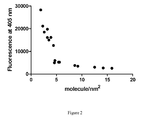
- a method to determine molecular coverage of the beads is shown in the examples.
- molecular coverage refers to the number of molecule per square nanometer.
- solid phase coated with refers to any support to which the substrate can be bound (e.g. coated, attached, immobilized, entrapped or captured) or which can be functionalized to accept the substrate.
- the substrate is coated such that it is accessible to the phospholipases in solution.
- the solid phase can be composed of a natural or synthetic material, an organic or inorganic material, such as polymer, resin, metal or glass, and combinations thereof.
- said labelled substrate is stabilised on a solid phase.
- said labelled substrate is attached non-covalently to the solid phase.
- solid phase examples include, but are not limited to, microparticles such as latex (polystyrene) beads, glass beads, magnetic beads, iron beads, gold beads; or a sheet, a matrix or a sample receptacle.
- sample receptacles include sample wells, tubes, plates or vials.
- said labelled substrate is stabilised on beads, preferably latex beads.
- Said beads are of conventional size: for example 0.5 to 5 ⁇ m, preferably 3-5 ⁇ m, more preferably 4-4.5 ⁇ m.
- the fluorescently-labelled phospholipase substrate is cleavable by a phospholipase selected from a phospholipase A1 and a phospholipase A2.
- said substrate comprises a hydrophobic moiety, a phosphate moiety and a fluorescent moiety attached to the hydrophobic moiety either directly or via an optional linker.
- said substrate is a glycerophospholipid that may be anionic, cationic or neutral.
- said glycerophospholipid is anionic.
- Said glycerophospholipid has the following formula:
- the hydrophobic moiety of the substrate can include one or more hydrophobic tails, such as R1 and R2, wherein R1 and R2 can be the same or different.
- R1 and R2 can be the same or different.
- the exact length and/or composition of each hydrophobic tail can be selectively varied.
- R1 and R2 may be each the same or different saturated or unsaturated C6, C7, C8, C9, C10, C11, C12, C13, C14, C15, C16, C17, C18, C19, C20, C22, C24 or C26 n-alkyl chain.
- Each hydrophobic tail may comprise alkyl, aryl, or arylalkyl groups, or combinations of such groups.
- the alkyl groups, or the alkyl portion of the arylalkyl groups may be saturated or unsaturated, and may be linear, branched, cyclic or combinations of linear, branched and cyclic, in conformation.
- the aryl groups or the aryl portions of the arylalkyl groups may be monocyclic, polycyclic or bi-, or tri-, cyclic, etc.
- the hydrophobic moiety may comprise two, three or even more hydrophobic tails.
- the carbon atoms comprising the hydrophobic moiety may be substituted with various substituents.
- the chains comprising the hydrophobic moiety may be attached to the remainder of the molecule via virtually any type of linkage, provided that the resultant labeled phospholipase cleavage substrate is cleavable by the particular phospholipase being assessed.
- the hydrophobic tail R1 when phospholipase A1 activity is being assessed, the hydrophobic tail R1 must be connected to the remainder of the molecule by an ester linkage.
- the hydrophobic tail R2 when phospholipase A2 activity is being assessed, the hydrophobic tail R2 must be connected to the remainder of the molecule by an ester linkage.
- alkyl by itself or as part of another substituent refers to a saturated or unsaturated branched, straight-chain or cyclic monovalent hydrocarbon radical having the stated number of carbon atoms (i.e., C1-C6 means one to six carbon atoms) that is derived by the removal of one hydrogen atom from a single carbon atom of a parent alkane, alkene or alkyne.
- Typical alkyl groups include, but are not limited to, methyl; ethyls such as ethanyl, ethenyl, ethynyl; propyls such as propan-1-yl, propan-2-yl, cyclopropan-1-yl, prop-1-en-1-yl, prop-1-en-2-yl, prop-2-en-1-yl, cycloprop-1-en-1-yl; cycloprop-2-en-1-yl, prop-1-yn-1-yl, prop-2-yn-1-yl, etc.; butyls such as butan-1-yl, butan-2-yl, 2-methyl-propan-1-yl, 2-methyl-propan-2-yl, cyclobutan-1-yl, but-1-en-1-yl, but-1-en-2-yl, 2-methyl-prop-1-en-1-yl, but-2-en-2-yl, buta-1,3-die
- aryl by itself or as part of another substituent refers to a monovalent aromatic hydrocarbon group having the stated number of carbon atoms (i.e., C5-C15 means from 5 to 15 carbon atoms) derived by the removal of one hydrogen atom from a single carbon atom of a parent aromatic ring system.
- Typical aryl groups include, but are not limited to, groups derived from aceanthrylene, acenaphthylene, acephenanthrylene, anthracene, azulene, benzene, chrysene, coronene, fluoranthene, fluorene, hexacene, hexaphene, hexalene, as-indacene, s-indacene, indane, indene, naphthalene, octacene, octaphene, octalene, ovalene, penta-2,4-diene, pentacene, pentalene, pentaphene, perylene, phenalene, phenanthrene, picene, pleiadene, pyrene, pyranthrene, rubicene, triphenylene, trinaphthalene, and the like, as well as the various hydro isomers
- arylalkyl by itself or as part of another substituent refers to an acyclic alkyl group in which one of the hydrogen atoms bonded to a carbon atom, typically a terminal or sp 3 carbon atom, is replaced with an aryl group.
- Typical arylalkyl groups include, but are not limited to, benzyl, 2-phenylethan-1-yl, 2-phenylethen-1-yl, naphthylmethyl, 2-naphthylethan-1-yl, 2-naphthylethen-1-yl, naphthobenzyl, 2-naphthophenylethan-1-yl and the like.
- arylalkyl group is (C6-C21) arylalkyl, e.g., the alkanyl, alkenyl or alkynyl moiety of the arylalkyl group is (C1-C6) and the aryl moiety is (C5-C15).
- the arylalkyl group is (C6-C13), e.g., the alkanyl, alkenyl or alkynyl moiety of the arylalkyl group is (C1-C3) and the aryl moiety is (C5-C10).
- the R1 and R2 chains are selected from amongst the alkyl chains commonly known to comprise phospholipids such that the hydrophobic moiety of the labeled phospholipase substrate corresponds to the hydrophobic moiety of a naturally occurring phospholipid.
- Non-limiting examples of suitable n-alkyl chains include those derived from commonly occurring fatty acids, such as the following fatty acids: myristic acid (length - number of unsaturated C-C bonds: 14-0), palmitic acid (16-0), stearic acid (18-0), oleic acid (18-1 cis ⁇ 9 ), linoleic acid (18-2 cis ⁇ 9,12 ), linonenic acid (18-3 cis ⁇ 9,12,15 ) arachidonic acid (20-4 cis ⁇ 5,8,11,14 ), eicosapentaenois acid (20-5 cis ⁇ 5,8,11,14,17 ) .
- said anionic glycerophospholipid is selected in the group of phosphatidylinositol, phosphatidylglycerol, phosphatidylmethanol, phosphatidylserine, and phosphatidic acid.
- the substrate may be labelled with a fluorophore on the terminal end of the sn-1 fatty acyl chain and/or on the terminal end of the sn-2 fatty acyl chain.
- the substrate is labelled directly with the fluorophore.
- the substrate is labelled with the fluorophore via a linker.
- Said linker is preferably a hydrophobic linker such as for example an alkyl chain.
- the substrate when phospholipase A1 activity is being assessed, the substrate is labelled with a fluorophore at least on the terminal end of the sn-1 fatty acyl chain.
- the substrate when phospholipase A2 activity is being assessed, the substrate is labelled with a fluorophore at least on the terminal end of the sn-2 fatty acyl chain.
- the fluorophore may be any fluorophore having the following properties: it is capable of producing a detectable fluorescence signal in the assay medium, the fluorescence signal can be "self-quenched" and it is capable of fluorescing in an aqueous medium.
- quench refers to a reduction in the fluorescence intensity of a fluorescent group as measured at a specified wavelength, regardless of the mechanism by which the reduction is achieved.
- the quenching may be due to molecular collision, energy transfer such as FRET, a change in the fluorescence spectrum (color) of the fluorescent group or any other mechanism.
- the amount of the reduction is not critical and may vary over a broad range. The only requirement is that the reduction be measurable by the detection system being used. Thus, a fluorescence signal is "quenched” if its intensity at a specified wavelength is reduced by any measurable amount.
- the inventors state that, when the substrate packs into the membrane bilayer, the close proximity of the fluorophore, from neighboring phospholipids, causes the spectral properties to change relative to that of monomeric molecule (owing to exciplex formation or quenching).
- the fluorophore fatty acid is liberated from the glycerol backbone owing to the phospholipase-catalyzed reaction, it is captured by the bovine serum albumine present in the aqueous phase.
- fluorophore examples include xanthenes such as fluoresceins, rhodamines and rhodols, cyanines, phtalocyanines, squairanines, bodipy dyes, pyrene, anthracene, naphthalene, acridine, stilbene, indole or benzindole, oxazole or benzoxazole, thiazole or benzothiazole, carbocyanine, carbostyryl, prophyrin, salicylate, anthranilate, azulene, perylene, pyridine, quinoline, borapolyazaindacene, xanthene, oxazine or benzoxazine, carbazine, phenalenone, coumarin, benzofuran, or benzphenalenone.
- xanthenes such as fluoresceins, rhodamines and rhodo
- rhodamine dyes include, but are not limited to, rhodamine B, 5-carboxyrhodamine, rhodamine X (ROX), 4,7-dichlororhodamine X (dROX), rhodamine 6G (R6G), 4,7-dichlororhodamine 6G, rhodamine 110 (R110), 4,7-dichlororhodamine 110 (dR110), tetramethyl rhodamine (TAMRA) and 4,7-dichlorotetramethylrhodamine (dTAMRA).
- fluorescein dyes include, but are not limited to, 4,7-dichlorofluoresceins, 5-carboxyfluorescein (5-FAM) and 6-carboxyfluorescein (6-FAM).
- fluorescent dyes examples include, but are not limited to, 5-carboxyfluorescein-bis-(5-carboxymethoxy-2-nitrobenzyl) ether, -alanine-carboxamide, succinimidyl ester (CMNB-caged carboxyfluorescein, SE); 5-carboxyfluorescein, succinimidyl ester (5-FAM, SE); 5-(and-6)-carboxyfluorescein, succinimidyl ester (5(6)-FAM, SE); 5-(4,6-dichlorotriazinyl) aminofluorescein (5-DTAF); 6-(fluorescein-5-carboxamido)hexanoic acid, succinimidyl ester (5-SFX); 6-(fluorescein-5-(and-6)-carboxamido) hexanoic acid, succinimidyl ester (5(6)-SFX); 6-(fluorescein-5-(and-6)-carboxamido) hexanoic acid, succinimid
- said substrate is labelled with a pyrene such as benzo(d,e,f)phenanthrene, or BODIPY FL (4, 4-difluoro-5,7-dimethyl-4-bora-3a, 4a-diaza-s- indacene).
- a pyrene such as benzo(d,e,f)phenanthrene, or BODIPY FL (4, 4-difluoro-5,7-dimethyl-4-bora-3a, 4a-diaza-s- indacene).
- Phospholipids can be prepared using conventional synthetic methods. The synthesis of phospholipids is described in Phospholipids Handbook, G. Cevc, ed., Marcel Dekker (1993 ), G Hermanson, Bioconjugate Techniques, Academic Press (1996 ) and Subramanian et al. ARKIVOC VII:116-125 (2002 )).
- phospholipids can be prepared from the reaction of a 3-substituted phosphoglycero compound with selected fatty acid anhydrides.
- phospholipids can be extracted from natural sources (e.g. egg yolk, brain, or plant sources) or can be purchased commercially (e.g. from Sigma-Aldrich and Avanti Polar Lipids).
- Suitable phosphoglycero compounds include glycero-3-phosphoethanolamine and glycerol-3-phosphoserine, either of which can be obtained commercially (e.g. from Sigma-Aldrich), or obtained by extraction from natural sources.
- Fatty acid anhydrides are prepared from fatty acids which in turn can be synthesized by conventional methods, extracted from natural sources, or purchased commercially.
- said substrate is labelled with a fluorophore on one of the sn-1 or sn-2 fatty acid chain and a quencher is present on the remaining sn-1 or sn-2 fatty acid chain.
- FRET Förster resonance energy transfer
- FRET is a distance-dependent transfer of excited state energy from an initially excited donor to an acceptor, with the donor molecule typically emitting at shorter wavelengths that overlap with the absorption of an acceptor. FRET occurs when a donor (fluorophore) and an acceptor (another fluorophore or quencher) are within a specified distance, usually within 10-100 ⁇ .
- the donor-acceptor distance at which the energy transfer is 50% is called the Förster radius (Ro). Within this distance, when a donor transfers its resonance energy to a quencher, a decrease in the donor fluorescence is seen. FRET efficiency falls dramatically as the donor-acceptor distance exceeds the Förster radius.
- FRET donor acceptor couples that can be used to label sn-1 and sn-2 fatty acyl chain include, but are not limited to, 7-diethylamino-3((4-iodoacetyl)amino) (NBD) (donor) and N-(7-nitro-2-1,3-benzoxadiazol-4-yl) (acceptor) or 7-diethylamino-3((4' iodoacetyl)amino) (NBD) (donor) and 9-diethylamino-5H-benzo [alpha]phenoxazine-5 -one (Nile Red) (acceptor).
- NBD 7-diethylamino-3((4-iodoacetyl)amino)
- NBD 7-diethylamino-3((4-iodoacetyl)amino)
- NBD 7-diethylamino-3((4' iodoacetyl
- An example of a substrate to be used for determining phospholipase A2 activity is a glycerophospholipid wherein NBD fluorophore is covalently attached at sn-1 position with nonhydrolysable ether linkage and Nile Red is attached at sn-2 position with ester bond.
- a substrate to be used for determining phospholipase A2 activity is a glycerophospholipid wherein a borapolyazaindacene fluorophore, preferably 4,4-difluoro-4-bora-3a-,4a-diaza-s-indacene (BODIPY), is covalently attached at sn-1 position with nonhydrolysable ether linkage and is attached at sn-2 position with ester bond.
- BODIPY 4,4-difluoro-4-bora-3a-,4a-diaza-s-indacene
- An example of a substrate to be used for determining phospholipase A1 activity is a glycerophospholipid wherein a borapolyazaindacene fluorophore, preferably 4,4-difluoro-4-bora-3a-,4a-diaza-s-indacene (BODIPY), is covalently attached at sn-1 position with ester bond and is attached at sn-2 position with nonhydrolysable ether linkage.
- a borapolyazaindacene fluorophore preferably 4,4-difluoro-4-bora-3a-,4a-diaza-s-indacene (BODIPY)
- the substrate when phospholipase A1 activity is being assessed, the substrate is labelled with an unsubstituted or substituted pyrene as a fluorophore on the terminal end of the sn-2 fatty acyl chain and with a quencher on the sn-1 fatty acyl chain.
- the substrate when phospholipase A2 activity is being assessed, the substrate is labelled with an unsubstituted or substituted pyrene as a fluorophore on the terminal end of the sn-1 fatty acyl chain and with a quencher on the sn-2 fatty acyl chain.
- these substrates comprise unsubstituted or substituted pyrene as a fluorophore, they are not fluorescent as such fluorescence is quenched by the quencher. Under the influence of phospholipase A1 or A2, the quencher is cleaved off and spatially separated from the remaining substrate, thus allowing an increase in fluorescence intensity which is directly proportional to phospholipase A1 or A2 activity.
- the pyrenes used as fluorophore present the advantages of a lower polarity, a great distance between the extinction wavelength and the emission wavelength, the ability to work in aqueous solutions and the formation of excimers at higher concentrations and simultaneous shift of the emission wavelength to greater wavelengths.
- examples of quenchers include, but are not limited to, phenyl residues, which are substituted with one or more, in particular two, nitro groups, such as for example the 2,4-dinitrophenyl residue.
- the fluorophore and the quencher are bound to the sn-1 and sn-2 fatty acyl chains via a linker.
- the linker used to connect the fluorophore to the sn-1 or sn-2 fatty acyl chains may be derived from an ether (R1-OR2) m , wherein R1 and R2 are independently selected and are derived from a hydrocarbon having 1 to 12 carbon atoms, with m being an integer from 1 to 4.
- R1 and R2 are (CH2)n, wherein n is an integer from 2 to 12.
- An example of preferred linker is (CH2) 4 -O-(CH2) 10 .
- Linkers comprising CH2 chains are especially favourable as they have particular metabolic stability.
- the linker used to connect the fluorophore to the sn-1 or sn-2 fatty acyl chains may be derived from a hydrocarbon R, which is preferably (CH2) o , wherein o is an integer from 1 to 20, in particular from 2 to 6. These linkers are also metabolically stable.
- the linker used to connect the quencher to the sn-1 or sn-2 fatty acyl chains may be derived from C(O)-(CH2)p or C(O)-(CH2)p-NH, wherein p is an integer from 1 to 20, preferably from 2 to 6.
- said linker is C(O)-(CH2) 5 -NH.
- fluorescently-labelled substrates that can be coated to a solid phase are the following: fluorescent glycerol based lipids commercialized by Aventi (Phosphatidylcholine (NBD), Phosphatidic Acid (NBD), Phosphatidylethanolamine (NBD), Phosphatidylglycerol (NBD), Phosphatidylserine (NBD) ; fluorescent phospholipids commercialized by molecular probes (Phosphocholine BODIPY D-3793, D-3795, Phosphocholine BODIPY FL D-3792, D-3803 and D-3771, Phosphatidic acid BODIPY FL D-3805, Phosphoethanolamine BODIPY D-3813, Phosphocholine BODIPY D-3806, Phosphocholine DPH D-476, Phosphocholine NBD N-3786 and N-3787, Phosphocholine Perylene H-3790, Phospho
- One object of the invention is a method for measuring a phospholipase A1 or A2 activity in a sample, said method comprising:
- the sample is selected from urine, serum, plasma sample, whole blood, bronchoalveolar lavage fluid, sputum, synovial fluid, amniotic fluid, peritoneal fluid, cerebrospinal fluid, pleural fluid, pericardial fluid, and alveolar macrophages.
- sample in the context of the invention may be a cell culture sample or a biological sample isolated from a subject and can include, by way of example and not limitation, bodily fluids and/or tissue extracts such as homogenates or solubilized tissue obtained from a subject. Tissue extracts are obtained routinely from tissue biopsy and autopsy material.
- the method of the invention as described here above may also be used for measuring phospholipase A1 or A2 in a cell culture sample.
- Another object of the invention is also an improved method for measuring calcium-dependent phospholipase A1 and A2 activity in a sample.
- a calcium-dependent phospholipase A2 is secreted phospholipase A2 (sPLA2).
- a calcium-dependent phospholipase A1 is phosphatidylserine (PS)-specific PLA1 (PS-PLA1), membrane-associated phosphatidic acid (PA)-selective PLA1s (mPA-PLAlalpha and mPA-PLA1beta), and endothelial lipase (EL).
- PS phosphatidylserine
- PA membrane-associated phosphatidic acid
- mPA-PLAlalpha and mPA-PLA1beta membrane-associated phosphatidic acid
- EL endothelial lipase
- Said method for measuring calcium-dependent phospholipase A1 or A2 activity in a sample comprising the following steps:
- step a) is performed in the presence of at least one divalent ions chelating agent.
- Said divalent ions chelating agent includes, but is not limited to, diaminoethanetetraacetic acid (EDTA) or ethylene glycol tetraacetic acid (EGTA).
- EDTA diaminoethanetetraacetic acid
- EGTA ethylene glycol tetraacetic acid
- said divalent ions chelating agent is ethylene glycol tetraacetic acid (EGTA).
- the concentration of the divalent ions chelating agent is from 1 mM to 20 mM, preferably from 2 mM to 10 mM, more preferably 3 mM to 6 mM.
- the fluorescence emission is read overtime: for example from 30s to 5 min, preferably from 60s to 3 min, more preferably from 90s to 2 min.
- the fluorescence emission is read at a wave length determined by the fluorophore used.
- the solution that initiates phospholipase A1 or A2 enzymatic activity comprises an excess of Ca2+ divalent ions.
- divalent ions include, but are not limited to, calcium chloride (CaCl2), calcium bromide (CaBr2), calcium sulfate (CaSO2) calcium fluoride (CaF2), calcium iodate (CaI2O6), or calcium iodide (CaI).
- CaC12 calcium chloride
- CaBr2 calcium bromide
- CaSO2 calcium sulfate
- CaF2 calcium fluoride
- CaI2O6 calcium iodide
- CaI calcium iodide
- said Ca2+ ions are CaC12.
- the concentration of Ca2+ ions in the solution is from 1 to 10 mM, preferably from 2 mM to 8 mM, more preferably from 4 mM to 7 mM.
- the solution that initiates phospholipase A1 or A2 enzymatic activity is added manually. In another embodiment of the invention, the solution that initiates phospholipase A1 or A2 enzymatic activity is added automatically.
- the pH of the reaction is from 6 to 10, preferably from 7 to 9, more preferably from 8 to 9.
- Another object of the invention is a kit comprising:
- said kit comprises:
- the labelled substrate stabilised on a solid phase is in suspension, in an aqueous solution, in a dried form or in a lyophilised form.
- the assay buffer comprises a buffer solution such as Acetate, ADA, AMP, AMPD, AMPSO, Bicin, Bis-Tris-Propane, Glycylglycine, HEPES, HEPPS, HEPPSO, Phosphate, POPSO, TAPS, Taurine, Tricine, and Triethanolamine.
- a buffer solution such as Acetate, ADA, AMP, AMPD, AMPSO, Bicin, Bis-Tris-Propane, Glycylglycine, HEPES, HEPPS, HEPPSO, Phosphate, POPSO, TAPS, Taurine, Tricine, and Triethanolamine.
- the assay buffer comprises divalent ions chelating agent including, but not limited to, diaminoethanetetraacetic acid (EDTA) or ethylene glycol tetraacetic acid (EGTA).
- divalent ions chelating agent including, but not limited to, diaminoethanetetraacetic acid (EDTA) or ethylene glycol tetraacetic acid (EGTA).
- said divalent ions chelating agent is ethylene glycol tetraacetic acid (EGTA).
- the concentration of the divalent ions chelating agent is from 1 mM to 20 mM, preferably from 2 mM to 10 mM, more preferably 3 mM to 6 mM.
- the assay buffer comprises bovine serum albumin, preferably fatty acid free bovine serum albumin.
- the range of bovine serum albumin present in the assay buffer is from 0.05% to 10%, preferably from 0.075% to 5%, more preferably from 0.1% to 0.5%.
- the assay buffer further comprises NaCl.
- the concentration of NaCl present in the assay buffer is from 10 mM to 500 mM, preferably from 100 mM to 250 mM, more preferably from 130 mM to 170 mM.
- the kit further comprises or is provided with at least one calibrator and/or at least one control sample.
- a calibrator for use in a method for measuring PLA1 activity can be any PLA1.
- PLA1 calibrator is the Human pancreatic Lipase (from pancreatic juice) BCR693 from Sigma Aldrich.
- the calibrator sample is in general a sample of the same nature than the sample to be tested, spiked with the PLA1 enzyme.
- a calibrator for use in a method for measuring PLA2 activity can be any PLA2.
- sPLA2 calibrator is preferably sPLA2 extracted from bee venom (bv-sPLA2) spiked in human sample of the same nature than the sample to be tested.
- the sample to be tested is a plasma or serum sample
- the calibrator will be a sample comprising sPLA2 spiked in human plasma or serum.
- Said calibrator may be provided at different concentrations: for example 0.15 mg/ml, 0.2 mg/ml, 0.25 mg/ml, 0.3 mg/ml, 0.35 mg/ml and 0.4 mg/ml.
- Control samples may be negative and/or positive controls.
- Positive control is for example a sample having a known PLA1 or PLA2 activity or a sample comprising a known concentration of PLA1 or PLA2.
- a positive control to be used in the method for measuring sPLA2 activity is a sample comprising a known concentration of bv-sPLA2.
- the samples used for positive or negative controls are of the same nature than the sample to be tested.
- the concentration of PLA1 or PLA2 present in the positive sample is different from the concentrations of PLA1 or PLA2 present in the calibrators.
- the concentration of sPLA2 in the positive control may be 0.275 mg/ml.
- Negative control is for example a sample from substantially healthy donor.
- a substantially healthy donor as used herein refers to a donor that has not been diagnosed for a PLA1 or PLA2 activity-linked condition or that presents no symptom of a PLA1 or PLA2 activity-linked condition.
- Another object of the invention is a method of identifying a subject having or at risk of having or developing a sPLA2 activity-linked condition, comprising measuring the sPLA2 enzymatic activity in a sample from the subject according to the method of the invention as described here above.
- a "subject" in the context of the present invention is preferably a mammal.
- the mammal can be a human, non-human primate, mouse, rat, dog, cat, horse, or cow, but are not limited to these examples.
- said sPLA2 activity-linked condition includes, but is not limited to, inflammatory diseases, cancer, sepsis, burnt offering, severe surgery or other injuries with severe wound areas, diabetic shock, acute liver failure, pancreatitis, neurodegenerative diseases, autoimmune diseases e. g.
- said sPLA2 activity-linked condition is a cardiovascular disease and/or a cardiovascular event.
- Said cardiovascular disease and/or cardiovascular event includes, but is not limited to, Metabolic Syndrome, Syndrome X, atherosclerosis, atherothrombosis, coronary artery disease, stable and unstable angina pectoris, stroke, diseases of the aorta and its branches (such as aortic stenosis, thrombosis or aortic aneurysm), peripheral artery disease, peripheral vascular disease, cerebrovascular disease, and any acute ischemic cardiovascular event.
- CVD cardiovascular disease
- this threshold value corresponds to 39.7 U/mL and 33.5 U/mL for female and male, respectively.
- Another object of the invention is a method of identifying a subject having or at risk of having or developing a PLA1 activity-linked condition, comprising measuring the PLA1 enzymatic activity in a sample from the subject according to the method of the invention as described here above.
- a "subject" in the context of the present invention is preferably a mammal.
- the mammal can be a human, non-human primate, mouse, rat, dog, cat, horse, or cow, but are not limited to these examples.
- said PLA1 activity-linked condition includes, but is not limited to, acid lipase disease, Wolman's disease or Cholesteryl ester storage disease (CESD).
- ⁇ -py-C10-phosphoglycerol ⁇ -py-C10-PG was from Molecular Probes/Invitrogen. ⁇ 4.15 ⁇ m polystyrene microspheres (beads) were purchased from Merck/Estapor. All other reagents were from Sigma-Aldricht.
- ⁇ -py-C10-phosphoglycerol was solubilized using sonication in 10% methanol/90% Chloroform (v/v) in glass.
- the exact molarity of the ⁇ -py-C10-phosphoglycerol was determined with the help of a standard curve by absorbance at 342 nm through a five points Standard Curve (1/100 and 1/1600 dilution in Methanol, Cascade Dilution, factor 2) prepared from the sonicated stock solution with the blank defined as 1/100 dilution of the 10% methanol/90% Chloroform (v/v) solution in methanol.
- 10% bead suspension in methanol was prepared by dilution (1:5 v/v) with methanol, followed by sonication.
- the coating Solution was prepared by adding ⁇ -py-C10-phosphoglycerol (from the Stock Solution) in methanol.
- the Coating Solution was added to the beads methanol suspension (1:1 v/v) in a 50 mL glass tube and then solvent was evaporated at 37°C under gentle shaking (400 rpm) for 8 h. Beads were then washed three times by adding 150 mM NaCl to the dry pellets of beads/phospholipids, followed by sonication.
- Beads were recovered by centrifugation and supernatants kept for yield determination by absorbance measurement at 342 nm (blank 150 mM NaCl). Absorbances of washing supernants at 342 nm were corrected by applying a Methanol/Nacl ratio. This ration was defined as OD 342 nm of a 1/100 dilution of the Coating Solution in methanol divided by OD 342 nm of a 1/100 dilution of the Coating Solution in 150 mM NaCl.
- washings steps were repeated until absorbance at 342 nm measured in supernant is under 4% of the sum of the absorbances measured in all supernants. Yield of coating (typically 75 to 85%) was determined by subtracting the amount of phospholipid found in all washing supernatants to the initial stock solution put in presence of beads. Molecular coverage was defined as the number of molecules per unit area, expressed in nm 2 . Beads were stored at 4°C, in glass, protected from light, in aliquot of 1 mL.
- sPLA2 activity (illustrated here as the slope at the origin) is directly influenced by the molecular coverage of the phospholipid-coated beads used in the assay. Preparation mode including washings, determination of molecular coverage and amounts of phospholipid-coated beads added to the assay are then crucial for sensitive sPLA2 assay.
- concentrations of BSA have major influence in fluorescence emission in the method of invention. Reorganization and/or cross-linking of the phospholipid-coated beads complex by BSA may explain those observations.
- ⁇ -py-C10-phosphoglycerol ( ⁇ -py-C10-PG) was from Molecular Probes/Invitrogen. ⁇ 4.15 ⁇ m polystyrene microspheres (beads) were purchased from Merck/Estapor. All other reagents were from Sigma-Aldricht.
- sPLA2 activity was measured according to the method of the invention. 30 ⁇ l of serum sample were added to 1 -hexadecanoyl-2-(1 -pyrenedecanoyl)-sn-glycero-3-phosphoglycerol stabilized on latex beads (10 ⁇ L of 1% beads suspension) in the presence of 200 ⁇ l of buffer (10 mM Tris-HCl pH 8.5. 0.5% BSA. 6mM EGTA and 100 mM NaCl) at 30°C in a 96-wells plate.
- buffer 10 mM Tris-HCl pH 8.5. 0.5% BSA. 6mM EGTA and 100 mM NaCl
- a standard calibration curve was obtained by plotting the final point at 1 min obtained for each of six sPLA2 Calibrators on the y-axis versus the sPLA2 concentration on the x-axis and final points at 1 min of each sample were then normalized using the standard calibration curve.
- sPLA2 activity are expressed as U/ml by converting the normalized fluorescence values into quantity (in nmol) of product liberated in one min. All samples were tested in duplicate
- Assay dynamic range was determined from assays of plasma samples from human subjects spiked with known amount of purified bee venom sPLA2 (bv-sPLA2).
- the minimum detection limit is 10 U/mL (determined from the lowest concentration of bv-sPLA2 enzyme that can be reliably measured in the linear range of the assay. i. e 0.025 pmol).
- the maximum detection limit is 250 U/mL (determined from the highest concentration of bv-sPLA2 enzyme that can be reliably measured in the linear range of the assay. i. e 0.5 pmol).
- Intra assay variability was evaluated by the average %CV calculated from % CV of 8 plasma samples from human subjects distributed throughout the calibration range of the assay run 10 times on the same assay plate using a single lot of reagents on the same day.
- Intra-assay CV for individual for individual human plasma samples ranged from 4.61 to 13.59% with an average intra-assay CV of 8.46% as shown in Table 3.
- Intra assay variability was evaluated by the average % CV calculated from % CV of 8 plasma samples from human subjects run by two operators on three different days on two different fluorimeters using two different batches of assay substrate and reagents (see table 4).
- Total inter-assay CV for individual human plasma samples ranged from 1.05 to 13.08% with an average inter-assay CV of 5.24%.
- Table 4 Day 1 Day 2 Day 3 Sample Operator 1 Operator 2 Operator 1 Operator 2 Operator 1 Operator 2 Mean CV A 211.6 207.2 204.2 210.9 202.4 215.9 208.7 2.43% B 118.2 120.5 105.6 102.3 116.1 118.6 113.6 6.71% C 149.9 149.2 148.3 149.2 147.2 144.2 148.0 1.41% D 84.2 92.3 86.0 77.8 86.2 97.1 87.3 7.66% E 71.1 83.2 68.6 58.4 80.1 82.0 73.9 13.08% F 75.3 78.5 69.3 70.2 71.5 62.6 71.2 7.63% G 184.0 183.1 188.9 180.2 187.9 181.1 184.2 1.92% H 233.4 237.3 237.2 236.8 238.7 232.4 235.9 1.05% Mean CV 5.24%
- the sPLA2 activity levels of the samples ranged from 22.1 to 213 U/mL and the mean %CV between replicates was 5.1 %.
- Blood samples from 10 healthy donors were collected on dry, heparin, citrate and EDTA sampling tubes on the same day, processed following standard procedures and stored at - 80°C.
- sPLA2 activity was measured according to the following published protocol: 30 ⁇ l of serum sample were added to 5 mmol of 1 -hexadecanoyl-2-(1 -pyrenedecanoyl)-sn-glycero-3-phosphomethanol liposomes in the presence of 10 mM Tris-HCl pH 8.7, 0.1% BSA, 10 mM CaC12. Fluorescence emission was recorded at 405 nm with excitation at 355 nm for 60 sec in Fluostar Optima fluorimeter equipped with a stirring device and thermostat ruled at 30°C.
- Fluorescence emission was recorded over time at 405 nm with excitation at 355 nm after addition of 30 ⁇ L human serum sample to 5 mmol of 1 -hexadecanoyl-2-(1 - pyrenedecanoyl)-sn-glycero-3-phosphomethanol liposomes in the presence of 10 mM Tris-HCl pH 8.7, 0.1% BSA, 10 mM CaC12. As illustrated in figure 10 , these 11 human serum samples displayed no or very little sPLA2 activity, as demonstrated by very slow initial velocities.
- the method of the invention is more specific than previous published methods, as the level of background is:
- the lower limit of detection defined as the mean of background +/- 3 SD is 10 U/mL for the method of the invention.
- the lower limits of detection of existing methods defined similarly (mean of background +/- 3 SD) and expressed in the same units, are in the range of 200 U/mL (data not shown).
- the method of invention is much more sensitive than previous published methods.
- the gain in sensitivity of the method of the invention is 10 to 20 fold, compared to existing methods, mainly due to as the automatic injection enables the detection of fluorescence emission about 10-20 sec earlier than previous published methods, in which the enzymatic reaction is initiated by the addition of the sample. This major improvement leads to the access to earlier points of the kinetic progress curve where initial velocity is faster.
- sPLA2 activity was determined using either the method of the invention or published methods in 30 ⁇ L of human serum (same sample for all the experiment) spiked with increasing amounts of bv-sPLA2 enzyme (same serial dilutions for all the experiment). Standard curves were then plotted for both experiments. As illustrated in figure 11 and 12 , linearity of published method was restricted to 0.03 nM of bv-sPLA2, whereas linearity was observed within the whole tested sPLA2 range with the method of the invention.
- Inter-assay variability and repeatability (intra-assay variability) of published method were determined using a protocol similar to those used in example 4.
- Inter-assay CV for individual human plasma samples ranged from 28.3% to 32.1% with an average inter-assay CV of 30.2%.
- Intra-assay CV for individual human plasma samples ranged from 4.6% to 40.9% with an average intra-assay CV of 25.0%.
- the method of the invention is therefore much more precise and repeatable than previous published methods, with a 6-fold and 4-fold gain, respectively.
- sPLA2 activity was measured according to the method of the invention. 30 ⁇ l of serum sample were added to 1 -hexadecanoyl-2-(1 -pyrenedecanoyl)-sn-glycero-3-phosphoglycerol stabilized on latex beads (1% beads suspension) in the presence of 200 ⁇ l of buffer (10 mM Tris-HCl pH 8.5. 0.5% BSA. 6mM EGTA and 100 mM NaCl) at 30°C in a 96-wells plate.
- buffer 10 mM Tris-HCl pH 8.5. 0.5% BSA. 6mM EGTA and 100 mM NaCl
- sPLA2 activity are expressed as U/ml. by converting the normalized fluorescence values into quantity (in nmol) of product liberated in one min. All samples were tested in duplicate
- sPLA2 activity ranged from 10.6 to 79.9 U/mL, the geometric mean sPLA2 activity was 35.1U/mL and the median was 36.9 U/mL.
- the 95 th and 99 th percentiles were 46.1 and 52.5 for male and 61.6 and 72.4 for females, respectively.
- the percentile distribution of sPLA2 activity by age, sex and race or ethnicity is presented in table 8.
- the age-adjusted mean sPLA2 activity in the population in the analyzed population is presented in table 9.
- the reference interval calculated from the samples was found to be 29.6-54.0 U/mL for females and 19.6-51.2 U/mL for males.
- CVD cardiovascular disease
- this threshold value corresponds to 39.7 U/mL and 33.5 U/mL for female and male, respectively.
- Table 8 Distribution of sPLA2 activity among apparently healthy Male and Female. 40-59 years of age Percentile n AM GM 0 1 10 20 30 40 50 60 70 80 90 95 100 Total 390 37.0 35.1 10.6 12.1 22.8 28.0 31.0 33.3 36.9 40.0 42.7 46.0 51.5 55.2 79.9 Sex Female 150 40.2 39.0 14.1 16.9 29.6 32.4 35.6 37.8 39.7 41.8 44.2 46.9 54.0 57.5 79.9 Male 240 35.0 31.0 10.6 11.5 19.6 26.5 29.1 31.1 33.5 37.6 41.9 45.5 51.2 54.2 63.3 Age.
Landscapes
- Chemical & Material Sciences (AREA)
- Organic Chemistry (AREA)
- Life Sciences & Earth Sciences (AREA)
- Zoology (AREA)
- Wood Science & Technology (AREA)
- Proteomics, Peptides & Aminoacids (AREA)
- Health & Medical Sciences (AREA)
- Engineering & Computer Science (AREA)
- Microbiology (AREA)
- Biochemistry (AREA)
- Physics & Mathematics (AREA)
- Molecular Biology (AREA)
- Biotechnology (AREA)
- Biophysics (AREA)
- Analytical Chemistry (AREA)
- Immunology (AREA)
- Bioinformatics & Cheminformatics (AREA)
- General Engineering & Computer Science (AREA)
- General Health & Medical Sciences (AREA)
- Genetics & Genomics (AREA)
- Measuring Or Testing Involving Enzymes Or Micro-Organisms (AREA)
- Investigating Or Analysing Materials By The Use Of Chemical Reactions (AREA)
- Apparatus Associated With Microorganisms And Enzymes (AREA)
Priority Applications (7)
| Application Number | Priority Date | Filing Date | Title |
|---|---|---|---|
| EP09305380A EP2249156A1 (de) | 2009-04-29 | 2009-04-29 | Enzymatischer Assay zur quantitativen Bestimmung von Phospholipase-A1- oder -A2-Aktivität in einer Probe, der auf der Verwendung einer festen Phase basiert, die mit einem mit Fluorchrom markierten Substrat überzogen ist |
| CN2010800161234A CN102388311A (zh) | 2009-02-10 | 2010-02-10 | 用于定量测定样品中磷脂酶a1或a2活性的酶测定法 |
| CA2756334A CA2756334A1 (en) | 2009-02-10 | 2010-02-10 | Enzymatic assay for the quantitative determination of phospholipase a1 or a2 activity in a sample |
| JP2011548729A JP2012517219A (ja) | 2009-02-10 | 2010-02-10 | 試料中のホスホリパーゼa1またはa2活性を定量するための酵素アッセイ |
| PCT/EP2010/051624 WO2010092068A1 (en) | 2009-02-10 | 2010-02-10 | Enzymatic assay for the quantitative determination of phospholipase a1 or a2 activity in a sample |
| US13/148,891 US20110312008A1 (en) | 2009-02-10 | 2010-02-10 | Enzymatic Assay for the Quantitative Determination of Phospholipase A1 or A2 Activity in a Sample |
| EP10703466A EP2396656A1 (de) | 2009-02-10 | 2010-02-10 | Enzymatisches testverfahren zur quantitativen bestimmung von phospholipase-a1- oder a2-aktivität in einer probe |
Applications Claiming Priority (1)
| Application Number | Priority Date | Filing Date | Title |
|---|---|---|---|
| EP09305380A EP2249156A1 (de) | 2009-04-29 | 2009-04-29 | Enzymatischer Assay zur quantitativen Bestimmung von Phospholipase-A1- oder -A2-Aktivität in einer Probe, der auf der Verwendung einer festen Phase basiert, die mit einem mit Fluorchrom markierten Substrat überzogen ist |
Publications (1)
| Publication Number | Publication Date |
|---|---|
| EP2249156A1 true EP2249156A1 (de) | 2010-11-10 |
Family
ID=41059925
Family Applications (2)
| Application Number | Title | Priority Date | Filing Date |
|---|---|---|---|
| EP09305380A Withdrawn EP2249156A1 (de) | 2009-02-10 | 2009-04-29 | Enzymatischer Assay zur quantitativen Bestimmung von Phospholipase-A1- oder -A2-Aktivität in einer Probe, der auf der Verwendung einer festen Phase basiert, die mit einem mit Fluorchrom markierten Substrat überzogen ist |
| EP10703466A Withdrawn EP2396656A1 (de) | 2009-02-10 | 2010-02-10 | Enzymatisches testverfahren zur quantitativen bestimmung von phospholipase-a1- oder a2-aktivität in einer probe |
Family Applications After (1)
| Application Number | Title | Priority Date | Filing Date |
|---|---|---|---|
| EP10703466A Withdrawn EP2396656A1 (de) | 2009-02-10 | 2010-02-10 | Enzymatisches testverfahren zur quantitativen bestimmung von phospholipase-a1- oder a2-aktivität in einer probe |
Country Status (6)
| Country | Link |
|---|---|
| US (1) | US20110312008A1 (de) |
| EP (2) | EP2249156A1 (de) |
| JP (1) | JP2012517219A (de) |
| CN (1) | CN102388311A (de) |
| CA (1) | CA2756334A1 (de) |
| WO (1) | WO2010092068A1 (de) |
Families Citing this family (8)
| Publication number | Priority date | Publication date | Assignee | Title |
|---|---|---|---|---|
| DE102010018965A1 (de) * | 2010-04-27 | 2011-10-27 | Sovicell Gmbh | Bestimmung von Wechselwirkungen zwischen einer Substanz oder einem Substanzgemisch und einem Target |
| GR1007801B (el) * | 2011-12-20 | 2013-01-18 | Επιτροπη Ερευνων Πανεπιστημιου Ιωαννινων (Ε.Λ.Κ.Ε.), | Ακινητοποιηση λιπιδικων υποστρωματων με σκοπο την αναπτυξη και αξιολογηση φθορισμομετρικης μεθοδου προσδιορισμου ενεργοτητας φωσφολιπασης α2 σε βιολογικα δειγματα |
| CN102636467B (zh) * | 2012-04-19 | 2015-04-29 | 湖南大学 | 基于双层磷脂膜修饰石墨烯的复合纳米材料定量检测磷脂酶的生物传感方法 |
| JP6362268B2 (ja) * | 2012-11-05 | 2018-07-25 | 塩野義製薬株式会社 | El活性が関連する疾患の治療または予防効果を有する医薬の薬効評価方法及びel活性阻害物質のスクリーニング方法 |
| CN104155291A (zh) * | 2014-05-19 | 2014-11-19 | 上海大学 | 一种磷脂酶Dα活性的测定方法 |
| CN106290351A (zh) * | 2015-06-03 | 2017-01-04 | 舒泰神(北京)生物制药股份有限公司 | 一种磷脂酶a2的活性测定方法 |
| CN106290345A (zh) * | 2016-09-29 | 2017-01-04 | 浙江达美生物技术有限公司 | 脂蛋白相关磷脂酶a2的测定试剂及其制备方法 |
| CN109374605A (zh) * | 2018-09-30 | 2019-02-22 | 东北农业大学 | 一种纳米金比色法检测米糠中脂肪酶活性的方法 |
Citations (3)
| Publication number | Priority date | Publication date | Assignee | Title |
|---|---|---|---|---|
| DE19814775A1 (de) * | 1998-04-02 | 1999-10-14 | Nimbus Biotechnologie Gmbh | Verfahren zur Bestimmung der Bindungskonstanten gelöster Stoffe und Substanzen an Oberflächen aus amphiphilen Molekülen |
| US20030219849A1 (en) | 2002-02-13 | 2003-11-27 | Tsao Francis H.C. | Fluorescent phospholipase assay, phospholipase A2 inhibitor and stimulator, and the use thereof |
| US20050026235A1 (en) | 2003-06-30 | 2005-02-03 | Graham Ronald J. | Fluorescent phospholipase assays and compositions |
Family Cites Families (1)
| Publication number | Priority date | Publication date | Assignee | Title |
|---|---|---|---|---|
| DE19701348A1 (de) * | 1997-01-16 | 1998-07-23 | Roehm Gmbh | Protein mit Phospholipaseaktivität |
-
2009
- 2009-04-29 EP EP09305380A patent/EP2249156A1/de not_active Withdrawn
-
2010
- 2010-02-10 JP JP2011548729A patent/JP2012517219A/ja active Pending
- 2010-02-10 US US13/148,891 patent/US20110312008A1/en not_active Abandoned
- 2010-02-10 CN CN2010800161234A patent/CN102388311A/zh active Pending
- 2010-02-10 CA CA2756334A patent/CA2756334A1/en not_active Abandoned
- 2010-02-10 EP EP10703466A patent/EP2396656A1/de not_active Withdrawn
- 2010-02-10 WO PCT/EP2010/051624 patent/WO2010092068A1/en not_active Ceased
Patent Citations (3)
| Publication number | Priority date | Publication date | Assignee | Title |
|---|---|---|---|---|
| DE19814775A1 (de) * | 1998-04-02 | 1999-10-14 | Nimbus Biotechnologie Gmbh | Verfahren zur Bestimmung der Bindungskonstanten gelöster Stoffe und Substanzen an Oberflächen aus amphiphilen Molekülen |
| US20030219849A1 (en) | 2002-02-13 | 2003-11-27 | Tsao Francis H.C. | Fluorescent phospholipase assay, phospholipase A2 inhibitor and stimulator, and the use thereof |
| US20050026235A1 (en) | 2003-06-30 | 2005-02-03 | Graham Ronald J. | Fluorescent phospholipase assays and compositions |
Non-Patent Citations (20)
Also Published As
| Publication number | Publication date |
|---|---|
| WO2010092068A1 (en) | 2010-08-19 |
| EP2396656A1 (de) | 2011-12-21 |
| CA2756334A1 (en) | 2010-08-19 |
| CN102388311A (zh) | 2012-03-21 |
| US20110312008A1 (en) | 2011-12-22 |
| JP2012517219A (ja) | 2012-08-02 |
Similar Documents
| Publication | Publication Date | Title |
|---|---|---|
| US20110312008A1 (en) | Enzymatic Assay for the Quantitative Determination of Phospholipase A1 or A2 Activity in a Sample | |
| US20050026235A1 (en) | Fluorescent phospholipase assays and compositions | |
| CA1154453A (en) | Method of fluorometrically measuring the activity of fat-degrading enzymes and means for carrying out the method | |
| Wijewickrama et al. | Systematic evaluation of transcellular activities of secretory phospholipases A2: high activity of group V phospholipases A2 to induce eicosanoid biosynthesis in neighboring inflammatory cells | |
| US5091527A (en) | Substrate for phospholipase | |
| Bayburt et al. | Continuous, vesicle-based fluorimetric assays of 14-and 85-kDa phospholipases A2 | |
| EP2246440A1 (de) | Enzymatischer Assay zur quantitativen Bestimmung von Phospholipase-A1- oder -A2-Aktivität in einer Probe | |
| JP2837273B2 (ja) | 分析法 | |
| US20050244913A1 (en) | Methods for detecting Lp-PLA2 activity and inhibition of Lp-PLA2 activity | |
| US5512429A (en) | Assay for enzyme activity | |
| Stafforini et al. | Determination of phospholipase activity of PAF acetylhydrolase | |
| Zandonella et al. | Enantiomeric perylene‐glycerolipids as fluorogenic substrates for a dual wavelength assay of lipase activity and stereoselectivity | |
| CA2384394C (en) | Determination of complex phospholipid/lipid structures with the aid of synthetic fluorescence-labeled acylglycerides | |
| AU639489B2 (en) | Assay for enzyme activity | |
| Tsuzuki et al. | Fluorimetric analysis of lipase hydrolysis of intermediate-and long-chain glycerides | |
| Aufenanger et al. | Catalytic phospholipase A2 assays | |
| RU2517538C1 (ru) | Фосфолипидный флуоресцентный зонд и тест-система для определения активности фосфолипазы а2 в сыворотке крови | |
| Ichibangase et al. | Chemiluminescence assay for lipase activity in human serum by using a proenhancer substrate | |
| WO2009151698A1 (en) | Rapid assay for detecting ataxia-telangiectasia homozygotes and heterozygotes |
Legal Events
| Date | Code | Title | Description |
|---|---|---|---|
| PUAI | Public reference made under article 153(3) epc to a published international application that has entered the european phase |
Free format text: ORIGINAL CODE: 0009012 |
|
| AK | Designated contracting states |
Kind code of ref document: A1 Designated state(s): AT BE BG CH CY CZ DE DK EE ES FI FR GB GR HR HU IE IS IT LI LT LU LV MC MK MT NL NO PL PT RO SE SI SK TR |
|
| AX | Request for extension of the european patent |
Extension state: AL BA RS |
|
| RAP1 | Party data changed (applicant data changed or rights of an application transferred) |
Owner name: ATEROVAX |
|
| STAA | Information on the status of an ep patent application or granted ep patent |
Free format text: STATUS: THE APPLICATION IS DEEMED TO BE WITHDRAWN |
|
| 18D | Application deemed to be withdrawn |
Effective date: 20110511 |