EP2250747B1 - Procédé et agencement dans un système de télécommunications - Google Patents
Procédé et agencement dans un système de télécommunications Download PDFInfo
- Publication number
- EP2250747B1 EP2250747B1 EP09708911.4A EP09708911A EP2250747B1 EP 2250747 B1 EP2250747 B1 EP 2250747B1 EP 09708911 A EP09708911 A EP 09708911A EP 2250747 B1 EP2250747 B1 EP 2250747B1
- Authority
- EP
- European Patent Office
- Prior art keywords
- grid
- silent
- inter
- pseudo
- channel
- Prior art date
- Legal status (The legal status is an assumption and is not a legal conclusion. Google has not performed a legal analysis and makes no representation as to the accuracy of the status listed.)
- Active
Links
Images



Classifications
-
- H—ELECTRICITY
- H04—ELECTRIC COMMUNICATION TECHNIQUE
- H04B—TRANSMISSION
- H04B17/00—Monitoring; Testing
- H04B17/30—Monitoring; Testing of propagation channels
- H04B17/309—Measuring or estimating channel quality parameters
- H04B17/345—Interference values
Definitions
- the present invention relates to a method and arrangement in a telecommunications system.
- references to the "present invention” or “invention” relate to exemplary embodiments and not necessarily to every embodiment encompassed by the appended claims.
- the present invention relates to facilitating Inter-cell interference, measurement.
- Signal and channel quality estimation is a fundamental part of a modern wireless system.
- the noise and interference- is used not only in the demodulator, but is also an important quantity when estimating, for example, the channel quality indicator (CQI).
- CQI channel quality indicator
- the interference can be estimated from the common reference symbols (RS) that.are present in the time-frequency grid of an OFDM based system (e.g., LTE).
- An element in the time-frequency grid is referred to as a resource element (RE).
- n is the (unknown) noise and interference.
- the noise and interference show different characteristics in resource elements (RE) that hold RS, data, and control signaling; we therefore denote the received noise/interference for the different signaling types by I_RS, I_d, and I_control, respectively.
- the interference term in a RE containing RS, I_RS, at a specific user equipment (UE) can be estimated by the UE since s are known symbols and H is given by the channel estimator. It is further noted that the interference on REs with data (that is scheduled for the UE in question), I_d, also can be measured as soon as the (data) symbols, s, are detected (at this moment they can be regarded as known symbols). Similarly, to estimate I_control, the control symbols must first be detected.
- US-A1-2007270100 discloses a method and apparatus for estimating reverse link loading in a wireless communication system.
- the reverse link interference is measured and reverse link receiver noise is measured.
- the reverse link interference is compared to the reverse link receiver noise, for example, by dividing the interference power by the receiver noise power.
- the reverse link receiver noise can be measured in an orthogonal frequency division multiple access (OFDMA) system by nulling transmission from access terminals within the cell and nearby during a null time and frequency interval. Power measure in the null time and frequency interval is receiver noise power.
- the reverse link interference can be measure by several means, for example, local null time and frequency intervals can be designated.
- the access terminal within the cell null their transmissions during the local time and frequency intervals. Access terminals outside the cell continue to transmit during the local time and frequency intervals.
- Power measured in the local time and frequency interval is interference power.
- interference power can be measured by subtracting pairs of pilot symbols that are contiguous to each other in time or frequency.
- US-A1-2005013283 discloses that noise is measured at one or more base stations in a mobile communication system during periodic silence periods.
- a periodic silence period is defined for at least one carrier that is independent of reverse link channel frame boundaries.
- the radio base stations transmits silence parameters defining the periodic silence period to mobile stations, which stop transmitting during the periodic silence periods.
- a time reference is provided to the mobile stations to synchronize the silence periods for all mobile stations.
- the statistical characteristics of the (inter-cell) interference may be significantly different, depending on whether the interference originates from
- Each of these three categories can have different transmission power and spatial characteristics.
- the UE For accurate data channel CQI computation the UE must have good statistics of the interference that hits the data channel (which is a mixture of the three categories mentioned above), I_d. Ultimately, this interference statistics should be measured on the data channel itself; however, this measurement is limited to resource entities (i.e., time-frequency slots) that contain data scheduled to the particular user. The limited number of interference samples can significantly penalize the accuracy of the statistics estimate. Moreover, in multiuser-MIMO (i.e., spatial division multiple access) systems, several users may be assigned the same data REs, which in effect prohibits the UE to separate the inter-cell interference from the intra-cell interference, if the measurement is performed on data REs.
- multiuser-MIMO i.e., spatial division multiple access
- the interference measurement can be performed on REs containing a RS.
- the statistics of the interference that hits the RS may have significantly different statistics than the interference on the data channel (or the control channel).
- I_RS may be significantly different (typically substantially larger) than l_d, because possibly data is not allocated to all resource blocks (RB) in the neighboring cells.
- the statistics of the measured interference term may therefore deviate significantly from the interference that hits the data channel.
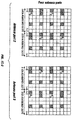
- the RS grid for a RB in case of 1, 2 and 4 Tx antennas is illustrated in figure 1 . Between cells, the RS is shifted in frequency domain.
- the following discloses a cell specific time- varying grid of data REs (referred to as the silent RE grid in the following) is introduced, for which no data is allocated; that is, the transmitter will be silent, on this grid.
- the grid is known to both the receiving and the transmitting unit.
- the receiving unit are able to measure the statistics of the signal that, is received on the silent RE grid; this signal, originates completely from inter- cell signals that interfere with the data channel.
- the measured inter-cell interference can, for example, be used as a basis for channel quality (CQI) reporting and/or for interference suppression purposes in the receiving unit.
- CQI channel quality
- One advantage is that a statistics measurement, performed on the silent RE grid, is computationally trivial, because no data must be decoded to obtain the residual noise and interference.
- the silent RE grid could be randomized in consecutive (in frequency and time) resource blocks, to minimize the effects of potentially overlapping grids of neighbouring cells.
- the layout of the cell specific silent RE grid can be derived with little; or no, signalling overhead; it could for example be derived from the cell ID and other information that is known to both the receiving and the transmitting unit.
- the method comprises the steps of obtaining information relating to a layout of a silent RE grid, and taking the presence of a silent RE grid into account in the reception of a control or a data channel.
- the step of obtaining information comprises using a pseudo-random sequence to generate said layout of said silent RE grid, and synchronising said pseudo-random sequency in each frame by deriving a seed for said pseudo-random sequency from a Cell ID and a Frame Index.
- the step of obtaining information comprises receiving said layout of said silent RE grid through signalling.
- the method includes the step of collecting statistics relating to the inter-cell interference based on measurements on said silent RE grid, and using said statistics to estimate any or all of: a channel quality indicator, the inter-cell interference power that hits the channel, the co-variance matrix of the inter-cell interference that hits the channel, the full probability distribution of the inter-cell interference.
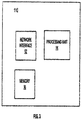
- the receiving unit 100 comprises a network interface 12 which obtains information relating to a time-varying layout of a silent resource element (RE) grid.
- the receiving unit 100 comprises an electronic memory 16 having code in communication with the network interface 12 which stores the information.
- the receiving unit 100 comprises a processing unit 14 in communication with the electronicmemory 16 that takes a presence of a silent RE grid into account in the reception of a control or a data channel.
- the processing unit 14 takes the presence of a silent RE grid into account in the transmission of a control or a data channel
- the processing unit 14 can use a pseudo-random sequence to generate the layout .of the silent RE grid, and synchronizing the pseudo - random sequence by -deriving a seed for the pseudo random sequence from parameters
- the pseudo random sequence can be synchronized in each. frame by the processing unit 14 based on the parameters that includes a cell ID and a frame index.
- the layout of the silent RE grid can be received through signaling by the network interface 12.
- the electronic memory 16 can collect statistics relating to inter-cell interference based on measurements on the silent RE grid.
- the processing unit 14 can use the statistics with the code to estimate any or all of: a channel quality indicator, inter-cell power that hits a channel, a co-variance matrix of the inter - cell interference that hits the channel, a full probability distribution of the Inter-cell interference; and send the signal through the network interface 12.
- the processing unit 14 can randomize the silent RE grid in consecutive, in frequency and time, resource blocks (RBs).
- RBs resource blocks
- the processing unit 14 can derive the silent RE grid with essentially no signaling overhead.
- the processing unit 14 can of introduce another silent RE grid on a control channel to estimate the interference that hits the control channel using the code in the electronic memory 16.
- the processing unit 14 can coordinate each silent grid of neighboring cells in the wireless-system such that there is no significant overlap.
- the processing unit 14 can group resource blocks into resource windows where each resource window is a group of contiguous, in frequency, resource blocks; and the number of resource blocks in each resource window may be configured semi-statically.
- Each resource window has a same number of silent REs, and are configured semi-statically.
- the present invention pertains to a method in a receiving unit 100 or a transmitting unit 110 of a wireless network,for facilitating noise and interference measurements on an air interface.
- the method comprises the steps of obtaining information relating to a time-varying layout of a silent resource element (RE) grid. There is the step of taking a presence of a silent RE grid into account in the reception of a control or a data.channel.
- RE silent resource element
- the step of obtaining information can include the steps of using a pseudo-random sequence to generate said layout of said silent RE grid, and synchronizing the pseudo - random sequence by deriving a seed for the pseudo - random sequence from parameters known to both: a receiving unit 100 and a transmitting unit 110.
- the pseudo - random sequence can be synchronized in each frame based on the parameters that includes a cell ID. and a frame index.
- the layout of the silent RE grid can be received through signaling.
- RBs resource blocks
- each silent grid of neighboring cells in said wireless system can be the step of introducing another silent RE grid on a control channel to estimate the interference that hits; the control channel using code in an electronic memory 16.
- For each subframe there can. be the step of grouping resource blocks into resource windows where each resource window is a group of contiguous, in frequency, resource blocks; and the number of resource blocks in each resource window may be configured semi-statically.
- Each resource window has a same number of silent REs, and are configured semi-statically.
- the invention contains the. following general steps; and example realizations.
- the interference on the silent, grid should reflect the interference statistics of the data channel as a whole. Therefore distribution of silent REs over the data channel should preferably be as uniform as possible.
- the grid could be pseudo-random in the sense that it should change over time and/or frequency to avoid significant long-term overlap with silent grids of neighbouring cells.
- the invention is not limited to pseudo-random grids; for example, an alternative method is to coordinate the silent, grid of neighbouring cells such that no significant overlap occur and then signal the selected silent.
- RE grid to the UEs dynamically or semi-statically. Such an approach could however pbssibly require careful planning.
- the UEs should be able to readily, derive which silent grid is being used, with little or preferably no control signalling overhead.
- clustering of the silent REs in one or a few RBs should be avoided for improved sample statistics.
- the scheme can also readily be generalized to let a RW constitute only a part of a RB in the time domain; for example, the OFDM symbols in the RB, can be grouped so that symbols including RS symbols, and data symbols, are mapped to RW_RS and OFDM symbols carrying only data, are mapped to RW_d. It is also conceivable to use a different number of silent REs in RW_RS and RW_d. Such a separation of the OFDM symbols can be useful since the inter-cell interference that hit RW_RS and RW_d will have different statistics.
- the power that is saved by remaining silent on some REs can be redistributed to boost the power.on other REs that carry data or reference symbols.
- Such power reallocation combined by the preceding method of assigning different OFDM symbols to different::RW categories, can be a useful approach,to reallocated the power within OFDM symbols, for example in order to support different powers on the RE carrying RS and the REs carrying data in the same OFDM symbol.
- invention a simple scheme for synchronizing the pseudo-random generators .is to reinitialize the pseudo-random generators in each frame using a seed that is derived from
- Both the cell ID and the frame index are available at the UEs. Note that any re-initialization,interval of the number generator can be used, as long as there is a suitable index, available at the UE, that can be used to progress the seed over time; this includes, but is not limited to, a subframe, or groups of frames.
- some grid parameters could be set semi-statically using higher layer control signalling.
- the silent RE grid is used by the UEs to collect statistics of the inter-cell interference that hit the data channel. If the silent grid is uniformly distributed over the data channel, as suggested in the preceding, the interference samples collected in the silent grid will, over time, be the same as the interference that hit the data channel as a whole. These samples can thus be utilized by the UE to estimate
- the interference measurement on the silent RE grid can, for example, be used as a basis for the CQI reporting if it is combined with measurements of the received power of the data signals.
- a signal power estimate can, for instance, be obtained from measurements on the RS, taking potential signalling-power normalizations effects into account.
- Exemplary improvements of different aspects and embodiments of the present invention is Improved capacity, coverage and quality, enabled through more accurate link adaptation, power control and scheduling, in turn enabled by more accurate interference estimation.
- the invention allows for inter-cell interference measurements directly on the data channel with small computational-complexity.
- the scheme also transparently manages inter-cell interference measurements in multiuser-MIMO allocation scenarios.
Landscapes
- Engineering & Computer Science (AREA)
- Quality & Reliability (AREA)
- Physics & Mathematics (AREA)
- Electromagnetism (AREA)
- Computer Networks & Wireless Communication (AREA)
- Signal Processing (AREA)
- Mobile Radio Communication Systems (AREA)
Claims (6)
- Procédé, dans une unité de réception d'un réseau sans fil, destiné à faciliter des mesures de bruit et d'interférence sur une interface hertzienne, ledit procédé comprenant les étapes de :l'obtention d'informations relatives à une disposition variable dans le temps d'une grille d'éléments de ressources, RE, silencieuse ;la prise en compte d'une présence d'une grille RE silencieuse dans la réception d'un canal de commande ou d'un canal de données ;le recueil de statistiques relatives à une interférence intercellulaire sur la base de mesures sur ladite grille RE silencieuse dans une mémoire électronique comportant un code ; etl'utilisation desdites statistiques avec le code pour estimer l'un quelconque ou l'intégralité de : un indicateur de qualité de canal, une puissance intercellulaire qui atteint un canal, une matrice de covariance d'une interférence intercellulaire qui atteint le canal et une distribution de probabilité complète de l'interférence intercellulaire,dans lequel ladite étape de l'obtention d'informations comprend les étapes de :l'utilisation d'une séquence pseudo-aléatoire pour générer ladite disposition de ladite grille RE silencieuse ; etla synchronisation de ladite séquence pseudo-aléatoire par la dérivation d'un germe pour ladite séquence pseudo-aléatoire à partir de paramètres,dans lequel ladite séquence pseudo-aléatoire est synchronisée dans chaque trame sur la base desdits paramètres comprenant un ID de cellule et un indice de trame.
- Procédé selon la revendication 1, comprenant en outre une étape de l'introduction d'une autre grille RE silencieuse sur un canal de commande pour estimer l'interférence qui atteint le canal de commande en utilisant un code dans une mémoire électronique.
- Procédé, dans une unité de transmission d'un réseau sans fil, destiné à faciliter des mesures de bruit et d'interférence sur une interface hertzienne, ledit procédé comprenant les étapes de :l'obtention d'informations relatives à une disposition variable dans le temps d'une grille d'éléments de ressources, RE, silencieuse ;la prise en compte d'une présence d'une grille RE silencieuse dans la transmission d'un canal de commande ou d'un canal de données ;le recueil de statistiques relatives à une interférence intercellulaire sur la base de mesures sur ladite grille RE silencieuse dans une mémoire électronique comportant un code ; etl'utilisation desdites statistiques avec le code pour estimer l'un quelconque ou l'intégralité de : un indicateur de qualité de canal, une puissance intercellulaire qui atteint un canal, une matrice de covariance d'une interférence intercellulaire qui atteint le canal et une distribution de probabilité complète de l'interférence intercellulaire,dans lequel ladite étape de l'obtention d'informations comprend les étapes de :l'utilisation d'une séquence pseudo-aléatoire pour générer ladite disposition de ladite grille RE silencieuse ; etla synchronisation de ladite séquence pseudo-aléatoire par la dérivation d'un germe pour ladite séquence pseudo-aléatoire à partir de paramètres,dans lequel ladite séquence pseudo-aléatoire est synchronisée dans chaque trame sur la base desdits paramètres comprenant un ID de cellule et un indice de trame.
- Unité de réception (100) d'un réseau sans fil, destinée à faciliter des mesures de bruit et d'interférence sur une interface hertzienne, comprenant :une interface de réseau (12) agencée pour effectuer l'obtention d'informations relatives à une disposition variable dans le temps d'une grille d'éléments de ressources, RE, silencieuse ;une mémoire électronique (16) comportant un code en communication avec l'interface de réseau (12) agencée pour effectuer la mémorisation des informations et le recueil de statistiques relatives à une interférence intercellulaire sur la base de mesures sur ladite grille RE silencieuse ; etune unité de traitement (14) en communication avec la mémoire électronique (16) agencée pour effectuer la prise en compte d'une présence d'une grille RE silencieuse dans la réception d'un canal de commande ou d'un canal de données, l'utilisation des statistiques avec le code pour estimer l'un quelconque ou l'intégralité de : un indicateur de qualité de canal, une puissance intercellulaire qui atteint un canal, une matrice de covariance d'une interférence intercellulaire qui atteint le canal et une distribution de probabilité complète de l'interférence intercellulaire, et l'envoi du signal par l'intermédiaire de l'interface de réseau (12),dans laquelle ladite unité de réception (100) est agencée pour effectuer l'utilisation d'une séquence pseudo-aléatoire pour générer ladite disposition de ladite grille RE silencieuse, et la synchronisation de ladite séquence pseudo-aléatoire par la dérivation d'un germe pour ladite séquence pseudo-aléatoire à partir de paramètres,dans laquelle la séquence pseudo-aléatoire est synchronisée dans chaque trame par l'unité de traitement (14) sur la base de paramètres comprenant un ID de cellule et un indice de trame, et la disposition de la grille RE silencieuse est reçue par l'intermédiaire d'une signalisation par l'interface de réseau (12).
- Unité de réception (100) selon la revendication 4, dans laquelle l'unité de traitement (14) est en outre agencée pour effectuer l'introduction d'une autre grille RE silencieuse sur un canal de commande pour estimer l'interférence qui atteint le canal de commande en utilisant le code dans la mémoire électronique (16).
- Unité de transmission (110) d'un réseau sans fil, destinée à faciliter des mesures de bruit et d'interférence sur une interface hertzienne, comprenant :une interface de réseau (12) agencée pour effectuer l'obtention d'informations relatives à une disposition variable dans le temps d'une grille d'éléments de ressources, RE, silencieuse ;une mémoire électronique (16) comportant un code en communication avec l'interface de réseau (12) agencée pour effectuer la mémorisation des informations et le recueil de statistiques relatives à une interférence intercellulaire sur la base de mesures sur ladite grille RE silencieuse ; etune unité de traitement (14) en communication avec la mémoire électronique (16) agencée pour effectuer la prise en compte d'une présence d'une grille RE silencieuse dans la transmission d'un canal de commande ou d'un canal de données, l'utilisation des statistiques avec le code pour estimer l'un quelconque ou l'intégralité de : un indicateur de qualité de canal, une puissance intercellulaire qui atteint un canal, une matrice de covariance d'une interférence intercellulaire qui atteint le canal et une distribution de probabilité complète de l'interférence intercellulaire, et l'envoi du signal par l'intermédiaire de l'interface de réseau (12),dans laquelle ladite unité de transmission (110) est agencée pour effectuer l'utilisation d'une séquence pseudo-aléatoire pour générer ladite disposition de ladite grille RE silencieuse, et la synchronisation de ladite séquence pseudo-aléatoire par la dérivation d'un germe pour ladite séquence pseudo-aléatoire à partir de paramètres,dans laquelle la séquence pseudo-aléatoire est synchronisée dans chaque trame par l'unité de traitement (14) sur la base de paramètres comprenant un ID de cellule et un indice de trame, et la disposition de la grille RE silencieuse est reçue par l'intermédiaire d'une signalisation par l'interface de réseau (12).
Applications Claiming Priority (2)
| Application Number | Priority Date | Filing Date | Title |
|---|---|---|---|
| US2623008P | 2008-02-05 | 2008-02-05 | |
| PCT/IB2009/000205 WO2009098578A2 (fr) | 2008-02-05 | 2009-02-04 | Procédé et agencement dans un système de télécommunications |
Publications (2)
| Publication Number | Publication Date |
|---|---|
| EP2250747A2 EP2250747A2 (fr) | 2010-11-17 |
| EP2250747B1 true EP2250747B1 (fr) | 2018-06-06 |
Family
ID=40673875
Family Applications (1)
| Application Number | Title | Priority Date | Filing Date |
|---|---|---|---|
| EP09708911.4A Active EP2250747B1 (fr) | 2008-02-05 | 2009-02-04 | Procédé et agencement dans un système de télécommunications |
Country Status (2)
| Country | Link |
|---|---|
| EP (1) | EP2250747B1 (fr) |
| WO (1) | WO2009098578A2 (fr) |
Families Citing this family (2)
| Publication number | Priority date | Publication date | Assignee | Title |
|---|---|---|---|---|
| US8537911B2 (en) | 2011-02-21 | 2013-09-17 | Motorola Mobility Llc | Method and apparatus for reference signal processing in an orthogonal frequency division multiplexing communication system |
| EP3905559A1 (fr) | 2020-04-29 | 2021-11-03 | Nokia Solutions and Networks Oy | Détection de brouillage radio |
Family Cites Families (5)
| Publication number | Priority date | Publication date | Assignee | Title |
|---|---|---|---|---|
| US5606729A (en) * | 1995-06-21 | 1997-02-25 | Motorola, Inc. | Method and apparatus for implementing a received signal quality measurement in a radio communication system |
| US7072680B2 (en) * | 2003-05-28 | 2006-07-04 | Accton Technology Corporation | Power control apparatus for achieving respective desired signal quality levels in wireless communication systems and method |
| US7522919B2 (en) * | 2003-07-14 | 2009-04-21 | Telefonaktiebolaget Lm Ericsson (Publ) | Enhancements to periodic silences in wireless communication systems |
| KR101097021B1 (ko) * | 2005-10-27 | 2011-12-20 | 콸콤 인코포레이티드 | 무선 통신 시스템에서 역방향 링크 로딩을 추정하기 위한 방법 및 장치 |
| USRE44283E1 (en) * | 2005-12-23 | 2013-06-11 | Lg Electronics Inc. | Method and procedures for unsynchronized, synchronized, and synchronization stand by communications in E-UTRA systems |
-
2009
- 2009-02-04 EP EP09708911.4A patent/EP2250747B1/fr active Active
- 2009-02-04 WO PCT/IB2009/000205 patent/WO2009098578A2/fr not_active Ceased
Non-Patent Citations (1)
| Title |
|---|
| None * |
Also Published As
| Publication number | Publication date |
|---|---|
| EP2250747A2 (fr) | 2010-11-17 |
| WO2009098578A3 (fr) | 2009-10-29 |
| WO2009098578A2 (fr) | 2009-08-13 |
Similar Documents
| Publication | Publication Date | Title |
|---|---|---|
| US9693256B2 (en) | Method and apparatus for measuring interference in a telecommunications system | |
| AU2012215902B2 (en) | Base station apparatus, mobile station apparatus, communication system, transmission method, reception method and communication method | |
| EP2259639B1 (fr) | Procédé et dispositif de contrôle de la puissance de transmission de la liaison descendante | |
| KR100970056B1 (ko) | 무선 통신 시스템, 및 무선 통신 방법 | |
| KR101345679B1 (ko) | 무선 통신에서 잡음 추정을 용이하게 하는 방법 | |
| EP3038388A1 (fr) | Dispositif de communication radio et procede de communication radio | |
| EP2262135B1 (fr) | Procédé et dispositif dans un réseau de communication | |
| EP3484201B1 (fr) | Dispositif de station de base, dispositif terminal et procédé de communication | |
| EP2684306A1 (fr) | Procédure de recherche de cellules pour réseaux hétérogènes | |
| CN105144622B (zh) | 信号传输方法和网络节点 | |
| EP3214884A1 (fr) | Procédé et dispositif pour une modulation et un codage adaptatifs | |
| EP3577811A1 (fr) | Procédure améliorée de mesure d'indicateur de qualité de canal (cqi) pour une urllc | |
| US20140211735A1 (en) | Small cell base station and victim terminal device detection method | |
| JP2010199902A (ja) | 無線基地局および送信電力制御方法 | |
| EP2250747B1 (fr) | Procédé et agencement dans un système de télécommunications | |
| EP2403297A1 (fr) | Procédé de transmission d'une séquence de pilote, noeud de relais de réseau de communication cellulaire et station de base d'un réseau de communication cellulaire | |
| KR101626952B1 (ko) | 인지 중계 네트워크에서 최소 수신 전력을 이용하여 상향 링크의 데이터 전송률을 최대화하는 방법 및 그 장치 | |
| KR101468081B1 (ko) | 수신 단말의 채널 추정을 사용하는 단말 간 통신 수행 방법 및 장치 | |
| US20160128081A1 (en) | Method and Network Node for Assisting Handling of Interference at a Receiver Device | |
| JP2014135640A (ja) | 受信装置及び干渉雑音電力推定方法 | |
| HK1191496A (en) | Base station apparatus, mobile station apparatus, communication system, transmission method, reception method and communication method | |
| CN111385861A (zh) | 下行业务信道干扰协调方法和装置 | |
| HK1191496B (en) | Base station apparatus, mobile station apparatus, communication system, transmission method, reception method and communication method | |
| NZ615281B2 (en) | Base station device, mobile station device, communication system, transmission method, reception method, and communication method |
Legal Events
| Date | Code | Title | Description |
|---|---|---|---|
| PUAI | Public reference made under article 153(3) epc to a published international application that has entered the european phase |
Free format text: ORIGINAL CODE: 0009012 |
|
| 17P | Request for examination filed |
Effective date: 20100902 |
|
| AK | Designated contracting states |
Kind code of ref document: A2 Designated state(s): AT BE BG CH CY CZ DE DK EE ES FI FR GB GR HR HU IE IS IT LI LT LU LV MC MK MT NL NO PL PT RO SE SI SK TR |
|
| AX | Request for extension of the european patent |
Extension state: AL BA RS |
|
| DAX | Request for extension of the european patent (deleted) | ||
| STAA | Information on the status of an ep patent application or granted ep patent |
Free format text: STATUS: EXAMINATION IS IN PROGRESS |
|
| 17Q | First examination report despatched |
Effective date: 20161220 |
|
| GRAP | Despatch of communication of intention to grant a patent |
Free format text: ORIGINAL CODE: EPIDOSNIGR1 |
|
| STAA | Information on the status of an ep patent application or granted ep patent |
Free format text: STATUS: GRANT OF PATENT IS INTENDED |
|
| INTG | Intention to grant announced |
Effective date: 20171123 |
|
| GRAS | Grant fee paid |
Free format text: ORIGINAL CODE: EPIDOSNIGR3 |
|
| GRAJ | Information related to disapproval of communication of intention to grant by the applicant or resumption of examination proceedings by the epo deleted |
Free format text: ORIGINAL CODE: EPIDOSDIGR1 |
|
| GRAL | Information related to payment of fee for publishing/printing deleted |
Free format text: ORIGINAL CODE: EPIDOSDIGR3 |
|
| STAA | Information on the status of an ep patent application or granted ep patent |
Free format text: STATUS: EXAMINATION IS IN PROGRESS |
|
| INTC | Intention to grant announced (deleted) | ||
| GRAP | Despatch of communication of intention to grant a patent |
Free format text: ORIGINAL CODE: EPIDOSNIGR1 |
|
| STAA | Information on the status of an ep patent application or granted ep patent |
Free format text: STATUS: GRANT OF PATENT IS INTENDED |
|
| INTG | Intention to grant announced |
Effective date: 20180409 |
|
| GRAA | (expected) grant |
Free format text: ORIGINAL CODE: 0009210 |
|
| STAA | Information on the status of an ep patent application or granted ep patent |
Free format text: STATUS: THE PATENT HAS BEEN GRANTED |
|
| AK | Designated contracting states |
Kind code of ref document: B1 Designated state(s): AT BE BG CH CY CZ DE DK EE ES FI FR GB GR HR HU IE IS IT LI LT LU LV MC MK MT NL NO PL PT RO SE SI SK TR |
|
| REG | Reference to a national code |
Ref country code: GB Ref legal event code: FG4D |
|
| REG | Reference to a national code |
Ref country code: CH Ref legal event code: EP Ref country code: AT Ref legal event code: REF Ref document number: 1007190 Country of ref document: AT Kind code of ref document: T Effective date: 20180615 |
|
| REG | Reference to a national code |
Ref country code: IE Ref legal event code: FG4D |
|
| REG | Reference to a national code |
Ref country code: DE Ref legal event code: R096 Ref document number: 602009052653 Country of ref document: DE |
|
| REG | Reference to a national code |
Ref country code: NL Ref legal event code: FP |
|
| REG | Reference to a national code |
Ref country code: LT Ref legal event code: MG4D |
|
| PG25 | Lapsed in a contracting state [announced via postgrant information from national office to epo] |
Ref country code: BG Free format text: LAPSE BECAUSE OF FAILURE TO SUBMIT A TRANSLATION OF THE DESCRIPTION OR TO PAY THE FEE WITHIN THE PRESCRIBED TIME-LIMIT Effective date: 20180906 Ref country code: FI Free format text: LAPSE BECAUSE OF FAILURE TO SUBMIT A TRANSLATION OF THE DESCRIPTION OR TO PAY THE FEE WITHIN THE PRESCRIBED TIME-LIMIT Effective date: 20180606 Ref country code: NO Free format text: LAPSE BECAUSE OF FAILURE TO SUBMIT A TRANSLATION OF THE DESCRIPTION OR TO PAY THE FEE WITHIN THE PRESCRIBED TIME-LIMIT Effective date: 20180906 Ref country code: SE Free format text: LAPSE BECAUSE OF FAILURE TO SUBMIT A TRANSLATION OF THE DESCRIPTION OR TO PAY THE FEE WITHIN THE PRESCRIBED TIME-LIMIT Effective date: 20180606 Ref country code: ES Free format text: LAPSE BECAUSE OF FAILURE TO SUBMIT A TRANSLATION OF THE DESCRIPTION OR TO PAY THE FEE WITHIN THE PRESCRIBED TIME-LIMIT Effective date: 20180606 Ref country code: LT Free format text: LAPSE BECAUSE OF FAILURE TO SUBMIT A TRANSLATION OF THE DESCRIPTION OR TO PAY THE FEE WITHIN THE PRESCRIBED TIME-LIMIT Effective date: 20180606 Ref country code: CY Free format text: LAPSE BECAUSE OF FAILURE TO SUBMIT A TRANSLATION OF THE DESCRIPTION OR TO PAY THE FEE WITHIN THE PRESCRIBED TIME-LIMIT Effective date: 20180606 |
|
| PG25 | Lapsed in a contracting state [announced via postgrant information from national office to epo] |
Ref country code: LV Free format text: LAPSE BECAUSE OF FAILURE TO SUBMIT A TRANSLATION OF THE DESCRIPTION OR TO PAY THE FEE WITHIN THE PRESCRIBED TIME-LIMIT Effective date: 20180606 Ref country code: HR Free format text: LAPSE BECAUSE OF FAILURE TO SUBMIT A TRANSLATION OF THE DESCRIPTION OR TO PAY THE FEE WITHIN THE PRESCRIBED TIME-LIMIT Effective date: 20180606 Ref country code: GR Free format text: LAPSE BECAUSE OF FAILURE TO SUBMIT A TRANSLATION OF THE DESCRIPTION OR TO PAY THE FEE WITHIN THE PRESCRIBED TIME-LIMIT Effective date: 20180907 |
|
| REG | Reference to a national code |
Ref country code: AT Ref legal event code: MK05 Ref document number: 1007190 Country of ref document: AT Kind code of ref document: T Effective date: 20180606 |
|
| PG25 | Lapsed in a contracting state [announced via postgrant information from national office to epo] |
Ref country code: EE Free format text: LAPSE BECAUSE OF FAILURE TO SUBMIT A TRANSLATION OF THE DESCRIPTION OR TO PAY THE FEE WITHIN THE PRESCRIBED TIME-LIMIT Effective date: 20180606 Ref country code: PL Free format text: LAPSE BECAUSE OF FAILURE TO SUBMIT A TRANSLATION OF THE DESCRIPTION OR TO PAY THE FEE WITHIN THE PRESCRIBED TIME-LIMIT Effective date: 20180606 Ref country code: RO Free format text: LAPSE BECAUSE OF FAILURE TO SUBMIT A TRANSLATION OF THE DESCRIPTION OR TO PAY THE FEE WITHIN THE PRESCRIBED TIME-LIMIT Effective date: 20180606 Ref country code: IS Free format text: LAPSE BECAUSE OF FAILURE TO SUBMIT A TRANSLATION OF THE DESCRIPTION OR TO PAY THE FEE WITHIN THE PRESCRIBED TIME-LIMIT Effective date: 20181006 Ref country code: AT Free format text: LAPSE BECAUSE OF FAILURE TO SUBMIT A TRANSLATION OF THE DESCRIPTION OR TO PAY THE FEE WITHIN THE PRESCRIBED TIME-LIMIT Effective date: 20180606 Ref country code: CZ Free format text: LAPSE BECAUSE OF FAILURE TO SUBMIT A TRANSLATION OF THE DESCRIPTION OR TO PAY THE FEE WITHIN THE PRESCRIBED TIME-LIMIT Effective date: 20180606 Ref country code: SK Free format text: LAPSE BECAUSE OF FAILURE TO SUBMIT A TRANSLATION OF THE DESCRIPTION OR TO PAY THE FEE WITHIN THE PRESCRIBED TIME-LIMIT Effective date: 20180606 |
|
| PG25 | Lapsed in a contracting state [announced via postgrant information from national office to epo] |
Ref country code: IT Free format text: LAPSE BECAUSE OF FAILURE TO SUBMIT A TRANSLATION OF THE DESCRIPTION OR TO PAY THE FEE WITHIN THE PRESCRIBED TIME-LIMIT Effective date: 20180606 |
|
| REG | Reference to a national code |
Ref country code: DE Ref legal event code: R097 Ref document number: 602009052653 Country of ref document: DE |
|
| PLBE | No opposition filed within time limit |
Free format text: ORIGINAL CODE: 0009261 |
|
| STAA | Information on the status of an ep patent application or granted ep patent |
Free format text: STATUS: NO OPPOSITION FILED WITHIN TIME LIMIT |
|
| 26N | No opposition filed |
Effective date: 20190307 |
|
| PG25 | Lapsed in a contracting state [announced via postgrant information from national office to epo] |
Ref country code: SI Free format text: LAPSE BECAUSE OF FAILURE TO SUBMIT A TRANSLATION OF THE DESCRIPTION OR TO PAY THE FEE WITHIN THE PRESCRIBED TIME-LIMIT Effective date: 20180606 Ref country code: DK Free format text: LAPSE BECAUSE OF FAILURE TO SUBMIT A TRANSLATION OF THE DESCRIPTION OR TO PAY THE FEE WITHIN THE PRESCRIBED TIME-LIMIT Effective date: 20180606 |
|
| REG | Reference to a national code |
Ref country code: CH Ref legal event code: PL |
|
| PG25 | Lapsed in a contracting state [announced via postgrant information from national office to epo] |
Ref country code: MC Free format text: LAPSE BECAUSE OF FAILURE TO SUBMIT A TRANSLATION OF THE DESCRIPTION OR TO PAY THE FEE WITHIN THE PRESCRIBED TIME-LIMIT Effective date: 20180606 Ref country code: LU Free format text: LAPSE BECAUSE OF NON-PAYMENT OF DUE FEES Effective date: 20190204 |
|
| REG | Reference to a national code |
Ref country code: BE Ref legal event code: MM Effective date: 20190228 |
|
| REG | Reference to a national code |
Ref country code: IE Ref legal event code: MM4A |
|
| PG25 | Lapsed in a contracting state [announced via postgrant information from national office to epo] |
Ref country code: LI Free format text: LAPSE BECAUSE OF NON-PAYMENT OF DUE FEES Effective date: 20190228 Ref country code: CH Free format text: LAPSE BECAUSE OF NON-PAYMENT OF DUE FEES Effective date: 20190228 |
|
| PG25 | Lapsed in a contracting state [announced via postgrant information from national office to epo] |
Ref country code: IE Free format text: LAPSE BECAUSE OF NON-PAYMENT OF DUE FEES Effective date: 20190204 |
|
| PG25 | Lapsed in a contracting state [announced via postgrant information from national office to epo] |
Ref country code: BE Free format text: LAPSE BECAUSE OF NON-PAYMENT OF DUE FEES Effective date: 20190228 Ref country code: FR Free format text: LAPSE BECAUSE OF NON-PAYMENT OF DUE FEES Effective date: 20190228 |
|
| PG25 | Lapsed in a contracting state [announced via postgrant information from national office to epo] |
Ref country code: TR Free format text: LAPSE BECAUSE OF FAILURE TO SUBMIT A TRANSLATION OF THE DESCRIPTION OR TO PAY THE FEE WITHIN THE PRESCRIBED TIME-LIMIT Effective date: 20180606 |
|
| PG25 | Lapsed in a contracting state [announced via postgrant information from national office to epo] |
Ref country code: MT Free format text: LAPSE BECAUSE OF NON-PAYMENT OF DUE FEES Effective date: 20190204 Ref country code: PT Free format text: LAPSE BECAUSE OF FAILURE TO SUBMIT A TRANSLATION OF THE DESCRIPTION OR TO PAY THE FEE WITHIN THE PRESCRIBED TIME-LIMIT Effective date: 20181008 |
|
| PG25 | Lapsed in a contracting state [announced via postgrant information from national office to epo] |
Ref country code: HU Free format text: LAPSE BECAUSE OF FAILURE TO SUBMIT A TRANSLATION OF THE DESCRIPTION OR TO PAY THE FEE WITHIN THE PRESCRIBED TIME-LIMIT; INVALID AB INITIO Effective date: 20090204 |
|
| PG25 | Lapsed in a contracting state [announced via postgrant information from national office to epo] |
Ref country code: MK Free format text: LAPSE BECAUSE OF FAILURE TO SUBMIT A TRANSLATION OF THE DESCRIPTION OR TO PAY THE FEE WITHIN THE PRESCRIBED TIME-LIMIT Effective date: 20180606 |
|
| PGFP | Annual fee paid to national office [announced via postgrant information from national office to epo] |
Ref country code: NL Payment date: 20230226 Year of fee payment: 15 |
|
| PGFP | Annual fee paid to national office [announced via postgrant information from national office to epo] |
Ref country code: DE Payment date: 20230223 Year of fee payment: 15 |
|
| REG | Reference to a national code |
Ref country code: DE Ref legal event code: R119 Ref document number: 602009052653 Country of ref document: DE |
|
| REG | Reference to a national code |
Ref country code: NL Ref legal event code: MM Effective date: 20240301 |
|
| PG25 | Lapsed in a contracting state [announced via postgrant information from national office to epo] |
Ref country code: NL Free format text: LAPSE BECAUSE OF NON-PAYMENT OF DUE FEES Effective date: 20240301 |
|
| PG25 | Lapsed in a contracting state [announced via postgrant information from national office to epo] |
Ref country code: NL Free format text: LAPSE BECAUSE OF NON-PAYMENT OF DUE FEES Effective date: 20240301 |
|
| PG25 | Lapsed in a contracting state [announced via postgrant information from national office to epo] |
Ref country code: DE Free format text: LAPSE BECAUSE OF NON-PAYMENT OF DUE FEES Effective date: 20240903 |
|
| PG25 | Lapsed in a contracting state [announced via postgrant information from national office to epo] |
Ref country code: DE Free format text: LAPSE BECAUSE OF NON-PAYMENT OF DUE FEES Effective date: 20240903 |
|
| PGFP | Annual fee paid to national office [announced via postgrant information from national office to epo] |
Ref country code: GB Payment date: 20260227 Year of fee payment: 18 |