EP2251981A1 - Procédé et appareil pour le codage et le décodage - Google Patents
Procédé et appareil pour le codage et le décodage Download PDFInfo
- Publication number
- EP2251981A1 EP2251981A1 EP10162750A EP10162750A EP2251981A1 EP 2251981 A1 EP2251981 A1 EP 2251981A1 EP 10162750 A EP10162750 A EP 10162750A EP 10162750 A EP10162750 A EP 10162750A EP 2251981 A1 EP2251981 A1 EP 2251981A1
- Authority
- EP
- European Patent Office
- Prior art keywords
- samples
- data frame
- pulse
- data stream
- input data
- Prior art date
- Legal status (The legal status is an assumption and is not a legal conclusion. Google has not performed a legal analysis and makes no representation as to the accuracy of the status listed.)
- Granted
Links
Images



Classifications
-
- G—PHYSICS
- G10—MUSICAL INSTRUMENTS; ACOUSTICS
- G10L—SPEECH ANALYSIS TECHNIQUES OR SPEECH SYNTHESIS; SPEECH RECOGNITION; SPEECH OR VOICE PROCESSING TECHNIQUES; SPEECH OR AUDIO CODING OR DECODING
- G10L19/00—Speech or audio signals analysis-synthesis techniques for redundancy reduction, e.g. in vocoders; Coding or decoding of speech or audio signals, using source filter models or psychoacoustic analysis
-
- H—ELECTRICITY
- H03—ELECTRONIC CIRCUITRY
- H03M—CODING; DECODING; CODE CONVERSION IN GENERAL
- H03M7/00—Conversion of a code where information is represented by a given sequence or number of digits to a code where the same, similar or subset of information is represented by a different sequence or number of digits
- H03M7/30—Compression; Expansion; Suppression of unnecessary data, e.g. redundancy reduction
Definitions
- the present disclosure relates to communications technologies, and in particular, to a coding method, a decoding method, a coding apparatus, and a decoding apparatus.
- Lossless compression makes use of the statistical redundancy of data. Compared with lossy compression, lossless compression recovers original data exactly without any distortion.
- the common compression software such as WinZip and WinRAR is based on the lossless compression technology. With the increase of user demand for high-definition media, the lossless compression technology is increasingly applied to audio and video coding.
- a common solution to audio coding is dynamic range coding. That is, the coding is performed according to the difference between the maximum sample value and the minimum sample value of each data frame (that is, data block) in the audio signal.
- the basic process is as follows: Analyze an input signal to obtain all the values of the samples of the input signal; calculate the dynamic range of data frame n (frame n ), namely, the difference between the maximum sample value and the minimum sample value in this data frame; then determine the number of bits (b n ) required for coding the samples of this data frame according to the dynamic range.
- the prior art has at least these defects: In the foregoing dynamic range coding scheme, when the dynamic range of the data frame is small, a great compression ratio can be obtained; but if the dynamic range of the data frame is great, a large number of bits need to be used for coding for each sample of the frame, which affects the compression efficiency.
- the embodiments of the present disclosure provide a coding method, a decoding method, a coding apparatus, and a decoding apparatus to improve the efficiency of compressing the data frame with a wide dynamic range.
- a decoding method in an embodiment of the present disclosure includes:
- a decoding apparatus in an embodiment of the present disclosure includes:
- the distribution of the values of the samples of the input data frame is analyzed, and the samples in the data frame are then sorted into pulse samples and non-pulse samples, which are encoded separately; finally, the coding results of the two types of samples are multiplexed to obtain the output coded data stream of the input data frame.
- the number of bits required for coding the entire data frame is reduced, and the efficiency of compressing the data frame with a wide dynamic range is improved.
- a lossless compression coding method in an embodiment of the present disclosure is described below.
- the method includes:
- the number of bits required for coding the samples of the data frame is determined according to the difference between the maximum sample value and the minimum sample value of each data frame, without considering the distribution of the values of the samples of the data frame. Consequently, the efficiency of encoding the data frame with a wide dynamic range is low.
- many data frames in the audio signals have the following characteristics: A majority of samples in the data frame are centralized to a few values, and the values of only a few samples are different from the values of other samples. The few samples tend to increase the overall dynamic range of the frame. Consequently, many bits are required for encoding each sample of the frame, thus leading to waste of the codeword resources.
- the distribution of the values of the samples of the input data frame is analyzed, and the samples in the data frame are then sorted into pulse samples and non-pulse samples, which are encoded separately; finally, the coding results of the two types of samples are multiplexed to obtain the output coded data stream of the input data frame. If most samples in the input data frame are non-pulse samples, after the pulse samples are excluded, the dynamic range of the non-pulse samples is controlled, and therefore the number of bits required for encoding each non-pulse sample is reduced. Meanwhile, for the few pulse samples which may increase the dynamic range of the entire data frame, few bits may be used to encode them separately. Compared with the prior art, the technical solution under the present disclosure reduces the number of bits required for encoding the entire data frame, and thus improves the compression efficiency.
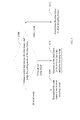
- FIG. 1 is a flowchart of a lossless compression coding method in the first embodiment of the present disclosure. The method includes the following steps:
- the input data is encoded per frame.
- a data frame is composed of several samples, and each sample has a value.
- a coder obtains the value of each sample after receiving a data frame.
- S102 Determine pulse samples and non-pulse samples in the input data frame according to the distribution of values of samples of the input data frame.
- a majority of samples in the data frame are centralized to a few values, and the values of only a few samples are different from the values of other samples.
- the samples are sorted into two types in this embodiment, and the two types of samples are encoded differently.
- the few samples, whose values are different from the values of other samples are called pulse samples, and the remaining samples are called non-pulse samples.
- the frequently occurring sample values may be predetermined according to the empirical data of the sample value distribution.
- the ITU-T G.711 standard uses A-law or ⁇ law to encode audios.
- the samples whose values are unequal to V0 and unequal to V1 in the input data frame are counted. If the number of such samples is less than a preset threshold K which is an integer greater than 1, such samples are determined as pulse samples, and the samples equal to V0 or V1 are determined as non-pulse samples. To ensure the coding efficiency, the value K is not very great; or further, the samples finally determined as pulse samples in the data frame do not exceed a specific proportion. The method of selecting the value K is detailed herein later.
- V0 and V1 may be determined in real time according to the distribution of the values of the samples of the input data frame.
- the input data frame "frame n " includes ten samples, and their values are 0222300420.
- the two sample values that occur the most frequently in this data frame are 0 and 2.
- the number of samples whose values are unequal to V0 and unequal to V1 is 2 (namely, the samples whose values are 3 or 4). If the number 2 is less than the preset threshold K, the two samples whose values are 3 or 4 are determined as pulse samples, and the samples whose values are 0 or 2 are determined as non-pulse samples.
- S103 Encode the determined pulse samples in the input frame in a first coding mode to obtain a first data stream; and encode the determined non-pulse samples in the input frame in a second coding mode to obtain a second data stream.
- the remaining non-pulse sample sequence is 02220020.
- the amplitude of each non-pulse sample may be encoded in the second coding mode.
- the non-pulse samples have two types of amplitudes. Therefore, 1 bit may be used to encode each non-pulse sample, namely, perform bi-level coding for the non-pulse samples. For example, the sample whose value is equal to 0 is encoded into 0, and the sample whose value is equal to 2 is encoded into 1. Therefore, after the non-pulse samples are encoded, the second data stream is 0 1 1 1 0 0 1 0, which includes 8 bits in total.
- the amplitude of a pulse sample and the relative position of the pulse sample in the original data frame may be encoded in the first coding mode, as detailed below:
- the dynamic range coding method in the prior art may be applied here to encode the pulse samples. For example, if the minimum value of the pulse sample is 3 and the maximum value of pulse sample is 4, 1 bit is required for encoding the difference between the minimum value and the maximum value, 2 bits are required for encoding the two pulse samples, and 2 extra bits are required for representing the minimum value "3", and therefore, a total of 4 bits are required for encoding the amplitudes of two pulse points in the frame n .
- the difference between the amplitude of a pulse sample and the amplitude of a non-pulse sample may be encoded, or the amplitude of the pulse sample is encoded in other modes.
- the natural binary coding mode is used as an example above. It is understandable to those skilled in the art that the coding mode for the amplitude of the pulse sample may be an entropy coding mode such as Huffman coding and Rice coding, which is not limited herein.
- the number b of bits required for encoding the position of the pulse sample is calculated.
- the two pulse samples are located in position 5 and position 8, and their position offset relative to the first sample are 4 and 7 respectively.
- "4" and "7" are encoded through 4 bits to obtain the position codes of the two pulse samples, namely, "0100" and "0111” respectively.
- the coding results of (1) and (2) above are multiplexed.
- the first data stream is as follows (it is assumed that the amplitudes of the pulse samples are encoded in the aforementioned first mode): [011][0100][100][0111].
- the brackets above are not real contents in the data stream, but are designed for clarity of description only.
- the first part [011] represents the amplitude of the first pulse sample
- the second part [0100] represents the relative position of the first pulse sample
- the third part [100] represents the amplitude of the second pulse sample
- the fourth part [01111] represents the relative position of the second pulse sample, totaling 14 bits.
- S104 Multiplex the first data stream and the second data stream to obtain an output coded data stream of the input data frame.
- the first data stream and the second data stream obtained in S103 are multiplexed.
- the multiplexing result is the output coded data stream of the frame n .
- the output coded data stream needs to carry the coding mode information of this data frame.
- the coding mode information indicates that the data frame is encoded in the first coding mode with the second coding mode, and the coding mode information is used by the decoder.
- the first data stream is null; the output coded data stream of the input data frame obtained after multiplexing of the first data stream and the second data stream is the second data stream. That is, only the non-pulse samples need to be encoded, and the code streams of the non-pulse samples are used as the output coded data streams of the data frame directly.
- the output coded data stream of this frame needs to carry the coding mode information of this data frame.
- the coding mode information that the data frame is encoded in the second coding mode, and the coding mode information is used by the decoder.
- the decoding method includes the following steps:
- the coded data stream is demultiplexed according to the multiplexing mode in S104 to obtain the first data stream and the second data stream.
- the second data stream "0 1 1 1 1 0 0 1 0" is decoded in the second coding mode, namely, the values 0 in the second data stream are decoded to 0 and the values 1 in the second data stream are decoded to 2 to obtain the decoded non-pulse sample sequence "0 2 220020".
- S107 Reconstruct the data frame according to the pulse sample information and the non-pulse sample information.
- the decoding process outputs 8 non-pulse samples, whose amplitudes are 0 2 2 2 0 0 2 0, and outputs two pulse samples, whose amplitudes are 3 and 4.
- the position offsets of the two pulse samples relative to the first sample in the frame are 4 and 7. That is, in the reconstructed data frame, the fifth sample is a pulse sample whose amplitude is 3, and the eighth sample is a pulse sample whose amplitude is 4. Then, the amplitudes of the eight pulse samples are written into the remaining positions of the reconstructed data frame. Finally, the reconstructed data frame is 0222300420.
- the decoder may know that the frame is encoded in the second coding mode according to the coding mode information of the data frame. Therefore, the first data stream of this frame is null, it is necessary to only decode amplitudes of all non-pulse samples in the second coding mode, and the amplitudes of the non-pulse samples are used directly to reconstruct the data frame.
- the technical solution in this embodiment improves the efficiency of compressing the data frame with a wide dynamic range, processes pulse samples and non-pulse samples separately, decreases the number of bits required for encoding each non-pulse sample significantly, and improves the efficiency of encoding non-pulse samples.
- the solution described in the first embodiment is applicable to the data frame, in which most samples are centralized to a few values and only a few samples have different values. In practice, many data frames to be encoded do not have such characteristics. For the data frames without such characteristics, other coding modes in the prior art may be applied. As shown in FIG. 3 , in the method provided in this embodiment, S201, S203, and S204 are the same as S101, S103, and S104 respectively. The only difference between the two embodiments is the judgment step S202. In S202, if it is impossible to determine pulse samples and non-pulse samples, S205 needs to be performed, and the output coded data stream of the input data frame is obtained through other coding modes such as dynamic range coding in the prior art.
- the following step is added between S201 and S202: Judge whether the sample value of the input data frame is a constant. If the sample value of the input data frame is a constant, encode the input data frame in the constant coding mode; if the sample value of the input data frame is not a constant, perform S202.
- the pulse samples and the non-pulse samples in an input data frame are determinable depends on the value of the threshold K. As mentioned in the first embodiment, to ensure the coding efficiency, the value K is not very great; or further, the samples finally determined as pulse samples in the data frame do not exceed a specific proportion.
- the value K is estimated according to the following inequality: K ⁇ (P-Q)/(a+b), where P is the number of bits required for encoding the entire data frame (L samples in total) in another coding method, Q is the number of bits required for encoding L-K samples in the bi-level coding method, "a” is the number of bits required for encoding the amplitude of a pulse, and "b” is the number of bits required for encoding the relative position of a pulse.
- the coding efficiency based on the coding scheme in this embodiment is almost the same as the coding efficiency based on the dynamic range coding scheme.
- the coding efficiency based on the coding scheme in this embodiment is higher, but the applicable scope is narrower.
- the characteristics of the data frame, the coder efficiency, and the complexity are taken into account altogether to determine the value of the threshold K.
- the non-pulse samples are encoded in the simple 0/1 bi-level coding mode, namely, 0 and 1 represent two non-pulse sample values. It is understandable to those skilled in the art that the non-pulse samples may be encoded in a run-length bi-level coding mode. Moreover, the run-length coding information may be further encoded through an entropy coding mode such as Huffman coding and Rice coding.
- FIG. 4 is a flowchart of a lossless compression coding method for G.711 code streams. The method includes the following steps:
- the coder obtains the value of each sample in the G.711 data frame after receiving the data frame.
- S302 Judge whether the value of the samples of the input data frame is a constant. If the value of the samples is not a constant, perform S303; if the value of the samples is a constant, perform S307.
- S303 Judge whether the number of samples whose values are unequal to positive zero or negative zero in the input data frame is less than 2. If the number of samples whose values are unequal to positive zero or negative zero in the input data frame is less than 2, perform S304; if the number of samples is greater than or equal to 2, perform S307.
- A-law or ⁇ law is used to encode audios.
- V0 be a positive zero
- V1 be a negative zero
- the range of the sample values of the G711 code stream is [0, 0xff].
- the positive zero defined by the A law is represented by 0xd5, and the negative zero defined by the A law is represented by 0x55; the positive zero defined by the ⁇ law is represented by 0xff, and the negative zero defined by the ⁇ law is represented by 0x7f.
- the threshold K is empirically set to 2, namely, when the number of samples whose values are unequal to positive zero or negative zero in the data frame is less than 2, the data frame is encoded according to the solution provided in this embodiment (S304 and subsequent steps); when the number of samples whose values are unequal to positive zero or negative zero in the data frame is greater than or equal to 2, the data frame is encoded in another coding mode (S307).
- S304 Judge whether the number of samples whose values are unequal to positive zero or negative zero in the input data frame is equal to 0. If the number of samples whose values are unequal to positive zero or negative zero in the input data frame is equal to 0, perform S305; if the number of such ample points is unequal to 0, perform S306.
- the data frame is encoded in the bi-level coding mode. If the change frequency of the sample value is high, the 0/1 bi-level coding mode may be applied, namely, the positive zero and the negative zero are encoded to 0 and 1 (or, 1 and 0). If the change frequency of the sample value is low, namely, a series of positive zeros or negative zeros occur frequently, the run-length bi-level coding method may be applied. The run-length bi-level coding method is described below.
- the sequential values of number of running more_value values and less_value values are calculated out as run-length coding information.
- the run-length coding information may be expressed as ((0xd5, 15), (0x55, 5), (0xd5, 18), (0x55, 2)).
- S305b Encode the run-length coding information.
- the number of running more_value values and the number of running less_value values may be encoded directly, or m-1 running 0s and the number of running more_value valuses may be used together as the run-length information, which is then encoded (m represents the number of running less_value values that occur in series after the more_value value).
- ((0xd5, 15), (0x55, 5), (0xd5, 18), and (0x55, 2)) may be further expressed as (15, 0, 0, 0, 0, 18, 0), where 15 represents the number of running more_value values, and the subsequent four 0 represent five running less_value values after the more_value value; 18 represents the number of running more_value values, and the subsequent one 0 represents two running less_value values after the more_value value.
- This embodiment uses the rice coding method to encode the run-length information.
- the parameter "s" of rice coding is estimated according to the run-length coding information, and then the coding based on the s parameter is performed for the information.
- the final coding result may be expressed as: rice_encode((15, 0, 0, 0, 0, 18, 0), s).
- the estimated s value also needs to be encoded in the natural binary coding mode or Huffman coding mode.
- the coding result of the s value and the coding result of the run-length coding information are multiplexed together as the coded output data stream of this data frame.
- the length of the input data frame is L
- L bits are required for encoding the entire data frame (without including the pulse samples) in the 0/1 bi-level coding mode. If it is predicted that the number of bits required for encoding in the run-length bi-level coding mode is less than L, the input data frame is encoded in the run-length bi-level coding mode. Otherwise, the 0/1 bi-level coding mode is applied.
- S306 Obtain the output coded data stream of the input data frame in the bi-level coding and pulse coding mode.
- the data frame is encoded in the bi-level coding and pulse coding mode.
- the non-pulse samples may be encoded in a way similar to S305.
- the amplitude and the relative position of each pulse sample need to be encoded.
- another coding mode (such as predictive coding, dynamic range coding, and constant coding) is applied according to the specific conditions of this frame to obtain the output coded data stream of the input data frame, and information indicative of the data frame coding mode is added into the output coded data stream.
- a lossless compression coding method for G.711 code streams is provided in an embodiment of the present disclosure.
- the data frames of the G.711 code stream are sorted into four types which employ different coding modes:
- the bi-level coding mode and the bi-level coding and pulse coding mode can reduce the bits of the output code data, and improve the coding efficiency.
- the decoding method includes the following steps:
- the decoder After receiving the coded data stream of a data frame, the decoder decodes the data frame to obtain the coding mode information which indicates the coding mode of the frame.
- the bi-level coding mode is differentiated from the bi-level coding and pulse coding mode according to the s value. If s is not equal to 0, it indicates that the data frame is encoded in the bi-level coding mode, and S309 needs to be performed; if s is equal to 0, it indicates that the data frame is encoded in the bi-level coding and pulse coding mode, and S310 needs to be performed. If the decoding result reveals that the data frame is encoded in other coding modes, S311 needs to be performed.
- the coded data stream is decoded to a sample sequence of positive zeros and negative zeros, and the sample sequence is used as the reconstructed data frame.
- S310 Reconstruct the data frame in the bi-level decoding and pulse decoding mode.
- the coded data stream is decoded to a sample sequence of positive zeros and negative zeros, and to the amplitude and the relative position of the pulse sample. Then, according to the relative position of the pulse sample, the pulse sample is combined into the sample sequence of positive zeros and negative zeros to obtain the reconstructed data frame.
- S311 Reconstruct the data frame in other decoding modes.
- the decoding method corresponding to other coding modes (such as predictive coding, dynamic range coding, and constant coding) in S307 is applied to obtain the reconstructed data frame.
- the embodiments of the present disclosure are based on this typical scenario: Most samples are centralized to two values. It is evident to those skilled in the art that: When most samples in the data frame are centralized to 1 values, 2 values, 3 values, 4 values, and so on, the technical solution under the present disclosure is also applicable. In such scenarios, the samples in the data frame are sorted into two types, namely, pulse samples and non-pulse samples, according to the distribution of the values of the samples of the data frame, and then the two types of samples are encoded respectively to improve the coding efficiency, which also falls within the protection scope of the present disclosure.
- the program may be stored in a computer-readable storage medium. When being executed, the program performs steps of the foregoing method embodiments.
- the storage medium may be any medium suitable for storing program codes, for example, Read Only Memory (ROM), Random Access Memory (RAM), magnetic disk, or Compact Disk (CD).
- the coding apparatus includes: an analyzing unit 410, a sample sorting unit 420, a first coding unit 430, a second coding unit 440, and a multiplexing unit 450.
- the analyzing unit 410 is adapted to obtain a value of each sample of an input data frame.
- the input data is encoded per frame.
- a data frame is composed of several samples, and each sample has a value.
- the coding apparatus After receiving the data frame, the coding apparatus obtains the value of each sample first through the analyzing unit 410.
- the sample sorting unit 420 is adapted to determine pulse samples and non-pulse samples in the input data frame according to the distribution of values of samples of the input data frame.
- a majority of samples in the data frame are centralized to a few values, and the values of only a few samples are different from the values of other samples.
- the samples are sorted into two types in this embodiment, and the two types of samples are encoded differently.
- the few samples, whose values are different from the values of other samples are called pulse samples, and the remaining samples are called non-pulse samples.
- the frequently occurring sample values may be predetermined according to the empirical data of the sample value distribution.
- the values of frequently occurring samples are determined in real time according to the distribution of the values of the samples of the input data frame.
- the sample sorting unit 420 may include: a bi-level determining sub-unit and a sample sorting sub-unit.
- the bi-level determining sub-unit is adapted to determine the two values V0 and V1 that occur the most frequently in the samples of the input data frame.
- the data frame (frame n ) includes ten samples whose values are 0, 2, 2, 2, 3, 0, 0, 4, 2, and 0.
- the most frequently occurring two sample values are 0 and 2. Therefore, let V0 be 0 and let V1 be 2.
- the sample sorting sub-unit sorts the samples into pulse samples and non-pulse samples. If the number of samples whose values are unequal to V0 and unequal to V1 in the input data frame is less than the preset threshold, the sample sorting sub-unit determines the samples whose values are unequal to V0 and unequal to V1 as pulse samples, and determines the samples whose values are equal to V0 or V1 as non-pulse samples. In the frame n , the number of samples whose values are unequal to V0 and unequal to V1 is 2 (namely, the samples whose values are 3 or 4). If 2 is less than the preset threshold K, the two samples whose values are 3 or 4 are determined as pulse samples, and the samples whose values are 0 or 2 are determined as non-pulse samples.
- the samples whose values are unequal to V0 and unequal to V1 are 0, because 0 is surely less than K, the samples whose values are equal to V0 or V1 are still determined as non-pulse samples, and it is deemed that the number of determined pulse samples is 0.
- the first coding unit 430 is adapted to encode the determined pulse samples in the input data frame in a first coding mode to obtain a first data stream.
- the pulse sample may be encoded in this way: encode the amplitude of the pulse sample and the relative position of the pulse sample in the original data frame in the first coding mode.
- the dynamic range coding method in the prior art may apply here to encode the pulse samples. For example, if the minimum value of the pulse sample is 3 and the maximum value of pulse sample is 4, 1 bit is required for encoding the difference between the minimum value and the maximum value, 2 bits are required for encoding the two pulse samples, and 2 extra bits are required for representing the minimum value "3", and therefore, a total of 4 bits are required for encoding the amplitudes of two pulse points in the frame n .
- the difference between the amplitude of a pulse sample and the amplitude of a non-pulse sample may be encoded, or the amplitude of the pulse sample is encoded in other modes.
- the natural binary coding mode is used as an example above. It is understandable to those skilled in the art that the first coding unit 430 may encode the amplitude of the pulse sample through an entropy coding mode such as Huffman coding and Rice coding, which is not limited herein.
- the number b of bits required for encoding the position of the pulse sample is calculated.
- the two pulse samples are located in position 5 and position 8, and their position offset relative to the first sample are 4 and 7 respectively.
- "4" and "7" are encoded through 4 bits to obtain the position codes of the two pulse samples, namely, "0100" and "0111” respectively.
- the coding results of (1) and (2) above are multiplexed.
- the first data stream is as follows (it is assumed that the amplitudes of the pulse samples are encoded in the aforementioned first mode): [011][0100][100][0111].
- the brackets above are not real contents in the data stream, but are designed for clarity of description only.
- the first part [011] represents the amplitude of the first pulse sample
- the second part [0100] represents the relative position of the first pulse sample
- the third part [100] represents the amplitude of the second pulse sample
- the fourth part [0111 represents the relative position of the second pulse sample, totaling 14 bits.
- the second coding unit 440 is adapted to encode the determined non-pulse samples in the input data frame in a second coding mode to obtain a second data stream.
- the non-pulse samples may be encoded in this way: encode the amplitude of each non-pulse sample in the second coding mode.
- the non-pulse samples have two types of amplitudes V0 and V1, 1 bit may be used to encode each non-pulse sample, namely, perform bi-level coding for the non-pulse samples.
- the multiplexing unit 450 is adapted to multiplex the first data stream and the second data stream to obtain an output coded data stream of the input data frame.
- the result of multiplexing the first data stream and the second data stream is the output coded data stream of the frame n . Nevertheless, the output coded data stream needs to carry the coding mode information of this data frame.
- the coding mode information indicates that the data frame is encoded in the first coding mode with the second coding mode, and the coding mode information is used by the decoder.
- the sample sorting unit 420 determines that the number of pulse samples is 0, the first data stream is null, and the output coded data stream of the input data frame after multiplexing of the first data stream and the second data stream is the second data stream.
- the output coded data stream of this frame needs to carry the coding mode information of this frame, and the coding mode information indicates that the frame is encoded in the second coding mode.
- the coding mode information is used by the decoder.
- a decoding apparatus is provided in an embodiment of the present disclosure. As shown in FIG. 7 , the decoding apparatus includes: an inputting unit 460, a first decoding unit 470, a second decoding unit 480, and a reconstructing unit 490.
- the inputting unit 460 is adapted to obtain a coded data stream of a data frame.
- the first decoding unit 470 is adapted to decode the coded data stream in a first coding mode to obtain pulse sample information of the data frame.
- the second decoding unit 480 is adapted to decode the coded data stream in a second coding mode to obtain non-pulse sample information of the data frame.
- the second data stream "0 1 1 1 1 0 0 1 0" in the coded data stream is decoded in the second coding mode, namely, the second decoding unit decodes the values 0 in the second data stream to 0 and decode the values 1 in the second data stream to 2 to obtain the decoded non-pulse sample sequence "0 2 2 2 0 0 2 0".
- the reconstructing unit 490 is adapted to reconstruct the data frame according to the pulse sample information and the non-pulse sample information.
- the first decoding unit 470 outputs eight non-pulse samples, whose amplitudes are 0 2 2 2 0 0 2 0, and the second decoding unit 480 outputs two pulse samples, whose amplitudes are 3 and 4.
- the position offsets of the two pulse samples relative to the first sample in the frame are 4 and 7. That is, in the reconstructed data frame, the fifth sample is a pulse sample whose amplitude is 3, and the eighth sample is a pulse sample whose amplitude is 4. Then, the amplitudes of the eight pulse samples are written into the remaining positions of the reconstructed data frame. Finally, the reconstructed data frame is0222300420.
- the reconstructing unit 490 uses the amplitudes of the non-pulse samples directly to reconstruct the data frame.
- the decoding apparatus sorts the samples in the data frame into two types, namely, pulse samples and non-pulse samples, then encodes the two types of samples separately, and finally multiplexes the coding results of the two types of samples to obtain the output coded code stream of the input data frame.
- the dynamic range of the non-pulse samples is controlled, the number of bits required for encoding each non-pulse sample is reduced, and the coding efficiency of the non-pulse samples is improved.
- few pulse samples which may increase the dynamic range of the entire data frame, few bits may be used to encode them separately.
- the technical solution under the present disclosure reduces the number of bits required for encoding the entire data frame, and improves the compression efficiency.
- the apparatus embodiments corresponding to the method embodiments are described briefly herein because the relevant contents can be derived from the method embodiments.
- the apparatus embodiments described above are for the exemplary purpose only.
- the units described as stand-alone components may be physically separated or not; and the components displayed as units may be physical units or not, namely, may be located in the same position or distributed on multiple network units.
- Some or all of the modules described above may be selected as required to fulfill the objectives of the technical solution under the present disclosure. Those skilled in the art can understand and implement the technical solution without making any creative effort.
Landscapes
- Engineering & Computer Science (AREA)
- Theoretical Computer Science (AREA)
- Computational Linguistics (AREA)
- Signal Processing (AREA)
- Health & Medical Sciences (AREA)
- Audiology, Speech & Language Pathology (AREA)
- Human Computer Interaction (AREA)
- Physics & Mathematics (AREA)
- Acoustics & Sound (AREA)
- Multimedia (AREA)
- Compression, Expansion, Code Conversion, And Decoders (AREA)
- Compression Or Coding Systems Of Tv Signals (AREA)
Priority Applications (1)
| Application Number | Priority Date | Filing Date | Title |
|---|---|---|---|
| EP12183174A EP2533427A1 (fr) | 2009-05-12 | 2010-05-12 | Procédé et appareil pour le codage et le décodage |
Applications Claiming Priority (2)
| Application Number | Priority Date | Filing Date | Title |
|---|---|---|---|
| CN200910138674 | 2009-05-12 | ||
| CN2009101518360A CN101615911B (zh) | 2009-05-12 | 2009-06-25 | 一种编解码方法和装置 |
Related Child Applications (1)
| Application Number | Title | Priority Date | Filing Date |
|---|---|---|---|
| EP12183174A Division-Into EP2533427A1 (fr) | 2009-05-12 | 2010-05-12 | Procédé et appareil pour le codage et le décodage |
Publications (2)
| Publication Number | Publication Date |
|---|---|
| EP2251981A1 true EP2251981A1 (fr) | 2010-11-17 |
| EP2251981B1 EP2251981B1 (fr) | 2012-10-24 |
Family
ID=41495372
Family Applications (2)
| Application Number | Title | Priority Date | Filing Date |
|---|---|---|---|
| EP12183174A Withdrawn EP2533427A1 (fr) | 2009-05-12 | 2010-05-12 | Procédé et appareil pour le codage et le décodage |
| EP10162750A Active EP2251981B1 (fr) | 2009-05-12 | 2010-05-12 | Procédé et appareil pour le codage et le décodage |
Family Applications Before (1)
| Application Number | Title | Priority Date | Filing Date |
|---|---|---|---|
| EP12183174A Withdrawn EP2533427A1 (fr) | 2009-05-12 | 2010-05-12 | Procédé et appareil pour le codage et le décodage |
Country Status (3)
| Country | Link |
|---|---|
| US (2) | US8571112B2 (fr) |
| EP (2) | EP2533427A1 (fr) |
| CN (1) | CN101615911B (fr) |
Families Citing this family (6)
| Publication number | Priority date | Publication date | Assignee | Title |
|---|---|---|---|---|
| US20100324913A1 (en) * | 2009-06-18 | 2010-12-23 | Jacek Piotr Stachurski | Method and System for Block Adaptive Fractional-Bit Per Sample Encoding |
| CN103634273A (zh) | 2012-08-21 | 2014-03-12 | 电信科学技术研究院 | 数据压缩发送及解压缩方法和设备 |
| US10015285B2 (en) * | 2013-03-14 | 2018-07-03 | Huawei Technologies Co., Ltd. | System and method for multi-stream compression and decompression |
| EP4134951B1 (fr) * | 2013-09-13 | 2024-07-24 | Samsung Electronics Co., Ltd. | Appareil de codage sans perte d'énergie |
| CN107945807B (zh) * | 2016-10-12 | 2021-04-13 | 厦门雅迅网络股份有限公司 | 基于静音游程的语音识别方法及其系统 |
| CN110086548A (zh) * | 2019-03-19 | 2019-08-02 | 上海林果实业股份有限公司 | 编码方法、编码设备、解码方法和解码设备 |
Citations (4)
| Publication number | Priority date | Publication date | Assignee | Title |
|---|---|---|---|---|
| GB2164817A (en) * | 1984-09-17 | 1986-03-26 | Nec Corp | Encoder with selective indication of compression encoding and decoder therefor |
| JPH01171324A (ja) * | 1987-12-25 | 1989-07-06 | Matsushita Electric Ind Co Ltd | 高能率符号化装置 |
| WO2000011648A1 (fr) * | 1998-08-24 | 2000-03-02 | Conexant Systems, Inc. | Vocoder faisant intervenir la detection d'une activite vocale pour le codage du bruit |
| WO2008058754A2 (fr) * | 2006-11-16 | 2008-05-22 | Fraunhofer-Gesellschaft zur Förderung der angewandten Forschung e.V. | Dispositif de codage et de décodage |
Family Cites Families (7)
| Publication number | Priority date | Publication date | Assignee | Title |
|---|---|---|---|---|
| GB9509831D0 (en) * | 1995-05-15 | 1995-07-05 | Gerzon Michael A | Lossless coding method for waveform data |
| US6260017B1 (en) * | 1999-05-07 | 2001-07-10 | Qualcomm Inc. | Multipulse interpolative coding of transition speech frames |
| US7328150B2 (en) * | 2002-09-04 | 2008-02-05 | Microsoft Corporation | Innovations in pure lossless audio compression |
| CN101494460B (zh) * | 2003-09-02 | 2012-07-11 | 日本电信电话株式会社 | 浮点信号的编码方法、解码方法及其编码器、解码器 |
| US7724838B2 (en) * | 2003-09-25 | 2010-05-25 | Qualcomm Incorporated | Hierarchical coding with multiple antennas in a wireless communication system |
| CN101312041B (zh) | 2004-09-17 | 2011-05-11 | 广州广晟数码技术有限公司 | 多声道数字音频编码设备及其方法 |
| EP2009623A1 (fr) * | 2007-06-27 | 2008-12-31 | Nokia Siemens Networks Oy | Codage de la parole |
-
2009
- 2009-06-25 CN CN2009101518360A patent/CN101615911B/zh active Active
-
2010
- 2010-05-12 EP EP12183174A patent/EP2533427A1/fr not_active Withdrawn
- 2010-05-12 US US12/778,644 patent/US8571112B2/en active Active
- 2010-05-12 EP EP10162750A patent/EP2251981B1/fr active Active
-
2013
- 2013-07-31 US US13/956,093 patent/US20140006036A1/en not_active Abandoned
Patent Citations (4)
| Publication number | Priority date | Publication date | Assignee | Title |
|---|---|---|---|---|
| GB2164817A (en) * | 1984-09-17 | 1986-03-26 | Nec Corp | Encoder with selective indication of compression encoding and decoder therefor |
| JPH01171324A (ja) * | 1987-12-25 | 1989-07-06 | Matsushita Electric Ind Co Ltd | 高能率符号化装置 |
| WO2000011648A1 (fr) * | 1998-08-24 | 2000-03-02 | Conexant Systems, Inc. | Vocoder faisant intervenir la detection d'une activite vocale pour le codage du bruit |
| WO2008058754A2 (fr) * | 2006-11-16 | 2008-05-22 | Fraunhofer-Gesellschaft zur Förderung der angewandten Forschung e.V. | Dispositif de codage et de décodage |
Non-Patent Citations (2)
| Title |
|---|
| "Digital cellular telecommunications system (Phase 2+); Universal Mobile Telecommunications System (UMTS); Mandatory Speech Codec speech processing functions AMR Wideband speech codec; Transcoding functions (3GPP TS 26.190 version 6.0.0 Release 6); ETSI TS 126 190", ETSI STANDARDS, LIS, SOPHIA ANTIPOLIS CEDEX, FRANCE, vol. 3-SA4, no. V6.0.0, 1 December 2004 (2004-12-01), XP014027744, ISSN: 0000-0001 * |
| "Pulse code modulation (PCM) of voice frequencies; G.711 (11/88)", ITU-T STANDARD IN FORCE (I), INTERNATIONAL TELECOMMUNICATION UNION, GENEVA, CH, no. G.711 (11/88), 25 November 1988 (1988-11-25), XP017400850 * |
Also Published As
| Publication number | Publication date |
|---|---|
| CN101615911B (zh) | 2010-12-08 |
| EP2533427A1 (fr) | 2012-12-12 |
| US8571112B2 (en) | 2013-10-29 |
| CN101615911A (zh) | 2009-12-30 |
| US20100290535A1 (en) | 2010-11-18 |
| EP2251981B1 (fr) | 2012-10-24 |
| US20140006036A1 (en) | 2014-01-02 |
Similar Documents
| Publication | Publication Date | Title |
|---|---|---|
| EP1400954B1 (fr) | Codage entropique par adaptation du mode de codage entre le codage à longueur de plage et le codage par niveau | |
| KR100489908B1 (ko) | 디지탈정보신호부호화방법및장치 | |
| EP2439737B1 (fr) | Procédé de codage et de décodage par compression, codeur, décodeur et dispositif de codage | |
| US6348879B1 (en) | Efficient coding of side information in a lossless encoder | |
| EP0955731A2 (fr) | Système de codage et de décodage sans pertes | |
| US8558724B2 (en) | Coding method, coding appartaus, decoding method, decoding apparatus, program, and recording medium | |
| EP2251981B1 (fr) | Procédé et appareil pour le codage et le décodage | |
| CN103067022A (zh) | 一种整型数据无损压缩方法、解压缩方法及装置 | |
| US6529551B1 (en) | Data efficient quantization table for a digital video signal processor | |
| JP2004258603A (ja) | レベル・モードとラン・レングス/レベル・モードの間での符号化を適応させるエントロピー符号化 | |
| JPH0773249B2 (ja) | 音声符号化・復号化伝送方式 | |
| CN101980464B (zh) | 数据编码方法、解码方法、编码器和解码器 | |
| US20070143118A1 (en) | Apparatus and method for lossless audio signal compression/decompression through entropy coding | |
| US9070362B2 (en) | Audio quantization coding and decoding device and method thereof | |
| CN121644825B (zh) | 一种基于有界整数序列和数据流融合的编码解码方法及装置 | |
| WO2009028793A1 (fr) | Procédé et dispositif pour coder et décoder le signal sinusoïdal de continuation d'un signal audio | |
| HK1154302B (en) | Entropy coding by adapting coding between level and run-length/level modes | |
| HK1152790B (en) | Entropy coding by adapting coding between level and run-length/level modes |
Legal Events
| Date | Code | Title | Description |
|---|---|---|---|
| PUAI | Public reference made under article 153(3) epc to a published international application that has entered the european phase |
Free format text: ORIGINAL CODE: 0009012 |
|
| 17P | Request for examination filed |
Effective date: 20100512 |
|
| AK | Designated contracting states |
Kind code of ref document: A1 Designated state(s): AL AT BE BG CH CY CZ DE DK EE ES FI FR GB GR HR HU IE IS IT LI LT LU LV MC MK MT NL NO PL PT RO SE SI SK SM TR |
|
| AX | Request for extension of the european patent |
Extension state: BA ME RS |
|
| 17Q | First examination report despatched |
Effective date: 20111021 |
|
| GRAP | Despatch of communication of intention to grant a patent |
Free format text: ORIGINAL CODE: EPIDOSNIGR1 |
|
| GRAS | Grant fee paid |
Free format text: ORIGINAL CODE: EPIDOSNIGR3 |
|
| GRAA | (expected) grant |
Free format text: ORIGINAL CODE: 0009210 |
|
| AK | Designated contracting states |
Kind code of ref document: B1 Designated state(s): AL AT BE BG CH CY CZ DE DK EE ES FI FR GB GR HR HU IE IS IT LI LT LU LV MC MK MT NL NO PL PT RO SE SI SK SM TR |
|
| REG | Reference to a national code |
Ref country code: GB Ref legal event code: FG4D |
|
| REG | Reference to a national code |
Ref country code: CH Ref legal event code: EP |
|
| REG | Reference to a national code |
Ref country code: AT Ref legal event code: REF Ref document number: 581374 Country of ref document: AT Kind code of ref document: T Effective date: 20121115 |
|
| REG | Reference to a national code |
Ref country code: IE Ref legal event code: FG4D |
|
| REG | Reference to a national code |
Ref country code: DE Ref legal event code: R096 Ref document number: 602010003289 Country of ref document: DE Effective date: 20121227 |
|
| REG | Reference to a national code |
Ref country code: SE Ref legal event code: TRGR |
|
| REG | Reference to a national code |
Ref country code: NL Ref legal event code: T3 |
|
| REG | Reference to a national code |
Ref country code: AT Ref legal event code: MK05 Ref document number: 581374 Country of ref document: AT Kind code of ref document: T Effective date: 20121024 |
|
| PG25 | Lapsed in a contracting state [announced via postgrant information from national office to epo] |
Ref country code: FI Free format text: LAPSE BECAUSE OF FAILURE TO SUBMIT A TRANSLATION OF THE DESCRIPTION OR TO PAY THE FEE WITHIN THE PRESCRIBED TIME-LIMIT Effective date: 20121024 Ref country code: HR Free format text: LAPSE BECAUSE OF FAILURE TO SUBMIT A TRANSLATION OF THE DESCRIPTION OR TO PAY THE FEE WITHIN THE PRESCRIBED TIME-LIMIT Effective date: 20121024 Ref country code: ES Free format text: LAPSE BECAUSE OF FAILURE TO SUBMIT A TRANSLATION OF THE DESCRIPTION OR TO PAY THE FEE WITHIN THE PRESCRIBED TIME-LIMIT Effective date: 20130204 Ref country code: IS Free format text: LAPSE BECAUSE OF FAILURE TO SUBMIT A TRANSLATION OF THE DESCRIPTION OR TO PAY THE FEE WITHIN THE PRESCRIBED TIME-LIMIT Effective date: 20130224 Ref country code: NO Free format text: LAPSE BECAUSE OF FAILURE TO SUBMIT A TRANSLATION OF THE DESCRIPTION OR TO PAY THE FEE WITHIN THE PRESCRIBED TIME-LIMIT Effective date: 20130124 |
|
| PG25 | Lapsed in a contracting state [announced via postgrant information from national office to epo] |
Ref country code: SI Free format text: LAPSE BECAUSE OF FAILURE TO SUBMIT A TRANSLATION OF THE DESCRIPTION OR TO PAY THE FEE WITHIN THE PRESCRIBED TIME-LIMIT Effective date: 20121024 Ref country code: PT Free format text: LAPSE BECAUSE OF FAILURE TO SUBMIT A TRANSLATION OF THE DESCRIPTION OR TO PAY THE FEE WITHIN THE PRESCRIBED TIME-LIMIT Effective date: 20130225 Ref country code: BE Free format text: LAPSE BECAUSE OF FAILURE TO SUBMIT A TRANSLATION OF THE DESCRIPTION OR TO PAY THE FEE WITHIN THE PRESCRIBED TIME-LIMIT Effective date: 20121024 Ref country code: PL Free format text: LAPSE BECAUSE OF FAILURE TO SUBMIT A TRANSLATION OF THE DESCRIPTION OR TO PAY THE FEE WITHIN THE PRESCRIBED TIME-LIMIT Effective date: 20121024 Ref country code: GR Free format text: LAPSE BECAUSE OF FAILURE TO SUBMIT A TRANSLATION OF THE DESCRIPTION OR TO PAY THE FEE WITHIN THE PRESCRIBED TIME-LIMIT Effective date: 20130125 Ref country code: LV Free format text: LAPSE BECAUSE OF FAILURE TO SUBMIT A TRANSLATION OF THE DESCRIPTION OR TO PAY THE FEE WITHIN THE PRESCRIBED TIME-LIMIT Effective date: 20121024 |
|
| PG25 | Lapsed in a contracting state [announced via postgrant information from national office to epo] |
Ref country code: AT Free format text: LAPSE BECAUSE OF FAILURE TO SUBMIT A TRANSLATION OF THE DESCRIPTION OR TO PAY THE FEE WITHIN THE PRESCRIBED TIME-LIMIT Effective date: 20121024 |
|
| PG25 | Lapsed in a contracting state [announced via postgrant information from national office to epo] |
Ref country code: CZ Free format text: LAPSE BECAUSE OF FAILURE TO SUBMIT A TRANSLATION OF THE DESCRIPTION OR TO PAY THE FEE WITHIN THE PRESCRIBED TIME-LIMIT Effective date: 20121024 Ref country code: BG Free format text: LAPSE BECAUSE OF FAILURE TO SUBMIT A TRANSLATION OF THE DESCRIPTION OR TO PAY THE FEE WITHIN THE PRESCRIBED TIME-LIMIT Effective date: 20130124 Ref country code: SK Free format text: LAPSE BECAUSE OF FAILURE TO SUBMIT A TRANSLATION OF THE DESCRIPTION OR TO PAY THE FEE WITHIN THE PRESCRIBED TIME-LIMIT Effective date: 20121024 Ref country code: EE Free format text: LAPSE BECAUSE OF FAILURE TO SUBMIT A TRANSLATION OF THE DESCRIPTION OR TO PAY THE FEE WITHIN THE PRESCRIBED TIME-LIMIT Effective date: 20121024 Ref country code: DK Free format text: LAPSE BECAUSE OF FAILURE TO SUBMIT A TRANSLATION OF THE DESCRIPTION OR TO PAY THE FEE WITHIN THE PRESCRIBED TIME-LIMIT Effective date: 20121024 |
|
| PG25 | Lapsed in a contracting state [announced via postgrant information from national office to epo] |
Ref country code: IT Free format text: LAPSE BECAUSE OF FAILURE TO SUBMIT A TRANSLATION OF THE DESCRIPTION OR TO PAY THE FEE WITHIN THE PRESCRIBED TIME-LIMIT Effective date: 20121024 Ref country code: RO Free format text: LAPSE BECAUSE OF FAILURE TO SUBMIT A TRANSLATION OF THE DESCRIPTION OR TO PAY THE FEE WITHIN THE PRESCRIBED TIME-LIMIT Effective date: 20121024 |
|
| PLBE | No opposition filed within time limit |
Free format text: ORIGINAL CODE: 0009261 |
|
| STAA | Information on the status of an ep patent application or granted ep patent |
Free format text: STATUS: NO OPPOSITION FILED WITHIN TIME LIMIT |
|
| 26N | No opposition filed |
Effective date: 20130725 |
|
| REG | Reference to a national code |
Ref country code: DE Ref legal event code: R097 Ref document number: 602010003289 Country of ref document: DE Effective date: 20130725 |
|
| PG25 | Lapsed in a contracting state [announced via postgrant information from national office to epo] |
Ref country code: CY Free format text: LAPSE BECAUSE OF FAILURE TO SUBMIT A TRANSLATION OF THE DESCRIPTION OR TO PAY THE FEE WITHIN THE PRESCRIBED TIME-LIMIT Effective date: 20121024 |
|
| PG25 | Lapsed in a contracting state [announced via postgrant information from national office to epo] |
Ref country code: MC Free format text: LAPSE BECAUSE OF FAILURE TO SUBMIT A TRANSLATION OF THE DESCRIPTION OR TO PAY THE FEE WITHIN THE PRESCRIBED TIME-LIMIT Effective date: 20121024 |
|
| REG | Reference to a national code |
Ref country code: IE Ref legal event code: MM4A |
|
| PG25 | Lapsed in a contracting state [announced via postgrant information from national office to epo] |
Ref country code: IE Free format text: LAPSE BECAUSE OF NON-PAYMENT OF DUE FEES Effective date: 20130512 |
|
| PG25 | Lapsed in a contracting state [announced via postgrant information from national office to epo] |
Ref country code: LT Free format text: LAPSE BECAUSE OF FAILURE TO SUBMIT A TRANSLATION OF THE DESCRIPTION OR TO PAY THE FEE WITHIN THE PRESCRIBED TIME-LIMIT Effective date: 20121024 |
|
| REG | Reference to a national code |
Ref country code: CH Ref legal event code: PL |
|
| PG25 | Lapsed in a contracting state [announced via postgrant information from national office to epo] |
Ref country code: CH Free format text: LAPSE BECAUSE OF NON-PAYMENT OF DUE FEES Effective date: 20140531 Ref country code: LI Free format text: LAPSE BECAUSE OF NON-PAYMENT OF DUE FEES Effective date: 20140531 |
|
| PG25 | Lapsed in a contracting state [announced via postgrant information from national office to epo] |
Ref country code: MT Free format text: LAPSE BECAUSE OF FAILURE TO SUBMIT A TRANSLATION OF THE DESCRIPTION OR TO PAY THE FEE WITHIN THE PRESCRIBED TIME-LIMIT Effective date: 20121024 |
|
| PG25 | Lapsed in a contracting state [announced via postgrant information from national office to epo] |
Ref country code: SM Free format text: LAPSE BECAUSE OF FAILURE TO SUBMIT A TRANSLATION OF THE DESCRIPTION OR TO PAY THE FEE WITHIN THE PRESCRIBED TIME-LIMIT Effective date: 20121024 |
|
| PG25 | Lapsed in a contracting state [announced via postgrant information from national office to epo] |
Ref country code: TR Free format text: LAPSE BECAUSE OF FAILURE TO SUBMIT A TRANSLATION OF THE DESCRIPTION OR TO PAY THE FEE WITHIN THE PRESCRIBED TIME-LIMIT Effective date: 20121024 |
|
| PG25 | Lapsed in a contracting state [announced via postgrant information from national office to epo] |
Ref country code: MK Free format text: LAPSE BECAUSE OF FAILURE TO SUBMIT A TRANSLATION OF THE DESCRIPTION OR TO PAY THE FEE WITHIN THE PRESCRIBED TIME-LIMIT Effective date: 20121024 Ref country code: HU Free format text: LAPSE BECAUSE OF FAILURE TO SUBMIT A TRANSLATION OF THE DESCRIPTION OR TO PAY THE FEE WITHIN THE PRESCRIBED TIME-LIMIT; INVALID AB INITIO Effective date: 20100512 Ref country code: LU Free format text: LAPSE BECAUSE OF NON-PAYMENT OF DUE FEES Effective date: 20130512 |
|
| REG | Reference to a national code |
Ref country code: FR Ref legal event code: PLFP Year of fee payment: 7 |
|
| REG | Reference to a national code |
Ref country code: FR Ref legal event code: PLFP Year of fee payment: 8 |
|
| REG | Reference to a national code |
Ref country code: FR Ref legal event code: PLFP Year of fee payment: 9 |
|
| PG25 | Lapsed in a contracting state [announced via postgrant information from national office to epo] |
Ref country code: AL Free format text: LAPSE BECAUSE OF FAILURE TO SUBMIT A TRANSLATION OF THE DESCRIPTION OR TO PAY THE FEE WITHIN THE PRESCRIBED TIME-LIMIT Effective date: 20121024 |
|
| REG | Reference to a national code |
Ref country code: FR Ref legal event code: PLFP Year of fee payment: 14 |
|
| P01 | Opt-out of the competence of the unified patent court (upc) registered |
Effective date: 20230524 |
|
| PGFP | Annual fee paid to national office [announced via postgrant information from national office to epo] |
Ref country code: NL Payment date: 20250409 Year of fee payment: 16 |
|
| PGFP | Annual fee paid to national office [announced via postgrant information from national office to epo] |
Ref country code: DE Payment date: 20250402 Year of fee payment: 16 |
|
| PGFP | Annual fee paid to national office [announced via postgrant information from national office to epo] |
Ref country code: FR Payment date: 20250401 Year of fee payment: 16 |
|
| PGFP | Annual fee paid to national office [announced via postgrant information from national office to epo] |
Ref country code: SE Payment date: 20250411 Year of fee payment: 16 |
|
| PGFP | Annual fee paid to national office [announced via postgrant information from national office to epo] |
Ref country code: GB Payment date: 20260325 Year of fee payment: 17 |