EP2252009B1 - Terminal de communication, système et procédé de communication, dispositif de sélection du relais et programme - Google Patents
Terminal de communication, système et procédé de communication, dispositif de sélection du relais et programme Download PDFInfo
- Publication number
- EP2252009B1 EP2252009B1 EP09717570.7A EP09717570A EP2252009B1 EP 2252009 B1 EP2252009 B1 EP 2252009B1 EP 09717570 A EP09717570 A EP 09717570A EP 2252009 B1 EP2252009 B1 EP 2252009B1
- Authority
- EP
- European Patent Office
- Prior art keywords
- communication
- relaying device
- user
- disclosure
- disclosure level
- Prior art date
- Legal status (The legal status is an assumption and is not a legal conclusion. Google has not performed a legal analysis and makes no representation as to the accuracy of the status listed.)
- Not-in-force
Links
Images










Classifications
-
- H—ELECTRICITY
- H04—ELECTRIC COMMUNICATION TECHNIQUE
- H04W—WIRELESS COMMUNICATION NETWORKS
- H04W88/00—Devices specially adapted for wireless communication networks, e.g. terminals, base stations or access point devices
- H04W88/02—Terminal devices
- H04W88/04—Terminal devices adapted for relaying to or from another terminal or user
-
- H—ELECTRICITY
- H04—ELECTRIC COMMUNICATION TECHNIQUE
- H04L—TRANSMISSION OF DIGITAL INFORMATION, e.g. TELEGRAPHIC COMMUNICATION
- H04L61/00—Network arrangements, protocols or services for addressing or naming
- H04L61/09—Mapping addresses
- H04L61/25—Mapping addresses of the same type
- H04L61/2503—Translation of Internet protocol [IP] addresses
- H04L61/2539—Hiding addresses; Keeping addresses anonymous
-
- H—ELECTRICITY
- H04—ELECTRIC COMMUNICATION TECHNIQUE
- H04L—TRANSMISSION OF DIGITAL INFORMATION, e.g. TELEGRAPHIC COMMUNICATION
- H04L63/00—Network architectures or network communication protocols for network security
- H04L63/04—Network architectures or network communication protocols for network security for providing a confidential data exchange among entities communicating through data packet networks
- H04L63/0407—Network architectures or network communication protocols for network security for providing a confidential data exchange among entities communicating through data packet networks wherein the identity of one or more communicating identities is hidden
-
- H—ELECTRICITY
- H04—ELECTRIC COMMUNICATION TECHNIQUE
- H04L—TRANSMISSION OF DIGITAL INFORMATION, e.g. TELEGRAPHIC COMMUNICATION
- H04L63/00—Network architectures or network communication protocols for network security
- H04L63/10—Network architectures or network communication protocols for network security for controlling access to devices or network resources
- H04L63/105—Multiple levels of security
Definitions
- the present invention relates to a communication terminal device, a communication system, a relaying-device selecting device, a communication method, and a program.
- a communication relaying device relays communication between a device of a user and a device of a communication destination without a direct communication therebetween when the user communicates with the communication destination, thereby concealing a communication identifier used for the communication by the user from the communication destination.
- Non-Patent Document 1 P. Srisuresh, "Traditional IP Network Address Translator (Traditional NAT)" RFC3022, January, 2001 .
- Non-Patent Document 1 discloses a communication system which uses a NAT (Network Address Translation) function as the communication relaying device.
- NAT Network Address Translation
- the NAT is a technology used in communication, to which IP (Internet Protocol) used for the Internet is applied, and translates a communication identifier for identifying a communication destination or a communication source. For example, a process to mutually translate a global IP address which is unique on the Internet and a local IP address which is unique within a division is performed.
- IP Internet Protocol
- a communication relaying device which uses the NAT relays communication when the device of the user communicates with the device of the communication destination in a case where the user has a local IP address, for example, and performs a process to translate the local IP address of the device of the user into a global IP address.
- WO 2007/002434A2 discloses a system for network address change for mobile devices.
- a router relays traffic between the mobile device and a mobile handler which is different from a host.
- the router does not select from among a plurality of relaying device and does not relay user attributes of the host to the mobile device.
- the temporary identity is used for the mobile handler to authenticate the mobile device.
- the temporary identity does not contribute to communications between the host and the mobile device.
- the temporary identity is comprised of a secret identifier and confidential information, in order to prevent spoofing.
- JP 2001-350733 A and JP 2003-316742 A relate to the technological background.
- a first problem is that an attribute of a user, such that the user belongs to which organization, could be guessed by a communication destination from a communication identifier of a communication relaying device itself which relays communication between the user and the communication destination.
- the communication relaying device can conceal a communication identifier of the user from the communication destination.
- the communication identifier of the communication relaying device cannot be concealed from the communication destination, so that user information could be guessed from the communication identifier of the communication relaying device itself.
- the communication relaying device considering that communication to which the IP is applied, the communication relaying device, the user, and the communication destination each use the IP address as the communication identifier. Allocation of the IP address is partly decided per organization, so that it is possible to determine which organization an IP address of the communication relaying device is allocated to. Further, because the user uses its communication relaying device, it is possible to determine that there is a high possibility that the user also belongs to its organization. In this way, it is guessed which organization the user belongs to. Furthermore, when the IP address can be translated into a domain name by DNS (Domain Name Service), it is also possible to determine location information such as country information from the domain name. Therefore, it is similarly guessed which country the user is in.
- DNS Domain Name Service
- a second problem is that the user cannot control a disclosure level on the attribute of the user, which is guessed by the communication destination from the communication identifier.
- the communication destination performs access control in accordance with a communication identifier of an access source, and permits to access only when the access source belongs to the same company as the communication destination, it is necessary to disclose to the communication destination that the user belongs to the same company. However, it is not necessary to disclose to the communication destination more detailed information than "company", such that the user belongs to which department within the company. In such a case, it is desirable that the user can perform control to disclose the attribute of the user to the communication destination at which level.
- the communication system using the conventional communication relaying device for example, if all users use the same communication relaying device or can freely use a communication relaying device independent of the organization, the first problem could be solved. However, in such a method, it is not possible that the user controls the disclosure level on the attribute of the user. Namely, it is not possible to solve the second problem.
- the present invention has been made to solve the problems as mentioned above, and aims to provide a communication terminal device, a communication system, a relaying-device selecting device, a communication method, and a program, which can perform communication while configuring a disclosure level on an attribute of a user to be disclosed to a communication destination to a designated disclosure level. This object is achieved with the features of the claims.
- a communication terminal device includes: a communication relaying device selecting means for selecting a communication relaying device corresponding to a disclosure level designated as a disclosure level on an attribute of a user from among disclosure levels in multiple steps, among a plurality of communication relaying devices capable of relaying communication to a communication destination terminal; and a communication means for communicating to the communication destination terminal through the communication relaying device selected by the communication relaying device selecting means.
- another communication terminal device includes: a communication relaying device existence/non-existence determining means for determining existence or non-existence of a communication relaying device corresponding to a disclosure level designated as a disclosure level on an attribute of a user from among disclosure levels in multiple steps, among a plurality of communication relaying devices capable of relaying communication to a communication destination terminal; a communication relaying device selecting means for selecting a communication relaying device corresponding to the designated disclosure level when it is determined that the communication relaying device corresponding to the designated disclosure level exists, and for selecting a communication relaying device corresponding to a disclosure level with a lower disclosure degree on the attribute of the user than the designated disclosure level when it is determined that the communication relaying device corresponding to the designated disclosure level does not exist; and a communication means for communicating to the communication destination terminal through the communication relaying device selected by the communication relaying device selecting means.
- another communication terminal device includes: a move schedule storing means for storing a move schedule of a user; a move schedule determining means for determining whether or not a date of the move schedule stored in the move schedule storing means has arrived; a communication relaying device selecting means for selecting, when it is determined that the date of the move schedule has not arrived, a communication relaying device corresponding to a disclosure level designated as a disclosure level on an attribute of the user from among disclosure levels in multiple steps, among a plurality of communication relaying devices capable of relaying communication to a communication destination terminal, and for selecting, when it is determined that the date of the move schedule has arrived, a communication relaying device corresponding to a disclosure level with a lower disclosure degree on the attribute of the user than the designated disclosure level among the plurality of communication relaying devices; and a communication means for communicating to the communication destination terminal through the communication relaying device selected by the communication relaying device selecting means.
- a communication system includes: a communication terminal device; and a plurality of communication relaying devices capable of relaying communication from the communication terminal device to a communication destination terminal, without disclosing a communication identifier of the communication terminal device to the communication destination terminal.
- Each communication relaying device corresponds to any one of disclosure levels in multiple steps on an attribute of a user.
- the communication terminal device includes: a communication relaying device selecting means for selecting a communication relaying device corresponding to a disclosure level designated from among the disclosure levels in multiple steps, among the plurality of communication relaying devices; and a communication means for communicating to the communication destination terminal through the communication relaying device selected by the communication relaying device selecting means.
- another communication system includes: a communication terminal device; and a plurality of communication relaying devices capable of relaying communication from the communication terminal device to a communication destination terminal, without disclosing a communication identifier of the communication terminal device to the communication destination terminal.
- Each communication relaying device corresponds to any one of disclosure levels in multiple steps on an attribute of a user.
- the communication terminal device includes: a communication relaying device existence/non-existence determining means for determining existence or non-existence of a communication relaying device corresponding to a disclosure level designated from among the disclosure levels in multiple steps, among the plurality of communication relaying devices; a communication relaying device selecting means for selecting a communication relaying device corresponding to the designated disclosure level when it is determined that the communication relaying device corresponding to the designated disclosure level exists, and for selecting a communication relaying device corresponding to a disclosure level with a lower disclosure degree on the attribute of the user than the designated disclosure level when it is determined that the communication relaying device corresponding to the designated disclosure level does not exist; and a communication means for communicating to the communication destination terminal through the communication relaying device selected by the communication relaying device selecting means.
- another communication system includes: a communication terminal device; and a plurality of communication relaying devices capable of relaying communication from the communication terminal device to a communication destination terminal, without disclosing a communication identifier of the communication terminal device to the communication destination terminal.
- Each communication relaying device corresponds to any one of disclosure levels in multiple steps on an attribute of a user.
- the communication terminal device includes: a move schedule storing means for storing a move schedule of the user; a move schedule determining means for determining whether or not a date of the move schedule stored in the move schedule storing means has arrived; a communication relaying device selecting means for selecting, when it is determined that the date of the move schedule has not arrived, a communication relaying device corresponding to a disclosure level designated from among the disclosure levels in multiple steps, among the plurality of communication relaying devices, and for selecting, when it is determined that the date of the move schedule has arrived, a communication relaying device corresponding to a disclosure level with a lower disclosure degree on the attribute of the user than the designated disclosure level among the plurality of communication relaying devices; and a communication means for communicating to the communication destination terminal through the communication relaying device selected by the communication relaying device selecting means.
- another communication system includes: a communication terminal device; a plurality of communication relaying devices capable of relaying communication from the communication terminal device to a communication destination terminal, without disclosing a communication identifier of the communication terminal device to the communication destination terminal; and a relaying-device selecting device that selects a communication relaying device for relaying the communication from the communication terminal device to the communication destination terminal from among the plurality of communication relaying devices.
- Each communication relaying device corresponds to any one of disclosure levels in multiple steps on an attribute of a user.
- the relaying-device selecting device selects a communication relaying device corresponding to a disclosure level designated from among the disclosure levels in multiple steps, among the plurality of communication relaying devices.
- the communication terminal device includes a communication means for communicating to the communication destination terminal through the communication relaying device selected by the relaying-device selecting device.
- a relaying-device selecting device includes selects, among a plurality of communication relaying devices capable of relaying communication from a communication terminal device to a communication destination terminal, a communication relaying device corresponding to a disclosure level designated as a disclosure level on an attribute of a user of the communication terminal device from among disclosure levels in multiple steps, and notifies the communication terminal device of a result of the selection.
- a communication method includes: a first step of selecting, among a plurality of communication relaying devices capable of relaying communication from a communication terminal device to a communication destination terminal, a communication relaying device corresponding to a disclosure level designated as a disclosure level on an attribute of a user of the communication terminal device from among disclosure levels in multiple steps; and a second step of communicating, by the communication terminal device, to the communication destination terminal through the communication relaying device selected at the first step.
- a program according to the present invention causes a computer to execute a process to select, among a plurality of communication relaying devices capable of relaying communication from a communication terminal device to a communication destination terminal, a communication relaying device corresponding to a disclosure level designated as a disclosure level on an attribute of a user of the communication terminal device from among disclosure levels in multiple steps.
- an example is described where an attribute of a user is disclosed from a user terminal (communication terminal device) to a communication destination terminal only at a disclosure level preliminarily configured in the user terminal upon performing communication from the user terminal to the communication destination terminal.
- the user terminal selects a suitable communication relaying device from among a plurality of communication relaying devices in accordance with the configured disclosure level, and performs communication from the user terminal to the communication destination terminal through the selected communication relaying device.
- Fig. 1 is a block diagram showing a configuration of a communication system 100 according to the first exemplary embodiment.
- the communication system 100 includes a user terminal (communication terminal device) 300, a communication destination terminal 501 which is a communication destination of the user terminal 300, and a plurality of (e.g. three) communication relaying devices 401, 402 and 403 which relay communication from the user terminal 300 to the communication destination terminal 501.
- a user terminal communication terminal device
- a communication destination terminal 501 which is a communication destination of the user terminal 300
- a plurality of (e.g. three) communication relaying devices 401, 402 and 403 which relay communication from the user terminal 300 to the communication destination terminal 501.
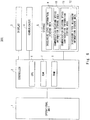
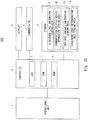
- Fig. 2 is a block diagram showing a configuration of the user terminal 300.
- the user terminal 300 includes an operational unit (operational means) 1 which accepts operation by a user, a controller 2, a display 3 which performs various display actions, a communicator (communication means) 4 which performs communication with the communication relaying devices 401 to 403, and a storage 5 which stores data.
- an operational unit operation means 1 which accepts operation by a user
- a controller 2 controls the display 3
- a communicator 4 which performs communication with the communication relaying devices 401 to 403
- a storage 5 which stores data.
- the controller 2 includes a CPU (Central Processing Unit) 6 which performs various control actions, a ROM (Read Only Memory) 7 which stores a program for the actions of the CPU 6 or the like, and a RAM (Random Access Memory) 8 which operates as a work area of the CPU 6 or the like.
- a CPU Central Processing Unit
- ROM Read Only Memory
- RAM Random Access Memory
- the control actions performed by the CPU 6 in the controller 2 include display control to make the display 3 perform the display actions, communication control to make the communicator 4 perform the communication, storage control to make the storage 5 store the data and the like, in addition to control to select the communication relaying device.
- the storage 5 includes a disclosure level storing area 9, a communication relaying device information storing area 10, and a communication relaying device configuration information storing area 11.
- the disclosure level storing area (disclosure level storing means) 9 stores and holds information which indicates a disclosure level configured (designated) by the user.
- the communication relaying device information storing area (communication relaying device information storing means) 10 stores and holds a correspondence table (refer to Fig. 4 ) between an IP address as a communication identifier of each of the communication relaying devices 401 to 403, and the disclosure level.
- the communication relaying device configuration information storing area (communication relaying device identifier storing means) 11 stores and holds an IP address of a communication relaying device corresponding to the disclosure level configured by the user (any one of the communication relaying devices 401 to 403).
- Fig. 3 is a diagram showing a configuration of each of the communication relaying devices 401 to 403.
- each of the communication relaying devices 401 to 403 includes a controller 412 which performs control actions, and a communicator 414 which performs communication.
- the controller 412 includes a CPU 416 which performs various control actions, a ROM 417 which stores a program for the actions of the CPU 416 or the like, and a RAM 418 which operates as a work area of the CPU 416 or the like.
- the control actions performed by the CPU 416 in the controller 412 includes communication control to make the communicator 414 perform the communication and the like.
- any one of three levels “Non-disclosure”, “Company”, and “Department”, for example, can be selected by user operation.
- Non-disclosure means that the attribute of the user is not disclosed at all to the communication destination.
- the disclosure level "company” means that the company that the user belongs to may be made known (or guessed) by the communication destination.
- the disclosure level "department” means that the company and department that the user belongs to may be made known (or guessed) by the communication destination.
- the disclosure levels are hierarchical. If an attribute of the user at a disclosure level in a low hierarchy can be known, an attribute of the user at a disclosure level in an upper hierarchy can be also known. For example, “Company” is in an upper hierarchy than “Department”, and “Department” is in a lower hierarchy than "company”. Therefore, from the attribute of the user at the disclosure level "Department”, not only the department that the user belongs to, but also the company that the user belongs to can be known.
- hierarchies of the disclosure levels are "Non-disclosure”, “company”, and “department” in order from the highest hierarchy.
- each disclosure level is associated with each of the communication relaying devices 401 to 403 (e.g. on one-to-one basis).
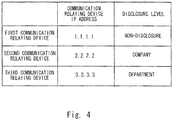
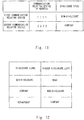
- Fig. 4 is a diagram showing a correspondence between the first to third communication relaying devices 401 to 403, and their IP addresses and disclosure levels.
- the first communication relaying device 401 of which IP address is "1.1.1.1”, corresponds to the disclosure level "Non-disclosure”.
- the second communication relaying device 402, of which IP address is "2.2.2.2" corresponds to the disclosure level "Company”.
- the third communication relaying device 403, of which IP address is "3.3.3.3”, corresponds to the disclosure level " department".
- IP addresses "1.1.1.1”, “2.2.2.2”, and “3.3.3.3” of the first to third communication relaying devices 401 to 403 are obviously the convenient ones for simplifying the description.
- the first communication relaying device 401 is the one which can be accessed from any user. That is, it can be accessed not only from users who belong to a certain specific company, but also from an unspecified number of other users. Accordingly, the communication destination terminal 501 (user thereof), which has received data through the first communication relaying device 401, cannot know the attribute of the user who is a transmission source of the data.
- the user of the communication destination terminal 501 can know the IP address of the first communication relaying device 401 (e.g. "1.1.1.1” as shown in Fig. 4 ), but cannot know the attribute of the user who is the transmission source of the data, because the first communication relaying device 401 can be accessed from everyone.
- the IP address of the first communication relaying device 401 e.g. "1.1.1.1” as shown in Fig. 4
- the attribute of the user who is the transmission source of the data because the first communication relaying device 401 can be accessed from everyone.
- the user terminal 300 selects the first communication relaying device 401, which performs communication without disclosing any attribute of the user to the communication destination, and transmits data to the communication destination terminal 501 through the first communication relaying device 401 selected.
- the second communication relaying device 402 is the one which can be accessed only from users who belong to a certain company "A". Therefore, users who do not belong to the company "A" cannot access the second communication relaying device 402. Note that the second communication relaying device 402 can be accessed from anyone who belongs to the company "A", regardless of the department within the company "A” to which the user belongs.
- the "access” means that the user terminal 300 connects to the communication relaying devices 401 to 403 in order to transmit data to the communication destination terminal 501. Assume that the "access” does not include that the communication destination terminal 501 receives the data from the communication relaying devices 401 to 403.
- the communication destination terminal 501 (user thereof), which has received the data through the second communication relaying device, can find out that the user who is the transmission source of the data belongs to the company "A".
- the user of the communication destination terminal 501 can know that the user who is the transmission source of the data is the one who belongs to the company "A", from the IP address of the second communication relaying device 402 (e.g. "2.2.2.2" as shown in Fig. 4 ).
- the user terminal 300 selects the second communication relaying device 402, which performs communication so at to disclose the company to which the user belongs to the communication destination, and transmits data to the communication destination terminal 501 through the second communication relaying device 402 selected.
- the third communication relaying device 403 is the one which can be accessed only from users who belong to a certain department "AA" within a certain company "A". Therefore, the third communication relaying device 403 cannot be accessed from users who do not belong to the department "AA", even if the users belong to the company "A".
- the communication destination terminal 501 (user thereof), which has received the data through the third communication relaying device 403, can find out that the user who is the transmission source of the data belongs to the department "AA" within the company "A".
- the user of the communication destination terminal 501 can know that the user who is the transmission source of the data is the one who belongs to the department "AA" within the company "A”, from the IP address of the third communication relaying device 403 (e.g. "3.3.3.3” as shown in Fig. 4 ).
- the user terminal 300 selects the third communication relaying device 403, which performs communication so as to disclose the department to which the user belongs to the communication destination, and transmits data to the communication destination terminal 501 through the third communication relaying device 403 selected.
- IP addresses of communication relaying devices used at the company "A” range from one number to another number, and that, within the range, IP addresses of communication relaying devices used at the department "AA" range from one number to another number.
- IP addresses of communication relaying devices used at the company "A” range from one number to another number
- a list indicating its contents is publicly distributed, so that its contents can be known by not only users belonging to the company "A” but also other users, for example.
- IP addresses of communication relaying devices used at the department "AA” range from one number to another number
- a list indicating its contents can be known by workers in the company "A”, for example.
- the user of the communication destination terminal 501 can know the attribute of the user, from the IP address of the communication relaying device.
- Fig. 5 is a flowchart showing operation of the controller 2 in the user terminal 300.
- the CPU 6 in the controller 2 monitors configuring operation of the disclosure level with respect to the operational unit 1 (Step S1).
- the CPU 6 in the controller 2 detects its operation (Yes at Step S1), and stores information which indicates the disclosure level configured by its operation in the disclosure level information storing area 9 in the storage 5 (Step S2).
- the CPU 6 in the controller 2 selects an IP address in accordance with the disclosure level, and stores the selected IP address in the communication relaying device configuration information storing area 11.
- the CPU 6 refers to the correspondence table shown in Fig. 4 to acquire an IP address corresponding to the disclosure level newly stored in the disclosure level information storing area 9, and stores the acquired IP address in the communication relaying device configuration information storing area 11 (Step S3).
- the disclosure level stored in the disclosure level information storing area 9 is "Non-disclosure"
- the IP address corresponding to this disclosure level is "1.1.1.1”. Therefore, the CPU 6 stores this IP address "1.1.1.1” in the communication relaying device configuration information storing area 11.
- the disclosure level stored in the disclosure level information storing area 9 is "Company”
- the IP address corresponding to this disclosure level is "2.2.2.2”. 4. Therefore, the CPU 6 stores this IP address "2.2.2.2" in the communication relaying device configuration information storing area 11.
- the disclosure level stored in the disclosure level information storing area 9 is "Department”
- the IP address corresponding to this disclosure level is "3.3.3.3”. Therefore, the CPU 6 stores this IP address "3.3.3.3” in the communication relaying device configuration information storing area 11.
- the controller 2 operates as a communication relaying device selecting means.
- the CPU 6 in the controller 2 monitors, when not detecting the configuring operation of the disclosure level (No at Step S1), whether or not operation to transmit the data to the communication destination terminal 501 is performed on the operational unit 1 (Step S4).
- the CPU 6 in the controller 2 detects its operation (Yes at Step S4), and acquires the IP address (any one of "1.1.1.1”, “2.2.2.2”, and "3.3.3.3”) stored in the communication relaying device configuration information storing area 11 (Step S5).
- this IP address is the one of the communication relaying device corresponding to the disclosure level preliminarily configured by the user.
- the CPU 6 outputs a command to the communicator 4, thereby making the communicator 4 transmit the data to the communication destination terminal 501 through the communication relaying device having the IP address acquired at the preceding Step S5 (Step S6).
- the communicator 4 which has received the command from the CPU 6, uses the IP address acquired by the CPU 6 at the preceding Step S5, and transmits the data to the communication relaying device having the IP address.
- IP address of the communication destination terminal 501 is e.g. "20.20.20.20”. Note that this IP address "20.20.20.20” is also the convenient one for simplifying the description.
- the communicator 4 Upon the data transmission at Step S6, the communicator 4 also transmits the IP address "20.20.20.20" of the communication destination terminal 501 to the communication relaying device having the IP address acquired at the preceding Step S5, in addition to the data to be transmitted.
- the CPU 416 in the communication relaying device which has received the data transmitted from the communicator 4 to the communication destination terminal 501, firstly performs a process to replace an IP address (communication identifier) of the user terminal 300 described in a part which indicates an IP address of a data transmission source in a header of the data, by the IP address of the communication relaying device.
- IP address communication identifier
- the CPU 416 in the communication relaying device transmits a command to the communicator 414, and replaces the IP address of the communication relaying device described in a part which indicates an IP address of a data destination in the header of the data, by the IP address received together with the data, in other words, the IP address "20.20.20.20" of the communication destination terminal 501, thereby making the communicator 414 transmit the data to the communication destination terminal 501.
- the data is transmitted from the user terminal 300 to the communication destination terminal 501 through any one of the communication relaying devices. Further, at this time, the IP address of the communication relaying device is known from the received data at the communication destination device 501, but the IP address of the user terminal 300 which is the data transmission source is not known.
- the IP address of the user terminal 300 which is the data transmission source is prevented from being disclosed to the communication destination terminal 501.
- the communication destination terminal 501 can find out the attribute of the user who is the data transmission source, as far as can be known from the IP address of the communication relaying device which has relayed the data.
- Step S1 the processes are repeated from Step S1, after Step S3, after Step S6, and when it is determined that the operation to transmit the data to the communication destination terminal 501 has not been performed on the operational unit 1 at Step S4.
- the user terminal 300 includes the controller 2 operating as the communication relaying device selecting means which selects the communication relaying device corresponding to the disclosure level designated as the disclosure level on the attribute of the user from among disclosure levels in multiple steps, among the plurality of communication relaying devices 401 to 403 capable of relaying communication to the communication destination terminal 501, and the communicator 4 as the communication means which communicates to the communication destination terminal 501 through the communication relaying device selected by the controller 2. Therefore, it is possible to perform communication while configuring the disclosure level on the attribute of the user to be disclosed to the communication destination to the designated disclosure level.
- the attribute of the user itself which the user does not want to disclose to the communication destination can be concealed from the communication destination.
- the user terminal 300 does not directly communicate with the communication destination terminal 501. This makes it possible to prevent the user of the communication destination terminal 501 from knowing the IP address of the user terminal 300. Thus, it is possible to prevent a problem that the attribute of the user is guessed in more detail than necessary from the IP address of the user terminal 300.
- the disclosure level when the disclosure level is configured to "Non-disclosure” for example, it is possible to transmit the data without disclosing the attribute of the user at all. Further, when the disclosure level is configured to "Company”, it is possible to transmit the data without disclosing which department the user belongs to, while disclosing which company the user belongs to. Furthermore, when the disclosure level is configured to "department”, it is possible to transmit the data while disclosing which company the user belongs to.
- the disclosure level on the attribute of the user which is guessed by the communication destination from the communication identifier can be controlled by designating the disclosure level.
- the example where the data is transmitted from the user terminal 300 to the communication destination terminal 501 at the disclosure level configured at the user terminal 300 has been described.
- a reception of the data may be refused at the communication destination terminal 501.
- the communication destination terminal 501 notifies, upon refusing to receive the data, a refusal notification indicating the refusal of the reception of the data, to the user terminal 300, which is the data transmission source, through the communication relaying device having relayed the data.
- the operation to retransmit the data by configuring a lower disclosure level can be easily performed as described in detail bellow.
- Fig. 6 is a block diagram showing a configuration of the user terminal 300 in the case of the second exemplary embodiment.
- the user terminal 300 in the case of this exemplary embodiment is different from the above-mentioned first exemplary embodiment in that the storage 5 includes a disclosure level hierarchy information storing area 12.
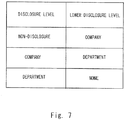
- Fig. 7 is a diagram showing an example of disclosure level hierarchy information stored in the disclosure level hierarchy information storing area 12.
- each disclosure level is stored in association with a one-step lower disclosure level (with a one-step higher disclosure degree) than each disclosure level.
- the disclosure levels are hierarchical. As shown in Fig. 7 , a one-step lower disclosure level than “Non-disclosure” is “Company”, and a one-step lower disclosure level than “Company” is “Department”.
- the disclosure levels are three steps of “Non-disclosure”, “Company”, and “department”, and a disclosure level lower than “Department” does not exist. Therefore, the communication destination terminal 501 does not transmit the refusal notification, upon receiving the data from the third communication relaying device 403.
- Fig. 8 is a block diagram showing a configuration of each of the communication relaying devices 401 to 403 in the case of the second exemplary embodiment.
- each of the communication relaying devices 401 to 403 in the case of this exemplary embodiment is different from the above-mentioned first exemplary embodiment in including a storage 415 which stores data.
- the storage 415 includes an IP address storing area 420 in which the IP address of the user terminal 300 which is the data transmission source is stored in association with the IP address of the communication destination terminal 501 which is the data destination.
- Fig. 9 is a flowchart showing a flow of operation of the user terminal 300 in the case of the second exemplary embodiment.
- the CPU 416 in the first communication relaying device 401 stores the IP address of the user terminal 300 which is the data transmission source in the IP address storing area 420 in association with the IP address of the communication destination terminal 501 which is the data transmission destination, upon relaying the data transmission from the user terminal 300, and then controls the communicator 414 to transmit the data to the communication destination terminal 501 as with the above-mentioned first exemplary embodiment.
- the communication destination terminal 501 to which the data is transmitted, does not accept the data transmission from the user being in "Non-disclosure", and thus transmits a refusal notification indicating non-acceptance of the data transmission to the first communication relaying device 401.
- the first communication relaying device 401 which has received the refusal notification, transfers the refusal notification to the user terminal 300 which is the data transmission source.
- the CPU 416 in the first communication relaying device 401 having received the refusal notification refers to the IP address storing area 420 to acquire an IP address corresponding to the IP address of the communication destination terminal 501, in other words, the IP address of the user terminal 300, and controls the communicator 411 to transmit the refusal notification to the user terminal 300 by using the acquired IP address.
- the CPU 6 in the controller 2 monitors whether or not the communicator 4 receives the refusal notification (Step S11 in Fig. 9 ).
- the CPU 6 makes the display 3 display a selection screen which prompts the user to select whether or not to permit data transmission at a one-step lower disclosure level (a disclosure level with a one-step higher disclosure degree) (Step S12), and monitors the user operation (Step S13). That is, the controller 2 operates as a disclosure degree enhancement inquiring means.
- the CPU 6 detects the operation (Yes at Step S13).
- the CPU 6 performs a process to acquire an IP address of a communication relaying device for retransmission of the data.
- the CPU 6 firstly determines, based on the IP address of the communication relaying device having transferred the refusal notification at the preceding Step S11, a disclosure level corresponding to the communication relaying device.
- the first communication relaying device 400 has transferred the refusal notification. Therefore, the CPU 6 refers to the correspondence table ( Fig. 4 ) stored in the communication relaying device information storing area 10 to determine a disclosure level corresponding to the IP address 1.1.1.1". As shown in Fig. 4 , the disclosure level corresponding to the IP address "1.1.1.1” is "Non-disclosure", and thus the CPU 6 recognizes it.
- the CPU 6 refers to the correspondence table ( Fig. 7 ) stored in the disclosure level hierarchy information storing area 12 to determine a one-step lower disclosure level than "Non-disclosure". As shown in Fig. 7 , the one-step lower disclosure level than "Non-disclosure” is "Company”, and thus the CPU 6 recognizes it.
- the CPU 6 again refers to the correspondence table ( Fig. 4 ) stored in the communication relaying device information storing area 10 to determine an IP address corresponding to the disclosure level "Company". As shown in Fig. 4 , the IP address corresponding to the disclosure level "Company” is "2.2.2.2", and thus the CPU 6 recognizes it.
- the CPU 6 acquires the IP address "2.2.2.2" of the communication relaying device for the retransmission of the data (hereinbefore, Step S14).
- the CPU6 acquires the IP address of the communication relaying device corresponding to the one-step lower disclosure level than that of the communication relaying device which is the transfer source of the refusal notification, by referring to the correspondence table ( Fig. 4 ) stored in the communication relaying device information storing area 10 and the correspondence table ( Fig. 7 ) stored in the IP address storing area 12 for the retransmission.
- the CPU 6 outputs a command to the communicator 4, thereby making the communicator 4 retransmit the data to the communication destination terminal 501 through the communication relaying device (that is, second communication relaying device 402, for example) having the IP address acquired at the preceding Step S 14 (Step S15).
- the communication relaying device that is, second communication relaying device 402, for example
- the communicator 4 which has received the command from the CPU 6, uses the IP address "2.2.2.2" acquired by the CPU 6 at the preceding Step S14, and transmits the data to the second communication relaying device 402 which is the one having the IP address.
- the communicator 4 Upon this data transmission, the communicator 4 also transmits the IP address "20.20.20.20" of the communication destination terminal 501 to the second communication relaying device 402 which is the one having the IP address acquired at the preceding Step S5, in addition to the data to be transmitted.
- the second communication relaying device 402 which has received the data transmitted from the communicator 4 to the communication destination terminal 501, transmits the received data to the communication destination terminal 501 by using the IP address received together with the data, in other words, the IP address "20.20.20.20" of the communication destination terminal 501.
- the user terminal 300 can transmit the data to the communication destination terminal 501 through the second communication relaying device 402 corresponding to the disclosure level lower than that corresponding to the first communication relaying device 401 which has relayed the data at first.
- the attribute of the user can be known at the disclosure level "Company" in the communication destination terminal 501, so that the access of the data transmitted from the user terminal 300 is prevented from being refused due to the access control in the communication destination terminal 501.
- Step S13 when the user performs operation not to permit the data transmission at the one-step lower disclosure level and the CPU 6 detects the operation upon the determination at Step S13 (No at Step S13), the processes are repeated from Step S11. That is, in this case, the retransmission of the data is not performed.
- Step S11 when the communicator 4 has not received the refusal notification (No at Step S11), the process moves to Step S1.
- Processes at Steps S1 to S6 are similar to those in the above-mentioned first exemplary embodiment, and thus its description is omitted. However, in this exemplary embodiment, the processes are repeated from Step S11, after Step S3, after Step S6, and when it is determined that the operation to transmit the data to the communication destination terminal 501 has not been performed on the operational unit 1 at Step S4 (No at Step S4).
- the transfer source of the refusal notification is the first communication relaying device 401
- the CPU 6 can recognize that a disclosure level which corresponds to the IP address "2.2.2.2" of the transfer source is "Company” as shown in Fig. 4 , and then can recognize that a one-step lower disclosure level than "Company” is "department” as shown in Fig. 7 , and thus can recognize that an IP address which corresponds to the disclosure level "Department” is "3.3.3.3” as shown in Fig. 4 and can retransmit data by using its IP address "3.3.3.3".
- the operation to retransmit the data by configuring the lower disclosure level can be easily performed at the user terminal 300, when the reception of the data is refused at the communication destination terminal 501.
- a disclosure level higher than the configured disclosure level (a disclosure level with a low disclosure degree) to transmit data when the communication relaying device which corresponds to the disclosure level configured by the user does not exist.
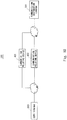
- Fig. 10 is a block diagram showing a configuration of the communication system 100 in a case of the third exemplary embodiment.
- the communication system 100 includes only the first and second communication relaying devices 401 and 402 as the communication relaying devices.
- the third communication relaying device 403 which is included in the communication system 100 in Fig. 1 , is not included.
- each of the first and second communication relaying devices 401 and 402 is similar to that in the above-mentioned first exemplary embodiment ( Fig. 3 ).
- the block configuration of the user terminal 300 is similar to that in the above-mentioned second exemplary embodiment ( Fig. 5 ).
- a correspondence table which is stored in the communication relaying device information storing area 10 is different from that of the above-mentioned first and second exemplary embodiments, because the communication system 100 does not include the third communication relaying device 403.
- Fig. 11 is a diagram showing the correspondence table stored in the communication relaying device information storing area 10 in the case of the third exemplary embodiment.
- the correspondence table stored in the communication relaying device information storing area 10 in the case of this exemplary embodiment is different from that in the above-mentioned first and second exemplary embodiments, in that the field for the third communication relaying device 403 does not exit.
- disclosure level hierarchy information which is stored in the disclosure level hierarchy information storing area 12 is different from that of the above-mentioned second exemplary embodiment.
- Fig. 12 is a diagram showing an example of the disclosure level hierarchy information stored in the disclosure level hierarchy information storing area 12 in the case of the third exemplary embodiment.
- each disclosure level is stored in association with a one-step higher disclosure level (with a one-step lower disclosure degree) than each disclosure level.
- a one-step higher disclosure level than “department” is “Company”
- a one-step higher disclosure level than “Company” is “Non-disclosure”. Note that a disclosure level higher than “Non-disclosure” does not exist.
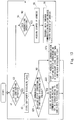
- Fig. 13 is a flowchart showing operation of the user terminal 300 in the case of the third exemplary embodiment.
- the CPU 6 in the controller 2 monitors the configuring operation of the disclosure level on the operational unit 1 (Step S1).
- the CPU 6 in the controller 2 detects the operation (Yes at Step S1), and stores the information which indicates the disclosure level configured by the operation in the disclosure level information storing area 9 in the storage 5 (Step S2).
- the disclosure level information storing area 9 in the storage 5 stores information indicating that the configured disclosure level is "Department" therein.
- the CPU 6 in the controller 2 determines whether or not a communication relaying device which corresponds to the disclosure level configured by the user at the preceding Step S1 exists, by referring to the correspondence table in Fig. 11 (Step S21). That is, the controller operates as a communication relaying device existence/non-existence determining means.
- the CPU 6 acquires an IP address of a communication relaying device corresponding to a one-step higher disclosure level than the configured disclosure level, and stores the acquired IP address in the communication relaying device configuration information storing area 11 (Step S23).
- the CPU 6 can recognize that the one-step higher disclosure level than the disclosure level "Department” is "Company” by referring to the correspondence table in Fig. 12 , and further can recognize that an IP address of a communication relaying device which corresponds to the disclosure level “Company” is "2.2.2.2” by referring to the correspondence table in Fig. 11 , thereby storing the recognized IP address "2.2.2.2” in the communication relaying device configuration information storing area 11.
- Step S23 the processes are repeated from Step S1.
- Step S1 As the operation is performed when the data is transmitted after configuring the disclosure level to "Department", the process moves to "No” at Step S1, "Yes” at Step S4, and Step S5 in this order, after Step S23.
- the CPU 6 acquires the IP address stored in the communication relaying device configuration information storing area 11 at Step S5.
- this IP address is the one (specifically, e.g. "2.2.2.2") of the communication relaying device corresponding to the one-step higher disclosure level than the disclosure level preliminarily configured by the user.
- the CPU 6 then outputs a command to the communicator 4, thereby making the communicator 4 transmit the data to the communication destination terminal 501 through the second communication relaying device 402 which has the IP address "2.2.2.2" acquired at the preceding Step S5 (Step S6).
- the communicator 4 which has received the command from the CPU 6, uses the IP address "2.2.2.2" acquired by the CPU 6 at the preceding Step S5 and transmits the data to the second communication relaying device 402 which is the one having the IP address.
- the communicator 4 Upon the data transmission at Step S6, the communicator 4 also transmits the IP address "20.20.20.20" of the communication destination terminal 501 to the second communication relaying device 402 which is the one having the IP address acquired at the preceding Step S5, in addition to the data to be transmitted.
- the CPU 416 in the second communication relaying device 402 which has received the data transmitted from the communicator 4 to the communication destination terminal 501, performs the process to replace the IP address (communication identifier) of the user terminal 300 described in the part which indicates the IP address of the data transmission source in the header of the data, by the IP address of the communication relaying device 402.
- the CPU 416 in the communication relaying device 402 transmits a command to the communicator 414, and replaces the IP address of the communication relaying device 402 described in the part which indicates the IP address of the data destination in the header of the data, by the IP address received together with the data, in other words, the IP address "20.20.20.20" of the communication destination terminal 501, thereby making the communicator 414 transmit the data to the communication destination terminal 501.
- the data is transmitted from the user terminal 300 to the communication destination terminal 501 through the second communication relaying device 402. Further, this transmission is performed at the higher disclosure level than the disclosure level configured by the user. Therefore, the attribute of the user is not known by the communication destination, more than the user wants.
- the data is transmitted at the disclosure level configured by the user, when the communication relaying device which corresponds to the disclosure level configured by the user exists.
- Step 21 when the user configures the disclosure level to "Non-disclosure” or “Company” for example, the determination at Step 21 becomes “Yes” at subsequent Step S22, the CPU 6 stores the IP address of the communication relaying device which corresponds to the disclosure level configured by the user in the communication relaying device configuration information storing area 11, and then the processes are repeated from Step S1.
- the communication relaying device which corresponds to the disclosure level configured by the user does not exist, the communication relaying device corresponding to the disclosure level higher than the configured disclosure level is automatically searched, and the data is transmitted through the searched communication relaying device. Therefore, communication which satisfies a requirement that information is not disclosed beyond necessity can be performed.
- the example has been described where the operation to select the communication relaying device which corresponds to the disclosure level configured by the user, in other words, the operation to acquire the IP address corresponding to the communication relaying device which corresponds to the disclosure level configured by the user is performed within the user terminal 300.
- a relaying-device selecting device which performs this operation is provided outside the user terminal 300.
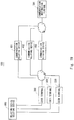
- Fig. 14 is a block diagram showing a configuration of the communication system 100 in a case of the fourth exemplary embodiment.
- the communication system 100 in the case of the fourth exemplary embodiment is different from that in the case of the above-mentioned first exemplary embodiment, in including a relaying-device selecting device 600.
- Fig. 15 is a block diagram showing a configuration of the user terminal 300 in the case of the fourth exemplary embodiment.
- the user terminal 300 in the case of the fourth exemplary embodiment is different from that in the case of the above-mentioned first exemplary embodiment, in that the storage 5 does not include the communication relaying device information storing area 10.
- Fig. 16 is a block diagram showing a configuration of the relaying-device selecting device 600.
- the relaying-device selecting device 600 includes a controller 602, a communicator 604 which performs communication between the user terminal 300 and the communication relaying devices 401 to 403, and a storage 605 which stores data.
- the controller 602 includes a CPU 606 which performs various control actions, a ROM 607 which stores a program for the actions of the CPU 606 or the like, and a RAM 608 which operates as a work area of the CPU 606 or the like.
- the control actions by the CPU 606 in the controller 602 include communication control to make the communicator 604 perform the communication.
- the storage 5 includes the communication relaying device information storing area 10.
- This communication relaying device information storing area 10 is similar to that in the above-mentioned first exemplary embodiment, and stores and holds, for example, the correspondence table between the IP address as the communication identifier of each of the communication relaying devices 401 to 403 and the disclosure level as shown in Fig. 4 .
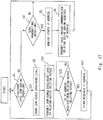
- Fig. 17 is a flowchart showing operation of the user terminal 300 and Fig. 18 is a flowchart showing operation of the relaying-device selecting device 600, in the case of the fourth exemplary embodiment.
- the CPU 6 in the controller 2 monitors the configuration operation of the disclosure level with respect to the operational unit 1 (Step S1).
- the CPU 6 in the controller 2 detects the operation (Yes at Step S1), and stores the information indicating the disclosure level configured by the operation in the disclosure level information storing area 9 in the storage 5 (Step S2).
- the CPU 6 outputs a command to the communicator 4, thereby making the communicator 4 transmit the disclosure level stored in the disclosure level information storing area 9 at the preceding Step S2 to the relaying-device selecting device 600 (Step S31).
- the CPU 606 in the relaying-device selecting device 600 monitors whether or not the communicator 604 receives the disclosure level from the user terminal 300 (Step S41).
- the CPU 606 acquires an IP address corresponding to the disclosure lever received by the communicator 604 at the preceding Step S41, by referring to the correspondence table ( Fig. 4 ) stored in the communication relaying device information storing area 10 in the storage 605 (Step S42).
- the CPU 606 outputs a command to the communicator 604, thereby making the communicator 604 transmit the IP address acquired at the preceding Step S43 to the user terminal 300 (Step S43).
- the CPU 6 monitors whether or not to receive the IP address of the communication relaying device from the relaying-device selecting device 600 (Step S32).
- This monitor is repeated until the communicator 4 in the user terminal 300 receives the IP address of the communication relaying device from the relaying-device selecting device 600.
- the communicator 4 in the user terminal 300 has received the IP address of the communication relaying device from the relaying-device selecting device 600 (Yes at Step S32), the received IP address is stored in the communication relaying device configuration information storing area 11 (Step S33).
- Step S33 the processes are repeated from Step S1.
- the relaying-device selecting device 600 provided outside the user terminal 300 performs the operation to acquire the IP address corresponding to the communication relaying device which corresponds to the disclosure level configured by the user. Therefore, a processing load in the user terminal 300 can be reduced.
- a plurality of user terminals 300 may share the relaying-device selecting device 600.
- the example where the data is transmitted from the user terminal 300 to the communication destination terminal 501 at the disclosure level configured at the user terminal 300 has been described.
- a fifth exemplary embodiment an example is described where the data is transmitted while changing the disclosure level in accordance with a move schedule of the user.
- Fig. 20 is a block diagram showing a configuration of the user terminal 300 in a case of the fifth exemplary embodiment.
- the user terminal 300 in the case of the fifth exemplary embodiment is different in that the storage 5 includes a user move schedule information storing area 13 and a disclosure level determination rule storing area 14.
- the user move schedule information storing area 13 stores a user's own move schedule inputted by the user. Specifically, when the user performs operation to input a move schedule "Business trip outside company on month O-day X" on the operational unit 1, for example, the CPU 6 stores information indicating the move schedule in the user move schedule information storing area 13.
- the disclosure level determination rule storing area 14 preliminarily stores a determination rule for determination of the disclosure level in accordance with the move schedule.
- this determination rule includes a content "Configure the disclosure level to Non-disclosure on the day of the business trip outside the company, and configure the disclosure level to the configured disclosure level on the other days", for example.
- the storage 5 may also include the communication relaying device configuration information storing area 11 as with the first exemplary embodiment.
- the communication relaying device configuration information storing area 11 may not be included, and thus the example where the communication relaying device configuration information storing area 11 is omitted is described.
- Fig. 21 is a flowchart showing operation of the user terminal 300 in the case of the fifth exemplary embodiment.
- operation is described in which the user configures the disclosure level to "Department”, and then the data is transmitted from the user terminal 300 to the communication destination terminal 501 on the day of the move schedule outside the company.
- the CPU 6 in the controller 2 monitors the configuration operation of the disclosure level with respect to the operational unit 1 (Step S51).
- the CPU 6 in the controller 2 detects the operation (Yes at Step S51), and stores the information indicating the disclosure level configured by the operation in the disclosure level information storing area 9 in the storage 5 (Step S52).
- Step S52 the processes are repeated from Step S51.
- the CPU 6 in the controller 2 monitors whether or not the operation to transmit the data to the communication destination terminal 501 is performed on the operational unit 1 (Step S53).
- Step S53 When the user performs the operation to transmit the data to the communication destination terminal 501. on the operational unit 1, the CPU 6 in the controller 2 detects the operation (Yes at Step S53), and the process moves to Step S54.
- the CPU 6 determines whether or not the day of the move schedule has arrived, by referring to the user move schedule information storing area 13. That is, the controller 2 herein operates as a move schedule determining means.
- Step S55 As the operation corresponds to one on the day of the move schedule outside the company, the process moves to Step S55 after Step S54.
- Step S55 the CPU 6 acquires a disclosure level corresponding to the move schedule, by referring to the disclosure level determination rule storing area 14.
- the determination rule “Configure the disclosure level to Non-disclosure on the day of the business trip outside the company, and configure the disclosure level to the configured disclosure level on the other days” is stored. Therefore, the CPU 6 acquires "Non-disclosure" as the disclosure level.
- the CPU 6 acquires an IP address corresponding to the disclosure level acquired at the preceding Step S55, by referring to the correspondence table ( Fig. 4 ) stored in the communication relaying device information storing area 10 (Step S56).
- IP address 1.1.1.1 corresponding to the disclosure level “Non-disclosure” is acquired.
- the CPU 6 outputs a command to the communicator 4, thereby making the communicator 4 transmit the data to the communication destination terminal 501 through the first communication relaying device 401 which has the IP address "1.1.1.1" acquired at the preceding Step S56 (Step S57).
- the communicator 4 which has received the command from the CPU 6, uses the IP address "1.1.1.1” acquired by the CPU 6 at the preceding Step S56, and transmits the data to the first communication relaying device 401 having the IP address.
- the communicator 4 Upon the data transmission at Step S57, the communicator 4 also transmits the IP address "20.20.20.20" of the communication destination terminal 501 to the first communication relaying device 401 having the IP address acquired at the preceding Step S56, in addition to the data to be transmitted.
- the CPU 416 in the first communication relaying device 401 which has received the data transmitted from the communicator 4 to the communication destination terminal 501, performs the process to replace the IP address (communication identifier) of the user terminal 300 described in the part which indicates the IP address of the data transmission source in the header of the data, by the IP address of the communication relaying device 401.
- the CPU 416 in the communication relaying device 401 transmits a command to the communicator 414, and replaces the IP address of the communication relaying device 401 described in the part which indicates the IP address of the data transmission destination in the header of the data, by the IP address received together with the data, in other words, the IP address "20.20.20.20" of the communication destination terminal 501, thereby making the communicator 414 transmit the data to the communication destination terminal 501.
- the data is transmitted from the user terminal 300 to the communication destination terminal 501 through the first communication relaying device 401.
- Step S54 when the user performs the operation to transmit the data to the communication destination terminal 501 on the operational unit 1 on a day other than the day of the move schedule (Yes at Step S53), the determination at subsequent Step S54 becomes "No".
- Step S58 subsequent to Step S54 the CPU 6 acquires the disclosure level configured by the user (in this example, "Department"), by referring to the disclosure level information storing area 9.
- Step S59 subsequent to Step S58 the CPU 6 acquires the IP address "3.3.3.3” corresponding to the disclosure level "department" acquired at the preceding Step S58, by referring to the correspondence table in Fig. 4 .
- Step S57 subsequent to Step S57 the CPU 6 outputs the command to the communicator 4, thereby making the communicator 4 transmit the data to the communication destination terminal 501 through the third communication relaying device 403 which has the IP address "3.3.3.3" acquired at the preceding Step S59.
- the disclosure level can be changed in accordance with the move schedule.
- the example has been described where the data is transmitted from the user terminal to the communication destination terminal at the disclosure level preliminarily configured in the user terminal. Meanwhile, in a sixth exemplary embodiment, an example is described where the user selects the disclosure level per data transmission.
- the first and second communication relaying devices 401 and 402 may be provided as communication relaying devices, and thus the communication system 100 in the case of this exemplary embodiment can be configured as shown Fig. 10 as with the third exemplary embodiment.
- each of the communication relaying devices 401 and 402 can be also configured in a similar manner as that in the above-mentioned third exemplary embodiment. That is, assume that "Disclosure” in this exemplary embodiment is “Company” as with the above-mentioned third exemplary embodiment.
- a stored content of the communication relaying device information storing area 10 in the user terminal 300 can be configured in a similar manner as that in the above-mentioned third exemplary embodiment (refer to Fig. 11 ).
- the user terminal 300 in the case of this exemplary embodiment does not need to include the disclosure level information storing area 9 and the communication relaying device configuration information storing area 11.
- the user terminal 300 in the case of this exemplary embodiment is configured as shown in Fig. 22 .
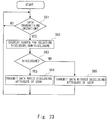
- Fig. 23 is a flowchart showing a flow of operation of the user terminal 300 in the case of this exemplary embodiment.
- the CPU 6 in the controller 2 monitors whether or not the operation to transmit the data to the communication destination terminal 501 is performed on the operational unit 1 (Step S61).
- the CPU 6 in the controller 2 detects the operation (Yes at Step S61), and makes the display 3 display a screen for selecting whether or not to disclose the attribute of the user (Step S62). That is, the controller 2 herein operates as a disclosure level inquiring means.
- the CPU 6 detects the operation (Yes at Step S63), acquires the IP address "2.2.2.2” corresponding to "Disclosure (Company)" by referring to the correspondence table shown in Fig. 11 , and transmits the data to the communication destination terminal 501 through the second communication relaying device 402 corresponding to the acquired IP address (Step S64).
- the CPU 6 detects the operation (No at Step S63), acquires the IP address "1.1.1.1” corresponding to "Non-disclosure” by referring to the correspondence table shown in Fig. 11 , and transmits the data to the communication destination terminal 501 through the first communication relaying device 401 corresponding to the acquired IP address (Step S65).
- communication can be performed at the disclosure level selected per communication, not at the disclosure level preliminarily configured.
- the example has been described where the user terminal 300 performs the Internet access and the data transmission to the communication destination terminal 501, and the example where the IP address is used as the communication identifier has been described.
- the present invention is not limited to these examples, and can be also applied to a case where communication is performed by using SIP (Session Initiation Protocol) from the user terminal 300 to the communication destination terminal 501, in a similar way.
- the IP address in the description of each of the above-mentioned exemplary embodiments may be replaced by an SIP-URI (as the communication identifier, the SIP-URI is used).
- the present invention can be also applied to a case where E-mail communication is performed from the user terminal 300 to the communication destination terminal 501, in a similar way.
- the IP address in the description of each of the above-mentioned exemplary embodiments may be replaced by an E-mail address (as the communication identifier, the E-mail address is used).
- an SIP address or an E-mail of the user terminal 300 can be recorded as a history in the header of the data.
- the CPU 416 in the controller 412 in each of the communication relaying devices 401 to 403 performs a process to delete the SIP address or the E-mail of the user terminal stored as the history in the header, upon relaying the data transmission from the user terminal 300 to the communication destination terminal 501.
- the example has been described where the data transmission from the user terminal 300 which is the data transmission source to the communication destination terminal 501 is relayed by a single communication relaying device.
- a plurality of communication relaying devices may sequentially relay. In the latter case, the disclosure level depends on a communication relaying device that lastly relays.
- the user terminal 300 includes a computer communication device, a mobile terminal, and an IP phone.
- the present invention is applicable to a communication system, and particularly to a communication system which conceals a communication identifier used for communication by a user from a communication destination.
Landscapes
- Engineering & Computer Science (AREA)
- Computer Networks & Wireless Communication (AREA)
- Signal Processing (AREA)
- Computer Security & Cryptography (AREA)
- Computer Hardware Design (AREA)
- Computing Systems (AREA)
- General Engineering & Computer Science (AREA)
- Data Exchanges In Wide-Area Networks (AREA)
- Small-Scale Networks (AREA)
- Mobile Radio Communication Systems (AREA)
- Telephonic Communication Services (AREA)
Claims (11)
- Terminal de communication (300) comprenant :un moyen de sélection de dispositifs de relais (600) pour sélectionner un dispositif de relais parmi une pluralité de dispositifs de relais en mesure de relayer une communication du terminal de communication (300) à un terminal de destination (501), dans lequel le dispositif de relais sélectionné divulgue, à un niveau de divulgation désigné parmi de multiples niveaux de divulgation, un ou plusieurs attributs d'un utilisateur du terminal de communication ; etun moyen de communication (4) pour communiquer avec le terminal de destination par le biais du dispositif de relais sélectionné ;dans lequel chacun des dispositifs de relais divulgue les attributs de l'utilisateur au terminal de destination, dans lequel les attributs de l'utilisateur incluent l'attribut divulgué par un dispositif différent parmi les dispositifs de relais à un niveau inférieur des niveaux de divulgation.
- Terminal de communication selon la revendication 1, comprenant en outre un moyen de stockage d'informations de dispositifs de relais pour stocker un identifiant de communication affecté à chaque dispositif de la pluralité de dispositifs de relais en association avec chacun des niveaux de divulgation ;
dans lequel le moyen de sélection de dispositifs de relais (600) effectue la sélection du dispositif de relais, en faisant référence à un contenu stocké du moyen de stockage d'informations de dispositifs de relais, en vue d'acquérir un identifiant de communication correspondant au niveau de divulgation désigné ; et
dans lequel le moyen de communication (4) met en oeuvre la communication avec le terminal de destination à travers un dispositif de relais présentant l'identifiant de communication acquis par le moyen de sélection de dispositifs de relais. - Terminal de communication selon la revendication 2, comprenant en outre un moyen de stockage d'identifiants de dispositifs de relais (11) pour stocker et maintenir l'identifiant de communication acquis par le moyen de sélection de dispositifs de relais ;
dans lequel le moyen de communication (4) met en oeuvre la communication avec le terminal de destination à travers un dispositif de relais présentant l'identifiant de communication stocké dans le moyen de stockage d'identifiants de dispositifs de relais. - Terminal de communication selon l'une quelconque des revendications 1 à 3, comprenant en outre :un moyen opérationnel (1) pour accepter une opération d'utilisateur ; etun moyen de stockage de niveaux de divulgation (9) pour stocker et maintenir un niveau de divulgation désigné par une opération pour le moyen opérationnel ;dans lequel le moyen de sélection de dispositifs de relais (600) sélectionne un dispositif de relais selon le niveau de divulgation stocké dans le moyen de stockage de niveaux de divulgation.
- Terminal de communication selon la revendication 3, comprenant en outre :un moyen opérationnel (1) pour accepter une opération d'utilisateur ; etun moyen de stockage de niveaux de divulgation (9) pour stocker et maintenir un niveau de divulgation désigné par une opération pour le moyen opérationnel ;dans lequel le moyen de sélection de dispositifs de relais (600) sélectionne nouvellement un dispositif de relais à chaque fois que le niveau de divulgation est nouvellement désigné, en faisant référence au contenu stocké du moyen de stockage d'informations de dispositifs de relais en vue d'acquérir nouvellement un identifiant de communication correspondant au nouveau niveau de divulgation désigné ; etdans lequel le moyen de stockage d'identifiants de dispositifs de relais (11) stocke et maintient l'identifiant de communication nouvellement acquis par le moyen de sélection de dispositifs de relais à chaque fois que le niveau de divulgation est nouvellement désigné.
- Terminal de communication selon la revendication 1 ou 2, comprenant en outre :un moyen opérationnel (1) pour accepter une opération d'utilisateur ; etun moyen d'interrogation de niveau de divulgation pour interroger l'utilisateur en ce qui concerne le niveau de divulgation qui doit être désigné, suite à la mise en oeuvre de la communication ;dans lequel le moyen de sélection de dispositifs de relais (600) sélectionne un dispositif de relais selon un niveau de divulgation désigné par l'utilisateur, par une opération pour le moyen opérationnel.
- Terminal de communication selon l'une quelconque des revendications 1 à 6, comprenant en outre un moyen d'interrogation d'amélioration de degré de divulgation (2) pour interroger l'utilisateur s'agissant de communiquer à nouveau ou non en améliorant un degré de divulgation sur les attributs de l'utilisateur, lorsqu'une notification de refus indiquant un refus de communication est reçue à partir du terminal de destination, suite à la mise en oeuvre de la communication avec le terminal de destination ;
dans lequel le moyen de sélection de dispositifs de relais (600) sélectionne à nouveau un dispositif de relais correspondant à un niveau de divulgation avec un degré de divulgation supérieur sur les attributs de l'utilisateur, lorsqu'une instruction visant à améliorer le degré de divulgation est reçue en provenance de l'utilisateur ; et
dans lequel le moyen de communication (4) met en oeuvre à nouveau la communication avec le terminal de destination à travers le dispositif de relais sélectionné de nouveau par le moyen de sélection de dispositifs de relais. - Système de communication comprenant :le terminal de communication (300) selon les revendications 1 à 7 ; etune pluralité de dispositifs de relais (401, 402, 403) en mesure de relayer une communication du terminal de communication à un terminal de destination, sans divulguer un identifiant de communication du terminal de communication au terminal de destination ;dans lequel chacun des dispositifs de relais correspond à l'un quelconque parmi de multiples niveaux de divulgation sur un ou plusieurs attributs d'un utilisateur du terminal de communication.
- Procédé de communication comprenant les étapes ci-dessous consistant à :sélectionner un dispositif de relais parmi une pluralité de dispositifs de relais (401, 402, 403) en mesure de relayer une communication d'un terminal de communication à un terminal de destination, dans lequel le dispositif de relais sélectionné divulgue, à un niveau de divulgation désigné parmi de multiples niveaux de divulgation, un ou plusieurs attributs d'un utilisateur du terminal de communication ;communiquer, par le biais du terminal de communication (300), avec le terminal de destination, à travers le dispositif de relais sélectionné ; ledit procédé de communication étant caractérisé par l'étape ci-dessous consistant à :utiliser, en tant que chaque dispositif de relais, le dispositif de relais qui divulgue les attributs de l'utilisateur au terminal de destination, dans lequel les attributs de l'utilisateur incluent l'attribut divulgué par un dispositif différent, parmi les dispositifs de relais, à un niveau inférieur des niveaux de divulgation.
- Procédé de communication selon la revendication 9, incluant les étapes ci-dessous consistant à :effectuer la sélection du dispositif de relais, en faisant référence à une table de correspondance qui indique une correspondance entre un identifiant de communication affecté à chaque dispositif de la pluralité de dispositifs de relais et chacun des niveaux de divulgation, en vue d'acquérir un identifiant de communication correspondant au niveau de divulgation désigné ; etmettre en oeuvre la communication, par le biais du terminal de communication (300), avec le terminal de destination, à travers un dispositif de relais présentant l'identifiant de communication acquis.
- Support lisible par ordinateur non transitoire qui stocke un programme destiné à amener un ordinateur à exécuter :un processus pour sélectionner un dispositif de relais parmi une pluralité de dispositifs de relais (401, 402, 403) en mesure de relayer une communication d'un terminal de communication à un terminal de destination, dans lequel le dispositif de relais sélectionné divulgue, à un niveau de divulgation désigné parmi de multiples niveaux de divulgation, un ou plusieurs attributs d'un utilisateur du terminal de communication ;dans lequel le programme amène l'ordinateur à sélectionner, en tant que chaque dispositif de relais, le dispositif de relais qui divulgue les attributs de l'utilisateur au terminal de destination, dans lequel les attributs de l'utilisateur incluent l'attribut divulgué par un dispositif différent, parmi les dispositifs de relais, à un niveau inférieur des niveaux de divulgation.
Applications Claiming Priority (2)
| Application Number | Priority Date | Filing Date | Title |
|---|---|---|---|
| JP2008052600 | 2008-03-03 | ||
| PCT/JP2009/051715 WO2009110271A1 (fr) | 2008-03-03 | 2009-02-02 | Terminal de communication, système et procédé de communication, dispositif de sélection du relais et programme |
Publications (3)
| Publication Number | Publication Date |
|---|---|
| EP2252009A1 EP2252009A1 (fr) | 2010-11-17 |
| EP2252009A4 EP2252009A4 (fr) | 2015-03-25 |
| EP2252009B1 true EP2252009B1 (fr) | 2017-07-19 |
Family
ID=41055833
Family Applications (1)
| Application Number | Title | Priority Date | Filing Date |
|---|---|---|---|
| EP09717570.7A Not-in-force EP2252009B1 (fr) | 2008-03-03 | 2009-02-02 | Terminal de communication, système et procédé de communication, dispositif de sélection du relais et programme |
Country Status (5)
| Country | Link |
|---|---|
| US (1) | US8284710B2 (fr) |
| EP (1) | EP2252009B1 (fr) |
| JP (1) | JP5267551B2 (fr) |
| CN (1) | CN101960791B (fr) |
| WO (1) | WO2009110271A1 (fr) |
Families Citing this family (2)
| Publication number | Priority date | Publication date | Assignee | Title |
|---|---|---|---|---|
| US20150067033A1 (en) * | 2013-09-05 | 2015-03-05 | Cisco Technology, Inc | Relay Server Load Balancing and Placement using In-Band Signaling |
| GB2627257A (en) * | 2023-02-17 | 2024-08-21 | Nokia Technologies Oy | Method and apparatus for relayed connection between nodes |
Family Cites Families (10)
| Publication number | Priority date | Publication date | Assignee | Title |
|---|---|---|---|---|
| JP2001350733A (ja) * | 2000-06-07 | 2001-12-21 | Mitsubishi Electric Corp | 情報取得装置、情報取得方法、及び情報取得方法をコンピュータに実行させるためのプログラムを記録したコンピュータ読み取り可能な媒体 |
| US20030133554A1 (en) * | 2002-01-11 | 2003-07-17 | Nokia Corporation | System and method for facilitating access to network based services |
| JP2003316742A (ja) * | 2002-04-24 | 2003-11-07 | Nippon Telegr & Teleph Corp <Ntt> | シングルサインオン機能を有する匿名通信方法および装置 |
| US7139841B1 (en) * | 2002-07-24 | 2006-11-21 | Cisco Technology, Inc. | Method and apparatus for handling embedded address in data sent through multiple network address translation (NAT) devices |
| JP4095455B2 (ja) * | 2003-01-27 | 2008-06-04 | キヤノン株式会社 | 無線lan接続ソフトウエア、無線端末及びその制御方法 |
| CN1879081B (zh) * | 2003-11-04 | 2011-07-13 | 汤姆森许可贸易公司 | 用于下载服务的热点处的高速缓存服务器 |
| KR100643292B1 (ko) * | 2005-04-29 | 2006-11-10 | 삼성전자주식회사 | 세션 개시 프로토콜 단말기 사용자의 주소 정보 관리 방법및 이를 위한 서버 |
| KR20080032114A (ko) * | 2005-06-23 | 2008-04-14 | 엑스디에스, 인코포레이티드 | 이동 장치의 네트워크 어드레스 변경을 위한 방법 및 장치 |
| US7725597B2 (en) * | 2007-04-24 | 2010-05-25 | Sony Computer Entertainment Inc. | Network address translation type for flexible neighbor selection in overlay networks |
| DE102007033847A1 (de) * | 2007-07-18 | 2009-01-22 | Bernd Prof. Dr. Freisleben | Verfahren und Vorrichtung zur kryptographischen Schlüsseleinigung für eine sichere digitale Kommunikation in Netzwerken |
-
2009
- 2009-02-02 CN CN2009801072004A patent/CN101960791B/zh not_active Expired - Fee Related
- 2009-02-02 JP JP2010501824A patent/JP5267551B2/ja not_active Expired - Fee Related
- 2009-02-02 WO PCT/JP2009/051715 patent/WO2009110271A1/fr not_active Ceased
- 2009-02-02 EP EP09717570.7A patent/EP2252009B1/fr not_active Not-in-force
- 2009-02-02 US US12/864,055 patent/US8284710B2/en active Active
Non-Patent Citations (1)
| Title |
|---|
| None * |
Also Published As
| Publication number | Publication date |
|---|---|
| EP2252009A4 (fr) | 2015-03-25 |
| JPWO2009110271A1 (ja) | 2011-07-14 |
| CN101960791B (zh) | 2013-03-20 |
| JP5267551B2 (ja) | 2013-08-21 |
| WO2009110271A1 (fr) | 2009-09-11 |
| US8284710B2 (en) | 2012-10-09 |
| CN101960791A (zh) | 2011-01-26 |
| US20100296435A1 (en) | 2010-11-25 |
| EP2252009A1 (fr) | 2010-11-17 |
Similar Documents
| Publication | Publication Date | Title |
|---|---|---|
| EP2154838B1 (fr) | Serveur de gestion d'informations d'identification d'adresse et de routeur | |
| CN101141420B (zh) | 私网与公网进行数据通信的方法及系统 | |
| US20060187926A1 (en) | Communications session switching method and system | |
| US20100174791A1 (en) | Short distance wireless communication system and method for accessing instant messenger | |
| US20080072312A1 (en) | Connection supporting apparatus | |
| EP2003862A2 (fr) | Accès, connectivité et interopérabilité pour dispositifs et services | |
| US8369323B1 (en) | Managing voice-based data communications within a clustered network environment | |
| US8621087B2 (en) | Method for configuring closed user network using IP tunneling mechanism and closed user network system | |
| US20060233144A1 (en) | Mobility support apparatus for mobile terminal | |
| US7031327B2 (en) | Network application association | |
| JP4584718B2 (ja) | 一つの端末により一つの通信ネットワークを選択するシステムと方法 | |
| JP5828952B2 (ja) | 通信システム、ノード、フロー制御ネットワーク及び通信制御方法 | |
| EP2252009B1 (fr) | Terminal de communication, système et procédé de communication, dispositif de sélection du relais et programme | |
| US7181535B1 (en) | Addressing method and name and address server in a digital network | |
| US8416711B1 (en) | Systems and methods for sharing availability status information between network nodes | |
| CN101233731B (zh) | 动态地址映射 | |
| EP2372960A1 (fr) | Système de réseau de communication | |
| EP2148492A1 (fr) | Appareil et procédé pour configurer des adresses IP dans un système de communication mobile | |
| JPWO2015145953A1 (ja) | 通信端末、通信方法及びプログラム | |
| JP4191180B2 (ja) | 通信支援装置、システム、通信方法及びコンピュータプログラム | |
| KR20040000095A (ko) | 사설 ip주소를 이용한 인터넷기반의 응용서비스제공시스템 및 그 방법 | |
| KR20180102943A (ko) | 인터넷 페이지 접속 제어 서버 및 방법 | |
| KR101096340B1 (ko) | Dns 쿼리 응답에 따라 보안 통신 및 비보안 통신을 수행하는 이동통신 단말기 및 그 제어방법 | |
| JP2007329791A (ja) | ゲートウェイ装置 | |
| KR101367180B1 (ko) | 네트워크 서비스를 전환 및 공유하는 장치와 그 방법 |
Legal Events
| Date | Code | Title | Description |
|---|---|---|---|
| PUAI | Public reference made under article 153(3) epc to a published international application that has entered the european phase |
Free format text: ORIGINAL CODE: 0009012 |
|
| 17P | Request for examination filed |
Effective date: 20100908 |
|
| AK | Designated contracting states |
Kind code of ref document: A1 Designated state(s): AT BE BG CH CY CZ DE DK EE ES FI FR GB GR HR HU IE IS IT LI LT LU LV MC MK MT NL NO PL PT RO SE SI SK TR |
|
| AX | Request for extension of the european patent |
Extension state: AL BA RS |
|
| DAX | Request for extension of the european patent (deleted) | ||
| A4 | Supplementary search report drawn up and despatched |
Effective date: 20150223 |
|
| RIC1 | Information provided on ipc code assigned before grant |
Ipc: H04L 12/46 20060101AFI20150217BHEP |
|
| GRAP | Despatch of communication of intention to grant a patent |
Free format text: ORIGINAL CODE: EPIDOSNIGR1 |
|
| INTG | Intention to grant announced |
Effective date: 20161222 |
|
| GRAS | Grant fee paid |
Free format text: ORIGINAL CODE: EPIDOSNIGR3 |
|
| GRAJ | Information related to disapproval of communication of intention to grant by the applicant or resumption of examination proceedings by the epo deleted |
Free format text: ORIGINAL CODE: EPIDOSDIGR1 |
|
| GRAL | Information related to payment of fee for publishing/printing deleted |
Free format text: ORIGINAL CODE: EPIDOSDIGR3 |
|
| INTC | Intention to grant announced (deleted) | ||
| GRAR | Information related to intention to grant a patent recorded |
Free format text: ORIGINAL CODE: EPIDOSNIGR71 |
|
| GRAA | (expected) grant |
Free format text: ORIGINAL CODE: 0009210 |
|
| AK | Designated contracting states |
Kind code of ref document: B1 Designated state(s): AT BE BG CH CY CZ DE DK EE ES FI FR GB GR HR HU IE IS IT LI LT LU LV MC MK MT NL NO PL PT RO SE SI SK TR |
|
| INTG | Intention to grant announced |
Effective date: 20170613 |
|
| REG | Reference to a national code |
Ref country code: GB Ref legal event code: FG4D |
|
| REG | Reference to a national code |
Ref country code: CH Ref legal event code: EP |
|
| REG | Reference to a national code |
Ref country code: IE Ref legal event code: FG4D |
|
| REG | Reference to a national code |
Ref country code: AT Ref legal event code: REF Ref document number: 911380 Country of ref document: AT Kind code of ref document: T Effective date: 20170815 |
|
| REG | Reference to a national code |
Ref country code: DE Ref legal event code: R096 Ref document number: 602009047207 Country of ref document: DE |
|
| REG | Reference to a national code |
Ref country code: NL Ref legal event code: MP Effective date: 20170719 |
|
| REG | Reference to a national code |
Ref country code: LT Ref legal event code: MG4D |
|
| REG | Reference to a national code |
Ref country code: AT Ref legal event code: MK05 Ref document number: 911380 Country of ref document: AT Kind code of ref document: T Effective date: 20170719 |
|
| REG | Reference to a national code |
Ref country code: FR Ref legal event code: PLFP Year of fee payment: 10 |
|
| PG25 | Lapsed in a contracting state [announced via postgrant information from national office to epo] |
Ref country code: NO Free format text: LAPSE BECAUSE OF FAILURE TO SUBMIT A TRANSLATION OF THE DESCRIPTION OR TO PAY THE FEE WITHIN THE PRESCRIBED TIME-LIMIT Effective date: 20171019 Ref country code: LT Free format text: LAPSE BECAUSE OF FAILURE TO SUBMIT A TRANSLATION OF THE DESCRIPTION OR TO PAY THE FEE WITHIN THE PRESCRIBED TIME-LIMIT Effective date: 20170719 Ref country code: AT Free format text: LAPSE BECAUSE OF FAILURE TO SUBMIT A TRANSLATION OF THE DESCRIPTION OR TO PAY THE FEE WITHIN THE PRESCRIBED TIME-LIMIT Effective date: 20170719 Ref country code: NL Free format text: LAPSE BECAUSE OF FAILURE TO SUBMIT A TRANSLATION OF THE DESCRIPTION OR TO PAY THE FEE WITHIN THE PRESCRIBED TIME-LIMIT Effective date: 20170719 Ref country code: FI Free format text: LAPSE BECAUSE OF FAILURE TO SUBMIT A TRANSLATION OF THE DESCRIPTION OR TO PAY THE FEE WITHIN THE PRESCRIBED TIME-LIMIT Effective date: 20170719 Ref country code: SE Free format text: LAPSE BECAUSE OF FAILURE TO SUBMIT A TRANSLATION OF THE DESCRIPTION OR TO PAY THE FEE WITHIN THE PRESCRIBED TIME-LIMIT Effective date: 20170719 Ref country code: HR Free format text: LAPSE BECAUSE OF FAILURE TO SUBMIT A TRANSLATION OF THE DESCRIPTION OR TO PAY THE FEE WITHIN THE PRESCRIBED TIME-LIMIT Effective date: 20170719 |
|
| PG25 | Lapsed in a contracting state [announced via postgrant information from national office to epo] |
Ref country code: ES Free format text: LAPSE BECAUSE OF FAILURE TO SUBMIT A TRANSLATION OF THE DESCRIPTION OR TO PAY THE FEE WITHIN THE PRESCRIBED TIME-LIMIT Effective date: 20170719 Ref country code: PL Free format text: LAPSE BECAUSE OF FAILURE TO SUBMIT A TRANSLATION OF THE DESCRIPTION OR TO PAY THE FEE WITHIN THE PRESCRIBED TIME-LIMIT Effective date: 20170719 Ref country code: BG Free format text: LAPSE BECAUSE OF FAILURE TO SUBMIT A TRANSLATION OF THE DESCRIPTION OR TO PAY THE FEE WITHIN THE PRESCRIBED TIME-LIMIT Effective date: 20171019 Ref country code: IS Free format text: LAPSE BECAUSE OF FAILURE TO SUBMIT A TRANSLATION OF THE DESCRIPTION OR TO PAY THE FEE WITHIN THE PRESCRIBED TIME-LIMIT Effective date: 20171119 Ref country code: LV Free format text: LAPSE BECAUSE OF FAILURE TO SUBMIT A TRANSLATION OF THE DESCRIPTION OR TO PAY THE FEE WITHIN THE PRESCRIBED TIME-LIMIT Effective date: 20170719 Ref country code: GR Free format text: LAPSE BECAUSE OF FAILURE TO SUBMIT A TRANSLATION OF THE DESCRIPTION OR TO PAY THE FEE WITHIN THE PRESCRIBED TIME-LIMIT Effective date: 20171020 |
|
| REG | Reference to a national code |
Ref country code: DE Ref legal event code: R097 Ref document number: 602009047207 Country of ref document: DE |
|
| PG25 | Lapsed in a contracting state [announced via postgrant information from national office to epo] |
Ref country code: DK Free format text: LAPSE BECAUSE OF FAILURE TO SUBMIT A TRANSLATION OF THE DESCRIPTION OR TO PAY THE FEE WITHIN THE PRESCRIBED TIME-LIMIT Effective date: 20170719 Ref country code: RO Free format text: LAPSE BECAUSE OF FAILURE TO SUBMIT A TRANSLATION OF THE DESCRIPTION OR TO PAY THE FEE WITHIN THE PRESCRIBED TIME-LIMIT Effective date: 20170719 Ref country code: CZ Free format text: LAPSE BECAUSE OF FAILURE TO SUBMIT A TRANSLATION OF THE DESCRIPTION OR TO PAY THE FEE WITHIN THE PRESCRIBED TIME-LIMIT Effective date: 20170719 |
|
| PLBE | No opposition filed within time limit |
Free format text: ORIGINAL CODE: 0009261 |
|
| STAA | Information on the status of an ep patent application or granted ep patent |
Free format text: STATUS: NO OPPOSITION FILED WITHIN TIME LIMIT |
|
| PG25 | Lapsed in a contracting state [announced via postgrant information from national office to epo] |
Ref country code: EE Free format text: LAPSE BECAUSE OF FAILURE TO SUBMIT A TRANSLATION OF THE DESCRIPTION OR TO PAY THE FEE WITHIN THE PRESCRIBED TIME-LIMIT Effective date: 20170719 Ref country code: IT Free format text: LAPSE BECAUSE OF FAILURE TO SUBMIT A TRANSLATION OF THE DESCRIPTION OR TO PAY THE FEE WITHIN THE PRESCRIBED TIME-LIMIT Effective date: 20170719 Ref country code: SK Free format text: LAPSE BECAUSE OF FAILURE TO SUBMIT A TRANSLATION OF THE DESCRIPTION OR TO PAY THE FEE WITHIN THE PRESCRIBED TIME-LIMIT Effective date: 20170719 |
|
| 26N | No opposition filed |
Effective date: 20180420 |
|
| PG25 | Lapsed in a contracting state [announced via postgrant information from national office to epo] |
Ref country code: SI Free format text: LAPSE BECAUSE OF FAILURE TO SUBMIT A TRANSLATION OF THE DESCRIPTION OR TO PAY THE FEE WITHIN THE PRESCRIBED TIME-LIMIT Effective date: 20170719 |
|
| REG | Reference to a national code |
Ref country code: CH Ref legal event code: PL |
|
| PG25 | Lapsed in a contracting state [announced via postgrant information from national office to epo] |
Ref country code: MC Free format text: LAPSE BECAUSE OF FAILURE TO SUBMIT A TRANSLATION OF THE DESCRIPTION OR TO PAY THE FEE WITHIN THE PRESCRIBED TIME-LIMIT Effective date: 20170719 |
|
| REG | Reference to a national code |
Ref country code: IE Ref legal event code: MM4A |
|
| REG | Reference to a national code |
Ref country code: BE Ref legal event code: MM Effective date: 20180228 |
|
| PG25 | Lapsed in a contracting state [announced via postgrant information from national office to epo] |
Ref country code: CH Free format text: LAPSE BECAUSE OF NON-PAYMENT OF DUE FEES Effective date: 20180228 Ref country code: LI Free format text: LAPSE BECAUSE OF NON-PAYMENT OF DUE FEES Effective date: 20180228 Ref country code: LU Free format text: LAPSE BECAUSE OF NON-PAYMENT OF DUE FEES Effective date: 20180202 |
|
| PG25 | Lapsed in a contracting state [announced via postgrant information from national office to epo] |
Ref country code: IE Free format text: LAPSE BECAUSE OF NON-PAYMENT OF DUE FEES Effective date: 20180202 |
|
| PG25 | Lapsed in a contracting state [announced via postgrant information from national office to epo] |
Ref country code: BE Free format text: LAPSE BECAUSE OF NON-PAYMENT OF DUE FEES Effective date: 20180228 |
|
| PGFP | Annual fee paid to national office [announced via postgrant information from national office to epo] |
Ref country code: GB Payment date: 20190130 Year of fee payment: 11 Ref country code: FR Payment date: 20190111 Year of fee payment: 11 Ref country code: DE Payment date: 20190122 Year of fee payment: 11 |
|
| PG25 | Lapsed in a contracting state [announced via postgrant information from national office to epo] |
Ref country code: MT Free format text: LAPSE BECAUSE OF NON-PAYMENT OF DUE FEES Effective date: 20180202 |
|
| PG25 | Lapsed in a contracting state [announced via postgrant information from national office to epo] |
Ref country code: TR Free format text: LAPSE BECAUSE OF FAILURE TO SUBMIT A TRANSLATION OF THE DESCRIPTION OR TO PAY THE FEE WITHIN THE PRESCRIBED TIME-LIMIT Effective date: 20170719 |
|
| PG25 | Lapsed in a contracting state [announced via postgrant information from national office to epo] |
Ref country code: PT Free format text: LAPSE BECAUSE OF FAILURE TO SUBMIT A TRANSLATION OF THE DESCRIPTION OR TO PAY THE FEE WITHIN THE PRESCRIBED TIME-LIMIT Effective date: 20170719 Ref country code: HU Free format text: LAPSE BECAUSE OF FAILURE TO SUBMIT A TRANSLATION OF THE DESCRIPTION OR TO PAY THE FEE WITHIN THE PRESCRIBED TIME-LIMIT; INVALID AB INITIO Effective date: 20090202 |
|
| PG25 | Lapsed in a contracting state [announced via postgrant information from national office to epo] |
Ref country code: CY Free format text: LAPSE BECAUSE OF FAILURE TO SUBMIT A TRANSLATION OF THE DESCRIPTION OR TO PAY THE FEE WITHIN THE PRESCRIBED TIME-LIMIT Effective date: 20170719 Ref country code: MK Free format text: LAPSE BECAUSE OF NON-PAYMENT OF DUE FEES Effective date: 20170719 |
|
| REG | Reference to a national code |
Ref country code: DE Ref legal event code: R119 Ref document number: 602009047207 Country of ref document: DE |
|
| GBPC | Gb: european patent ceased through non-payment of renewal fee |
Effective date: 20200202 |
|
| PG25 | Lapsed in a contracting state [announced via postgrant information from national office to epo] |
Ref country code: DE Free format text: LAPSE BECAUSE OF NON-PAYMENT OF DUE FEES Effective date: 20200901 Ref country code: GB Free format text: LAPSE BECAUSE OF NON-PAYMENT OF DUE FEES Effective date: 20200202 Ref country code: FR Free format text: LAPSE BECAUSE OF NON-PAYMENT OF DUE FEES Effective date: 20200229 |